WRWTFWW Records is flying high as it announces the reissue of the 1997 ambient masterpiece Quiet Logic by electronic music visionaries Mixmaster Morris (The Irresistible Force), Jonah Sharp (Spacetime Continuum), and Haruomi Hosono (Yellow Magic Orchestra). For the first time ever, this iconic album is available on vinyl as a double LP with a heavy 350gsm sleeve, as well as on digipack CD and digitally.
Quiet Logic invites listeners to embark on a captivating sonic odyssey, blending intricate rhythms and celestial environments that push the boundaries of electronic music. Co-crafted at Haruomi Hosono's Tokyo studio in 1997, this album represents a time of rapid transformation in the genre, with these three artists at the forefront of redefining soundscapes.
With its unique blend of influences from Hosono's immense contribution to electronic, pop, and experimental music to Morris' worldwide chill out DJ performances and Sharp's pioneering label, Reflective, Quiet Logic remains a timeless piece of ethereal electronica. It was originally only released in Japan in CD format on the Harry Hosono-curated Daisyworld Discs label.
Remastered for 2024, this reissue is a must-have for fans of Haruomi Hosono / YMO, The Irresistible Force, Spacetime Continuum, Dreamfish, Tetsu Inoue, FFWD, H.I.A., Fax +49-69/450464, and mind-expanding musics.
Immerse yourself now.
Quiet Logic is pressed on biovinyl, a sustainable alternative to traditional vinyl. Biovinyl replaces petroleum in S-PVC by recycling used cooking oil or industrial waste gases, resulting in 100% CO2 savings in bio-based S-PVC production. Furthermore, it is 100% recyclable and reusable, embracing the circular economy ideology.
Suche:t 42
Chasing dopamine in free fall through a burning world. Looks that make you want to go swimming, even though you know you're going to drown. Where is my value? Who do I want to be? And who do I definitely not want to be?
Mental health, body positivity, queerness, sexualized violence and self-determination: Elena Rud sings about these things, loud and wild. With a voice that sometimes seems on the verge of breaking and then hangs deep in the ear canal again. As raspy as after a handful of cigarettes. So distinctive that you will recognize them again and again from a big bunch of newcomer bands.
Because the songs go through the marrow and bone. Under the skin or into the heart. Maybe left in and right out, but it's good in between. Because you feel that you're no longer quite so alone with yourself and this shitty world.
Mental Health, Body Positivity, Queerness, sexualisierte Gewalt und Selbstbestimmung: Elena Rud singt von diesen Dingen, laut und wild. Mit einer Stimme, die mal kurz vorm Wegbrechen scheint und dann wieder ganz tief im Gehörgang hängt. So kratzig wie nach einer Handvoll Selbstgedrehten. So markant, dass man sie aus einem großen Haufen Newcomer-Bands immer und immer wieder erkennen wird.
Mittlerweile hat Elena ein Rudel aus vier Jungs dazu gewonnen. Ein Rudel, das seiner Frontfrau nicht nur den Rücken stärkt, sondern sich auch gegen die toxischen Ideale wehrt, an denen sie selbst gemessen werden - für mehr Schwäche, Unsicherheit und GlitzerMakeup statt Dominanz, Unterdrückung und Aggression. Auch in Sachen Sound. Die fünf Münchner:innen klingen ehrlich, tanzbar und wild. Nach Indie-Rock und Punk. Oder nach NDW
- A1: Magic Momentum
- A2: Rockets To Mars
- A3: The News These Days
- A4: Life (Skit)
- A5: Love Vibration
- B1: Original Flow
- B2: Hold On
- B3: Surviver (Skit)
- B4: Tatamaka Pt.1
- B5: Tatamaka Pt.2
- C1: Time (Skit)
- C2: Time
- C3: Jinja (Skit)
- C4: Kochirakoso
- C5: Our Tactus
- C6: Nah Personal
- D1: No Chains
- D2: Push Comes To Shove
- D3: We No Let Y'all In
- D4: Mexico (Skit)
- D5: Future For Our Children
We Release JAZZ is very happy to announce an exciting new body of work by Joseph Deenmamode aka Mo Kolours. The singular musical spirit’s new 21-track album Original Flow is available as a double LP housed in a heavy 350gsm sleeve with original artwork by Mo Kolours himself and the classic WRJ obi strip, as well as in digipack CD and digital formats.
A catalog of critically acclaimed records, including his self-titled debut (2014), ‘Texture Like Like Sun’ (2015), 2018 album ‘Inner Symbols’ and three companion EPs, established Deenmamode as a prodigious musician and vocalist. Pitchfork extolled his “hypnotic, tribal-infused dance grooves”, DJ Mag appreciated the “colourful celebration of soundsystem culture”, and Resident Advisor advocated that “no one sounds quite like Mo Kolours”. Musical analogies were drawn by The Guardian as “The best album Curtis Mayfield never made with A Tribe Called Quest and Lee Perry” and Mojo as “like Marvin Gaye produced by J Dilla”.
Five years ago, Deenmamode moved to the Japanese countryside. Far away from familiarity, he contemplated his place and further questioned his identity. “I had none of my ‘own’ people around. I had time to really find what makes me tick musically. Japan has helped me go back to those subconscious leanings, really go deep, and reflect the aspects that make up my story”.
The tracks on ‘Original Flow’ have been constructed from sessions, improvisations and soundbites captured around the world during this time; collecting contributions from musicians including Deenamode’s brothers Reginald Omas Mamode and Jeen Bassa plus Andrew Ashong, Charles Bullen, Dwaye Kilvington, Eddie Hick, Stefan Asanovic, Myele Manzanza, Ross Hughes, and Tom Dreissler. Deenamode says “I’m proud of this album’s creative process. Coming from a tradition of scouring through hours of records, I wanted to create my own samples, to find that perfect loop that no other producer could put their hands on. I decided to invite a group of friends and acquaintances, who also happen to be incredible musicians, to a studio in Crystal Palace to improvise based on some loose ideas I had. We spent all day, and recorded everything”.
‘Original Flow’ is an album of UK street-soul nouveau, future indigenous jazz fusion, Rasta Segga, Nyahbinghi jazz, Malagasy Hebrew hip hop. While retaining a spirit of exploration and improvisation, it sees Deenmamode grow and flex beyond beat tape brevity, expanding composition and stretching his musical muscle to play live with other musicians. Themes of empowerment, overcoming adversity, and mental liberation coexist with notes from ancient history, futurism, and science, as well as musings on family and togetherness.
‘Magik Momentum’ springs from a discussion that features at the start of the song, an inspiring mentor answering a question from Deenmamode about improvisation and what role it plays in life when planning and manifesting the future. ‘Rockets to Mars’ questions the lack of care for the billions of people with nothing, while governments plan to explore space. “This sparked a comparison in my mind to a Sonny Okuson song that I would reference when performing. Okuson’s song talked of the lack of resources in many communities in the world, while governments go to the moon”.
He says the music behind ‘The News These Days’ is “possibly my favourite on the album”. Looped like he would a late sixty jazz-fusion sample, there was nothing added and the track was complete within a matter of minutes. “It was the first and best moment from the entire Crystal Palace session”, he adds. The album’s contrasting title track with minimal instrumentation played solo by Deenamode. While frustratingly searching for gems in past recordings, he thought in a burst of ego, “I don’t need no-one else to make a dope beat!” picked up his ravanne, (the traditional frame drum of his fathers home-land of Mauritius), pressed record, and started to play. He says, “In my thoughts were the rhythms of the Nubians in Upper-Egypt and Sudan, the swing of the huge drums played by Mauritanian women, of-course the Sega beat of Mauritius, and the ever inspiring beat of James Yancey”.
Driven by UK broken beat, Cuban congas, Nigerian and Mauritian inflections, ‘Love Vibration’ follows the concept that all emotions carry a vibratory frequency and pays homage to the frequency of creation and the power of love. The two part ‘Tatamaka’ tells of the history of Deenmamode’s ancestors, the maroons of Mauritius. “We are people who managed to run from our oppressors and find refuge in a corner of the island called ‘Le Morne’ where they could not reach us. One bloody day they came in numbers to re-capture, to revenge. Many of us chose to jump to our deaths, rather than be taken back into subjugation. The poem by Creole Richard Sedley Assonne says; “there were hundreds of them, but my people, the maroons chose the kiss of death over the chains of slavery”. Tatamaka was the name of a famed maroon leader who was murdered for claiming his, and our people’s freedom. The song is the imagined journey of escape and freedom by an ancestor of the maroons of Le Morne”.
Born in the west midlands and raised on the traditional sega music of his father’s Indian Ocean homeland of Mauritius alongside records by the likes of Jimi Hendrix, Santana and Michael Jackson; his influences expanded with late 90s jungle and drum and bass nights in Bristol, experiments at art college in Camberwell, and the rich culture of Peckham, “at the time we called it the Afro Quarters of London” says Deenmamode, adding hip hop, dub, soul and soundsystem styles to his individual sound.
He explains, “I love drum music, from hand-drums to 808s. I love music from the ancient past, heritage music, indigenous music, traditional music passed down from the beginning of time. Music from the body, hand claps, grunts and foot stomps. Music with audible depth, busy, bustling, highly charged. Music from the soul, the music from beyond. I love music from the islands and the mountains. The music of the streets, hustle music, alleyway beats. Club music”.
He describes the creative process as thinking in images. “The visual world and the world of sound seem to intermingle in my thought process. When I play the drum with my eyes closed, a world of imagery dances and moves with beat. Improvised drumming feels like I am listening to what I want to hear, rather than trying to play what I want to hear. Following the rhythm and finding new pathways to walk within the patterns is what I experience. In this way I often feel I am just a listener, instead of the player”.
Original Flow is pressed on biovinyl, a sustainable alternative to traditional vinyl. Biovinyl replaces petroleum in S-PVC by recycling used cooking oil or industrial waste gases, resulting in 100% CO2 savings in bio-based S-PVC production. Furthermore, it is 100% recyclable and reusable, embracing the circular economy ideology.

Wolfgang Tillmans’ latest album, Build from Here, is driven by a desire to explore and to expose. It navigates joy and heartbreak amid ruin and rebuilding, embodying hopeful defiance in uncertain futures. The songs vary in style, from propulsive and catchy to contemplative, featuring lush instrumentals transitioning into danceable beats. Tillmans’ voice, whether growling and confrontational or tender and stripped down, maintains its prominence throughout, serving as the album's core.
High Roller Records, reissue 2024, 180g black vinyl, ltd 500, 425gsm heavy cardboard cover, poster, A5 promo photo, lyric sheet, mastered by Patrick W. Engel at Temple of Disharmony
High Roller Records, reissue 2024, black vinyl, ltd 200, lyric sheet, 425gsm heavy cardboard cover
Deicide ist eine der drei großen US-Death-Metal-Bands, zusammen mit Cannibal Corpse und Morbid Angel. Nach ihrem letzten Album "Overtures of Blasphemy", das 2018 erschienen ist, kehren Deicide nun mit ihrem neuen Werk "Banished By Sin" zurück.
Deicide sind bekannt für ihre kompromisslose Musik, und dafür, dass sie in den mehr als drei Jahrzehnten ihres Bestehens einige der esten und härtesten Death Metal-Songs hervorgebracht haben. Erwartet die intensivste, brutalste und einprägsamste Florida Death Metal-Platte!
High Roller Records, reissue 2024, black vinyl, ltd 200, lyric sheet, 425gsm heavy cardboard cover
High Roller Records, reissue 2024, 180g black vinyl, ltd 500, lyric sheet, poster, specially mastered for vinyl by Patrick W. Engel/ Temple of Disharmony, 100% original sound, no remaster!
The EP "Turbojazz & Friends" once again brings to light the sound and vision of Turbojazz, following the success of his debut album "Whateverism". This time collaborating with Rona Ray on the instant classic "Like You" with a remix by Sean McCabe, Broke One on the modern "Take 3" and closing the EP with the solo track "Star Chaser" which discovers the deep-tech side of Turbojazz.
- A1: Der Doch Nicht 3:15
- A2: Echte Helden 3:40
- A3: Easy Rider 3:42
- A4: Dieses Herz 3:09
- B1: Ich Geb Alles 3:39
- B2: Zeppelin 3:53
- B3: Dein Kuss 3:33
- B4: Radio 3:11
- C1: Unten Durch 3:37
- C2: Nie Genug 3:09
- C3: Das Gute Von Morgen 3:47
- C4: Wenn Ich Die Augen Schließe 3:48
- D1: Zurück 3:04
- D2: Nachts 3:11
- D3: Pech & Schwefel With Finch 3:18
- D4: Geburtstagslied 2:36
Matthias Reim ist zweifellos ein großfühlender Mensch. Ein beneidenswert produktiver Zeitgenosse ist er sowieso. Vor bald 35 Jahren hinterließ der Vollblutmusiker und Songwriter einen Aphorismus von bleibendem Wert: "Verdammt, ich lieb' dich". Liedzeilen, die aus einer Laune heraus entstanden, formte der damals 32 Jahre junge Mann zu einem Mammut-Refrain, der zu einem Millionenseller gelangte. Er hat rund zwei Dutzend Studioeinspielungen veröffentlicht, etliche davon brachen in Gold- und Platin gegossen Verkaufsrekorde. Auf dem neuen Longplayer "Zeppelin" präsentiert Reim seine 16 neuen Songs so frühlingsfrisch und auf den Punkt gebracht wie ein tatendrängender Newcomer. Einer, der sich gleichzeitig eines enormen Musikmacher- und Lebenserfahrungsschatzes ermächtigen kann. Anders lässt sich die gesteigerte Wahrhaftigkeit in "Zeppelin" nicht erklären. Reims Rock klingt heute handgemacht-rockiger als je zuvor, die Refrains sind größer geworden und die Balladen balladesker. "Zeppelin" ist kurzum der beste Reim aller Zeiten.
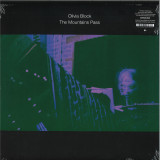
Black Truffle is pleased to announce The Mountains Pass, a major new work from Olivia Block. A key player in Chicago’s vibrant experimental music scene since the late 1990s, Block has developed an extensive body of work grounded in a personalised, at times emotive approach to the studio-based practices of the musique concrète tradition, while also encompassing improvisation, orchestral pieces, sound installations, and a sustained engagement with the piano. On The Mountains Pass, recorded by Greg Norman at Steve Albini’s Electrical Audio and meticulously edited and constructed over the course of three years, Block pushes into new terrain, introducing her singing voice and drums played by Jon Mueller into flowing assemblages that move seamlessly from ruminative organ tones and fragmented piano airs to explosions of sizzling synths and thundering percussion. Like many of Block’s past works, which include, for example, a sculptural installation using the sound of oyster beds, The Mountains Pass draws inspiration from nature and the animal world. Time spent in a particular mountain range in Northern New Mexico informs this suite of pieces, whose lyrics and titles refer particularly to animal life in the area. Beginning with bursts of white noise and delicate synthetic pops and squeaks, opener ‘Northward’ very soon reveals the special direction the album will take, as lyrical piano lines are joined by Block’s fragile voice, singing words written from the perspective of f2754, an endangered Mexican gray wolf who wandered more than five hundred miles from Arizona to New Mexico in 2022. The fragment of song quickly breaks off, leaving us with a ghostly electronic hum. ‘The Hermit’s Peak’ follows, one of two epic pieces at the album’s core. Beginning with chiming, almost harpsichord-like tones, it moves through episodes of spacious, ruminative piano, Jon Mueller’s sparkling cymbals, stuttering cut-up piano sounds, and a climax of keening organ and trumpet tones (performed by Thomas Madeja). Continuing the exploration of vintage keyboard and synth tones heard on Block’s Innocent Passage in the Territorial Sea (Room 40, 2021), the music sometimes suggests the great outer-limits works of 70s Italian prog figures like Franco Battiato or Arturo Stalteri in the languorous drift of synthesizer, organ, and piano tones and the meticulous yet organic flow of its construction. ‘Violet-Green’ opens the second side with another epic journey, its lyrical content concerning ‘a mysterious bird die-off and a forest fire’. Block’s crystalline voice and rich piano chords at times call up the restrained chamber songs of Janet Sherbourne, but fragmented and threaded through passages of woozy pitch-bent keyboards, hypnotic distant thuds, tinkling bells, and searing distorted synth tones. On ‘f2754’, the freedom of the roaming wolf surges through dense layers of rapid keyboard attacks and long organ tones over a propulsive drum performance straight out of Animal Magnetism-era Arnold Dreyblatt. This distinctive sound world is then reencountered in a darkened mirror image in the uneasy, metallic shimmer of the closing ‘Ungulates’, named in reference to a heard of elk roaming through the mountains. Like Battiato’s Clic or Gastr del Sol’s Upgrade & Afterlife, The Mountains Pass inhabits the underexplored terrain where the beauty of song coexists with a radical formal openness, illuminating the deep musicality and warmth that have been present in Block’s work all along.
“The Dirty Love EP” marks the union of the artists' creative minds, but also a blend of Old School - New School: is not just a meeting of musical minds, but reflected in both the production and the soundscape. The release conquers with a new take on Italo House, giving it a modernised edge: a reinterpretation of Italo House, enhanced by world music influences, thanks to Mariseya's vocals.
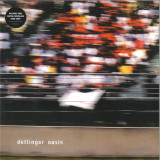
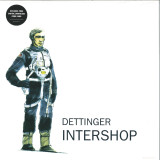
Dettinger’s Intershop and Oasis have long been held, by many fans of ambient and electronic music, to be some of the finest albums in their field. Produced by the mysterious Olaf Dettinger, about whom not much is publicly known, they were some of the earliest full-lengths released by the then-nascent Kompakt, and in many ways, they both articulated and defined the sound that would come to be known as Pop Ambient, while also existing, somehow, to the leftfield of any clearly recognisable genre.
Beautiful, sui generis works, it is a rare pleasure to see them being reissued on vinyl for a new generation of listeners to embrace. Originally released on CD only in 1999, Intershop was Kompakt’s first artist full-length. The music here simmers and broods, with opulent banks of tone marking out territory for rhythms that seem to be built from the clacking detritus of technology – hisses, thunks, knocks. Bass is deployed carefully, each drop a dubbed-out depth charge; drones spin and spiral, warping and weaving between the beats.
Oasis, released in 2000, refined the palette that Dettinger had explored on its predecessor. A blurred crusade of ambient texturology, its unassuming patterns, and subtle, incremental dynamics, admit to real beauty, and a kind of abstract sensuality that you don’t often experience with music that is, perhaps, similarly tooled, but not as poetic. Through seemingly simple gestures – whether lushly expansive repetitions, hyper-acute tremolo tones, or ear-tickling rhythms – it builds complex emotional resonance. It’s no surprise to discover Oasis is held in high esteem by artists like Panda Bear of Animal Collective, who once said of Dettinger, “For us, he was the dude.”
There is, of course, other music to know Dettinger by, too – his three excellent EPs for Kompakt, Blond (1998), Puma and Totentanz (1999), the latter of which, Michael Mayer once argued, “invented dubstep.” There is also a small, yet graceful run of compilation contributions, many of which can be found on Kompakt’s Total and Pop Ambient series. All this music has plenty to recommend it, sharing a clarity of purpose, and a rare, human warmth and depth. But Intershop and Oasis are the releases that distil Dettinger’s singular vision, and allow him, should he wish, to claim his place as a modern master of ambient and electronic music.
Dettingers Intershop und Oasis werden von vielen Fans von Ambient und elektronischer Musik seit langem als einige der besten Alben in diesem Bereich angesehen. Produziert von dem mysteriösen Olaf Dettinger, über den nicht viel bekannt ist, gehörten sie zu den ersten Alben, die von der damals aufstrebenden Plattenfirma Kompakt veröffentlicht wurden. In vielerlei Hinsicht formulierten und definierten sie den Sound, der später als Pop-Ambient bekannt werden sollte, während sie gleichzeitig irgendwie links von jedem klar erkennbaren Genre existierten.
Es ist eine seltene Freude zu sehen, dass diese wunderschönen Werke auf Vinyl wiederveröffentlicht werden, um sie einer neuen Generation von Hörern zugänglich zu machen. Ursprünglich wurde Intershop 1999 nur auf CD veröffentlicht und war Kompakts erstes komplettes Künstleralbum. Die Musik hier brodelt und brütet, mit opulenten Klangbänken, die das Territorium für Rhythmen abstecken, die aus dem klappernden Gerümpel der Technik gebaut zu sein scheinen – Zischen, Klopfen, Schaben. Der Bass wird sorgfältig eingesetzt, jeder Drop ist eine synchronisierte Tiefenladung; Drones drehen und winden sich spiralförmig und verflechten sich zwischen den Beats.
Oasis, das im Jahr 2000 erschien, verfeinerte die Palette, die Dettinger auf seinem Vorgänger erkundet hatte. Ein verschwommener Kreuzzug der Ambient-Texturologie, dessen unaufdringliche Muster und subtile, schrittweise Dynamik echte Schönheit und eine Art abstrakter Sinnlichkeit zulassen, die man nicht oft bei Musik erlebt, die vielleicht ähnlich ausgestattet, aber nicht so poetisch ist. Durch scheinbar einfache Gesten – seien es üppig ausladende Wiederholungen, hyperakute Tremolotöne oder ohrenbetäubende Rhythmen – baut sie eine komplexe emotionale Resonanz auf. Es ist keine Überraschung, dass Oasis von Künstlern wie Panda Bear von Animal Collective hoch geschätzt wird, der einmal über Dettinger sagte: “Für uns war er DER Typ”.
Es gibt natürlich auch noch andere Musik, die Dettinger bekannt macht – seine drei ausgezeichneten EPs für Kompakt, Blond (1998), Puma und Totentanz (1999), von denen letztere, wie Michael Mayer einmal kühn behauptete, “den Dubstep erfand”. Es gibt auch eine kleine, aber feine Reihe von Compilation-Beiträgen, von denen viele auf Kompakts Total- und Pop-Ambient-Serien zu finden sind. All diese Musik ist sehr empfehlenswert und zeichnet sich durch eine klare Zielsetzung und eine seltene, menschliche Wärme und Tiefe aus. Aber Intershop und Oasis sind die Veröffentlichungen, die Dettingers einzigartige Vision destillieren und es ihm ermöglichen, seinen Platz als moderner Meister der Ambient- und elektronischen Musik zu behaupten, sollte er dies wünschen.
Dettinger’s Intershop and Oasis have long been held, by many fans of ambient and electronic music, to be some of the finest albums in their field. Produced by the mysterious Olaf Dettinger, about whom not much is publicly known, they were some of the earliest full-lengths released by the then-nascent Kompakt, and in many ways, they both articulated and defined the sound that would come to be known as Pop Ambient, while also existing, somehow, to the leftfield of any clearly recognisable genre.
Beautiful, sui generis works, it is a rare pleasure to see them being reissued on vinyl for a new generation of listeners to embrace. Originally released on CD only in 1999, Intershop was Kompakt’s first artist full-length. The music here simmers and broods, with opulent banks of tone marking out territory for rhythms that seem to be built from the clacking detritus of technology – hisses, thunks, knocks. Bass is deployed carefully, each drop a dubbed-out depth charge; drones spin and spiral, warping and weaving between the beats.
Oasis, released in 2000, refined the palette that Dettinger had explored on its predecessor. A blurred crusade of ambient texturology, its unassuming patterns, and subtle, incremental dynamics, admit to real beauty, and a kind of abstract sensuality that you don’t often experience with music that is, perhaps, similarly tooled, but not as poetic. Through seemingly simple gestures – whether lushly expansive repetitions, hyper-acute tremolo tones, or ear-tickling rhythms – it builds complex emotional resonance. It’s no surprise to discover Oasis is held in high esteem by artists like Panda Bear of Animal Collective, who once said of Dettinger, “For us, he was the dude.”
There is, of course, other music to know Dettinger by, too – his three excellent EPs for Kompakt, Blond (1998), Puma and Totentanz (1999), the latter of which, Michael Mayer once argued, “invented dubstep.” There is also a small, yet graceful run of compilation contributions, many of which can be found on Kompakt’s Total and Pop Ambient series. All this music has plenty to recommend it, sharing a clarity of purpose, and a rare, human warmth and depth. But Intershop and Oasis are the releases that distil Dettinger’s singular vision, and allow him, should he wish, to claim his place as a modern master of ambient and electronic music.
Dettingers Intershop und Oasis werden von vielen Fans von Ambient und elektronischer Musik seit langem als einige der besten Alben in diesem Bereich angesehen. Produziert von dem mysteriösen Olaf Dettinger, über den nicht viel bekannt ist, gehörten sie zu den ersten Alben, die von der damals aufstrebenden Plattenfirma Kompakt veröffentlicht wurden. In vielerlei Hinsicht formulierten und definierten sie den Sound, der später als Pop-Ambient bekannt werden sollte, während sie gleichzeitig irgendwie links von jedem klar erkennbaren Genre existierten.
Es ist eine seltene Freude zu sehen, dass diese wunderschönen Werke auf Vinyl wiederveröffentlicht werden, um sie einer neuen Generation von Hörern zugänglich zu machen. Ursprünglich wurde Intershop 1999 nur auf CD veröffentlicht und war Kompakts erstes komplettes Künstleralbum. Die Musik hier brodelt und brütet, mit opulenten Klangbänken, die das Territorium für Rhythmen abstecken, die aus dem klappernden Gerümpel der Technik gebaut zu sein scheinen – Zischen, Klopfen, Schaben. Der Bass wird sorgfältig eingesetzt, jeder Drop ist eine synchronisierte Tiefenladung; Drones drehen und winden sich spiralförmig und verflechten sich zwischen den Beats.
Oasis, das im Jahr 2000 erschien, verfeinerte die Palette, die Dettinger auf seinem Vorgänger erkundet hatte. Ein verschwommener Kreuzzug der Ambient-Texturologie, dessen unaufdringliche Muster und subtile, schrittweise Dynamik echte Schönheit und eine Art abstrakter Sinnlichkeit zulassen, die man nicht oft bei Musik erlebt, die vielleicht ähnlich ausgestattet, aber nicht so poetisch ist. Durch scheinbar einfache Gesten – seien es üppig ausladende Wiederholungen, hyperakute Tremolotöne oder ohrenbetäubende Rhythmen – baut sie eine komplexe emotionale Resonanz auf. Es ist keine Überraschung, dass Oasis von Künstlern wie Panda Bear von Animal Collective hoch geschätzt wird, der einmal über Dettinger sagte: “Für uns war er DER Typ”.
Es gibt natürlich auch noch andere Musik, die Dettinger bekannt macht – seine drei ausgezeichneten EPs für Kompakt, Blond (1998), Puma und Totentanz (1999), von denen letztere, wie Michael Mayer einmal kühn behauptete, “den Dubstep erfand”. Es gibt auch eine kleine, aber feine Reihe von Compilation-Beiträgen, von denen viele auf Kompakts Total- und Pop-Ambient-Serien zu finden sind. All diese Musik ist sehr empfehlenswert und zeichnet sich durch eine klare Zielsetzung und eine seltene, menschliche Wärme und Tiefe aus. Aber Intershop und Oasis sind die Veröffentlichungen, die Dettingers einzigartige Vision destillieren und es ihm ermöglichen, seinen Platz als moderner Meister der Ambient- und elektronischen Musik zu behaupten, sollte er dies wünschen.
Like A Motorcycle ist ein Ansturm von bombastischen Queers und einem sehr geduldigen Mann. Die vierköpfige, von einander abhängige Familie, behandelt emotionsgeladene Themen, die hinter einem Schild aus rotziger Gereiztheit versteckt sind. Like A Motorcycle könnten dich verprügeln, würden dir aber lieber ein Abendessen zubereiten. Like A Motorcycle sind Kanadas scharfkantige Lieblinge. Like A Motorcycle sind die Freunde, um die du nie gebeten hast. Das 11-Song-Album zeigt eine unbestreitbare Entwicklung der Band, sowohl in Bezug auf ihre Musikalität als auch auf ihre Fähigkeit, ihre Wahrheit und Erfahrung in Bezug auf emotionale Eingeständnisse, die zu gleichen Teilen herzzerreißend und ermächtigend sind, zu ehren. Ohne sich selbst zu ernst zu nehmen, unterhalten die vier sich selbst und alle um sie herum.
Ltd Edition!
Nach dem überwältigenden Erfolg der Debüt-EP "You're Welcome" melden sich die Lambrini Girls mit ihrer neuen 7Inch 'God's Country / Body Of Mine' via City Slang zurück!
Das aus Brighton stammende Duo besteht aus Phoebe Lunny (Gesang/Gitarre - sie) und Lilly Macieira (Bass - sie) sowie Schlagzeuger Banksy (nicht zu verwechseln mit gleichnamigen Street-Art Künstler). Sie haben sich durch unvergessliche Live-Auftritte einen Namen gemacht und wurden vom Variety Magazine, BBC Radio 1, NME, The Line Of Best Fit, KEXP, Consequence, Evening Standard, CLASH, So Young und kürzlich vom Kerrang! Magazine an der Seite von Sleater-Kinney, wurde für den Rolling Stone UK's Rising Stars Award nominiert, und sogar Iggy Pop ist ein Fan.
Auftritte bei Wide Awake, Reading & Leeds Festivals, Manchester Psych Fest, sowohl als auch deutschen Shows in in Hamburg und Berlin!
Sucht by Erik Leuthäuser, released 26 April 2024, includes the following tracks: "Optional", "Anfang", "Panik", "Zurück" and more.
This version of Sucht comes as a 1xLP.
The vinyl is pressed as a red disc.