Very Limited yellow vinyl LP. By popular demand, we are proud to present Ekundayo Inversions (Instrumentals). Liam Bailey released his debut album Ekundayo on the label at the end of 2020, then in the Summer of 2021 El Michels Affair took the tapes from that and did a dub version of the album in his own style aptly titled Ekundayo Inversions. Both of these releases quickly became cult classics in their own right. The chemistry between Liam and producer Leon Michels is undeniable, each pushing the other to new places in their sounds. Here we take the vocals out of the mix and focus on the production and the players pulling instrumentals versions from both the Ekundayo album and the Ekundayo Inversions album. This is a limited one time pressing of 1000 pieces.
Friendsome Records and Belaria are delighted to present her debut EP Boost & Doubt. After only two singles and a remix to date she already managed to leave quite an impression, launching a very promising career. The young ‘home grown’ prodigy has produced this beautiful four tracker to take you on a retro-minimal journey of heavy beats and melodic synth.
Oscillating between Dark-Disco, Italo and Synth-Wave, starting and ending with two dancefloor oriented tracks Boost and Esteem (A1 & B2). Neither will allow you to sit still, in the middle of this you’ll find Rest In B (A2), a more poppy but still minimalist track that will remind you of throw backs of Chloé or Peaches. All sat alongside Burning Inside (B1) a downer tempo intimate song that would suite a room three or a long summer road trip. Enjoy the ride!
out of Stock
Last delivered 3 years ago available to reorder, subject to availability
Lonefront puts out his first EP on wax with Kajunga Records. Two raw and hypnotic techno tracks channeled from deep.
“Additive spectra” uses the basics masterfully to draw in the mind and body and transport the spirit to ancient spaces. A deep kick and bass drive through the whole track while the high end remains sparse with a subtly shifting pulse and restrained hi hats keeping the tension alive.
On the B side, “South of Forever” is an even more stripped back, slow burner. Nonstop kick and trance inducing percussion anchor the listener in while resonations and reverberations are twisted and mangled to create a strange evolving space out of darkness.
Lonefront is an artist out of MN by way of the bay area. He produces raw explorative techno tracks and performs live using modular hardware. His stripped back productions shift between the speculative future of progress and the drone of decay. Get in tune with carcasses of factories, a chorus of tongues spouting silent mantras, a silent stream of error-riddled program scripts: the flux and snap of trauma incants the noise beyond language that compels movement, and sets you free.
out of Stock
Last delivered 4 years ago available to reorder, subject to availability
Choki Biki Records is proud to present: Coakley Collabs Vol.1! A new collaboration EP curated by DJ and Producer Josh Coakley; a Dublin based DJ & Producer. Coakley Collabs Vol.1 consists of six Techno orientated collaborations between Josh Coakley and other Irish talent including; blk., Sharpson, jxck, KIRK, Karl Seery and Black Traffic. Each track varies between a blend of Acid, Electro, Trance and Breakbeat, under the umbrella of Coakley’s signature Techno sound. Josh Coakley & Karl Seery – W.O.T.U You might be familiar with the introductory track: W.O.T.U by Coakley and Dublin producer Karl Seery, as it has already received serious airtime on BBC Introducing thanks to Jaguar. This techno banger features an array of rave stabs and classic hardcore breaks, which perfectly represents the collaboration between Coakley’s signature techno sound, and Choki Biki’s Nu-Rave aesthetic. Josh Coakley & blk. – Detroit Next up is Detroit featuring prolific techno producer blk..This dubby – techno track features the iconic acapella of Fedde Le Grande’s iconic ‘Put Your Hands Up For Detroit’. Its use of 808 programming gives an authentic replication of the early Detroit techno productions. Its contemporary hard-hitting nature is influenced by the likes of FJAAK, which blends nicely with its clear influence from Jeff Mills. Josh Coakley & Black Traffic – Fade To Grey Fade To Grey comes from Josh Coakley’s Collaboration with Scott Prendergast AKA Black Traffic. The pair have composed a track that tows the lines between Trance and Melodic Techno. Black Traffic’s signature use of rich textures and melodies contrast with Coakley’s ‘in your face’ techno drum programming. Fade To Grey is already making the rounds in Irish clubs as it was featured in Four Four Magazine as track of the week. Josh Coakley & KIRK – Illusionist Illusionist is an Acid Techno track from Coakley and Carlow based producer KIRK. Illusionist steers away from the direction of the ‘retro’ Detroit sounding Techno and moves towards the more atmospheric sounds of European Acid Techno producers such as A.S.Y.S. & T78. Its arpeggiated 303 programming and use of psychedelic vocal samples creates an atmosphere that would be right pounding throughout a club in Amsterdam. Josh Coakley & Jxck – MYB Next up is MYB, an Electro-Breaks collaboration between Coakley and Jxck. This syncopated belter is sure to make you do exactly what it says on the tin; Move Your Body! Featured by the one and only HOUZ, this Break track has already seen serious support from Techno and Electro DJs alike. With a return to a ‘4 to the Floor’ beat halfway through, this heavy hitter is sure to keep an audience on their toes. Josh Coakley & Sharpson – Who’s In The Garden (feat. Wax White) The Final Track of Coakley Collabs Vol.1 takes a total turn with Who’s In The Garden?. This track is a double collaboration between Coakley, Choki Biki label boss Sharpson, and Irish Hip-Hop group Wax White. This high tempo breakbeat track has a cheeky, lighthearted nature to it thanks to the use of happy hardcore sounding synths and Wax White’s hilarious Dublin Mannerisms thrownout throughout the track. The track comes to a screeching halt with an Electro Breaks breakdown supplied by Sharpson. Coakley’s intricate arrangement and production skills really shine through in this final track, as its numerous ideas fit tightly knit together.
out of Stock
Last delivered 8 months ago available to reorder, subject to availability
The unique sounds of Ray Phiri's Stimela are showcased on this gem of a 12” EP from 1986. It was originally released only in South Africa on Gallo / CBS Records, although a 12" featuring the track 'I Hate Telling A Lie' was previously released on Plum Records in 1983. It has now become a sought-after item due to its addictive and original-sounding Balearic disco / cosmic boogie-esque nature.
Stimela were a popular and successful Mbaquanga / fusion outfit led by the guitarist, vocalist, songwriter, producer and arranger Ray Phiri; who was previously a member of the legendary band The Cannibals. The musicians would go on to gain global fame after featuring on Paul Simon's iconic 'Graceland' album and the mega tour that followed.
Kicking off the EP is a magical track that floored us from the first moment we heard it and one that has since become a Mr Bongo firm favourite. ‘I Hate Telling A Lie’ is a slow, infectious building groove that sits somewhere between lowdown jazz-funk, soul, reggae and gospel with shades of new wave pop and Balearic. It’s a truly stunning track that is hard to pigeonhole and all the better for it.
Another highlight from the EP is the monster instrumental, synth-boogie sound of 'I Love You'; championed by DJs such as Jeremy Spellacey (Crown Ruler). This hypnotic groove bubbles to perfection and is a slo-mo chugger extraordinaire.
We hope you dig it as much as we do.
out of Stock
Last delivered 4 years ago available to reorder, subject to availability
YUNG DUMB Records and Model Future present Wade Galaxy. A collaboration between Toronto-based AZARI, Butr, and vocalist Jeremy Glenn. The trifecta comes forward with an EP that will bring you through a modular soundscape of love, lust, and distrust inside the hypercube. The A-Side is a hazy fusion of R&B and slowed electro, accompanied by Jeremy Glenn's ethereal vocals. The B-Side provides a room shaking cerebral 2-step remix of 'Phaze' by James Bangura of Black Rave Culture via Washington, DC
out of Stock
Last delivered 4 years ago available to reorder, subject to availability
Amy Winehouse’s Live at Glastonbury 2007 will be available on vinyl for the first time from June 3. It captures her performance on the Pyramid Stage at that year’s festival, 15 years ago this summer.
Winehouse’s show, her second at Glastonbury, will be released in a 2LP black vinyl set. They bring back to the fore one of the most memorable highlights of her all-too-short career, capturing not only her unique artistry and song craft, but the singer and writer’s trademark, between-songs banter and the sheer love for her emanating from the festival crowd. Highlights include “Rehab,” “You Know I’m No Good,” “Love Is A Losing Game,” “Valerie,” and “Tears Dry On Their Own,” as well as her cover of Toots and the Maytals’ “Monkey Man.”
Amy played a second set later the same day on the Jazz World Stage, and returned to the Pyramid Stage the following year, firmly establishing herself as part of the world-famous festival’s remarkable history. The artwork for the forthcoming release includes recollection of the performance by Glastonbury Festival’s co-organizer Emily Eavis. “Amy Winehouse was a Glastonbury-goer through and through,” she says. “She either came and played or, when she wasn’t working, came and camped. She played in the blistering heat and the heavy rain, and there were so many magical moments to her performances.”
out of Stock
Last delivered 4 years ago available to reorder, subject to availability
What do you get when you combine "Canada's Dopest Female MC" (Exclaim Magazine) with Canada's Best Kept Secret? You get FREE: the debut collaborative MC/Producer project between Juno-nominated Hip Hop Artist Eternia and the criminally slept on Juno-Award Winning Hip Hop Producer Rel McCoy.
The first full-length release for Eternia since the critically acclaimed "At Last" with producer MoSS (Fat Beats Records), Eternia returns with all the slice & dice super-lyricism audiences have grown to expect from her, as well as a depth and simplicity that can only be attributed to the maturation of her certified veteran MC status. Rel McCoy expertly provides some of the most sophisticated, moving, soulful & dynamic production we've heard Eternia rhyme on, in the same vein as a Pete Rock or a Hi-Tek but with a sonic stamp all his own.
FREE is the sonic equivalent of a baptism: a first step towards wholeness and liberation. The album holds the tension between rebirth, faith and peace of mind juxtaposed with the day-to-day realities of anxiety, fear, uncertainty and failed relationships.
If you check the credits of The Rolling Stones' Goats Head Soup LP from 1973 you'll find a certain "Pascal" listed on the percussion section. That is none other than Los Angeles based artist Nicolas Pascal Raicevik (1933-1994), aka 107-34-8933, aka Head, aka Nik Pascal, aka Nik Raicevic. Besides his hitting the bongoes on the Stones album, Nik was a great artist on his own, both as a painter and as a musician. As a musician, he was a pioneer in the use of synthesizers, preceeding the Berlin school by some years when his Head LP was released on on Buddah in 1970. Buddah probably saw in Head the opportunity to cash in some money from the remains of the psychedelic scene - the three tracks on the LP are named after drugs used in the late sixties. The sounds, however, are accomplished works that show Raicevic as one of the most interesting pioneers in the use of synths. The album probably didn't do too well, since Buddah didn't renew the contract with Raicevic, who instead took his own way releasing his works on his very own Narco Records and Tapes label. Between 1968 and 1975 Narco would issue 4 LPs credited either to Nik Raicevic (Beyond The End... Eternity) or Nik Pascal (The Sixth Ear, Magnetic Web and Zero Gravity) plus one credited to 107-34-8933 (Numbers, which is in fact the same LP as Buddah's Head, albeit with different cover art). Copies of these LPs came with an ironic sticker over the shrinkwrap that read "Do not listen to this LP if you are stoned".
Numbers was the first reference in the Narco catalogue (NR101), each of the three tracks it contains is named after a drug: Cannabis Sativa, Methedrine and Lysergic Acid Diethylamide. The album was credited to 107-34-8933, there is no date of release on the disc, some sources take it as back as 1968 - in any case, this is the same record that was issued on Buddah in 1970 credited to Head and eponymously-titled. The Wah Wah reissue features the original cover artwork from the Narco edition.
Besides his musical explorations, Nik was also an interesting painter. His paintings are auctioned from time to time, and are consciousness expanding works influenced by abstract cubism and surrealism, some kind of Salvador Dalí on drugs exploring the outter and inner space. All the artwork on the sleeves of his LPs is done by himself. Spacey landscapes and psychedelic colours that fit perfectly to the music they contain.
"Nik Raicevic's music is at the intersection of radical psycho-electronic weirdness and kraut kosmische music (in particular the scifi-hypno-minimal modules of Conrad Schnitzler in Grun, Rot and Blau). It presents mega epic & tripped out electronic improvisations.
"This is an absolute must for collectors and fans of visceral, neurotic soundscapes."
"As far as late-60s / early-70s American Bedroom' Electronic Music goes, these LPS have to be among the first transmissions from this sector, made all the more attractive when coupled with Raicevic's alien topographIes - the covers are high-color portrayals of Venusian lanes, knotted growths, & future-past architecture in a style you might equate with Vintage' sci-fi pulp-novel covers - & copious Downer' sentiment. This music is imbued with a sort of lonely, anti-social sensibility that's about as far as you can get from the Academic' Early Electronic vector. I will say that if the Steve Birchall, Cellutron & the Invisible, and/or Pythagoron™ seed your garden, this will likely do the same."
Never reissued before on vinyl format, the Wah Wah reissue features original sleeve artwork made of paintings and drawings by Nik himself and reproduction of the famous ironic "Do not listen if you are stoned".
Limited edition, 500 copies only.
If you check the credits of The Rolling Stones' Goats Head Soup LP from 1973 you'll find a certain "Pascal" listed on the percussion section. That is none other than Los Angeles based artist Nicolas Pascal Raicevik (1933-1994), aka 107-34-8933, aka Head, aka Nik Pascal, aka Nik Raicevic. Besides his hitting the bongoes on the Stones album, Nik was a great artist on his own, both as a painter and as a musician. As a musician, he was a pioneer in the use of synthesizers, preceeding the Berlin school by some years when his Head LP was released on on Buddah in 1970. Buddah probably saw in Head the opportunity to cash in some money from the remains of the psychedelic scene - the three tracks on the LP are named after drugs used in the late sixties. The sounds, however, are accomplished works that show Raicevic as one of the most interesting pioneers in the use of synths. The album probably didn't do too well, since Buddah didn't renew the contract with Raicevic, who instead took his own way releasing his works on his very own Narco Records and Tapes label. Between 1968 and 1975 Narco would issue 4 LPs credited either to Nik Raicevic (Beyond The End... Eternity) or Nik Pascal (The Sixth Ear, Magnetic Web and Zero Gravity) plus one credited to 107-34-8933 (Numbers, which is in fact the same LP as Buddah's Head, albeit with different cover art). Copies of these LPs came with an ironic sticker over the shrinkwrap that read "Do not listen to this LP if you are stoned".
"Raicevic is clearly still in the early learning-curve stages," which it a key LP to understand Nik's evolution and setting the path for more evolved works to follow.
Besides his musical explorations, Nik was also an interesting painter. His paintings are auctioned from time to time, and are consciousness expanding works influenced by abstract cubism and surrealism, some kind of Salvador Dalí on drugs exploring the outter and inner space. All the artwork on the sleeves of his LPs is done by himself. Spacey landscapes and psychedelic colours that fit perfectly to the music they contain.
"Nik Raicevic's music is at the intersection of radical psycho-electronic weirdness and kraut kosmische music (in particular the scifi-hypno-minimal modules of Conrad Schnitzler in Grun, Rot and Blau). It presents mega epic & tripped out electronic improvisations.
"This is an absolute must for collectors and fans of visceral, neurotic soundscapes."
"As far as late-60s / early-70s American Bedroom' Electronic Music goes, these LPS have to be among the first transmissions from this sector, made all the more attractive when coupled with Raicevic's alien topographIes - the covers are high-color portrayals of Venusian lanes, knotted growths, & future-past architecture in a style you might equate with Vintage' sci-fi pulp-novel covers - & copious Downer' sentiment. This music is imbued with a sort of lonely, anti-social sensibility that's about as far as you can get from the Academic' Early Electronic vector. I will say that if the Steve Birchall, Cellutron & the Invisible, and/or Pythagoron™ seed your garden, this will likely do the same."
Never reissued before on vinyl format, the Wah Wah reissue features original sleeve artwork made of paintings and drawings by Nik himself and reproduction of the famous ironic "Do not listen if you are stoned" sticker. Limited edition, 500 copies only.
Windwaker examine the aftershocks of love and the changes made in its wake over a soundtrack tilt-a-whirling from moments of insane heaviness to heavenly release. Bubbling up out of Wagga Wagga, New South Wales, the Australian quartet—Will King vocals, Jesse Crofts guitar, Indey Salvestro [bass], and Chris Lalic [drums, programming]—first landed in 2017. They built a growing fan base with independent EPs such as Fade [2017] and Empire[2019]. The latter boasted “Colourless” and “My Empire,” which each cracked 850K Spotify streams. In between selling out headline tours, they joined Beartooth on the road, while I Prevail tapped them for an upcoming 2022 run across Australia with Motionless In White. Along the way, they inked a deal with Fearless Records and wrote, produced, and engineered their full-length debut Love Language by themselves over the course of 2021. After amassing millions of streams independently and building buzz around the world, the band deliver an unpredictable and undeniable exploration of love across twelve tracks. Campaign highlights include support from Upset, DSCVRD, Rock Sound, Kerrang! and more.
· First ever reissue of this mega rare sought after French acid psych secret!
· Featuring an insert with liner notes and interviews by Quentin Orléan, plus photos!
· Limited edition of 500 copies only!
Ultra rare, sought after French acid folk psychedelic masterpiece, Long Orme is the work of singer-guitarist-songwriter Yves Fajnberg, his girlfriend singer Anne Marie Butel plus a full cohort of musician friends. The LP was laid down to a 2 track Revox Reel To Reel recorder between late 1974 and early 1975 and originally released in 1975 by Sonart Disques to such a limited run that an original copy sells nowadays for no less than 400 euros.
Together with Yves Chauvet, Fajnberg had worked on Dominique Droin's Wave On LP issued by Le Kiosque d'Orphée, all done on a small home studio set by Chauvet. They used the same facilities, mainly two 2-track Revox reel-to-reel magnetophones and an 8-track mixer, to produce a delightful peace of poetry and acoustic guitar acid folk sounds which will appeal to fans of artists such as Season, Jeff, Beautiful Losers, Yves, Serge & Victor, Manu Lannhuel, Denis, Jean Yves Tourbin, a.o.
Never reissued before, the Wah Wah edition features original sleeve artwork plus an insert with liner notes & interviews by Quentin Orléan. Limited edition, 500 copies only.
One of the most legendary LPs from Uruguay remains a hidden treasure in the rest of the world. It is the first LP by singer Diane Denoir. Diane was a regular in the “Conciertos Beat” (“Beat Concerts”) of Montevideo's 1960s scene where she performed with Eduardo Mateo on guitar (leader of El Kinto, one of the most influential bands in "candombe beat", and the ones who coined the term), Roberto Galletti on drums and Antonio Lagarde on double bass. Diane was also Mateo's muse throughout the early years of his career, he wrote several songs for her, among them “Esa tirsteza,” “Y hoy te vi,” and the classic “Mejor me voy.” Eduardo Mateo would become one of the biggest names of all times in Uruguay's musical scene. Diane, instead, found herself outside the country when the military coup installed a non constitutional government in Urugay in 1973 and was wisely advised by friends not to go back home to avoid trouble with the new dictatorial regime. A brave defendant of Human Rights, she had been very active against torture, thus becoming a target for the dictatorial regime military intelligence. She exiled in Argentina and Venezuela, and she later settled in Europe and didn't perform in public or record again until recent years when she returned to her home country.
On her eponymous 1972 debut album, Diane fused all her influences in one solid sound through songs created by Uruguayan songwriters (Eduardo Mateo, Urbano Moraes –bassplayer for El Kinto,– Daniel Amaro, Giuso Bellanca), plus Argentinian lyricist Edgardo Lisi. She had released a couple of 7" between 1966 and 1970, but it is her debut album –which would be her only one until her 2008 comeback– that made her legend grow among future generations of music lovers.
It's hard to name artists in the same dimension as Diane Denoir for reference, but be sure that you will love this LP if you like the candombe beat scene of El Kinto, Tótem or the Fattorusso brothers (Hugo and Osvaldo) in their post Los Shakers works, but also the bossa nova sound and even artists of their own like Vainica Doble.
Very limited edition, only 500 copies made. Remastered sound. Comes in upgraded artwork, gimmick cover with printed inner sleeve.
LOVE & FIRE is the seventh full-length studio album from the multi-platinum selling reggae hybrid band The Black Seeds. It was developed over the past few years, beginning with a series of creative sessions in 2018 at the band’s creative incubator The Surgery in Wellington, New Zealand.
The original plan was to then do a classic “band in a room recording,” which got thrown out the window once the pandemic hit and lockdowns began. At that point, the group got creative, working remotely between various home studios of the band members, and the result is as strong a record as they’ve ever done, managing to capture the feelings of the past few years in a cohesive set of new songs.
The Black Seeds continue to evolve musically while defying expectations, yet still always seem to sound like no one else but themselves.
One of Europe's key figures in the drum and bass music scene of the 2000s - Sunchase - returns with his long-awaited album on Kashtan, a newly launched label from Ukraine, on 1st of December 2020.
Sunchase had numerous singles on such cult labels like Moving Shadow, Metalheadz and Hospital Records and after 10 years he finally returns to the LP format. His second album 'Timeline', just like the concept of the label, blurs the boundaries between genres of electronic music, and cannot be assigned to any particular style. The melancholic and abstract sounds give off a sense of reclusiveness, with dubstep and drum and bass rhythms peeking and sometimes breaking through to the surface, yet more often they go deeper, creating room for bass music, dub and even a slight touch of IDM, thus creating a very special state. The album as a whole appears as a voluminous, complete, and aesthetically established piece of work.
The releases of Kashtan will be executed in a rather unusual format: it will be a limited series of collectible packs, including a USB stick with music and additional multimedia content, as well as other materials. These packs can later be collected into a catalog. Also, the LP will be released digitally on Kashtan's Bandcamp page and all other known online stores.
out of Stock
Last delivered 2 years ago available to reorder, subject to availability
Marc Brauner makes his return to the label, this time collaborating with fellow Berliner, Ulrich Harrison - better known by moniker Tender Games - on five summertime sweeteners.
These two producers are no stranger to working together, co-running their own imprint, Nostalgics Records in their home town of Berlin. This collaboration then came together naturally, and represents the ideal blend of Marc Brauner's syncopated rhythmic tendencies, and Tender Games' musical antecedents in soul music and penchant for instrumentation.
'Concrete Jungle' epitomises this fusion: a two-step rhythm carries a deep bassline which cruises beneath a blissed-out trumpet melody. 'You Keep Me Up' and 'Listen' are skippy old school bangers, the former complete with anthemic piano stabs a la Manix and Inner City and the latter peppered with blithe whispers of a saxophone. 'It Makes Me' follows suit, substituting hi-hats for a focus on funk-inflected low ends before the UKG-leaning 'Violation' draws things to a close with MC vocal chops and bass womp ruffage.
Concrete Jungle EP drops 17th June 2022 via Shall Not Fade
out of Stock
Last delivered 3 years ago available to reorder, subject to availability
Indie-pop singer-songwriter, composer and producer Australia’s Ben Lee releases his 14th solo studio album “I’m Fun!”. The new album features guests Zooey Deschanel, Christian Lee Hutson, Money Mark, Megan Washington, Georgia Maq, Eric D Johnson.
On the album, Ben Lee says “This album, this moment in my career, is all about balancing some hard-earned wisdom from a 30-year long career with the vigor and energy of youth. That’s why it was as important to me to collab with artists like Jon Brion and Money Mark who I’ve both known for over 2 decades, as much as people like Shamir and Georgia Maq who are young and lit up with creative adrenaline. I like being a generational bridge between freaky artists. They are my tribe!”
Even before the launch of his solo career, Ben attracted attention in his teens as a member of the Sydney band Noise Addict. Following the band’s demise in the mid-90s, he began issuing a string of acclaimed solo albums while taking part in several side projects, including The Bens (Ben Folds, Ben Kweller, Ben Lee).
In his 30-year music career, Ben Lee has been gloriously prolific and unpredictable. The 4x ARIA award winning artist boasts an enviable catalogue including ‘Grandpa Would’ 1995, ‘Something To Remember Me By’ [1997], ‘Breathing Tornados’[1998], 2x ARIA Platinum album ‘Awake In New Sleep’[2005], ‘Ripe’ [2007], ‘The Rebirth of Venus’[2009], ‘Deeper Into Dream’ [2011] which have collectively spawned a multitude of chart hits, including “Cigarettes Will Kill You”, “Gamble Everything For Love”, “We're All in This Together” and “Catch My Disease”
On his latest album, 'The Sun is Shining Down', Blues legend John Mayall
teams up with a stellar cast to deliver a funky soulful affair punctuated by
brass, violins, harmonica and electric ukulele
Special guests include, The Heartbreakers' Mike Campbell, fast rising roots rocker
Marcus King, Americana icon Buddy Miller, Scarlet Rivera of Bob Dylan's Rolling
Thunder Review, Chicago blues guitar mainstay Melvin Taylor and Hawaiian
ukulele star Jake Shimabukuro. Also on hand are Mayall's longtime dynamic
Chicago rhythm section of Greg Rzab on bass guitar and Jay Davenport on drums
with Austin's multi-talented and charismatic Carolyn Wonderland on guitar.
Recorded at Robby Krieger's (The Doors) Horse Latitudes studio with Grammy
nominated Producer Eric Corne, 'The Sun is Shining Down' is Mayall's 5th studio
album for Forty Below Records, a fruitful partnership that began with 2014's A
Special Life.
"I couldn't be happier with the new record," exclaims Mayall. "I can't wait to share
it with my fans. Each one of these special guests brings something unique to the
album and our team works so well together. I think you can hear that chemistry in
the music," raves Mayall.
The album explores a range of styles and eclectic instruments with guests
Scarlet Rivera's violin, Jake Shimabukaro's electric ukulele and Mike Campbell,
Marcus King, Buddy Miller and Melvin Taylor on guitars. As significant as each of
these guest turns is, however, they can't overshadow Mayall's own spirited vocals,
iconic harmonica and lyrical keyboard work.
"Don’t be afraid, old son, it’s only me,
though not as I’ve appeared before,
on the battlements of your signature,
or margin of a book you can’t throw out"
~ Michael Donaghy
Whytwo is a young, enigmatic artist from Scotland, UK. A talented multi-instrumentalist and performer with an extraordinarily broad range.
First coming to Blu Mar Ten's attention after entering their 2017 remix competition, Whytwo created a wildly different take on their track 'Titans', bending it into a skittering, menacing groove while somehow maintaining a playful edge.
Fast-forward a little and we've now arrived at Whytwo's debut LP, 'Ghost', an exhilarating and elasticated take on Drum & Bass that exists in the hinterland between elation, melancholy and longing.
Mirroring Whytwo's music, the album's title, 'Ghost', is richly layered word, meaning, in different places and at different times; a memory of something or someone; to disappear without communication; to move quietly and quickly; to secretly do work for another; and, of course, a being caught between worlds.
From the old English, 'Gast', meaning 'breath' or 'spirit', the word eventually transformed into 'Ghost' coming to describe "a slight suggestion, mere shadow or semblance". All of these definitions relate, in some way, to the album now before us.
In conversations with Whytwo, he describes how his Jazz musician Grandfather was the person responsible for first giving him music-making software, and whose clarinet features on some of the album tracks. At the same time that 'Ghost' was being created, Whytwo was looking after a young child and some of the drums on 'Ghost' are recordings of the child hitting things. Whytwo describes the feeling of existing between these two extreme states, young & old, naive & experienced, primitive & advanced, and taking the role of a medium 'caught between worlds' whose task was to stitch together this generational fabric.
The result is nothing less than spectacular. Despite having its roots in Drum & Bass, the rules and conventions of the style are ruthlessly disobeyed resulting in glittering cascades of melody, harmony and rhythm that somehow burst with both sadness and joy, hope & loss, memory and anticipation. The music swoops and dips, briefly casting shadows before blasting them away with sunlight, evoking memories both personal and collective. This is 'Lost Soul Music' that manages to speak to all of us.
Despite being deceptively listenable, Whytwo insists this is not relaxing background music. Listeners should fully engage with the music beyond its attractive surface and absorb it at the same deep human level where it was created. 'Ghost's production levels are astoundingly high but focussing on those would be a mistake. They only serve to carry the spiritual content of the music across to the audience and unlock the valves of feeling. The beauty here is not the machine, but the ghost in the machine.
out of Stock
Last delivered 3 years ago available to reorder, subject to availability
Having initially met more than a decade ago at a local community radio station, sometimes doing guest slots on each other’s live, improvised noise shows, Cormac Culkeen and Dave Grenon knew they had a mutual interest in working with sonic textures. They listened to each other’s bands for a handful of years, and in 2017, “made good on a threat” that they’d been making for quite a long time: to start a band. At Cormac’s gentle but clear urging—declaring that they’d gone ahead and booked a space in which to record a video—the two wrote their first song, “Sebaldus,” an ambitious 12-minute trip, which also serves as the fireworks finale to their self-titled debut album. With surges of pathos that smooth out into something more soothing in turn, Cormac goes: “The hunter, you’ve seen him / The archer, his arrows are strong / And hunger, you’ve known her / I know the winter is long.” The track is as much about enduring a Canadian winter as it is about the eponymous 8th century hermit, shot through with sublimated desire. As Cormac put it, Joyful Joyful’s songs are “a little bit outside of time.” But while the lyrics beg close, oblique reading unto themselves, there’s also a distinct sense that they’re only one of many more ways that the duo shapes sound. Cormac, whose voice is like a sea with irregular tides, lights up about an idea in traditional sean-nós Irish music that songs already exist and are out there; it’s up to the singer to become the conduit. This belief in music as something to be channelled, and something more than sound, resonates with the singer’s fundamentalist religious past. To paraphrase: lots of group singing, harmonies, no instrumentation, totally unmediated, no priest, congregational—not choral, not a performance, not about talent, the spirit moves through people. “Of course that informs how I think about singing,” Cormac says. So, when they were exiled from the church because of their queerness, they took the music with them, dislocating it from its dogmatic bounds but not from its transcendent potential. This record might be thought of, then, as a kind of queering of sacred, devotional traditions—or at the very least, a space where all of these things can be held at once. Perhaps perceivable by some as contradictions, these intersecting influences create the conditions for an incredibly singular sound. Dave is steady and exploratory in his handling of this multiplicity, arranging sounds as they’re revealed, corralling them, coaxing them into form. “Because Dave is there,” Cormac says, “I get to sing three times higher, and three times lower, and faster, and backwards, and all of these sounds! That are there. They’re all there.” When asked about early musical memories, Cormac recalled an immediate fascination with harmony: from demanding that the first person they ever heard singing it explain what they were doing, to always (still, to this day) singing in harmony with their twin sister around the house, to being part of a children’s choir that sang soprano in Handel’s Messiah—not realizing until they entered the room with all the other ranges that their learned melody was but one part of the whole. Just as tellingly, Dave reflects on his early attraction to “abstraction and becoming abstract,” describing childhood afternoons messing with microphone and speaker feedback loops, producing long, enduring sounds with almost undetectable variations. In a way unique to the coalescing of these two listeners, notions of harmony are central to their output. Dave samples field recordings, old keyboards and synths, and vocal drones, running the live singing through four or five parallel effects chains, sampling and treating everything again in the moment. “Another way to put it is that Cormac’s voice comes into the board and then comes back out shifted, delayed, and shattered; Cormac and I hear it, live with it, and respond,” Dave says. This work is contingent not only on a deep intuition (neither of them read sheet music) of polyphony and due proportion (something St Thomas Aquinas famously listed as an attribute of beauty) but also on their connection to each other and ability to read subtle cues. Dave says they’d hold each other’s hands while performing if it was more convenient to do so, riffing on something else Cormac mentioned about traditional Irish singing: that someone would always hold the singer’s hand, for fear that without a tether to the ground they might find themselves utterly lost, unsure how to return. Joyful Joyful doesn’t shy away from offering such experiences of departure; they’re willing to unsettle their audiences because they themselves are unsettled. Their shared penchant for spooky, heavy music, and self-described “omnivorous” listening practices equip them with an array of sonic concepts that support this effort; Diamanda Galás, The Rankin Family, Pan Sonic, Pauline Oliveros, Keith Fullerton Whitman, Yma Sumac, and Catholic hymnody were just a few that came up. Observing their audience gives them insight about the effect of each song—something they considered while arranging the album. Its arc is marked by soft, sometimes sudden oscillations between cacophony and euphony, day and night (listen for insects), and from sexual, visceral entanglements to more ephemeral, celestial ones. Front to back, it arouses expansion, unraveling. Of lightning, Vicki Kirby writes: “quite curious initiation rites precede these electrical encounters. An intriguing communication, a sort of stuttering chatter between the ground and the sky, appears to anticipate the actual stroke.” By all accounts, something similar seems to happen at Joyful Joyful shows, between those on the stage and those off it, between what’s earthly and what’s beyond. “A lightning bolt is not a straightforward resolution of the buildup of a charge difference between the earth and a cloud … there is, as it were, some kind of nonlocal communication effected between the two,” writes Karen Barad, extrapolating on Kirby’s thought. Cormac acknowledges that while they and Dave play a role in this mysterious charge that comes about, they’re not solely responsible. However ineffable it may be, it’s undoubtedly a form of communion—and a sensuously shocking one at that
The austrian musician and Live-Act / DJ Lukas Poellauer has been establishing a distinct production style with recent releases and remixes on Luv Shack Records, Fine Coincidence, Fortunea Records and Schönbrunner Perlen, melting classic house with airy, catchy melodies and mature songwriting.
“I Don’t Care” is the name of his first single for an upcoming release on Luv Shack Records and features the austrian funk Band Mary Jane´s Soundgarden and the piano player Valentin Zopp. The vastly featured musical talent of the Band makes the track oscillate between tight, club ready production and earthy, live-jazz café vibes, with the hazy voice of singer Tanja Peinsipp at its core.
For his second track Lukas Poellauer teams up with legendary singer Hubert Tubbs of "Tower of Power" fame. Tubb´s remarkable vocal timbre perfectly contrasts the light footed instrumental, as he sings about "When A Groove Is In Control". The actual groove itself is reduced and rather laid back, but Lukas Poellauer manages to bring in both dramatic and quirky overtones with a plethora of mallet, brass and string melodies.
On the flip, Patrick Pulsinger & Sam Irl deliver a fabulous dub rendition of “I Don’t Care” with a mad wobble bassline and classic reggae stabs, sitting comfortably between Grace Jones’ electronic tango and the hazy studio wizardry of dub emperor Lee Perry.
Luv Shack´s very own Space Echo put their spin on “When A Groove Is In Control”, opting for a cold and eerie vibe with the help of digital bell pads and a tight, stripped down four to the floor groove.
Rounding off the package, we have the Pulsinger & Irl Dub Instrumental which really makes the fantastic arrangement and mix shine even more.
out of Stock
Last delivered 2 years ago available to reorder, subject to availability
The music world is most fortunate that the past two decades have witnessed the rediscovery of mind-opening music that went under-recognized when originally released, and the wellspring of musical content produced by a generation of brilliant musicians. One such musician was the late great drummer Steve Reid, whose reissued eclectic recordings on his own Mustevic Sound label gave his career a second wind.
Though teased on a well-received compilation, one Mustevic release never saw reissue: New Life Trio’s Visions Of The Third Eye, a tremendous collaborative effort between Reid, guitarist Brandon Ross and bassist David Wertman.
Due to overwhelming demand, Early Future Records and Finders Keepers Records are proud to announce a second limited edition pressing of the classic and final Mustevic recording. The release also includes a 20-page written zine featuring an in-depth testimonial and interview with Brandon Ross, and an explorative essay by Finders Keepers’ Andy Votel, as well as a wealth of archival photos, scores and reviews.
Reid’s long and varied career began in his native New York City, where he was involved early on as a member of the Apollo Theater House Band and the R&B scene of the 1960s, including recordings with Martha Reeves and James Brown. In the late 1960s, Reid spent three years in West Africa absorbing musical traditions and experimenting with artists such as Fela Kuti, Guy Warren and Randy Weston. After a stint in prison for dodging the draft as a conscientious objector, the drummer came out swinging in the 1970s. He worked regularly as a session and Broadway musician even while immersing himself into the jazz world, from the straight-ahead styles of Freddie Hubbard and Horace Silver to the otherworldly sounds of Sun Ra and Charles Tyler.
The do-it-yourself ethos of the New York Loft Scene inspired Reid to create his own label, Mustevic Sound, on which he began releasing his own recordings and those of a couple of friends. One of these trusted friends was David Wertman, a young bassist from New York who released his own Kara Suite on Mustevic in 1976.
New Life Trio’s story began when Wertman moved from New York to the more sedate but creatively vibrant town of Northampton, Massachusetts. Here Wertman met Brandon Ross, a young guitarist from New Jersey who had relocated there with his brother to join a coterie of New York expats who had found a comfortable, collaborative environment amidst the liberal college towns in the area, including avant-garde legends Archie Shepp and Marion Brown. Wertman and Ross became friends and began to perform together regularly, both formally and informally.
A string trio of Wertman, Ross and violinist Terry Jenoure was set to record, but Jenoure dropped out just prior to the date. This led Wertman to call his friend Steve Reid to come join the two at the Tin Pan Hollow Studios in Vermont to record what would become Visions Of The Third Eye on December 6, 1978. Originally conceived as an all-acoustic date, the recording would morph slightly when Ross added electric guitar muscle on a number of pieces. Reid would then take the helm and release the recording in 1980, giving a very auspicious birth to what has now become a classic spiritual jazz recording.
Fast forward to 1995…..New Life Trio gets a belated second wind from Stuart Baker’s inclusion of the Ross-voiced “Empty Streets” on his Universal Sounds of America compilation. The brief, haunting lead track just hinted at what the full Visions Of The Third Eye album had to offer. Audience awareness resulted in the pursuit of out-of-print original LPs, thus the rarity of Visions Of The Third Eye led to it becoming a kind of “holy grail” record for collectors of jazz and creative music. The album’s cover image was even incorporated into the cover of Freedom, Rhythm & Sound (SJB, 2009), a wonderful coffee table book presenting album covers from those revolutionary decades in Black creative music. The recording’s legend was cemented.
New Life Trio’s legend continues to grow partly due to the brevity of its existence. The triumvirate of Reid, Ross and Wertman would never work together again. Each member would continue along his own path, finding success in numerous projects. Reid’s career was reinvigorated with the reissue of the bulk of his Mustevic Sound recordings in the early 2000s, which led him to a rewarding partnership with Four Tet’s Kieran Hebden until Reid’s untimely passing in 2010. Wertman balanced life between Florida and Massachusetts as a regular in the local jazz scene, recording numerous projects with his wife, Lynne Meryl, before passing away in 2013. The fantastically creative Ross has remained active in the New York creative music scene with a number of projects, most notably with Henry Threadgill, Cassandra Wilson and Harriet Tubman, a wildly eclectic co-led band with underpinnings of rock, dub and free jazz.
Grönland Records announce a revised, remastered reissue of “Sleepwalkers” by DAVID SYLVIAN. Available as a gatefold 2LP with exclusive art print and as a gatefold digipack CD, this new edition also features the previously unreleased track “Modern Interiors”.
in the 00s, DAVID SYLVIAN produced two of his strongest and most solitary statements, BLEMISH and MANAFON. but those records don’t tell the whole story. during that the same period, SYLVIAN created an alternate body of work: a series of collaborations and side projects with leading talents of pop and improv, electronic and contemporary classical music. the best of these recordings are gathered here on SLEEPWALKERS, meticulously sequenced and remixed: the fruits of one-off meetings and lifelong partnerships, they jump from bliss to intrigue, romance to sensuality, as arch experiments lead into the lushest pop.
the single ‘world citizen – i won’t be disappointed,’ written with RYUICHI SAKAMOTO, is a sublime example, with an impeccable melody and lyric warmed by SYLVIAN’S gorgeous tenor. SYLVIAN has worked with SAKAMOTO for close to three decades. by contrast, on ‘pure genius,’ a collaboration with CHRIS VRENNA aka tweaker, he sounds like he’s walked into a heist flick, singing the part of a delusional, dangerous bedroom genius. as sylvian explains, tracks like this ‘give me a chance to write in a way that’s completely non-personal, playful. it’s an exercise of some kind, working within the parameters of a given assignment.’
intrigue of a different kind drives ‘sugarfuel,’ with music by JEAN-PHILIPPE VERDIN, aka READYMADE FC. the lyrics offered ‘an opportunity to grapple with a more overt sexual theme than anything i’d previously attempted, as suggested by a vocal sample in the original track provided, a threateningly insistent ‘i’m on your side.’ so i took that as my point of entry and ran with it. i would love to write more on this subject should i find the right context. you’re always aware of walking a thin line exploring sexuality with language alone. the failings of the great and the good are strewn all around.’
NINE HORSES’ ‘wonderful world’ strolls in on a black tie bassline and the echoing coos of swedish chanteuse STINA NORDENSTAM, whose high chirps brush hands with SYLVIAN’S lead; there’s the blistering ‘money for all’ by FRIEDMAN and SYLVIAN, an oblique response to the fallout of 9/11 and the war on iraq. this is followed by the last known recording of SYLVIAN’S singing voice in over a decade, ‘do you know me now?’, a live studio recording later augmented by JAN BANG, EIVIND AARSET and ERIK HONORÉ. it’s certainly a title that’s become more relevant over time as SYLVIAN, in the latter stages of his career, repeatedly comes face to face with a new generation of admirers fixated on the life and times of the band formed by his younger self. SYLVIAN is one of only a handful of musicians to have successfully moved on from overt pop beginnings into a domain all his own but is consistently plagued by the misguided desires or expectations of some unfamiliar with his evolution to do a u-turn, pick up where he left off in the late 90s. although this compilation, as well as his writing for NINE HORSES, adequately shows SYLVIAN’S traditional love of melody is
intact, that it’s consistently remained part of his output, there’s no denying his focus has shifted, evolved.
the refusal to embrace complacency, the need to cover new ground ‘as older generations of popular musicians have a moral duty to explore despite, or because of, the greater possibility of failure’ will, i believe, lead to a reassessment of his later work that embraces a sightly more complex relationship with what we’re referring to as ‘melodic’, accompanied by an exploration of improvisation without dogma or beholden to any ‘givens’ for which he’s not infrequently been castigated. for SYLVIAN, there are no such boundaries. it’s obvious that different facets of his work co-exist without conflict but not necessarily for the majority of his audience. again, this places SYLVIAN in the odd, rare, unenviable(?) position of moving forwards leaving many in his devoted audience behind as, should he decide to return to music, it’s unlikely he’ll be aiming to placate an audience in love with work that preceded the 00s. in fact we’ve no idea where new work, should it surface, may lead.
SLEEPWALKERS also spotlights the innovators who contributed to MANAFON and BLEMISH. CHRISTIAN FENNESZ hangs a crackling, shimmering curtain behind the vocal on ‘transit,’ matching his signature mass of sui generis sounds to sylvian’s stately performance. and the title track began with an instrumental handed to SYLVIAN by MARTIN BRANDLMAYR of POLWECHSEL, soon after the first recording session for MANAFON. spite crackles in the gaps between the percussion, and onkyo artists TOSHIMARU NAKAMURA and SACHIKO M set the stage for the scathing lyrics in the chorus.
it cuts close to the bone and so do the two spoken word cuts, ‘angel’ and ‘thermal,’ produced by SAMADHISOUND recording artists JAN BANG and ERIK HONORÉ (and featuring ARVE HENRIKSEN on trumpet). SYLVIAN describes the latter work as a ‘love poem’ to his daughter. ‘‘thermal’ reflects on a period when our time in sonoma, ca was coming to an end. we’d stayed in temporary accommodation which had lulled us into a false sense of security. we had pear, apple, lemon, and figs trees growing in the yard. a small but exotic paradise. a cocoon. but the cracks were beginning to show in the relationship between ex-wife INGRID CHAVEZ and i which is where i think this underlying sense of anxiety, which runs throughout the poem, is derived from, coupled with the need to provide physical and spiritual stability to the children, the youngest of whom was just under two at the time. the poem is addressed to her. our world was dissipating, coming apart at the seams, but we were an island unto ourselves.’
‘five lines’ marked the start of a new partnership with acclaimed young composer DAI FUJIKURA, who at the time of recording was also working on remixes of MANAFON for what became DIED IN THE WOOL. the string quartet was performed by the celebrated ICE ENSEMBLE and written for SYLVIAN, who FUJIKURA cites as an early influence. says SYLVIAN, ‘the composition moves through numerous changes in time signature but as i had no knowledge of what these were i just relied on my gut instinct, and responded, as i always do, with what felt right to me, composing an entirely new melody in the process. some months later i was working in a studio in london and dai dropped by. i rather tentatively asked if he’d like to hear a rough mix of the song as it stood, painfully aware that my contribution might make no sense to him at all but, to my relief he loved the result.’
there’s one further new addition to this collection, the first official release of a track composed in response to the tsunami in fukushma, ‘modern interiors’, featuring SYLVIAN once again in collaboration with BANG and AARSET.
like 2000s EVERYTHING AND NOTHING, SLEEPWALKERS is a retrospective of a particular decade when SYLVIAN was free of major label interference and could follow his own instincts without having to explaining himself – but it’s also an eye-opening complement to his solo releases. as SYLVIAN explains, ‘some collaborations seem to be a one-off exchange but you can never be too certain of that fact. others have been long term. in this respect, RYUICHI comes to mind. there’s others with whom you hope to continue working as you feel you’ve barely scratched the surface. other times offers come out of the blue, welcome, inspired. regardless, it’s wonderfully explorative to have so many possibilities to juggle with. each collaboration seems timely. it’s as if there’s a rightness to the exchange at a given moment in time.’
in the meantime, we hope you enjoy the work presented here, personally selected, remixed and sequenced and entirely remastered. these are the orphans, abused, estranged, exotic, migrating from diverse corners of the globe, brought together under one roof which they're learning to share despite their differences.
‘as many of you will already be aware, despite relatively continuous work on solo albums, i’ve maintained strong ties with a number of musicians throughout my life in one context or another. on this new collection, let’s call it SLEEPWALKERS 2.0, a selection of collaborative work produced over the period encompassing blemish through to manafon, i’ve included compositions by nine horses as well as more fleeting flirtations and one-offs. neglected offspring. represented also is long term friend and writing partner, RYUICHI SAKAMOTO, as well as more recent but potentially equally productive partnerships such as CHRISTIAN FENNESZ, ARVE HENRIKSEN and contemporary classical composer DAI FUJIKURA.
i hope you enjoy the work presented here, personally selected, remixed and sequenced and entirely remastered. these are the orphans, abused, estranged, exotic, migrating from diverse corners of the globe, brought together under one roof which they're learning to share despite their differences.
we contain multitudes. we’re nothing if not contradictory.’
DAVID SYLVIAN, 2010
(consistency is contrary to nature, contrary to life: aldous huxley)
out of Stock
Last delivered 4 years ago available to reorder, subject to availability
EALZ! Records & brand new label A.D.S team up to pay tribute to the mysterious bluesman and producer : Cleo Page.
Born in Louisiana, this L.A.-based musician worked with the great Johnny Otis, hang out on Central Avenue’s clubs and possibly jammed with top West Coast bluesmen like Jessie Allen, Pete “guitar” Lewis, Jimmy Nolen, Lafayette Thomas.
Curley Page for some, Sly Williams for others, difficult to follow his career and in definitive, little is known about him despite his “big deal” recently approved by blues specialists : Cleo Page IS the man who wrote and recorded the original Boot Hill, a blues classic covered many times up until now.
Cleo Page who lived in California since 14 years-old has been crossing Blues, Rhythm & Blues and proto-Rock'n'Roll in a personal way. He will run his own labels in the heart of Watts just after the 1965 riots. Those tragic events deeply influenced his laid-back groovy sounds, powerful guitar playing, organ-driven garage Blues with strong political and social messages. Somewhere between the first electric recordings of Howlin' Wolf and… Black Diamond Heavies!
You're about to discover 12 rare tracks probably recorded between late ‘60s and early ‘70s. This brand new release includes the ultra-rare track "Black Man part. 1 & 2".
Material reissued here for the first time in an arty/artisanal trifold Vinyl LP and a bonus Vinyl 7inch
out of Stock
Last delivered 4 years ago available to reorder, subject to availability
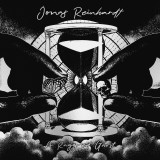
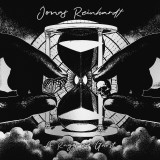
"A Ragged Ghost" is the eighth full-length album from electronic producer Jonas Reinhardt. Following albums on Kranky, Not Not Fun, Constellation Tatsu, and more, his debut release for Trouble In Mind brings together 11 new pieces that explore themes of life & death, netherworlds, and the liminal spaces in between. Taken together as a single narrative, the album offers a stirring exploration of mortality and immortality in what Reinhardt describes as 'a dance of religious syncretism, navigating spaces between the living and the dead'. "A Ragged Ghost" finds him synthesizing influences organically from familiar teutonic strains to the intense austerity of early 21st century electronic pioneers such as Biosphere and Susumu Yokota. A whisper of the Italo-disco-esque romps of Jonas' 2012's "Foam Fangs" EP & 2013's "Mask of The Maker" LP merge with his more kosmische leanings into a sinister, slightly funky, but also studious suite that at times feels like a lost sound library record from the KPM archives. Openers "Ape & The Universal Axis" and "In Lotto Commodore" decidedly sound like a selection from a lost film score while others like the bubbling "Sly Tomb" recall the works of Roedelius or Vangelis' serene soundscapes. Meanwhile, fans of the electro-ambience of Manuel Göttsching's strobe-light, proto-house (on his seminal "E2-E4") or the pulsing insistence of John Carpenter's visceral non-horror scores (i.e. "Escape From New York" or "Assault on Precinct 13") will find a lot to love about songs like "Tumb Tumb" and "Wretched Orchestra of Armistice".
"A Ragged Ghost" is the eighth full-length album from electronic producer Jonas Reinhardt. Following albums on Kranky, Not Not Fun, Constellation Tatsu, and more, his debut release for Trouble In Mind brings together 11 new pieces that explore themes of life & death, netherworlds, and the liminal spaces in between. Taken together as a single narrative, the album offers a stirring exploration of mortality and immortality in what Reinhardt describes as 'a dance of religious syncretism, navigating spaces between the living and the dead'. "A Ragged Ghost" finds him synthesizing influences organically from familiar teutonic strains to the intense austerity of early 21st century electronic pioneers such as Biosphere and Susumu Yokota. A whisper of the Italo-disco-esque romps of Jonas' 2012's "Foam Fangs" EP & 2013's "Mask of The Maker" LP merge with his more kosmische leanings into a sinister, slightly funky, but also studious suite that at times feels like a lost sound library record from the KPM archives. Openers "Ape & The Universal Axis" and "In Lotto Commodore" decidedly sound like a selection from a lost film score while others like the bubbling "Sly Tomb" recall the works of Roedelius or Vangelis' serene soundscapes. Meanwhile, fans of the electro-ambience of Manuel Göttsching's strobe-light, proto-house (on his seminal "E2-E4") or the pulsing insistence of John Carpenter's visceral non-horror scores (i.e. "Escape From New York" or "Assault on Precinct 13") will find a lot to love about songs like "Tumb Tumb" and "Wretched Orchestra of Armistice".
40-plus years since its original release, the pop-punk-new wave inventions of Anthony
Moore’s ‘Flying Doesn’t Help’ are freshly remastered, blasting the sparkling, angular
sounds into today with perfect vitality.
After spending the early years of the 1970s making experimental music first as a solo
artist, then with Slapp Happy and Henry Cow, 1976’s ‘OUT’ sessions had reinvigorated
Anthony’s youthful love of the naive pop melodies of pop radio, the undeniable excitement
of songs. While ‘OUT’ ultimately went unreleased at the time, the iconoclasm clouding the
late ’70s air was addictive and transformative for Anthony. England seemed to be roiled
as violently as it had been in counter-cultural days a decade earlier; the UK pop charts
breathlessly reflected the changing spectrum with equal parts aging hippie and prog
delicacies alongside new ascendant sounds: rough-hewn pub and punk rock, plus dub
reggae and disco and ska and Stiff and Krautrock. This proved to be an ideal environment
for Anthony to make records by exploring, as he puts it, the “deep connection between
minimalism, repetition, working with tape and celluloid and forming the modules of a
three-minute pop song.”
Caught up in a no-holds-barred era, Anthony was more than happy to play the out-of-hishead madman, raving through outrageous exchanges with the press, while ‘Judy Get
Down’ received Single Of The Week honours from the NME (with review penned by Brian
Eno). Represented by Blackhill Enterprises, Anthony did production work throughout
1978-1979, on Kevin Ayers’ ‘Rainbow Takeaway’, Manfred Mann’s Earth Band’s ‘Angel
Station’ and the first This Heat album, meanwhile cutting his own songs on a dead time
deal at Workhouse Studio with engineer / producer Laurie Latham. Through the wee
hours of countless nights, the two pieced together ‘Flying Doesn’t Help’, with a little help
from friends (an inspired bunch, including Bob Shilling, Charles Hayward, Chris Slade,
Robert Vogel, Festus, Matt Irving, Sam Harley, Bernie Clark, Edwin Cross and Martine
Moore on the telephone).
Building upon the axis of pop and experimental impulses that distinguished ‘OUT’, and
informed further by the raw sensibilities exploding everywhere, ‘Flying Doesn’t Help’
blasts out of the speakers with its own unique blend of sophistication and aggression,
Anthony’s keyboard flashes between arpeggiations and outright stabs among the noise of
slicing guitars, funk basslines and the reverbed blare of the drumkit. Opening with
Anthony’s greatest hit, ‘Judy Get Down’, and containing a noise-laden remake of the
Slapp Happy/Henry Cow number, ‘War’, among other delightful sweet-and-salty
confections, ‘Flying Doesn’t Help’ never stops moving, fuelled with raw outrage and dark
satirical intent, churning with the energy of next-gen types like Tubeway Army and DEVO,
while shimmering with the elegance of the still-challenging old guard types, like Cale and
Bowie.
Clearly, ‘Flying Doesn’t Help’ was steeped in the time, and the original release reflected a
deep mistrust of the corporation mindset. Information was a dubious concept, and
connections to any recognizable organization were seen as untrustworthy, so facts like
musician credits were left out of the package, and even Anthony’s name was altered (he
was credited as A. More on the album and Tony More on a single release). The label
name QUANGO was conceptual as well, standing for ‘Quasi Autonomous NonGovernmental Organization’; each record was sealed with red tape that the listener was
required to cut through in order to get to the music. Rather than recreate the conditions of
the original release of ‘Flying Doesn’t Help’, this reissue instead embraces the changed
environment of the current time and place: instead of no credits, now they are complete,
with Anthony’s full name restored and even the artwork subtly ‘relocated’ to reflect a new
set of relationships. All of which brings the forward-looking sounds of ‘Flying Doesn’t Help’
into the more independent-minded 21st Century syntax where it belongs.
Limited Edition 180g Vinyl LP! All-Analogue Mastering by Kevin Gray!
Pressed at RTI!
This mid-period masterwork from jazz piano's most uncommon voice finds Monk and his quartet (Charlie Rouse on tenor, Ben Riley on drums and Larry Gales on bass) exploring every texture, tone and melodic turn of seven expansive tracks. This group was subtle, mature and confident, easily supporting Monk's more idiosyncratic side-tracks (check out the solo on "Locomotive" or the restless exposition on "Japanese Folk Song") while allowing listeners freedom to move through or contemplate all the sublime subtexts Monk conjures from the endless well of his inspiration.
This emphasis on laid back and mature presentation aided the recording as well. These master tapes sound amazing and getting them to disc was a pure pleasure. Subtle changes in atmosphere, tone and melody fill the space between the speakers, a wide soundstage and expansive dynamics the gift of music indelibly played. This is one sonic powerhouse for the ages.
Available for the first time on 180-gram 2-LP with the full performances of the original tracks and including two bonus tracks, this new Impex release gets you closer to Monk's genius than ever before. Kevin Gray and Robert Pincus used analogue master tapes and minimal processing to great effect, while original session and jacket images were culled to create the deluxe gatefold jacket. Add in the sound-of-silence pressings from RTI and you have a can't miss jazz disc ready to delight and inspire every time it spins on your turntable. Impex has pulled out all the stops on this mesmerizing Monk classic. All you have to do is get one and enjoy before they're all gone.
Soul / Electro / jazz / trip hop. It was in 2019 that Matteo (one of the 3 members of the band Chinese Man and co-founder of the label CMR) met the first musicians who would be part of the project "Matteo & Bro". Starting with guitarist Karim Addadi and bassist Christophe Lincontang (with whom he collaborates on a film score), Matteo then surrounded himself with drummer Hugo Pollon and saxophonist, flutist and Duduk (Armenian flute) player Lamine Diagne. A real desire to launch a project where the musicians are at the heart of the creative process progressively grew as the meetings went on. The artists gather in Bron (near Lyon) for the composition of the eponymous opening track. On this album we also find the voices of two female artists, Isadora (Belgium) on "Sweet Shadows" and Tania Saleh (Lebanon) on "Sakakeen", as well as General Elektriks with its keyboards and its sublime groove on several tracks ("Bina" & "Prumirim"). Between programming & electronic production, arrangements and composition, the demos take shape, the groove and the universe between soul, funk, trip hop and world music extend the desire and the production of an album. Due to the health crisis, the album is finally recorded in late 2021 with the help of Sodi, sound engineer and producer of many albums (Fela & Femi Kuti, Saul Williams, Deluxe, IAM ...). For the orchestration of the tracks "Path" and "Sakakeen", Matteo also called on Franck Lebon (film music composer) to add a cinematic dimension to these two tracks. Tracklist : 01 – Bron / 02 - Prumirim ft. General Elektriks / 03 - Sweet Shadows ft. Isadora / 04 - With S / 05 - Path ft. Franck Lebon / 06 - Sakakeen ft. Tania Saleh / 07 - Bina ft. General Elektriks / 08 – Playa
Solo bedroom-pop project of Michael Ramos (Flowertown, April Magazine, Hectorine). Mostly recorded between last Christmas and New Year's during a window of isolation at home, “Hey There Flower” preserves Tony Jay’s prowess at making beautifully eerie lo-fi pop; like a hazy memory where your favorite Sixties girl-group melody is perpetually slowed down. Without a band to practice with, Tony Jay recorded the music alone, but recruited a slew of friends to remotely record backing vocals: Karina Gill (Cindy), Griffin Jones (Galore), Kati Mashikian (Mister Baby), Alexis Harper (Al Harper), & Hannah Lew (Cold Beat). "Hey There Flower", the most recent release from the prolific and mysterious Tony Jay delivers real melodies -- both lacey with vocal harmonies and dusty with layered guitars -- as fans have come to expect. This release also carries forward and elaborates on Tony Jay's tradition of songs that express a kind of naked honesty about things we all know -- love and loneliness and all that -- while communicating at the same time a wry edge of skepticism, so that the songs are like coins spinning on edge before landing heads, tails, or lost under the couch. Tony Jay brings us into a nostalgia where we recognize moods from music of the past -- Marc Boland definitely comes to mind, as well as Velvet Underground of the Nico era, and Tony Jay even covers Francoise Hardy on this collection -- but the songs create a three dimensional space with what feels like a thousand layers so that instead of being thrown back in time, it's like stepping into a little world with its own laws of nature, of which the listener gets just a few hints. - Karina Gill, Cindy/Flowertown. “Hey There Flower” is introduced by thudding snare beats eliciting reverb-stained tattered noisy guitar scrapes, to weave abrasive shimmery emotive vibrations, imbued with shattered nostalgic dreams, lit by brittle yet dazzling forsaken keyboard flows, over submerged and distorted male vocal’s whispery deluge of obsessive longing, lonely melancholy, and dark desire to exude a hazy gritty concoction of awkward sadness and brooding unrest.” White Light // White Heat // “What Tony sketches are concise commentaries on love, loneliness and a few things in between. His mode of expression is sparse, intense, and captivating. The arrangements are invariably lo-fi and slow tempo, blanketed with a fuzzy hiss. And it only took one listen to decide that it is a very special album. It has a '60s feel, albeit washed in an eerie slowcore machine. An ace example is "September Skies", which could be the 1965 'last dance' at the prom for the introverted students.” - When You Motor Away
"bit by bit" is the first full-length release from Toronto-based singer-songwriter Evan J Cartwright. This self produced album from the go-to drummer/collaborator (The Weather Station, U.S. Girls, Brodie West) presents a highly singular songwriting vision that combines existential lyrics with masterful musicianship. Steeped in jazz melodicism, Cartwright’s trumpet-like phrasing mixed with contemporary composition presents an eclectic art song performed by an artist that could perhaps be best described as a post-modern Chet Baker. Deep poetic observations on love and time paint an affecting picture of an artist reflecting on life’s universal truths. Visual in nature, "bit by bit" places its audience within a world of musical leitmotifs extracted from field recordings of bells and birdsong. Collected during years of touring, these sounds evoke extant spaces beyond that which the music inhabits. The use of this source material in its unaltered form evokes the feeling of a technicolour European film at one moment and then, as the extrapolated melodies are meticulously translated into electronic tone bank sequences, a modernist setting the next. One carillon melody is used as the basis for a wealth of the album’s musical material before its origin is finally revealed by the chiming of bells in the last seconds of the album. The result is a fragment of space between the constructed world of the musical compositions and the candid world of documentation, inviting the listener to ponder whether those two worlds are distinct or whether the songs and music are not simply “field recordings” themselves. Throughout "bit by bit" Cartwright drops staggering revelations hiding in plain prose that often involve the contemplation of time. In I Don’t Know he states “if I only trusted time / then I would wish it all away” and nearing the album’s end he opens impossibly blue with the phrase “the impossible truth of time”, playfully inserting a pregnant pause before the word time. A drummer’s fixation, to be certain, the album’s recurring theme of time is eclipsed only by Cartwright’s contemplation of human relationships. Here he elaborates on some of the album’s subjects: “Many of the lyrics circle, and try to give a name to the illegible space between human beings. “i DON’t know” celebrates the fact that we will never truly understand what love is. Its message is one of assurance. It says that we can never really touch love, and that is ok. “and you’ve got nobuddy” refers to life’s great tragedy: that we are unable to read each others’ experiences, and in reaction to this, we separate ourselves.” The entirety of "bit by bit" is a continuous work. There is seldom a clear demarcation of where one piece ends and another begins and when this does occur, it is done crudely, as if someone is flipping through a series of broadcasted channels. At times words are sliced right out of their lines and replaced by pure tones. This is both a comical interpretation of censorship and a reminder that there are things in life that will forever remain unseen and illegible. In fact, this statement lies at the centre of the LP and although hidden beauty does reveal itself through repeated listenings, "bit by bit’s" eccentric world remains just out of reach — an imaginary second story room viewed from a crowded city street.
For his very first solo and vinyl EP, the Parisian DJ and producer NTBR offers three energetic, melodic and banging tracks, the whole embellished by a remix from Julian Muller. This EP is also a milestone for Raise Records, the production of its first vinyl, after five projects released in less than a year and a half. With Raise 001, the label launches a new series of solo EPs in order to showcase
Raise Agency artists.
Mastering duality, NTBRs productions balance between two sides, ravy and melodic, raw and subtle. Recognized and played by several artists and promoters in the biggest festivals, NTBR has already been able to perform in many of the leading venues of the European techno scene such as Griessmuehle, Fold, Rex Club and many others.
out of Stock
Last delivered 2 years ago available to reorder, subject to availability
Technology for the Afterlife (aka Victor Groth) is an ambient/new age
artist from Denmark, set to release his debut album Interpretations of
Eternity on Cracki Records in the spring.
The instrumental album explores the frontiers between faith and knowledge, consciousness and oblivion, past and future. It is about longing for a time when rationality and spirituality are not arch enemies, but one and the same.
When there is neither science nor religion: Only mythology.
out of Stock
Last delivered 4 years ago available to reorder, subject to availability
In Trux We Pux is an editorial project organized by the Porto based label and collective Favela Discos. Focusing on the city’s thriving experimental and improvised music scene, it sets out to portrait in a series of four volumes some of the characteristic sounds and collaborative practices that have been in development in Porto during the last few years.
In Trux We Pux 04 is the last in a series of four records organized by Favela Discos, set out to shine a light on Porto’s thriving experimental and improvised music scene. Throughout the collection the label tries to expose the eclectic sound and collaborative practices that have been in development in the last few years in the city by promoting the collaboration between artists and the creation of new collective improvisation pieces.
As the first album dwelled into the electronic spectre of the scene, this volume veers itself to the physical side of experimental and improvised explorations. Although there is space for outsiders manipulating the sound by electronic means, most of the music in this album is plucked, bowed, percussed or sung. The artists themselves are as varied as the music they played, among the 13 artists that collaborated for the creation of this album are many promising newcomers but also some of the more recognizable and relevant names in the scene, with the presence of the Sonoscopia founder Gustavo Costa, João Pais Filipe one of the most characteristic drummers in Portugal, and the DIY duo and underground staple Calhau!.
As we could suspect, the diverse selection of musicians, while providing us a view on the various kinds of musical languages that populate the city’s scene, also creates a dynamic collection of sounds. Spanning a large gamut of sub-sub-genres, from near-musique concrète to tribal noise, the album is a rollercoaster collage that miraculously achieves logic and cohesion, like a voyeur listener taking us on a journey through an abandoned mall where most of the bands in Porto rehearse, whose halls reverberate with a cacophony of music.
The clandescent Federico Sutera and Laurent Schmidhäusler form the insidious duo Rotkeller, known for their excursions into ponderous and maundering interpretations of electronic music. Their last release on Thrènes was an experimental and perplexing delight that perpetuated their virtuosity. The Swiss pair has returned to release a pressing technoid sound on the Thrènes imprint entitled Antimatter.
The project kicks off the track 'Antimatter'. It has distinctive and emphatic patterned percussions and a wandering pad that wistfully saunders in and out. There are clever uses of claps, crisp hats and insisted clicks. The track lays the foundation of the sound to expect from the EP with comprehensive yet wonderous beats.
'DipK' follows the opening track, which has a bit more body and sways. It was made for the waning hours of a club when it might be getting bright outside, but the crowd doesn't want to leave. It has a captivating synth that runs throughout and an infectious bassline; the sound allows the mind to roam free but rhythmic drums, hits and snares make the body move.
Midway through is the Kangding Ray remix of 'Tetra4'. The French-born but Berlin-based artist is known for his mastery in blurring the lines between techno and experimental, and this track is a testament to his talents. The cut has a classic underground club feel as it simply keeps up the tempo. The oscillating synth is compounded with spacy fluttering stabs with a kick drum that adds resounding velocity to the track.
The penultimate track, 'Skpp Skpp', features B.Skupin. It has an enchanting heavy breath prominent throughout the cut, accompanied by ethereal choir chants and a deep repetitive voice before being replaced by a siren-like synth. The beats fluctuate by dropping in and out, enhanced by the catalyst of deep drums and luring drops.
The final cut is the original mix of 'Tetra4', which keeps the same modus operandi of the remix. The telling differences come in the pensive drops and ability to slow tempo momentarily with hypnotic synths and drifting rhythms.
out of Stock
Last delivered 3 years ago available to reorder, subject to availability
For Fans of Aasha Puthli, Grace Jones, Minnie Ripperton, The Supremes, Love Apple, Liquid Liquid, ESG. Say She She's debut 45 features "Forget Me Not," an homage to New York City's Guerilla Girls and to all the women's rights and protest movements who have paved the way for change. Doused in the funkiest rhythm section and bursting at the seams with harmonies, the song is a psychedelic siren's call to disrupt and dismantle male dominated spaces. "Blow My Mind" is the fiery and seductive B-side. A song about returning to reignite the fire of a former flame you still carry the torch for - even after all these years. The impassioned and sultry cries "Mayday in my heyday, crying out for you to save me!" teeter between youthful yearning and blazing independence. Let the dreamscape bridges guide you to climactic hindi riffs, accented with operatic cries that will lift you yonder.
out of Stock
Last delivered 4 years ago available to reorder, subject to availability
Delete My Feelings is The Let Go's debut EP on Chess Club Records. The mixtape features self-produced bangers 'Woke' and 'Vegas' as well as current single 'Last Year's Model Club', which features additional production from Oscar Scheller (PinkPantheress, Arlo Parks, Ashnikko). The Let Go are Cole and Scout, 19-year-old Washington natives who relocated to the UK to attend LIPA in Liverpool. They write and produce all their own work together, with influences ranging from The 1975 and Billy Joel to Brockhampton and Dominic Fike, drawing influence from bedroom pop, hip hop, punk, indie and everything in between to create their own unique sonic landscape made for the here and now. Since releasing 'Woke', The Let Go have been featured on BBC Radio 1 as Jack Saunders’ Next Wave, and in tastemaker publications like FADER, DORK, DIY, CLASH & on NME's playlists. The duo will be heading out on tour with The Night Cafe and Daisy Brain in February, and with packed rooms at Sound City and Live at Leeds festivals under their belts already, The Let Go are poised to become one of the most exciting new acts in the UK in 2022.
Delete My Feelings is The Let Go's debut EP on Chess Club Records. The mixtape features self-produced bangers 'Woke' and 'Vegas' as well as current single 'Last Year's Model Club', which features additional production from Oscar Scheller (PinkPantheress, Arlo Parks, Ashnikko). The Let Go are Cole and Scout, 19-year-old Washington natives who relocated to the UK to attend LIPA in Liverpool. They write and produce all their own work together, with influences ranging from The 1975 and Billy Joel to Brockhampton and Dominic Fike, drawing influence from bedroom pop, hip hop, punk, indie and everything in between to create their own unique sonic landscape made for the here and now. Since releasing 'Woke', The Let Go have been featured on BBC Radio 1 as Jack Saunders’ Next Wave, and in tastemaker publications like FADER, DORK, DIY, CLASH & on NME's playlists. The duo will be heading out on tour with The Night Cafe and Daisy Brain in February, and with packed rooms at Sound City and Live at Leeds festivals under their belts already, The Let Go are poised to become one of the most exciting new acts in the UK in 2022.
Rock 'n' roll is often hard to define, or even to find, in these fractured
musical times - But to paraphrase an old saying, you know it when you
hear it - And you always hear it with The Wallflowers
Exit Wounds, which stays true to its title, is an album that is an ode to people -
individual and collective - that have, to put it mildly, been through some stuff. 'I
think everybody - no matter what side of the aisle you're on - wherever we're going
to next, we're all taking a lot of exit wounds with us,' says Jakob Dylan. 'Nobody is
the same as they were four years ago. That, to me, is what Exit Wounds signifies.'
To be sure, Exit Wounds is populated by scarred souls and the things they carry
with them. Those are your exit wounds. And right now, we're all swimming in
them. Pressed on Pink and Purple Splatter Color Vinyl.
Blame It On Gravity is the seventh studio album and the first new album
in 4 years from alt-country pioneers Old 97's
The album finds the band turning up the amps and returning to the satisfying
crunch with a mix of rock, punk, pop and classic country that defined the band's
sound on earlier albums. The band credits the new album's enthusiasm to their
return to their hometown of Dallas, TX to record, the first time since their initial
independent release. The band, still comprised of original members Rhett Miller,
Murry Hammond, Ken Bethea and Philip Peeples, deliver what they believe is the
finest album of their 15-year career.