Calvin Love is a Canadian singer-songwriter, composer, and producer from Edmonton, Alberta, now based between Edmonton and Los Angeles. With a sound that blends noir-tinged folk‑pop, crooning rock ’n’ roll, and cinematic storytelling, Love has become a distinctive voice in the international indie landscape. His music has drawn comparisons to Roy Orbison, Leonard Cohen, and Bryan Ferry, with Aquarium Drunkard describing his work as “a crestfallen soundtrack of near‑escape… like Chris Isaak trapped in a David Lynch film.”
Since his debut New Radar (2012), Love has released a run of acclaimed records including Super Future (Arts & Crafts, 2015), Highway Dancer (2018), Night Songs (2020), and Lavender (2021). Along the way, he has collaborated with renowned producers and artists such as Gus Seyffert (Beck, Roger Waters, Black Keys) and the late Richard Swift (The Shins, Damien Jurado), while earning coverage from outlets including SPIN, The Fader, Interview Magazine, and Stereogum.
A seasoned live performer, Love has toured extensively across North America, Europe, and Asia, appearing at festivals such as SXSW, Pop Montréal, Strawberry Festival (China), Endless Daze (South Africa), and Sled Island. He has shared stages with Morrissey, Mac DeMarco, Courtney Barnett, Jonathan Wilson, The Divine Fits, and Jim James, performing in iconic venues like Carnegie Hall, The Troubadour, and Hollywood Forever Cemetery.
In early February 2026, Love releases his seventh studio album, Throw My Shadow To The Sun — a bold, visceral statement that captures him at a new creative peak. Self‑produced and recorded by Reverend Baron at The Ladder Factory in East Los Angeles, the album channels raw, unfiltered energy into a late‑night rock ’n’ roll atmosphere built on moody grooves, gritty textures, and Love’s unmistakable croon.
The sessions brought together a formidable live band: Josh Da Costa (Drugdealer) on drums, Brent Randall (Vanity Mirror) on bass, Davey Chegwidden (De La Soul, Ghostface Killah, Raekwon, Too Short) on percussion, Jeremy Brian Gill (Curtis Harding) on tenor saxophone and flutes, Daniel E. Garcia (Reverend Baron) on lead guitars, and multi‑instrumentalist Laena Myers (White Fence, Orville Peck, El Mariachi Bronx) on violin.
From the hypnotic sway of “Underneath It All,” to the reverb‑drenched sax of “Forever Feels,” to the heavy sludge‑rock crush of “Setting Sun,” Throw My Shadow To The Sun draws from the lyrical storytelling of Dire Straits, the laid‑back blues of JJ Cale, and the timeless melodic drama of Roy Orbison. The result is a cohesive, lived‑in record that transforms fleeting moments and late‑night impressions into something enduring and cinematic.
Поиск:t groove
Все
Mit „Future Soul“ erweitert die Tedeschi Trucks Band ihren Horizont, ohne dabei ihre Wurzeln zu verlieren.
Produziert wurde das Album von dem genreübergreifenden Mike Elizondo (bekannt für seine Arbeit mit
Brothers Osborne, Dr. Dre, Twenty One Pilots und Turnstile). Darauf erkundet das 12-köpfige Ensemble
tiefere Grooves und reichhaltigere Texturen als je zuvor.
Der feurige Titeltrack „Future Soul“ besticht durch ein kraftvolles Riff und explosive Vocals – ein Beweis dafür, dass die Band nach wie vor pure Rockenergie entfesseln kann, wenn sie will. „Crazy Cryin’“
strotzt vor rohen Emotionen und verbindet Gospel-Harmonien und Blues-Grit auf klassische TTB-Art,
während „Who Am I“ einen nachdenklichen Ton anschlägt und Susan Tedeschis gefühlvolle Stimmgewalt
und Derek Trucks’ lyrisches Gitarrenspiel in perfekter Balance präsentiert.
Textlich blickt das Album ebenso nach vorne wie nach innen – es setzt sich mit Identität, Widerstandsfähigkeit und Hoffnung in unsicheren Zeiten auseinander. Elizondos Produktion fügt subtile moderne
Akzente hinzu – warme Bässe, vielschichtige Percussion und Raum für die Bläser und Hintergrundgesänge,
ohne dabei das organische Zusammenspiel zu opfern, das die Live-Magie der Band ausmacht.
Future Soul ist sowohl eine Neuerfindung als auch eine Bestätigung: ein lebhaftes neues Kapitel für eine
der beeindruckendsten Bands Amerikas.
- A1: Hard To Deal
- A2: Soul Tricker
- A3: Ladies
- A4: Once Upon A Time
- A5: Burning Land
- B6: Bliss & Joy
- B7: Raise Your Hands
- B8: Fall Guy
- B9: Madness
- B10: Ravish Holy Land
- B11: Top Of The Bock
Coloured Vinyl[28,15 €]
Born in Douarnenez, at the far edge of Brittany (France), Komodor has quickly established itself as one of the most vibrant names in the French rock landscape. Their high-energy rock, fueled by fuzz, sweat, and vocal harmonies woven in the spirit of MC5 and T. Rex, immediately drew attention: Rolling Stone, Rock & Folk, Libération and Rock Hard Germany all praised the fiery impact of their debut album Nasty Habits (which sold over 2,000 vinyl copies). Since then, the quintet has mostly lived on the road: a long European tour, followed by the larger-than-life saga of Komodrag & The Mounodor, carrying them to stages such as Hellfest, Les Vieilles Charrues, and the Francofolies de La Rochelle, among many others.
Their second album, Time & Space, reveals a band in full metamorphosis. Without abandoning the explosive force that defines them, Komodor widens its scope: volcanic riffs, more sinuous grooves, mist-laden harmonies, psychedelic flashes… The energy is still wild, but more inhabited, more liberated, almost ceremonial at times. The record opens with two telling bursts: Bliss & Joy, a libertarian charge with the feel of a manifesto, and Soul Tricker, a rock incantation where trance overtakes sheer electric assault. Two sides of the same coin, pulled taut between urgency and enchantment.
On stage, Komodor remains a true shockwave, forged across European festivals (Freak Valley, Motocultor, Fête du Bruit, and more) and now awaited at the legendary Desertfest London. Their music feels made for such spaces: a visceral, flesh-and-amp kind of rock, drawing from the seventies’ heritage to speak even more vividly to the present. A band moving forward at full volume, without nostalgia or calculation, carried by a simple conviction: as long as the amps are hot, rock can still burn.
In short: Komodor is the band of friends from Douarnenez bringing pencil-and-paper rock into the streaming age while preserving its analog soul (with the album mastered at the legendary Miraval Studios), the smell of warm tubes, the grain of vinyl. With this second album, they hit harder, truer, and more vividly than ever.
Time & Space stands as a “must-have French rock record”, a tangible piece worth cherishing in any collection.
Born in Douarnenez, at the far edge of Brittany (France), Komodor has quickly established itself as one of the most vibrant names in the French rock landscape. Their high-energy rock, fueled by fuzz, sweat, and vocal harmonies woven in the spirit of MC5 and T. Rex, immediately drew attention: Rolling Stone, Rock & Folk, Libération and Rock Hard Germany all praised the fiery impact of their debut album Nasty Habits (which sold over 2,000 vinyl copies). Since then, the quintet has mostly lived on the road: a long European tour, followed by the larger-than-life saga of Komodrag & The Mounodor, carrying them to stages such as Hellfest, Les Vieilles Charrues, and the Francofolies de La Rochelle, among many others.
Their second album, Time & Space, reveals a band in full metamorphosis. Without abandoning the explosive force that defines them, Komodor widens its scope: volcanic riffs, more sinuous grooves, mist-laden harmonies, psychedelic flashes… The energy is still wild, but more inhabited, more liberated, almost ceremonial at times. The record opens with two telling bursts: Bliss & Joy, a libertarian charge with the feel of a manifesto, and Soul Tricker, a rock incantation where trance overtakes sheer electric assault. Two sides of the same coin, pulled taut between urgency and enchantment.
On stage, Komodor remains a true shockwave, forged across European festivals (Freak Valley, Motocultor, Fête du Bruit, and more) and now awaited at the legendary Desertfest London. Their music feels made for such spaces: a visceral, flesh-and-amp kind of rock, drawing from the seventies’ heritage to speak even more vividly to the present. A band moving forward at full volume, without nostalgia or calculation, carried by a simple conviction: as long as the amps are hot, rock can still burn.
In short: Komodor is the band of friends from Douarnenez bringing pencil-and-paper rock into the streaming age while preserving its analog soul (with the album mastered at the legendary Miraval Studios), the smell of warm tubes, the grain of vinyl. With this second album, they hit harder, truer, and more vividly than ever.
Time & Space stands as a “must-have French rock record”, a tangible piece worth cherishing in any collection.
- 1: Carrion Crawler
- 2: Contraption / Soul Desert
- 3: Robber Barons
- 4: Chem-Farmer
- 5: Opposition
- 6: The Dream
- 7: Wrong Idea
- 8: Crushed Grass
- 9: Crack In Your Eye
- 10: Heavy Doctor
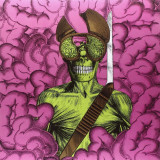
What's the first thing you think of when someone mentions Thee Oh Sees? Probably their riot-sparking live show, right? Visions of a guitar-chewing, melody-maiming John Dwyer careening across your cranium, rounded out by a wild-eyed wrecking crew that drives every last hook home like it's a nail in the coffin of what you thought it meant to make 21st-century rock 'n' roll? Yeah, that sounds about right. But it misses a more important point-how impossible Thee Oh Sees have been to pin down since Dwyer launched the project in the late '90s as a solo break from such sorely missed underground bands as Pink and Brown and Coachwhips. (While Dwyer still records songs on his own, Thee Oh Sees is now a five-piece featuring keyboardist / singer Brigid Dawson, guitarist Petey Dammit, drummer Mike Shoun and multi-instrumentalist / singer Lars Finberg.) That restlessness extends to everything from the towering, thirteen-minute title track of 2010's Warm Smile LP to the mercurial moods of 2008's The Master's Bedroom Is Worth Spending a Night In. Now, Thee Oh Sees chase the home-brewed symphonies of Castlemania with the scrappy, high-wire hooks of Carrion Crawler / The Dream. Originally envisioned as two EPs, it was cut live to tape in less than a week at Chris Woodhouse's Sacramento studio in June, reflecting the battering-ram bent of the band's live show better than any bootleg ever could. "As I'm sure most would agree," explains Dwyer, "Castlemania was more of a vocal tirade. This one's meant to pummel and throb." That it does, whether one blasts the slow, speaker-bruising build of "The Dream," the sunburnt organs and dovetailing guitars of "Crack in Your Eye" or the interstellar instrumental "Chem-Farmer," a perfect example of what happens when one takes a well-oiled machine-a gang of rabid road warriors, really-and adds a second, groove-locked drum set to the mix. To listen is to realize that Dwyer's music is as manic as the underground comic inclinations of his artwork; colorful and confusing in a way that's more than welcome. It's downright refreshing, like a slap in the face at 5:00 in the morning. Or, as Dwyer puts it, "You have to leave a mark somehow."
- 1: Spirit Salient
- 2: The Rebel Duke
- 3: Wrecked
- 4: Valiant Heart
- 5: Prince Of This World
- 6: Time Is Out Of
- 7: Joint
- 8: My Throbbing Heart Shall Rock Thee
- 9: Ours Is The Fall
- 10: Sweet Remembrencer
- 11: I Am Thine
It's hard to fathom Martin Bramah's trajectory from his beginnings as a guitarist/writer behind two crazily influential postpunk albums - The Fall's Live At The Witch Trials and Blue Orchids' The Greatest Hit (Money Mountain) (vocalist on the latter too, of course) - then nearly three decades of sporadic-at-best activity, offering releases just frequently enough to remind fans of his peculiar brilliance . . . before another stay in the void. Chalk it up to what you want - Mark E. Smith's utter usurpation of The Fall, his split from partner Una Baines after Blue Orchids' debut, the vague collapse of rash experimentation in `underground' music as early `80s nu-pop and American college rock diluted any real spirit, a few failed attempts at working with with Mark again . . . and maybe just life getting in the way. A sense of lost opportunities isn't tough to justify. Inasmuch as Martin was originally the singer for The Fall - Mark began as guitarist but couldn't play! - and given that the group's mythology was born in an era before that gang of Mancunian misfits had even thought of playing, it's high irony that 49 years after The Fall began, Martin has both become wildly prolific and the leader of a band with more rights of inheritance to The Fall's credibility than any other living person could justify . . .yet the band isn't remarkable for that as it is for the range and wealth extent of their collective powers and talent: two great and original guitarists, three of the UK's most daringly-skilled drummers, a genuine bass legend, and a brilliant spare Blue Orchid guitarist. Four albums in, the HOUSE Of ALL is getting ambitious, with each album a subtle improvement on the last, forging a path away from their pasts without denying a thing. Inklings differs from the first three for not having being largely improvised at first, with sounds, rhythm, groove and melody later forged into songs. They rehearsed! They had fun doing it! They're going on an extended tour! There were even extra tracks! We'll leave it to fans and critics to sit down and analyse the specifics of it all, but Steve, Si, Pete, Phil, Karl and Martin have made a bold and powerful album unlike any other you'll hear in 2026 . . . stately, majestic, bold and worthy of a group of real survivors. In perverse form, the album will be officially announced and preceded by a song not on the album!
- 1: Minimize Interhuman Violence
- 2: Manipulated Reality
- 3: Bodies
- 4: War On The Poor
- 5: Europe's Guilt
- 6: Deranged Thoughts
- 7: Deinstitutionalization
- 8: Symbols Of Peace
- 9: Secondhand Future
- 10: Western Dystopia
"Since their formation in the latter half of 2023, Berlin’s Industry have quickly emerged into the foreground as one of the more exciting groups of the European DIY punk scene. Having released their 2024 debut LP, touring and playing festivals all over the continent, they are now back with a follow up record that’s every bit as bruising and bleak as the first.
Much has been made of how ‘on point’ Industry sound - a mid-paced cocktail of heavy toms and churning riffs recalling ‘No Sanctuary’ era Amebix or classic Killing Joke. But Industry use these sounds as a springboard rather than a template, utilising the form for genuine expression where others are tempted by retro cosplay. Their sound is pared back, pulsing, relentless but danceable. But it’s the words that result in a listen that’s engaging from start to finish, an album that’s both expressive and polemic. Just as people often describe Discharge’s lyrics as Haiku, Industry uses the band’s repetitive grooves as a wide-open canvas on which their exasperated observations are given space to land with precision. The litany of criticisms are familiar to us all - violence exacted on the poor and vulnerable by those in power, the ongoing industrialised slaughter of humans and animals, the disastrous consequences of colonialism, the list goes on… The world in 2025 is fucked, and even though they say they ‘can’t even look’, this band has got their eyes wide open."
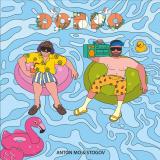
The DOBRO vinyl and cassette label has made a great record again. This time it's a split release by two A's of the label's residents from Russia. Anton Mo has settled on the a-side with fun disco house tracks, and Stogov has beautiful and groove house on the b-side. You will like the record both for listening at home and for the dance floor.
Next year, Earthtones Recordings (which was renamed to Seasons Recordings after ten releases) marks the significant milestone of 30 years in the game. Ahead of that, they have been digging in the vaults for some choice reissues and this hugely in demand one from Natural Rhythm gets the nod. It has been remastered and is a joyous house outing with 'Original Jive' layering up cascading jazz keys with soulful pads and moving drums. 'Earthtones 001' is the beatless sound of a humid jungle, then 'Eclectic Dub' reworks the original with a more stripped-down and focused, groove-driven sound. 'Dub Drums' closes a vital reissue.
- A1: Harris & Orr - Spread Love
- A2: Terry And Deep South - Trying To Get By
- A3: Toshiyuki Honda - Burnin' Waves
- A4: Igna Igwebuike - Disco Bomp
- B1: Janette Renee - What's On Your Mind (Super Club Remix)
- B2: Grupo Serenata - Sodade, Tem Pena D’mim
- B3: Vital Disorders - Zombie
- B4: Alphonsus Idigo - Flight 505
- C1: Dj Food - Peace (Harvey's 30 Something Mix)
- C2: Man Jumping - In The Jungle
- C3: Stars - Dancin’ People
- D1: Gaucho - Dance Forever (Club Version)
- D2: 49Th Floor - Night Passage (Bongo Mix)
- D3: Orion Agassi - Desacato
- D4: Fatdog - Remember Feat Cj Raine
yellow vinyl[28,15 €]
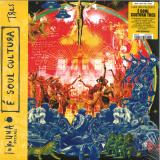
With two deeply cherished compilations already in the bag, Luke Una steps up for the third volume in his É Soul Cultura series on Mr Bongo. A love letter to the dancefloor and its power to unite people from all corners of society amid growing division and extremist politics. Genre-spanning in nature, the 15 tracks travel between cosmic soul, boogie, proto-house, slo-mo technoid grooves, drum machine afro, astral bass-bugging futurism, jazz funk, dance, and disco. Each having the ability to move the body as much as the heart.
From his formative years in Sheffield to co-founding Manchester’s much-fabled Electric Chair with Justin Crawford, through to helming the iconic LGBTQ institutions of Homoelectric / Homobloc, Luke has spent 40 years immersed in dance music. His latest outlet, É Soul Cultura, has grown from a label to a globe-spanning events series with Luke holding residencies and embarking on tours across the world from Japan and Australia to America and Europe.
“For me, the dancefloor was never about a one-dimensional, thudding, 130 BPM beat only. It's a much more dynamic, broader vision than that. I cut my teeth in an era where a 100 BPM record had as much impact, excitement, and energy as a 134 BPM dancefloor jazz funk or techno record”, Luke mentions. É Soul Cultura Volume 3 is the perfect embodiment of that notion: “It’s about four decades in the trenches playing dance music, the late-night afters, the shebeens, the basements, warehouse parties, the eight-hour journeys in East London, through to festival sets at Houghton and We Out Here. It’s music unconstrained by genre or tempo and more about making your body move”.
But this isn’t simply a collection of disparate dance tracks; they carry meaning and soul. “It’s less about escapism, more about reconnection. My experience of post-covid has been the coming together of all the clans in various clubs and gatherings. A reaction to a very toxic world out there, where the aggro rhythms of division have sought to divide us, and people don't meet as often. The coming back together face-to-face in clubs has encouraged a real love in the air, there's a real togetherness and collective spirit”.
Opening up the compilation is a track that channels that very message, the transcendental, soul-rousing Harris & Orr ‘Spread Love’. Joining the dots from there, to the low-slung deep house closer of Fatdog ‘Remember’, you’ll find electronic drum machine Nigerian funk, sitting side by side with dancefloor Cape Verdean brilliance, a post-punk cover of Fela Kuti, rubbing shoulders with cosmic electro, and an Una-championed, 8-minute, kickless DJ Harvey remix. There’s jazz funk in various guises moving from boogie synth to astral travelling, slo-mo acidic raw techno, and a ‘79 soul stepper, alongside swirling percussive Italo disco and tribal-charged house. All infused with an innate ability to bring people together.
As society becomes increasingly fractured, É Soul Cultura Volume 3’s message is more than movement. It’s about dance music’s power to unify people from all walks of life and break down the barriers that divide us.
- A1: Harris & Orr - Spread Love
- A2: Terry And Deep South - Trying To Get By
- A3: Toshiyuki Honda - Burnin' Waves
- A4: Igna Igwebuike - Disco Bomp
- B1: Janette Renee - What's On Your Mind (Super Club Remix)
- B2: Grupo Serenata - Sodade, Tem Pena D’mim
- B3: Vital Disorders - Zombie
- B4: Alphonsus Idigo - Flight 505
- C1: Dj Food - Peace (Harvey's 30 Something Mix)
- C2: Man Jumping - In The Jungle
- C3: Stars - Dancin’ People
- D1: Gaucho - Dance Forever (Club Version)
- D2: 49Th Floor - Night Passage (Bongo Mix)
- D3: Orion Agassi - Desacato
- D4: Fatdog - Remember Feat Cj Raine
black vinyl[28,36 €]
With two deeply cherished compilations already in the bag, Luke Una steps up for the third volume in his É Soul Cultura series on Mr Bongo. A love letter to the dancefloor and its power to unite people from all corners of society amid growing division and extremist politics. Genre-spanning in nature, the 15 tracks travel between cosmic soul, boogie, proto-house, slo-mo technoid grooves, drum machine afro, astral bass-bugging futurism, jazz funk, dance, and disco. Each having the ability to move the body as much as the heart.
From his formative years in Sheffield to co-founding Manchester’s much-fabled Electric Chair with Justin Crawford, through to helming the iconic LGBTQ institutions of Homoelectric / Homobloc, Luke has spent 40 years immersed in dance music. His latest outlet, É Soul Cultura, has grown from a label to a globe-spanning events series with Luke holding residencies and embarking on tours across the world from Japan and Australia to America and Europe.
“For me, the dancefloor was never about a one-dimensional, thudding, 130 BPM beat only. It's a much more dynamic, broader vision than that. I cut my teeth in an era where a 100 BPM record had as much impact, excitement, and energy as a 134 BPM dancefloor jazz funk or techno record”, Luke mentions. É Soul Cultura Volume 3 is the perfect embodiment of that notion: “It’s about four decades in the trenches playing dance music, the late-night afters, the shebeens, the basements, warehouse parties, the eight-hour journeys in East London, through to festival sets at Houghton and We Out Here. It’s music unconstrained by genre or tempo and more about making your body move”.
But this isn’t simply a collection of disparate dance tracks; they carry meaning and soul. “It’s less about escapism, more about reconnection. My experience of post-covid has been the coming together of all the clans in various clubs and gatherings. A reaction to a very toxic world out there, where the aggro rhythms of division have sought to divide us, and people don't meet as often. The coming back together face-to-face in clubs has encouraged a real love in the air, there's a real togetherness and collective spirit”.
Opening up the compilation is a track that channels that very message, the transcendental, soul-rousing Harris & Orr ‘Spread Love’. Joining the dots from there, to the low-slung deep house closer of Fatdog ‘Remember’, you’ll find electronic drum machine Nigerian funk, sitting side by side with dancefloor Cape Verdean brilliance, a post-punk cover of Fela Kuti, rubbing shoulders with cosmic electro, and an Una-championed, 8-minute, kickless DJ Harvey remix. There’s jazz funk in various guises moving from boogie synth to astral travelling, slo-mo acidic raw techno, and a ‘79 soul stepper, alongside swirling percussive Italo disco and tribal-charged house. All infused with an innate ability to bring people together.
As society becomes increasingly fractured, É Soul Cultura Volume 3’s message is more than movement. It’s about dance music’s power to unify people from all walks of life and break down the barriers that divide us.
- 01: The Lake Will Give You Everything You Need
- 02: Sounding The Voice (Feat. Koleka Putuma)
- 03: The Poetry Of The In-Between
- 04: Iqhude: A Tale Of Horns And Bones
- 05: I Am Because You Are
- 06: Portals
- 07: A Basic Guide To String Theory (Feat. Shane Cooper)
- 08: Everything Is Connected To Everything (Feat. Ben Lamar Gay &Amp; Gontse Makhene)
- 09: We Oscillate, We Modulate
- 10: Mothers
Pioneering Swiss trombonist and composer Andreas Tschopp marries contemporary jazz with South African horns and homemade ocarinas, creating a record quite unlike anything you've heard before. "What if We Align Our Breath" disregards the curvature of borders, genre, and time itself - tugging a thread through the history of wind instrumentation with ghostly agility.
At the heart of the record lie spiralling, bonelike kudu (antelope) horns - instruments that have lent their stirring calls to indigenous South African rituals and signalling systems for millennia. These horns are clustered, harmonised and stretched beyond their godly usage by Tschopp - his extended techniques coaxing an array of melancholy, playful voices to canter through the album.
Flourishes of trombone, alpine flutes and a stellar supporting cast on double bass (Shane Cooper), cornet (Ben LaMar Gay), udu drums (Gontse Makhene) and spoken word (Koleka Putuma) bring groove, countermelody and a sense of earthy introspection to the proceedings. This is inconceivable music: a sighing tapestry of brass, clay and bone that hints at some preconscious connectedness, tracing figures that rejoice, exhale and embrace outside of time.
Recommended if you like Francis Bebey, quantum physics, peat bogs.
- 01: Intro
- 02: Lunaire
- 03: Le Monde Est À Nous
- 04: Laisses Les Enfants Courir
- 05: Café Serré
- 06: Balle De Baseball
- 07: Interlude Palmier
- 08: En Solo
- 09: La Voix Lactée (Feat Natacha Atlas &Amp; Samy Bishai)
- 10: En Pas Sautés
- 11: Les Mots Se Lèvent
- 12: Monte Les Sirènes
Palmier is producer and rapper Rocé's new album. At the crossroads of Sade and Rakim, the album unfolds an impeccable flow over gentle melodies, the mellow sound of the saxophone softening the sharpness of the spoken truths. Rocé delivers a melody of hope, and appreciation of determination in the face of the impossible. "La Voie Lactée" features the captivating voice of Natacha Atlas and the sublime orchestrated violins of Samy Bishaï, the whole thing wrapped up in the style reminiscent of Isaac Hayes' soul and Portishead's trip-hop. "Laisse les enfants courir" reveals a soulful hip-hop, between powerful groove and relentless flow, where Rocé blends political lucidity and poetic verse while Cisko's subtle arrangements sculpt an organic, sensitive landscape, poised between tension and serenity. On "Lunaire", Rocé surprises us right away, with a sharp and melodic flow. Driven by powerful imagery and sharp lyrics, the track transforms anger into creative energy. It portrays an artist outside the mainstream, aware of the world's failings but determined to create his own haven. Palmier embodies themelancholy of unfinished struggles, perseverance, and the promise of a brighter dawn.FEAT. NATACHA ATLAS & LE VIOLONISTE SAMY BISHAI
Strut Records highlights a landmark in British jazz-rock with Second Wind, the 1972 album from keyboard visionary Brian Auger and his powerhouse group Oblivion Express. Capturing a fully matured lineup, the record finds Auger expanding his fusion language - bridging jazz sophistication, funk-driven rhythm, and soul-infused songwriting with the clarity and fire that defined his early ’70s work.
Though Auger’s roots lie in the lineage of hard-swinging jazz organ and the improvisational fire of the ’60s British scene, he has never been an artist content with tradition. With Second Wind, he moves further into a hybrid language that fuses rhythm with harmonic depth and groove, without sacrificing sophistication. His playing is expansive yet precise, translating the electricity of live performance into a studio work that breathes with immediacy.
At the heart of this era of Oblivion Express is the telepathic rapport among its members. Vocalist Alex Ligertwood (in one of his earliest major recordings before Santana fame) brings a soulful intensity that feels both grounded and forward- looking. Second Wind contains tracks that have become deeply significant in Auger’s discography - original compositions Second Wind, and Truth to name a few - but it was Auger's high octane revisioning of Eddie Harris' Freedom Jazz Dance, (adding new lyrics to the original instrumental) that genuinely broke barriers. The track became a DJ friendly classic and highlighted the groups deeply original approach.
The rhythm section of Barry Dean and Robbie McIntosh balances weight and fluidity, giving Auger the space to stretch across Hammond organ, Rhodes, and keys with characteristic boldness. Their collective sound is one of seamless motion: jazz-inflected lines swelling into rock-driven crescendos, funk-leaning grooves locking with vocal hooks, moments of quiet clarity emerging between bursts of improvisation.
Second Wind stands as a pivotal moment in Auger’s discography: a record that bridges the exploratory spirit of his earlier projects with the more groove-oriented approach that would soon bring international attention. More than five decades later, it remains a vivid document of a band carving out its own language. Music born of instinct, collaboration, and a restless desire to push beyond the expected.
- A1: Promises
- A2: Trouble
- A3: Shimmer
- B1: Your Love
- B2: American Dream Part Ii
- B3: Garden
- C1: Panpipes
- C2: Solo
- C3: Household Goods
- D1: Closer
- D2: Tapes & Money
- D3: Stronger
Totally Enormous Extinct Dinosaurs is the musical project of British producer, singer, and songwriter Orlando Higginbottom. Known for his emotionally rich electronic compositions and playful visual aesthetic, he emerged in the late 2000s with a sound that merges dancefoor energy with melodic songwriting. His work spans house, techno, synth-pop, and experimental electronic music, and he has earned recognition for both his solo releases and his collaborations with artists across the electronic and pop landscape.
Trouble balances introspective songwriting with dance-foor energy, positioning itself as more than just a collection of club-ready singles. Key tracks include "Garden" which features Luisa Gerstein on vocals and "Tapes And Money" which incorporates Funkadelic's "One Nation Under A Groove" The album was well received, with favourable reviews from several well- respected music publications including the NME who decribed TEED as "one of the UK's most exciting young producers." It was also DJ Magazine's 'album of the year'
Released in 1967, Open marked a bold debut for Brian Auger & The Trinity, featuring the dynamic vocals of Julie Driscoll. Music and its makers were rapidly evolving in ‘67, the UK's Jazz and R&B scenes were being influenced by pop and psychedelia and socially, musicians of many styles found common ground in London’s clubs like The Cromwellian and The Scotch Of St James where the The Beatles, US legends Wilson Pickett and Jimi Hendrix mingled with the capitals jazzers and pop stars, often loudly jamming together in even louder 'Lord Byron' shirts. 'Open' fully embraced this spirit by fusing together those genres and attitudes of the era. From the outset Auger displays his jazz rooted approach on the A side with 'In and Out' and 'Isola Natale' (later covered by one of his American jazz heroes Richard ‘Groove’ Holmes). Both showcase the Trinity's musicianship and Brian's improvisational flair. Auger himself takes on vocal duties on the raucous ‘Black Cat’, a track that became a club hit. Open is marked by its eclecticism; 'Lament for Miss Baker' is a tender, piano ballad influenced by Duke Ellington, reflecting Auger’s jazz and classical influences whilst 'Goodbye Jungle Telegraph' is a wild and crazy percussive freak out. Brian displayed not only his virtuosity but also his surrealist sense of humour with bizarre sound effects, inspired by Spike Milligan's The Goons' radio show interspersed between the tracks.
Julie Driscoll’s arrival on the album’s B side brings a sharp shift in tone. Her smoky, emotive vocals inject a soulful depth, notably on covers of Otis Redding & Carla Thomas hit 'Tramp', Aretha's 'Save Me' and The Staples Singers ‘Why Am I Treated So Bad". With original numbers 'Break It Up' and 'A Kind Of Love In' we hear the Auger / Driscoll pop infused R&B at its very best, whilst the version of Donovan’s 'Season of the Witch' stretches out into a slow-burning epic. In 2025, Open is viewed as a cult classic and testament to a unique period when genre boundaries were fluid and artistic risk-taking was the norm. Brian Auger & The Trinity’s debut captures the adventurous energy of the late 1960s. 58 years later, its importance in the development of British jazz fusion and progressive bands that followed is undeniable, with The Charlatans Tim Burgess recently commenting on Auger's Instagram that The Trinity were a 'huge influence'.
- A1: Welcome To The Mood
- A2: Sundown
- A3: Diamonds
- A4: Missing You
- A5: The Colour Of The Sound
- B1: Dominoes
- B2: Beach House
- B3: Tenderness
- B4: Desert Moon Sky
- B5: One In A Million
They also embraced a more organic, live- recording approach on Welcome to the Mood. The group explains, "Off the back of touring the last album, we had played more shows than ever and wanted to bring more of the live element into the process, so we didn't use drum breaks and loops as much as previous records and tracked live." They continued expanding their sound by bringing in specialist musicians -- string sections, brass, pianos, and backing vocalists -- pushing the sonic possibilities beyond their individual skill sets. Yet at its core, the album remains deeply personal. Written in remote hideaways, the songs carry the tranquility of escape while capturing a newfound confidence in emotional vulnerability.
Thematically, Welcome to the Mood is a rich sonic auditory tapestry woven with threads of authenticity, humanity, and creative celebration. Lyrically, the album explores universal experiences -- love, loss, connection, hope, and purpose -- drawn from the everyday yet rendered in LEISURE's distinct palette of lush tones and laidback groove. Tracks are anchored in realness but elevated by a sonic landscape that feels simultaneously nostalgic and futuristic, mirroring the ethos of Frank Lloyd Wright, whose Taliesin West provided literal and symbolic inspiration during the album's visual journey.
Another Squid inks its way into existence. The new project from northern operator
Accented Measures, whose synth tower stacks taller than the horizon it’s aimed at. A self
made groove patroller, Aqua Surf releases four well swung jewels of power, an ode to
motion, pressure, and late night systems thinking.
Each track is cut from the same cloth but bent at a slightly different curve, offering a
focused glimpse into the Aqua Surf orbit. You’ll find heavy nods to the Quasimidi
classics, early Korg rompers, quirky Roland workstations and lost dub style vocal
fragments strung throughout the EPs play through. Ultimately, the record is a multi
planetary trip built on MPC sequences, where swing does the steering and texture does
the talking.
Functional but curious, these are tracks designed to travel through rooms, through
bodies, through time slots where the lights stay low and the floor stays sweaty.
- A1: Code 718 - Equinox (Heavenly Club Mix)
- A2: Cls - Can You Feel It (In House Dub)
- B1: George Morel - Let's Groove
- B2: Kcyc - I'm Not Dreaming (Mystipsychotix Mix)
- C1: Hardrive - Deep Inside
- C2: Groove Patrol - Need Your Love (Original Mix)
- D1: Lou² - Freaky (The "Bar Heads" Mix)
- D2: Wink - Higher State Of Consciousness (Tweekin Acid Funk)
Repress!
Legendary NYC house label Strictly Rhythm is celebrating a mammoth 3 decades of cutting edge, roof-raising house music. Truly a benchmark. Originally founded in 1989 by the dynamic pairing of music industry man Mark Finkelstein and A&R expert Gladys Pizarro, Strictly tapped directly into the fertile New York underground and after hours club scene, helping to launch and bolster the recording careers of dance music luminaries like Armand Van Helden, Roger Sanchez, Ultra Nate, Todd Terry, Wamdue Project, DJ Sneak, Louie Vega and many more. Strictly Rhythm is easily one of the most recognisable and respected dance music powerhouses of all time.
Across 3 limited double vinyl offerings, the Strictly catalogue has been expertly picked over to present you with a snapshot of some of the most earth shattering house music to emanate from the streets of New York City. A who's who of producers and artists, all killer and no filler. End to end classics that help to tell the story of one of dance music's most well loved labels. Classic cuts and essentials from Danny Tenaglia (Code 718), George Morel, Kerri Chandler (KCYC), Louie Vega and more all feature on part 1 in their unedited, 12" mix glory.
Fully legit, remastered and selected with love courtesy of Strictly Rhythm and Above Board distribution for 2020. Happy birthday Strictly Rhythm!