The MENZINGERS are an absolute institution. The Philadelphia punk legends’ multi-decade reputation as road warriors with an unbeatable catalog is cemented as hard truth—and their seventh album, Some Of It Was True , stands as their most immediate-sounding and energetic record to date. The follow-up to 2019’s sensational Hello Exile accomplishes the daunting task of capturing The MENZINGERS’ distinctive live energy in the confines of the studio, resulting in a sound that’s both rich, raw, and complementary to the group’s increasingly prismatic songwriting approach. More than 15 years in, the MENZINGERS are still holding their listeners square in the immediate present, and Some Of It Was True documents that power in thrilling fashion. “We wanted to make a fun record and write songs that we wanted to play live, and that’s exactly what we did,” co-vocalist/guitarist Greg Barnett says “We’ve always said that we want every album to sound live, but we never recorded an album live before. This was the first time we committed to that idea. We wanted to sound like how our band sounds onstage.” Making the process easier: Grammy-nominated producer Brad Cook (Bon Iver, the War on Drugs, Waxahatchee), who joined The MENZINGERS in El Paso’s legendary Sonic Ranch studios and lent his incredible ear for raw, immediate sound to help the band achieve Some Of It Was True‘s in-the-room live feel. “ T H E M E N Z I N G E R S are as real as it gets,” Cook says on his time in the studio with the band. “I had an absolute blast working with these guys and was moved to tears many times. They are truly dedicated to artistic growth, and to each other, in ways I found both refreshing and beautiful. I am now a lifer.”
Cerca:t move
Skylax Records Is Proud to Introduce You to the Sound of Uk Artist De La Phoenix, Introducing "Dancefloor Fatale" - an Explosive 12 Inch Driven by the Revolutionary Soundscape Crafted by Klf, Kraftwerk, and the Infectious Allure of Italo Disco. This Ep Unleashes a Formidable Assault on the Dancefloor, Merging Futuristic Beats, Pulsating Rhythms, and Infectious Melodies. "Dancefloor Fatale" Showcases Five Electrifying Tracks: "1991 Ultra," a Nostalgic Homage to the Early '90s; "Dancefloor Fatale," an Irresistible Anthem Commanding Bodies to Move; "Blade Runner," a Cybernetic Voyage Through Dystopian Soundscapes; "Prometheus," an Epic Odyssey of Melodic Euphoria and Sonic Rebellion; and "The Rite," a Ritualistic Experience Defying Conventions. These Tracks Resonates With the Spirit of Resistance, Igniting Raves in Northern England During the Era of the Criminal Justice and Public Order Act. De La Phoenix's Sonic Artistry Proudly Follows in the Footsteps of Justified Ancients of Mu Mu. Embark on a Bold Auditory Journey That Challenges Norms and Leaves an Indelible Mark. "Dancefloor Fatale" Epitomizes De La Phoenix's Innovative Vision, Pushing Sound Boundaries to Invigorate the Electronic Music Scene. Brace Yourself for a Revolution That Captivates and Energizes....
Ty Segall follows 2022"s acoustic introspection opus "Hello, Hi" with a deeper, wilder journey to the center of the self. With Three Bells, he"s created a set of his most ambitious, elastic songs, using his musical vocabulary with ever-increasing sophistication. It"s an obsessive quest for an expression that answers back to the riptide always pulling him subconsciously into the depths. Questions we all ask in our own private mirrors are faced down here - and regardless of what the mysterious "Three Bells" mean in the context of the album"s libretto, you can be assured that Ty"s ringing them for himself, and for the rest of us in turn.
As the BBE Music J Jazz Masterclass Series hits its 19th title, the milestone is suitably matched by a collaboration between two giants of jazz brought together to deliver an exceptional album, working with a band of the very best Japanese jazz musicians. ‘Reminicent Suite’ by American pianist Mal Waldron and Japanese trumpeter Terumasa Hino was originally released in 1973 on the famed Victor label and was one of several Japan-only albums recorded and released by Waldron over a thirty-year period, most of which have never been available outside Japan. ‘Reminicent Suite’ comprises two extended tracks, both taking up a side each. The title track on Side A is composed by Waldron, and is a dark, brooding heavy groove typical of his early 70s sound. ‘Black Forest’ on side B is written by Hino and is a vivid and energetic piece, layered and textured with dense percussion and Hino’s signature trumpet tone. Mal Waldron started out in the early 1950s working extensively on the Prestige label with notable figures such as Gene Ammons, Jackie McLean and Charles Mingus. Most famously, he worked with Billie Holiday before leaving the States in the mid-60s and relocating to Europe where he established himself as a major figure working across many countries including France, Italy, and Germany, where he made his home in Munich. In 1969, Waldron recorded the first releases for two major European jazz labels, ECM and Enja, before visiting Japan on tour for the first time in 1970. Waldron instantly fell in love with Japan and, over the next three decades, extensively toured and recorded there for numerous labels. Terumasa Hino is one of the towering figures of post-war modern jazz in Japan. Coming to prominence via the Hideto Shiraki and Sadao Watanabe bands in the mid-60s, Hino soon emerged as one of the prime movers in new jazz generation that changed the direction of jazz in Japan. He explored a more open, freer, and improvised sound, mixing psychedelic and rock elements with freeform and post-bop jazz. Hino recorded for many of the leading jazz labels of the era including Columbia, Three Blind Mice, and East Wind and would go on to relocate to the US in the mid-70s, immersing himself with the leading fusion players of the New York scene including Larry Corryell, Mtume, Al Foster, Dave Liebman and many more. In the early 80s, Hino’s jazz funk tracks were dancefloor smashes on the UK jazz dance scene. Joining Waldron and Hino on ‘Reminicient Suite’ is a band made up of the very best Japanese jazzman of their day: Takeo Uematsu on sax, Terumasa’s brother, Motohiko Hino, on drums, and the legendary bass master, Isao Suzuki. Together, they deliver one of the very best albums of the era, a richly articulated and dynamic session that exemplifies the very best that the Japanese jazz scene was doing in the early 1970s. ‘Reminicent Suite’ is pressed on 200g vinyl presented in a gatefold sleeve plus obi strip, with new photos by Tadayuki Naito; translated original sleeve notes; and a 7500-word essay including interview with Terumasa Hino from Tony Higgins, co-curator of the J Jazz Masterclass Series. This is the first time this album has been available outside of Japan
The first remix EP of Noema's new album, ONE, contains five exciting tracks reimagined by rising producers Kalabrese, Lauer, Mehmet Aslan, Panthera Krause, and Shubostar. Noema's ONE is a comprehensive art piece that includes music, remixes, interactive performance installations, videos, costumes, and choreography. In ONE, Noema tells the story of his interdimensional space explorations, in which he manifests as four different entities. Because of the energetic state of humanity, these entities became trapped in our dimension and now put on performances to re-power their portal, so that we can all be interdimensional again! During the performances five actors invite up to 120 people from the audience to join the action. Sun Ra meets Steve Reich meets Larry Levan - imagine it as a "happening" from the 70s.
Jakes was the commanding voice behind the Lonely The Brave sound. A master of melody, his lyrical talents enthralled audiences across Europe from supporting Neil Young in Belgium, to arenas with Biffy Clyro, to the main stage at Reading and Leeds festival. Jakes has always been uncomfortable with being the centre of attention; when playing live he would stand at the back of the stage, side on, barely saying a word to the audience between songs. A total juxtaposition to the anthemic tunes he wrote-songs that felt like they could move mountains. As Lonely The Brave grew in reputation and audience, so did Jakes' discomfort with attention and adoration. He left the band in March 2018. Fast forward five years and Jakes is back with Interlaker, a new musical project, with a new musical partner, Jack Wrench of Arcane Roots. Wrench, a skilled drummer, but also a multi-instrumentalist, became the perfect partner for Jakes. Jakes says: “Jack and I got chatting about doing some music over Instagram in the spring of2022. I'd seen Jack, a couple to times, playing with Arcane Roots, so I knew what an amazing drummer he was. It was when he started to send over fully instrumental pieces that he'd done-drums, guitar, bass and all-that I realised we could be onto a really good thing. I think the first demo we put down-we did all the demoing together over the airwaves on Logic Pro-was a track called 'Ghost ride'. So we thought we were off to a good start. It certainly wouldn't be for everyone-putting together music without being in the same room together (me in Cambridge and Jack in Brighton) but it worked out really well for the two of us. Around a year later we had 12 tracks ready to go and began the process go beginning to make a record...”
The Bronx in the 1970s, marked by the presence of notorious gangs, presented a complex and challenging urban landscape. Amidst the crumbling infrastructure and economic decline, neighbourhoods bore the scars of disinvestment, reflected in abandoned buildings and neglected public spaces. The prevalence of street gangs, such as the Ghetto Brothers, contributed to an atmosphere of heightened tension and occasional violence. Graffiti adorned subway cars and buildings, expressing both social unrest and the vibrant creativity of the community. Despite the challenges, there was a resilient spirit among residents, evidenced by grassroots efforts to address social issues. The Bronx during this era was a dynamic yet tumultuous mix of cultural expression, social struggle, and the determined spirit of a community facing adversity. The Ghetto Brothers, originating from the Melendez family who moved from Puerto Rico to the South Bronx in the 1950s, faced challenges involving violence and crime. Despite this, Benjy, a key figure, directed the group towards community improvement. The Ghetto Brothers embraced music, crafting a potent, NYC-flavored musical fusion that caught the attention of record mogul Ismael Maisonave (Salsa Records). Their collaboration resulted in the recording of eight tracks in a single electrifying day at Manhattan's Fine Tone Studios, skillfully produced by Latin studio maestro Bobby Marin (Harvey Averne, La Lupe, Brooklyn Sounds…). This musical odyssey showcases the band's ability to seamlessly blend genres, creating a NYC-flavored stew that captivates listeners with its authenticity. The hypnotic rhythms, infectious guitar riffs, and impassioned vocals reflect the Ghetto Brothers' commitment to expressing their unique experiences and uplifting their community through the universal language of music. "Power-Fuerza" is not just an album; it's a sonic testament to the Ghetto Brothers' fusion of resilience, cultural richness, and musical innovation. Each track is a vibrant tapestry, weaving together the
raw energy of the South Bronx streets and the soulful melodies born from the trio's Puerto Rican heritage. Embrace the timeless resonance of the Ghetto Brothers’ “Power-Fuerza”, one of the best Latin funk albums ever recorded…
- A1: Open Space
- A2: Green Valley
- A3: Caretera Pnamericana
- A4: Goodmorning Sun
- A5: To-Day's Sound
- A6: Free Dimension
- B1: Truck Driver
- B2: Blue Lagoon
- B3: Wanderer
- B4: Lady Magnolia
- B5: Pretty
- C1: Railroad
- C2: Country Town
- C3: Bus Stop
- C4: Cotton Road
- C5: Nocturne
- D1: Exploration
- D2: Tropical River
- D3: Coast To Coast
- D4-: Safari Club
- D5: Music On The Road
PRESSING OF 500 COPIES WORLDWIDE. INCLUDES POSTER.
The sound of today. A very strong statement. Yet, fifty years later, it remains undisputed. Today’s sound is Piero Umiliani's manifesto, his will to demonstrate to the world that he always has his finger on the pulsating vein of the world, ready to embrace the heartbeat of the future.
In the summer of 1973, Piero Umiliani, in his futuristic recording studio in Rome, much like Miles Davis for his 'Bitches Brew,' gathered an extraordinary collective of musicians, both old and new guard to measure themselves against some of his compositions.
Besides strongly emphasizing the backbeat, what stands out the most is the timbre provided by his 'electronic instruments,' as he liked to call them. Minimoog, Arp 2600, Fender Rhodes, EMS VCS3, Clavinet, Lowrey organ, Space Echo, self-built envelope filters—machines impossible to see all together in an Italian recording studio at the time and made available to the musicians.
The line-up is stellar; under the name 'Sound Workshoppers,' the 'Wrecking Crew all'Amatriciana' is hidden an impossible mix where Marc 4, Gres and Perigeo are blended, along with a brass section of veterans and pioneers of Italian jazz, all members of the RAI Symphonic Rhythm Orchestra.
Comparing the recordings from the original scores, one can also understand the space left by Piero Umiliani for his musicians. They are free to move, to contribute solutions, to enrich the maestro's music.
The perfectly preserved original masters, once transferred at the maximum possible sampling frequency, allowed for the recovery of many lost frequencies, restoring brilliance and the remarkable low end expertly captured in recording by engineer Claudio Budassi.
Today’s sound was extremely difficult to control and fully render with the mastering technology of that time.
Paradoxically, Today's sound could not sound as I have managed to make it sound today: urgent, majestic, more alive than ever.
Studio One was founded by Clement "Coxsone" Dodd1 in 1954, and the first recordings were cut in 1963 on Brentford Road in Kingston.1[2] Amongst its earliest records were "Easy Snappin" by Theophilus Beckford, backed by Clue J & His Blues Blasters, and "This Man is Back" by trombonist Don Drummond. Dodd had previously issued music on a series of other labels, including World Disc, and had run Sir Coxsone the Downbeat, one of the largest and most reputable sound systems in the Kingston ghettos.
In the early 1960s, the house band providing backing for the vocalists were the Skatalites[3] (1964–65), whose members (including Roland Alphonso, Don Drummond, Tommy McCook, Jackie Mittoo, Lester Sterling and Lloyd Brevett) were recruited from the Kingston jazz scene by Dodd. The Skatalites split up in 1965 after Drummond was jailed for murder, and Dodd formed new house band the Soul Brothers (1965–66), later named the Soul Vendors (1967) and Sound Dimension (1967-). From 1965 to 1968 they played 9 a.m. to 5 p.m., 5 days a week, 12 rhythms a day (about 60 rhythms a week) with Jackie Mittoo as music director, Brian Atkinson (1965–1968) on bass, Hux Brown on guitar, Harry Haughton (guitar), Joe Isaacs on drums (1966–1968), Denzel Laing on percussion, and on horns (some initially and some throughout): Roland Alphonso, Dennis 'Ska' Campbell, Bobby Ellis, Lester Sterling, among others on horns during the era of Rock Steady. Headley Bennett, Ernest Ranglin, Vin Gordon and Leroy Sibbles were included among a fluid line-up, to record tracks directed by Jackie Mittoo at Studio One from 1966-1968.
During the night hours at Studio One from 1965-1968, singers like Bob Marley, Burning Spear, The Heptones, The Ethiopians, Ken Boothe, Rita Marley, Marcia Griffiths, Judy Mowatt, Alton Ellis, Delroy Wilson, Bunny Wailer[4] and Johnny Nash, among others, would put on headphones to sing lyrics to original tracks recorded by the Soul Brothers earlier each day. These seminal recordings included "Real Rock" (by Sound Dimension), "Heavy Rock", "Jamaica Underground", "Wakie Wakie", "Lemon Tree", "Hot Shot", "I'm Still In Love With You", "Dancing Mood", and "Creation Rebel".
Jackie Mittoo, Joe Isaacs, and Brian Atkinson left Studio One in 1968, recorded drums and bass for Desmond Dekker's and Toots' biggest hits at other Kingston studios, then moved to Canada. Hux Brown stayed in Jamaica to record on the soundtrack The Harder They Come, The Harder They Fall, and toured in Nigeria with Toots and the Maytals and Fela Kuti. The Soul Brothers (a.k.a. Sound Dimension) formed the basis of reggae music in the late 1960s, being versioned and re-versioned time after time over decades by musicians like Shaggy, Sean Paul, Snoop Lion, The Clash, String Cheese Incident, UB40, Sublime, and countless other Billboard originals and remakes trying to emulate their original Rock Steady sound at Coxsone's Studio One.
The label and studio were closed when Dodd relocated to New York City in the 1980s.
Studio One was founded by Clement "Coxsone" Dodd1 in 1954, and the first recordings were cut in 1963 on Brentford Road in Kingston.1[2] Amongst its earliest records were "Easy Snappin" by Theophilus Beckford, backed by Clue J & His Blues Blasters, and "This Man is Back" by trombonist Don Drummond. Dodd had previously issued music on a series of other labels, including World Disc, and had run Sir Coxsone the Downbeat, one of the largest and most reputable sound systems in the Kingston ghettos.
In the early 1960s, the house band providing backing for the vocalists were the Skatalites[3] (1964–65), whose members (including Roland Alphonso, Don Drummond, Tommy McCook, Jackie Mittoo, Lester Sterling and Lloyd Brevett) were recruited from the Kingston jazz scene by Dodd. The Skatalites split up in 1965 after Drummond was jailed for murder, and Dodd formed new house band the Soul Brothers (1965–66), later named the Soul Vendors (1967) and Sound Dimension (1967-). From 1965 to 1968 they played 9 a.m. to 5 p.m., 5 days a week, 12 rhythms a day (about 60 rhythms a week) with Jackie Mittoo as music director, Brian Atkinson (1965–1968) on bass, Hux Brown on guitar, Harry Haughton (guitar), Joe Isaacs on drums (1966–1968), Denzel Laing on percussion, and on horns (some initially and some throughout): Roland Alphonso, Dennis 'Ska' Campbell, Bobby Ellis, Lester Sterling, among others on horns during the era of Rock Steady. Headley Bennett, Ernest Ranglin, Vin Gordon and Leroy Sibbles were included among a fluid line-up, to record tracks directed by Jackie Mittoo at Studio One from 1966-1968.
During the night hours at Studio One from 1965-1968, singers like Bob Marley, Burning Spear, The Heptones, The Ethiopians, Ken Boothe, Rita Marley, Marcia Griffiths, Judy Mowatt, Alton Ellis, Delroy Wilson, Bunny Wailer[4] and Johnny Nash, among others, would put on headphones to sing lyrics to original tracks recorded by the Soul Brothers earlier each day. These seminal recordings included "Real Rock" (by Sound Dimension), "Heavy Rock", "Jamaica Underground", "Wakie Wakie", "Lemon Tree", "Hot Shot", "I'm Still In Love With You", "Dancing Mood", and "Creation Rebel".
Jackie Mittoo, Joe Isaacs, and Brian Atkinson left Studio One in 1968, recorded drums and bass for Desmond Dekker's and Toots' biggest hits at other Kingston studios, then moved to Canada. Hux Brown stayed in Jamaica to record on the soundtrack The Harder They Come, The Harder They Fall, and toured in Nigeria with Toots and the Maytals and Fela Kuti. The Soul Brothers (a.k.a. Sound Dimension) formed the basis of reggae music in the late 1960s, being versioned and re-versioned time after time over decades by musicians like Shaggy, Sean Paul, Snoop Lion, The Clash, String Cheese Incident, UB40, Sublime, and countless other Billboard originals and remakes trying to emulate their original Rock Steady sound at Coxsone's Studio One.
The label and studio were closed when Dodd relocated to New York City in the 1980s.
Bitchcraft was born in a move from New York City, where Bitch had lived for 15 years, to a log cabin in the woods. There was all the time in the world to make art, and it was there, in the cabin, that Bitch began to write some of the songs that would appear on Bitchcraft. 'It gave me space to think about the biggest version of myself that I could be,' she says of those early days in the cabin. The songs she wrote were a departure from anything she'd ever written before, and she began to craft huge pop tracks with the help of her trusty violin. Then, she moved to LA and Bitchcraft began to shapeshift again. In the time that followed, Bitch assembled a coven to complete it. She called on Anne Preven (Beyonce, Madonna, Demi Lovato) and God-des who helped her crystalize her vision in terms of writing and production. She called on Roma Baran (Laurie Anderson) to produce the violins on 'Polar Bear.' She called on Melissa York (Team Dresch, The Butchies) and Faith Soloway (Transparent) to co-write a couple of the songs. The resulting record is one that is full of glorious pop tracks that go in unexpected directions. Bitchcraft is like Joni Mitchell set to a click track, it's queer Cyndi Lauper. It's neon pink, in your face, ready to hex you with its brilliance. It's an unbelievably fun record that is extremely capable of breaking your heart a little bit. It also makes you think: about the state of the world, about evil politicians, about what it means to exist as a woman, and how to find joy along the way.
All true improvisation involves an element of chance: the coming together of a nexus of influences impulses and actions that result in spontaneous creation. Often in the world of jazz these creative sparks blaze briefly in performance, and then disappear as the sonic vibrations fade from the air, but sometimes chance intervenes again, and moments thought to be gone forever can resurface in unexpected ways. As master drummer Jeff Williams sorted through his archive of cassette tapes from his extensive international career, he had no idea that hidden within it would be a recording of a 1991 evening when he joined storied NYC legend David Liebman for a set of spontaneous performances. Reunited together fifteen years after the breakup of their seminal band Lookout Farm in 1976, the two players reaffirmed their deep musical bond with a set of free-flowing exploratory dialogues in front of a receptive audience. Believed lost for many years, these performances can now be experienced again, with all their fearless freshness and pure committed musicianship undimmed by the passage of time.
Jeff Williams has established a formidable reputation as a drummer, composer, educator and bandleader on both sides of the Atlantic. His relationship with Liebman was forged in the exciting, expansive atmosphere of the New York scene in the early 70s: the meeting of Williams, the laid back Midwesterner, and Liebman, the mercurial, quintessential New Yorker, was an inspired coming together of opposites that always made the creative sparks fly. Williams remembers the journey that led to the Bar Room 432 on that 1991 evening:
“Just as I was leaving my home town of Oberlin, Ohio to move to New York City in 1971, I was given David Liebman’s phone number by someone who told me that Dave had started an organisation for jazz musicians there. I knew of Dave, from Ten Wheel Drive and John McLaughin’s My Goals Beyond, but I couldn’t have imagined what a significant role he would play in my musical life. Shortly afterwards, Dave would leave Elvin Jones and Miles Davis to start his own band, with Richie Beirach, Frank Tusa, and myself, (later adding Badal Roy), naming it Lookout Farm. We released two albums on ECM and one on A&M to wide critical acclaim, and toured across Europe, Japan, India and the US.”
“Following the dissolution of Lookout Farm, Dave and I embarked on a short duo tour opening for Gary Burton. That would be the last time the two of us would play until the occasion of this recording, fifteen years later.”
“Fast forward to 1991 when I discovered an attractive bar located on the far West Side of 14th Street in Manhattan. Bar Room 432 would become a six night a week jazz club for a few years, providing me, and many others, with the opportunity to perform our music. Catching wind of this, Dave suggested we do a duo performance there.”
“Luckily, I recorded it.There was no preparation, no set music to be played - we simply improvised, picking up where we’d left off. David’s mastery of the soprano saxophone is in full bloom here, as well as his incredibly resourceful musical mind.”
The performances are revelatory, moving in pure improvisation from clear, songlike melody to furious density, from ambience to pulsing groove, from light into darkness and back again. Cleaned up and remastered by Alex Bonney, the sound of the tape captures the warm, wood-lined ambience of the room, allowing the full power and dynamics of William’s drums and the warmth and fullness of Liebmans’ soprano sax to sing out, engaging the contemporary listener just as it engaged the hip Manhattan crowd thirty three years ago.
Here it finally is, the first ever official reissue of all recorded material by Zyklome A, and as a bonus one unreleased track plus unreleased live recordings! One of Belgium’s earliest and most primitive hardcore punk bands’ legendary ‘Made In Belgium’ LP has been one of the rarest artifacts in the genre, and although it was bootlegged many times, the reason why an official reissue on vinyl has never been published is complicated. Zyklome A’s story starts in the middle of nowhere: in Bonheiden in early 1980, above a bank office. Brothers Bie and Toon Puttemans started shredding and terrorizing ears and minds with Markus Verbeeck, without any knowledge of anything close to a scene or other people doing what they were doing. Completely isolated, they were struck by lightning with the genius idea of speeding up punk, playing Ramones chords backwards and letting the bank office’s fire alarm go off with their wall of noise. When drummer Bie got to hear other hardcore records through a school mate, he was baffled to hear there were other folks out there doing what they were doing as well. After a fire alarm and family drama too many, the trio moved to a tiny shed in the garden of the Verbeeck family to refine their special blend of primal hardcore. The rest is history! For just 5 years they became one of Belgium’s most active HC bands, befriending many other classic main stays such as The Dirty Scums, Moral Demolition, Vortex, Wulpse Varkens etc., creating pits everywhere, and turning many a nazi skin’s skulls into pulp! When guitarist Toon “forgot” to fulfil his army service, he had to flee Belgium, and as the police harassed the other band members constantly about this, it became next to impossible to maintain Zyklome A. Zyklome A morphed into Ear Damage, with different members. In a later, army free future, a reunion of Zyklome A was not possible due to Toon’s heroin problem. It is strange, and sad to say, that the cards played differently when Toon passed away. Zyklome A played 2 reunion gigs in 2016 with guitarist Pieter Coolen (of Toxic Shock fame) before Markus’ severe back pain sadly also led to his passing. This record is dedicated to Toon and Markus, whose spirits live on through their incredible music. You will find the entire first album plus an extra LP with their part of the split single Moral Demolition, their tracks of the ‘Alle 24 Goed’ compilation LP, their tracks of the ’Second Time Around’ compilation cassette, an unreleased track and a live recording at the height of their game from 1984 in Deventer (which includes covers such as ’These Boots Are Made For Walking’ and ‘Rock ’n Roll Rebel’) and a 76 page book filled with tons of archive material such as flyers, lyrics, drawings, pictures and a lengthy interview with Bie Puttemans on this most possibly last Ultra Eczema release, Zyklome A’s ‘Uitgesproken (1980-1985)’.
In the ever-evolving landscape of hip-hop, Divine ScienZe emerges with their third album, Divine ScienZe 3, a testament to their unwavering dedication to pushing boundaries and crafting music that is as refreshing as it is organic. As a dynamic duo, Divine ScienZe has consistently strived to redefine their sound, and this album stands as a brilliant showcase of their musical evolution. With this release, Divine ScienZe boldly ventures beyond the traditional boom bap approach, seamlessly merging the contemporary essence of hip-hop with their signature classic sound. The result is an auditory journey that transcends time, capturing the essence of both past and present in a harmonious union. Each track on the album is a testament to the duo's growth and innovation, offering listeners a transformative experience with every press of the play button. At its core, this album is a fusion of diverse elements, meticulously crafted to deliver a multifaceted sonic experience. Divine ScienZe masterfully weaves storytelling, hard-hitting bangers, and lush, soulful vibes into every track. The storytelling invites listeners to delve deep into the narratives, while the bangers ignite an irresistible energy, compelling even the most reserved to move to the rhythm. The lush vibes provide a tranquil oasis within the album, offering moments of reflection and introspection. Divine ScienZe 3 is more than just a collection of songs; it's a testament to the duo's artistic evolution and their unyielding commitment to creating timeless music. With every note, rhyme, and rhythm, Divine ScienZe proves that growth is not just inevitable but essential in the world of hip-hop. This release is destined to become an instant classic, a testament to Divine ScienZe's enduring legacy in the genre, and a must-listen for anyone seeking a musical journey that is both refreshing and profoundly authentic
Celebrated techno producer, sound artist and one half of ORKA, Jens L. Thomsen announces groundbreaking EP ÆÐR, landing 15th December via Kervið. ÆÐR (meaning ‘vein’ in English) is a uniquely atmospheric two-track EP, exploring modernity and post-war freedom through a Faroese lens. Commissioned for Eysturoyartunnil, a 12km subsea tunnel - the largest of its kind - in Jens’ native Faroe Islands, a structural marvel with striking art that has both a voice and aesthetic identity of its own. The EP currently lives as a live audio installation, broadcast around the clock on FM radio for anyone travelling through the tunnel. This is the first time a soundscape has been permanently installed and broadcast via this kind of technical solution allowing the sound to become part of the experience of the space itself. As one half of revered techno duo, ORKA, twice nominated for the Nordic Council Music Prize, who recently released their sixth album, All At Once, and an integral part of Yann Tiersen’s live band, Thomsen has already made a significant impact in electronic music. ÆÐR is an expansion of his work as a composer, which includes several site-specific soundscapes, including NORD which was commissioned by the Southbank Centre and installed across the entire fifth floor of the Royal Festival Hall in London. On ÆÐR, Thomsen brings his talent for one-of-a-kind environmental sonic experiences to a wider audience. A paean to human endeavour and the developmental history of humanity, the tunnel is at once progressive and ancient: a liminal setting where late-modern and pre-modern longings somehow seem to rub off on each other. These intersecting ideas are translated into a striking soundscape of dark drones, creeping frequencies, bleeping ambience, groaning masses of sound, and pulsating echoes from the hidden world beneath us. The underworld that we somehow are able to move through temporarily in our car under the sea, giving the tunnel and the islands a voice of their own, while exploring the parallels between the tunnel and Faroese society today. This uniquely immersive and compelling work, previously existing only as a transitory experience for users of the Eysturoyartunnil, is now available on vinyl for the first time to be considered and enjoyed in all its fascinating detail. A thought-provoking and groundbreaking piece from one of Europe’s most exceptional composers and sound artists today
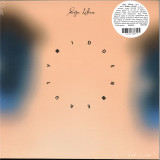
Sign Libra's third album Hidden Beauty is an intimate voyage through feminine nature, guided by the arts of subtext, musical collage, and mysterious allusions. Elegantly arranged, enigmatic, and mischievous, Hidden Beauty seeks to "release the invisible and bring fragility to the surface." From the rainforests of Closer to the Equator (Sounds of the Dawn, 2016 / Antinote, 2018) to the surreal lunar landscape of Sea to Sea (RVNG Intl., 2020), Agata Melnikova, the Latvian musician behind the Sign Libra symbol, has developed a signature blend of evocative composition with lyricless, ethereal vocalizing. Hidden Beauty attends to a closer space than her first two albums, a playfully layered pastiche of refined references, drawing musical inspiration from the assortment of Erik Satie, the early work of Mylène Farmer and Laurent Boutonnat, and 90s R&B. The first inklings of Hidden Beauty arrived in 2019, with the basic contours of the album sculpted in 2020 and early 2021. Like Sea to Sea, Hidden Beauty was invented as a solitary creative effort, but this time under uniquely hermetic impositions. Tethered to the world only by screen, the artist sought inspiration from an unlikely array of activities: new, unorthodox approaches at composing, learning French, a virtual pedagogical practice, and plenty of jubilant dancing in her flat, sunglasses on, to 90s dance music. Hidden Beauty moves inward from the distant spaciousness of Sea to Sea in favor of a "chamber-like" sound, reflecting the intimate environs of its creation. Balancing the New Age balletic resonance of Closer to the Equator and the cosmic-dancerly tracks of Sea to Sea, Hidden Beauty combines deft, postmodern arrangements with popular, contemporary suggestions. The reverb drenching her previous recordings is sponged up in the songs of Hidden Beauty, giving the exercises contained within a feeling of presence, and closeness. And always Agata's crystalline vocal furnishings, less a lead vocal than a first instrument, the ever-returning counterpoint in a beatific swirl. The other hidden elements of this work are plenty, and perhaps best left concealed for the listener's enjoyment. Or perhaps they are hidden in plain sight and sound, depending on what the puzzle pieces reveal to your imagination. Sign Libra's Hidden Beauty will be released in vinyl, Japanese import CD, and digital editions on November 3, 2023. A portion of the proceeds from this release will benefit Coral Guardian, a non-governmental organization working internationally and with local communities to protect coral ecosystems.
Hard salsa with rocking tropical electric guitar! Príncipe's 1967 debut album, featuring powerful Afro-Latin rhythms like guaguancó and pachanga played with youthful exuberance and originality. Truly unique sound from the dawn of salsa in Venezuela. Príncipe y Su Sexteto, from Caracas, Venezuela, were early pioneers of "salsa con guitarra eléctrica" (salsa with electric guitar), a subset of the salsa genre where the electric guitar is the main melodic rhythm instrument, often taking the spotlight in place of the piano and brass section. They were the perfect combination arriving at the right moment, when salsa spontaneously emerged as a new musical movement coming from working-class youth of the barrios in Caracas. All the compositions are original to the band, and hold up really well more than 50 years later. Though the arrangements and playing are deceptively simple, the effect is both mesmerizing and energizing, like early rock 'n' roll fed through a Caribbean filter. This first time reissue has been remastered directly from the original tapes and licensed from Discomoda. With in-depth liner notes it has also been augmented by three smoking bonus tracks that were never released during Príncipe y Su Sexteto's existence as a band. 180g vinyl.
DRIVETRAIN/Fairytale Turbo-charged to ignite any sound system with the ruthless energy of pure acid over subsonic frequencies is the impetus for a hypnotic vocal mantra. REOSC/Alarms A boisterous awakening, pounding with the quaking pulse that transmits bleeps and dings, effectively producing a warning signal to move your body.
CLOUDMASTERWEED/Sweet A mesmerizing groove opens with a hammering kick, directing a determined bassline, while chord progressions escort erratic female echoes.
TAKUYA YAMASHITA & TOMI CHAIR/Heaven’s Jungle Packed with rhythm, melody and shrewdly orchestrated pads, piano, and an unrestrained bass hook, a persuasive female voice captures the ambience.