Chloé Robinson & DJ ADHD still aren’t short on fuel. In fact, they seem to only be boosted further by their own supply. With such a weighty momentum driving forward their newly established identities, only one big question sits adjacent in the saddle: what’s next? It seems that Chloé and Alex already have the answer for today’s daily summon, and for the next Pretty Weird release, it’s a 4-track techno record reiterating the trusted adage of less being more. With an emphasis on space and silence placed intuitively, the first single from the ‘Steamin’ EP finally gets its much anticipated drop - including a killer remix from close friend Four Tet stamped on in classic, inimitable style.
‘Steamin’ is all serrated kicks, 909 drums and tenacious vocals that yell without inhibition, invoking the looseness of a party spiralling unphased into its collective apex.. ‘Redbull’ scales up on the pyrotechnics and rowdy behaviour, taking the sensation of several shots of caffeine and packaging it into a mean, raucous pick-me-up.
For ‘Pax’, Chloé and Alex continue on the stripped back disorder with white-hot conviction through rhythm and textures that find their power through no-frills, unpretentious simplicity. Kieran Hebden steps up for the remix, nodding back in appreciation to the past through the nestling of a sharply redefined ‘Pulse X’ sample alongside his addictive, punchy production all too suited to those can’t-go-home-just-yet stints.
Early support from artists including Four Tet, Peggy Gou, Jamie XX, Floating Points, Ben UFO, Caribou, Skrillex, Mary Anne Hobbs, Bradley Zero, Bonobo, Saoirse, Zenker Brothers, TSHA, HAAi, I. Jordan, Logic1000 and Pearson Sound.
The Havoc guys have been on an enforced hibernation through the winter due to a lurgy that had been affecting the planet. They have remained in the cave throughout this time huddling up to keep warm and exploring what had become their home away from home for months on end. One night, whilst lighting a fire, trying to find motivation for the next release (basket weaving had lost its appeal) they spotted a glint across the way – On further inspection, it was a small bottle and had a label of sorts – It looked to be medicine or smelling salts – Liquid Gold. Curious creatures they are they all took a long good sniff of this elixir. And just like that, they rummaged around the records stacked in the corner put some more coal in the old computer and began their work.
Soon the A-Side of the new EP was born. Most certainly a step up in the BPM from the previous A-Side off EP1. A1 kicks off with a Germanic Proto Throb Job, that's sure to cause errr...Havoc on the dance floor. Whilst A2 is a Bassline Driven, Reconstructed Austrian Euro Pop Monster. One for late-night Discos.
After a while they had stopped sweating, hearts had stopped beating quite so quick. Whilst the creative juices were flowing a few more records were dug out and a log put on the fire and a cup of fungus juice imbibed. B2 came rattling out the speakers in no time at all in all its chugging glory, the vocals take in a nod to god after the devil has done his dirty work.
At this point, the sun was starting to peek through the mouth of the cave and a new day was upon them. One last record had been found, earlier, that was decided would work at this time, actually after consideration, any damn time... B2 Is like a familiar Balearic Back rub with pop-infused French vocals and beats for days...So now EP2 is complete. Back out into the world our intrepid or is it tepid threesome went... Let's only hope their wives haven't left them after all this time locked away.
DJ Support:
Jim (HMD)
Bill Brewster
Kelvin Andrews
Eric Duncan
Al Mackenzie
James Holroyd (Begin)
Pete Herbert
Phil Mison
Nick The Record
Justin Robertson
Coyote
Mind Fair
Steve KIW
Craig Christian
Dr Rob
Dave Jarvis
Max Essa
Andy Simms (Soft Rocks)
Howler
Jaye Ward
Nancy Noise
Andy Taylor (WATS)
Graeme Fisher
Severino (HMD)
Daje Funk Records makes a triumphant return with the latest instalment to the spectacular ‘Slam Dunk’ series bringing you the Slam Dunk EP3.
First up on the A-Side of this stellar four tracker is Strange, with the acid laced disco burner, ‘Keep On’. From the intro of delicious 120bpm beats with added ‘Bongonaise’, the cleanest of guitar riffs leads to a hot disco bass with stabs of Rhodes keys lovingly applied. Just when you think you have it all worked out, the acid rug pull is a masterstroke. ‘Keep On’ has a classic (but often elusive) disco vibe with a wickedly acidic twist. ‘Strange’ will rule the summer, guaranteed. Any questions?
For A2, the considerable production chops of Ezirk are on full display with ‘Erotik’ - an 80s funk inspired taxi ride through rush hour traffic to the best cocktail bar on the planet. It’s infectious, demanding fist bumps and virtual high fives. It’s a melody that sets all the possibilities of a great night out through wielding the ultimate synth power. And that breezy sax? Heaven. Put the needle down and let it take you!
On the B Side, we start with label co-owner and master of the groove, De Gama and his carefully crafted ‘Higher’. The tempo is dropped right down here, with De Gama showing his darker and funkier side. Like a joint Gil Scott Heron and Robert Plant fever dream, ‘Higher’ is an intricate lecture in immaculate beats, unimaginable concepts and chord progressions. Serious grooves. Very serious.
Rounding things off on the B Side and closing the EP is ‘R.O.C.K.’ by Hungary’s The Magic Track. These boys know how to deliver a chugger from the MT workshop. You expect them to lure you in, and ‘R.O.C.K.’ does just that. One minute you’re in church, the next in a heaving club with retro beats, thumping bass and driving piano filling the air. The Magic Track are selling magic dreams and you’re buying. The whole bag.
The Slam Dunk EP 3 slam dunks with such force it shatters the backboard. Get it in your record boxes for the summer, and let it stay there!
DC Salas’s label Higher Hopes returns for its sophomore chapter… ‘Male Tears’, a deliciously sleazy and wry take on the patriarchy from queer polymath, Kiosk Radio resident, visual artist, performer, producer and DJ Strapontin.
“I wanted it to be funny, sassy, with a drama touch,” he tells us. “The track ‘Angry’ is about a frustrated and lonely angry man. ‘Male Tears’ is a sleazy club hit mocking a straight white male friend of mine who is unable to question himself and his privileges. ‘Divorce’ is a joke on marriage and its rules and ‘Teaching Drama’ is, well, about drama queens…”
Drama, hard truths and witty observations: Strapontin’s agent provocateur status is galvanised by the oily basslines, off-grid drums and loose, swathing grooves that prowl out of the speakers and flip devilishly into moments of pure euphoria… And moments of total chaos.
Strap up, strap in… Strapontin is taking us higher. We couldn’t hope for more.
100 Limited vinyl copies
It those times of a promised civilization collapse, truth revelations, questionings, and afflictions, spiritual ascension can
come as fundamental to avoid falling into the abysses. Psychotria isn't a release with the pretense to be of help for this, but this musical meeting of the versatile producer Cyberlife and the vibes explorer TrübTone appears as an attempt of bringing response to the eternal metaphysical question on why things are, as a liberating truth for the
mind. By this psychedelic exploration of music that breaks codes to go deeper in the sound, made of seven affirmed tracks, this release mixes together some elements of this complex puzzle that only transcendence reaches to complete.
We're here with the 14th vinyl release in our catalogue. And those of you who've been following us since day one can probably tell that it's something both new and quite familiar. How so? Well, because this particular record features a brilliant track released on CD ten years ago (!), as part of our "Mystical Deep Vol. 2" compilation, but the "new" part here is the two completely fresh remixes by two amazing artists. So let's get to the names, shall we? As for the track in question, we're talking about "Leagues Deep" - a forward-thinking half-stepper by two heavyweights known as Loxy & Resound. The track has been making waves for quite a while, and has finally reached the light of day on vinyl. As mentioned before, it is accompanied by two remixes. One is by an up-and-coming talent going by the name of AM94, who turns the original version into a dual narrative, so to speak: the first half is a proper action-packed syncopated roller, the second half - a more modern, deep sub-laden half-tempo interpretation of it. The other remix is brought to you by no one else than Resound himself, who's transformed the original piece into a breakneck-paced drum-focused killer. But do watch out for the bassline too - it takes absolutely no prisoners. You've been warned.
Fast fünfzehn unerträglich lange Jahre ließ Grammy-Preisträger D'Angelo seine Millionen Fans auf ein neues Album warten - am 15. Dezember 2014 überrascht er die Welt mit der Veröffentlichung des Longplayers "Black Messiah", der AB SOFORT erhältlich ist. Die erste Single aus "Black Messiah" trägt den Titel "Really Love".
Die Aufnahmen zum dritten Longplayer des 40-jährigen US-Amerikaners fanden in den vergangenen fünfzehn Jahren in Zusammenarbeit mit seiner Band The Vanguard statt. Darüber hinaus waren Pino Palladino, James Gadson and Questlove an einigen der zwölf Songs beteiligt. An den Texten schrieben neben D'Angelo auch Q-Tip und Kendra Foster mit. Aufgrund der Qualität der Musiker konnte im Studio komplett auf digitale Plug-Ins verzichtet werden. Die Aufnahmen, Bearbeitung, Effekte und Abmischen erfolgten analog auf Band, zum größten Teil wurde altes (Vintage) Equipment verwendet.
After his recent easter eggs EP, this four tracker is a blend of trance, breaks, drum & bass and experimental electronica.
Starting off the A side with the ‘Jelly Bean (Virus Outbreak Mix)’, this monster of tune will rattle your subs (and brain) with his crunchy kicks and trancey sequencing. This track will blast you off into oblivion eventually bringing you right into A2, ‘Level Quest’, a trancey chugging progressive tune building energy from the moment the first kick ignites.
After a much needed break, the B1 puts you in an immediate trancestate lasting just a few minutes and before you know it you will be blasted into drum and bass land with ‘Tasteful Nudes’ closing out the EP.
“Dance dance otherwise we are lost” is a raw and insightful EP with 5 non-conformist tracks ranging from the hard hitting yet poetic peak time 141bpm Trans TanzTheater to Orbits of Happiness 135bpm an unstoppable rhythmic force carrying the weight of a thousand lives. Woven by an orchestra of synths and their unescapable gravitational force, pulling you in – ever developing, ever growing.
Next up is Incessant Maze 139bpm a projection of the mind itself. A mechanism of transcendence and transformation. A raw and ready psychedelic techno assault to shake your mind out of your body and back into again.
Following the three originals are two very special remixes from Filmmaker and Polanski that bend time and space: a blissfully dark slow tempo remix of “Orbits of Happiness” by London’s experimental techno Producer/DJ/Promoter all-in-all powerhouse Polanski. At 120bpm, the “Is this happiness?” remix has had its question answered already by the sensational feedback received so far: A sultry timeless cut. There’s no way to escape. Not that you would want to, anyway.
Finishing it off, undoubtedly one of the standout artists in 2019 rising star Colombian producer Faunes Efes’ Filmmaker project has released a slew of incredible albums and EP’s this year already. Here he delivers “The Quandary” a wild and psychedelic cut of Incessant Maze merging hypnotic vocals with an ever driving percussive power that is already getting some special support in Europe and South America 130bpm.
With „Time Machine EP“ Next Door launches a new motto vinyl record.
Dark, driving, Acid!
On the first track on “Eloi-side” you will find a completely astounded inhabitant of a far future world, who has no answers to the questions of a time-traveler. The second track takes place during a rapid trip - plunging into two worlds.
On the “Morlock-side” machines are working monotonically with the inhabitants in dark caves below the earth’s surface in a far future. Track two is a serious call for a wild dance in a driving ¾ beat.
Have you ever heard anything like it?
The Computer Controlled Minds deliver four remarkable tracks on vinyl. You must experience this!
Mit der Time Machine EP bringt Next Door eine weitere Mottoplatte an den Start.
Dunkel, treibend, Acid !
Auf der Eloi Seite findet Ihr im ersten Track eine völlig verblüffte Bewohnerin einer fernen Zukunft, die auf die Fragen des Zeitreisenden keinerlei Antworten hat. Der zweite Track spielt sich während der rasanten Reise beim Eintauchen zwischen den Welten ab.
Auf der Morlock Seite hingegen arbeiten im ersten Track die Maschinen monoton, in einer fernen Zukunft, unterhalb der Erdoberfläche in dunkeln Höhlen mit ihren Bewohnern. Track zwei dieser Seite ist ein eindringlicher Aufruf zum wilden Tanz im treibenden ¾ Takt!
Habt Ihr so etwas schon mal gehört?
The Computer Controlled Minds bringen hier vier vollkommen krasse Tracks auf Vinyl, das solltet Ihr euch unbedingt geben!
Encounters with the ineffable.
The dormant roused.
Openness, observation, questioning, humility, sincerity.
Re-imagining the known, that which is untapped, all that was concealed.
Pathways to wholeness unearthed.
Meeting of truest self.
Temporal versus infinite.
The fallout.
Sudden disintegration, falling away, continuity shattered.
Facade ruptured, persona released, identity laid bare, history withdrawn.
Appearance of no-thing-ness.
Pregnant with possibilities, birth out of chaos, mystery unfolds.
Healing through anguish, renewal through trauma.
Newborn imaginings.
Accept the summons.
Chapters of lucidity, adventures in clarity.
Alignment in harmony.
All encompassing.
Reorientation emerges, subsequent renewal, transcendent insights, enlightened revelations.
Surrender reached, acceptance embraced, liberation appears.
Transmutation.
Solemn symbols of gratitude.
New found depth of meaning, of understanding, of moving, of seeing.
Beyond mental illusion, unifying as nature, expression of stillness.
Vision of the undivided, transmission of wisdom.
"Do you feel what I feel too?" Brijean Murphy floats the question at the start of Feelings, the full-length Ghostly International debut from Brijean, her collaborative project with Doug Stuart. Guided by a lush mix of charismatic keyboard chords, grooving bass lines, and radiant bongo-driven rhythms, the "Day Dreaming" lyric doubles as an invitation and a statement of intention. Brijean want you to move, physically, mentally, dimensionally; this is dance music for the mind, body, and soul. With Feelings, they've manifested a gentle collective space for respite, for self-reflection, for self-care, for uninhibited imagination and new possibilities. The album cultivates a specific vibe, a softness Murphy has come to call "romancing the psyche." Growing up in a family immersed in jazz, Latin and soul music, Murphy would become an accomplished DJ, session and live player in Oakland's diverse music scene and one of indie's most in-demand percussionists (Poolside, Toro Y Moi, U.S. Girls). In 2018, she began recording songs with multi-instrumentalist and producer Doug Stuart, who shares a background in jazz and pop in bands such as Bells Atlas, Meernaa, and Luke Temple. Following their first sessions, which resulted in the mini-album Walkie Talkie (released in 2019 on Native Cat Recordings), the duo continued freeform hangs in Oakland, inviting friends Chaz Bear, Tony Peppers, and Hamir Atwal. "We improvised on different feels for hours," says Murphy. "Nothing quite developed at first but we had seeds. We re-opened the sessions a couple months later, after returning from tours, and spent a month developing the songs in a little 400 square foot cottage." Aforementioned album opener "Day Dreaming" is a dynamic celebration of newness: the excitement in finding deeper understandings of yourself as you get to know someone, something, or somewhere new. "Wifi Beach" drops a pin in pure psych-pop exotica. With Atwal on drums, Stuart on bass, Peppers on keys, and Bear engineering, the group improvised the track's intro sequence based on the vision of a lavish 1970s pool party. Establishing the scene is a mid-frequency drum kit disco shuffle augmented by tight congas and timbale effect, as Murphy sings in spurts: "I want to be / Deep in love / I want to be / Say you love me too / I want to be / Honey." The stanzas cut between "reflective moments of wants and being overwhelmed by feelings of the present," she explains. "A lot of the `love songs' I write are to my psyche, self-reflections on how to encourage tender perspectives and make more time for the sweet stuff." Though there is a loose, dance-oriented motif throughout, the material gives way to somnolent turns. On "Ocean," Brijean's anodyne lyrics, reminiscent of Astrud Gilberto's airy croon, float atop a brushed drum pattern, sparkling rhodes lines, and pittering and softly funky woodblock bops. The opening line sets up the rest, "In this gentle space we lay" _ among the album's propensity for movement, tracks like "Ocean" stand out by leaning back for momentary sways of blissful introspection. Murphy calls the charming "Hey Boy" a "psychedelic guide _ the exploration of finding what feels good _ through sorrow, anxiety, apathy." This mentality applies to Feelings on the whole: in these nebulous and verdant worlds of hazy melodies, feathery hooks, and percussive details, the songs simply want us to feel alive. They radiate in wonderful abandon and with a sense of devotion to the self. RIYL: Stereolab, Astrud Gilberto, Air, Little Dragon, Broadcast, Khruangbin, Poolside.
Remastered Reissue eines der ikonischten Rare-Groove-Tracks der frühen 1980er: "Turned On To You" der Eighties Ladies in der Full-Length-Version, produziert von Roy Ayers und erschienen 1981 auf seinem Label Uno Melodic. Der Track wurde mehrfach gesamplet, u.a. von A Tribe Called Quest und jüngst von den Nujabes feat. C.L. Auf der 12" Flipside befinden sich erstmals zwei remastered Tracks aus dem Album "Ladies Of The Eighties".
On his fourth album proper, Now Here No Where, Danish producer Kölsch (aka Rune Reilly Kölsch) is charting new terrain. Fans of his ‘years trilogy’ – 1977, 1983 and 1989, released on Kompakt over the past decade – were privy to a kind of sonic diary, an autobiography, tracking the artist’s early years through three albums of superior, meticulously rendered techno. Calling in collaborators where needed – most notably, the strings of Gregor Schwellenbach – there was still something deeply personal going down, not quite hermetic, but internally focused; the albums proved not only Kölsch’s mastery of his chosen form, but also his capacity to make techno personal, individual, and to trace histories of the self through music. But on Now Here No Where, Kölsch finds his feet firmly planted in the present. Reflecting on his new album, he notes, “It is fascinating to write about memories and feelings that have had years to manifest and develop, but how would I approach current emotions?” It’s a good question: our past coheres through the narratives we build around memories, but the moment we’re in, the newness of the now-ness, is harder to navigate; this story is as yet untold. For Kölsch, this makes Nowhere Now Here “an album about life in the year 2020. A time defined by confusion, misinformation and environmental challenges. It is an emotional interpretation of personal and mental challenges, observations and personal growth.” Kölsch does this with music that effortlessly balances emotional heft with the dancefloor’s brimming desires. It’s a space that Kölsch has navigated for a while now – one of techno’s breakthrough acts, an in-demand DJ across the globe and a prolific and restlessly creative producer, he’s also Kompakt’s biggest-selling act – but Now Here No Where ratchets up the lushness, making for a delirious drift across twelve tracks that are at once perfectly poised and deeply trippy. “Great Escape” is an elegant swoon, an opener that pivots on a sigh and a prayer; then “Shoulder Of Giants” bustles into view, subliminal clatter and an aching violin line giving way to a riff that glows with fluorescence and iridescence. “Remind You” combines an odd ECM jazziness with notes from a twenty-first century torch song; “Sleeper Must Awaken” mines huge buzzing synths and lets them float, in and out of sync, with reduced, ticking beats; “Traumfabrik” (dream factory – there’s a giveaway) is oddly lush, the tones malleable and plastic, morphing across a glitching undertow. There are sad, emotional washes of strings throughout the penultimate “While Waiting For Something To Care About”, while “Romtech User Manual”’s patterns twist and shape in the light. Throughout, Kölsch never keeps his eye off the dancefloor, and you can tell this is his still his home. “The amount of energy and joy I experience every time I perform, has a profound effect on me. It has inspired me so much of late and has become an integral part of my musicality.” “The way we join in expressing our hope for the future every weekend has given me so much,” Kölsch concludes. The club as a temporary autonomous zone, as a space both of freedom and of politics; somehow, that’s all here, Now Here No Where. “Most of all, it is an album about hope.”
Auf seinem vierten Album “Now Here No Where” betritt der dänische Produzent Kölsch (alias Rune Reilly Kölsch) neues Terrain. Seine Trilogie mit den Jahreszahlen 1977, 1983 und 1989, die in den letzten zehn Jahren bei Kompakt erschienen war, hatte seine Fans durch eine Art akustisches Tagebuch, eine Autobiografie geführt, die die frühen Jahre des Künstlers über die Länge von drei großartig produzierten Techno-Alben nachgezeichnet hatte. Wo es nötig war, wurden Kollaborateure hinzugezogen - allen voran für die Streicher, arrangiert von Gregor Schwellenbach -, dennoch zeichnete die Musik immer auch etwas zutiefst Persönliches aus, etwas nicht Hermetisches, auf eine bestimmte Art immer auch nach Innen fokussiert. Die Alben bewiesen nicht nur, wie sehr Kölsch die von ihm gewählte äußere Form beherrscht, sondern auch seine Fähigkeit, Techno zu etwas Persönlichem und Individuellem zu machen und der eigene Geschichte durch Musik näher zu kommen.
Auf “Now Here No Where” steht Kölsch nun mit beiden Beinen fest auf dem Boden der Gegenwart. Mit Blick auf sein neues Album stellt er fest: "Es ist faszinierend, über Erinnerungen und Gefühle zu schreiben, die Zeit hatten, sich zu manifestieren und zu entwickeln, aber wie nähere ich mich meinen aktuellen Emotionen?”. Eine gute Frage: Unsere Vergangenheit wird im Innersten zusammengehalten durch Geschichten, die aus Erinnerungen entstehen, aber der Moment, in dem wir uns befinden, die Neuheit des Neuen, ist schwieriger zu beschreiben; die Geschichte ist noch nicht erzählt. Für Kölsch ist “No Here Now Where” daher "ein Album über das Leben im Jahr 2020. Eine Zeit, die von Verwirrung, Desinformation und ökologischen Herausforderungen geprägt ist. Es geht dabei um die emotionale Interpretation von persönlichen und mentalen Herausforderungen, von Beobachtungen und der eigenen, individuellen Weiterentwicklung".
Kölsch tut dies mit Musik, die mühelos kleine Gefühlsausbrüche mit den großen Sehnsüchten der Tanzfläche in Einklang bringt. Es ist dieser Zwischenraum, in dem sich Kölsch schon seit einiger Zeit bewegt, als weltweit gefragter und gefeierter Live Act, DJ und so unermüdlicher wie kreativer Produzent (nicht umsonst ist Kölsch der “biggest-selling-artist” bei Kompakt), doch “Now Here No Where” treibt all das noch weiter auf die Spitze: ein enormer Sog entsteht, der uns über zwölf Tracks hinweg gefangen hält wie ein perfekt ausbalancierter Trip. Der Opener "Great Escape" ist pure Eleganz, ein Track, der irgendwo zwischen Seufzer und Gebet hin und her schwankt; dann drängt "Shoulder Of Giants" ins Blickfeld, ein unterschwelliges Geklapper, eine wehende Geige, schließlich ein schillernder Riff, der in der Dunkelheit zu leuchten und zu glühen scheint.
"Remind You" kombiniert seltsamen ECM-Jazz mit einem sentimentalen Liebeslied des 21. Jahrhunderts; "Sleeper Must Awaken" schürft im Bergwerk riesiger Synthesizer, mal im Takt, mal aus dem Takt ticken die minimalen Beats; "Traumfabrik" ist ungewöhnlich “lush”, die einzelnen Töne, geschmeidig und modelliert, zerfließen in einem glitzernden Abgrund. Das vorletzte Stück "While Waiting For Something To Care About" wird von traurigen, emotionalen Strings untermalt, während sich die Strukturen von "Romtech User Manual" im Licht drehen und immer wieder neu formieren. Die ganze Zeit über behält Kölsch die Tanzfläche im Auge, und man merkt ihm an, dass sie immer noch sein Zuhause ist: "Die Menge an Energie und Freude, die ich bei jedem Auftritt erlebe, hat eine tiefe Wirkung auf mich. Sie hat mich gerade in letzter Zeit stark inspiriert und ist zu einem integralen Bestandteil meiner Musik geworden.”
"Die Art und Weise, wie wir an jedem Wochenende gemeinsam unsere Hoffnung auf eine bessere Zukunft zum Ausdruck bringen, hat mir viel gegeben", so Kölsch abschließend. Die Vision des Clubs als eine temporäre autonome Zone, als ein Raum von großer Freiheit aber auch von politischen Ideen, das ist irgendwie alles hier drin, Now Here No Where. "Es ist vor allem ein Album über Hoffnung."
Motown soul artist David Ruffin had one of the finest voices of the 60s and 70s, primarily as lead singer of The Temptations. He also recorded as a solo artist across three decades, and while still at Motown in 1977 recorded an album “In My Stride” with writers/arrangers/producers Van McCoy and Charles Kipps. Both the sides on this 7” release come from the album and are among the most enduring recordings by David the solo artist. “I Can’t Stop The Rain” has become increasingly more collectable on 7”, while “Questions” has never previously been available on 45.
Samosa Records 10 is the brand new spin off label from Samosa Records concentrating on 2 choice cuts from some of the finest producers at the label one each side of a 10” vinyl. It also see’s Samosa announce an exciting collaboration with another of the finest labels out there Tropical Disco who will be handling the digital release for this one down the line.
Launching the brand new imprint it’s only fitting for the label bosses De Gama and Les Inferno to lead things out.
First up is De Gama’s Sometimes Sometimes which see’s him creating a much more reflective track than his previous powerful peak-time percussive club jams. Despite its ever so bluesy laid-back sentiments it’s no less a sublime outing. Velvety smooth the lead vocal is definitely one of those once heard never forgotten magical musical moments. It’s a track of simplicity, a smooth bassline, subtle guitar licks and the wonderful vocal performance. It’s an entrancing life affirming track which has all the hallmarks of a track which absolutely must be listened to again and again. And yeah, maybe just one more time!
Over on the flip Les Inferno takes us off towards classic Philly territory with an equally subtle but ever so funky slice of feel-good disco in ‘Yeah C’Mon’. Smooth percussion, an ever so danceable bassline, brilliantly performed yet subtle keys and another absolute monster vocal. And did we forget to mention the disco flute? Yeah Disco flute, does it get any better. We think not?
This is a 10” which is quite simply undeniable. You must have this in your collection right now because you will need to listen to it time and again. Samosa continues its quest to dominate the disco vinyl landscape with yet another ridiculously superb release.
What are you waiting for just order this and thank us later.
Straight out the gate, Nas dropped a classic. Since the release of the seminal ‘Illmatic’ album in 1994, critics and fans have been wondering if Nas peaked too early and if anything in his subsequent catalogue could be held up against this masterpiece. To be fair, it’s hard to follow up something this flawless, a project that allied his most insightful, pitch-perfect heartfelt rhymes with the work of the best hip-hop producers on the east coast.
DJ Premier, Q-Tip from A Tribe Called Quest and Large Professor all take their turns on the album, along with the unsung L.E.S., but it’s Pete Rock in his prime who provides the stunning backdrop for the cinematic ‘The World is Yours’. It’s a perfect nugget of a single, weaving in the brashness of Scarface, the repetition of a snatch of T La Rock’s early Def Jam gem ‘It’s Yours’ and piano courtesy of Ahmad Jamal’s ‘I Love Music’ from his own timeless ‘The Awakening’ album (1970).
Presented for the first time on 7”, the vocals of the album version and the instrumental on the flip provide the perfect opportunity to enjoy and compare the work of two masters at the top of their game. Pete Rock’s seamless weaving of disparate samples into a compelling whole, the then little-known Nas’ statement of intent. With a maturity beyond his tender years, Nas put himself straight at the top of the pile, this Queensbridge chronicle hinting at the ambition and greatness he harboured within himself.
What’s The Secret Word Tonight has been the question of Summer 2019. As a four tracker, the EP has already gained vast support from Sven Vath who is set to include the Arian 911 Remix on Cocoons legendary compilation series, The Sound Of The 20th Season.This collection featuring Joe Metzenmacher, Arian 911, DJ Schwa and Filburt marks a fine return back from hiatus for the Heideton family.
Reclaiming her original moniker of Kittin, electroclash pioneer - formerly known as Miss Kittin - presents Cosmos, a continuous twelve-track LP of organic, leftfield electronica due 2 November on Dark Entries. Throughout her illustrious career, Kittin has carved a considerable niche for herself, assimilating references from New Wave and 90s techno to form an inimitable sound that resonates with electronic music fans the world over. Despite being most recognizable with 'Miss' before it, Kittin was in fact her original artist name - the prefix often added without her consent at promoter's will and eventually becoming the norm.
Cosmos is her most spiritual release yet, influenced by her time in the French countryside after a bout of touring exhaustion. She gives up any formulas from her past; verses/chorus, pop or club beats, to come to the essence of chords and textures, peeling away the non-essential to find joy in music yet again. In retrieving her chosen name from more than 20 years ago, Kittin also returns to the essence of her musical journey. By liberating herself from the constraints of formal structure she opens the door to a new set of aesthetics, exploring her influences without restraint. Sonically, the voice acts a central instrument, whilst the album drives continuously forward with no breaks, paying homage to her love for ambient and electronica whilst wandering calmly into the unknown. 'With Cosmos everything is energy. We go back to the core with curiosity and freedom.' - Kittin
After a debut outing on International Black last year with his best friend Mallard, LT graduates onto Rhythm Section INTL with a stunning debut solo effort: FOREST FLOOR.Aged just 20 years old, Lewis Taylor aka LT is another prodigal talent from the north of England, whose association with Rhythm Section goes back to his school days. A fan of the label from an early age, Lewis regularly made pilgrimages to the pool hall as soon as he was old enough to do so. It was these visits with his old school friend Mallard (who had recently moved down to London from Derbyshire to study music) which proved to be a formative influence, prompting him to try his hand at production...It turned out he was quite the natural, with his second ever effort as an 18 year old making it onto this very EP. Sitting somewhere between electro, house and techno with a healthy dose of breaks - LT constructs complex arrangements with as much of a nod to the retro summer of love stylings of Lone as to the new age bounce of the Pender Street Steppers. The piano house stabs of 'Untitled (Chesney)' reverberate around chopped breaks and screaming samples, anchored down by bouncy organ bass and FM lead synth which really begs the question: 'How did LT develop such a rich lexicon of club culture references in such a short time' We'd be tempted to believe it was just pure luck, if this mastery of rave aesthetics wasn't repeated throughout the EP...
Mesosphere fizzes with arpeggiated energy before giving way to a magnificent yet subtle drop that will serve festival main stages as well as it will back room clubs. Before the EP is over, LT has one more trick up his sleeve in Forest Floor - the titular track which is the musical equivalent of watching the sun rise through a misty glade after a night spent alone in the wilderness. With this gentle touch, LT proves he's more than another kid on Ableton making bangers - he has breadth, incredible musicality and a rare ability to transcript sceneries into sounds. Finishing with 'North Circular' possibly a reference to the free Parties on the London Orbital or merely just a coincidence you decide.
We couldn't be happier to welcome LT onto the RS INTL roster in what feels like a fulfilment of destiny. It's such a great honour to have nurtured and now introduce the next generation via the Rhythm Section platform.
Calendar Crowd was the duo of Alan Heaton and Terence tiernan who met in their hometown of Widnes, Cheshire as schoolboys and played together in various bands in the '70s. In the '80s they formed a 6-piece band called Room For Humans 0and recorded one single'Telephone Telephone / Girlfriend'. When the band split and Alan and Terence continued as Calendar Crowd in a more experimental direction. Their influences were wide reaching: Kraftwerk, Neu, Cabaret Voltaire, Eno, PIL, and Joy Division.In 1982 they released their debut single 'Perfect Hideaway/Perfect Hideaway Dub' on 7'. Guitarist David Knowles joined them as they toured the UK and recorded and released their follow up EP 'Listen in to the Heart' in 1985. A reviewer at the time called Calendar Crowd 'A Moody Merseyside trio with strong atmospheric tunes and haunting lyrics.' For this reissue we've compiled both singles on one EP featuring all four songs. Perfect Hideway is a evocative and dreamy, the music escorts you on a tour of icy landscapes, with Terrance's deep, rich vocals guiding the way accented by bright brass stabs. Meanwhile the Dub has stripped back the vocals, added delayed samples and heavy pounding drums. On the B-side 'Listen in to the Heart' and 'Questions Answers' are darker electronic rhythm tracks with layers of ethereal keyboards and guitar melodies. All songs have been remastered by George Horn at Fantasy Studios in Berkeley. The record is housed in an exact replica of the original Perfect Hideaway jacket featuring black and white October 1982 calendar with the tile hand written in red pen. Each copy includes a double-sided 8x11' insert with lyrics, notes and photos.
The Music for this release was a process of literal Catharsis, a purging of a build up of negative thoughts and emotions, but the music is also designed to be confrontational. The intent is to challenge mediocrity, to ask questions about the whole notion of techno as merely a form of debauched escapism. The music also asks questions about destructiveness and apathy. The aim is for something with meaning, as opposed to transience. Our demons are your contentments'
Catharsis is the result of the meeting and collaboration between veteran techno producer 'Heretic' and dark ambient producer 'Emission'.
The project is a quest to explore and purge negative thoughts via music. a modern ascetic experience in the pursuit of inner peace.
Palto Flats & WRWTFWW Records are ecstatic to announce the highly-anticipated reissue of Japanese percussionist Midori Takada's sought after and timeless ambient / minimal album "Through The Looking Glass", originally released in 1983 by RCA Japan.
Considered a Holy Grail of Japanese music by many, "Through The Looking Glass" is Midori Takada's first solo endeavor, a captivating four-song suite capturing her deep quests into traditional African and Asian percussive language and exploring contemplative ambient sounds with an admirably precise use of marimba. The result is alternatively ethereal and vibrant, always precise and mesmerizing, and makes for an atmospheric masterpiece and an unparalleled sonic and spiritual experience.
The fully licensed reissue is available as a single 33rpm LP and a limited 45rpm DLP, both cut directly from the original studio reels (AAA), at Emil Berliner (formerly the in-house recording department of renowned classical record label Deutsche Grammophon) for the 45rpm DLP, and at the equally famous Frankfurter SST Studio for the LP. It is also available in CD format for the first time. All versions come with extensive liner notes.
Disconcerting, questing brilliance from Rabih Beaini: two sick, nervy techno killers (including an Ethio homage), stalking the corrosive perimeters of noise; and deep, long excerpts from his engrossing soundtrack to Dreyer's Vampyr, with contributions from the Upperground crew, and Sun Ra in its marrow, alternately driving and motorik, off-the-wall, lost in space.
Schatten Records presents a new cool release: 'The Wrong Thing EP' featuring Abnormal Boyz and Marcus Raute.
'Bad Question' has a unique groove with a great atmosphere and cool dark speech. 'Think Darkly' is a perfect summer groover with a fresh sound and a great rhythmic. Naples based Abnormal Boyz and Marcus released one of their first 10-inches on Schatten Records.
JEN's debut album Any Questions? explores identity, self-image, and growing up in the age of social media through a powerful blend of pop hooks and alternative rock. Honest, energetic, and unapologetically personal, this debut captures the excitement and uncertainty of finding your place in the world. Pressed on violet-colored vinyl.
The premise of this compilation is simple: music we’d like to hear at the airport.
The idea came after learning that Honolulu’s international airport has been playing AI-generated music over its speakers since November 2025. First reported by Civil Beat, the news has caused frustration and disappointment among residents and visitors, as well as within the local music community.
Everyone knows Hawaii is one of the most musically rich regions in the world — why then is the airport using AI music? 'Music For The Airport' is our response.
Located in the middle of the Pacific at the outskirts of one the most remote cities on the planet, Honolulu’s Daniel K. Inouye International Airport (HNL) is for most people the first place they encounter when they arrive in Hawaii. Warm sun, tropical tradewinds, playful palm trees and majestic mountains welcome every traveler, as do the sounds of birds, familiar music from Hawaiian artists like Aunty Genoa Keawe and Israel Kamakawiwo’ole, and—at least for now—seventeen “island-themed” AI-generated songs.
In late 1977, while sitting in Germany’s Cologne Bonn Airport on a Sunday morning, Brian Eno noticed how terribly uncomfortable he felt hearing the airport’s “muzak” overhead. For a harried, hurried place like the airport where travelers scramble to their gates, stand in long border control lines, and wait impatiently for their luggage at the carousels, music can create more anxiety than calm. Asking himself, "What should we be hearing here?", Eno soon created ‘Ambient 1: Music For Airports’, a sonic remedy aimed at reducing nervousness in public spaces.
When we heard the news that HNL airport is playing AI-generated “muzak”, we were immediately reminded of Eno’s genre-defying 1978 album. And we were similarly inspired to react. But how? Recreating an ambient masterpiece wasn’t in our wheelhouse. We started digging through our catalog of licensed music which we haven’t yet re-released. We quickly realized this was our chance to highlight some of favorite songs from the so-called CD era: the 1990s and 2000s (with a few exceptions). In less than 20 minutes, we pulled 17 original songs recorded by local artists between 1984 and 2017.
The speed at which this project came together surprised us; reactionary gut instinct often produces swift and lasting results. Ironically, our new compilation likely took less time than it did for the state Department of Transportation to commission its AI songs in question. But even though ‘Music for the Airport’ came together in less than one week, the truth is that this collection of 17 songs is the result of years of hard work, trust, sacrifice, patience, and understanding. Building relationships with and licensing music from artists doesn’t happen overnight, but more importantly: these songs are the result of people pouring their hearts and souls into something they believe in. This music wouldn’t exist today without the artists and their loved ones who supported them along the way.
As of this writing, the DOT states its intention in creating AI-generated songs is to “highlight different aspects of the islands, aviation and the airport” and that “no state funds were used to produce them”. Okay, but at what cost? Technology disrupting the music industry isn’t news to anyone. AI music in public spaces are cost-saving measures, since its users (airports, for example) don’t have to pay the licensing fees typically required, which can be a worthwhile source of revenue for artists. But what happens when a place like HNL airport, which hosts more than 21 million passengers annually, uses music created by machines instead of people to represent Hawaii? The identity of a place beings to erode, diluted by a language learning model’s conceptual summary of what a people and its culture sounds like. To echo Brian Eno: what should we be hearing here? In other words: what should the music of Hawaii sound like?
We believe in the power of music, especially when it comes from the soul. We believe in supporting artists, especially as AI disrupts our lives. We believe that Hawaii must be represented authentically, especially when it comes to song. And of course we believe in vinyl, especially since it was a record from 1978 (Mackey Feary Band’s debut LP) that inspired Aloha Got Soul’s origins in 2010.
We hope you find as much joy in this compilation as we have. Perhaps it’ll soundtrack your next journey to Hawaii. At the very least, we hope some people take a moment to hear these sounds: in your headphones for now‚ maybe someday overhead at the airport in Honolulu.
In a blizzard of crushed breaks and dissonant tones, Shelley Parker lands on Sneaker Social Club with her third album, Screed. Taking a forensic approach to noise sculpture and harmonic interference, the UK-based artist maintains a fringe perspective on the legacy of hardcore-derived dance music, extrapolating the renegade spirit of the earliest innovators into unexplored zones where sound art and sound systems collide.
Parker's path through the underground has been informed by her art school background, equally at home in the parallel world of galleries, installations and institutions as she is in the club. This dualistic dimension to her practice charges her music with an outsider spirit that manifests across 10 striking new productions on Screed. Focusing on the sound over an umbrella concept, it's an album that rejects comfortable, functional formulae in favour of original expression.
There are plenty of forthright structures for DJs and dancers to lock onto, from the militaristic techno thrust and tightly clipped breakbeat loop of 'Relentless' to the splayed boom bap guiding the giddy string sequences of 'Stargazer Lily'. The insistent pulse of 'April' meanwhile offers only the faintest of paths to navigate dense thickets of jerky, swinging static and metallic clamour. 'Georgian Wire' closes the record out on dissembled drum licks with a brittle patina - a scooped out closer with the skeletal remains of a rave dialect that's second nature to someone with as much skin in the game as Parker.
In amongst those tracks lies a wide-ranging tapestry of rhythmic, textural and emotional approaches, from head-knocking beatdowns to billowing clouds of dub techno, angular stabs and industrial smudges. On Screed, Parker proves herself to be peerless and purposeful in her quest to find new forms within the well-worn canon of hardcore and rave.
Verdad Y Error (2026) resides in the tension between the thrashing of external noise and beating centred internal calm. Gibrana Cervantes is known for her work across experimental music and contemporary performance, a practice with focussed intensity and surging physicality, often pushing the limits of endurance, presence, and embodiment. A central axis of her performance practice is her ongoing collaboration with acclaimed choreographer Florentina Holzinger, including composing the music for SEA WORLD (2026), Florentina Holzinger’s critically acclaimed installation for the Austrian Pavilion at the Venice Biennale. Alongside this, she is a core member of the experimental ensemble Amor Muere (Mabe Fratti, Concepción Huerta, and Camille Mandoki). Cervantes maintains an active recording practice that directly informs her live output including her collaboration Memoria (2025), with Colombian Drone Mafia (Nyksan) for Ambie-Tón (Tratratrax),
Verdad y Error is a record of her artistic approach which expands her body and the violin’s horizon of possibility to near breaking point. Cervantes uses a register closely associated with Metal, yet buried deep in the alchemy of these pieces are motifs which hark back to her classical background. Across these pieces the violin is used as an instrument with a fragmented and shifting voice — blurred, repeated, and reshaped through distortion. “Many of these pieces come from images, memories, and sensations that have stayed with me for years. I'm interested in the blurring of what actually happened and what time transforms.” The recordings are built with layers of violin tones which oscillate between recognisable, processed, stretched and shifted, and lay embedded in a frequency stratum of volatile static and noise. “The violin on this album doesn't appear as a clean instrument. I process it, repeat it, distort it, and multiply it until it begins to feel more like memory than melody. Something blurry, shifting, difficult to grasp.” The origins of the album were born at a time when Cervantes was seeking inner calm amidst a relentless external noise, questioning the validity or possibility of memory and its radically changing perception in relation to experience. Subsequent reflection on this contemplative moment allowed her to develop a relational music which moves through memory, erosion, repetition, and emotional ambiguity. Creating a space that feels both intimate and unstable, mercurial with the patina of lived imperfection.
Akin to the unreliable narrator and linguistic instability, each piece functions as an emotional landscape suspended between clarity and confusion. An album which balances melody, brutality, fragility and noise
throughout its sprawling recordings and artwork, which operates as an analogue to the music. The visual world of the album developed in collaboration with Mauro Ventura was compiled across various media with a mix of handwritten texts, burned typography, metallic textures, and fragile physical materials. “I wanted the record to feel tactile and imperfect — something emotionally direct but physically worn.” says Cervantes. More than offering explanations, verdad y error exists as a conversation between memory and disappearance, noise and stillness, truth and error.
Fontaines D.C. announce their fifth studio album, Dopamine Chamber, released on 16th October via XL Recordings. Produced by James Ford, it is the follow-up to 2024’s UK platinum-certified Romance – and the sound of a band moving decisively away from the guitar language of their early records into something colder, stranger and more synthetic. It arrives today alongside lead single “Marianne” and its accompanying video, directed by Dave Meyers.
Dopamine Chamber arrives like a constellation behind undulating sighs of smog: potent balladry, anthemic melodies glinting through the murk. In a world tipping towards collapse, it asks how pleasure mutates amid peril—and what our pursuit of it reveals about us. Across the album, Fontaines D.C. – Grian Chatten, Carlos O’Connell, Conor Curley, Conor Deegan and Tom Coll – move between gratification and dread until the two meld together, reflecting the overwhelm of artificial intelligence, environmental collapse and political violence all riding the same algorithms as memes, jokes and celebrity culture. “The album itself is a dopamine chamber,” says Chatten. “You step inside and we test these different mind- or mood-altering pieces of music on you.”
Where Romance held its tension in balance, this record tips it. “I think Romance was maybe 60 per cent human and 40 per cent corrupted by automation, and a loss of feeling,” says Chatten, who spent time among the faded grandeur of Venice, Vienna and Sicily in search of lyrical inspiration. “This one feels more like 60 per cent corrupted — the mask is wearing the face a little more.” He resisted any pull towards easy optimism: “I felt it would be more powerful to leave the hope out and reflect the ugliness honestly. This one needed to feel more like a catastrophic warning.”
“Our albums have always questioned a sense of place,” says bassist Conor Deegan. “First Dublin, then being away from Dublin, and then trying to find the romance elsewhere. On this record, the question became: where do you escape to?” Into the self, perhaps – or hedonism, fantasy, cosmetic perfection, eternal youth or the endless refresh of a screen.
Fontaines D.C. have spent five albums refusing to repeat themselves – from Dogrel (2019) through A Hero’s Death (2020), the No. 1 Skinty Fia (2022) and the anarchic, kaleidoscopic Romance (2024). Dopamine Chamber is their most radical turn yet: cold synthesiser tones, marching drums, samples and triggers, several songs with no guitars at all, and the swooning strings of 1960s Italian pop pulled into something synthetic. For guitarist Conor Curley, the aim was to break from the band’s own reference points: “I was trying to find stuff that pointed into the future.” It was made with James Ford between London, the English countryside and Palermo, where Chatten recorded vocals in a makeshift booth built from mattresses and cushions.
“There’s a poignant sense of us being on the brink of some other kind of form of humanity, or non-humanity,” says Chatten. For their fifth album, Fontaines D.C. have built the chamber. What happens to the listener inside it will be the experiment.
Fontaines D.C. announce their fifth studio album, Dopamine Chamber, released on 16th October via XL Recordings. Produced by James Ford, it is the follow-up to 2024’s UK platinum-certified Romance – and the sound of a band moving decisively away from the guitar language of their early records into something colder, stranger and more synthetic. It arrives today alongside lead single “Marianne” and its accompanying video, directed by Dave Meyers.
Dopamine Chamber arrives like a constellation behind undulating sighs of smog: potent balladry, anthemic melodies glinting through the murk. In a world tipping towards collapse, it asks how pleasure mutates amid peril—and what our pursuit of it reveals about us. Across the album, Fontaines D.C. – Grian Chatten, Carlos O’Connell, Conor Curley, Conor Deegan and Tom Coll – move between gratification and dread until the two meld together, reflecting the overwhelm of artificial intelligence, environmental collapse and political violence all riding the same algorithms as memes, jokes and celebrity culture. “The album itself is a dopamine chamber,” says Chatten. “You step inside and we test these different mind- or mood-altering pieces of music on you.”
Where Romance held its tension in balance, this record tips it. “I think Romance was maybe 60 per cent human and 40 per cent corrupted by automation, and a loss of feeling,” says Chatten, who spent time among the faded grandeur of Venice, Vienna and Sicily in search of lyrical inspiration. “This one feels more like 60 per cent corrupted — the mask is wearing the face a little more.” He resisted any pull towards easy optimism: “I felt it would be more powerful to leave the hope out and reflect the ugliness honestly. This one needed to feel more like a catastrophic warning.”
“Our albums have always questioned a sense of place,” says bassist Conor Deegan. “First Dublin, then being away from Dublin, and then trying to find the romance elsewhere. On this record, the question became: where do you escape to?” Into the self, perhaps – or hedonism, fantasy, cosmetic perfection, eternal youth or the endless refresh of a screen.
Fontaines D.C. have spent five albums refusing to repeat themselves – from Dogrel (2019) through A Hero’s Death (2020), the No. 1 Skinty Fia (2022) and the anarchic, kaleidoscopic Romance (2024). Dopamine Chamber is their most radical turn yet: cold synthesiser tones, marching drums, samples and triggers, several songs with no guitars at all, and the swooning strings of 1960s Italian pop pulled into something synthetic. For guitarist Conor Curley, the aim was to break from the band’s own reference points: “I was trying to find stuff that pointed into the future.” It was made with James Ford between London, the English countryside and Palermo, where Chatten recorded vocals in a makeshift booth built from mattresses and cushions.
“There’s a poignant sense of us being on the brink of some other kind of form of humanity, or non-humanity,” says Chatten. For their fifth album, Fontaines D.C. have built the chamber. What happens to the listener inside it will be the experiment.
Reissue from the legendary Proto Garage Record Label Same People, which released some of Persian & DJ Texsta's most pioneering UKG E.P.s.
The Duo helped define the early sounds of UKG & the then unheard sound of Speed Garage, Dubstep & Grime. The Duo had massive success with records like Dangerous & Well Well Well.
The track titles on Post Dub Cities – the new album by Adriano Zanni, photographer, sound artist, and field recordist – evoke the aftermath, that moment when a place continues to exist and live on, but no longer serves anyone. The human element has vanished, whether it happened overnight or through a slow abandonment that lasted for years. The perspective shifts: buildings, homes and palaces reveal a dimension of reality all their own, in which even the ruins give shape to this landscape that endures, transforming into pure presence.
This, after all, is our fate. The fate of us human beings, of our civilisation, of every civilisation: to pass away, to be forgotten, to erect monuments whose significance no one will remember once we are gone.
The opening track Crisopoli transforms the sonic dimension of a city into an echo chamber: a dark, urban dub built from delays and resonances, holding the imprint of what is no longer there — like a bassline that keeps vibrating even after its source has gone silent. What we see is not the presence, but its reverb.
Available from September 11, second excerpt Warosha gives us a minimalist, enveloping, solemn beat, like the symbols on a map that no one can read anymore. Warosha was the district of luxury hotels overlooking the sea in the city of Famagusta. After the island of Cyprus was invaded by the Turkish army, the entire area, emptied of its inhabitants, who had fled south, was fenced off and surrounded by barbed wire. No one has been allowed to enter it since 1974. Now, on these unspoilt beaches, sea turtles have found the perfect place to breed.
Fordlândia, on the other hand, is the symbol of Henry Ford’s failed dream of conquest. An industrial settlement built deep within the Amazon rainforest, several hours’ boat journey from the nearest towns, to gain access to natural rubber for the tyres of his mass-produced cars in Michigan. An extremely costly project, it quickly became a ruinous pipe dream: a town that has been uninhabited for almost a century and has since been reclaimed by nature.
For a long time now, Adriano Zanni has been exploring, through music and photography, the landscape that unfolds before our eyes, as attentive yet silent observers. As if we were absent, a civilisation that has long since vanished: human presence has dissolved, preparing to fade into oblivion. The precise depiction of places through field recordings, and the black-and-white imagery, give rise to apparitions, hallucinations, and memories. The less present we are, the more we seek meaning. We resist abandonment and the indifference of time.
In the ten tracks (plus three bonus tracks) of Post Dub Cities the echoes and reverberations of dub grant us access to an unknown future, as yet untold – in which we are nothing more than a vague memory. The deep sound guides us through a landscape that is familiar yet unknown, unrecognisable. The cold, distant, industrial rhythm resonates within us as if we were the last, all too aware, inhabitant of a now-deserted village.
Every place – be it an abandoned mining settlement on an island in Svalbard, or a ghost town in Pennsylvania evacuated following an underground fire that has been burning for sixty years at a depth of one hundred metres – leaves questions unanswered, shrouds itself in mystery, and makes us wonder, ceaselessly: what happened here?
In the end, we realise that we don’t really care that much about knowing the details of the disappearance. We can guess them, we’ve seen it happen a thousand times before. Just like in the photos accompanying the album, portraits of ghostly, deserted cities: Belgrade, like Venice, Dublin, Sarajevo, Lisbon, Kraków, Sofia, Naples, Hanoi, Lampedusa, Tehran. Unexpectedly, pleasantly emptied of people, and of their obsessions, struggles, illusions.
Then, suddenly, the crowd returns. Busy, feverish, hardworking. The record ends, the spell is broken. We feel a sense of longing for a future that has not yet come to pass, for a place we were only able to observe because we were not there.
Teen of Denial: Joe’s Story is a freshly reimagined take on Car Seat Headrest’s beloved breakout, Teens of Denial, now celebrating its 10th anniversary.
On the original album, Toledo often used the name “Joe” as a pseudonym – a sly homage to Daniel Johnston. Revisiting Teens in the run-up to its 10th birthday, he felt called to give Joe a unique backstory and began tweaking the album to tell that tale. The group returned to the studio with Teens producer Steve Fisk to update accordingly – tweaking lyrics, revising arrangements, and recording new songs in the “Denial-style,” including ‘Optimistic Son” and the anthemic ‘Joe Drives Again’. The result retains Teens’ dark edge and youthful cynicism, but allows a bit of hard-won compassion into the mix.
From Will Toledo:
Sometime last year, it was suggested to me that we do something for the ten-year anniversary of ‘Teens of Denial,’ so I started looking back on the album to see what we might do. In spite of some of its songs being a regular part of my life for the past decade, it wasn’t a record I’d thought much about as a whole since it came out. Most of the songs I’d come up with over a two-year period at the end of my college days, when I was struggling a lot with cynicism and misplaced aggression. But by the time the songs were done, I was living in Washington, Car Seat Headrest was a full band with a record label, and in spite of the turmoil of the writing process, the final album was pretty enjoyable for everyone to work on.
This time, looking back at the songs, I started to feel like there was a story being told through the album, though I’d never imagined it as being a narrative work. On ‘Hi, How Are You?’ Daniel Johnston had used the name “Joe” in the titles of a few tracks –“No More Pushing Joe Around,” “Keep Punching Joe” – as a sort of joke, a stand-in for himself. I borrowed the idea, and the name, for titling songs on ‘Denial.’ This time, I started thinking - who is Joe? And how do the songs, in the way they’re sequenced on the album, reflect what he’s going through? As I started asking this question, a story emerged with startling wholeness and clarity, like finding the foundations of an ancient city while digging in my backyard. As I kept digging, certain songs from the original album fell by the wayside, as they seemed misplaced in this new context; others asked for new lyrics, to fully give birth to the story contained in the music.
The resulting work feels more like the album ‘Teens of Denial’ was meant to be. When you’re writing from a dark space, it’s hard to have perspective on where you’re at. This time, I could pull from memories of that darkness, and use the distance and additional perspective of ten years of life to shed a fuller light on the experience. Joe is a character going through some of what I experienced, and some of his own problems. Telling his story, and not just my own impressions of life at the end of the teen years, brought a new level of compassion and wholeness to the album. It gave us the opportunity to write new material in “Denial style”, embracing a snappy and simple(ish) rock aesthetic, and in an additional blessing, we were able to team up once with Steve Fisk, a joy and inspiration to get back into the studio with after ten years. We mixed the material at his house in Tacoma, and were constantly amazed at the lack of divide between past and present, as we’d punch in vocal overdubs ten years later into the same gear, hearing my voice now running alongside a 2015 Will. For someone coming across this album or this band for the first time, this is how they’d hear the record, not as a relic of the past but as a new piece. It was immensely rewarding to experience that on our side.
For anyone familiar with ‘Teens,’ comparisons with the original will be inevitable, but I do hope that as much as possible, people can come to this album on its own terms, approaching it as a teen, hearing the music and story for the first time. I believe music is an ongoing story, and albums don’t always do justice to its dynamic, ongoing nature. What gives it life is the new ears that hear it, and the new hearts that engage with it. I’m so grateful that this is a work that people have kept coming to, and I hope that this presentation does them honor with a fresh offering to the conversation. We’ve known that “it doesn’t have to be like this”; now we can wonder - “what it if were like this?”
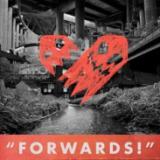
Forwards! moves roughly chronologically through moments in Brummie history; from the Lunar Society/Priestley Riots, through post war brutalist redevelopment, to the current era of apathy, strikes, mystery fires, and grifters stoking dangerously misguided "patriotism" The record grew from the band's view of the city as both a microcosm of the wider country, and testing ground for 200 years of unaccountable Westminster experimentation. The title itself is taken from the Birmingham's oft- derided civic motto. Throughout the record, fellow Birmingham punx Luxury Nan Smell take the role of The City Elders, providing backing vocals that interrupt, question or comment on the songs like a running director's commentary. Meanwhile, Bryn Bowen, whose CV stretches across numerous Birmingham bands of the 2000s, appears as The Lords of Change, a recurring voice embodying the landlords, lawmakers and civic powerbrokers who shape the city from above.
The STAMPO quest continues with the fifth release on the label. Heading up the release is Italian hero, DJ Rou, known for his diverse, and vast record collection he lands here with four tracks traversing between multiple moods to make you move. A charming intensity pours out of the tracks in the “Handz Up” EP, as a legend steps up to share his sound. A simple concept, each artist that releases on the label is represented with a stamp on the record, letting the music make its mark.
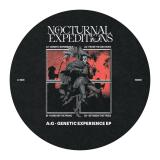
The third expedition is archived to wax...and what are its actual findings?
Why do we keep dancing in dark basements and out between the trees? Is it genetics?
Can we see what hides before our eyes? Or can we see better with them closed?
This expedition brings as many questions as definitive answers, and we will keep on searching.
The Chronicles of Narnia: The Voyage of the Dawn Treader is a 2010 fantasy-adventure film based on The Voyage of the Dawn Treader (1952), the third novel in C. S. Lewis’ fantasy series The Chronicles of Narnia. It is also the third and final installment in the original Chronicles of Narnia film series. Set three years after the events of Prince Caspian, the film follows the two youngest Pevensie children, Edmund and Lucy, as they return to Narnia to join the new king Caspian in his quest to rescue seven lost lords and to save Narnia from a corrupting evil that resides on a dark island.
Composer David Arnold scored the film, with themes composed by Harry Gregson-Williams (who scored the first two films). It was Arnold’s fourth collaboration with director Michael Apted. He created specific themes for the characters The Dawn Treader and Reepicheep, and used themes from the previous films for the opening and closing scenes as well as recurring characters, to ensure that the film is consistent with the franchise. The score was performed by an 87-piece orchestra and a 40-piece choir, resulting in an epic soundtrack with just the right magical touch to compliment this film.