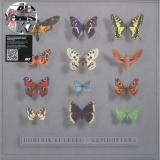
Lepidoptera - the scientific name for butterflies, meaning "scale-winged" - is also the title of the seventh studio album by renowned music producer, bestselling author, ecologist, and knowledge mediator Dominik Eulberg. More than just an album, Lepidoptera is an artistic manifesto: a celebration of butterfly diversity and a profound ecological statement. Set for release via !K7 Records, Lepidoptera blends his signature sound with an urgent ecological message. It marks the pinnacle of a music career spanning over three decades. Eulberg"s fascination with butterflies began in early childhood and has since become a lifelong passion. Drawing from years of experience as a producer and DJ, Eulberg presents his most technically ambitious work yet. At the heart of Lepidoptera are twelve native butterfly species, handpicked by Eulberg from the 3,700 known species in his homeland. Each track is inspired by one species, shaping the album"s structure and grounding its creative focus. The result is a richly textured and immersive journey that moves fluidly between pulsating, danceable rhythms, ambient soundscapes, and orchestral flourishes.
quête:t scale
Gramrcy and John Loveless return to Phantasy with a double-A single, ‘Lucid / Feel So’. Three years on from their festival-rupturing hit ‘Highdive’, which found regular rotation in the sets of 2ManyDJs, Peggy Gou and Daniel Avery alongside soundtracking shows for Moschino and Hugo Boss, two new tracks expand the sound of the Berlin pair’s studio partnership.
‘Lucid’ features a unique vocal turn from Tony Morris, a former teacher, taxi driver and contemporary cult figure in Glasgow’s underground scene. Having begun DIY production only in his late sixties, he has since released on the city’s peerless Optimo Music and has been profiled by the BBC and NPR, alternately described by The Scottish Herald as “Scotland’s most unlikely pop sensation” and by himself as “a deviant cabaret artist”.
Morris’s hypnotic repetitions prove to be an earworming anchor for Gramrcy and Loveless’s pressure-cooker arrangement, a bubbling concoction that represents their most formative influences, combining the sheer bassweight of FWD-era UK dance with the ISDN-line scramble of the most out-there electroclash. Rich in rhythm and textural weirdness, ‘Lucid’ captures the sound of a deeply satisfying intersection of rave outsiders.
Eschewing the dreamy psychedelia of its counterpart, ‘Feel So’ instead tips the scales back toward the outright ecstatic. The influence of esoteric disco and post-punk percussion rides on a throbbing bassline that builds toward supreme dancefloor release, paying tribute to a legacy of hi-NRG, spanning Chicago to Rimini.
Gramrcy & John Loveless - ‘Lucid / Feel So’ will be available to download & stream on October the 10th via Phantasy There will also be a limited-edition run of just 200 hand-stamped 12” vinyl records, including the instrumental cut of ‘Lucid’, available to pre-order from Bandcamp and the Phantasy store.
Wally Badarou is a synth pioneer and musical polymath. But rarely does he sing over his sumptuous tracks. The 6 songs that comprise new record Simple Things finally realise Wally's vision for select backing tracks from his beloved Colors Of Silence.
The tracks were originally developed back in 2001 for the release of the original CD; here, Wally has “simply" added overdubs and vocals to their mastered mixes with some discerning edits. Simply put, Simple Things is another slice of simply stunning Wally Badarou genius.
Simple Things has been decades in the making. Indeed, Wally struggled not only with the idea of singing these wonderful songs himself but singing them in English and writing his own lyrics, while wrestling with the sensational backing tracks, which themselves seemed to have taken on a life of their own.
As Wally explained to us: "In addition to the instrumental artist I have been known as, so far, there has always been a singer who simply was not sure he was, up until now. Even though “Back To Scales Tonight”, my very first album, was, indeed, a song album."
Opener "It Couldn't Be You" embellishes the uptempo groove of soca-funk gem "The Lights Of Kinshasa". As Wally explained to us, it's about “a simple love story somewhere, one rainy night, under the lights of Kinshasa. A woman, a man, online dating, quite usual in our times. Then they meet, almost missing each other." The guide vocal Wally had laid for Colors Of Silence - with an organ sound - seemed striving for words in Linguala, a Congolese language he could not speak. Therefore the decision to do it himself was not an easy one, for it had to be in English to fit his singing. We think it turned out pretty good!
"You Can't Hide Always" vocalises Wally's deep concerns set to the propulsive "Smiles By The Millions": "Populism, ostracism, radicalism, ethics and values all turned upside down worldwide, are they all inevitably exacerbated by our social networks? It could all melt down one day, like a house of cards in the ocean of fake news and false prophecies”. Wally wanted to keep the track as bare as possible but, inevitably, the backing vocals and the synth-brass arrive ultimately to present a welcome 70s flavour, with no snare-drum added.
The bright and breezy "We'll Make It Again" adds vocals to "Where Were We", a tropical, reggae-tinged bounce through the islands. Here's Waly: "Where were we when we last said: "I love you"? Simple words to express something quite common, but never quite simple to deal with. A simple song about the resilience of the broken hearts.” The reggae came from it being conceived when Wally was scoring for “Third World Cop”, a 1999 Jamaican action movie.
"Walk Straight Ahead" provides Wally's gorgeous, contemplative and idiosyncratic vocals to the deep serenity of Colors Of Silence highlight, "Amber Whispers". It's a gliding, divine, mini melodic masterpiece. It'll make you swoon in its extreme beauty. As Wally describes, "it started as just whispers, sweet amber whispers. Then the colour turned darker, as darker skies seemed to fall upon us while the whole world keeps on walking ahead, straight ahead, regardless of the blatant warnings, feeling much too comfortable in conformity. Initially, the verses were to be spoken only. I realised they could be sung all the while, without overshadowing the ethereal atmosphere." Amen.
The serene, celestial "Painting My Life Blue" presents the vocal version of "Days To Wonder". Says Wally, "how does it feel when your second half is gone after decades of riding life together? Past the temporary loss of your bearings, you come to realise you've been blind to the essential, and suddenly you can see...For this most intimate song of mine, I had tried to come up with a melody on top of the existing backing track, long before realising the melody was in the keyboard part already. It just needed to be properly mixed with it."
The profoundly emotional "Just Two Lovers" works up the formerly-too-brief and glorious "Crystal Falls" into a much fuller masterpiece and features acoustic guitar sparkle before fully glistening with some gentle head-nod percussion. Waly explains further: "Dear little green men, please tell me, what is it about us that makes you want to come and visit us so often (contrary to Fermi's assertion)? And here is the reply I believe I heard them sing: "You've got the key you've been searching for: Love”. I reverted to the initial backing track I had made around 1985, which already bore the melody, and which I added acoustic guitars to, before singing it." An astounding closer.
A synth specialist, there can be few artists more under-appreciated given their vast influence than Wally Badarou. His solo work practically defined the sound of the Balearic DJs of the 1980s, and thus the more sophisticated sound of dance culture thereafter. He was one of the Compass Point All Stars (with Sly and Robbie, Barry Reynolds, Mikey Chung and Uziah "Sticky" Thompson), the in-house recording team of Compass Point Studios responsible for a series of albums in the 1980s recorded by Grace Jones, Tom Tom Club, Mick Jagger, Black Uhuru, Gwen Guthrie, Jimmy Cliff and Gregory Isaacs. Badarou's keyboard playing could also be heard on albums by Robert Palmer, Marianne Faithfull, Herbie Hancock, M (Pop Muzik), Talking Heads, Manu Dibango and Miriam Makeba. He also produced Fela Kuti. Phew!
When we asked Wally about the significance of this collection's title, he explained: "These are "Simple things” that everyday’s life seems to build upon. The simplest are the harder to describe, but when satisfactorily described i.e. with simple words, they are the more genuine and authentic to express and share. I’ve immersed myself in other classic song lyrics, something I hardly did before, just to appreciate the genius behind the simple words they were made of, and had a great time studying how powerful they were in expressing complex ideas such as love."
Recording was twofold: first, most of the backing tracks were recorded in 2001, in Wally's studio in Normandy, mostly using hardware synths and Yamaha digital consoles. Then, he fine-tuned the melodies and wrote the lyrics in late 2023, then added some overdubs and sang them all during summer 2024. States Wally, "Digital Performer was and remains the DAW I’ve been using throughout, ever since the 80s."
Wally's sophisticated synth textures and expressive keyboard runs are so full of character, so full of life, that this work of art transcends any easy genre categorisation. Meticulously remastered and cut by both Simon Francis and Cicely Balston respectively, it has been pressed to the highest possibly quality at Record Industry in Holland. Sometimes, the simple things are the most extraordinary.
SCALER are the electrifying Bristol-based band hailed as the city’s “next national breakthrough” thanks to their pulverising live show and meticulous, mind-warping sound. Now they’re back with ‘Endlessly’, a sublime and stylistically expansive new album. 10 potent tracks written and recorded more collaboratively than ever before, as SCALER explore what it means to make music with no ceiling.
Building on what they know and taking it in new directions has been a constant throughout the three-year journey behind ‘Endlessly’, which came together in the studio beneath Bristol’s legendary The Louisiana. Inspired by time apart, the album finds them reconnecting with their diverse sonic touchpoints – many tangled in their city’s much-mused-on musical heritage – and the creative energy of collaborators around them. Close friends and long-admired peers, including Akiko Haruna, Art School Girlfriend, Tlya X An, Shadow Stevie, Thomas Ridley and Cold Light’s ELDON add colour to SCALER’s darkened palette and point to the left-turns they’re leaning into. The intense softens into introspection. The blistering becomes a balm.
‘Endlessly’ is the second album from SCALER, a.k.a. Alex Hill, Isaac Jones, James Rushforth and Nick Berthoud, alongside visual artist Jason Baker. The record follows 2022’s acclaimed ‘Void’ and marks their debut for Bristol’s revered Black Acre, a longtime champion of genre-defying electronic music.
"I want to hear more of Ryo Fukui's performances." The dream of listeners around the world has now become a reality. A spectacular live performance full of the charm of the mature Fukui who has been with .This is what an unexpected joy is all about. The appearance of Ryo Fukui's "new work". Recorded on June 26, 2004. This is a live recording of a live performance commemorating the 9th anniversary of , the jazz live house that Fukui presided over and used as the base of his activities.
The members of the trio were Fukui, Kosuke Sakai (bass), and Yoshito Eto (drums). Fukui was 56 years old at the time. His performance was powerful and large-scale, yet delicate and sharp. In terms of the balance of energy, stamina, and technique, he was just approaching his prime. He spins heavy yet elegant renditions of his beloved Phineas Newborn Jr. and Tommy Flanagan, and thrillingly plays Wayne Shorter, who he was a huge fan of in his youth. It is a spectacular performance that reflects the fulfillment of Fukui's time. , which opened in June 1995, is celebrating its 30th anniversary this year.
Text by Yusuke Ogawa (UNIVERSOUNDS / DEEP JAZZ REALITY)
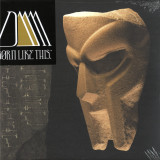
‘BORN LIKE THIS.’ is MF DOOM’s last solo album. Featuring Ghostface Killah, Raekwon and seminal American poet and writer Charles Bukowski with beats from J Dilla, Madlib and ol’ Metal Fingers himself. “I’ve been a fan of Bukowski for a while. It was a friend of mine – damn, I forget the n*gga name – from Life Sucks Die, it’s a graffiti magazine but it’s real kinda edgy, out of Minneapolis. They did an interview with me and then me and Andrew Broder was friends ever since then. He said, ‘Your shit reminds me of this dude Bukowski, you gotta read his stuff.’ I was a little apprehensive at first, ‘cos I was like, ‘What kinda weird shit is this?’ Then he gave me a book, The Most Beautiful Woman In Town, and after that I just got into it. “So for this album, to celebrate all us writers, emcees, if you look at it, it’s a lot of words that we say, and we all write those words: if it was written down on a piece of paper it could be a short story or like a good book. So I saw where Andrew was coming from where he sees the similarities. In tribute to Bukowski I said let me get him as a guest appear ance…” DOOM as quoted in HHC. “Whatever caused DOOM to scale back his output and go off the grid, he’s only come back from it sharper, stronger, and more powerful than before.” Pitchfork “DOOM still has the sickest vocabulary, broadest frame of reference, and densest, most quotable rhymes in hip-hop… he has created an album of sublimely half-assed super-genius.” Onion AV Club
Heavy-weight club tracks! Activity FM launches with a bang. The first V/A EP sets a bold tone: four heavyweight cuts built for serious floors. DJ Hell leads with Scale, a pounding darkside anthem. Truncate follows with Where Do We Go - a peak-time acid weapon. Detroits DJ T-1000 delivers No Victims Only Volunteers, a fierce dose of machine funk mastery. Closing it out, UK legend Mark Broom unearths Nineties - an unreleased time capsule from 92-93, straight from the DAT vaults.
Artwork by Activity Vision.
Full support from Ben Sims, DJ Bone, Detroit In Effect, The Advent, Marcel Dettmann, Jerome Hill, Alienata, Slam, Sol Ortega, Om Unit.
Next up on Bosconi, the ever-persistent Italian outpost helmed by DJ sorcerer Fabio della Torre, comes a bold new chapter from label mainstay Lapucci—a familiar name to heads who remember his trippy debut Levitated Sensor Detector (LSD).
With Level of Control, the Florence-based Burbi Dub dubplate conjurer delivers a four-track EP that travels across moody electronics, psychedelic grooves, and off-world rhythms.
Kicking off the A-side is “Radio Controller”, a dark and melodic new beat jam with deep ‘80s roots—think obscure synths, rolling drum-machine funk, and a haunting vocoder line that crackles like forgotten transmissions.
Next up, “Einstein”. This one’s a jacking electro-techno burner, all drive and tension—built for those peak-time moments where things feel like they could go off the rails. There’s a cinematic sense of anticipation here, a nod to the cosmic weight of relativity and dancefloor gravity.
Flip to the B-side for “Level of Reality”—a trance-soaked electro weapon, laced with a screaming guitar-like lead and a soaring, emotional melody. It’s peak-time power with sunrise sensitivity—equal parts rave and revelation.
Closing things out is “Irabijanti”, a stripped-back, hypnotic afterhours tool with a fresh, effortless groove. Subtle nods to Middle Eastern scales and rhythms give it a dreamlike, drifting feel—like getting lost in the dunes of some alien desert.
Another must-have from the Bosconi mothership—Lapucci pilots us further out, not with a bang but with a slow magnetic pull into somewhere weird, warm, and wired.
- A1: Kifu Mitsuhashi, Kiyoshi Yamaya - Asadoya Yunta
- A2: Toshiko Yonekawa, Kiyoshi Yamaya - Tanchame
- A3: Kiyoshi Yamaya - Ryukyu Miyabi 2
- A4: Kiyoshi Yamaya - Ryukyu Miyabi 3
- A5: A3 Kiyoshi Yamaya - Ryukyu Miyabi 4
- A6: Kiyoashi Yamaya - Nishinjo-Bushi/Asadoya Yunta/Tanchame
- B1: Tadaaki Misago & Tokyo Cuban Boys - Tanchame-Bushi
- B2: Tadaaki Misago & Tokyo Cuban Boys - Hatoma-Bushi
- B3: Minoru Muraoka - Asadoya Yunta
- B4: Kiyoshi Yamaya - Ryukyu No Sora
- B5: Kiyoshi Yamaya - Ryukyu No Matsuri 1
- B6: Kifu Mitsuhashi, Kiyoshi Yamaya - Tanchame
A compilation of rare and unique pop songs sung in Okinawa's unique musical scale with rock and soul grooves. It is based on “Ryukyu Rare Groove” released in 2003 and its sequel “Ryukyu Rare Groove 2” in 2006. This is a renewed version of those two albums, with more carefully selected and new songs included.
The Yara Families, the symbol of this series, as well as songs by Shokichi Kina, the originator of Okinawan folk rock, Mitsuko Sawamura, who made a breakthrough from Okinawa into American musical films, and Teiko Saito (Teiko Taira), a jazz singer who released her debut album in 2022 at the age of 86 and became a topic of conversation, The album contains 14 precious tropical groove songs. A renewed version of “Ryukyu Rare Groove” is now available in analog format!
The compilation “Ryukyu Rare Groove” became a hot topic as many people became addicted to its unique groove, which was created by applying Western arrangements to Okinawan scales and traditional Okinawan music. Ryukyu Rare Groove Revisited” is now available in analog format.
It features 14 precious tropical grooves, including not only the iconic Yara Families from this series, but also songs by Shokichi Kina, the originator of island song rock, and Teiko Saito (Teiko Taira), a jazz singer who released her debut album in 2022 at the age of 86 and became a hot topic.
Ryukyu Rare Groove Crossover,” a selection of jazz arrangements of Okinawan melodies and folk songs, was also released simultaneously, featuring MURO selection
‘Diggers Dozen’ and Kiyoshi Yamaya's Okinawan folk song Jazz Funk, which was featured on the ‘Ryukyu’ 7-inch from Tropic Night Records. and other instrumentals,
including Latin big band jazz by Naoteru Misuna and the Tokyo Cuban Boys.
- A1: Lost Blocks F. Elucid Produced By Messiah Musik
- A2: The Big Nothing Produced By Messiah Musik
- A3: Flatlands Produced By Messiah Musik
- A4: Woodhull Produced By Willie Green
- A5: U-Boats F. Elucid Produced By Driver For Raygunomics & Aesop Rock
- A6: Zulu Tolstoy Produced By Willie Green
- A7: Warmachines Produced By Messiah Musik
- A8: Carpetbagger F. Elucid Produced By Brother Hall
- B1: Born Yesterday Produced By Messiah Musik
- B2: Sleep Produced By Willie Green
- B3: Scales F. L’wren Produced By Messiah Musik
- B4: Poor Company F. Elucid & Henry Canyons Produced By Elucid & Messiah Musik
- B5: Dreams Come True Produced By Messiah Musik
- C1: Bicycles F. Henry Canyons Produced By Blockhead
- C2: African Dodger F. Elucid Produced By Dosg4W
- C3: Lambs Produced By Messiah Musik
- C4: Slow Week Produced By Dosg4W
- C5: Weeper F. Curly Castro Produced By Messiah Musik
- C6: Rpms Produced By Messiah Musik
- D1: Dark Woods Produced By Steel Tipped Dove
- D2: True Stories Produced By Blockhead
- D3: Borrowed Time Produced By Junclassic
- D4: Benediction Produced By Elucid
- D5: Good Night Produced By Blockhead
When billy woods released Today, I Wrote Nothing ten years ago, it was an unexpected departure from a rapper who was just starting to make waves in the indie rap scene. After spending the earlier part of his career in the wilderness, woods had managed to crawl out of obscurity with the minor success of 2012’s History Will Absolve Me. Dour Candy, 2013’s collaboration with underground legend Blockhead drew accolades, which only increased with Armand Hammer’s debut Race Music.
Then, woods dropped out of sight for two years before returning with Today, I Wrote Nothing, a record that deviated significantly from what had come before. Where Dour Candy had been concise and focused, TIWN was a sprawling 24 tracks. Where History Will Absolve Me was anchored by hard-hitting beats, anthemic songs, and a couple high powered features, TIWN was comprised of short vignettes, quietly eclectic production, and the only guests were his Backwoodz label-mates. Only one video was released; the claustrophobic “Flatlands”, shot on a shoestring budget in a Brooklyn housing project. Reviewers didn’t know quite what to make of the record, and in many cases, neither did fans.
As is often the case for woods’ albums, many perspectives shifted as the years passed. Listeners came to see the sad, quiet beauty of Today, I Wrote Nothing; a road trip album that doubles as a meditation on life’s journeys and death’s hiding places. The album’s power is in it’s intimacy, it’s insistence on holding your hand through the darkness. Now, TIWN is considered one of the more unique and vital records in woods catalogue. The dynamic woods created with TIWN vis-a-vis History Will Absolve Me and Dour Candy is one that would come to define his ouerve; constant experimentation, a refusal to be pigeonholed, and an unwavering search for the emotional heart of his subject. For us at Backwoodz, being able to repress this album on it’s ten year anniversary is especially sweet, because we remember how long it took us to sell that original run of 500. To everyone who copped one of those and helped us keep the lights on, this is for you too, we couldn’t have gotten here otherwise.
Jason Velo hails from Wisconsin and has been DJing for years, mostly in the rams of Chicago and Detroit house., He has recently decided to branch out into production and this latest outing comes on Noonish and is deep, groovy and minimal house for afterparties in cosy basements. Opener 'Dream Wheel' has diffuse, humid chords radiating out of a gentry bumping deep house groove, while 'Slow Burn' is just that with its horizontal vibes and gentle patter of drums over a nice rolling bassline. 'Lost Remote' is far less anxious than the situation it describes, though it does have a more eerie and cosmic feel than the others with its deft melodies and larger sense of scales. Tasteful stuff.
Past Inside The Present is back with another of its quietly powerful ambient records, this time from Almost An Island, which is a collaboration between Kenneth James Gibson and husband and wife duo James and Cynthia Bernard. This black version of the self-titled oeuvre drifts through ambient, Americana and experimental soundscapes with musical elegance and tasteful restraint. Muted textures, swirling guitar, pedal steel and subtle vocals create a mood that draws you in close but is also grand in scale. Tracks like 'Quadrivium' and 'What Got Us To Our Feet' blur the line between memory and melody, while 'Palo Verde' and 'Promise to Fade' linger like a half-remembered dream. This isn't ambient as background-it's a fully formed emotional landscape that is both meditative and melancholic.
- A1: Cloud Nine
- A2: I Heard It Through The Grapevine
- B1: Run Away Child, Running Wild
- C1: Love Is A Hurtin’ Thing
- C2: Hey Girl
- C3: Why Did She Have To Leave Me (Why Did She Have To Go)
- C4: I Need Your Lovin’
- D1: Don’t Let Him Take Your Love From Me
- D2: I Gotta Find A Way (To Get You Back)
- D3: Gonna Keep On Tryin’ Till I Win Your Love
The Temptations Get High on Psychedelic Soul: Cloud Nine Soars with Ambitious Arrangements and Production, Features Standout Vocal Performances and Instrumentation by the Funk Brothers
The Temptations’ Cloud Nine announced that Motown — and “The Sound of Young America” — would never be the same. Influenced by the emergence of cutting-edge rock and pop currents, as well as increasing sociopolitical turmoil, the album broke down barriers between rock, psychedelia, and soul while heralding the arrival of visionary arrangements and production techniques. Bookended by traditional R&B numbers, the 1969 record sent the Temptations in bold new directions and signaled the advent of psychedelic soul.
Sourced from the original master tapes, strictly limited to 3,000 numbered copies, pressed at Fidelity Record Pressing, and housed in a Stoughton gatefold jacket, Mobile Fidelity’s 180g 45PM 2LP set presents Cloud Nine in audiophile sound for the first time on a domestic pressing. This collectible reissue bestows Norman Whitfield’s extraordinary production with the grand-scale dynamics, natural tonality, expansive openness, and low-end weight it deserves. The timbre of each of the five members’ voices is readily identifiable — even within the group harmonies — bestowing a realism never experienced outside the recording studio.
Making its debut on 45RPM, the album further benefits from the wide groove space by playing with greater separation and more realistic presence than prior editions. Everything from the brassiness of the horns to the dry snap of the snare comes across with reference-grade clarity and positioning. And since Motown’s renowned Funk Brothers backing band plays on many of the cuts, you’ll want to savor every note. The imaging, soundstaging, and organic bloom-and-decay of the notes make that possible.
Amid Cloud Nine, the instrumentation and architecture stand out as much as any element. Never before had a Motown album contained such ambitious patterns and complex passages. Seemingly conscientious of the departure from their past methods, the Temptations and Whitfield bunched together the tracks that mark a deep dive into psychedelic territory and counterbalance them with seven sterling soul cuts that dovetail with Motown tradition drenched with heartfelt vocals, swelling strings, and finger-snapping beats.
On the original 33RPM release, traditional Motown soul — laden with heartfelt vocals, swelling strings, and finger-snapping beats — occupies Side Two. These songs reveal an ensemble still very much on top of delivering pristine pop-soul material graced with romantic sweetness, persuasive insistent, and soaring highs. Re-energized after the departure of lead singer David Ruffin, who was fired for a variety of reasons in June 1968, the Temptations seamlessly meld with his replacement, Dennis Edwards, on one melodic gem after another.
The collective tackles five songs co-written by the legendary Motown team of Barrett Strong and Whitfield. Not the least of which are the smooth, shuffling “Why Did She Have to Leave Me (Why Did She Have to Go)” and deceptively simple, horn-spiked “Gonna Keep on Tryin’ till I Win Your Love.” On these tracks, as well as on a lush rendition of the ballad “Love Is a Hurtin’ Thing” and pleading, tender send-up of the Gerry Goffin-Carole King classic “Hey Girl,” Edwards and Paul Williams take turns on the lead with the estimable Eddie Kendricks, Melvin Franklin, and Otis Williams providing backing support.
All five vocalists trade-off leads on the simmering title track, a groundbreaking composition shot through with wah-wah-pedal effects, liquid funk, deep bass lines, Cuban percussion, saturated reverb, and gang choruses. Whitfield mines each member’s natural vocal range with spectacular results, keeps time with cymbals, and channels both the heated temperatures and escapist desires of a society embroiled in war, conflict, and experimental drugs.
Amazingly, the Temptations top themselves on the similarly revealing “Run Away Child, Running Wild.” Nearly 10 minutes in length, the song explodes R&B parameters and harbors a cinematic scope. Urgent pianos, distorted guitars, stripped-down percussion, steamy Hammond organs, minimal bass motifs, five distinct voices narrating the tale of a boy who fled home and now finds himself amid the scary, unforgiving external world: They combine to give the urgent tune a walls-closing-in atmosphere where fear and desperation reign. Bolstered by an extended instrumental section that precedes a climactic return of the singers’ voices, “Run Away Child, Running Wild” equaled the success of the record’s title track, with both reaching No. 6 on the pop charts.
Multi-instrumentalist, visual artist, and scene creator, Jonathan Uliel Saldanha, has been releasing music under various guises for two decades. With the successes of his moniker HHY (Nyege Nyege Tapes) whether in symbiosis with The Kampala Unit or the syncopationophilic big band of The Macumbas, Jonathan Uliel Saldanha's sonic signature continues to grow more and more singular. Ever synthetic and digital, Uliel Saldanha's work-ethic never eases—having recently started a label of his own, Horror Vector.
Surface Disorder sees the release of the music from Jonathan Uliel Saldanha's large-scale exhibition of the same name that occurred in Porto & Lisbon, (2024-25). As with much of his work, there is a Ballardian sense of a near-future in dystopia. And since we're already living the apocalypse, there's never a hidden moral to veer away from the torment. Instead, Uliel Saldanha dives into it and catalyzes it further.
Information from Angels feels like a cunty John Dee AI (credited as The Mouth) becoming an oracle of information overload, accompanied by an instrumental bidirectionally that splits into a lush harmonic layer of blissful punctuated pads and another that is a speedy but subdued melodic bassline. The Mouth intones a 15-minute fever dream that flows through themes that have occupied Uliel Saldanha for quite some time.
On Swarming the Pit, the intricacy of Jonathan Uliel Saldanha sonic wizardry is on full display. A constantly moving swarm of granulated particulates of sonic material morph into a variety of textures: coins or gunshell casings hit the floor, engines rev their monstrosity, rubber-like pulses are splayed into spectral blurs and pops. This is clearly an update on music conrète's obsessions.
The Mouth on the closing track, Wolf & Virus Dialogues, has a completely different texture from the first, alerting the listener to the uncanny nature of its genesis. Here the instrumental sounds are all triggered by the articulations of the voice: a weird unison, it serves as its own artificial accompaniment. The reiteration of a self-model (a rabid 'my') creates a greater tension between computational self-certainty and the terror of its inevitable actualization.
- A1: Moondata – Let The Moonshine In (Dub)
- A2: Dhuo – Walkin’ (Dub Version)
- A3: Luc Van Acker / Anna Domino – Zanna
- A4: Roger Rönning – Cecilia
- B1: The Quick – One Light In A Blackout (Special Version)
- B2: Colourfool – Hey You
- B3: Amy Cooper – Music
- B4: Maxisand – Don’t Be Talking About That (Vocal)
- C1: Michael Heart – Some Girls (Instrumental)
- C2: Jean Louis Murat – Te Garder Près De Moi (Dream Remix)
- C3: Mind Fair Presents … Sundown Drive – Give It Up (Mark Seven Parkway Dub)
- D1: Gregg Brown – Baby Talk (Club Mix)
- D2: Yeah Bo! – Yeah Bo! (Groove On Mix)
- D3: J Dalton – Game
Leng Records proudly presents Everything You’re About to Hear Is True: Volume 1, a compilation carefully curated by Rotation Soundsystem. Brought together by Rotation founders Dean Meredith and Ben Shenton, alongside the Wrekin Havoc trio of Rob J, Stuart Robinson, and Rich Hall, this debut volume captures the collective’s shared vision – shaped by decades of crate-digging.
Founded in 2013, Rotation has grown from a modest gathering in Staffordshire into a thriving community of like-minded music lovers, attracting heads and partygoers from across the UK – and well beyond. What began as an intimate affair has evolved into a full-scale, three-day celebration, now held in a grand yurt and powered by a bespoke six-way sound system. The rig features four Klipschorns, two JBLs with twin 18” and 15” sub reinforcements, compression horns, and an Isonoe 420 mixer.
Meredith explains: “With the help of my brother, Martin, I’m constantly looking at ways to improve the setup. I love the way Larry Levan did that at The Paradise Garage. We have a few things that are custom-made. I want our system to be unique to us.”
According to regular attendee, DJ and writer Steve KIW: “In the right hands, the sound system at Rotation – very much Dean’s labour of love – is untouchable. The comparisons with Mancuso’s Loft come easily because they are deserved. There isn’t a bad spot in the yurt. Wherever you are, it sounds incredible.”
As the dancing continues through the weekend, the DJ line-up has grown to match the occasion. Guests and headliners have included a roll call of legendary selectors: Bill Brewster, Colleen “Cosmo” Murphy, Phil Mison, Nick The Record, Ruf Dug, Mark Seven, and The Idjut Boys — the latter playing a marathon 10-hour set in 2024. The parties have also featured live performances from Emperor Machine, Quinn Lamont Luke, Reuben Vaun Smith, and Orbs of Light.
Presented on gatefold double vinyl, this lovingly assembled collection is the result of decades spent digging through dusty crates, reflecting the selectors’ deep-rooted passion for uncovering rare gems and overlooked treasures. Decidedly European in spirit, the album brings together 14 rarities with standout selections from Belgium, Sweden, Italy, Germany, and France. The vast majority of tracks are true obscurities, and nearly every one is a mid-tempo bumper.
“This has been a long time coming – something we’ve always dreamed of doing. We’re incredibly thankful to Leng Records, who understand our vision and what we’re trying to build. This compilation pulls together some of our favourite tracks from over the years. It’s not just a playlist – it’s a journey, a window into the sound of Rotation,” says Meredith.
After their first album, AGO, released in 2023, and two successful European tours, the group's second album, SÉ NAM (‘understand me' in Mina), will be released on June 13, 2025.
Feminist and ecological themes, sung in the scales of Togolese voodoo tradition, are still at the heart of the group's discourse.
Recorded once again at the legendary OTODI studio in Lomé, the new tracks benefit from a more contemporary production by Peter Solo (Vaudou Game) that retains the lively character of the original recording, but gives even greater scope to groove and rhythm.
An immemorial trance, which through the use of their magical 'gazé tuyaux', a DIY bass based on PVC pipes, evokes original house and techno and will seduce dance-floors around the world.
Apocryphal cycles are those that are not observed with the naked eye or those that interact implicitly.
Apocryphal cycles of atoms and molecules refer to chemical reactions and changes of state that occur at the subatomic level, often without being directly observable on the macroscopic scale. These cycles involve the creation and destruction of molecules, the movement of atoms, isomerization, and other processes that underlie the properties and reactions of matter.
Apocryphal cycles are fundamental to understanding the properties of matter, the chemistry of life, the behavior of materials, and the formation of new compounds. They are the basis of science and technology, enabling the creation of new materials, medicines, and chemical processes.
AN ATLAS OF LOSS
Do minerals dream of becoming semiconductors? Do they yearn to carry charges, amplify, switch, and convert energy into emotions comprehensible to humans? And what if, from the darkness of the underground, they had been listening to us sing in caves before the emergence of the first flute? Could they have guided us, through the course of history, to find them, extract them, and create new sounds through sinusoidal waves, to form valves and bend circuits?
If so, minerals would transition from what philosopher Eugene Thacker defines as the ‘planet’—that virginal and unreachable realm for humans that we study through geology, paleontology, and environmental sciences—to the ‘world,’ the space we inhabit, interpret, and synthesise in our daily lives. Sadly, we only remember the world when it erupts violently, through climate catastrophes or when a new virus emerges. Sometimes a tsunami collides with a nuclear plant, or viruses are cultivated as biological weapons in high-security laboratories, provoking a deep biological anxiety, hard to quell, which we all feel beneath our skin.
There exists a third realm, disconnected from both the world and the planet: the ‘earth’, an immense, dense rock floating in space alongside other planets, situated in the cosmological dimension. Relating to the earth is so complex that we only do so through theoretical speculations of a scientific nature or through science fiction, interweaving until one becomes the prophecy of the other, in an infinite, pendular dance. Beyond the darkness of space and Lovecraft’s cosmic horror, the fantasy of human extinction is the most recurrent: to reach a collapse so devastating that we do not survive it, even though the earth does, without us.
In a world where we quantify everything through body sensors, financial algorithms, nanometre-scale robots, and surveillance drones—a world in which everything that can be domesticated and controlled can also be commodified—a superior artificial intelligence would survive the collapse of the species (some speculate it might even cause it) and learn from our mistakes, thanks to our obsessive gathering of data.
Long after our voices fade, minerals will persist in the darkness of screens, in the silicon of chips, and in their pure form, still unexploited underground. Over the millennia, this intelligence might piece together fragments of our reasoning, as if an alien civilization finally connected with one of our spacecrafts loaded with messages cast into the void. It would sort through endless streams of data, unable to grasp the depths of emotion behind what it quantified, recreating simulations of our past, stripped of the nuance that once defined us and conducting experiments in sandboxes.
Some remnants of our existence—faint echoes of forgotten beauty—would be pieced together in an atlas of loss, buried beneath layers of numbers, decayed bots, and corroded hard drives. What will follow? Perhaps bison will once again roam—trotting to the strange pulse of techno, their ancient forms framed by the ruins of our cities.
Buildings will crumble, slowly dissolving under the soft touch of ambient music, and a thousand flowers will bloom with that ancient music created through electrical signals and computation. 7 songs for a future both improbable and inevitable—a final message from a world lost to itself, from planet Earth to planet Earth.
Alfons Pich, 2025