Cerca:t time

Generi
Tutto
DÄLEK - BRILLIANCE OF A FALLING MOON
  • Better Than
  • Knowledge | Understanding | Wisdom
  • Normalized Tragedy
  • Expressions Of Love
  • Substance
  • I Am A Man
  • For The People
  • By The Time We Arrive In El Salvador

Die experimentellen Hip-Hop-Legenden dälek kehren mit ihrem neuesten Album ,Brilliance of a Falling Moon" zurück. Der Titel stammt aus einem Abschnitt von Erik Larsons Roman ,In The Garden of Beasts" aus dem Jahr 2011. Das Album zeichnet ein feuriges Porträt des Lebens und Widerstands im faschistischen Amerika. ,Brilliance of a Falling Moon" wurde von Will Brooks (alias MC dälek) und Mike Mare konzipiert, komponiert und produziert und ist ein weitläufiges, kompromissloses Album, das den politischen Ton der Gegenwart widerspiegelt. Aufgenommen in den Deadverse Studios der Gruppe im Laufe der Jahre 2024 und 2025 aufgenommen, werden die Beats von ,Brilliance of a Falling Moon" von brutalen, staubigen Drum Breaks angetrieben und sind in eine bedrohliche, jenseitige Atmosphäre gehüllt. Brooks' Reime zielen auf alles ab, von der Unterdrückung von Informationen durch den Staat über den Kolonialismus bis hin zu Trumps Dämonisierung von Einwanderern, und sie brennen geradezu vor Empörung über den aktuellen Zustand der Welt.

pre-ordina ora27.03.2026

dovrebbe essere pubblicato su 27.03.2026

26,01
FRANCE - Good Thoughts, Bad Thoughts

“France absolutely engage the body... but the spectacle is one for your mind, especially as you start to wonder how much of what you’re hearing is really there.” The Quietus

Legendary hurdy-gurdy-powered kraut/psych/folk/drone band France have announced a new album ‘Good Thoughts. Bad Thoughts’ on The state51 Conspiracy label; capturing a wild performance at The state51 Factory in East London - part of their very first tour of England. They played Liverpool Psych Fest as a one off some years back.

Forming 20 years ago as a trio in Valence, France, for this performance, were Jeremie Sauvage on bass, Yann Gourdon on electrified hurdy-gurdy, and Cyril Bondi (of La Tene and Cyril Cyril on drums (stalwart Mathieu Tilly was taking some much needed time off).

This album sees the band plunge into the depths of the human psyche, backed up by Hugo Hyart’s deep, all-over cosmic doodles and an unhidden homage to the Parliafunkadelicment state of mind : Uniting, dancing, staying creative and open minded despite the tribulations of life. Dedicated to the feeling of good (and baby they’re good... at being good).

On the night France were recorded by Hot Chip’s in-house engineer James Crump who subsequently mixed the record at Hot Chip’s studio in East London. The album was mastered by Richy Hughes at Binary Feedback.

pre-ordina ora27.03.2026

dovrebbe essere pubblicato su 27.03.2026

27,94
SNAIL MAIL - RICOCHET

SNAIL MAIL

RICOCHET

12inchOLELP2209
Matador/Beggars Group
27.03.2026
  • Tractor Beam
  • My Maker
  • Light On Our Feet
  • Cruise
  • Agony Freak
  • Dead End
  • Butterfly
  • Nowhere
  • Hell
  • Ricochet
  • Reverie
disponibile anche

RED COLOURED VINYL EDIT[21,81 €]


This is her first album in five years, she returns with a renewed sense of clarity and control, asserting herself as a generational songwriter with a sharpened perspective. While her early work chronicled the emotional turbulence of young love, Ricochet reveals a deeper fixation: time, mortality, and the quiet terror of watching the things you love slip away. The album"s 11 songs are steeped in introspection, anxiety, and acceptance - an acknowledgment that the world keeps turning regardless of what"s unfolding in your own small orbit.

pre-ordina ora27.03.2026

dovrebbe essere pubblicato su 27.03.2026

21,81
SNAIL MAIL - RICOCHET

SNAIL MAIL

RICOCHET

12inchOLELPE2209
Matador/Beggars Group
27.03.2026

This is her first album in five years, she returns with a renewed sense of clarity and control, asserting herself as a generational songwriter with a sharpened perspective. While her early work chronicled the emotional turbulence of young love, Ricochet reveals a deeper fixation: time, mortality, and the quiet terror of watching the things you love slip away. The album"s 11 songs are steeped in introspection, anxiety, and acceptance - an acknowledgment that the world keeps turning regardless of what"s unfolding in your own small orbit.

pre-ordina ora27.03.2026

dovrebbe essere pubblicato su 27.03.2026

21,81
ZION BAND - FREEDOM CITY

Released on Limited Edition Black Vinyl with a replica of the original sleeve and insert (300 Copies only). The beginning of the 1980s wasn't a great time to be young. Between 1979 and 1981 youth unemployment more than doubled to over 900,000. Many approaches were tried to tackle the problem and one of the more innovative was the Arts Opportunity Theatre a charity founded in Bristol by Reynold Duncan and Yvonne Deutschman. Financed by assorted public bodies, it aimed to train young people in a range of performing arts as well as the multiple skills needed to produce, organise and put on shows. Over a seven year period the Arts Opportunity Theatre put on a succession of shows not only locally, but travelling as far as the Continent and trained hundreds of young people in everything from music to book keeping. People who passed through the collective would go on to form the core of many local bands and be involved in a large proportion of Bristol music releases, especially reggae. The first show put on in 1981 and 1982 was "Freedom City" which prominently featured Zion Band. In May 1982 the Zion Band musicians from the show went into Right Track Studio in Bristol and recorded four vocals and two dubs that would be released the following January on a 12" single. Back in 2011 Bristol Archive Records included "Twelve Tribes" on a compilation and would later also compile "Babylon Fire/Babylon Dub", but the other three tracks could only be found on the scarce original 12" which in recent years has rocketed in price fetching in excess of £150. We believe music should be affordable and available so 2026 will see Bristol Archive Records reissue the Zion Band "Freedom City" 12" in it's entirety, complete with its original picture sleeve and insert with a limited pressing of 300 copies on black vinyl. This release is dedicated to the late Reynold Duncan RIP.

pre-ordina ora27.03.2026

dovrebbe essere pubblicato su 27.03.2026

21,43
Pirogue - Idesia

Pirogue

Idesia

12inchPIROGUE001LP
Native Cat
27.03.2026
  • A1: Escalier
  • A2: L'ile Perdue
  • A3: Le Bal
  • A4: Sur Le Chemin De L'école
  • A5: L'ile La Nuit
  • A6: Holidays(S)
  • B1: Robot Rêveur
  • B2: Dernier Vol
  • B3: Pas De Côté
  • B4: Cavalière De L'aube
  • B5: Idésia
  • B6: Balayeur De L'espace

The duo’s debut album sets off on an airy, groovy odyssey.

Recorded at the legendary La Frette studio (Parcels, Fontaines D.C.), the album follows an extensive period of demo development.

Immersed alongside outstanding musicians, the team worked in a relaxed, old-school spirit: a handful of takes, tape recording, and analog gear. Plenty of space was left for ideas to emerge organically in the studio. The arrangements—synthesizers, flute, backing vocals, percussion—were then carefully refined over many months.


"Idésia" stands out for its delicate production, brought to life by Maxime Kosinetz on recording (Oracle Sisters, Bon Voyage Organisation), Stan Neff on mixing (Andrea Laszlo de Simone, Polo & Pan), and Chab on mastering (Daft Punk, La Femme).


The record unfolds across changing sonic landscapes, with Will’s voice gliding over melodies rooted in a bright, warm groove. A subtle blend of pop and Californian warmth runs throughout the album.

The album explores themes of childhood (Sur le Chemin de l’École, L’Île Perdue), ecstatic escapes (Holiday(s), Pas de Côté, Escalier), and simple pleasures (Le Bal, Cavalière de l’Aube). It also casts a poetic eye on the evolution of the world (Dernier Vol, Robot Rêveur, Balayeur de l’Espace). Will & Paul play with contrasts, shifting perspectives along the way.


"Idésia" is the imaginary world in which Will & Paul gracefully lose themselves - a suspended place between nostalgia and science fiction, as if their silhouettes were drifting from a bright, carefree past toward a place suspended in time.

pre-ordina ora27.03.2026

dovrebbe essere pubblicato su 27.03.2026

22,48
Ryuichi Sakamoto - OPUS (4x12")

Ryuichi Sakamoto

OPUS (4x12")

4x12inch19802835111
Sony UK
27.03.2026
  • 1: Lack Of Love
  • 2: Bb
  • 3: Andata
  • 4: Solitude
  • 5: For Jóhann
  • 6: Aubade 2020
  • 7: Ichimei - Small Happiness
  • 8: Mizu No Naka No Bagatelle
  • 9: Bibo No Aozora
  • 10: Aqua
  • 11: Tong Poo
  • 12: The Wuthering Heights
  • 13: 20220302 - Sarabande
  • 14: The Sheltering Sky
  • 15 20: 180219 (W/Prepared Piano)
  • 16: The Last Emperor
  • 17: Trioon
  • 18: Happy End
  • 19: Merry Christmas Mr. Lawrence
  • 20: Opus - Ending

Experience the profound artistry of Ryuichi Sakamoto with Opus, a definitive vinyl collection curated by the composer himself. Spanning decades of groundbreaking work, this 4-LP set brings together iconic film scores, Yellow Magic Orchestra classics, and deeply personal compositions that reflect Sakamoto’s singular musical voice. Highlights include Merry Christmas Mr. Lawrence, Andata, and Aqua, alongside never-before-released pieces including for Jóhann (a tribute to Jóhann Jóhannsson), BB (dedicated to Bernardo Bertolucci), and 20180219 (featuring prepared piano).
Pressed at 45 RPM across four heavyweight LPs for exceptional audio fidelity, each disc is housed in its own jacket with matching black paper dust sleeves. The set is encased in a hand-crafted textured slipcase with elegant black foil detailing and includes a collector’s booklet with composition notes and credits. Opus is more than a retrospective; it’s a final statement from one of the most influential composers of our time.

pre-ordina ora27.03.2026

dovrebbe essere pubblicato su 27.03.2026

138,24
Marnie Weber - Returning Home: The Music of Marnie Weber LP
  • A1: Tiger, Tiger
  • A2: Nude In Solitude
  • A3: Songs Hurt Me
  • A4: The Ship Song
  • B1: Moans
  • B2: The Passionate One
  • B3: Shanghai My Heart
  • B4: In The Meadow

You probably have at least one friend who is completely obsessed with Marnie Weber. Her dark, punk-infused humour and fearless embrace of eccentric feminine power archetypes combine with gut-punch viscerality and a strange beauty that is anything but pretty.” Village Voice “This neo-gothic fairytale wavers between happiness and sadness, amusement and tragedy, attraction and repulsion.” The White Review “Weber reaches a new scale for her work…The sentimentality and romance at its root fearlessly sets it apart.” BOMB “Wild multimedia works that often dwell on the ghostly and the monstrous. Think: Fairy tales gone seriously awry.” LA Times Acclaimed LA multidisciplinary artist and musician Marnie Weber collects highlights from a long and storied career on Returning Home: The Music of Marnie Weber, a collection of neo-goth art-pop that steers between kankyō ongaku pop songs, noise-rock, and haunted fairytale darkness. The career of Marnie Weber (b. 1959) began with gigs paid in beer at an LA trucker bar in 1977. Her band, Party Boys, formed when Weber was then 19 and had just left home. By the early 80’s, the band began regularly performing at LA’s fabled Al’s Bar, sharing the stage with generational talents that passed over its beer-drenched floors. L7, Beck, Arto Lindsay, Ry Cooder, The Fall, Fear, Hole, Hüsker Dü, Social Distortion, Nirvana, The Residents, Sonic Youth, Urge Overkill, Jesus Lizard, the Misfits, among plenty more, played to audiences that included Bret Easton Ellis, Steve Buscemi, Tommy Lee, Bill Murray, Al Pacino, Sean Penn, and Chloe Sevigny.

pre-ordina ora27.03.2026

dovrebbe essere pubblicato su 27.03.2026

28,53
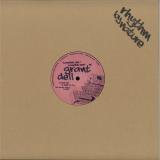
Grant Dell - Somefink Old / Somefink New

2026 Repress

Rhythm by Nature is back with Somefink Old, Somefink New, a three-tracker from seasoned producer Grant Dell that bridges past and present: sketches first laid down in the mid-2000s rediscovered and reworked alongside a brand-new cut, forming a dialogue between memory and renewal.

The EP opens with Feel Me?, a deep tech construction driven by a heavy low-end, its groove unfolding patiently while flashes of disco glimmer through the framework. On Light of Day, Dell shifts into full deep house territory — spacey pads and floating strings suspended across open structures until acidic stabs break through, twisting the track into brighter, playful directions. Closing with Death Disco in Dub, Dell channels the hallmarks of his Tribalation project: dub-infused atmospherics, light percussion and echo-drenched fragments circling around a hypnotic core, equally suited to open or dissolve a night.

With Somefink Old, Somefink New, Rhythm by Nature traces the arc of an artist deeply embedded in the underground, reuniting past forms with present gestures in a release that reaffirms the label’s consistency in quality and commitment to timeless club music.

non in magazzino

Ordina ora e ordineremo l'articolo per te presso il nostro fornitore.

13,40

Last In: 14 days ago
TIN FINGERS - BALCONIES

TIN FINGERS

BALCONIES

12inchUNDAY176LP
UNDAY RECORDS
27.03.2026

'Balconies' is an urgent, physical record shaped by momentum and heat. The album takes its title from a recurring metaphor: a balcony as a place of exposure and distance. Elevated, visible, yet removed from the action below. Throughout the record, Tin Fingers explore feelings of observation, displacement and restlessness, moving through places without fully belonging.

Musically, 'Balconies' marks a clear shift for the Antwerp band. Where earlier releases leaned into intimacy and melancholy, this album is louder, more direct and built for movement. Sharp, energetic songs are balanced by the band's continued attention to atmosphere and imagery.

The album was written instinctively over three months by frontman Felix Machtelinckx before being brought to the band, with arrangements coming together quickly thanks to years of shared experience. Recording took place over four hot summer days at The Old Carpet Factory on Hydra, Greece. The warmth, the sea and the island's isolation shaped both sound and mood, while limited time encouraged live recordings that capture the album's raw energy and immediacy. 'Balconies' was mixed by D. James Goodwin (The National, Kevin Morby, Whitney).

Following the release, Tin Fingers will present 'Balconies' live, with shows at De Roma (Antwerp), Mezz (Breda) and Supersonic (Paris).

pre-ordina ora27.03.2026

dovrebbe essere pubblicato su 27.03.2026

23,95
Haiku Salut & Meg Morley - The Lost Score
  • A1: What About Tomorrow?
  • A2: Meine Beste Freundin
  • A3: Needle Drop
  • A4: Carousel
  • A5: Laugh And Cricket
  • B1: Faces
  • B2: Toxic
  • B3: What Happened Next
  • B4: You Made Sunday
  • B5: Going Home

Lo Recordings are very proud to announce the release of a beautiful collaborative project. A seamless sonic journey that guides us through the filmic landscape of a bygone era. Chiming in the past and resonating in the present.

Meg Morley and Haiku Salut combine their talents for the reimagining of a score for the 1930's silent film People on Sunday. Inspired by their live performance and screening of the classic at the Flatpack festival. The release was five years in the making as they set out to capture the compositions in the studio, blending Morley’s expressive piano with Haiku Salut’s textured electronics. The result has given rise to an album that belies its historic source with a fresh and clean sound and a complex ever moving series of compositions.. 'The Lost Score' is a vibrant contemporary album for our time.

Haiku Salut are an instrumental trio whose music blends electronica, neo-classical and folk into richly layered, cinematic soundscapes. Known for their enigmatic performances and live scores to silent films, they create immersive experiences that merge timeless visuals with modern experimental sound.

Meg Morley is a Melbourne-born London-based pianist, composer and improviser who pursues cross-cultural and interdisciplinary collaborations, focusing on storytelling. Her classically trained precision and jazz-inflected improvisations have brought her to prominence through her compositions for classical and jazz ensembles, accompaniment for dance companies (Pina Bausch, English National Ballet) and her internationally-acclaimed original scores for silent film.

pre-ordina ora27.03.2026

dovrebbe essere pubblicato su 27.03.2026

25,00
THE ALAN PARSONS PROJECT - THE TURN OF A FRIENDLY CARD LP

Limited Edition 180gm heavyweight Clear Vinyl LP, Half-speed remaster by Miles Showell at Abbey Road Studios, Insert contains a sleevenote featuring quotes from Alan Parsons and Eric Woolfson. The Alan Parsons Project"s multi-million selling album The Turn of a Friendly Card (1980), their celebrated prog pop tour de force, is reissued in a variety of formatsincluding a Limited Edition Clear Vinyl LP, half-speed remastered by Miles Showell at Abbey Road Studios. Like other Alan Parsons Project albums, there were a variety of different lead vocalists employed including Chris Rainbow, Lenny Zakatek, Elmer Gantry as well as Eric Woolfson himself. Plus, a selection of session musicians such as guitarists Ian Bairnson and David Paton and drummer Stuart Elliott with arrangements by Andrew Powell.

pre-ordina ora27.03.2026

dovrebbe essere pubblicato su 27.03.2026

24,33
THE ALAN PARSONS PROJECT - AMMONIA AVENUE LP

2LP 180gm heavyweight 45 RPM Audiophile Edition, Featuring a half speed remaster by Miles Showell at Abbey Road Studios, Housed in polylined inners, Printed insert with sleevenote. The Alan Parsons Project"s million selling album Ammonia Avenue (1984), is re-issued in a variety of formats including this 2LP heavyweight, 45 RPM Audiophile edition. Expertly cut by Miles Showell at Abbey Road Studios on a customised Neumann VMS 80 lathe at half speed using a 1:1 archive transfer from the original SONY 1610 format digital mastertape recorded in 1984. Like other Alan Parsons Project albums, there were a variety of different lead vocalists employed including Chris Rainbow, Colin Blunstone, Lenny Zakatek as well as Eric Woolfson himself. Plus, a selection of session musicians such as guitarists Ian Bairnson and David Paton and drummer Stuart Elliott with arrangements by Andrew Powell.

pre-ordina ora27.03.2026

dovrebbe essere pubblicato su 27.03.2026

23,11
THE ALAN PARSONS PROJECT - AMMONIA AVENUE LP

Limited Edition 180gm heavyweight clear vinyl, Half-speed remaster by Miles Showell at Abbey Road Studios, Insert contains a sleevenote featuring quotes from Alan Parsons and Eric Woolfson The Alan Parsons Project"s million selling album Ammonia Avenue (1984), is re-issued in a variety of formats including a Limited Edition Clear vinyl LP, half-speed remastered by Miles Showell at Abbey Road studios. Like other Alan Parsons Project albums, there were a variety of different lead vocalists employed including Chris Rainbow, Colin Blunstone, Lenny Zakatek as well as Eric Woolfson himself. Plus, a selection of session musicians such as guitarists Ian Bairnson and David Paton and drummer Stuart Elliott with arrangements by Andrew Powell.

pre-ordina ora27.03.2026

dovrebbe essere pubblicato su 27.03.2026

24,33
Pume Orenge - Angel By Milo

Pume Orenge

Angel By Milo

12inchODA07M
ODDA Recordings
27.03.2026out soon

Bristol duo Pume Orenge unspool a world of spectral electronica from cassette loops and instrumental improvisation on their debut album Angel By Milo for Odda Recordings.

It is a world that opens draped in ferric hiss. A fog of sound, dense and yet not quite there, catching the light in strange shades and ambient drifts. Looping and receding, looping and receding, as pucks of static burst like faraway fireworks on a cold winter’s night. Sound sources obscured, ambiguous, not quite what they seem.

Angel By Milo takes its lead from the analogue process and textures by which it was made. Percussive and melodic loops were established, manipulated and responded to with instrumental improvisation, in a give-and-take with the materiality of the medium.

Across these seven intricately developed tracks, the sound fluctuates between the cinematic and the introspective, at times melancholy, at others verging on a kind of restrained anger, before the calm sets in once more. It is music for the small hours, awash with the grainy stuff of memory.

Embedded within Bristol’s independent scene, Pume Orenge’s quiet debut also speaks to the duo’s shared roots in the area, and like many of Odda’s previous releases, contains a sensitivity to place and atmosphere, even when these are no more than implied.

Angel By Milo builds on the DIY ethos of Pume Orenge's 2023 self-titled debut EP, whose tracks were recorded live in single takes, now honing a more intentional, purposeful approach to music making. It is one in which layers of meaning are allowed to reveal themselves, a way of composing that makes a virtue of its labour and the chance occurrences that can arise in the process.

This is music in praise of shadows. Of the things we can’t quite see, the feelings we can’t quite grasp. Heard through the haze, or maybe not at all.

pre-ordina ora

Questo articolo non è stato ancora rilasciato. È possibile pre-ordinare il prodotto ora.

24,79
Iivana Mišukka & Arja Kastinen - Iivana Mišukka (Tape)
  • 01: Maanitus &Amp; Tšiižik
  • 02: Markka
  • 03: Melkutus
  • 04: Letška
  • 05: Kuuen Parin Hoirola
  • 06: Brišatka
  • 07: Tšiižik
  • 08: Kirkonkellot
  • 09: Kirkonkellot Korkea
  • 10: Hoirola, 3 Parin
  • 11: Lippa
  • 12: Kyngäkiža
  • 13: Ristakondra
  • 14: Vanha Polkka
  • 15: Viistoista
  • 16: Vanha Valssi
  • 17: Kiberä
  • 18: Maanitus Kuokan Kanteleella
  • 19: Tuuti Lasta Nukkumahe
disponibile anche

Vinyl[22,65 €]


Death Is Not The End present a further volume of Arja Kastinen's eerie amalgamations of 110 year old wax cylinders with her own meticulously transcribed takes, this time focussing in on Armas Otto Väisänen's field recordings of kantele player Iivana Mišukka (b. 1861 d.1919).

"Ivana Mišukka (1861–1919) was one of the Karelian kantele players recorded by the folk music researcher Armas Otto Väisänen on wax cylinders in 1916 and 1917. In the early 20th century, the remote areas of Border Karelia were undergoing the final phase of a transformation in musical culture, with the ancient runo song tradition giving way to newer forms of music. This transition is reflected in Mišukka's repertoire and choice of instrument. The ancient small kantele, hollowed out of a single piece of wood, was already rare at the turn of the century. Mišukka's kantele was a new type of instrument with 26 strings, constructed of several parts, but he played it using the traditional plucking technique. Like other Border Karelian kantele players, his repertoire consisted of music rooted in runosong culture, as well as newer dances and songs from the east and west. Most of the recorded material falls into the latter category.

Ivan Bogdanov Mišukka was born out of wedlock in Suursara village, Suistamo, on 1 May 1861. He began playing the kantele at the age of five or six, quickly mastering the instrument. In adulthood, he was considered one of the area's best master players. Mišukka was landless for most of his life and lived in different parts of the Suistamo parish. His first wife, Tekla Markintytär, died in 1897 at the age of 40, and his second wife, Jevdokia Filipintytär Jeminen, died in 1907 at the age of 50. Seven children were born from the first marriage, two of whom died young. The third wife, Maria Ignatintytär Gurnan (Kuurnanen), was a well-known master of lamentations. Together with Maria, Iivana Mišukka worked as a tenant farmer in the village of Suursara. Mišukka suffered from rheumatism, which prevented him from participating in physical work like Maria. This was apparently partly the reason why Iivana Mišukka went to earn extra money by playing the kantele on gig trips. He often had other traditional artists from Suistamo as his travelling companions, such as the runosingers Konstantin Kuokka and Iivana Onoila. Iivana Mišukka died in Leppäsyrjä village, Suistamo, on 18 May 1919 at the age of 58, and his kantele was donated to Teppana Jänis.

Mišukka only used 14 of the 26 strings on his kantele, playing the same tunes either a fourth higher or lower. He tuned his kantele to the major scale using fifths, except for a low seventh scale degree on the upper strings, but not below the fundamental. Since he did not use the seventh note of the scale on the upper strings at all, he could use the major scale both lower and a fourth higher with this tuning. According to Mišukka, the sound of higher, or 'finer', strings is 'more beautiful', while that of lower ones is 'greater'. Among runosingers, the size of the thirds varied, ranging from major to minor to neutral. A similar phenomenon can be observed in kantele tunings, where the third, sixth and seventh scale degrees vary in a comparable way.

During a meeting, Väisänen suggested that Mišukka play the smaller kantele belonging to Konstantin Kuokka. The idea was to bring it closer to the horn to improve the recording quality. However, the kantele was completely out of tune, and now Mišukka tuned it to the Lydian scale (track 18).

Using the old plucking technique, Mišukka placed his right middle finger on the fundamental tone, his right index finger on the second scale degree, his left middle finger on the third scale degree and his left index finger on the fourth scale degree, and his right thumb on the fifth. The thumb also played the notes above the fifth note of the scale. As Mišukka remarked to Väisänen: 'Peigaloll' tuloo enemb ruadoa' (the thumb has to do more work). However, he did not use the seventh note of the scale on the upper strings at all. Below the fundamental note, he played the seventh and sixth notes of the scale with his right middle finger of and the fifth note of the scale with his right ring finger. This fifth scale degree below the fundamental is almost always used as a drone. Sometimes, when the melody required it, Mišukka, like other players, also varied the fingering. He would also occasionally strike the same string with the side of his fingernail after plucking it.

The wax cylinder recordings of Karelian kantele players are kept in the archives of the Finnish Literature Society in Helsinki, Finland. Copies were made of them onto reel-to-reel tapes in both the 1960s and 1980s. The 1960s copies are mono and the 1980s copies are stereo. However, not all kantele recordings from these decades have survived.

The sound of the kantele is difficult to hear in wax cylinder recordings due to its low volume, and it occasionally becomes completely obscured by noise. During the copying process, the cylinder sometimes rotates unevenly, resulting in breaks or jumps in the music. Additionally, the rotation speed of the cylinder in the copies does not correspond to the performance speed of the original music, which alters the pitch. However, since Väisänen's precise notes are available in the archive, it is possible to deduce the melodies, their speed, and the tuning level of the kantele in the recordings. Of the copies of the original recordings from the 1960s and 1980s, I have selected the one that best met the requirements of this publication and adjusted the speed of the recording to align with Väisänen's notes. To enhance the listening experience, I have replayed the songs, which now partly overlap the old recordings on this release."

— Arja Kastinen

pre-ordina ora27.03.2026

dovrebbe essere pubblicato su 27.03.2026

16,39
Iivana Mišukka & Arja Kastinen - Iivana Mišukka LP

Death Is Not The End present a further volume of Arja Kastinen's eerie amalgamations of 110 year old wax cylinders with her own meticulously transcribed takes, this time focussing in on Armas Otto Väisänen's field recordings of kantele player Iivana Mišukka (b. 1861 d.1919).

"Ivana Mišukka (1861–1919) was one of the Karelian kantele players recorded by the folk music researcher Armas Otto Väisänen on wax cylinders in 1916 and 1917. In the early 20th century, the remote areas of Border Karelia were undergoing the final phase of a transformation in musical culture, with the ancient runo song tradition giving way to newer forms of music. This transition is reflected in Mišukka's repertoire and choice of instrument. The ancient small kantele, hollowed out of a single piece of wood, was already rare at the turn of the century. Mišukka's kantele was a new type of instrument with 26 strings, constructed of several parts, but he played it using the traditional plucking technique. Like other Border Karelian kantele players, his repertoire consisted of music rooted in runosong culture, as well as newer dances and songs from the east and west. Most of the recorded material falls into the latter category.

Ivan Bogdanov Mišukka was born out of wedlock in Suursara village, Suistamo, on 1 May 1861. He began playing the kantele at the age of five or six, quickly mastering the instrument. In adulthood, he was considered one of the area's best master players. Mišukka was landless for most of his life and lived in different parts of the Suistamo parish. His first wife, Tekla Markintytär, died in 1897 at the age of 40, and his second wife, Jevdokia Filipintytär Jeminen, died in 1907 at the age of 50. Seven children were born from the first marriage, two of whom died young. The third wife, Maria Ignatintytär Gurnan (Kuurnanen), was a well-known master of lamentations. Together with Maria, Iivana Mišukka worked as a tenant farmer in the village of Suursara. Mišukka suffered from rheumatism, which prevented him from participating in physical work like Maria. This was apparently partly the reason why Iivana Mišukka went to earn extra money by playing the kantele on gig trips. He often had other traditional artists from Suistamo as his travelling companions, such as the runosingers Konstantin Kuokka and Iivana Onoila. Iivana Mišukka died in Leppäsyrjä village, Suistamo, on 18 May 1919 at the age of 58, and his kantele was donated to Teppana Jänis.

Mišukka only used 14 of the 26 strings on his kantele, playing the same tunes either a fourth higher or lower. He tuned his kantele to the major scale using fifths, except for a low seventh scale degree on the upper strings, but not below the fundamental. Since he did not use the seventh note of the scale on the upper strings at all, he could use the major scale both lower and a fourth higher with this tuning. According to Mišukka, the sound of higher, or 'finer', strings is 'more beautiful', while that of lower ones is 'greater'. Among runosingers, the size of the thirds varied, ranging from major to minor to neutral. A similar phenomenon can be observed in kantele tunings, where the third, sixth and seventh scale degrees vary in a comparable way.

During a meeting, Väisänen suggested that Mišukka play the smaller kantele belonging to Konstantin Kuokka. The idea was to bring it closer to the horn to improve the recording quality. However, the kantele was completely out of tune, and now Mišukka tuned it to the Lydian scale (track 18).

Using the old plucking technique, Mišukka placed his right middle finger on the fundamental tone, his right index finger on the second scale degree, his left middle finger on the third scale degree and his left index finger on the fourth scale degree, and his right thumb on the fifth. The thumb also played the notes above the fifth note of the scale. As Mišukka remarked to Väisänen: 'Peigaloll' tuloo enemb ruadoa' (the thumb has to do more work). However, he did not use the seventh note of the scale on the upper strings at all. Below the fundamental note, he played the seventh and sixth notes of the scale with his right middle finger of and the fifth note of the scale with his right ring finger. This fifth scale degree below the fundamental is almost always used as a drone. Sometimes, when the melody required it, Mišukka, like other players, also varied the fingering. He would also occasionally strike the same string with the side of his fingernail after plucking it.

The wax cylinder recordings of Karelian kantele players are kept in the archives of the Finnish Literature Society in Helsinki, Finland. Copies were made of them onto reel-to-reel tapes in both the 1960s and 1980s. The 1960s copies are mono and the 1980s copies are stereo. However, not all kantele recordings from these decades have survived.

The sound of the kantele is difficult to hear in wax cylinder recordings due to its low volume, and it occasionally becomes completely obscured by noise. During the copying process, the cylinder sometimes rotates unevenly, resulting in breaks or jumps in the music. Additionally, the rotation speed of the cylinder in the copies does not correspond to the performance speed of the original music, which alters the pitch. However, since Väisänen's precise notes are available in the archive, it is possible to deduce the melodies, their speed, and the tuning level of the kantele in the recordings. Of the copies of the original recordings from the 1960s and 1980s, I have selected the one that best met the requirements of this publication and adjusted the speed of the recording to align with Väisänen's notes. To enhance the listening experience, I have replayed the songs, which now partly overlap the old recordings on this release."

— Arja Kastinen

pre-ordina ora27.03.2026

dovrebbe essere pubblicato su 27.03.2026

22,65
BLUEY - UP HERE LP

BLUEY

UP HERE LP

12inchDEMREC1339
Demon Records
27.03.2026
  • 1: Bluey Theme Tune (Orchestral Version)
  • 2: Sleepytime
  • 3: Puppets
  • 4: Curry Quest
  • 5: Alongside
  • 6: Ice Cream (Waltz Of The Flowers)
  • 7: Flat Pack
  • 8: Hotel
  • 9: Seesaw
  • 10: Pirates
  • 11: Stumpfest
  • 12: Tradies
  • 13: Relax
  • 14: Space
  • 15: Mount Mumandad
  • 16: We'll See
  • 17: Bluey Theme Tune (The Sign Version)

Joff Bush and the Bluey Music team proudly present the brand-new Bluey album. Featuring 17 brand-new recordings including ‘Sleepytime’, ‘Flat Pack’, ‘Seesaw’, and the new ‘Bluey Theme Tune (Orchestral Version)’.

“This was our most ambitious album to date - so we wanted something extra special - something we’ve wanted to make for a long time."..."Hearing the music from episodes like ‘Sleepytime’ and ‘The Sign’ in all its orchestral splendour meant tissues needed to be on hand throughout the mixing process.”


“Fittingly, the theme of this album is ‘growing up’. Much of this music, like the episodes they derive from, explore what it means when kids start to discover their independence and venture out on their own. Whether that’s learning to sleep in their own bed or taking a spaceship to Mars. I hope you enjoy ‘Up Here’, as the opportunity I had to make this album is thanks to YOU!"

pre-ordina ora27.03.2026

dovrebbe essere pubblicato su 27.03.2026

25,84
Robert Cray Band - Twenty LP

Robert Cray Band

Twenty LP

12inchMOVLP4004C
Music On Vinyl
27.03.2026
  • A1: Poor Johnny
  • A2: That Ain't Love
  • A3: Does It Really Matter
  • A4: Fadin' Away
  • A5: My Last Regret
  • A6: It Doesn't Show
  • A7: I'm Walkin
  • A8: Twenty
  • A9: I Know You Will
  • A10: I Forgot To Be Your Lover
  • A11: Two Steps From The End

Not long after Strong Persuader became an unexpected crossover hit in 1986 - which was hard to imagine then and seems like a near impossibility now - Cray decided that he would rather pursue the sound of Stax and Hi soul than be a full-fledged bluesman. He punctuated his songs with stinging licks not dissimilar to Albert King, but the sound was closer to O.V. Wright. But what really separated Cray from his forefathers is that instead of getting dirty and gritty, he stayed classy and tasteful. After 25 years and 14 albums, Robert Cray has been mining the same low-key, mellow Memphis soul-blues groove for well over two-thirds of his career. He's found his sound and he's sticking to it. Now for the first time ever available on vinyl Twenty, his 14th album; a thoroughly pleasant listen indeed, it pack's a punch, and has just all the right ingredients. Twenty is available as a limited numbered edition of 750 copies on crystal clear 180 gram vinyl and includes an insert.

pre-ordina ora27.03.2026

dovrebbe essere pubblicato su 27.03.2026

31,30
Carlos Dafé - Pra Que Vou Recordar LP
  • 01: De Alegria Raiou O Dia
  • 02: Tudo Era Lindo
  • 03: A Cruz
  • 04: Hello Mr. Wonder
  • 05: Bem Querer
  • 06: Pra Que Vou Recordar O Que Chorei
  • 07: Zé Marmita
  • 08: Bichos E Crianças
  • 09: O Metr?

Carlos Dafé (born October 25, 1947) is a singer and songwriter from Rio de Janeiro, recognised as one of the iconic voices of the Brazilian samba-soul era. Born into a family of musicians and trained at the conservatory, he rose to prominence in the 1970s alongside Tim Maia, Cassiano, and Hyldon, shaping the sound of Rio Noir with his warm baritone voice and soulful phrasing. His 1977 album, Pra Que Vou Recordar, became a cult classic among collectors and DJs worldwide, earning him the title of "Prince of Brazilian Soul." Still active today, Carlos Dafé remains an essential reference for artists exploring the boundaries between samba, soul, and MPB (Brazilian Popular Music). Released in 1977, Pra Que Vou Recordar reveals Carlos Dafé at the peak of his art, blending samba-soul, MPB, and the warm groove of the 1970s Rio de Janeiro scene. Surrounded by some of the city's finest musicians, Dafé showcases his baritone voice in deeply melodic arrangements and a series of songs that have become fan favourites. An album imbued with soul and elegance. The sound of BrazilianBlack music at its most sincere and timeless.

pre-ordina ora

Questo articolo non è stato ancora rilasciato. È possibile pre-ordinare il prodotto ora.

28,53
Articoli per pagina:
N/ABPM
Vinyl