An acid rock LP on the Isley Brothers’ T-Neck label? Yes, the unlikely collaboration resulted from a Jimi Hendrix concert at New York’s Syracuse University, supported by the Isleys and mixed soul-rock group, Soul Survivors, who had worked with Tom Bell and Gamble & Huff. When Soul Survivors morphed into Privilege, they convinced the Isleys to sign them to T-Neck, the result being this rare self-titled album, a fine set of hard-rocking originals, expertly produced by the Isleys with plenty of stereo panning, blistering guitar from frontman Edward Leonetti, atmospheric organ from Paul Venturini and melodic bass lines from Jack Douglas, later an engineer for Aerosmith, Lou Reed and Cheap Trick. A true classic, not to be missed!
‘Sharecropper’s Son’ is a soulful masterpiece and career-defining album
from Robert Finley, “the greatest living soul singer”, written by Finley and
co-written and produced by Dan Auerbach.
With songwriting by Finley, Auerbach, Bobby Wood, and contributions from respected country songwriter Pat McLaughlin, ‘Sharecropper’s Son’ also features
an all-star band, who have worked with everyone from Elvis to Wilson Pickett,
including guitar expertise from Auerbach himself.
Recorded at Easy Eye Sound studio in Nashville, Finley’s formidable vocals and
lyrical stylings take centre stage, sharing personal stories inspired by his Louisiana country childhood during the Jim Crow era south. His tales of pain and joy
uplift as Finley reflects on his belief that you are never too young to dream and
never too old to live.
The fire behind the conflagrant performances on ‘Sharecropper’s Son’ is ignited by 67 year old Finley, who has cited a range of vocal influences, including
Al Green, Jimi Hendrix, Ray Charles, Elvis, James Brown and The Beatles, all
inspiring his genre diverse approach. Finley stated, “I want people to understand that I can’t be kept in a box. I like to do all kinds of music - everything that
means anything to me, from gospel to blues to soul to country to rock ‘n’ roll.”
“A blind carpenter and army vet is revealed, belatedly, to be a herculean soulman.” – UNCUT
Never underestimate the power of a woman with her back to the wall. In March 2020, as Covid blew across the planet, the shutters came down on live venues and recording studios, and the music scene fell suddenly silent, Ghalia Volt faced the same dilemma as every other artist.
What now? The answer was One Woman Band. Having joined with the cream of the US roots scene for two acclaimed albums, 2017’s Let The Demons Out and 2019’s Mississppi Blend, Volt’s rebirth as a solo performer wasn’t a decision made lightly. But if an apprenticeship busking in her native Brussels taught Volt anything, it’s that she already had everything she needed to make magic.
“In March, I started playing on a real drum set,” she recalls.
“Playing a kick, snare and hi-hat plus a tambourine with my two feet, while playing slide/guitar and singing at the same time.” After road-testing the new format at shows across Mississippi, Volt realised that one was the magic number.
In August, she committed to the project, embarking on a month-long Amtrak train trip that became an intensive writing session, the shifting landscapes beyond the window inspiring her pen to scratch as never before. Tracked live in November at Memphis’s legendary Royal Sound Studios, One
Woman Band is Volt’s most lyrically honest and groove-driven material to date.
You can feel the turn of those train wheels in the addictive stomp of songs like
Reap What You Sow, while the rattle-and-shiver slide guitar of Espiritu Papago
evokes the scream of a locomotive whistle.
“Imagine John Lee Hooker on mushrooms, lost in the desert of Arizona, on a hot
summer day,” says Volt. “That’s the vibe of that song.” The Covid-19 pandemic
is an unprecedented chapter of human history, with no clear end in sight.
But Ghalia Volt has given us the soundtrack to better times ahead, and the
songs we’ll still be singing when we meet on the other side. This might be a
One Woman Band - but you’re always welcome to ride shotgun.
Since her crowning in 2009 at the Blues sur Seine Festival, the young guitar prodigy Nina Attal, with a powerful soul voice, has imposed herself to the public, recording 2 EPs, 3 albums and performing more
than 600 concerts.
‘Pieces of Soul’, is Attal’s fourth album and shows her return to the blues, rhythm ‘n’ blues and rock. Written and composed in the wake of a road trip on the West Coast of the United States, ‘Pieces of Soul’ is eagerly awaited.
These 12 tracks, to which is added a cover of “You’re No Good” popularized by Linda Ronstadt, put the guitar back at the heart of her creative process, through a range of sunny sounds, discreetly and respectfully tinted by various Californian influences (Ben Harper, Lenny Kravitz, John Mayer...).
The riffs with rock distortions are next to great blues-soul ballads, folk, or rhythm ‘n’ blues. Her lyrics, very personal, translate as many doubts as to her desire for emancipation. Inspired by her incompressible love for the music she has in her skin, just like her tattoos, ‘Pieces of Soul’ undoubtedly offers Nina Attal a new dimension.
After getting a handful a couple of weeks back, we now have a good supply of this wonderful album coming in: in for 14th May release date.
With her ambidextrous and pedidextrous, multi-instrumental
techniques of her own making and influences ranging from video
games to West African griots subverting the predominantly
white male canon of fingerstyle guitar, Yasmin Williams is truly
a guitarist for the new century. So too is her stunning sophomore
release, Urban Driftwood, an album for and of these times.
Though the record is instrumental, its songs follow a narrative
arc of 2020, illustrating both a personal journey and a national
reckoning, through Williams’ evocative, lyrical compositions.
Williams, 24, began playing electric guitar in eighth grade,
after she beat the video game Guitar Hero 2 on expert level.
Initially inspired by Jimi Hendrix and other shredders she
was familiar with through the game, she quickly moved on to
acoustic guitar, finding that it allowed her to combine fingerstyle
techniques with the lap-tapping she had developed, as well as
perform as a solo artist. Deriving no lineage from “American
primitive” and rejecting the problematic connotations of the
term, Williams’ influences include the smooth jazz and R&B
she listened to growing up, Hendrix and Nirvana, go-go and
hip-hop. On Urban Driftwood, Williams references the music
of West African griots through the inclusion of kora and hand
drumming of 150th generation djeli Amadou Kouyate, on the
title track.
Yasmin Williams is virtuosic in her mastery of the guitar and
in the techniques of her own invention, but her playing never
sacrifices lyricism, melody, and rhythm for pure demonstration
of skill. Storytelling through sound is important to her too. As
detailed in the liner notes, the songs on Urban Driftwood were
completed during the COVID-19 pandemic and subsequent
lockdown, in the midst of a national uprising of Black Lives
Matter protests in response to the killings of George Floyd and
Breonna Taylor. But while Urban Driftwood illustrates current
struggle, can’t help but open-heartedly offer a timeless solace.
Every Dunbarrow album has a hauntingly classic sound of, in the band’s own
words, “an eerie rawness.” But their third album feels like you’ve discovered a
mysterious half-century old recording tucked away in a decrepit abandoned
mansion. Perhaps there’s a note attached, begging its courier to beware. Alas,
whoever possessed the tape apparently never survived. ...that is to say, it feels like there’s a solemn
story to this album, not just in the
lyrics, but in the sound itself. Much like
the eponymous debut of Black Sabbath,
the band uses subtle sound effects to
dramatically set the scene for its mostly
clean tones and masterful use of open
space for which the band has become
known. But unlike their first two albums,
this one does see the band branching
out just a bit into heavier, more distorted
guitars. The result is a much more
in-your-face sound, while retaining the
Haugesund, Norway quintet’s masterful
proto-metal sound.
The album opens with the sound of falling
rain as Lønning and Eirik Øvregård’s
guitars seep into the speakers like
funereal bells and haunted drones on
“Death That Never Dies.” Drummer Pål
Gunnar Dale slams down three snare
beats as bassist Sondre Berge Engedal
slinks in harmony over it all. Andersen’s
crisp vocals paint a bleak picture of
dark perdition until the band slips into
a swaggering piano-led coda reminiscent
of “Sabbra Cadabra.” The 7-minute
psychedelic folk masterpiece “Turn In
Your Grave” is the album centerpiece,
replete with mournfully shimmering
Mellotron and bleak folkloric lyrics. Its
hypnotically spinning guitar notes and
old European parlando-rubato singing
hearken to dark early Steeleye Span with
a sinister edge. “In My Heart” perfectly
showcases the band’s penchant for folk
based, yet head-banging riffs that break
with tradition that has stilted modern
heavy music.
“I think with this record, we have managed
to create our own unique sound
with its own Dunbarrow tag,” says the
band. With that sound comes the perfect
artwork: A cover illustration from the
early 1900’s by artist Harry Clarke from
his work for Edgar Allen Poe’s Tales of
Mystery and Imagination.
Erstpressung auf "Red, White & Blue hi-melt on clear" Vinyl! Das japanische Quartett CHAI veröffentlicht mit "Wink" ihr drittes Album und ihr erstes für Sub Pop. Es enthält CHAIs sanfteste und minimalistischste Musik, aber auch ihr mit Abstand bewegendstes und aufregendstes Songwriting. "Wink" ist zudem ein extrem passender Titel: eine subtile, aber kühne Geste. Ein Zwinkern ist ein unbefangener Akt der Überzeugung. CHAI besteht aus den eineiigen Zwillingen Mana (Gesang und Keyboard) und Kana (Gitarre), Schlagzeugerin Yuna und Yuuki. Nach der Veröffentlichung von "Punk" im Jahr 2019 führten CHAIs Abenteuer sie rund um die Welt, sie spielten ihre hochenergetischen und beschwingten Shows auf Musikfestivals wie Primavera Sound und Pitchfork Music Festival und tourten mit Indie-Rock-Größen wie Whitney und Mac Demarco. Wie alle Musiker waren CHAI im Jahr 2020 gezwungen, die Struktur ihrer Arbeit und ihres Lebens zu überdenken. CHAI nahmen dies als Gelegenheit, ihren Arbeits-Prozess durchzuschütteln und ihre Musik an einen aufregend neuen Ort zu bringen. Hatten CHAI zuvor ihre maximalistischen Aufnahmen genutzt, um die Ausgelassenheit ihrer Liveshows einzufangen und die Reaktionen des Publikums im Auge zu behalten, konzentrierten sie sich nun darauf, die etwas subtileren und introspektiveren Arten von Songs zu entwickeln, die sie gerne zu Hause hören - wo sie zum ersten Mal die gesamte Musik aufgenommen haben. Inmitten des globalen Shutdowns arbeiteten CHAI quasi als Garage-Band und tauschten ihre Songideen - für die sie mehr Zeit als je zuvor hatten - über Zoom und Telefonanrufe aus, wobei sie ihre Einschränkungen in eine Stärke verwandelten. Während sich die Band an einen persönlicheren Sound anlehnte, ist "Wink" auch das erste CHAI-Album mit Beiträgen von externen Produzenten (Mndsgn, YMCK) sowie einem Feature des Chicagoer Rappers und Sängers Ric Wilson. CHAI ziehen R&B und HipHop in ihre Mischung aus Dance-Punk und Pop-Rock, während sie unbestreitbar CHAI bleiben. Ob in Bezug auf diesen neu entdeckten Sinn für Offenheit oder ihre Art, zu Hause zu komponieren, das Thema von "Wink" ist, sich selbst herauszufordern.
Sounds Familiar is excited to inaugurate their new record label with the launch of “7 Inch Nails” - a series of 7" records aimed at expanding boundaries and opening up musical horizons. The series will feature a range of extraordinary artists that we have crossed paths with, both established and up-and-coming, all of whom are adept at keeping the groove in check.
The first installment of “7 Inch Nails" arrives courtesy of musical genius Kaidi Tatham and double A-side ‘ Sooner or Later / Feeling Happy. Channelling Kaidi's signature fusion of jazz-inflected future soul, 'Sooner or Later' unfolds across four low slung minutes, before breaking out in a joyous, orchestrated Latin groove. On the flip, 'Feeling Happy' does what it says on the tin, as Kaidi brings his inner Herbie Hancock to an uplifting, piano-led sunshine jam.
Stay tuned for more uncompromising freshness to be announced in the months to come.
out of Stock
Last delivered 2 years ago available to reorder, subject to availability
Steevio is perhaps one of the most influential electronic artists you’ve never come across. With more than forty years of knob-twiddling experience, this modular magician boasts enough cable to bring you to the moon and back. Away from the blinking racks, Steevio runs music festivals, like Freerotation, manages record labels and generally paves the way. Now this pioneer and Firescope are teaming up for a very special EP.
With Acatalepsy, this veteran dives deep into his machines before resurfacing with four tracks of melting organic techno. “Tarantism” comes to life with drums, percussive textures that prove fertile ground for ever more intricate patterns while orange blossom keys bloom. From understated chatter, a hive of beats soon forms around “Cynefin” as dewy notes float on the warmth of a new dawn. The natural world is an integral part of these compositions, the industrious movement of rhythms, the change and reshaping that comes with growth. Another presence on the 12” is the musician himself and his own influences. These early inspirations come to the fore in the hazy hi-hats of “Oxytocin” with its satellite-like bleeps and dreamy basslines that echo both the armchair and club of sounds of 90s techno. Those bleeps grow ever more distant in the fragile finale of “Intonation.” A melody precariously perches, thawing like ice, above delicate echoes that ghost behind modular bulges as drums fade.
Acatalepsy encapsulates the ephemeral nature of sound. Through this selection of one-off recordings, through these live jam sessions, Steevio captures a palpable and primal energy with an expert’s ear. An EP that casts spells from beginning to end, an EP from a true waveform wizard.
out of Stock
Last delivered 3 years ago available to reorder, subject to availability
Ampoule, doing things their own way since 1998. After repressing two classic Pub records, they now shine a light on the Lucky & Easy archives.
Lucky & Easy's take on IDM and deep techno took in influences from The Black Dog, Torsten Profock and Detroit. Rather than operating out of London, Manchester or Berlin, this stuff was coming from East Kilbride, a new town next to Glasgow thats probably best known for its roundabouts and being the home of Jesus & Mary Chain and Rubadub's very own Mother Mark. Back then it sounded like nothing else and today it still sounds just as vital.
'Cheeky' Speaker' compiles long out of print rarities taken from early Ampoule 12's and their Talent Hoover sub-label and previously unheard mixes.
All remastered and cut by D&M
Some info on the tracks from Lucky & Easy
A1. Bully Swimmer
A2. Kiss It Better
A3. Night Rainbows
B1. Wigged
These are from AMP01EP - Ampoule Records first release, only 480 copies were made never been repressed since. And that master cut was pretty terrible to be fair.
B2. Don't Play With Tractors
Taken from 'Electro Lix Sick' a limited edition 50 x 3"cd on Talent Hoover Discs.
B3. Puddle Pup
Is an exclusive mix of the original 'Puddled Up' which was released on the cd compilation on Ampoule 'Hookahs'
C1. Pimp Soul Sisters
Is an exclusive mix of 'Pimp Sole Blisters' Taken from 'Electro Lix Sick' a limited edition 50 x 3"cd on Talent Hoover Discs.
C2. Kitefinger
Remastered from the original release on the cd compilation on Ampoule's 'Hookahs'
C3. In 3 Minds
Is an exclusive mix of 'In Three Minds' Taken from 'Triple Warmer ep' on Earplug.
D1. Titswing
Titswing was recorded at Rubadub's infamous 69 party in Paisley, Scotland
D2. Pericardium Eight
Pericardium 8* Is an exclusive mix of 'Pericardium Eight' Taken from 'Triple Warmer ep' on Earplug.
out of Stock
Last delivered 5 years ago available to reorder, subject to availability
Locked in a 486 glow, lightblink machines nightlight, being enters lighttime limelight. The long nineties already distending, the Major midbloats, crowds throng superclubs- strobelit honeys on a podium in Ibiza already blasted a stratosphere away from mildewed badflats, emphysemic parlours, the fug of week old washing drying slowly on the rad. Ach we’ll hang it out in the morning fire another joint of badhash and turn that tape over. We are being Here. beings disconnected, shut ins, psychick worriers, long walks to and from clubs, mostly dark, always raining, or mizzling anyway, lug bigbrick machines into cabs and Venue, setup and playing live and right now from the lounge lobby at Sativa, down the stairs from the caustic, twitching thrashpit being sits, being works. Dole sludge, shirking class zeroes, scoff pizza rolls w salad cream, that headchef gaffer never reckoned you’d graft at the potwash, a slick fur of rotfood dish slop residue right to the elbow, absolutely bowfin. Rumours of other places, people, scenes, tapes sent and emissaries return, invites to get trains, overnightbus south to London. being brought water to the ‘wells in South London and monthly emissions snaked out into the world, into badflats elsewhere where gowched couch tatties sprawl and the being burrowed deep into memories.. Tea is toast and sandwich spread and endless crisps as the binbags pile high in the backyard, the being blinks, it’s a twilit morning and it’s time to go to bed.
out of Stock
Last delivered 3 years ago available to reorder, subject to availability
Davide disanto is an amazing Italian producer born in bari, after multiple releases on excellent labels such as Let's play house, Politics of dancing or even Theory of swing, he delivers us a fabulous 12 inch which borrows as much from the heyday of the purest New-York City 90s deep house as well as the purest techno made in detroit. The 1st track from this EP seems to have come straight from an imaginary collaboration between Boo williams & Ron trent, the violence of the rhythm is counterbalanced by some airy & ultra deep pads, the aptly named Atmosfear. A banger as we rarely hear today. C'Mon, Let Me See on A2 sounds like a modern take on the awesome Jerzzey boy. On the B side, Da Love Feeling (Main Mix) & le (4am Underground Dub) revisits the 90s once again for our greatest pleasure, particularly the latter seems to have come straight out of a lost mix of the great danny tenaglia. And to end this ep in style, davide allows himself the luxury of summoning the spirit of MBG and all the best Italian deep house from the early 90s on the superb Lungomare (Ambient Reprise). ESSENTIAL ITEM !
SKYLAX RECORDS 4 EVER
out of Stock
Last delivered 23 months ago available to reorder, subject to availability
Deep spiritual jazz recorded in Germany, performed by Jamaican born saxophone player Fitz Gore and his international group The Talismen, featuring a.o. bassist Gérard Ebbo from Morocco and drummer Philippe Zobda-Quitman from Martinique. This is the first reissue of their second album, released in 1976 by the small private label GorBra from Bonn, including "Delilah" and "Requiem For Julian Cannonball Adderley". The rare LP comes in a newly mastered version with original cover design and sleeve notes. Fitz Gore's music is full of tremendous tension and movement between deep seriousness, inwardness and humility; it affects your life, it liberates and heals.
Original sleeve notes from 1976:
"Soundmagnificat" is the successor to "Soundnitia" (GorBra Records F 665 532), the first release from the Talismen, an international group with Jamaican Tenor saxophonist Fitz Gore (born1935) as founder, spiritual and musical leader, main soloist. "Soundnitia" contained concert performances of June, 1975, including compositions by John Coltrane, Horace Silver and one by Gérard "Prof. Dr. Splüm" Ebbo, bassist of the Talismen.
This second offering from the Talismen is more varied. It has four tracks recorded at four different occasions. It presents Fitz Gore as a singer, a composer, as well as, a tenor saxophonist. The opener, Requiem for Julian "Cannonball" Adderley, is a moving tribute to a great American artist, the late alto saxophonist "Cannonball" Adderley. On this track, Hungarian drummer Janos Sudy is heard with the Talismen, for the first time. The playing by the quartet on this slow lament very adequately illustrates the mood of the composition
For the next piece, a concert performance, Gore selected a gem from the American Negro Song Tradition and he displays a mighty, masculine and soulful voice in Steal Away. An example of a modern artist using an old traditional to express his own inner feelings. Delilah is taken from another concert performance, the same concert as the music on "Soundnitia". It has extensive playing by Gore, a bass solo by Gérard Ebbo, leading into some exciting conga playing by Lamont Hampton.
The final track, A Sinner Kissed An Angel, was recorded by another tenor player, Wardell Gray, in 1950, but this version is all Gore's. After the piano introduction, Gore delivers the melody with authority and with an expressive use especially of the high register of his instrument. In his improvisation, Gore's playing becomes more dissonant. Some of his playing here causes me to think of the way the late Albert Ayler sounded on his first recordings done in Sweden, in the beginning of the 60s. No drums here, but nice accompaniment and solo work of Jochen Paul on vibes.
I met Fitz Gore in Copenhagen in the fall of 1975. We were both listening to the trumpet playing of Harry "Sweets" Edison at the now defunct Café Montmartre. Prior to that time, I did not know Gore and his music, but listening to his playing on this album and the earlier one, has once more widened my musical horizon. His music has struck some chords within me. "Music is communication", John Coltrane once said. I feel sure that as you listen to the music of Fitz Gore and his Talismen, you will get the message.
In these notes, I have mentioned a couple of jazz artists and another one ought to be named primarily, because he has meant a lot to Gore: Sonny Rollins. The two met in Paris in 1966. Gore says of Rollins: "He openend my eyes ...big man … phenomenon … my man". As Sonny Rollins's artistry, the music of Fitz Gore holds many aspects, some being aggressive and even hysterical, others being those of beauty and peace. As life itself … (Roland Baggenaes, June 1976)
The music of Fitz Gore, rooted in the blues, is full of tremendous tension and movement between deep seriousness, inwardness, humility and humor, hardness and tenderness; it affects your life, it liberates and heals - a hopeful, a truly groundbreaking, a timeless, a new music - Newsic!
(Gisela Braasch, 1976)
In memory of Fitz Gore.
Mastered 2020 by Roskow Kretschmann at Audiomoto,
kindly supported by Tom Sky. Vinyl cut at SST.
Producer for reissue: Ekkehart Fleischhammer,
reproduction of original cover design by Gisela Gore:
Patrick Haase aka rab.bit.
out of Stock
Last delivered 5 years ago available to reorder, subject to availability
The always affordable Wanted series returns this week with another set of beautifully presented, expertly selected comps covering a variety of genres. Here we have a set of overlooked and under the radar Hip Hop heaters including the lyricism and flow of De La Soul, Bubba Sparxxx and RZA & GZA from Wu Tang Clan and the production talents of Pete Rock, Jazzy Jeff and Timberland. Beats to make your head nod til your neck snaps.
out of Stock
Last delivered 4 years ago available to reorder, subject to availability
Lux' is what we use to measure the intensity of light as we perceive it, when it's hitting or passing through a surface.
The first track, that gives the EP its name, embodies exactly that - the fluctuating, ever-changing nature of light; from fragile and fleeting to overwhelming and powerful. 'Lux' kicks off with warm synths creeping in, like rays of sunlight breaking through the clouds. Dreamy crescendos take you for a ride and build up until they melt into a comforting blanket of piano chords, accompanied by a propelling hi-hat pattern that will make you want to move. The track is hopeful, the start of a journey, with compelling break downs, industrial rhythm elements and powerful build-ups such as the one to the final section, dominated entirely by its fusion between techno-beat and dance-feel.
Next up is 'Odyssee'. An unapologetic track that picks up the pace. Kicking off boldly with harmonic tension and enticing drum sounds, it's hard not to surrender to the rich and fast-moving soundscape. Proud drums meet steel sounds and tentative piano figures, all glued together by the driving beat, determined to get to the next stop of this lifelong voyage. Striking accents, in the form of short-lived breaths or staccato bass lines take you through a labyrinth of growing gritty synths. A track that easily leads you through space and time and makes it feel like the most natural thing in the world. We're greeted with standalone bright and sparkly synth movements as 'Phoenix' rises and wraps us in warmth. Gently, like raindrops, a rhythmic pattern starts dripping in. Definition, like in many of his other works, blends rhythmical sounds that couldn't be more different into one, making them sound like they were never meant to exist unless next to each other. The track is a symbiosis of modern and classical sounds, lets us bathe in analogue warmth but always rolls along with digital precision.
'Phoenix' starts softly and ends in roaring flames: in a repetitively enchanting party, fabricated out of dark, pumping beats and gritty synths. 'Raven', the final of the four tracks and the lead single (released alongside the Jonas Ratshman remix just 1 week ago), intrigues with chants and empowerment just as much as with its determination and fragility. Falling from the highest heights, Raven lets you rediscover who you are when you hit the ground. Carried by a throbbing four-on-the-floor kick drum and covered in a synth-haze that is hard to resist, you'll float along, fall and rise with the everlasting wave-like movement of human existence.
out of Stock
Last delivered 3 years ago available to reorder, subject to availability
Be With is delighted to present Jorge López Ruiz’s El Grito (Suite Para Orquesta De Jazz), eternal Argentinian magic released on CBS in 1967 that must be one of the most sought-after South American jazz LPs.
Living in Buenos Aires in the 60s, driven by creative impulse and rage Jorge López Ruiz used music as his platform to protest the Argentine military dictatorship: “I could never stand dictatorships, to be told how you have to think, what you have to do. Nor did I endure discrimination”.
A young López Ruiz had appeared on a television panel alongside writer, politician and philosopher Arturo Jauretche, criticising the Onganía dictatorship. Jauretche told López Ruiz “Now say it with music”. This was the deep inhale that lead to El Grito, literally “The Scream”. As López Ruiz later explained “Jauretche urged me that my protests should not remain in words and acquire the consistency of a work… but it was not so much what he told me but how he told me, what prompted me to make the work take shape, first in a live concert and then in a recording”.
As the police and military began resorting to kidnapping, torture and summary executions to quiet dissent, with depressing inevitability the artist community and their work were a particular target of the increasingly brutal regime. El Grito was banned not long after it was released and the majority of original copies were unceremoniously destroyed.
The work of a genius artist living under an opressive dictatorship, erased by the government of the time, this is buried treasure in every sense and it’s been a rare record for over 50 years. But it isn’t just being hard to find that has pushed up the prices of those few original copies that survived, this is a foundational record in the development of jazz in South America.
El Grito (Suite Para Orquesta De Jazz) is a showcase for Jorge López Ruiz’s skills as a composer and arranger as he leads a virtuoso orchestra of the likes of Mario Cosentino (alto sax), Baby López Furst (piano), Pichi Mazzei (drums), Gustavo Bergalli (trumpet), Oscar López Ruiz (guitar), Arturo Schneider (flute) and Jorge López Ruiz himself plays double bass on the fourth and fifth movements.
As the album’s sub-title explains, The album is a Jazz orchestra concept suite. Five movements, to be heard as a whole, that end where they begin.
“When I wrote it there was no history of a cyclical work in jazz. But I didn't notice that, I needed to express something and I did it. At that time they told me I was crazy, that such a thing was very difficult to do. But hey, I like challenges”.
Yet this is not challenging jazz. There are certainly avant garde, free jazz flourishes, but the hard bop characteristics make this a very accessible album: easy to listen to without being easy listening. López Ruiz’s love of film brings a definite cinematic feel.
The title movement opens the album in bombastic style. “El Grito” grabs you by the lapels and refuses to let go. Raw then controlled, it’s by turns stabbing then soothing, with rage weaved in and out of the elegant styles. “M.A.B. = Amor” is our favourite here. With a tense introduction and a patient build, a gentle sax sweeps in to lift everything up to meet the serene piano and soft drums. Elegantly paced, it moves back and forth between deep contemplation and a more urgent call and response between strings and horns. A near-eight-minute, slow motion marvel.
The second side eases in with the beautifully-titled “Hasta El Cielo, Sin Nubes, Con Todas Las Estrellas” (“Up To The Sky, No Clouds, With All The Stars”) a relatively brief mid-tempo piece featuring López Ruiz’s insistent bass notes high in the mix, and again blending the sublime with the emotive with its wild horns and tight rhythm section.
It’s followed by “Tendré El Mundo” (“I Will Have The World”) which also leads with hypnotic bass, but this time swifter, driven by crashing drums, rapid horn conversations and effortlessly cool piano flourishes. Rounding out the suite, “De Nuevo El Grito” (something like “The Next Scream” or “The Scream Renewed”) is a stylish closer. Whilst López Ruiz’s bass shifts the track along, the horns and piano are more restrained, yet no less stunning.
This Be With edition of El Grito sounds sensational, if we do say so ourselves. Working with audio from the original analogue tapes, the vinyl mastering chops of Simon Francis are on full show here in what he considers to be some of his best ever work for Be With. Pete Norman’s cutting skills have made sure nothing is lost. The tortured artwork has been restored here at Be With HQ as the finishing touch to helping this revered work find a rightful place in every protest art collection.
out of Stock
Last delivered 5 years ago available to reorder, subject to availability
Sandy Grooves Vol.1 is the debut compilation release from Boogie Bodega, a newly formed label based in Bali set up by Mexican Disco wizard Sould Out. Comprising of some of the most sought-after producers within the Disco & Edits scene of the last years, Sandy Grooves vol.1 tickles all the Disco senses with something for everyone. From laid back Balearic inspired incarnation to a more uptempo dance floor heaters, this comp focuses on the full spectrum of the Disco & Funk arena.
Opening things up, “Easy Way To Groove'' could not have a better title for the music to match, it's a definite “does what it says on the tin” kind of vibe. Hotmood works his magic once again with this bass led stomper, tidy guitar licks and cinematic string section that’s sure to get butts off seats and wiggling
Stepping up next, New York’s Razor N Tape boss JKriv fires off with his atmospheric builder “Sunshine”; a slice of filtered, loopy Disco House goodness with progressive percussive elements.
On the B side, Disco Deviance Pete Herbert & Dicky Trisco compliment the more downtempo offering of this selection with a dubbed-out guitar laden trance inducing gem that is sure to spin a few heads. Following that, Igor Gonya’s “Habibidisco” holds its place as a romantic vocal Disco funk journey through Arabia with plenty of energy - another one for the dancefloor crew.
Finally, “Keep You Burning” by Clean Is Good is a mid-tempo swinger that’s sure to heat up the listeners ears. Sleek, smooth vocals, classic disco beat and undeniable funky guitar - I dare you not to groove to this one!
out of Stock
Last delivered 4 years ago available to reorder, subject to availability
A symbol for quality techno music going back 15 years, Jay Lumen makes his solo EP debut on Drumcode.
A dance music journeyman with over 70 releases and a quality imprint Footwork Audio to his name, Jay Lumen’s solo debut EP on Adam Beyer’s label is richly deserved. The artist has been in standout form recently, most notably contributing ‘Galactic Rainbow’ to A-Sides Vol.10, one of the highlights of the compilation. We got our first taste of Lumen on Drumcode way back in 2012 when he teamed with Gary Beck for the rhythmic gem ‘Lotus’. Nine years on, his next EP offering doesn’t disappoint.
‘Returning’ is marked by crushing drumlines and shuffling beats, before gradually building into an emotional chord driven cut that looks hopefully towards the future. ‘Mind’ contrasts this perfectly, a loopy monster that rolls for days, evoking a distinct old skool spirit.
Speaking about the title track, Lumen explains: “I wrote ‘Returning’ when I was in a period of really missing techno and the party community. The physical contact with people at events, as well as on the streets and at venues before the shows. Hugs and interactions. I can already imagine playing this at the first open air after lockdown as the sun sets. This track is about the reunion and happiness we’re all going to share.”
out of Stock
Last delivered 2 years ago available to reorder, subject to availability
Juan Wauters’ fifth solo album, Real Life Situations, is a multifaceted ode to sur- rendering control and taking life as it comes. References to radio abound on its 21 tracks, and with good reason - the album spans genres, narrators, languages, and perspectives with the ease of spinning a rotary knob. Mining older songs, phone notes, new material, and snippets from TV and YouTube, Wauters has crafted an aural document of the year through his eyes.
Despite the circumstances of its creation, Real Life Situations is not a quarantine record. In many ways it’s the opposite of one, taking togetherness as both its subject and its primary medium. Pre-lockdown collaborations with Mac DeMar- co, Peter Sagar (AKA Homeshake), Nick Hakim, Cola Boyy, El David Aguilar, and more playfully offset Wauters’ more pensive solo tracks, and even in its sparest moments the album pulses with life. This is due in part to an impressive array of interludes and samples, most of which are field recordings that Wauters collects on his phone, ranging from the innocuous (“A Peter Pan Donuts Conversation”) to the intense (“Crack Dabbling”).
Under his care, these small moments become coordinates for the peaks and valleys of human experience, coloring the album with Wauters’ unique shade of realism. “Some people think I’m an optimist”, he explains, “but I’m not. I’m always seeing all sides of things.”
Of course, Wauters himself never disappears in the boisterous crowd - he lends his chameleonic songwriting to experiments in hip-hop (“Unity”), lo-fi R&B (“Mon- soon”), and deft indie folk (“Lion Dome”). Themes of loneliness, personal growth, patience, and companionship arise again and again; we can feel Wauters navi- gating a rapidly-changing world in real time. Jubilant choruses and spoken word poetry bleed into city noises and overheard conversations. Real freedom, the album suggests, comes not from gaining control, but from accepting its artifice. Like the programming on a radio station, there’s something here for everyone. All you have to do is listen.
Backed by members of the David Nance Group, Rosali (Long Hots, Wandering Shade, Monocot) wades through the emotional mire with infectious, earworm melodies led by her luminous voice. With their rich, raw instrumentation, these rock ballads sound like the resilience discovered in facing one’s darkest moments, the assurance of the calm and clarity that comes after the storm. As she sings on the second track, “Bones,” “Through the darkness of the field / I walk through without yielding / To the rest of the feelings / I’m carrying.” With her confident song craft, Rosali illustrates the ability to push through, moving toward something greater without being destroyed by the weight of trauma.
Engineered by James Shroeder and featuring Kevin Donahue (Simon Joyner), James Shroeder (Simon Joyner, DNG, Connor Oberst), David Nance, Noah Sterba, Colin Duckworth, and Daniel Knapp, the album was recorded in ten days and the raw immediacy of the music is palpable across these ten tracks. Added adornment was contributed by Philadelphia's Robbie Bennett (War on Drugs) on organ and keys, and Matt Barrick (The Walkmen, Jonathan Fire Eater, Muzz) makes a percussion cameo on “Whisper,”which was tracked at Philly’s Silent Partner Studio, where No Medium was mixed by Quentin Stoltzfus (Mazarin, Light Heat). The open creative collaboration elevated the songs, resulting in the exciting, vibrant sound of the album.
Rosali wrote the bulk of these songs in January of 2019 while on a self-imposed two week residency in the hills of South Carolina. Alone in an old farmhouse, she experienced supernatural events and faced her own demons in the deepest darkness. Perhaps as a result, there is a boldness that permeates the album, a daring vulnerability in both the lyrical themes and their musical accompaniment. Rosali says, “I approach guitar playing the same intuitive way I sing, which is profoundly spiritual for me. Where words fail, the guitar becomes the conduit for raw feelings, providing a direct connection to them. I’m constantly working on being fearless in my work, which means showing the rough side, the mistakes along with the triumphs.”
While writing No Medium, Rosali was inspired by harmonographs—swinging pendulums that create beautiful illustrations of the mathematics of music—considering how the mind, too, creates images through song. She imagined herself as the swinging pendulum—“a body suspended from a fixed point” (Encyclopedia Britannica), governed by the forces surrounding her. She thought about the pendulum’s relationship to time, movement, and even its use in divination practices. The album’s title, lifted from Charlotte Brontë’s, Jane Eyre, resonated with this vision: “I know no medium: I never in my life have known any medium in my dealings with positive, hard characters, antagonistic to my own, between absolute submission and determined revolt. I have always faithfully observed the one, up to the very moment of bursting, sometimes with volcanic vehemence, into the other.” With the multiple meanings of “medium”—as middle ground, a term for psychics, and as the material of artistic expression—No Medium felt like the appropriate name, describing how the self is shaped by the patterns of life .
The influences for the sound of No Medium reflect this pairing of assured vulnerability, in the stylistic coherence of Bob Dylan’s Desire, the tender delivery in Iain Matthews’ Journey From Gospel Oak, the strut and swagger of Bowie’s Hunky Dory, the ambition and beauty of Gene Clark’s No Other, and the playful catharsis of Harry Nilsson’s Nilsson Schmilsson. The Richard and Linda Thompson-esque album opener “Mouth,” places Rosali within both a physical and emotional space. “East of the river I was travelling on / watch me lie, undone / rest me in a forest, overgrown / until I am free of all that I’ve known,” she sings. There is movement, both within a cityscape, and in her outlook on love. Speaking of her thought process when writing the song, she says, “I imagine confidently walking away from the past, toward a new approach to love and intimacy to achieve a closer relationship with myself.”
In “Pour Over Ice,” Rosali explores her relationship with alcohol and her former reliance upon it as a social lubricant to quell her social anxiety, an energizer to keep moving, a means to cope and self-medicate, and most addictively, to lure out her wild side as a free flowing, good time girl. While drinking helped her through some shitty times, it eventually got the upper hand and became an insatiable hole within. She says, “The ‘you’ in the song is really me, talking to that component of myself struggling with drinking and self-sabotage, caught up in the cycle, and all the bad choices I made.” She sings, “Maybe I didn’t care enough / or can’t remember / chasing small pleasures / making fire from embers.” Rosali wanted her lead guitar on this track to simultaneously sound like a slow motion car crash propelling her through the day, and the sound of a gnawing hunger for something more.
Rosali’s alliance with the Omaha musicians that orbit David Nance Group (including Nance himself) came about while on a Long Hots / DNG tour in the summer of 2019. Great friendships formed and one night after playing in Detroit, Dave suggested they be her backing band. The pairing was effortless and natural, and in November of the same year, they were recording No Medium in a basement in Omaha.
Glasgow post-punk six-piece Kaputt aren’t strangers to directing their explosive energy and maximalist vibrancy in the name of allegory and critique. Their 2019 debut album on Upset the Rhythm ‘Carnage Hall’ confidently deconstructed themes of surveillance, paranoia, and cultural identity through a sonic lens of high-tempo, bright, danceable pop hooks and technical, polyphonic rhythms which border on the bombast of Zeuhl.
New EP ‘Movement Now/Another War Talk’ continues the synthesis of animation and discontent with an ethos that exemplifies post-punk’s most original and guiding purpose: casting aside the rigid, signifying fashions of modern performative genre tropes and instead combining a vast fluidity of influence, tone and style to create something as unique and personal as it is counter-cultural. The result is a release that responds to the apathy of our current situation with a positive thesis, breathing life into the lived-in, bursting through every vessel, leaving nothing unturned.
‘Movement Now’ enters with the distinct high-low drive of guitar whines and racing low toms, emblematic of the presence one feels when pushing past bodies in a heaving DIY venue, but it is not afraid to play with expectations. When the song thematically opens out, disrupts convention and progressively rebuilds upon itself, the track, a comment on the ever-lagging pace that jaded, old values take to transform, transitions from a goth aesthetic to the optimism characteristic of any indie heavyweight.
‘Another War Talk’ shines in production and composition as arguably one of the best examples of distilling the band’s manic live energy into a studio recording. The divergent vocal duality of Cal D. and Chrissy B. accompanied by competing percussionists and dynamic saxophone lines encapsulates the performative strengths that has allowed the band to become a constant highlight in Glasgow’s ever exciting DIY scene. It is, in essence, the naturalness by which six passionate voices can combine into one vision so seamlessly, which one who has not experienced the band live should take away from the track for now in anticipation of the future.
Concrete presents old archives from Francesco Baudazzi (Violet Poison). Music he did between 2013 and 2014, influenced by his previous releases like "Non Sequitur" (Haunted Air) and "Awakening Messiah" (Bed Of Nails). Four experimental tracks with dark and strong rhythm, Raw and early proto-techno with a cyberpunk attitude. From the droney psichedelia of "Psychic Totem" to the cyberpunk proto-body-music of "Disarticolazione Cranica", from the obsessive monotonia of "LSD Take One" to the ultradark Techno of "Ultrakinesis". Enjoy this Industrial/Proto-Techno journey.
out of Stock
Last delivered 4 years ago available to reorder, subject to availability
A reissue of the 2016 demo tape by New Orleans band
Special Interest, who combine elements of no wave,
glam and industrial music. First time vinyl pressing with
bonus track, new sleeve designed by Studio Tape Echo
and 8 page risographed zine insert.
Four of the tracks here are raw early versions of songs
that would appear in slightly more refined form on their
debut album, 2018’s ‘Spiralling’. The other four pieces
are unique to this release, including a cover version of
Italian new wave band Chrisma, raging opener
‘Disease’, the over-saturated shoegaze-punk of ‘ATC’
and comedown lament ‘I’ll Never Do Ketamine Again’.
The band’s second album ‘The Passion Of’ (2020) was
widely acclaimed and appeared in many album of the
year lists. It was recently followed by a companion
album of remixes on Boy Harsher’s Nude Club label,
with all profits going to NOLA charity House Of Tulip.
“A blistering vision of punk as possibility.” - Pitchfork
“Members Alli Logout (vocals), Ruth Mascelli (synth and
drum machine), Maria Elena (guitar), and Nathan
Cassiani (bass), together manage to make their
instruments and vocals sound like a fight for our
existence.” - The Quietus
Recorded and mastered by Jasper Denhartigh at Bird
Island Recording March-May 2016. Originally selfreleased on cassette in 2016. Cut by Beau Thomas at
Ten Eight Seven. All songs by Special Interest except
‘Black Silk Stalking’ written by Chrisma.
Black vinyl in 3mm spine reverse board sleeve with 8-
page risographed zine, digital download card and
sticker.
Ubisoft and Laced Records have joined forces to create a special double soundtrack vinyl in celebration of the fifth anniversary of Tom Clancy’s Rainbow Six Siege.
Before there was PUBG and Fortnite, tactical multiplayer shooter Siege enjoyed a quiet launch in mid-2015. The tense Attackers versus Defenders break-and-clear gameplay saw players doing as much tactical planning in advance as reactive shooting in the moment. Thanks to rock solid gameplay, consistent developer support and a rabid core fanbase, the game grew and grew to become one of the most popular shooters in the world with 10s of millions of players and a thriving esports scene.
Initial lead composers Paul Haslinger (formerly of Tangerine Dream) and Ben Frost (TV show Dark) delivered a taught and atmospheric electronic score for the game on launch. They were later joined by Jon Opstad, Will Bates and Danny Cocke, who contributed score music for the five subsequent years of content.
Certain Sound Records and Montener the Menace are proud to finally release the first single from his highly anticipated second album "Anyone Home?"
Montener has recruited Wounded Buffalo Beats on production duties who’s looped a fantastically pitched vocal-sample over some hard, head nodding drums to set the scene for the wonderfully enlisted, all-star line-up to go berserk over.
The world-renowned guests include - Wordsworth, Rah Digga, Masta Ace & Fatlip as "High Noon" sees the gang of notorious outlaws trading smoking hot verses, swaggering into your local saloon, oozing with finesse as six-shooters still smolder in their holsters and their Stetsons pulled low.
This is one of the best cross-Atlantic collaborations Hip Hop has seen to date and is a fantastic choice for the initial lead single from the upcoming album.
"High Noon" is out April 2nd via Certain Sound Records and is accompanied by a fantastic Western influenced, animated video by the super-talented animator - Taylor Bowen which can be found below:
The Struggle - the 2nd single taken from his highly anticipated album -
Anyone Home?
Once again Montener enlists a heavy ensemble of guests featuring
Stones Throw alumni, Guilty Simpson, UKHH veteran, Micall Parknsun
& Artifacts emcee, El Da Sensei.
The Struggle sees the four emcees
perform their vocal acrobatics in unrivalled style as their rhymes
reverberate over a smooth, neck-snapping slab of vintage Boom Bap -
eerily reminiscent of the rich, classic sound of the Mid-90’s. JL Beats has
created a timeless beat here with DJ JabbaThaKut providing the world-
class cuts to round the track off in superb style.
“Its gonna make a great impact on the scene, just what we need, when we need it most” - Skinnyman
Orange and black. Fire and ebony. Fury and pride. Wearing its signature colors proudly and raising its exclamation point high, Impulse! Records was the go-to label for music that harnessed the searching and political stand-taking of the Sixties. Launched in 1961, Impulse grew to become an inherent part of the era’s velocity as well as its volume, pulling jazz into the age of Black Power, Afrocentricity, and Spiritual Expansion. In its balance of tradition and transition, it bridged the golden age of jazz, that brief window from the late Fifties to the Seventies when players representing every jazz era were alive and active—from Louis Armstrong to Albert Ayler, from the legends of lore to a new generation of energy players. Impulse treated all its musicians as innovators, revolutionaries even—from swing and bebop, to free and Afrofuturist. The performances on Impulse Records: Music, Message and the Moment draw their staying power from a wide embrace of styles and sounds, as well as a tight focus on a historic moment when the promise of change was in the air and the message of racial harmony was in the music. Today that music has lost none of its relevance: the promise still deferred, the message still on time.
Columbia, South Carolina’s Chaz Bundick (aka Toro y Moi) rose to the fore of the music blogosphere in summer 2009 when he and a few peers made their hazy bedroom recordings the most talked-about sound of the season. Critics across the board took notice of the range of his compositions, and his debut album, Causers of This, showcased his ability to make elements of Brian Wilson’s pop, 80s R&B, and Stone’s Throw hip hop coalesce into a distinct sound that’s as suitable for a dancefloor as it is a pair of headphones.
When Chaz first signed to Carpark Records, the plan was to release two records in 2010 — one electronic and one with live instrumentation — and although it didn’t quite fit into the same calendar year as his debut, Underneath the Pine is that latter offering. This release sees him following the same creative urges to completely different ends. Having spent the year listening to film composers like Ennio Morricone and François de Roubaix, Bundick returned to his home in Columbia, the birthplace of many Toro tracks of yore, to bring his new ideas to fruition. The result of these sessions is an album evocative of R. Stevie Moore’s homespun ruminations, David Axelrod’s sonic scope, Steve Reich-ian piano phrasing, and the pervasive funk of his first record. Underneath the Pine announces a new phase for an artist whose talent defies classification.
out of Stock
Last delivered 5 years ago available to reorder, subject to availability
“John Andrews is picking flowers from each corner of his life and
presenting you with an unusual bouquet. His imaginary band ‘The
Yawns’ are back! Third time’s a charm. In hockey terms, they call it a
‘hat trick’ and you know who’s always wearing a ratty old hat? John
Andrews. Three years in the making and we have Cookbook, the third,
and most colorful record from your favorite New Hampshire based
craftsman.
“Unknowing folks usually assume he lives in New York City or
Los Angeles but confer with John for five minutes and if he’s in the
right mood he’ll talk your ear off about the granite state and the old,
seedy colonial barn where he’s tracked his records with his weird and
wonderful friends.
“Take a listen to his previous effort, 2017’s Bad Posture. It was the
grassroot slacker’s pie in the sky. His head was stuck in the past. He
probably excessively listened to ‘Cripple Creek Ferry’ and he most
likely wasn’t keeping up with household chores. Time moves on,
but just look at him now! All grown up yet likely still feeling those
growing pains. After a few more years of traveling we now have
Cookbook, fresh out the oven…phew! About nine or ten new tracks,
but who’s really counting?
“The lyrics are simple and endearing, inspired by mid-century love
songs. His inspirations are all across the board. If his subconscious
was a bootleg taper, life would be the show.
“At any rate, it doesn’t sound like a record made in New
Hampshire, but make no mistake, this is a dyed-in-the-wool Yawns
record, refreshingly straightforward yet full of character. It’s less of a
crowded honky tonk, and more of an empty, poignant speakeasy. You
can finally relax indoors after a weary day out in the cold. Have you
ever seen that painting of dogs playing poker? It might as well be what
they were listening to as the bulldog pushed his chips forward.”
Nach zwei Alben auf Morr Music erscheint das dritte Album der Münchner ALOA INPUT auf dem Wiener Label SILUH RECORDS. Der versponnen-psychedelische Krautpop-Entwurf mit Independent Folk-Anleihen wird konzeptuell erhöht und darf Liebhabern der Beta Band, Jane Weaver, späten Tame Impala oder Animal Collective nicht entgehen. ALOA INPUT ist im besten Sinne eine Experimental Pop Band. Das dritte Album der Band um Angela Aux, Marcus Grassl und Cico Beck (The Notwist, Joasihno) ist ein Konzeptalbum, hört auf den Namen "Devil's Diamond Memory Collection" und erscheint im Mai 2021. Fünf Jahre sind seit dem letzten Album von Aloa Input, der einstigen Speerspitze des "New Weird Bavaria", vergangen. Eine für die Band ungewöhnlich lange Zeit. Angela Aux, Marcus Grassl und Cico Beck verbrachten sie damit einen endlosen Strom an Demomaterial zu produzieren. Bei Sessions in Ateliers, Kinos und Kellerräumen in München, Mexico City und Montreal entstanden knapp 50 Stücke. Am Ende blieben 14 übrig, die im ersten Konzeptalbum der achtjährigen Bandgeschichte gipfelten. Das Thema? Die ,gefühlte Ewigkeit"! Jedes der 14 Lieder ist aus einer anderen, fiktiven Perspektive aus einem unbestimmten Zeitpunkt in der Zukunft erzählt, eine Rückschau auf die Fetzen unserer Zivilisation. ,Wir wollten eine Platte machen, die wir selber in 20 Jahren anhören würden und sagen, ja: So erschien uns damals die Zukunft". Doch wie lässt man eine Zukunft vor dem inneren Ohr auferstehen, die nur in unseren Gedanken existieren kann? Aloa Input haben auf ,Devil's Diamond Memory Collection" den richtigen Ton getroffen, irgendwo zwischen alienated und alltäglich. "Devil's Diamond Memory Collection" ist der Soundtrack für ein Science-Fiction-Szenario, das nicht als fortschrittsoptimistische Utopie oder bombastische Endzeitvision daherkommt, sondern als geradezu beiläufige Erkenntnis, dass wir längst in unserer Zukunft angekommen sind. 180gr Vinyl in festem Klappcover plus Download Code
Nach zwei Alben auf Morr Music erscheint das dritte Album der Münchner ALOA INPUT auf dem Wiener Label SILUH RECORDS. Der versponnen-psychedelische Krautpop-Entwurf mit Independent Folk-Anleihen wird konzeptuell erhöht und darf Liebhabern der Beta Band, Jane Weaver, späten Tame Impala oder Animal Collective nicht entgehen. ALOA INPUT ist im besten Sinne eine Experimental Pop Band. Das dritte Album der Band um Angela Aux, Marcus Grassl und Cico Beck (The Notwist, Joasihno) ist ein Konzeptalbum, hört auf den Namen "Devil's Diamond Memory Collection" und erscheint im Mai 2021. Fünf Jahre sind seit dem letzten Album von Aloa Input, der einstigen Speerspitze des "New Weird Bavaria", vergangen. Eine für die Band ungewöhnlich lange Zeit. Angela Aux, Marcus Grassl und Cico Beck verbrachten sie damit einen endlosen Strom an Demomaterial zu produzieren. Bei Sessions in Ateliers, Kinos und Kellerräumen in München, Mexico City und Montreal entstanden knapp 50 Stücke. Am Ende blieben 14 übrig, die im ersten Konzeptalbum der achtjährigen Bandgeschichte gipfelten. Das Thema? Die ,gefühlte Ewigkeit"! Jedes der 14 Lieder ist aus einer anderen, fiktiven Perspektive aus einem unbestimmten Zeitpunkt in der Zukunft erzählt, eine Rückschau auf die Fetzen unserer Zivilisation. ,Wir wollten eine Platte machen, die wir selber in 20 Jahren anhören würden und sagen, ja: So erschien uns damals die Zukunft". Doch wie lässt man eine Zukunft vor dem inneren Ohr auferstehen, die nur in unseren Gedanken existieren kann? Aloa Input haben auf ,Devil's Diamond Memory Collection" den richtigen Ton getroffen, irgendwo zwischen alienated und alltäglich. "Devil's Diamond Memory Collection" ist der Soundtrack für ein Science-Fiction-Szenario, das nicht als fortschrittsoptimistische Utopie oder bombastische Endzeitvision daherkommt, sondern als geradezu beiläufige Erkenntnis, dass wir längst in unserer Zukunft angekommen sind. 180gr Vinyl in festem Klappcover plus Download Code
Throughout his vast career, the New York based Australian composer JG Thirlwell has adopted many masks as a means of infiltrating and subsequently subverting a wide range of pop cultural forms. His work under the Foetus moniker has taken on everything from big band to opera to noise-rock. Steroid Maximus embraced exotica and the world of soundtracks, while his Manorexia project continued his quest to the outer limits of contemporary composition and musique concrete. Thirlwell has also carved out a significant output in the field of the soundtrack via the large body of work created for the animated television shows Archer and The Venture Bros. In addition he has been commissioned to create compositions by such notables as Kronos Quartet, Bang On A Can, Alarm Will Sound, String Orchestra of Brooklyn and many others.
Now we have ‘Omniverse’, the second release under the moniker Xordox. Xordox is a synthesizer-based project, and on this evocative album we see the project branch into many new avenues. The science fiction element brushes up against crime noir, even veering into areas that could well fit in the video game soundtrack genre. With an audacious attitude and an arsenal of machines Thirlwell serves up a selection of thrilling retro-future mind capsules. This is music made from a life saturated in culture, both underground and mainstream, high and low. Tense sequencing and noir tinged keyboard lines invoke a powerful visual image of films and memory, of screens and speakers, of sound and space, all entering the cosmos and the subsequent galactic race. Thirlwell’s decades long exploration of sampling and sequencing, composing and ingesting a daunting amount of audio and visual artworks speaks volumes for the bold assimilations exposed here. ‘Between Dimensions’ lays out a tense theme which starts off like a score to a a crime thriller before morphing into a simulacra of Kraftwerk scoring a video game. The living ghosts of Giorgio Moroder and John Carpenter haunt ‘Oil Slick’ as it permeates wormholes, updating lifeforms with its stealth sequencing and tense momentum.
‘Omniverse' is a synthesised soundtrack journey, one which embraces past forms whilst reshaping them for the new unknown. ‘Omniverse' is a thrilling liquid ride through fear and hope, and like all the best of Thirlwell’s output, is simply one hell of an enjoyable journey to take.
‘Voyager’, the seventh album from Current Joys, rattles with the
live-wire feeling that’s thrummed through all of Rattigan’s previous
releases: quavering, scream-itself-hoarse vocals and selfinterrogation via song. But here, that bristling, sentimental rock ‘n’
roll cacophony is overlaid with a soundtrack orchestra guiding it
along. It’s an odyssey, a grand-sounding journey of self-discovery
spread across sixteen tracks.
Part ekphrasis, part personal, it’s Rattigan learning new ways to
understand his own feelings and identity while inspired by the
highly-stylized, striking storytelling of filmmakers like Alfred
Hitchcock, Terrence Malick, Agnès Varda and Andrei Tarkovsky.
‘Voyager’ is unlike anything Current Joys has released before.
On his new album, Rattigan eschews lo-fi home recordings for a
full band and recording sessions at Stinson Beach Studios. As a
vocalist/drummer in his other band Surf Curse, Rattigan had finally
opened up to the possibility of working in a professional studio.
It’s all held together by the fervour of Rattigan’s creative process.
He believes in the premonitory power of music and he latches onto
the song ideas that strike him in the moment, propelled by an
abstract existentialism or burst of feeling more than anything else.
It imbues ‘Voyager’ with an intensity and intimacy - with the sense
that you’re getting to hear, all at once, the disparate parts that
make a project - or person - into a sprawling, cinematic whole.
Similar to Tame Impala or Mac Demarco in their early days,
Current Joys is singular and with a fanbase that extends far
outside of traditional indie fans. The band managed to establish an
indie and mainstream audience while flying under the radar of
DSPs and nearly all other industry levers. They are one of the first
indie bands to have their place fully created and cemented by
TikTok.
Double LP packaged in a gatefold sleeve
Osaka-born and New York-based pianist Erika Dohi is a multi-faceted
artist with an eclectic musical background. From highly polished
raditional classical to bold improvisation, she is a dynamic performer
whose timeless style and unidiomatic technique sets her apart in
contemporary NYC avant-garde circles.
Dohi’s vast repertory is impressive but what makes her truly such a
barrier-defying artist is what lies ahead. ‘I, Castorpollux’, Dohi’s debut
solo album, is a profound personal excavation set to a gripping
andscape of wild, genre-fluid composition, a virtuosic but emotionally
generous convergence of the technical and the spiritual. With
understated piano and keyboards at its centre, ‘I, Castorpollux’ is
equal parts hazy nostalgia, science-fiction soundtrack and
electroacoustic experimentation.
The project features contributions from Channy Leaneagh (Polica),
Andy Akiho and Immanuel Wilkins, among others, and is produced by
William Brittelle.
The central theme to the album is the ‘split-self’ and variable
perceptions of time that Dohi has faced at formative moments in her
ife. She experienced the 1995 Kobe earthquake at age 7. Hiding
under a table during the worst of it, she later emerged to find the
world around her crumbled. In her immediate vicinity, a fixture of her
childhood remained standing. The Tower of the Sun, a type of three
aced time machine itself from Expo 70, designed by artist Taro
Okamoto, is a trail-marker on Erika’s journey, a stand-in sigil to
unlock the mysterious sounds of her work, with 70s synths and retro
sci-fi aesthetics permeating the album’s narratives.
Much of the album was written while living in Texas where the split
between her Asian self and the idea of being an American
necessitated a near mountain of self-discovery to reconcile how she
elt and who she was within the social backdrop of a strongly
conservative environment. It is no wonder that the character of the
Dioscuri, Castor and Pollux from Greek and Roman mythology
esonate so deeply with her, or Haruki Murakami’s Two Moons and
heir strange light.
From her contributions to various projects and her participation in the
Artist in Residency collaborations, Erika has become a staple of the
37d03d community.
Jess Cornelius first began writing the songs that would comprise Distance after moving from Melbourne, Australia to Los Angeles. At the time, she was excited to start fresh after several years as the primary songwriter in the band Teeth and Tonuge. But the distance she addresses over the album is hardly a geographical one. Instrad, Distance finds a deft songwriter analyzing the space between society’s expectations for her and her own dreams, the illusion of the love and reality of disappointment, and a past she is ready to let go of and a future she could have hardly imagined.
Distance documents a songwriter in the pursuit of living life on her own terms. As Cornelius puts it, “A lot of the rEcord was about me deciding to continue this nomadic lifestyle of being a musician. People would ask ne if I was going to have a family and lot of the songs are about me being ok with no pursuing that path. It was about coming to terms with the choice I had made.. And then two years later, I’m knocked up and married! I couldn’t have imagined that”
Cornelius gave a first taste of Distance with “No Difference,” released last year, which was featured by NPR’s All Songs Considered as well as Paste Magazine, Brooklyn Vegan, Hype Machine and Uproxx, who called it “a striking stateside introduction.”
On new single “Kitchen Floor,” Cornelius maps the space between the bedroom and the front door over a Roy Orbison tinged rave-up, lamenting the coming pain: “This is gonna be a hard one.” Its accompanying video, the first in a series in which she plays a familiar female character trope, was filmed by Cornelius and her partner on an iPhone at 5am in Los Angeles so they wouldn’t encounter any people. “I have a weird fascination with Hollywood Blvd — it’s such a grotesque place most of the time,” says Cornelius. “But I knew we’d have the chance to experience it deserted and empty, and it was like a different place. I’d been watching a lot of ‘last human on earth’ apocalypse-type films. Mostly, the concept behind the clip was to have this character just owning it. There are so many things pregnant women are not ‘supposed' be doing, like having casual sex with strangers. There’s a loneliness, too, that I wanted to get across in the clip, but ultimately she’s in a state of friendliness with herself and the world.”
The 10th release on BLKMARKET MUSIC features Payphone, with ‘Unicorn System.’ From the founders of Toronto’s Payphone Studios and members of the Hypnotic Mindscapes crew and record label, the Payphone trio make their label debut with 4 hardware-heavy tracks. This elusive 3-member live-act take a functional yet improvisational approach, influenced by years of chasing the wonk during late-night jam sessions.
Kicking-off the EP is the retro futurism of ‘Don E = Dark O’ - a melancholic, chiaroscuro-esque house-meets-techno track harking back to a bygone era of rave. The A2 ‘Fool Circle’ shifts gears into the afterhours with an infectious, metallic groove. On the flip, aquatic-deep techno cut ‘Sea Sex Librarian’ dubs things out with trippy vocals and a booming round baseline. Rounding out the EP, ‘Get Outta 84’ conjures cinematic dystopia with deep electro-infused breaks.
All tracks written & produced by Cosmic JD, Ryan W, and Tro
out of Stock
Last delivered 18 months ago available to reorder, subject to availability
After a year of sadness comes an album fit to resist it. Detritus, the third solo LP by violinist/composer Sarah Neufeld, confronts anguish with beauty, turmoil with grace, gliding through the present like a dancer mid-motion, reaching through space 'til she's caught. Detritus originated with a collaboration: in 2015, Neufeld was invited to appear on stage with the legendary dancer/choreographer Peggy Baker. Baker had prepared a solo piece based on work from Neufeld's second album, The Ridge, to which Neufeld added an original lyrical prelude. The live result was an incendiary duet, almost a sort of face-off, which left each artist unsated. They agreed to reunite for a more extended collaboration - a full-length show with Baker's company, where Neufeld would write to (and perform music alongside) Baker's choreography. It was a fertile partnership, uniting the two women's intense, curious, ferocious sensibilities across an age difference of 29 years. Baker had conceived the show around the title of Neufeld's prelude, "Who We Are In The Dark," exploring themes of loss, betrayal and the emptiness of space; Neufeld was herself in crisis mode, reacting to a specific, earthbound kind of grief (including the end of a relationship). Making work together, they drew on these raw feelings - insistent, urgent darkness but also something that was, for Neufeld at least, much more unexpected: a romantic, tender-hearted love, inspired by the movements of the dancers before her. The work premiered in February 2019. Even before Neufeld and Peggy Baker Dance Projects set off on tour, she had the intuition that this music might take another form: as a distilled set of songs, refined and developed beyond the versions performed on stage. Starting that summer, she began arranging this lush and soloistic material - work that eventually became Detritus - and performed some of these experiments at her own solo gigs. Neufeld worked throughout the process with her Arcade Fire bandmate Jeremy Gara, whose drums, synths and ambient electronics co-anchored the Peggy Baker shows and helped shape the reimagined album versions. She would go on to add foot-pedal bass synth, wordless vocals and swells of French horn courtesy of Bell Orchestre compatriot Pietro, bringing in woodwind wizard Stuart Bogie as a one-man flute ensemble, layering clusters of chords atop Neufeld's luminous compositions.
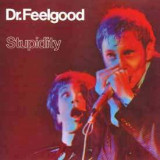
Black heavyweight vinyl pressing The third album / first live album from the British rock band, Dr. Feelgood.
Originally released in 1976, it was the first live album to ever hit number 1 on the UK charts in its first week.
Stupidity captures the relentless, hard-driving energy of Dr. Feelgood at their peak. Comprised of recordings taken from 1975 tours, the music is presented raw and without overdubs, making it clear that the dynamic friction between guitarist Wilko Johnson and vocalist Lee Brilleaux could propel the band toward greatness
Advanced Nature is the second offering from Chicago’s indy electronic label Tres Dias. Completed during a global pandemic this project for Michael Fabiano and Juanne had been a long time coming. The two artists had spoken about wanting to release a record together after years of working side by side in Chicago’s underground music scene. So with the time available during the wildest year in modern history they succeeded in creating a life during wartime record. With hints of industrial, ebm, acid and techno fueling the record. The two aimed to thrust back a bold tapestry of sounds. From sonic visions of a dystopian future to shamenistic prayer infused house. The two managed to flush out a record that has a raw juxtaposition that's grounded in a solid foundation. Chicago based producer Michael Fabiano debuts with the slinking, somber industrial sounds of Aesthetic Existence. Plastic Process wades into warehouse territory with its swirling, hypnotic synth lines and brooding bassline. Juanne continues with Before Midnight, a static charged minimal acid track that stabs and reaches out for more. Finally Juanne ends with Design Your Drugs, a strictly dark room magic piece that unleashes ritualistic vocals and a raging bassline that doesn't hold back.
out of Stock
Last delivered 3 years ago available to reorder, subject to availability
'Verzamelen II' is the second volume in a retrospective series in which we look back at the work of Wouter van Veldhoven (Netherlands). Throughout the past decade, the Dutch composer built an impressive catalogue of music in which tape loop and modular synthesis experiments hold a central place. Both collaborations and solo-work saw the light through some distinctive labels such as Slaapwel, The Tapeworm, Umor Rex and Digitalis among others.
With this series we want to dive into some work which slightly went under the radar. The pieces are collected from several releases and are re-mastered for the occasion. Some of them were never physically released before.
Peter Broderick and Hainbach kindly joined this trip by offering two new reworks which close this second volume.
Songs taken from ‘A head stuck in tapes’, ‘Een paar schetjes en optredens 2005-2006’ & other found unreleased tracks.