Season 2 formed in late 2024, bringing together seasoned Melbourne musicians with previous and current projects including Parsnip, The Stroppies and Phil and the Tiles. The five piece, comprising Carolyn Hawkins, Claudia Serfaty, Charlotte Zarb, Freya McLeod and Matt Powell, quickly set to work writing winsome, DIY, shimmer-pop hits that careen through your mind in a gratifying dizzy rush.
With a clear collective vision and little time to waste, Season 2 spent 2025 writing and recording, appearing live only a handful of times. Finally, this April, the band are primed for their debut release, a full-length album entitled 'Power of Now'. ‘Power of Now ‘is a cerebral explosion of melody, hooks, drones and rhythm. In the vein of The Feelies, The Vaselines and The Clean, Season 2 have whipped up a sonic whirlwind. It's a giddy thrill of snappy slap, catchy gang vocals and crystalline guitar refrains.
'Abundance of Power' is a bittersweet bop of ponderous bass, crisp chord flashes and grounded vocals that dwell on slighted futures and bored realities. 'Becomes a Dream' is a delirious race of scrappy strumming and flying phrases that unsettle as much as they pinball endorphins - "pour the ink into the sand, watch the dog it bites the hand". "Tell me something, elbows on the table, I'll tell you nothing, leave you tugging at the cable" they sing on the peppy future single 'Tugging at the Cable', capturing a certain innocent, wide-eyed expressiveness. Season 2 do sparky well, their songs are instant rewards, tunnelling into your subconscious and testing the dance floor. They keep everything moving, the beat and the conversation. Season 2 sound barely controlled and all the better for it, you have no choice but to be swept up.
'Power of Now' was recorded by Alex Macfarlane (The Green Child, Chateau) and mastered by Mikey Young. It will be released digitally and on LP (black vinyl) on April 24th, internationally via Upset The Rhythm and locally in Australia by Spoilsport Records.
Поиск:tab
Все
Back in 2022, Is It Balearic? Recordings founders Coyote (AKA long-serving producers Richard Hampson aka Ampo and Timm Sure) took time out from releasing music on their own labels to deliver a near perfect mini-album on Phil Cooper’s similarly mind-ed NuNorthern Soul imprint, Everything Moves, Nothing Rests.
A superb exploration of their trademark sound, where gentle downtempo rhythms and nods to dub came cloaked in colourful ambient chords, sun-bright melodic motifs, organic instrumenta-tion and quirky spoken word samples, Everything Moves, Nothing Rests deserved a sequel. So, three and a half years on, the duo has delivered just that: a fine six-track EP that offers an even deeper and more atmospheric exploration of their signature sound.
It is a sonic approach that should now be familiar to Balearic en-thusiasts the world over. Aside from delivering a steady stream of singles, albums and remixes on their own imprint, Hampson and Sure have also showcased their skills and loved-up musical mis-sives on International Feel, Music For Dreams, Needwant, MM Discos and Citizens of Vice.
The Higher The Sky, The Deeper The Ocean, their hotly anticipated NuNorthern Soul return, is named in honour of a quote from Ped-ro Alonso’s documentary series On the Ship of Enchantment, an extended voyage in which the Money Heist movie star meets healers and masters of ancestral medicine across his native Mexi-co.
There’s naturally a meditative and slightly psychedelic sound to much of The Higher The Sky, The Deeper The Ocean, which offers a subtly varied exploration of Coyote’s style and influence. Yearning, soft-focus opener ‘Muted Beauty’ – the kind of immersive, effects-laden and sample-sporting ambient bliss found nestling on Fila Brazillia albums of the mid 1990s – is followed by the similarly gentle ‘Go All The Way’, where delay-laden acoustic guitars, spo-ken word snippets and gaseous chords stretch out atop a languid, slow-motion groove.
‘A Drop in the Ocean’ picks up the pace a little via a glorious hat-tip to turn of the 90s ambient house – all dub-wise bass, heady deep house sonics, spaced-out chords and half-buried references to sunrise-ready Balearic synth-pop records of the late 1980s. Late psychedelic guru Terrence McKenna appears in sampled form on ‘Dolce Far Niente’, a tabla-driven drift and musical hallucination which conjures mental images of lying in the Mexican desert, gazing intently at a starry sky.
In contrast, ‘Riviera Sound’ is a chunkier, brighter and more sun-splashed affair – all deep, dubby bass, sustained piano parts, punchy downtempo breaks and the duo’s trademark ambient pads – while superb closing cut ‘No Coincidences’ fixes jazzy double bass samples, twinkling keyboard motifs, subtle acid lines and Latin-laced percussion to a street soul-adjacent beat.
Heady, impeccably crafted and thoroughly enveloping, The Higher The Sky, The Deeper The Ocean is Coyote at their dazzling best. It marks another significant chapter in their ever-evolving musical journey.
After a series of successful outings alongside sidekicks Ofofo and Zongamin, studio wizard MYTRON turns in his debut solo full-length for Multi Culti World Records. With contributions on Invisible Inc, Calypso, Bongo Joe, Kalahari Oyster Cult, LYO, Codek Records and Earthly Measures, Mytron has carved out a name for himself in a carefully-curated left-field quadrant of the indie-dance galaxy. Tuning his oscillators to myriad sounds — from dub and disco to krautrock — the London-based producer perhaps most notably channels the pristine compositional style of Kraftwerk. While most apparent in the use of vocoder, there’s a consistent efficiency of arrangement that recalls the man-machine in effervescent, idealistic fashion. Mytron manages to keep it simple, funky and musical — whimsical tunes that bop along with analog grit, wilderness, and wonk. There’s a warmth and wit that shine through every synth line, an understated confidence that speaks of years spent tangled in wires and waveforms, with an inclusive sonic eclecticism that flattens hierarchies between genres, geographies, and generations. Each influence is invited to the table, treated not as pastiche but invited to dine and dance in a space where kosmische dub disco and Afro rhythms can coexist without borders. The sleeve design echoes this philosophy: video-feedback patterns hinting at our modern screens, both portals and filters — coloured, distorted intermediaries through which we perceive the world. In the trippiest sense, the record is both reflection and refraction — a sonic mirror held up to an interconnected, glitchy reality. Tailored equally for DJ use and home-listening head trip, the album is meticulous, mischievous and merry.
BanBanTonTon review:
On Mytron’s debut long-player for Multi Culti groovy 21st Century leftfield house gear collides with Daniele Baldelli and Beppe Loda’s hugely influential `80s afro / cosmic. The 9 tracks are chunky, chugging and full of funky, funny noises. Old school B-lines mixing with eccentric electronics. Spinning, spiralling sounds.
Sugar is an electro-pop, vocoder confection, cut from the same sonic cloth as cult classics like Codek’s Tam Tam. Created from tough trap drums, splashing effects and a mutant Giorgio Moroder bass arpeggio. The title track, Propellor, pits Kraftwerk-esque hardware harmonised vocals against a bongo loop and a whistling hook. Playground has simian shrieks surround tumbling tom-toms. Highway Maintenance adds kosmische synths to a dance of woodblocks and buzzing bottom end. Keep On Dubbing is an organ-led, clip clopping percussive canter.
Tracks such as Speaker Can Talk, shot through with disco lasers blasts and recalling Curt Cress’ Dschung Tek, also lift the tempo up, but the bulk of the music here is a mid-tempo, techno drum circle. Squelchy sequences gurgling in and out of programmed percussion. On Quasar, spiky acid edges in and slowly takes over.
Key references that come to mind are Baldelli’s own turn-of-the-2000s Cosmic Sound Project productions, and Wolf Müller’s scene shaking sides on Themes For Great Cites, from around a decade later.
repressed !
Francois Kevorkian is a name that should need no introduction. With over 40 years in the game FK has occupied numerous roles in his long and storied career - drummer, DJ, A&R man, remixer and producer - his skills know no boundaries. Having DJ-ed during the nascent days of club culture in NYC alongside Walter Gibbons, Larry Levan and more, Kevorkian has been there from day one. Years spent in the seminal clubs of the day sharpened his ears and his prowess behind the mixing desk saw him become the A&R man at the legendary Prelude records in the early 80's, this in turn led to him working with everyone from The Eurythmics, Depeche Mode, Erasure, D-Train, Yazoo, The Smiths, Kraftwerk and many many more. A true NYC original and legend, Kevorkian is still active today and the respect he commands amongst his peers has never waned, his adventurous extended DJ sets, seminal mixes and remixes and his open ears and open mind have ensured that he will go down in history as a musical pioneer.
Rewind to 1995. Kevorkian's 'Wave Music' imprint has come into existence with a handful of releases. No-one could imagine that his self-produced 'FK EP' - the next release on the label - would be a stone cold classic. Easily one of the most consistent, exciting and solid EP's to come out of NYC during this golden era of dance music. Across 4 tracks we are taken on a sound journey through a world that is undoubtedly informed by FK's time as an engineer, DJ and most importantly, a music lover.
EP opener 'Hypnodelic' brings us into this world, a deep, driving cut that fuses the dubbed out vocals of Freddie Turner against FK's keyboards and immaculate drum programming, oozing cosmic electronic soul, this track was destined to be a future classic. 'Mindspeak' also boasts some tough drums and with a respectful nod to Chicago is an incredibly mixed and arranged peak-time cut that will drive your dancefloor into deep space again and again. 'Edge Of Time' welcomes us to the flipside of the EP, wild Latin percussions, tablas and old school horn stabs drive this monstrous cut, not to mention cavernous dub FX and that huge bassline that just doesn't let up. Essential. 'Moov' rounds things out on a more subdued, stripped back vibe. Reversed percussions and spaced-out synth chords lace this beautifully understated and warm track, one that builds into a crescendo of melodies and hypnotic rhythms and the perfect way to close what has been a truly special musical journey.
This essential reissue of the 'FK EP' has been fully licensed, sanctioned and remastered in conjunction with FK from the original master sources by Optimum Mastering, Bristol UK, repressed onto high quality vinyl and packaged as the 1995 release was. A truly classic record indeed, available again for 2018. Welcome back Wave Music!
Hiriketiya is a small, enclosed bay on Sri Lanka's southern coast, where jungle leans toward the water and the days unfold without urgency.
Passing through in early 2025 on the way to Europe, Alex Albrecht spent a week here at MOND's artist residency, allowing the rhythms of the place to quietly shape the work that followed.
During the residency, Albrecht recorded and exchanged ideas with Sri Lankan musicians Dhyan Basho on sitar, Dinelka Liyanage on electronics, Uvindu Perera on double bass and Pasindu Herath on saxophone.
Their performances appear throughout the album, sampled and re-contextualised, influencing its melodic language, pacing and emotional tone.
Much of the music was shaped directly by its surroundings. Field recordings were gathered across Hiriketiya, and instruments were played wherever it felt necessary. This included rocks beside the ocean where waves set irregular rhythms, tall grasslands where wind and insects blend into the recordings, and open decks overlooking the sea. 'Round Table' captures this approach most clearly. Recorded while sitting together overlooking the ocean, a large steel table in front of the group gradually became part of the composition, used instinctively as an unplanned percussive element.
Not everything could be captured. Some of the most meaningful moments occurred before recording was possible. Those sounds exist only in memory, and the album is shaped in part by an attempt to hold onto their feelings.
Rather than documenting the residency in a linear way, the album gathers fragments, recordings, electronic sketches and field sounds, assembling them into a continuous listening experience shaped by place and recollection. MOND owners Jess and Renato foster an environment that supports artists without directing them, creating space for focus, trust and connection.
The result is a record shaped by Hiriketiya's enclosed bay, dense vegetation, heat and night air. Music formed through listening, restraint, missed recordings and the sensation of being temporarily held by a place.
- A1: Organ Yn Dy Geg
- A2: Fix Idris
- A3: Crys Ti
- A4: Blerwytirhwng?
- B1: Pam V?
- B2: God! Sho Me Magic
- B3: Sali Mali
- B4: Focus Pocus/ Debiel
The vinyl version of this release compiles the tracks from their two earliest EPs originally released by Ankst whilst the 22 track CD features further unreleased & unheard bonus tracks from this early era.
Super Furry Animals also recently announced additional festival dates to follow their sold out Supacabra Tour dates including stops in Llangollen, Bristol, York, Glasgow and London (their first since late 2016. See full 2026 dates below.
Holding the world record for the longest ever EP title the first EP -Llanfairpwllgwyngyllgogerychwyndrobwllantysiliogogogochynygofod (In Space), was released in 1995, followed in the same year by Moog Droog, with both EPs making up the eight-song track listing of the vinyl version of Precreation Percolation.
Later that year, with a record deal on the table and future classics such as God! Show Me Magic and Hangin’ With Howard Marks already making up the SFA’s set list, the band’s path following “two years of chaos” (including a legendary 1993 debut ‘gig’ at Bangor University’s Banana Lounge, lasting all of five minutes due to technical and chemical misadventure) was set. In the album’s liner notes, singer, Gruff Rhys writes: “It would have been the best gig ever, had we not daisy chained so many synthesizers together, that it resulted in a terminal systems failure.”
By summer they’d joined Oasis, Primal Scream and The Jesus and Mary Chain in the Creation Records family, leading to a huge London signing party that saw members of the band famously thrown out of.
The term of intriguing genre experimentation, spanning long-form electro, blissed out instrumentals and expansive prog-influenced rock, heard across much of Precreation Percolation was subsequently refined and channeled into their thrilling, 1996 debut album, Fuzzy Logic and their untamed live performances.
While consciously and frequently referring to the unheard, untold and unforeseen as a naturally nostalgia-resistant band, Super Furry Animals look ahead to reconvening with fans to celebrate their shared history as the Supercabra Tour gets underway.
(the vinyl comes with a copy of the CD in a slim card wallet)
Schatterau’s third album, »Wir gingen durch leere Stunden« (We went through empty hours), sees the German duo blossoms with beauty and sophistication through a broad creative language.
This opus, presented in the form of vivid auditory tableaux vivants, explores the topography of memory as a landscape in constant motion – full of loops, feedbacks, and mirage-like distortions. Sounds climbing like vines over old walls, concealing details only to reveal new ones. Some pieces feel like fragments of a dream whose origin has vanished, others like displaced echoes of a day long gone.
Memories create paths that only become visible in retrospect – detours that somehow always lead back to oneself. Each track draws the listener into a different recollection, as if opening an old door. Inside, time behaves strangely: it jumps, stretches, and repeats.
»Wir gingen durch leere Stunden« ultimately presents Schatterau at their most experimental, complex and measured extremes, channelling ambiguous human emotional resonance ranging from melancholy to pure ecstasy.
- A1: Cherry Moon Trax - Acid Dream
- A2: The Jeyênne - Xpq-21
- A3: Jamie Dill - Engine
- B1: Laurent Garnier - Wake Up
- B2: Drax Ltd. Ii - Amphetamine
- A1: 3 Phase Feat. Dr. Motte - Der Klang Der Familie
- A2: Acrid Abeyance - Dynamique Twins (Remix)
- B1: Private Productions - Looped
- B2: Marc Acardipane Aka T-Bone Castro - The Women Here (Are All So Cute)
- A1: Bradley Strider - Bradley's Beat
- A2: Suburban Knight - The Art Of Stalking (Ludovic's Favorite Mix)
- B1: Aura - Energy Transepose
- B2: District 1 - See The Light (Basi Dog Mix)
- A1: Planetary Assault Systems - Surface Noise
- A2: Dj Edge - Hold
- B1: Dj Bountyhunter - Short Circuit
- B2: Armani & Ghost - Airport
- B3: Marc Acardipane Aka Ace The Space - 9 Is A Classic
- A1: The Mod Wheel - Spiritcatcher
- A2: Belgica Wave - The Wave
- B1: Equus - Lava Flow
- B2: Aurora Borealis - Raz (Carl Mmr's Mix)
- A1: Thc - Sizzle
- A2: Dj Fred H - Won't Give Up
- B1: Dexter Moore - Pump!
- B2: Frankie Bones - The Way U Like It
- A1: Bjørn Svin - Mand Over Bord
- A2: Silvio Ecomo - No Dip
- B1: Nygel Reiss & Ghost - Fear & Loathing
- B2: The Subjective - Tremmer
- A1: Dima - Soaked
- A2: Digital Express - The Club
- B1: The High Tech Child Aka Jerome Isma-Ae - Tribal Storm
- B2: E-Dancer - World Of Deep
- A1: Sharpside - Space Cruising
- A2: Dj One Finger - One Finger
- B1: Thomas Schumacher - When I Rock (Dj Rush's Rock Da Beat Remix)
- B2: Bolz Bolz - Take A Walk (Dima Neo-Romantic Remix)
- B3: Global Concept - Beep Attraction
- A1: Umek - Gatex (Dj Tiësto Remix)
- A2: Starchild - Codec
- B1: Vitalic - La Rock 01
- B2: Definitely N.o.t. - Take A Tablet
Relive three decades of Belgian clubbing history.
We're celebrating the 35th anniversary of Cherry Moon withan essential collection of the anthems that defined a generation. Hard to find tracks, classics and sounds from the underground combined in a splendid 10x12" Vinyl Box Set.
From the first beats of 1991 to the peak of the "House of House", this is the ultimate tribute to a legendary venue.
How better to solidify over a year of meteoric rise than with the release of a debut EP? dublon is both the phenomenon of the moment and one of the most promising prospects for a lasting career in the electronic scene. The Norwegian producer has teamed up with top-tier musicians (saxophonists, pianists) to blend organic craftsmanship with his incredible electronic touch. He has also collaborated with respected and renowned artists like Tour-Maubourg, TABLE, and the incredible American singer Deza to bring this project to life.
The result is Nectar, an EP that balances touching elegance with an insatiable urge to dance to its uplifting rhythms. dublon and his Jazz-House sound are set to keep us moving all year long.
Ausdrucksstarke Gesänge in freien Versen, begleitet von gleitenden Violinen, gehämmertem Santouri, Gitarre und Oud - die hybriden Klänge des Mittelmeerraums zu Beginn des 20. Jahrhunderts. ,Aman Aman" rufen die Sänger auf diesen Aufnahmen, deren Stimmen auf 78-U/min-Schallplatten aus den Jahren 1911 bis 1935 verewigt sind. Der Ausdruck bedeutet in etwa ,Gnade" und ist ein Ausdruck der Verzweiflung, aber auch der Freude und Bewunderung. Auf vielen dieser Platten wird die ganze Bandbreite dieser Emotionen auf einmal vermittelt. Einige dieser Künstler sind Legenden, andere sind in Vergessenheit geraten. Fast die Hälfte sind Sängerinnen, die einen großen Teil der Tradition des Cafe Aman ausmachen, aber in zeitgenössischen Veröffentlichungen nicht so stark vertreten sind. Alle waren von den Konflikten betroffen, die zur Kleinasiatischen Katastrophe von 1923 führten, sowie von den Zwangsmigrationen zwischen Griechenland und der Türkei davor und danach. Ihre Werke spiegeln diese Reisen wider - erschütternde Gedichte über den Verlust der Liebe und der Heimat, begleitet von einigen der besten Musiker der damaligen Zeit. Nach jahrelanger intensiver Recherche hören wir die präzisen, einfühlsamen und überwältigend kraftvollen Stimmen von Künstlern wie Antonis ,Dalgas" Diamantidis, Sofrouniou und Stellakis Perpiniadis, zusammen mit aufschlussreichen Aufnahmen von weitgehend unbekannten Musikern, deren Werke hier zum ersten Mal veröffentlicht werden. Die LP wurde von Jordan McLeod im Osiris Studio sorgfältig remastered und restauriert und enthält detaillierte historische und diskografische Anmerkungen von Stavros Kourousis sowie poetische Übersetzungen der Texte von Tony Klein. Gepresst auf hochwertigem Vinyl bei Smashed Plastic in Chicago und gemeinsam mit dem großartigen Label Olvido Records veröffentlicht.
Masao Yagi’s memorable first leader date, by a musician active since the dawn of Japanese jazz and also known as a devoted Monk scholar. This album features Monk’s compositions throughout, including classics such as "’Round Midnight", "Straight, No Chaser", and "Blue Monk".
Masao Yagi (p)
Sadao Watanabe (as)
Akira Nakano (tp)
Masanaga Harada (b)
Teiichi Tabata (dr)
- A1: Seki Taneko - Akemi&Apos;S Poems
- A2: Kusunoki Shigeo - Longing For The Shadow
- A3: Yayoi Tanaka - Sad Gull
- A4: Akasaka Koume - Please Forgive Me
- A5: Ichimaru - If You Go Down The Tenryū
- A6: Mitsuko Nemoto - Cosmos Elegy
- A7: Ichirō Fujiyama - Tokyo Daughter
- A8: Chiyako Sato - Skyscraper
- A9: Yayoi Tanaka - The Dream Is Short Lived
- B1: Ichirō Fujiyama &Amp; Masao Koga - Is Sake Tears Or Sighs?
- B2: Otomaru - Yoneyama Sanri
- B3: Hamako Watanabe - I Don&Apos;T Forget
- B4: Akasaka Koume - Asama Smoke
- B5: Yoshio Tabata - Farewell Ship
- B6: Ichirō Fujiyama - Farewell Youth
- B7: Kouta Katsutaro - Stand Up Tomorrow
DEATH043[10,04 €]
Emerging during the early stages of the recording industry in Japan, the ryūkōka style adopted western classical, blues & jazz elements into traditional and classical Japanese music.
This collection of 1920s & 30s ryūkōka recordings follows on from the Kouta Katsutaro tape we put out a couple of years back, and further captures the hauntingly unique sound of a cultural merging that was starting to reflect itself via popular song, ahead of the widespread influence of western pop music during post-war US occupation.
"Death Is Not The End are on a mission to expand the musical archive, with compilations of everything from Jamaican doo wop to pirate radio idents and adverts weaving new threads into the history of music. Longing For The Shadow: Ryūkōka Recordings, 1921-1939 goes back to the beginnings of the recording industry in Japan, and a style merging traditional Japanese forms with western pop and classical. Swooning orchestrations and prominent vocals capture some of the melodrama and bombast found in US and European music of the time, but beds of plucked and strummed instruments give an ordered elegance, tying it firmly to Hogaku tradition. Not much has been written about Ryūkōka, and a 2017 book by Hiromu Nagahara gives some clue as to why, arguing that although popular with the public, it was dismissed by critics both for its adoption of western sounds and its dwelling on Japanese traditional styles. Close to a century later, those are some of the qualities that make this compilation so fascinating." - The Quietus
- A1: Makafushigi Adventure! / Hiroki Takahashi
- A2: Mezase Tenkaichi / Hiroki Takahashi
- A3: Dragon Ball Densetsu / Hiroki Takahashi
- A4: Mr. Dream Wo Sagase / Ushio Hashimoto
- A5: Aoki Tabibitotachi / Hiroki Takahashi
- B1: Fushigi Wonderland / Wonderland Gang
- B2: Mutenroushi No Oshie / Kohei Miyauchi
- B3: Son Goku Song / Masako Nozawa
- B4: Wolf Hurricane / Toru Furuya
- B5: Romantic Ageruyo / Ushio Hashimoto
A collection of hit songs released at the time of the TV anime "Dragon Ball", including rare insert songs, has been reissued on clear orange vinyl. This is a truly one-star ball (Yishinchu) disc!
A collection of hit songs that also includes the opening theme song "Makafushigi Adventure!" and ending theme song "Romantic Ageruyo" released in 1986. The "Son Goku Song" is sung by Masako Nozawa, the voice actor for Son Goku, the main character of Dragon Ball, and the "Wolf Hurricane" is sung by Toru Furuya, Yamcha's voice actor, Hyuma Hoshi from Star of the Giants, and Amuro Ray from Mobile Suit Gundam. Contains a total of 10 songs, including "Mutenroushi no Oshie" song by Kohei Miyauchi, the voice actor of Master Roshi! A must-have for Dragon Ball fans!
- A1: Wishing For Blue Sky
- A2: Does The Shade Choose Who To Comfort
- A3: Two Magpies
- A4: Memorise Your Senses
- B1: Dark Edges
- B2: Keeping You Awake
- B3: I Buried All The Answers
- B4: Spirit Of Place
Winter Gorse coloured vinyl[32,35 €]
These days – on the new, ninth Fink album – Greenall is operating within a lineage of authentic, quietly revolutionary artists from England’s verdant southwestern toe. Artists like Michael Chapman. In 1970, the elusive acoustic guitar wizard released an album called Fully Qualified Survivor. The cult-classic served as a lodestar for Greenall – along with bandmates Tim Thornton and Guy Whittaker – as he began jigsawing together The City Is Coming to Erase it All, the follow-up to 2024’s Beauty In Your Wake. He even considered covering a song from it, but in the process, inadvertently stumbled into what became the album’s opener. ‘Wishing For Blue Sky’ circles a universal teenage ache: waiting for life to start. “No point dying of patience” goes the first lyric as crunching footsteps cue a resonant, open-tuned acoustic swaying into view. By 18, Greenall was fed up with waiting, so he left suburban Bristol and saw the world, sending postcards from the edge, waiting tables, squirreling away tips for the next flight. Thornton had similar experiences when the guitarist/drummer busked across Eur
This is nowstalgia more than nostalgia, though; there’s a parallel between these 18-year-olds and Fink’s autumn-aged family men. “You’re expected to be boring and settling down at this age,” Thornton says. “But we’ve still got this tremendous wanderlust. We want to go and discover, and also achieve things. It’s a nice life – home and family – but fuck, I can’t wait to get back out there.” City is a product of this hunger for discovery, and idolatry of the album as a form – like we had in 1974. City’s cover mirrors its interior, the first song is the greeting, the instrumental closer the conclusion. It’s a story. It’s a record for people who, like its creators, are curious. People who happily face a little cold for music, who light a crackling fire back home, who sit with these songs until they’re ready to chase after their own blue sky
These days – on the new, ninth Fink album – Greenall is operating within a lineage of authentic, quietly revolutionary artists from England’s verdant southwestern toe. Artists like Michael Chapman. In 1970, the elusive acoustic guitar wizard released an album called Fully Qualified Survivor. The cult-classic served as a lodestar for Greenall – along with bandmates Tim Thornton and Guy Whittaker – as he began jigsawing together The City Is Coming to Erase it All, the follow-up to 2024’s Beauty In Your Wake. He even considered covering a song from it, but in the process, inadvertently stumbled into what became the album’s opener. ‘Wishing For Blue Sky’ circles a universal teenage ache: waiting for life to start. “No point dying of patience” goes the first lyric as crunching footsteps cue a resonant, open-tuned acoustic swaying into view. By 18, Greenall was fed up with waiting, so he left suburban Bristol and saw the world, sending postcards from the edge, waiting tables, squirreling away tips for the next flight. Thornton had similar experiences when the guitarist/drummer busked across Eur
This is nowstalgia more than nostalgia, though; there’s a parallel between these 18-year-olds and Fink’s autumn-aged family men. “You’re expected to be boring and settling down at this age,” Thornton says. “But we’ve still got this tremendous wanderlust. We want to go and discover, and also achieve things. It’s a nice life – home and family – but fuck, I can’t wait to get back out there.” City is a product of this hunger for discovery, and idolatry of the album as a form – like we had in 1974. City’s cover mirrors its interior, the first song is the greeting, the instrumental closer the conclusion. It’s a story. It’s a record for people who, like its creators, are curious. People who happily face a little cold for music, who light a crackling fire back home, who sit with these songs until they’re ready to chase after their own blue sky
- 1: Lake Walk
- 2: Lazy Daisy
- 3: Ups & Downs
- 4: Silently
- 5: There Was A Nice Sunset
- 6: Somewhere Good
- 7: Slow Island
- 8: Movin’ On
If – in some parallel universe (or perhaps a not-so-distant-future version of the one we’re already sentenced to living in) – the evil overloads of artificial intelligence were actually successful in their attempts to create convincingly enjoyable “original music,” more specifically tasked with wholly encapsulating my own personal tastes by data-chugging some cocktail of – oh, I don’t know – the posters on my wall, the records in my “most listened to” pile, the mixtapes I made for others, intensive physical scans of my auditory cortex, amygdala, hippocampus, heart strings, whatever else they have splayed out on their autopsy table with the intention of generating one all-encompassing “perfect band” based on the fruitful sum of their findings – that band, for me, would be (or would at least sound exactly like) the Tara Clerkin Trio. It is, quite simply, without exception, the music I wish to hear.
Formed in Bristol UK (where none of them are from yet all of whom are deeply engrained) in 2020, the Tara Clerkin Trio – as it somewhat democratically exists today, despite the singular authority implied by its name – consists of the titular Tara Clerkin, her partner Sunny Joe Paradisos, and Sunny’s brother, Patrick Benjamin. I’ll confess, I don’t know what their respective roles are within the operation and there’s only a very small part of me that cares to learn, as one of my favorite qualities in an objective listening experience is the mystery of who is playing what, which sounds are “authentic” versus synthesized, which chunks are performed “live” in a room together versus meticulously Frankenstein’ed from measure to measure, or how exactly the overall sound is so (seemingly) effortlessly achieved. Though, I suspect, if and when I do witness a live performance by this band at any point, my enjoyment of the music will not be lost in my better understanding of it.
With two extraordinary mini-albums – In Spring (2021) and On The Turning Ground (2023) – making a splash on London’s formidable World of Echo label in wake of their self-titled 2020 debut, this upcoming Somewhere Good LP is, in many ways, the band’s most realised work. In running their usual gauntlet of idiosyncratic (*an overused adjective for which here there is regrettably no sufficient alternative) approaches, Clerkin & co. colour in and outside of compositional lines over the course of 40+ celebratory minutes - never wallowing, despite inherently somber subject matters of self-defeat, disease, displacement, restlessness, gentrification - allowing their arrangements and improvisations ample space and time to situate, stretch out, breathe, cross-pollinate, and ultimately take deeper hold on the listener’s imagination – all while somehow sounding more like themselves than ever before.
Of course, there are traceable influences herein, if one felt that such comparisons were necessary to properly examine and enjoy this music (they aren’t)… Being the big dumb American from the small boring town that I am, cornfed on ‘90s alternative radio with the enchantingly exotic sounds of Maxinquaye and Mezzanine emanating from my chunky tube television, I can’t help but to make a blatantly obvious reference to a “Bristol sound”, ie the whole trip-hop trip, the pastoral crooning over the suggestive urban grime of cracked electro/piano treatments, the digitally-yet-primitively reconstructed James Bond soundtrack string-beats, etc.. But the Tara Clerkin Trio is so infinitely much more than that. There are elements of avant-pop, modern classical, kraut-folk, audio verité, dare I say indie rock (and not of the beer guzzling, masturbatory fuzz-flex variety but perhaps more like a Trish Keenan-fronted Faust, Adrian Sherwood at the mixing desk of If You’re Feeling Sinister, or – in expanding on our alternate reality – a world in which High Llamas cut a full-length for Warp Records with Andrew Weatherall on coffee duty).
The hazy, unmappable skyline-mirage of droning harmonium, upright bass, peculiarly accentuated wind instruments, acoustic guitar, hushed yet literally mighty keys combine to hypnotizing effect. The band may make underlying nods to jazz, sure, but it’s not appropriation, it’s that they have the actual chops to build it out. Beneath the janky samples and oddball percussive embellishment lies actually great drumming. Beyond the manipulated vocal witchery and woefully reflective plain-spoke moments are Tara’s subtly inspired melodies, sung with what might honestly be the glue to the whole crazy equation. A calming consistency throughout the otherwise unpredictably dynamic, boldly intuitive, uniquely British exploration of this (their own) universe in song. – Ryan Davis (Chicago, February 2026)
2026 REPRESS
With a new alias, TM404, Andreas Tilliander has created enjoyable ambient dub simmering with life and details. The songs have all been recorded live, in real time in the studio. A unique way of operating within today's electronic music. - Everything is recorded in one take. Nothing is post arranged, says Andreas Tilliander, and adds that this might be his most ambitious album ever. The project's name is also a tribute to Roland, although of the more intricate kind. - When they made these machines in the eighties, they avoided the 404, since the sound for four, 'chi', is the same as the sound for death in Japanese. At that time it was therefore taboo and the 404 was never launched. Not until now, due to my album!
Recursive Infinity is the new chapter in Rémi Gallego’s The Algorithm, a relentless sonic exploration of the chaotic fusion of metal and electronic music.
The album blurs the boundaries between machine logic and human emotion. Each track unfolds like a program caught in an endless loop, rising, fracturing, and recombining with mathematical precision.
Cosmic Voodoo is an immersive musical experience that combines the best of cosmic disco with the pulsating energy of contemporary electronica. Through alternating synthesizers and acoustic instruments, this project presents an irresistible arsenal of sound.
This is the second volume of four that will create a unique graphic work created by the famous Aldo Drudi.
Written and produced by Daniele Baldelli, undisputed master of cosmic-disco, and Mattia “Matta” Dallara, sound explorer and producer of Cosmic Temple, this EP is a journey that evokes dreamy and nostalgic atmospheres, perfectly in line with disco roots.
The tracks unfold between enveloping grooves, spacey synthesizers and rhythms that pay homage to the 1980s, generating a sound that is both classic and innovative. An electronic tribal ritual, a dancing spell that can transport the listener to a parallel universe full of psychedelic sounds and magnetic beats.
Ideal for those who like to lose themselves in the depths of sound and be guided by vibrations that oscillate between past and future.
The producers take a timeout from their Metalheadz offshoot series to return to their own stable for the pair’s 25th collaboration 12”.
In the Air features rolling breaks with ‘Can you feel it’ vocal hooks, violins and chords that build emotion. On the tougher flipside, the duo kickback with rhodes, chimes and an infectious tabla groove in Come with Me.
Original art once again pens the physical jacket sleeve.
With his new offering"The Stone Tablet", New Jersey native Brainorchestra solidifies his legacy in underground hip-hop, carving out a raw and unfiltered masterpiece that feels as timeless as it is bold. Produced entirely by Brainorchestra himself, the album is a testament to his relentless pursuit of authenticity and artistry, drawing listeners into a world where intricate beats meet introspective bars, and sticking to his proudly independent operation.
Featuring guest appearances from UK’s SonnyJim and Toronto's Raz Fresco, "The Stone Tablet" brings together diverse voices that seamlessly blend with Brainorchestra’s visionary beats. Each track adds to the album’s mystique, with moments of reflection, hustle, and sharp wit, all contributing to Brainorchestra’s mark on the modern hip-hop landscape.
The album cover, crafted by Italian artist Claudio Scialabba, embodies the album’s theme with its raw, textured feel — reflecting Brainorchestra’s relentless, chiseled approach to his craft. "The Stone Tablet" is a statement, a monument that etches Brainorchestra's name alongside the genre’s most revered creatives.
Everybody loves a disco gram or two, wink wink, but Spanish label DiscoGram is also a sign of a good time. The main label has put out more than 30 juicy tunes but here they launch a new sub-series, again with the in-house production team at the helm. 'Linda' kicks it off with bright, extroverted and slightly camp disco energy and diva vocals. 'Pages' is a slinky strider with a pained vocal bringing the soulful heat and offering a hugely impressive falsetto crescendo. 'Tabaco Y Ron' gets more florid with its Latin flutes and rhythmic vocal coos, then 'Xulipa' ends with swooning strings and a graceful air of disco cool with some recognisable vocal hooks.
Punching in with his debut vinyl EP for Fluid Funk, Chilean house producer Massiande follows up to a string of head-turning releases on an array of labels, including Jimpster’s Freerange Records. His much anticipated new offering, “Essential”, packs all the attributes of his vivid, floor-focussed vision, taking us on a bouncy ride across densely forested coastal house scapes and heavy-lidded electronics. Draped in washed-out pads and cottony textures, Massiande’s tracks have us floating in a chromatic daze of sorts, light-hearted and somewhat nostalgic, but above all hopeful and resilient.
A textbook slab of Massiande’s ever-expanding palette of woozy house tropes and silken disco touch, A1 “Tears” (also presented in bare instrumental form on the flip side B2) has it all, from the euphonic synths arrangements to the no-nonsense, club-igniting jack and irresistible footwork, via the infectious bass and Chicago-style soulfulness of its vocals. Proper fiery number and absolute weapon for any DJ seeking either impactful elegance in a peak-time context or to rekindle the flame when the after gets a bit too prosaic and requires that extra funky boost to get back on tracks. Grooviness exemplified.
More of a straightforward affair, A2 “Essential” unflappably beckons us on the path of utter vaporous escapology with its pulsating tableau of FX-soaked machine talk, semi-acidic bass and zero-G synthwork painting the sky all shades of pastel. The result is a rather captivating piece of weightlessly intuitive though carefully engineered sonic daydream. Injecting further oomph to the groove, B1 “Come On” pulls out a symbiotic collage of Sino-flavoured melody, Stax-ian vox sampling and straight out Detroit house-indebted propulsion, neatly showcasing both Massiande’s broad spectrum of influences and that idiosyncratic take of his on the said genres’ tried-and-tested leitmotivs.
Knowledge The Pirate returns with a powerful new statement with his new album, The Round Table, which is now available. The Round Table is produced in its entirety by longtime collaborator and legend Roc Marciano through his Pimpire International imprint.
With roots in New York’s revered ‘90s hip-hop scene, Knowledge The Pirate has steadily built a reputation as one of the genre’s most consistent and authentic voices. A frequent Roc Marci collaborator and key figure in the modern underground renaissance, Knowledge fuses golden-age grit with new wave innovation—bridging generations while staying firmly rooted in New York’s timeless sound.
Since his 2018 debut Flintlock, Knowledge has carved a lane entirely his own through his label Treasure Chest Entertainment, Inc. With five acclaimed projects under his belt, including the recent 5lbs of Pressure, he continues to deliver unfiltered street wisdom and personal reflection in every bar.
The Round Table stands as a testament to his evolution—an uncompromising body of work laced with Roc Marciano’s signature production and Knowledge’s lived-in lyricism. It’s not just a record—it’s a meeting of the minds, an audio council of kings.
“The Round Table is cinematic storytelling, teaching street knowledge, eating etiquette that will save your life” Knowledge professes. “This album is like an Honorable Elijah Muhammad book; How To Eat To Live. Produced fully by the true creator of the new wave sound, Roc Marciano, you are all invited to a seat at The Round Table; and break bread with the true Godfathers of this new wave rap renaissance.”
Reintroducing Soar - the alias of Christian Aebi, serial DIY taper and one-man orchestra from Langenthal, a fog-shrouded town in the Swiss provinces. Krautophobia, ambient lo-fi agriculture, analogue soul balm and slowspeed psych gelati-blitz cardboard pop only gesture towards the sound world he coaxed from his broken Tascam four-track recorder, in attics, churches, junkyards and at the kitchen table.
The spark for Soar was likely time and space, somewhere in the autumn of 1994. Armed with a cable salad of Sixties guitar/bass, fairground drums, mould-speckled organs and toy instruments, Aebi coaxed five albums, an unverified run of 25 cassettes, and a handful of gigs. Mostly issued through Zurich label Corazoo, the records arrived in hand-pasted sleeves, rough-cut reproductions of his teddy bear-fixated artwork that carried the same imperfect immediacy as the music. With Rudi Steiner, performances in galleries, clubs and halls bent into live sound-image happenings - part installation, part film, part flea-market-instrument theatre - invariably leaving the house engineers bewildered.
At the time of his untimely death in 2021, Aebi remained a village secret, his music passed quietly between friends and local ears. Now, Swiss graphic designer and Ghost Riders compiler Ivan Liechti has pieced together a portrait from the afterglow, gathering tangled audio formats, paintings, illustrations, photographs and notebooks with his family, former label and peers. What emerges is a first glimpse of Soar's intimate cosmos - brushing against Füxa, Spectrum, Dump, Stereolab and King Crimson, but orbiting a dimension entirely his own.
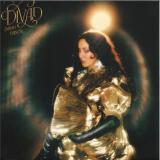
After two self-produced EPs, Sarah Maison (2018) and Soleils (2021), and the EP Karma (2021) with Anoraak, French singer, musician, author, composer, arranger, and producer Sarah Maison finally unveils her first album, DIVAD, the fruit of four years of creation. Sarah opens up, tackling personal themes through an exploration of the soul and existential questions. She also ventures into more autobiographical subjects such as melancholy, derealization, the search for meaning, and the breakdown of romantic or friendly relationships: often through coded language but always with a touch of humor. DIVAD is a manifesto of artistic independence, boldly and uncompromisingly fusing French chanson, Egyptian music, 70s disco, synth-pop, and English pop. Her influences draw on musical history while reinventing it, bringing together Alan Vega and Martin Rev, the 70s Egyptian band Al Massrieen, the king of Iranian psychedelia Kourosh Yaghmei, as well as Brigitte Fontaine and Françoise Hardy. Each track is a cinematic tableau, where the artist"s theatrical voice, both imperious and vulnerable, carries an intimate narrative with universal overtones. Co-produced with Steve Surmely (sound engineer) and Timotée Pédron (sound designer), the album blurs the lines and asserts an artist who defies categorization. Throughout these twelve tracks, we witnessa rebirth, with Sarah fully embracing her character as a dark, grandiose, and tragicomic diva straight out of a Dario Argentofilm, a sort of tribute to her Italian muses. Danceable, elegant, and elusive, DIVAD is a flamboyant work that reflects Sarah Maison"s image: free, sunny, and daring.
- A1: Disco Wich Aa
- A2: Nainan Da Pyar De Gaya
- A3: Par Toon Ki Janay
- A4: Pyar Mainu Kar
- A5: Aye Deewane
- B1: Soniya Mukh Tera
- B2: Mainu Apne Pyar Wich
- B3: Chum Chum Dil Nal
- B4: Ve Tu Jaldi Jaldi Aa
- B5: Dohai Ni Dohai
- C1: Disco Wich Aa (Peaking Lights Remix)
- C2: Turbotito & Ragz Featuring Piya Malik - Nainan Da Pyar De Gaya
- C3: Par Toon Ki Janay (Danger Boys Remix)
- D1: Nainan Da Pyar De Gaya (Psychemagik Remix)
- D2: Par Toon Ki Janay (Dexter+Franz Remix)
- D3: Mainu Apne Pyar Wich (Mystic Jungle Remix)
- D4: Disco Wich Aa (Baalti Remix)
Naya Beat is incredibly excited to announce the release of an astonishing lost “holy grail”, Mohinder Kaur Bhamra’s 1982 masterpiece ‘Punjabi Disco’. Unknown and inaccessible to even the deepest of diggers, it is the first British Asian electronic dance album recorded and a true lost relic. A chance find of the original multitrack masters during the Covid lockdown led to ‘Punjabi Disco’ being rediscovered. Lovingly mixed down and remastered from these very studio recordings, the reissue also includes remixes by Peaking Lights, Baalti, Mystic Jungle, Psychemagik, and Danger Boys, as well as a cover by Say She She’s Piya Malik and Turbotito & Ragz and a previously unreleased track. It is available for pre-order and out on x2LP vinyl and all digital platforms on October 31st, 2025.
Released the same year and into equal obscurity as ‘Ten Ragas To A Disco Beat’, Charanjit Singh’s acid house opus, the reissue of ‘Punjabi Disco’ is set to have similar reverberations in the world of dance music. Produced by Mohinder’s eldest son and legendary bhangra pioneer Kuljit Bhamra using a recently acquired Roland SH-1000 synthesizer and a CR-8000 CompuRhythm drum machine played by his then 11-year-old brother, the album was recorded at Roxy Music bass player Rick Kenton’s studio in London. The concept for a Punjabi disco album was subsequently stolen from the Bhamra’s by the very record label that had agreed to distribute the album. Eventually self-released with no label support, ‘Punjabi Disco’ vanished into complete obscurity.
A pivotal figure in British Asian music, West London-based vocalist and first-generation immigrant Mohinder Kaur Bhamra became the first woman to sing at Punjabi weddings and other community events in the UK. Her son, Kuljit, would accompany her, playing tabla at her events from the age of six. Wedding music was traditionally a tame, segregated affair: men and women seated and separated on opposite sides of the room. ‘Punjabi Disco’ was born out of a desire to create an unsegregated dancefloor and inspired by the sounds of disco from the era. A tapestry of electric drum rhythm, warbling bass, and psychedelic siren-like Roland synth melodies provide a vehicle for Mohinder’s powerful voice. Part disco, part funk, part acid house, and infused with Punjabi folk melodies, the sound of ‘Punjabi Disco’ is as mesmerising as it is undefinable.
Featuring an incredible gatefold package and exhaustive liner notes by the Guardian’s Global Music Critic, Ammar Kalia, the x2LP release has been cut to vinyl for the discerning listener and DJ by Grammy-nominated Frank Merritt from The Carvery, London.
This is Naya Beat’s ninth release in a series of reissues, remixes, and compilations dedicated to uncovering electronic and dance music from the subcontinent and South Asian diaspora.
- A1: Ich Weiss Nicht Mehr
- A2: Watashino Shonen
- A3: Paradis Perdu
- A4: Sakuramochi
- B1: Le Soleil Se Leve
- B2: La Jungle En Folie
- B3: Au Clair De La Lune
- B4: Singin In The Rain
- B5: Bird Island
- C1: Alien Go Home
- C2: Tu Te Fous De Moi
- C3: Time Out
- C4: Drole Doiseau
- D1: Time To Party
- D2: Tabac
- D3: Tale Of A Lizard
- D4: Moonman
Evelyne/Masao bring TESTPATTERN to Dark Entries for the label’s first foray into vintage Japanese electronics. Masao Hiruma and Fumio Ichimura’s project Testpattern is known for their release Apres-Midi, a cult slab of synthpop perfection released by Yukihiro Takahashi and Haruomi Hosono’s legendary Yen Records in 1982. While Hiruma and Ichimura parted ways following Apres-Midi, Hiruma’s musical endeavors would continue after meeting French/American model and vocalist Evelyne Bennu in 1984 at a café bar where she would sit and write poetry. Their collaborative efforts as Evelyne/Masao were fruitful, and the duo first performed together in June 1984 on a television program called TOKYO ROCK TV. The album TESTPATTERN comprises seventeen songs recorded in Hiruma’s home studio, which have never been released previously. The Evelyne/Masao duo continues building on the soundworld of Apres-Midi: lush, sophisticated electronics with intricate yet minimalist production. Tracks like “Sakuramochi” and “Bird Island” bear influence from Hosono most clearly, their soaring melodies revealing a subtly ironic redeployment of East Asian musical tropes. But TESTPATTERN is more than homage to Yellow Magic Orchestra. “Tabac” and “Le Soleil Se Leve” display oddball sensibilities closer to Sky Records icons Asmus Tietchens or Cluster. Elsewhere, the project shows affinity for the punkier ethos of continental DIY electronics, like on the quirky “Alien Go Home” and a positively skewed cover of “Singin’ in the Rain.” Bennu’s vocals provide a common thread through these explorations, as she alternates deftly between New Wave deadpan and unhinged chanson singer—check her waxing maximally Francophone on “Au Clair de Lune,” based on an 18th century French song. TESTPATTERN will be available on both double LP as well as CD, and includes a fold-out poster with liner notes with lyrics. This album is dedicated to Masao Hiruma, who passed away in 2011.
Dark Entries release 'A Boy Alone', a double LP set from Manchester electronic music pioneer Eric Random. Best known for his early recordings for New Hormones and Les Disques du Crépuscule and collaborations with Pete Shelley (Buzzcocks), Cabaret Voltaire and Nico.
As an original member of The Tiller Boys with Shelley, Random injected a healthy dose of Krautrock into the dour Manchester post-punk scene in 1978/79 before going solo the following year. Random's first 7' 'Subliminal'/'23 Skidoo' was released in 1981 via Les Disques du Crépuscule and explored ominous sonic surrounds. That same year also saw the release of a second 7" single on New Hormones, 'Dow Chemical Company'/ 'Skin Deep'. Both tracks offered bubbling, rhythmic sound patterns, and were the first to feature other musicians that would become know as The Bedlamites. Consisting of Lynn Walton on vocals, Ian Runacres and Andy Diagram of Dislocation Dance, and bassist Wayne Worm, aka Wayne Sedgeman. Their debut 12' single 'Subliminal Seduction'/'Bedlam-a-Go-Go' was released in 1982 through Plurex, mixing arid funk textures and sparse melodies. That same year the group contributed proto chill-out track '6.55' to Plurex compilation 'Hours' and the highly filmic track 'In Cassette Conference' to the Touch cassette package 'Feature Mist'. In 1983, Random spent several months in the Himalayas with a group of musicians from the Kulu Valley and studied non-Western instruments such as tabla. On returning to Manchester, Random convened a new group of Belamites including Walton, Sedgeman and drummer Graham Dowdall aka Dids of Ludus. They released the 12' single 'Mad As Mankind'/'Dream Web Of Maya' in 1984 on Cabaret Voltaire's Doublevision, embracing electronic, industrial and dub styles. In 1985 they contributed the soothing 'Pure Power' to Food Records' 'Imminent Episode One' compilation.
Our reissue also includes 4 unreleased bonus tracks from Eric's archives recorded between 1981-1984. The whole set adds up to 115 minutes of sinister, somnambulant Random music. All songs have been remastered by George Horn at Fantasy Studios. Each copy is housed in a gatefold jacket designed by Eloise Leigh featuring a spread of ephemera, photos with liner notes by James Nice of LTM.
Bringing together the elder statesman of the Zulu guitar Madala Kunene and internationally acclaimed Sibusile Xaba, kwaNTU pulls two generations of South African guitar mastery into a single point of focus. Under-represented on recordings outside of South Africa, Madala Kunene (b. 1951), the ‘King of the Zulu Guitar’, is revered as the greatest living master of the Zulu guitar tradition. Sibusile Xaba, whose collaboration with Mushroom Hour Half Hour reaches back to his first recording in 2017 (Open Letter To Adoniah/Unlearning), has garnered international acclaim for his unique voice and virtuoso guitar stylings, which bring together multiple South African guitar lineages in an original, spiritualised fusion. Collaborating with Mushroom Hour and New Soil for kwaNTU, the two players come together to weave a filigree sonic fabric which reaches down to the heartwood of Zulu guitar music but moves resolutely outward, building on the past to create a deeply rooted statement about present conditions and future travels. kwaNTU – which can be roughly translated ‘the place of the life-spirit’ – is also conclave of teacher and student, as Xaba has been taught by Kunene for the last decade. Meditative, rich and sonically sui generis, kwaNTU finds these two musicians linking up within the inimitable space of sound and spirit that they share through Kunene’s teaching.
The great masters of South African music have not all had equal exposure. For many years the generation of musicians who were exiled during apartheid took centre stage, as the regime made it very difficult for those at home to be heard. More recently, a new cohort of important voices, especially in jazz, has broken through to international consciousness. But for the generation of musicians in between – those who shone like beacons in the most difficult final years of apartheid and immediately afterward – international recognition has been slow in coming.
Madala Kunene, ‘the King of the Zulu Guitar’, is among this number. A revered figure for current generations of South African musicians, Kunene began his recording career in 1990, at the bitter end of apartheid, with a now classic self-titled LP for David Marks’ storied Third Ear imprint. Born in 1951 in Cato Manor, near Durban, he had determined to be a musician from early childhood, and by the time he first entered a recording studio he had already had a long career as a popular performer. His virtuoso absorption and transformation of the venerable Zulu maskanda guitar tradition and his richly spiritualised approach to music immediately marked him out as someone special, and in the years that followed, Kunene cemented his position as one of South Africa’s musical elders. He is without doubt the grand master of the Zulu guitar tradition, but his sound and sensibility ranges far beyond it into varied sonic terrain, and he has collaborated with a wide range of musicians both at home and abroad. Now in his mid-seventies, he remains a shining light for those that are making music in contemporary South Africa.
‘He is really an amazing person,’ says the guitarist Sibusile Xaba, who has been mentored by Kunene for over a decade, and now invites a collaboration with him on kwaNTU. ‘As a mentor, he's really powerful in showing us the way. For us to have this opportunity to make music together and have a project together is really a blessing to me.’
Xaba himself grew up in Newcastle, KwaZulu-Natal, where his mother had been in a band and his father sang in a church choir, and from early childhood Xaba played homemade tin guitars. He only later realised that music was his calling. ‘I just loved music. I was fortunate. My parents loved music. And when it was time for me to leave home and go to study outside Newcastle, I knew that music was what I wanted to do. There was no second option. It was just music.’ Moving to Pretoria to study music formally, Xaba committed himself to his craft, developing a unique style that draws on both US jazz masters such as Wes Montgomery and Jim Hall, and the rich and varied heritage of the South African guitar, from inspirational jazz players such as Allen Kwela and Enoch Mthalane, to the music of the Malombo groups and Dr. Philip Tabane (Xaba has previously collaborated with Dr. Tabane’s late son, Thabang), and the Zulu guitar tradition embodied by Kunene.
‘I was really in love with the jazz guitar, I really admired it, and I was digging a lot in that direction,’ says Xaba, recalling his first encounter with Kunene’s music, over a decade ago. ‘And then one day on my timeline, Kunene popped up, and I was like – “What's this sound?” I was so connected to it. It really touched me deep. I started checking out his records, and then I found out he's from the same region as I am, which is Zululand.’ After Kunene played a show at the Afrikan Freedom Station in Johannesburg, Xaba make contact with him, and visited him at home in Durban. They struck up a friendship, and Xaba became the elder’s student, as Kunene began to pass on his knowledge and his inimitable way of playing.
kwaNTU is a tribute to this relationship and the deep learning that has defined it. The album was recorded in Zululand in the town of Utrecht, at a cultural centre called Kwantu Village, which gives its name to the album. ‘It's such a broad word,’ Xaba says, ‘but the elders teach us that Ntu is basically an energy, almost chi, an energy, a force that all living beings have within them. It's a living energy, so kwaNTU is like, almost the place of this energy.’ The two men sequestered themselves for five days of jamming, improvising and planning, and then the session was recorded in one take over a single night, with Gontse Makhene joining on percussion and backing vocals and Fakazile on vocals. Other voices and overdubs were later added in the studio in Johannesburg.
The result is a rich and meditative recording that finds two generations in a deeply engaged dialogue. Teaching and passing on his knowledge, the elder Kunene has brought Xaba into a space of sound and knowledge that they now share; Xaba’s own practice of deep communion with nature and his dedication to his musical craft make him the perfect interlocutor for Kunene. The result is an album that foregrounds the two musicians engaged at the highest levels of responsive listening, sympathetic unity, and collaborative concentration. Bringing an elder statesman of South African music to an international listening audience for the first time in decades by pairing him with one of South Africa’s most important new voices, kwaNTU is a meeting of generations and a powerful demonstration of musical lineage and continuity.
‘Before music, there is sound,’ Xaba observes, speaking of Kunene’s unique approach to music. ‘And sound is like a common compartment…it's not restricted to particular people or particular geographic places, you know what I mean? It's sound. Everybody can hear it. So when he constructs that sound into music, I think everybody resonates with the energy behind his construction of sound into song. Here at home, we really love him for preserving our history through the guitar, through his stories as well the music, the songs that he writes. We really, really admire him.’
The prolific, party-starting Det Gode Selskab collective continues to strengthen its wax artillery with another spaced-out exploration from label affiliate A:G. Based in Oslo, the label and artist have built a strong affinity over the years, with DGS regularly releasing his music and inviting him to perform at a host of events. His “Time Factor” EP is essential electro listening, wandering between rippling shades of acid and tripped-out minimalistic movements, synonymous with the Norwegian beatmaker’s sound. It’s a hazy quest through four original cuts, packed with raw and gritty attitude.
The slinky first outing of the EP goes by the name “Crash.” Anticipation builds as the winding bassline and quirky drum patterns create a sense of retro gaming exploration. “Sleepwalking” is another diverse entry from the talented producer—a pensive yet driven motion propels the track’s energy, laced with slick hi-hats and acid-laden beats.
On the B-side, outer-galaxy transmissions go full steam ahead with the title track “Time Factor”, animated grooves and continuous evolution, climaxing with bright, uplifting synths. Plucky, tight drums lead the way in the final frontier, “Cognitive Resonance”—another classy dance floor outing from A:G, once again showcasing why he’s a producer to keep close tabs on.
Striking while it’s hot, A:G delivers another heater on a label that shows no signs of slowing down in the years to come, and if their previous releases are anything to go by, this one will be moving fast!
Unearthed from the Crammed Discs vaults after nearly four decades (Originally recorded in 1987), a hidden gem finally sees the light. Maurice Poto Doudongo’s The Lost Album arrives on vinyl for the first time—limited to 500 copies, with printed inner sleeve featuring release notes and photographs.
Back in the hazy margins of late-’80s Brussels, where boundary-blurring sounds were seeping through the cracks of pop music, a young autodidact named Maurice Poto Doudongo was crafting music that didn’t quite belong to any scene. Born in Kinshasa and growing up in Belgium, Maurice was a sonic nomad—raised on Franco, Miriam Makeba, and Tabu Ley Rochereau, transfixed by James Brown and Prince, and shaped by the fertile collision between African music and experimental electronics occurring all around him.
Leaving school at 16 to concentrate on music full-time, he began recording on borrowed 4-tracks, using cardboard boxes for percussion, and absorbing whatever sounds the airwaves served him: “Music has no frontier,” he says. “You take what you like. Prince, Fela, Papa Wemba—there is no contradiction. It’s all part of the sound.”
The result? A record that’s equal parts analog drum machine funk, homegrown Afro-pop futurism, and new wave R&B-informed synth poetry. Marc Hollander, founder of Crammed Discs, met Maurice through his friend and associate, musician/producer Vincent Kenis and quickly recognized the spark. The two began working in earnest, preparing tracks intended for a full-length release that, for reasons lost to time and memory, never materialized—until now.
Marc remembers: “The album was never completely finished. “Bolingo” was the only track that came out on a Crammed compilation at that time… and the rest sat on the shelf for decades until we started opening the Crammed vaults.”
Maurice recalls the session as being, “like an unstoppable current”. Listening now, the Lost Album feels both of its time and well beyond it. While tracks like “Momo” sound not a million miles away from the slinky and sophisticated Balearic pop ambience of Wally Badarou’s Echoes album, "Passport Train" shakes itself loose of any genre boundaries, veering into free-form Afro-electronica and tough electronic rhythm. Others pulse with a sweet and soulful groove that suggests dance floors dreamed of but never reached.
In decades hence, Maurice never left music, and the music never left him. Now working mainly as an arranger, he describes his job as being like that of a musical psychologist: “Someone comes to me with their sound, and before anything I have to understand their mind and heart,” he explains. That same intuitive fluency can be heard across this entire album—music that listens before it speaks, that absorbs before it asserts.
This reissue is more than a remastering. It’s a second breath. Sourced from cassette roughs and 24-track demos, carefully restored with Maurice’s blessing, and released as a complete album on vinyl for the very first time, The Lost Album isn’t lost anymore.
It just took nearly 40 years to find its way to you. - Editions de Lux
A record born of insurmountable joy and simultaneous profound loss; World Maker marks a time of great change for Psychonaut, both personally and musically, as the band burn away the philosophical narrative complexities of previous offerings with a searing, panoramic clarity that implores us to savour the beauty of the now as a means of leaving a legacy for the future. The traditional, three-piece line up of Belgian, psychedelic post-metal collective Psychonaut has long belied the compositional prowess, captivating narrative depth and crushing live presence of a band now operating at the forefront of forward-thinking, contemporary heavy music. Having sent a shockwave through the post-metal and prog scenes with their three times repressed Pelagic Records debut Unfold The God Man in 2020 before following it up with the transformative metaphysical complexities of 2022's Violate Consensus Reality, Psychonaut have played prestigious Belgian open-air festivals like Alcatraz, Rock Herk and Boomtown Festival as well as boutique events such as Soulcrusher, Roadburn Redux and A Colossal Weekend whilst sharing stages across Europe with the likes of Amenra, Brutus and Pelagic labelmates The Ocean and PG.Lost. The seed of World Maker took shape just as the campaign for Violate Consensus Reality came to a close, with the news that guitarist/vocalist Stefan De Graef was to become a father. This tilting of life's axis led De Graef, like most fathers-to-be, to re-assess what was really important. As such, the music he was inspired to write felt free of the band's previous philosophical and spiritual foundations and instead took the form of life lessons for his unborn son, a legacy of love in case something were ever to happen. This hopeful euphoria shines keenly throughout World Maker as an uncharacteristically optimistic warmth; from the reverberating Rhodes organ on the titular opening track and the meandering, free-jazz inspired guitar solo that introduces `Everything Else is Just The Weather' to elements of world music, electronica and the otherworldly voice of Dutch multi-instrumentalist and old friend Anthe Huybrechts (Anthe/Helion Creek) most notably on tracks like `Origins' which also features tabla, a pair of indian hand drums, as its propulsive heartbeat. Whilst Psychonaut's giant riffs, punishing polyrhythms and guttural vocal rage are more resplendent than ever, there is a wider dynamic spectrum to World Maker that sees the band proudly exploring their more delicate, intimate extremes as well as their most aggressive and abrasive. Not long after the birth of De Graef's son came the devastating news that both his own father and Psychonaut bassist/vocalist Thomas Michiels' father had been diagnosed with advanced cancers. Living day-to-day and torn between joy and grief, the band found themselves shedding the grand scope and world-shattering agenda of Violate Consensus Reality to focus on the here and now. Lead single `Endless Currents', the first full track on the album, explodes in a barrage of staccato guitar tapping but mellows to let the powerful, newly pared back lyrics ring out as a call to embrace the flow and follow joy. The song's final few words `Lead the way. / Soar. / Everlong.' double as both a greeting and a goodbye as the trio build their formidable post-metal might to a thunderous breaking point. Similarly, the pulsing, propellant `Stargazer', named so for De Graef's son being born in stargazer position, pairs delicate guitar motifs and folk-inflected optimism with huge and sprawling breakdowns as some of the band's most genre-pushing work to date; asking difficult but important questions of what happens next. It is `And You Came With Searing Light' though that most immediately exemplifies Psychonaut's redirected ambition on World Maker, as euphoria collides with blinding fury. The first track written for the album, `_Searing Light' is easily the most complex and initially wouldn't sound out of place on Violate Consensus Reality. Originally meant to be the new album's opening track; the decision to defer its impact, not to mention its compositional and dynamic gravity, speaks of a fundamental change to the band's very core. The words "Discover the world with wide eyes" recurring throughout speak as much to those having lost a part of their world as they do to those seeing it for the first time. Amidst such turbulent times, the band found strength and support within their Post-Metal community. The album was recorded and produced by the band alongside their longtime collaborator and close friend Chiaran Verheyden (Hippotraktor) with help and advice from Psychonaut's live engineer Victor, who will no doubt make this album sound just as awesome on stage. Even the artwork for World Maker was a family affair, being designed by close friend Sam Coussens of Belgian cosmic sludge metallers Pothamus. In the face of life's soaring highs and desolate lows, World Maker is direct and brave without sacrificing any of Psychonaut's raw power, creative innovation or inimitable musical depth. Where their previous full-length offerings have charted grand introspective courses through time and space, World Maker is breathtaking in its uncompromising clarity: a father singing to his newborn son as a son bids his own father farewell. FOR FANS OF Mastodon, Russian Circles, Tool, Gojira, The Ocean, Pelican, Hypno5e, Cult Of Luna, Amenra
Returning to Curvature for his eagerly awaited second EP, Senses brings an impressively varied array of atmospheric jungle to the table, drawing from a multitude of influences across the musical spectrum with Convex Reflex.
A1 - Ratio
A break-laden intro lays the groundwork for a considered foray into the old-school - Senses flecking the mix liberally with synths and female vocal hits of yesteryear, before the welcome crunch of thunderous amens takes over. A cascade of rip-roaring edits
floods the track taking you on an epic ride through the ages, breaks chopped with riotous energy confirming this track as a perfect DJ tool for the dancefloor.
A2 - Sun Runner
Beautifully crisp drums open a DJ-friendly intro to Sun Runner, delightfully clear sounding with distinctive cymbals, a thick snare and subtle bongos. An airy soundscape soon washes into the mix with calming synths and flutes, creating a delicately jazzy blend of styles with soothing melodies contrasting perfectly with the breaks. More pronounced synthwork follows to spice things up as the bassline rumbles along below.
B1 - Spirit Vector
Dense atmospherics are the order of the day as Senses deploys Spirit Vector, opening with an array of synths and strings to create an intro reminiscent of Intense's work in the late 90's. Soon we are treated to a paradoxical assortment of heavy amens that work impeccably in the mix - thundering forth with pads soaring high and a heavy sub bass below. Various instrument samples litter the breakdown before a vocal sample declares "Yes". Yes indeed.
B2 - Still
Closing the EP in style, Still opens with sparse breaks, lightly building with extremely subtle apache breaks in the backdrop with sporadic keys and smooth pads. The drop arrives with warm, room-filling basslines and synths to elevate the atmosphere alongside luscious flute samples.Layers are added to the excellent breaks as Senses sprinkles instrument samples, keys and a classic female vocal, completing a joyous composition for Curvature.
Words by Chris Hayes (Spatial / Red Mist)
- A1: Pop Vampires Cologne - Karianne
- A2: Superpitcher - Pandora’s Box Feat. Alexis Taylor
- A3: Jürgen Paape - Grace (A Tale) Feat. Hella
- A4: Triola - Arcadia Feat. Irene Kalisvaart (The Modernist Mix)
- A5: Reinhard Voigt - Zahl An Einem Anderen Tag
- B1: Gui Boratto - Panorama X-Press
- B2: Robag Wruhme - Starsow Total
- B3: Michael Mayer - Brainwave Technology (Wassermann’s Brainwave Inferno Mix)
- B4: Michael Mayer - Erdbeermond
- B5: Hardt Antoine - Let Me Go
- B6: Wassermann - Sog
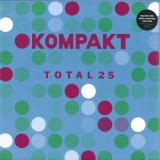
The latest boy band in town, POP VAMPIRES COLOGNE, opens the party with the enigmatic ‘Karianne’. SUPERPITCHER knows how to make a grand appearance, accompanied by high-calibre guests. His electro-pop treat ‘Pandora’s Box’ features Hot Chip’s ALEXIS TAYLOR on vocals. JÜRGEN PAAPE isn’t coming alone either, but with newcomer HELLA in tow. ‘Grace (A Tale)‘ once again shows our resident hit maker at his best. JÖRG BURGER also has a table companion, the extremely talented Irene Kalisvaart, and remixes himself on top of that. REINHARD VOIGT points out that money never sleeps and proceeds according to the motto: ’Zahl an einem anderen Tag (Pay another day)’. Our Brazilian whirlwind GUI BORATTO returns after a long absence with the banger ‘Panorama X-Press’. After careful consideration, ROBAG WRUHME has named his new track ‘Total’ and sings in the chorus with his family for the first time. WASSERMANN contributes an ultra-fat remix of Mayer’s ‘Brainwave Technology’, while MICHAEL MAYER himself marvels at the rare ‘Erdbeermond’. HARDT ANTOINE’s ‘Let Me Go’ really gets the party going again before WASSERMANN orders a large taxi and skips out on the bill.
See you again next year!
TOTAL 25… Schon wieder ein Jubiläum in einem an Jubiläen ohnehin nicht armen Jahr. Zum 25. mal versammelt sich die Kompakt Familie zum alljährlichen Stelldichein. Ohren angelegt, los geht’s!
Die neueste Boygroup in town, POP VAMPIRES COLOGNE eröffnet die Party mit dem enigmatischen ‘Karianne’. SUPERPITCHER weiss, wie man einen großen Auftritt hinlegt, und zwar in hochkarätiger Begleitung. Sein Elektropop-Leckerbissen ’Pandora’s Box’ featured Hot Chip’s ALEXIS TAYLOR an den Vocals. Auch JÜRGEN PAAPE kommt nicht allein, sondern mit der Neukommerin HELLA im Schlepptau. ‘Grace (A Tale)’ zeigt unseren Haus- und Hitlieferanten mal wieder in Bestform. JÖRG BURGER hat ebenfalls eine Tischdame im Gepäck, die überaus talentierte Irene Kalisvaart, und remixed sich obendrein selbst. REINHARD VOIGT gibt zu Bedenken, dass Geld niemals schläft und verfährt nach dem Motto: ‘Zahl an einem anderen Tag’. Unser brasilianischer Wirbelwind GUI BORATTO meldet sich nach längerer Abstinenz mit dem Banger ‘Panorama X-Press’ zurück. ROBAG WRUHME hat seinen neuen Track nach reiflicher Überlegung ‘Total’ genannt und singt darauf erstmals selbst im Chor mit seiner Familie. Der WASSERMANN steuert einen ultrafetten Remix von Mayers ‘Brainwave Technology’ bei, während MICHAEL MAYER selbst den seltenen ‘Erdbeermond’ bestaunt. HARDT ANTOINE’s ‘Let Me Go’ bringt die Party nochmal so richtig in Schwung, bevor der WASSERMANN ein Großraumtaxi bestellt und die Zeche prellt.
Wir sehen uns wieder im nächsten Jahr!
Leeds-based producer Nathan Alexander kicks off KUJE's debut release with PROFETIA EP, a bold four-tracker that drips personality and club-focused energy.
A rising name turning heads from the likes of Blasha & Allatt and NIX, Nathan brings his signature blend of cheeky rhythms and weighty low-end to the table. KUJE001 proudly marks the first chapter of the label's journey, dedicated to unearthing raw, unfiltered talent.
The A-side delivers serious impact: Bound is a propulsive dancefloor tool built for DJs, while Rabbit Hole hits hard with distorted effects and a Blawan-esque edge. On the flip, Tracer floats into spacey, bounding territory with a touch of psychedelic energy, already picking up early support. Closing the release is Technical Itch, a UK-rooted banger that ties together the artist's heritage with the label's forward-thinking intent.
Each track carries Nathan's unmistakable character-playful, punchy, and irresistibly 2-steppable. This is techno with a wink, made for sweat-soaked floors and heads-down moments alike.
- A1: Eu Dei - Ary Barroso
- A2: A Briga - César Costa Filho-Walter Queiroz
- A3: Bom Conselho - Chico Buarque De Holanda
- A4: Mais Cedo Ou Mais Tarde - Osmar Milito-Lilian Knapp
- A5: Morre O Burro, Fica O Homem - Jorge Ben
- A6: Um Jeito Novo De Viver - Mauricio Duboc-Carlos Colla
- B1: Nem Paletó, Nem Gravata - Marcos E Paulo Sérgio Valle
- B2: Dose Prá Leão - César Costa Filho-Walter Queiroz
- B3: Tem Dendê - Reginaldo Bessa-Nei Lopes
- B4: Regra Tres - Toquinho-Vinicius
- B5: Quem Mandou (Pé Na Tábua) - Jorge Ben
- B6: Minhas Razoes - Antonio Carlos E Jocafi
- B7: Chiclete Com Banana - Gordurinha-Almira Castilho
Originally issued on the ATCO/Continental label in 1973, Paleto, Nem Gravata (1973)constitutes a hidden gem from Brazil's golden era of samba-jazz.
Osmar Milito, a master of piano and rhythm, blends breezy Bossa Nova with soulful samba and rich MPB textures.
Backed by lush arrangements and a laid-back vibe, this album captures the effortless cool of 1970s Rio.
Featuring standout tracks like Jorge Ben's "Morre o burro, fica o homem" and
"Quem mandou (Pé na tábua)," Milito's work is both sophisticated and deeply groovy.
A must-listen for fans of Marcos Valle, Azymuth, or Arthur Verocai.