This riotous, psychedelic Latin funk anthem, taken from Martín Buscaglia's 2006 classic album "El evangelio según mi jardinero", sees its very much requested first time on a 7". To celebrate this, and thinking about the AA side, we decided to ask Bosq for a remix.
When we approached him, he said "This track is wild, I love it!" and he started to make his thing. When he finished it, he told us, "I resisted the temptation to bump it up closer to 120 bpm – the world needs more midtempo dancefloor treats!". We couldn't agree more on the midtempo bit, but especially we couldn't be more chuffed with the remix. Bosq has added his magic and a tad of cumbia feel as well and the result is way more than a treat, it's an everyone-smiling-on-the-dancefloor kind of track.
Search:tad g
- A1: Tadaaki Misago & Tokyo Cuban Boys – Sakura Sakura 7 32
- A2: Minoru Muraoka – Muraiki 3 55
- A3: Count Buffalo & The Jazz Rock Band – Mago-Uta 3 43
- A4: Kiyoshi Sugimoto Quartet – D-51 6 05
- B1: Toshiyuki Miyama & The New Herd– Adult's Day 9 25
- B2: Soul Media – Breeze 4 33
- B3: ジョージ・大塚カルテット– Sea View 5 03
- C1: Hozan Yamamoto, Masahiko Togashi, Yosuke Yamashita – Breath Prologue 5 08
- C2: Jiro Inagaki & Soul Media – Do It! 7 25
- C3: Hiroshi Suzuki – Romance 5 56
- C4: Masahiko Sato – Tochi Mo Kurumi Mo Fukiotose 3 01
- D1: Masahiko Togashi – Fourth Expression 6 45
- D2: Takeshi Inomata & Sound Limited – Mustache (Live) 8 50
- D3: Takeo Moriyama – Watarase 6 40
repressed !
● Essential 14 track collection of "WaJazz" music selected and compiled by renowned Japanese jazz expert Yusuke Ogawa, owner of the Universounds record store in Tokyo.
● Gatefold 180g heavy double vinyl LP. Comes with extensive track-by-track liner notes by Yusuke Ogawa.
● All tracks licensed by Nippon Columbia, Tokyo, Japan.
● Mastering and lacquer cut by Jukka Sarapää at Timmion Cutting Lab, Helsinki, Finland.
---
Universounds, HMV Record Shop and 180g team up for an exceptional release: from blazing hard bop to free jazz, to introspective saxophone solos and massive big band sounds, renowned Japanese jazz expert Yusuke Ogawa presents an essential 14 track collection of "WaJazz" music taken from the Nippon Columbia vaults. Featuring Jiro Inagaki, Minoru Muraoka, Hiroshi Suzuki, Hozan Yamamoto, Count Buffalo, Takeshi Inomata, and much more!
"Japanese jazz has been recognized and celebrated by music lovers worldwide for decades. The origins of this trend may be traced back to the rare groove movement that flourished in the 1990s, but its current deep and wide popularity seems to be connected to the fact that Japanese people have been reevaluating their own jazz since the mid-2000s, locally referred to as WaJazz ("Wa" meaning Japan but also theShōwa emperor period, from 1926 to 1989). Since the beginning of the 2000s, there has been a growing trend to move away from the DJ-focused perspective and to appreciate jazz with a deeper understanding. Nowadays, there is more and more interest in the background and roots in which jazz has developed in Japan, with Japanese jazz as a whole now considered as its own distinctive genre.
Of course, even if we speak about "WaJazz" as one genre, there is a truly wide variety of styles within it. However, when Japanese musicians play, there is something uniquely Japanese flowing through that creates a kind of synergy. It may be the melody, the rhythm, or even something deeper, like an inexpressible flicker. I would be happy if some of its charms and secrets emerge from the fourteen tracks included in this collection." (Yusuke Ogawa)
Yusuke Ogawa has been running the Universounds store in Tokyo since 2001, specializing in jazz and second-hand, rare, and collector records. He is also a reissue supervisor, label manager, DJ, and music writer. Known for his vast musical knowledge, eye for detail, and archival skills, Ogawa has worked on more than 250 reissues and compilations – including the highly praised Deep Jazz Reality and Project Re:Vinyl series. He is the co-author of the Wa-Jazz Disc Guide and the Independent Black Jazz of America books.
Yin and Yang... Dark meets Light... Two founding members of area127 present you their fusion beats, live jams of various caliber, pure, raw and hot off press.
Dreems do come truu.
That's it.
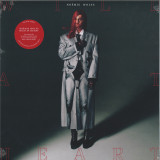
On March 26, 2015, a surprising announcement sent shockwaves through the Belgian music scene. Noe?mie Wolfs declared her departure from Hooverphonic, the band she had fronted as the lead singer for over five years. She described it as the end of an incredible chapter in her life and expressed her desire to forge her own musical path, which she did by releasing her critically acclaimed debut album "Hunt You" a year later.
In February 2020, the long-anticipated second solo album by Noe?mie arrived, titled "Lonely Boy's Paradise," brimming with melancholic hues. Taking her time to craft and record this album, Noe?mie delivered a collection of songs that resonated even more deeply with her. At the production helm was Yello Staelens (also known as Yong Yello). With "Lonely Boy's Paradise," her confidence grew, allowing her to embrace risk and unconventional ideas. However, the international lockdown soon threw a spanner in the works, as the society shut down a day after her celebrated sold-out release show at the Ancienne Belgique. Rather than sit by, she therefore retreated to her home studio to work on new music.
Making music from the heart has always been in the DNA of Belgian singer Noémie Wolfs and yet this time it is a tad different as she's gearing up to release her third album, "Wild At Heart," in November. This time around, she joined forces again with her partner in crime, Simon Casier (of Balthazar and Zimmerman), to write and produce the album in their home studio. Despite being in the business for years, the upcoming project also immediately presented a challenge for her because this time she was involved both as a writer, but more importantly as a producer, giving the album an even more personal touch. Everything was done from an emotion or a vision, you notice and hear the love for enchanting arrangements immediately.
The ten tracks on "Wild At Heart" promise a distinct sound, enriched with meticulous attention to detail. The melodies are interwoven with dreamy, melancholic strings and an array of synths, revealing a new facet of Noémie's musical evolution. The new sound of Noémie evolved from a hip-hop-oriented use of samples on her second album "Lonely Boys Paradise" to a more electronic approach, where danceable beats with analog synths join forces with big orchestrated strings to capture the different facets of a love story.
"Strings are actually very hopeful or often form a warm blanket for many people, but can also be very frightening, oppressive, dark, and sad. It might even be my favourite instrument, which is why I definitely wanted to use them on this album. Sometimes you can even hear 42 violins at the same time, with which we wanted to capture the grandeur of Hollywood," she says about including strings.
The upcoming album is not a sonic continuation of her previous albums, but a deliberate exploration of what has always inspired her. "Wild At Heart" tells the story of two lovers who cannot live with each other, but also cannot live without each other. The dramaturgy of the album also reflects itself musically, which is immediately evident with the first single "Lonely Heart". In almost eight minutes, you feel the matchless passion in her music and her voice remains the narrative thread that makes you forget time and space around you for a moment. Noémie Wolfs' new music is therefore the perfect way to take a break from the daily grind and digs deep into all forms of romance.
"Wild At Heart" is Noémie Wolfs' reintroduction and her most personal project so far. For dreamers, lovers, and travelers.
Returning to Iceland to focus on fresh material, Kiasmos will release new EP 'Blurred' through Erased Tapes on October 6th.
Janus Rasmussen explains: "To write new material felt like a new beginning for us after two years of touring. The plan was to write something a tad darker than our previous stuff. Spring in Reykjavík had other plans though, as this turned out to be our brightest release to date." Remixes on the EP come from Bonobo and Stimming, each taking Kiasmos' music in fresh directions
Patrick Weblin gives us this very special EP. 2 Original tracks named after his 2 sons, so a lot of time and heart has gone into making this Ep with a superb remix from IULY.B. "Tadhg's Groove" give us solid house drums,percs and hats but its the pads and bassline that gives it the movement throughout the track, taking you to another level of space and conscious. IULY.B's remix is down right tasty. It takes you on a little trip and makes you loose track of time all while grooving to this great remix. "Ollie's groove is something a bit special, big 909 kick combined with 808 tops but this time some melodic synths add a very soulful and elegant sound.
A new duo and record label based in Madrid lands on the underground techno scene, led by Mike Gómez and José Castillo, the latter known for his aliases Milford and UHF, and also the owner of the electro label Gladio Operations.
Diorama is born with the intention of recovering the soul and essence lost in electronic music, which for some time has become practically homogeneous and predictable. With a timeless, fresh, and warm sound, Diorama produce rhythms close to dub and Detroit techno, mainly influenced by Juan Atkins, UR, and Basic Channel, among others.
This EP, titled Pacific Trak, begins with a nod to the old Scottish school, where they revive a forgotten track by British producer Anthony Scott, adding its imposing main chord to a true sea of melodic textures, bathed in exquisite acid. Spanish techno master Tadeo gives us his vision of Pacific Trak, exploring dub territories that remind us of past pieces released under the incomparable Maurizio label.
The B-side opens with Soul Memories, a manifesto of resistance that vibrates with detuned harmonies and raw bass lines, recalling the origins of Detroit’s primitive sound. The package closes with Polymorphic, a progression of relentless aquatic chords, set among careful and precise minimalist rhythms that oscillate between high-dynamics tech and dub.
Nur wenige Tage, bevor der Altsaxofonist Cannonball Adderley mit Miles Davis, Art Blakey und anderen
Größen sein emblematisches und einziges Blue-Note-Album “Somethin’ Else” einspielte, ging er noch ein
letztes Mal mit seinem regulären Quintett ins Studio, um für das Label EmArcy “Cannonball’s Sharpshooters” aufzunehmen. Das Ensemble präsentierte zum Abschied ein kompaktes Programm mit Klassikern von
u. a. Tadd Dameron und Thelonious Monk sowie einer Eigenkomposition des Bandleaders.
- A1: Amidinim Ehaf Solan (3 20)
- A2: Imidiwan Takyadam (Feat Jose Gonzalez) (4 10)
- A3: Erghad Afewo (3 32)
- A4: Tad Adounya (6 21)
- A5: Asstaghfero Allah (3 19)
- B1: Sagherat Assani (Feat Sulafa Elyas) (3 37)
- B2: N'ak Tenere Iyat (4 11)
- B3: Amidinin Wadar Nohar (3 09)
- B4: Khay Erilan (4 50)
- B5: Dounia Tau Ray (3 57)
- B6: Aba Malik (3 45)
- 1: Love Will Work It Out
- 2: Witchoo
- 3: Private Space
- 4: More Than Ever
- 5: Ride Or Die
- 6: The Way That I Do
- 7: Reach Out
- 8: Sexy Thang
- 9: Sea Of Love
- 10: I Can See
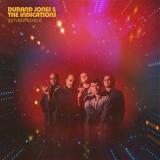
Nach dem "makellosen und zeitlosen Soul" (The Guardian) des 2019er-Vorgängers "American Love Call" öffnet "Private Space" von Durand Jones & The Indications die Tür zu einer breiteren Palette von Klängen und führt die Band kühn in eine synthielastigere Soul-Welt aus mit Streichern durchsetzten Disco-Beats. Das harmonische Zusammenspiel zwischen Aaron Frazers sanftem Falsett am Schlagzeug und Durand Jones' kräftigem Gesang sitzt noch immer tadellos und wird von Blake Rhein (Gitarre), Steve Okonski (Tasten) und Mike Montgomery (Bass) perfekt abgerundet. The Indications bleiben auch auf ihrem dritten Album wahre Meister darin, Revival-Sounds mit einer modernen Haltung zu verschmelzen. "Private Space" atmet den Geist der vergangenen Disco-Ära und die zehn Tracks liefern so eine dringend benötigte Dosis Eskapismus nach diesem turbulenten Jahr 2020. Das Album entstand nachdem die Band einen Großteil des Jahres getrennt voneinander verbracht hatte. Die Freude des Wiedersehens und am kreativen Miteinander ist auf "Private Space" jederzeit spürbar. Der hoffnungsvolle Sound setzt auf die Idee, dass Freude uns befreien kann. Die Kraft eines guten Songs, ein Licht in der Dunkelheit zu sein. Bandleader DURAND JONES fasst es treffend zusammen: "At the end of the day, I just want people to close their eyes and forget where they are. Just the way a Stevie Wonder album does for me."
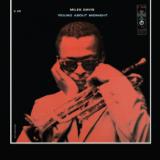
In 1955 Miles Davis played an all-star jam session at the Newport Jazz Festival with Thelonious Monk on piano, Gerry Mulligan on baritone sax and Zoot Sims on tenor sax. This performance immediately drew the attention of Columbia Records' George Avakian, who was so impressed that he immediately offered Davis a contract if he could form a regular band. The group he then assembled would go down in history as Davis' so-called "First Great Quintet", consisting of John Coltrane on tenor sax, Red Garland on piano, Philly Joe Jones on drums, Paul Chambers on bass and of course Miles himself on trumpet. 'Round Midnight is Miles Davis' first record for Columbia and also the first studio recording of the First Great Quintet. The recording sessions began on October 26 1955 but the album wasn't released until 1957 as Davis was still under contract at Prestige at the time. These respective sessions yielded Steamin', Workin', Cookin' and Relaxin'; albums that would go down in history as quintessential blueprints of late 1950s hard bop.
The record is made up of a collection of standards and one traditional song ("Dear Old Stockholm", from the 19th century). Notably, it features what may be considered the most well-known versions of Thelonious Monk's "'Round Midnight" and "Bye Bye Blackbird". That Avakian made a golden signing was sufficiently clear from the start, but no one could foresee that it would be this quintet on Columbia that would go on to change the course of modern jazz forever with Kind of Blue. 'Round Midnight is available as a limited edition of 1500 individually numbered copies on crystal clear vinyl.
Somewhere between the sophisticated songwriting of Leonard Cohen and Jacques Brel, the rugged folk of Bob Dylan and Neil Young, the acoustic pop of Simon & Garfunkel, and the haunting melancholy of Nick Drake and Elliott Smith, there is Philippe B, who reminds us of the depth that can be conveyed with nothing more than a guitar and a few words.
- 1: Y Dechrau (Feat. Boy Azooga, Jessy Allen, Earl Jeffers, Andy Brown & Amanda Whiting)
- 2: Chware Teg
- 3: Thema Osian
- 4: Tyrchu (Feat. Gruff Rhys)
- 5: Dŵr Y Mynydd
- 6: Geiriau
- 7: Tynged
- 8: Trac Piano
- 9: Cynnau Tân (Feat. Carwyn Ellis)
- 10: Anturiaethau Pellach Capten Idole
- 11: Pino Ar Y Bâs!! (Feat. Darkhouse Family)
- 12: Brân Swît
- 13: Thema Nia (Ahmed)
- 14: Sidan Torri
- 15: Erlid Y Ddraig
- 16: Dwyrain Cymru
- 17: Un I Dewi (Feat. Andy Brown)
- 18: Maen Llia
- 19: Tad A Mab (Feat. Dafydd Brynmor Davies)
- 20: Diolch A Nos Da (Feat. Dafydd Iwan)
Don Leisure has cemented his name as one of the most forward-thinking and experimental beatmakers & producers within the current musical ecosystem. As well as being 50% of Darkhouse Family (alongside Earl Jeffers) he has collaborated with the likes of Angel Bat Dawid, Gruff Rhys, DJ Spinna and First Word label-mates Amanda Whiting & Tyler Daley (Children of Zeus). Garnering serious support from Lauren Laverne, Tom Ravenscroft, Huw Stephens, Gilles Peterson, Huey Morgan, The Vinyl Factory, Clash, Uncut and many more. Following the release of ‘Cynnau Tân (feat. Carywyn Ellis)’ (which gained support across BBC Radio from Tom Ravenscroft, Zakia & Huw Stephens) Welsh beatmaker Don Leisure announces the release of a new album ‘Tyrchu Sain’) as he returns with a new single ‘Tyrchu’ due for release on 22nd January 2025. ‘Tyrchu’ features the soft-spoken vocal stylings of Gruff Rhys over a gently rolling, tape saturated and expertly chopped instrumental, creating (in Gruff’s own words) ‘Shiny new beat-treasures with ghostly reflections of Welsh pop’s past - skillfully dug from Sain Records’ deepest veins’
A dedicated student of music, over the years, Don has amassed a vast encyclopaedic knowledge of music genres and subcultures, including a fascination with Welsh psychedelic folk music from the mid-20th century. This introduction was made by respected musician, producer & selector Andy Votel’s 2005 two-part compilation series ‘Welsh Rare Beat’ (in collaboration with Gruff Rhys and Don Thomas), comprising twenty-five tracks from Sain Records’ back catalogue. Now the oldest independent record label in Wales, Sain is a wildly influential bastion of home-grown Welsh talent, co-founded by Welsh-language folk singer Dafydd Iwan, whose music has seen a cultural resurgence in recent years with his 1983 song Yma o Hyd (We’re Still Here) becoming a huge anthem for Wales football fans. Set up in the Welsh capital, many of Sain’s early releases were recorded at Rockfield Studios in Monmouthshire, but in the early 1970s the record company moved to the Caernarfon area and opened their first recording studio in 1974 near Llandwrog. Announcing a huge digitisation project throughout 2024, Sain Records took on the mammoth task of painstakingly digitising their entire back catalogue spanning 55 years, working in partnership with the National Library of Wales the resulting archive then be submitted for to the National Library of Wales in Aberystwyth, preserving them for future generations to enjoy. Taking this period of rediscovery as an opportunity to reimagine their impressive inventory, Sain invited Don Leisure to dig into their musical treasure chest, creating a sprawling sonic tapestry from the dusty gems within. On this exhilarating excursion, Sain Records founder Dafydd Iwan explains: ‘Imagine someone gave you access to over 50 years of Welsh popular music – almost all of it unknown to you before. It would be a strange experience of discovery, an unknown territory which could baffle and excite. This happened to Jamal (Don Leisure) – and he was captivated by a world of music he barely knew existed, and when he was asked to distill the experience into one album, he immediately warmed to the idea. And this is the result – a kaleidoscope of sounds to encapsulate a half century of Welsh music. To call it unique would be superfluous: no-one could ever recreate this album. Listen, and enjoy.’.
The resulting product is ‘Tyrchu Sain' (translating to ‘Digging Sain’), a fearless and exploratory album, which sees Don put his signature unparalleled and unpredictable skills to work, weaving together moments of forgotten beauty into celestial and otherworldly compositions. The record features appearances by artists from Wales who have a similar obsession as Don Leisure in these classic Welsh rarities including Gruff Rhys, Carwyn Ellis, Earl Jeffers Amanda Whiting and Boy Azooga. A shimmering patchwork quilt of sound, ‘Tychru Sain’ traverses a shifting landscape of acid folk, eerie vocal melodies and interstellar soundscapes, propelled forth by crisp, head nod-inducing drums and grainy textures. Breathing new life into compositions lost to time, and paving a path for new listeners to discover the magic that lies within.
- Swamp
- Sleep No More
- Amphetamine
- White
- Drown
- What Dreams May Come
- Rabies
- Strobe
- 12: Gauge
This release resurrects a long-lost cornerstone of Seattle's early grunge history, showcasing Bundle of Hiss, featuring future Mudhoney and TAD guys and singer Jamie lane, one of the genre's missing links. Between 1986 and 1988, when Seattle was still a circuit of small clubs, four-track tapes and bands sharing drummers and singers, Jack Endino went in to record one of the most solid - and most unfairly invisible - outfits of that scene: BUNDLE OF HISS. Two sessions (1986 at Reciprocal and 1987/88 at Audio Design) fell into limbo, stored in the basement of Mudhoney-Drummer Dan Peters and for years they were a kind of pre-grunge legend, everyone knew they existed, but there was no record, until Loveless Records from NYC released both on CD. The second one, Audio Design Sessions, now sees the light of vinyl for the first time, just as it should have come out in the late '80s: a basement document turned into a collectible artifact. For those who want real grunge, not the domesticated version. It gathers the core of those 1987-1988 recordings done by Endino: the moment when the band is tighter, darker and closer to what the press would later call the "Seattle sound": minor-key melodies, thick fuzz, vocals on the edge, and that mix of hard rock, punk and Sabbath-like heaviness we'd later hear in Mudhoney, TAD or early Soundgarden. And Jack Endino himself summed up these sessions: "Vintage Seattle grunge from one of the original practitioners_ I always felt sad that this hard-working band never managed to get a record out and was almost lost to history. It was a pleasure -and a technical pain!- to resurrect all this." Kinda key release of the early grunge days, first-generation material, recorded by the scene's producer, at the exact moment Seattle was shifting from noisy punk to that heavy, shadowy rock that later blew up. It sounds raw, young and dangerous: this is not a polished compilation, it's a snapshot of the scene.
"Eau" is the lovely new album from aus, the solo project of Tokyo-born composer and producer Yasuhiko Fukuzono, who has gained attention, in Japan and overseas, for his thoughtfully paced and sensitively skillful music as well as his intriguing sound design for exhibitions and experimental cinema. Having worked primarily with keyboards and electronic sound up to this point, "Eau" is a slight yet fascinating shift for aus; the album, while still primarily an electronic work, revolves around the sonic world of a stringed acoustic sound source, the koto, that most characteristically Japanese of musical instruments. The very accomplished Eden Okuno provides the delicate-yet-rich koto sounds on offer here; Fukuzono, in the liner notes, acknowledges the importance of Okuno's artistry to the project.
The compositions on the album are designed to balance the sound of the koto, with its subtly variable attack and flickering resonance, with the timbre of other instruments. The delicate decay and metrical flexibility of the koto is enveloped by sustained synthesizer sounds and contrapuntally constructed piano melodies, creating a flowing ambience with absorbing undercurrents, a languid and liquid quality that reveals the suitability of the title.
Avid fans of contemporary Japanese music might hear the influence of pioneering works such as the the 1979 Hiroshi Yoshimura composition "Clouds for Alma", realized by koto player Tadao Sawai, and the 1993 album "Koto Vortex I: Works by Hiroshi Yoshimura" which featured performances of Yoshimura's works by the Japanese koto quartet Koto Vortex. These works attempted to remove the koto from its traditional context and place it within the context of ambient and techno. "Eau" is available on CD/LP/cassette/digital, with E/J liner notes by aus. "Eau" is the first collaborative release by EM Records and FLAU, the label run by Yasuhiko Fukuzono (aus).
- 01: Andagoya - Juana
- 02: Docordó Infantil - Allá Arriba
- 03: Bojayá Resistencia - Padre Misericordia
- 04: Andagoya - Levanten La Tumba
- 05: Docordó - Yo Sembré Mi Mata
- 06: Tadó - El Reloj
- 07: La Encharcazón - Buenas Noches Mis Dolientes
- 08: Dipurdú - Despierta Mortal Despierta
- 09: Andagoya - El Alma Se Va
- 10: Docordó - Tío Pacho
- 11: Docordó Infantil - Repicaron Las Campanas
- 12: Tadó - Un Sábado De Mañana
- A1: Yamame
- A2: Memories Through Thick Glasses
- A3: Fly Casting
- A4: Like Someone In Love
- B1: Out Of Nowhere
- B2: Le Crepuscule Embaume
- B3: Like Sonny
'Yamame' (the Japanese name for a kind of freshwater salmon) was recorded in 1962 and was Miyazawa’s first album, but the sharpness and avant-garde modernity of the music creates a completely timeless quality. Miyazawa is one of a group of musicians who laid the foundation of the Japanese jazz scene. He wanted to express his cultural heritage by doing something he felt “only someone Japanese” could do, and so he dedicated himself to a pursuit of “Japanese jazz”. Incidentally, the album was originally simply titled “Akira Miyazawa”, but perhaps due to the impression the cover art and the track titles made, it was reissued in 1977 as “Yamame”, and has gone by that title ever since. This is an historic masterpiece of Japanese jazz.
Tenor Saxophone – Akira Miyazawa
Alto Saxophone, Flute – Sadao Watanabe (tracks: B1 to B3)
Baritone Saxophone, Clarinet – Tadayuki Harada (tracks: B1 to B3)
Trombone – Mitsuhiko Matsumoto (tracks: B1 to B3), Yasuhiro Tomoto (tracks: B1 to B3)
Trumpet – Akira Nakano (tracks: B1 to B3)
Piano – Masahiko Sato
Bass – Masanaga Harada
Bass Trombone – Takeshi Aoki (tracks: B1 to B3)
Drums – Kanji Harada, Takeshi Inomata
Supervised By – Jiro Kubota
- A1: Korekara No I Love You
- A2: Rosa
- A3: Tooi Machi No Dokokade
- A4: Mellow
- A5: Sekaijuu No Dare Yori Kitto
- A6: Shiawase Ni Naru Tame Ni
- A7: Anataninara
- A8: Tada Nakitaku Naru No
- A9: Sea Paradise-Ol No Hanran
- A10: Hero
What is the source, and why does it matter? Marking three years since his debut LP, area127 honcho Tadan steps forward with his second solo record. Built on a trance language of his own, it dives into tripped-out sonic terrains where introspection meets organic force.
The journey begins with ‘Pure Idea’, as waterborne harmonies ripple like the first morning rays through glowing tones. ‘Level 27’ ascends into a haze of suspended energy, flickering and pulsing to bridge rhythm and reflection. With ‘Muses’, the record transcends into hypnotic rite – nocturnal breaks and avant-garde melodies conjure a dialogue between psyche and body. ‘Evolution’ wraps it up in future-driven, past-echoing psychedelia, lucidly carrying the answers you might be looking for.