'Quiet Pieces' initiates Abul Mogard’s personal imprint Soft Echoes with a definitive self-portrait of calm, contemplative, and discreet inner landscapes made audible. It is the first solo album on vinyl in four years. RIYL Alessandro Cortini, William Basinski, The Caretaker.
While sifting through archived material left idle from earlier projects, a chance encounter with a late uncle’s trove of beloved 78rpm classical and opera records prompted the reworking and completion of what would eventually become the album. Spinning dusty records at 33 and 45rpm, Abul Mogard recombined their enduring spectres with unfinished sketches from his archive. The resulting soundscape blurs distinctions between his memories and those of another, exquisitely short-circuiting the senses with its waking, dream-like lucidity.
This was a process I hadn’t explored in my earlier works. I began sampling brief moments from these records, altering them with studio effects and playing them at slower speeds. In many cases, I wasn’t entirely sure how the original music sounded. These fragments, once further processed, became a source of inspiration for my new compositions. Over time, I realised that the old pieces from the archive and the new material derived from the samples naturally complemented each other.”
The resulting pieces hover over a threshold, a liminal space that harmonises the old and older material. Voluminous waves of quiet and loud undulate between consonance and dissonance, conjuring imagery of a decaying grandeur that humanity’s decadence has surrendered to the elements. Abul Mogard’s seemingly abandoned yet vast landscapes are nevertheless intimate with timbral frissons of red-lined distortion. Elusive, yet as tangible as sea spray or smog, they affect the olfactory senses with a rarified, synesthetic quality that modestly engages one’s emotional register – a hypnotic, distinguishing feature long hailed as one of the hallmarks of his work. A fidelity to memory and dream recall is sensitively probed in the journey from the stately symphonic stasis of 'Following a dream' to the almost industrial, untethered brutality evoked by a looming silhouette that’s never fully visible in 'Constantly slipping away', culminating in the foreboding coda of 'Like a bird'. Those pieces appear to shield the album’s sentimental core, where the tempestuous play of light and shadow of 'In a studded procession' escalates to breathtaking, panoramic climax, while 'Through whispers' evokes an out-of-body-like experience encountered with visceral poignancy.
Looking back, Mogard notes an unexpected influence: “I realise being inspired by Phill Niblock, whose work I had barely known at the time but explored after his passing in 2024. His album 'Boston Tenor Index' changed the way I approached dissonance. It encouraged me to push my sound further, to the edge of a space where I began to feel uncomfortable.”
The album artwork, created by longtime collaborator Marja de Sanctis, features a photograph taken at the Temple of Jupiter Anxur, an archaeological site overlooking the Mediterranean Sea. Captured with an iPhone, the image traces the residual presence of construction techniques and architectural forms of the Romans, where material history is transcribed through contemporary tools. The convergence of ancient and modern technology aims to reverberate the site’s lasting spiritual presence – an echo persisting in what is now perceived as a quiet, emptied space. The spiral gestures towards infinity and light. Past and present dissolve into one another, reflecting 'Quiet Pieces' meditation on sound, memory, and time.
RIYL Alessandro Cortini, William Basinski, The Caretaker
out of Stock
Last delivered 8 months ago available to reorder, subject to availability
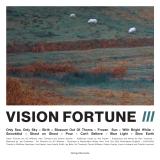
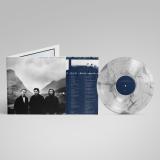
Surprises are nice. Unexpected, delightful - Vision Fortune last released music in 2015, and so odds were off that we’d hear from them again.
But against all odds, Vision Fortune III is coming out on Gringo Records, following the release of their last album ‘Country Music’ on ATP Records.
The trio first agreed to record a new album as somewhat of a dare over a marathon pasta and wine heavy luncheon in Palermo, Sicily. Waking up with sore heads, they realised in mild panic that flight tickets had been purchased, a cottage in rural Wales was booked, and it was too late to pull out.
And so it was - the Fortunes arrived in Machynlleth Wales in Spring of the following year. The rules were simple - takes were live, songs minimal and the fireplace kept roaring.
Drummer Andres Ayerbe’s strict roast lamb dinner cooking schedule resulted in an album less frenetic and agitated than previous work - instead, III explores a softer, more subdued and subtle side of Vision Fortune. Additional overdubs were recorded in New York City and Birmingham, by AC Williams and Alex Townend. III was completed - a new, leaner Vision Fortune. Like a good lamb dinner - more meat, less fat.
Press Quotes for Country Music:
"An impressively brutal record" NME 8/10
"Immersive and introspective musique concréte rippling rippling with dub rhythms, orchestral strings, tolling bells and discordant drones coming close to the alien beauty of Mica Levi's sonically extreme soundtrack work." Uncut 7/10
"Unsettling, strangely cathartic and hook-free (in a good way)." Dazed ("Twenty albums to look out for in 2015")
"Assembling whole scrapyards of sound and turning them into something better than what went before" The Guardian
"Swaddling the senses in soundwaves, Minimal ambient sketches and harsh electronics abound on this fascinating 12-song affair" The FADER
"Basically just one long, connected droney throb. But it's an awesome long droney throb." Brooklyn Vegan
“One day, I’ll be a ghost, a spirit, that moves with you along the winds,” pines Twin Atlantic’s Sam McTrusty on the beautiful and cinematic ballad ‘Your, The End’, the fitting opener to the Scottish alt-rockers’ eighth album ‘Separation From The Animals’. “It’s about the responsibility I feel around being a parent,” he says, revealing that he cried while recording his vocal over bandmate Ross McNae’s tender Beatles-y piano part. If the album says anything, it’s ‘All You Need Is Love’, told with maturity and reckoning with the past to make sense of the present. ‘Separation From The Animals’ is an album born of two tales of triumph and perseverance – one of McTrusty grappling with his own ghosts, and the other of their finest album to date coming after a time when band morale was at an all time low. When their friends’ bands and peers were all calling it quits, words of wisdom from those close to the band were urging them to take time off. The album started out as a McTrusty solo effort, isolated in his new home. The day the band finished work on their last album, 2024’s ‘Meltdown’, was also the day McTrusty packed up his entire life and studio to start a new life in Toronto with wife and two kids, unaware of the rich seam of songwriting that it would inspire.
Baxter Dury’s eighth album, 'Allbarone', seemed to be done and dusted after release last autumn, yet super-producer Paul Epworth (Adele, U2) decided it was a good idea to work on extensions of five of tracks from the album. Not just extensions - full on electro-disco mixes that take tracks apart from the edges and reorder them into relentless dance floor tools built to perfectly soundtrack the small hours.
Each track finds a groove and takes its journey right through the middle of the original track, to create classic 12" extended remixes, adding a whole load of echoing dub over flickering percussion tracks, madly addictive basslines and gloriously languid disco rhythm tracks. From 'Kubla Khan’s hefty low-end groove to 'Alpha Dog’s deconstructed nightclub dub via 'Schadenfreude’s Eurodisco bass and fizzing hi-hat pulse, Paul Epworth’s phenomenal new mixes lift Baxter’s tracks up to another level.
Written in collaboration with British jazz pianist and organist Kit Downes, the album was recorded in the hushed, reverberant atmosphere of Bragernes Kirke in Norway in November 2024 - a setting that lends the record an intimate, almost sacred stillness. The album was mixed and mastered by Jorgen Traeen. The album takes its title from the landmark 14th- century mystical text by Julian of Norwich - the first book known to have been written in English by a woman. Sundfor encountered Julian's writing around the same time she and Downes were performing together in churches in 2024, and the timing felt fated. Drawn to the text's extraordinary themes of hope, resilience, and its quietly radical feminine perspective, she found in Julian's words a natural spiritual and artistic continuation from her acclaimed 2023 album Blomi . The connection felt so immediate and profound that she invited Downes to join her as a full collaborator on the project.
Roughly two years after the release of their initial statement of intent, debut single “Toutpartout PT2” with its hypnotic ripples, Andi Haberl and Florian Zimmer aka Bella Wakame have successfully channeled the magic of a 2024 live recording (captured at Berlin’s Donau115 & Silent Green) into their first proper studio offering. You can hear inspirations ranging from Bitchin Bajas, Jeremiah Chiu to Groupshow (Jelinek, Leichtmann, Pekler), the hypnotic, intricate battle between form and freedom (the fun of momentary formlessness) continues to unfold over the course of 10 new tracks, featuring album guest Indra Dunis (Peaking Lights). Their first single "Shades of Nambei" was very much inspired by the wonderful band Spirit Fest and their song "Nambei".
You can either shorten the reins, or you can loosen them – and give things more slack. With Bella Wakame, it’s definitely the latter. Constantly challenging each other, they’re tapping a whole new energy. Tons of different energies.
Based on the impulsive, propulsive interplay between drums/sensory percussion (Andi Haberl) and modular synthesizer (Florian Zimmer), the frenzied, free-form results take listeners into completely new dimensions – sonic worlds that don’t really sound anything like their other musical outlets (The Notwist, SUN, Saroos, Driftmachine etc.).
Whereas most bands tend to notoriously overthink names/monikers, these guys obviously only care about the ecstatic push-and-pull that occurs once their instruments meet and overlap: it’s wildly explosive textures with a booming heart. Moving restlessly between motorik club, electro-acoustic jazz experiments, ambient excursions, and fast-paced instrumental anthems that seem to explode at the seams, one can immediately tell how much they enjoy the newfound freedom, the turbulent encounters born on the spur of the moment.
It’s all about a quick-paced exchange of friendly blows, a chasing of tails into ever-new musical terrains. Relying on just enough form for that wildness to blossom within, their just-in-time dashes continually unfold, refold, return, grow bigger – and leave you startled.
out of Stock
Last delivered 13 days ago available to reorder, subject to availability
1982 4-Piece Demo' is the first official, fully-licensed and unreleased material to be released under the name Strawberry Switchblade in 30 years. Since disbanding amid major record label acrimony and personal differences in 1986, the already-cult band have since grown in stature and legend. Trailblazers in many ways, the band's mythology justifiably centers around the charismatic duo of Jill Bryson and Rose McDowall, but that isn't a complete picture. Bryson and McDowall's growing friendship, having met some years earlier on the punk scene, became a creative partnership: Bryson's art school background and McDowall's history in avant-punk group The Poets meant Strawberry Switchblade was a band pitted against many established norms. The band's very first incarnation, an all-female 4 piece, recorded one demo at Glasgow's Hellfire Club and played a handful of gigs. Friends Janice Goodlett and Carole McGowan completed the line up on bass and drums respectively. Strawberry Switchblade would eventually pair down to a duo and go on to chart success but it's in these raw, passionate recordings that the songwriting and vocal elements were being hammered out and explored in real time.
Spanish Song' is a previously unreleased song. With Rose McDowall's instantly recognizable lead vocal dovetailing with Bryson's harmonies and lead guitar, it's the first glimpse at an alternative history of Strawberry Switchblade. This incarnation could easily have been featured on a Nuggets compilation or a precursor to the indie-pop revolution that would take over British bedrooms a couple of years later. "Trees & Flowers" is instantly recognizable, a bona fide classic that would earn the band its first record deal. Here it's given a more forceful rhythm section: Goodlett and McGowan's playing is in fact accomplished and doesn't hint at the bands' youth. "Go Away" would also surface later on the band's debut LP but here it is a moody-garage stomper with a psychedelic, haunting refrain. These 3 songs point to a tantalizing future of the band that was never realized.
Remastered and restored by Sean Pennycook from the original cassette, with artwork based on a single photographic contact sheet (the only visual evidence of the band in this form) and with a booklet of photographs and new text. Pa
out of Stock
Last delivered 14 days ago available to reorder, subject to availability
At the outset of the project, Jupp assembled a palette of instruments and sounds which evoke a moment in musical history when digital studio technology just started to take over from analogue. Eschewing Belbury Poly’s earlier mid 70s obsessions, to focus on that period around 1983, when artists who could afford it started to experiment with samplers. It was a musical moment dominated by the sounds of Prophet 5, DX7 & PPG synthesizers, Fairlight & Synclavier music computers, TR808 drum machine & Simmons Drums (those ubiquitous hexagonal drum pads) and of course the much-maligned fretless bass.
It’s also an era that’s now seen as something of a golden age for fantasy, sci-fi, comics, book, TV, movies and games (particularly in Britain where it was often fuelled by a post punk reaction to Thatcher’s regime). In Jupp’s memory these things go hand in hand; as a child his nerdy fandom was soundtracked not as it was for most by Heavy Metal, but by the electronic pop of Bill Nelson, Yellow Magic Orchestra, Japan, and Frank Chickens. Also, by otherworldly TV soundtracks & production music of the era: Elizabeth Parker and Paddy Kingsland at the BBC, The Parry Music Library, Rod Argent’s new age library albums and even Clannad’s Robin of Sherwood score.
Bonding over a shared love of soul, jazz, funk and hip-hop, rapper Essa and producer / multi-instrumentalist J-Felix assembled a dream-team of top notch vocalists and players for this collective effort.
The result? Driving beats, poignant bars, soulful hooks and stirring brass.
The collective includes vocalists Avijè, Vanya Lyma, Marshall Mandiangu and Jerry Clavier, with Jack Kendon on horns and a guest appearance from your favourite drummer’s favourite drummer, Richard Spaven.
With his customary wit and masterful flow, Essa speaks on finding truth, confronting ego, eloping to the tropics and breaking generational curses. The esteemed lyricist was a key figure in UK Hip-Hop’s heralded “golden era”, alongside contemporaries and collaborators Jehst, Klashnekoff and TY, performing and recording with such luminaries as De La Soul, Wu-Tang Clan, Guru, Slum Village and Pharoahe Monch, winning praise from Nas and Mark Ronson.
J-Felix’s rich production takes in neo-soul, UK Jazz, boogie and hip-hop. His signature “J-Funk” style evokes classic samples but with all-original playing from the versatile multi- instrumentalist, who has worked with Swindle, Kojey Radical, Mahalia and Alice Russell.
The Fifth Foundation’s explosive live experience ranges from a versatile MC/DJ set-up to a full live band, with horns and multiple vocalists, mixing originals from this bold debut with inspiration from timeless soul, jazz, funk and rap classics.
Montréal-based sound artist Steve Bates expands his strategies and stylistic influences on An Infinite Antenna, his second solo album for Constellation, giving freer reign to melodic components and textural dynamics: leftfield synth work, deconstructed drum machine, pointillist electric guitar, and radiostatic blur are all part of the new brew swirling around his bruitist signal-bending and field-recording sensibility. Arguably a more ambient album than his acclaimed 2022 Constellation debut, An Infinite Antenna is at the same time more densely packed with ideas, dynamics, evocations and earworms. Coming out of the anarcho-punk scene of the Canadian Prairies in the 1990s, Bates founded Winnipeg’s experimental sound festival Send + Receive in 1998 before moving to Montréal to become Sound Coordinator at Hexagram (Concordia University), delving further into sonic research and theory, tape-based composition, and installation work. Alongside the curatorial arc of his own sound art label The Dim Coast, Bates released several solo and collaborative albums on ORAL_records leading up to All The Things That Happen, the 2022 Constellation debut praised by Boomkat for its “grittily iridescent ambient billow rendering maximalist panoramas” and by Backseat Mafia as “extraordinary soundscapes of unstable, destructive cacophony and tender calm, echoes of the threat of power.” Where that album was noisier and single-minded, made with the self-imposed limit of a Casio SK-1, Bates plays more widely with instrumentation and atmospheres on An Infinite Antenna, also drawing on his post-hardcore roots in seeking a sort of track-by-track concision nonetheless driven by the album’s coherence as a seamless work. “I was trying to set durations I associate with punk rather than the longer, sprawling music coming from more ambient styles (that I very much love), and while I wasn’t able to quite pare it down to Minutemen durations, I had that reduction to essential elements as a sort of whisper over my shoulder.” Incorporating source recordings made throughout 2023-2025, including at artist residencies and site-specific sound installation visits in Bosnia and Herzegovina (the album’s cover photo was taken in Sarajevo), Austria, Greece, and Saskatchewan, An Infinite Antenna combines Bates’ “idea of slowly scanning a radio dial” with a soundworld of recurring timbral and textural touchstones that forge an integrated whole.
The album’s 12 tracks work effectively as stand-alone pieces, replete with shifting undercurrents, buried melody, and stuttering kinetics, and as a sequential flow where the brief interstitial silences between them are like short pauses to flip the next page in a sketchbook of perspectival studies of a wide but singular tableau. The glistening atonal synth expressionism of opener “Pink pink pink pink…pink pink” drifts gently toward submerged ambience, darkened by the noised rumble and static interference of “Green as a ghost”, which introduces broken beats and piano chords in its denouement. Tracks like “Battles and sieges and street trees” and “Easier sad than done” work the foundations of low-end field-recording resonance, but dappled with lovely melodic droplets of treated guitar and synth. “Waste, songs of the world” and “Disaster loans” are among the album’s most explicit stylistic references to posthardcore, with distorted ambient bass and gently abrasive drum sampling. Closing track “Swamps and factories”, the album’s longest piece, is perhaps most reminiscent of Bates’ previous record with its sustained dissonant glimmer-drone, but the journey An Infinite Antenna traces to get there is Bates at his most dynamic, diverse, distinctive, and engaging. Thanks for listening.
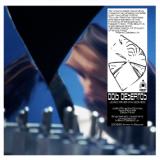
Recorded in Los Angeles over the course of a single day at a studio in the Eagle Rock neighborhood, Dois Desertos was produced by Mario Caldato Jr. and emerged without a predetermined plan or schedule. The project took shape during Portuguese musician João Pimenta Gomes' stay in Los Angeles with his family. During that time, through Rodrigo Amarante, João met Mario and Samantha Caldato, as well as musicians Abe Rounds (drums and percussion) and Gabe Noel (bass and cello). From those encounters, the album began to unfold organically.
Working from simple scores—some containing little more than chord progressions—the sessions left plenty of room for improvisation. Every performance was captured live, in a single take, with no overdubs. The mixing process, also carried out live by Mario Caldato Jr., followed the same philosophy: effects and level adjustments were performed in real time and printed directly to the final two-track master.
At the heart of the album's sound is the Cristal Baschet, a rare instrument played by rubbing glass rods with the hands, causing metal resonators to vibrate and produce an ethereal, resonant tone. João describes its sound as "a trace, almost like a shadow." Rather than taking the lead, the instrument serves as a textural foundation, while the bass and cello carry the melodic lines. Some of these melodies are original compositions, while others draw from traditional Portuguese fado, reimagined through an open and exploratory approach.
The album has a dreamlike atmosphere, reflecting the perspective of someone experiencing Los Angeles from the outside—not in a rush to belong, but fully receptive to the city's unique energy. Two films helped shape this imaginary landscape: Model Shop (Jacques Demy, 1969), in which the French filmmaker uses Los Angeles as a pretext to simply observe and inhabit the city, and Thom Andersen's Los Angeles Plays Itself. The result is Dois Desertos, an album that, in João's own words, "could never have been made anywhere else."
With Dois Desertos, João Pimenta Gomes invites listeners into a deeply immersive experience, revealing a more exploratory side of his artistic practice while reinforcing Amor in Sound's commitment to releasing original works that engage with the many languages of contemporary music.
Montréal-based sound artist Steve Bates expands his strategies and stylistic influences on An Infinite Antenna, his second solo album for Constellation, giving freer reign to melodic components and textural dynamics: leftfield synth work, deconstructed drum machine, pointillist electric guitar, and radiostatic blur are all part of the new brew swirling around his bruitist signal-bending and field-recording sensibility. Arguably a more ambient album than his acclaimed 2022 Constellation debut, An Infinite Antenna is at the same time more densely packed with ideas, dynamics, evocations and earworms. Coming out of the anarcho-punk scene of the Canadian Prairies in the 1990s, Bates founded Winnipeg's experimental sound festival Send + Receive in 1998 before moving to Montréal to become Sound Coordinator at Hexagram (Concordia University), delving further into sonic research and theory, tape-based composition, and installation work. Alongside the curatorial arc of his own sound art label The Dim Coast, Bates released several solo and collaborative albums on ORAL_records leading up to All The Things That Happen, the 2022 Constellation debut praised by Boomkat for its "grittily iridescent ambient billow rendering maximalist panoramas" and by Backseat Mafia as "extraordinary soundscapes of unstable, destructive cacophony and tender calm, echoes of the threat of power." Where that album was noisier and single-minded, made with the self-imposed limit of a Casio SK-1, Bates plays more widely with instrumentation and atmospheres on An Infinite Antenna, also drawing on his post-hardcore roots in seeking a sort of track-by-track concision nonetheless driven by the album's coherence as a seamless work. "I was trying to set durations I associate with punk rather than the longer, sprawling music coming from more ambient styles (that I very much love), and while I wasn't able to quite pare it down to Minutemen durations, I had that reduction to essential elements as a sort of whisper over my shoulder." Incorporating source recordings made throughout 2023-2025, including at artist residencies and site-specific sound installation visits in Bosnia and Herzegovina (the album's cover photo was taken in Sarajevo), Austria, Greece, and Saskatchewan, An Infinite Antenna combines Bates' "idea of slowly scanning a radio dial" with a soundworld of recurring timbral and textural touchstones that forge an integrated whole. The album's 12 tracks work effectively as stand-alone pieces, replete with shifting undercurrents, buried melody, and stuttering kinetics, and as a sequential flow where the brief interstitial silences between them are like short pauses to flip the next page in a sketchbook of perspectival studies of a wide but singular tableau. The glistening atonal synth expressionism of opener 'Pink pink pink pink_pink pink' drifts gently toward submerged ambience, darkened by the noised rumble and static interference of 'Green as a ghost', which introduces broken beats and piano chords in its denouement. Tracks like 'Battles and sieges and street trees' and 'Easier sad than done' work the foundations of low-end field-recording resonance, but dappled with lovely melodic droplets of treated guitar and synth. 'Waste, songs of the world' and 'Disaster loans' are among the album's most explicit stylistic references to posthardcore, with distorted ambient bass and gently abrasive drum sampling. Closing track 'Swamps and factories,' the album's longest piece, is perhaps most reminiscent of Bates' previous record with its sustained dissonant glimmer-drone, but the journey An Infinite Antenna traces to get there is Bates at his most dynamic, diverse, distinctive, and engaging. Thanks for listening
Release description Chesster lands on Rutilance Recordings with a four-track EP rooted in classic deep house. Blending old-school influences with a modern touch, the project captures the essence of his sound: groove-led, warm, and true to its foundations. Originally from Italy and now based in Los Angeles, Chesster has been building strong momentum across the global house scene, with a run of standout releases and defining moments over the past year. This EP marks an important step in that journey - not only as his first on the label, but also as a more personal statement. After a run of highenergy, peak-time records, the project sees him step into a deeper, more refined lane. The EP also features a special contribution from Rutilance boss DJ Steaw, adding an extra layer of character and tying it closely to the label’s identity.
After his contribution to Tangled Waves Vol. 2 with “Grit Wave”, Little Sea returns to Bosconi for his first solo EP.
A producer, vinyl collector and lifelong student of electronic music, Little Sea has spent over two decades refining a sound shaped by the Italian progressive and techno scene of the ’90s, filtered through a contemporary approach. In 2025 he launched his own imprint, Sea Horse Records, followed by the Mental Tools Series.
Ritmo Divino moves across progressive house, breaks and trance without leaning on nostalgia, drawing naturally from a musical language that still feels relevant today.
“Minx” opens the record with rolling grooves, hypnotic sequences and a powerful electro-tinged breakdown. “Vital” shifts into broken rhythms, combining UK-inspired breaks with spacious pads and uplifting progressive melodies.
On the flip, “Shields” explores darker territory through restrained percussion, deep basslines and whispered vocal textures, before the title track “Ritmo Divino” closes the EP with a warm, emotional take on late-’90s progressive—melodic, expansive and perfectly suited to the final moments of a set.
Four tracks that bridge classic influences and contemporary production, confirming Little Sea as a distinctive new voice within the Bosconi catalogue.
out of Stock
Last delivered 19 days ago available to reorder, subject to availability
Some recordings herald the future in ways that are impossible to see in real time. Teodros Makonnen With His Organ (ቴዎድሮስ መኮንን ከኦርጋኑ ጋር), by the artist Teodros Makonnen, also known as Teddy Mak, is one of those. Today, electronic sounds, synthesizers, and digital production are taken for granted in Ethiopian music, but in the early 1980s, they were novelties that polarized opinion. Even to this day, the story of Teodros Makonnen’s legacy has never been properly told. He played a decisive role in defining the sound of the digital era of Ethiopian music that emerged in the 1980s and beyond, both as a keyboard player and as a producer, songwriter, performer, and sound designer.
Ethiopian music was at a crossroads in the early 1980s. Much like music in the rest of the world, technology and automation heralded either a quantum leap in musical development or the annihilation of musicianship, depending on who you’d ask. The changes were incremental nonetheless, but with the benefit of hindsight one can clearly see that the changes meant different things in different contexts. Drum machines and electric organs came to replace many hotel bands because, all of a sudden, one musician could control drums, melody, and accompaniment. Teodros was one of the first musicians in Ethiopia to explore the possibilities this opened up.
Teodros’ father, Captain Makonnen Beri, was a chief pilot at Ethiopian Airlines and a music enthusiast at that. This would prove important to his development, as Makonnen brought back a piano from Germany, which would lead to the first steps in Teodros’ long musical career. Captain Makonnen’s work as Head of Flight Operations and as a pilot exposed him to the wider world that was far from commonplace for most Ethiopians. In a house where music captivated the whole family, the piano gave Teodros’ talent an outlet. Not only was a piano at home rare in Ethiopian households, his father also brought an Indian teacher to their home to teach Teodros and his brother, Captain Samuel Makonnen, music theory (solfeggio or ear training) and piano. Teodros and his youngest brother, the late great Dereje, a member of both the legendary Ibex Band and the Ethiopian reggae group Dallol, took up music from that point onward, with Teodros beginning to develop his proficiency at the age of eight. His father encouraged him to practice tirelessly at home, and Teodros later received musical schooling at the German School in Addis Ababa. His obvious talent led to studies and formal education at the Yared School of Music, followed by continued studies in American jazz at Northern Virginia Community College in Virginia. Teodros cut his teeth professionally in his mid-teens, not only as a keyboardist, but also as an arranger for the Wabi Shebelle and Dahlak bands in the 1970s. He mastered electronic sequencing early, rising to prominence through the midnight recording sessions held during the military curfew. The pressures imposed by the curfew required precise and disciplined recordings, and Teodros delivered just that. This, in turn, led to collaborations with iconic artists such as Mulatu Astatke, Aster Aweke, Menelik Wossenachew, Tilahun Gessesse, Mahmoud Ahmed, and Alemayehu Eshete. In those days, he sat in as a keyboardist with the Dahlak Band when Dawit Yifru took a hiatus to study in Russia, and also with the Ethiostar Band. He secured a residency at the Wabi Shebelle Hotel with the Shebele Band, together with Zelalem Tadese (drums), later succeeded by Elias Bekele, Mulugeta Hailu (bass), Teferi ‘Bibisha’ Mengesha (guitar), Kumelachew G/Selassie (trumpet), and Teshome Deneke (saxophone). A friendly competition developed between the bands associated with the Ras Hotel (the Ibex Band), Ghion Hotel (the Dahlak Band), and Wabi Shebelle Hotel (the Shebele Band). The music scene at Wabi Shebelle saw teenagers commanding the spotlight in an industry otherwise dominated by musicians of an older generation. At the Wabi Shebelle Hotel, Teodros met a diplomat from Saudi Arabia and later visited him at his home in Addis Ababa, a meeting that had unexpected musical consequences. The man owned a Yamaha double-deck keyboard. That evening, they recorded Teodros Makonnen With His Organ (ቴዎድሮስ መኮንን ከኦርጋኑ ጋር) in one take. This recording, a cornerstone in the early digital sound of Ethiopian music, came about almost by chance, simply because Teodros got the opportunity. Traditional Ethiopian songs were cast in a wholly electronic style. Once freed from backing duties, Teodros’ keyboards could explore dreamlike soundscapes that took Ethiopian music in new directions. Even though the cassette contained well-known Ethiopian songs, they were given highly original arrangements, performed on an electric organ with drum machine backing and rhythm patterns that left the listener with suggestive, lingering sounds. “Libesh Kabashen” (also known as “Anchi Bale Game”) and “Odu Gol Golesa” wrap you in the very stuff that dreams are made of. Originally released on cassette only, this recording exudes a mystique that surpasses even some of the most obscure Ethiopian recordings of the day. It remained more or less unknown outside of Ethiopia until now. Some of the tracks, like “Addis Fikir,” are permeated with an almost naive buoyancy, free-floating sounds that lost contact with the ground the moment they were conceived. Others, like “Meche New Hageren Yemayew” and “Lelitu Alnega Alegn,” carry a moodier, quirkier timbre, with pulsating rhythms in the background. Yet even the darker pieces contain an unmistakable wave, something essentially Ethiopian. If most recordings of Teodros’s contemporaries at the time were teeming with atmosphere, his songs seem instead at home in the stratosphere, almost ethereal. Some of the music here could be filed under “lullabies,” were it not for the recurring, almost brooding feeling that engulfs the listener on the aforementioned tracks. You could easily be forgiven for drifting into a blissful haze as the music washes over you.
Up to the advent of electronic music production, Ethiopia was totally dominated by big bands on the one hand, and small groups on the other. The former were tied to large institutions such as the military, the latter emerged from the entertainment industry, in hotel bars and nightclubs. These groups were commercially driven, and bands ultimately had to foster a mercenary approach to employment, albeit not to the passion for music. In the light of this, Teodros’ musical legacy can be seen in two ways. On the one hand, he is a key player in Ethiopian music from the 1970s onwards, leaving an indelible mark through hundreds of compositions and arrangements, including soundtracks for numerous documentary films and advertisements for different companies. On the other hand, the way he and others employed electronics brought Ethiopian music onto a fork in the road.
The replacement of traditional instruments with electronic equipment was seen as impending doom by some. Others, like Teodros, saw new avenues for performance, production, and creativity. Just as later producers like Abegasu Shiota of Admas, Teodros was a trailblazer who opened paths that it took Ethiopian music as a whole more than a decade to rush into. The hotel scene had already been pushed toward electronic music by financial necessity and cost-cutting. Today’s revived global interest in Ethiopian music from the seventies and eighties, alongside a broader resurgence, has changed the reasons for using digital means of music production. They have become tools for musical dreaming. This is where the dreaming began.
out of Stock
Last delivered 9 days ago available to reorder, subject to availability
Jazz, Soul, Highlife and spoken reflection co-exist without apology on 13 new songs co-produced with Benjamin James and featuring his group The Cavemen as well as saxophonist Lakecia Benjamin. For the Grammy-nominated vocalist/songwriter Somi, each new album is an act of place-making. The catalogue of the Rwandan/Ugandan-American artist reads like a map of migration and memory, with records rooted in Lagos, in Harlem, and in the spirit and political inheritance of Miriam Makeba. 'What Does It Take To Bloom? Is her ninth album overall and her first collection of original songs in six years. Musically, it also represents a new chapter in collaboration. During sessions in Lagos, Somi connected with Benjamin James, whose partnership would become pivotal. As one-half of the Nigerian duo The Cavemen., James brings a contemporary approach to heritage-centred sound. The collaboration proved so seamless that Somi invited him to co-produce the full album, with moods and rhythms ranging from upbeat Highlife-Soul-Fusion ('Aiwah'), via jazzy statements ('Throw Something'), to soulful reflection ('What Does It Take To Bloom?').
out of Stock
Last delivered 23 days ago available to reorder, subject to availability
Two of the most prolific remixers in the world of Disco,Dave 'Love' Lee and John Moraleshave teamed up for one of their biggest projects to date - 'Mixed To The Maxxx'. After gaining access from the legendary original artists, the pair take the multi-track tapes of many classic Disco, Funk & Soul tracks and re-work them...to the Maxxx!
Where Remixed With Love stands as Dave Lee's own gold-standard body of work, Mixed To The Maxxx sets that legacy alongside Morales' own decades-deep M+M body of work: Lee brings his musically dense, groove-first touch to the likes of Harold Melvin, Syreeta, Lenny Williams and The Brand New Heavies, while Morales applies his extended, dancefloor-built M+M treatment and crushes the likes of Barry White, The Temptations and Loleatta Holloway, plus Dennis Coffey's breakbeat classic "Scorpio" for the DJs and collectors alike. Both work from original tapes, surfacing parts barely audible or entirely unheard in the source mixes, and both know when to let a classic breathe rather than bury it under modern production. It's a pairing a long time in the making. Lee and Morales first talked about working together around a decade ago, and getting Mixed To The Maxxx off the ground took five years of patient work: tracking down usable stems, securing approvals, and navigating a licensing landscape where much of the best material is now tied up with major labels increasingly cautious about clearing remixes. What's landed here is the product of that graft as much as the pair's shared ear for a great record, the sound of two people who know exactly what they're looking for and are willing to put in the time to find it.
A double 12" sampler in summer 2025 previewed the record's range. A bass-driven overhaul ofThe Brothers Johnson's "The Real Thing" and an extended mix of Philly legends Bell & James' "Livin' It Up (Friday Night)" showcased Lee's side, while an anthemic take on Inner Life's "Ain't No Mountain High Enough" and a tempo-lifted Light Of The World"London Town" flew the flag for Morales. Both drew strong early support ahead of the full LP.
Children of Zeus return with their third studio album ‘As The World Burns…’
Five years on from their highly-acclaimed sophomore album ‘Balance’, Manchester’s kings of hip hop soul, Tyler Daley and Konny Kon, bring us a brand new 16-track opus.
Sonically the duo continue their story where they left off; crafting an amalgamation of street soul, alternative r&b and boom bap hip hop, with a sprinkle of flavours taken from their original multi-genre pirate radio influences, and a dash of forward-thinking new sounds, ensuring all tracks are destined to become future classics.
The features are sparing but powerful, enlisting the talents of revered UK rapper Knucks (‘Before We Drown’), Colorado-native Young Old Soul (‘Dopamine’), MCR family K S R (‘Do You Want To Get High’, & Australian/Mauritian up & comer Anieszka (‘Water & Vibes’).
As with previous projects, this album is largely produced by the duo themselves, though there are guest productions from previous collaborators too, including Grammy Award-winner Beat Butcha, Grammy-nominated Teo, and broken beat pioneer K15, along with an assortment of new players making moves in the underground neo-soul & beats circuit.
Conceptually, this project continues on with the story to date. An eternal search for sunsets and soulfood, as a respite to the anxieties of the modern world; personally, professionally and globally. Assertive swagger is matched with brutal but sincere candidity. As ever, it encapsulates the rough with the smooth, with reflections on where they’ve been, where they’re at and where they’re headed. There’s no preaching to be found here; just an acceptance of things as they are, an embrace of the environment and people they were nurtured by, and a celebration of some of the finer things in life; slow jams, weed & rum, water & vibes. Raps for listeners, blunt heads, fly ladies and prisoners. All packaged together as another perfect sonic love letter to sound system culture. 50 minutes of big people music.
Since the release of their anthemic debut single ‘Still Standing’ a decade ago, to the subsequent EP ‘The Story So Far’, and their critically-lauded debut album ‘Travel Light’, the duo have received numerous accolades, including nominations for AIM Awards & Worldwide Awards both, along with tons of ‘Album of the Year’ nods care of Clash Magazine, Bandcamp, Complex, Wordplay and many more. This along with huge swathes of support from DJs, radio stations, press outlets, tastemakers, luminaries & fellow artists across the globe.
Children of Zeus have performed sessions for COLORS, Soulection (Apple Music), DJ AG, Boiler Room, BBC 6 Music and at the infamous Maida Vale studios for BBC 1Xtra as well as touring across Europe, Australia and South Africa. This is in addition to collaborating & touring with Mercury Award Winner’s Ezra Collective, including a Wembley Arena show. Other collaborations over the years have included Shy FX, Juls, Goldie, Black Milk, Kofi Stone and the late great Lenzman.
From the Broke ’n’ English / Hoodman-era, to the present day, Children of Zeus have been omnipresent in the fabric of British black music. Proud ambassadors of Manchester music, and of UK soul, it really is “Zeus to the world”.
Children of Zeus have been adorned with plenty of flowers over their career. The unbridled quality and poignance of the music and the message on display throughout this project will see the algorithmic needle move some more. It’s undoubtedly set to be a Zeus Summer. As the world burns…
Available on all digital platforms and physical formats, Friday September 4th 2026.
t 07: Do You Want To Get High? (feat. K S R ) - Children of Zeus03:26
t 07: Do You Want To Get High? (feat. [ K S R ]) - Children of Zeus03:26
[t] 07: Do You Want To Get High? (feat. [ K S R ]) - Children of Zeus03:26
[g] B3 | Do You Want To Get High? (feat [ K S R ]) - Children of Zeus03:26
out of Stock
Last delivered 8 days ago available to reorder, subject to availability
je prie pour que la goutte ne tombe pas
(I pray that the drop does not fall) is the first international release by Japanese trio Chi To Shizuku. While they have released five albums and a 7” in Japan, their spectral, haunted rock songs haven’t yet reached a much wider audience overseas. With this album, then, a live recording taken at Koenji HIGH, Suginami, Tokyo on 23rd November 2021, the unique, quartz-like character of Chi To Shizuku’s music is writ large, the bleak bliss of their songs carved onto twelve-inch vinyl.
Perhaps the best-known member of Chi To Shizuku, at least for audiences with an ear turned to Japanese psychedelia, is drummer Takahashi Ikuro, known for his membership of almost every group worth a damn from that scene – Fushitsusha, Nagisa Ni Te, Ché-SHIZU, Kousokuya, High Rise, Maher Shalal Hash Baz, LSD March, the list goes on. But the core of Chi To Shizuku’s music is the collaboration between vocalist, bassist and lyricist Morikawa Seiichirou, and guitarist and arranger Yamagiwa Hideki. Morikawa is a member of long-running punk/goth group Z.O.A., and has also played with YBO , Zzzoo, and as collaborator with Takeshi and Atsuo of Boris in A/N; he’s also recently been performing with Mitsuru Tabata. Yamagiwa’s history takes in stints with Katsurei and Cock C’ Nell, and he also recently guested with la scene 裸身.
All this contextual information does relatively little, though, to prepare you for the unique vibration of Chi To Shizuku’s lustrous songs. They shimmer in the same half-light, perhaps, as Shizuka and the quieter moments of LSD March, sharing a similar poise and classicism, and there’s a tenderness and wracked poetry to Morikawa’s voice that reminds of the emotional intensities both of traditional Japanese folk, and of British folk music: on “Musuu No Nemuri No Naka De Kumo Wo Tukamu”, the combination of his singing, backed with gorgeously plangent guitar, reminds of no-one so much as it does The Pentangle or Spriguns Of Tolgus. Chi To Shizuku’s love for the ballad as form gifts their music an archaic, sometimes arcane resonance, and from what you can hear on this album, it’s clear they’re in love with graceful melancholy.
But this is not a folk album, by any means; it just shivers with the same eternal spirit. There are also hints of prog rock, and you can catch some passages of scratchy, distended free rock, on the extended spirit invocation of “Nanhito Hanhito”. je prie pour que la goutte ne tombe pas is an extraordinary album, a melancholy surprise, that reminds dedicated listeners of the seemingly bottomless well of great music to be found via the Japanese underground in its many forms. Perhaps Michel Henritzi says it best, though, in his liner notes, when he writes, “Chi To Shizuku’s music reminds us that our life is a dream that lasts only a season, and that oblivion will follow.”
Recorded at Koenji High Suginami, Tokyo, 23 November 2021
Mix & Mastering: Taku Unami, photography : Noriko Akiyama
Liner notes by Jon Dale Printed by Alan Sherry
In the ever-evolving landscape of the underground music scene, few bands have made an impact quite like Selofan, an immensely talented duo of Joanna Pavlidou and Dimitris Pavlidis, has carved a niche for themselves within the international pantheon of darkwave, post-punk, and '80s synthpop, blending these influences to create a sound uniquely their own. Their journey, marked by a commitment to artistic integrity and evolution, has taken them from the cozy confines of local venues to the grand stages of international festivals, earning them a dedicated following and critical acclaim along the way. Their sixth album, Partners in Hell, released in October 2020, navigated the band through unprecedented times, testing their adaptability and resilience. Despite the hurdles to performing live and the global pandemic's challenges, Selofan emerged stronger, embarking on international tours with a newfound appreciation and connection with their global audience, during this period of introspection and isolation, Joanna Pavlidou embarked on a new venture, GIOVANNA, released under Selofan’s house label, Fabrika Records. GIOVANNA, which places Pavlidou at the helm of vocal and lyrical composition, represents a full on foray into synth-pop. showcasing a different facet of her artistic identity, with lyrics entirely in Greek. In 2023, Selofan hit the circuit hard, lighting up revered festivals with their presence. They stood shoulder to shoulder with heavy hitters like Molchat Doma and Lebanon Hanover at Grey Scale and performed with with the likes of The Sisters of Mercy, VNV Nation, and She Past Away at the Death Disco fest in their hometown of Athens. With each album they have released Selofan made significant strides in their evolution, deepening their engagement with their art. And their forthcoming seventh full length studio release, Animal Mentality, is poised to be their most compelling work yet. Animal Mentality unfolds as a labyrinthine journey through the elemental aspects of human emotion and experience, set against the backdrop of Selofan's signature darkwave sound. Each track on the album delves into different facets of the human condition, from the depths of desire to the pangs of isolation, encapsulating the duo's profound understanding of the intricate spectrum of human emotion and subjective experiences. The album kicks off with "Sticky Fingers," a track that melds cinematic scope with a haunting storyline, reminiscent of Jean-Michel Jarre's icy synths and a lyrical nod to Joy Division. This opening salvo revisits the tragic allure of classic car accident songs, weaving a tale of joy turned to sorrow amidst the snowy Alps. "Love's Secret Game" delves into the depths of forbidden desire, with vocals that echo the melancholy timbre of Xmal Deutschland, Lebanon Hanover, and Nico. It's a tale of passion and ephemeral connection, promising an enduring presence despite the inevitable fracture of time and distance. In "Lucille," sung by Dimitris Pavlidis, the plot is ensnared in the machinations of a tempestuous affair, with gothic undertones evoking the dramatic soundscapes of Ultravox and Clan of Xymox. The lyrics are steeped in danger and desire - a dance with the shadows. "Sacrifice Me" plunges into the abyss of despair, driven by a Bauhaus-esque bassline. It's a plea for release from the chains of alienation, a yearning for a final gesture of solace in the face of overwhelming darkness. "Bluebirds" offers a poignant reflection on solitude, with the fleeting imagery of bluebirds symbolizing the elusive quest for happiness. The song serves as a meditation on the internal struggle to maintain hope in a world shaded by sorrow. The narrative shifts with "Glassplitter," where German lyrics paint a portrait of deceptive allure and toxic entanglement. We are confronted with irresistible danger, masked by a veneer of beauty. "Ignoranz" continues the exploration in German, pondering the universality of misunderstanding. It's a reflection on the subjective nature of truth and the shared human experience of ignorance. "Behind My Eyelids" closes the odyssey, a contemplation on melancholy and metamorphosis. The phoenix rises from the ashes of betrayal to the brighter realm of renewal - a beautiful homage to the resilience of the human spirit amidst the often harrowing cycles of life. More than just an album, Animal Mentality is a milestone in Selofan's career, marking a decade of musical innovation and growth. It's a testament to their enduring spirit and a bold step into new realms of artistic expression. As Selofan continues to evolve, they remain at the forefront of their genre, pushing boundaries and exploring the depths of the human psyche through their haunting melodies and poignant lyrics.
Forest Swords' debut album 'Engravings' is back in print on vinyl and CD for the first time in years, newly remastered by Rashad Becker with previously unheard bonus tracks exclusive to this edition.
Created by electronic producer and composer Matthew Barnes, and originally released via Tri Angle Records, 'Engravings' received instant acclaim from the likes of Resident Advisor, Pitchfork, The Guardian and saw Barnes take his hypnotic live show across festivals like Sonar, Glastonbury, Unsound and Le Guess Who.
While much of British electronica is defined by its inner cities, 'Engravings' was recorded in Barnes' hometown on the banks of an ancient river in Merseyside, the album's earthy, organic soundscape reflected the landscape and climate: all silt and sandstone, woodlands and wind, with the ghosts of Liverpool's pop music and clubbing history echoing in the near distance.
The album was a prototype for a sonic vocabulary Barnes has expanded on over the next few years: in critically acclaimed studio albums ('Compassion' and 'Bolted' via Ninja Tune), collaborations with Massive Attack and Neneh Cherry, remixes for the likes of Bjork, as well as commissions for video games, ballet and film scores - of which he has carved a career as an in-demand composer and sound designer.
'Engravings' is a snapshot of an artist confidently defining their own language: a piece of work that distills influences like dub, ambient, rave, post-rock and psychedelia into an ancient-futurist musical vision that feels timeless and vital.
Continuing in its series of Yoko Ono reissues, Secretly Canadian has announced that Ono’s seminal 1982 album It’s Alright (I See Rainbows) will be released August 28, 2026, in expanded CD and digital versions, and on vinyl for the first time in more than forty years, with expanded and enhanced artwork. Influenced equally by 1960s girl group vocals and 1980s synthesizer experimentation, It's Alright (I See Rainbows) is an album of “adventurous… lush… committed and convincing avant-gardism” (Rolling Stone). As Ono said in her 1992 Onobox liner notes, “It was ’82 and it seemed as though I was finally in sync with the world.” Vacillating from a widow’s never-truly-over grief, to the necessary uplift for an artist and mother to continue her life’s missions, tracks like “Loneliness” and “Spec of Dust” make way for poptimism via “Let the Tears Dry,” and title track “It’s Alright.” As Ono said of the album in 1983, “It’s like my diary that I went through… and I’m just saying, hey, I’ve got the same kind of emotions that you’ve probably got too, and here I am saying hello… Around December 8th or whatever, I was feeling really heavy and feeling sort of down, you know… and then, side two, it’s all right… It was Sean Lennon who says, ‘Wake up, wake up, mommy.’ Like an angel that came and said, ‘Wake up!’… Wake up and dream love, and let the tears dry and I see rainbows. And sort of I’m saying all that. In result of Sean waking me up, see?” Lennon, speaking of his mother in a more recent interview with NPR in 2025, “She would say that energy is just energy, so you can turn it into anything you like. And she always said that she would take that negative energy and turn it into something productive and creative… It never stopped her from creating and putting herself out there, and I really think that it paid off… You never know how long it'll take for people to appreciate you if you just kind of hang on and don't give up.”
Coloured Vinyl. Harsh Reality - the fourth studio album by Seattle's The Drowns - is an unapologetically political punk record, coming this September from Pirates Press Records. Recorded at The Blasting Room in Fort Collins, CO by punk rock legend Bill Stevenson (Descendents, Black Flag) and mixed by Jason Livermore (Teenage Bottlerocket), this collection of 13 new songs fuses everything fans have loved about the band's previous sonic experimentation and focuses it into laser-tight melodic songwriting firmly rooted in punk rock, but with the potential to reach listeners from all walks of life. Singer-guitarist Rev Peters, singer-bassist Andy Wylie, and drummer Jake Margolis largely bashed out the tracks themselves, with the exception of additional guitar work on "Vengeance" by Zach Blair (Rise Against, Only Crime, GWAR), and a touch of accordion on "3rd & Pike" courtesy of Matt Hensley (A-100s, Flogging Molly). While the title of lead single "Relentless" could easily refer to The Drowns' infamously non-stop touring regimen, it refers instead to something far more humanitarian: the crushing weight of capitalism on the working poor. The song acknowledges the toll it takes on one's mental health, struggling day in & day out with no breaks only to be left farther & farther behind. "I wish life would just give it a rest", laments Rev. The album contains its fair share of venom, however, like all great political punk in the tradition of The Clash or Stiff Little Fingers, the lyrics prioritize people over polemic, reaching out with compassion in an age where it is in distressingly short supply. "I'm sure that we could change it all if we only had a heart", implores Andy on "Have a Heart". This is life-affirming music for hard times, made for everyone that could sorely use it right now, and a record poised to give the band's hard-earned position as a fan-favorite in the global punk scene an even greater trajectory. For a band that has won over fans around the globe, record by record and show by show, it is a big statement, but simply put: Harsh Reality is The Drowns at the top of their game.
I’dgained some notoriety as a music producer and DJ but I hit a horrible case of writers block around 2018.
The problem I was finding was that I was trying to shoe horn every smart arsed clever dick musical reference I had into the music I was making, but the function of dance music is to make people dance, not to show people who broad your musical references are, so I was making pretty shitty music that landed in the middle and didn’t achieve either aim.
To tackle this I ended up committing to just trying to make the most expressive and wanky experimental stuff I could. I was immersed in club culture at the time so the whole enterprise started as a joke, hence the name “Bed Wetter”. However when I fully submitted to just naked exploration the really unexpected thing that happened was that I found myself unavoidably having to deal with a lot of my own bullshit. That bullshit turned into the “Billy Mill is Dead” album, which was essentially the sound of me excavating my own life and looking at how I felt about where I was from, where I was headed, my family, my history, my region and all of the things i have conflicting feelings about.
It was partially catharsis and also a bit of deprogramming around being able to call myself an artist after being raised to believe that wasn’t an option for me.
I self released Billy Mill is Dead in the months before the pandemic and it found it’s fair share of love in the places I hoped would connect with it, and just the right amount of being ignored by people who I’m pleased didn’t feel it. This all lead to me being emboldened enough to apply for an artist in residence position at a big regional opera house months later in the middle of lockdown.
My feeling was that if my DJ career was potentially over for the remainder of my lifetime then there was no harm in exploring this alternative method of expression to see where it could take me.
I submitted a ridiculously ambitious plan for what I would like to do as a project, and to my absolute shock I was selected for the position.
I was 40 years old and from a scarcity background so I had a potentially unique response to that kind of validation for the first time and what followed next was a process of me just coming back with bigger and more ridiculous ideas just to find out at whatstage they’d tell me to stop.
The thing is, nobody did. I got as far as suggesting writing a full symphony to be performed by an orchestra before my own nerve gave out and I decided that was probably as far as I should push things.
The problem with people giving you permission to do things is that you then need to go out and figure out how to do those things.
The biggest issue for me, beyond raising the money to pay for everything, was how does a person actually write a symphony?
I was introduced to Fiona Brice, a multi instrumentalist and orchestral arranger. She’s also a recording artist who releases on Bella Union. On top of that she’s a violinist who used to be part of the band Placebo and who used to appear regularly playing for other bands on things like Top of the Pops.
Not only was Fiona uniquely placed to not look down on the strange provenance of someone from an Acid House background wanting to write a symphony, but more to the point we really hit it off from day one.
Fiona coached me in the essentials of writing for an Orchestra, and then I went off and wrote the 8 movements.
I’d love to say I laboured for years over this bit, but it took about 2 weeks in total. I’d also love to say what I wrote was a complete symphony, but the version of this which is solely me feels like looking at something without your glasses on. The shape,feel and borders were all there, but the definition was absent. Fiona taught me the broad language of a symphony, but without her it would have lacked all intonation, nuance and detail. Where I had shaped ideas with a hammer, she brought out my meaning with precision using a scalpel.
I think the prodigiously quick turnaround for the music is as much proof of how conceptually and musically aligned Fiona and I are. I know we’re both incredibly proud of what we’ve created.
It took nearly 2 more years to stage the debut performance in what was potentially the most traumatic period of my life which saw me embroiled in an international crisis with my own family and the death of my father, all with the backdrop of COVID.
The work itself is inspired by the working class experience, but it’s also a comment on how we get to decide what we are and how we’re defined, and we get to choose what we do to prove these things.
The original recording was contractually impossible to ever share again, so we re-recorded it in a working men’s club with jobbing (albeit world class) players. In many ways it’s a record that feels like it shouldn’t exist, which is why we’re all so happy that it does.
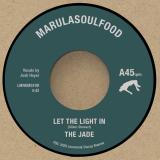
Lovemonk and Barcelona’s Marula Café bring back their Marula Soulfood 7" series with two standout tracks taken from The Jade’s debut album, "Love Harder". Behind The Jade is Oli Stewart, aka Casbah 73, leading a transatlantic ensemble of top-tier musicians equipped with heart and heat, bridging worlds while remaining firmly centered around home base Madrid.
‘Let The light In’ is a radiant burst of sunshine and a riotous cross-pollination of sounds. Nebraska’s Josh Hoyer delivers a powerhouse vocal performance, soaring over exuberant rhythms and fluid grooves that feel right at home in sweat-filled basement clubs or an open-air set as the sun dips low over the horizon. On the flip, ‘At The Queensboro’ is a beautiful jazz-funk instrumental that stretches out with elegance, giving its wonderful groove plenty of room to breathe. It was highlighted as one of BBC 6 Craig Charles’ favourite tracks of 2025.
Palace return with their most open-hearted collection yet, 'Ox', out September 18th. The announcement of the new album arrives alongside the release of its latest single, ‘Dream On’. Palace’s fifth album, Ox, finds beauty and wisdom in the most human of revelations: watching a child encounter music for the first time, feeling overcome by gratitude, or sensing that the possibilities ahead are endless The album arrives as Palace continue to thrive as an independent act. What began in 2016 as Palace Presents, a monthly takeover at The George Tavern in London, has evolved into a worldwide community. This autumn, the band will embark on a major North American run, following a sold-out homecoming show at London’s iconic Somerset House this summer. 'Ox' will be available on CD and in four LP formats including 180g heavyweight black vinyl from the official store and a black cherry vinyl available from independent record stores.
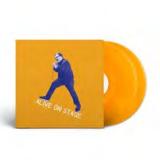
In einer Zeit, wo alles immer mehr Digital und von KI dominiert wird, setzt Angelo Kelly auf Authentizität
und zwar auf allen Ebenen.
Die Songs auf dem neuen Album „ALIVE“ wurden komplett von ihm geschrieben, arrangiert und produziert. Wer sich die Texte der Lieder anschaut wird schnell merken, dass sich einiges in seinem Leben
verändert hat. Er öffnet sich in seinen Songs mehr, als er es jemals in einem Interview tun würde. Die Art,
wie dieses Album produziert wurde, könnte auch nicht authentischer sein!
AK: „Mir war es wichtig das Album komplett analog auf einer Bandmaschine aufzunehmen ganz ohne
Computer. Meine Band und ich waren dabei alle im gleichen Aufnahmeraum und haben meine neuen
Songs gemeinsam in „One Takes” aufgenommen. Nichts wurde korrigiert und es gab auch keine Overdubs
/ Zusatzaufnahmen! So sind die Aufnahmen sicherlich nicht perfekt,
und im Radio werden sie höchstwahrscheinlich nicht laufen, aber das ist die einzige Art Musik zu machen,
die mich heute noch reizt und interessiert.“ Das Album wurde dann auch komplett analog auf Band gemischt. Und für alle, die sich dieses Werk auf Vinyl holen: Das Mastering wurde im letzten Schritt von Chris
Bellman analog vollendet.
Remastered limited edition double vinyl with double-sided screenprinted poster-cover (sleeve folds out to be one huge poster). A real collectors item!
When Off Off came out around June 1984, one couldn’t speak of an independent music scene in Portugal. Warm Records’ vague existence didn’t have any impact and Dansa do Som’s inaugural release appeared only in December. 10 years after the revolution, after two IMF interventions, a lot of political instability (not to say turmoil, in the first couple of years) and the natural excesses of a sudden burst of freedom, the Portuguese consumer had more choices but a generally poor standard of living. There was no entrepreneurial culture and serious second thoughts about investing private money in risky ventures.
After many complaints about the whole music scene (institutions, critics and record label executives, popular and classical music alike), something that would continue well beyond the end of the decade, Telectu decided to finance, record, produce, release and sell an album with complete independence from outside structures. Their karmic reward was profit. According to Vítor Rua, Off Off was the only album fully payed by the duo and the only one that really payed off. Not an easy accomplishment for a double LP housed in a large (also double-sided) screenprint with complicated cuts and folds. The artwork was conceived by António Palolo, a friend and multidisciplinary artist. It was based on a collage of heavily saturated and xeroxed polaroids framed in shocking pink and green. Palolo was considered the third member of Telectu, regularly producing slides, video and other visual support for their shows. The inspiration for the type of cover came from GRM’s Gramme series.
Off Off is divided in four distinct sides, each one corresponding to a “theme” or “function” related to Telectu’s manifold artistic interests and interactions. The titles are also gateways to influences and a small portion of Portuguese cultural life:
- Side 1 / “Diagonale” is dedicated to Egídio Álvaro, art critic and gallery director (he opened Diagonale in Paris). Performance art was arguably his main artistic concern over the years, so the music on this side is suggested for use by one or more performers in live or playback situations. The three tracks segue into each other, linked by a synth arpeggio much in the same way as Telectu’s previous “Belzebu” álbum (1983);
- Side 2 / “Anarké” is dedicated to the composer Filipe Pires, one of Jorge Lima Barreto’s recurring invocations when asked about worthwhile contemporary music in Portugal. It is subtitled “concert music”, proposing «a new form of listening». Three tracks also, and these are separated by “clap interludes”, which basically consisted in the following: JLB and VR each had a pair of headphones on, and they clapped their hands according to the rhythm of the music each one was listening. Both musicians were interacting with a different Steve Reich piece: Vítor with “Music for Mallet Instruments”, Jorge with “Six Pianos”. The result is disjointed clapping, an awkwardly deliberate celebration of their own music. Telectu applauded themselves.
- Side 3 / “Cornucópia” is subtitled “music for theatre” and dedicated to Luís Miguel Cintra and Luís Lima Barreto (JLB’s brother), both connected to the Cornucópia theatre company. The side consists of several short pieces previously used as interludes in the Cornucópia staging of “Mariana Espera Casamento” (1983). Field recordings, mood pieces, ambience and a numeric poem (“Soneto Soma 14x”, by E.M. de Melo e Castro) read by João Perry, a quite well-known stage actor. His voice is treated with a flanger effect;
- Side 4 / “Palolo” is “video music”. It’s a one-take mix recorded from cassette sources (Telectu studio experiences) and done live while watching António Palolo’s Om film (1978) projected on the living room wall. It’s a deep, immersive, quasi-mystical 20-minute piece perfectly suiting the meditative, abstract, fluid images created by Palolo by mixing paint and water inside a bathtub. One imagines the Cosmos, hardly suspecting the technique. The film is 90 minutes long, so the music on the LP is of course edited.
The six titles on sides 1 and 2 evoke demons, all of them with conflicting symbolism, since it varies from culture to culture, religion to religion. No explanation is given and Vítor Rua has no idea where this imagery comes from. During virtually the whole stretch of the 1980s, Jorge was the one in charge of titles and concepts, and Vítor didn’t bother too much even reading the liner notes :) In any case, when you synchronize the listening experience with the imagery, a powerful impression emerges, a feeling of being in the presence of these entities while placing yourself inside the sonic narrative.
Off Off is undoubtedly a seminal album in the history of electronic music, as much Heldon as Fripp & Eno, jazz and American minimalism, cosmic out-thereness, mantric miniatures. Telectu at the height of their powers, still very early on, delivering an album-manifesto advocating intermedia art and the fierce independence of Portuguese musicians «from the scum of capitalist music industry monopolies. It’s a path to follow, albeit one that requires enduring hardships and retaliation from music industry gangsters.» Despite a few journalists deemed «capable of being free», the media are «enslaved by the dominant and fascist imbecility of the speculators of light music.» Off Off is addressed to those journalists «and to an audience angry at the cultural misery imposed upon us ..., certain that this music will open new horizons of musical pleasure in the conception of Portuguese avant-garde music, and in the open consciousness of us all. OFF OFF repeats Freedom.»
Those two words are a direct lift from Alberto Arbasino’s 1968 book Off Off, the basis of which is a critical analysis of Theodor Adorno’s and Dwight MacDonald’s ideas concerning the stratification of culture in different levels (high, mid and low) and the pervasiveness of mass culture in the form of a culture industry. In very simplistic terms, and that is precisely the point that inspired Jorge, Arbasino argued that it was possible and desirable to effect a revolution from below, cultivating alternative circuits completely cut-off from what he termed the in-in reality. Telectu’s record was a deliberate demonstration that it could be done, displaying Freedom in the face of all the gatekeepers and other human obstacles.
Pioneering Ghanaian musician King Ayisobareturns September 4, 2026 with his forthcoming seventh album Pure Confusion, recorded and produced by On-U-Sound’s Adrian Sherwood.
Ayisoba is one of Ghana’s most distinctive musical voices. The world’s foremost player of the kologo - a homemade two-string lute fashioned from a calabash and covered in goatskin - he delivers fiercely political and socially observant songs using three different voices, including the voice of his grandfather that possessed him as a child. Sherwood meanwhile is the pioneering British producer and founder of On-U Sound whose hugely influential career has connected dub, post-punk, industrial, hip hop and experimental music through collaborations with artists including Lee “Scratch” Perry, Mark Stewart, Horace Andy, Sinéad O’Connor, Nine Inch Nails and Depeche Mode.
Ayisoba and Sherwood first collaborated during a BBC Radio 3 Late Junction session at Maida Vale in 2017, organised by Ayisoba’s long-time collaborator Arnold de Boer/Zea of The Ex. The pair immediately connected, and during the pandemic, when Adrian’s long-time African Head Charge collaborator Bonjo Iyabinghi Noah was in Ghana looking for musicians to collaborate with Sherwood suggested Ayisoba, who eventually featured on two tracks on African Head Charge’s 2023 album A Trip To Bolgatanga (Bolgantanga is the region Ayisoba is from). Ayisoba then returned to the UK in late 2024 and travelled to Sherwood’s Ramsgate studio where the pair laid down the songs that would become Pure Confusion: “All the songs were already in my head,” says Ayisoba. “This album is all recorded live, over one afternoon. Adrian only plays live, and I like that. And he works hard - he doesn’t sleep. I woke up in the night and he was still working.”
“In my role producing it, I just let it roll to make a good vibe,” says Sherwood. “We recorded it completely live, did some programming and processing on some tracks, using dub techniques live on the mixing desk and adding some slick touches. We wanted the colours on the album to swing off what Ayisoba was doing, so we invited some friends to participate. Doug Wimbish (Sugar Hill Gang) arrived from America and lent his services playing bass on a couple of tracks; the wonderful Ivan Hussey (Celloman) played bass, keyboards and cello - cello is not really featured on African recordings so we thought it would be really cool to try it. I'd been working with Alex White (Fat White Family/Primal Scream) on my album (The Collapse of Everything) and so he added sax to a few tracks and I brought Alan Glenn down especially - Alan was in Little Axe but also Nine Below Zero and played in the Yardbirds – to add some mouth organ; Mark Bandola added a bit of flavour with his Juno, Ayisoba’s long-time Ghanian collaborator Ayuune Sule added some percussion and vocals and Matt Smith did some programming.”
“King Ayisoba is quite amazing, so unique,” Sherwood continues. “He’s got his own handmade instrument and three different voices - when you’re listening you think it’s three different people. He’s a breath of fresh air, full of love for the music which he wants to share with everybody. Some tracks we kept very straight and others we experimented with - adding dubby psychedelic little touches to trip you out a bit. The added production we did at On-U has given it a shine while still keeping it vibrant, live and spontaneous. I’m really proud of this record”.
On Pure Confusion, Ayisoba documents the anxieties, contradictions and changing social realities of contemporary Ghana. “Land is a problem for everyone,” says Ayisoba of the opening track “Property”. “If you don’t build on your land they will take it away. Plenty corruption in Ghana, plenty confusion. They sell the land to two, three, four people and then everybody fights.”
Elsewhere Ayisoba explores illness, spirituality and social stigma on “Bemba”, warning against hiding sickness out of shame or fear of “bad juju”: “People hide their sickness and the sickness kills them.” “Tewigiloge” reflects on cultural difference and open-mindedness encountered through world travel: “We will tour the whole world and we will see many things we may not like or understand… your eyes will see, but don’t talk - you have to be open-minded.”
Spirituality runs deeply throughout the album. Ayisoba’s grandfather was a respected spiritual healer whose presence the musician says still guides him today. “The grandparents’ spirits are the ones you can contact,” he explains of the spiritual chant “Nkaase”. “This song talks about the forefathers.” The closing track “Leeda-Mampanga (It’s Not My Strength)” acts as a statement of humility and gratitude: “You have to be humble, even if you have talent. God gives you the power.”
For more than two decades, King Ayisoba has been one of Africa’s most distinctive musical innovators, transforming northern Ghanaian kologo traditions into a bold contemporary sound rooted in hypnotic rhythms, social commentary and spiritual intensity. Since the breakthrough success of 2006’s Modern Ghanaians, Ayisoba has built an international following through acclaimed albums, relentless touring and collaborations with artists including Lee “Scratch” Perry, Orlando Julius and African Head Charge. Performances at Roskilde, WOMAD, Le Guess Who? and the Barbican have further cemented his reputation as a singular live performer and cultural force.
Moving between lo-fi experimental songwriting, sparse post-punk textures and intimate recordings; Ukrainian artist Regina Collage’s new album ‘Horizont’ is a personal and honest document of rebuilding a life and creative voice in Bristol. The record holds space for themes of burnout, quiet shame, tenderness and the courage of staying emotionally open when the world feels unstable. Sung entirely in Ukrainian, ‘Horizont’ does not ask the listener to understand every word. Feeling carries the songs forward. Across bedroom recordings and borrowed studios, Regina moves between cloudy dissonance and stark minimal arrangements built around bass, fragments of guitar, and an exposed voice. The recordings hold onto their rough edges. Mistakes remain and imperfection becomes part of the story. “Music for me is about not being scared to be vulnerable,” Regina says. “Almost every song I have is about what it means to be open and emotional. I really do not think it is a weakness. I hope people can listen and feel welcome to take a break and just let their emotions exist.” The album takes its name from the Ukrainian word for “horizon,” that unreachable line where sky meets earth. For Regina, the horizon became a quiet metaphor for living with distance and uncertainty. Inspired by one of her collage artworks showing a figure lying in grass and staring toward that far line, the title track reflects a feeling of moving toward something that never quite comes closer. Even without understanding the lyrics, the song carries a slow sense of longing and suspended arrival. m‘Vpiznavaty’, by contrast, initially feels almost light. Beneath that surface is a candid portrait of burnout and depressive exhaustion. The song looks at those moments when even greeting friends feels overwhelming. It captures the quiet embarrassment of withdrawing from people you care about, and the slow recognition that sometimes stepping away is simply how you survive. Other songs reveal different sides of the same emotional landscape. ‘Weak’ strips everything back to bass, a hint of guitar, and a bare vocal. Written and recorded in a single instinctive session, the track circles around the idea that softness might be its own kind of strength. Repetitive and intentionally unpolished, it quietly sets the tone for the whole record. Running through ‘Horizont’ is the reality of Regina’s life between Ukraine and the UK. Her hometown Kharkiv continues to face attacks, and many of her friends remain on the front line.
The first new material from Krash Slaughta since last autumn finds our man dropping a tuff 45 featuring two dope ATCQ remixes. And what else to call that but ATCK a.k.a. ‘A Tribe Called Krash’! First up is Scenario which gets a gritty guitar-led new beat making it sound closer to something by Gravediggaz at their noisiest (or even DMX) than the Afro-centric jazz-hope vibes of Native Tongues. Over on the flip, a co-production with, and tribute to, the now sadly departed Del the Soul Condor, takes Low End Theory’s Buggin’ Out and sticks with the jazzy vibes but swaps Buggin’s minimal double-bass dominated shenanigans for something rather more Latinate and Bonita Applebum-esque. Naturally these are as cheeky as they come so it’s a strickly limited affair. Don’t sleep…
out of Stock
Last delivered 28 days ago available to reorder, subject to availability
Mr Bongo proudly presents a first-time worldwide vinyl and CD issue of Rubel’s debut album Pearl. Self-released on YouTube in 2013, the album quietly became a huge hit in Brazil with the lead single and accompanying video for ‘Quando Bate Aquela Saudade’ amassing over 85 million views to date. Pearl laid the foundations for Rubel’s path to greatness - a first glimpse into the brilliance of a modern-day troubadour and ever-evolving Brazilian artist who deftly mixes classic and contemporary influences. Fusing MPB, folk, pop, and indie, it charts Rubel at his purest and most personal.
The journey of Pearl begins with Rubel in his early 20’s studying film in Austin, Texas. Immersing himself in the city’s vibrant DIY music scene and surrounded by countless musicians who he shared a large house with, he set up a home studio with an assortment of rented gear and recorded the album without any expectations. It was inspired by an environment of youth, music and experimentation Rubel found himself within. The seven songs are an attempt to record and take with him a little of what he lived and learned whilst there. He uploaded the album to YouTube, didn’t think much of it and continued to pursue a career in film in LA. Over the next few years however it became a viral hit in Brazil, with a subsequent Brazil only vinyl and CD issue, drawing him both back to Rio and a trajectory to musical stardom.
out of Stock
Last delivered 29 days ago available to reorder, subject to availability
Oscar Later is the solo project of one half of Once Twice, formerly known as Parallels. The EP takes its premise from the 1967 Outer Space Treaty, which ruled that no nation could claim ownership of the Moon or any other celestial body. Across six tracks, that idea of ownership, distance and free imagination runs through the record, which combines breakbeat and shimmering synths with processed vocals and clips from vintage ads and obscure films.
"I wanted the record to feel like public-domain myths, commercial promises and space-age optimism all colliding," Oscar says, "blurring the line between memory and fantasy."
Opener 'Air Time for Andre' channels chopped-up breaks reminiscent of Skee Mask, combined with processed found audio. 'Wenlocked', named after the East London street where it was written, develops from a downtempo sketch into a heavier club track as the bassline builds, inspired by releases on Voam and Floating Points' live sets. 'It Never Made Sense' steps away from the dancefloor, built around a granulated Orion Sun vocal that, as Oscar puts it, "ties the track into quite a surreal space," leaning towards Burial, Overmono and Radiohead.
The title track, 'The Moon Belongs to You', runs a vocoded 90s ad through a detuned one-note synth. It's the track Oscar says "best encapsulates the intention of the EP as a whole: surreal, wacky and clubby." 'Yaya' keeps the energy up as a straight techno cut, its gated bassline locking in around a chopped vocal and pitched samples. Closer 'That's Quite A Lot Of Zeroes!' expands from a stripped-back Buchla line into something huge, driven by chopped samples and inspired by sci-fi scores like Dune and Annihilation.
The cover is designed by art director Will Millner with designer Josh Lowe, a homage to space food and 80s industrial design geared to survive life on the moon. It's available as a limited vacuum-packed 12" record.
The EP launches alongside a music video for 'It Never Made Sense', directed by Louis Mackay, telling the story of a group of kids who steal the moon for themselves.
out of Stock
Last delivered 29 days ago available to reorder, subject to availability
"Dance On", the latest single from Canopy continues the label's enthusiasm for re-issuing vintage Afro-tropical funk, reggae & disco, paired with modern remixes and remakes.
Two long out of print and previously un-reissued musical gems from Malian musician Nawari, get an overdue second life. Those gems being the eponymous "Dance On", an upbeat Afro-reggae-disco dancer originally self-released in 1987, and "Fanta Cini", originally released in 1989, which takes a deeper, tougher "proto-Afro-electro-funk" direction.
Sharing creative duties is Russian producer Valique, aka "V" from the best-selling "V's edits series, appearing on Canopy for the first time with a strong contribution to the label. Taking the title tune he reimagined & recreated it, building from Nawari's vocals and recording live horns, skanking guitars and percussion, blended with his signature classy production: crisp, warm, groovy & punchy.
Valique turns in 3 different mixes of Dance On, ranging from reggae disco, to cosmic Afro beat, timbale percussion workouts and beyond.
The release spans a range of moods, segueing between the past & present, organic and electronic, proving itself to be well suited for many environments, from the kitchen party to the bars, clubs & festivals of the world.
out of Stock
Last delivered 9 days ago available to reorder, subject to availability
Two deep, meditative house tracks built on warmth and repetition. Comes with insert in a silver sleeve.
On “Ritual of Dance,” Nhojj’s voice guides the listener onto a (makeshift) dance floor, as the track builds in intensity, mirroring the rising energy of a dance session. On the flip, “Groove Extracts” leans further into a stripped, hypnotic space. Driven by percussion, bass, and a wandering key solo. It draws you inward towards the more meditative side of losing yourself in the groove. Inviting the body to take over where the mind dissolves.
Ritual of Dance EP is about the journey of dancing alone or together.
out of Stock
Last delivered 30 days ago available to reorder, subject to availability
There is a pivotal scene in “August in the Water” (dir. Sōgo Ishii, 1995) where the surface of a pool turns into a stone wall. The water that gave the protagonist's life its meaning becomes a threat. As you fall through this stone wall, you appear in a set of underwater coral-reef corridors, and one of the most beautiful musical themes begins to play: Aquatic Ambience, composed by David Wise for Donkey Kong Country (1994). It's a theme that represents the weightless vibe of your new deep-sea life, where you go about your mundane errands, collecting bananas while driving on a swordfish, or, as HerzMayhem put it: "Poor monkey... always swimming, never going anywhere..."
Synthetic Water Music is the second of three compilations, following Synthetic Bird Music and timed to mappa's 10th anniversary. As with the birds, it gathers friends of the label, artists who have released with mappa or played our shows. Most of the music is new, made to measure for this compilation, much of it from Central and Eastern European hands. Birds and water mix well, so please feel invited to play them together, creating your own environments.
Where the birds were in one flock, water is dispersed across four chapters. You live your life as a droppity drop: vapour in the heavens, condensing in clouds, falling into a swamp, trickling into the deepest sea.
Tlālōcān (Cassette 1, Side A)
A place of eternal spring, of aquatic energy that nourishes everything and allows all things to bloom. Bubbly and splishy-sploshy, it is full of dripping sounds and moist caverns (“Emerald Pool” by Pauline Anna Strom), a landscape filled with living fountains (“Oh, to be a Fountain” by Eva Sajanová) and winding streams that flow through the area, forming part of its organic architecture. It is also a paradise reserved for those whose deaths were water-related, where the aquatic and terrestrial beings live in symbiosis and perspectives shift rapidly, from observing a single droplet (Shakali, Lau Nau) to dew (Feronia Wennborg & Lucy Duncombe) and on to flowing currents (Visible Cloaks) that gradually transform into river music (Ursula K. Le Guin & Todd Barton).
Nephelora (Cassette 1, Side B)
A celestial anti-gravity sound world made of evaporation, steam and the formation of clouds, as if looking at “The Sky At The Bottom of the Well” (by Natalia Beylis) or at “The Cloud That Never Rains” (by Henrique Vaz).
If a cloud never rains,
it is not a cloud at all, but a veil that parches the earth with its gaze.
It generates only its own shadow —
a looming mass of suspended longing,
a sky that hoards but never yields,
a reservoir that swallows every river and returns nothing but echoes.
The water in this world is often invisible but sometimes all the more present, as Bint Mbareh describes it: “Recently been obsessed with invisible waters because I come from a place where you have to imagine the water is there even though you cannot see a river, a sea, usually no rain, so water is in the air, the voice and the imaginal realm, drought is imagined to be negotiable.”
Žaboglach Zha-bo-glahch (Cassette 2, Side A)
A fusion of Scottish lochs and Slovak ponds: a misty, foul-smelling, swampy realm, the kind of place that swallowed Artax from The NeverEnding Story. Stagnant waters full of decay become a blooming habitat for sirens (“thereby losing the weightless delight of being swept along with it” by Adam Badí Donoval) and beings straddling the line between fauna and flora, inventing their own communication systems (“Water-lily phase” by Action Pyramid).
R'lyeh (Cassette 2, Side B)
A brooding sunken city at the bottom of the ocean. It’s a journey to get there. Let this chapter guide you, from the shore down to the depths, to the gates of an unexplored world that is inherently dark, unfathomable, and beyond the limits of human perception: starting with seasickness ("Seasick" by Nikolaienko), passing through a classic Poe-esque maelstrom ("Flurry at the Whirl-pull" by Atte Elias Kantonen), a gateway into the darkness and emptiness of the ocean floor, and finally traversing the city itself (“last waves of 2025” by Jules Reidy).
But what is pulling you to a place like this that only a few explore and even fewer leave? Maybe “the darkness that water can contain, the expanse of things we don't know and that can trigger fear instincts even as we try to rationalise them and think we are in control of the rest of nature” (“supercritical fluids” by Diane Barbé).
Dive in and surface wherever you like. Always swimming, never going anywhere. Just don’t forget to take water breaks.
P.S. Birds, then water, can you guess what comes next? Synthetic Soil Music, an elegy for insects and worms? Synthetic Glaciers, or maybe Pollinators? Which sounds would you miss the most if they disappeared? Or what if the third one never comes at all, and somebody, or something, makes Synthetic mappa Music instead. Don't you worry, with the right training data, it can all be replicated, better than the real thing.
Brighton’s Moon Attendant team up with Go! Team's leader and drummer Ian Parton for new LP ‘Dum Evol’. Following their debut ‘One Last Summer’ with this incendiary, heart-pounding, drum-led masterwork full of untutored surf-guitar, Scarlet Rivera style fiddle, psychedelic orchestration and sharp-playful lyrics, all within just over 30 thrilling minutes.Since their debut, Paul Blewett and Nick Holton had been knee-deep in experimental music and needed something or someone to smash the shit out of the new songs. Instead of making heavier music, the result left lofty but wobbly structures teetering on fractured Giacometti-like frames, exposed, more arresting. Paring back the Musical palette from previous wash of synths and reverb to surf guitars, Moog, and violin, leaving Blewett's vocal (often compared to Colin Bunstone) leaning into an unvarnished, direct sound like Jimmy Campbell. Thematically, Dum Evol turns inward. Where their debut asked questions, this record sits with the answers, exploring love, conflict, and growth as experiences that must be lived first hand - “It’s such dumb evolution, you still have to learn the hard way”. Their lyrics get under the skin and under The Establishment in a wistful worm like way. Nudging at the truths. Smiling but always ready to bare some fangs.The fantastic instinctive violinist, Roger Proctor, joined as fourth member, bringing raw fragile beauty to ‘Look The Other Way’ & ‘Difficult Ifficult’, blending swooping string lines with the monster-surfing-Sonic Youth racket elsewhere. They explain - “We kept to a first take policy generally as it keeps everything just fresh and daisy like.” Dum Evol’s restraint allows the band’s more experimental instincts to land with greater weight. Musically, the record occupies a space somewhere between the slacker-rock nonchalance of Pavement and the gypsy swagger of Dylan - 'Desire' through a lens that is consciously, almost defiantly, English. It’s a sound that channels the 60's pastoral folk tradition alongside the sharp-edge of The Auteurs, an honest version of England, one to be proud of, existing in stark contrast to the hollow jingoistic nationalism of flag-shaggers climbing lamp posts. Jagged, lived-in, and entirely vital, Dum Evol is a record that feels fully realised, yet remains dangerously built to unravel in a hair's breadth.“Psychelelic grungy synth-pop - Moon Attendant marry analogue electronics to a lovely burbling pop sound, like Felt exploring the recesses of krautrock. Trippy, ramshackle and a cult in waiting.” Shindig!
Brighton’s Moon Attendant team up with Go! Team's leader and drummer Ian Parton for new LP ‘Dum Evol’. Following their debut ‘One Last Summer’ with this incendiary, heart-pounding, drum-led masterwork full of untutored surf-guitar, Scarlet Rivera style fiddle, psychedelic orchestration and sharp-playful lyrics, all within just over 30 thrilling minutes.Since their debut, Paul Blewett and Nick Holton had been knee-deep in experimental music and needed something or someone to smash the shit out of the new songs. Instead of making heavier music, the result left lofty but wobbly structures teetering on fractured Giacometti-like frames, exposed, more arresting. Paring back the Musical palette from previous wash of synths and reverb to surf guitars, Moog, and violin, leaving Blewett's vocal (often compared to Colin Bunstone) leaning into an unvarnished, direct sound like Jimmy Campbell. Thematically, Dum Evol turns inward. Where their debut asked questions, this record sits with the answers, exploring love, conflict, and growth as experiences that must be lived first hand - “It’s such dumb evolution, you still have to learn the hard way”. Their lyrics get under the skin and under The Establishment in a wistful worm like way. Nudging at the truths. Smiling but always ready to bare some fangs.The fantastic instinctive violinist, Roger Proctor, joined as fourth member, bringing raw fragile beauty to ‘Look The Other Way’ & ‘Difficult Ifficult’, blending swooping string lines with the monster-surfing-Sonic Youth racket elsewhere. They explain - “We kept to a first take policy generally as it keeps everything just fresh and daisy like.” Dum Evol’s restraint allows the band’s more experimental instincts to land with greater weight. Musically, the record occupies a space somewhere between the slacker-rock nonchalance of Pavement and the gypsy swagger of Dylan - 'Desire' through a lens that is consciously, almost defiantly, English. It’s a sound that channels the 60's pastoral folk tradition alongside the sharp-edge of The Auteurs, an honest version of England, one to be proud of, existing in stark contrast to the hollow jingoistic nationalism of flag-shaggers climbing lamp posts. Jagged, lived-in, and entirely vital, Dum Evol is a record that feels fully realised, yet remains dangerously built to unravel in a hair's breadth.“Psychelelic grungy synth-pop - Moon Attendant marry analogue electronics to a lovely burbling pop sound, like Felt exploring the recesses of krautrock. Trippy, ramshackle and a cult in waiting.” Shindig!
Recorded in Los Angeles over the course of a single day at a studio in the Eagle Rock neighborhood, Dois Desertos was produced by Mario Caldato Jr. and emerged without a predetermined plan or schedule. The project took shape during Portuguese musician João Pimenta Gomes' stay in Los Angeles with his family. During that time, through Rodrigo Amarante, João met Mario and Samantha Caldato, as well as musicians Abe Rounds (drums and percussion) and Gabe Noel (bass and cello). From those encounters, the album began to unfold organically.
Working from simple scores—some containing little more than chord progressions—the sessions left plenty of room for improvisation. Every performance was captured live, in a single take, with no overdubs. The mixing process, also carried out live by Mario Caldato Jr., followed the same philosophy: effects and level adjustments were performed in real time and printed directly to the final two-track master.
At the heart of the album's sound is the Cristal Baschet, a rare instrument played by rubbing glass rods with the hands, causing metal resonators to vibrate and produce an ethereal, resonant tone. João describes its sound as "a trace, almost like a shadow." Rather than taking the lead, the instrument serves as a textural foundation, while the bass and cello carry the melodic lines. Some of these melodies are original compositions, while others draw from traditional Portuguese fado, reimagined through an open and exploratory approach.
The album has a dreamlike atmosphere, reflecting the perspective of someone experiencing Los Angeles from the outside—not in a rush to belong, but fully receptive to the city's unique energy. Two films helped shape this imaginary landscape: Model Shop (Jacques Demy, 1969), in which the French filmmaker uses Los Angeles as a pretext to simply observe and inhabit the city, and Thom Andersen's Los Angeles Plays Itself. The result is Dois Desertos, an album that, in João's own words, "could never have been made anywhere else."
With Dois Desertos, João Pimenta Gomes invites listeners into a deeply immersive experience, revealing a more exploratory side of his artistic practice while reinforcing Amor in Sound's commitment to releasing original works that engage with the many languages of contemporary music.