SQÜRL, the duo of filmmaker Jim Jarmusch and Carter Logan, have announced their debut album, Silver Haze, out May 5th via Sacred Bones.
‘SilverHaze’ was produced by Randall Dunn, who has also worked with the likes of Sunn O))), Boris, Earth, Zola Jesus, and Marissa Nadler, all of whom are artists that SQÜRL cite as inspirations. The album enlists Charlotte Gainsbourg, Anika, and Mark Ribot as collaborators, resulting in a communal offering that shares an energetic lineage with the New York School of Poets.
‘SilverHaze’ expands on SQÜRL’s passion for creating rich textural sounds, finessed by a keen ear for production. The band is known for playing with everything from analogue synths to broken radios and pulling inspiration from painters, writers, and birds on the street. ‘Silver Haze’ is a poetic journey of spoken words, dynamic instrumentals, drone riffs and distorted effects, one that features tubular bells and a cello in addition to their signature stacks of delay, encircling the listener in a warm oscillation both delicate and devastating.
The announcement of ‘Silver Haze’ comes on the back of sold out live shows across Europe. Originally intended to happen in 2020, the rescheduled dates saw Jarmusch and Logan perform an original live score to four films by Man Ray. More live dates will follow in due course.
Suche:talk back
"Westerman — the London-born, Athens-based pop maverick — has returned with his new album, ‘An Inbuilt Fault’.
The album's nine songs took shape throughout the depths of the pandemic and soundtrack Westerman’s reckoning with two years of intense isolation, loneliness, heartbreak, and dread. The phrase “an inbuilt fault” itself is an examination of the inherent and innate flaws that make us human – a visceral response to Westerman’s disillusionment with AI and social media during this time period.
Through it all, the album is visceral and live-sounding, full of the sound of breath and the idiosyncratic gestures of acoustic instruments. It creates a spatial feeling, sounding like musicians assembled in a room, passing evolving ideas back and forth. Co-produced with producer and percussionist James Krivchenia (Big Thief), and featuring an extended crew of Los Angeles associates, 'An Inbuilt Fault' exhibits music that is heavier and more sonically daring than Westerman’s previous releases, and it is the most adventurous and unselfconscious songwriting of Will Westerman’s career.
‘An Inbuilt Fault’ follows Westerman’s acclaimed 2020 debut ‘Your Hero Is Not Dead,’ a graceful and self-reflective project which earned him a spot as one of the most talked about new artists of the year thanks to profiles from Pitchfork (‘Rising’), Stereogum (‘Artist To Watch’), and Rolling Stone (‘Artist You Need To Know’)."
London’s own Trev appeared on our first release, Body Music Vol 1, as well as other key releases on CoOp Presents and Local Talk. We’ve been fans from the start and, after Trev joined the family, his music went from strength to strength. It was already out-of-this-world production, with serious attention to detail, and this EP is nothing short of excellent! He told us 'there’s no hiding that this EP is, in essence, a long love letter to Brazil', but that it’s also written to 'Iran, London, Lisbon, Japan, probably more - too many to remember!'. Trev described his process as 'listening, learning, combining my favourite elements of all this music that has brought me so much joy over the years'. Right on!
This EP is fresh, different and sonically on point. It’s Bruk, it’s Brazilian, it’s Bass, it’s… all-round-really-good dance music! Trev is a real modern musician, an awesome keys player as well as a producer. He understands the importance of musicality and originality, together with weighty beats and bass, working just as well on the dance floor as they do at a house party… or dinner party, for that matter!
'Nightjar', the title track, draws you in with hypnotic plucks like crickets on a hot summer’s night. Eerie pads float in building tension before the beat drops - Pandeiro and Caxixi serving broken-beat with the kick - pumping the sonic palette and pumping the dancefloor. Deep sinister chords pulse in and out, percussive melodies bring love from the middle east, and we reach a beautiful jazz-harmony break - then it’s straight back to the body movement - this time letting loose with the cowbells and the shakers. Think Brazil, think Persia, think Jazz, think dance-floor, it’s all in there!
'Late Flip' pulls us into a more ethereal intro, with the Koto and skate sounds laying our dream scene. Morphing out of flutes, modular synth plucks pay tribute to the sounds of Lisbon as we drop - a rolling broken beat punch, playful Rhodes and distant vocal chops ring out with the Koto dripping in warm echoes. A truly amazing composition and arrangement that leaves you wanting more!
'Beijo' is one of our faves on this EP. We’re straight in with a kiss - MWAH! - a classic Baile rhythm gets a warm Bruk embrace. It’s passionate and dark and tells a story as old as history. Get lost in the movements between drums and percussion, in the flutes and cicadas, until the organ bass calls it - time to get moving. This really is Trev’s signature dance floor style. A banger with a naughty-yet-subtle bassline, and its own game of perspective - feel this rhythm in more ways than one. Vocal chops and Tamborim place São Paulo’s influence front and centre.
'Grey' takes us on a dusty House/Bruk journey with filtering chords that grow patiently until the beat drops - getting your feet moving and neck bopping! Burning slow, Trev is playful with the harmony, keeping the fun with a roller of a bassline that pulls it all together. It’s a six-and-a-half-minute rich musical journey that feels more like half that time!?
Complete your Dance Regular Vinyl collection with this absolute killer EP from the one called Trev.
Ebalunga!!! is thrilled to announce the first official reissue of the self-released, self-produced, and self-titled 1985 LP Scott Seskind. The album is a lo-fi singer-songwriter jewel. Don’t miss it.
“Authentic and personal, at times it reminds this writer of luminaries such as Jackson C. Frank, PF Sloan, Skip Spence, and Phil Orchs while never feeling derivative.
The songs are melodic and haunting, fueled by existential woes, political angst, and good ol’ fashioned love. Scott’s rich voice has an unpretentious gravitas, his simple-yet-effective guitar playing ranging from delicate fingerpicking to angry bashing.
Created at home on a Tascam 4-Track Portastudio, the recording features few frills and is all the better for it. Unlike most mid-80s records it sounds like it could have come from any time since the late ’60s onwards. As a testament to its greatness, and despite the late recording date, it even gets a nod on Patrick Lundborg’s “Acid Archives” compilation website, Lysergiawhere it’s described thus: “Late phase downer-loner folk and singer-songwriter trip, mostly acoustic, some tracks with a small band.” – Andrew Ure for Ugly
Things.Read a long story about the album in the upcoming Shindig! issue: Story about Scott Seskind in Shiding Mag.
The reissue is available on vinyl with a lyric insert.
Mastering (as always) by Jessica Thompson.
Feedbacks and reviews:
“Almost totally inheralded singer-songwriter Scott Seskind gets the reissue treatment, and I couldn’t be happier. About a year ago I pulled Seskind’s sole vinyl release out of the used bin of a Boulder record store, and with its almost Wallace Berman-esque cover art, could immediately suspect it was something special. The first listen didn’t dispel that notion one bit; here was an impressively captivating and moving collection of four-tracked bedroom folk of the highest order, with an out-of-time vibe that didn’t really snyc with its 1984 recording date. Definitely on the loner-ish end of the folk spectrum, with some aspects of the album harkening back to Skip Spence’s iconic Oar, while other moments revealed the urgency of the ’80s lo-fi revolution. But most importantly, the songs were just really, really great and managed to remain haunting long past their leaving.
Here, I thought, is an album that needs to be heard by more people, NOW. I asked around amongst some record collecting friends and discovered it was pretty highly rated by a small circle of people in the know, and that it had even managed to garner a mention in the Acid Archives despite its late recording date, and most excitingly that there was talk that the digital reissue label Yoga had managed to track Seskind down and secure the rights to his LP. (…) So here we have it, the best songs from Seskind’s eponymous LP. (…) I really hope this release continues to garner the listeners that it deserves.” – Michael Klausman
“The one that struck us the most this year was the almost totally unheralded work of singer-songwriter Scott Seskind, who recorded an impressively captivating and moving collection of four-tracked bedroom folk of the highest order, with an out-of-time vibe that doesn’t really sync with its original 1984 release date. Definitely on the loner-ish end of the folk spectrum, with songs that are really, really great and which manage to remain haunting long past their leaving. Truly an album that deserves to be heard by more people immediately. ” – Other Music
lack Marble Vinyl! High Vis were formed in 2016 from the ashes of some of the UK's best hardcore bands. Gild-toothed frontman Graham Sayle's anguished lyrics about life in working class Britain were familiar to fans of Tremors' full-throttle thrash, but alongside his former bandmate Edward `Ski' Harper and veterans of Dirty Money, DiE and The Smear, High Vis sought to transform that energy and intensity into something entirely new.Like scene-mates Chubby and the Gang did by pulling in unlikely source material from classic doo-wop or Micromoon have by combining everything from psychedelia and metal into their high potency mix, High Vis' 2019 debut album, No Sense No Feeling showed the band were never going to be constrained by any sense of genre rules or regulations. Its claustrophobic rattle bore traces of Joy Division, Bauhaus, Crisis, The Cure and Gang Of Four lurking in the shadows. 2020's synth-driven EP, Society Exists, was further evidence of the band's restless creative MO.High Vis' second album Blending sees them open their viewfinder wider than ever before.
Alongside longstanding favourites such as Fugazi and Echo and The Bunnymen; Ride and even Flock Of Seagulls were shared reference points as the band worked on the album together.From the anthemic sweep of opener "Talk For Hours", through the title track's psychedelic swirl and "Fever Dream"'s baggy groove, it sees High Vis' sound blossoming into something with an unlimited richness. The hazy drift of "Shame" or the melodic jangle of "Trauma Bonds" may take them until uncharted waters, but they still have all the power and bite that made No Sense No Feeling so remarkable.Lyrically, the album represents another leap forward too. Talking frankly about poverty, class politics, and the challenges of everyday life, Sayle's lyrics have always addressed the downtrodden and discarded communities across Britain slipping below the waterline. This time around, Sayle's lost not of that social consciousness, but he's looked at himself and his own emotional landscape, and in the process created something that feels more universal, that reaches a hand-out to people and ultimately gives a message of hope."To me, the lyrics are less selfish," reflects Sayle. "In the past, I couldn't see past whatever was going on with me.
It's about accepting things and being open to conversations and learning to talk to people rather than just thinking that we're all doomed."The song "Talk for Hours" is a prime example of that. Born out of an afternoon meeting up with an old group of mates "repeating the same thing and not actually learning anything about each other" it offers to actually break the cycle and to listen and speak frankly about shared feelings and experiences. "Trauma Bonds", meanwhile, traces the broken lines of those living in lost communities, but ultimately realises that despite our shared scars, there's still hope to move on to a better future."The message of the album is you're not who you're told you are," Sayle summarises. "You're not your class background. Whatever it is, you're not that. Don't resign yourself to thinking you can't be this and you can't be that."It's a vitally important message right now, and one that could be the motto for not only Blending, but for High Vis themselves.
Since its beginnings, Hypnótica Colectiva has always shown a special interest in the music recorded and released in the city of Detroit.
A place with which we have both a blood and spiritual bond because of what occurred there socially and artistically during the 20th century.
This love led us to become ambassadors of what was happening there on a musical level, holding cultural events to screen documentaries translated into Spanish, as well as a number of themed sets at our events, dedicated motor city sections in our record shop or recently lectures on the history of the city and its music at the Museum of Illustration and Contemporary Art of Valencia (Muvim).
The time has now come to bring all this history, this musical influence, to the editorial section of our label HC records.
Detroit Legacy was born from the idea of capturing these influences on vinyl. Seeking artists from all over the world who share this passion that inspires them to create their music, what we can define as the universal Neo-Detroit.
For this first edition or first volume, the collective has enlisted in its ranks creators affiliated to the label who have shown us in their careers, this influence and this feeling.
Paul Cignol opens the record with Distance. From Dublin he offers us a track of warm sequences inspired by Deep Techno, with deep pads responding to organ keys and a subtle touch of 303.
Mallorcan LLuis Barcelo Sureda is responsible for the second track Funk Station. With a Techno Soul character that we might hear from Detroitish labels like Acacia or producers like Blake Baxter.
A real eminence in Techno is the Catalan Don Alex Martín, who already released in the mid-90s on Monssieur Garnier's label (France Communications). The Barcelona native brings his wealth of experience and wisdom through Megatech, which transports us to the spectrum of Derrick May’s Transmat who, in his day, was nicknamed "The Innovator". This track provides agile sequences of complex syncopated rhythms, combining with a dreamy Michigan style synth.
The anthem of the album comes from Ghent. The sublime Belgian creator, Mariska Neerman, once again makes our hairs stand on end and our hearts melt with a heavenly composition entitled Stellium.
No one interprets Neo-Detroit quite like Mariska, whom we baptise as a sovereign heiress of the genre in the world. If we have to think of an influence for this piece, we go straight to the genius of Detroit, the one and only Jeff Mills, in his most symphonic and harmonic facet of tracks released on his label Axis Records such as "The March", A Universal Voice That Speaks To All That Will Listen or A New Found Sense Of Being.
Some of these songs have been re-interpreted by world class philharmonic orchestras such as the Montpellier Philharmonic Orchestra at the 2005 Blue Potential (Pont Du Garde). Mariska's score in this song fuses organ keys with harmonic layers and violin - favourite instruments of the Detroitian extraterrestrial - with a harmonic result of strength and hope. An authentic anthem of classic emotional Techno.
Old School electro takes centre stage with the Master from Terrassa Ivan Arnau a.k.a. Dark Vektor. In the influence of Juan Atkins (the creator) as Cybotron or Model 500 and later creators who developed this sound like Aux 88. Metaverso Frik is a great recital of a urban poetry created and interpreted by Ivan, to completely devastating effect.
Croatian Bojan Jascur a.k.a. N-TER, closes the vinyl with We Will Emerge, in a exercise of vindication, a common weapon in the context of Detroit music. Raging, trippy electro in the purest style of Cosmic Force or Dynarec.
This first tribute to 8 Mile doesn't end with the vinyl, as 2 digital bonus tracks are included in the release.
We return to Barcelona with Pastin Futon in another sequence of consecutive oscillated rhythms oscillated much like Kevin Saunderson (The Elevator) in his day and the Techno Groove that we know today.
The most robotic touch of the release is the closer with this synthetic jigsaw puzzle of a track with echoes of the 1967 Detroit Riot, the Detroit Rebellion. Again produced by another Barcelona native, The Bandit (Dj Spy / Util Records). The sequences are very reminiscent of Arpanet and Drexciya.
The idea for the cover comes from Motor City itself by Jon Yowell, first cousin of HC records founder and head of HC records David Verdeguer.
Born, raised and a lifelong resident of Detroit, Jon is an enormously talented musician capable of writing lyrics, performing them on the mic and manipulating a number of stringed instruments as well as the drums, where he is a true master.
The cover is a tribute to the formative backgrounds of many of the city's musicians in every sonic trend. Wayne State University in the capital of Michigan.
Founded in 1868, it has offered didactic teaching to many of the city's musicians.
Not all of Detroit's creators went to university, and even less so when talking about Techno, many artists are self-taught or learned in a non-academic way, but it seems to us a good base to begin to highlight the origins of the city's music in a historic building, where those who have the opportunity to learn about music have been and continue to be educated.
The adapted designs are the work of our image manager Dani Requeni.
Mastering by Steve Voidloss at Black Monolith Studios in London (UK).
The one arm keyboard luminary is well known in the entertainment circle of Western Jamaica. Born on the 2nd of March 1954, the accomplished singer and musician hails from Hayes, Clarendon. In 1969 he went to live in Kingston until 1973. Ancel's first effort in a recording studio was inside the popular Randy's in downtown Kingston. He did a single called 'Riding On' on the Musical Barber label out of Mandeville.
In 1977 he joined a group called Solid Foundation and stayed with them for two years. After that he moved to Montego Bay to sing with Stamma and the Sounds of Mobay, with who he appeared on Reggae Sunsplash festival in 1980.
Johnny made the move for the United States in 1982, and formed his first own band 'Uprisers' in Pittsburgh city.
One of the things he likes to talk about is how he once reunited the famed Clarendonians with Peter Austin and Ernest Wilson. Both pioneer icons were at irreconcilable odds with each other for quite some time. When he came back to Jamaica in 1985, he invited Ernest Wilson to do back-up vocals for him. For the same studio session, he also invited Peter Austin for the same back-up duties, and that was how the reunion came about. Inside famous Aquarius studio, there was Burning Spear's personal Band called Burning. The songs recorded there were 'Moving Out' and 'True Love' with top musicians : Tony Green on the saxophone, Bobby Ellis on the trumpet, Dwight Pinkney on the guitar, Calvin on percussion, Nelson Miller on the drums and Maurice Gordon on bass. This was not the first time Ancel was working with Peter Austin. When the split came in the ranks of the Clarendonians, Ancel was asked to fill the breach. He thus teamed up with Peter Austin and their first single together was entitled 'Out Of Sight'. They later entered the annual Jamaica Festival Song competition in 1975. Their entry was entitled 'Paradise On Earth' which Ancel said was quite popular. However, it was not popular enough to prevent the late Roman Stewart from copping the award with 'Hooray Festival'.
After the release of 'Moving Out', Johnny moved to Miami and continued his career as a solo artist, singing with different local bands. He did a number of singles, notably were 'Faith, Patience and Love' and 'Stand Back' for a producer called Jolly in Miami. In 1988 Powell formed his second band Benja, a band which gained increasing popularity in the time in South Florida. They have performed on several festivals, played in most major clubs and were a big success in Andros Island in the Bahamas for an audience who not necessarily consider Reggae their prime choice of music.
The saddest part of his life was when he lost his left hand to what doctors termed as a cancerous situation in 1977. This did not, however, stop him from learning how to play keyboards. Initially he was taught by the late Bobby Vaugh in Montego Bay and also got further teaching from jamaican saxophinist Reuben Alexander.
Now approaching 70 years old, Ancel is still very active in his music. In previous years he performed at the Marcus Garvey Celebration and is currently working with the “Synergy Band” at Royalton Hotel in Negril under the stage name “Ancel P.” Let the one arm keyboard luminary life and music live eternally !
Produced by Ancel "Johnny" Powell & Patricia Wallace
Engineer: Melvin Williams
Recorded at Aquarius Studio (Kingston, JA) in 1985
Bass: Maurice Gordon
Drums: Nelson Miller
Guitar: Dwight Pinkney
Saxophone: Tony Green
Trumpet: Bobby Ellis
Percussion: Calvin
Keyboards: Winston Wright
Backing vocals: Ernest Wilson & Peter Austin from the Clarendonians
The Beat Bronco Organ Trio are back with 10 heavy-weight instrumental tracks of the finest quality. "Another Shape of Essential Sounds" sees the Madrid trio stick to their winning formula: sublime Hammond organ grooves, nifty guitar work and dynamic drums combine to produce a rich, uplifting, and vintage sound. Straight to the point, no fillers, and no messing around with the longest cut just over 4 mins, these are irresistible, foot-tapping tunes which sound as good on the dance floor as at a dinner party.
Following in the footsteps of "Mind Palace" and "Lost Spirits", respectively issued in 2018 and 2021, Hidden Empire return to Stil vor Talent with their eagerly anticipated third studio full-length, "Momentum". Going the same route that came to define their sound throughout the years, Branko Novakovic and Niklas Schäfers cook a savvy mix of deep electroid flavours and prog techno magnitude which flourishes in the long-playing format. Orbiting the frontier between proper no-nonsense, floor-focussed effectiveness and a trademark exploratory take on electronics, Hidden Empire here delivers one of their most accomplished slices to date, which not only spans the largest span of their many-faceted influences, from tribal anchorage to hypermodern escapology, but breathes a truly epic wind into it.
Draped in luscious, silken envelopes and easternmost ambiences, "Dawn" gets the ball rolling on a mystique-imbued note, halfway meditation-friendly material and square-shouldered club busting wares. Moving into Afro-infused house grounds, "Modesty" finds Branko and Niklas heading for the deeper end of the spectrum, as they pull out a clinically precise blender of rattling percussions, opaque incantations, lush synth swashes and verbed-out machine talk, tailored for nightly boogie rituals in the forest. "Avalanche" opts for a more brooding, deadlier approach. Cutting its path away from prying eyes, this one finds Hidden Empire pulling the stealth weaponry to absolute hypnotic effect - perfect for serious in-between peak time business with its thick, thriller-like tension, mist-shrouded atmosphere and surgical focus. Featuring Felix Raphael on vocals, "Who We Are", is a pop-influenced chugger that perhaps best defines Hidden Empire's ambivalent style, both hi-NRG and innervated with a melancholy that infuses down to the bass and most functional elements. Geared up for big-room traction with its seesawing synths and clinical drumwork, Raphael's moving timbre does more than offer a sensible counterpoint to the track's overall sturdy backbone, it takes it to a whole other dimension completely.
"Repeat The Good" ft. Wolfson balances out a fast-ticking groove with those subtle melodic lines Hidden Empire champion to astounding vibrancy, offering a particularly satisfying glimpse into their vortical imaginarium, whereas "Last Call" has us journeying to straight out Moroder-esque territories, flush with the aptly configured palette of fuzzy space disco bass, fast-paced Italo churn and vocodized talk for good measure. All in breaks and chopped-up euphoria, "Vivid" runs the hoodoo down in muscular fashion and with impressive levels of energy throughout, all set at cranking up the heat one notch further, while "Rebel" provides us with the kind of rough-around-the-edges EBM horsepower and neon-clad synth engineering that'll get the basement in a state of alert. Encompassing all of the pair's idiosyncratic merger of styles - from pop-laced Italo to spaced-out techno wares, through jagged motorik and heavily mecched-out jacking house, "Alright" shows off Hidden Empire's wide arsenal of pyrotechnics under the most compelling of lights. A more openly jagged and quirky weapon that hatches into a full-fledged solar number around the half, "Momentum" roars up the club's highway at full throttle, proving a formidable asset when it comes to plunging dancers into a state of weird, left-of-centre euphoria.
A stroboscopic eclipse is predicted as "Dark Sun" enters the room, deploying its obscure wingspan over the ravers, not quite a bad omen as it lets more light in with every bar, its brittle piano lines and heart-wrenching vocals cutting a path into the crowd's pulsating hearts. Graceful as Hidden Empire's music can be, a moment of utter exhilarating beauty. "Savasana" wraps up the voyage with a pure slab of cyphered 4x4 seduction, as an ASMR-like voice guides us across the soul-questioning haze that blankets our pathway onto a luminous finale. A piece of elusive nature, clearly designed for the club and yet telling a tale of off-piste initiation through twelve fascinating movements, "Momentum" will undoubtedly etch on the listeners' mind as one of the German pair's most strikingly powerful emanations.
Download:
1. Hidden Empire - Dawn Interlude
2. Hidden Empire - Modesty
3. Hidden Empire - Avalanche
4. Hidden Empire & Felix Raphael - Who We Are
5. Hidden Empire & Wolfson - Repeat the Good
6. Hidden Empire - Last Call
7. Hidden Empire - Vivid
8. Hidden Empire - Rebel
9. Hidden Empire - Alright
10. Hidden Empire - Momentum
11. Hidden Empire - Dark Sun
12. Hidden Empire - Savasana
13. Hidden Empire & Felix Raphael - Who We Are (Instrumental)
Third times a charm, Plush III is presented to you by our fav Underground Popstar™ Regularfantasy, casting her web out to friends all over the globe in the name of lavish collaboration. First up, in cahoots with fellow Canadian icon Big Zen, the quintessential hit - Call U When I’m Done, a phone talk fantasy with a bonus beatdown remix from living legend Priori.
Plush royalty Chrysalis returns with regfant, a jam Down Under manifesting as a flirty kiss on the cheek to Aqua, Life in Plastic. The B side raises the roof back to Montreal with larger than life references and partnerships for tried and tested chart toppers Sweet Emotion & Sucks To Be You.. Kristian North, D. Tiffany, Steven Tyler, Prozzak and Oprah to name a few. A crowded house party at Le Chateâu; make sure you’re on the guestlist!
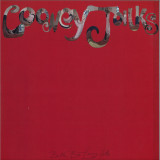
Bella Boo is back on Studio Barnhus with her most direct and club-focused material yet. A veteran of the Stockholm underground, named “one of the most promising new artists not only on Studio Barnhus, but in house music in general” by Resident Advisor, Bella has channelled the energy of her recent DJ dates at Berlin’s Panorama Bar and London’s Phonox into this Looney Talks EP, a collection of four intoxicating dance trax full of intense rhythmic themes and inventive new takes on classic rave sounds.
The incongruous, yet glorious, creative partnership between Nancy Sinatra and Lee Hazlewood was well underway when the two singular artists reunited to record 1972’s Nancy & Lee Again, a follow-up to their bestselling duet debut, Nancy & Lee. Nancy, the eldest daughter of Frank Sinatra, had been working with the Oklahoma-born songwriter since 1965, when she topped the pop charts with “These Boots Are Made For Walkin’.” Over the next five years, the two artists forged a prolific relationship in the studio, with Hazlewood writing and producing many of Nancy’s solo hits. Soon, the duo found success with a series of duets, including “Sand,” “Summer Wine,” and “Some Velvet Morning” – all of which appeared on their highly-influential 1968 debut.
Not long after the critical acclaim and chart success of Nancy & Lee died down, however, Hazlewood unexpectedly relocated to Sweden, leaving his musical partner in the proverbial dust. America, meanwhile, was in the midst of a cultural shift, as the Vietnam War waged on. By the turn of the decade, the musical landscape had changed significantly. “Trivial music and not profound music became unimportant,” recalls Nancy, speaking to Hunter Lea. “It was a tough time.” And yet, despite the circumstances, the stars somehow aligned for the duo to record some of their most magnificent music together.
Returning to Los Angeles for the project, Hazlewood – who reprised his role as producer – chose to take a new direction with the duo’s sophomore album. Nancy recalls, “It was more dramatic; it was more fun to do, more challenging to do…. It was more grandiose.” For the lush, orchestral arrangements, they collaborated with Larry Muhoberac (an original member of Elvis Presley’s TCB band, whose early ‘70s credits also included Barbra Streisand, Neil Diamond, and Lalo Schifrin) and Clark Gassman, who had worked on Hazlewood’s 1970 LP, Cowboy in Sweden. Backing vocals from brothers John and Tom Bahler, who remain two of the most recorded singers in history, added additional texture to several songs.
The big sound that Nancy describes above is exemplified in the album’s cinematic opener, “Arkansas Coal (Suite).” Clocking in at nearly six minutes long, the dynamic overture tells the tale of an ill-fated coal miner (sung by Hazlewood), while Nancy adjusts her vocals to sing as both the miner’s daughter and his wife. Hazlewood’s knack for vivid, nuanced storytelling shines throughout Nancy & Lee Again, particularly in “Paris Summer,” which details the conflict that a married woman faces, as she engages in a passionate affair. Another highlight is the country-inspired hit, “Did You Ever,” which was released as the album’s lead single. After it landed at No.2 on the U.K. pop charts, the song served as an alternate title track in several countries, including LP pressings in the U.K., Germany, and Canada.
One of the most emotionally-charged moments on Nancy & Lee Again is a cover of Dolly Parton’s “Down From Dover.” The heartbreaking tune tells the tale of a pregnant teenager, who has been abandoned by her lover and her family and ultimately gives birth to a stillborn baby. While Parton’s 1970 version was sung from the teenager’s point of view, Hazlewood and Sinatra transformed the country song into a duet. Hazlewood, who offers the man’s side of the story, sings in a notably deeper octave than his signature baritone.
Another poignant selection is “Congratulations,” which describes a soldier coming home from Vietnam. “His face has grown old and his eyes have grown cold/And they tell you of where he has been/Congratulations, you sure made a man out of him,” Hazlewood sings, pointedly. Nancy, who performs as the vet’s wife, argues that the song had a deeper meaning for her duet partner. “Lee started out a hawk, he was an army guy, so he was all for the war in the beginning. We didn’t talk about it, but at some point, he changed radically. ‘Congratulations’ was almost like an apology from him. I don’t want to put words in his mouth, but it was as though he was saying ‘I’m really sorry.’”
The song “Friendship Train” could also be interpreted as an apology of sorts – this time to Nancy. “You’ve been hurt and I’ve been hurt/Now we’re living pain,” the tune opens. When Hazlewood moved to Sweden without telling his longtime musical partner, Sinatra was understandably upset. “I felt pretty betrayed. I mean, who does that? Who just up and disappears like that? I’ll never understand it,” she reveals. But the uplifting duet – a slice of ‘70s pop perfection – offers reaffirming words of love between friends. “Lee felt things very deeply and tended to express his feelings in song instead of in real life,” explains Nancy.
The 10-track album closes with the stripped-down “Got It Together.” Backed by an acoustic guitar, the song is equal parts playful and candid, as the duo has an impromptu, spoken-word conversation about their lives. “I wish that we’d quit getting so old,” laments Nancy, who later shares her wish to have children (she would do so in the next few years). Hazlewood, meanwhile, attempts to remedy his past wrongdoings – this time asking his partner, “Can I go back to Sweden?” With that, Nancy gives her blessing.
This definitive reissue of Nancy & Lee Again also includes two bonus tracks. Both are stylistic departures for the duo – but fit right in with the psychedelic pop of the era. The first one, “Think I’m Coming Down,” is a harmony-filled reflection on a toxic relationship. “I think that was one of [Lee’s] drug things. I don’t mean that he used drugs; I mean that he was trying to be part of that culture. Trying to be hip,” explains Nancy, who delivers an emotive vocal performance on the solo track. Also included is “Machine Gun Kelly,” penned by a staple of the 70s singer-songwriter movement, Danny Kortchmar (James Taylor, Carole King, Linda Ronstadt). Recorded several months after the release of the album, the song found Nancy reuniting with Billy Strange, who arranged many of her solo albums, as well as Nancy & Lee. Sinatra and Hazlewood first performed “Machine Gun Kelly” during their residency at Las Vegas’ Riviera Hotel in February 1972 (later released as a concert documentary on Swedish television). While the recording has long remained a career favorite of Nancy’s, it would be decades before it was officially released.
Nancy & Lee Again remains a creative high point in the careers of Sinatra and Hazlewood and, upon its release, garnered rave reviews from Billboard, Record World, and Cash Box, among others. Yet, Nancy & Lee Again never received the spotlight it so utterly deserved. “We didn’t have label support at all in those days,” recalls Nancy. “Without the strength of a label, records die. We were old. We were old-fashioned. We were just not what was happening. It’s a very ageist kind of business.” Nevertheless, she adds, “I think it’s a very good album. I think it’s timeless.” Now, after years of being a sought-after rarity, this gem in the Sinatra-Hazlewood canon can finally get its due.
Five decades later, Nancy’s legacy only continues to grow, as new generations discover her impressive catalog (which boasts nearly 20 studio albums – her duets with Hazlewood among them – and dozens of charting singles, including the theme song to the 1967 James Bond film, You Only Live Twice). In 2020, Sinatra was recognized by her peers when “These Boots Are Made For Walkin’” was inducted into the GRAMMY® Hall of Fame. That same year, Sinatra partnered with Light in the Attic for Nancy Sinatra: Start Walkin’ 1965-1976, a definitive survey of her most prolific period. LITA has also reissued Sinatra’s classic debut, Boots, and her iconic, 1968 album with Lee Hazlewood, Nancy & Lee. The label looks forward to celebrating Nancy over the coming years with a variety of special releases, exclusive merchandise, and more.
The incongruous, yet glorious, creative partnership between Nancy Sinatra and Lee Hazlewood was well underway when the two singular artists reunited to record 1972’s Nancy & Lee Again, a follow-up to their bestselling duet debut, Nancy & Lee. Nancy, the eldest daughter of Frank Sinatra, had been working with the Oklahoma-born songwriter since 1965, when she topped the pop charts with “These Boots Are Made For Walkin’.” Over the next five years, the two artists forged a prolific relationship in the studio, with Hazlewood writing and producing many of Nancy’s solo hits. Soon, the duo found success with a series of duets, including “Sand,” “Summer Wine,” and “Some Velvet Morning” – all of which appeared on their highly-influential 1968 debut.
Not long after the critical acclaim and chart success of Nancy & Lee died down, however, Hazlewood unexpectedly relocated to Sweden, leaving his musical partner in the proverbial dust. America, meanwhile, was in the midst of a cultural shift, as the Vietnam War waged on. By the turn of the decade, the musical landscape had changed significantly. “Trivial music and not profound music became unimportant,” recalls Nancy, speaking to Hunter Lea. “It was a tough time.” And yet, despite the circumstances, the stars somehow aligned for the duo to record some of their most magnificent music together.
Returning to Los Angeles for the project, Hazlewood – who reprised his role as producer – chose to take a new direction with the duo’s sophomore album. Nancy recalls, “It was more dramatic; it was more fun to do, more challenging to do…. It was more grandiose.” For the lush, orchestral arrangements, they collaborated with Larry Muhoberac (an original member of Elvis Presley’s TCB band, whose early ‘70s credits also included Barbra Streisand, Neil Diamond, and Lalo Schifrin) and Clark Gassman, who had worked on Hazlewood’s 1970 LP, Cowboy in Sweden. Backing vocals from brothers John and Tom Bahler, who remain two of the most recorded singers in history, added additional texture to several songs.
The big sound that Nancy describes above is exemplified in the album’s cinematic opener, “Arkansas Coal (Suite).” Clocking in at nearly six minutes long, the dynamic overture tells the tale of an ill-fated coal miner (sung by Hazlewood), while Nancy adjusts her vocals to sing as both the miner’s daughter and his wife. Hazlewood’s knack for vivid, nuanced storytelling shines throughout Nancy & Lee Again, particularly in “Paris Summer,” which details the conflict that a married woman faces, as she engages in a passionate affair. Another highlight is the country-inspired hit, “Did You Ever,” which was released as the album’s lead single. After it landed at No.2 on the U.K. pop charts, the song served as an alternate title track in several countries, including LP pressings in the U.K., Germany, and Canada.
One of the most emotionally-charged moments on Nancy & Lee Again is a cover of Dolly Parton’s “Down From Dover.” The heartbreaking tune tells the tale of a pregnant teenager, who has been abandoned by her lover and her family and ultimately gives birth to a stillborn baby. While Parton’s 1970 version was sung from the teenager’s point of view, Hazlewood and Sinatra transformed the country song into a duet. Hazlewood, who offers the man’s side of the story, sings in a notably deeper octave than his signature baritone.
Another poignant selection is “Congratulations,” which describes a soldier coming home from Vietnam. “His face has grown old and his eyes have grown cold/And they tell you of where he has been/Congratulations, you sure made a man out of him,” Hazlewood sings, pointedly. Nancy, who performs as the vet’s wife, argues that the song had a deeper meaning for her duet partner. “Lee started out a hawk, he was an army guy, so he was all for the war in the beginning. We didn’t talk about it, but at some point, he changed radically. ‘Congratulations’ was almost like an apology from him. I don’t want to put words in his mouth, but it was as though he was saying ‘I’m really sorry.’”
The song “Friendship Train” could also be interpreted as an apology of sorts – this time to Nancy. “You’ve been hurt and I’ve been hurt/Now we’re living pain,” the tune opens. When Hazlewood moved to Sweden without telling his longtime musical partner, Sinatra was understandably upset. “I felt pretty betrayed. I mean, who does that? Who just up and disappears like that? I’ll never understand it,” she reveals. But the uplifting duet – a slice of ‘70s pop perfection – offers reaffirming words of love between friends. “Lee felt things very deeply and tended to express his feelings in song instead of in real life,” explains Nancy.
The 10-track album closes with the stripped-down “Got It Together.” Backed by an acoustic guitar, the song is equal parts playful and candid, as the duo has an impromptu, spoken-word conversation about their lives. “I wish that we’d quit getting so old,” laments Nancy, who later shares her wish to have children (she would do so in the next few years). Hazlewood, meanwhile, attempts to remedy his past wrongdoings – this time asking his partner, “Can I go back to Sweden?” With that, Nancy gives her blessing.
This definitive reissue of Nancy & Lee Again also includes two bonus tracks. Both are stylistic departures for the duo – but fit right in with the psychedelic pop of the era. The first one, “Think I’m Coming Down,” is a harmony-filled reflection on a toxic relationship. “I think that was one of Lee’s drug things. I don’t mean that he used drugs; I mean that he was trying to be part of that culture. Trying to be hip,” explains Nancy, who delivers an emotive vocal performance on the solo track. Also included is “Machine Gun Kelly,” penned by a staple of the 70s singer-songwriter movement, Danny Kortchmar (James Taylor, Carole King, Linda Ronstadt). Recorded several months after the release of the album, the song found Nancy reuniting with Billy Strange, who arranged many of her solo albums, as well as Nancy & Lee. Sinatra and Hazlewood first performed “Machine Gun Kelly” during their residency at Las Vegas’ Riviera Hotel in February 1972 (later released as a concert documentary on Swedish television). While the recording has long remained a career favorite of Nancy’s, it would be decades before it was officially released.
Nancy & Lee Again remains a creative high point in the careers of Sinatra and Hazlewood and, upon its release, garnered rave reviews from Billboard, Record World, and Cash Box, among others. Yet, Nancy & Lee Again never received the spotlight it so utterly deserved. “We didn’t have label support at all in those days,” recalls Nancy. “Without the strength of a label, records die. We were old. We were old-fashioned. We were just not what was happening. It’s a very ageist kind of business.” Nevertheless, she adds, “I think it’s a very good album. I think it’s timeless.” Now, after years of being a sought-after rarity, this gem in the Sinatra-Hazlewood canon can finally get its due.
Five decades later, Nancy’s legacy only continues to grow, as new generations discover her impressive catalog (which boasts nearly 20 studio albums – her duets with Hazlewood among them – and dozens of charting singles, including the theme song to the 1967 James Bond film, You Only Live Twice). In 2020, Sinatra was recognized by her peers when “These Boots Are Made For Walkin’” was inducted into the GRAMMY® Hall of Fame. That same year, Sinatra partnered with Light in the Attic for Nancy Sinatra: Start Walkin’ 1965-1976, a definitive survey of her most prolific period. LITA has also reissued Sinatra’s classic debut, Boots, and her iconic, 1968 album with Lee Hazlewood, Nancy & Lee. The label looks forward to celebrating Nancy over the coming years with a variety of special releases, exclusive merchandise, and more.
Heist welcomes Belgian house maestro UC Beatz to the label with a 5 track EP featuring Marina Trench and Tour-Maubourg.
UC Beatz is a man who likes to do things his own way. You can hear it in his distinctive sound, but it also goes back to when he started producing and putting out records. If he would have asked us for advice back then, we would have definitely tried to talk him out of starting a record label without a good distribution deal. The hours of work to get the records made, printed and stamped is one thing, but going from shop to shop to sell your work, just because you believe in it? That’s just mad.
Thankfully, Belgian producer, DJ -and yes, label owner- UC Beatz didn’t ask our opinion when he started Entrepot Records in 2014 and we’re glad for it. It’s been a total success story for him and an inspiration for independent artists all around. His releases quickly gained momentum, all sold out in weeks and with that, helped him establish his name as stylish deep house producer with his own sound.
Fast forward to 2023, and we find UC Beatz on labels such as Classic Music Company, Razor ‘n Tape and now we’ve his debut on Heist for you. There’s no need for him to go from shop to shop this time, because we’re sure people will jump on this record the minute it hits the shelves.
UC Beatz delivers a stunning 5 track EP with guest appearances from Marina Trench and Tour-Maubourg. The EP sees the artist go from euphoric sample house (Orchid’s Wish) to his classic pad-driven sound on tracks like Purple Corner Fig and Blu Thang. The EP would be good without the collabs, but UC Beatz found a perfect match in style with fellow Heist artist Marina Trench on ‘Make me feel’. His co-production with Tour-Maubourg sees the duo dive deep into a classic Chicago deephouse vibe and deliver the most ethereal track of the EP.
Yours Sincerely,
Maarten & Lars
2023 Repress
Altamira caves, Santander 34.000 B.C. One of the oldest archeological sites on planet earth, just 30 mins away by car was born and raised P.E.A.R.L. Following the primitivism of those who preceded him, Poor Lord is an act of pure Neanderthal techno, stomping, explosive and classic hardcore flavor, can't wait to elevate Herrensauna peak time pressure with this.
And as if this was Rotterdam records. Dimi forgives that front left 2-step raver facing down with, a small break and a sublime kitsch hardcore line, expertly driving by the solo project of one half of AnD.
After the massive remix for Peder on KAOS04 OnScreenActor comes back with his first solo production. I talk to him via an intermediate and I still have no clue who is the responsible of this music, although I do not care. For me TACHI is the greatest production ever released in KAOS. Finest murky hyperdisko.
u.r.trax was born in this millenium, met her when she was working as artist care of Possession last year, not sure even she had the legal age to go in but her classy and freaky bangers should be definitely sounding in the mighty Paris rave. Folge Mir is just a small showcase of her big talent. Follow her.
This may be the toughest KAOS till date, take it or not. Fear enough.
Created between Palm Springs, California and Hilo, Hawai'i, V is the first double album from the Hawaiian-New Zealand singer-songwriter, multi-instrumentalist and producer Ruban Nielson's Unknown Mortal Orchestra band. Designed to play as one continuous movement and road-tested on dry California freeways, V is the definitive Unknown Mortal Orchestra car record. It's also the fifth full-length album Ruban has released in twelve years. Across fourteen sunbleached songs - written solo or with his brother Kody - Ruban draws from the rich traditions of West Coast AOR, yacht rock, weirdo pop and Hawaiian Hapa-haole music. Over a laidback blend of singalong anthems and cinematic instrumentals, he evokes blue skies, afternoons spent lounging by hotel swimming pools and the alluring darkness that lurks below perfect, pristine surfaces. It's a duality expressed in the dilapidated sunset blues and the saltcorroded soul Ruban explores through tracks like `Layla' and `Nadja. ' During the pandemic's early days, Ruban reunited with Kody at a cousin's wedding in Hawai'i. With assistance from their father, Chris Nielson (saxophone/flute) and longstanding Unknown Mortal Orchestra member Jake Portrait, they brought everything Ruban had been thinking about together. The result was V, due for release on March 3, 2023, through Jagjaguwar. When they talked about records that moved them in that spine-shivering manner, Ruban started thinking about the 70s AM radio rock and 80s pop songs that had lurked on the edge of his subconscious mind for most of his life. He wanted to write his version of records like that, leading to the two glorious uptempo singles Unknown Mortal Orchestra released in 2021, `Weekend Run' and `That Life'. However, the golden good times never last forever. Not long after, health issues began to plague his extended family.Putting his recordings aside, he helped his mother and his uncle move home from New Zealand and Portland to Hawai'i, and began dividing his time between Hawai'i and Palm Springs. During this period he reconnected with his relatives, reassessed his past, and started to look at things with fresh eyes. Hawai'i brought back memories of the darker side of his parents' lifestyle as entertainers. On those trips, he heard those classic AM radio rock records everywhere. They were inextricably intertwined with the palm trees, swimming pools, and glamorized hedonism he'd internalized from his childhood. There's a type of music in Hawai'i called Hapa-haole (Half white). You can hear it expressed in signature Unknown Mortal Orchestra style through the humid guitar-led atmosphere of V's penultimate song, `I Killed Captain Cook'. Although the songs are presented in a traditional Hawaiian manner, they're mostly sung in English. Having been influenced by Hawaiian music since Unknown Mortal Orchestra's first album, Ruban saw a space for himself within the tradition. When he reflected on his success, he realised he had the responsibility and platform to represent Hapa-haole music on the global stage.
Yellow Vinyl
Created between Palm Springs, California and Hilo, Hawai'i, V is the first double album from the Hawaiian-New Zealand singer-songwriter, multi-instrumentalist and producer Ruban Nielson's Unknown Mortal Orchestra band. Designed to play as one continuous movement and road-tested on dry California freeways, V is the definitive Unknown Mortal Orchestra car record. It's also the fifth full-length album Ruban has released in twelve years. Across fourteen sunbleached songs - written solo or with his brother Kody - Ruban draws from the rich traditions of West Coast AOR, yacht rock, weirdo pop and Hawaiian Hapa-haole music. Over a laidback blend of singalong anthems and cinematic instrumentals, he evokes blue skies, afternoons spent lounging by hotel swimming pools and the alluring darkness that lurks below perfect, pristine surfaces. It's a duality expressed in the dilapidated sunset blues and the saltcorroded soul Ruban explores through tracks like `Layla' and `Nadja. ' During the pandemic's early days, Ruban reunited with Kody at a cousin's wedding in Hawai'i. With assistance from their father, Chris Nielson (saxophone/flute) and longstanding Unknown Mortal Orchestra member Jake Portrait, they brought everything Ruban had been thinking about together. The result was V, due for release on March 3, 2023, through Jagjaguwar. When they talked about records that moved them in that spine-shivering manner, Ruban started thinking about the 70s AM radio rock and 80s pop songs that had lurked on the edge of his subconscious mind for most of his life. He wanted to write his version of records like that, leading to the two glorious uptempo singles Unknown Mortal Orchestra released in 2021, `Weekend Run' and `That Life'. However, the golden good times never last forever. Not long after, health issues began to plague his extended family.Putting his recordings aside, he helped his mother and his uncle move home from New Zealand and Portland to Hawai'i, and began dividing his time between Hawai'i and Palm Springs. During this period he reconnected with his relatives, reassessed his past, and started to look at things with fresh eyes. Hawai'i brought back memories of the darker side of his parents' lifestyle as entertainers. On those trips, he heard those classic AM radio rock records everywhere. They were inextricably intertwined with the palm trees, swimming pools, and glamorized hedonism he'd internalized from his childhood. There's a type of music in Hawai'i called Hapa-haole (Half white). You can hear it expressed in signature Unknown Mortal Orchestra style through the humid guitar-led atmosphere of V's penultimate song, `I Killed Captain Cook'. Although the songs are presented in a traditional Hawaiian manner, they're mostly sung in English. Having been influenced by Hawaiian music since Unknown Mortal Orchestra's first album, Ruban saw a space for himself within the tradition. When he reflected on his success, he realised he had the responsibility and platform to represent Hapa-haole music on the global stage.