A globally-renowned selector whose ‘Mastermix’ series and impactful, diverse DJ sets have garnered a cult following for the past decade, Numbers co-founder Jackmaster has seen his focus shifted towards his blossoming discography of late, releasing material via Seth Troxler’s Slacker 85, The Martinez Brothers’ Cuttin’ Headz and CircoLoco Records, plus his own TDSR imprint. Here, he continues to showcase his studio nouse with an impressive label debut on Damian Lazarus’ Crosstown Rebels, unveiling two new original productions across his latest EP, ‘Don’t You Want My Lovin’.
Vibrant, deep and jackin’, featuring resonant stabs, skippy drums and soulful vocals at its core, the bubbly ‘Don’t You Want My Lovin’ is a punchy slice of house crafted for bustling dancefloors, while the airy and trippy ‘Ode 2 U’ takes things into more paired back territories and journeys through vast textures to unveil a wormhole of a production.
Needing little introduction, Chicago’s finest and house music icon, Mike Dunn, steps up on remix duties as he makes his first outing on the renowned imprint. His aptly titled ‘Blackball 303’ interpretation is precisely that: a wicked, acid-laced trip harnessing the original’s infectious vocal while offering an instrumental for those looking to keep things darker.
Search:td
- A1: Just A Child Feat Chiara Castello
- A2: Assai Giassai
- A3: No Fun Feat Daniel Richards
- A4: On And On Feat Egeeno And Elea
- A5: Nun Tengo Chiù A Te Feat Maricaclemente
- A6: Melancolia
- A7: Fior Di Veleno Feat Egeeno
- B1: La Verità Feat Toco
- B2: Common Questions
- B3: Genova Nervi
- B4: Stone (My Heart) Feat Chiaracastello
- B5: Eclisse
- B6: A Song To Make Love To
“Songs to Make Love To” is the 10th studio album by The Dining Rooms (Stefano Ghittoni and Cesare Malfatti), extending the Milanese duo’s classic sound legacy among psychedelic folk, cinematic atmospheres and hip hop-inspired downtempo rhythms. As always divided into instrumental and vocal tracks, it is entirely played and produced by Stefano and Cesare and features guest appearances on vocals by Chiara Castello (I’m Not a Blonde), Egeeno (of the Roman collective Tropicantesimo) and labelmate Tomaz Di Cunto aka Toco. “Songs To Make Love To” talks about love and relationship dynamics in every aspect, but also explores anthropological and ethnomusicological themes by making use of field recordings. “Songs To Make Love To” talks about love and relationship dynamics in every aspect, but also explores anthropological and ethnomusicological themes by making use of field recordings. “Songs To Make Love To”, whose artwork was made with works by artist Tatjana Zonca, talks about love and the explicit act of loving each other, but also and especially about the construction of love, the dynamics of love relationships inside and outside the couple, free and liberated love, without constraints and outside the concept of possession. A further peculiarity that contributes to the uniqueness of “Songs To...” is the in-depth exploration of anthropological and ethnomusicological themes, particularly dear to Alan Lomax: the classic TDR sound therefore blends, especially in the instrumental tracks, with classic field recordings of sounds from the Genoese carruggi, the Milanese dockyard, the Spanish quarters of Naples and cities such as Istanbul and São Paulo.
Faith presents the second volume of ‘Ain’t That A Groove’, a series of 12” pressings collating current and forthcoming productions and remixes from the London label. Originally launched in 1999 by Boy’s Own legend Terry Farley alongside Stuart Patterson and Dave Jarvis, the cult label relaunched in 2020 after renewed interest from house heads and Faith fanzine readers. Opening up this collection, one of Chicago's finest house producers and songwriters Robert Owens and his 2023 collab with Nolan ‘I’ll Be Your Friend’, a bona fide house classic reignited for audiences of today. Hilit Kolet’s ‘POV Siren’ follows, a stomping club cut that received support from the likes of Carl Cox and TSHA. The four-track press also includes New Zealand talent Philippa’s remix of ‘The Night’, originally by Pete Heller & Terry Farley as Roach Motel, as well as Terry’s latest release with frequent collaborator Wade Teo spotlighting Kameelah Waheed on vocals with the TDK 90 Dope Mix of ‘Dancing After Dark’.
Tropical Disco Records open their 2023 vinyl account in triumphant form with Volume 27 of their well loved 12” series. Yet again they have successfully delivered a four track paean to the boundless dance-floor power of jazz infused disco. It’s a sound which the label has very much made their own over the last half decade.
Opening proceedings is Scruscru, an artist whose immense rise to prominence has very much followed the same time-line as Tropical Disco. He is in glowing form here with vinyl opener ‘Phunk U Do’, a slinky hip-shaking 70’s funk-fuelled disco bomb. Expect this one to set dancefloors on fire across the summer with it’s swirling keys, James Brown-esque vocals and ferocious bassline.
Next up are Lance and Disco Strummer who keep the feel-good vibes topped up to full with ‘Hey Amigo’. An ever so cheerful Latin bomb, it packs in happy-go-lucky vocal loops with brass stabs aplenty alongside a shoulder shaking bassline which will keep those floors grooving from dusk till dawn. If you want to unleash uncontrollable joy in your DJ sets, look no further.
Over on the Flip Tropical Disco’s own Sartorial delivers a smokey sexy-as-hell vocal gem in the shape of ‘Fly’. Merging 70’s jazz licks with a powerhouse live bass, sublime sax solos a divine vocal and some serious scatt, this is a track that just exudes cool.
Closing out the EP in style is one of Mexico’s finest disco proponents, Monsieur Van Pratt. On ‘Journey’ he deploys a huge brass section and percussive breakdown to serious hip shakin’ effect. With guitar licks and synth stabs galore he has given this one both a ridiculously tight groove and bags of warmth. It’s a winning combination.
Tropical disco have yet again unleashed another exquisite 12” showcasing their unique sound. You can expect to see this one hitting the heights of the vinyl charts in quick smart fashion.
Support across Mi Soul & House FM.
Riding high on the inexplicable Tech-house adoption of their last release, Talking Drums return with hit number six.
This desert island disc finds the family bagging a last minute flight to sunnier climes, where the cocktails are strong and the seas are calm.
On 'Air Ecosse', the crew provide an engine overhaul to a middling slice of Scotch boogie, squeezing maximum thrust out of the new beat-y intro before a bubbling bassline and chiming chords provide some serious uplift. The captain takes the comms for a late deadpan vocal, hinting at a little Pet Shop Boys karaoke prior to touchdown in paradise.
The percussion pals kick off the Birkies on the B side, boarding the bateau with a pair of proper harbour heaters. 'Too Yacht To Handle' bubbles along like Mick'n'Keef in disco mode, oozing grooves under a swooning vocal a la Nicolette Larson. A hazy arrangement lets the music play, indulging the instrumental breaks, soaring synths and subtle delays in true 12" Extended Mix stylee, perfect for peak-time at poolside or la playa.
Dropping the tempo to a sunset strut, 'AORwaves' provides the perfect cool-down, as TD cut back the fat on a forgotten soft-rocker to create a cosmic yacht bomb. Low slung, sleazy and spaced out, this is gonna rock a bar set and beyond.
Limited Press - Numbered Insert - Drum Fun Guaranteed.
- A1: Approach 1' 52
- A2: Omaggio A Fellini 1' 50
- A3: Pipes 4' 05
- A4: Orgal 3' 38
- A5: Babbel 3' 54
- A6: Yaya 4' 21
- B1: Ba Loon 3' 17
- B2: Clocking 3' 37
- B3: Wail 8' 34
- B4: Bottom 3' 34
- B5: Feeder 1' 36
- C1: Spindrift 3' 35
- C2: Surfer 4' 00
- C3: Low Roller 3' 24
- C4: Still 4' 56
- C5: Beating 3' 51
- D1: Picolo 5' 41
- D2: Wire 2' 07
- D3: Knock 6' 21
- D4: Wah 3' 02
- D5: Aah 1' 40
Tod Dockstader's Aerial series, an electronic/drone masterpiece, is cherished among fans of the artist's work and this second volume is available in an audiophile quality double LP edition.
Tod Dockstader's Aerial series is sourced from his life long passion for shortwave radio. Dockstader collected over 90 hours of recordings, made at night, and comprised of cross signals and fragments plucked from the atmosphere.
Opening with airwave drones, Dockstader gradually allows elements to slowly come and go, summoning an ominous atmosphere of ethereal cloud clouds. Malignant placidity continues, giving the feeling of eavesdropping upon late-night audio activity not unlike discovering number stations while sweeping the dials. These sounds pull you in as their density and rhythms come and go.
Backward voices, deep echoing choruses of conversations flowing under the surface, ocean sounds, pulsing electro-rhythms, all seem to be created via the collaging of many hours of source recordings. A masterwork of collage and juxtaposition by an overlooked pioneer of American electronic music.
Artwork by John Brien (Imprec) is inspired by the propagation of shortwave radio signals throughout the earth's atmosphere.
"This return of Dockstader is something to cherish, not just because his output has been so limited and scarce but because what we do have is so intriguing, persuasive and cliche-free; the music of an inspired explorer who trails in nobody's slipstream." The Wire
"One of the great figures of musique concrete composition." Dusted
The Aerial project
I've written before of my interest in shortwave radio, in the notes to the Quatermass CD. Also, in the notes to the Omniphony CD (which has my first "Aerial" mix, "Past Prelude," in it), I mentioned "The Aerial Etudes," which was my working title for what became the three CDs you have. And, at the end of an interview with Chris Cutler (which can be found in the "Unofficial TD Website"), the piece I mentioned I was starting to work on at the time became Aerial.) When I was very young, people got most of their entertainment from radio. They called it "playing the radio," as if it were a musical instrument. That's what I've tried to do in this piece. About this time, a few people encouraged me to look into using a computer for this work.
I'd never used one, but I saw it would allow me to keep my mixes digital - no more transfer losses. So, at the end of 2001, I got a computer and an editing program for it, and spent what seemed a long time learning it. I began selecting mixes and loading them into the computer in late March, 2002. Out of the 580, I selected 90 "best" mixes - eventually reduced to 59, the ones on the CDs. Finally, in assembling the CDs, I followed David Myers' suggestion to allow each piece to flow into the next - making a continuous journey to the end. Tod Dockstader, 14 september 2003
About Tod Dockstader: Dockstader moved to New York in 1958 and became a self-taught sound engineer and sound effects specialist and apprenticed as a recording engineer at Gotham Recording Studios. It was around this time that he started to use his off-work hours to experiment with mixing and manipulating sounds on magnetic tape (musique concrète). By 1960 he had amassed enough material to assemble his first record Eight Electronic Pieces which was released on the Folkways label in 1961 (this would later be used in the soundtrack of Fellini’s Satyricon). The last of the eight pieces was later re-worked into his first stereo piece. In 1961 he applied to use the facilities at the Columbia-Princeton Electronic Music Center and was denied access by Vladimir Ussachevsky. Ussachevsky’s official reason was the “overstrained” scheduling of the studios, although many suspect that Dockstader’s lack of academic training was a factor in the decision. He continued to create music throughout the first half of the 60s, working principally with tape manipulation effects. His last piece at Gotham was Four Telemetry Tapes in 1965, after which he left to work as an audio-visual designer on the Air Canada Pavillion at Montreal’s Expo ‘67. It was around this time in 1966 that some of Dockstader’s pieces were released on three Owl L.P.s, and his work became known to a larger audience. He achieved modest recognition and radio play alongside the likes of Karlheinz Stockhausen, Edgard Varèse, and John Cage.
The Acid Wars of 2020 are fought with mainly three weapons. The classic Tb-303 by Roland, the strong replica Re-303 by Dinsync and the fast spreading Td-3 from Behringer. May the force be with you.
This record contains a special remastered edit of previously released Jupiter Earth.
Machine Learning and Deep Learning are soundtracks to the current development of artificial intelligency - only the future will show where this leads us.
- A1: Welcome
- A2: Imagination
- A3: 1917 Revolution
- A4: Soldier In The Willow
- A5: Fishing Song
- A6: The Painted Vase
- A7: Pillar Of Economy
- B1: A Nation's Pride
- B2: The Sun Dancer
- B3: Rain
- B4: Morning Sun
- B5: The Summer Has Gone
- B6: The Ways Of Winter
- B7: Welcome-Tag Piece
- B8: Sleeping Town (Bonus Track)
- B9: Time (Bonus Track)
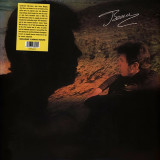
Leeds-born folk-rocker John Trevor Midgely, alias Beau, was known for his deft twelve-string guitar work, his poignant voice and distinctive song-writing, which brought him onto the roster of John Peel’s Dandelion label in 1969. His self-titled debut album is arguably his best and includes the outstanding single ‘1917 Revolution,’ said to have inspired America’s smash, ‘Horse With No Name,’ the LP ably demonstrating that all the artist needed was his voice, his guitar, and his individual approach to song writing, the work bearing his haunting hallmarks throughout. In short, an unjustly obscure release that is ripe for current reappraisal. Including 2 Bonus Tracks
Recycled Cherry" (Red/Black) Vinyl[28,53 €]
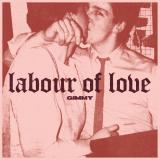
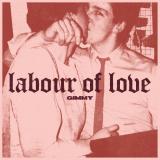
Australian indie and garage-rock firebrand, GIMMY unveils her new EP Labour of Love — a raw, emotionally charged collection that fuses gritty indie rock, post-punk bite and tender poetic expression, all powered by Gemma Owens’ unmistakable vibrato and fiercely honest songwriting.
Where her 2024 debut Things Look Different Now was a slow-burn, two-to-three–year voyage of change and introspection, Labour of Love hits with an entirely new force: intuitive, immediate and deeply connected to Owens’ emotional world. Written over six months and captured in an intense 4–5 day studio burst with producer Sam Joseph (King Gizzard), the EP moves with the urgency of something that needed to be felt and heard, right away.
Across seven compelling tracks, GIMMY dives into social anxiety, grief, falling in love and the chaotic beauty of everyday life, with each song arriving “on its own terms” — born from late-night home writing sessions, snippets of inspiration while travelling and moments of full-band electricity. Sonically, Labour of Love nods to Soft Play, Nick Cave, Fontaines D.C., The Preatures and The Smiths, yet remains unmistakably GIMMY: expressive, gritty, vulnerable, cheeky and alive in every moment.
Ultimately, the EP is an unfiltered snapshot of emotional truth, celebrating life’s highs, lows and everything in between, and showcasing GIMMY at her most dynamic, powerful and compelling to date.
Black Vinyl[27,31 €]
Australian indie and garage-rock firebrand, GIMMY unveils her new EP Labour of Love — a raw, emotionally charged collection that fuses gritty indie rock, post-punk bite and tender poetic expression, all powered by Gemma Owens’ unmistakable vibrato and fiercely honest songwriting.
Where her 2024 debut Things Look Different Now was a slow-burn, two-to-three–year voyage of change and introspection, Labour of Love hits with an entirely new force: intuitive, immediate and deeply connected to Owens’ emotional world. Written over six months and captured in an intense 4–5 day studio burst with producer Sam Joseph (King Gizzard), the EP moves with the urgency of something that needed to be felt and heard, right away.
Across seven compelling tracks, GIMMY dives into social anxiety, grief, falling in love and the chaotic beauty of everyday life, with each song arriving “on its own terms” — born from late-night home writing sessions, snippets of inspiration while travelling and moments of full-band electricity. Sonically, Labour of Love nods to Soft Play, Nick Cave, Fontaines D.C., The Preatures and The Smiths, yet remains unmistakably GIMMY: expressive, gritty, vulnerable, cheeky and alive in every moment.
Ultimately, the EP is an unfiltered snapshot of emotional truth, celebrating life’s highs, lows and everything in between, and showcasing GIMMY at her most dynamic, powerful and compelling to date.
Pumpin South France sound...
With a collab between Uzi and Keja for the opening, creative drops and mental effects.
Then comes a Jarotek and Trizia Moth versus with a Old School inspiraly sound... And a deep drop. tribe is tribe...
The Flip starts with a Keja long 145 BPM tune. Mental Twirler at a sweet tempo... boostable.
Last tune is a superb ragga jungle banger from Uzi. A master piece... Short but wicked !!
Record comes with an Insert and a sticker.
This Raven With A Crown 02 is a new fledgling label materializes in the Violent Cases universe. Corvus Corone - also known as the carrion crow - is stylistically dedicated to true Tribal sounds.This is not chipmunk tribal with laughing gas voices, this is serious stuff as you can expect from Violent Cases because evil forces are invading lala land and we need to gather the tribes. The roadmap for the project covers territory cultivated by the likes of Isotope, LBE and DSP just to name a few reference points.
First in flight is a full release by As’teka Nahuatl who just featured on MSTR 13.
Corvus Corone is styled by TDSiGNZ, whose design skills consistently lend the Violent Cases sub-labels a fresh, disciplined minimalist touch. As he previously created for “Endless Night”... More is forthcoming - because the Violent Ravens nest has another spawn in the breed. Keep an eye out for their upcoming signs!
Mastering by Stefan ZMK.
A1 – Musicō'teka
20k rig in the catacombs of the pyramid of the sun. Join the war dance. 160 beasts
A2 - Tekno Drops (feat. Lil’ Nahuatl)
Serious old school dancefloor vibes under the wings of crows circling above. 170 beasts
B1 – Shaman Children
Inducing a long trancy journey heeding the shaman’s call. 170 beasts
- A1: Ocarina Of Time
- A2: Zelda's Lullaby
- A3: Lost Woods
- A4: Sheik's Theme
- A5: Gerudo Valley
- A6: Song Of Storms
- B1: Jabu-Jabu's Interlude
- B2: Zora's Domain
- B3: Great Fairy's Fountain
- B4: Kakariko Lullaby
- B5: Epona's Song
- B6: Gerudo Valley Reprise
Jazz piano, upright bass, and mellow percussion set the stage for the debut release of The Deku Trio. Zelda and Jazz is a 12 track tribute to The Legend of Zelda: Ocarina of Time.
The Deku Trio is a new project from Rob Araujo (Chillhop) and Chris Davidson (GameChops) that elevates video game covers through forward-leaning arrangements for jazz trio.
Highlighting fan favorites like Song of Storms, Zelda’s Lullaby, and Great Fairy Fountain, The Deku Trio's coffeehouse-style reimaginings feature cozy ornamented piano arrangements, interesting reharmonizations, soulful basslines, and delicate drums and percussion. Music composed by Koji Kondo with character designs by award-winning comic author Riana Dorsey
Laconic Zero is a one man music machinery aka Trond Harald Jensen. Utilizing Commodore 64 programming combined with a heavy wall of distorted bass, Laconic Zero produce complex dagger-stabs of metaldriven chiptunes. Sun to Death is a killer presented on smoked orange vinyl, CD and Cassette. Laconic Zero has shared stages with Lighning Bolt, the famed Sonic Youth and Swans producer Martin Bisi and collaborated with the late music prodigy Joey Hopkins.
èMeL, the maestro of trance induced Tekno returns to Violent Cases delivering three long trips pumping like hell or high water.
Against The Grain riding the warp of space into the womb of night freedom at the speed of light from gravity’s planetary chain.
Symphony of Construction orchestrates a swarm of ant-like nanobots in space assembling the mothership of the raving tribe at warp pace.
Reverse termites moving in unison creaking and clanking away at the metal shell to escape this man made hell.
Darkness seduction is the siren’s hum pulling the mentalnaut to the fluffy bottom it feels good to let go, further than you can fathom, to the sound of a giant tardigrade nibbling at atoms.
This publication is illustrated by Darkam, designed by TDSiGNZ, and mastered by Stefan ZMK.
Each EP comes with 2 posters, a digital download code, and 2 artwork stickers.
Dutch old school power house Markie with some 6-am-type-of-shit light sabre wielding energizer, stomping ahead while trying to fend of a giggling swarm of robotic mosquitos. 150 beasts.
Pneumatix & Mental Reaper with some deep flowing reflection of the walls caging our existdance. Superbly crafted food for mind and feet best enjoyed in the middle of the forest with no walls.
160 beasts.
As’teka Nahuatl & La Tartine pump up the jam in da south style. Summoning Quetzalcōātl the spirally voluted one in it’s cyber incarnation to the modern dance, bringing with it a horde of spider monkeys that go ape all over the place. Can you scratch the itch?
165 beasts.
Original full sleeve artwork by Darkam. Design and Layout by TDSiNGZ. Mastered by Stefan ZMK.
Each 12“ EP comes with a 2 sided poster, a digital download code, and 2 artwork stickers.
Tone DropOut are back with a 4 track EP of dance floor fillers, true to the tonedropout style expect breaks bleeps and deep dark grooves and bass lines old done with that old warehouse rave feel. Tracks from co owner SWEEN and Dan Beck aka THE HE-MEN and co-owner DAWL as well as good friend ASCOT
Tech-Droppers fronts a coil of six acidic, harmonizing, well programmed, whizzing and straight to the bone dance punchers. The string of snappy snares, rainy cymbals, steps of cuts & drops, as well as the sequenced balance of high flying chords, rolling rhythms and solidly sectioned stabs keeps all tracks absolutely straight to the point.
Motel d'amour - A Lost Electro-Funk Gem from the NDW Era Resurfaces
When we first collaborated with Collage member Markus Kammann on the EP project "Mit den Puppen tanzen" at the end of last year, we never imagined what would follow: Kammann approached us with a completely unreleased full-length album by his former band. Upon receiving the first three preview tracks, we were floored. One of them was "Nachtcafé" - a track that kicks off with a funky bassline layered over the punchy rhythm of a Roland TR-808. Add shimmering synths and Katrin A. Kunze's sharp, distinctive vocals, and we instantly knew we were hearing something special.
For a label dedicated to rediscovering lost treasures, this was exactly what we'd been searching for. The next two tracks - "Rendezvous" and "Casanova" - were just as compelling. When Kammann sent us the full album, we realized we were holding an electro-funk grail from the late golden days of the German Neue Deutsche Welle (NDW). We were listening to "Motel d'amour".
"Motel d'amour" is a concept album, offering a sharp, vibrant perspective from a confident, intelligent, and radiant young woman eager to experience nightlife, love, and music. Kunze's lyrics paint vivid scenes of flirtation ("Nachtcafé", "Rendezvous"), encounters with men ("Casanova"), the pulse of nightlife ("Die Nacht ist noch jung"), love ("Rotes Licht für rote Liebe"), one-night stands ("Motel d'amour"), and more. Rarely has a German album from that era captured emotional nuance and social dynamics so insightfully. Without veering into the overly personal, Kunze's direct, daring lyrical style was groundbreaking at the time - and remains refreshingly bold today.
While German listeners will fully appreciate the lyrical depth, the music speaks volumes on its own. Kunze's words are masterfully complemented by the production of Markus Kammann and Jürgen Grah. As heard on the in-demand "Mit den Puppen tanzen", their creativity seemed boundless. Each track is tightly composed, catchy, and full of character. While many German bands at the time leaned into rock, Kammann drew from the deep grooves of Earth, Wind & Fire, The Isley Brothers, Brothers Johnson, The Commodores, and the electro-futurism of Afrika Bambaataa's "Planet Rock" and "Looking for the Perfect Beat". The result: tracks with unmistakable electro-funk flair, powered by the classic 808 drum sound.
Though primarily rooted in funk and electro, the album retains flashes of NDW aesthetics - "Wir haben getanzt heut' Nacht" being a prime example. The instrumentation is a dream list for vintage gear lovers: Yamaha keyboards, Roland Juno-60, vocoder, Micromoog, Hohner D6 Clavinet, Fender bass, and a Telecaster guitar all feature prominently.
Recorded in 1985 at the high-profile Delta Studio by Richard Rossbach, the album attracted interest from Polydor. However, the label proposed using the compositions for a solo project with singer Inga Humpe (of Neonbabies), who was already signed to their roster. This would have required replacing Kunze as the vocalist, an idea the group firmly rejected. As a result, "Motel d'amour" was shelved, and Kammann, Grah, and Kunze moved on to form Cold End.
The album cover features a rare archival photo of Katrin A. Kunze - rediscovered by Kammann and now finally seeing the light of day, 40 years later.
We believe Motel d'amour deserves recognition alongside cult German classics like P!OFF?, 1. Futurologischer Congress' "Wer spricht?", Ami Marie's "Verrückt nach Glück", the funkier cuts of Cosa Rosa, or Piet Klocke's groove classic "Heute ist nicht sonst". It's a record that fits into adventurous DJ sets but also rewards a full, start-to-finish listen.
A note on audio quality: Sadly, the original master tapes were lost. The tracks were restored from a vintage TDK cassette. Thanks to modern digital tools, we were able to remaster them to a high standard - but in some songs light distortions remain. We appreciate your understanding and hope you enjoy this lost and undiscovered gem.
Motel d'amour - A Lost Electro-Funk Gem from the NDW Era Resurfaces
When we first collaborated with Collage member Markus Kammann on the EP project "Mit den Puppen tanzen" at the end of last year, we never imagined what would follow: Kammann approached us with a completely unreleased full-length album by his former band. Upon receiving the first three preview tracks, we were floored. One of them was "Nachtcafé" - a track that kicks off with a funky bassline layered over the punchy rhythm of a Roland TR-808. Add shimmering synths and Katrin A. Kunze's sharp, distinctive vocals, and we instantly knew we were hearing something special.
For a label dedicated to rediscovering lost treasures, this was exactly what we'd been searching for. The next two tracks - "Rendezvous" and "Casanova" - were just as compelling. When Kammann sent us the full album, we realized we were holding an electro-funk grail from the late golden days of the German Neue Deutsche Welle (NDW). We were listening to "Motel d'amour".
"Motel d'amour" is a concept album, offering a sharp, vibrant perspective from a confident, intelligent, and radiant young woman eager to experience nightlife, love, and music. Kunze's lyrics paint vivid scenes of flirtation ("Nachtcafé", "Rendezvous"), encounters with men ("Casanova"), the pulse of nightlife ("Die Nacht ist noch jung"), love ("Rotes Licht für rote Liebe"), one-night stands ("Motel d'amour"), and more. Rarely has a German album from that era captured emotional nuance and social dynamics so insightfully. Without veering into the overly personal, Kunze's direct, daring lyrical style was groundbreaking at the time - and remains refreshingly bold today.
While German listeners will fully appreciate the lyrical depth, the music speaks volumes on its own. Kunze's words are masterfully complemented by the production of Markus Kammann and Jürgen Grah. As heard on the in-demand "Mit den Puppen tanzen", their creativity seemed boundless. Each track is tightly composed, catchy, and full of character. While many German bands at the time leaned into rock, Kammann drew from the deep grooves of Earth, Wind & Fire, The Isley Brothers, Brothers Johnson, The Commodores, and the electro-futurism of Afrika Bambaataa's "Planet Rock" and "Looking for the Perfect Beat". The result: tracks with unmistakable electro-funk flair, powered by the classic 808 drum sound.
Though primarily rooted in funk and electro, the album retains flashes of NDW aesthetics - "Wir haben getanzt heut' Nacht" being a prime example. The instrumentation is a dream list for vintage gear lovers: Yamaha keyboards, Roland Juno-60, vocoder, Micromoog, Hohner D6 Clavinet, Fender bass, and a Telecaster guitar all feature prominently.
Recorded in 1985 at the high-profile Delta Studio by Richard Rossbach, the album attracted interest from Polydor. However, the label proposed using the compositions for a solo project with singer Inga Humpe (of Neonbabies), who was already signed to their roster. This would have required replacing Kunze as the vocalist, an idea the group firmly rejected. As a result, "Motel d'amour" was shelved, and Kammann, Grah, and Kunze moved on to form Cold End.
The album cover features a rare archival photo of Katrin A. Kunze - rediscovered by Kammann and now finally seeing the light of day, 40 years later.
We believe Motel d'amour deserves recognition alongside cult German classics like P!OFF?, 1. Futurologischer Congress' "Wer spricht?", Ami Marie's "Verrückt nach Glück", the funkier cuts of Cosa Rosa, or Piet Klocke's groove classic "Heute ist nicht sonst". It's a record that fits into adventurous DJ sets but also rewards a full, start-to-finish listen.
A note on audio quality: Sadly, the original master tapes were lost. The tracks were restored from a vintage TDK cassette. Thanks to modern digital tools, we were able to remaster them to a high standard - but in some songs light distortions remain. We appreciate your understanding and hope you enjoy this lost and undiscovered gem.
Team TD take a break from re-scoring Colin McCrae Rally to pay our own oddball homage to some of our DJ deities in the form of Talking Drums Volume 8.
Keeping things diverse-yet-disco, this little mover grooves through Muzic Box pump, Lofty symphonics and a Ku-curveball with a smile on its face and a pep in its step.
The A-side erupts in a flash of sexy Euro-NRG, twisted and lifted to give any sweatbox a massive Hardy-on. Sequencers throb, swell and burst, horns wail and not one, but two, killer basslines blast the floor with erogenous urgency. Chuck in a coquettish vocal, delay madness and a fist pumping breakdown and you've got pure peak-time play folks.
The B1 belongs to the sumptuous strings, loose funk and live disco strut of 'Too Hot'. Low slung, low tempo but plenty punchy, this classy cut builds and builds through Merc-y repetition before blooming a fully fledged groover. Taut funk breaks sit beneath a floor-filling vocal and twinkling Rhodes, the wah guitar works overtime, and it all adds up to take the dance floor temperature sky high. Enjoy on a hi-fi sound system with plenty of spiked punch.
The curtain call comes via the alfresco flamenco-frenzy of Ronseal-approved 'Maximum Balearic Dancer', which does exactly what it says on the tin. The TD troupe takes a tiny snippet of Swiss fusion and fleshes it out into the fully fledged floor-filler it always deserved to be. Blessed with a buoyant bassline and balmy mood, this beauty sways along through some weird but wonderful synth riffs, holding you close for that soul-soaring piano solo.
Sometimes you gotta wake up on a beach naked.
Limited Press - Numbered Insert - Drum Fun Guaranteed. .
- You Keep Me Up At Night
- Don't Walk Away
- Touch
- Same Old Story
- The Weekend
- Nothing Left To Lose
- Don't Take The Night
- I'd Rather Die
- Can't Believe She Got Away
- Everybody's Lover
- Better
Black Vinyl[25,17 €]
Obsession is THE DRIVER ERA’s explosive follow-up to 2022’s Summer Mixtape & sees the band’s artistry evolving in a dynamic, distinctive direction that solidifies themselves as a driving force in the alt-pop space. Clever, relatable lyricism backed by moody undertones and infectious grooves showcases the band’s pivot into more confessional songwriting and finding their sonic step.
Across the album’s 11 tracks, Obsession explores themes of love, longing, and loss through a uniquely captivating sonic profile rife with electric riffs, robust synths, and strong drums to create the most impressive release from THE DRIVER ERA to date.
The band, which consists of brothers Ross and Rocky Lynch, released their debut single ‘Preacher Man’ in 2018 and since then have amassed hundreds of millions of streams and a huge following with their signature sound and larger-than-life sold-out shows.
Obsession is THE DRIVER ERA’s explosive follow-up to 2022’s Summer Mixtape & sees the band’s artistry evolving in a dynamic, distinctive direction that solidifies themselves as a driving force in the alt-pop space. Clever, relatable lyricism backed by moody undertones and infectious grooves showcases the band’s pivot into more confessional songwriting and finding their sonic step.
Across the album’s 11 tracks, Obsession explores themes of love, longing, and loss through a uniquely captivating sonic profile rife with electric riffs, robust synths, and strong drums to create the most impressive release from THE DRIVER ERA to date.
The band, which consists of brothers Ross and Rocky Lynch, released their debut single ‘Preacher Man’ in 2018 and since then have amassed hundreds of millions of streams and a huge following with their signature sound and larger-than-life sold-out shows.
- Bagola
- Dadunkan
- Cela Sigui
- Tulunke
- Orpaillage
- Dissa
- Wara
- Nana Triban
- Fakoly
- Latege
- Deme
In their new album Bagola, Trio Da Kali present newly composed songs accompanied on balafon and ngoniba, that provide a rich accompaniment to the spectacular voice of Hawa Kasse Mady Diabaté. She inherits her singing style from her father, the late Kasse Mady Diabaté, who was widely recognized as one of Africa"s all-time greatest singers and won a Grammy nomination in 2004. Hawa"s voice has an exquisite purity and expressiveness, with a wide emotional range. She is equally at home in the lively, 9/8 rhythms of the title track Bagola, a light-hearted critique of men in Malian society, to the soulful Orpaillage, a song that laments the destruction of land from gold-panning. Orpaillage was in fact composed on the spot in the studio, reflecting the creative chemistry between these three musicians. The musical director of the trio is balafon (xylophone) player Lassana Diabaté, born in Guinea into a well-known family of balafon musicians. His remarkable dexterity on the balafon earned him a place in Toumani Diabaté"s Symmetric Orchestra, and later on in the group Afrocubism (featuring Eliades Ochoa). He has collaborated with many musicians, including bluesman Taj Mahal on the album Kulanjan. With two balafons of 22 rosewood keys each, tuned to play chromatic scales, Lassana Diabaté achieves a perfect balance of rhythm, melody, harmony and virtuosic embellishment. David Harrington, leader of Kronos Quartet, compares him to none other than JS Bach. Underpinning the balafon with compulsive groove, is the large ngoniba, played with brilliant musicality by Madou Kouyaté (son of Bassekou Kouyaté and member of his group Ngoniba). Madou, the youngest member of Trio Da Kali, also adds rich harmonies with his deep breathy voice to the songs. Trio Da Kali were founded in 2013 under the initiative of the Aga Khan Music Programme, with the help of three-times Grammy-nominated music producer Lucy Durán. The Trio first rose to international fame with their sublime album Ladilikan (World Circuit Records 2017), featuring an unprecedented and multi-award-winning collaboration with Kronos Quartet, the legendary classical string quartet from San Francisco. Bagola is a showcase of Trio Da Kali"s entrancing and unique sound, only equaled by their magical performances on stage.
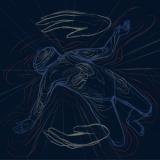
DOVS are the duo of Vienna’s Johannes Auvinen, aka Tin Man, and Mexico City’s Gabo Barranco, aka AAAA. Psychic Geography is their second album together, but it differs considerably from both their respective solo work and their 2019 debut LP together, Silent Cities: Where that album’s hardware-based acid kept its gaze focused squarely on the dancefloor, Psychic Geography is a strictly ambient affair.
The album has its roots in a trio of beatless tracks that peppered Silent Cities; this time, the duo decided to try making an entire album with no drums. “It opened up the chance to make a different, more narrative style of music with more complex structures,” Auvinen says. Ambiguity and uncertainty are key watchwords for their music, which moves with eerie, liquid grace. Untethered from 4/4 kicks, their music drifts and morphs; familiar acid sequences give way to surprising shifts in tone and mood. And with no drums to distract the ear, the seeming simplicity of their silvery synth lines opens up to reveal remarkable depth and dynamism.
Barranco and Auvinen recorded the album together in the studio utilizing machines like the Roland TB-303, Juno G, Prophet 5, Elektron Octatrack MKII, Make Noise DPO and René, Mutable Clouds, Roland SH-101, Behringer TD3, and Sherman Filterbank. Listen on good speakers or headphones, and you can tell: Their gear yields a tonal richness that recalls the ambient and cosmic music of decades earlier. You can practically feel the heat from their circuits warming the air.
The meaning behind the name DOVS is as ambiguous as the duo’s music. (Dig, if you will, the picture of Picasso’s dove of peace—or, perhaps, the outline of a bird pressed into a small white pill.) But Psychic Geography needs little explanation. DOVS’ album is a collection of mental maps of imaginary places. Set your coordinates for the mirage on the horizon and prepare to dissolve.
Within the first few seconds of this record, it seems obvious Greg Gauthier has been missing clubs as much as we all have. The french soulful stalwart takes a little detour from the soulful & vocal nuyorican feel he's known and renowned for, and takes us deep into Chicago basement banger territory with "Do It.". As for the B-side, "Underground House Rythm" ? To be honest, the title tells you everything you need to know, really.