
нет на складе
Закажите сейчас, и мы закажем товар для вас у нашего поставщика.
12,23 €
Последний логин: 4 г. назад
Закажите сейчас, и мы закажем товар для вас у нашего поставщика.

Kapingbdi came together in Liberia, West Africa, during the late 1970’s and had their own unique style. This six to seven-piece band played original compositions in a vibrant mix of African Rhythms, Soul, Spiritual Jazz, Funk and Rock. Led by Kojo Samuels on sax, flute and vocals “Born in The Night” presents the essential tracks from their rare studio LPs produced between 1978-1981. The work has been carefully edited and remastered in 2019 for vinyl LP and a 6-Page Digipack CD, which includes two additional recordings. Kapingbdi toured through Europe and the U.S. and were the only Afro funk band to ever come out of Liberia.
Kapingbdi hail from Liberia, West Africa and have their own imitable style. They effortlessly combine traditional African music in a modern mix of Jazz, Funk, Soul and Rock. The band is a fusion of the old and the new.
The word "Kapingbdi" is taken from the Sierra Leone language Mende and means "born in the night". Kojo Samuels was given the name by his Latin teacher whilst attending high school in Freetown, They often meet and debate at night in the city and soon after Kojo is called Kapingbdi. The name serves as a description of his origin. Born In Lagos, Nigeria in 1943. The son of slave children. His mother from Nigeria and father from Sierra Leone who moved the family to Liberia, during the 1950’s.
Kojo has played music for as long as he can remember. He starts with the harmonica and later becomes a drummer and percussionist in his first band at school. During his art studies 1965-1972, he tours Germany and works as an art teacher in the USA. His band Kapingbdi is reorganized five times and consists of up to seven musicians. In a VW-Bulli he drives the group from concert to concert and if the drummer fails, he jumps in himself. Between 1978 and 1981 three Kapingbdi LPs are produced for the independent label Trikont, recorded in Hamburg and Munich. During this creative period, the band plays at festivals in Africa and Europe. In 1984, the band tours the United States and shortly after, they came to an end.
At their best, Kapingbdi would rouse the audience with original compositions like "Human Rights", justice for all, especially for South Africans, and "You Go Go You Go Come". The officials and employees in the government departments have no time for the common man, for any questions such as job search, scholarship or similar, he receives the answer "go, come back tomorrow" and the same thing the following day. Or "Now Is The Time For Cry For Love." Now it is time to scream for love and finally, time for humanity and justice. Despite immense difficulties, the musicians consciously live and work in Africa and are at home in Liberia.
On April 12, 1980, ordinary soldiers and non-commissioned officers organize a coup against the government. This is an attempt to put an end to a policy of exploitation of the Liberian people. Whilst efforts to eradicate poverty, lawlessness and illiteracy are obvious throughout the country, Liberia is still Americanized to a high degree. This is evident, as the radio programs of that time almost exclusively played American disco music. Under these conditions, the people seek a reconnection to their folk music, and Kapingbdi were aware of this. Kojo tried many times to come together with traditional Liberian musicians. This passion takes him north of the country. Meeting and playing with the old hornblowers and playing music on traditional instruments, such as the elephant tusk.
Kapingbdi make high quality tape copies of their own vinyl LPs and patiently try to displace all unauthorized tapes from the domestic "market". Nevertheless, it is hard to make a living through music in Liberia. Kapingbdi, is now celebrated. The radio plays are in abundance, but royalties are not forthcoming. Their musical link is the feeling of Afrobeat and Highlife, which is found in each of the many Kapingbdi pieces. They embody Jazz, which is understood to be the most refined example of black music outside of Africa. In Liberia, Jazz is virtually impossible to hear. Bright shining names such as John Coltrane, Charlie Parker or Miles Davis were widely unknown. Thus, the Black Jazz, including its Back-To-Africa movement of the 60’s and 70‘s, passes by without leaving a trace in Africa itself.
Kojo's claim at the time, was to make African music with the depth, sensitivity and the freedom of the technical level of Jazz. This makes Kapingbdi the torchbeares. The underpaid prophets in small Liberia. It is the passion with which the founder of the band continues to work on their music for years. Tirelessly, stimulating and encouraging his fellow musicians. This is ultimately responsible for the success of Kapingbdi in Liberia itself. The local audience seems to listen to the band in fascinated astonishment. One wonders about the ability to develop as demonstrated by Kapingbdi on the basis of their music. It is African and unusually jazzy, danceable and better than the American disco music heard on the radio.
Rather than chase the money and the job opportunities in Europe, Kapingbdi are firmly rooted in Africa. The musicians live in Monrovia, the capital of Liberia, at the Kabingbdi workshop, located in the Congotown area on the eastern edge of the sprawling city. Kojo works here as a sculptor, painter, batik artist and musician. The sales revenue that his activities generate, gives him the opportunity to support the development of African Jazz music. The highest percentage of funds are from Germany and Kojo’s work ethic is “to work on your own thing“. The stance taken aims to support the welfare of Liberians and Africans. The other musicians of the group live in a second house that is nearby.
For the sake of consistency, Kapingbdi is a full-time band. However, the revenue, from all of the sources, could not keep them afloat. Equally, as important to the group are Kojos's knowledge of traditional African music and his sculpting skills. His knowledge is shared with others at the afternoon workshops. It is here that they discuss new lyrics, engage in political debate and the self-imposed task of improving conditions in Africa. At times the debate became heated, especially during rehearsals. This was regarded as good and integrative, sowing the seeds of innitiative to keep the band together.
From 1980 to 1985 Kojo also opened and ran the club "Panjebota", located on the grounds of the U.S. Consulate in Monrovia. Almost every evening Kapingbdi perform the song "Wrong Curfew Walk", whose lyrics lament the killing of citizens during the curfew imposed by the Liberian government. When the head of state Samuel Doe hears the song, he behaves agressively and forces Kojo to close the "Panjebota". Kojo had already moved on. Soonafter he meets Fela Kuti at the Africa-Festival and plays concerts in Germany with Cecil Taylor's workshop band.
Kapingbdi is for thinking, dreaming, dancing. What they sing about is what they have experienced. Kojo Samuels is 76 years old today and still follows his vocation as a critical musician, artist and activist.
Ekkehart Fleischhammer / Sonorama 2019 (with the help of original press sheets and the memories of Kojo Samuels)
Закажите сейчас, и мы закажем товар для вас у нашего поставщика.

With the new SERWED III on Flaty's promising ANWO RECORDS, Flaty and OL set out to explore and celebrate the altered visions of today's mundane futurism with a kind of keen aesthetic intuition that could only be enabled by the vast volume of their listening, production, and teaching experience.
Following the first two SERWED albums on Asyncro and West Mineral Ltd., the current fruits of the flourishing long-time collaboration between OL and Flaty comprise an oddly coherent kaleidoscopic set of free-wheeling journeys across varied pseudo-desolate soundscapes full of anomalies and sometimes thrills. Beyond the now seamless blending of the artists' individual styles, a whole bunch of other boundaries get blurred on the record, whether it be between the human and computer data processing algorithms, originality and referentiality, anxiety and euphoria, signal and noise.
SERWED III postmodern world is the one where the orbital space is just another littered parking lot, neural networks are appreciated mostly as a source of absurd imagery, and delivery drones are used as designer drug mules. The sonic collection is fittingly complemented by the visuals based on Regula Bochsler's The Rendering Eye, an art project capturing the "erroneous" yet "picturesque" renderings found in the 3D world of Apple Maps.
Закажите сейчас, и мы закажем товар для вас у нашего поставщика.

Peach Discs is delighted to kick-off a busy 2022 with a five-track EP from one of our favourite new artists. buen clima’s Transferencia Electrónica is an exploration into pared-down dance music, where interlocking rhythms, percussive synthesis and quasi-looping delays meet to form smooth, efficient and pointed club tracks.
In his own words:
“Stylistically the tracks on this EP owe a lot to the great Black musicians from Chicago and Detroit, namely Herbie Hancock, Mr. De', DJ Rashad, Lil' Louis, Frankie Knuckles, James Stinson and Gerald Donald. I feel like the EP is kind of a love letter to the styles they pioneered, done in my own way, which in turn has been influenced by my background in classical music and improvised music but also so, so heavily by my friends and teachers: I've learned so much just from interacting, working and just plain witnessing eggglub, Lorelei, Maxi Cat, il sentimento, Hola Papá/Annunaki, Lavina Yelb, Jorge Pepi, and the whole music scene I belong to in Santiago.”
Закажите сейчас, и мы закажем товар для вас у нашего поставщика.

Gratitude is the eagerly anticipated new solo album from Abiodun Oyewole, the poet, teacher and founding member of The Last Poets. The album liner notes include an extensive new interview with Abiodun himself, detailing the writing process of the album.
Looking back, the Last Poets are often referred to as the godfathers of rap, and by listening to their early recordings; it’s easy to hear why. Their words encompass revolution, sex, death, drugs, and Black Power - they own their words. From their mouths – words are a sense of pride, a statement, and a feeling of empowerment. There’s no self-conscious hang-up with the Last Poets using words as an art form. On May 19th, 1968 (in celebration of Malcolm X’s birthday), The Last Poets performed their first ever concert in Mount Morris Park (in Harlem), now called Marcus Garvey Park. Their debut album was released in 1970 including poet/singer Abiodun Oyewole.
Now AFAR is proud to present a whole new way of thinking socially, politically, emotionally, and humanly – via the perspective of Abiodun Oyewole of The Last Poets with his new solo album ‘Gratitude’ - it's not a protest album, it's an inspirational LP/CD via the inclusive words and God-like voice of Abiodun - this is not an angry man, but an older wiser man - reflecting on his life and spiritual quests. Rappers love him for coining the phrase "Party and Bullshit" decades ago - but this is not that - this is a sacred journey with a universal message for all people regardless of their background and nationality.
“ONE OF THE MOST INFLUENTIAL SPOKEN-WORD GROUPS THAT PIONEERED HIP-HOP” NPR
“EXPERIMENTING WITH STREET POETRY AND PERCUSSIVE SOUND, THE MUSIC OF HARLEM’S LAST POETS HELPED LAY THE GROUNDWORK FOR HIP-HOP” ROLLING STONE
он должен быть опубликован на 04.02.2022

Matasuna's latest tidbit takes us back to the South American continent once again - to Venezuela to be exact. The song "Zambo" by the band "La Retreta Mayor", which was released in 1976 on the self-titled LP, is now available as an official reissue and the very first time ever on a 7inch vinyl single! The 45 is complemented by an excellent rework of the American producer & DJ "King Most" from San Francisco.
The A-side features the original of the song. "Zambo" is a furious mix with versatile influences of Latin, Jazz & Funk. The rich horn section and percussion of the guest quartet bring pure heat to the track - the drums, bass and piano intensify this even more. An absolute heater for any dance floor!
The B-side features the "King Most" Redirection. The talented producer gently takes on the song, keeping the organic vibe of the original but still giving it a different, new side. His re-arrangement and additional in/outro and a new passage in the middle of the song fit exquisitely. Also his crunchy drums and own piano passages are very tasty and give the song an own flavour!
"Alexandro Rodríguez" was born in Caracas in 1952 and is considered one of Venezuela's most important jazz guitarists of the seventies. He studied classical guitar in his early years, played electric guitar in various rock groups and performed at various national music festivals. He also had the opportunity to play as a musician for renowned orchestras such as "Onda Nueva", "Renny Show's Orchestra" on Venezuelan Television and "Radio Caracas TV's Orchestra".
In the late 1970's he recorded two significant works that may be considered a reference in Venezuelan music history. He formed the short-lived band "La Retreta Mayor" to record a self-titled album, which was released as an LP on the Venezuelan label "Discomoda" in 1976. The 10-piece band and numerous guest musicians created a jazz-funk & fusion gem. The band unfortunately broke up right after the recording and did not play live or record any more music.
His self-released album "Busqueda", released in 1978 under his name, was recorded between New York and Caracas and has an excellent reputation not only in connoisseur circles. In 2012, the album was reissued on CD by a Japanese label, proving the influence Alexandro's music still has in the jazz scene today.
Between 1979 and 1982, Alexandro lived in "New York", where he worked as a composer, arranger, performer and orchestrator in the jazz scene with renowned orchestras before returning to Venezuela. Subsequently, his musical career turned to the classical guitar, both as a composer and performer. In 2013, he settled in "Pittsburgh", Pennsylvania (USA), where he continues his activity as composer, arranger, guitarist, bassist and teacher to the present time.
Закажите сейчас, и мы закажем товар для вас у нашего поставщика.

It’s been ten years since Sadie Dupuis recorded the first Speedy Ortiz songs, a solo experiment that quickly became her full-time band. Since then, Speedy has produced an expansive and critically revered discography, toured worldwide, and inspired next generations of bands with inventive songwriting and advocacy to better the music industry. But in 2011, the younger Dupuis was struggling through concurrent traumas: heartbreak from first love, leaving her hometown of New York for Massachusetts, and the grief of losing several young friends. Speedy’s first songs glowed within the contrast of noisiness and intimacy, raw sonic elements that came with closely processing vulnerabilities and Dupuis’ insistence on performing and recording each instrument alone. As the new project fielded show offers from favorite show spaces like Death By Audio and Shea Stadium, these early tracks became the springboard for the playfully melodic and cleverly distorted style for which Speedy Ortiz as a full band is celebrated. Now, ten years later, Speedy’s first self-released collections will be widely available for the first time and reissued as a double LP The Death of Speedy Ortiz & Cop Kicker…Forever, alongside previously unreleased tracks, reflective liner notes penned by Dupuis, and unearthed photos and journal scans from that era.
The tracks on The Death of Speedy Ortiz & Cop Kicker…Forever were written after student-created prompts while Dupuis was teaching a songwriting class at the same summer camp where she’d first learned guitar. "Hexxy Sadie” was written in an hour, like the rest of the songs, and on Dupuis’ twenty-third birthday; using explosive riffs and distorted harmonies, she explores her uncertain yearning as a twinless twin. "Frankenweenie" came from the prompt “dog,” and over brooding piano, spry tambourine, and eruptive snare, Dupuis sings from the perspective of a dead childhood pet about forgiveness. “Cutco,” which navigates tricky chord changes with deft guitar passages and ironic deadpan, grins at the bitterness of friendships gone awry. These early songs highlighted Dupuis’ remarkable talent at dissecting specific emotions and moments, analyzing the many ways the pieces fit together, and scrutinizing the places where they don’t.
During the recording process, Dupuis was inspired by the impulsive DIY methods of artists like Elliott Smith and Sparklehorse; a mixing note from September 2011 read, “It's important for the 'concept' of this 'album' that I don't redo anything.” The Death of Speedy Ortiz & Cop Kicker…Forever still holds onto the magic immediacy of lo-fi recordings, but this reissue is helped by the technical know-how gained through Dupuis’ solo production work as Sad13 (Lizzo, Backxwash). Remixing in 2021, Dupuis cleaned up edits on her triple-tracked drums, made space for instrumental flourishes performed on eclectic instruments like cello, banjo and timpani, and rewired digital sounds to warm up the layers of intersecting guitars. Co-mixer Justin Pizzoferrato (Dinosaur Jr., Sebadoh), who worked with Speedy on Sports EP, Major Arcana, and Real Hair, further clarified the mix with analog compressors, and mastering engineer Emily Lazar (Liz Phair, HAIM) added a glossy sheen to the stratified bombast.
As Dupuis’ cult-beloved early material finally re-enters the world in a substantive way, The Death of Speedy Ortiz & Cop Kicker…Forever is a seamless fit to the Speedy Ortiz discography that succeeded it, and evidence that Speedy’s biting lyrics, intricate compositions, and daring performances have been inherent to the project since its outset.
он должен быть опубликован на 28.01.2022

Highly innovative outsider folk-horror score by John Mehrmann receives lush vinyl and CD treatment from Svart Records. Honeydew is a rural cinematic scare written and directed by Devereux Milburn and stars Sawyer Spielberg, Malin Barr and Barbara Kingsley. Described by writer/director Milburn as a “modern-day Hansel and Gretel narrative,” Honeydew follows Rylie (Malin Barr) and Sam (Sawyer Spielberg) on a camping-trip-gone-wrong. Mehrmann’s soundtrack to this underground horror feast is an eerie organic assembly of human and animal groans, mumbles, vocals, meat and metal percussion. Mehrmann’s (Maine, USA) online biography lists him as a composer for choirs, movies, orchestras, soloists, kids’ shows, commercials, and churches; a pianist, singer, conductor, percussionist, and accordionist; the music director at Immaculate Heart of Mary Parish in Auburn, Maine; a member of the Bangor Symphony percussion section; and a teacher, at Bay Chamber Music School in Rockport, Maine, and at the University of Maine at Augusta. In the score’s accompanying notes Mehrmann explains: “When I started to write the soundtrack for Honeydew, my first few tracks were for fairly traditional instruments, but the director made it clear that he didn’t want that, and he encouraged me to get weirder and weirder. I recorded the entire album with a single mic in my living room, using whatever sounds were at hand namely, my voice, my body, long kitchen knives, glasses filled with water, little percussion instruments and sound effects.
он должен быть опубликован на 28.01.2022

"We all know what teenagers are like. Bratty little gobshites. Moody shits. Forever toeing the line between cocky arrogance and whiny self-doubt, and to hell with anyone who gets caught in the crossfire. And this old fucker should know; he was really good at all of the above (still keeping on top of the ‘gobshite’ part, you’ll notice). For some reason, the entirety of rock’n’roll is predicated on music made for and about these states of mind - well, I guess if you mix ‘em all together, they can make for one helluva sense of reckless abandon. So it shouldn’t come as a surprise that Melbourne quartet Mr Teenage sound exactly like their name suggests: chaotic, raw, emotionally volatile… and of course they bind all this together with their own brand of heroically melodic garage rock. Produced by Billy Gardener (of Ausmuteants, Smarts, Cereal Killer and god knows how many other vital Aus-punx), this debut EP snarls, spits and swaggers with all the glorious self-belief of a drunken 4am stumble to the petrol station to buy a pack of skins. And the songs are fucking great too. Title track ‘Automatic Love’ expertly showcases the combined sounds of their cited influences (Thin Lizzy, Dictators, Martha Reeves, etc), with frontman Nic Imfeld’s voice at times edging close to the sandpaper soul of their countryman Shogun (ex-Royal Headache). Meanwhile ‘Waste Of Time’ sees him blending their garage licks with Joey Ramone bubblegum, just as ‘The Loser’ fashions a delightfully adolescent chorus of ‘the loser says what?’ from an airy melody that either The Shangri-Las or Del Shannon would be proud of. They wrap things up with another slab of pure punk/pub rock genius called ‘Kids’ that’ll get the hairs on the back of your neck standing on end, as you fight the urge to crank-call your former school teachers and blame the kid who used to take your lunch money. Of course, singing about ‘kids these days’ marks Mr Teenage out as being older than their name suggests, and sure enough their name comes from an old wrestler rather than identifying with an age bracket they’ve outgrown. But with tunes like this… honestly, who gives a fuck what they’re called? This record is perfect." Will Fitzpatrick.
он должен быть опубликован на 24.01.2022
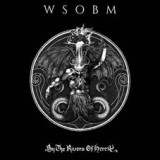
About 3300 years started gradual but cruel “amonisation” (implementation of Amon’s/Amen/Amin concept) of peoples and tribes. Lots of them fell to their knees due to the force of the adherents of “invisible” and “hiding behind multiple names” Amon. Rebels were mercilessly exterminated. Dedicated to all the fallen in this centuries-long war of thought and faith: “By the Rivers of Heresy”. The album-narration handed over by through the souls of Wirogl and Wesdor by the spirits of White Snakes tribe hiding in a black labyrinth of knowledge.
он должен быть опубликован на 21.01.2022

A mandatory disc for those who loved Europe and Fair Warning, but highly recommended for those who love good music of those years.“ METAL HAMMER (IT), Andrea Lami „OUT OF THIS WORLD has it all. An album and musicians who will give you total happiness!“ METAL INTEGRAL (F), Laudrome „This album was just sheer enjoyment from start to finish“ METAL TEMPLE (ISR), Will Travers "1988 saw the release of Swedish hard rock superstars EUROPE‘s fourth album entitled “Out Of This World”, which has sold over 3 million units to date and contains hits such as “Open Your Heart”, “Superstitious” and “Let The Good Times Rock” . Ex-EUROPE guitarist Kee Marcello intends to tie in with that era’s style with his new formation that he recruited the perfect companion for: FAIR WARNING-vocalist Tommy Heart. Their self-titled debut album was mixed by Ron Nevison (KISS, OZZY OSBOURNE), who had also refined the aforementioned EUROPE classics in 1988. So they connected all of the obvious dots, with a neverending list of renowened musicians joining in on the recordings. Don Airey (DEEP PURPLE) contributed the keyboards on four songs, while the rhythm section is complemented by Darby Todd (GARY MOORE, THE DARKNESS) and Ken Sandin (ALIEN). Every track of their debut work deserves undivided attention, be it the anthemic “Twilight”, the gripping “Lightning Up My Dark”, the timeless “Warrior” or the amazing ballad “Only You Can Teach Me How To Love Again”. This epic piece makes melodic rock dreams come true and sounds modern while traditional at the same time. Kee Marcello is a genius in his field and carries that certain something in his blood, so wonderfully and emotionally implented by Tommy Heart‘s vocals. OUT OF THIS WORLD is the new star in Melodic Rock heaven, a liaison that has yet a lot left in store. "
он должен быть опубликован на 14.01.2022

“Thunderous, and yet somehow also reflective, this album offers a haunting dialogue between the musicians. Betamax drives the music with motoric rhythm, while Bell is seemingly searching for something more sophisticated.”
London’s avant-garde, attempted to master in his youth the delicate art of the Shakuhachi - the infamously difficult-to-play bamboo flute that whiffs of a certain Japanese Zen aroma. After many years of travelling south east Asia in the 70s, seeking out the teachings of many flute and reed traditions, Clive Bell eventually gave up his quest and returned to London exhausted and confused. Horrified by the omnipresent egos of popular music, he was drawn back towards the dark currents of London’s free-improv gutter, where upon he was encouraged by his peers to live in a squat, and participate in abrasive noise experiments typical of the London improvising epidemic that persisted throughout the 80s.
Whilst immersed by this subculture, Bell was to bear his only child that we know of to this day - Maxwell Hallett, later to be known as ‘Betamax’. Bell immediately refused to teach any music to Betamax, hoping greater things and opportunities might lead Max away to a more financially comfortable and spiritually rewarding occupation. Alas Clive was unable to protect his son from the strong seductive forces of London’s prevalent musical subcultures.
Закажите сейчас, и мы закажем товар для вас у нашего поставщика.

Wendell Harrison was born in Detroit in 1942 where he began formal jazz studies for piano, clarinet and tenor saxophone. At 14, while still in high school, Harrison started performing & recording professionally with artists such as Marvin Gaye, Grant Green, Sun Ra, Hank Crawford … and many others.
In 1971, Harrison began teaching music at Metro Arts (a multi-arts complex for youth) where he also connected with Marcus Belgrave, Harold McKinney and Phil Ranelin…soon after they formed the (now legendary) Afro-centric TRIBE record label and artist collective. TRIBE used the Metro Arts complex as a vehicle to convey a growing black political consciousness. Wendell Harrison also published the very popular TRIBE magazine, a publication dedicated to local and national social and political issues, as well as featuring artistic contributions such as poetry and visual pieces.
In 1978 Harrison and McKinney co-founded REBIRTH, a non-profit jazz performance and education organization, in which many notable jazz artists have participated. Around the same time Wendell Harrison also created the WENHA record label and publishing company, which released many of his (now classic) recordings as well as those of other artists, such as Phil Ranelin, Doug Hammond and Reggie Fields (The Real ShooBeeDoo).
In the early 1990s, Wendell Harrison was awarded the title of “Jazz Master” by Arts Midwest. This distinction led Harrison to collaborate with fellow honorees and gave him the chance to tour throughout the United States, Middle East and Africa. Even to this day Wendell Harrison's recordings for the TRIBE, WENHA and REBIRTH labels have a large worldwide fanbase.
It is on WENHA that Harrison released the opus: DREAMS OF A LOVE SUPREME (1980), which we are presenting you today.
DREAMS OF A LOVE SUPREME is a monster album that features an all-star line-up that includes Phil Ranelin (Freddie Hubbard, Solomon Burke, Mulatu Astakte) on trombone, Harold McKinney (Tribe) on Keyboards and Roy Brooks (Yusef Lateef, Chet Baker, Mingus) on percussion. Although you can hear the 80ies creeping in with a smoother sound, more synths, and disco/R&B vocals… this remains a very spiritual (and soulful) jazz record. The record’s an irresistible blend of soul jazz combined with funky electric instrumentation…a groovy sound which is very much of its time, yet overtly timeless and as relevant today as it was back when it was initially released.
Tidal Waves Music now proudly presents the first ever vinyl reissue of ‘Dreams of A Love Supreme’ since its release in 1980. This official reissue is now available as a deluxe 180g vinyl edition (limited to 500 copies) and comes with an unreleased bonus track.
он должен быть опубликован на 03.01.2022

Cementing his reputation as the star toaster with the small but popular El Paso sound system, based in the Waltham Park area, Dennis Alcapone was one of the first deejays to rise to prominence following U Roy’s breakthrough in the late 1960s. Born Dennis Smith in the rural district of Culloden, he became immersed in sound system culture after settling in western Kingston. Once El Paso became big on the sound system circuit, dental technician- turned-producer Keith Hudson brought him into the studio for his debut recordings, which led to a debut album for Studio One and hit material for Duke Reid, some cut in concert with his deejay sparring partner, Lizzy. Alcapone’s longstanding links with Bunny Lee yielded the excellent Guns Don’t Argue album, first issued in 1972, on which the toaster raps with style over some of Lee’s all-time greatest rhythms, including Delroy Wilson’s Better Must Come, John Holt’s Left With A Broken Heart and Slim Smith’s rendition of the Temptations’ soul classic Ain’t Too Proud To Beg.
он должен быть опубликован на 17.12.2021

With his first release as EBM outfit Voltage Control on Antler Subway in 1989, Utrecht-based Arno Peeters can easily be considered one of the Dutch Dance pioneers.
Influenced by hip hop, electro and acid house, and his uncontrollable urge to experiment, he moved on to produce techno. Disappointed by the genre s conventions, he rather suddenly stopped with dance music altogether around 1995, letting a wealth of DATs with unreleased material collect dust in his studio.
To our great pleasure, U-TRAX was allowed to pick some nuggets from these archives, resulting in this Titanic EP and an album later this year.
Arno started experimenting with sound at very young age, resulting in his first cassette releases with experimental soundscapes in 1983. In 1986 he joined the notable Centre for Electronic Music (CEM), where he was able to take his experiments to a new level in a professional studio-environment.
In his techno episode , he recorded several 12 -es and CDs as Sp@sms and The Implant, and as part of Random XS, Urban Electro, African Nightflight and The AWAX Foundation, with most of his records being released on the famous DJAX label.
After turning his back on techno, he applied himself to more experimental music again. In 1996, he created AeroSon, a 40-minute sound collage that won him the first prize in the category Composers Under 30 at a high-brow international contest for electro-acoustic music. This piece was later released on the prestigious Mille Plateaux label.
Since then, his focus has shifted away from releasing music, towards working more project-based: on remixes, compilations and interactive (installations, video, sound design), building himself a successful career as radio maker, teacher and engineer, contributing to several award-winning documentaries and podcasts.
This EP is a nice cross section of Arno s dance productions, serving you some acid, techno and electro.
Titanic V1 was originally created to be a Random XS track, the techno band he formed in 1991 with Sander Friedeman. It was performed during their live set at one of the G.U.R.U. parties, organized by U-TRAX label boss DJ White Delight and label artist P.A. Presents.
This acid track was remixed into a techno monster when Friedeman replaced the 303 with a 101 and added a ton of delay on the bass drums, resulting in the woofer destroying Titanic (Underwater Dub).
The flipside sees a rare post-1995 recording by Arno: CEM Traxx 1. As the title suggests, this melancholic electro gem was created using the intricate machinery of the CEM Studio. Originally created as one half of a two-part composition for some project in 2003, it was never released before.
The EP closes with a typical Arno brainchild, the tongue-in-cheek acid banger XD5 Acid Master, from 1994. Tracks like this happen if you leave Arno unattended with a rather un-hip machine like the Kawai XD-5: he turns it inside out and uses it for things it was never intended for. Buckle up!
All tracks have been produced by Arno Peeters and mastered by Ruud Lekx. Label art by Botterman Ontwerp.
Закажите сейчас, и мы закажем товар для вас у нашего поставщика.

white & blue marbled vinyl
With his first release as EBM outfit Voltage Control on Antler Subway in 1989, Utrecht-based Arno Peeters can easily be considered one of the Dutch Dance pioneers.
Influenced by hip hop, electro and acid house, and his uncontrollable urge to experiment, he moved on to produce techno. Disappointed by the genre s conventions, he rather suddenly stopped with dance music altogether around 1995, letting a wealth of DATs with unreleased material collect dust in his studio.
To our great pleasure, U-TRAX was allowed to pick some nuggets from these archives, resulting in this Titanic EP and an album later this year.
Arno started experimenting with sound at very young age, resulting in his first cassette releases with experimental soundscapes in 1983. In 1986 he joined the notable Centre for Electronic Music (CEM), where he was able to take his experiments to a new level in a professional studio-environment.
In his techno episode , he recorded several 12 -es and CDs as Sp@sms and The Implant, and as part of Random XS, Urban Electro, African Nightflight and The AWAX Foundation, with most of his records being released on the famous DJAX label.
After turning his back on techno, he applied himself to more experimental music again. In 1996, he created AeroSon, a 40-minute sound collage that won him the first prize in the category Composers Under 30 at a high-brow international contest for electro-acoustic music. This piece was later released on the prestigious Mille Plateaux label.
Since then, his focus has shifted away from releasing music, towards working more project-based: on remixes, compilations and interactive (installations, video, sound design), building himself a successful career as radio maker, teacher and engineer, contributing to several award-winning documentaries and podcasts.
This EP is a nice cross section of Arno s dance productions, serving you some acid, techno and electro.
Titanic V1 was originally created to be a Random XS track, the techno band he formed in 1991 with Sander Friedeman. It was performed during their live set at one of the G.U.R.U. parties, organized by U-TRAX label boss DJ White Delight and label artist P.A. Presents.
This acid track was remixed into a techno monster when Friedeman replaced the 303 with a 101 and added a ton of delay on the bass drums, resulting in the woofer destroying Titanic (Underwater Dub).
The flipside sees a rare post-1995 recording by Arno: CEM Traxx 1. As the title suggests, this melancholic electro gem was created using the intricate machinery of the CEM Studio. Originally created as one half of a two-part composition for some project in 2003, it was never released before.
The EP closes with a typical Arno brainchild, the tongue-in-cheek acid banger XD5 Acid Master, from 1994. Tracks like this happen if you leave Arno unattended with a rather un-hip machine like the Kawai XD-5: he turns it inside out and uses it for things it was never intended for. Buckle up!
All tracks have been produced by Arno Peeters and mastered by Ruud Lekx. Label art by Botterman Ontwerp.
Закажите сейчас, и мы закажем товар для вас у нашего поставщика.

Nils Landgren was born in 1956 and grew up with the music of his
father, a jazz cornetist, and the church music of his grandfather, a
pastor. He never lost his strong affinity for his own musical heritage.
Esbjörn Svensson, born in 1964, didn’t want to play folk music at first.
At home with the music of Chopin, Ellington, or disco-pop groups
such as The Sweet, the pianist had first found his place in the
competitive music scene in Sweden. His trio was a success and in his
homeland, he was voted Jazz Musician Of The Year in 1995 and
1996. The first sprinkling of jobs became a steady flow. Svensson
proved himself in the bands of his friend Nils Landgren. The music
was about funk and soul, occasionally pop and, in the main, classic
jazz. But not folklore.
It was through the influence of Landgren and Svensson’s former
teacher Bengt-Arne Wallin, who recorded the landmark album ‘Old
Folklore In Swedish Modern’ back in 1962, that Svensson and
Landgren were inspired to make a duo album centred around folk
songs. In August 1997, both went into the studio and, with only
trombone and piano, recorded ‘Swedish Folk Modern’. Their
improvised treatments of the classic songs of the folk culture not only
impressed the public; it brought praise from the press. Svensson and
Landgren had created more than just a few impressions in duo.
Discarding any sort of large conceptual superstructure, they had
continued what Jan Johansson’s Jazz på Svenska and Bengt-Arne
Wallin had begun in the early Sixties and what has since become a
major force within the inner workings of European jazz.
The time after ‘Swedish Folk Modern’ was hectic and exciting. Nils
Landgren’s Funk Unit advanced to the position of a celebrated festival
act. Svensson’s own trio, E.S.T., expanded beyond Scandinavia’s
borders, where the band’s fortunes skyrocketed. Inundated with jobs,
the musicians finally found the time to once again get together, in
December 1999 in Oslo’s Rainbow Studio. It would be a meeting full
of exceptional jazz energy. Even more than the first time, they would
rely on the force of reduction. Moods would be suggested, left open.
Melodies worked out in simple clarity. Delicate variations
supplemented and amplified both the original and traditional motifs of
the central musical im- pressions. ‘Layers Of Light’ is an affair of the
hearts of two artists who went back to their roots. That makes their
music truthful, direct and authentic in a wondrous way.
он должен быть опубликован на 03.12.2021

he 20th milestone release in the Generation Series lineup, this 5-LP abridged set features 82 tracks that play in the first half of Shenmue III, which takes place in Bailu Village. Comes in a top lid box (similar to recent Generation Series releases from Brave Wave) with liner notes, archival artwork and a digital download code for all 196 tracks.
он должен быть опубликован на 26.11.2021

It is highly likely that you will have hummed a song by
Charles Trénet at some point in your life. Thus ‘La Mer’
(aka ‘Beyond the Sea’), a song written on a train
between Narbonne and Montpellier in July 1943, is sung
in Tokyo as well as in Los Angeles and its popularity is
universal. And this is not the only one, among the 700 or
so songs that Charles Trénet submitted to Sacem during
a career of exceptional longevity: nearly seventy years.
10 CD box set features 277 tracks, including 11 rarities.
This edition presents the complete studio recordings
1937-1962 plus several bonus titles from 1933-1936.
2LP vinyl format offers a selection of 29 of his most
famous songs.
What they said about Charles Trénet:
“This new pulse, this extraordinary joie de vivre brought
by the songs that this dishevelled boy was throwing by
dozen, were born from the conjuncture of a remarkable
poetic gift and the vitality of jazz fully assimilated by a
fine sensitivity.” - Boris Vian
“The Sun-King of songs” - Henri Salvador
“He’s a giant … someone who brought everything to
French song. The ‘Singing Fool’ was not only a singerpoet, he was someone extraordinary who is part of the
heritage. He will be teached in schools, he will be talked
about in universities around the world” - Charles
Aznavour
“Charles never asked for anything, but he knew exactly
which place was his, which is the first.” - Alain Delon
он должен быть опубликован на 26.11.2021

When you mix Guinea, Mali, Senegal, Cuba and Australia, you find yourself with many cultures. We represent Africa, sure, but also we represent diversity. That is the essence of Ausecuma Beats. We want to come together, to bring all people together to share the knowledge of what we have learnt.
We all see the hard work that lies ahead in the future. It’s not easy, and we all have different ways of thinking. But there is also something we all share, and that is humanity, and family. We have to teach our children, to help them on their journey.
This album can be defined by the song Tombo. It’s about giving respect to your teacher. All the knowledge we bring to this album has come from someone who in their turn gave it to us. If you like the music, you hear it, you dance, great! But remember, someone created this, they gave it to us, and now Ausecuma Beats are giving it to you. So we dedicate this album to our teachers.
The name of this album is Musso; it means woman. We want to dedicate this album to those who gave us life. It doesn’t matter how strong we are, how tough we are, or how lucky we are in the chances we have been given. There is always someone who is worrying about us; there is no-one who can be thinking about us more than our own mother. So this album especially is dedicated to the women in our lives, and is sending respect to all women around the world. - Boubacar Gaye, Melbourne, July 2021
Закажите сейчас, и мы закажем товар для вас у нашего поставщика.
