
pas en stock
Commandez maintenant et nous commanderons l'article pour vous chez notre fournisseur.
Last In: 4 years ago
12,23 €
Commandez maintenant et nous commanderons l'article pour vous chez notre fournisseur.

* 2026 REPRESS *
Ashanti Selah – Musician & Dub Producer hailing from the UK, is the eldest son of the world-renowned soundman, Aba Shanti-I. Ashanti's musical journey began at a tender young age, during his formative years of soundsystem exposure through his father's musical infrastructure he learned the art of the Dub. His education continued as he attended his father’s long-standing annual sessions at the Notting Hill Carnival and traveled the globe as a crew member and diligent student. Via his Steppas Records imprint, Alpha Steppa, son and nephew of pioneering dub-duo Alpha & Omega presents a unique collaboration between two second generation Dub / Reggae producers. 'Ashanti Selah Meets Alpha Steppa' is a testament to their teachers and the product of a life spent in dub. Steppas Records delivers four unique cuts of the long-time Aba Shanti-I exclusive 'Violin Step', featuring the uplifting and transcendental strings of Ras Divarius. New generation soundsystem music with a deep roots foundation.
il devrait être publié sur 02.10.2026
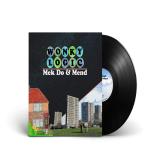
This November, Brownswood Recordings will release Mek Do & Mend, the debut album from self-taught producer, multi-instrumentalist, composer and artist Wonky Logic. Although his name may not yet be familiar to everyone, Wonky Logic (AKA Dwayne Kilvington) has spent the past two decades quietly becoming one of the UK's most respected musical collaborators. His career has moved comfortably between London's jazz, electronic and contemporary music scenes, performing and recording with artists including Nala Sinephro, Yussef Dayes, Nightmares On Wax, Shabaka Hutchings and Emma-Jean Thackray. Alongside his work as a producer and composer, he's been musical director for projects with Eddie Chacon, John Carroll Kirby and I.G Culture's LCSM, scored the feature documentary Zandra With A Zed, contributed music to A24's The Smashing Machine, and continues to lead music workshops with young people, refugees and people experiencing incarceration.
Far more than a collection of compositions, Mek Do & Mend is a deeply personal reflection on the people, places and experiences that have shaped Kilvington throughout his life. It's the story of growing up on a Leeds council estate, where music became both a creative outlet and a way of understanding the world. Making music often meant working with whatever was available: a second-hand keyboard, a makeshift studio desk or ageing equipment that simply had to last a little longer. The title itself came from a conversation with his mother, capturing the resourcefulness that defined his upbringing and continued into the making of the album itself, which was written and produced to a tight deadline around touring, family life and Kilvington's work as a musician and educator.
Built from material spanning more than fifteen years, Mek Do & Mend brings together some of Wonky Logic's earliest compositions alongside brand new pieces written during the making of the record itself. Childhood ideas sit alongside music conceived only months before recording, creating an album that draws together a lifetime of writing rather than documenting a single moment. Running throughout are voice notes from family members, teachers, friends, mentors and collaborators—not simply as interludes, but as a reminder that no creative life is ever self-made. Rather than telling his own story outright, Kilvington invites listeners to discover him through the people who've shaped him: an aunt remembering him playing in church as a child, lifelong friends recalling early experiments making beats together, fellow musicians from different stages of his career and his mother describing him in her own words. Together they reveal the invisible network of relationships, philosophies, communities and experiences behind the music. "The album exists somewhere between being a biography and an autobiography," says Dwayne. "The biography is in the voice notes and how other people see me. The autobiography is in the music."
That same philosophy extends to the musicians who appear on the record. Every contributor has played a meaningful role in Wonky Logic's life beyond the studio. Long-time collaborator Luke Wynter, Steam Down drummer Benji Appiah, partner Vanessa Rani, Jonathan Enser, Joe Bristow, Brother Portrait and Nubiya Imani all feature not simply because of their musicianship, but because they form part of the album's story.
Across its fourteen tracks, Mek Do & Mend moves effortlessly between dynamic jazz arrangements, pulsating broken rhythms, delicate, twinkling piano passages, interstellar synth textures and elegant brass lines. Album opener and first single 'Strange Attractor' begins with a shimmering introduction before unfolding into an exhilarating surge of rhythm and momentum. Named after the mathematical concept of the same name, it serves as the conceptual point of origin for the album. Written when Kilvington was just seventeen, the composition reflects the idea that even the most unpredictable lives are guided by hidden patterns that often only become visible with time. Second single 'A Thousand Hands' features the unmistakable vocal tones of Brother Portrait, whose cerebral lyricism drifts over a low-slung, constantly shifting groove as woozy synth lines ebb and flow overhead. At its heart, the track celebrates the family, friends, mentors and collaborators whose often unseen influence shapes who we become, echoing the album's belief that every achievement is, in some way, a collective one. LP focus track 'BAME (Beyond All Marginalised Expectations)' is a lush, spiralling composition, brimming with both emotion and resolve. Reclaiming an acronym long imposed on racialised communities in the UK, the piece transforms it into a statement of possibility rather than limitation: a defiant rejection of stereotypes and a refusal to let identity be defined by other people's expectations.
The album itself only exists because other people believed in it. Isabel Gracefield made the RAK sessions possible, Rick David brought the record together with his characteristically thoughtful mix, and Gilles Peterson committed to releasing it on Brownswood before hearing any of the music. Away from the stage, Kilvington works with the charity Finding Rhythms, writing and producing original records with people experiencing incarceration, while also leading workshops with Arts Train and Dovetail Orchestra.
Recorded live in a single day in Studio One at RAK, Mek Do & Mend was mixed by Rick David through an analogue Cadac console before being mastered by Stuart Hawkes at Metropolis. The aim wasn't nostalgia or audiophile perfection, but to create a record people could return to throughout their lives, discovering something new with each listen.
As Dwayne puts it: "I don't want this body of work to be reduced to a jazz record. It's more like a novel about life told through music."
il devrait être publié sur 13.11.2026

Official reissue of a German under-the-radar disco tune. The original from 1979 is a bubbling dancefloor stomper with freewheeling synth lines. For the flipside of this 7" Korkut Elbay created a spaced out balearic dub rework. Picture sleeve with a funky painting by Holger Kurt Jäger that picks up on the original.
The melody of 'Butterfly Dance' came to Dieter Bührig's mind as a butterfly floated through the recording studio during a session break. The resulting track landed on a compilation with mostly cover versions of disco hits. Now, more than 45 years later, the tune found its well-deserved single release on funkscapes.
Korkut Elbay is a fixture of Cologne's electronic music scene for over 20 years. He's part of the Cómeme camp and with remixes and edits for labels like Permanent Vacation or funkscapes he prooves his sensitive feel for the dancefloor. So does he on this rework, giving the orginal space to breathe and calm down without leaving the dancefloor.
Dieter Bührig studied electrical engineering and sound recording in Berlin. Afterwards he worked several years as a sound engineer for the music industry and as a producer. Later on he worked as a teacher for physics and music, trained trainee teachers for secondary schools and wrote articles and publications on musical education, choir and band arrangements. Nowadays he's writing, among other things, musical crime stories.
Disponible en stock et prêt pour l'expédition

2025 Reissue.
Münchenbuchsee, a suburb of Bern, Switzerland. Stephan Eicher is the youngest of three children. His father, a radio and TV repairman, is also a jazz violinist and a sound tinkerer in his spare time. In the family home's converted fallout shelter turned studio, Mr. Eicher experiments with homemade sequencers, tortures handcrafted drum machines, and abuses reel-to-reel tape recorders—all under the fascinated gaze of young Stephan.
The boy quickly develops a musical curiosity, exploring sound through various experiments and wanderings. Alongside his younger brother Martin, Stephan crafts audio plays on a homemade multi-track recorder (essentially several cassette decks hooked together!), which they write, record, add sound effects to, and perform for family and friends. Just a couple of nice kids, really...
Then comes 1972, and Lou Reed's Transformer album changes everything for the Eicher kids. For 13-year-old Stephan, it's a revelation—especially "Vicious", the opening track, which he plays on repeat for months. He convinces his father to buy him an electric guitar. Not stopping there, his father also builds him a tube amp using an old radio.
Then comes adolescence. A rough one. Stephan leaves home at 16 and moves to Zurich. With obvious artistic talent, he persuades his art teacher to help him get into F+F, a radical, alternative art school—despite his young age. Accepted, he starts learning video techniques, determined to become a filmmaker.
At F+F, Stephan organizes Dada-style happenings and concerts with a group of friends known as the Noise Boys. Among them: one of his teachers on bass, Veit Stauffer on drums (who would later found ReR/Recommended Records), his girlfriend Sacha on vocals, and Stephan on guitar. In one of their early performances, they release a remote-controlled mouse covered in dull razor blades into the audience to create panic and chaos. Keeping with this aggressive, confrontational spirit, they once played a concert while wearing headphones blasting Tristan and Isolde, trying to perform their own songs simultaneously—to maximize the cacophony. The goal was always the same: clear the room.
Their “songs,” if you can call them that, followed suit. Take "Hungeriges Afrika", for instance—performed entirely with power drills and some drum feedback.
To make ends meet, Stephan returns to Bern on weekends to work as a waiter at the Spex Club, the city’s main punk venue. On September 16, 1980, during a show by proto-electro group Starter, the police raid the club and arrest everyone. Stephan, who manages to avoid arrest, seizes the opportunity to “borrow” Starter’s gear left behind. He suddenly finds himself in possession of a Roland Promars synth, a Korg MS20, and a gorgeous CR78 drum machine, which he runs through a Big Muff distortion pedal to get that perfect gritty sound.
He then sets out to reinterpret some Noise Boys tracks, reworking them during impromptu sessions recorded on a dictaphone (yes, a dictaphone—now the lo-fi sound makes more sense, doesn’t it?). He ironically titles the resulting cassette "Stephan Eicher spielt Noise Boys" ("Stephan Eicher plays Noise Boys"). This gem features seven tracks, which are the ones reissued here.
Back in Zurich, he visits his friends Andrew Moore and Robert Vogel, who have a DIY cassette duplication setup. They make 25 copies of Stephan Eicher spielt Noise Boys for Stephan and his friends. Robert encourages him to visit Urs Steiger of Off Course Records and play him the tape.
Without much hope, Stephan shows up at Urs’s office. But Urs is instantly hooked and suggests releasing a 7” single. Due to space constraints, they reluctantly drop two of the seven tracks ("Hungeriges Afrika" and "One Second"). As for the musical score featured on the cover—it was randomly chosen and remains a mystery to this day. Calling all music theory nerds!
The 7-inch is pressed in 750 copies and released in the first week of December 1980—a date Stephan remembers well, as it’s the same week John Lennon was killed. Smartly, Urs sends a promo copy to François Murner, Switzerland’s answer to John Peel, who hosts a show on alternative station Sounds. Murner falls in love with the record and starts giving it airtime. To Stephan’s surprise, sales follow—and people actually seem interested in his music.
Even this modest underground success scares Stephan a bit. He stops making music for a year and moves to Bologna, where he works as a programmer at Radio Città, a feminist radio station.
Meanwhile, Stephan’s younger brother Martin, who’s also involved in the punk scene, joins the band Glueams as a singer and guitarist. Glueams, named after the fanzine run by two of its members (drummer Marco Repetto and bassist GT), eventually rebrands as Grauzone. Stephan is invited to their shows to project hacked Super 8 visuals live on stage.
Urs Steiger, now working on a compilation titled Swiss Wave – The Album, asks Grauzone to contribute alongside bands like Liliput, Jack and the Rippers, The Sick, and Ladyshave (Fall 1980).
For the album, Martin tasks Stephan with producing their recording sessions. Under Stephan's artistic direction, two tracks emerge: "Raum" and "Eisbär". During "Eisbär", Martin plays a minimalist bass line borrowed from post-punk band The Feelies (just an open string). Drummer Marco Repetto struggles to keep time. Later that evening, unhappy with the takes, Stephan builds a four-bar drum loop from a ¼-inch tape and uses it instead of the flawed original. He then adds bleepy synths and wind sounds to complete the track’s icy vibe before handing it over to Urs.
The Swiss Wave – The Album compilation is released quietly at first, but things snowball thanks to "Eisbär", which eventually becomes a smash hit—selling over 600,000 singles.
Meanwhile, Stephan plays in a rockabilly band called SMUV (named after Switzerland’s social security agency) and begins producing artists, including the debut album of Starter (1981), which includes a more pop-oriented version of "Minijupe".
By early 1982, Stephan starts spending time with the post-punk girl band Liliput (formerly Kleenex). They’re older than him, and he happily drives them around in his Renault Major, acting as their roadie.
By 1983, Grauzone—signed to the major label EMI, which turned out to be a misstep—is falling apart. Stephan begins to pivot toward a more mainstream pop sound with his debut solo album Les Chansons Bleues.
But that... is already another story.
Disponible en stock et prêt pour l'expédition

Twin Cosmos is not only the name of the musical output of fraternal twins Morihito & Yasuhito Ito, but more philosophically, an album that encapsulates, “the universe of twins”.
The pair were born 1953 in Yokkaichi, Mie Prefecture. A port city 50 kilometres west of Nagoya, famous for its chemical plants. Despite their surroundings, they grew up in an environment that fostered learning and self-expression. From an early age, they began to carve out their own paths.
Morihito was fascinated with scientific endeavours, space travel and spirituality. His father, an electrician by trade - motivated him to build his own musical equipment. This led him to attend an acoustic engineering school in Tokyo from 1972-1974, after which, Morihito returned to Yokkaichi where he worked in the instrument and audio section of a department store. This helped him keep up to date with the latest equipment, while allowing him to simultaneously work on his own musical endeavours.
Morihito’s side of the ‘Double Action’ LP is a cohesive piece, which effortlessly drifts from one song to the next through samples of flowing water and rockets launching into space ,that were recorded while visiting his brother in the States. His music is carried by flowing vocal harmonies, guitar strums, and floating synths to create an eternal dreamlike ambiance.
In contrast, Yasuhito gravitated towards philosophy and the arts and in 1976 followed his Englsih teachers’ advice and moved to the ‘foreign world’ of the United States. It’s here that he further explored his interests in Christianity, sadomasochism and poetry. He was exposed to artists like John Cage and Sun Ra, as well as a variety of ‘Do It Yourself’ recording techniques that enabled him to record remotely.
Using samples, poetry, and an original approach to traditional folk & rock songs, he recorded his side of the LP. The outcome being provocative, dark and confronting realisations, which solely used English lyrics to represent his experiences in the ‘Western world’. In 1980, Yasuhito was wooed back to Japan by his brother and the prospect of a combined record release.
The self-released album ‘Double Action’, was completed at Victor studios in Japan. Without a distribution network, the release was sold mostly to family and friends and fell into obscurity. Despite not reaching commercial success, the pair have continued to make music over the past four decades, crediting it as their driving force in life. This 2022 release includes an insert with archival images & liner notes in both English & Japanese.
Disponible en stock et prêt pour l'expédition

repressed !
From samba and bossa nova through to baile funk, with carioca expressions of jazz, rock and hip hop in between, the sound of Rio de Janeiro, while continually evolving, has always held an unnameable quality which reflects the magic and mystique of the city itself. Multi-instrumentalist and arranger Antonio Neves is the city’s newest trailblazer: the enfant-terrible of Rio’s music scene, leading a vital and diverse constellation of both emerging and well-known artists advancing the city’s musical legacy.
“It all started one sleepless night, after watching a Quincy Jones documentary”. Inspired by the legendary music magnate, Neves began writing a list of artists residing in Rio de Janeiro “people that I admire, that I consider geniuses of their instruments, who share with me affinities, anxieties and projects.” The list included some of Brazil’s most revered living musicians who Neves has worked with in recent years: Hamilton de Holanda, Leo Gandelman and Dorival Caymmi. Neves also called on some of Brazil's most exciting emerging talents including Alice Cayymii and Ana Frango Eletrico.
A Pegada Agora É Essa (The Sway Now) is Neves’ second album: a vibrant portrait of the current Brazilian music scene. From the regional to universal, popular to erudite, samba to rap, Latin rhythms to jazz, MPB and pop to good old rock'n'roll, Neves walks with fluency and mastery amongst all the musical genres that Brazil has to offer.
“My offer to the musicians was complete freedom to express themselves through the songs I proposed – classics like “Summertime”, “Luz Negra” and “Noite de Temporal”, and compositions of my own – creating a space of authorship for the band and the guests. A space for inventions, purges, delusions, laughter. The idea was to bring the freedom of jazz crossed by Brazilian rhythms, such as the traditionals Partido Alto (A Pegada Agora É Essa) and Jongo (Jongo no Feudo and Luz Negra); rhythms of African-Brazilian religions like Candomblé (Noite de Temporal) and Umbanda (Forte Apache); and a tribute to newest Rio de Janeiro’s contribution to Brazilian music, the Funk Carioca (Simba)”.
Coming from a musical family, Antonio’s father, Eduardo Neves, was a renowned conductor and a professor at Juilliard School of Music and the California Jazz Conservatory. In the bohemian neighbourhood of Lapa, aged 14, Antonio began his career as a drummer, before experimenting with brass. He would soon become a skilled trombonist and arranger achieving the recognition of his teachers and peers. It wasn’t long before he would be playing with some of the biggest names in Brazilian music, such as Hamilton de Holanda, Leo Gandelman, Moreno Veloso, Kassin and Elza Soares.
His debut album as a trombonist was PA7 (2017, Rock It), released at the same time he was travelling the world playing with artists like Moreno Veloso, Kassin and Leo Gandelman, and recording the albums Jobim, Orquestra e Convidados (2017, Biscoito Fino), with Mário Adnet and Paulo Jobim; and Elza Soares Canta e Chora Lupi (2017, Coqueiro Verde Records). More recently, Neves was the arranger for the acclaimed Little Electric Chicken Heart album, by Ana Frango Elétrico, which has been nominated for a Latin Grammy and voted 2019’s ‘Brazilian Music Revelation’ by The Art Critics Association of São Paulo.
Disponible en stock et prêt pour l'expédition
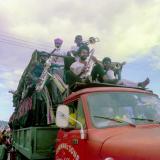
Kaiso Power is a collection of rare jazz, calypso and percussive gems from Trinidad and Tobago from the revolutionary generation of the 1970s, bringing radical new political vision and reclaiming ancient spiritual consciousness through music. At the dawn of the 70s a shift was taking place all around the world. The streets of Port of Spain thronged with Black Power marches, trade union demonstrations and Carnival protest bands - one epicentre in a growing global exchange of ideologies and strategies among Pan Africanist circles in Jamaica, Guyana, London, New York, Montreal, Lagos, Accra and beyond. And when the meetings were over, the revolution moved to the cramped secret dance halls, the Carnival fetes, the steelband yards. The music always had a sharp edge. Searing commentary has always been part of the various types of music in Trinidad, and in the absence of lyrics, the defiant use of the drum maintains the resistance, as well as the re-framing of the playing of European instruments to the needs of the message. Lancelot Layne, Delano Abdul Malik De Coteau, Andre Tanker, Clive Zanda, Mansa Musa were more than artists, they were teachers, community workers and advocates for justice. These recordings are as raw as an all-night Carnival jam, the horns loud, the percussion ringing out, the bass dripping with joy and rebellion. Under the modern influences is a solid rhythm, an unbroken connection to Africa, the songs and keys and cadences brought across the middle passage. These songs are a peep into the untapped treasures of a revolutionary generation, looking at the world with fresh eyes and believing that music was a central part of the mission to build consciousness and regain confidence.
Commandez maintenant et nous commanderons l'article pour vous chez notre fournisseur.

In a world currently defined by unrest, uncertainty, and cultural fracture, acclaimed saxophonist, composer, and bandleader Isaiah Collier returns with Joy, a 5-track EP that reframes one of humanity’s most nuanced emotions both as a devotional grounding and political act.
Collier’s deeply personal compositions present joy as an act that isn’t rooted in escapism or abstraction, but rather, as something hard-won rooted in lived experience, shaped by transformation, and sustained through connection. Throughout the album’s five compositions, Collier positions joy as a guiding light during challenging times, an expression of challenging yourself to utilize your gifts, an affirmation of love and discovery, and as an affirmative source of reassurance.
“We are in a paradoxical time, where so much is being revealed to us,” Collier shares. “Everything feels political from every scope… our collective hearts feel the heaviness in the air. Yet I say to you all—don’t despair. For right now, the most political thing we can do is share joy.”
That ethos is made clear in the opening title track and lead single “Joy.” A pulsing rhythmic motif anchors the melody with a sense of both searching and certainty. Collier conceived the piece around 3 years ago reflecting on a time where many people in his life were experiencing loss of family and friends and experiencing profound life transitions. “Everything just felt like it was falling apart with no aim in sight,” he reflects. “Yet, there is a light at the end of it all.”
As he played the chords with a sense of urgency, he could feel the vibration of yellow in the piece. That initial triplet motif serves as the guiding light on the piano and the only word Collier could hear was Joy. In addition to Collier at the helm singing and playing piano and tenor sax on the track, it features an expansive 11-piece ensemble with a full horn and string section allowing Collier’s propensity for composition and arrangement to shine with an eclectic sonic palette.
“Landscape of Dreams” finds Collier serendipitously leaning into utilizing his gifts as a multi-instrumentalist. While he had a sketch of the piece going into the studio, a traffic delay caused musicians to be late arriving at the studio. Never one to waste time in the studio environment, Collier stepped into new creative territory and took up the challenge of executing playing all instruments himself as an act of trust and experimentation. “I’ve never done this before, and so it was a leap of faith for me,” he asserts. “I always dream of doing stuff like this, and being part of the small percentage of people who can do it like Prince, Steve Lacy, Frank Zappa, and Stevie Wonder. The end result finds Collier immersed in a hypnotic soundscape playing layered flutes, drums, Metatron, Wurlitzer, and auxiliary percussion.
Another layer of joy is revealed in “Where I’m Loved” that serves as a love letter and leaning into the process of stepping into the willingness to explore life and love with a partner. On the intimate meditation of vulnerability and connection, Collier's vocal prowess is on full display, exerting effortless falsetto reminiscent of D’Angelo over soulful Wurlitzer and guitar as he crosses over into more R&B-inspired realms. “I believe everyone deserves this feeling or to honor the memories of it. Furthermore, I believe you should also go where you’re celebrated and not tolerated.”
“When the Dust Settles” captures the electricity of live collaboration and Collier further steps out of being confined to any specific genre. He had just gotten a microKORG keyboard from co-producer Sonny Daze and was exploring the vast array of sounds on the instrument. Collier plays synth bass on the microKORG joined by the electrifying improvisation of Cole Runge on guitar and the combustible rhythm of his brother Jeremiah Collier on drums with additional post-production work from Sonny Daze.
The album’s final track “God’s By Your Side” reflects on perseverance and artistic legacy, directly inspired from the passing of D’Angelo, whose life’s work was a huge part of Collier’s childhood growing up in the late 90s and early 00s. With gospel flavor and direct influence both from D’Angelo’s vocal and instrumental arrangements, the track speaks to resilience and persistence in the face of obstacles—an affirmation of source and reassurance. “And what’s better than having God by your side, right?” asserts Collier.
Joy is a through-and-through expression of the arc of joy in its truest form. Joy transcends fleeting happiness and is conscious gratitude shaped by taking chances, leaning into your gifts, fostering community, and lived experiences.
“Joy is partially happiness,” Collier explains. “But to me it means happily being grateful for family, friends, lovers, teachers, and good times. These are the things that anchor us.”
The release of Joy comes off the heels of significant momentum for Collier, whose work continues to garner accolades and resonate across cultural spheres. He was featured on the cover of DownBeat’s April 2025 issue, where he was named “The Next Sax Giant,” and profiled on NPR’s Jazz Night in America for his ambitious 13-movement interdisciplinary suite The Story of 400 Years, that traces 400 years of Black American History. He released two full-length albums in 2024 with The World Is on Fire highlighted in The New York Times’ Fall Arts Preview and The Almighty named among the publication’s Best Jazz Albums of the year.
Beyond performance and recoding, Collier’s influence is recognized in broader cultural and intellectual spaces as he was the recipient of the Jazz Journalists Association’s 2025 Up and Coming Artist of the Year Award, the 2024 Chicagoan of the Year in Jazz, and was named a Steve Jobs Archive Fellow joining an elite cohort of the next generation of artistic visionaries through a yearlong program.
In addition to the release of Joy, Collier is touring his “Collier Plays Coltrane” program throughout 2026 in honor of John Coltrane’s centennial. Rather than presenting Coltrane’s expansive catalog as repertory, Collier approaches this music as something living, reshaping it in real-time with a sense of space and improvisational dialog reflecting both reverence to the past and present times.
Commandez maintenant et nous commanderons l'article pour vous chez notre fournisseur.

Nonesuch Records releases Let X=X, by Laurie Anderson with Sexmob. This triple-LP/double-CD set was recorded live during a 2023 tour by Anderson and the jazz band Sexmob – Steven Bernstein and Briggan Krauss on brass, Kenny Wollesen on percussion, Douglas Wieselman on winds and guitar, and Tony Scherr on bass. Its cover and interior packaging feature paintings by Anderson. The album features 23 songs, including many favourites from throughout Anderson’s career, performed in new arrangements – plus one by Lou Reed and Metallica, ‘Junior Dad’. Anderson and Sexmob play more US and international dates this spring and summer (details below).
The New York Times said Anderson and Sexmob’s concert at the Brooklyn Academy of Music (BAM) ‘wasn’t a historical recreation of past recordings; Sexmob’s sound is a beefier one than on Anderson’s albums. With musicians who can double on electric guitar and bass clarinet, its members offered a rich range of textural variation throughout the evening.’
Laurie Anderson is one of America’s most renowned – and daring – creative pioneers. Her work, which encompasses music, visual art, poetry, film, and photography, has challenged and delighted audiences around the world for more than 40 years. In a recent 60 Minutes profile, Anderson Cooper said she ‘is a pioneer of the avant-garde, but... that doesn’t begin to describe what she creates... It’s experienced by audiences who come to see her perform: singing, telling stories, and playing strange violins of her own invention... she blends the beautiful and the bizarre, challenging audiences with homilies and humor. She blurs boundaries across music, theater, dance, and film.’ The Washington Post has said she ‘doesn’t just tell stories; she draws out every word with a kind of physical pleasure, tasting its flavor as she probes the everyday mysteries of life.’
Anderson released her first album with Nonesuch Records, the critically lauded Life on a String, in 2001. Her subsequent releases on the label include Live in New York (2002); Homeland (2010); the soundtrack to her acclaimed film Heart of a Dog (2015); and her Grammy-winning collaboration with Kronos Quartet, Landfall (2018). Nonesuch released a re-mastered edition of Big Science in 2007 for its 25th anniversary, followed by a vinyl LP re-issue in 2021; the album includes Anderson’s beloved, surprise hit, song, ‘O Superman’, which also is featured on Let X=X. Her recent Nonesuch release was 2024’s Amelia, about renowned female aviator Amelia Earhart’s tragic last flight.
Anderson’s virtual-reality film La Camera Insabbiata, with Hsin-Chien Huang, won the 2017 Venice Film Festival Award for Best VR Experience, and, in 2018, Skira Rizzoli published her book All the Things I Lost in the Flood: Essays on Pictures, Language and Code, the most comprehensive collection of her artwork to date. Recent exhibitions and installations of Anderson’s work include Habeas Corpus at New York’s Park Avenue Armory; her largest exhibition to date, The Weather, at Washington, DC’s Smithsonian’s Hirshhorn Museum of Modern Art; and Looking into a Mirror Sideways at Stockholm’s Moderna Museet, which was her largest European exhibition to date.
Laurie Anderson was awarded the 2024 Stephen Hawking Medal for Science Communication, along with Christopher Nolan and David Attenborough, and the International Astronomical Union named a minor planet in her honour: Asteroid 270588, Laurieanderson. That same year, she was awarded a Grammy Lifetime Achievement Award.
il devrait être publié sur 08.05.2026
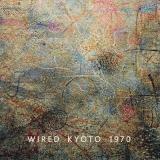
Wired was an ephemeral improvisational music project formed by Michael Ranta, Karl-Heinz Böttner, and Mike Lewis. On 28 April 1970, the trio recorded an extended studio session of approximately 140 minutes, in collaboration with Conny Plank, who engineered and mixed the recording in real time, incorporating elements of live electronics. This session was subsequently edited to album length and released in 1974 as part of the Free Improvisation 3LP box set issued by Deutsche Grammophon, alongside recordings by Iskra and New Phonic Art.
Owing to its exploratory electric sound world and Plank’s distinctive spatial production techniques, the Wired recording acquired a degree of underground cult status, particularly among listeners associated with krautrock and psychedelic improvisation.
Shortly after the studio session, Ranta and Böttner travelled to Japan, where they spent approximately six months performing with Karlheinz Stockhausen at Expo ’70 in Osaka. In addition to these activities, they engaged in various independent musical projects and performances.
The present release, sourced from the personal archive of Michael Ranta, documents a live duo performance by Ranta and Böttner, recorded on 27 July 1970 in an outdoor setting in Kyoto (the exact location remains unknown), before an audience of approximately 200 music teachers. The recording exhibits sonic and aesthetic characteristics closely aligned with the previously recorded studio material, retaining the distinctive “Wired” sound while situating it within a live, site-specific context.
Michael Ranta: percussion, voice, home-made instruments, tapes, tape delay, effects Karl-Heinz Böttner: guitar, organ, ocarina, voice, effects
il devrait être publié sur 17.04.2026

,respite -- levity for the nameless ghost in crisis", aka ,r--L4nGc`, ist Colin Selfs drittes Album, nach dem gefeierten ,Siblings` (2018) und der dazugehörigen EP ,Orphans` (2019).In ,r--L4nGc" bewegt sich die Musik des in Berlin und New York lebenden Künstlers, Komponisten und Puppenspielers nahtlos zwischen schwebenden, unheimlichen Pop-Vocals, immaterieller experimenteller Elektronik und knallharten Dancefloor-Rhythmen. Strahlende, grenzenlose Schönheit und unentrinnbarer Terror sind ein und dasselbe. Unter Einbeziehung von Selfs langjähriger Praxis des Puppenmachens und auf der Grundlage eines bewussten Exils, das es dem Künstler ermöglichte, sich mit verlorenen Seelen auf anderen Existenzebenen zu unterhalten, ist ,rünL4nGc" eine integrierte Vision der eklektischen Praxis des Künstlers. Self singt in Polari, einer vergessenen Form des Slantwise-Englisch, das von queeren Subkulturen seit Jahrhunderten verwendet wird, um sich der Entdeckung zu entziehen, und performt für unsere verstorbenen Lehrer und Freunde und für den Rest von uns, die bereit sind, mit unheimlichen Geistern zu kommunizieren. Für Fans von Perfume Genius, Björk, Holly Herndon, Psychic TV, Oneohtrix Point Never, Lyra Pramuk, Bat For Lashes, SOPHIE, Talk Talk. "respite - levity for the nameless ghost in crisis", aka "r-nL4nGc", is Colin Self's third full length album, following the acclaimed "Siblings" (2018) and its companion EP "Orphans" (2019). In "r-L4nGc" the Berlin and New York based artist, composer, and puppeteer's music travels seamlessly from soaring, uncanny pop vocals to immaterial experimental electronics and hard-hitting dance floor rhythms. Radiant, limitless beauty and boundless, inescapable terror are one and the same. Incorporating Selfü's long standing practice of dollmaking, and drawing upon a conscious exile that allowed the artist to settle into conversation with lost souls on other planes of existence, "r-L4nGc" is an integrated vision of the artist's eclectic practice. Singing in Polari, a forgotten form of slantwise English used by queer subcultures for centuries to evade detection, Self performs for our departed teachers and friends, and for the rest of us, ready to commune with uncanny spirits. For fans of Perfume Genius, Björk, Holly Herndon, Psychic TV, Oneohtrix Point Never, Lyra Pramuk, Bat For Lashes, SOPHIE, Talk Talk.
[f] [CANTING]
il devrait être publié sur 21.02.2025

WeMe has always had the ambition of producing ousiders alongside its established artists. Let's hear it for the debut EP from Rehab333, a discreet but no less creative artist and graduate of the Rephlex School Academy. After taking classes with teachers such as Richard d James and Dr. Chris Jeffs, analog machines hold no secrets for him, enabling him to develop wonderful melodies at a time when they are sorely lacking. First released on cassette on the Binary Bigit label, it seemed essential for WeMe to record these tracks on vinyl, in perfect harmony with the label's musical history.
Commandez maintenant et nous commanderons l'article pour vous chez notre fournisseur.

Album packaging features 24pt reverse board jackets and illustrated inner board sleeves, with silver printed center labels. All artwork created by acclaimed designer, Håvard Gjelseth. Ol’ Burger Beats’s new opus, 74: Out of Time, is a multifaceted and stunning exploration of sounds and eras. In addition to every track being produced at 74 beats per minute, the album harks back to the year 1974; particularly the music, the records, the activism, the artwork, and the aesthetics. But it’s also incredibly current, as the Out of Time portion of the title very much refers to the present. It promotes a sense of urgency in the face of current affairs such as the COVID-19 pandemic, climate change, as well as contentious politics sweeping across the US and Europe. Beyond those deeply resonating elements to the record, 74: Out of Time is a truly gorgeous representation of hip-hop through the lens of the Norwegian composer, which is undoubtedly his most ambitious undertaking to date. Using 74bpm as his basis, he constructs sublime, jazzy instrumentals that feature some of hip-hop’s finest emcees and vocalists. And to say they all gel perfectly together is an understatement—and it would be underselling OBB’s meticulous approach here. Each song blends seamlessly from one to the next spread across the album’s 17 tracks, with the help from a standout supporting cast that includes Fly Anakin, Awon, Quelle Chris, Pink Siifu, Yungmorpheus, Lojii, billy woods, Tha God Fahim, Vic Spencer and Vuyo, among several others. “An avid record collector, the producer's first release was 2014's High Rhodes which led to comparisons to his heroes such as J Dilla, Madlib and Pete Rock.” Okayafrica // “With music teachers for parents, it was perhaps inevitable that Ole-Birger Neergård would follow their path and become a student of the game.” Passion of the Weiss
Commandez maintenant et nous commanderons l'article pour vous chez notre fournisseur.

THE LIGHT IS LEAVING US ALL is one of the C93 albums that haunts me the most. I was OverMoon and Blessed to work on it with the Astonishing Aeonic Beautiful Talents of Reinier Van Houdt, Alasdair Roberts, Ossian Brown, Rita Knuistingh Neven, Andrew Liles, Aloma Ruiz Boada, Michael York, Davide Pepe, Ania Goszczyńska, and Giulio Di Mauro. Once again, the Voice in the Mask of one of my favourite authors, and longest colleagues, Thomas Ligotti, also joined C93.
The album’s title was given to me in a dream, in which I saw The Souls of humans pouring out of their eyes, and returning to God—The Light Had Left Them Quite!
On THE LIGHT IS LEAVING US ALL, I brought together my studies of specific Akkadian and Biblical Hebrew texts that I was translating with my friends and teachers Professor Martin Worthington, Ola Wikander, and Professor Seth Sanders, and also Channelled my fascinations with The Red Barn Murder of 1827 and “The Witchcraft Murders” of “Bella” in Hagley Wood in c.1941 and Charles Walton in Lower Quinton in 1945.
All this time, the birds were sweetly singing, the kettle was on, the milkmaid was singing, and the policeman was dead—all this while the birds were softly singing, and The Light Was Leaving Us All.
Remastered by The Bricoleur at Bladud Flies!, and with the original artwork refreshed and reborn by Rob Hopeye, this 12” vinyl picture-disc comes in a full-colour die-cut sleeve, which is printed on both the outside and inside.
This is one of the first 4 reissues of the entire back catalogue of C93 on picture-disc and standard vinyl, in the lead-up to the publication of my autobiography at the end of 2025, whilst I also work on many other recording, publishing, and painting projects, and Watch And Pray! Each release in the picture-disc vinyl reissues series is limited to 1,000 copies, and the titles will not be repressed as picture-discs once they have sold out.
il devrait être publié sur 30.08.2024

Gregory T.S. Walker’s Minstrels & Minimoogs was self-published by a young, nomadic composer and virtuoso in 1988 to accompany an immersive multimedia performance at the University of Colorado Boulder’s Fiske Planetarium. Created with this outer, and other, world setting in mind, the four tracks find Walker stretching toward an ancient-to-future vision where Egyptian myths and Hieronymus Bosch-ian tableaus are rendered in a screaming three dimensional circuitry of electronic drums, synth guitars, and, of course, Minimoog. Given the musical terrains and outmoded topics traversed, and that this entirely DIY effort was originally released as a micro one-sided 12” edition, Minstrels & Minimoogs is as perplexing and euphoric a document lost-to-time as it is now found.
Born in 1961 into an intensely musical family spanning four generations, Gregory’s mother Helen Walker-Hill was a noted musicologist specializing in the rediscovery and work of historical Black female composers, while his father, George Walker, was the first African American composer to win the Pulitzer Prize for music. Both parents studied with the famed (and famously strict) Nadia Boulanger in Paris in the 1950s, and held to lofty aesthetic standards in their home life. Walker began studying the violin as a child, but when a burgeoning interest in the electric guitar and rock music as a teen manifested, it was largely verboten in the household. The rule was that the music played in the home was to be acoustic and classical. Although the elder Walkers eventually relented and allowed Gregory’s guitar to be plugged in for a brief interval on the weekends, the remaining days he settled for strumming it sans amplification.
Gregory, conditioned and eager for a life in music but looking to get out from under the influence and yoke of his famous composer father, ultimately chose to study computer music at the University of California at San Diego, where he earned a Master of Arts. This was followed by another MA in electronic music composition at that hotbed of West Coast experimental music, Mills College. Intermedia and multimedia in the arts was the rage in the 1980s, and Mills was one of the centers for it; audacious spectacle meeting visionary performance, such as one of the realizations for Anthony Braxton’s music for multiple orchestras a young Gregory performed in with his violin.
After a series of solo synthesizer concerts around California, Gregory followed a girlfriend on a mid-country move to Boulder, Colorado. After picking up yet another composition degree at University of Colorado Boulder, his life as a composer really started, writing a piece for extended technique for guitar, a passacaglia for vocoder and orchestra, as well as Minstrels & Minimoogs.
Envisioned as a multimedia performance such as the kind he’d experienced at Mills (which was all but unknown in Boulder at the time), Gregory roped in a number of college going or aged friends of varying skill levels and musical sympathies to accompany him with distorted sax or oblique spoken interludes. Confronted with a lack of finances, but driven to get his ideas captured in a complete musical package, the album was recorded in his brother’s apartment. If not every player assembled was on Gregory’s virtuosic level, so be it; it was more about capturing the spirit of his intentions and embracing the serendipity of mistakes.
An inspired attempt at world building, Minstrels & Minimoogs draws on the deep well of musical knowledge Gregory gathered from his parents and teachers, but all the while subverting that historical basis by incorporating mutant strains of prog and pop music. The work accumulated is not unlike the playful 1980s work of Gregorio Paniagua, where medieval estampies and rondeaus are wrenched into an anachronistic present where Hildegard Von Bingen and Kate Bush are contemporaries. Ars nova, new art, a 20th century minimalist jester and troubadour.
A one sided LP was the cheapest option Gregory found to have Minstrels & Minimoogs memorialized on vinyl, so somewhere between 50 to 100 copies were pressed. There was no distribution, outside of copies that were handed out to friends or sold at the performances at the planetarium. Gregory T.S. Walker’s cosmic-futuristic forays into oblique pop and baroque subversion could forever reside perfectly in both the domed simulacrum of our universe for which it was composed, in the formats it is being reintoduced now, and our own biblical firmament. For in the words of Gregory, straight from the original liner notes: “God Is A Minimoog”
Gregory T.S. Walker’s Minstrels & Minimoogs arrives again August 23, 2024 on vinyl and digitally as part of uncommon¢ (“uncommon sense”), an open-ended, serialized endeavor from Freedom to Spend that provides new meaning for rarefied recordings from music's outermost fringe.
il devrait être publié sur 23.08.2024

About 10 years ago I tried to contact Dutch artist and scientist Felix Hess, when he was still alive, but never got a reply. Years later, in 2022, I was talking to Frans de Waard, who told me he was administering the sound archive of the late Hess together with Mark Poysden. Together we started working on an album to celebrate his life and many accomplishments. It includes selections from all the highly collectible Frogs releases from the 80's and 90's, while the artwork is sourced from his Zenga collection, unifying his two greatest passions.
While in Australia conducting research for his PhD thesis on the aerodynamics and motion of returning boomerangs in 1975, Felix Hess heard frog choruses for the first time. The hills, close to Adelaide, generating amazing natural rhythms and waves of spatial sounds. He started traveling to the outback to record similar frog choruses, camping in quit places to enjoy these wonderful nightly concerts.
Mystified by how the waves and rhythms of frog choruses could emerge without a conductor or a score and by the physics of this method of communication, he started to research the phenomenon in 1982 by designing and building small electronic sound creatures that could respond to each other in a similar way. These creatures and his various other installations earned him international acclaim.
During the 1990s, Hess was invited to Japan many times to present his work and he became interested in Zen Buddhism. One summer evening in 2001 he visited a museum in Berlin and saw actual Zen art for the first time. Overwhelmed by the extraordinary power radiating from this and similar artworks he became addicted to Zenga and gradually built up one of the world's most representative collections of hanging Zen scrolls. A collection he named Kaeru-An (Frog Hut) to honor his original teachers, the frogs
il devrait être publié sur 07.06.2024

Señor Sapo is a character created based on the Mesoamerican deity Quetzalcoatl:
while capturing Sr. Sapo atop The Pyramid of the Sun at Teotihuacan
in The Valley of Mexico; dawn…
Augie Robles (the photographer) spotted an elementary school class of around 25 children with two teachers suddenly appear scaling the momentous stair case behind our subject!
They shouted;
“Sr. Sapo! Sr. Sapo!”
the name has stuck! they wanted to have their pictures taken with Sr. Sapo? however; they did not want to touch him as they thought his skin might be “viscoso” or “slimy”?
“Q’uq’umatz” (as it is known amongst the K’iche’ Maya) goes back to the Olmec culture and represents the duality of flight to reach the skies; whereas the reptilian (in most cases a snake) represents the ability to mingle amongst other creatures of the Earth;
Among the Aztecs he was related to the gods of wind; of the dawn; of merchants and arts; crafts; knowledge and the planet Venus: as well as their patron god of the priesthood…
THE FUTURE S0UND 0f YESTERDAY is as well a construct of the imagination; a fictitious “orchestra” with many imaginary characters; KENT CHESTERFiElD; LEE NAilZ; PHATTITUDE; EPiPHANY TALEUR; ThE ClARKETTES (they actually exist in the “real” world)…
The titles:
“0de to A Tree”;
is the culmination of a night out in Berlin; “…met a young man in a bar close to the “atelier”; he said he wanted to play something on a piano; we go to the place and he plays this melody over a rhythm though not in rhythm?
…basically edited none of it; then used a series of tone generators and filters to change the sound into all the soundscapes you hear in the final piece; the title was simply a tribute to the trees…” Eric D. Clark
“is it good for Ya’?”;
is a slow pumping House song with a message in the form of a question; “is it good for you?” as in “I could do it; however; should I? you know; look in a mirror and ask the question”…
the Music came about as an experiment at NADEL EiNS Studio in Berlin; Heavy bass at around 116bpm plus Erix’s cheeky vocal stylings weaving in & out of frame (as well key) deliver a unique aural experience!
the final track:
“Elsewhere playback”
is literally the playback of a track Eric did under the guise of KENT CHESTERFIELD for a party series he did in Sacramento CA with AJ Sachs…
it’s really just a tool; the good thing is you can drop -8 (or -16 assuming your tables are tuned) to bring it to a tempo one could easily rap over OR push it up to +8 and have a dry Tech number? Either way it BANGS! Dub Plates & Mastering did a swell job!!
overall a must for any Dance Music aficionado’s collection out on October 10th on SHADDOCK RECORDS !
Commandez maintenant et nous commanderons l'article pour vous chez notre fournisseur.

"Galt MacDermot (1928-2018) was an award-winning Canadian-American composer, pianist, writer of classical music and theatrical pieces. MacDermot also composed music for several film soundtracks (like the 1970 blaxploitation film `Cotton Comes To Harlem') and released several exceptional jazz and funk albums on his own label Kilmarnock Records. He is best known for his work on the Grammy winning 1967 musical Hair (which also produced several number-one singles like "Aquarius/Let The Sunshine In") and Two Gentlemen of Verona (1971) for which he won a Tony Award. In 2009 Galt MacDermot was inducted into the Songwriter's Hall of Fame and in 2010 he received the Lifetime Achievement Award. In 1979, MacDermot formed the New Pulse Jazz Band, which performed and recorded his original music. Galt MacDermot's music is extremely popular with collectors of jazz and funk. Working with jazz and soul musicians such as Bernard Purdie and Idris Muhammad, MacDermot created pieces that used African rhythms (he made the study of African music his speciality). In recent decades, his work has become popular with hip-hop musicians including Busta Rhymes, Ol' Dirty Bastard, Gang Starr, Action Bronson, Public Enemy, MF Doom, Madlib, J Dilla, Obie Trice, Naughty By Nature, Run DMC and Digable Planets_the list is endless. The album "Ghetto Suite" was written in 1970 and released in 1972 and is considered one of the most ground-breaking records ever issued on Galt MacDermot's Killmarnock label and consists out of a selection of songs and poems by Harlem/Bronx school children, set to Galt's music, and sung by vocalist Angela Ortega. Given That Galt's handling the music, you can bet that there's plenty of nicely executed funky touches - supported by rolling bass-work, snapping drums, and organ virtuosity. But the real charm of these groovy tunes comes from the lyrics, which have a simple and to the point way of dealing with issues of racism, poverty and other issues of the time. The story telling is surprisingly gripping even after all these years. The whole album creates an extremely personal direct sensitivity to the environment of Ghetto kids_telling us with defiantly honest intensity what it was like to be young and black, the drugs and the deaths, the topic of incarceration_or simply the fact of being battered by the frustration of Ghetto existence. Ghetto Suite is way more than an entertainment record, it has been used by teachers and counsellors to inspire and motivate the muted voices of the black inner cities_ documenting both their anguish and their triumphs. Tidal Waves Music now proudly presents the FIRST EVER vinyl reissue of this exceptional conceptual album (originally released in 1972 and a highly sought-after pricey collectable ever since) This unique record now comes as a deluxe 180g vinyl edition (strictly limited to 1000 copies) with obi strip and features the original artwork and extensive sleeve notes.
il devrait être publié sur 24.11.2023

Chyskyyrai, whose real name is Valentina Romanova, comes from Yakutia (Republic of Sakha), the northernmost republic of Siberia.
She sings in a variety of traditional vocal techniques, drawing on folk songs, animal imitation but most of all on the ancient mythological epic Olonkho, which has a multitude of archaic delivery styles. Olonkho performance is a traveling one-man theatre and a solo improvisation. Traditionally, the Olonkho storytellers, olonkhosuts, travelled from community to community, tribe to tribe, and performed the same function as a shaman. Mostly they were regarded as spiritual guides, teachers and keepers of cultural values. Their performances could last for several days, and were not just entertainment but also the way of teaching that people are not separate from nature and attuned them to it.
The songs presented on this LP capture a period of her life when she met with Tim Hodgkinson (Henry Cow) and Ken Hyder (Talisker) who had been performing together since 1978, and are well-known for their explorations in the field of shamanic cultures and free jazz. Their collaboration with the “Soviet Jazz Federation” goes back many years until finally in 1990, the duo went on an extensive tour in Siberia as “The Shams” during which they also visited Yakutia. Since then they have made numerous trips to Tuva, Altai and Buryatia playing with the local musicians and studying shamanism.
Recorded in Ken Hyder’s basement, early May 2005. Sleeve artwork by Sophie Lécuyer.
il devrait être publié sur 31.10.2023

Rare Jazz-Funk album from 1978 by Headhunters founder.
Featuring an all-star line-up including Herbie Hancock.
Originally released in 1978 on Tobisha EMI Japan.
First vinyl reissue outside of Japan released in collab w/Totown Records. Comes with double side insert.
Paul Jackson (born in Oakland, California in 1947) needs little introduction. Paul began playing bass at the age of nine and was considered by many of his teachers to be a musical prodigy. Jackson was known as a “Musician’s Musician” and shaped a sound that launched a new direction in contemporary music: the so-called ‘Pulse Playing’, a trademark sound of close-meshed funk grooves combined with sensational rhythms. With this innovative approach, he influenced entire generations of jazz and funk musicians to come. Paul’s compositions were sampled by big acts from the likes of Prince, TLC, Mobb Deep and NWA…just to name a few.
Paul Jackson was a founding member of the Headhunters under Herbie Hancock (THE group responsible for their ground-breaking fusion and jazz-funk compositions that took the world by storm in the 70’s). The solid union between Hancock and Jackson has been especially evident in the many international tours they have made together…not to mention that he participated on most of the Headhunters albums and Herbie’s solo albums.
Paul has also worked as a producer and as a studio/live musician alongside acts such as Santana, Sonny Rollins and The Pointer Sisters. He was a frequent guest performer at renowned international festivals such as the Montreux and Newport events. Jackson’s composing has not gone without recognition and was nominated for Grammy Awards in 1974, 1975 and 1976. Like other highly talented, creatively motivated engineers of music, Paul has expanded his career to other mediums such as playing on blockbuster movie soundtracks such as “Death wish” and “Dirty Harry”.
Paul Jackson also wrote five solo albums worth listening to – including the monster of an album that is known as “Black Octopus” which is considered to be a kind of lost Headhunters album.
His debut album “Black Octopus” saw the light of day in 1978 and is a total piece of art filled with abstract sticky funky grooves, floating electric piano playing, strong thumping bass lines, raw heavy drums and amazing vocal acrobatics (Jackson himself takes vocals in 3 out of 5 songs, and his soulful singing voice strikes an emotional chord that does not go unnoticed).
On “Black Octopus” you’ll also find some of the best all-star musicians from the likes of Alphonse Mouzon (Roy Ayers, Betty Davis, Azar Lawrence)…and last but not least fellow Headhunters Bennie Maupin and Herbie Hancock himself.
With “Black Octopus” Paul Jackson wrote the book on how a jazz-funk-fusion album should sound like. The fact that the album was only distributed in Japan at the time (Jackson resided in Tokyo since the late 70’s, where he passed away in 2021) continues to increase its reputation as an album that is VERY hard to find. This is a must-have gem…not only for fans of jazz, funk and rare grooves, but also for DJs and collectors around the globe.
il devrait être publié sur 31.08.2023

»A Magnetic Road to Hell« is Robert Millis and Bardo Todol’s first release as a duo. Recorded transcontinentally throughout 2021 and 2022 they traded sounds and ideas between Cordoba, Argentina and Seattle, USA with a stop in Mexico along the way: screamings, rivers, kids, radios, mellotron, records, 78rpm shellac, wax cylinders, field recordings, birds, electronics, guitars, percussion, haze, static, a destroyed Indian piano, talkative violins, talkative people from the 1920s, talkative black and white dreams, tin cans from the streets, Argentinian children's tales about cows being teachers, and more. You’re riding on an unspooling reel of tape, through sounds real and imagined, the tape flapping dangerously, shredding; we are all of us magnetized, attracting together, pushing apart, unwinding onto the floor, stumbling along the road to hell.
Robert Millis and Bardo Todol have each released music on many different labels: Sublime Frequencies, Dinzu Artefacts, The Helen Scardale Agency, Discrepant, Abduction Records, Dust-to-Digital, Fire Breathing Turtle, Sub Pop, and Ikuisuus.
il devrait être publié sur 21.07.2023

Commandez maintenant et nous commanderons l'article pour vous chez notre fournisseur.

Thaniil Alexandros can’t imagine a life without producing. Under the name of RBCHMBRS, Thaniil has been tinkering with sample based productions for 17 years. In one form or another, RBCHMBRS has mashed inspirations of hip hop instrumentals with the funky, snappy bounce of UKG.
Being half Greek and half Dominican means that Thaniil’s first memories of music were of classic Greek music and his mother’s love of dance and disco. Growing up on the Bronx meant that he was exposed to a mix of genres his entire life. From boomboxes on the street or from the windows of his neighbors home, gave Alexandros exposure to sounds he hadn't heard.
Toe the Line EP was intended to return to stripped down elements of older releases, but something “a little less outer space, a return to earth.” Armed with an SP-404, RBCHMBRS wants to be playful without being reminiscent, always trying to move forward. He believes that nostalgic pain can propel an artist to make their best work.
While noting history teachers as salient inspirations that opened his eyes to cultures unknown to him, as well as a father who is a history buff of his own, Thaniil has inherited some of their reverence for the classics and the importance of learning from the past. Alexandros’ fundamentals are influenced by Madlib, Timbaland (“the early stuff,” he interjects), Q Tip, Havoc, Alchemist, UKG, as well as the culture that surrounded the NBA in the 90s, during his most formative years.
Keeping it in the family, RBCHMBRS works closely with critically acclaimed emcee/producer THERAVADA, who co-produced Sick by Earl Sweatshirt with him, and who is his cousin. Currently, RBCHMBRS is working on a self-proclaimed “sprawling dance album” with Tesh Curry. His audience has a lot to look forward to.
With his Estrella EP, his intention was expressed through the imagined feeling of a time warp, a portal, and maybe coming out the other end of it. He wanted Toe The Line EP to feel more grounded, a down to earth project that he leaned towards as he searched for his life to settle. This EP reminds him that many things in his life have changed for the better, and a lot of that has to do with the structure hes begun to install.
Commandez maintenant et nous commanderons l'article pour vous chez notre fournisseur.

Black Vinyl[17,86 €]
ACID KLAUS, the new collaborative solo project from songwriter-producer and Northern England cult leg-end, Adrian Flanagan (The Moonlandingz, International Teachers of Pop, Eccentronic Research Council & lots more) announces his debut concept album co-produced with his music partner in the ERC, Dean Honer titled Step On My Travelator: The Imagined Career Trajectory of Superstar DJ & Dance-Pop Producer, Melvin Harris which will be released on Yard Act"s ZEN F.C. label. The album features contributions from Adrian"s long-time collaborators and friends including actress, Maxine Peake, US musician and video director, Charlotte Kemp Muhl (Ghost of a Sabertooth Tiger), Maria Uzor from Sink Ya Teeth and the Bradford-born pop-noir singer (currently singing in The Specials), Hannah Hu who is joined on lap steel guitar on a track by Richard Hawley. The album is completed by a whole host of fresh and exciting artists (as well as the aforementioned Lieselot Elzinga) - there"s the enigmatic Queen Bee of the Calder Valley, solo artist, Bianca Eddleston who goes under the name Soft Focus and finally from South Wales (and the current talk of the South London scene), the incredible welsh language singer-songwriter, Cat Rin.
il devrait être publié sur 03.02.2023

Blue Vinyl[19,29 €]
ACID KLAUS, the new collaborative solo project from songwriter-producer and Northern England cult leg-end, Adrian Flanagan (The Moonlandingz, International Teachers of Pop, Eccentronic Research Council & lots more) announces his debut concept album co-produced with his music partner in the ERC, Dean Honer titled Step On My Travelator: The Imagined Career Trajectory of Superstar DJ & Dance-Pop Producer, Melvin Harris which will be released on Yard Act"s ZEN F.C. label. The album features contributions from Adrian"s long-time collaborators and friends including actress, Maxine Peake, US musician and video director, Charlotte Kemp Muhl (Ghost of a Sabertooth Tiger), Maria Uzor from Sink Ya Teeth and the Bradford-born pop-noir singer (currently singing in The Specials), Hannah Hu who is joined on lap steel guitar on a track by Richard Hawley. The album is completed by a whole host of fresh and exciting artists (as well as the aforementioned Lieselot Elzinga) - there"s the enigmatic Queen Bee of the Calder Valley, solo artist, Bianca Eddleston who goes under the name Soft Focus and finally from South Wales (and the current talk of the South London scene), the incredible welsh language singer-songwriter, Cat Rin.
il devrait être publié sur 18.11.2022

2LP Gatefold (featuring liner notes). Limited Edition. Artwork by Meeuw.
A collection of personal recordings made on various synthesisers between 1989 and 2017, by Telesoniek Atelier. Huge Tip on this one!
Early feedback:
"Fascinating improvs. I loved 'Gruesse'. " Suzanne Ciani (Atmospheric)
"Beautiful music with real subtlety and depth” Anthony Child (Surgeon, Transcendence Orchestra)
"Lovely, pure synth music." Mark Pritchard (Warp Records)
"Chateuroux is mighty... A proper zoner. Flung on earth." John T. Gast
"This is a great release by Telesoniek Atelier - a musician unknown to me before now. I've been thoroughly enjoying playing this double vinyl release since i got it. Both discs are filled with amazing music that moves between abstract electronic experiments to melodic, DMT bent sounding, classical contemporary music and futuristic soundtracks from non-existing Sci Fi movies you'll wish you could see. It time-warps you from here to there then freezes the moment. It all sounds like its been taken straight from the ancient room .. you know, that one where the spirits of the great teachers live. This is very focused, unpretentious and highly emotive music . A wonderful and dreamy sound garden coming from what I imagine to be a beautiful mind . These discs will be camping out on my turntables for a while."
Tako Reyenga (Music From Memory)
"A deep sense of the symphonic permeates this record. While synthesizers form the basis of its sound, Hans Kulk shapes their timbre into uncanny acoustics and weaves them together like an orchestra. Just when you think you have understood what is happening, another layer reveals itself. Yet it keeps a floating sense of lightness throughout. A truly rewarding listening experience."
Hainbach
Commandez maintenant et nous commanderons l'article pour vous chez notre fournisseur.

The ninth installment in Numero's Cabinet of Curiosities is 100% chart smashes. Culled from the depths of the private press, Super Hits gathers 12 magical adaptations from the Me Decade's introspective songbook. Pop this oversized 8-Track into your Fleetwood Weltron and enjoy a motley crew of lounge singers, wedding bands, synth enthusiasts, trailer park dreamers, accountants, gym teachers, and more as they bring their own unique energy to classics by Steely Dan, War, Boz Scaggs, Neil Diamond, John Denver, Smokey Robinson, The Carpenters, Redbone, The Box Tops, Fleetwood Mac, and more. Tape warble not included.
il devrait être publié sur 24.06.2022

Peach Discs is delighted to kick-off a busy 2022 with a five-track EP from one of our favourite new artists. buen clima’s Transferencia Electrónica is an exploration into pared-down dance music, where interlocking rhythms, percussive synthesis and quasi-looping delays meet to form smooth, efficient and pointed club tracks.
In his own words:
“Stylistically the tracks on this EP owe a lot to the great Black musicians from Chicago and Detroit, namely Herbie Hancock, Mr. De', DJ Rashad, Lil' Louis, Frankie Knuckles, James Stinson and Gerald Donald. I feel like the EP is kind of a love letter to the styles they pioneered, done in my own way, which in turn has been influenced by my background in classical music and improvised music but also so, so heavily by my friends and teachers: I've learned so much just from interacting, working and just plain witnessing eggglub, Lorelei, Maxi Cat, il sentimento, Hola Papá/Annunaki, Lavina Yelb, Jorge Pepi, and the whole music scene I belong to in Santiago.”
Commandez maintenant et nous commanderons l'article pour vous chez notre fournisseur.

Re-mastering by: Kevin Gray
This is a reissue of a now out-of-print album from live trio date by the legendary LA-based pianist, composer and multi-bandleader, Horace Tapscott. Pianist Horace Tapscott is always at his best when he is leading a trio. Born in 1934 in Houston, Texas, Horace came from a musical family centered around his mother, Mary Malone Tapscott, who worked professionally as a singer and pianist. When Horace was nine, the family moved to Los Angeles. As a teenager in the late 1940's, Horace was surrounded by the music of Central Avenue: Art Tatum, Charlie Parker, Coleman Hawkins, Dexter Gordon, were among the many cats on the set. Around this time, Horace also began to take music lessons from teachers Dr. Samuel R. Browne and Lloyd Reese, whose other students included Eric Dolphy and Frank Morgan. Horace's musical studies included trombone in addition to piano.
In 1952, Horace graduated from Jefferson High, got married to Cecilia Payne and went into the Air Force. Horace played in an Air Force Band while he was stationed in Wyoming for his term of duty. After mustering out, he returned to Los Angeles where he worked around on various gigs until he joined the Lionel Hampton Big Band as a trombonist.
In 1959, Horace finally went with the Hampton Big Band to New York, where his friend Eric Dolphy introduced him to John Coltrane. A tough winter, a lack of gigs, and too many nights on the floor of a friend's art gallery finally sent Horace packing for sunny Southern California, where a life with wife and family awaited his return.
The sixties saw Horace emerge as a die-hard leader of the Avant Garde. Horace began to gain public notice playing with his own group, that included alto saxophonist Arthur Blythe, bassist David Bryant, and drummer Everett Brown II. Horace also appeared on records for the first time.
Horace was always outspoken about racism, politics, stereotypes, and social ethics. His forward-minded vocal presence on and off the microphone is as much a part of his art as his piano playing. As a result, he was labeled a "dissident," categorized as an "employment risk," and black-listed from the music industry establishment in the early 1970's. None of this slowed Horace down. He began gigging sporadically at Parks and Recreation events and for churches around Watts. This "dark period," with his only regular gig at his friend Doug Weston's Troubadour on Los Angeles' "Restaurant Row", was also a time of intense creativity.
Around 1977, Horace reorganized the Pan-Afrikan Peoples Arkestra with the help of several old friends and many new faces. The Arkestra performances involve singing, dancing, and poetry in addition to the music. Soon after the new group's debut, Horace came to the attention of producer Tom Albach who contracted Horace to record a number of albums for Nimbus Records. Albach also helped introduce Horace to an international audience by arranging several European tours.
The 80's saw Horace emerge as one of jazz's premiere solo pianists. He recorded several solo piano albums for Nimbus.
il devrait être publié sur 30.08.2021

Black Truffle is pleased to announce Parampara Festival 13.3.1992, a stunning performance by Amelia Cuni captured live in Berlin almost thirty years ago. Milanese by birth and resident in Berlin for many years, Cuni lived in India for over a decade, studying the classical vocal style of dhrupad under masters of the form. Though perhaps known to many listeners primarily through her performances of the vocal music of John Cage and collaborations with Werner Durand and Terry Riley, she is recognised internationally as one of the great contemporary proponents of traditional dhrupad singing. These recordings document her performance at the 1992 Parampara Festival at the Haus der Kulturen der Welt, a landmark event celebrating the global spread of Indian classical music, bringing together Indian teachers with their international students.
Accompanied by Gianni Ricchizzi on vichitra vina (a plucked zither played with a glass ball slide) and her own tanpura, Cuni stretches out for a languorous side-long performance of the late night Raag Bageshri, the limpid tones of her vocal improvisations illuminating the droning strings like flashes of the moon revealed by rushing clouds. Initially working patiently through a series of subtle dialogues between Cuni’s melodic extemporisations and phrases in response from Richizzi’s vichitra vina, the performance builds to a series of strikingly beautiful, virtuosic held notes from Cuni at the beginning of its second half, before picking up some brisker rhythmic articulation on the way to its conclusion.
On Devino Amor, Cuni presents her own composition, a setting of mystical texts by the 13th century Franciscan friar Jacopone da Todi, elaborated through various traditional raags. Like the words used for most dhrupad compositions, the text Cuni has selected from da Todi praises divine love, thus linking her otherwise unorthodox use of Italian text to the dhrupad tradition. The result is a performance of a yearning intensity that communicates across any language barrier. On the final performance, Cuni and Ricchizzi are joined by Helmut Waibl on the two-headed pakhawaj drum for a piece using a 14 beat rhythmic pattern that sets in motion a cycle of tension and release, metrical dissolution and resolution, possessing a subtle grandeur.
Illustrated with archival images of the performance and accompanied by new liner notes from Peter Pannke and Lars-Christian Koch, Parampara Festival 13.3.1992 invites listeners to lose themselves in Amelia Cuni’s unique approach to ancient tradition.
Commandez maintenant et nous commanderons l'article pour vous chez notre fournisseur.

Sub Rosa presents in their Early Electronic series, the final chapter of music by Beglian key composer of early electronic experiments, André Stordeur (1941-2020). Side A features a previously unreleased, stark and poignant composition from 1979; while the B side is vibrant and almost playful of pieces from the 2000s.
André Stordeur His musical career started in 1973 with a tape composition for the soundtrack to a film on Gordon Matta-Clark titled Office Baroque. Later in the 1970s, he participated to avantgarde music ensemble Studio voor Experimentele Muziek, founded in Antwerp, Flanders, by Joris De Laet. Since 1980, Stordeur composes exclusively on Serge synthesizer, either a Serge series 79 and a Serge prototype 1980, which was especially built for him by Serge Tcherepnin himself. In 1981, Stordeur composed the music of Belgian film director Christian Mesnil's documentary Du Zaïre au Congo. He studied at IRCAM in 1981 with David Wessel and then flew to the US to study with Morton Subotnick. Stordeur became an influential sound synthesis teacher and, in 1997, completed his Art of Analog Modular Synthesis by Voltage Control,4 a guide to everything modular.
Oberheim While 'Oberheim' is the centerpiece of this LP, we pressed for the first time on vinyl three pieces from the session André called 'Synthesis Studies,' previously featuring on Complete Analog and Digital Electronic Music, 1978-2000. 'I was helped in my studies by a must-have book: The Techniques of Electronic Music, by Thomas Wells and Eric Vogel (University Stores, 1974). That book aside, I learned synthesis on my own. After a trip to India in 1968, I discovered Indian music and took tabla and sitar classes in New Delhi; my teachers were students of Chatur Lal and Ravi Shankar. Later, in the 2000s, while living in the US, I tried to recreate through synthesis all the Indian musical instruments I loved so much.' 'Drone' is one of his most spectacular works.
il devrait être publié sur 28.05.2021

Back in 2015, to celebrate the 50th anniversary of the BBC broadcast of Delia Derbyshire & Barry Bermange’s “Inventions For Radio: The Dreams”, The Eccentronic Research Council released their own super-limited edition cassette soundtracking the recalled dreams (and nightmares) of friends, artists, actors, musicians, scientists, poets and filmmakers. The release was called “The Dreamcatcher Tapes Volume 1”. Five years on, and with a large part of the planet under lockdown and with nowhere to go but within their imagination, the ERC put a call out once again to music collaborators, nurses, teachers, truck drivers, writers, journalists and shop workers to upon waking, record their dreams straight into their phones and to then send them to the ERC to soundtrack. And thus, Volume 2 of The Dreamcatcher Tapes was born!
How did you make the album during lockdown?
“We got around 26 dreams sent to us via email over the space of a couple of weeks then Dean Honer my partner in The ERC and I revved up the old analogue equipment and would record music and collage sounds to the dreams (remotely) from our home recording studios and bounce them back and forth to each other till they were done. It was a really good way to work actually, sometimes I didn’t even have to put on any trousers!” says ERC/ Moonlandingz founder Adrian Flanagan. Why a second volume of The Dreamcatcher Tapes? “I was really interested to see how the enforced lockdown and the removal of people’s basic needs such as human contact and hanging out in close proximity to friends was affecting the dreams of my friends, peers and those at the very front line of this horrible pandemic”, Adrian continues. “The Important shared experiences for people’s mental health such as going out to gigs, the pub, the cinema etc. ”It was an interesting experiment. Nurses dreaming of inadequate PPE and having to use blow up Elvis costumes to protect themselves. Teachers dreaming of zombies and lots of people dreaming about sex - where the hair of Greek sorceress’s Circe meets bouncy castle breasts and where other dreamers dream of serial killers or seeing dead family members, or taking baby elephants for a walk, or having discos for one in the middle of the ocean and so much more. I’m really proud of this record. It’s psychedelic in its truest most cerebral form”
Who’s on “The Dreamcatcher Tapes Volumes 1 & 2”? Who are the dreamers?
“Although our long time collaborator Maxine Peake wasn’t on the very first tape (her dream ended up on LTD edition split 7” ERC single we did with Pye Corner Audio) - she was the first dream that we soundtracked when I came up with the idea of doing the concept record. However, on the new vinyl and tape box set - she opens volume 1. Across the 2 volumes there’s film maker Carol Morley, Andy Votel from Finders Keepers records, John Doran from The Quietus (who also wrote the albums brilliant sleeve notes), acclaimed writers Benjamin Myers & Adelle Stripe, musicians such as Evangeline Ling from the group Audiobooks, Lias Saoudi from my ‘semi fictional band’, The Moonlandingz and fat white family, Sidonie from The Orielles, journalists /writers Wyndham Wallace (he wrote lee Hazelwood’s brilliant biography) and Daniel Dylan Wray amongst a whole array of musician friends, eccentrics and people with actual proper jobs!”
Why did you chose Castles in Space for this release?
“Jim Jupp at Ghost Box records suggested them to me so I looked into them and saw they were doing loads of really great strange little bespoke electronic record releases. I think that because this is a very niche limited run release, it required a label that was willing to treat it like a piece of art and not a throwaway mass produced commodity. So making sure the packaging was special, the artwork was bang on point and the sleeve notes were written by a writer we like all were very important to us. “It was also important that we could turn it around from the finished recording to being in people’s hands really quickly as Dean and I have another ten projects between us on the boil - and so far, Castles in Space have been true to their word. It’s an artists label done with love and there’s not many of them about anymore - believe it or not.“
“The Dreamcatcher Tapes Volumes 1 & 2” is an immense collaborative achievement which makes for a thoroughly compelling, and gloriously disorientating listening experience.
It is released as a double coloured vinyl LP in deluxe gatefold sleeve w/insert and a highly limited deluxe double cassette box set. The album is released on March 19th, 2021.
il devrait être publié sur 19.03.2021

Vampa were just kids, 13-14 years old, when they recorded and released their raw and very Iron Maidenesque 45 back in 1982. DIY all by themselves… The lyrics (sung in Swedish) is the ultimate hate for school-anthem. The boredom and frustration of (barely) teenage kids totally sick of school and its teachers has rarely been captured in a better and more enjoyable way. Even though the lyrics are in Swedish the language that grabs the listener as the needle is dropped into the groove is universal. Original 45 is near impossible to find. On The Dole Records found the members, got loads of rare photos that fills up the printed inner sleeve.
Comes with new original artwork by Swedish artist Oscar Nordblom, the guy behind the notorious Jobcentre Rejects-drawings
File under: ”beyond essential to any serious rock’n’roll fan”.
il devrait être publié sur 26.02.2021

Tramp Records continues their pilgrimage to the soulful fringes of spiritual jazz and progressive rock and funk with their 3rd and 4th volumes of their "Peace Chant, Raw, Deep and Spiritual Jazz" series, and the world could not be more ready.
As we turn together on this tiny blue ball hanging lonely in space, and as we together face existential threats ranging from climate catastrophe, the rise of brutal authoritarian regimes, the breaking of the industrial storm and the imminent collapse of empire, not to mention the raging covid-19 crisis and the continuing racial and social struggles across the globe, we are thrust into a society-wide grand awakening that has been in the making for a very long time. Of course, our musical teachers have trod this path before us, and have worked out solutions to these problems, the songs of the Peace Chant series ring out loud and clear as our ancestors' proof of concept. They say history repeats herself, maybe it's because we weren't listening the first time. Thanks to Tramp Records, we have been granted another opportunity.
Today, the musical and spiritual truths enshrined within the spiritual jazz diaspora seem to be more and more sought-after, and crucial at a time when we as a society seek higher and farther for those bold truths. With each generation, that truth doesn't change, and the artists featured in the series speak those truths along a continuum that ranges from the late-60s up to the present day.
Volume 4, the second LP opens with a gorgeous and lush Wurlitzer-oriented big band piece that among its many treasures also features the 17-year-old visionary-saxophonist-to-be, Steve Coleman in his alleged first recording! The contributions of Brother Yusuf Salim and Bus Brown, figures who should be very familiar to Tramp Records aficionados, are consecrated here with a live recording of Freedom from one of Brother Yu's last public performances. One of the two European contributions to the comp, Attitude, by Organic Pulse 'onesemble', reads like a double entendre, the word "attitude" meaning simultaneously one's disposition or state of mind, and also one's orientation relative to the horizon. The Peace Chant series continues to touch all the sacred meridians: more devotional music with James Scales & All Stars' Ser-Vi-Tude, trance music of non-dominant traditions with Donn Preston Group's Ghana-Cha!, a modal and blue organ trio offering from Tommy Jones, and closing with a rich and righteous ballad, Quernemoen, from the Wayne Powell Octet.
Peace Chant is the center of the mandala, representing the nucleus of the post-bop, modal jazz, avant-garde, transcendental, spiritual, ethnic, and freedom music universe without necessarily suggesting anything immediately identifiable as any of the above. This is the soundtrack to the raising of human consciousness and the salvation of society's very soul.
We give thanks to Tramp Records for leading our thirsty hearts to this rich fountain.
Commandez maintenant et nous commanderons l'article pour vous chez notre fournisseur.

A journey to far outlands: this is exactly what one can feel when listening to Béliz. Entitled Mémoires, the album from the band Béliz, explores new territories where the Guadeloupean musical tradition meets the harmonic universe of the harp. Béliz is the dialogue between the world of classical harpist Anne Bacqueyrisse, percussionist Olivier Maurières and multi-instrumentalist and singer Edmony Krater, fervent supporter of the Gwo Ka, the ancestral musical tradition coming from Guadeloupe. Founder of the band Zepiss, once a member of Robert Oumaou's collective Gwakasonné, Edmony Krater always had the will to open the Ka to other cultures and to incorporate new sounds. Indeed, with Ti Jan Pou Vélo, his tribute album in the memory of Marcel Lollia known as Vélo (one of the greatest drummers of Guadeloupe), released in 1987, Edmony Krater brilliantly mixed jazz-fusion, Occitan folklore, synthesizers with the distinctive Ka rhythms.
The meeting of Anne Bacqueyrisse, Olivier Maurières and Edmony Krater at the Music Academy of Montauban, gave birth to Béliz. In 2009 the group of three musicians-teachers, under the impulse of one of their pupils, decided to record in studio their project, Mémoires. Béliz, with its innovative and singular artistic approach, is a true invitation to travel. The title “Arawak É Karayib” is a vibrant tribute to the native West Indian people. “Gwadloup” - an acoustic version of the song already featured on the album Ti Jan Pou Vélo - is an ode to Edmony’s beloved island. “Natibel”, an hymn to Nature - another cover from the Zepiss band – makes sense here in a minimalist version.
A true fusional object, Béliz moves us to new horizons, both imaginary and poetic.
Commandez maintenant et nous commanderons l'article pour vous chez notre fournisseur.

Scottish trumpeter Malcolm Strachan is a founder member of top UK funk/jazz-funk band The Haggis Horns as well as being one of the busiest session musicians in the UK today. In a professional career spanning 20 years, he's recorded with the likes of Mark Ronson, Amy WineHouse, Corinne Bailey Rae, Jamiroquai, Martha Reeves and The Vandellas, Jesse Glynne, The Craig Charles Fantasy Funk Band, Black Honey, The New Mastersounds and Blue Note saxophone legend Lou Donaldson. Now he's finally releasing his first solo album, aptly titled "About Time", on Haggis Records and he's going back to his original roots... Jazz.
The album is a collection of original compositions, all written and arranged by Malcolm, which are firmly rooted in the classic acoustic modern jazz style typified by the great 60's and 70's recordings on the legendary Blue Note Records label. A nice variation of themes and tempos feature throughout the album. From full-on latin vibes to beautiful ballads, soul jazz grooves to cinematic soundtrack flavours, all woven together by a great group of experienced musicians.
Malcolm's core quartet is himself on trumpet/flugelhorn, fellow Haggis Horns members George Cooper (piano) and Erroll Rollins (drums), plus Courtny Tomas on double bass. Featured guests are Atholl Ransome on tenor sax (The Haggis Horns), Rob Mitchell on baritone sax (Abstract Orchestra) and Danny Barley on Trombone. Strings are courtesy of Richard Curran and the percussionist is one of the finest session players in Europe, Karl Vanden Bossche (Incognito, Robert Palmer, Joss Stone, The Gorillaz, Sade, Blur - He and Malcolm met while touring with Mark Ronson)
Malcolm's love of jazz comes from his parents. Aged 7, his jazz musician father gave him a trumpet. From then on, jazz was his life. His musical education came via music teachers, youth jazz orchestras and jazz summer schools but mostly from his dad's record collection listening to Art Blakey and Dizzy Gillespie records and learning to improvise and solo by ear. At 18, he enrolled at Leeds College of Music and quickly immersed himself in the city's vibrant acid jazz, funk and soul scene and from making his recording debut in 1999 with The New Mastersounds, jazz was his musical passion but took a back seat to funk/soul/pop which were the day job. Until now.
Jazz is back. The wait is over. It really is "About Time" for Malcolm Strachan.
Commandez maintenant et nous commanderons l'article pour vous chez notre fournisseur.

Crafting his own sound through years of intense musical exploration, the established Romanian artist delivers two otherworldly pieces, set as a tribute to his great inspiration and all time classics, Swayzak. 'Love for my teachers' is Half Naked Dog's second release, featuring Vlad Dinu and Swayzak as the remixer.
Commandez maintenant et nous commanderons l'article pour vous chez notre fournisseur.

Strut presents the brand new album from cosmic jazz travellers The Pyramids, led by saxophonist Idris Ackamoor, 'An Angel Fell'. I wanted to use folklore, fantasy and drama as a warning bell,' explains Ackamoor. The songs explore global themes that are important to me and to us all: the rise of catastrophic climate change and our lack of concern for our planet, loss of innocence and separation... but positive themes too, the healing power of music, collective action and the simple beauty of nature.' Produced by Malcolm Catto of The Heliocentrics, the album was recorded during an intense week at Quatermass studios in London and is one of the deepest, richest works yet from a band reaching their highest creative peak since the early '70s. Some of the many highlights include the poignant title track depicting a fallen angel in purgatory, outrage and grief on the powerful, hard hitting 'Soliloquy For Michael Brown' and the lilting, beautiful album closer, 'Sunset'.
The Pyramids originally came together in 1972 at Antioch College, Yellow Springs, Ohio where teachers included renowned pianist, Cecil Taylor. After forming in Paris and embarking on a cultural odyssey' across Africa, the group recorded three independent albums, 'Lalibela' (1973), 'King Of Kings' (1974) and 'Birth / Speed / Merging' (1976) and became renowned for their striking live shows, mixing percussive, spiritual and space-age jazz with performance theatre and dance. After migrating to San Francisco, they disbanded in 1977. 35 years later, the band reunited in 2012 following growing demand for their music from vinyl collectors. German label Disko B released the freeform album 'Otherwordly' and in 2016, they released their first album for Strut, the acclaimed 'We Be All Africans'.
'An Angel Fell' is released on Strut on 11th May 2018 and features full hand-painted artwork by Lewis Heriz.
New concept album by leading cosmic jazz collective exploring global apocalypse, climate change and the healing power of music
Produced by Malcolm Catto of The Heliocentrics - Superb cover painting by Lewis Heriz
Full priority worldwide PR campaign and marketing
Release supported by major European tour dates in May and key Summer festivals
Commandez maintenant et nous commanderons l'article pour vous chez notre fournisseur.
