Time fortifies the bonds between us. Since emerging in 2018, Light The Torch have grown stronger in lockstep together as a band and as friends. Through this growth, the Los Angeles, CA trio—Howard Jones vocals, Francesco Artusato [guitar], and Ryan Wombacher [bass]—only enhanced every aspect of their signature sound. Upheld by head-spinning seven-string virtuosity, yet also anchored to skyscraping melodies, the group crafted twelve no-nonsense and no-holds-barred metallic anthems on their 2021 second full-length album, You Will Be The Death of Me [Nuclear Blast].
“The past few years have helped me to become much more personal in my writing,” explains Howard. “Even though I’m kind of a loner, this band became real family. My experiences with Ryan and Fran inside and outside of the band truly bonded us. I think it shows in this album, it truly represents who we are as a group.”
“Every second on this record was thought-out,” adds Fran. “Howard’s performance gives me chills, because it feels so alive. There’s so much emotion in it. I know the guy very well at this point, and our friendship is a big part of Light The Torch.”That friendship cemented over the course of the past three years. The group shot out of the gate as a contender on their full-length debut, Revival. It bowed at #4 on the Billboard US Independent Albums Chart and at #10 on the Hard Rock Albums Chart in addition to receiving acclaim from Revolver, Outburn, and many more. “Calm Before the Storm” racked up a staggering 14.5 million Spotify streams, while “The Safety of Disbelief” remains one of SiriusXM Octane’s all-time most requested songs. They also crisscrossed North America and Europe on tour with the likes of Trivium, Avatar, In Flames, Ice Nine Kills, Killswitch Engage and August Burns Red to name a few.
In late 2019, an idea for the title track “Death of Me” kickstarted the creative process. The guys returned to Sparrow Sound in Glendale, CA to once again work with the production team of Josh Gilbert and Joseph McQueen [Bullet for My Valentine, As I Lay Dying, Suicide Silence].This time around, they also welcomed Whitechapel’s Alex Rudinger on drums. “He’s incredible,” says Fran. “He was exactly what we needed.”Now, they kick down the door for You Will Be The Death of Me with the single “Wilting In The Light.” Howard’s instantly recognizable vocals soar over a sweeping riff and rolling beat before culminating on a massive luminous hook, “Over and over again we struggle. We’re wilting in the light, and we stumble in the dark.”“It has a different vibe and a very interesting riff,” observes Howard. “I love it when listeners can take what they want from a song. This was a special one for us.”
“More Than Dreaming” opens up the record with gut-punching guitar and another knockout hook. Elsewhere, airy keys wrap around chugging distortion on the title track “Death Of Me.” Regarding the latter, the frontman goes on, “Most people have some source of grief in their lives. It’s relatable, and it was appropriate for the song.”After the melodic melancholia of “Come Back To The Quicksand,” Light The Torch recharge the 1987 Terence Trent D’Arby classic “Sign Your Name” as the record’s climax. Shimmering keys bleed into an overpowering verse before it snaps into the immortal chorus beefed up with thick distortion. “Howard stayed at my house with me and my wife for the entire recording of the album,” recalls Fran. “I like to cook, and one night during the first week of pre-production I made everyone dinner. A compilation with ‘Sign Your Name’ started playing, and I thought, ‘I can do a version that would sound awesome!’ Howard knew and loved the song too. For as crazy as it sounded, it worked so well.”
In the end, the bond between Light The Torch burns brighter than ever in the music as they deliver a definitive statement with You Will Be The Death Of Me.
“We wanted to make a fully listenable and fun album that doesn’t let up,” Howard leaves off. “At the same time, we’re showing some heart, passion, and connection. It’s what we’ve always intended to do with this band.”
Search:team ghost
“After many years and EP released, the idea of working on something bigger was growing in me. This project is a natural way for me to introducing myself by showing my musical signature, a generous & mesmerizing sound, taking influences into ethereal colors in order to impact the listeners with a powerful & vibing sound, also by bringing some ideas I never dare to put here. “
Nikitch is a versatile musician, making his unique signature by using classical music as much as Jazz & electronic music. He rapidly get supports by tastemakers Gilles Peterson & Laurent Garnier, playing his music all around the world, and also working with labels like Ninja Tune, Brownswood or Soulection. France based but open to the whole musical world, his projects and collaborations goes from Brussels based producer Kuna Maze to french Rapper Grems passing by UK singer Andreya Triana. After a bunch of remixes ( DJ Cam, Submotion Orchestra, Ghost Of Christmas) and some releases on prestigious labels as Chateau Bruyant, Cascade Records or Tru Thoughts, he just joined the Casamance team to release his first LP, which will be out in September 24th.
Something wicked this way comes. Following singles 'Know The Future' b/w 'Digital Warfare' in 2019 and 'Hypersocial' b/w 'Safety Test' in 2020, ESP’s own Patrick Conway has now teamed up with the illustrious Appleblim (of Skull Disco and Apple Pips fame) for a meaty self-titled debut 2xLP under the new collaborative moniker, Trinity Carbon. There is something to be said for art created in the face of global unraveling, while mass transgression and the friction of culture shifting produce poignant commentary, but more often than not, it’s the personal coping mechanisms within our work that have the power to speak directly to the receiver. After a number of sessions resulting in wild imaginative beginnings, it was the untimely passing of Andrew Weatherall and a coming to terms with that loss that moved the two Brits-via-Berlin to herd their roaming sketches into a more narrative statement. In the uphill struggle to retain some sense of individualism, it’s always outsiders like Weatherall whose risks illuminate the roads of creativity less traveled, and when those beacons go dark there is a disorientation felt far and wide. Conway and Blim concede to the internal inquiry, “What would Weatherall do?” bringing to mind the man’s pervading morale, always soldiering onward through mediocrity, as it was undoubtedly an impetus for the duo growing steadfast and chiseling 'Trinity Carbon' into completion. While employing trusted machines in the bass department, they established a warm euphonic home base from which they could stray in a variety of tonal and rhythmic directions without straining a tether to the album’s core. However, as soon as any hint of familiarity may arise, or listeners begin to mentally assign stylistic epithets, the duo boldly change course to remind us that while the banal stay safely defined, it’s the iconoclasts, the outsiders who make us feel.
Steevio is perhaps one of the most influential electronic artists you’ve never come across. With more than forty years of knob-twiddling experience, this modular magician boasts enough cable to bring you to the moon and back. Away from the blinking racks, Steevio runs music festivals, like Freerotation, manages record labels and generally paves the way. Now this pioneer and Firescope are teaming up for a very special EP.
With Acatalepsy, this veteran dives deep into his machines before resurfacing with four tracks of melting organic techno. “Tarantism” comes to life with drums, percussive textures that prove fertile ground for ever more intricate patterns while orange blossom keys bloom. From understated chatter, a hive of beats soon forms around “Cynefin” as dewy notes float on the warmth of a new dawn. The natural world is an integral part of these compositions, the industrious movement of rhythms, the change and reshaping that comes with growth. Another presence on the 12” is the musician himself and his own influences. These early inspirations come to the fore in the hazy hi-hats of “Oxytocin” with its satellite-like bleeps and dreamy basslines that echo both the armchair and club of sounds of 90s techno. Those bleeps grow ever more distant in the fragile finale of “Intonation.” A melody precariously perches, thawing like ice, above delicate echoes that ghost behind modular bulges as drums fade.
Acatalepsy encapsulates the ephemeral nature of sound. Through this selection of one-off recordings, through these live jam sessions, Steevio captures a palpable and primal energy with an expert’s ear. An EP that casts spells from beginning to end, an EP from a true waveform wizard.
On "Neon Genesis: Soul Into Matter²" Meemo Comma (a.k.a. Lara Rix-Martin) takes Kabbalistic text and Jewish prayer and guides them through twinkling ambient synths, breakbeats and cranking industrial noise, full of strange wonder and drama. You can hear soft synths transmuted into choirs of seraphim and moments of occulted dancefloor rapture, from Aramaic chanting and ravey breakbeats to readings from the Zohar. It is quite beautiful at times. Jewish mysticism is at the root of Western esoteric beliefs and therefore has formed the structure of many films and books that explore the question of humanity. Inspired by the visuals of Evangelion and nineties anime soundtracks such as Ghost In The Shell (and its later Stand Alone Complex series), the new Meemo Comma album is a soundtrack to an imaginary anime that, like its real counterparts (e.g. Full Metal Alchemist), takes the beautiful parts of Kabbalah and sets them to science fiction stories. When asked about the themes that inform her new album, Lara Rix-Martin says "Judaism is filled with many tales and teachings that prevail in science fiction to this day - whether consciously or not. Sci-Fi is the genre best equipped to explore the immensity and challenges of human experience. Something that Judaism has also been attempting for over three thousand years." "I watched Ghost in the Shell when I was 14 and it was so striking, visually and sonically. The soundtrack has acted as a backdrop to explore my Jewish identity. I have been reading the Talmud since last year, discovering a deeper love for Jewish stories and teachings. There are some beautiful, hopeful ideas in Kabbalah too, which were a central inspiration to this album such as the idea that the first human was non-gendered and just this form made up from the qualities of HaShem (God) who performed 'Tzimtzum', contracted their form using their Ein Sof (eternal light) to create 'Adam Kadmon' whose form split into all human souls." Lara playfully subheads her album: "In the year 5781 humanity is ever closer to becoming a singular consciousness. A team of humans are forming an android, Adam Kadmon (CODENAME: UNIT KADMON). First, humans have to gain higher consciousness guided by the Sefirot." While you don't have to know about these influences to enjoy the music, it stands true that the intention is an irreverent love letter to the way grand myths are birthed into the future through new forms, retaining their beauty and elegance.
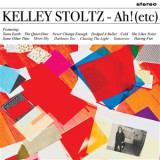
First pressing of 400 units comes as yellow vinyl! "I was guzzling wine at my favorite bar in San Francisco, the Rite Spot, and the entertainment that night was some local opera singers singing along with a big video screen showing a collage of various operatic moments with subtitles. One particular subtitle, 'Ah!-(etc)' made me laugh, I thought it was a perfect description of life - the joy of existence against the etcetera of it all, the struggle. With a heavy head of rose' it seemed like ecstatic poetry! I scribbled it on a napkin and thought it might make a good title for something" And so the mystery behind the title of Kelley Stoltz new record is solved. Less of a mystery is the quality contained therein_ after 12 self-titled releases and a several more under pseudonyms, Stoltz is the word for "one-man-band-home-recording-pop-songs of idiosyncratic character." A quick follow up to his more power pop and pub rock LP only "Hard Feelings" offering in the summer, "Ah-(etc)" finds Stoltz returning to his sweet spot, writing songs that never were, but should have been in the 60's and 80's. As with other LPs Stoltz makes virtually every noise on the album which was written and recorded in 2019 at his Electric Duck Studio in. San Francisco. A few friends popped in to play along_ Stoltz former bandmate, Echo & the Bunnymen's Will Sergeant adds electric guitar to "The Quiet Ones" a sort of Scott Walker lyrical take on strangers and neighbors. Karina Denike formerly of Dance Hall Crashers adds gorgeous vocals on the bossanova groover "Moon Shy", where Sergeant pops up again in a spoken word role on the outro. Allyson Baker of SF's Dirty Ghosts sings on "She Like Noise", a song Stoltz wrote for her in celebration of her love of seeing live bands. The album was mastered by Mikey Young in Australia.
Baroque Sunburst co-founder and Honest Jon’s team member, Big Hands displays his potent production prowess on the next Oscilla Sound release with three tracks touching on organic soundscapes, illbience and muddy bass oddities. In the old city of Lakamha ancient tombs stand tall and ruined, woven with moss. Birds as old as time beat their wings over tropical forests; their cries bouncing off wet rock lassoed with carvings of Mayan symbols. ‘1346’ begins with stirring synths and dub-echoing, low frequencies encompassing both spatiality and aberration before the heads-down atmospheric roller ‘Calix’s Head’ lays down sharp, acid flutters and ghostly ripples. ‘Louis H theme’ is an ode to the radical minimalist composer Moondog (Louis Thomas Hardin), whose experiments with polyrhythms continue to influence numerous generations of musicians. The track features swampy bass that balances weightlessly with the hypnotic sonics and breezy rhythms.
Hawkwind have always been associated with music festivals, most notably the free festivals, where Dave Brock has said that, at
those events, the band is not shackled to appease an audience by giving them what they expect and have paid to see. With that obligation removed, the band can relax and experiment more than usual and gigs become even more fun. Their sessions, where they played for free, sometimes with the Pink Fairies, at Canvas City, outside the official site of the Isle Of White Festival in 1970, are a matter of legend and Nik Turner gained much attention when he painted his face silver and was much photographed as a result. During his set, Jimi Hendrix referred to him as 'the cat with the silver face'. However, when we think of Hawkwind and festivals, the word Stonehenge leaps to the fore.
The band always loved being there, enjoying the whole event as well as the freedom of how and when they played. This was not a time of business, but a time of fun. The most important one of these was Stonehenge 1984, which proved to be the last festival before the authorities moved in the following year to block the festival from being set up and Hawkwind ended up playing a few miles away instead. It was the sad end to an era. It had taken place twelve times and, had it been allowed one more time, it would have become a public event and the powers that be were determined to prevent that from happening. Happily, the 1984 festival was recorded and filmed and the Hawkwind Solstice Eve and Solstice Morning were both preserved...and we should be grateful for that.
The fact that Hawkwind were playing for free didn't mean it was a basic show. As well as the line-up of Dave Brock, Harvey Bainbridge, Huw Lloyd Langton (who played the evening session, but not the following morning), Nik Turner, Alan Davey and Danny Thompson, there were half a dozen dancers, a mime artist and fire spitting. A free event, it was the ideal time to introduce the new rhythm section to the band in the form of Danny Thompson on drums and Alan Davey on bass, with Harvey moved to keyboards. A move which was to have a long term affect in the way he made music, leading to his solo career, as well as years playing synths for Hawklords, in years to come, after his stint as the Hawkwind keyboards player came to an end.. Danny fitted the bill comfortably and drummed for the band until he left in 1988, to be replaced by Richard Chadwick. Danny went on to play for other bands including Bedouin and Pre Med. He also recorded a cassette album called Skinwalker. Alan made a good team alongside Dave Brock and it can be seen on the video just how pleased he was to be playing alongside Dave Brock, a man whom he had only met for the first time in November 1982, backstage at the Ipswich Gaumont. He went on to be the longest serving Hawkwind bass player, before moving on to pursue solo projects and form a nmber of bands. So in terms of the line-up, Stonehenge 1984 had a notable impact on the formation of the band for a number of years and, indeed, the destinies of Harvey, Danny and Alan. As if that were not enough to make the event special in the annals of Hawkwind, they played an interesting and varied main set in the evening, featuring a blend of old and new Hawkwind songs, along with numbers from Inner City Unit and
Bob Calvert's Lucky Leif And The Starfighters album. In keeping with the relaxed atmosphere, there was a considerably extended
version of Ghost Dance, lasting around ten minutes. The sunrise set was special too, with a long, laid-back, jam at dawn, in fitting with the occasion.
A lovely and relaxing start to the day and the kind of jam they couldn't really play to a paying audience. It's good to have the
memories of this significant festival gathered together in three formats.
Enjoy this special set, which commemorates a special event, not only in the history of Hawkwind, but of the saga of Stonehenge festivals.
In collaboration with Brooklyn-based artist RDO/ATK, Sophia Saze makes her long-awaited return to her Dusk & Haze imprint with four slamming cuts on a release entitled ‘Stalker’.
Born in Tbilisi and now residing in Philadelphia after years living a nomadic lifestyle, Sophia Saze began her creative journey in her formative years with classical music and dance training. With a solid and natural musical foundation, Sophia became engulfed by electronic music leading to the launch of her Dusk & Haze imprint in 2017, before dropping a remix of Heathered Pearls on Ghostly International and the release of her much lauded debut album on Kingdoms. ‘Stalker’ sees her team up with old friend RDO/ATK who has been soaking up the dancefloor since the early 90s. With much of his influence stemming from the early east coast rave and club scene, his sound maintains a homage to the past without getting stuck in it. A sucker for a dirty 303, a breakneck amen, or a crushed 909, RDO/ATK’s style spans across genres from jungle to acid to broken beat and everything in-between.
The EP kicks off with a dynamic, jungle roller entitled ‘Stalker’ featuring old-school, amen breaks, stirring yet intriguing synths and hefty bass shatters balancing styles of glitch and funk together with pure class whilst ‘Fucking Crazy B’ lays focus on cold, syncopated grooves, chopped up shrieks and screams from a video of a traumatic personal incident and shimmering pads moving into ominous territories.
On the flip, ‘Talk To You In Your Brain’ delivers relentless kicks and spiralling acid squelches peppered with chilling vocal samples and frazzled fx that pulsates strikingly throughout until ‘Acid B’ rounds off proceedings with an effervescent, warehouse techno cut as the electrifying modulations bounce gracefully off the menacing percussion and slashing, 303 tones.
Laurel Halo, Donato Dozzy and Teheran sound artist Tegh give us their "Glassforms Versions"alongside a new edit by Max Cooper. The works of Philip Glass are reflected and refracted in a myriad of ways by some of the most renowned electronic artists alive, making for a blissful, multi-dimensional listening experience.
Textextext - (add your write up)
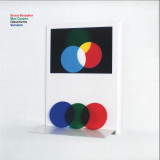
With "Glassforms", Max Cooper and Bruce Brubaker set out on an intimate, nuanced exploration of the works of Philip Glass. The resulting recordings, developed in a fluctuating exchange between the American pianist and the Irish scientist-artist, are an astounding testament to the innovation that artistic collaboration can achieve and what depths are yet to discover in Philip Glass' compositions. The two artists did not just rework, but fundamentally rewired the original songs using algorithmic software to process and augment the musical data it received from Brubaker's piano live on stage.
When approaching his remix, Donato Dozzy also tapped into that inspiration to create something new rather than just reworking it, which is one of the core motives that emanates from "Glassforms". The Italian producer and label owner is known for his drive to explore: he develops installations for public spaces and museums, uses obscure musical instruments and collaborates with classical singers or visual artists. "I chose "Two Pages" for it's hypnotic feel in the notes repetition", he says, "but I did not want to merely sample the piano, but instead ask someone I trust and admire to carve it from scratch and even go further." So he followed the lead of Brubaker and Cooper and teamed up with the renowned Italian percussionist and jazz musician Daniele Di Gregorio to completely rewire "Two Pages" into a gorgeous piece of endlessly modulating ambient electronica.
Laurel Halo, the second remixer on "Glassforms Versions", does not need a long introduction either: the American musician is at the forefront of electronic music in 2020, a bright star today after releasing her debut "Quarantine" on Hyperdub in 2012. Her remix of "Opening" brings to mind the string section of an orchestra tuning their violins before the performance - forever. They glide in and out of tune, sometimes individually, then together, then are accompanied by keys that are most likely a ghostly representation of Brubaker's piano, sampled and pitched down, but sound almost jazzy in the context of Halo's remix. It's a blissful listening experience, calling to mind her recent collaboration with cellist Oliver Coates on "Raw Silk Uncut Wood" and showing a deep understanding of Philip Glass' work.
Sound artist Tegh is the third on the remix bill - the electronic musician from Teheran delivers his take on "ƒTwo Pages", once again showcasing how versatile, how inherently complex the works of Philip Glass are. They can be interpreted in a myriad of ways - Tegh's version is a bounding, brooding piece filled with raw energy that feels like it is performed live, just for you, every single time you listen. His version is, at first, much more focused on the underlying moods, electronic undercurrents of the original than Dozzy's version, and yet, when the piano finally does break through, it becomes clear that we are listening to Philip Glass, reflected manifold: through the piano of Bruce Brubaker, the synths of Max Cooper, and then again through the mind of the artist Tegh.
Concluding the new "Glassforms Versions" is a previously unheard edit of "Two Pages". It's difficult to edit a piece of minimalistic beauty without losing it's essence, but Max Cooper - after many efforts and close conversations with Bruce Brubaker - managed to bring these shorter edit into a satisfying, conclusive form.
**400 ONLY REPRESS PHOTOLUMINESCENT COLOUR VINYL///!! 200 FOR EUROPE** “I was guzzling wine at my favorite bar in San Francisco, the Rite Spot, and the entertainment that night was some local opera singers singing along with a big video screen showing a collage of various operatic moments with subtitles. One particular subtitle, ‘Ah!-(etc)’ made me laugh, I thought it was a perfect description of life - the joy of existence against the etcetera of it all, the struggle. With a heavy head of rose’ it seemed like ecstatic poetry! I scribbled it on a napkin and thought it might make a good title for something” And so the mystery behind the title of Kelley Stoltz new record is solved. Less of a mystery is the quality contained therein… after 12 self-titled releases and a several more under pseudonyms, Stoltz is the word for “one-man-band-home-recording-pop-songs of idiosyncratic character.” A quick follow up to his more power pop and pub rock LP only “Hard Feelings” offering in the summer, “Ah-(etc)” finds Stoltz returning to his sweet spot, writing songs that never were, but should have been in the 60’s and 80’s.
As with other LPs Stoltz makes virtually every noise on the album which was written and recorded in 2019 at his Electric Duck Studio in. San Francisco. A few friends popped in to play along… Stoltz former bandmate, Echo & the Bunnymen’s Will Sergeant adds electric guitar to “The Quiet Ones” a sort of Scott Walker lyrical take on strangers and neighbors. Karina Denike formerly of Dance Hall Crashers adds gorgeous vocals on the bossanova groover “Moon Shy”, where Sergeant pops up again in a spoken word role on the outro. Allyson Baker of SF’s Dirty Ghosts sings on “She Like Noise”, a song Stoltz wrote for her in celebration of her love of seeing live bands.
The album was mastered by Mikey Young in Australia.
Much like its predecessor, In Decay, the 2014 compilation of unreleased, early Com Truise recordings, In Decay, Too unlocks a new set of rarities and unheard fragments from the past for the producer's legion of fans. To accomplish such a feat, the Com camp tapped the Internet's foremost Com Truise archivist, Polychora (formerly Comrade), whose YouTube channel has diligently documented Seth Haley's musical output since his earliest Komputer Cast (Haley's podcast mix series) days. Polychora's vault and input helped Haley and the team locate and curate the ultimate sequence of career-spanning off-album material, showcasing an artist in perpetual orbit of hazy machinist nostalgia. Haley's singular style of melodic beat music is the work of countless iterations; with In Decay, Too, his idiosyncratic exercises, experiments, and pivots pause for a rightful wave of appreciation. Following the smeared introductory tones of "Zeta," the album locks into its first robotic groove on "Compress_ Fuse," a trademark Truise treatment with cascading synth lines and deep, sinister low-end bass stabs. Further down is the suspiciously bright "False Ascendancy," which lures listeners through a labyrinth of drum patterns and siren-like keys, all colliding into "Constant Fracture." The track pushes to the point of stress, reaching the album's apex with a punishing series of blows before fading to relief, where the beatless and contemplative "Trajectory" awaits. In 2019, Com Truise left his previous sci-fi narratives behind for the visceral Persuasion System, a markedly more human record, which now makes In Decay, Too something like a bookend to an era. One last transmission from coordinates unknown; a culminating exhale ahead of what's still yet to come.
It's been four years since Sweatbox Dynasty, the fourth solo LP from Pennsylvanian experimentalist TOBACCO. In that time, Tom Fec's project has toured with Nine Inch Nails, provided the theme song to HBO series Silicon Valley, and teamed with Aesop Rock for a collaborative album as Malibu Ken. He now returns to Ghostly International for Hot Wet & Sassy, a full-length album oozing with his most playful and approachable songs to date, which, conversely, express notions of antilove, self-hate, and disappointment in others. Pop impulses have always surged beneath the surface of his sound - blown-out bass, analog synths, drum machines, and Fec's unmistakable analog gurgle and hiss - here they've bubbled to the top. "I feel like it's the most I've been able to refine what I'm doing," says Fec. "For the past decade I've had this motherfxcker on my shoulder that makes me pick away at structure and melody. Purposely covering up moments because I can. That really came to a peak on Sweatbox. So I wanted the opposite this time. Write the songs without ripping them in half. I went from 'what would the Butthole Surfers do?' to 'what would Cyndi Lauper do?'" And what would Trent Reznor do? Fec found his answer straight from the source. Their collaborative track, "Babysitter," fuses their voices into one deranged presence: "I'm the new babysitter," they alert, before pivoting into a menacingly saccharine bridge. The track tumbles on a tom fill, then a punishing synth line rips into a cacophony of drums and feedback like a lawnmower gnawing through the living room carpet. "This was new for me, but I wanted to write a song that was everything I am and have been, and then like one notch further. Trent was the notch further," adds Fec. The collaboration is a work of alchemy seamlessly blending TOBACCO's trademarks with Reznor's industrial rust and sonic gore. Downcast, sincere, woozy, "Jinmenken" might be the closest Fec has come to a ballad. "Maybe you can find me down the line," his vocoded delivery bounces along the beat. "It's me trying to write a Jets song," says Fec. Album opener "Centaur Skin" presents the stylistic concoction that has been the TOBACCO MO from the beginning, crossing dreamy melodic shimmer with the sinister tones and slime. This has become easier to digest, but also far more potent. A motorik beat steadies the track's galloping arpeggio, acting as a springboard for Fec's dark ruminations as well as an uncharacteristically crystalline synth solo. "It's my feel good self hate anthem. Don't worry, I'm good. It was fun to write." TOBACCO hasn't been reinvented, but it has been refined and distilled. Brighter, sharper, and far more dangerous because of it. Hot Wet & Sassy is practically staring at the sun without shades and feeling those corneas roast. Everything looks good as your vision fades. The pop-forward structures exert their undeniable hooks with baneful precision, pulling listeners into their clutches; once there, sugary melody rewards submission.
- A1: Main Theme Of Streets Of Rage 4
- A2: Character Select
- A3: They're Back
- A4: The Streets
- A5: Chill Or Don’t
- A6: Overflow
- B1: Call The Cops
- B2: Funky Hq
- B3: The Commissioner
- B4: The Storm Boat
- B5: Nora
- C1: Ghost Fair
- C2: Estel Round 1
- C3: The Undergrounds
- C4: On Fire
- C5: Barbon
- C6: Chow Time
- C7: Do Joe
- D1: Shiva
- D2: Aphex Train
- D3: Estel Round 2
- D4: An Exhibition
- D5: Double Divas
- D6: Rising Up
- F3: Next Of Kin Showdown
- F4: Staff Roll
- F5: It's Extra
- E1: Maximum
- E2: 25 Years Ago
- E3: Dj Kwashi
- E4: A Ki Ra
- E5: Lift The Ground
- E6: Mrs Y
- F1: Ti Un Fou
- F2: Mr Y
Generation Series 013: Streets of Rage 4 The Definitive Soundtrack comes to wax! Experience all 35 memorable tracks on three 12” 150g vinyl, with every song specifically remastered for the analog format.
Exclusive to the vinyl is a cover co-illustrated by Hitoshi Ariga and Ayano Koshiro, who worked on the past Streets of Rage titles alongside their brother, legendary composer Yuzo Koshiro.
The vinyl comes with a booklet containing liner notes from every composer, including Olivier Deriviere, Yuzo Koshiro and Motohiro Kawashima, as well as both Hitoshi Ariga and Ayano Koshiro, and members of the development team.
Newcomer Hekla releases her uniquely beautiful debut album for solo theremin and voice Á through Phantom Limb Records - run and curated by former FatCat Records, Thrill Jockey and Royal Albert Hall execs James Vella, Ken Li and Mark Pearse.
A Berlin-residing Icelander, Hekla's sparse, delicate, fractal music exists within these two worlds: dark and magical as Iceland's permanight folklore; and (though beatless) as deeply sonic and intense as Berlin's electronic scene. A long-term scholar of solo theremin, Hekla (shortened from her own name Hekla Magnúsdóttir) uses her instrument as an otherworldly and highly evocative Siren-call. A spectral, wailing, howling, lamenting yearning second-voice that underpins a soft vocal delivery, as if her studio had been haunted with a chorus of ghostly backing singers.
While a handful of reference points share a similar ground to Á - Colleen's interplay of voice and instrumentation; the richly immersive filmscore work of sadly passed fellow Icelander Jóhann Jóhannsson's; 'grandmother of theremin' Clara Rockmore's close relationship with such a singular instrument; Julia Holter's intelligent and classically-aligned songwriting - Hekla's music still exists singularly. A one-off talent, emerging from no particular scene, ascribing to no particular rules.
As a creative tool, the theremin - bizarre, unique, rarely heard - can be expressive, intuitive and highly adaptable. In Hekla's hands, her instrument covers an enormous range, from skittering birdsong of high frequency chirrups and chirps, to grinding, tectonic sub-bass. We are given the throbbing, apocalyptic dread of 'Muddle' and the baroque beauty of traditional Icelandic hymn 'Heyr Himna Smiur' in sequential tracks on the album's a-side. Appropriately, she also writes that the album title - Á - is similarly multifaceted in her native Icelandic: 'a river is an á and also it means ouch like when you hurt yourself, and also when you put something on top of something you put it á (on) something.'
The album was written and self-recorded by Hekla in her home studio in Berlin around her son's daycare schedule. Icelandic super-musician Mr Silla (a part-time múm member) guests on a number of tracks. Tallinn-based engineer Jose Diogo Neves - a stalwart of Icelandic and Portuguese music - mixed and mastered Á.
James Vella formed Phantom Limb in June 2017 after eight years in A&R for FatCat Records. Mark Pearse (formerly head of contemporary music programming at the Royal Albert Hall) and Ken Li (formerly of Thrill Jockey, now of Nettwerk) joined the team shortly after.
Latest Vaerel Records artefact limited to 200 copies, bringing together 5 different visions of the label's esoteric aesthetics. The manager of the label Raar bringing powerful percussion accompanied by samples of "Making of a Cyborg". Newcomer Quelza provides us his signature techno with broken rhythms and intriguing synths, then AWB continues to hypnotize us with his deep techno and finally Zadig & Ruhbarb team up for a tool full of high-speed drums and sharp cymbals.
Die Gruppe Automat - Jochen Arbeit (u.a. Einstürzende Neubauten, Die Haut), Achim Färber (Phillip Boa & The Voodooclub, Skip McDonald) und Georg Zeitblom (wittmann/zeitblom) - funktioniert wie eine gut geölte Maschine: Sie surrt, sie schnurrt, sie geht unbeirrt ihres Weges. Gemeinsam mit dem Modular-Magier Max Loderbauer sowie Paul St. Hilaire alias Tikiman, Lydia Lunch und Mika Bajinski am Mikrofon präsentieren sie nun mit »Modul« auf Compost Records ihr abwechslungsreichstes und konzeptionell stimmigstes Album.
Die Gruppe Automat funktioniert wie eine gut geölte Maschine: Sie surrt, sie schnurrt, sie geht unbeirrt ihres Weges. Auf seinem vierten Album allerdings schaltet das Trio einen Gang herunter, differenziert seinen musikalischen Ansatz weiter aus und geht fruchtbare Kollaborationen mit anderen Figuren aus der Musikwelt ein. Neben Max Loderbauer, dem Bandnachbarn aus den Candy-Bomber-Studios in Berlin-Tempelhof, mit dem Jochen Arbeit, Achim Färber und Georg Zeitblom bereits im Jahr 2015 für eine gemeinsame EP zusammenarbeiteten, sind das am Mikrofon die Dub-Legende Paul St. Hilaire alias Tikiman, die Königin der Gossenpoesie Lydia Lunch und die Newcomerin Mika Bajinski. Sie alle tragen ihren Teil nach dem Leitprinzip bei, welches »Modul« seinen Namen verleiht: Die acht Stücke entstanden gemeinschaftlich nach einem Baukastensystem, das den Kompositionsprozess dynamisch in Bewegung setzte und gleichmäßig auf alle Beteiligten verteilte. Das Resultat ist ein musikalisches Perpetuum Mobile - ein Album mit dem gemäßigten Ruhepuls einer Dub-Produktion, das unablässig in Bewegung bleiben.
»Modul« bildet als Album einen ständigen Veränderungsprozess ab, der erstmals im Jahr 2018 im Rahmen eines Auftragswerks für das Berliner Festival Pop-Kultur live erfahrbar gemacht wurde. Auf Einladung des kuratorischen Teams erarbeiteten Zeitblom, Färber und Arbeit gemeinsam mit ihren musikalischen Gästen St. Hilaire, Lunch und Gemma Ray ein Live-Set, das konsequent aus dem Studio auf Grundlage einzelner Passagen entstand, die nach dem Prinzip eines Resonanzmoduls miteinander (re-)kombiniert wurden: es geht zwischen den einzelnen Mitgliedern hin und her, die Strukturen morphen und der Sound nimmt immer andere Formen an. Eben dieser Ansatz bedingt auch die ständige Weiterentwicklung der Stücke, die gemeinsam mit dem Produzenten Ingo Krauss zu einem Album geschliffen wurden, das seinen nahbaren improvisatorischen Charakter keinesfalls verloren hat. Im Vergleich zu den drei thematisch ausgerichteten Vorgängeralben »Automat«, »Plusminus« und »Ostwest«, die sich jeweils explizit mit Berliner Flughäfen, dem Genre Dub und der europäischen Flüchtlingskrise befassten, setzt »Modul« auf eine inhaltliche Durchlässigkeit, welche die musikalische Offenheit der Platte widerspiegelt.
Nachdem »Modul 15« das Album mit satten Dub-Sounds und einer rollenden Bassline eröffnet, hebt »Easy Riding« passend zu St. Hilaires vor Fernweh triefenden Lyrics das Tempo mit dezenten Riddims an. Schon im nächsten Song, »Ghost«, debütiert Bajinski mit distanziertem Stimmeinsatz über einem melancholischen Stück, dessen Klangbild von den modularen Beigaben Loderbauers geprägt ist. So geht es weiter über die verzahnten Rhythmen von »Ankaten«, die von den verhallten Stimmen Lydia Lunchs und St. Hilaires begleitet werden, hin zum balladesken »Nothing Strange« mit St. Hilaire über das fiebrige Vocoder-Stück »Who For Eyes« schließlich zu den beiden abschließenden Stücken, »Pavo« und »Modul 11«, welche eine tiefenentspannte Coda zu den vorigen Tracks bilden. »Modul« durchläuft so eine Reihe von Stimmungen, ständig wechselnden Klangfarben und musikalischen Ideen, die sich in immer neuen Konstellationen zusammenfinden. Der erweiterte künstlerische Ansatz ebenso wie das vergrößerte Personal machen das Album nicht allein deshalb zur abwechslungsreichsten, sondern auch konzeptionell stimmigsten Platte Automats, die sich darauf in bester Form präsentieren: Als gut geölte Maschine, die surrt, schnurrt und unbeirrt auf dem Weg ist -
immer in Richtung neuer, unerhörter Sounds.
Back with a vengeance, Cimm returns to the imprint with a highly anticipated succession to his Sentry debut from last year, stamped on a irresistible 2 x 12" vinyl release. Infernal halftime beats and top-notch Dubstep shells, firmly entrenched at the frontier of sound system music and its invaluable heritage. The London-based producer and DJ rose to swift and significant acclaim in the last few years with releases on institutions like Tempa, J:Kenzo's Artikal and Wheel & Deal as well as notable residencies at Rinse FM and the renowned Fabric night club, among other recent achievements. Now coming to a turntable near you, Cimm delivers four bespoke cuts, primed for the dance and your enjoyment, battle-tested by the scene's foremost tastemakers.
Diving into unidentified transmissions, 'Unknown Caller!!' sets the pace with eerie reverberations and filtered resonance. Amid the faint hiss of machinery, larger-than-life drums set up shop alongside subterranean pressure emissions. Hefty breaks, hold tight! Retro synth melodies keep us on track within the monstrous switch-ups and unquestionably meticulous arrangement, sure to shut down any dance in style. Cutting no corners with the B-Side, Cimm teams up with veteran vocalist Rider Shafique for a dystopian sub-bass onslaught, swaggering militant chants and the apocalyptic ambience to go with it. Steaming low-frequency oscillations bubble and hurl their weight, stripped of all restraints, coveted in freezing harmonies and ethereal atmosphere. Vibrating in a more uplifting spirit, the dedication to the Jamaican roots of sound system culture unfolds in the Londoner's signature style - dubbed out soundscapes ahead. 'Tosh Dub' keeps it a laid back, with vintage instrumentation, scattered skanks and swirling organ chimes. Taking an ultimate trip through unremitted grit and off-kilter grooves, 'I Am Jack Travis' lures us in with rainy undertones and hypnotic foley sampling. Promptly revealing its true nature with plenty of pressure and scrupulous syncopation, a ghostly heavyweight ensues and closes the deal.