quête:teenage tapes

Genres
Tout
NATIVE SOUL - TEENAGE DREAMS

Die südafrikanische House-Variante Amapiano geht bei ATFA mit "Teenage Dreams" in die dritte Runde. Nach TENO AFRIKA und DJ BLACK LOW schnappte sich das in New York beheimatete Label das 2019 gegründete Produzenten-Duo NATIVE SOUL, die mit "Teenage Dreams" ihr Debüt geben. Der Titel ist passend gewählt, schließlich sind Kgothatso Tshabalala und Zakhele Mhlanga (DJ Zakes) mit 19 bzw. 18 Jahren sozusagen selbst gerade erst den Kinderschuhen entwachsen. Obwohl die beiden in Pretoria aufgewachsenen Jungproduzenten zur Generation 'Ma2000' gehören, also nach Beginn der Demokratie geboren wurden und die Apartheid nie erlebt haben, überzeugt "Teenage Dreams" mit einer künstlerische Reife, die das jeweilige Alter der beiden Soundtüftler weit übersteigt. Die zwölf Tracks auf dem Debüt sind überwiegend moody, instrumental und mit Drums "made from basslines which stick out like a pocket turned outside of pants" versehen. Für Fans von BURIAL und MR. FINGERS!

pas en stock

Commandez maintenant et nous commanderons l'article pour vous chez notre fournisseur.

22,23

Last In: 4 years ago
SPILL GOLD - ZAZA

The duo Spill Gold blends drums, synths and vocals into a sonic journey that invites listeners to explore realms of energy exchange. Nina de Jong on drums and Rosa Ronsdorf on vocals and synths joined forces in a collaboration that transcends genres. The music of Spill Gold serves as a woven tapestry of (unheard) voices, inviting you to lean in. The result is a fusion of psychedelic echoes, danceable rhythms, and intricate percussive layers. Their newest album is a result of a need for hope that longs for an anti-anthropocentric and non-patriarchal world. The duo's compositions navigate through cyclical patterns, echoing snakes biting their own skin, volcano's starting to errupt, witches fingers that crumble towers and birds of steel and feather. They invite you into a world where the concept of 'the first' or 'the best' fades away and to join them on their musical journey with no clear beginning or end.

En stock

Disponible en stock et prêt pour l'expédition

23,95
Gil.Barte - Claviceps Purpurea

For this new full-length output, Gil.Barte delivers on Teenage Menopause an 8 tracks LP full of formal strength and psychedelic grandeur. Unlike the vast near-death explorations or trancey adventures he developped on various labels such as Neubau, Big Science Records, Homemade Soundsystem or his own imprint Meth'O'Tapes, the meaningfully-named « Claviceps Purpurea » is a botanist guide to the valleys of the mind.
From the eponym opening to the ending echo, each entry is a glance at magical universal exotica. With an intense emphasis on rhythm, standing quite apart from his former releases, Gil.Barte draws the bouncing steps of a whirlwind dance rooted in western witchcraft.
Raging pieces of club-destroying material (for those who dare) meet sketches of electronic fever-dreams. A full circle that is meant to run on and on, breaking the veil of daylight consciousness.

En stock

Disponible en stock et prêt pour l'expédition

21,22
RUFFY & TUFFY - IF THE 3RD WORLD WAR IS A MUST

Earl Lindo production from 1984... TIP!

Teenage twins Ruffy & Tuffy deliver an apocalyptic slab of synth drenched Rub a Dub with what could be the first use of Vocoder in Reggae for 1982’s If The 3rd World War Is A Must. This release draws from both the original 12” and the master tapes combining the best vocal cut and dub versions.

Though not prolific musicians, many may recognize the twins sparring in matching red Pony track suits in Ted Bafaloukos’ iconic 1978 film Rockers. Ahead of its time in almost every way, the lyrics dealing with global war and the nefarious use of technology, sadly seem as relevant now as they did in 1982 though some of the actors may have changed. Surrounded by elite reggae musicians from childhood it was nothing unusual for the brothers to be in the presence of elders like Gregory Isaacs, Burning Spear, Augustus Pablo, Jacob Miller and especially Bob Marley at recording sessions and in daily life.

If The 3rd World War was their first venture into the studio as solo artists in 1982 first at Channel One and then Tuff Gong where Wailers alumni Earl Wire Lindo and Tyrone Downie (keys and Vocoder) laid down their space age additions to the track creating a genre bending Reggae /Electro/ Dub concoction that still sounds fresh 41 years later. Wire Lindo & the twins took the mastertapes to Texas based mechanical engineer and producer Stephen “Iya” James who ran Marcus Garvey Records and the label African Unity Productions in the unlikely Reggae hub of Austin Texas. The track was not released until two years later in 1984 as a 12” which had a run of only 500 copies and is no easy find these days.

En stock

Disponible en stock et prêt pour l'expédition

13,24
Grupo Um - Starting Point LP

In 1975, under the oppressive air of military dictatorship in Brazil, brothers Lelo and Zé Eduardo Nazario invited bassist Zeca Assumpção to join their musical experiments in a basement under Sao Paulo’s Teodoro Sampaio Street. As teenagers, the trio had already been playing together in Hermeto Pascoal’s Grupo, alongside guitarist Toninho Horta and saxophonist Nivaldo Ornelas, and it was while working together under Hermeto’s direction that the Paulista rhythm section (as they were then known) began to realise their own potential.

With many nightclubs and venues closed in the mid-70s and government censors dictating the output of radio, TV and art galleries, many Brazilian artists fled during the years of dictatorship. But underground, Grupo Um were fusing avant garde ideals with contemporary jazz and Afro Brazilian rhythm; making phenomenally free and expressive music - in stark contrast to the sterile, conservative conditions being imposed above ground.

Just like Hermeto Pascoal’s Viajando Com O Som from the following year, Starting Point was recorded over two days at Vice-Versa Studios, by revered engineer Renato Viola. The studio was one of the best in Sao Paulo and musicians communicated with engineers through cameras and a monitor, allowing the group complete immersion in the process. They also made use of the studio’s hemispherical tiled room, which served as an acoustic reverberation chamber.

The album begins with Zé Eduardo Nazario’s thunderous drum solo on “Porão da Teodoro”, before clearing the clouds with the lone Berimbau which opens “Onze Por Oito”. Built around a hypnotic electric bass line, heady Fender Rhodes improvisations, and more rip-roaring drums, it’s a rapturous, electrifying freak-jam in 11/8.

Like some invertebrate deep-sea curiosity, the free-form “Organica” is made up of Lelo Nazario’s playfully eerie prepared piano, with Zé Eduardo’s percussion flurries darting around Assumpçao’s double bass. The equally non-conformist, percussion-only piece “Jardim Candida” features many of Zé Eduardo’s home-made instruments, including a long saw blade played with vibraphone sticks and violin bow. While working with Hermeto, Zé Eduardo famously built his own all-in-one percussion set-up known as the “Barraca de Percussão” (Percussion Tent) - the first of its kind in Brazil, which he would also use on Hermeto Pascoal’s Viajando Com O Som and throughout his career.

“Suite Orquidea Negra'' (Black Orchid Suite) was written by Lelo Nazario as the score for an imaginary movie - the story of a rare, black orchid which produced a substance meant to cure all diseases, but which had mysteriously disappeared from the laboratory… “As a screenplay it’s not very good” reflects Lelo in jest, “but the music ended up being very interesting, the way its parts are chained to one another carries a little of the mystery I imagined for the movie.”

The album closes with the triumphant “Cortejo dos Reis Negros” (Procession of Black Kings) - a groovy variation on the Maracatu rhythm, with a two-note bassline underpinning piano improvisations, exultant wordless vocals, cuicas, slide-whistles and a very special guest appearance from Zé’s dog Bolinha.

Starting Point was to mark the inception of one of Brazil’s most daring instrumental groups. Their debut now sits in the lofty echelon of otherworldly 70s Brazilian music, alongside the likes of Marcos Resende & Index’s self-titled debut, Cesar Mariano & Cia’s Sao Paulo Brasil, Azymuth’s debut and indeed Hermeto Pascoal’s Viajando Com O Som. But just like all of those titles, which were either shelved or largely ignored at the time, Grupo Um - so radically ahead of their time - struggled to find a label to release their debut album. So Lelo kept the tapes safe in his archives, which is where they sat for almost half a century. Finally, almost fifty years later, this mesmerising piece of history is here, and it was only the beginning...

Grupo Um’s Starting Point will be released by Far Out Recordings, on vinyl LP, with an insert featuring unseen photos and liner notes by the Nazario brothers, as well as a CD on 17th February 2023.

En stock

Disponible en stock et prêt pour l'expédition

19,96
Joyce with Mauricio Maestro - Natureza LP

(Produced, Arranged and Conducted by Claus Ogerman)

Not long after the dawn of her career, as a teenager in Rio de Janeiro, Joyce was declared “one of the greatest singers” by Antonio Carlos Jobim. Yet despite reputable accolades and the fact that she has since recorded over thirty acclaimed albums, Joyce never quite achieved the international recognition of the likes of Jobim, João Gilberto and Sergio Mendes, all of whom became global stars after releasing with major labels in the US.

There was a moment when it seemed she might be on the cusp of an international breakthrough. While living in New York, Joyce was approached by the great German producer Claus Ogerman. Ogerman had already played a pivotal role in the development and popularisation of Brazilian music in the 1960s, recording with some of the all-time greats like Jobim and João Gilberto, as well as North American idols like Frank Sinatra, Billie Holiday and Bill Evans.

"I met him in New York City, in 1977”, recalls Joyce. “I was living and playing there, and João Palma, Brazilian drummer who used to play with Jobim, introduced me to Claus. We had an audition, he liked what we were doing and decided to produce an album with us.”

Featuring fellow Brazilian musicians Mauricio Maestro (who wrote/co-wrote four of the songs), Nana Vasconcelos and Tutty Moreno, and some of the most in-demand stateside players including Michael Brecker, Joe Farrell and Buster Williams, the recordings for Natureza took place at Columbia Studios and Ogerman produced the album, provided the arrangements and conducted the orchestra.

But mysteriously, Natureza was never released, and what should have been Joyce’s big moment never happened. As Joyce remembers, “I returned home, but Claus and I remained in contact, by letters and phone calls. He was very enthusiastic about the album and tried to hook me up with Michael Franks. He wanted me to go back to NYC in order to re-record the vocals in English with new lyrics, which I actually wasn’t too happy about. But then I got pregnant with my third child and could not leave Brazil. And little by little our contact became rare, until I lost track of him completely. And that was it. I never heard from him again."

While Claus was known to be something of an elusive character, the album’s disappearance might also have been a result of timing. The Brazilian craze was coming to an end, making way for disco and new wave at the end of the seventies, and Ogerman struggled to find a major label interested in a new Brazilian sensation. Additionally, as Joyce mentions, it wasn’t quite finished. Ogerman wanted to add finishing touches to the mix and to record alternative English lyrics for the US and international markets - a critical artistic difference between Joyce and Ogerman.

As the military dictatorship’s grip on Brazil began to subside in the 1980s, Joyce had a handful of hits in her home county, including a tribute to her daughters ‘Clareana’, and the iconic ‘Feminina’ - an intergenerational conversation between mother and daughter about what it means to be a woman. But already a feminist pioneer, these successes were hard fought. Joyce had caused controversy as a nineteen-year-old when she became the first in Brazil to sing from the first-person feminine perspective, and the institutional sexism she faced was worsened by the dictatorship who would often censor her music. Even once the Junta was out of the way, Joyce found herself up against the male-dominated major record companies in Brazil, who sought to dictate her career and sexualise her image, before dropping her for refusing to play along.

A few years after the success of her albums Feminina and Agua E Luz in Brazil, Joyce’s music began to find its way to the UK, Europe and Japan, and “Feminina” and “Aldeia de Ogum” became classics on the underground jazz-dance scenes of the mid to late-eighties and early-nineties.

The full-length version of “Feminina” from the Natureza sessions was first heard on a Brazilian Jazz compilation in 1999 and “Descompassadamente” was licensed for a CD compiling the work of Claus Ogerman in 2002. Following these, word began to get out about an unreleased Joyce album with Claus Ogerman and the legend of Natureza grew.

Forty-five years since it was recorded, Natureza finally sees the light of day, as Joyce intended: with her own Portuguese lyrics and vocals. Featuring the fabled 11-minute version of ‘Feminina’, as well as the never before heard ‘Coração Sonhador’ composed and performed by Mauricio Maestro, Natureza’s release is a landmark in Brazilian music history and represents a triumphant, if overdue victory for Joyce as an outspoken female artist who has consistently refused to bow to patriarchal pressure.

***Disclaimer! While “Feminina” and “Descompassadamente'' were mixed by legendary engineer Al Schmitt and mastered from the original master tapes, the remaining five tracks are unmixed. Due to significant deterioration of the master-tapes, the best audio source for these tracks was an unmixed tape copy Joyce had kept of the recordings. The best care has been taken in the restoration and mastering of this release, but the sound quality may differ from other releases on Far Out Recordings. We advise listening to sound clips before buying where possible.

En stock

Disponible en stock et prêt pour l'expédition

27,52
Lisa Decker & Nautilus - Serendipity LP

"This very first release on "Oonops Drops" has its very own story behind it. I planned to found my own label for more than half a year when my wife Lisa worked on her songs and when the idea came to me how this would sound if Japanese Jazz trio Nautilus would arrange some of them. I have known Toshi for six years now, met him personally here in Hanover and he's such a magnificent musician, so the idea became reality and they started working on the first two tracks until a total amount of nine songs was created. I'm so proud to share this very personal project with you (which was finally produced and mastery simultaneous to the foundation of my label by accident) and I hope you like it as much as we do.
For the first single release of the album I directly had the uplifting track "Everytime" in my mind and a remix which should transport the good vibes in a different direction. Pat Van Dyke, a longtime known producer and multi-instrumentalist from New Jersey took his hands on it and created a horns-loaden feel good version of it including a little guest appearance by Brooklyn based lyricist John Robinson.
You can get this release on LP, 7", CD or digital or get the reduced bundle of the LP including the 7".
Yours truly, Oonops."

About Lisa:
Starting with music from an early age, Lisa Decker wrote and pre-recorded some of these nine songs at least 25 years ago when she was a teenager. In the last years the songs got several times reviewed, reworked and complemented with new works by her besides being a full time (music) education teacher. You could describe the final results as a Pop album with many influences from Jazz, Hip Hop, Funk to Reggae surrounded by a Japanese sound spirit. The original demo tapes from back in the days are still alive.

En stock

Disponible en stock et prêt pour l'expédition

11,72
DAGMAR ZUNIGA - IN FILTH YOUR MYSTERY IS KINGDOM / FAR SMILE PEASANT IN YELLOW MUSIC

Nicaraguan-American artist Dagmar Zuniga makes music that feels both intimate and expansive: songs drift like disrupted signals, carried by harmony, tape hiss, and a strong sense of touch. Her debut solo album in filth your mystery is kingdom / far smile peasant in yellow music — written and recorded in New York, Norway, and Athens, Georgia over a period of five years on her longtime companion, the Tascam 424 — was uploaded to Bandcamp and YouTube in January 2025, quickly garnering over two hundred thousand views and the attention of artists such as Mount Eerie, who invited her to tour with them that summer. This year, what was once a jewel of tapped-in algorithms and message boards will meet the world at large, with in filth arriving digitally on March 4, and physically on April 10, via AD 93.

in filth is an atmospheric, devotional collage where one voice multiplies into a chorus of selves, sometimes delicate, sometimes severe; an effect created by Zuniga’s masterful layering of texture and complex harmonies. Synths glitter out like spears of sunlight from beneath clouds of moody, time-distorted guitars, and songs spin about themselves like tightly-wound music boxes, making use of a kind of hypnotic repetition, before melting apart into their components or slipping into the following track.

Zuniga began recording to tape as a teenager, drawn to the physicality of the medium — how a tape recording is fragile, mutable, and alive. Though her ethereal sound may draw easy comparisons to other female pioneers of psychedelic folk, she is influenced just as much by the darker sounds of Syd Barrett and The Fall. Like Barrett, Zuniga is a painter, and she is interested not only in recording music but in creating a full, self-contained artistic universe: she creates her own artwork, merchandise, music videos, and bootleg tapes of new and unfinished music that she exclusively sells at live shows (“If something is not material, it does not exist,” she insists). Her world has not gone unvisited, garnering her a monthly show on NTS Radio ‘World of Pain’, as well as a forthcoming appearance at Rewire Festival in April 2026.

Though Zuniga’s work explores themes of solitude and suffering, the suffering in her songs is not borrowed or displayed; it is held, then opened outward through empathy — an exacting practice of attention that insists on shared ground. Solitude, in her work, is not withdrawal but a starting point for connection. Likewise, over time, her recording process has become increasingly communal, with in filth featuring musicians Hayes Hoey, Austyn Wohlers (Tomato Flower), and Zach Phillips (Fievel Is Glauque). Newer recordings widen the circle even more. For Zuniga, collaboration is a way to “find a place between worlds,” echoing Badiou’s idea of love as a vision refracted through the prism of difference. Meaning emerges there — in the space between voices, between artist and listener. “I hope my music helps people work through difficult experiences,” she says. “The same way it helps me.”

pas en stock

Commandez maintenant et nous commanderons l'article pour vous chez notre fournisseur.

23,11

Derniere entrée: 12 jours
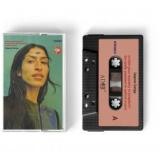
DAGMAR ZUNIGA - IN FILTH YOUR MYSTERY IS KINGDOM / FAR SMILE PEASANT IN YELLOW MUSIC (TAPE)

Nicaraguan-American artist Dagmar Zuniga makes music that feels both intimate and expansive: songs drift like disrupted signals, carried by harmony, tape hiss, and a strong sense of touch. Her debut solo album in filth your mystery is kingdom / far smile peasant in yellow music — written and recorded in New York, Norway, and Athens, Georgia over a period of five years on her longtime companion, the Tascam 424 — was uploaded to Bandcamp and YouTube in January 2025, quickly garnering over two hundred thousand views and the attention of artists such as Mount Eerie, who invited her to tour with them that summer. This year, what was once a jewel of tapped-in algorithms and message boards will meet the world at large, with in filth arriving digitally on March 4, and physically on April 10, via AD 93.

in filth is an atmospheric, devotional collage where one voice multiplies into a chorus of selves, sometimes delicate, sometimes severe; an effect created by Zuniga’s masterful layering of texture and complex harmonies. Synths glitter out like spears of sunlight from beneath clouds of moody, time-distorted guitars, and songs spin about themselves like tightly-wound music boxes, making use of a kind of hypnotic repetition, before melting apart into their components or slipping into the following track.

Zuniga began recording to tape as a teenager, drawn to the physicality of the medium — how a tape recording is fragile, mutable, and alive. Though her ethereal sound may draw easy comparisons to other female pioneers of psychedelic folk, she is influenced just as much by the darker sounds of Syd Barrett and The Fall. Like Barrett, Zuniga is a painter, and she is interested not only in recording music but in creating a full, self-contained artistic universe: she creates her own artwork, merchandise, music videos, and bootleg tapes of new and unfinished music that she exclusively sells at live shows (“If something is not material, it does not exist,” she insists). Her world has not gone unvisited, garnering her a monthly show on NTS Radio ‘World of Pain’, as well as a forthcoming appearance at Rewire Festival in April 2026.

Though Zuniga’s work explores themes of solitude and suffering, the suffering in her songs is not borrowed or displayed; it is held, then opened outward through empathy — an exacting practice of attention that insists on shared ground. Solitude, in her work, is not withdrawal but a starting point for connection. Likewise, over time, her recording process has become increasingly communal, with in filth featuring musicians Hayes Hoey, Austyn Wohlers (Tomato Flower), and Zach Phillips (Fievel Is Glauque). Newer recordings widen the circle even more. For Zuniga, collaboration is a way to “find a place between worlds,” echoing Badiou’s idea of love as a vision refracted through the prism of difference. Meaning emerges there — in the space between voices, between artist and listener. “I hope my music helps people work through difficult experiences,” she says. “The same way it helps me.”

pré-commande11.04.2026

il devrait être publié sur 11.04.2026

16,77
AL MANFREDI - Blue Gold LP
  • A1: Of The Sea
  • A2: I Don't Live Today
  • A3: Five Six
  • A4: Blue Gold
  • A5: Foggy Night
  • A6: Empty Of Your Possession
  • B1: What A Way To Be Laughing
  • B2: Let It Alone
  • B3: Never With You (Acoustic Version)
  • B4: To Catch The Sun
  • B5: Don't Move Girl

Born into a musical family Al Manfredi started writing songs when he was child. As a teenager in 1965, he formed the Nuts & Bolts in the small beach town of San Clemente, California. Inspired by the Kinks, the Beatles and the Byrds, the group separated themselves from the pack by also performing original material written by Manfredi and band mate Mike Ingram. In late 1966 they changed their name to the Lost & Found and relocated to Phoenix, Arizona, where they cut a rare single, “Don’t Move Girl” b/w “To Catch the Sun,” which now commands high coin from ‘60s garage collectors. When they returned to San Clemente in early 1967 their music had taken a more psychedelic direction. The Lost & Found were riding high that year, until tragedy struck. Ingram was found hanged under suspicious circumstances and soon after Lost & Found drummer Mike Ryer died of cancer at the age of 19. Heartbroken, Manfredi gave up on the band scene completely and moved to Garden Grove to teach at his family’s music store. But alone, behind closed doors, he kept writing songs and working on his music, recording hours of tapes, often tracking all the instruments himself. In 1973 he chose six of his best songs, some of them written back in the Lost & Found days, and had them custom-pressed as an LP. Only a handful of copies were pressed, and most of these were sent out to various record companies in the hope of landing a deal. Despite the outstanding quality of the music, there were no takers. But decades later, collectors discovered the Al Manfredi album and hailed it a West Coast rock masterpiece. In his Acid Archives book, Patrick Lundborg called its discovery a deus ex machina and compared it to David Crosby’s first solo album and Hawaii-era Merrell Fankhauser, “not just the acutely captured mellowness, but the self-confidence and the talent.”This little-known West Coast rock masterpiece was rediscovered and celebrated by Acid Archives founder Patrick Lundborg and others around the time that Manfredi died in 1995. This version of the album, overseen by Manfredi’s son Exile, and with Manfredi’s story told by Ugly Things’ founder Mike Stax, presents the complete package of an incredible lost and found artist. Contains the album, as originally issued, on side A with unreleased music on side B.

pré-commande10.04.2026

il devrait être publié sur 10.04.2026

28,99
Heavenly - Tragic Tiger's Sad Meltdown

Tragic Tiger's Sad Meltdown is Heavenly aka Tiger Hutchence-Geldof's debut album of sorts, cut from cassette tapes of rehearsals mixed with snippets of field recordings. Recorded with contributions from Nicholas Allbrook (Pond), Scarlett Stevens (San Cisco), India Rose & Jacob Diamond.

"I made this cassette in the living room of our house in Fremantle, a seaside town in Western Australia. I had always been shy to sing with others but moving across the world and my ex-boyfriend Nick had given me some bravery. Something about living closer to nature meant I felt creative and open hearted. It was as if the wide open landscape of Australia had finally given my heart enough space to open properly. The recordings are actually just recordings of our rehearsals, I never feel set in how song is meant to be so they usually just come out of me in the moment. My friends playing along with me are luckily all very empathic players and we found a way to play with one another without any structure or plan. It was really moving to create with so much freedom and understanding. Most of the songs are about my sister Peaches who I lost as a teenager so singing them aloud felt very potent but my band always made me feel held"

pas en stock

Commandez maintenant et nous commanderons l'article pour vous chez notre fournisseur.

6,68

Last In: 3 months ago
MULUKEN MELLESSE - MULUKEN MELLESSE WITH THE DAHLAK BAND (ETHIOPIQUES)

Swan Song

The vinyl LP at the heart of this éthiopiques 31 tracks 2 to 11 was one of the very last vinyl records ever released in Ethiopia. But above all it represents, we felt, the absolute masterpiece of the Ethiopian Groove – the Swan Song of Swinging Addis. The album leaves a clear idea for posterity of the level of sophistication and mastery that modern Ethiopian music had achieved, before being crushed under the Stalino-military heel of the Derg – as the bloody revolution that was unfolding came to be called.

Ethiopia1976.

The Revolution that broke out in February 1974 rolled on in a ruthless march. The whole of Ethiopian society was utterly stunned. The bouquets of flowers handed joyfully to the first tanks of the coup d'état were to wilt very rapidly. From September 1976 to February 1978, 18 months of Red Terror (the name given by the junta itself) spilled blood throughout the country. This fratricidal conflict took its heaviest toll among students and youth. The shift from feudalism to a cruel and primitive Stalinism left the country's citizens deeply traumatised, and snuffed out any pretence of activism, whatever the sector of society. This ice age was to last for seventeen long years.

ሙሉቀን፡መለሰ Mulukèn Mellèssè Muluqän Mälläsä

It was three tracks by Muluken that served as the opener for éthiopiques-1 more than 25 years ago. Seven more tracks appeared on éthiopiques-3 and 13, all accompanied by The Equators, which was soon to become the Dahlak Band.

The first track, Hédètch alu, also the very first piece that Muluken ever recorded, left audiences both unsettled and amazed. Reflecting the singer's extremely young age (he was just 17 at the time), this angelic voice mystified many, who thought they were in fact listening to a feminine voice. He was not yet 22 when he released his last vinyl record in 1976 with Kaifa Records (KF 39LP), one of the very last to be issued in Ethiopia, before the cassette tape became the dominant medium for music distribution – and before the new revolutionary regime put a stop to all independent musical life, via an unspeakable barrage of prohibitions and other persecutions.

Mulu qèn, literally, “A well filled day”. This tender maternal intention wasn't enough to ward off the cruelty of fate. His mother's premature death drove Muluken to leave his native Godjam, in northeast Ethiopia, to live with an uncle in Addis Ababa. Born Muluken Tamer, he took his uncle's last name – Mèllèssè.

The spelling Muluken appeared in his administrative records. Transcription of Amharic to the Latin alphabet, both in Ethiopia and for scholars, gives rise to controversies and quibbles that can never be neatly settled. French allows for a closer approximation of the original pronunciation, thanks to its battery of accent marks, confusing as they may be to anglophones.

Between rather accommodating administrative record-keepers and the various versions that pop up in interviews given by the artist, Muluken's year of birth oscillates between 1953 and 1955…

1954? One thing is certain: the artist's talent made itself known very early indeed, because he got his start in 1966-67, at the age of 13 or 14. Photos from the period attest to his extreme youth. It's a strange sort of initiation for a very young teenager to become a sensation in the heart of Addis's nightlife at the time, Woubé Bèrèha – the Wilds of Woubé. And what's more, in the club of the Queen of the Night, the Godjamé Assègèdètch Alamrèw herself, the very same that was portrayed by Sebhat Guèbrè-Egziabhér in his novel-memoir Les Nuits d’Addis Abeba2… The legendary female club owner who is remembered to this day by the capital's ageing boomers.

Muluken first tried his hand at the drums, before he grabbed the microphone. He emigrated briefly to the Zula Club, across the street from the old Addis Post Office, one of the ground-breaking bars of the burgeoning musical scene, before joining the Second Police Band in 1968, for around three years. He spent a few months with the short-lived Blue Nile Band founded by saxophonist Besrat Tammènè. As the musical scene grew increasingly successful, and pulled slowly but decisively away from its institutional ties, Muluken released his first 45rpm single in February 1972 (Amha Records AE 440). It was included in two LP Ethiopian Hit Parade compilation albums in September of the same year. All in all, Muluken released eight two-track 45s and the same number of original cassette tapes between February 1972 and 1984, the year that he departed for permanent exile in the USA. After converting to Pentecostalism in 1980, Muluken gradually abandoned all secular musical activity. In 1985, at the end of a concert in Philadelphia, he decided to quit concerts and recording for good. Mèlakè Gèbré, the historic bass player from the Walias band who was playing with him that night, recalls that everything appeared so irredeemably diabolical in Muluken's eyes, that it was to be the end of his contribution to Ethiopian Groove.

The end of the story, the beginning of a legend.

Dahlak Band, forgotten by History

Aside from his personal history and vocal talents, it must be remembered that Muluken Mèllèssè was one of the biggest names in the musical innovations that marked the end of the imperial period. These éthiopiques aim to convince those who are just discovering this hidden gem... As for Ethiopians themselves, they are to this day captivated by this singular and atypical figure in the Abyssinian pop landscape – even though he withdrew from public life some 40 years ago. Incorrigible devotees of poetic twists, of more or less hidden meanings, Ethiopians appreciate above all the care Muluken took in choosing his lyrics and the writers who penned them, such as Feqerte Haylou, Alemtsehay Wodajo and, here, Shewalul Mengistu (1944-1977). Love songs, written by women, a far cry from the conventional drivel that pleases sappy sentimentalists.

Muluken is equally acclaimed for his perfectionism when it came to music, the opposite of the overly casual approach that is all too common. He remained a faithful partner of musicians who came from a lineage that borrowed from several inventive and pioneering bands (Venus, Equators, Dahlak). Amongst them were certain artists who began their musical lives with Nersès Nalbandian at the Haile Sellassie Theatre and who come of age in around 1973 – at just the wrong time, you might say. Among them were the pillars Shimèlis Bèyènè (trumpet), Dawit Yifru (keyboards) and Tilayé Gèbrè (sax & flute). Most notably Tilayé Gèbrè, certainly one of the most important musicians, composers and arrangers of his generation, of the end of the imperial era, and of the early years of the Derg.

It was only in 1981 that a miraculous opportunity arose for Tilayé to escape the Stalinist paradise of the dictator Menguistou Haylè-Maryam. Once again it was Amha Eshèté (1946-2021) who provided a solution. The spirited and courageous producer, who had been in exile in Washington since 1975, succeeded, thanks to his incredible perseverence, in bringing the Walias Band to the USA. It was, in fact an extended Walias Band comprising ten musicians3, six of whom chose to slip away after a few concerts and the recording of an LP (The Best of Walias, WRS 100). Tilayé Gèbrè was one of these. He has been living in the USA ever since. There he joined the then-nascent Ethiopian diaspora, which lived largely unto itself, and was making only very modest headway in the American musical market. It seems unfair that Tilayé Gèbrè and the Dahlak Band were not able to benefit earlier from the public recognition that they do deserve.

A similar draining away of the top-rate talents would lead to the reorganization of the major groups of the “Derg Time”. The remaining artists spread themselves around between Ibex Band (renamed Roha Band), Ethio Star Band and a remodeled Walias Band. That spelled the end of the Dahlak Band.

With this record, produced by the essential Ali Abdella Kaifa a.k.a. Ali Tango, we can appreciate everything that the Derg not only destroyed, but also prevented from flourishing. This gem of Ethiopian-style afrobeat came out in 1976 (and, by way of a parenthesis, before the FESTAC 1977 in Lagos, which was attended by an impressive delegation of Ethiopian musicians — although Fela was already personna non grata in his own country). Despite everything that might distinguish this ethio-groove from Fela’s music – no colonial axe to grind, no question of political confrontation with the authorities, no claims to negritude or Africanism for the Ethiopian musicians, and less extrovertion! –, this LP fits beautifully into the saga of intense and electrified soul of the new “African” groove that Fela and Manu Dibango embodied so well from that point onwards.

In restoring this record to its place in the afrobeat epic, it can be seen that, if nothing else, the timeline bestows a legitimate pedigree and a historical primacy to works that had no international impact when they were originally released.

Warning! Masterpiece!

pas en stock

Commandez maintenant et nous commanderons l'article pour vous chez notre fournisseur.

20,59

Last In: 3 months ago
Sam Ruffillo - Tipo Cosi LP 2x12"

Italian producer, musician, DJ, and groove architect Sam Ruffillo drops his long-awaited debut album Tipo Così on Toy Tonics – a sun-drenched, genre-blurring statement that blends classic house with Mediterranean flair, romantic funk, and tongue-in-cheek Italo vibes. Over 11 expertly crafted tracks, Ruffillo delivers a dancefloor-ready, emotionally rich LP that connects deep musicality with irresistible rhythm and light-hearted elegance.

After three acclaimed EPs and collaborations with revered artists such as Barbara Boeing, Kapote, and Fimiani, Ruffillo has firmly cemented himself as a core artist on the Berlin-based label. Known for his unmistakable signature sound — a warm mix of vintage disco, 90s house, and Italian vocals — Sam’s music has garnered widespread DJ support from tastemakers like Gerd Janson, Palms Trax, Seth Troxler, and DJ Tennis, while becoming a staple on Italian airwaves. His infectious summer anthems like Danza Organica and Perfetta Così have soundtracked countless club nights and festivals, creating a loyal following that eagerly awaited this full-length debut.

Tipo Così is the natural culmination of a musical journey that’s both playful and profound — a travel diary written in grooves, synth stabs, and melodies that feel like postcards from a parallel Mediterranean universe. The album expands and deepens Ruffillo’s world into a fully immersive experience: lush emotional chords meet tight syncopated grooves, vintage synth textures collide with irresistibly catchy pop refrains, and the boundary between sincerity and playful irony is exquisitely blurred.

Entirely written, produced, and recorded in Italy, in his beloved hometown of Bologna, the album finds Ruffillo at the helm on keys, drum machines, and production, supported by a talented cast of musicians contributing live bass, guitar, and other organic elements — further enriching his trademark fusion of electronic grooves and natural instrumentation. There’s a tactile warmth in these tracks, a hands-on feel that adds soul and depth to every beat.

This album also marks Ruffillo’s heartfelt return to singing in Italian, with standout tracks like House Tipo Così, Mi Fa Volare, Ancora, and Dentro Di Me, where romantic naïveté meets pulsing club energy in a way that feels both timeless and refreshingly new. The vocal performances add an intimate, human touch to the music, reinforcing the personal stories woven into each song. There’s poetry in the casual, a bittersweet elegance in the way the lyrics float over groove-heavy production.

Having toured extensively across Europe, Australia, Indonesia, New Zealand, and Mexico — with sets at iconic venues like Panorama Bar and festivals such as Sónar Barcelona — Ruffillo has fine-tuned much of this album in front of live audiences. The real-world testing ground infused the record with a dynamic energy and immediacy that only comes from genuine crowd interaction. These songs weren’t just made in the studio — they were lived on dancefloors around the world.

Tipo Così is not just a collection of tracks. It’s a philosophy — playful, stylish and unmistakably personal. A modern club album bursting with heartfelt emotion and sophistication. Music for dancers with taste; for lovers of beauty, rhythm, and the little imperfections that make things feel real.

But what exactly is Tipo Così? More than just a phrase, it’s a way of being. It’s about embracing elegance without effort, mixing irony with sincerity, and letting nostalgia slip into the room without taking over the party. It’s Sam Ruffillo’s signature language: relaxed, confident, meticulous yet never rigid — where a chord progression can say as much as a lyric, and every beat carries intention.

The album’s visual identity complements this vision perfectly. The artwork and promotional materials lovingly reference Italian design from the ’80s and ’90s, combining bold graphic elements with playful pop culture nods. This aesthetic mirrors Ruffillo’s music — a fusion of vintage warmth and contemporary freshness, delivered with authenticity and charm.

Sam Ruffillo belongs to a new generation of European artists who are reshaping electronic music by blending past and present, analog and digital, groove and emotion — without nostalgia or pose. His artistic universe is coherent, vibrant, and alive; a rich tapestry of sound, images, and stories that coexist with lightness, precision, and a distinctive voice.

Reflecting on his artistic journey, Sam describes music as a vital, deeply human impulse — a tribal connection to rhythm and body that has driven him since he was a teenager. His creative process balances meticulous planning with room for spontaneity, usually sparked by clear melodic ideas that evolve naturally. Collaborations with close friends, especially vocalists like Ninfa, add warmth and authenticity, exemplified in tracks like “House Tipo Così.” For Sam, music is honest self-expression — crafted for listeners who crave memorable melodies and rhythms imbued with genuine feeling.

While technical perfection is tempting, Sam prioritizes emotion, knowing that what truly resonates is the soul behind the sounds. His long-standing partnership with Toy Tonics has been key in nurturing his vision, offering a blend of creative freedom and professional support. Looking ahead, Sam Ruffillo is excited to broaden his live performances, and release new projects that continue to blend electronic grooves with organic, heartfelt sounds — maintaining the delicate balance between playful irony and sincere emotion that defines Tipo Così.


Kurzversion:
Italian DJ, producer and musician Sam Ruffillo drops his debut album Tipo Così on Toy Tonics - a sunny blend of house, funk, Italo and pop, full of groove and emotion. Written and recorded in Bologna with live instruments and Italian vocals, it’s a playful, elegant journey shaped on dancefloors worldwide. A stylish, sincere club album where nostalgia, irony and rhythm meet in perfect harmony.

- Mi Fa Volare
Road-tested across continents and now finally released, “Mi Fa Volare” channels 90s uplifting euphoria with big breakbeats, lush chords, and Italian vocals built to stick. Somewhere between balearic bliss and piano house nostalgia, it’s a feel-good club weapon made for peak-time moments - already sung back by crowds after just one listen.


- Ancora
“Ancora” is a vibrant hi-NRG track inspired by 80s Italo disco, sung entirely in Italian. It blends driving rhythms with dreamy melodies, capturing the radiant spirit of the decade. This fresh yet nostalgic song delivers euphoric vibes and timeless energy, making it a perfect fit for both dancefloors and reflective listening moments worldwide.


- Dentro Di Me
“Dentro Di Me” channels ‘90s sensuality through a fast-paced, UK house-inspired lens. Entirely in Italian, it’s a bold and contemporary dance track where hypnotic vocals meet high-energy grooves. Blending nostalgic textures with forward-thinking production, the result is a seductive and euphoric trip - equal parts emotional and club-ready.


- Amigo
“Amigo” blends Latin groove, acoustic guitar-driven rhythm, and Mediterranean flair into a warm, magnetic, cross-cultural dance anthem. Sung in Spanish and Italian, it celebrates connection, inclusivity, and the joy of moving together - whether stranger or friend. With its unstoppable rhythm and vibrant energy, it’s a feel-good track with a unifying spirit.


- Ma Sei Fuori
“Ma Sei Fuori” is a tongue-in-cheek dancefloor bomb blending raw house energy with catchy vocal phrases and a nod to classic French touch. Driven by hypnotic vocal lines and a playful attitude, it doesn’t take itself too seriously - while still proving serious club impact. Built for late-night moments, it’s bold, bouncy, and impossible to ignore.

pas en stock

Commandez maintenant et nous commanderons l'article pour vous chez notre fournisseur.

20,59

Last In: 5 months ago
Ciccio & 2mo - Bouc & Rouages

Ciccio&2Mo

Bouc & Rouages

12inchHUBLO003LP
HUBLOTONE
26.09.2025

Born from a chance encounter in a Villejuif squat over a decade ago, Ciccio & 2mo have cultivated a singular musical language through spontaneous and genre-defying collaborations — notably around cult French band Cheveu.
The duo brings together two key figures from the fringes of the European underground: Olivier Demeaux (aka 2mo), a pioneer of France’s electronic avant-garde, leading projects like Heimat and Accident du Travail (Teenage Menopause, Bruit Direct), known for his explorations across lo-fi synthwave, spectral post-punk, and drone-infused textures; and Francesco Pastacaldi (Ciccio), a jazz-punk drummer and member of the explosive trio Jean-Louis and the angular groove unit Abacaxi (Carton Records), also a longtime collaborator of the maverick performer Fantazio.
Their debut album 24 96 (The Trilogy Tapes, 2021), born from a series of abrasive studio improvisations, was followed by a sold-out show at London’s Café OTO. That performance, released as Maremoto, captured the duo’s raw, physical energy in its purest form.
Since then, Ciccio & 2mo have brought their visceral live act to stages across Europe — from Sonic Protest in France to the Meakusma Festival in Belgium, where their live set was released as Live at Meakusma Festival 2024.
Now, the duo returns with Bouc & Rouages, a bold and hallucinatory second album commissioned by Hublotone. This new opus introduces three singular voices into the mix: operatic singers Léa Trommenschlager and Bianca Iannuzzi, and genre- blurring rapper Pauline Sampler (aka Frizzy P, known for her work with M. Cole). The result is a soundscape in constant tension — pulsing drum machines, organic percussion, saturated synth layers, and hypnotic, looping riffs.
Equal parts physical and disenchanted, the music of Ciccio & 2mo traces a thrilling, unstable path through noise psychedelia, industrial memory, and experimental pop.
Imagine Cosey Fanni Tutti rubbing up against pop, with Charles Hayward (This Heat) on drums — and you’re getting close.

pré-commande26.09.2025

il devrait être publié sur 26.09.2025

22,27
TAMTEN - WSCHODNIA FALA LP

TAMTEN, the master storyteller behind the synthesizers, extends his invitation to every curious listener to ponder the same questions that haunt him throughout his peculiar career: what impacts the sound of an era? How are we shaped by what we hear and see? Do we channel our collective feelings of longing and desire for higher purpose in accord or in opposition to major historical and political forces?
On "Wschodnia Fala: The Reimagined Vision of Eastern-European Wave Music" TAMTEN takes us on a kaleidoscopic voyage through a parallel universe where the symbols and echoes of days gone by are so much more than just archived exhibits of nostalgia. Through an array of meticulous, cut & paste rearrangements, the Warsaw-based artist manages to animate yet another fantastic world of "what could be", following his more apocalyptical take on the previous LP.
There is boldness in every aspect of the release. The saga-like story unfolds evoking the excitement of seashore autobahn ride, thrills of long-forgotten discotheque nights, rush of obsessive romance and intriguing, noir-inspired drama of introspection. The analogies between Polish wave music (with nods to Aya RL, Republika, Klaus Mittfoch, Papa Dance or even Bajm) and global disco-era top chart phenomenons like Kraftwerk, Grace Jones, Giorgio Moroder and Duran Duran, could spark hour-long musicology debates. The melodies and harmonies heard on the album resemble compositions everybody knows but also sound completely new and exhilarating, just as western music clips experienced for the first time behind the Iron Curtain and then collected compulsively on VHS tapes. The feeling of the author's frenetic attempt to capture sensations, memories, artifacts and ideas never escapes the listener till the very last minute of the recording.
"Wschodnia Fala" could pass for an eerie, anonymous late 80s lost-and-found cassette mixtape unearthed on any of the Berlin Wall's sides, if it wasn't for its crystal-clear, contemporary production value and the fluent, educated use of samples ranging from bizarre and opaque to deliberately retro-pop-influenced. Those elaborate winks of the eye for those in the know are already TAMTEN's trademark and they reflect his long-standing fascination with the dancefloor anthropology rather than just the dancefloor itself. Even though never leaning towards formulaic, easy-to-mix, club-ready stompers, his ideas are still groovy enough to make anyone move.
The album strives for some sort of unattainable totality - it's a ticket to a seance, an experience, a rite. It is a chance to time travel and dance with your ancestors in a glass labyrinth on acid or to watch an 80s teenage adventure, coming-of-age, road cruising film in the cinema of your imagination with only a soundtrack provided. A "the best of" CD compilation of hits from a childhood we remember from a different timeline. A comic book sketch, a diary of an archivist, an elegy for the times that never were and a party you wish you could go to right now. The adventure is always different with another listen.
Step in. Close your eyes. Reimagine.
Embrace the wave

pas en stock

Commandez maintenant et nous commanderons l'article pour vous chez notre fournisseur.

26,01

Last In: 10 months ago
DE SCHUURMAN - BUBBLING INSIDE LP

In the late 1980s, as techno and house made its way around Europe, mutating as it hopped from city to city, one young DJ from Curacao made a mistake that would inspire a brand new sound. While he was performing at Den Haag's Club Voltage, DJ Moortje accidentally dropped a dancehall track at 45RPM rather than 33, and let it play out. Thirsty for a hi-NRG sound, the crowd loved the squeaky vocals and rapid beat, and bubbling (or bubbling house) was born.For the next couple of decades, bubbling was a crucial part of Holland's Afro-diasporic club landscape. And as a new generation of wide-eyed young DJs and producers began to take the reins, it evolved accordingly. In the late-2000s, Den Haag-based teenage prodigy Guillermo Schuurman followed in the footsteps of his uncle DJ Chippie (one of the genre's co-founders) and cousins DJ Daycard, DJ Master-D, Stiko Jnr and DJ Justme, and began performing and writing beats. Using Fruityloops, he fused familiar bubbling rhythms with rap and R&B samples, trance synths and electro house wobbles, and his tracks quickly became a regular fixture on the Dutch circuit."Bubbling Inside" is a collection of Schuurman's most essential cuts from the era (2007-2009), with a couple of newer productions added for context. Crafted solely for the dance, most of these tracks were never properly released and have been painstakingly hunted down and collected by the Nyege Nyege Tapes together with Sascha Roth from Pantropical in Rotterdam and De Schuurman himself. Hearing them together highlights just how forward thinking the young producer was, steering a Dutch institution into the future.2008's 'First One' is a proto-Berghain belter, with booming bass-heavy kicks underpinning the kind of cheeky melodies that remain the calling card of the genre. 'Pier Je Bil!!' ratchets up the tempo, twisting bubbling's syncopated dancehall kicks into a rapid-fire club clatter and decorating them with steel-pan melodies. Elsewhere, 2019's 'Domina' shows how Schuurman's production style has developed as he mutates trap percussion, dubstep bass and eerie synth textures, while retaining the DNA of bubbling. "Bubbling Inside" is a testament to the evolution of the bubbling genre, as witnessed by one of its most visionary producers.

pas en stock

Commandez maintenant et nous commanderons l'article pour vous chez notre fournisseur.

22,65

Last In: 10 months ago
DE SCHUURMAN - BUBBLING INSIDE LP

In the late 1980s, as techno and house made its way around Europe, mutating as it hopped from city to city, one young DJ from Curacao made a mistake that would inspire a brand new sound. While he was performing at Den Haag's Club Voltage, DJ Moortje accidentally dropped a dancehall track at 45RPM rather than 33, and let it play out. Thirsty for a hi-NRG sound, the crowd loved the squeaky vocals and rapid beat, and bubbling (or bubbling house) was born.For the next couple of decades, bubbling was a crucial part of Holland's Afro-diasporic club landscape. And as a new generation of wide-eyed young DJs and producers began to take the reins, it evolved accordingly. In the late-2000s, Den Haag-based teenage prodigy Guillermo Schuurman followed in the footsteps of his uncle DJ Chippie (one of the genre's co-founders) and cousins DJ Daycard, DJ Master-D, Stiko Jnr and DJ Justme, and began performing and writing beats. Using Fruityloops, he fused familiar bubbling rhythms with rap and R&B samples, trance synths and electro house wobbles, and his tracks quickly became a regular fixture on the Dutch circuit."Bubbling Inside" is a collection of Schuurman's most essential cuts from the era (2007-2009), with a couple of newer productions added for context. Crafted solely for the dance, most of these tracks were never properly released and have been painstakingly hunted down and collected by the Nyege Nyege Tapes together with Sascha Roth from Pantropical in Rotterdam and De Schuurman himself. Hearing them together highlights just how forward thinking the young producer was, steering a Dutch institution into the future.2008's 'First One' is a proto-Berghain belter, with booming bass-heavy kicks underpinning the kind of cheeky melodies that remain the calling card of the genre. 'Pier Je Bil!!' ratchets up the tempo, twisting bubbling's syncopated dancehall kicks into a rapid-fire club clatter and decorating them with steel-pan melodies. Elsewhere, 2019's 'Domina' shows how Schuurman's production style has developed as he mutates trap percussion, dubstep bass and eerie synth textures, while retaining the DNA of bubbling. "Bubbling Inside" is a testament to the evolution of the bubbling genre, as witnessed by one of its most visionary producers.

pas en stock

Commandez maintenant et nous commanderons l'article pour vous chez notre fournisseur.

22,65

Last In: 14 months ago
MOL KAMACH & BCK - JE TE QUITTERAI

Mol Kamach&Bck

JE TE QUITTERAI

12inchAKU7002
AKUPHONE
20.11.2024

For the first time two single records of Baksey Cham Krong - the first Cambodian guitar band - are officially being reissued in an identical version. Between surf music and ballad, these two records released in 1963 and 1964 are an invitation to rediscover the effervescent Khmer musical scene of the 1960s.

The early 1960s are often described as the “golden age” of Cambodia, with a flourishing economy and a strong cultural development. As the country had just won its independence, the King Norodom Sihanouk - who had been a singer himself (see below) - encouraged dynamism and creativity in all aspects of cultural life.

In 1959, in the midst of this artistic turmoil, Mol Kamach and his brothers created a band: the Baksey Cham Krong (also spelled Bakseis Cham Krung) named after a temple of the Angkor site. The teenagers were influenced by the latest hits they had listened on the radio. For the music, Kagnol got his inspiration from the rock n’ roll of the Ventures and the Shadows while Kamach took over the vocal techniques of crooners such as Paul Anka. The lyrics were either in French (as for the song Ne penser qu’à toi) or in Khmer. The song Pleine Lune became a hit and revealed Kagnol’s musical genius at playing guitar and Kamach’s delicate voice. From their beginnings on the capital’s high school stages to their first broadcasts on national radio, the success of the Baksey Cham Krong was very quick. At the end of the decade the band already split, the brothers getting back to activities that conformed more with their parents’ expectations.

A few years later, in April 1975, the arrival of the Khmer Rouge in Phnom Penh put an end to this musical development and started the darkest era of Cambodia’s contemporary history. A quarter of the population was killed in the Khmer Rouge genocide and the majority of artists and intellectuals were exterminated in a sordid will to wipe out any form of culture in the country. Films and music were banned, movie tapes and vinyls were destroyed. Mol Kamach and Mol Kagnol luckily managed to flee the country: one now lives in France, the other in the USA. Both still continue to make music nowadays.

Bearing witness to the past history, the reissue of these two single records of Baksey Cham Krong brings back to us the Cambodian musical scene of the 1960s.

pré-commande20.11.2024

il devrait être publié sur 20.11.2024

20,80
Shuttle358 - optimal. LP 2x12"

Shuttle358

optimal. LP 2x12"

2x12inchKEPLARREV19LP
Keplar
25.06.2024

Released in 1999 on Taylor Deupree’s 12k label, »optimal.lp« was the debut album by Dan Abrams under his Shuttle358 moniker. For its 25th anniversary, Keplar presents it on vinyl for the first time with three previously unreleased tracks—the digital version also includes a alternative version of »Tank«—as well as a new artwork recreated by Daniel Castrejón and a remaster by Andreas LUPO Lubich based on the original pre-masters that were been restored and cleaned up for the reissue project by Abrams. »optimal.lp« was inspired by the rich tradition of ambient music and the rhythmic complexity of 1990s electronica while also sharing many traits with the then-emerging clicks’n’cuts movement, making it a true sui generis piece of work—both informed by tradition and visionary, idiosyncratic and seminal for many artists after him.

Abrams developed an interest in ambient music when he was still a child, scouring through cassette tapes of environmental sounds, new age music, and world percussion. Discovering Brian Eno’s »Thursday Afternoon« as a young teenager marked a turning point for him. »It gave me the idea that ambient music could be an intentional creative act, that tone itself is a legitimate form of expression,« he says today. During the 1990s, he increasingly immersed himself in the electronica scene and the output of labels such as Instinct, where Deupree worked as an Art Director and released his first records as Human Mesh Dance. Abrams found a home on 12k after sending Deupree a demo tape that would later evolve into »optimal.lp,« released as the label’s fifth catalogue number.

Abrams was still in college when he started experimenting with a sound module, his laptop and a mixer as well as a MIDI card and a small controller. »Each note was composed in MIDI and played back when I was ready to record,« he explains his working process at the time. »The tracks could be replayed, but the sound interactions with glitches and noise would be a little different each time. I decided to base the concept of the album on these interactions.« Each piece started with a single sound or tone that, as Abrams puts it, already contained the entire composition: »I let these interactions guide me, and tried to complement them as I added sounds. It’s a conversation of sorts with the medium.«

While refining this technique that he would go on to use on every album until 2004’s »Chessa,« reissued by Keplar in 2021, he also used the first-ever Native Instrument product, the Generator soft synth, to write the record’s title track—possibly making it the first album on which it was being used. »optimal.lp« is marked by this curious interplay of cutting-edge technology, the limitations with which every college student with a small budget is faced, and boundless creativity. »I’ve talked with other artists about how we feel about our early work,« Abrams says today. »We all agreed that there were elements that remain a part of us in a timeless way, despite our techniques—or lack thereof—at the time. ›optimal.lp‹ has a lot of things that will always be with me, that are me. I think I left some clues in there for my future self.«

This sense of timelessness remains tangible after a quarter of a century after the album’s original CD release and is even being expanded upon by the vinyl reissue, which is complemented by three pieces that were made while Abrams was working on the album. The digital release even features an entirely new take on the original album’s final piece, »Tank.« While Abrams let one of the masters go through his customised reverb unit when preparing the reissue, he started recording the results of this accidental dialogue between past and present. It’s a fitting tribute to an album whose delicate circular rhythms, rich textures, and ethereal melodies are precisely so exhilarating because their interplay seems to suspend the passing of time altogether.

pas en stock

Commandez maintenant et nous commanderons l'article pour vous chez notre fournisseur.

27,31

Last In: 4 months ago
MAURIZIO E DANDOLO - DEMIN

Elusive Italo duo Maurizio e Dandolo return with Demin, a dreamy disco dancer celebrating the iconography of 1980s Italian summer and the heydays of Italo Disco.

Unfolding over an equally suave and hard-hitting tapestry of synths and drum machine, Demin plays with the authors’ nostalgia for the hazy and sun-drenched summers on the Italian eastern coast of their hometown of Pescara.

In the unmistakable and unmatched tradition of Italo Disco, Demin strikes a balance between the irrepressible desire to let loose on the dancefloor and the touching nostalgia for a past that, perhaps, was never lived but only dreamed of. That of the halcyon days of Italian design cars blasting synthy bangers from the radios, beach establishments with their candy-striped umbrellas, neon-lit discotheques and dancers in outrageous designer shirts, teenage flirts, and denim bracelets, the true icons of that era which Maurizio e Dandolo tribute in the song title.

Demin is set to become one of the ultimate dancers of the summer of 2024, an anthem for cheeky disco riviera flirts and boogies.

After being originally released on digital platforms, Demin is now finally out on 7” vinyl format too, accompanied on the B-side by an unreleased scratch version: a dub mix by Rome DJ and establishment Francisco.

pas en stock

Commandez maintenant et nous commanderons l'article pour vous chez notre fournisseur.

13,87

Last In: 12 months ago
Articles par page:
N/ABPM
Vinyl