Of the countless accolades and analyses that surround Blue, no point is more significant than the fact that the 1971 Joni Mitchell album continues to become more popular, revered, referenced, and relevant with each passing day. Such vitality is not only extremely singular; it is the ultimate measure of great art and, in the context of Blue, indisputable proof of the record's accessibility, integrity, and timelessness. If the most brilliant and everlasting music seeks to find truths shared by all of humanity, Blue can be said to be universal doctrine.
Sourced from the original analogue master tapes, pressed on MoFi SuperVinyl, and strictly limited to 12,000 numbered copies, Mobile Fidelity's UltraDisc One-Step 180g 45RPM 2LP box set presents the landmark album with reference-grade detail, tonality, and directness. Marking the first time the beloved LP has received audiophile-quality treatment, it's one of six iconic 1970s Mitchell records Mobile Fidelity is reissuing on definitive-sounding vinyl and SACD sets.
Everything about Blue sounds more intimate, involving, and inescapable on this transparent pressing, which benefits from a virtually non-existent noise floor and superior groove definition. Mitchell's voice, positioned front and center, and primarily accompanied by minimalist acoustic guitar, piano, and dulcimer playing, comes across clearly and prominently. Suspended notes and radiant chords double as question marks, commas, and phrases. The in-the-room presence and spatial dimensionality make absolute the full-range spectrum of introspective emotions — hurt and distress, self-awareness and joy, difficulty and uncertainty, warmth and desire — Mitchell navigates, queries, and contemplates throughout the record. The defencelessness the singer once spoke about is laid bare here like never before.
The packaging of the Blue UD1S set complements its distinguished status. Housed in a deluxe box, both LPs come in special foil-stamped jackets with faithful-to-the-original graphics that illuminate the splendor of the recording. This UD1S reissue exists as a curatorial artifact for listeners who prize sound quality and production, and who desire to engage themselves in everything involved with the album, including the unforgettable cover photograph of a ruminative Mitchell shot by Tim Considine.
Deemed the third Greatest Album of All Time by Rolling Stone; universally celebrated by critics, fans, artists, and educators; and defined by a spell of disarmingly vulnerable songs that are at once confessional, intense, spare, honest, painful, hopeful, and exquisite, Blue charts love, spiritualism, independence, and loss like no record before or since. Widely considered the album that established the singer-songwriter template, the largely autobiographical LP changed everything shortly after its original release in June 1971. Amazingly, it continues to do so more than five decades later.
An incalculable influence on generations of artists, it stands as the through-line from Carole King, Elton John, James Taylor, Joan Armatrading, and Leonard Cohen to Patti Smith, Carly Simon, Emmylou Harris, and Rosanne Cash to 21st century contemporaries like Brandi Carlile, Taylor Swift, Sharon Van Etten, and Courtney Barnett. Teetering between agony and optimism, it is — to borrow a phrase from Mitchell's eternal "A Case of You" — a bottomless "box of paints."
The beauty of the stripped-down arrangements, intoxicating melodies, and Mitchell's wisdom on Blue didn't go unnoticed. Critical acclaim, coupled with the depth of the material and Mitchell's reputation, propelled the album into the Top 20 in the U.S. and Top 10 in the U.K. Yet while so much pop music diminishes with age, Blue has defied norms and headed in the opposite direction. Its 50th anniversary year witnessed an outpouring of tributes, reflections, and testimonials that helped frame the record's escalating importance and symbolism — apt in an age in which women have become the prominent trailblazers in rock, R&B, and hip-hop.
Perhaps most succinctly, in a 2021 article celebrating the LP, the Los Angeles Times declared: "In 1971, nothing sounded like Joni Mitchell's Blue. 50 years later, it's still a miracle." Nothing, indeed. Yet "miracle" suggests Blue partially owes to a divine agent or inexplicable circumstance. And though Mitchell's bracing conviction and forthright sincerity can appear otherworldly, her musical approach and lyrical storytelling is nothing if not personal and human. What we hear is pure truth — no matter how aching, complicated, or stark.
Much has been written about the circumstances that inspired the songs on Blue: Mitchell's romances; her time overseas; her disdain for celebrity; her lingering sense of loss at having given up her daughter for adoption; her treatment by the very same industry that her music made uncomfortable; her prolonged search for resolution. These situations and experiences pushed Mitchell to question everything — especially big-picture concepts that have always obsessed mankind: fulfilment, autonomy, love, honesty, being.
"I wanna make you feel free," Mitchell sings on the record-opening "All I Want." Mission accomplished. Blue is liberation — and the start of a freedom that continues to impact music, culture, and identity today.
More About Mobile Fidelity UltraDisc One-Step and Why It Is Superior
Mobile Fidelity Sound Lab's UltraDisc One-Step (UD1S) technique bypasses generational losses inherent to the traditional three-step plating process by removing two steps: the production of father and mother plates, which are created to yield numerous stampers from each lacquer that is cut. For UD1S plating, stampers (also called "converts") are made directly from the lacquers. Since each lacquer yields only one stamper, multiple lacquers need to be cut. Mobile Fidelity's UD1S process produces a final LP with the lowest-possible noise floor. The removal of two steps of the plating process also reveals musical details and dynamics that would otherwise be lost due to the standard multi-step process. With UD1S, every aspect of vinyl production is optimized to produce the best-sounding vinyl album available today.
Search:template
2024 Repress
To celebrate its 30th anniversary, Plastikman's redefining acid techno masterpiece, Sheet One, has been mastered from the original tapes and reissued on vinyl via Mute and NovaMute.
Released in 1993 on Mute's subsidiary label NovaMute, this record was the debut for Richie Hawtin's alias Plastikman. 30 years on Sheet One is a landmark album in the field of electronic music, it changed the shape of what the genre could be and became.
Introducing one of techno's most recognisable logos, the album achieved a degree of notoriety for its acid blotter-style perforated artwork. Musically it focuses on laser-precise minimalist rhythms to drive a series of echo-box acid lines that gradually acquire power over the course of lengthy album tracks, with frequent use of the Roland TB-303, which gained prominence in the electronic music world as a staple of Chicago's acid house scene. Hawtin once described Sheet One perfectly in an interview with MusicRadar, saying "...It's music for the end of the party as you're melting into the floor, which is exactly what the name Plastikman was made to represent."
This seminal album helped to establish the template for minimal techno, and is a must listen for lovers of electronic music.
Available on double bio vinyl.
Tone Def are the original Bournemouth ravers with some absolute classics released in the early 90’s on Moving Shadow. Rog from the band is also the founder of Void Acoustics, the ultimate in club and festival audio equipment, a hobby that became a huge business empire for him.
This EP was written during 1990 to 1991 and had been lost for 30 years until recently, when Rog was checking some of his old ¼” tapes that he took out of storage. These are 4 original UK acid breakbeat rave tracks, encapsulating the raw DIY ethos of the era, of kids messing about in their bedrooms, writing music with no boundaries or templates. Never heard before, never released before… until now.
Acid Boom is a sister label to the Vinyl Fanatiks family. A vehicle to release that early 90’s acid sound that would later morph into rave. High energy 303’s, 808 and 909 drum machines, synced up to rolling breakbeats. Whether music from back in the day or new music that’s been created to emulate that early warehouse sound, Acid Boom is here to take you on a rush.
Warehouse find!
While the German producer Martin Matiske averages a new release under his given name every few years, there was a long stretch of time in which sightings of his Blackploid alias were much more rare. After dropping an EP for Frustrated Funk in 2006, fans found further material hard to come by over the next decade or so. However, Matiske has reinvigorated Blackploid in recent times, with the project making a few compilation appearances and dropping a couple of EPs across 2020.
That run now culminates inCosmic Traveler, a four-track affair which marks Matiske's debut appearance on Sheffield's Central Processing Unit. Given the long wait, it's great just to see Blackploid back among the fray once again. But for the project's CPU curtain-raiser to be an EP of such high-quality techno jams? Now that really is spoiling us.
Cosmic Traveler's title nods towards the sort of stargazing aesthetics one finds in classic Detroit techno. However, while there are undoubtedly ties to the Motor City in this music, the record ultimately steers less towards spacious atmospherics and more towards the taut, lean machine-funk of seminal practitioners like Dopplereffekt.
Matiske sets his stall out from the off. Opener 'Electric Engine' begins with a run of stiff-necked 808 kicks before hissing hi-hats, a grizzly bassline and all manner of futuristic sounds enter to warp the tune into hyperspace. Following cut 'Night Drive' repeats the trick of 'Electric Engine' but adds a pleasingly dinky synth lead in order to nudge itself slightly towards bleep-techno territory.
The two cuts on Cosmic Traveler's B-side are pure late-night goodness, a pair of mid-set heaters primed for dark basements. 'Pleasure Activism' delivers on the promise of its title and then some, pushing the Kraftwerk template to extremes by bringing a load of gnarly synth lines into play over a wobbling acidic chug. Finally, EP closer 'The Race' is reminiscent of both the twisted machine-funk of Gerald Donald's Japanese Telecom project and the playful modern evolutions of artists like fellow CPU high-flyer Jensen Interceptor.
The resurgence of Martin Matiske's Blackploid project continues withCosmic Traveller, an EP of timeless electro-funk and techno.
FFO: Dopplereffekt, Japanese Telecom, Jensen Interceptor, Cardopusher
After their successfull collaboration with Get Physical Music REWORK returns with another new dancefloor pleasure release called "Sun" and the following Album "Cue It Back". Sinister synth effected stabs and minimal cold female vocal contributions are still part of their iconic sound. REWORKs minimalist beat and pulsing synth-work still captures an internal glamour combined with cold and Jane Birkin type vocal contributions by various female artists. With a sonic template of their earlier Playhouse tracks REWORK shows their love to club music again on their own label exlove records
Suburban Architecture continue their series of now highly collectible 4 track EP releases with their 6th offering, 'Inside / Outside'. This new collection of tracks once again draws heavily on influences from the jazzier, atmospheric strains of mid to late 90s Drum & Bass. Putting a contemporary spin on sounds rooted in this golden era of dance music, the latest 4 tracker is split into two parts: Inside / Outside. Each track appears in two parts, delivering similar themes at different tempos.
Opening track 'Inside Part 1' will please followers of Suburban Architecture's previous work - lush pads, deep atmospherics, Jazz fusion flute licks and smashing Amens are all present in the mix. Inside Part 2 lowers the tempo without compromising the energy: Slo-mo Amens interspersed with complimentary breaks sit on top of huge pads, Reece style bass and rousing vocals. Outside also appears in two similarly styled parts. This time Part 1 comes in at the lower tempo, a light vocal-led slow motion rolling number with classic Apache elements, while Part 2 applies the same sonic template to a tough, jazzy roller.
African Queen is a departure from the sound of the Amarra’s debut Ariwa release. This time Toots Hibbert’s Bam Bam provides the template for African Queen. Over the past 30 years this rhythm track has been associated with several hits including Sister Nancy’s Bam Bam and Chaka Demus and Pliers Murder she wrote.
African Queen has a catchy chorus with a touch of modern day electronics using the warbler and filter effects. An interesting song, drawing from some unlikely quarters of the 21st century, and blending them together.
The American singer-songwriter tradition has always been tethered to a rustic austerity, the sort of front-porch authenticity that suggests an age where home electronics are still considered luxury items. But there's also the ongoing influence of Bob Dylan and The Band's Basement Tapes-that strange and beloved document of the magic that happens when private experiments with the folk template flourish into layered and lush songs-and its genesis through informal recording sessions. In our modern age, these kinds of casual DIY constructions are perhaps the more honest contribution to the Americana lineage-the true homespun artform. When Michael Nau and Whitney McGraw struck out on their own in the wake of the dissolution of their beloved indie-folk outfit Page France, they continued their songwriting practice with a new project called Cotton Jones Basket Ride. As legend has it, Nau and McGraw were working on the material for their debut full-length Paranoid Cocoon (2009) when they realized they had an entire album's worth of odds-and-ends from various recording sessions. The resultant album - The River Strumming - was released in 2008 on St. Ives in a batch of 300 unique hand-packaged LPs. As the label advertised it back in the day, the band "initially set out to make a cohesive record, and made just the opposite." Like The Basement Tapes, The River Strumming is a document of a band exploring possibilities without the weight of expectation. The band would eventually condense their name to Cotton Jones and make a name for themselves in the indie world for their fusion of dreamy folk and psychedelic baroque pop. But in the beginning, there was this weird and wonderful collection of songs made by musicians who were enjoying the private process of finding their path. Suicide Squeeze is proud to present a 15th-anniversary vinyl reissue of this long out-of-print classic with updated artwork by Kayleigh Montgomery-Morris.
DJ Manny's new album 'Hypnotized' is full of fresh ideas which push the footwork format of 160bpm hyper-rhythmic music in really enjoyable new directions. He builds on the romantic themes of his last album 'Signals In My Head' and evolves them with shades of blue, taking very natural sounding experimentation into new moods and musical colour while never making the album inaccessible. Arguably this is a fine successor to the ground broken by DJ Rashad's 'Double Cup' album, which of course Manny also worked on. 'Hypnotized' solidifies Manny's style, from relaxed r'n'b rollers to moments of romantic distress - like 'WTF Goin On' and the reflective 'You N You (ft. DJ Phil)', to more intense moments like the dubstep inflected 'Ooh Baby' from the vaults, co-produced by DJ Rashad himself. Other tracks like 'Want U Bad' retool Robert Hood style minimal techno whereas dark, nervous belters like 'Turn Me Up' sound like Paul Johnson at his most wild but welded to footwork rhythms and a pumping jump up drum & bass-line. There are also moments of enjoyably hype daftness like the acid and diva head-fuck of 'Opera' or the old school Bukem style jungle homage 'Lost In Da Jungle'. 'Hypnotized' is an album that expands footwork's template with natural ease and outstanding skill.
In the wake of Young Marble Giants’ breakup, two acts were created, with Stuart Moxham taking minimalist, geometric play to extremes while Alison Statton added more warmth and feeling to a similar template, creating something stunning yet based in popular forms. Those two opposing means of forging paths away from one of music’s most astonishingly unique debuts both included Stuart’s brother, Phil. More recently, both have reversed course, with Stuart proving himself a master of classic pop form, with Alison’s work again approaching a modern abstraction of quiet folk music - experimental but accessible. But that’s another tale. With no template to guide him, Stuart’s new music - as The Gist - was regarded as wildly uneven. Stuart admits that he didn’t know which way to go, so perversely, he decided to take all directions at once. The Gist’s original discography stood at a scant 18 songs, yet only seven featured Stuart’s own voice, often in heavily processed and oddly-mixed form. The Gist’s label, Rough Trade, dropped the band. Starting with a critical re-evaluation of The Gist’s sole album Embrace The Herd in an issue of Mojo, the tide begin to turn. Ambience in pop has long enjoyed a cult following, and the nonlinear structure of many of The Gist’s songs have parallels with artists such as Aphex Twin and Seefeel. One song from the era was covered by Etienne Daho in France - sounding rather advanced for French pop at the time, it ended up selling over a million copies and was later covered by Lush and sampled by DJ Koze with Lambchop singer / songwriter Kurt Wagner. Recent discovery of a trove of unreleased recordings show that Stuart had held back an array of excellent material, in demo and completed forms, often in different arrangements. Interior Windows adds 13 new performances or alternate versions to the band’s catalogue, and does the service of making both sides of The Gist’s first 7” 45 (recorded at the same session as the final YMG single) available again, along with their contribution to the NME / Rough Trade cassette compilation C81, and in keeping with The Gist’s tradition, at least one song on which Stuart does not appear
“‘Bashed Out’... will also likely be her breakout... get ready to hear a lot more from her.” - Stereogum This Is The Kit is the much beloved musical project of Kate Stables, born in England and based in Paris. ‘Bashed Out’ was produced Aaron Dessner, a member of The National known for both minting indie icons (Sharon Van Etten, Local Natives) and, more recently, becoming a producer to stars like Taylor Swift and Ed Sheeran. Dessner’s former client Sharon Van Etten called This Is The Kit her “favorite new artist” in Pitchfork. The backing band gathered for ‘Bashed Out’ combines the talents of This Is The Kit’s touring members alongside session players drawn from the Brooklyn music scene: Bryce Dessner, Thomas Bartlett (Doveman, The Gloaming), Matt Barrick (The Walkmen) and Ben Lanz (Beirut, The National) made key contributions. Since this LP’s initial release Kate made significant contributions to The National’s 2019 album/film ‘I Am Easy To Find’ and became a touring member on subsequent live dates. In 2020, ‘Bashed Out’’s title track became a streaming hit after an impactful needle drop in a key episode of Netflix’s ‘Sex Education’ series. This music is honest, human and humane - a folky-lovely slowrumble. It’s rock but of the groovy, hangover-friendly, stoner variety. Stables’ voice hearkens back to the singer-songwriter era - her distinctive, cutting vocals up front in the mix. The Line of Best Fit has the band as an “essential fixture of British folk music for the past 10 years… one of a handful of truly innovate songwriters working with the British folk template today.” For fans of Joni Mitchell, Bon Iver, Sharon Van Etten, Father John Misty, Gillian Welch, Laura Marling, Natalie Prass, Jose Gonzalez. This is the first time ‘Bashed Out’ has been widely available on vinyl since 2019. ‘Green Eyed Muddy Puddle’ eco-vinyl variant. Heavy touring in UK, Europe and North American to support the June 2023 release on Rough Trade, ‘Careful Of Your Keepers’.
Having toured the world with Mczo and been at the helm of his own studio Pamoja Records since he was just 18, influential Singeli producer Duke, now 25, is one of Tanzania's busiest club alchemists. On his acclaimed solo debut "Uingizaji Hewa" we were introduced to his idiosyncratic "hip-hop Singeli" sound, a slower cousin to the Dar Es Salaam-rooted hard 'n fast club template that takes as much special sauce from Busta Rhymes and Eminem as it does the 200BPM clatter of genre veterans Jay Mitta and Sisso. On September's "Sounds Of Pamoja," we were treated to a closer look into Duke's studio, and specifically at his work with the city's best young MCs like Dogo Kibo, Pirato MC and MC Kuke. "Early Instrumentals" allows us to witness the depth of Duke's evolution with a selection of unearthed genre melting Singeli mutations laid completely bare without vocals. This 11-track set features some of his most arresting hybrid dance music yet, expressing his visionary fusion of contemporary rave sounds, US rap attitude, and Tanzanian dance history. While the roots of Singeli are in taraab, a popular fusion of East African and Middle Eastern traditional dance rhythms and melodies, Duke steers the sound into a synth-led, syncopated firework display that sounds spry and futuristic. Centered arounda bumping staccato melody and urgent synth strings 'Dukelo Fl Sing' echoes the lo-swung swagger of early Dr. Dre productions, but kicks the tempo into overdrive, decorating any gaps with flickering late-nite synths. 'Beat Kali Duke' meanwhile drives carnival trance leads through hard and fast rolls of kick drums, whistles and woodblock cracks. It's not all completely high speed either: 'Duke Selecta' is almost afro-house, with slow, sexy bass and woozy vocal melodies, and 'KKKKKKKKKKKKKKK' absorbs the propulsive spirit of South African gqom. "Early Instrumentals" is the most varied picture we've been presented yet of Duke's rousing dance cocktail. IT's a physical call to action that assures listeners the genre is for movement, not headphone listening
Omg, Plata is hosting a colouring contest! Diligently cut out the template, colour it to your best ability and deliver it to the rainbow club in Maastricht (just follow the goddamn rainbow, ok?!). By doing so, you will make a chance at winning a copy of the new slab-o-electro by Perill on Plata Morgana. Stay artsy, stay fab, colour fast and party hard. You know the drill.
- A1: Intro (Ghetto Kumbé Remix) 05 00
- A2: Sola (Les Enfants Sauvages Remix) 07 37
- B1: Vamo A Dale Duro (Uproot Andy Remix) 05 24
- B2: Djabe (Monte Remix) 05 42
- B3: Pila Pila (Trooko Remix) 02 44
- C1: Cara A Cara (Dj Firmeza Remix) 03 54
- C2: Tambó (Nickodemus Remix) 04 21
- C3: Está Pillao (Studio Bros Remix) 05 39
- D1: Pide Mas (Montoya Remix) 04 02
- D2: Lengua Ri Suto (Cero39 Remix) 03 50
- D3: Bomba Feat Walshy Fire & Sky Monroe
Purple[23,49 €]
For this album Ghetto Kumbé has enlisted an all-star roster of artists from four different continents, they’ve put together a fresh version of their debut album that’s been specifically geared to the world’s diverse slate of dancefloors, whether at home or in the club, this double 12” 45 RPM is the perfect format to experience this music. There's no denying the power of the drum. It's primal, it cuts across borders and most importantly, it makes you want to move. Ghetto Kumbé don't just understand that they celebrate it, and it's why the tambor was at the heart of the Bogotá-based trio's 2020 self-titled debut album. Rooted in mysticism and the Afro-Caribbean rhythms they'd grown up with all their lives, the critically acclaimed LP thrillingly updated the traditional Latin template, folding in elements of modern hip-hop, house and bass music while also delivering a transportive Afro-futurist vision. On Clubbing Remixes, that vision has been further amplified, as Ghetto Kumbé who were already one of Colombia's most prominent alternative acts have now gone fully global; enlisting an all-star roster of artists from four different continents, they've put together a fresh version of their debut album that's been specifically geared to the world's diverse slate of dancefloors. As the title implies, the new LP is meant for the club, which is why Ghetto Kumbé have turned to Latin music heavyweights like Trooka a multiple Grammy winner whose resume includes work with Lin-Manuel Miranda and Residente and Monte (a.k.a. Bomba Estéreo founder Simón Mejía), along with top-shelf DJs like Nickodemus and Uproot Andy, two NYC artists who've spent decades championing Afro-Latin rhythms. True to the LP's global spirit, the record also includes reworks from batida maestro DJ Firmeza, fellow Afro-Portuguese outfit Studio Bros and Parisian house groovers Les Enfants Sauvages, plus genre-blurring remixes from sonically adventurous Colombians Montoya (himself another ZZK artist) and Cero39. Even the artwork on Clubbing Remixes is a remix, as Ghetto Kumbé have tapped Uganda's Denzel Muhumuza to transform the cover of their debut album into a new, explicitly Afro-futuristic illustration. Depicting a strong Black face and glowing neon fauna beneath a sparkling moonlit sky, the fantastical image speaks to both the ritual magic and Afro-indebted heritage of Ghetto Kumbé's music, and thanks to Clubbing Remixes, the group's passionate, drum-fueled sounds will soon be blasting out of soundsystems around the globe.a
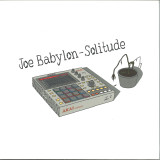
California's Joe Babylon has been steering his own Roundabout Sounds through some lovely deep house waters over the last few years. Now the producer makes a big statement with his own debut album. He is something of a veteran having co-founded Plug Research back in 1994 and hosted underground events in Los Angeles during the mid '90s. Following on from outings alongside the likes of Rick Wilhite and Rondenion he now brings his own dusty, carefully disheveled house sounds to the fore. They have been crafted using an MPC which gives them their rough-edged appeal and they go from heads down back room joints to dubbed-out minimalism via dream late-night reveries. It makes for a fresh take on a tried and tested house template.
Here comes Emotional Rescue and Konduko's last in their series of Noel Williams/King Sporty reissues, this time looking at later electro productions and the hip-hop/boogie influenced 'Sun Country'. Vocals and co-production come from Williams' long-time partner Betty Wright and as well as a vocal and instrumental mix there's a longform remix by Bay Area disco dub stalwarts, 40 Thieves.
By this point in his career, the godfather of Miami Bass had travelled a long way from his Jamaican roots in reggae and soul, paying homage to the warm climbs of the Sunshine State and laying down a much copied template using the TR-808 drum machine create the electronic emulations of the breakbeat, claps accenting the backbeat and trademark low frequencies shaking the floorboards. The instrumental stretches the arrangement, emphasising the interplay between electronics, bass, vocal samples, scratching and fx, the voice transformed into a percussive element in its own right. The flip sees 40 Thieves flexing their understated understanding of electro funk, making for a rounded, generation-jumping package.
Scannoir & Sneaker, aka “GOTT”, explore, transform and mutate. This unique collaboration embodies the perfect symbiosis of passion. “Die Deutsch-Schweizerische Freundschaft” is still profound and continues to have an effect. Now the two exceptional artists present their latest work: GOTT – MUTATIO on the Zurich based label Mattoni Pazzi.
“Alles wird gut” was the motto of the occupied Wohlgroth-Areal in Zurich in 1993, where Sonic Violence was invited to the concert of their “Transfixion” album tour. Industrial beats, dark samples, guitar riffs and moshing punks dominated the scene. At the ticket booth there were CDs to take away: “Sonic Violence – Transfixion”!
A template that now, 30 years later, adorns this memory with the selected track “Malice” in a new guise. GOTT mutates the original into a dark hell ride.
Enter the realm of the Fields of the Nephilim! The guardian waits, a lifetime. Profound and melancholic, he is transformed by GOTT. Dark souls remain dark souls. Daringly and nevertheless tradition-consciously they march through the black terrain. Interwoven by GOTT, guarded by GOTT. Well – GOTT is the guard! Experience this unique metamorphosis with GOTT – MUTATIO.
AN AUTUMN FOR CRIPPLED CHILDREN have become a staple act in both black metal and shoegaze circles, delivering hauntingly evocative missives of introspective, yearning and sorrow alike. On Closure, the Dutch band continues to push the sonic template of their disparate influences to its limits, resulting in a sound that nurtures their ethereal sensibilities as much as their wall of sound approach to the genre’s more extreme inclinations.
A complex and sometimes belligerent character in real life, on record,
John Martyn was the epitome of the folk-dreamer, embodying the spirit
of the bourgeoning London acoustic scene of the late 60s
Well- known and respected for his 70s albums Solid Air and One World, this is
where it began.The second and final John and Beverley album, The Road To Ruin
came out in late 1970; it is a mature, fully realised work, and a glimpse of what
would have happened had Island not encouraged John to go back to being a solo
artist. Opener Primrose Hill was later sampled by Fat Boy Slim, and the John-led
Parcels offers a template for what would become his signature style as the
decade progressed. It is one of those rare albums that creates its own
atmosphere, late night intensity, middle age soul.
This re-issue faithfully replicates the original 1970 Island Records UK release and
is pressed onto high quality 180g vinyl.