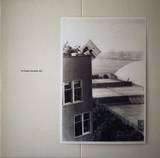
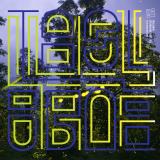
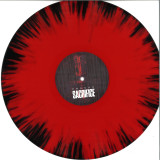
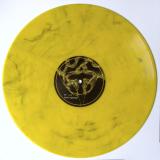
From the depth of transient memories comes ‘Some Leaves Must Fall 聽其自然’, Temple Rat’s latest EP and the inaugural release for Martin Gilleshøj’s ‘Buttheads’ label.
Across 6 tracks Temple Rat distills fragments of spatial memory, merging conceptual ambience with the mystic, spatial, and driven edges of deep trance and hypnotic techno. A pensive and functional synthesis, one played out like an ode to the sustained.
Through 2024 while moving between Berlin and Sichuan, Temple Rat conceptualized and finished ‘Some Leaves Must Fall 聽其自然’. At its core, the work is an exploration of how the personal memory of cities and their particular acoustic environments can be transmuted in musical form. For these places, altered by the passing of time and the shifting of contexts, mirror the fluid and generative nature of sound itself.
Creatively this approach was borne out in a kind of archaeology of sound: by sampling and capturing auditory fragments Mei was able to preserve otherwise fleeting moments of experience. Sonics which not only embodied the emotions of the present but served too as a mechanism of recall, pulling memory back into focus even against the erasures of time.
In its method this project seeks to transform the sonic textures of urban and natural environments into high-energy dance tracks, exploring the tension between the certainty of space and the uncertainty of time. A tension operating not only within the structural logic of the sound itself, but so too as an affective experience, extending into the listener’s body and perceptual field.
For we are not the first to note that in a world of pervasive temptation and fragmented information, sustained listening has become rarified. Through this project, Temple Rat hopes to counter this tendency; to encourage a deeper mode of listening that restores attention, re-establishing our essential connection with the present.
All music is written, recorded, arranged, and produced by Temple Rat aka Yuxin Mei
Mastered by Giuseppe Tillieci at Enisslab
Distributed by One Eye Witness
Suche:temple rat
Siamese Twins Records presents Temple Rat, known offstage as Mei Yuxin, and her highly anticipated debut EP, "The Composition of Air." This album signifies her first solo release with Siamese Twins, following her contribution to the Kāthā V.A. (ST-๐๐ห้า), which Higher Intelligence Agency later reworked on ST-๐๐๘. Each track gracefully transitions, creating a harmonious blend of ethereal haze yet grounded echogenic brushstrokes. Despite the otherworldly ambiance, the EP remains deeply rooted in an ancient mystique, which Mei has skillfully crafted.
Hailing from Chengdu, Mei is a master of the traditional Chinese Erhu, a two-stringed folk instrument made of wood and snakeskin. The soulful resonance of this time-honored instrument intertwines with Mei's productions and live performances.
The opening track, "Dreaming of Electric Sheep," immerses listeners in a dystopian sci-fi atmosphere, masterfully merging rustic ambiance with hissing field recordings and IDM-inspired elements. Hypnotic rhythms envelop and wash over meditative alchemy.
"Rooted in the Soil of Your Heritage" features a captivating collaboration with Portuguese vocalist Meta_, taking on a contemporary darkwave approach. This track spirals into the horizon, offering solace through interlacing oscillations, and perfectly illustrates Mei's ability to facilitate interethnic dialogue with her distinct and enthralling Erhu sound.
The true story unfolds in the title track, "The Composition of Air," as Mei expertly employs organic synths to create absorbing arpeggios and sequences.
The final piece, "东风," feels familiar and otherworldly, as drums pirouette beneath melodies that balance delicately, culminating in an intriguing and welcoming soundscape—the ideal conclusion to a captivating EP.
One of the most innovative and ambitious albums ever made, Genioh Yamashirogumi’s Ecophony Rinne is a sonic masterpiece featuring over 200 musicians that expanded the limits of what music and sound could do.
Before Akira there was Ecophony Rinne. Originally released in 1986, Ecophony Rinne is a four-part symphony of “ecological music” by Geinoh Yamashirogumi that married ancient tradition with technological innovation, and changed the way we listen to music in the process.
Half-speed mastered at Abbey Road by Miles Showell, Time Capsule’s high-tech analogue reissue is the first to reproduce composer Ōhashi’s ground-breaking “Hypersonic Effect” theory on vinyl, cutting frequencies beyond the realm of human hearing into wax to capture the full spectrum emotional impact of this extraordinary work.
Founded by genius polymath Tsutomu Ōhashi aka Shoji Yamashiro, Geinoh Yamashirogumi is a shapeshifting collective of over a hundred members from across disciplines. Rejecting professional musicianship, Ōhashi cultivated an ethos where neuroscientists, psychologists, doctors, journalists, engineers and students could critique society through artistic expression and pursue their research in ethnomusicological performances that spanned global traditions, Eastern spirituality and Western classical form.
Ecophony Rinne represents the pinnacle of this vision - an expansive orchestral suite made with over 200 musicians that channeled Ōhashi’s thinking about mankind’s relationship with nature, and fundamental questions of life, death and rebirth.
Here pipe organ synths made from sampled Tibetan horns sit alongside field recordings from Central African forests, Buddhist mantras circle dummy head microphones, Javanese Jegog percussion ensembles pulse like verdant ecosystems, and the acoustics of temples, caves and landscapes are conveyed in the mix. Weaving together culture, nature and technology, it is a record that vibrates with the polyphony of life on Earth.
But Ecophony Rinne was not only musically innovative. Noticing the difference between vinyl and CD versions of the album where digital reproduction limited the sound, Ōhashi developed a theory of “Hypersonic Effect”, determining that ultra-high frequencies above 20khz can impact human perception even if they are inaudible. At once a physical and a psychological experience, to listen to Ecophony Rinne is to feel music differently.
The rest is history. After its release, Ōhashi was approached by director Katsuhiro Ōtomo to produce the soundtrack for Akira, the work for which Geinoh Yamashirogumi is best known. Emerging from the shadows at last, Ecophony Rinne was its transcendental blueprint, reissued in its most complete hypersonic form on vinyl for the first time.
Rather than describe nature, Ecophony Rinne embodied it. Rather than reflect culture, Ecophony Rinne defined it. Rather than explore technology, Ecophony Rinne changed it. As a work of art, it is more relevant than ever. You won’t have heard anything like it.
- 1: The Cross
- 2: Whips-A-Swinging
- 3: Savage Gods
- 4: Sword Of Iron
- 5: Crystal Skull
- 6: Warlords
- 7: Black Talon
- 8: Titan's Awakening
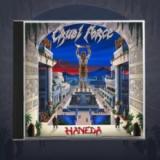
- 9: Haneda
While many have tried to emulate the ancient German (black)thrash sound, CRUEL FORCE brimmed with an authenticity that could not be denied, as well as songwriting that added to that noble tradition rather than lazily picking at its corpse. Their two successive albums, 2010's The Rise of Satanic Might and 2011's Under the Sign of the Moon, made CRUEL FORCE a certifiably CULT name in the international metal underground. Sadly, the band fell into a hiatus following that second album, but returned reinvigorated with the comeback 7" EP Across the Styx in 2022 and, a year later, the glorious full- length Dawn of the Axe at the hands of new label home SHADOW KINGDOM. Continuing to make up for lost time, CRUEL FORCE storm back with swords gleaming high on their fourth full- length, Haneda.
Where a line could be drawn between the band's "first era" of The Rise of Satanic Might / Under the Sign of the Moon, so continues this Second Era that began with Dawn of the Axe - one that harkens to the "Jurassic period" of heavy metal, when everything was rawer, less polished, and more energetic and powerful. As displayed by that pivotal predecessor, Haneda further proves that CRUEL FORCE are more so an old-style speed metal band, largely bereft of that blackened edge during their First Era. The tradeoff is that there's a prominent mysticism coursing through that speed, and the blue-collared aspect of Dawn of the Axe is now spit-shined to a lethal slickness that makes Haneda hit that much harder.
However, it must be stressed that, while it follows logically from Dawn of the Axe, Haneda is very much its own headspace, its own continuation of a still-vital aesthetic. At times more epic, exuding both more and different atmospheres, CRUEL FORCE here take the listener on a journey from old temples to desert planes, from deep jungles to mountain tops, and other mysterious locales beyond; indeed, the whole record is like a journey through mystical realms. Although no concept album, Haneda is very conceptual in its aesthetics, even down to its production: BIG and naturaltoned, from the guitars to especially the drums, everything here is as '80s and authentic as possible, underlining
The sonic worlds of Devon Rexi and John T. Gast collide in a vital meeting between two singular mavericks!
Following two lauded EPs on cult label South of North, Amsterdam-based Devon Rexi prepare to release their much-anticipated debut album, recorded by and featuring elusive 5 Gate Temple devotee, musician and producer John T. Gast, whose acclaimed catalogue continues to flourish.
Devon Rexi is a trio made up of Nicola Reverda (Nicolini), Nushin Naini and Goya van der Heyden (La Rat). They’ve quickly carved out their own sonic world, traversing krautfunk, post-punk and psyched-up no wave, all laced with a dub-heavy experimental mentality. Breathstep captures the band’s bass-heavy incantations, ripe with melodic chaos and rhythmic improvisation, while devilish cackles and processed vocals flirt over a jukebox of dubbed snippets and sliced textures.
The introduction of John T. Gast as producer and collaborator pulls the Devon Rexi sound deeper into bubbling dub territory, while his own palette is stretched and pushed into new terrain. Though Gast has firmly cemented his singular sound over the last decade, this interconnected process marks new ground for all involved. The result is a supreme convergence of esteemed musicians and a wickedly fine debut collaborative record.
Breathstep finds its home on Bristol imprint Accidental Meetings, whose ever-evolving sound and wide-ranging discography continue to grow. The album was recorded over the last year across Amsterdam, Lisbon and London.
- 1: Amidst Things Uncontrolled (2026 Remaster) 05:00
- 2: Pigeon Hurt (06 Remaster) 03:3
- 3: Roots Growing (2026 Remaster) 04:42
- 4: From Verse To Verse (2026 Remaster) 03:9
- 5: Refrain From (2026 Remaster) 01:13
- 6: Tentative Growth (202 Remaster) 04:28
- 7: Across From Golden (Remix) (2026 Remaster) 05:08
- 8: Standing On A Hummingbird (2026 Remaster) 04:54
- 9: Pattern For A Pillow (2026 Remaster) 07:14
- 10: Difficult To Light (2026 Remaster) 05:00
Originally released on Ezekiel Honig's Anticipate label in 2007, Standing on a Hummingbird is the debut album by Canadian sound artist Mark Templeton, now appearing for the first time on vinyl, newly remastered by Giuseppe Ielasi and cut by LUPO. Working at the intersection of post-glitch, electroacoustic ambient, and textural minimalism, Templeton composes through restraint and erosion, building patient and richly tactile pieces primarily from acoustic sources - fingerpicked guitar, plaintive banjo, muted accordion tones - subjected to careful processes of granulation, filtering, and environmental masking. These gestures never overwhelm the source material; instead, they wonderfully destabilize it. Melodies appear briefly, only to dissolve into dense atmospheres of field recordings: distant streets, birds, water, air. Sounds hover, vibrate, and vanish, much like the wing beating latent in the album’s title.
Tracks such as “Pattern For a Pillow” and “Amidst Things Uncontrolled” articulate this approach with particular clarity, setting languid acoustic figures against churning granular backdrops that feel at once sheltering and unstable. Elsewhere, moments of fragile clarity - fluttering guitar lines, reedy accordion tones - briefly break the surface before being absorbed back into the field.
Heard today, the record offers a clarion, almost spartan strain of textural ambient music: intricate yet unforced, shaped by human touch rather than automated excess. Its refusal of spectacle feels especially vital in a landscape saturated with maximalist digitalia - a reminder that electronic music’s most enduring gestures often occur where sound is allowed to tremble and hold itself just long enough to be felt before disappearing once again. (Alex Cobb, 2026)
Parsley Sounds was the glorious debut album for Mo Wax by Parsley Sound. The album was one of the iconic label’s final releases before it closed in 2003 and locating a clean copy has been extremely tricky of late, unless you're flush enough to drop 150 notes on it. Mercifully, the Be With reissue, put together with invaluable assistance from the group, should remedy this situation. It's a lo-fi, bass-heavy, blunted beat treat, warped with heat haze and dreamy soft-psych and has been criminally under-heard for far too long.
As with most cult-like records, Parsley Sounds has many influential fans, far and wide. From Four Tet and Caribou to NTS's modern day breakfast hero Flo Dill, its reputation has only grown in stature. At the time, the notoriously hard-to-please Pitchfork garlanded it with a scarcely achievable 8.8 whilst, just recently, the Numero Group's Rob Sevier described it as a "visionary bit of proto-Salvia Palth (or Steve Lacy)" via a Ghostly International missive.
Parsley Sound comprised super-talented duo Preston Mead and Dan Sargassa. They released an early single (the perfect "Twilight Mushrooms", featured here) on Warp Records as Slum, before signing to Mo Wax. Hidden behind a wall of sound - fuzzy layers of beats, bleeps and symphonic synths - they were convinced they made mainstream pop music. And, in many respects, Parsley Sounds really is a beautiful pop album. It overflows with memorable, gorgeous melodies and inspired songcraft. As the contemporaneous Pitchfork review correctly had it: "Parsley Sounds is one of those rare records that manage to sound modest while frequently pushing the sonic envelope."
Killer opener "Ease Yourself And Glide" is a thing of aching, soft-psych, wonky beat-beauty. A melodic masterpiece, part Crosby, Stills & Nash, part proto-Koushik, it presents a melancholy falsetto, surging bass and blunted lead guitar. As it climaxes, gorgeous strings are ushered in to see us out. Sublime. "Twilight Mushrooms" is up next and it's an acid-drenched, strung-out acoustic-led campfire wonder. Amid layers of tape-hiss and beautiful, sun-dappled strings, its understated vocal track provides a haze of wistful innocence.
The breezy "Spring's Near" is a krautrock-inspired chiming instrumental of heavenly excellence, its warm, skipping, motorik groove and dreamy synths completely infectious. Another total highlight, the technicolour "Yo Yo" initially presents itself as a more abstract, bleepy offering but as it organically swells into ever more beautiful places, with the addition of a choppy insistent drum loop, flute bursts, horns and sweeping strings, it puts one in mind of early Manitoba and Four Tet releases. Shimmering, blissed-out greatness.
The celestial harmonies and glistening harps of the wonderfully beatless, serenely sullen "Ocean House" are very much in conversation with late-60s meditative psych whilst, closing out Side A, the jaw-dropping, lushly experimental effort "Find The Heat" comes on like Arthur Russell meets Brian Wilson. Yep, *that* good.
Side B opens with the warped, bleepy "Stevie", a brief but beautifully wonky, soulful and intricate instrumental. The more upfront vocals that propel the fuzzy "Platonic Rate" have a refreshing swagger to them, the heavy bass and neck-snapping in-the-red beats too much for any system to deal with whilst the guitars and strings have a sweeping, cinematic feel which just beguiles. The slow, urbane soul of "Candlemice" will stop you in your tracks, no matter what you're doing. It carries a delicate sadness, as does much of the album in that classic "down lifting" style we so love here at Be With.
The fuzzing, buzzing "Templechurchmansions" is a searing, soulful dubwise detonation. Heavily stoned with slow-burning jazzy snatches and a tense, moody atmosphere, it's a Tricky-adjacent gem. The album rounds out brilliantly with the ominous instrumental "Neon Breeze" before giving way to the propulsive, almost incongruous punk-funk / disco-dub of secret "untitled" track "Caution", a scratchy, smacked-out groove-fuelled workout with a female vocal dripping with 'tude. Just sensational.
Under the watchful eye - and attentive ears! - of Parsley Sound themselves, the audio for Parsley Sounds has been carefully mastered by Be With regular Simon Francis, with a few much needed tweaks here and there, according to the artist's wishes. Cicely Balston's expert skills have made sure nothing is lost in the cut whilst the records have been pressed to the highest possible standard at the always stellar Record Industry in Holland.
Preston and Dan always thought the colours on the first vinyl pressing looked a bit "washed out" vis-a-vis the original artwork which was way more vibrant. We feel we've got it popping back to the original intention with the restoration work here at Be With HQ. So with the audio and artwork now approaching completeness after 20 years, this long overdue re-issue could be considered its definitive vinyl release.
Introducing Foreign Tech Division a mysterious and confident new label curated with the purpose of taking your listening experiences to new places in mind.
First up is MSRG; After solo appearances and eps on Solar One Records and Analog Concept Records, MSRG debuts his first full length vinyl album Part Time Hover Lp. Lovers of Detroit classic electro with warm analogue frequencies will feel right at home in the midst of these 9 compositions designed with intricate machine formulas that glide through aquatic and celestial aesthetics, dipped in both dark and colorful tones.
Whether you seek bold and funky sci fi grooves, or temples into the lush and mental with mysterious vocals (featuring Roger Versey);
MSRG's Part Time Hover has you covered with the electro essentials, and features the fine mastering of Johanz Westerman for the smooth listen you can enjoy again and again.
- 1: Poison Icon
- 2: Godless Cynic
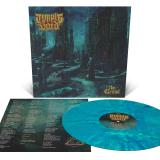
- 3: The Crawl
- 4: A Dead Issue
- 5: Thy Mountain Eternal
- 6: Soulburn
- 7: The Twin Stranger
Critically acclaimed Death Metal force TEMPLE OF VOID return with their new album, The Crawl. The caveman brawn of previous albums, namely Summoning the Slayer (2022), remains, but there’s a wider dynamic on the group’s fifth full-length album at play. Now a quartet—featuring guitarist Alex Awn, drummer Jason Pearce, vocalist/guitarist Mike Erdody, and bassist Justin Malek—the Michiganders aren’t shying away from their non-metal influences, seeking greater integration of grunge and post-punk with their brutish signature. Singles “The Crawl” and “Soulburn” demonstrate the proficiency of TEMPLE OF VOID's death-cloaked, spearheaded attack. From the high intensity of opener “Poison Icon” to the granite wall of “The Twin Stranger,” The Crawl isn’t just TEMPLE OF VOID evolved, it’s a harbinger of death metal to come. “The biggest shift for me on this record was not feeling like we had to fly the ‘death-doom banner’ as part of our identity,” says Alex Awn. “Death-doom, as a genre, gave us something to anchor our sound around when we started. It was always a reference and touchstone. At the same time, we always wanted to make sure we had our own spin on it. We’ve always been adding to the conversation, adding to the genre, giving our point of view. A huge part of what makes a Temple of Void record is the non-death-doom influences that make up our DNA. And on album five we never once asked ourselves, ‘Do we have enough death metal? Do we have enough doom metal?’ We simply wrote a heavy-ass record—let the chips fall where they may.” For lyrics, Erdody built on the psychology and fear themes of Summoning the Slayer. The overarching theme of The Crawl is, put rather simply, an “allegory about life, choices, and consequences.” It’s a qualitative view on the horrors of the human condition and the contemplation of our monstrous capabilities. “The Twin Stranger,” for example, is about being stalked by a person’s doppelganger; “Godless Cynic” draws on a short story by sci-fi author Harlan Ellison; and “Poison Icon” tackles the crushing effects of mankind’s intrinsic nature to deceive and control.
- A1: Herb Alpert & The Tijuana Brass - Casino Royale (Main Title)
- A2: Dusty Springfield - The Look Of Love
- A3: Moneypenny Goes For Broke
- A4: Le Chiffre's Torture Of Mind
- A5: Home James, Don't Spare The Horses
- A6: Sir James' Trip To Find Mata
- B1: The Look Of Love (Instrumental)
- B2: Hi There Miss Goodthighs
- B3: Little French Boy
- B4: Flying Saucer/First Stop Berlin
- B5: The Venerable Sir James Bond
- B6: Dream On James, You're Winning
- B7: Herb Alpert & The Tijuana Brass - The Big Cowboys & Indians Fight At Casino Royale/Casino Royale Theme (Reprise)
- C1: Herb Alpert & The Tijuana Brass - Casino Royale (Main Title)
- C2: Opening Cars Converging/To The Bond Chateau
- C3: The Black Rose/James Bond In Scotland
- C4: The Widow Duty Of Lady Fiona/Wassail
- C5: The Grouse Shoot/Mimi's Lament
- C6: Gymnasium Training
- C7: Proposals, Super 8 & Costumes
- C8: Sir James' Trip To Find Mata/Temple Dance
- C9: Mike Redway - Have No Fear Bond Is Here (Single Version)
- D1: Dusty Springfield - The Look Of Love (Film Version)
- D2: Sitar Background/Old Berlin House/Mata Hari School For Spies
- D5: Vesper's Kidnapping/End Of Torture Sequence
- D6: Fight In Casino Manager's Office/Dr Noah's Headquarters/The Lsd Room
- D7: Mike Redway - The Big Fight At Casino Royale/Even Bond In Heaven/End Title (Have No Fear Bond Is Here)
- D3: Bond Arrival In France/Vesper In The Shower
- D4: Le Chiffre's Magic Act
Quartet Records and MGM present the re-issue of the first official complete vinyl edition of Burt Bacharach’s timeless classic soundtrack for the 1967 James Bond spoof Casino Royale.
The infectious main theme performed by Herb Alpert and the Tijuana Brass is just the starting point of an epic comedy ride that includes such highlights as the unforgettable “The Look of Love,” sung by Dusty Springfield, or the epic fight music at the end of the film. Produced by record industry legend Phil Ramone, the original soundtrack LP offered selected highlights, expertly edited to showcase the best parts of the entire score. Thanks to the legendary sound quality of the stereo copies, this record became one of the most highly sought-after collectibles in the industry.
This straight re-issue of our 2019 vinyl edition was produced, restored and mastered by Chris Malone, rebuilding the score from the ground up. The soundtrack album has long been considered a cornerstone of an audiophile’s collection. Lauded by The Absolute Sound, the original Colgems release continues to remain in pole position as the best sounding “popular” LP vinyl disc of all time.
Malone’s work was focused on addressing unintended technical anomalies (such as filling dropouts and covering analogue splices) rather than broadly applying a modern sound palette. He has eschewed dynamic range compression and retained the brilliance of the original recording. The first LP is a fully remastered reissue of the iconic original stereo vinyl, playing in all its splendor. The second LP contains all the unreleased material, in mono, which are still the only available source to date.
This special 2xlp is a limited edition pressed on 180-gram black vinyl, all of it housed in a gatefold jacket, retaining the iconic original cover art by Robert McGinnis
- A1: Plan Ahead
- A2: Song 2B
- A3: White
- A4: Everything In Its Sweet Time
- A5: Now
- B1: Boone
- B2: Temple Of Doom
- B3: Heed The Dark Lord
- B4: Safe House
- B5: We War
f *Goodbye, Asshole* was the wild night—tequila-sharp riffs, sticky floors, and last-call chaos howled into the void of a disappearing city—then *Boone* is the merciless morning after. The sun cracks the blinds. The brain throbs. Every bad decision gleams in the hard light, raw and undeniable.
Fuckwolf’s second album pares their scuzz-wave blitz down to exposed nerves: Eric Park’s basslines stalk like a hangover pulse, Simon Phillips’ drums land like a palm slapping the alarm into silence, and Tomo Yasuda’s guitar wirings spit like diner coffee left to burn on the hotplate. The fog has lifted; the damage is inventoried. These ten tracks are crime scene Polaroids, tales of longing and woe, fresh mystery bruises and eulogies.
There’s no wallowing here, just the tight, terrible beauty of a band that’s stared down the void and come back swinging.
The party’s dead. Long live the reckoning.
Fuckwolf have been around the SF scene for a while, and it took Ethan Miller (Silver Current / Comets On Fire / etc) ages to get them to record the debut album, they then toured Japan and released a limited split mini with Green Milk From The Planet Orange. They reconvened late 2024 and recorded Boone..
This new album "Boone", polishes and extrapolates the fizzing psychedelia of their first album, and turns Fuckwolf into the heirs to the crown of mass-consumptive Sike-rock. This album is in the same vein as Mercury Rev's "Yerself Is Steam", Butthole Surfers' "Rembrandt Pussyhorse" and Flaming Lips "Telepathic Surgery", there's sheer pop in amongst the mind's eye rattling dollops of psychedelic wallop... the Koolaid was drunk and the songs were made.. plug it in, turn on...drop out.
Master by the one and only Mikey Young!!
- A1: Praise The Lamb
- A2: Start A Cult
- A3: Temple
- A4: Work And Worship
- A5: Saviour
- A6: Ratoo
- B1: Faith Up
- B2: Sacrifice
- B3: Darkwood
- B4: Amdusias
- B5: Leshy
- B6: Knucklebones
- B7: Pilgrim's Passage
- B8: The Night
- B9: Anura
- B10: Eligos
- B11: Heket
- B12: Shop
- B13: Sozo
- C1: Anchordeep
- C2: Saleos
- C3: Kallamar
- C6: Vephar
- C7: Shamura
- C8: Plimbo
- C9: Midas
- C10: Witnesses
- D1: Martyred
- D2: The Gateway
- D3: First Son, Baal
- D4: Second Son, Aym
- D5: Narinder
- D6: The One Who Waits
- D7: Enlightenment
- D8: Lamb God
- D9: Bishops Of The Old Faith
- D10: Light House
- D11: Bishop Temple
- D12: Lonely Shack
- D13: Clauneck
- C4: Followers Of The Old Faith
- C5: Silk Cradle
Der dämonisch großartige Soundtrack zum erfolgreichen Action-Roguelite-X-Base-Management-Game CULT OF THE LAMB von River Boy (Narayana Johnson). 42 speziell für Vinyl gemasterte Tracks erscheinen auf 180g rot-schwarzem Splatter-Doppelvinyl im Deluxe-Gatefold, verziert mit Kunstwerken des Illustrators Carles Dalmau.
- A1: Scelestic Dusk
- A2: Rat King
- A3: Hollow Man Blues
- A4: Creep On
- B1: Madagascar Tree
- B2: Brute Beast
- B3: Aruna, Sunmonger
- B4: Second Dawn
Gelobt sei das allmächtige Riff! Triumphaler, großartiger, schwerer und kraftvoller Stoner Metal.Das Debütalbum von King Zog aus dem Jahr 2017
führte einen neuen Titanen in die Unterwelt des Doom ein und erntete einseitige Fangemeinde und Kritikerlob für sein hingebungsvolles Opfer an die
Götter des Metal. Songs wie Temple's Temple, Man-sized Rotisserie und Witchsmoker klangen so, wie das ikonische Album-Artwork von Dominic
Sohor aussah: feurig und grausam.Seit dem Erscheinen dieses musikalischen Leviathans haben King Zog an einer unermüdlichen Mission gearbeitet.
Daniel Durack (Gesang/Gitarre), Connor Pitts-West (Gitarre), Martin Gonzalez (Bass) und Sean Ryan (Schlagzeug) haben keinen einzigen Tag
vergeudet, sich während der Pandemie in die Kisten gekauert, um Album Nr. 2 zu schreiben, und nach Aufhebung der Sperren unermüdlich performt.
Die Belohnung für ihre Mühen steht kurz bevor: „Second Dawn“ soll Anfang 2024 auf Hammerheart Records erscheinen. Größer, schwerer und
doomiger als sein Vorgänger, ist King Zogs zweites Album alles, was Fans sich wünschen: ein wütender Stier aus iommischen Riffs, seismischen Bässen
und donnernden Rhythmen. Downtuned und verzerrt, das erdrückende Gewicht.
- 1: Papaya
- 2: Dais For Moral Performance
- 3: Rat (Hopefully The Boy)
- 4: Hellhole
- 5: In Your Beak
- 6: Data
- 7: Reckoner
- 8: End Game
- 9: Wait
- 10: Trout
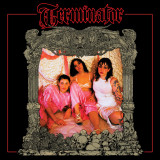
TERMINATor, the Seattle and New York based trio, are made up of albie, Lauren Rodriguez, and Veronica Dye. The group sits on the edge of no wave, punk, noise, and sweeping experimental.
TERMINATor united in 2017 under the mission of undermining traditional sound aesthetics and expectations. Consequently, part of the emergence of TERMINATor’s superbly unusual approach was the fact that each member learned their instruments as the project developed.
After releasing singles and the visual EP, “Rat (Hopefully the Boy),” TERMINATor has finally debuted their full length album. “Placate Boring Flesh” emphasizes musical texture over traditional melodies.
Even through growth and refinement of their sound, TERMINATor stays ever consistent in beginner’s mind within their idiosyncratic approach to composition. Discordant, angular, and atonal, TERMINATor weaves in and through itself. The group shines in their live performances, inviting their audience into a beautiful auditory disorientation of roaring textural bravado. TERMINATor sits on your temple in a balance of angular and sweeping shapes moving through coarse soundscapes.
Bottom line, TERMINATor is truly here to destroy.
“An instinctual curiosity guides their songs into unusual and interesting places, as is evident on Placate Boring Flesh. TERMINATor affectionately sucker-punch your expectations about how young modern women rock.” - The Stranger
“Placate Boring Flesh stands as one of the most exciting rock records to come out of the city in a while” - KEXP
“This Seattle-based trio’s record is an experimental, floating world of sound. Dreamlike (but not dreamy) in the most darkly surrealist way—like translating a Leonora Carrington or Miro painting to music.” - Maximum Rock N Roll"
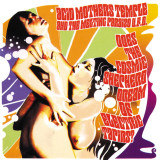
Wiederveröffentlichung der audiophilen 180-Gramm-Vinyl-Doppel-LP mit dem neuen Artwork-Layout von 2019 in kräftigem Grün. Neu gemastert von John Rivers im Woodbine Street Studio speziell für die Vinyl-Veröffentlichung. Does The Cosmic Shepherd Dream Of Electric Tapirs? ist nicht nur eine Frage, die eine Antwort verdient, sondern auch der Titel von Acid Mother Temples allererster Veröffentlichung auf Space Age Recordings. Als japanisches Soul-Kollektiv sind Acid Mothers Temple und The Melting Paraiso UFO so etwas wie ein Rätsel für die westliche Welt, und wahrscheinlich auch für östliche Ohren. Ihre Musik kann als Acid-Rock, experimentell, psychedelisch oder eine ganze Reihe von Genres beschrieben werden, je nach Stimmung des Hörers. Die lange erwartete Wiederveröffentlichung dieses wilden Angebots von AMT ist seit einiger Zeit vergriffen und kommt als solides grünes Doppelvinyl mit dem verführerischen, unzensierten Artwork der Originalhülle. Limitiert auf 500 Exemplare weltweit.
- 01: Dante Inferno (Intro)
- 02: All Alone (Feat. Masta Ace & Torae)
- 03: Lyrikal Landslide (Feat. Ruste Juxx & Nutso)
- 04: What`s Done Is Done (Feat. Ide & Jise One)
- 05: Deja Vu (Feat. Rasheed Chappell & Soul The American Dream)
- 06: Im Here (Feat. Dontique `& Cf)
- 07: The Mecca (Interlude)
- 08: Disobedience (Feat. Clever One)
- 09: Call Of The Wild (Feat. Team Thoro (Absouljah & Spicco & Halfa Brick))
- 10: She`s Broke (Feat. Guilty Simpson)
- 11: Believers (Interlude)
- 12: Ambition Of The Shallows (Feat. Napoleon Da Legend & Paloma Pradal)
- 13: Just Listen (Feat. Wildelux)
- 14: Longevity (Feat. G.o.d. Part 3, J-Merk & Jamil Honesty)
- 15: Who Be The Realest (Feat. King Magnetic)
- 16: Making Cuts (Feat. Dj Nix`on, Dj Topic, Ordœuvre & Dj Duke)
- 17: Hell`s Storm (Feat. Q-Unique, Hex One & Milez Grimez)
- 18: Maniac (Feat. Xplicit Content (Unkn?Wn, Fatha Death & Eternel & Apacalypze))
- 19: Damned (Interlude)
- 20: Other Shit (Feat. Dirt Platoon & Wyld Bunch)
- 21: Projects (Feat. Spit Gemz & Eff Yoo)
- 22: The Payback (Feat. Ems (M-Dot & Revalation & Mayhem))
Stuck in the depths of a dark alley, blocked by yet another breeze, hitting a stone wall, road sign ahead: Dead End.
Impasse. "Cul-de-sac".
Hip‐hop. The original, some would say, official music of the late 20th Century Bronx.
Some say it has endured it's fair share of distractions, detractors and defectors. Some say it has murdered itself, having been abandoned by its so‐called best men, those who have gone off in other directions, or who have, simply, just beat‐retired. Yet, there are plenty of Soldier Monks still out there, prepared to sweat it out in the Temple of Machinery and Mics.
Low Cut honored this cause four years ago, with his MPC crafted minimalist version of NY Minute and he's back to ring the bells and unsheathe the samples!
The starting point of Dead End's production remains the 90's boom-bap, but the will to carry it even further brings it to its destination. By decorating it with rich samples flushed out after digging through vinyls pressed several decades ago, it is guided by a compass pointing deposits to the East. With sound quality inherited from a fastidious composition and mix works, using inspiration rather than just being a copycat, Dead End celebrates it without setting it up as a museum piece.
Picturing the beatmaker stuck in the depths of a dark alley, ended with a brick wall, is easy. But far from isolated in his Parisian basement, Low Cut has rung phones in New York, Baltimore and Detroit, rounding up the faithful. He magnetized the hidden but sharp forces, and gained attendance of legends. The casting of Dead End : Ruste Juxx & Nutso, Dirt Platoon, Guilty Simpson, Torae, Rasheed Chappell and the stainless Masta Ace, among other beat crushers. Also starring DJ Duke, Nix'on, Topic and Ordoeuvre with their DMC titles crates, for a deep beatfight on bars scarified of scratches.
Heavy atmosphere, martial beats and street soul, Dead End is also the final episode of the projects initiated by Low Cut, based on the model of a producer inviting various MCs.
He will then replace his turntable needles, refresh his sample banks, and settle the BPMs of his productions on more abstract frequencies.
Le jazz homme is the 2nd album of Black To Comm related entity Mouchoir Ètanche. This time heavily influenced by French Jazz (?) as well as the usual suspects: Nurse With Wound, Luc Ferrari, JG Ballard, Surrealism. The human entity has finally been replaced.
"Program music, instrumental music that carries some extramusical meaning, some “program” of literary idea, legend, scenic description, or personal drama. It is contrasted with so-called absolute, or abstract, music, in which artistic interest is supposedly confined to abstract constructions in sound. It has been stated that the concept of program music does not represent a genre in itself but rather is present in varying degrees in different works of music." (Encyclopædia Britannica)
Prompt 1: Pascal Comelade's toy piano falling down the stairs , Hector Zazou pushing from behind, laughing
Prompt 2: Cool jazz played on antique mellotron, low in fidelity, and sad, Glenn Miller‘s grandma crying silently
Prompt 3: A hippie commune version of jazz as played by a cheap computer fed by Chat GPT with medieval buisine fanfare information and samples, trained on the entire Amon Düül II history, heavily looped yet unsynchronized
Prompt: 4: Same, but flutes and synths and trance and chants
Prompt 5: French female artist philosophizes about Shirley Temple, mysterious atmosphere, insensitive homme laughing nervously, heavily looped, hynotic 18th century orgue de salon underneath
Prompt 6: Cool jazz, Echoplex, strange rhythm, Blue Note daydreaming
Prompt 7: Hammond jazz with fake Cyro Baptista loop, Madagascar indri indri lemurs chanting fake sax solos in Malagasy language, electronic bells
Prompt 8: German jazz and artificial prayers, and Shirley Temple returning, with defect Publison recorded at GRM, destroying the voice recording
Prompt 9: Andrei Tarkovsky's moustache meets Johann Sebastian Bach's wig, a well gently lapping in the background, fifths, car crashing into a poor violent onsen geisha
Marc Richter records as Black To Comm for Thrill Jockey and under the Mouchoir Ètanche and Jemh Circs monikers (and solo) for his own Cellule 75 imprint. He collaborated with visual artists such as Ho Tzu Nyen, Jan van Hasselt and Mike Kelley. He also produces soundtracks and acousmatic multichannel installations for institutions such as INA GRM Paris, ZKM Karlsruhe and Kunstverein Hamburg.
- Mar Vista - Visions Part 1 Her Eyes Are Closed
- Kennlisch - Kennlisch
- Crystal Eyes - Crystalzed
- Warlus - Girl Like You
- Gerard Alfonsi - Fana Stickle
- Geoffroy - Viking
- Amphyrite - Symphonie Pour 3 Oeufs Brouilles
- Eole - Friendship
- Capucine - Les Elephants
- Rictus - Flashes
- Inscir Transit Express
- Polaris - Polaris
- Joel Boutolleau - Force
- Spotch Forcey - Frustre
- Demon Wizard - Black Witch
- Temple Sun - Voyage Sans Retour
- Chantal Weber - Ballade Aux Chataignes Tombees
- Jean-Claude Zemour - X Kmh
- Rhodes Co - Baoum
- Guidon Edmond Et Clafoutis - Stormy Sunday
"For a long time, I'd come across these discs without really understanding what connected them, apart from a button and that famous logo designed by René Dessirier. Then, with a little more digging, I discovered the "self-production" link. For choirs, schools, folk singers, young pop groups, popular homes and even great composers who engraved unique copies of certain recording sessions...
The French equivalent of the English "Derby Service", the Kiosque d'Orphée, formerly at 7 Rue Grégoire de Tours in the 6th arrondissement, was taken over by Georges Batard in 1967 and moved to 20 Rue des Tournelles in the 4th arrondissement of Paris. The adventure lasted until 1991. Georges Batard was a sound engineer who used a Neumann tube engraver to engrave acetates from the tapes he received, before printing the precious vinyls in the press factories of the day, where he was able to produce very small runs of between 50 and 500 copies.
Of course, there were other structures for releasing his records, such as Voxigrave or, later, FLVM, but none of them had so many records in their catalog. Le Kiosque d'Orphée was neither a label nor a publisher, but a structure that allowed you to press your own vinyl, at a time when it was quite an adventure to get your first 45 rpm or 33 rpm album released!
Georges Batard was described as passionate and conscientious. His son, bassist Didier Batard, wrote of him:
"Georges was passionate about recording and reproducing the stereo sound of his great passion, music. He paid close attention to distortion rates, signal-to-noise ratios, response curves, rise times and other damping factors in audio equipment. He was looking for the exact reproduction of concert hall sound in his living room (with the same sound level, if possible...). In the late '50s/early '60s, he found other sound enthusiasts in AFDERS (Association Française pour le Développement de l'Enregistrement et de la Reproduction Sonores). He became its honorary president. Every Saturday afternoon, its members met to test au- dio equipment. Their opinions were published in the monthly Revue du Son.
All you had to do was send in your tapes and choose the number of record copies you'd like to take home with you, so you could finally share your creations and, in a way, exist. You could opt for a generic sleeve, available in several colors, directly customizable with your name and credits, or you could design your dream sleeve yourself in your living room or at a printer's.
This "Do It Yourself" temple gave birth to some superb pouches. Stencilled, hand-written, illustrated with paintings, drawings, illustrations by friends or girlfriends of the time, photo prints hastily stuck in the middle of a blank, white sleeve, on which the traces of time would leave their imprints, so that collectors and the curious would come and buy them decades later, with the promise of a musical discovery, unfortunately not always fulfilled...
What most of these records have in common is the youth of their songwriters, whether or not they've had a career. Stories of buddies, of getting by and dreams of glory made up this catalog. Most of them were amateur productions, both in terms of the level of the musicians and the quality of the recordings, made on a two-track or, the ultimate luxury, a 4-track in a teenager's bedroom or parents' living room.
It was the beginning of the home studio, thanks to the advent of the Revox portable tape recorder. A bit of a shaky DIY system, but, in return, the luxury of setting no limits: one-sided tracks, no outside censorship, no artistic director, no manager, no Barclay or EMI/Pathé Marconi logos...
When you finally had your own record, you could give it away or sell it to friends, family or after concerts. You could also drop it off at the nearest record shop, with undisguised pride.
It was also a calling card that could be sent to radio stations or music labels, in the hope of launching a career...
Many of the protagonists in this story tried to sign with labels, but in those days, bridges were not so easy to build between one's hometown, or even one's village, and the major or more specialized label that might have released these records. At the time, the advertisements published in the press by the Kiosque d'Orphée opened up the field of possibilities for provincial composers. It was now possible to make their own record, without having to go through the process of signing with a label.
Some of the composers who have gone on to make a career have used this channel to release their first record or parallel projects (Claude Engel, Dominique A, Andy Emler, Michel Deneuve, Claude Mairet, Mick Piellard, Tristan Mu- rail...) and sometimes even single or very limited pressings of work or promotional copies (Bernard Parmegiani, Jef Gilson...).
This album is the conclusion of a long investigation, begun six years ago. It took a long time to find the records, scattered all over the place, in the homes of collectors and sometimes the musicians themselves, and then to listen to them, sometimes painstakingly, to unearth these moments of grace.
From this work, 23 tracks remain, but there are dozens of others that could have been included, so we had to choose, and the choice had to be as universal as possible. This selection is obviously not objective, but I hope you'll like it.
Today's music is raw, touching and powerful. "
Jean-Baptiste Guillot - Born Bad Records
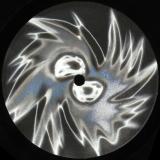
Temple, Bassey, MacLaine and now, Hurt; in a world of Shirleys, the name Sophia Ruby Katz has chosen for her music is perhaps prophetic as it captures her stunningly emotive vocal approach. And whilst Shirley Hurt might be the perfect nom de plume for the creative Toronto-based artist, it’s her self-titled debut album which positions her as protagonist of her own universe.
Traversing sonic landscapes, Shirley Hurt’s vocals ebb and flow like lyrical Ley lines tracking the contours of her own well-travelled map. By the age of 18, Hurt had travelled extensively, having lived in upwards of 20 different apartments and houses, as a result never really feeling “at home” anywhere. At this age was when Hurt found herself in New York, dipping her toes into various scenes and musical realms. The first and only place she ever felt at home, and a partial home-base for her, she travelled between Toronto and New York until the age of 26.When the project she was working on in New York reached a dead-end she returned West, moving in with musicians Harrison Forman (Hieronymus Harry, Zones) and Patrick Lefler (Roy, Possum). Being surrounded by their improvising at all hours, a new approach emerged. “Harrison is a virtuosic guitar player, and I hadn't picked up a guitar in any serious way since I was 16,” she says, “by osmosis I started playing again for fun.” Without agenda, the process grew organically from there.
Hurt and Forman decided to travel across the US and Canada in a trailer for half a year, with the entire album written in the final months of their trip. Hurt had been writing loose ideas here and there but felt blocked creatively. When the pair reached Berkley, they wound up house-sitting for a tuned-in friend who recommended she pray, in a very direct way, to remove the block. “I took her advice and to my surprise it worked. The album was conceptualized and finished within a couple of months.” Shapeshifting in tone and phrasing, Hurt’s music alchemizes the furthest corners of experimental indie folk, pop, and country into a singular sound with elegant unpredictability.
Whilst Shirley Hurt’s lyrical and structural ideas may have emerged on the road, the album was self-produced and recorded at Joseph Shabason (The War on Drugs)’s Aytche studio in Toronto’s West End. It was engineered by Nathan Vanderwielen and Chris Shannon (Bart), and Hurt enlisted collaborators Jason Bhattacharya, Nick Dourado, Patrick Lefler, and Harrison Forman to hone her vision. “I wasn’t sure what was going to happen with the songs until we returned to Toronto,” she recalls. “Joseph and I had been talking about working together after sending across some demos and Jason happened to recommend his studio at the exact same time, so everything came together naturally at that point.”
Whilst her most recent adventures may have seen Shirley Hurt bound for Texas as an official SXSW artist (hand-picked by Gorilla Vs Bear to perform at their own showcase), she currently resides in her native Canada, more specifically rural Ontario, close to friends and family, and is already working on her second album. The ties to lineage are interwoven in the fabric of the music. Hurt’s mother, artist Leala Hewak, instilled a lust for life and innate value of creativity in her from a young age as she explored the role of gallery owner, vintage jewellery show host, mid-century modern furniture expert, real estate agent, painter. Hurt’s father, a civil litigation lawyer and new-wave obsessed music lover with an extensive vinyl collection, introduced Hurt to a wide-range of artists at a young age such as Nina Hagen, Laurie Anderson, Tom Tom Club, and endless others.
In her video for ‘Problem Child’ Hurt’s grandmother walks her through a generationally revered pie-making process. One would be tempted to hear this, and other songs, as autobiographical. Yet, Hurt’s lyrics are rarely pulled from her relationships or personal history––at least not consciously. Rather, they arise from somewhere less tangible or defined. “Lyrics tend to come to me when I am doing non-musical things - washing dishes, brushing my dogs, walking to the grocery store. I have a lot of voice memos on my phone and half-filled notebooks and when I hear something, I have to stop what I'm doing to get the idea down. Usually it’s bits and pieces. It's rare a full song comes to me in one go, but it's great when they do, and those are often my favourites.”
Carving out a space of her own in an all-encompassing universe, Shirley Hurt is the introduction to a long artistic story, and if the journey so far is anything to go by, it will be stippled with evermore unpredictable chapters.
Flora Yin Wong’s ravishing interiority finds lucid expression on an absorbing second album for Modern Love, manifesting her instrumental storytelling in a syncretic bind of supernatural themes with hyperrealist, concrète sound design.
Through ten parts, Flora crystallises the ennui that followed an uncanny, disorienting trip to East and Southeast Asia. “On an unexpected stopover in Hong Kong after five years away, my friends took me to a Bazi reader one night - something I was curious about, but much of a ritual for them - ” Flora recalls. “My father told me that when I was born, he had obtained an auspicious reading that since stayed like a guiding talisman with me. It was almost past midnight but people were still lined up, rather shaken and visibly upset, to see the old man. He had kind eyes and asked me why I was there and I said I was at a crossroads. He asked me my time and date of birth, and told me to pick one of his four little white canary birds as a vessel for divination.”
This was the final stretch of an ultimately aimless few months across the continent, including a 20 year overdue return with her father to his adoptive family in his hometown Kuala Lumpur - for many reasons, ended up as a strange and uncanny trip. She spent solitude in a haunted house during the quiet snowfall of Kyoto, where she might have offended some spirit... and nights in mountain temples with South Korean monks, and an equally strange feeling return to the Island of the Gods.
“It culminated in what felt like a final disillusionment with Asia - sudden deaths and a breakdown in beliefs - somewhere I never really have or will be able to connect with. The process of the reading summoned a final blow to my gut - an overwhelming sense of rootlessness, and understanding that all there is is emptiness and entropy. No birth-divined protection, just a measurement of the night sky based off nothing and everything.”
Heavy with a sense of nightmarish dissociation and grief, Flora read about Giuseppe Tartini’s ‘Violin Sonata in G Minor’, aka the Devil’s Trill Sonata, a notoriously tricky c.18th composition which attempted to transcribe music heard in a dream, which the composer felt he could never fully bring into reality. It’s this soporific motif that binds and underpins ’Cold Reading’, finding Flora chasing the dragon of fleeting fantasy through passages of etched melancholy, pinched with hypnagogic jerks that linger in the memory.
From her use of the ‘Devil’s Trill’ Sonata in ‘All My Dreams are Nightmares’ through evocations of subtropical humidity in the Bryn Jones-esque, resonant hand-played percussion of ‘Konna’ and ‘Banjar’, to a breathtaking dreampop denouement ‘Nectar Dripping’ and the Enya-like lush of ‘Beautiful Crisis’, Flora blooms her ideas with an openended ambiguity so often missing from so called Ambient music, ushering the listener into a soundworld that disturbs and displaces, just as much as it calms.
"SAMURAI'S boss only released his debut EP 'RATS' in 2021 (after a quarter-century in the game), but his brutalist productions are already essential. Landing somewhere between Dylan and death metal, iron-clad breaks clash against the digital roar of techstep bass across opener 'Raven', title track 'Sacrifice', and the searing 'Temple'. The dubby halftime ritualism that's become Samurai's calling card is never far away though, and the sinuous 'Anaconda' made with label regular Sam KDC is a prime example, providing a less hectic yet equally intense ride." DJ Mag
Der finnische Musikveteran Jesse Heikkinen und seine Co-Leadsängerin Natalie Koskinen (Shape of Despair) ließen sich von esoterischen Organisationen, ihrem Glauben und ihren eigenen Praktiken lyrisch inspirieren und verwoben rituelle Geschichten aus den dunkelsten Ecken ihrer selbst mit Musik, die ein provokantes, verführerisches Kaleidoskop aus dunklem, schwerem Rock ergibt. Das Ergebnis ist das mystische "Word of Sin", das neun-track-Debütalbum von The Abbey. Mit dem ehemaligen Sentenced- und The Man-Eating Tree-Schlagzeuger Vesa Ranta, Janne Markus (Gitarre, ebenfalls von The Man-Eating Tree) und Henri Arvola (Bass) wird das Debütalbum der aufstrebenden Progressive-Doom-Rock-Band die Hörer mit Sicherheit in seinen Bann ziehen.
Repress!
Leeds soul and funk label ATA Records are proud to announce the new single from The Sorcerers. Available on 7" vinyl and Digital Download from Friday 30th March, this single is a driving Ethiojazz track aimed squarely at the dancefloor, backed by the Yorkshire Film & Television's original recording of "The Anderson Spectrum" (Later re-recorded and re-named by The Sorcerers as "The Viking Of 5th Avenue")
Taking influences from Ethiopiques Ethiojazz as well as the soundtracks to the European horror films of the 60s and 70s, The Sorcerers seamlessly blend these disparate elements into one cohesive package. Based in ATA Records' home of Leeds, The Sorcerers are made up of the cream of the city's jazz and world scene. Forming the backbone of the ATA Records house band they incorporate bass clarinets, flutes, and vibraphone alongside bass, guitar organ and drums, providing Ellingtonian textures on top of a solid rhythmic foundation.
Initially inspired by the work of Ethiopian composer Mulatu Astatke, The Sorcerers have developed their sound from the foundations laid out on their debut LP "The Sorcerers"."In pursuit of Shai Hulud" eschews the atmospheric textures of their previous material, replacing them with driving percussion and propulsive bass. Organ and flute tear into the melody as temple blocks beat out an insistent rhythm throughout.
The B-Side ("The Anderson Spectrum") is the original track from The Yorkshire Film & Television Orchestra that The Sorcerers re-recorded and re-named "The Viking Of 5th Avenue" when they recorded it for their debut. Tremolo-fuzz guitar and heavy brass place the track firmly in the sonic realm of 1960s British Library Music, bringing to mind the work of John Barry and Portishead rather than Mulatu Astatke.
"If you’ve ever wondered what Catharsis covering The 13th Floor Elevators might sound like, wonder no longer—and that’s only the start!" - Decibel Magazine GELD make their Relapse Records debut with their third full length, Currency // Castration! The Australian band distills a despairingly hellish vision of the world into a thundering crack to the temple through an unsparing fusion of hardcore’s bleakest violence with metal’s ruthless strength-through-conviction. GELD's abrasive take on the genre is distorted through a lense of fuzzed out psych soundscapes; vocals truly sound like unhinged barks, while guitars, bass, and drums crash against one another frenetically, each track burning brighter and brighter. Every moment of Currency // Castration is urgent. Tracks such as “Chained to a Gate” edge and scratch at a relief that is ultimately denied, toying with the nightmarish promise of a breakdown that never comes. Elsewhere, "Cut You Down" pulses with frantically itching riffs that stream forth. "Fog of War" snaps and snarls; while "Secret Prison" evinces the honed physique of Japanese hardcore fed through the broken brain of someone on a years-long Rrröööaaarrr-era Voivod spin-out. Despite the band's innovative approach to the genre, GELD makes no pretensions at being “interesting” for interesting’s sake - As vocalist Al Smith puts it, “One of the most boring things people can do is try to dress up what someone else has already contributed to a genre and make it ‘clever’… We’re more interested in finding our own position.” With Currency // Castration, GELD offers no promise of a higher purpose or resolve. Rather, they lean into dissociation, finding truth and meaning in the transcendental joy of simply escaping, surviving, existing.
Bedouin aka Tamer Malki and Rami Abousabe are to release their long awaited and adventurous debut album Temple of Dreams on their own label Human By Default this Spring.
Over the course of the pandemic, Malki and Abousabe spent a great amount of time finalizing songs created in the past 7 years, composing, song writing, singing, and working on numerous projects including collaborations and new originals. Temple of Dreams was shaped from these sessions and captures the enigmatic sound of the versatile, forward-thinking group.
Malki explains that the album looks to “experiment and push the boundaries.” It differs from their previous work, as the album is intended to be a deep listening experience for the fans, rather than a slew of club cuts. The multi-talented artists sought to create a timeless sound in Temple of Dreams. Malki outlines that the album lies between “what we play on stages around the world and what we’re capable of writing and producing as musicians and producers. We wanted to exceed expectations and present something that you might think or feel you’ve heard before, yet it's something completely new and not what might be expected from us.”
It starts with the enchanting sounds and candle lit grooves of Rise And Fall then journeys far and wide through the Eastern string sounds of Coldman featuring Nathan Daisy, darkly alluring vocals and mystic rhythms of Voices In My Head and the hypnotic melodic leads of Crazy feat. Iveta Mukuchyan. Elsewhere the richness of Bedouin's sound makes for spellbinding listening on tracks like Hokema Feat. Delaram and Flore Chico feat. Chico Castillo with its alluring Spanish vocals. Love And Hate is a more dynamic and punchier house cut while Fill The Space is an intriguing mix of melodic magic, authentic instrumentation and smooth rolling grooves.
The musicians, singer-songwriters, and producers in Bedouin have spent the better part of a decade fine-tuning their sound, which draws as much from their Middle Eastern heritage as it does their world travels as DJs playing iconic venues across the globe. They have pioneered a distinctive and timeless sound on some of the world’s most notable labels such as Crosstown Rebels, Get Physical, All Day I Dream, and recently their own imprint—Human By Default.
Select major label releases include remixes for Black Coffee and Virgil Abloh on Ultra and Sony/Universal and as well as calling Burning Man home they have their own iconic Ibiza party, Saga, at Pacha each week of summer, and play major events such as Coachella, Tomorrowland, and Art Basel and venues like Ushuaïa, Wynn Las Vegas as well as a ground-breaking Cercle set filmed in Petra, Jordan.
This much anticipated debut album shows yet another side and the artistic development for this influential pair.
High Roller Records, ULTIMATE EDITION, 2nd pressing, black vinyl, ltd 250, 425gsm heavy cardboard cover, lyric insert, poster, black vinyl bonus 7" in picture sleeve, restored & mastered by Patrick W. Engel at Temple of Disharmony, Cutting by SST
The transcendental ambiance of the Kāthā cassette continues its amphibian metamorphosis. Adapting to its new terrestrial reality.
Cerebral elements spread through the spine of Kusuma’s double offering towards Nic Ford’s ‘Cyberd’ layering percussive realms with a delicate balance of obscurity and enlightenment. Bolstering into the raw energy of a scared rainforest at dawn.
On the flip side, Konduku stays fearless on Khun Fluff’s ‘Daw’ with his signature style of ominous drum patterns, fluttering low-ends. Goosebump-inducing textures across the grid - keeping the feline’s voice and meditative presence reverberating throughout.
Cosmic veteran, Higher Intelligence Agency, transforms Temple Rat’s “The Garden of Earthly Delights” through his trademark synthetic modulations into a spellbinding B2 dream.
Tempo Temple (Caravan & Lord Safari) longtime Planet Trip family enter the stage with a heavy 12” of elevated machine jams and dance-floor ready heaters.
The A side starts things off with high intrigue initialised through the exotica laden, midtempo weapon Spell. Steezy title track Enter The Temple (Outstanding Invoice Mix) splices together a forward facing arrangement with early Belgian New Beat DNA to create a downtempo track for the ages. On the flip the energy gets boosted up to the maximum. The heaving Days of Chandra is a pure, non-stop body mover primed to raise a dancer's heart rate. Its companion piece Nights of Chandra raises the pressure and enhances the euphoria. Closing off with the two steppin’ Spell (Transit State Remix), flipping the records opener into the garage and finishing things off in style.
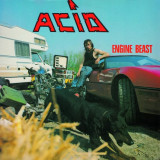
Another Planet Trip Sureshot!
Renoir Of The Toys is a deep dive into the world of Youri Kun, the nom de plume of Japanese guitarist, singer and songwriter Hiroshi Nar. It follows a similar compilation, Unheld Ball, released in 2022 on Japanese label Inundow; like that album, Renoir Of The Toys draws from the rich catalogue of outsider psych-garage and rock recorded by Youri Kun over the past two decades. Deeply wired into the history of Japanese underground music, Nar was a founding member of legendary ‘70s outfit Datetenryu, and a member of both Brain Police (Zuno Keisatsu) and Les Ralllizes Dénudés (Hadaka No Rallizes), appearing on the latter’s ’77 Live.
After going to ground during the 1980s, Nar started making music with Niplets in the mid-90s, and releasing music at a prolific pace in 2000 – an excellent run of (sometimes archival) CD-Rs on the Hello Goodbye Studio label, both solo, and with his groups Molls, Niplets and Port Cuss; an album on P.S.F. by Jokers, where he was joined by fellow Rallizes member Yokai Takahashi, and drummer Toshiaki Ishizuka (Brain Police, Vajra, Cinorama, etc.); and sixteen albums (and counting) as Youri Kun, for labels Gyunne Cassette, Inundow, and Hören. He’s also fallen in with the Acid Mothers Temple crowd, guesting on a few of their albums, and recording a live set with Kawabata Makoto’s Nishinihon trio.
All Nar’s music shares a deceptive primitivism; it moves with the simplicity of the best 1960s garage punk, but its edges are blurred and stretched, allowing for all kinds of weird, elliptical, and psychedelic moves to happen in its margins. His guitar playing on songs like “Kakunin” (from 2011’s Yamaimo Boogie) shimmies and slurs magnificently; “Kurokami”, from 2012’s Su, has clanking six strings scrawling over loose, spaced-out synth; there are clunky psychobilly moves (“Oshiro no Ninjya”), spirited rave-ups for rattling organ and sputtering guitar (“Totsugeki”), and some lovely, drowsy, melancholy moments (“Sora”).
The constant throughout is Nar’s blues-blurred, drawling voice, as unique a tool as the non-idiomatic speak-sing styles of solo Syd Barrett, Jad Fair, or Dave E. McManus. There are also three Les Rallizes Dénudés covers here, where Nar locates the pop genius at the heart of songs like “Shiroi Yoru” and amplifies this with his simple garage-reverential take on things. Renoir Of The Toys is yet more evidence that Hiroshi Nar was, and is, one of Japan’s musical visionaries, a lonesome voice dedicated to a singular, streamlined vision, one that’s in eternal pursuit of the joy and kicks at the heart of rock’n’roll, and a reminder of what a great, unpretentious rock’n’roller truly should be.
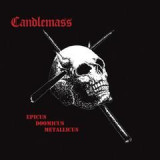
THE ICONIC 1986 DOOM METAL OPUS 'EPICUS DOOMICUS
METALLICUS', FEATURING REMASTERED AUDIO & PRESENTED WITH ITS
ORIGINAL SLEEVE DESIGN
Candlemass was formed by bassist & songwriter Leif Edling in Stockholm,
Sweden in 1984 & they are well known for their epic doom metal, having a great
influence over a generation of the genre's subsequent greats - Candlemass
themselves taking a large influence from Black Sabbath. Bands such as Paradise
Lost & My Dying Bride to this day rate 'Epicus...' among their most inspirational
albums. 'Epicus Doomicus Metallicus' is a true classic. Heavy metal riffs blended
with almost neo-classical touches, plus some theatrical elements recalling bands
like Mercyful Fate (thought to be another influence). All-in-all, this is considered
one of the definitive Doom Metal releases. 'Epicus € ' was recorded at
Thunderload Studios in 1986 & was released later that same year. The vocals
were handled by Johan L ngqvist, before the iconic vocalist Messiah Marcolin
became a solid fixture in the band until the early nineties. Candlemass instantly
became a great inspiration to countless metal bands upon the album's release in
1986; a time when thrash metal, not doom, was fast becoming the dominant style
in both Europe & the US. This edition of 'Epicus Doomicus Metallicus' features
recently remastered audio courtesy of Patrick Engel at Temple of Disharmony &
is presented with its original sleeve design.
DARK MEDITATION may hail from Seattle, but their sound is steeped in
traditions associated with other corners of the globe'England's workingclass cities, frosty Scandinavian towns, Southern California meccas of
the '80s
Or as the band puts it, DARK MEDITATION sounds like the bastard amalgamation
of Venom and Judas Priest fighting it out on the Sunset Strip while Danzig and
King Diamond cheer them on. While such reference points may suggest a nexus
of evil kitsch and arena-level theatrics, the band's debut album Polluted Temples
comes from a place of down- and- out urgency and punk ethics, adopting the
gloomy anthems and riff worship of heavy metal titans for their sonic exorcisms
rather than their rock n' roll panache. It's an album that basks in big hooks,
righteous guitar work, and an arena-level stomp without compromising any grit,
grime, or guts.
Tracks: Prelude / Babalon.Money.Magick / Haunt of Fear / Strange Caress (of the
night) / Masters Coil / Desolation Days / The Howling Wild / Drink of the Blade /
Nocturnal Forever / Polluted Temples
- A1: New Dark Age
- A2: Blood Libel
- A3: Berserker Mode
- A4: Mother Fucking Liar
- A5: Unto The Breach
- A6: Completely Fucked
- A7: The Cutter (Feat Lzzy Hale)
- A8: Rise Again (Feat Hey Steve)
- A9: The Beast Will Eat Itself
- A10: Venom Of The Platypus
- A11: Ratcatcher
- A12: Bored To Death
- A13: Temple Ascent (Death Whistle Suite)
- A14: Starving Gods (Death Whistle Suite)
- A15: Deus Ex Monstrum (Death Whistle Suite)
14 brand-new songs of destruction and dastardly deeds - Worth it's
weight in crack, this is the soundtrack for The New Dark Ages
The album is loosely based on their new graphic novel which is on sale in comic
book stores simultaneously. In addition, their award winning documentary This Is
GWAR will be showing in theaters and on streaming platforms this Summer.
nterest in the band is reaching a new peak following their wildly successful fall
2021 headline tour which included many sold out dates. Blothar is also now a
monthly recurring 'alien correspondent' on Gutfeld which airs weekly on Fox
News.
The Gamelatron is many things; one could call it a sculpture, a multimodal installation, an instrument, a robot, a feat of engineering, a vision—and it is all of these things. More importantly, though, it is a concept sustained by Aaron Taylor Kuffner, aka Zemi17, whose Gamelatrons are “sound producing kinetic sculptures” designed to create an immersive, visceral experience for the listener. Not a small feat, and yet the ambitions of Zemi17 are absolutely realized in this long-standing project, culminating now in his third release for The Bunker NY: Gamelatron Bidadari.
The Gamelatron Bidadari is not just a name—it is one of seventy-plus musical sculptures that Zemi17 has conceptualized, designed, and fabricated. Therefore, it would be inaccurate to think of this release as simply a series of arrangements composed in a finite period of time. Rather, it’s a window into a project and a process that is much larger than any single album can encapsulate. Gamelatron Bidardi is the culmination of more than a decade of work, and is central to Zemi17’s evolution, not only as a musician but as an artist.
Having studied gamelan for many years in Indonesian villages and at the Institut Seni Indonesia in Yogyakarta, Kuffner is a musician, an artist, technologist, and craftsman. The gongs in his sculptures are co-created with master Indonesian artisans. Each Gamelatron composition is site-responsive, meaning its sounds are composed for the acoustics and intentions of the space it inhabits, whether it’s an art gallery, a wooded landscape, or the inner temple of Burning Man. The Gamelatron does not stand alone: it is in constant co-creation with its physical environment, and in dialogue with gamelan’s long-standing history.
Originally exhibited at the Smithsonian Renwick as part of a show entitled, No Spectators: The Art of Burning Man, the Gamelatron Bidadari produces sounds that are delicate yet strong, and deeply hypnotic. Textured chiming creates intricate polyrhythmic patterns that are both complex and simple, or in a word, elegant. On Gamelan Bidadari, Zemi17 refrains from adhering to the strict musical structures; his approach to composition is free flowing.
He says, “I want to evoke what the music tells me it has to offer. It is like following water to its conclusion (or non-conclusion).” The arrangements on this album, written by Zemi17 and performed by the robotic arms of the Gamelatron, leaves the listener feeling enchanted, nourished and enriched.
A sense of the mystical comes through in the tonal quality of the instrument, and is conceptually felt in the sculpture’s name: the Bidadari, which loosely translates to “forest nymph.” The music conjures up natural wonder, and the four sculptures that make up the Gamelatron Bidadari, in fact, resemble trees. They are four independent yet connected entities, each with a large gong situated at their structural base—the sonic “roots” of the sculpture—while smaller gongs branch off of a golden, trunk-like spine. The Gamelatron Bidadari is as physically stunning as it is mesmerizing to the ear. A kind of divinity is invoked through its sound, or a sacred cohesion between past and present, tradition and new form. Meant to be viscerally experienced, the sounds of the Gamelatron call for sublime togetherness. Gamelatron Bidadari is not just an album but the crystallization of Kuffner’s work; it is a condensed yet spacious glimpse into the sonic power of Zemi17’s Gamelatrons, which have already been heard and experienced live by over a million people.
- 1: Approaching Hrafnsey
- 1: 2 .The King
- 1: 3 .Entering The Temple
- 1: 4 .Last Teardrop
- 1: 5 .Blood Tree, Part I
- 1: 6 .Strike, Brother
- 1: 7 .Escape
- 1: 8 .I Will Avenge You, Father
- 1: 9 .The Land Of The Rus
- 1: 0 .A Burning Barn
- 1: Seeress
- 1: 2 .Raven's Omen
- 1: 3 .Storm At Sea / Yggdrasill
- 1: 4 .Iceland
- 1: 5 .I Will Save You, Mother
- 1: 6 .Slave Work
- 1: 7 .Gudrun
- 1: 8 .Follow The Vixen's Tail
- 1: 9 .He-Witch
- 1: 20 .Draugr
- 1: 2 .Mound Dweller
- 1: 22 .To The Games
- 2: 1 .Birch Woods
- 2: First Of Many
- 2: 5 .Svid Night, Part Ii
- 2: 6 .I Am Your Death
- 2: 7 .Come Morning
- 2: 8 .I Am His Vengeance
- 2: 9 .Odinn
- 2: 10 .Valkyrie
- 2: 11 .Vestrahorn
- 2: 1 .Hidden Valley
- 2: 13 .Blood Tree, Part Ii
- 2: 14 .Blod Inside / I Choose Both
- 2: 15 .A Maiden King
- 2: 16 .The Wolf Has Grown
- 2: 17 .The Gates Of Hel / Slain By Iron
- 2: 18 .Hekla
- 2: 19 .Cut The Thread Of Fate
- 2: 0 .Make Your Passage / Valholl
- 2: 1 .Aettartre / End Credits
- 2: 3 .Trollish Sorcery
- 2: 4 .Svid Night, Part I
"Rob wollte, dass sich die Welt von The Northman rau und ungemütlich anfühlt, als wäre es mit Schlamm und getrocknetem Blut bedeckt, also war es wichtig, dass die Musik dies widerspiegelt." Die Komponisten Robin Carolan (Tri-Angle Records) und Sebastian Gainsborough (Vessel) wurden vor eine Aufgabe epischen Ausmaßes gestellt, als Regisseur Rob Eggers (The VVitch, The Lighthouse) sie bat, die Filmmusik für seinen ehrgeizigen Film The Northman zu schreiben. Sie mussten eine Filmmusik schaffen, die sowohl die immensen Recherchen zur Authentizität dieses historischen Stücks aus der Wikingerzeit würdigte; als auch den filmischen Maximalismus des Films für ein modernes Publikum ergänzte. Die Künstler gingen bis an die Grenzen ihrer Kreativität und das Ergebnis ist ein wunderschönes Klangbild, das den Hörer mitten in den Film versetzt. Beim Arrangieren der Partitur zogen die Komponisten den Musiker und Ethnographen Poul Hoxbro zu Rate, um sich inspirieren zu lassen und einen Einblick in die Geschichte der Wikingermusik zu erhalten. Da Robin und Sebastian aus dem Bereich der elektronischen Musik kommen, waren sie keinerlei Beschränkung auf eine kleine Auswahl von Musikinstrumenten unterworfen, nutzten diese aber als Ausgangsbasis. "Elektronische Musik hat ein fast grenzenloses Potenzial, wenn es darum geht, Klänge zu erzeugen, und das ist natürlich eine unglaubliche Sache, aber man kann auch in ein Wurmloch geraten und sich darin manchmal verlieren. Diese Gefahr besteht nicht, wenn man nur ein paar Hauptinstrumente hat, auf die man zurückgreifen kann" so Robin Carolan. Sie benutzten traditionelle Instrumente wie die Tagelharpa, die Langspil, die Kravik-Lyra und die Säckpip, um die filmische Welt von The Northman zu erschaffen, aber sie nahmen sich auch kreative Freiheiten, indem sie Instrumente wie Trommeln hinzufügten, von denen einige Wissenschaftler glauben, dass sie in der Musikkultur der Wikinger keine große Rolle gespielt hätten, einfach weil es keine archäologischen Beweise für echte Trommeln gibt. "Eines der Stücke sollte den Klang eines Bullroarers nachahmen; ein uraltes Instrument, das in heiligen Ritualen oder in der Schlacht zur Einschüchterung von Feinden eingesetzt wird. Es erzeugt einen wirklich verwirrenden, röhrenden Vibrato-Sound und tiefe Frequenzen, die wahnsinnige Entfernungen zurücklegen können." sagt Robin auf die Frage nach einem der einzigartigeren Aspekte der Partitur. Alle Beteiligten haben so viel Mühe in ihre Recherchen und ihre Kreativität gesteckt, und dieser Reichtum ist in jedem Stück offensichtlich. Das Album als Ganzes ist ein cineastisches Meisterwerk aus Klang und Atmosphäre, wunderschön und verstörend zugleich, genau wie der Film, den es so wunderbar begleitet.
- 1: Approaching Hrafnsey
- 1: 2 .The King
- 1: 3 .Entering The Temple
- 1: 4 .Last Teardrop
- 1: 5 .Blood Tree, Part I
- 1: 6 .Strike, Brother
- 1: 7 .Escape
- 1: 8 .I Will Avenge You, Father
- 1: 9 .The Land Of The Rus
- 1: 0 .A Burning Barn
- 1: Seeress
- 1: 2 .Raven's Omen
- 1: 3 .Storm At Sea / Yggdrasill
- 1: 4 .Iceland
- 1: 5 .I Will Save You, Mother
- 1: 6 .Slave Work
- 1: 7 .Gudrun
- 1: 8 .Follow The Vixen's Tail
- 1: 9 .He-Witch
- 1: 20 .Draugr
- 1: 2 .Mound Dweller
- 1: 22 .To The Games
- 2: 1 .Birch Woods
- 2: First Of Many
- 2: 5 .Svid Night, Part Ii
- 2: 6 .I Am Your Death
- 2: 7 .Come Morning
- 2: 8 .I Am His Vengeance
- 2: 9 .Odinn
- 2: 10 .Valkyrie
- 2: 11 .Vestrahorn
- 2: 1 .Hidden Valley
- 2: 13 .Blood Tree, Part Ii
- 2: 14 .Blod Inside / I Choose Both
- 2: 15 .A Maiden King
- 2: 16 .The Wolf Has Grown
- 2: 17 .The Gates Of Hel / Slain By Iron
- 2: 18 .Hekla
- 2: 19 .Cut The Thread Of Fate
- 2: 0 .Make Your Passage / Valholl
- 2: 1 .Aettartre / End Credits
- 2: 3 .Trollish Sorcery
- 2: 4 .Svid Night, Part I
"Rob wollte, dass sich die Welt von The Northman rau und ungemütlich anfühlt, als wäre es mit Schlamm und getrocknetem Blut bedeckt, also war es wichtig, dass die Musik dies widerspiegelt." Die Komponisten Robin Carolan (Tri-Angle Records) und Sebastian Gainsborough (Vessel) wurden vor eine Aufgabe epischen Ausmaßes gestellt, als Regisseur Rob Eggers (The VVitch, The Lighthouse) sie bat, die Filmmusik für seinen ehrgeizigen Film The Northman zu schreiben. Sie mussten eine Filmmusik schaffen, die sowohl die immensen Recherchen zur Authentizität dieses historischen Stücks aus der Wikingerzeit würdigte; als auch den filmischen Maximalismus des Films für ein modernes Publikum ergänzte. Die Künstler gingen bis an die Grenzen ihrer Kreativität und das Ergebnis ist ein wunderschönes Klangbild, das den Hörer mitten in den Film versetzt. Beim Arrangieren der Partitur zogen die Komponisten den Musiker und Ethnographen Poul Hoxbro zu Rate, um sich inspirieren zu lassen und einen Einblick in die Geschichte der Wikingermusik zu erhalten. Da Robin und Sebastian aus dem Bereich der elektronischen Musik kommen, waren sie keinerlei Beschränkung auf eine kleine Auswahl von Musikinstrumenten unterworfen, nutzten diese aber als Ausgangsbasis. "Elektronische Musik hat ein fast grenzenloses Potenzial, wenn es darum geht, Klänge zu erzeugen, und das ist natürlich eine unglaubliche Sache, aber man kann auch in ein Wurmloch geraten und sich darin manchmal verlieren. Diese Gefahr besteht nicht, wenn man nur ein paar Hauptinstrumente hat, auf die man zurückgreifen kann" so Robin Carolan. Sie benutzten traditionelle Instrumente wie die Tagelharpa, die Langspil, die Kravik-Lyra und die Säckpip, um die filmische Welt von The Northman zu erschaffen, aber sie nahmen sich auch kreative Freiheiten, indem sie Instrumente wie Trommeln hinzufügten, von denen einige Wissenschaftler glauben, dass sie in der Musikkultur der Wikinger keine große Rolle gespielt hätten, einfach weil es keine archäologischen Beweise für echte Trommeln gibt. "Eines der Stücke sollte den Klang eines Bullroarers nachahmen; ein uraltes Instrument, das in heiligen Ritualen oder in der Schlacht zur Einschüchterung von Feinden eingesetzt wird. Es erzeugt einen wirklich verwirrenden, röhrenden Vibrato-Sound und tiefe Frequenzen, die wahnsinnige Entfernungen zurücklegen können." sagt Robin auf die Frage nach einem der einzigartigeren Aspekte der Partitur. Alle Beteiligten haben so viel Mühe in ihre Recherchen und ihre Kreativität gesteckt, und dieser Reichtum ist in jedem Stück offensichtlich. Das Album als Ganzes ist ein cineastisches Meisterwerk aus Klang und Atmosphäre, wunderschön und verstörend zugleich, genau wie der Film, den es so wunderbar begleitet.
- 1: Approaching Hrafnsey
- 1: 2 .The King
- 1: 3 .Entering The Temple
- 1: 4 .Last Teardrop
- 1: 5 .Blood Tree, Part I
- 1: 6 .Strike, Brother
- 1: 7 .Escape
- 1: 8 .I Will Avenge You, Father
- 1: 9 .The Land Of The Rus
- 1: 0 .A Burning Barn
- 1: Seeress
- 1: 2 .Raven's Omen
- 1: 3 .Storm At Sea / Yggdrasill
- 1: 4 .Iceland
- 1: 5 .I Will Save You, Mother
- 1: 6 .Slave Work
- 1: 7 .Gudrun
- 1: 8 .Follow The Vixen's Tail
- 1: 9 .He-Witch
- 1: 20 .Draugr
- 1: 2 .Mound Dweller
- 1: 22 .To The Games
- 2: 1 .Birch Woods
- 2: First Of Many
- 2: 7 .Come Morning
- 2: 8 .I Am His Vengeance
- 2: 9 .Odinn
- 2: 10 .Valkyrie
- 2: 11 .Vestrahorn
- 2: 1 .Hidden Valley
- 2: 13 .Blood Tree, Part Ii
- 2: 14 .Blod Inside / I Choose Both
- 2: 15 .A Maiden King
- 2: 16 .The Wolf Has Grown
- 2: 17 .The Gates Of Hel / Slain By Iron
- 2: 18 .Hekla
- 2: 19 .Cut The Thread Of Fate
- 2: 0 .Make Your Passage / Valholl
- 2: 1 .Aettartre / End Credits
- 2: 3 .Trollish Sorcery
- 2: 4 .Svid Night, Part I
- 2: 5 .Svid Night, Part Ii
- 2: 6 .I Am Your Death
"Rob wollte, dass sich die Welt von The Northman rau und ungemütlich anfühlt, als wäre es mit Schlamm und getrocknetem Blut bedeckt, also war es wichtig, dass die Musik dies widerspiegelt." Die Komponisten Robin Carolan (Tri-Angle Records) und Sebastian Gainsborough (Vessel) wurden vor eine Aufgabe epischen Ausmaßes gestellt, als Regisseur Rob Eggers (The VVitch, The Lighthouse) sie bat, die Filmmusik für seinen ehrgeizigen Film The Northman zu schreiben. Sie mussten eine Filmmusik schaffen, die sowohl die immensen Recherchen zur Authentizität dieses historischen Stücks aus der Wikingerzeit würdigte; als auch den filmischen Maximalismus des Films für ein modernes Publikum ergänzte. Die Künstler gingen bis an die Grenzen ihrer Kreativität und das Ergebnis ist ein wunderschönes Klangbild, das den Hörer mitten in den Film versetzt. Beim Arrangieren der Partitur zogen die Komponisten den Musiker und Ethnographen Poul Hoxbro zu Rate, um sich inspirieren zu lassen und einen Einblick in die Geschichte der Wikingermusik zu erhalten. Da Robin und Sebastian aus dem Bereich der elektronischen Musik kommen, waren sie keinerlei Beschränkung auf eine kleine Auswahl von Musikinstrumenten unterworfen, nutzten diese aber als Ausgangsbasis. "Elektronische Musik hat ein fast grenzenloses Potenzial, wenn es darum geht, Klänge zu erzeugen, und das ist natürlich eine unglaubliche Sache, aber man kann auch in ein Wurmloch geraten und sich darin manchmal verlieren. Diese Gefahr besteht nicht, wenn man nur ein paar Hauptinstrumente hat, auf die man zurückgreifen kann" so Robin Carolan. Sie benutzten traditionelle Instrumente wie die Tagelharpa, die Langspil, die Kravik-Lyra und die Säckpip, um die filmische Welt von The Northman zu erschaffen, aber sie nahmen sich auch kreative Freiheiten, indem sie Instrumente wie Trommeln hinzufügten, von denen einige Wissenschaftler glauben, dass sie in der Musikkultur der Wikinger keine große Rolle gespielt hätten, einfach weil es keine archäologischen Beweise für echte Trommeln gibt. "Eines der Stücke sollte den Klang eines Bullroarers nachahmen; ein uraltes Instrument, das in heiligen Ritualen oder in der Schlacht zur Einschüchterung von Feinden eingesetzt wird. Es erzeugt einen wirklich verwirrenden, röhrenden Vibrato-Sound und tiefe Frequenzen, die wahnsinnige Entfernungen zurücklegen können." sagt Robin auf die Frage nach einem der einzigartigeren Aspekte der Partitur. Alle Beteiligten haben so viel Mühe in ihre Recherchen und ihre Kreativität gesteckt, und dieser Reichtum ist in jedem Stück offensichtlich. Das Album als Ganzes ist ein cineastisches Meisterwerk aus Klang und Atmosphäre, wunderschön und verstörend zugleich, genau wie der Film, den es so wunderbar begleitet.
HEAVY TEMPLE donnern mit ihrem Debütalbum wie ein röhrendes Mastodon über die Prärie. "Lupi Amoris" hat das Zeug zum Meilenstein: So progressiv, aber unbefangener als BARONESS, und so heavy, aber draufgängerischer als FU MANCHU, setzt das Trio aus Philadelphia alle Hebel der metallischen Riff-Maschine in Bewegung. "Lupi Amoris" ist ein One-Way-Trip durch die amerikanische Weite und tiefe Wälder. HEAVY TEMPLE wurden zur Wintersonnenwende 2012 aus purem Spaß an der Heavy-Musik ins Leben gerufen, was sich in den Pseudonymen der Gründungsmitglieder widerspiegelt: High Priestess Nighthawk, Rattlesnake und Bearadactyl. Zunächst spielte die Band nur lokale Shows in Philadelphia, was dem Trio schnell einen exzellenten Ruf einbrachte und zu Einladungen auf Touren mit RUBY THE HATCHET, MOTHERSHIP, ROYAL THUNDER und CORROSION OF CONFORMITY führte. Auch namhafte Festivals klopften an die Tür, wie neben vielen anderen das Maryland Doom Fest, Psycho Las Vegas und Decibel Metal & Beer. Es spricht Bände über das Riesentalent von HEAVY TEMPLE und ihre packenden Live-Shows, dass die Angebote weiter eintrudelten, ohne dass bisher ein Album vorlag. Obwohl HEAVY TEMPLE alle Merkmale des traditionell männlich orientierten Heavy Metal anhaften (bis zu dem Punkt, dass ihr Sound einen stolzen Vollbart tragen könnte), bringt die kraftvolle Präsenz von Frontfrau und einzig verbliebenem Gründungsmitglied High Priestess Nighthawk weibliche Stärke ein. Ihre lyrischen Konzepte erreichen literarisches Niveau. "Lupi Amoris" bedeutet "Wölfe der Liebe" in Latein und handelt davon, dass sich die Band aus Philadelphia mit Rotkäppchen verbündet, das sich von den traditionellen Fesseln und der Erwartungshaltung an Frauen befreit hat. HEAVY TEMPLE demonstrieren mit "Lupi Amoris" eindrucksvoll, dass es durchaus möglich ist, titanischen Stoner-Doom mit den Realitäten des Lebens zu verbinden, statt im Eskapismus zu verharren. Bei dieser Lautstärke kann die Welt gar nicht anders als zuzuhören.
Black Truffle is pleased to present Landscape and Voice, a radical new work (and rare vinyl release) from major Japanese sound artist Toshiya Tsunoda. Undoubtedly one of the most influential artists working with location recordings since the 1990s, Tsunoda’s work possesses a rigorously searching quality that sets him apart from his contemporaries. Tsunoda is known to many listeners for the subtle atmospheric poetry of his early Extract from Field Recording Archive series, which focussed on vibrations recorded in various indoor and outdoor environments in his native Miura Peninsula, often inside pipes, bottles and other vessels. In more recent years, his work has explored the implications of his claim that field recording should be seen as ‘depiction’ rather than ‘documentation’. He has explored disorienting editing and processing in his works with Taku Unami, and, perhaps most radically, represented Maguchi Bay as a kind of kinetic sculpture for shaking speakers by removing all but the inaudible low frequencies from a field recording (Low Frequency Observed at Maguchi Bay).
One of the recurrent concerns of Tsunoda’s recent work, as he explains in the crystalline liner notes accompanying this release, is ‘exploring how I can establish a subjective relationship with an environment, rather than seeing it merely as an object to be recorded’. This has taken various forms, from documenting simultaneously an outdoor environment and the blood flowing through the listener/recorder’s body (captured with a stethoscope) on The Temple Recordings, to representing his own experience of the landscape as made up of ‘grains of space and time’ by inserting looped fragments into field recordings in Grains of Spring.
On Landscape and Voice, this meeting between subject and object becomes an almost mystical union between the natural and the human. As with all of Tsunoda’s work, a relatively simple concept leads to compelling, thought-provoking results. Landscape and Voice combines vowel sounds spoken by six voices with short, looped fragments of field recordings, their noise character suggesting consonants: voice and landscape thus join together in something like words. The record consists of three pieces, each using a different, richly evocative field recording, which periodically freezes, catching on a looped fragment to which is synchronised an abruptly looped spoken vowel sound. The lengths between these interruptions vary, as do the tempi of the loops. The interruption of these lushly immersive recordings of the world – bristling with bird song, rushing water, distant traffic, and clinking metal – only serves to intensify them, as if the depicted environment itself had been returned to the listener each time it abruptly reappears. At the same time, the constant interruption creates an uncannily frozen effect, as if the recorded environment were an object rather than a stretch of recorded time. When combined with the bare human presence of the vowel sounds, the result is both austere and magical. Pressed on 45RPM for maximum fidelity, in a gorgeous sleeve designed by Lasse Marhaug with liner notes from the composer, Landscape and Voice is a radical proposition from one of the deepest thinkers in contemporary sound.