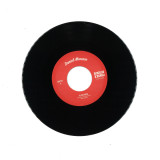
Reissued here for the first time, "Cartão Postal" is one of the best and most sought-after Brazilian funk-soul albums from the early ’70s. It includes some outstanding uptempo gems like Marcos and Paulo Sergio Valle’s ‘Que bandeira’, and the stellar ‘Esperar Prá Ver’, co-written by Evinha’s brother Renato Corrêa who also happened to be a member of the Golden Boys. This is a classic Brazilian soul-funk title, right up there with all the greatest albums of the genre. Remastered from the original tapes and pressed on 180g vinyl. This release is part of a new reissue series that will include many other outstanding Brazilian classics. "Cartão Postal" was originally released on Odeon Brazil in 1971, a few years after Evinha started her solo career. From 1961 to 1968 she was a member of Trio Esperança, alongside her brothers Mário and Regina. In 1969 Evinha won first prize at the Festival Internacional da Cançao Popular and her discography for Odeon took off. "Cartão Postal", her third solo album, comprises some outstanding gems. Songs like ‘Que bandeira’, by Marcos Valle, Paulo Sérgio Valle and Mariozinho Rocha, that moves between funk/soul and bossa/MPB grooves; the stellar ‘Esperar Prá Ver’, co-written by Evinha’s brother Renato Corrêa who also happened to be a member of the Golden Boys, is a mid-tempo funk soul number that features stunning arrangements and an epic bassline that is hard to be forgotten… ‘Só Quero’ emanates samba soul sounds while songs like ‘Por Mera Coincidência’ or ‘Rico Sem Dinheiro’ resemble what Trio Esperança was doing at the time: vocal-driven groovy jams spiced with celestial strings arrangements and heavy-duty drums and basslines, which is not surprising since they both worked with the same producers and arrangers, as they were all Odeon artists. Ridiculously rare and expensive now, and at the top of many collectors’ wants lists for decades, it’s finally reissued here after years unavailable.
Hard Times proudly welcomes a new release from an artist deeply connected to the label’s storied past. Alex Arnout presents BLACK LOGIC with their debut EP, ‘Pull Up’, a project born from passion, collaboration, and a return to House music's soulful roots
Hailing from West Yorkshire, Arnout spent his formative years on the Hard Times dancefloors, absorbing the beats and vibes that would later shape his own productions. His journey with the label reignited when he was invited to remix Michael Watford’s classic 'Love Change Over' and Steve Silk Hurley’s fresh hit 'All I Need'. Now, he returns with something truly special
“Black Logic was born out of the pandemic,” says Arnout. “I wanted to move away from drum machines and synths, getting back to sampling jazz and the deep house sounds of the ‘90s - taking inspiration from artists like Bugs in the Attic, Jazzanova, and Ernest Saint Laurent.
What began as a solo project soon evolved into a collective effort. Bassist and guitarist Alan Riggs, a former member of Delta 5, joined the sessions, bringing warmth and groove to the productions. Vocalists Tempo O’Neil, Anthony Beckford, Mariana Orsho, and Sophie Barker added their distinct voices, completing the vision.
The ‘Pull Up’ EP is the first of a debut double-header from Black Logic, delivering five stunning tracks that blend jazzy keys, deep grooves, and rich, soulful vocals. From the warm basslines to the celestial closing moments, this EP is a statement of intent - a wonderfully fresh, yet nostalgic take on deep house from a collective of masterful musicians.
The album’s title deftly gestures to the sheer vastness of astronomical dimensions, while simultaneously capturing the musical breadth within, where the eight planets are imagined as the eight notes of an octave. The work draws inspiration not only from earlier compositions —most notably Gustav Holst’s The Planets—but also from the rich astronomical and cultural contexts surrounding these celestial bodies. Here, the focus transcends direct citation of melodic motifs, instead embracing an intriguing conceptual approach on a meta level, unfolding in a series of vividly contrasting soundscapes. These contrasts shape a sweeping sonic journey, one that fully embraces the album format with both arms, inviting the listener to venture into realms both strange and wondrous, feeling the immensity of the interstellar space that lies between them. Contrast, after all, is the brushstroke that enriches our world.
Embarking on an auditory voyage, "Astral Guide" establishes the sonic framework that propels us into the boundless expanses of the cosmos. Its ethereal tones evoke the vastness of space, crafting a mood ripe for exploration within the realms of sci-fi. The subsequent tracks unfold like constellations, weaving a rich tapestry of sound that seamlessly marries cinematic soundscapes with pulsating, club-oriented rhythms. This album invites listeners to traverse its immersive landscapes, whether nestled in the comfort of home or dancing under the starlit sky, each note a guide through the transcendent experience of a nocturnal journey.
"Solar Flares" draws its inspiration from the awe-inspiring expanse of solar phenomena, capturing the majestic power of the sun as it reaches into the cosmos. This track resonates with the idea that energy, while vital, can also be a force of destruction when unleashed with overwhelming intensity. The composition beautifully mirrors the sun’s duality, where brilliance and devastation coexist, inviting listeners to reflect on the delicate balance between creation and annihilation. Through its rich textures and dynamic shifts, "Solar Flares" serves as both a homage to the celestial and a poignant reminder of nature's formidable power.
"Mercury – The Winged Messenger" embodies a meticulously crafted soundscape where artistry meets astronomy. The tempo of 173.6 BPM, derived from precise astronomical data, propels the composition into a vibrant realm that resonates with cosmic energy. Synthwave sound design intertwines seamlessly with the fluid rhythms of Drum’n’Bass, imbuing the piece with an uplifting dynamism that evokes the ethereal grace of Mercury itself. In this sonic exploration, listeners are invited to ascend on wings of sound, navigating the celestial tapestry of the universe with each invigorating beat.
"Venus, The Bringer of Peace" strikes a decidedly cozy note, presenting a poignant contrast to the more tempestuous themes often found in cosmic narratives. This composition evokes a nostalgic vision of an optimistic era, one in which humanity transcended borders and embraced the infinite possibilities of space exploration, where no destination felt too distant. The dense, languid atmosphere envelops the listener, creating a tangible sense of serenity that unfolds gradually, allowing for a meditative journey through sound. Each note serves as an invitation to linger in this tranquil embrace, reflecting on the harmonious potential of our collective aspirations and the beauty of connection in a vast universe.
The central theme of „Gaia, The Bringer of Life“ —originally not part of the planetary cycle— is the profound enabler of life on Earth. The arrangement delicately mirrors the slow, tentative unfolding of this potential, marked by an initially sparse orchestration that gradually builds in momentum. This progression crescendos, embodying the explosive dynamism of the Cambrian burst of life, ultimately culminating in a euphoric fanfare—a triumphant, celebratory flourish echoing life’s victorious emergence.
"Blue Moon" unfolds as a contemplative reverie on the tranquil clarity of a night sky, now seldom glimpsed in its natural purity, unclouded by the relentless haze of urban light. The listener is drawn into the vast embrace of the star-strewn firmament, a journey that sways between euphoric awe at nature’s sublime beauty and a profound melancholy for its fragile and imperiled state. Musically, this duality finds expression in the delicate interplay of modal mixtures, while an ever-shifting triplet groove, poised at the intersection of Outrun and melodic house, lends a pulse that is both nostalgic and forward-looking—echoing the beauty and transience of a world on the brink.
Rather than replicating the original composition of „Mars, The Bringer of War“, this interpretation seeks to evoke its profound, foreboding atmosphere. Cyberpunk emerges here as an ideal genre, channeling the dark, relentless march synonymous with Mars, the ancient god of war. The piece reverberates with intensity, as distorted vocalizations rise, embodying the anguish and visceral torment that shadow war’s violent crescendo. This auditory descent into conflict captures the relentless pulse of warfare, where sound itself becomes an embodiment of suffering and fury.
Majestically, "Jupiter, the Bringer of Jollity" emerges on the celestial stage, sweeping away the somber tones with its radiant vigor. Drawing inspiration from the triumphant strains of the original, and borrowing a melodic motif in the refrain, the piece expresses joy and buoyancy through a shift to a major key and the lilting sway of a danceable 12/8 meter. Spirited and exuberant, it leaps boldly from major to minor and back again, playfully shifting time signatures to capture a mood of unbridled festivity and jollity.
Here, a more conciliatory concept is chosen than in the original inspiration. „Saturn“ aligns with the number six, being the sixth planet from the Sun and bearing the iconic hexagonal pattern at its northern pole. What, then, could be more fitting than to render this piece in a 6/8 time signature? The arrangement unfolds with a multifaceted richness, mirroring the countless stones and ice fragments that form the foundations of Saturn’s majestic rings.
„Uranus“ adopts the theme of a light-footed, dancing instrumentation, giving the impression of perpetual motion, never quite settling. This musical choice harmonizes with the planet’s own orbit, as it spins with breathtaking velocity, teetering and swaying, seemingly unable to attain rest or stability.
The chill and vastness of the cosmos find expression in „Neptune, The Mystic“. At its core, an electronic soundscape envelops a classical arrangement, its unreachability intensified by an ethereal, otherworldly choir. Hovering at the outermost boundaries of the solar system, where warmth is but a distant memory, the composition lingers in a slow, contemplative tempo, evoking a realm where space for speculation stretches wide and silence reigns supreme.
Though Pluto may have lost its planetary status, and its companion Charon never achieved one, this shift in classification subtly aligns with the cosmic scale invoked here—one that mirrors the musical tradition of an eight-note sequence. Fittingly, the album closes with „Kuiper Belt“, a composition emblematic of the turbulence and vitality of countless smaller
celestial bodies that, though diminutive, find their rightful place within the vast architecture of the solar system.
They say nature is the greatest composer, shaping the universe with a symphony of chaos and order, beauty and danger. It is this duality that fuels the artistic vision of Edictum—a producer who, armed with a doctorate in chemistry, delves as deeply into the mysteries of molecules as he does into the depths of sound. In the tension between the vastness of the cosmos and the microscopic processes that dictate life’s rhythm, Edictum creates sonic landscapes that dissolve the boundaries between science and art.
His music is a story of contrasts—a sonic tale where the raw forces of nature clash with the intricate structures of human culture. Opposites intertwine to form a harmonious whole: the primal rhythms of the earth meet the celestial melodies of the cosmos, the rigid laws of physics blend with the boundless freedom of art. Edictum explores these polarities with meticulous devotion, each composition an expedition into uncharted soundscapes—a quest to give voice to the unfathomable.
With over 20 years immersed in the realms of electronic music, Edictum has honed a keen sense for rhythm and movement. His driving beats compel both body and mind into a hypnotic flow. Yet beyond the pulse of dance lies a complex framework of conceptual thought. Today, his creative focus revolves around holistic album projects—self-contained worlds with overarching narratives that embrace contrast and complexity. Each track stands alone as a fragment of the whole, but together, they weave a cohesive tapestry, much like the chapters of a novel that guide the listener on an emotional and sonic journey.
Edictum’s distinctive musical signature has earned him international recognition. With over 150 releases, many on prestigious platforms like the iconic *NewRetroWave* label, and collaborations with artists such as Jan Johnston, Azumi Inoue, Powernerd, and Turbo Knight, he has solidified his place in the global electronic music scene. His latest work, *A Cosmic Scale*, marks his seventh vinyl album and is released under his own label, *Echoes of Expanse*. The label’s name is no coincidence—it captures the essence of his art: echoes of infinity, the vibrations of the universe distilled into a singular sonic experience that carries the listener ever further into the boundless expanse of sound and space.
From the needle drop, the listener is swept away by Moving Still. The Jeddah-born, Dublin-based artist graces Bordello A Parigi with Close to the Shams, four works that summarise his broad range and even broader influences. Pulsating percussion push piano plumes and brass blasts in “Zaman.” A SWANA-inspired scent weaves through the track, with snare rolls adding spice and speed to this heady opener. Tempos drop for “Bang of Luban.” Beats are bolstered, acid squirms lending texture, while the central melody bends and turns from traditional refrains to house reimaginings.
Those traditional undercurrents continue into the B-Side. The title piece is big and bold, kicks split into broken beats while nuanced mizmar notes dip and dive with a swallow-like agility. “Sunday Rollover (Suntop Mix)” calls time on the quartet. A relaxed rhythm gives support and space to low-slung lounge lines, a dreamy and enchanting finish to an EP that illustrates the breadth and depth of Moving Still.
Tearra’s “Just Loving You” on it’s original U.S Midtown label due to its quality and desirability continues to regularly achieve four figure sale prices on the rare occasion that a copy comes on to the open market. Soul Junction through a licensing deal with Emandolynn Music first reissued this modern soul anthem back in 2017 as part of a dual 45 package that included the previously unissued Delights track “Listen To Me Girl” with the limited 500 copy pressing run selling out in a matter of days. Since then, copies of that Soul Junction release have regularly sold for circa £60 a copy with sales enquiries still being received for either side of this 45 to this day. Therefore, we at Soul Junction have decided to fulfill this continued demand by reissuing “Just Loving You” for the second this time paired with Teeah-Louise’s “You Happened To Me” as the featured flipside (reissued for the first time).
Tearra, real name Teeah-Louise a native of Mobile, Alabama was offered a recording contract by Philadelphian Record Producer/Label Owner Manny Campbell Jr during 1980. Campbell himself had relocated his Emandolynn Music operations from the city of Brotherly Love to Atlanta, Georgia some two years earlier. Campbell had planned to record a whole album on Teeah-Louise under the working title of “Great Love”. He firstly released a lead 45 single, the mid-tempo “You Happened To Me/Got To Keep You Mine” on his Coastal label logo with the artist credited as Teeah-Louise. Teeah’s fiancé didn’t share his future wife’s ambitions of a recording career and her prospective album project faltered and was never completed. Although as a further two tracks had been recorded this allowed a for second 45 release to follow “Ooh Let This Feeling (Last A Long, Long Time)” backed with the desirable “Just Loving You” these were released on the Midtown label, with Midtown by then being Coastal Records main record distributor. This second release was credited under the artist name of Tearra, due to Teah-Louise by now not wishing to use her real name. Both the Coastal and Midtown releases were only ever pressed in 500 promotional copies runs. Teeah-Louise left the recording business for good soon after her marriage.
In addition, a later 12” Coastal Records single issued on the group ‘Tomorrows Wish’ featuring the song “My Love For You” which shares the same backing track as Tearra’s “Just Loving You”. All four of Teeah-Louise’s songs were wrote by Manny Campbell, with Manny sharing the songwriting credits on “Ooh Let This Feeling (Last A Long, Long Time)” with his cousin, Keith “Toppie” Hill notably a former group member of the aforementioned ‘Delights’.
Jamwax is proud to announce the reissue of Justin Hinds' rare and evocative track Marcus Tradition, a powerful song that resonates deeply with the roots of Jamaican music and honors the enduring legacy of Marcus Garvey.
Marcus Tradition is a heavyweight roots reggae masterpiece that embodies the spirit and teachings of Marcus Garvey, the Jamaicanborn leader who founded the Universal Negro Improvement Association (UNIA) and championed the 'Back to Africa' movement. The song’s down-tempo riddim and distinctive whistle create a captivating atmosphere, while the lyrics emphasize the importance of tradition and heritage: "You're the offspring of this nation, and this is a tradition. Marcus Garvey was born in Jamaica and that's a tradition."
Justin Hinds, a pioneering figure in Jamaican music, is celebrated for his impactful contributions to the ska and roots reggae genres. As the lead vocalist of Justin Hinds & The Dominoes, he achieved monumental success with classics such as Carry Go Bring Come, cementing his legacy in Jamaican music history.
This reissue of Marcus Tradition reaffirms Jamwax's dedication to preserving and sharing the richness of Jamaican musical heritage. By bringing this exceptional track back into the spotlight, Jamwax not only honors the profound artistry of Justin Hinds but also celebrates the timeless cultural legacy of Marcus Garvey, a tradition that continues to inspire and unite generations.
Originally released in 1987
Licensed courtesy of Claudette Pottinger & Correl Hewitt
Nearly two decades after it was first released, Norken’s sleek cult classic album ‘Our Memories Of Winter’ is being reissued on vinyl via Hydrogen Dukebox on 6th December 2024.
With its unique sonic blueprint of early 2000s electronica, ‘Our Memories Of Winter’ is a record that is at once both deeply reminiscent of a particular era and place, yet remains a timeless invocation of Norken’s idiosyncratic palette of minimal, techno, house and British IDM.
This vinyl reissue presents all 12 tracks from the original release, with the inclusion of 'Df23' and 'Flirt' making this the first time that ‘Our Memories Of Winter’ is available on vinyl with the complete album tracklisting.
Norken is one of the many pseudonyms of Lee Norris, a producer who is considered by those in the know as one of the unsung heroes of UK electronica. With a slew of releases throughout the years as Man-Q-Neon, Nacht Plank, Norken, Tone Language and Metamatics, this reissue shines a light on his soulful, immersive output under the Norken name.
As Norris explains, “The release of ‘Our Memories Of Winter’ has a nostalgic, warm feeling for me. I made his album in a garden shed with a wood burner, an Atari computer and a few synths in the depths of an English winter. I still had the thought process of making emotional style techno that would warm any soul on a cold day.”
First released in 2005, ‘Our Memories Of Winter’ carries the echoes of electronic luminaries such as the Detroit ambient techno of John Beltran, through to the immersive atmospherics of Biosphere and the innovative IDM of fellow British outfits Autechre and The Black Dog. Yet as Norken, Norris retains a distinctive musical voice that has continued to deepen in stature over the years since the album’s initial release.
Opening with the brief intro cut ‘Fern 2’, the album slides into the dreamlike groove of ‘Memories’, where rich, resonant chords wrap around cool, galactic-sounding synths and a compelling bass undertow.
On ‘It Might Have Been Rain’, that signature bass texture again propels a luxuriant mid-tempo rhythm, while Norken layers in hypnotic washes of string-like synths, gentle electronic pulses and the brief murmur of a vocal, across seven-plus immersive minutes.
Vocal textures, often subtly looped and distorted, also add a distinctive depth and personality to tracks like ‘Eastern Soul’ and ‘Here’. Throughout the album, there’s a feeling of intricate microcosms unfurling, as Norken coaxes a myriad of contemplative moods and emotions from his machines.
Whether shaping the smooth, lulling ambient gauze of ‘Ty Canol’, or letting the kaleidoscopic, dancefloor-leaning drive of ‘Audic Strable’ loose like a coiled spring, ‘Our Memories Of Winter’ presents the singular voice of an artist whose innovative contribution to UK electronic music has only become heightened with the passing of time.
As the tenth candle flickers atop the torta alla panna, Archeo Recordings play the Uno reverse card, breaking with tradition to give us a gift in celebration of its birthday: the first in a series of exquisite EPs on which the label's favourite contemporaries pay homage to past masters. Each re-polished gem is plucked either directly from the beatific back catalogue of the fine Florentine label or is at least Archeo-adjacent, perhaps a sign of future wonders to come. Like a musical version of Janus, who can be found at the heart of Bertoldo di Giovanni's frieze in the Medici villa, Archeo Recordings will continue to look forwards and backwards to provide sublime sounds for us all.
Pepe Maina officially joined the Archeo family in 2019 with the much-needed reissue of his 1979 masterpiece Scerizza (AR015), but his astounding music has been a constant companion to label head Manu for much longer. An inter-dimensional, multi-instrumental maverick, Maina weaves the frayed edges of prog rock, new age, organic jazz and global minimalism into a shimmering tapestry all of his own. The results are spread across fifty years and almost as many albums, largely self-released and always absolutely untarnished by commercial concerns.
Based in a small village in the hills of Brianza, just north of Milan, Maina translates the beauty of his surroundings into transformative tone poems, and the folkloric fusion of "The Infinite", originally released on his 2014 CD Tales From The Hill, is the perfect example of his practice. It opens with a recitation of Giacomo Leopardi's 1825s poem "L'Infinito" by famed Italian actor Vittorio Gassman. A leading figure in the romantic movement, Leopardi explores the idea of time and space within the natural world, and the peace that comes with an appreciation of the immensity of eternity. Manu, longtime digger and now a burgeoning producer, expands upon the original with tribal percussion, chirping electronics and a spheric bassline, folding Maina's elegant strings and gossamer pads into a new arrangement suited for a slow dance under the stars.
Unless you had a well-trained ear tuned to Italy's avant-jazz scene, chances are your first encounter with innovative flautist Roberto Aglieri came via the 2017 Archeo reissue of hisalmost untraceable LP Ragapadani (AR011). It's a true testament to Manu's digging credentials that he snatched this masterpiece out of the esoteric atmosphere and brought it attention it so richly deserved. A delicate union of digital synthesis and versatile flute - be it soft and silvery or
brilliant and clear - the 1987 album was a shapeshifting masterpiece, replaying scenes from Virgil, Verdi, Visconti and Pasolini with a neon glow. Quintessentially Italian, but uncanny and previously unimagined - Penthouse and Portico perhaps. Powered by a percolating prototechno sequence, cascading keys, hallucinogenic vocal snippets and a variety of tonal timbres from Roberto's reed, "Danza N. 1" long deserved the praise reserved for Jean-Luc Ponty's pinnacle, so many thanks to Manu for our collective introduction. The tall task of reinterpreting this particular paragon falls to Perugian polymath Daniele Tomassini AKA Feel Fly, whose peerless skills as both producer and musician have delighted DJs and dancers alike. Hot on the heels of his diverse and definitive remixes of Tony Esposito for AR027, Daniele delivers a radical rework of "Danza N. 1" perfect for both day rave sunshine and full moon party alike. Enhanced by snapping breaks and a rattling kick, the bassline gurgle emerges as a progressive powerhouse, laying the foundation for the trilling flute and circular keys to cast a psychedelic spell. As the slow-Goa revival picks up pace, this one is way ahead of the pack.
Archeo take us all the way back to the start of its story here - well almost. Though it bore the stamp AR001 (2015), this Radio Band reissue actually hit shelves months after Tony Esposito's "Je-Na' / Pagaia"; a false start perhaps but a true classic all the same. Radio Band were a group of DJs from Florence who all sailed the airways of Radio Fantasy in 1984 and whose one and only release was this super groovy slice of Italo-boogie. Following the example of Milanese DJs Band of Jocks but far surpassing their formulaic funk fizzle, Radio Band employed an intergalactic bassline, cosmic keys and that undeniably Italian style of rapping to deliver a sophisticated party-starter which even found its way to disco deity Ron Hardy. Back to the here and now, and if you've found yourself pumping an ecstatic fist to a supercharged Italian epic of late, chances are its from the mind of the mysterious Radiomarc. Operating on the ascendent Popcorn Groove imprint, this shadowy figure steers his country's lost classics into peaktime territories, finding a sweet spot between late Italo-disco, early Italo-house and contemporary cool. Pushing the tempo with a club-ready 4/4, setting the sequencer to stun and supplementing the original melodies with a series of synth riffs, the mystery producer send this one into orbit. Radio Band - Radio Rap - Radiomarc, the circle is complete.
Few have done more to develop cross-cultural musical exchange than Futuro Antico. A collaborative venture from musician, archeologist and ethnomusicologist Walter Maioli, keyboardist and tonal theoretician Riccardo Sinigaglia and multi-disciplinary artist and composer Gabin Dabiré, Futuro Antico formed in Milan in 1979, combining ancient international folkloric traditions with otherworldly electronics. The result is an arresting melange of Mediterranean, African and Asian instrumentation, mimicked by esoteric synth tones and hypnotic minimalism, which the group perfected on their acclaimed 1990 LP Dai Primitivi All'Elettronica. The meditative and transportive "Pan Tuning" belongs to their largely overlooked 2005 CD only release Intonazioni Archetipe, and has been amongst Manu's most loved tracks from the first moment he heard it. Who else is better placed to reshape this evocative opus into an immersive, transcendental dance floor journey than label favourites Mushrooms Project? The duo sows the original elements into a sprawling fifteen minute fusion of séance and science, at times propulsive with a ritualist rhythm of tuned percussion and crunching drum machine at others drifting off into ethereal ambience. Mushrooms Project continue to push the boundaries of the Afro-cosmic style, and this remix marks a new zenith.
Daniel Monaco is a musician who defies definition. An artist who is as comfortable strumming a bass as he is bending waveforms on his synths, this is a creative that guarantees something unique. Tu Sei Pazza more than meets that guarantee. The title track is an instant classic.
Soft burbling basslines float around a steady kick before daring brass sections are punctuated by scaling xylophone lines. Somewhere between late 70s lounge music and strikingly modern disco, this piece will put a smile on any face. Whodamanny lands on the flip and takes the original to moonbase five via Studio 54. Tempos are reduced as a path of cosmic laser-funk is taken by the amazingly versatile Naples producer. A cracking close to a 7” that packs a real punch.
Resonance is one of the most powerful forces this world has,
simply because there is no way to stop it. A drop of
condensed water separates itself from the concrete ceiling.
Propelled only by its own weight, it plummets down towards
a cacophony of naked bodies and §ailing arms to shatter on
a the forehead of an ecstatic dancer. And while all this is
happening, a voice resonates through the entire room,
making the walls shake and the crowd lose themselves even
further : “Move Your Body, Move Your Soul”. Narciss emerges
from a grimey basement in Berlin to bring us two heavy
utility dance§oor cuts on Actions Speak Louder Than Words,
his ¦rst Solo EP on Seelen. The title track is truly something
to behold. With a breakneck tempo, hard hitting percussions
and a legendary house vocal, it wields an absolutely
hypnotizing power that, before you know it, will make
everyone in attendance grind and juke till the early morning
hours. There is a palpapable vibe of mid 90s Detroit-Techno
but still it manages to cut out an identity for its own, with
razor sharp sound-design and a very uplifting attitude for its
genre. And while the tracks arrangement and sound-design is
very minimal, it is on Brennpunkt that Narciss really §exes
his trademark way of building tension with remarkably few
elements. Everything here is stripped down to its most
functional core. The synth-lead is simple yet menacing, the
kick-drum hits like a boxer, and you can be pretty sure that
the hihats will leave burns if you get too close to the record.
As is custom on this label, the B-side is dedicated to thereconstructive efforts of friends or family. This time the
mastermind of Manhigh and Grounded Theory, Mr. Henning
Baer, and Seelen’s very own Shaleen have both let their
actions speak. Henning Baer has taken on the title track in
his Remix and has transformed it into a true vintage electro
cut. A distorted synth and pad add heavy grit to the original’s
vocal, and the warehouse sized kickdrum will knock anyone
unprepared off their feet. Meanwhile Shaleen’s reinterpretation of Brennpunkt strips it down even further,
swirling the original’s elements into a groovy maelstrom.
This version rumbles, clicks and sneers, with sampled voices
from a Shakespeare play giving the whole ordeal a truly
macabre feeling. This is a tool for only the most darkest of
warehouses when the night is at its peak. So now, to
summarize this record : it is a call to action. And because of
this, it continues to resonate, even when the last track has
been played. And a resonance can never be stopped.
Heels & Souls Recordings roll into reissue number eight with a double dose of early '90s UK street soul magic, splitting the sides between two sought-after cuts from Elaine Vassell and 3rd Zone.
Step back to 1993, house music has hit, UK Soul is in full flow and its rawer, DIY street soul sibling is making its mark across the UK’s underground. Fuelled by accessible, affordable production gear and ignited through enthusiasm and an influx of ideas and sounds, two acts drew inspiration from a melting pot of genres they were exposed to, providing their take on soul as they saw it.
Up first, Elaine Vassell - ‘Never Give Up’. A rough breakbeat-driven, mid-tempo groover from a North West London production triple threat, made up of Longsy D, Pinky and Murray. Utilising Pinky’s home studio with its DX7, Juno 106, LinnDrum and 808, they masterminded a track that sits at the intersection between soulful house, hip hop and R&B. Its crunching drum loop, chest-rattling low-end and serene synth lines, lay the foundation for Elaine’s powerful yet emotive voice to take centre stage. ‘Never Give Up’ should have been a future classic, but never quite found its feet.
On the flip side another 1993 gem, as Sansel Ali and twin brothers Mark and Stephen Anglin joined forces to form 3rd Zone. Conceived in Mark’s makeshift bedroom studio, the trio laid down their first foray into recorded music, ‘You Stole My Heart’. Originally promoed as a limited whitelabel in 1991, it officially landed on the group's one and only EP ‘No Real Reason' in '93.
Armed with a handful of synth modules, a drum machine and a Korg M1, Mark, Stephen and Sansel hit with a tough but tender, underground triumph. Part dance, part romance, layering synth strings, chunky breaks and M1 stabs underneath Sansel’s heartstrung vocals and Stephen’s hip house rap interlude, it provides another perfect example of house seen through the street soul prism.
Two timeless tracks that fly the flag for the fact that big studios and big budgets aren't necessary to create songs that really resonate. Each side also contains an alternate version, with the A housing a beatless reprise of ‘Never Give Up’ and the B a tougher, bassier remix of ‘You Stole My Heart’.
Licensed from Pinky Music and 3rd Zone respectively and remastered from the original DATs by Justin Drake.
Jasper Byrne Aka Sonic (sonic & Silver / Accidental Heroes) Spent The Late 90s & 00s Dropping Releases On Pretty Much Every Legendary D&b Label Going (reinforced, Metalheadz, Renegade Hardware, Formation, Virus, Soul:r And His Own Space Recordings), Before Mysteriously Disap-pearing To The Far East & Re-emerging Years Later As A Hit Indy Computer Games Developer (lone Survivor) & Soundtrack Artist (hotline Miami).
After A Chance Encounter With Dead Man's Chest At A Gig In La (where Jasper Had Been Working On A Game And Wholeheartedly Soaking Up The Local Low End Theory Music Scene), It Quickly Emerged The Two Had Shared Similar Musical Stories, Straying From Previous D&b Careers And Into The Musical Wilderness, Only To Drift Back Toward The Tempo With A New Found 'outsider' Approach And Eerily Familiar Conclusions..
After Teasing Us With 2018's 110174 Mixtape (ltd Edition Cassette Only Release) And His Appear- Ances On Blunted Breaks Vol.1, 2019 Sees Sonic Mark His Return To The World Of Dance Music Proper With This Two Part, Heavyweight Ep For Western Lore.
Blending Techno, Footwork, La Bass, Hardcore, Synthwave And D&b Under A Loose Jungle Tekno Framework, 110174 Sees Sonic Crafting Beats, Breaks & Bass With An Artisanal Deftness Rarely Seen.
Mysteries Of The World is the stunning final studio album from legendary Philly supergroup MFSB. Expertly co-written and produced with the mighty Dexter Wansel, it features the untouchable, sparkling masterpiece "Mysteries Of The World". The whole album is truly exquisite; a stylish, classy collection of pure Philly soul and orchestral jazz-funk.
MFSB, an acronym for Mother, Father, Sister, Brother, was formed by producers Gamble & Huff of Philadelphia International Records. The band's roots can be traced back to the house band at the legendary Sigma Sound Studios, where they played on numerous hit records by artists like The O'Jays, Harold Melvin & The Blue Notes and The Stylistics. Mysteries Of The World comprises slick jazz-funk grooves, mostly penned by Wansel, who produced a fair chunk of the album in a similar style to his space-funk records. MFSB's smooth sound is retained but it receives a fresh, elegant and jazzy upgrade. While this album is as mellow as the rest of the latter-period MFSB recordings, it never forgets the group's soul music underpinnings.
Swaggering, well-timed horn blasts, sweeping strings and a percolating, hard thumping slap-bassline combine to devastating effect on amazing opener "Manhattan Skyline". It's a sexy mid-tempo instrumental which sets us up nicely for what follows. Essays could be written analysing the perfection of title track. Arguably the finest jazz-funk instrumental ever made, it's absolutely magnificent. Featuring musicianship of the highest calibre, the band play with their trademark tight discipline, cooking up a syncopating rhythm with an array of exploratory keyboard riffs wrapped around a punchy bassline sent from heaven. It sounds like house music, it's that ahead of its time. The string intro is sumptuous, hypnotic and divine and that's all before the beat hits. The track fuses classical, jazz and funk into a musical journey that you never want to end. Absolutely flawless, it's a dramatic disco dancefloor killer.
Says Dexter Wansel himself: "You know, of all the songs I wrote/produced/arranged for MFSB, this is for me the most different. I think it's an experiment in rhythmic, soft sonic synth and live string and harp combinations. I composed it in an effort to blend a funky groove, along with synthesis, and orchestral sounds. There are 3 synthesizers: Oberheim 4 voice, Polymoog, and of course Arp 2600v. And, as I remember, I recorded the track with the rhythm section, string, harp and flute players first. Then I added synthesis."
The profound elegance remains in abundance on the slinky, harp-laced "Tell Me Why"; Carla Benson's beautiful voice truly shines on this sophisticated cut. The side closes out in dramatic style with the string-drenched "Metamorphosis". It's a staccato, Blaxploitation groove workout featuring wah-wah guitar, creeping basslines, rich horn solos and soulful vocals drifting in and out of the mix. The bouncy, irrepressible "Fortune Teller" opens the B side in the bass-heavy orchestral funk style before the beautiful "Old San Juan" glides in, a Balearic-adjacent track with intricate arrangements, building its mellow soul groove around an atypical flamenco guitar hook. Melancholy, guitar-led instrumental "Thank You Miss Scott" is a real highlight, with gorgeous flute, string and percussive elements whilst closer "In the Shadow" works an otherworldly synth line into its bossa nova groove.
An essential record for fans of Philly soul and groovy jazz-funk, Mysteries Of The World was mastered for vinyl by Simon Francis and cut by Cicely Ralston for Alchemy at AIR Studios. The stunning artwork, the work of renowned illustrator Robert Giusti, was restored at Be With HQ to round out this beautiful reissue.
Back in 2011 when I was tentatively looking for a second release for my fledging record label Clay Pipe Music, I stumbled upon a mysterious MySpace page by a group called ‘Tyneham House’, the page was decorated with artwork by Rena Gardiner (who was unknown to me at that time) and the music was an otherworldly mix of field recordings, Mellotron and acoustic guitar. It turned out that Tyneham was promised to Glen Johnson’s Second Language label, so I offered to do the artwork, and in January 2012 the two labels co-released it on tape and CD in a cardboard box with a handmade booklet of my illustrations.
In 2016 Clay Pipe reissued it on 10” vinyl, in an edition of just 300, which has since become sort after. The new 2023 pressing is on blue and transparent marbled vinyl, with a reverse board cover and inner sleeve, and the booklet of illustrations has been given a complete redesign. Frances Castle 2023
The pastoral, wistful yet ineffably disquieting music of Tyneham House is made by artists who wish to remain anonymous here, save for their eponymous title. The musicians are happy, however, to let it be known that these recordings have been around for some years (many of them complied from old cassettes) and that they take inspiration from the 1960s/’70s/’80s work of the Children’s Film Foundation – a body who really ought to have made a film about this mysterious West Country curio. At least now we have its endlessly poignant soundtrack.
The small village of Tyneham, on the beautiful Isle of Purbeck, in Dorset, was once a thriving little community – that is until the British Government requisitioned it for training manoeuvres and other ‘strategic purposes’ in the run up to WWII. This was supposed to be a temporary measure, but the area remained in military possession long after hostilities had ceased, causing distress among former inhabitants, many of whom were farmed out to prefabs in nearby Wareham and Swanage.
Tyneham was characterised by its red telephone box, a tiny parade of shops – Post Office Row – and a grand country pile which stood about half a mile away from the village: Tyneham House. The army removed the building’s oak panelling and ornate decorative details and promptly set about using it for target practice. So great was the shame expressed locally about the damage inflicted upon one of Dorset’s grandest houses that the powers that be decided to grow a copse around the remains of the structure to give the impression that it was no longer there. Despite this, a substantial part of the structure remains intact, including its Saxon hall.
Land access around Tyneham was opened up in the 1970s, but admission to the house remains strictly verboten. Those who’ve been found around the premises, especially anyone wielding a camera, have felt the full weight of military trespass law. Tyneham today is regarded as a nature reserve by some – as a national embarrassment by others. It’s still a political hot potato, in Dorset at least.
Monstrous mid-tempo Disco groovings on this one, giving the Avergae White Band a run for their money.... Doc Severinsen, the renowned Jazz hornsman dropping some tight ass Funk on this rare as hens teeth Epic white label promo. This is a fully legit reissue borne out of an Above Board / Sony music collaboration, repressed from the official sources. The original 1976 promo 12" had the same track on both sides as promos often did back then so we've decided to include a special version on the flip, a lovingly tweaked re-edit from the cult leader himself - DJ Harvey. Harv's edit has been around for a minute, but this version backing the OG 76 Disco mix makes this 12" a bonafide 'must grab' for all Disco enthusiasts! Do not snooze. This one's a winner!
»Love As Projection« is the new album by Frankie Rose, her fifth studio LP and second for Night School following the reissue of her interpretation of The Cure’s »Seventeen Seconds«. Frankie Rose has forged an enviable musical legacy, from playing with bands like Crystal Stilts and The Vivian Girls but on »Love As Projection« she takes a bold step into electronic pop production. A sumptuous recorded statement, it dances in ecstasy and broods on the tumult of the western world’s decay in equal proportion. At the heart of the album is glowing, confident songwriting, resplendent in hooks and choruses but still touched with an optimism undimmed.
After spending nearly two decades establishing herself across New York and Los Angeles independent music circles, Rose re-emerges after six years with a fresh form, aesthetic, and ethos. Celebrated over the years for her expansive approach to songwriting, lush atmospherics, and transcendent vocal melodies and harmonies, »Love As Projection« is a reintroduction of her established style through the lens of contemporary electronic pop. Recorded with producer Brandt Gassman and mixed with long-term collaborator Jorge Elbrecht this is the album Frankie Rose has been building up to her entire career.
More than a rebirth, a refinement, a resurgence, »Love As Projection« boasts a widescreen scope: a long- form project heavily considered for half of a decade, culminating in the most personal and accessible collection of art-pop that Frankie has ever written. When Rose aims for the pop jugular as in first lead track »Anything«, the result is unstoppable. A majestic pop song built for radio, it erupts into an irresistible chorus that marries classic epic 80s American pop with the cult effervescence of Strawberry Switchblade »It’s like a prom scene in a John Hughes movie. It’s a hopeful song about abandoning fear even if the world is quite literally on fire.. In the end, at least we have each other,« says Rose. »Sixteen Ways« further boasts a propulsive, massive chorus, though tempered by a cynicism built in global post-truth, global malaise. »It’s about getting your hopes up, but simultaneously making lists in your head about how it will never work out in your favour.«
The big anthems don’t let up there. On »DOA« some massive, rolling drums lathered in big mid-80s gated reverb dovetail with a syncopated baseline for the ages as Rose’s vocal sails effortlessly above. The effect isn’t unlike ethereal vocalists Clannad circa Howard’s Way or Enya jamming with Simple Minds in their stadium-conquering heyday. Rose tempers the adrenalin with heart-tugging bittersweet tones and there are plenty of them. »Sleeping Night And Day« takes its time with an off-the-cuff chorus, swirling around in harmony and chorus-bass. »Saltwater Girl« picks up the balladeering baton with another nod to album track-mode Switchblade, deep space opening up in the mid-tempo drum track and soupy, digital atmospherics. Album closer »Song For A Horse«, reimagines modern Pop production a-la-PC Music but shorn of the meta-atmosphere. Pianos, swelling synths, minor keys cut through with major. These moments, also seen in Feel Light offer ballast to the soaring pop choruses. Moments like these are big oceans of emotion to fall into before being led out by Rose into a bright new day.
»Love As Projection« is released in the USA by Slumberland.
In the mid-70s, Bob Shad’s cult New York Jazz label Mainstream Records turned to the burgeoning underground Disco scene and released a handful of great singles produced by the likes of Tommy Stewart, Jimmy Roach or Bert DeCoteaux. Featuring artists from the early Disco hotbed including South Side Coalition, Chocolate Syrup and Three Ounces of Love, these singles, proving Shad's great flair, accompanied the rise of the New York club and block party culture that was going to revolutionise the musical landscape a few years later. Most of the singles are officially reissued here on vinyl for the first time, with Three Ounces of Love's "Disco Man" full mix previously unissued on vinyl. Remastered by Colorsound Studio in Paris, with liner notes by Charles Waring and artwork by Thomas C. Bradley
Funk and Soul in the early 70s were mutating to a new sound spearheaded by such labels as Philadelphia International Records (PIR), Scepter and Salsoul: Early Disco was taking off and Its sound was earthier and more urban, mixing the nascent Disco beat with strong funk and soul elements. New York was at the epicentre of the phenomenon, thanks to its thriving club scene and also to a new wave of DJs from the Bronx who started playing the music at block parties along with James Brown and Mandrill. bubbling under was a cohort of small independent labels that released some great music on 7" singles to meet the growing demand. Industry veteran Bob Shad and his label Mainstream Records started investigating this new scene and asked his circle of independent producers to bring him their latest production for release. For the occasion, he set up two sub labels, IX Chains and Brown Dog.
Among the producers who'd heard Shad's call were Tommy Stewart who came up with The South Side Coalition's funky '(Don't You Wanna) Get Down Get Down' in 1975 and Prophecy's 'What Ever's Your Sign' a year later. Seasoned arranger/producer Bert DeCoteaux (Patti Austin, Maxine Brown, The Main Ingredient) brought Lenny Welch's soulful 'A Hundred Pounds of Pain' and the superb mid-tempo instrumental 'Nothing Between Us' by The Electric Ladies. Arranger Jimmy Roach came with his latest single with The Dramatics ('No Rebate on Love') whom he'd worked with at Volt and with Three Ounces of Love on their aptly titled single 'Disco Man,' whose unissued long version merging Side 1 and 2 is released here on vinyl for the first time. The sister group would go on to sign with Motown in 1978 and release their sole album self-titled 'Three Ounces of Love.'
Other highlights on 'Mainstream Disco Funk' include The Grand Jury's 'Music is Fun To Me' with its languid funky rhythm arranged by Ted Bodnar, a producer and studio engineer who'd work with Sir Joe Quarterman, Blair and Al Johnson. Also featured on the set is Crystal Image's superb 'Gonna Have a Good Time (part 1 & 2) which typifies the blend of urban funk, glitzy strings and metronomic beat that were signature elements of early Disco.
The style would keep getting more commercial over the years and reach overkill in the late 70s but the block party scene which more than embraced this breakbeat-filled genre would soon morph into hip hop in the second half of the 70s with the help of a few key industry figures such as Sylvia Robinson (Sugar Hill Records). By that time, Bob Shad had ceased releasing records and relocated in Los Angeles but he left behind a small treasure trove of superb obscure singles which are now making their LP debut on 'Mainstream Disco Funk' for the delight of all funk and disco lovers.
Freestyle comes with it again - presenting the first officially licensed reissue for a previously white label-only slice of fantastic 1982 UK boogie funk, featuring the vocal talents of a then 19 year-old Caron Wheeler!
La Famille were a group put together at the turn of the 1980s by seasoned reggae & jazz guitarist (and later band-member with the award-winning Jazz Jamaica) Alan Weekes. The band's main line-up consisted not only of a young Wheeler, but also a young Cleveland Watkiss - as well as the late Claudia Fontaine (who would go on to pair with Caron as Afrodiziak) & Roy Hamilton - with guitar, arrangement and production provided by Weekes.
While the group was short-lived - recording only this 12" alongside a couple of singles for Leonard "Santic" Chin's Sanity label (a stellar cover of the Mary Jane Girl's classic All Night Long) and Alan's later Bpop label (the down-tempo groover Lost in Paradise, co-arranged alongside Watkiss) - there is no denying the talent on display here, as the years and decades that followed can surely attest.
On his fourth album proper, Now Here No Where, Danish producer Kölsch (aka Rune Reilly Kölsch) is charting new terrain. Fans of his ‘years trilogy’ – 1977, 1983 and 1989, released on Kompakt over the past decade – were privy to a kind of sonic diary, an autobiography, tracking the artist’s early years through three albums of superior, meticulously rendered techno. Calling in collaborators where needed – most notably, the strings of Gregor Schwellenbach – there was still something deeply personal going down, not quite hermetic, but internally focused; the albums proved not only Kölsch’s mastery of his chosen form, but also his capacity to make techno personal, individual, and to trace histories of the self through music. But on Now Here No Where, Kölsch finds his feet firmly planted in the present. Reflecting on his new album, he notes, “It is fascinating to write about memories and feelings that have had years to manifest and develop, but how would I approach current emotions?” It’s a good question: our past coheres through the narratives we build around memories, but the moment we’re in, the newness of the now-ness, is harder to navigate; this story is as yet untold. For Kölsch, this makes Nowhere Now Here “an album about life in the year 2020. A time defined by confusion, misinformation and environmental challenges. It is an emotional interpretation of personal and mental challenges, observations and personal growth.” Kölsch does this with music that effortlessly balances emotional heft with the dancefloor’s brimming desires. It’s a space that Kölsch has navigated for a while now – one of techno’s breakthrough acts, an in-demand DJ across the globe and a prolific and restlessly creative producer, he’s also Kompakt’s biggest-selling act – but Now Here No Where ratchets up the lushness, making for a delirious drift across twelve tracks that are at once perfectly poised and deeply trippy. “Great Escape” is an elegant swoon, an opener that pivots on a sigh and a prayer; then “Shoulder Of Giants” bustles into view, subliminal clatter and an aching violin line giving way to a riff that glows with fluorescence and iridescence. “Remind You” combines an odd ECM jazziness with notes from a twenty-first century torch song; “Sleeper Must Awaken” mines huge buzzing synths and lets them float, in and out of sync, with reduced, ticking beats; “Traumfabrik” (dream factory – there’s a giveaway) is oddly lush, the tones malleable and plastic, morphing across a glitching undertow. There are sad, emotional washes of strings throughout the penultimate “While Waiting For Something To Care About”, while “Romtech User Manual”’s patterns twist and shape in the light. Throughout, Kölsch never keeps his eye off the dancefloor, and you can tell this is his still his home. “The amount of energy and joy I experience every time I perform, has a profound effect on me. It has inspired me so much of late and has become an integral part of my musicality.” “The way we join in expressing our hope for the future every weekend has given me so much,” Kölsch concludes. The club as a temporary autonomous zone, as a space both of freedom and of politics; somehow, that’s all here, Now Here No Where. “Most of all, it is an album about hope.”
Auf seinem vierten Album “Now Here No Where” betritt der dänische Produzent Kölsch (alias Rune Reilly Kölsch) neues Terrain. Seine Trilogie mit den Jahreszahlen 1977, 1983 und 1989, die in den letzten zehn Jahren bei Kompakt erschienen war, hatte seine Fans durch eine Art akustisches Tagebuch, eine Autobiografie geführt, die die frühen Jahre des Künstlers über die Länge von drei großartig produzierten Techno-Alben nachgezeichnet hatte. Wo es nötig war, wurden Kollaborateure hinzugezogen - allen voran für die Streicher, arrangiert von Gregor Schwellenbach -, dennoch zeichnete die Musik immer auch etwas zutiefst Persönliches aus, etwas nicht Hermetisches, auf eine bestimmte Art immer auch nach Innen fokussiert. Die Alben bewiesen nicht nur, wie sehr Kölsch die von ihm gewählte äußere Form beherrscht, sondern auch seine Fähigkeit, Techno zu etwas Persönlichem und Individuellem zu machen und der eigene Geschichte durch Musik näher zu kommen.
Auf “Now Here No Where” steht Kölsch nun mit beiden Beinen fest auf dem Boden der Gegenwart. Mit Blick auf sein neues Album stellt er fest: "Es ist faszinierend, über Erinnerungen und Gefühle zu schreiben, die Zeit hatten, sich zu manifestieren und zu entwickeln, aber wie nähere ich mich meinen aktuellen Emotionen?”. Eine gute Frage: Unsere Vergangenheit wird im Innersten zusammengehalten durch Geschichten, die aus Erinnerungen entstehen, aber der Moment, in dem wir uns befinden, die Neuheit des Neuen, ist schwieriger zu beschreiben; die Geschichte ist noch nicht erzählt. Für Kölsch ist “No Here Now Where” daher "ein Album über das Leben im Jahr 2020. Eine Zeit, die von Verwirrung, Desinformation und ökologischen Herausforderungen geprägt ist. Es geht dabei um die emotionale Interpretation von persönlichen und mentalen Herausforderungen, von Beobachtungen und der eigenen, individuellen Weiterentwicklung".
Kölsch tut dies mit Musik, die mühelos kleine Gefühlsausbrüche mit den großen Sehnsüchten der Tanzfläche in Einklang bringt. Es ist dieser Zwischenraum, in dem sich Kölsch schon seit einiger Zeit bewegt, als weltweit gefragter und gefeierter Live Act, DJ und so unermüdlicher wie kreativer Produzent (nicht umsonst ist Kölsch der “biggest-selling-artist” bei Kompakt), doch “Now Here No Where” treibt all das noch weiter auf die Spitze: ein enormer Sog entsteht, der uns über zwölf Tracks hinweg gefangen hält wie ein perfekt ausbalancierter Trip. Der Opener "Great Escape" ist pure Eleganz, ein Track, der irgendwo zwischen Seufzer und Gebet hin und her schwankt; dann drängt "Shoulder Of Giants" ins Blickfeld, ein unterschwelliges Geklapper, eine wehende Geige, schließlich ein schillernder Riff, der in der Dunkelheit zu leuchten und zu glühen scheint.
"Remind You" kombiniert seltsamen ECM-Jazz mit einem sentimentalen Liebeslied des 21. Jahrhunderts; "Sleeper Must Awaken" schürft im Bergwerk riesiger Synthesizer, mal im Takt, mal aus dem Takt ticken die minimalen Beats; "Traumfabrik" ist ungewöhnlich “lush”, die einzelnen Töne, geschmeidig und modelliert, zerfließen in einem glitzernden Abgrund. Das vorletzte Stück "While Waiting For Something To Care About" wird von traurigen, emotionalen Strings untermalt, während sich die Strukturen von "Romtech User Manual" im Licht drehen und immer wieder neu formieren. Die ganze Zeit über behält Kölsch die Tanzfläche im Auge, und man merkt ihm an, dass sie immer noch sein Zuhause ist: "Die Menge an Energie und Freude, die ich bei jedem Auftritt erlebe, hat eine tiefe Wirkung auf mich. Sie hat mich gerade in letzter Zeit stark inspiriert und ist zu einem integralen Bestandteil meiner Musik geworden.”
"Die Art und Weise, wie wir an jedem Wochenende gemeinsam unsere Hoffnung auf eine bessere Zukunft zum Ausdruck bringen, hat mir viel gegeben", so Kölsch abschließend. Die Vision des Clubs als eine temporäre autonome Zone, als ein Raum von großer Freiheit aber auch von politischen Ideen, das ist irgendwie alles hier drin, Now Here No Where. "Es ist vor allem ein Album über Hoffnung."
Moulded By Industry is William D Drake's six album, his first for ten years and a return to the richly layered sonic texture and epic production of his majestic Briny Hooves. He is joined by long time collaborators James Larcombe, Dean Gaisburgh-Watkyn and Steve Jackson, with the addition of a new crew member, singer Treana Morris. Moving on from his nine years of pianistic and compositional duties in Cardiacs, Drake's solo work has been known for its synthesis of Mellotron-driven grandeur with a surreal playfulness.
But the deep heart of Drake's work is in its powerful evocation of the landscape of the countryside and its connection with love, longing and loss. To this end, his own enigmatic lyrics have rubbed shoulders with poetry drawn from across the centuries. From obscure sources such as Samuel Spree to the poetry of Thomas Hardy and Rupert Brooke, his settings make old words shimmer with human emotion. The texture of his music also reflects an inspirational lack of concern for distances of time. The earthy breath of his harmonium is interwoven with tones teased from archaic instruments by James Larcombe – hurdy-gurdy, dulcitone and melodeon.
But Drake's sound-world is no museum. Here, ancient words and the timbres of ancient instruments become one with the rush of a moment's emotion. Moulded By Industry brings this approach a new sonic depth, intoxicatingly shaded by Treana's lush vocal harmonies and underpinned by Steve's rhythm. Dean's evocative guitar textures give an oceanic sense, tinged with Americana, recalling his work with Drake in their alt country band Nervous. These many layers of sound are drawn together into vivid soundscapes by the painterly mixing of producer Ott. Renowned for his work in electronica and dub, Ott's two decades of experience working with artists such as Sinéad O'Connor, the Orb and Brian Eno bring an organic touch here, more akin to the elemental forces of land and sky than grid electricity. More than any of Drake's previous albums, Moulded By Industry reignites the emotional urgency of old texts. The gorgeous single The Flickering Shade, haunted by glimmers of lost possibilities, is set from words by Thomas Ashe. Turtledove's heady evocation of the blissful madness of love sets the words of an anonymous 17th century ballad. above all, the album is a testament to Drake's love of John Clare, 'The Northamptonshire Peasant Poet'. Clare wrote as the centuries old process of enclosure, in which wild and common land was appropriated commercially, was accelerating.
His works, rather than representing simple sentimentality, are passionate love poems to the landscape and cries from a soul reeling from the creeping unfamiliarity devouring it. This sense of the tension between passion and ill-ease has its most potent expression in Green Shadows. The brooding, slow-tempo energy of Steve's drums drive a horizon-wide lament, alternately lulled by Treana's vocal textures and made restless by James' plaintive hurdy-gurdy and the emotive pull of Dean's slide guitar. The present moment is also a time of enclosure, both metaphorically, as our lives, memories and emotions are drawn into the commercial space of social media, and literally as land and water are swallowed by vast data centre developments. Moulded By Industry celebrates a regained sense of being in the moment in the landscape, in life and in love. The album closes with the utterly delightful single Love In The Universe. The kind of song that could make a cynic use the word 'joyous' without irony, this Harry Nilsson-esque romp reassures us, with a wink, that 'in an infinite universe everything has its place ... even the human race'.
In the early 90s, led by Nicola Conte, the Fez collective in Bari, Italy, reshaped contemporary jazz through groove, experimentation and a distinctly Mediterranean sensibility. Within this environment the earliest recordings associated with what would become Schema Records first appeared, released at the time through Right Tempo. With a series of three 45rpm releases Schema Records revisits some of its earliest productions, all newly remastered from the original masters. The first 7” in this series includes Quintetto X’s reinterpretation of Marcos Valle’s classic “Mentira”, here proposed in a completely new format, as a two-part composition, unfolding across both sides of a 45 rpm single. Originally released in 1994 on a rare EP, the track perfectly captures the musical identity of Quintetto X: sophisticated rhythms, refined jazz harmonies and melodic ideas shaped by both Brazilian influences and the vibrant acid jazz scene of the European club music.
out of Stock
Last delivered 12 days ago available to reorder, subject to availability
In the early 90s, led by Nicola Conte, the Fez collective in Bari, Italy, reshaped contemporary jazz through groove, experimentation and a distinctly Mediterranean sensibility. Within this environment the earliest recordings associated with what would become Schema Records first appeared, released at the time through Right Tempo. With a series of three 45rpm releases Schema Records revisits some of its earliest productions, all newly remastered from the original masters. This second 7” reveals two complementary sides of Quintetto X’s identity. On the A-side, “Senza Paura” reimagines a classic made famous by Ornella Vanoni with subtle jazz harmonies and elegant grooves. The B-side brings back Jorge Ben’s “Balança Pema” reinterpretation; rich with Brazilian flavours, jazz improvisation and infectious rhythmic interplay, it remains one of the finest examples of the musical language that defined both the Fez collective and the early years of Schema.
out of Stock
Last delivered 4 days ago available to reorder, subject to availability
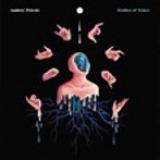
In 2024, Audrey Powne emerged as a compelling new voice in contemporary jazz with the release of her acclaimed debut album From the Fire; a self-produced and self-composed work celebrated for its lush string arrangements, soaring trumpet performances, and emotionally rich songwriting. Now, two years later, Powne returns with Bodies of Water, a bold and deeply introspective follow-up that continues her elemental exploration: from fire to water. An exploration of what it means to exist alongside others in an increasingly unstable world, Bodies of Water reflects on vulnerability, responsibility, and human interconnectedness. The album’s title and conceptual foundation were inspired by a passage from Caleb Azumah Nelson’s novel Small Worlds: “...to make himself a body, like water, a still surface, but beneath this, a ripple, and beneath this, an ebbing tide, and beneath that, a violent, constant tow…” Throughout the record, lyrics ruminate on the idea that like all bodies of water, we are vulnerable to disruption and catastrophe. Unlike inanimate bodies of water, however, we are conscious participants in both the damage and the repair. That tension between what we are made of and what we are responsible for became a grounding and harmonious thought. This album is a meditation on that idea, both in my personal life and in a broader, collective sense. Swollen, Broken Record, and Karma, reflect on moments of cruelty and error including her own that felt unbearable. Viewing them instead as forces moving through the landscape of a life, violent but temporary to survive their immediate impact. More socially conscious tracks Stay Awake, Creeds, RYV, and Two Sides confront frustration with political polarisation and the emptiness of language unaccompanied by action. The title and final track Bodies of Water brings these ideas together, reimagining both personal and societal upheaval as events shaped by bodies of water moving through the world destructive at times, transformative at others, and always in motion. Blending traditional jazz with Afrobeat rhythms, Dilla-inspired grooves, ambient textures, and expansive arrangements, Bodies of Water reveals the breadth of Powne’s artistic vision. The record moves fluidly between spiritual jazz, warped soul and rhythm-driven experimentation, while layered interludes and meticulous production thread its disparate influences into a unified and immersive sonic world.
Eine neue, limitierte 10-Zoll-Vinyl-EP von MONO. Die vierte Ausgabe ihrer fortlaufenden jährlichen ,Heaven"-EP-Reihe. Limitiert auf eine einmalige Auflage von weltweit 1.000 Exemplaren auf transparent-grünem Vinyl.
After orbiting the sun for six years, HMD returns in collaboration with Omformer to revisit and expand upon the enduring compositions from HMD002, Ascending and Distance, originally released in September 2020 (Late Lobster Theremin distribution). Since then, the search has been on for the right producers to breathe new life into these beloved pads and melodies. The remixers each build upon stems from Ascending and Distance, approaching the material with complete creative freedom.
Released spring 2019, HMD002 resonated through its airy, embracing, and intricately woven sound. In the years that followed, the release found its place within a rapidly evolving club music landscape, while Omformer also continued to shape their identity through releases on UTE.Rec and performances across the world.
HMD006 brings together a collection of forward-thinking artistic perspectives on today’s fast-tempo progressive club landscape, while remaining equally suited to afterparty sofa conversations or late-night kitchen burnouts. Each remix is soaked in rich, hopeful reinterpretation, combining inventive sample work, distinctive percussion, and the personal creative oddities of its four contributors.
Remixers
Alvar (Teo Bachs, Ekkel) — Co-founder of UTE.Rec
Mikkel Rev — One half of Omformer and producer on UTE.Rec
Human Space Machine — Nous’klaer Audio, De Lichting
Joachim Krüger — HMD Records
out of Stock
Last delivered 43 days ago available to reorder, subject to availability
Joaquin ‘Joe’ Claussell returns to the Spring Revisited project, and he delivers another jazz-infused house mix of a classic funk track by the iconic Fatback Band. Spring Revisited is collaborative project between Ace Records and Acid Jazz, inviting influential house music producers to reinterpret classic tracks from seminal New York label Spring Records, a pioneer in funk, soul and disco. After a series of sell-out and chart-topping 12” and 7” releases, as well as a 2LP compilation, the project continues with these two new mixes of the Fatback Band’s ‘(Do The) Spanish Hustle)’. Claussell combines the original classic funk elements with Latino percussion and samba-styled trumpets.
First up is his 'Sacred Rhythm Version’, which lifts the tempo and loops a section of the original's percussion. Keeping the trumpets, and soulful vocal phrases, he adds a DJ-friendly kick drum and shows off his improvisation skills with a vibrant synth line. On the flip, he strips back some of the drums and horns and focuses on the bassline with the 'Spanish Harlem Dub,' which is a moody rework utilising some funk-infused organ chords. On the original track Joe says: "I can vividly recall the very first time I heard Spanish Hustle blasting through my brother Jackie’s stereo system. Not long afterward, I experienced its energy again on the dance floor at a discotheque known as The Inferno, where it was masterfully delivered by the legendary René Hewitt. The record left an imprint on my spirit that never faded.’ A spectacular continuation of the series, presented in the nowsignature Spring Revisited housebag, resembling an original worn-in promotional 12”, pressed in a strictly limited run!
out of Stock
Last delivered 19 days ago available to reorder, subject to availability
Big Crown Records ist stolz darauf, "Perak", das Debütalbum von Thee Marloes, zu präsentieren. Wenn man Thee Marloes zum ersten Mal hört, mag einem ihr spezieller Soul-Sound vertraut vorkommen. Da sind die wuchtigen Trommeln, eine sanfte Gitarre und eine schöne Stimme, die über unerwiderte Liebe und die Komplikationen in Herzensangelegenheiten singt. Aber dann ist da etwas unbestreitbar anderes an Thee Marloes und ihrer Musik, etwas Neues und Unverwechselbares. Die meisten, die mit Soulmusik vertraut sind, haben wahrscheinlich noch nie etwas aus Surabaya, Indonesien, gehört - dem Ort, den Thee Marloes ihre Heimat nennen. Thee Marloes, das sind Natassya Sianturi (Gesang und Keyboard), Tommy Satwick (Schlagzeug) und Sinatrya ("Raka") Dharaka (Gitarre und Produktion). Ihr Sound hat die universelle Anziehungskraft von Soul, Jazz und Pop, aber mit einem ganz eigenen Ansatz, der auf ihre lokale Kultur und ihren globalen Einfluss zurückzuführen ist. Die erste Auskopplung von "Perak" ist "Midnight Hotline", die heiße A-Seite ihrer Debüt-7" auf Big Crown. Eine druckvolle Dancefloor-Nummer mit einem ansteckenden Refrain, vibrierendem Piano und jazzigen Gitarrenlicks. Die B-Seite "Beri Cinta Waktu" ist auch auf dem Album und hat alles, was eine beliebte Soul-Ballade ausmacht, aber der Text ist auf Indonesisch. Unabhängig von der Sprachbarriere ist das Gefühl in ihrer Musik spürbar, was dazu beiträgt, dass ihre Songs nachvollziehbar sind und ans Herz gehen. "I Know" ist ein Mid-Tempo-Song, der davon handelt, wie man den Schleier der Lügen von einer Liebesaffäre, die auf Falschheit beruht, wegzieht. "Not Today" gehört zu den groovigsten Wohlfühlsongs, die man an einem Sonntagmorgen spielen kann. Natassya erinnert uns daran, uns selbst Raum zu geben, ganz gleich, was das Leben uns vor die Füße wirft. "Mungkin Saja" zieht das Tempo mit einem weiteren Dancefloor-Smoker wieder an, während Thee Marloes mit "True Love" in die gefühlvolle Seite des Jazz eintauchen, mit einer Beat-Ballade, die eine Tarantino-Tanzszene untermalen könnte. "Over" beginnt mit einem schweren Drum-Break und entwickelt sich zu einem epischen Arrangement, das in Schichten wunderschöner Melodien getränkt ist und das Chaos einer Liebesaffäre, die abrupt endet, perfekt einfängt. "Perak" ist eine Reise aus dem Herzen Surabayas in den Geist des Soul-Sounds. Es geht darum, einen Raum zu schaffen, wo keiner war, und es zu tun, weil man es liebt. Man spürt den Spaß, den Thee Marloes haben, ihre Musik zu machen, vom Songwriting und Aufnehmen bis hin zu den Auftritten vor Publikum. "Wir wollen das, was wir leben, mit anderen teilen", sagt Natassya. Egal, welche Sprache man spricht oder aus welcher Kultur man kommt, die Musik und die Energie von Thee Marloes sind so charmant, dass wir sie alle noch jahrelang in der Nähe des Plattenspielers haben werden.
Graham Hunt kann einfach nicht aufhören, Alben aufzunehmen. Seit 2019 hat der in Madison, Wisconsin, lebende Songwriter ein umfangreiches Repertoire an einzigartiger Musik zusammengetragen - in einem Tempo, das nur von der Qualität der Werke selbst übertroffen wird. Nun, bereits bei seinem sechsten Album ,American Pyramid", hat Hunt sich aus seiner Komfortzone herausgewagt, die bodenständigen, computerorientierten Experimente seiner früheren Arbeiten hinter sich gelassen und stattdessen Minnesotas legendäres Pachyderm Studio mit einer neunköpfigen Band, um zu versuchen, eine andere Seite seiner grenzenlosen Kreativität einzufangen. Das Ergebnis ist ein Album, das musikalisch und textlich neue Wege geht, wobei Hunt mit seinem surrealistischen Ansatz sowohl die Traditionen des amerikanischen Indie-Rock als auch die beunruhigende Distanziertheit der amerikanischen Erfahrung selbst seziert. Zusammen mit einer Reihe von Multi-Instrumentalisten aus früheren Besetzungen seiner Live-Auftritte zog Graham ins Pachyderm Studio, den berühmten Aufnahmestandort unzähliger Kultalben, von Nirvanas ,In Utero" und PJ Harveys ,Rid of Me" bis hin zu neueren Alben wie ,Sugaregg" von Bully oder ,Once Twice Melody" von Beach House. Die Session erwies sich als fruchtbar, da die meisten Songs, die es auf ,American Pyramid" schafften, jene maximalistische Ambition ausstrahlen, die in Grahams meisterhaftem Songwriting offensichtlich ist - doch nachdem er nach Hause zurückgekehrt war, wurde Hunt von noch weiterer Inspiration erfasst - und das Album schwelgt in der Dualität beider Prozesse. Tracks wie der bei Pachyderm aufgenommene Rave-up ,Riverboat Blues" gehen nahtlos in die zu Hause aufgenommene Musik wie ,Dust Underwater" über, wobei beide in eskapistische Fantasien abdriften, in denen lebhafte Produktionselemente die surreale Erzählung untermalen. Oder anderswo bietet der Album-Highlight ,Getting Older" einigen von Hunts unmittelbar befriedigendstem Gitarrenpop und die bodenständigsten Texte auf ,American Pyramid". Die Fähigkeit, so viele verschiedene Klänge, Emotionen und Stimmungen zu vereinen, macht Graham Hunt zu einem so besonderen Songwriter. Nur sehr wenige würden es überhaupt versuchen, Westerberg-artigen Everyman-Rock mit gonzoartigen, autotune-bearbeiteten Gesangspassagen oder psychedelischen lyrischen Abstraktionen mit offenherzigen Gedanken über den unaufhaltsamen Lauf der Zeit zu kombinieren - und noch weniger könnten das so umsetzen, wie Hunt es auf ,American Pyramid" tut.
Die Feder
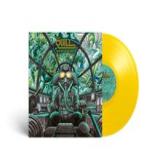
Master Of The Skies – Limitierte Edition auf neongelbem Vinyl
Metalville | Artikelnummer: 1417558
Vinyl-LP | 2026 / EU - Original | Neu
32,99 €
Inkl. MwSt. zzgl. Versandkosten
Vorbestellungen werden ab dem 28.08.2026 versandt.
Das Datum basiert auf den Angaben unserer Lieferanten und kann sich ändern.
Die farbige Vinyl-LP „Master Of The Skies Limited Neon Yellow Vinyl Edition“ von The Quill ist bei Metalville erschienen und vereint die neuen Studioaufnahmen des schwedischen Veteranen-Quartetts. Die LP enthält zehn Tracks mit einer Spielzeit von rund 45 Minuten. Der Titeltrack ist in einer Extended Version und als Reprise enthalten, während das epische Stück „Mastodon“ mit über neun Minuten Spielzeit viel Raum für ausgedehnte Riffpassagen bietet.
Musikalisch bewegt sich The Quill zwischen druckvollem Hard Rock und Stoner-Rock-Elementen, wobei Groove, Schwere und Melodie stets eng miteinander verwoben sind. Auf dem Album setzt die Band auf dunklere, dichtere Klangfarben als auf früheren Veröffentlichungen. Die Arrangements reichen von prägnanten, riffbetonten Songs bis hin zu atemlosen, doomigen Momenten. Diese Balance zwischen Eingängigkeit und düsterer Atmosphäre zieht sich durch das gesamte Album.
Gesang und Gitarrenspiel stehen im Zentrum der Kompositionen, während die Songs durch bewusst gesetzte Tempowechsel und dynamische Übergänge zusammengehalten werden. Damit knüpft The Quill an seine lange Bandgeschichte an und untermauert seine Rolle als feste Größe in der skandinavischen Hardrock-Szene.
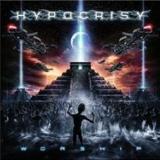
With governments finally admitting that UFOs do in fact exist, and humanity attempting to heal from a state of recent crisis, the timing couldn’t be more appropriate for the newest addition to the HYPOCRISY catalog: WORSHIP, due to be released Fall 2021 via Nuclear Blast Records. Aptly titled, the album cover shows a mass of humans reaching up mindlessly to the sky as glowing spaceships shaped like the HYPOCRISY crosses sigil beam down to descend upon earthen civilizations and Mayan temples. Designed by artist Blake Armstrong (Kataklysm, In Flames, Carnifex, etc.), WORSHIP’s artwork speaks to the history of the relationship between humanity and extraterrestrials. “They’re coming back to collect,” explains founder and HYPOCRISY mastermind Peter Tägtgren.
A track entitled CHEMICAL WHORE breaches the subject of pharmaceutical addiction, and those who engineer it. “We are all chemical whores. We regularly consume prescriptions and drugs because we think we need it; we use one pill to heal the damage done by another medicine... it’s a vicious cycle.” Musically, it’s the only song that was written by all 3 core members of the band and translates into a recognizable, mid-tempo HYPOCRISY sound much like ERASER or FRACTURED MILLENIUM. Traveling from Sweden to Russia, the band also shot an official music video for CHEMICAL WHORE.
The DEAD WORLD music was written by Peter Tägtgren’s son, Sebastian. “We actually started to write an album together, something like 11 or 12 songs, but we never put any vocals in there and we just sort of set it aside. Then when I started writing HYPOCRISY I realized I really liked the song… it feels fresh. I think my kid got some new blood in there.” While the song comes equipped with a modern feel, the writing is still old fashioned at its core. Going into detail about the illuminati and black ops government, the lyrics examine how miserable these figureheads and theories can make us. “Call it fantasy, call it sci-fi, there are plenty of conspiracies in the world but I find these ones interesting,” explains Tägtgren.
GREEDY BASTARDS is another track outlined by simplicity and catchiness. Chugging riffs encapsulate a sound that almost verges on the realms of thrash while still keeping its feet firmly planted in the world of death metal. The lyrics touch on the greed and methods of control that we see various governments around the world today; how they manipulate people against one another and abuse the masses.
For Tägtgren, the inspiration to write new HYPOCRISY comes in waves. “I believe we were out on tour for another project and I began to get hungry again. I started spitting out some new riffs and when I had 7-8 songs done, I invited the rest of the guys to join me and contribute, and from there we started putting everything together. We had a break for a few months, continued recording, went back on tour… it never stops. There was a lot of jumping back and forth, and then COVID came and things got really weird.”
Tägtgren was one of the many musically inclined who was forced into sudden isolation upon the onset of COVID 19, only for Tägtgren, this is common practice when creating new songs. “A lot of things in the world stopped, and it was time to finish everything I hadn’t finished.” As usual, all recording and mixing took place at Tägtgren’s home studio in Sweden.
It has been 8 long years since the last record, and HYPOCRISY fans can feel the itch. WORSHIP is 11 tracks of precise, ferocious musicianship. Commonly inspired by the fusion of the modern and the ancient, HYPOCRISY has once more found a way to combine innovative ideas with classic sound in order to deliver something metalheads can enjoyably consume with awe and brutal vigor. HYPOCRISY is Peter Tägtgren (Lead Guitar & Vocals), Mikael Hedlund (Bass Guitar), and Reidar “Horgh” Horghagen (Drums).
Aus dem Keller eines mittlerweile stillgelegten Verstecks einer Motorradgang in Dayton, Ohio, kommt STONE COAL WHITE! Ultra-primitiver und ultra-roher Funk mit klassischen Ohio-Funky-Soul-Elementen. Die A-Seite - ,Hell Below", ein Cover des Curtis-Mayfield-Klassikers - ähnelt eher der ,East Of Underground"-Version, mit einem rasanten Tempo und treibender Wah-Gitarre. Einordnung: Unhinged Funk. Die B-Seite, ,Free", die zuvor 1971 als 45er auf dem Privatlabel Ewing erhältlich war, ist buchstäblich unvorstellbar selten. Dank unserer Freunde bei der Numero Group ist dieser zweiseitige Knaller nun zu einem günstigen Preis erhältlich _ solange der Vorrat reicht.
Aus dem Keller eines mittlerweile stillgelegten Verstecks einer Motorradgang in Dayton, Ohio, kommt STONE COAL WHITE! Ultra-primitiver und ultra-roher Funk mit klassischen Ohio-Funky-Soul-Elementen. Die A-Seite - ,Hell Below", ein Cover des Curtis-Mayfield-Klassikers - ähnelt eher der ,East Of Underground"-Version, mit einem rasanten Tempo und treibender Wah-Gitarre. Einordnung: Unhinged Funk. Die B-Seite, ,Free", die zuvor 1971 als 45er auf dem Privatlabel Ewing erhältlich war, ist buchstäblich unvorstellbar selten. Dank unserer Freunde bei der Numero Group ist dieser zweiseitige Knaller nun zu einem günstigen Preis erhältlich _ solange der Vorrat reicht.
Big Crown Records freut sich, Glera zu präsentieren, Marco Beneventos Debütalbum auf dem Label. Marco Benevento hat sich schon immer wie jemand bewegt, der das Studio als eigenes Instrument begreift - nicht bloß als Raum, in dem das Spielzeug herumsteht. Lange bevor er auf Bühnen mit Freddie Gibbs und Madlib auftauchte oder in den Liner Notes von Alben von Clairo und Leon Bridges erwähnt wurde, dachte Benevento bereits wie ein Produzent: Er hörte auf Texturen, Spannungen und Negativräume - und auf jene seltsame emotionale Alchemie, die entsteht, wenn Groove und Neugier aufeinandertreffen. Sein neues Album Glera schärft diesen Instinkt und rückt Benevento nicht nur als virtuosen Keyboarder und Bandleader ins Licht, sondern als Komponisten, der aus Rhythmus, Klang und Gefühl ganze Welten formt.Glera ist ein genreübergreifendes Jazzalbum, das Soul und das elastische Low-End des Reggae mit einem offenen Sinn für Möglichkeiten verbindet. Das Projekt begann vor drei Jahren als eine Art privates Experiment: Benevento schrieb intuitiv, inspiriert von italienischen Filmmusiken und Melodien. Mit der Zeit entwickelten sich diese Skizzen zu etwas Größerem und Kraftvollerem - und mündeten schließlich in die hier zu hörende majestätische Ausformung.Entstanden ist Musik mit filmischer Bewegung, ohne dabei kostbar oder überladen zu wirken. Die Stücke fühlen sich mal wie Verfolgungsjagden, mal wie langsame Überblendungen an - manchmal sogar innerhalb desselben Songs. Jazz-Improvisation teilt sich den Raum mit Reggae-Grooves, orchestralen Elementen und einer psychedelischen Pop-Atmosphäre. Explorativ, aber geerdet; komplex, doch stets klar groove-orientiert.Der Album-Opener ,Frizzante" ist eine reine musikalische Feier - ein energiegeladener Feel-Good-Banger, auf Band gebannt, in dem Marco über einem unnachgiebigen Groove Melodien mit sich selbst austauscht. Auf ,Turandot" wird Benevento von Italiens Marianne Mirage am Gesang begleitet; der düstere, cineastische Track bewegt sich mühelos zwischen den Welten von Portishead und Serge Gainsbourg.Mit ,Big Top" erweitert sich die klangliche Palette noch weiter: ausgestattet mit Sprachaufnahmen und Pfauengeräuschen lässt sich der Song am treffendsten als ,Zirkus-Funk" beschreiben. Ein Pfiff - und das Spiel beginnt mit ,Houdini", einem jazz-fusionhaften Dancefloor-Füller, der vom ersten Schlagzeugschlag an die Tür eintritt. Auf ,I Can't Control This Bliss" mischt Benevento Dream Pop unter und bittet Dream Crease ans Mikrofon - für eine Dosis lo-fi-getränkter Schönheit. Elizabeth Steiner steuert ihre renommierte Harfenarbeit zu ,Miss Neptune" bei, getragen von einem tief vibrierenden, reggae-inspirierten Fundament.Mit Vollgas prescht ,Sprezzatura" wie eine Hochgeschwindigkeitsverfolgung durch enge Straßen, während ,Quattro Passi" das Tempo drosselt und zum entspannten Schlendern einlädt - mit Jazzsängerin Chiara Civello als Feature.Marco Benevento agiert hier auf höchstem Niveau, formt Klang mit Zielstrebigkeit und Neugier. Dieses Album kündigt sich laut an - zugleich nach außen gerichtet und zutiefst intim. Es ist Musik in Bewegung: zwischen Genres, Tempi und Registern, stets verankert in der Freude am Entdecken. Ein Album, das Bewegung verkörpert, die Vergangenheit mitnimmt und doch niemals stehen bleibt.
Big Crown Records freut sich, Glera zu präsentieren, Marco Beneventos Debütalbum auf dem Label. Marco Benevento hat sich schon immer wie jemand bewegt, der das Studio als eigenes Instrument begreift - nicht bloß als Raum, in dem das Spielzeug herumsteht. Lange bevor er auf Bühnen mit Freddie Gibbs und Madlib auftauchte oder in den Liner Notes von Alben von Clairo und Leon Bridges erwähnt wurde, dachte Benevento bereits wie ein Produzent: Er hörte auf Texturen, Spannungen und Negativräume - und auf jene seltsame emotionale Alchemie, die entsteht, wenn Groove und Neugier aufeinandertreffen. Sein neues Album Glera schärft diesen Instinkt und rückt Benevento nicht nur als virtuosen Keyboarder und Bandleader ins Licht, sondern als Komponisten, der aus Rhythmus, Klang und Gefühl ganze Welten formt.Glera ist ein genreübergreifendes Jazzalbum, das Soul und das elastische Low-End des Reggae mit einem offenen Sinn für Möglichkeiten verbindet. Das Projekt begann vor drei Jahren als eine Art privates Experiment: Benevento schrieb intuitiv, inspiriert von italienischen Filmmusiken und Melodien. Mit der Zeit entwickelten sich diese Skizzen zu etwas Größerem und Kraftvollerem - und mündeten schließlich in die hier zu hörende majestätische Ausformung.Entstanden ist Musik mit filmischer Bewegung, ohne dabei kostbar oder überladen zu wirken. Die Stücke fühlen sich mal wie Verfolgungsjagden, mal wie langsame Überblendungen an - manchmal sogar innerhalb desselben Songs. Jazz-Improvisation teilt sich den Raum mit Reggae-Grooves, orchestralen Elementen und einer psychedelischen Pop-Atmosphäre. Explorativ, aber geerdet; komplex, doch stets klar groove-orientiert.Der Album-Opener ,Frizzante" ist eine reine musikalische Feier - ein energiegeladener Feel-Good-Banger, auf Band gebannt, in dem Marco über einem unnachgiebigen Groove Melodien mit sich selbst austauscht. Auf ,Turandot" wird Benevento von Italiens Marianne Mirage am Gesang begleitet; der düstere, cineastische Track bewegt sich mühelos zwischen den Welten von Portishead und Serge Gainsbourg.Mit ,Big Top" erweitert sich die klangliche Palette noch weiter: ausgestattet mit Sprachaufnahmen und Pfauengeräuschen lässt sich der Song am treffendsten als ,Zirkus-Funk" beschreiben. Ein Pfiff - und das Spiel beginnt mit ,Houdini", einem jazz-fusionhaften Dancefloor-Füller, der vom ersten Schlagzeugschlag an die Tür eintritt. Auf ,I Can't Control This Bliss" mischt Benevento Dream Pop unter und bittet Dream Crease ans Mikrofon - für eine Dosis lo-fi-getränkter Schönheit. Elizabeth Steiner steuert ihre renommierte Harfenarbeit zu ,Miss Neptune" bei, getragen von einem tief vibrierenden, reggae-inspirierten Fundament.Mit Vollgas prescht ,Sprezzatura" wie eine Hochgeschwindigkeitsverfolgung durch enge Straßen, während ,Quattro Passi" das Tempo drosselt und zum entspannten Schlendern einlädt - mit Jazzsängerin Chiara Civello als Feature.Marco Benevento agiert hier auf höchstem Niveau, formt Klang mit Zielstrebigkeit und Neugier. Dieses Album kündigt sich laut an - zugleich nach außen gerichtet und zutiefst intim. Es ist Musik in Bewegung: zwischen Genres, Tempi und Registern, stets verankert in der Freude am Entdecken. Ein Album, das Bewegung verkörpert, die Vergangenheit mitnimmt und doch niemals stehen bleibt.
Big Crown Records freut sich, Glera zu präsentieren, Marco Beneventos Debütalbum auf dem Label. Marco Benevento hat sich schon immer wie jemand bewegt, der das Studio als eigenes Instrument begreift - nicht bloß als Raum, in dem das Spielzeug herumsteht. Lange bevor er auf Bühnen mit Freddie Gibbs und Madlib auftauchte oder in den Liner Notes von Alben von Clairo und Leon Bridges erwähnt wurde, dachte Benevento bereits wie ein Produzent: Er hörte auf Texturen, Spannungen und Negativräume - und auf jene seltsame emotionale Alchemie, die entsteht, wenn Groove und Neugier aufeinandertreffen. Sein neues Album Glera schärft diesen Instinkt und rückt Benevento nicht nur als virtuosen Keyboarder und Bandleader ins Licht, sondern als Komponisten, der aus Rhythmus, Klang und Gefühl ganze Welten formt.Glera ist ein genreübergreifendes Jazzalbum, das Soul und das elastische Low-End des Reggae mit einem offenen Sinn für Möglichkeiten verbindet. Das Projekt begann vor drei Jahren als eine Art privates Experiment: Benevento schrieb intuitiv, inspiriert von italienischen Filmmusiken und Melodien. Mit der Zeit entwickelten sich diese Skizzen zu etwas Größerem und Kraftvollerem - und mündeten schließlich in die hier zu hörende majestätische Ausformung.Entstanden ist Musik mit filmischer Bewegung, ohne dabei kostbar oder überladen zu wirken. Die Stücke fühlen sich mal wie Verfolgungsjagden, mal wie langsame Überblendungen an - manchmal sogar innerhalb desselben Songs. Jazz-Improvisation teilt sich den Raum mit Reggae-Grooves, orchestralen Elementen und einer psychedelischen Pop-Atmosphäre. Explorativ, aber geerdet; komplex, doch stets klar groove-orientiert.Der Album-Opener ,Frizzante" ist eine reine musikalische Feier - ein energiegeladener Feel-Good-Banger, auf Band gebannt, in dem Marco über einem unnachgiebigen Groove Melodien mit sich selbst austauscht. Auf ,Turandot" wird Benevento von Italiens Marianne Mirage am Gesang begleitet; der düstere, cineastische Track bewegt sich mühelos zwischen den Welten von Portishead und Serge Gainsbourg.Mit ,Big Top" erweitert sich die klangliche Palette noch weiter: ausgestattet mit Sprachaufnahmen und Pfauengeräuschen lässt sich der Song am treffendsten als ,Zirkus-Funk" beschreiben. Ein Pfiff - und das Spiel beginnt mit ,Houdini", einem jazz-fusionhaften Dancefloor-Füller, der vom ersten Schlagzeugschlag an die Tür eintritt. Auf ,I Can't Control This Bliss" mischt Benevento Dream Pop unter und bittet Dream Crease ans Mikrofon - für eine Dosis lo-fi-getränkter Schönheit. Elizabeth Steiner steuert ihre renommierte Harfenarbeit zu ,Miss Neptune" bei, getragen von einem tief vibrierenden, reggae-inspirierten Fundament.Mit Vollgas prescht ,Sprezzatura" wie eine Hochgeschwindigkeitsverfolgung durch enge Straßen, während ,Quattro Passi" das Tempo drosselt und zum entspannten Schlendern einlädt - mit Jazzsängerin Chiara Civello als Feature.Marco Benevento agiert hier auf höchstem Niveau, formt Klang mit Zielstrebigkeit und Neugier. Dieses Album kündigt sich laut an - zugleich nach außen gerichtet und zutiefst intim. Es ist Musik in Bewegung: zwischen Genres, Tempi und Registern, stets verankert in der Freude am Entdecken. Ein Album, das Bewegung verkörpert, die Vergangenheit mitnimmt und doch niemals stehen bleibt.
Through an intimate, conversational approach, free from any trace of mannerism, pianist Enrico Pieranunzi and guitarist Bebo Ferra probe the innermost mystery of a genius whose expressive language combined charm and intellect are in equal measure. Drawing on languorous ballads at unhurried tempos, the program alternates reinterpretations of emblematic Evans themes - 'Song for Helen', 'Very Early', 'Once Upon a 'Summertime' - with a series of inspired original pieces. Occasionally joined by the deep, reassuring double bass of Diego Imbert ('Song for Helen', 'Calling Enrico'), they move from post- romantic atmospheres to more introverted lyrical passages, steering clear of both sentimental excess and detached formalism.
Nickodemus is a traveler at heart—a connecter of worlds, scenes, and people since the mid-90s. Over his extensive career as a touring DJ and producer, including five albums, hundreds of remixes in his “Remix Machine” and two dozen compilations of cutting edge up incoming producers from around the World, remains one of the most important leaders of global fusion and the heavy beats we yearn for in the club. His music has long thrived on the close relationships and mutual respect of friends he’s built across the continents, felt through the worldly potions he cooks up in the studio, and spanning electronic sounds rooted in Latin, African, and Eastern instrumentation. His latest album, Soul & Science is a collaborative effort between old and new friends, recorded in several countries while touring as well as his home studio / record room / memorabilia museum.
This limited 7” pairs two standout remixes from Nickodemus’ 2023 album Soul & Science, bridging deep-rooted collaboration with modern dancefloor energy. On the A-side, Ben Gomori reimagines “Rumba Tobacco y Ron”—a trans-Caribbean production born between Puerto Rico and Cuba, featuring contributions from Tempo & The Candela All-Stars and Haydee Soul—into a chopped, electronic club cut that retains its original horns, piano, and vocal spirit. On the B-side, Tigerbalm delivers a driving, four-on-the-floor remix of “Mama Tchipp (Follow Me),” flipping the Afro-disco anthem with steady basslines, punchy drums, and Pat Kalla’s infectious vocals primed for peak-time play.
With a career spanning over 25 years, Nickodemus remains a globally recognized force in eclectic, genre-blurring dance music, boasting 60k+ Spotify followers, 811k+ monthly listeners, and over 350 million streams across his catalog, alongside more than 20,000 physical records sold worldwide. His breakout collaboration with Quantic and Candela All-Stars, “Mi Swing Es Tropical,” became a bona fide international hit with over 75 million cumulative streams and a key placement in the Chef soundtrack directed by Jon Favreau. On remix duties, Ben Gomori—founder of the UK-based Monologues Records—brings his signature touch, having previously reworked artists including Oby Onyioha, Segun Adewale, Dawda Jobarteh, and Amadou Balaké. The release is already receiving strong international radio support, with airplay and tastemaker backing from Gilles Peterson, BBC Radio 6 Music, FIP, RFI, Radio 3 (Generación Ya), 2SER, KCRW (Top Tune of the Day), and KEXP, signaling strong demand and cross-market appeal for DJs, collectors, and global music audiences alike.
a A1: Rumba Tobacco y Ron (ft. Haydèe Soul) Ben Gomori Remix
b B1: Mama Tchipp (Follow Me) [Tigerbalm Remix] [feat. Pat Kalla]
[a] A1: Rumba Tobacco y Ron (ft. Haydèe Soul) [Ben Gomori Remix]
[b] B1: Mama Tchipp (Follow Me) [Tigerbalm Remix] [feat. Pat Kalla]
[a] A1 | Rumba Tobacco y Ron (ft Haydèe Soul) [Ben Gomori Remix]
[b] B1 | Mama Tchipp (Follow Me) [Tigerbalm Remix] [feat Pat Kalla]
[a] A1 | Rumba Tobacco y Ron (ft Haydèe Soul) [Ben Gomori Remix]
[b] B1 | Mama Tchipp (Follow Me) [Tigerbalm Remix] [feat Pat Kalla]
out of Stock
Last delivered 47 days ago available to reorder, subject to availability
´Salva´ unfolds as a slow-moving sonic passage, suspended between stillness and transformation. Rooted in a deeply personal lineage, the album reimagines a long-standing family wound through the lens of myth, with the intention of altering its direction. Rather than recounting events, DIMA constructs a parallel narrative, one where sound becomes a means of reconfiguring what was once haunted.
Emerging from an intuitive and studio-centered process, Salva is shaped through experimentation, co-creation, and temporal patience. Working primarily with the computer as her main instrument, DIMA assembles fragments of sound, plugins, sampled material, improvised gestures, and stems drawn from cinematic sources into a porous and evolving sonic architecture. Composition here is accumulative, guided by sensation. Within this framework, certain tracks introduce restrained pop sensibilities, glimpses of melody, song structure, and tonal clarity that surface briefly before dissolving back into the broader sonic language.
´Salva´ is a passage. A listening experience that invites the audience to inhabit uncertainty, to stay with sensation, and to consider how sound can hold stories that language alone can´t resolve.
In spring 2025, Abul Mogard and Rafael Anton Irisarri created the source material for their second album, Where Light Pauses in the Silence of the Sun, during a three-day residency at Morphine Raum in Berlin. Functioning as both recording studio and performance venue, the space has no stage, with the audience gathered around the performers. Working within an open framework, the duo reshaped the music each evening while recording the performances live to multitrack. Rotary speakers, modular synthesizers and bowed guitar formed the core of their sonic language, captured through a 1970s mixing console and microphones placed around the room.
Back in Mogard’s studio in Rome, the material was further crafted as motifs were stretched, fragments isolated, and tempos dissolved. Irisarri recorded additional guitar textures and treatments in New York, while passages recorded by Martina Bertoni and Andrea Burelli in Berlin reinforced the harmonic centres and brought breath, refinement and a new sensibility to their compositions. The process continued as Mogard’s layering and subtraction reassembled everyone’s parts into the final arrangement.
The album opens with “In the Eastern Wild,” building from a sparse outline into a monumental formation of low-frequency weight, its internal motion shaped by the rotating Leslie speaker. “Over the Domes” widens into a broader acoustic field, where sustained modular tones meet waves of softly plucked guitar. The music then turns inward with “A Blue Descent,” centred on Bertoni’s cello, whose growling timbre introduces a melancholic depth.
At the album’s centre, “In a Quiet Radiance” unfolds around a slow guitar ostinato, its luminous stillness opening into a more expansive and reflective state. Across its ten-minute span, Burelli’s violin lines and Bertoni’s lower cello phrases gradually surface, weaving through the harmonic field. Mogard brings Burelli’s processed voice to the fore, its emotive, operatic presence becoming one of the record’s pivotal moments. “Of Blessed Ages” suspends the sonic flow, shifting between parallel major and minor chords as lingering, slowly decaying melodies shape the music’s internal drift. The closing “Among Shadows” settles into a darker resonance as layered textures recede.
Mogard and Irisarri’s shared language balances restraint and maximalism. UK magazine Crack describes the music as “a tidal wave held in suspension,” while Dutch newspaper de Volkskrant writes, “What a colossal sound, and how this music strikes at the emotions.” Reflecting on the residency sessions, Irisarri recalls: “At moments I genuinely couldn’t tell if a sound was coming from me or from Abul. It stopped feeling like two people making decisions and began to feel like we were inside a system moving on its own."
Marja de Sanctis’ cover artwork revisits the vessel sculpture from the duo’s first album, Impossibly Distant, Impossibly Close. There it appeared as raw, unfired clay. Here it has been fired in the kiln and finished with a glaze. Light gathers on its polished surface and spills into the surrounding space. As she explains, “I wanted to convey the idea of continuity within the duo, and the vessel became a kind of container for that idea. However, their music felt different this time, and with the collaboration of Martina and Andrea, I felt it should have a sleeker, softer, more glamorous look, very distant from the first raw appearance.” The transformation of the vessel from raw clay to fired form suggests a passage from immediacy toward permanence, mirroring the music’s gradual expansion.
out of Stock
Last delivered 3 months ago available to reorder, subject to availability
In spring 2025, Abul Mogard and Rafael Anton Irisarri created the source material for their second album, Where Light Pauses in the Silence of the Sun, during a three-day residency at Morphine Raum in Berlin. Functioning as both recording studio and performance venue, the space has no stage, with the audience gathered around the performers. Working within an open framework, the duo reshaped the music each evening while recording the performances live to multitrack. Rotary speakers, modular synthesizers and bowed guitar formed the core of their sonic language, captured through a 1970s mixing console and microphones placed around the room.
Back in Mogard’s studio in Rome, the material was further crafted as motifs were stretched, fragments isolated, and tempos dissolved. Irisarri recorded additional guitar textures and treatments in New York, while passages recorded by Martina Bertoni and Andrea Burelli in Berlin reinforced the harmonic centres and brought breath, refinement and a new sensibility to their compositions. The process continued as Mogard’s layering and subtraction reassembled everyone’s parts into the final arrangement.
The album opens with “In the Eastern Wild,” building from a sparse outline into a monumental formation of low-frequency weight, its internal motion shaped by the rotating Leslie speaker. “Over the Domes” widens into a broader acoustic field, where sustained modular tones meet waves of softly plucked guitar. The music then turns inward with “A Blue Descent,” centred on Bertoni’s cello, whose growling timbre introduces a melancholic depth.
At the album’s centre, “In a Quiet Radiance” unfolds around a slow guitar ostinato, its luminous stillness opening into a more expansive and reflective state. Across its ten-minute span, Burelli’s violin lines and Bertoni’s lower cello phrases gradually surface, weaving through the harmonic field. Mogard brings Burelli’s processed voice to the fore, its emotive, operatic presence becoming one of the record’s pivotal moments. “Of Blessed Ages” suspends the sonic flow, shifting between parallel major and minor chords as lingering, slowly decaying melodies shape the music’s internal drift. The closing “Among Shadows” settles into a darker resonance as layered textures recede.
Mogard and Irisarri’s shared language balances restraint and maximalism. UK magazine Crack describes the music as “a tidal wave held in suspension,” while Dutch newspaper de Volkskrant writes, “What a colossal sound, and how this music strikes at the emotions.” Reflecting on the residency sessions, Irisarri recalls: “At moments I genuinely couldn’t tell if a sound was coming from me or from Abul. It stopped feeling like two people making decisions and began to feel like we were inside a system moving on its own."
Marja de Sanctis’ cover artwork revisits the vessel sculpture from the duo’s first album, Impossibly Distant, Impossibly Close. There it appeared as raw, unfired clay. Here it has been fired in the kiln and finished with a glaze. Light gathers on its polished surface and spills into the surrounding space. As she explains, “I wanted to convey the idea of continuity within the duo, and the vessel became a kind of container for that idea. However, their music felt different this time, and with the collaboration of Martina and Andrea, I felt it should have a sleeker, softer, more glamorous look, very distant from the first raw appearance.” The transformation of the vessel from raw clay to fired form suggests a passage from immediacy toward permanence, mirroring the music’s gradual expansion.
out of Stock
Last delivered 3 months ago available to reorder, subject to availability