Having already proven that he is capable of maintaining sonic quality and distinction over the course of a full original program, Chevel (a.k.a. Dario Tronchin) now makes his LP debut for Stroboscopic Artefacts. His other S.A. contributions (including the inaugural entry in the label's singular Monad series, the "One Month Off" EP, his participation to the label's five-year retrospective series) have already hinted that a more complete exposition of his unique inner world would surface, and here it is at last.
Over the course of his young career, Chevel has gained a mastery over several compositional elements: Polaroid-like slow melodic fades, sharp ricocheting beats, and simply making one's headphones feel like a viable means of physical transportation. All of these elements come into play shortly after the needle hits the grooves of (Track A1), a euphoric introductory track marked by a spectral panning sequence and by beats chopped with a culinary expert's sense of elegance. The drum kit sounds that feature throughout are used sparely but - either because of this or in spite of this - provide maximum impact upon the listener's nervous system. The almost 'far Eastern' use of 'block' percussion on (Tracks A2 and B1) perfectly complements the synthetic sheen produced by fuzz distortion, radio static and bandpass-filtered sound bites, taking us to a terrain where a palette of decay effects provides just as much aesthetic inspiration as the presence of technological advancement.
There is more than enough humor and playfulness at work here, too, helping to once again banish the persistent stereotype of the modern techno producer as a sterile technician: the queasy melody line, sliced-and-diced whistling and gelatinous bounce of (Track D2) evoke a child's wonderment at playtime more than they do the rarefied rigour of the laboratory. The less pulsating numbers like (Track C3) and the closing (Track D3) will engage the listener as well, being like short audio films of abiogenesis (i.e. spontaneous generation of life from 'non-living' material) taking place. These tracks are not so much 'interludes' or contemplative retreats from the action as they are enhancers of it, utilizing fluttering cycles of melody to engage in a kind of conversation with the more driving tracks. As to the 'driving' tracks themselves: the places that they drive the listener to are satisfyingly beyond customary experience.
In other words, despite Chevel's keeping the sonic toolkit and overall atmosphere consistent from track to track, there is a rich variety in the emotional affectivity on display here. The net effect is like a dream state that leaves strong impressions even though one can't pinpoint exactly why they are doing so (and which leaves one wanting to dive back into the dream pool and experience something similar again.) This is a talent that unifies the diverse constellation of Stroboscopic Artefacts producers, and one that makes Chevel in particular one to continue watching, listening to, and experiencing.
Wire (USA/Germany/UK) - ''Very intriguing, can/'t wait to dive in.''
Pitchfork (USA) - "Nice use of space, though do find the atmosphere a little one-note. Percussion really pops."
RBMA - "Thanks for reaching out. Having a listen now and the album sounds really good. Happy to give it a shout on RBMA Twitter whenever is best for you."
Paramount Artists (UK) - "20/10 top effort!"
NTS Radio (UK) - ''Nice IDM music with fine textures and bass frequencies..''
Groove (Germany) - ''Very interesting delicate structures. Suggested for review in Groove.''
Exclaim! (Canada) - "I like this. I'll float it to my team and I'll let you know if anyone's interested in covering it."
Big Up Magazine (USA) - "Absolutely epic album."
Vicious Magazine (Spain) - "Great sounds, for our september issue, thx a lot!"
Little White Earbuds (USA) - ''Fantastic album from Chevel. I have unfortunately been at work today without my usual headphones but even listening on very poor quality ones, the rich sonic mastery comes through. Can't wait to get home and listen to this properly.''
Cone Magazine (UK) - "Thanks for sending this through. Looks great, and always interested about a new Stroboscopic release. I'll let you know when something goes up."
quête:terra form
The third entry in Lucy's trio of adventurous full-lengths is visually introduced by artwork of a pearl-bearing shell, designed by Stroboscopic Artefacts' resident visual artist (and Lucy's brother) Ignazio Mortellaro. This drops a subtle hint as to the nature of its contents: just as a pearl slowly forms within its enclosing body in response to organic challenges, Lucy's work is also a kind of crystallization of memory and experience into an artifact of great value.
Listeners to this album will be struck immediately by how different it sounds from past Lucy productions, while still retaining the feel of relentless questing that defined his previous two solo LPs Wordplay for Working Bees and Churches, Schools, and Guns (or, as Lucy himself defines the feeling, the equal valuation of precision and exploration'). Initially feeling like Lucy is guiding his listeners on a slow and slightly apprehensive down-river trip through the Amazon, or some similarly thriving but as-of-yet undiscovered terrain, the album is enriched by several layers of ambience and by the wordless, improvisational (yet still somehow narrative) vocals and flute of Jon Jacobs. Without a doubt, it's an album with an initiatory' atmosphere that listeners should commit themselves to hearing in one sitting, with as little interruption as possible. However, unlike many initiatory rites, this is no arduous ordeal at all: great care has gone into connecting each chapter of the album with the same silver thread of entrancing story-telling. On standout pieces like She-Wolf Night Mourning,' electronic arpeggiation and persistent synthetic flutters perfectly merge with the unique tone colors of resonant acoustic percussion and pensive woodwind. Elsewhere, pieces like A Selfless Act' reconcile technoid pulses with melancholic, yet intoxicating echoes of Mediterranean musical traditions.
Interestingly, many of the tracks on Self-Mythology refer to old legends and well-known fairytales (e.g. the opening track which references Baba Yaga's magical hut), or to more broadly defined states of consciousness ( Samsara,' which features an especially strong, sustained choral interplay between glassy synth sequences and earthy flute sonorities). This is where the album is truly unique and relevant in its ambition. The interplay between the graphic design, the vocal and flute performances of Jacobs, and the sound design chosen by Lucy aims to be an intimate audio autobiography of its creators while also referring back to the stories that have shaped human destiny for millennia. This work is a meditation upon the reciprocity between personal hopes and fears and collective dreams and nightmares, an exploration of the endless interplay between the universal and the deeply individual. It is the tale of that uncanny process by which our own conscious experience draws from the pool of archetypal information, while also contributing to it.
After years spent living on opposite sides of the Atlantic world events threw Laura Mary Carter and Steven Ansell of Blood Red Shoes back together into what has become the must fruitful era of their 17 years together.
“It’s been a loooong time since we both lived in the same city”, explains Steven. “I mean we actually wrote this album in LA at Laura’s place, then came to the UK to record it…and then everything went nuts”.
Realising very quickly that they wouldn’t be able to release the album or tour until the world returned to some kind of normality, the band found their energies quickly spilled over into other projects. Laura-Mary started a podcast, Never Meet Your Idols, with her best friend in LA, interviewing everyone from Zack Snyder to Mark Lanegan to CHVRCHES. It is now about to start its third season. Steven started applying his love of electronic music by writing and producing other alternative artists like Circe, ARXX, Aiko and XCerts, racking up millions of streams in the process.
Having worked together on Laura–Mary’s forthcoming solo mini album Town Called Nothing and restless from the lack of touring, the duo started jamming out in rehearsal rooms, which led to the light-speed writing, recording and release of the impossibly-titled Ø EP in the summer of 2021. Which concludes what the band call an “off year”.
And that brings us back to GHOST ON TAPE. It appears that like David Lynch’s The Lost Highway, nothing is linear in the world of Blood Red Shoes. Written and recorded before their most recent EP, GHOSTS ON TAPE is a huge jump into new terrain for the band. Musically and emotionally their most mature work, it is a complex, imaginative, and very gothic development on their sound. Musically, it leaves almost no trace of their former selves.
Habibi Funk presents a selection of works by Algerian-born, Amazigh artist Majid Soula. Majid’s music blends the best of Arab-disco, highlife and groovy funk into something wholly unique.
Born in Kabylie, Algeria - a place that remains fundamental to his career - Majid Soula is a self-made musician, artist and producer. With no formal music education, Majid’s tenacity has led to a career that is still blossoming. His synths, driving drums, guitar & strong lyrics make a unique sound. A strong proponent for the rights of the Amazigh, he has a band that to this day plays shows, most linked to cultural events of the Amazigh diaspora in France, as well as in Belgium, Russia the UK and Sweden. He was part of a new wave of widely popular and successful Kabyle artists in the 1980s, such as Ait Menguellet, Lounès Matoub, Takfarinas, Idir and many more.
Habibi Funk as a label is dedicated to re-releasing music from “The Arab World”, but this release shows how reductive this term can be, as the countries from North Africa and West Asia being summarized under this term include a vast number of languages and identities. Obviously, headlines sometimes come with limited space, and one can’t avoid using terms that paint a half-finished picture. That being the case, however, we are even more happy that Majid Soula liked our idea to work on a release of a selection of his music with us. The tracks here are incredible and need to be introduced to a new generation of listeners.
For Majid Soula music is more than just entertainment. He considers himself an activist through music, and foremost a “chanteur engagé”, as he says of himself: „I take my inspiration from the daily life of my people and I share all their aspirations, mainly the official recognition of Tamazight as a language, culture and identity.”
He still works on new music in his small home studio in Belleville and occasionally plays concerts for the Amazigh community of the city.
We sincerely hope that for you reading this and listening to Majid’s album, his music will have the same revelatory feeling it had on us, and that this will be part of a momentum that will allow Majid to keep on working, playing, and sharing his message for many years to come.
- A1: Saint Etienne - Cool Kids Of Death (Underworld Mix)
- A2: Unloved - Why Not (Gwenno Remix)
- A3: Nots - Reactor (Mikey Young Remix)
- B1: Mildlife - Automatic (Jono Ma Ascend Mix)
- B2: Espiritu - Los Americanos (Mother Mix)
- B3: Confidence Man - Out The Window (Greg & Che Wilson Remix)
- C1: Mattiel - Guns Of Brixton (Rub-A-Dub Style Part 2)
- C2: Baxter Dury - Miami (Parrot & Cocker Too Remix)
- C3: Jimi Goodwin - Terracotta Warrior (Andy Votel Spazio 1975 De-Mix)
- D1: Working Mens Club - X (Minsky Rock Remix)
- D2: Moonflowers - Get Higher (Get Dubber Mix)
- D3: Raf Rundell - Monsterpiece (Harvey Sutherland Remix)
- D4: Cherry Ghost - Finally (Time & Space Machine Edit)
Marshall McLuhan’s famous edict ‘the medium is the message’ has never been more apt than with regard to modern remix culture. Although the idea of the remix goes way back to the Jamaican dub pioneers and New York disco remixers of the 1970s, the form didn’t truly come into its own until the acid house explosion of the 1980s, when remixers’ credentials often subsumed — and sometimes surpassed — the original source material. Some, among them our lost friend Andrew Weatherall, used remixing as a springboard into multiple other directions, and became auteurs in their own right.
Forged in the white-hot heat of post-acid house Britain, these Heavenly remixes are perfectly weighted with respect and irreverence, the remixer in each case carefully chosen to add heft to the song (as on Al Breadwinner’s dubwise reworking of Mattiel’s ’Guns of Brixton’— the pairing more a game of chess than a best-of-three arm wrestle).
Although Heavenly was founded in the wake of huge upheavals in electronic music, it was still imbued with its own curious parallel life. I’ve always thought of Heavenly as one of the UK’s alt-pop labels; a place where brilliant pop bands live and record, if the general public would only realise. Some of them have ended up in the real, actual charts (Saint Etienne, Doves), but that’s missing the point about Heavenly, who are, like Factory and Fast Product before them, pop music’s conscience.
There is no sense of order to this compilation and we make no apologies. It’s the Heavenly way. Think of it as a present from Loki, the Norse god of mischief. You’ll find a smattering of older tracks: album openers Saint Etienne are taken on a Poseidon Adventure with Underworld, who inject ‘Cool Kids of Death’ with typically manic energy. Elsewhere, ’90s Brum duo Mother add dancefloor pzazz to Espiritu’s innate glamour on an all-funked-up reworking of ‘Los Americanos’, and Mark Lusardi’s remix of Moonflowers’ ‘Get Higher’ is an early Heavenly classic.
On ‘Terracotta Warrior’, a perfect, psyched-out, Mancunian union is created betwixt Jimi Goodwin and Andy Votel, whilst Goodwin cohort Simon Aldred, in his Cherry Ghost guise, receives a proper Tamla-Motowning from Richard Norris (aka Time & Space Machine) on an inspired cover of Cece Peniston’s glam-house hit, ‘Finally’.
There are several of Heavenly’s current darlings here too. One of the most exciting young British prospects, Yorkshire’s Working Men’s Club, effectively remix themselves, as Minsky Rock — WMC’s Syd Minsky-Sargeant and producer Ross Orton — cleave ‘X’ into a riotous industrial racket. Jagwar Ma’s Jono Ma takes the Kraftwerkian leitmotif on ‘Automatic’ and drives the Australian jazz-funkers Mildlife down an electro-convulsive psychedelic tunnel (thankfully no-one was harmed during the making of this remix); Sheffield’s DJ Parrot and Jarvis Cocker deliver one of the outstanding remixes of 2018, turning Baxter Dury’s ‘Miami’ into a lovelorn minor opera; and, making its first appearance on vinyl, David Holmes’ Unloved project is taken on a panoramic Welsh waltz thanks to Gwenno.
There may well be no rhyme, nor reason, to how these compilations have been put together, beyond the fact that they are assembled with love, an innate understanding of the power of great pop music, and a skilled marriage of song and remixer — but does one really need anything more than that for an album to make sense? I’d suggest not.
Paz en La Tierra is a result of a search by the Meridian Brothers & Conjunto Media Luna of the heart of something that can be called a 'power format' of Colombian Caribbean music; Accordion , Guacharaca, Caja, Congas, Electric bass, and vocals.
Departing from this idea, and casually working with the music of a documentary on the famous singer Diomedes Diaz, Iván Medellín (accordionist of Conjunto media luna), and Eblis Álvarez from the Meridian Brothers, embarked on a new work building a sound exclusively on the traditional format, searching for several spaces between the lines in the universe of accordion in Colombian music.
The duo departed from the basic: the line of vallenato, the most famous in the country but not the only one, the line of sabanero music more of the lands of Sucre and Córdoba inclined towards cumbia, bullerengue, son vallenato among other airs fed the group's ideas. The Barranquilla center deserves a separate mention, due to its cosmopolitan approach, using all kinds of influences, from the Caribbean islands to ancient rhythms or even modern rock and funk, also used as an inspiration for this record.
In the process, new ways of melody appeared and new ways of expression emerged. Although the rhythms used in the record are rooted in the traditional, the duo glitched those rhythms turning them into new directions in the style, using exclusively the past references to transmute the sound into something that looks inside a parallel future.
Using several theatrical situations, alterations in musical structures, and slight deformations of the traditional harmony (a tonal center and its dominant) the result of "Paz en la Tierra" is enigmatic and charming, and at the same time directed towards the dance floor keeping the past alive and flourishing the essence of the tradition.
Portico Quartet announce Monument, the electronic driven follow-up to their acclaimed ambient-minimalist suite Terrain, presenting the band at their most direct
It's rare that a band releases two albums within six months of each other, rarer too that while both are so different, they are both as epochal in terms of the band's output as Terrain and Monument are to Portico Quartet. The irony is that Monument, a stripped-back, intentionally direct album, was the album that the band set out to write in May 2020, before the dream like long-form Terrain came into focus. Briefly they were two halves of the same record, but the band ended up developing these two distinct bodies of work concurrently. And although they were written side-by-side and recorded at the same sessions, they are records best understood as distinct from each other, each with opposing ideas and forms.
Monument is one of Portico Quartet's most accessible, direct records to date. If Terrain addressed the darker side of how Duncan Bellamy and Jack Wyllie made sense of the pandemic, then Monument resonates as an ode to better times. If not quite a dance record, it nonetheless pulses with an energy, radiance and a scalpel sharp focus. Jack Wyllie explains: "It's possibly our most direct album to date. It's melodic, structured and there's an economy to it that is very efficient. There's not much searching or wastage within the music itself, it is all finalised ideas, precisely sculpted and presented as a polished artefact."
Bellamy expands "Monument sits somewhere between our albums Portico Quartet and Art in the Age of Automation. It has perhaps a more overtly electronic edge to its sound – there are more synthesisers and electronic elements than we have used before and the music is often streamlined and rhythmic".
After the ethereal, stage-setting of Opening, the album kicks into overdrive with Impressions, a short energetic track that pairs a club influenced groove with hang drum and close, delicate saxophone. It's the balance between these elements that push and pull the track through a selection of melodic and rhythmic re-configurations, contrasting human touch with a machine-like focus. Ultraviolet is a kaleidoscopic, krautrock inspired track with a haunting introduction and an insistent pulse. The wistful Ever Present builds from a simple piano refrain; a nostalgic melody line floats over the top as drums and bass groove insistently underneath, before reaching a euphoric peak. The title track Monument builds around a looping vocal sample, drums and an enigmatic melody, the ending giving way to a gauzy, weaving synth line. The power here is in its economy and luminosity. AOE flips back and forth, like a dial that's been switched. Mining the tension between a pastoral inflected cello and saxophone melody, with an abrupt shift to jilted live drums, wailing delayed saxophone and a flickering synth line. Warm Data comes straight from the same Portico Quartet tradition as older tracks like Current History and Laker-Boo. It's a marriage of instrumental minimalism with drum machines and synths. Finally, the album closes with On The Light, a track that transmits a sense of suspense and freedom, driven by the twitching drums of Bellamy and evocative sax of Wyllie. It offers the perfect bitter-sweet and evocative ending to Portico Quartet's latest Monument.
- A1: Signal From The Noise
- A2: Unfolding (Momentum 73) (Momentum 73)
- A3: City Of Mirrors (Feat Arthur Verocai)
- A4: Beside April (Feat Karriem Riggins & Arthur Verocai)
- A5: Love Proceeding (Feat Arthur Verocai)
- A6: Open Channels
- A7: Timid, Intimidating
- A8: Beside April (Feat Arthur Verocai - Reprise)
- A9: Talk Meaning (Feat Arthur Verocai, Terrace Martin & Brandee Younger)
Colored[29,03 €]
Das kanadische Ensemble BADBADNOTGOOD machte sich einen Namen als sie kurzerhand Jazz und HipHop miteinander verbanden - nun kehren sie mit ihrem Debüt auf XL Recordings zu ihren instrumentellen Anfängen zurück! Mit dem Talk Memory reflektieren sie die Geschichte und die Innovationen der Musiker und Komponisten, die sie auf dem Weg zum eigenen Sound beeinflussten. Die Band formte sich 2010 im Humber College Jazz Kurs in Toronto, das feste Trio-Line-Up mit Alexander Sowinski (Drums), Chester Hansen (Bass) und Leland Whitty (Gitarre und Holzbläser) existiert seit 2015. Für die drei ist ein Song ein lebender und atmender Organismus, der sich natürlich entwickelt und je nach Umgebung anders klingt. "Talk Memory" ist ein Album, das ganz in diesem Sinne entstanden ist und markiert auch einen Wechsel vom Ego hin zum Kollektiv, zur Balance und zur Harmonie. Es enthält musikalische Beiträge von Arthur Verocai, Karriem Riggins, Terrace Martin, Laraaji und der gefeierten Harfenistin Brandee Younger, die bereits mit Moses Sumney und Thundercat gearbeitet hat. Die Visuals entwarf Virgil Abloh mit seiner Designfirma Alaska-Alaska_äó, der auch das Albumcover gestaltet hat. "Talk Memory" ist ein Album, das betont, wie Musik als Konversation unabdingbar kollektiv und improvisiert sein muss. Es erinnert dabei an die typischen Momente einer Live Jazz- oder Soul-Show, in der der Frontmann jedes einzelne Bandmitglied vorstellt, um ihm/ihr den gebührenden Applaus zukommen zu lassen. Und so ist ein Album voller tiefer Zuneigung zur Musik und zur Community entstanden.
Portico Quartet announce Terrain, a three-part suite drawing on American minimalism and ambient music alongside their own rich heritage as they explore new musical vistas
When Duncan Bellamy and Jack Wyllie – the driving force behind Portico Quartet got together in their East London studio in May 2020 and started work on the music that would become their new album, the world, or most of it, was in the midst of the first lockdown. The unique impact of the events of 2020 became the backdrop to their time composing and recording; causing them to take stock, re-think, and plot a new musical path.
Indian novelist Arundhati Roy expressed the sense of grief and rupture from the pandemic as "a portal, a gateway between one world and the next", and as they created the music that would become Terrainthey were drawn towards longer, slowly unfolding pieces, which are perhaps the most artistically free and also the most beautiful they have ever made.
These are compositions more in the lineage of Line and Shed Song (Isla/2009), Rubidium (Portico Quartet/2012) and Immediately Visible (Memory Streams/2019). Wyllie expands: "We've always had this side of the band in some form. The core of it is having a repeated pattern, around which other parts move in and out, and start to form a narrative. We used to do longer improvisations not dissimilar to this around the time of our second record Isla. On Terrain we've really dug into it and explored that form. I suppose there are obvious influences such as American minimalism, but I wasparticularly inspired by the work of Japanese composer Midori Takada. Her approach, particularly on 'Through the Looking Glass', where she moves through different worlds incorporating elements of minimalism with non-Western instruments and melodies were at the front of my mind when writing this music".
Terrain I, II & III are all subtly different, but a short rhythmic motif that repeats is the starting point in all three movements. There is a sense of a shared journey to all these pieces, they move throughdifferent worlds, with a sense of horizontal movement that lends the music real momentum. Terrain I was the first piece they worked on and it started with a hang drum pattern, improvised by Bellamy, who added cymbals and synthesiser. From there on it grew, Wyllie adding saxophone, another synthesiser section, strings. For Bellamy "It felt more like filmmaking than music making, a bricolage of conflicting, shifting signs, subtle tension and multiple narratives. Andrei Tarkovsky's 'Mirror' and British artist John Akomfrah's incredible 'Handsworth Songs' were pivotal points of reference for me." Wyllie expands the point. "There is a sense of conversation between us both, in that someone presents a musical idea, the other person responds to it with something else, which would then be responded to again... until it feels finished. These responses are often consonant with each other but there is also a dissonance to some of this work. The music slowly evolves through these shared conversations."
It is this sense of dialogue, both between the composers, and between tranquillity and a subtly unsettling melancholy, that makes Terrain such a powerful statement. One that speaks to both our interior and exterior worlds, to our own personal landscape, to our Terrain.
Cardinal Fuzz and Feeding Tube Records are at long last ecstatic to bring to you for your listening pleasure “Nudity - Is God’s Creation” 2xLP . A retrospective release of recordings dating from 2005 to 2010 of orgasmic interstellar mayhem . Reissued and for the first time available domestically in the USA
In 2004, a commune named NUDITY, formed by four travellers from the astral plane, appeared in Olympia, Washington. The founding members were Dave HARVEY (guitar) and Jon Quitty QUITTNER (bass - though Josh Haynes of the mighty guitar fuzz scorchers Feral Ohms plays bass on the majority of the tracks featured here), both of whom were former guitarists of Tight Bros From Way Back When and Eryn ROSS (drums) from Growling, A couple of self-distributed Cdrs and a 12” on Discourage were a visual akin to coloured liquid sloshing around on a transparency machine and were a pure drip feed for psych /kraut and Jap Rock fiends around the world as Julian Cope and Terrascope raved about them. Alas for whatever reason no full length LP arrived from the original line up - something that at last has been rectified as now all these tracks have been brought together (along with some unreleased gems and a couple of live bonus download tracks). The sonic ear candy contained within the 4 sides of vinyl presented here go From Detroit fuzz blazing face melters to acid trippin' head swirling raga’s via The Flower Travelin’ Band and Hawkwind. Nudity were the masters and for those that missed out the first time this double album was released - Don't make the same mistake a second time.
Terrascope gushed about Nudity - "This is seriously fucking good; one of those quite literally extra-ordinary LPs that come along every once in a while which you just know instinctively are going to be dug out and played, sniffed and caressed for years"
- A1: The Anatomy Of Clouds
- A2: Breaking The Horizon
- A3: Reflected In The Waves
- A4: In Spite Of The Weather (Bill Ryder-Jones Re-Imagining)
- A5: Breaking The Horizon (Eluvium Broken Mix)
- B1: The Warmth Of The Sun (Peter Gregson Duet)
- B2: The Anatomy Of Clouds (Yann Tiersen Remix)
- B3: The Anatomy Of Clouds (Malibu Sweet Hereafter Remix)
FEATURING REWORKINGS BY YANN TIERSEN, BILL RYDER-JONES, MALIBU, ELUVIUM and
PETER GREGSON.
140g black vinyl with lacquers cut by Alchemy, printed inner sleeve, limited to 500 copies.
Michael Price has announced a new album, The Hope of Better Weather - part reissue, part reworks - due out onThe Control Room on 15 October 2021.
The new album takes his 2012 EP, The Hope of Better Weather, originally recorded by Price alone in a room with a
piano improvising, and brings it fully to life with the addition of a series of reworkings by Yann Tiersen, Bill
Ryder-Jones, Malibu, Peter Gregson and Eluvium.
He explains, “I wasn't trying to control what anybody else was doing. Everybody that joined in with the project gives
their own little piece of freedom. I was really interested in what freedom we all give ourselves, as well as being
fascinated to see what a little germ of an idea can mean to somebody else.”
Listen to Yann Tiersen’s rework of ‘The Anatomy of Clouds’: LINK
Listen to the original version of ‘The Anatomy of Clouds’: LINK
The five pieces, alongside these new reworkings capture a stark beauty, tenderness and delicacy in their tone. But
they are also wind-like in their shifting, expansive and elemental essence - capturing an exploration of the natural
world. “Nearly 10 years ago when I recorded these improvisations, I felt like I was missing the natural world - things
like the weather, the beach at Scarborough and all those kinds of visceral things.”
When Price revisited the work in recent months - at a time when many of us found ourselves more aware of the
natural world - he reconnected with it in a way that looks to connect with his next artistic steps. “You start off with
listening to 10 year old piano recordings and then you go through the reinterpretations of people looking at that
material now through their own lens. The fixation with weather, coastlines and with people connected with nature, is
really strong all the way through this project. Coming out the other side of it, it's kind of like a Northern weather feeling
- coming out with your collar turned up with a hat on, a bit drizzly and shit outside, but with a kind of determination
that is the route forward.”
Most musicians, if they are lucky, will master one craft or field within their career. For Michael Price, he’s managed
three, with his music spanning across piano, orchestral and soundtrack work. The soundtrack work - for TV shows
such as Sherlock, Dracula, and Unforgotten, and films such as Eternal Beauty, Cheerful Weather and Just Jim - has
seen Price win an Emmy, as well as receive countless nominations (including a BAFTA nomination). His work as a
solo artist takes the form of beautiful improvised piano works, such as Diary (2017), or via lush, grand, hyper-detailed
orchestral work, as heard on critically acclaimed releases via Erased Tapes such as Entanglement (2015) and Tender
Symmetry (2018). His latest release, The Hope of Better Weather, is rooted in the piano world but also exists as a
bridge crossing into new terrain..
The process of putting together the release has been an emboldening and liberating one for Price, and he finds
himself feeling buoyant about the possibilities of what lies ahead – which includes a new solo orchestral album. “It is
super freeing and liberating,” he says. “There's these little green shoots of a freedom emerging.”
Happenstance can be a fortuitous element. A union funded single discovered in a dusty store, a long disbanded band found, leads to unreleased post punk dubs in a box of unreleased demos.
Formed during the mid-80s in the downbeat town of Walsall, their music a blend of disparate influences from 50s crooners, blues and reggae to Killing Joke and The Bunnymen; Ron's Neighbours were out of step with the perfect pop of the C86 indie generation.
Their only single - "To The Fight" - a split 7" was supported by the Trade Union Resource Centre, while many gigs were benefits for striking miners, leading to a loyal local following.
Engineered by Ozzy Osbourne's brother Tony, tracks were recorded at an 8 track bedroom / home studio, while a terraced house served as rehearsal space. Here Ron Next Door was born. When a tape recorder was left running it captured the long-suffering neighbour for posterity. His outburst gave the band and song, its name.
Experimenting with drum machines, the resultant jam track, here in its "Alternative Mix", languished unheard until now. Ron's 'Black Country' tones lead to driving bass / percussion against crashing Stratocasters and repeating, refrained vox - a post punk dub turned symphony.
The B side, Sitting On Top of the World, is an indie anthem, becoming their theme, a blend of grandiose and banal that characterised their songs.
Das kanadische Ensemble BADBADNOTGOOD machte sich einen Namen als sie kurzerhand Jazz und HipHop miteinander verbanden - nun kehren sie mit ihrem Debüt auf XL Recordings zu ihren instrumentellen Anfängen zurück! Mit dem Talk Memory reflektieren sie die Geschichte und die Innovationen der Musiker und Komponisten, die sie auf dem Weg zum eigenen Sound beeinflussten. Die Band formte sich 2010 im Humber College Jazz Kurs in Toronto, das feste Trio-Line-Up mit Alexander Sowinski (Drums), Chester Hansen (Bass) und Leland Whitty (Gitarre und Holzbläser) existiert seit 2015. Für die drei ist ein Song ein lebender und atmender Organismus, der sich natürlich entwickelt und je nach Umgebung anders klingt. "Talk Memory" ist ein Album, das ganz in diesem Sinne entstanden ist und markiert auch einen Wechsel vom Ego hin zum Kollektiv, zur Balance und zur Harmonie. Es enthält musikalische Beiträge von Arthur Verocai, Karriem Riggins, Terrace Martin, Laraaji und der gefeierten Harfenistin Brandee Younger, die bereits mit Moses Sumney und Thundercat gearbeitet hat. Die Visuals entwarf Virgil Abloh mit seiner Designfirma Alaska-Alaska_äó, der auch das Albumcover gestaltet hat. "Talk Memory" ist ein Album, das betont, wie Musik als Konversation unabdingbar kollektiv und improvisiert sein muss. Es erinnert dabei an die typischen Momente einer Live Jazz- oder Soul-Show, in der der Frontmann jedes einzelne Bandmitglied vorstellt, um ihm/ihr den gebührenden Applaus zukommen zu lassen. Und so ist ein Album voller tiefer Zuneigung zur Musik und zur Community entstanden.
- 1: Press Rewind" (Feat Collie Buddz & J Boog)
- 2: It's Funny" (Feat Eli Mac & Common Kings)
- 3: The Day You Came" (Feat Rebelution And Ub40)
- 4: Break It Down
- 5: Something To Believe In" (Feat Stick Figure)
- 6: Things You Can't Control
- 7: Back To The Start" (Feat Mihali)
- 8: Jump" (Feat Slightly Stoopid)
- 9: Still You
- 10: Messages
- 11: Reason To Live" (Feat Nanpa Basico & Dirty Heads)
- 12: This Heart Of Mine" (Feat Eric Swanson)
- 13: Fall Like Rain
Global reggae stars SOJA are back with their first album in 4 years.
‘Beauty In The Silence’ features special guests Rebelution, UB40, Dirty
Heads, Slightly Stoopid, Collie Buddz and more. SOJA deliberately took their time in creating ‘Beauty In The Silence’ as
they explored new sonic terrain, recording in such iconic spots as
Miami’s Circle House Studios and Dave Matthews Band’s Haunted
Hollow, and teaming up with producers like Niko Marzouca (Bob Marley,
Pharrell, Rick Ross, A$AP Rocky), Mariano Aponte and Johnny Cosmic.
The band eventually phased into working remotely as stay-at-home
orders set in across the country and, in that process, lead guitarist
Trevor Young (formerly SOJA’s guitar tech) took on a much greater role
in the band’s creative direction, co-producing alongside Hemphill and
carefully shaping the album’s hypnotic sound. For more than two decades, SOJA have elated audiences across the
globe with their fresh yet timeless take on roots reggae, a sound born
from their shared passion for making music that transports and inspires.
The band was originally formed by a group of friends while still in middle
school and they have since built a massive, dedicated global fanbase. In
the years following, SOJA have headlined shows in over 30 countries
around the world, received multiple GRAMMY nominations and
generated 7 million social media fans and more than 1 billion streams;
attracting an international fanbase along the way, with caravans of
diehards following them from city to city. “Charismatic bandleader Jacob Hemphill writes SOJA’s lyrics as an
attempt to find a path to unity in the world.” - NPR
“SOJA has cultivated a dedicated global fanbase with their socially
conscious lyrics, catchy sound and a ceaseless touring schedule.” - MTV
“Contemporary reggae with a forthright social conscience.” - Billboard
“Over the course of their near-20-year career, SOJA has amassed a
loyal following for their social justice-minded brand of roots reggae.” - USA Today
Following highly praised releases by Hermeto Pascoal & Grupo, Leonardo Marques, Xenia Franca, Moons, and Gus Levy, 180g and the legendary Disk Union continue to explore the best of today's Brazilian music scene with this wonderful album by Bruna Mendez. A chill, mellow and futuristic musical masterpiece with funky and electronic flavours, Corpo Possível leads the way to the new era of Brazilian R&B.
Bruna Mendez is a female singer/songwriter from the inland city of Goiânia, Brazil. Originally a lyricist, she began her musical career in 2008 to express herself as a musician, joining several bands in Rio as well as in her hometown Goiânia. After releasing her debut EP "Pra Ela" in 2014, Bruna released her debut solo album "O Mesmo Mar Que Nega a Terra Cede à Sua Calma" in 2016, which received critical acclaim in Brazil.
After this first album, Bruna also finds interest in electronic sounds and textures, and starts incorporating these elements into her music. Her second album here, "Corpo Possivel", is the result of such an encounter between electronic beats, addictive melodies and a band and musicians playing a tight and propulsive sound. All of this makes Corpo Possivel an album standing out in today's Brazilian music scene, where many extraordinary talents are produced. 180g and Disk Union are proud to release Corpo Possivel for the first time outside of Brazil. This is an essential LP by an artist promised to a bright future on the Brazilian and international scenes.
This album comes on 180g vinyl format.
'A Mythology of Circles' is the new album from Brooklyn-based composer and musical artist Faten Kanaan, her first to be released on Fire Records. Cyclical patterns and 'variation through repetition' are central to Faten's music. Harmony and counterpoint are composed intuitively and treated as narrative tools- with sound, silence, and the resulting mystical relationship between notes used as gestures to tell a wordless story. The album is separated into a 'dusk to evening' side, and an 'underworld/dream-state' side; highlighting the myths of Ishtar, Inanna, Orpheus, Persephone, and others. Inspired by cinematic forms and mythological story structures: from sweeping landscapes and quiet romances, to patterned tensions and dream sequences; Faten brings an earthy, visceral touch to electronic music. In symbiosis with technology is an appreciation for the vulnerability of human limitations and nuances. All the sections are played in real time, neither looped nor sequenced- allowing for subtle changes to unfold. The use of VST sampled choral voices in this album embodies the forlorn state of technological acceleration, and the desire to return to a vulnerable human sound. The album art also explores a complicated relationship with technology: the statue comes from a series of digital replicas, returning in its last stage to a more intimate and handmade feel. Composed, produced and mixed by Faten Kanaan, the album was mastered by Heba Kadry (Bjork, Ryuichi Sakamoto, Julianna Barwick). "Strangely haunting yet beautiful bouquet of nocturnal, electronic blooms ranging from poignant ambient vignettes to chamber-like pop, from Brooklyn's Faten Kanaan- a gifted musical story-teller" Boomkat
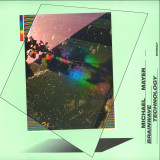
Michael Mayer’s latest EP, Brainwave Technology, comes at you purposeful, stealthy and sly. It’s a glorious left turn for the redoubtable producer, one that sees his typically lean and lithe productions buffed to a metallic, futurist sheen. There’s a gleam in the eyes of tracks like “Brainwave Technology” and “Alpha” that speaks of serious fun, of the intersection of the pleasure zone and the frontal lobe.
“Brainwave Technology” itself is informed by Mayer’s deep dive into the thorny terrain of artificial intelligence, transhumanism and posthumanism. Inspired by reading German philosopher Richard David Precht, Mayer found himself heading down the “proverbial rabbit hole,” as he describes it, “watching hours of YouTube material by self-proclaimed prophets of these ‘inevitable’ changes to come.” Never one to be taken in by the egotist’s dance, Mayer’s cynicism about the whole endeavour is tempered, a little, by the deeper questions that these figures gesture towards: “Is it really an evolutionary step that man and machine become one? Or is it rather a marketing plot by Silicon Valley billionaires?”
On “Brainwave Technology”, Mayer plays the charlatans at their own game, turning their logic against them by exposing the fruitiness of their ‘visions’. “I chose irony as my sword with which I chopped off some quotes from some of those batshit crazy prophets and self-promoters,” he explains of the drooling psychobabble he drops in the track’s lacuna. There’s a sense of humour here – how could you not laugh at these hungover egotists? – but there’s levity too, a sense that Mayer’s using sound to expose the contradictions and double-speak at the heart of these half-formed ideas. It’s a Burroughsian tactic, to slice into the heart of the voice to see what hidden truths surface.
It was Burroughs, too, who once said that “when you cut into the past, the future leaks out”; Brainwave Technology cuts into the logic of the futurologist to leak out the messiness of modern reality. On “Alpha” and “Gamma”, Mayer seems to conjure up the stark, ominous music that’d soundtrack a science fiction reinterpretation – or preinterpretation – of our modern malaise, all funereal wreaths of electronic noise and clatterboxing beats. As the EP resolves with “Device For The Young At Heart”, Mayer’s questions are piling up: “Do we want to become immortal and live on as a download? Do we really give up on Earth and put all our effort into colonising Mars?” There are no answers, of course, but plenty of imaginings-to-be. Brainwave Technology soundtracks both dystopian and utopian possibilities of what could come next.
This very one Lost Boy from Brazil washed ashore the Lowlands' 'Finis Terrae', a produce of first-generation 'Shock Doctrine' and a real 'carioca' borne on the New World's 'Bossa Nova' and 'Esplendor Geometrico' of old 'Ancien Regime' para-military junta hat delivers quite some maximally dark and manic minimal wave of late, at times even slightly reminiscent of Siouxsie and the Banshees and of Joy Division, and all sung through old and charming, slightly dissonant 'Samba' melody lines vaguely hailing from certain sinister up-hill 'Cicade de Deus' margins of a distinctly distant 'Vagamundo' Purgatory past in either the Portuguese, the English or the Spanish tongues, rendering the paranoia 'facsimile in Limbo' of the coming Futurist Global Orderly State, this deep-state 'Novo Estado Novo' within the current 'Nova Bossa Nova', this 'Guerra Nova Prometheida por uma Terra Nova Prometida', the World's Electronic New Wave 'Fado' of Digital Panopticon and similar forms of purely A.I.-bot-generated (nothing personal!) Totalitarian Torture 'Technique du coup d'Etat' in genuine random numbers as already foreseen and shown to all some long time before in the Magic Green on that 'Funky Dollar Bill', 'Novus Ordo Seclorum'... Mastered by Guy Tavares
Cryovac Recordings recognizes and recruits artists with individualism and creativity to add to its list of collaborators. Cryovac has evolved into a project that is brought to life by craftsmen, musicians and visual artists that give their time and effort for a common cause. Cryovac aims to weave a thread between the varying sonic approaches that describe a direction techno must go. A. García tends the cryovac from conception to press; combining with Mike Kretsch to create a unique minimal sound. Mr. Joshooa has the tools and know how to describe his personality as his work. He swims the Detroit techno-sphere wearing many hats, and is always pushing techno forward by any means necessary. Cryovac is a vehicle for the rebel spirit; we hope you listen to it.
The Cat Lover E.P. starts with Mr. Joshooa taking his time weaving a slow funky grind. “Horse Hockey’ is the name of this 4/4 two step that gallops and bangs its way through cinematic synth rises, heroic harmony, and crunchy to smooth samples. Mr. Joshooa's mischievousness is on full display with his second jam “fuck around”. Tumbling samples form a bop that is maneuvered playfully through a hectic arrangement. Side 2 is a. garcia and Mike Kretsch’s domain. Their first effort minimally clicks and rings into a soulful melody; popping rhythm holds your body to terra firma so your mind can “spacetravel”. B2 ,”meerkat”, opens with a raw kick on top of marmic synth evolving into a dramatic techno drive turning and shaking along a desolate road
Nick Lapien and Robin Koek's latest collaborative album, Days Bygone, helps launch Delsin's Interstellar Series as they continue to explore beyond the dancefloor trappings of conventional techno to create a body of work steeped in mystery. Although not totally devoid of percussion, Artefakt shift their focus away from dominant drums and lean on the keys and pads to map out the landscape each track traverses. Sometimes furtive and suggestive, elsewhere pearlescent and diffused across great expanses, it's these striking, sublime formations which define the atmosphere Lapien and Koek have created - a textured, dynamic exercise in techno as internalized listening music.
Justin Thurgur has been at the heart of the UK's World Music scene for over twenty years, primarily through his collaborations with the Afrobeat maestro Dele Sosimi (former keyboardist for both Fela and Femi Kuti) and with the pianist Kishon Khan. Most recently in Khan's projects Lokkhi Terra and the Afrobeat/Cuban crossover, Cubafrobeat.
Thurgur has worked with Cuban giants Giraldo Piloto, Changuito and Julito Padron, with the Nigerian drum legend Tony Allen and with Damon Albarn's Africa Express project; which included Cheick Tidiane-Seck and Fatoumata Diawara. He's also worked with the likes of Bukky Leo, Francis Fuster, Pandit Dinesh, Baby Akhtar, Inemo, Tony Kofi, Kodjovi Kush, The Soothsayers, The Levellers and The Selecter.
He is perhaps most known as the trombonist from the multi-award winning 'folk' group Bellowhead. Their split in 2016 led to him forming his own band and releasing his debut album as a bandleader, 'No Confusion'.
The album features original compositions written by Thurgur in collaboration with double bassist Max De Wardener, piano/rhodes/Hammond organ player Kishon Khan and guitarist Phil Dawson, with band members including the likes of Graeme Flowers on trumpet, James Allsopp on bass clarinet and Oreste Noda on congas.
Thurgur promoted 'No Confusion' throughout 2016 and 2017, culminating in an enthusiastically received performance at Love Supreme Jazz Festival in 2017. Jazz FM, in particular Chris Philips, gave extensive airplay to the album as well as streaming a live performance from the Jazz FM studios and doing an interview. They subsequently playlisted two of Thurgur's single releases. Lopa Kothari played a track on BBC Radio 3's show 'The World On 3'. The band did a live interview and performance on DJ Ritu's 'A World In London' show on Resonance FM. Beyond this Thurgur has been developing relationships with various other digital radio stations, including Gordon Wedderburn, John Waugh and a number of Global music stations based in Europe.
Angel Tears in Sunlight is Pauline Anna Strom's first album in over thirty years; an assemblage of music that refracts the expansiveness, and minutiae, of imagined realms while embracing the kaleidoscopic echoes of our distant epochs. The capacity to collapse time might elucidate the enigma of Pauline Anna Strom. A mystic force in music, emerging during the dawn of new age as the Trans-Millenia Consort, the pioneering synthesist channelled primordial energies into future-facing sound through a series of full-length releases between 1982 and 1988. Little was known about her, except by a constellation of devoted followers who saw a unique legacy forming amidst the (mostly male) synthesist canon of the time. Following the 2017 release of Trans-Millenia Music, an anthology revitalizing the most evocative parts of Strom's catalog, the Bay Area visionary sensed the universe telling her to return to music. As with her work in the 80s, Angel Tears in Sunlight was composed and recorded in the same San Francisco apartment where Strom has lived for almost four decades in synthesis with her machines and "dinosaurs." Populated by a compact array of modern instruments that streamline the sound of her analog past and her beloved iguanas, Little Soulstice and Ms Huff, the terrarium of her home forms an intimate yet limitless ecosystem that defies the constraints of the outside world. Within this sanctuary, Strom becomes lost in time, drawing on the ancient energies of her inner visions. Her hardware forms the crux of translating these ideas into sound. "It's the only way this stuff can be pulled out of myself, the universe, Little Soulstice, an ammonite_," Strom notes. "It couldn't be done without this machinery, because there's no other way to draw and capture these frequencies into sonic interpretation." Strom's process of recording transient live-takes enriches the mystery of her work. She renders the machinery a composer itself, a cohabitation with a living other. "Many musicians wouldn't go that far because of ego," Strom muses. "The equipment has to become part of you and your creativity. That's how I think it all comes together." Music-making becomes a harmonic language of intuition with an instrument, where Strom cultivates sound for a harvest that defies season. Shaped by circadian contours, Angel Tears in Sunlight is a celestial observatory of earthborn phonic mosaics. Strom uncovers a symbiosis between hardware frequencies and apparitions of nature in the record's arena of organic tones, emulating the melodic pulses of primeval terrain. The album transcends both shadow and light, falling to hushed stretches of sound as if not to awaken antediluvian animals, before soaring through the treetops where ancient skies peer over reptilian traffic and unsparing rains.
2022 Repress
Raster presents »Il Quadro di Troisi«, a project by Andrea Noce (Eva Geist) and Donato Scaramuzzi (Donato Dozzy). The record is a colorful ode of an Italian scented vision, overflowing of details and profound intensity. The contemporary world condition, the pandemic in Italy and around the world define »Il Quadro di Troisi« as a unique and right-on-time release.
This record is a enigmatic collaboration between the two Italian natives Andrea Noce and Donato Scaramuzzi. Andrea Noce takes lead on the vocals, with Donato Scaramuzzi carving the dreamlike soundscapes of the record. The record was born with a correspondence between the two artists about the late actor and director Massimo Troisi, and this exchange soon became an inspirational source of identification. Andrea Noce’s lyrics are sensitive and multi-faceted, they perfectly cling to the musical phrases and flow like a filmic monologue from the oeuvre of that very Troisi.
In a highly creative and confident manner, entire decades of national music history are comprehended and transformed into the here and now. The record takes its cue from the italo-disco, synth pop tradition corroborated by the contribution of artists such as the legendary Twilight Music co-founder, Paolo Micioni, as well as Stefano Di Trapani who wrote »L’ipotesi«. With »Il Quadro di Troisi«, Noce and Scaramuzzi prove their eclecticism, and passion for their home country.
»Il Quadro di Troisi« is a collaboration between Raster and the Milan-based festival Terraforma. With this release, the first with a purely Italian focus on the label, Raster celebrates its long standing relation with Italy and the Italian audience, encapsulated in the label's project ›Electric Campfire‹ held in Rome for ten years. Terraforma is an international experimental and sustainable music festival taking place since 2014 in the park of Villa Arconati, where Dozzy has been invited at every edition in different forms, DJing, live performing both in solo and with Voices from the Lake (together with Neel).
Fischgeist was recorded in a former water tank in Berlin-Prenzlauer Berg in August 2019. The nineteenth-century brick building consists of five layered circles, with a spiral staircase in the middle leading up to an exit to a hilltop. Inside, it’s humid and cold, the temperature always around 8–10 C°. The building’s acoustics produce a long reverberation that lasts up to 20 seconds.
‘One day between recording sessions, a man, a passerby, wanted to look inside the building. He told me that it used to be full of fish. For a second I imagined a huge round aquarium with loads of fish swimming around in circles. Then I realized that he meant dead fish were kept there, to be sold on markets during the GDR era. But the image of fish swimming in the space stayed with me.’
In conversation with the space of the water tank, Tomoko Sauvage searches beyond the limits of her self-invented ‘natural synthesizers’: porcelain and glass bowls, filled with water and amplified with hydrophones.
While she continues to develop some of the classic techniques heard on her previous album Musique Hydromantique (Shelter Press, 2017) – hydrophonic feedback (Kinetosis Study) and ‘fortune biscuits’ (porous pieces of terracotta that emit tiny singing bubbles) (Deluge) – here new elements are combined with delicate gestures to make curious noises: stroking bowls’ surfaces to imitate the voices of sea mammals (Metamorphosis), drawing dots and circles by rubbing stones against stones underwater (Exit) … The underwater amplification of quasi-inaudible sound is even more magnified in the air by the echo of the water tank. Not only tiny bubbles, but also micro-movements of the bones and veins of the hand holding the sonorous objects in the water, are intensely amplified – sounding like a tempest on the opening Deluge. Sauvage’s longtime research into hydrophonic feedback develops with her new obsession with natural harmonics and sympathetic resonance. In Flying Vessels, the percussive notes of struck bowls resonate and turn into feedback loops before decaying, fueled by electric signal gain. Kinetosis Study is a sonic etude on fluid dynamics – the flow velocity, pressure and density of manually shaped water waves directly controlling the aquatic synthesizer’s parameters.
August, when the mid-summer Ghost Festival is held, is traditionally known as the Ghost Month throughout East Asia. The spirits of the dead visit their living families, who welcome them with feasts, dancing and music. Miniature lantern-laden boats are released in rivers, to help lost ghosts find their way home.
Animated by formless matter – water, electricity, sound – Fischgeist celebrates a phantasmagoric journey, as the souls of aquatic lifeforms find their way out of the labyrinth of the water tank.
Credits
Composed, performed and mixed by Tomoko Sauvage
Recorded and produced by bohemian drips prior to ‘Speicher’ festival in Berlin, August 2019 (binaural recording with a KU-100 dummy head microphone)
Mastered by Andreas Kauffelt in Berlin
Cover drawings by Baien Mōri (1798-1851)
© Tomoko Sauvage and bohemian drips – all rights reserved
Videosphere, the debut album by Kompakt’s latest signing, the London-based artist Lake Turner (aka Andrew Halford), swoons into focus with “The Sunbird”, a teasing drift of lilting, ambient tones, riding out a submerged piston-pulse rhythm. Across its brief 109 seconds, it manages to traverse evocative terrain – something mythopoetic, something both humble and grandiose, a glimpse of the other behind the sky’s curtain. “I wanted to conjure up something resembling an ancient ceremony or death procession,” Turner nods. “Like a hymn to the surroundings of a faraway hill.” It’s both sky-bound and earthen, a ritual incantation to call in the music of the spheres.
Turner was introduced to the Kompakt family by his sometime collaborator Yannis Philippakis of Foals. He’d previously made music in post-punk and indie groups Great Eskimo Hoax and Trophy Wife, but Videosphere is the first time he’s fully articulated his own vision of electronic music, aside from one limited lathe-cut 12”, 2018’s Prime Mover EP, on Algebra. The lush ambient-disco-techno dreams of Videosphere were constructed and completed in his London studio and at his parents’ arable and sheep farm in Worcestershire, which might help explain the hazy, unhurried pastoralism of the album.
“There was a slight bittersweetness in finishing the record (in Worcestershire) as my parents were in the middle of selling my childhood home,” he sighs, before quipping, “on the plus, I ended up shearing a lot of sheep over the summer.” A student of archaeology and ancient history, Turner is no doubt carefully attuned to the twisting cogs of history and memory, and it’s no surprise that Videosphere has a nostalgic, melancholic cast; much of its beauty rests in the way it tugs, gently, at the heart strings – see the tear-stained cheeks of the lush, dappled “Honeycomb”, or the sweetly sad electro-roundelay of “No Way Back Forever.”
It’s not all drift-dream hypnosis, though – Videosphere is very much grounded in the now. ““No Way Back Forever” is a nod to the linear nature of time,” Turner explains by way of example, “and the tipping point of the world climate crisis that scientists have now declared.” Jayne Powell’s vocals are sent spinning through the song, wound like candyfloss; she takes centre stage on the techno hymnal title track, too. Throughout, there’s a sense of forward movement, despite the life stasis we find ourselves collectively bound by in mid-2020; there’s also a yearning for the communal, for community, that’s captured in the album title, a nod to an object Turner encountered at London’s Geoffrey Museum, “a television set in the shape of a spaceman’s helmet from the 1970s.”
“The vision I loosely had was to make an electronic record that had a communal warmth and almost ceremonial or ritual feel. I wanted to examine the relationship of our archaic minds in the trappings of the modern world,” Turner concludes. “What the Videosphere also symbolizes for me is the oneness of humanity and community, prevailing.”
Eröffnet wird "Videosphere", das Debütalbum von Kompakts jüngstem Signing, dem in London ansässigen Künstler Lake Turner (alias Andrew Halford), mit "The Sunbird" - einem herausfordernden Strom aus Ambient Sounds, die zu schweben scheinen, um sich dann in einen subtilen, maschinellen Rhythmus zu verwandeln. In gerade mal 109 Sekunden gelingt es dem Stück, ein gewaltiges Terrain abzuschreiten - etwas Mythopoetisches, bescheiden und grandios zugleich, gibt uns eine Ahnung davon, was sich hinter dem Himmel verbirgt. "Ich wollte etwas heraufbeschwören, das einer alten Zeremonie oder Totenprozession ähnelt", sagt Turner, "wie eine Hymne an die Umgebung eines weit entfernten Hügels." Himmlisch und irdisch zugleich, eine rituelle Beschwörung von Sphärenmusik.
Der Kompakt Label-Familie wurde Turner von dessen zeitweiligen Mitarbeiter Yannis Philippakis (Foals) vorgestellt. Zuvor hatte er in den Post Punk- und Indie-Bands Great Eskimo Hoax und Trophy Wife gespielt. Bis auf eine limitierte lathe-cut 12", der "Prime Mover EP" auf Algebra von 2018, artikuliert Turner mit "Videosphere" zum ersten Mal seine eigene Vision von elektronischer Musik.
Die üppigen Ambient-Disco-Techno-Träume von "Videosphere" hat Turner in seinem Londoner Studio und auf der Schaffarm seiner Eltern in Worcestershire produziert, was den nebulösen, gemächlichen und beinahe pastoralen Charakter des Albums erklären könnte.
"Es gab einen bittersüßen Moment als ich mit der Platte (in Worcestershire) fertig geworden war, da meine Eltern gerade dabei waren, das Haus meiner Kindheit zu verkaufen", seufzt er, bevor er witzelt, "das Positive war, dass ich im Laufe des Sommers eine Menge Schafe geschoren habe". Als Student der Archäologie und der Geschichte des Altertums ist Turner zweifellos mit den sich unaufhörlich drehenden Rädern der Geschichte und der daran geknüpften Erinnerungen vertraut, und es ist keine Überraschung, dass "Videosphere" einen nostalgischen, melancholischen Einschlag hat; viel von seiner Schönheit liegt in der Art und Weise, wie es einem sanft ans Herz geht - die Tränen benetzten Wangen von "Honeycomb" oder der ambivalente Elektro-Reigen von "No Way Back Forever".
Trotz allem hypnotischen Driften und Träumen - Videosphere ist sehr stark im Jetzt verankert. "`No Way Back Forever`ist eine Anspielung auf die lineare Natur der Zeit", erklärt Turner beispielhaft, "und auf den Wendepunkt der globalen Klimakrise, den Wissenschaftler gerade ausgerufen haben". Jayne Powells Gesang wirbelt dabei wie Zuckerwatte durch den Song und steht auch im Mittelpunkt des technoid hymnischen Titelstücks. Überall ist ein Gefühl der Vorwärtsbewegung zu spüren, trotz der Stagnation, in der wir uns Mitte 2020 kollektiv befinden; trotzdem existiert eine Sehnsucht nach dem Gemeinsamen, nach Gemeinschaft, die im Albumtitel eingefangen ist - eine Referenz an ein Objekt, dem Turner im Londoner Geoffrey-Museum begegnete, "ein Fernsehgerät in Form eines Raumfahrerhelms aus den 1970er Jahren".
„Die lose Vision, die ich hatte, bestand darin, eine elektronische Platte zu machen, die eine soziale Wärme und eine fast zeremonielle oder rituelle Atmosphäre ausstrahlt. Ich wollte die Beziehung unseres archaischen Geistes in den Fallstricken der modernen Welt untersuchen", so Turner abschließend. "Was `Videosphere` für mich auch symbolisiert, ist die Einheit von Menschlichkeit und Gemeinschaft, die am Ende obsiegt".
Triangulating a slinky signal to a square mile off the Swan River, Glowing Pin bring us ‘Pentagon Palette’, a master blast of frequency adjusted house, swamp stomp and chakra charmers from Australian newcomer Jonus Eric.
Though opening brace ‘The Cult’ and ‘Collect’ made first contact back in 2014, a loose connection between Perth and Hamburg hindered progress before ‘Mirrors’, ‘Emulator’ and ‘Waterfall’ walked across the web in 2019 to round out a dope debut release from this house auteur. Specialising in mind altering sound design and melodic flair, Jonus generates a neon swamp on ‘The Cult’, serving up a psychoactive roller caked in radioactive fuzz and insectile fizz. Thick bass swells and circular marimba make for a hypnotic rhythm, while a shapeshifting vocal and moody keyboard riff drag us back towards terra firma. The paradisiac refrain of ‘Collect’ soon sounds out through the jungle with a euphoric haze,
its sub-tickling bass and acid gurgle riding hyperactive drum programming as the track warps in the humidity. Soaked in serotonin and brisk at 137 BPM, ‘Mirrors’ burns off the mist to offer an airy update on the French Touch template. Though frazzled circuitry and dislocated vox serve this one with a twist, the chiming pianos and bouncy beat are still best enjoyed in a Golf GTI in the summertime. Jonus reaches for the lasers via the restless rhythm and rave sirens of ‘Emulator’, a fresh take on the funky house of the late nineties updated with unexpected breaks, squealing feedback and treated vocals usually found on a Four Set banger.
Next it’s off to the chillout room for ‘Waterfalls’, a fourth-world tone poem describing crystal caves, undiscovered wildlife and a holographic waterfall. Ditching the doof, and letting those colours tesselate, Jonus offers a +2 bump to your mana, before the post punk bassline, growling EBM vocal and off key organs of ‘YR Mind’ combine for a confrontational bonus track, only available in digital format.
Steve Von Till has charted an extraordinary musical path over the last several decades, from his main duties as singer and guitarist of the boundary-breaking Neurosis to the psychedelic music of his Harvestman project and the gothic Americana he's released under his own name. But No Wilderness Deep Enough is truly like nothing you've ever heard from him before—an album that's devastatingly beautiful and overwhelming in its scope, reminiscent of the tragic ecstasy of Nick Cave and the Bad Seeds' recent work as well as the borderless ambient music pioneered by Brian Eno, late composer Jóhann Jóhannsson's glacial compositions, and the electronic mutations of Coil.
FOR FANS OF : MARK LANEGAN/MICHAEL GIRA/NICK CAVE.
Over the course of recent time, an aching, growing void has developed where our normal way of life has resided. Uncertainty abounds, and Steve Von Till's No Wilderness Deep Enough provides a voice of existential wisdom and experience to offer comfort and perspective in an era of uncharted territory. These six pieces of music shape a hallucinatory landscape of sound that plumbs the depths of the natural world's mysteries and uncertainties—questions that have vexed humanity since the dawn of time asked anew amidst a backdrop that's as haunting as it is holistic.
Von Till’s fifth solo album is a swirling and iridescent blend of ambient, neo-classical, and gothic Americana that swan-dives into the darkness of modern life, with the resulting emergence a sonic document of rural psychedelia that transcends the physical world—towards a greater spiritual acceptance that connects naturalism, spiritualism, and the corporeal form.
With a foundation of simple melancholy piano chord progressions embellished with mellotron, cello, french horn and electronic treatments Von Till's scorched ache spreads across the terrain of No Wilderness Deep Enough like a brushfire, adding a tactile level to his sonic creation as well as an inviting level of friction to the burning beauty painted across the album's framework.
With a foundation of simple melancholy piano chord progressions that came to fruition during jetlagged nights in his wife’s childhood home in Germany, No Wilderness Deep Enough was further embellished with mellotron and electronic treatments in Von Till’s home studio in North Idaho. Viewing the emerging result as an ambient instrumental album, he consulted friend and engineer Randall Dunn (Marissa Nadler, Earth) about adding live cello and french horn and piano in a proper studio. After enlisting Brent Arnold on cello and Aaron Korn on french horn, he challenged Von Till to sing over the music and make it his next solo album—which is exactly what happened, with final work being completed at Tucker Martine’s (the Decemberists, Neko Case) Flora Recording and Playback in Portland.
The different seeds that have been planted throughout the life of Croatian Amor come to bloom on 'All In The Same Breath,' affirming an equilibrium that's all its own. Spiralling through the half-light electronics are gentle bumps and breaks that are layered into moments of elevation. A coarse edge remains just an arm's length away, but there is an unmistakable element of celebration throughout the album's 10 tracks. As the syncopated terrains ring out, their perpetual rhythmic motions call a medley of human voices that speak in security. They sing to everyone just as they sing to themselves. In the years since the seminal Croatian Amor album 'Love Means Taking Action' Loke Rahbek has strode a twofold path. There are the delicate, meditative compositions that he has made with Frederik Valentin; setting acoustic instrumentation against affecting digital treatments, each of their collaborative albums are an exercise in the magnificence of subtle restraint. And with the sharpest of turns you'll find Rahbek's parallel universe of rave-shocked rhythms and kinetic helixes that eddy through genre and tempo with few constraints. Collaborations with Varg²™ have yielded the wildest of this, and remain ongoing, yet the traces were already apparent across much of the previous Croatian Amor album 'Isa' with its treated vocalizations and cascading rhythmic mechanics. 'All In The Same Breath,' arrives as a steady handed synthesis of these divergent instincts. Elaborating the distinct techniques and themes that form the wistful essence of the project, the album's quiet composure is a sign that these familiarities have been set adrift to settle into their own private ecosystem.Small vessels travel in a perfect array. Light following shadows, following light. Every movement a signal, every second is camouflage. 'All In The Same Breath' is perhaps more than anything an invitation to be open to wonder.
Recorded mostly as a live-jam, august 2019, Il Sogno di Carmen is the result of a solitary producer meeting a nomad musician, Viscardi & Alano Santo. A brand new friendship. From there, the duo leads us to a spontaneous and fragile vacation story that yet manages to frame, with a sometimes mischievous accuracy, the current Genevan musical spirit : experimental, sincere, hybrid and hot. “I have no idea where this will lead us. But I have a definite feeling it will be a place both
wonderful and strange. Deep into summer, most definitely. The season of torrid bodies, of slowed down movements ; where melancholy creeps in the form of light and inconstant paragraphs, italian-style. Dragged around in hedonistic reunions, spiritual vagrancies and the soothing coolness of the Rhone river, Carmen is smooth and frivolous. She loosens up. Nothing is important. It can wait. Him too, you mainly. Geneva in the tropics, Bongo Joe on
the terrace, stolen emerald glances & air-conditioned airports. That's it. A wonderful and insignifiant story”.
new quartet by Samuel Rohrer, Max Loderbauer, Stian Westerhus & Tobias Freund In the present era of media saturation, the artist's dilemma has shifted away from the question whether to fuse disparate stylistic elements, towards the decision of which energies to draw upon: a situation most rewarding for those who listen to musicians navigating this limitless terrain. One such journey, the captivating full-length release from Samuel Rohrer's new Kave quartet coming out this May, is bringing together players who are equally well-versed in the quick-thinking mechanics of free group improvisation and the compositional strategies of contemplative / ‘ambient’ electronic music. With Rohrer acting as creative director and most of the quartet sharing synthesizer duties, there’s a strong sense of unified purpose to this set, and a narrative flow that never causes the listener to focus on one constituent part at the expense of the whole. At the same time, the players know all well that cohesion counts for little without those constituent parts being compelling in their own right. Rohrer and Loderbauer, for example, have previously crafted a unique techno-organic approach with the Ambiq trio, and the lessons learned from that partnership are put to inspired use within this new configuration. Stian Westerhus’ contributions on guitar and vocals, along with Tobias Freund’s electronic reinforcements - Freund also has worked since many years with Max Loderbauer as NSI - all conspire to make something that Rohrer aptly compares as “forest”-like. It’s a descriptor that will have vastly different meanings for each listener. For Rohrer, it refers to music that is confident in the “deep-rootedness” of its foundations and defined by a density and mystery easily confused with darkness, while nevertheless proving its bright vitRight away, on the introductory odyssey 'Cambium' the quartet sets out to make good on this metaphor, creating a hypnotic foundation for what is about to unfold during the next 42 minutes, with brooding, slow, 'searchlight in a fog,' synth washes and percussive stridulation. The twin 'Hibernation' tracks show all the unique elements beginning to coalesce: the emotional tenor is one of vulnerability that melts into the determination of 'staring into the void', a temperamental state challenging to represent authentically in music. The atmosphere of psychic challenge effort lessly gives way to the faintly nostalgic glimmers of 'Giant Peach' - a literary reference to the macabre whimsy of Roald Dahl. The ultimate dissolution of barriers between organicism and synthesis is accomplished on the majestic 'Divided We Fall', a title referring to Westerhus’ smoky vocalization that winds into a double helix formed from electronic surges. Again, the ease with which it all comes together is mesmerizing, and while there’s an aura of risk accompanying this walk through the woods, there’s a much more enduring impression of carefully orchestrated growth and change.
Ital Tek (a.k.a. Alan Myson) returns to Planet Mu with his sixth album ‘Outland‘. The album was written during a period of new beginnings following a move out of the city to a quieter space and the birth of his first child. During this time of self-imposed isolation Alan recorded a huge amount of source material and spent weeks and months sitting up at night with his newborn, listening back and making notes on how the new record should take form, focusing and developing ideas to shape this lean ten-track album.
Alan talks of the record being a collaboration between two parts of himself, something that definitely comes across as the album unfolds. Textures are something Alan excels at and on his last album, the largely beatless ‘Bodied’, it felt as if he was building a new sound-world. On ‘Outland’ he expands upon this. The album brings together the extremes of Alan's sound, contrasting roughened bass and beats with starker more detailed atmospheres and emotions.
The most beat-driven song here is ‘Deadhead’, with its gnarled bouncing bass, angular distorted melodies and cavernous textures. On tracks like ‘Bladed Terrain’ the contrasts are even more defined with buzzing drones and razor sharp drums plunging into a grainy fog, giving the track a dramatic 3D feel.
Then there are the stop-start pauses of ‘Leaving The Grid’, where the song evaporates into space before reemerging with shuddering rhythms and ghostly textures. Melodies crawl around these tracks as if they’re just waking up, as heard on the atmospheric ‘Angel In Ruin’.
The sleep-deprived fraying of the senses became Alan’s routine and one which he says gave him a renewed creative energy; half-asleep, working through the night, and then into the daytime super-focused but exhausted. Prone to audio hallucinations whilst writing the album, he aimed to capture these distortions in his perception of pitch and time, and you can hear these effects interpreted on tracks like ‘Endless’ and ‘Open Heart’ as melodies phase and slip out of time like an emotional Doppler effect.
This is also true of the soaring atonal synths at the peak of ‘Diamond Child’, which feel like the aural equivalent of eye floaters. These intuitive feelings and functions are a difficult thing to capture in sound, but Alan manages it beautifully and always makes the result feel warm and adventurous, heartfelt and epic.
Planning the imminent arrival of the 50th release on Touchin’ Bass, label boss Andrea Parker was digging through the warehouse during a stock take and it became apparent that there was something missing. There was a gap in the catalogue numbers. Where was TB036? Searching the archives it transpired that, for one reason or another (not least Parker’s inability to count), there actually wasn’t one.
So what better way to backfill this now documented gap than to welcome the multitalented guitarist and drummer, mathematician and multidisciplinary improviser Maria Gamboa Perez into the Touchin’ Bass fold with an updated focus for 2019.
Perez combines elements of rage, chaos, tension and anguish to form a visceral style. Her musical terrain and talent is shaped by dissonance and NO art. Under the moniker NonZero!, Perez brings Matrix Equation to the fore; a heavy 8 track EP with electro aesthetics from none other than Carl Finlow Scarletron/Silicon Scally/Voice Stealer.
Beginning her artistic career as a teenager playing as a bassist and guitarist in groups with influences from Noise, Avant Garde and the No-Wave, Perez was introduced into several areas of electronic music during the club culture years in Madrid and opted for styles such as Electro or Industrial, at which point she began to be interested in the introduction of rhythm boxes together with traditional drums.
Her passion for sound synthesis and musical exploration led Perez to introduce electronics into a solo project under the pseudonym NonZero!. Under this name she aims to make electronic music her field of sound research and for years has been continuously searching for existing relationships between sound and mathematics, focusing on the perceptual limit between music and noise.
Matrix Equation indulges in an evidential brooding angst, shifting between abstraction and the kind of elevated introspection carefully harvested over the years. With dramatic frontage in parts, blasts of boisterous energy and machine mayhem, its deployment of surprise, shifting focus and spontaneity operate in an assured statement.
Splintered beats and a foreboding sense of tension give way to a more DJ friendly logic of instinctive introductions and codas of gradual builds and breakdowns as Finlow further reworks the results to great effect.
- Nothing Is Safe
- He Dead (Feat. Ed Balloon)
- La Mala Ordina (With The Rita) (Feat. Elcamino & Benny The Butcher)
- Club Down (With Sarah Bernat)
- Run For Your Life (Feat. La Chat)
- The Show
- All In Your Head (Feat. Counterfeit Madison & Robyn Hood)
- Blood Of The Fang
- Story 7
- Attunement (With Pedestrian Deposit)
- Piano Burning
There Existed An Addiction To Blood" ist das insgesamt vierte Album von Clipping und ihr drittes für Sub Pop. Es ist der Nachfolger des von Kritikern und Publikum gleichermaßen gefeiertes Album ,Splendor And Misery" aus dem Jahr 2016. ,There Existed An Addiction To Blood" enthält die Singles ,Nothing Is Safe", ,Blood Of The Fang" und ,La Mala Ordina" (Feat. Benny The Butcher, Elcamino, The Rita), die von Clipping produziert, von Steve Kaplan gemischt und von Dave Cooley bei Elysium Masters in Los Angeles gemastert wurden. Das Album enthält auch Gastbeiträge von Ed Balloon, La Chat, Counterfeit Madison und Pedestrian Deposit. ,There Existed An Addiction To Blood" ist Clippings Interpretation eines neuen Rap-Splitter-Genres unter Zuhilfenahme ihrer einzigartigen Lupe. Clipping wenden sich auf dem neuen Werk intensiv dem Horrorcore zu, eines bewusst absurden und kreativ bedeutsamen Subgenres, das Mitte der 90er Jahre blühte. Einige der bemerkenswertesten Pioniere hießen Brotha Lynch Hung und Gravediggaz, aber es umfasst auch bahnbrechende Werke der Geto Boys, Bone Thugs-N-Harmony und die nahezu vollständigen Veröffentlichungen des klassischen ,Memphis cassette tape rap". Der wahrscheinlich subversivste und experimentellste Rap hat sich oft als ,Alternative" zu konventionellen Sounds präsentiert, aber Clipping verzerren das Ganze respektvoll in neue Konstellationen. ,There Existed An Addiction To Blood" absorbiert die hyper-gewaltigen Horror-Symboliken der Murder Dog-Ära, stellt sie aber in einem neuen Licht dar: immer noch dunkel getönt und düster, aber in einem seltsameren und lebendigeren Farbton. Wenn der traditionelle Horrorcore mit ,Blacula", dem populären Blaxploitationsfilm-Klassiker aus den frühen 70er Jahren, verwandt war, so ist das neue Output von Clipping analog zu ,Ganja & Hess", dem blutrünstigen Kultklassiker von 1973, der als unbesungenes Wahrzeichen des schwarzen Independent-Kinos gilt, dessen Score von Sam Waymon, Clipping als Inspiration zum Titel des Albums diente und auch Samples auf dem Track ,Blood Of The Fang" lieferte.ENG The science-fiction visionary Octavia Butler once declared that "there is nothing new under the sun, but there are new suns." The aphorism could apply to any art form where the basic contours are fixed, but the appetite for innovation remains infinite. Enter Clipping, flash fiction genre masters in a hip-hop world firmly rooted in memoir. If first person confessionals historically reign, the mid-city Los Angeles trio of rapper Daveed Diggs and producers William Hutson and Jonathan Snipes have spent the last half-decade terraforming their own patch of soil, replete with conceptual labyrinths and industrial chaos. They have conjured a mutant emanation of the future, built at odd angles atop the hallowed foundation of the past. Their third album for Sub Pop, There Existed an Addiction to Blood, finds them interpreting another rap splinter sect through their singular lens. This is Clipping's transmutation of horrorcore, a purposefully absurdist sub-genre that flourished in the mid-90s. If some of its most notable pioneers included Brotha Lynch Hung and Gravediggaz, it also encompasses seminal works from the Geto Boys, Bone Thugs-N-Harmony, and the near-entirety of classic Memphis cassette tape rap. The most subversive and experimental rap has often presented itself as an "alternative" to conventional sounds, but Clipping respectfully warp them into new constellations. There Existed an Addiction to Blood absorbs the hyper-violent horror tropes of the Murder Dog era, but re-imagines them in a new light: still darkly-tinted and somber, but in a weirder and more vivid hue. The album contains interludes with hissing recordings of demonic invasions, and guest appearances from Griselda Gang's Benny the Butcher and Hypnotize Minds horror queen La Chat. Other tracks feature contributions from noise music legends The Rita and Pedestrian Deposit. It all ends with "Piano Burning," a performance of a piece written by the avant-garde composer Annea Lockwood. Yes, it is the sound of a piano burning. There Existed an Addiction to Blood fits neatly into the broader scope of the band's career, which has seen them expand from insular experimentalists into globally recognized artists. Since the release of their first album in 2013, Diggs has won a Tony and a Grammy (both for his acting/rapping work as Thomas Jefferson and Marquis de Lafayette in Hamilton), as well as co-written and starred in 2018's critically hailed Blindspotting, while Snipes and Hutson have scored numerous films and television shows. Clipping's last album, the 2016 afro-futurist dystopian space opus Splendor & Misery was recently named one of Pitchfork's Best Industrial Albums of All-Time. Commissioned for an episode of This American Life, their 2017 single "The Deep" became the inspiration for a novel of the same name, written by Rivers Solomon and published by Saga Press. But their latest masterwork embodies what the band had been building towards - a work that finds them without peer. This is experimental hip-hop built to bang in a post-apocalyptic club bursting with radiation. It's horrorcore that soaks up past blood and replants it into a different organism, undead but dangerously alive. It is a new sun, blindingly bright and built to burn your retinas.
With its fourth catalogue number, Steinlach returns to the vinyl format with a remix EP. On board are international friends of the label, who layed hands on Wice's originals with outstanding re- interpretations. While the A-side contains two groovy and club-oriented remixes of "Just kiddin", the trippy flipside focuses on the second outcome of the label and refers to the two pieces "Absent" and "Hertz".
The record opens with a fast-paced and jacking "Just Kiddin" version by Deep'a and Biri. The two guys from Tel Aviv re-interprate the clubby aspect of the piece, furnish it with a portion of percussions and accompany it with a volatile beat. Discharging the track with a big bang, they're leaving the listener with no chance but to move energetically to the groove patterns while cherishing the original lead melody.
Just like Deep'a and Biri, Jon Hester bets on the energy and the recognition value of the original synth line. As typical for Jon, he gives a more Chicago-style housey and bouncy touch to the composition. The lead is getting chopped, re-interpreted and re-arranged into a new groove and melody pattern, sure to inspire the floor to shake and to catapult everyone around into a frisky dancing mood. Suddenly, the well-known arpeggio of the original comes in and makes for the climax of this brilliant remix.
With side B, the club aspect of the record might not be left behind, but moved into more stripped and trippy terrains. The B1 track is fashioned as a ruthless "Absent" version, unmistakably having Refracted's writing all over it. The smallest variations of the synth line, drones, and pads, without resorting to typical drum rack aspects, find their way deep inside the listener's head, and draw them into their subtle rhythm. The unapologetic roughness of the interpretation is striking and makes it a brilliant peaktime weapon.
Rounding up the whole EP, the last remix of the record is a wonderful re-interpretation by the talented Australian that is Mosam Howieson. He ministered to Wice's personal favourite piece and crafted a loving and deep version of "Hertz", which translates the magic of the original into own words and emotions, adds a subtle groove to it, then invites to listen more carefully. One quickly dives into a hopeful world in which a certain magic seems to be present, and where everything seems to be alright. Be it as a perfect last piece after a long fulfilling evening, or as the outstanding means to make the sun rise in the morning-Mosam's interpretation sure hits the spot.
Special thanks go out to our close friends Simon Sandleitner who is always in charge of the great artworks and Roger Reuter (Roger23) for having always an open ear, his helpful advises and his thought-out criticism.
The Summer sun is shining. New possibilities and a new signing for FireScope. Miles Atmospheric aka Miles Sagnia is a U.K. producer whose absorbing compositions have garnered him with releases on A.R.T., Finale Sessions and his own Atmospheric Existence Recordings.
Four works make up Sky Healer. As with all Miles Atmospheric’s productions, there is a liberated and untethered touch to the entire quartet. From a steady kick and rusted clank, “Exoplanetology” sets sail. The track soars on rising strings, muffled samples feeding back indecipherable messages to terra firma. Bright bars introduce “Our Future”, notes shimmering in their radiance as dew drop splashes of percussion form. Xylophonic keys, energetic drums and silken tones coalesce to create the aquatic journey that is the “Waters of Life” before “See The Light.” Snapping drums from the bedrock from which a plethora of tones and textures grow. Sweetened lines ascend to bring perfect balance to this superb finale.
With Sky Healer, Miles Atmospheric accomplishes a very difficult feat. Not only has the British musician produced a body of techno that is organic and unencumbered but also, he has sculpted soundscapes to escape to.
Always one to explore, Shipwrec have set sail and discovered a new isle of musical experimentation. Phainomena is a terrain for ambient introspection, dream-filled drone and stunning soundscapes. An old friend returns to the fold to inaugurate this venture, Julian Edwardes. Seven works of abstract immersion coalesce to create "Consonance." The Dutch artist journeys into far-flung realms and worlds, sweet silken synthlines and juddering noise being his transportation tools of choice. Off-centre echo and muted delay swirl in these audio planets. Mountains, oceans, unending skies are conjured as notes bulge, expand and disperse. Wildlife buzzes, chirps and trills in this land of sonic undulations, plants are given musical form with modulated ruffles as bleeps of cloud scud across an expanse of frequencies. An album of brilliant brightness, shifting shapes and unearthed undercurrents where expression is as ephemeral as it is eternal, a sentiment captured in Rob van Hoesel's sublime cover work.
A journey that has flourished from Florence, Italy to the UK capital of London via Ibiza, Italian duo Neverdogs’ ascent and journey into the global spotlight is one deeply rooted in talent and passion. As a duo, Tommy Paone and Marco De Gregorio have gone on to release material on the likes of Roush and Deeperfect, played at renowned festivals such as The BPM Festival, and made regular appearances at Marco Carola’s highly-coveted Music On where they have been core residents since 2013. Having founded Bamboleo Records earlier this year, the label’s third release will see the arrival of the duo’s most diverse work to date as they reveal their debut album: ‘Details’.
“We always wanted to prepare an album that would represent us. Besides having twenty years of experience, musical and artistic backgrounds we have been studying for months, listening to old vinyl records from our collection, paying attention to the work of other artists from the industry whilst taking inspiration from 80's bands such as Yazoo and Depeche Mode, and from the contemporary underground and pop worlds. This allowed us to understand what direction to take when creating our own sound. All the sounds of our tracks are made with analogue instrumentation.
We decided to call our first album ‘Details’ as it encapsulates what this series is all about. We were paying particular attention to the details whilst creating all the tracks. We collaborated with the musician Davide Ruberto aka Fortyseven and the singer Spencer Kennedy, son of the former drummer of Imagination (English band from the 80's). We are also working on an Album Tour which will be released following this one.” - Neverdogs
First up on this limited album sampler, ‘Details’, drives right into the trademark Neverdogs sound as the duo weave together precise drum patterns effortlessly with rumbling sub bass. Next, the stripped back ‘Dance Moves’ couples elastic synthlines and galactic glitches with panning sweeps and crisp hats.
The flip side delves deeper, as ‘Duck From Mars’ reveals slick organic percussion arrangements and bubbling lead lines, whilst ‘Volca’ ups the tempo and edges towards the peak time, a flow fans of the pairing will be familiar with, as perfectly demonstrated year in year out when playing on Amnesia’s iconic terrace.
serenitatem, the fifteenth installment of FRKWYS, RVNG Intl.'s collaboration series pairing intergenerational artists in creative conversation, joins Visible Cloaks with Yoshio Ojima and Satsuki Shibano, two trailblazers of the Japanese avantgarde music and visual arts scenes of the 1980s and 90s.
Yoshio Ojima began his career as a composer of environmental and ambient music, with a particular interest, and optimism, in the possibilities of generative software. His compositional pursuit of human synthesis with computerized forms was realized in its fullest potential alongside Satsuki Shibano, a pianist renowned for her interpretations of Erik Satie and Claude Debussy. Together, they were among a handful of influential Japanese artists whose innovations still resonate, if not more vibrantly than ever, well beyond the tightly-knit scene's original core. In the early 90s, Ojima was among the programmers of the influential satellite radio experiment St. Giga, a constantly-evolving sonic landscape that combined field recordings and sound collage with occasional readings of Japanese poetry. Satsuki was a regular reader for the station. This musical terrarium bloomed out of sight in a small Tokyo studio, a greenhouse of sound with no set start or finish time that audiences could tune into, absorb, and immerse.
The perpetual flow state of St. Giga — recordings of which Ojima shared with Visible Cloaks — would be highly influential to serenitatem's constitution. As Visible Cloaks, the Portland, Oregon duo of Spencer Doran and Ryan Carlile have developed their own set of creative strategies that form an aesthetic fuse point between human intention, aleatoric composition, and improvisation.
These are notions most recently reflected in 2017's Reassemblage and Lex, a respective album and EP in which the duo combined generative software and virtual representations of global instruments into lacy, interlocking patterns. Long time admirers of Ojima's work on albums like 1988's Une Collection Des Chainons, Doran and Carlile discovered after an online introduction that they shared with Yoshio and Satsuki an abiding interest in pre-classical composers, the Lovely Music, Ltd. label, and the British avant-garde, as well as a mutual respect for one another's techniques and processes.
The four musicians met in Tokyo, Japan at Sounduno Studios in December 2017, at the tail end of Visible Cloaks' first Japanese tour, to commence work on serenitatem. Leading up to the studio sessions, Doran and Carlile sent Ojima processed sound sketches recorded while on a European tour, which Yoshio would add to and return. Visible Cloaks would then fold Yoshio's edits back into the original compositions, which Doran and Carlile brought to the exploratory recording session. During that week together in Tokyo, the quartet made use of a number of creative strategies — 'echoing sound together,' as Yoshio puts it. Among the strategies, MIDI randomization gave the quartet melodic lines and what Doran calls 'randomized clouds,' or 'tightly grouped notes that become smeared tonal clusters functioning more like chords in themselves.' Carlile would also feed Ojima and Satsuki's text into Wotja, a generative music software which produced a MIDI language around which the quartet expanded their compositions.
'The aim,' Doran says of serenitatem, 'was to make a work that was not specifically ambient (or environmental), but something more multi-hued, weaving these deconstructive concepts into an album that has a deeper architecture underpinning it.' Accordingly, serenitatem is a marvelously sharp record, its sutures between human and machine virtually impossible to find but suggested everywhere you turn. The collaboration among Ojima, Satsuki, and Visible Cloaks is both musically and conceptually inseparable from the technology that made it possible. Throughout the album, Shibano's playing resonates like Satie's, her rhythms cascading like drops from leaves an hour after the rain. Overtones are stretched and warped like modeling clay, then spun around and shown off from multiple angles.
A single soaring note might seem to be suddenly plunged underwater, its richness of sound made shallow and its sharp edges blunted. Pittering chimes and rapidly warping vocal samples hang in the luxuriously glossy space, water trickles from ear-toear, familiar melodies rise from nothing and dissolve before they can be traced. With the depth of its emotional charge, serenitatem burns away the easy cynicism of the day, presenting itself as the kind of delocalized work of art the internet promised us decades ago — a synthesis of artistic visions, technological sophistication, futurist ambition, and, occasionally, ancient polyphony. Listening to it can feel a bit like tuning in to a 21st Century version of St. Giga: It's a place where the future still grows.
Visible Cloaks, Yoshio Ojima, and Satsuki Shibano's serenitatem, FRKWYS Vol. 15, will be available across LP, CD, and digital formats on April 5, 2019. The quartet will perform select live shows throughout 2019.
Fresh off their latest VA, The Press Group hand the reins over to up-and-coming Ukrainian producer Sasha Zlykh, here delivering his debut 12" effort. Clocking in with a quartet of club-oriented weapons and off-road house-y pumpers that shall bring dancefloors to a slow but steady simmer, the Kyiv-based producer blends in an avalanche of breaks-strewn rhythms, bleepy melodies and reshuffled UK bass patterns to create his own distinctive hybrids, halfway straight dance functionality and non-formulaic experimentality.
As playful in essence as it is serious in its execution, 'Lie To Your Mom' EP starts off with the title-cut, which works a wonky swagger that proves all the more infectious as bars fly by. Engineering a finely-woven mix of off-kilter drum programming, raucous analogue belches and volatile harp stabs distorted to the max, the track's shadowy intro is eventually offset by overlapping tides of luminous pads, released as one lets the light break through a vampire den. 'RnB Ritual' follows up close in the vein, meshing a brooding late-night-ish atmosphere with playful percussive mechs and sustained rhythmic accidents.
Flip sides and you'll be treated to a choice pair of remixes from in-house groove traders Rupert Marnie and Youthman. First in line, Marnie turns 'Lie To Your Mum' into a straight jacking and shuffling Chicagoan chugger. Going deeper into soulful terrains and lavishly-textured expanses, TPG's main operator exploits the whole melodic potential of Zlykh's original, bringing its anthemic power to further completion beautifully. More on the dubby end of things, Youthman adds his uniquely vibey touch to the main cut, deftly navigating betwixt a classic deep house kinda vibe, post-rave'y electronics and a Basic Channel-esque sound spectrum, which all in all should have people instinctively clapping their hands as their mind begins to sink into a weirdly introspective sense of euphoria.