Siren Selector launches its mixtape series with a companion release to Remy Solar’s - ‘Heavy Terrain’ cassette.
“Jamaican music grows in rings like an old tree. From a core of early riddims, the genius of Studio One, versions of original basslines and melodies evolve over time New releases of the same tune follow each other through the 70s, 80s, 90s, into this millennium. Generations of the same family. And then there’s the unreleased versions, the frontier dubs built strictly for sound systems, held close by those who got them and only gradually circulated into the wider audience of selectors and collectors. These are the ones where the bass is heavier, the echoes more mind- bending, the effects wilder and the drums harder. Older sound followers tell stories of how these dubs defined dances, flattened opponents in clashes, inspired a dozen rewinds. Younger followers remember these tales and pass them down. These dubs are folklore.
Who knows how many such versions there are in the vast worldwide archives of Jamaican music? Not me. But as a little taster of a lifetime’s musical journey you can open your ears right now to a few moments: Lacksley’s Castell’s “Unkind”, transported from the sprightly riddim which underpinned it on his Princess Lady album and reengineered into a thunderous version of Ras Michael’s None A Jah Jah Children; “Deceivers” by the Heptones, stripped back into something simultaneously ethereal and bathyspheric; Keith Hudson’s “I’m No Fool” emerging from a pressure cooker of bass and drum; Jah Lloyd’s “Black Moses”, busting down walls with its epic echo and siren opening.
I started collecting these dubs in the late 90s. We were going to Shaka at the Rocket, Aba Shanti in the Arches, then Imperial Gardens. Entebbe somewhere off Mare Street. Iration Steppas in Kingsland Road, Jah Tubby’s in the Rec. We were doing our own parties at the time in east London, Bohemia Place, then Trenz, Dungeons, the old social services office by London Fields. Building up a sound, taking it on the road, crew sitting on the speaker boxes in the back of a Mercedes 508. Under the stars or in warehouses with sweat dripping from the ceiling, lugging crates and amps across fields or up flights of stairs, stringing up boxes under bridges, in car parks or on roundabouts. Waiting for the moment to drop the dubs.
This tape is dedicated to my crew and all the music providers and anyone who also knew or wants to know these moments.“
Fifty Physical Copies - 60 mins - No digital
Поиск:terra wan
Все
- A1: Les Masques - Il Faut Tenir (1969)
- A2: Isabelle Aubret - Casa Forte (1971)
- A3: Christianne Legrand - Hlm Et Ciné Roman (1972)
- A4: Jean Constantin - Pas Tant D'chichi Ponpon (1972)
- A5: Billy Nencioli & Baden Powell - Si Rien Ne Va (1969)
- B1-: Marpessa Dawn - Le Petit Cuica (1963)
- B2: Jean-Pierre Sabar - Vai Vai (1974)
- B3: Sophia Loren - De Jour En Jour (1963)
- B4: Isabelle - Jusqu’à La Tombée Du Jour (1969)
- B5: Sylvia Fels - Corto Maltesse (1974)
- C1: Frank Gérard - Comme Une Samba (1972)
- C2: Ann Sorel - La Poupée Des Favellas (1971)
- C3: Charles Level - Un Enfant Café Au Lait (1971)
- C4: Andrea Parisy - Les Mains Qui Font Du Bien (1970)
- C5: Audrey Arno - Quand Jean-Paul Rentrera (1969)
- C6: Aldo Frank - T’as Vu Ce Printemps (1970)
- D1: Christianne Legrand - Cent Mille Poissons Dans Ton Filet (1972)
- D2: Clarinha - Lemenja (1970)
- D3: Hit Parade Des Enfants - Aquarela (1976)
- D4: Jean-Pierre Lang - Tendresse (1965)
- D5: Magalie Noël - Une Énorme Samba (1970)
- D6: Françoise Legrand - La Lune
Ever since the late 1950s bossa-nova revolution, Brazil’s influence on French music has been undeniable. Pierre Barouh, Georges Moustaki and a vast array of lesser known artists, all made the Musica Popular Brasileira (MPB) an axis of promotion at the service of a cool and metaphysical, modern and mixed Brazilian lifestyle. Some were seduced by the poetic languors of the bossa, some were looking for fun, and others just loved the American hybridization of jazz-bossa, jazz-samba.
What is bossa nova? One of its creators, Joao Gilberto said: "Its style, cadence, everything is samba. At the very start, we didn't call it bossa nova, we sang a little samba made up of a single note - Samba de uma nota so .... The discussion around the origins of bossa nova is therefore useless”. It is nevertheless useful to remember that these magnificent Brazilian songs, which the guitarist describes as samba, were shifted and balanced around improbable chords. "I like things that lean, the in-betweens that limp with grace," said Pierre Barrouh, quoting Jean Cocteau.
With emotion, arrangements for violin and supple guitar licks, bossa nova rapidly changed. A transformation that can be heard in the Tchic, tchic, French Bossa Nova 1963-1974 compilation, the result of a cultural reappropriation, which traveled through the United States and supplemented itself in France.
A musical revolution that has remained significant, bossa nova was born in Rio. From 1956 to 1961, Brazil lived through its golden years. In five years, the country had invented its modernist style. Elected president in 1956, Juscelino Kubitschek de Oliveira, an elegant man with a broad forehead, brandished a promising slogan: "Fifty years of progress in five years". He quickly got to work. Not worried about increasing debt, he launched the project for a new federal capital, Brasilia, designed by the communist architect Oscar Niemeyer. Volkswagen opened state-of-the-art factories and created the “fusquinha”, the Beetle. In Rio, the Vespa made its first appearance. The Arpoador Surf Club crew run into the “girl” from Ipanema, Helô Pinheiro - the tanned garota ("chick"), between a flower and mermaid, who at 17 walked by the Veloso bar, where the fiery author and composer, Tom Jobim and Vinicius de Moraes, were getting drunk on whiskey. From then on, bossa symbolized cool.
In 1958, Joao Gilberto recorded Chega de Saudade, which the directors of Philips denied, calling it "music for fagots". The marketing director, who believed in it, secretly pressed 3000 78-inch vinyls and distributed them at schools around Rio, creating a tidal wave.
American jazzmen then took over. In particular, trumpeter Dizzy Gillespie and guitarist Charlie Byrd. In November 1962, the Brazilian Ministry of Foreign Affairs funded a "Bossa-Nova" concert at Carnegie Hall in New York, inviting the genre’s pioneers. Unprepared, the show soon turned to disaster. But the troupe was invited to the White House by Jackie Kennedy. The first lady loved "the new beat" and in particular Maria Ninguem, a song by Carlos Lyra, later covered by Brigitte Bardot.
In Brazil, the 1964 military coup quickly ended this euphoria. The destructive atmosphere that ensued pushed many Brazilian musicians to leave, if not to exile. Thus, Tom Jobim, Sergio Mendes and Joao Gilberto arrived to the United States. In New York, Joao Gilberto met saxophonist Stan Getz. At the time, he was married to the Bahianese Astrud Weinert Gilberto, who had a German father. She had never sung before, but she knew how to speak English. Getz therefore asked her to replace her husband on The Girl From Ipanema. The Getz/Gilberto record with Tom Jobim on piano, was released in March 1964. Phil Ramone, the "pope of pop" was in charge of sound.
Bossa nova arrived in Paris through the classic “guitar-voice” channel (Pierre Barouh, Baden Powell, Moustaki…) But France loved jazz and Paris had already welcomed its American contributors. All these good people were to pass through Saint-Germain-des-Prés. The cabaret l'Escale became the Mecca of Latin American sound where one could find Pierre Barrouh and his friends, such as the Camara Trio, samba-jazz aces, whose only record was published by the Saravah label. With a band strangely called Les Masques (a band that included Nicole Croisille and Pierre Vassiliu, among others), the Camara Trio recorded an interesting Brazilian Sound, including the track Il faut tenir which is present on this tasty compilation of rarities.
Other enlightened musicians can also be found on the compilation, such as Jean-Pierre Sabar (songwriter for Hardy, Auffray, Leforestier ...) and the French pop rock organist Balthazar. In 1975, Sabar recorded Aurinkoinen Musiikkimatka on a Finnish label, which featured the crazy Vai, Vai, included on this record. We are now following the footsteps of Brazilian electronic musicians such as Sergio Mendes, Eumir Deodato or Marcos Valle who created funk and disco sounds on their keyboards and synthesizers. A style that influenced Véronique Sanson when she wrote Jusqu’à la Tombée de la nuit in 1969 for Isabelle de Funès, the niece of Louis and a great friend of Michel Berger - Sanson did end up singing this track on her 1992 Sans Regret record.
The pinnacle of exoticism and travel, Sylvia Fels’ Corto Maltese includes bongos, sea mist and ocean sounds. The title was taken from Jacky Chalard’s concept album written in 1974, Je suis vivant, mais j’ai peur (I am alive, but I am scared), based on Gilbert Deflez’s science fiction novel.
However, bossa nova extended the scope of popularity. "In the 1970s, I was a fan of Sergio Mendes, Getz / Gilberto. I fell in love with this music that I knew because I had been an orchestral singer, " explained Isabelle Aubret, who in 1971 delivered a composite record of covers by the very funky Jorge Ben, Orfeu Negro, Tom Jobim, Vinicius de Morais and Jean Ferrat. "I recorded this album for Meys Records in Paris, far from Brazil, with wonderful musicians, François Raubert, Roland Vincent, Alain Goraguer...". The latter wrote the arrangements for Casa Forte, a very percussive title borrowed from Edu Lobo, one of the initiators of the bossa who spent time in California. "Jazz and bossa came together and produced very rhythmic music. I love singing, it allows me to dream, to have fun, to feel a high on stage, and these songs brought me joy, made me swing, my singing felt like a dance.”
The world tours of French singers and their desire for the tropics, often brought them to Rio with its hills, forests, caipirinhas and tanned bodies. There are surprises though, like this Iemenja (Iemenja is the goddess of the sea in the Afro-Brazilian candomblé religion). Not unlike the composer and musician Jean-Pierre Lang, based in Sao Paulo, Claire Chevalier taught Brazil to Brazil. In 1970, the singer and painter published a 45-inch vinyl, Mon mari et mes amants (My husband and my lovers), under the improbable pseudonym of Clarinha (little Claire). She was then living in Rio, with her husband, Joël Leibovitz, who founded a band called Azimuth, and who owned a record label specialized in "sambas enredos" songs for samba school parades.
For its B side, she asked Pierre Perret to come up with lyrics for a song composed by Carlos Imperial: "Oh goddess of the sea, o goddess Iemenja, I bring a white rose to adorn your long hair ..." . "Perret came to see us, and we had fun, remembers Joël Leibovitz. We wrote Lemenja for fun, we recorded it at the Havaí studio, behind the Central do Brasil the central station. Erlon Chaves, the arranger who worked with Elis Regina, joined us" adding his share of Afro-Brazilian percussions and funky brass to the mix.
There is a common misunderstanding in Franco-Brazilian history: that bossa, admittedly hedonistic, is perceived as funny, even though the poets who wrote the texts are often philosophizing on the human condition. Its French interpreters pull it towards a carnival inspired universe, far removed from its fundamental essence. Thus, Jean Constantin covered the famous Samba da minha terra, an ode to the art of samba written by the classic Bahian composer Dorival Caymmi, renaming it with the enticing title of Pas tant de tchi tchi pompon: "On your pier there is no tchi tchi / when you arch your back, you know everything is alright ”(lyrics by Gérard Calvi). This expedited bossa aims for the absurd, but retains a certain elegance.
Indeed, Jean Constantin was not an idiot, the rather large man had a huge mustache and liked fantasy, (Les pantoufles à papa, Le pacha, inspired by cha-cha-cha-cha, salsa and jazz) but he was also the lyricist of Mon manège à moi interpreted by Edith Piaf, the composer of Mon Truc en plume by Zizi Jeanmaire and the soundtrack of François Truffaut’s 400 Blows. Le Poulpe, published in 1970, from which this bossa is extract, was arranged by Jean-Claude Vannier, an accomplice of Serge Gainsbourg’s Melody Nelson. In short: "There is enough of samba / By looking at the parasol / Because my poor cabeza / Is going to die in the sun".
Even the American actress Marpessa Down, who was at the heart of the bossa nova revolution with her role as Euridyce in Marcel Camus’ film Orfeu Negro, winner of the 1959 Cannes Palme d'or, fed the clichée with Je voudrais parler au petit cuica - "Tell me how you manage to always make people want to dance / It's true, I must admit that I cannot resist your magic" - in consequence, once can hear the cuica, a little drum inherited from the Bantu.
But bossa nova had many angles. Societal, of course, pushing actresses who were symbols of women's liberation like Brigitte Bardot, Jeanne Moreau, or Sophia Loren to engage in the exercise of accelerated bossa. In February of 1963, Sophia Loren made a record in French in Rome, Je ne t'aime plus, featuring the song De jour en jour, a bossa written by two Italians, Armando Trovajoli and Tino Fornai, which was released a little later by Barclay. Bossa accompanied the 1960s, a decade of moral liberation. Ann Sorel, who interpreted La Poupée des favellas, caused a sensation with L’amour à plusieurs, a provocative song written by Frédéric Bottom and Jean-Claude Vannier. As for the actress Andrea Parisy, she displayed her bourgeois cheekiness in Marcel Carné's Les Tricheurs before interpreting Les mains qui font du bien. And Magalie Noël, the friend of Boris Vian, who sung Johnny fais-moi mal, was hired to sing Une énorme Samba, composed by Alain Goraguer (arranger to Gainsbourg, Bobby Lapointe and Jean Ferrat) with lyrics by Frédéric Botton.
But in the end, of what wood is bossa nova made of? The answer is given by Christianne Legrand, daughter of Raymond the conductor, and sister to Michel the composer: "With me, with jà" - jà means "immediately" in Portuguese. In 1972, the singer, an expert in vocal jazz and a member of the Double Six, published Le Brésil de Christianne Legrand. Two songs included on the Tchic Tchic compilation that demonstrate how bossa, jazz, funk, rock, etc. work like a swiss army knife: the music is used to denounce broken systems, or miracles, HLM et ciné roman, Cent mille poissons dans ton filet, two songs from the O Cafona soundtrack, a successful telenovela broadcast, at the time in black and white, on TV Globo. The first was adapted in French by the fighter and friend of the Legrand tribe, Agnès Varda. The second is content with a play on words, jostling them into a summer fun.
Véronique Mortaigne
In Sheep’s Clothing announces the long-awaited vinyl pressing of Marc Leclair’s beloved 2005 album Musique pour 3 femmes enceintes. The album will also be available on streaming for the first time via Community Music Group.
For years after Marc Leclair released Musique pour 3 femmes enceintes, he heard from listeners who had lived with the record in an unusually intimate way. Many described how the music became part of the emotional landscape of the months leading to birth. “I never expected that,” Leclair says. “Many women told me they listened to the record throughout their pregnancies. They said it made a real difference, that it helped them. It became more than just a record.”
First issued on CD in the early 2000s, Musique pour 3 femmes enceintes (Music for Three Pregnant Women) now returns in a new edition from In Sheep’s Clothing Hi-Fi, appearing on vinyl for the first time as a double LP. The record is being pressed in Detroit at Archer Record Pressing, the historic plant behind deep-groove classics by Juan Atkins, Kevin Saunderson, Underground Resistance, UR’s Jeff Mills, and J Dilla.
Listeners who know the Montreal-based Leclair through his better-known work as Akufen might be surprised by the tone here. During the same years he was shaping the intricate micro-sampling tracks that made Akufen a cult figure on labels including Perlon, Force Inc. and Trapez, Leclair was quietly developing this far more personal project. The meticulous craftsmanship remained the same, though the focus shifted from the hyper-detailed cut-up rhythms of his dance records toward something slower and more atmospheric. “I always compare my work to a jeweler,” Leclair says. “It’s really very precise. I’m a bit of a detail freak. I can spend hours or days on just one phrase in one song. Everything has to be perfectly put together.”
The project began almost accidentally. A few members of Leclair’s circle became pregnant nearly simultaneously, including one who had long believed she couldn’t conceive. The first track he recorded for the project wasn’t meant to advance a larger concept, he says. “It was meant to highlight the fact that three of my closest friends became pregnant at exactly the same time.”
Leclair was already a father with a three-year-old daughter, so the emotional terrain of early parenthood was familiar. Gradually the idea expanded. “I began thinking, why not make a whole album that celebrates this and also follows the entire pregnancy, the nine months,” he says. The music developed piece by piece, including a track originally commissioned by the Berlin experimental duo Rechenzentrum that would later become the album’s opening movement.
Nearly seven years passed between the first composition and the finished album, and the music mirrors the strange arithmetic of pregnancy itself. What begins as a single idea multiplies outward, sounds layering and branching until the album feels less like a sequence of compositions than a living process unfolding in time. “I work very slowly,” Leclair says. “Everything has to be something I’m completely behind. I never want to rush anything. I want things to come naturally.” Across its 72 minutes, the album blossoms with the patience of a long meditation on time, growth and emergence.
When Musique pour 3 femmes enceintes first appeared via Mutek, it circulated quietly but steadily. Critics who discovered it later recognized its unusual scope. In a 2006 Pitchfork review, Mark Richardson gave the record an 8.1, calling “150e Jour” “an unfailingly gorgeous and tightly sequenced quilt of guitar and piano samples reminiscent of Tangerine Dream,” and describing “85e Jour” as infused with “viscous pop ambient drift, the gauzy synth pads ebbing and flowing with rhythm.” Boomkat described the album as “a majestic opus from a producer that's always promised so much — here delving into a panoramic construction of almost visibly radiant music that works so beautifully through each and every second of its 72 minute lifespan.”
The new In Sheep’s Clothing Hi-Fi edition finally presents the record in the format Leclair long imagined. “I always thought that record deserved a vinyl edition,” he says. Spread across two LPs, the music now has room to unfold at its natural pace. More than twenty years after it first appeared, Musique pour 3 femmes enceintes remains what it was from the start: a carefully shaped meditation on transformation and the quiet miracle of life beginning.
- A1: Intro Lectric Chile Goat
- A2: Abierto
- A3: Organism
- A4: Thank You Mk
- B1: Tatanka
- B2: Interlude Train Of Thought
- B3: It Gets Heavy
- B4: Thin Brown Layer
- C1: Interlude So Many Years Ago
- C2: Terra Unfirma
- C3: Gettin It Together
- C4: Another Brother Gone
- C5: Broken Blood
- D1: Interlude And The Day Goes By
- D2: Lost Unfound (3:32)
- D3: The Color Of Life
- D4: Falling Awake
2026 Repress
It’s rare that a certain sound is entirely an artist’s own. Although undeniably a stew of impeccable influences – from blues to folk to Latin to dusty funk, soul and hip-hop – one cannot hear a Tommy Guerrero song without immediately recognising it as his - and his only.
The cult skater from San Francisco is globally renowned as one of the original members of the legendary “Bones Brigade” team. And as an accomplished multi-instrumentalist, his laid-back soul is beloved by all who’ve basked in its blissful glow.
There’s something elemental about this music that really stirs the soul. Strikingly beautiful and instantly addictive, it’s a kind of funk-fuelled, melody-driven, groove-based magic. There’s a serenity and heart in the playing that radiates warmth and splendour, as if crafted for endless sunsets. His albums that surfaced on Mo Wax at the turn of the century have been treasured since their release and it’s two of his most vital LPs that we’re honoured to reintroduce.
The originals were quietly pressed on to a single piece of vinyl so we’ve worked closely with Tommy this year to bring you these fresh, limited editions. They have been lovingly remastered, cut nice and loud on to heavyweight double vinyl and presented in deluxe gatefold jackets.
Soul Food Taqueria continued Guerrero’s guitar soul but represented a step forward with its polished production and greater complexity of instrumentation. Denied the promotion it deserved upon release, it flew under the radar. It is now the most wanted record of his wondrous back catalogue.
Guerrero’s atmospheric touch and subtle guitar provide lush, glimmering pieces of musical texture. Within his spacious compositions, uniquely arranged instruments flourish alongside each other to create a languid soundtrack for halcyon days.
As ever, the diversity on display is beguiling. From bossa nova, samba and cumbia rhythms to understated folk, funk and soul grooves, this is another exotic set of mellow gold; perfectly represented by ESPO’s memorable artwork. Furthermore, the title’s hybridity reflects the intoxicating sweep of stylistic flavours served up, reminding us that, however tricky it is to categorise Guerrero’s special blend, it’s always a pleasure to indulge in something so creative and adventurous.
Dubby, bass-heavy instrumentals give way to moody folk-soul – witness “It Gets Heavy”, featuring melancholic vocals from Gresham Taylor – whilst “Thank You MK” is a gentle ode to the tropics, featuring ethereal instrumentation, bright bass and warm, jazzy guitars. The second half in particular contains a number of stunning ambient tracks – check “Lost Unfound”, “Another Brother Gone” and “Broken Blood” - built around minimalist, laid-back grooves and detailed guitar orchestrations which wouldn’t be out of place on the latest Jonny Nash release.
Guerrero closes this flawless set with a moment of true beauty. Restrained and graceful, “Falling Awake” is a pared back piece containing meditative guitar melodies set against melancholic piano arrangements. It brings proceedings to the most peaceful close. Seductively good, it reminds you just how great simplicity can sound.
Dublin meets Rotterdam.
Following the highly acclaimed Combination 2 EP featuring Pineal Navigation & Stanislav Tolkachev, Dublin-based label Awareness System returns with its boldest statement yet. Combination 3 EP unites the rising label head Pineal Navigation with Rotterdam’s prolific techno force Charlton for a powerful six-track split release. This third instalment in the Combination series delivers a deep dive into raw, machine-driven Techno and Electro, embodying the spirit and authenticity of the true underground. Each artist contributes three tracks, creating a dynamic and immersive listening experience designed for peak dance-floor impact.
Charlton opens the record with relentless grooves in “Whats The Answer” and “Relentless Pressure”, setting the tone with punchy Detroit tinged poly rhythmic driving energy. Pineal Navigation answers on Side B with “Forward Ever” and “Datafried”— two tracks of mechanical funk layered with cerebral textures that push the listener into a state of sonic bliss.
The journey continues as Charlton closes Side 1 with “Feeling Cloudy” an emotive track that blends his signature gritty, rhythmic percussion sound with dub-inflected techno elements. On Side 2, Pineal Navigation finishes the EP with “Purpose” exploring his electro influences through hypnotic synth lines and wandering vocal fragments that propels and image of a futuristic terrain.
Combination 3 EP stands as a testament to both artists’ commitment to crafting forward-thinking electronic music while honouring the underground ethos that defines Awareness System
Ribe & Roll Dann serve up potent techno on Mutual Rytm with 'Virtus Occulta'.
Built around concepts of unacknowledged work and enduring merit, the release marks their first EP on SHDW's widely
respected label.
Based in Toledo and Madrid, Ribe & Roll Dann are exciting residents at Laster Madrid and Lanna Club, two of Spain's leading venues. Emerging as driving forces in their national techno scene, they have also made an impact on the global landscape, making wider moves through collaborative releases on Klockworks, and individual outings on a number of other influential labels. Having previously featured in the label's Federation of Rytm IV compilation, the pair make their full EP label on SHDW's Mutual Rytm imprint to open March with a deep dive into their expansive sound.
Opener 'Sub Terra' is a pure club tool that is direct, physical and rooted in the underground with a seriously heavy low end. 'Extra Lumen' is more restrained but still built on a steady, forceful rhythm with controlled energy that prefers to operate in the shadows. 'Ars Non Placens' stays true to the idea that music is not made to please, but to exist on its own terms with hunched drums and dubby undercurrents. Next, 'Meritum Negatum' fizzes with static electrical charge and minimal drum funk and is a direct reflection on overlooked skill and unacknowledged work, before closer 'Virtus Persistens' delivers a continuity and a steady pulse rather than an explosive ending, keeping you locked throughout.
In addition, three digital bonus cuts come alongside the vinyl package. 'Labor Inauditus' speaks to hours of technique, production and booth experience that remain invisible. Next come the taught, rubbery rhythms and unrelenting atmosphere of 'Silentium Testium', while 'Sine Aplausu' - which means without applause - brings a ghostly late night vibe that you will never want to end.
Marking his vinyl debut on Lowpass, Berlin-based producer APRS steps forward after a run of striking releases on labels such as Soma, ARTS and Sungate.
“Drift” explores human emotions through drums, melodies and textures with five pieces that refuse to settle into one shape. Each track bends the EP in a new direction without breaking its thread, holding onto a sense of vastness, detail and intimacy. Andy Martin closes the record with a remix that widens the palette even further, pushing the material into heavier terrain while keeping its spirit intact.
LWP001 is less a declaration than a first gesture. Intuition over uniformity; a label shaped by instinct, variation and space; a place for artists to wander and for sound to evolve freely.
Bringing together the elder statesman of the Zulu guitar Madala Kunene and internationally acclaimed Sibusile Xaba, kwaNTU pulls two generations of South African guitar mastery into a single point of focus. Under-represented on recordings outside of South Africa, Madala Kunene (b. 1951), the ‘King of the Zulu Guitar’, is revered as the greatest living master of the Zulu guitar tradition. Sibusile Xaba, whose collaboration with Mushroom Hour Half Hour reaches back to his first recording in 2017 (Open Letter To Adoniah/Unlearning), has garnered international acclaim for his unique voice and virtuoso guitar stylings, which bring together multiple South African guitar lineages in an original, spiritualised fusion. Collaborating with Mushroom Hour and New Soil for kwaNTU, the two players come together to weave a filigree sonic fabric which reaches down to the heartwood of Zulu guitar music but moves resolutely outward, building on the past to create a deeply rooted statement about present conditions and future travels. kwaNTU – which can be roughly translated ‘the place of the life-spirit’ – is also conclave of teacher and student, as Xaba has been taught by Kunene for the last decade. Meditative, rich and sonically sui generis, kwaNTU finds these two musicians linking up within the inimitable space of sound and spirit that they share through Kunene’s teaching.
The great masters of South African music have not all had equal exposure. For many years the generation of musicians who were exiled during apartheid took centre stage, as the regime made it very difficult for those at home to be heard. More recently, a new cohort of important voices, especially in jazz, has broken through to international consciousness. But for the generation of musicians in between – those who shone like beacons in the most difficult final years of apartheid and immediately afterward – international recognition has been slow in coming.
Madala Kunene, ‘the King of the Zulu Guitar’, is among this number. A revered figure for current generations of South African musicians, Kunene began his recording career in 1990, at the bitter end of apartheid, with a now classic self-titled LP for David Marks’ storied Third Ear imprint. Born in 1951 in Cato Manor, near Durban, he had determined to be a musician from early childhood, and by the time he first entered a recording studio he had already had a long career as a popular performer. His virtuoso absorption and transformation of the venerable Zulu maskanda guitar tradition and his richly spiritualised approach to music immediately marked him out as someone special, and in the years that followed, Kunene cemented his position as one of South Africa’s musical elders. He is without doubt the grand master of the Zulu guitar tradition, but his sound and sensibility ranges far beyond it into varied sonic terrain, and he has collaborated with a wide range of musicians both at home and abroad. Now in his mid-seventies, he remains a shining light for those that are making music in contemporary South Africa.
‘He is really an amazing person,’ says the guitarist Sibusile Xaba, who has been mentored by Kunene for over a decade, and now invites a collaboration with him on kwaNTU. ‘As a mentor, he's really powerful in showing us the way. For us to have this opportunity to make music together and have a project together is really a blessing to me.’
Xaba himself grew up in Newcastle, KwaZulu-Natal, where his mother had been in a band and his father sang in a church choir, and from early childhood Xaba played homemade tin guitars. He only later realised that music was his calling. ‘I just loved music. I was fortunate. My parents loved music. And when it was time for me to leave home and go to study outside Newcastle, I knew that music was what I wanted to do. There was no second option. It was just music.’ Moving to Pretoria to study music formally, Xaba committed himself to his craft, developing a unique style that draws on both US jazz masters such as Wes Montgomery and Jim Hall, and the rich and varied heritage of the South African guitar, from inspirational jazz players such as Allen Kwela and Enoch Mthalane, to the music of the Malombo groups and Dr. Philip Tabane (Xaba has previously collaborated with Dr. Tabane’s late son, Thabang), and the Zulu guitar tradition embodied by Kunene.
‘I was really in love with the jazz guitar, I really admired it, and I was digging a lot in that direction,’ says Xaba, recalling his first encounter with Kunene’s music, over a decade ago. ‘And then one day on my timeline, Kunene popped up, and I was like – “What's this sound?” I was so connected to it. It really touched me deep. I started checking out his records, and then I found out he's from the same region as I am, which is Zululand.’ After Kunene played a show at the Afrikan Freedom Station in Johannesburg, Xaba make contact with him, and visited him at home in Durban. They struck up a friendship, and Xaba became the elder’s student, as Kunene began to pass on his knowledge and his inimitable way of playing.
kwaNTU is a tribute to this relationship and the deep learning that has defined it. The album was recorded in Zululand in the town of Utrecht, at a cultural centre called Kwantu Village, which gives its name to the album. ‘It's such a broad word,’ Xaba says, ‘but the elders teach us that Ntu is basically an energy, almost chi, an energy, a force that all living beings have within them. It's a living energy, so kwaNTU is like, almost the place of this energy.’ The two men sequestered themselves for five days of jamming, improvising and planning, and then the session was recorded in one take over a single night, with Gontse Makhene joining on percussion and backing vocals and Fakazile on vocals. Other voices and overdubs were later added in the studio in Johannesburg.
The result is a rich and meditative recording that finds two generations in a deeply engaged dialogue. Teaching and passing on his knowledge, the elder Kunene has brought Xaba into a space of sound and knowledge that they now share; Xaba’s own practice of deep communion with nature and his dedication to his musical craft make him the perfect interlocutor for Kunene. The result is an album that foregrounds the two musicians engaged at the highest levels of responsive listening, sympathetic unity, and collaborative concentration. Bringing an elder statesman of South African music to an international listening audience for the first time in decades by pairing him with one of South Africa’s most important new voices, kwaNTU is a meeting of generations and a powerful demonstration of musical lineage and continuity.
‘Before music, there is sound,’ Xaba observes, speaking of Kunene’s unique approach to music. ‘And sound is like a common compartment…it's not restricted to particular people or particular geographic places, you know what I mean? It's sound. Everybody can hear it. So when he constructs that sound into music, I think everybody resonates with the energy behind his construction of sound into song. Here at home, we really love him for preserving our history through the guitar, through his stories as well the music, the songs that he writes. We really, really admire him.’
Nachdem sie auf ihrem gefeierten Debütalbum ein multidimensionales Klanguniversum definiert hatten, verlassen der Komponist und Filmemacher Chris Hunt und James ,Munky" Shaffer von Korn auf EXINFINITE das Vertraute und driften in ein Reich der Rekursion, wo sie auf ein Gewirr aus gespiegelten Wurmlöchern blicken, die mit unheimlicher Mehrdeutigkeit summen. Das zweite Album von VENERA ist düsterer, heavier und perkussiver als sein Vorgänger, aber es gibt etwas Intimeres in seinen Schaltkreisen, das schwer zu definieren ist - etwas Mystisches, Geheimnisvolles und Melancholisches. Songs materialisieren sich aus dem Nichts, nur um von sauren Synthesizern aufgelöst oder von Hunts geschärften Beats durchbohrt zu werden, während Shaffers dichte, gequälte Riffs durch euphorische, zeitverzerrte Vocals von FKA twigs, Dis Fig und Chelsea Wolfe ausgeglichen werden. Nach ihrer Begegnung mit der Unendlichkeit haben VENERA nach innen geschaut, über die Grenzen der Existenz nachgedacht und ihre tiefsten Emotionen ausgegraben. VENERA entstand 2022, als Hunt und Shaffer nach Aufnahmen mit der albanischen Künstlerin Xhoana X. ihr eigenes musikalisches Terrain betraten. Das Duo improvisierte gemeinsam und experimentierte mit cineastischem, von Science-Fiction inspiriertem Sounddesign und erkannte, dass die Zusammenarbeit Potenzial hatte. So begannen sie, ihren Sound weiterzuentwickeln und zu verfeinern, wobei sie Unterstützung von Deantoni Parks, dem ehemaligen Schlagzeuger von Mars Volta, Alain Johannes von Queens of the Stone Age, dem Post-Punk-Duo VOWWS und den LA-Noise-Rock-Legenden HEALTH erhielten. Nachdem ihr Debütalbum 2023 auf Mike Pattons Label Ipecac erschienen war, setzten VENERA die Dekonstruktion und Neugestaltung ihres Songwritings fort, tauschten Eno-artige Ambient-Atmosphären gegen explosive Beats und dichte Texturen aus und fanden heraus, wie sie die von ihnen eröffnete Erzählung erweitern konnten, ohne alte Pfade zu beschreiten. Auf ,Tear" ist die neue Richtung des Duos deutlich zu hören, wenn Shaffers ursprüngliche Gitarrenklänge zu unheimlichen Widescreen-Expositionen umgestaltet werden, die Hunt mit pneumatischen Kick- und Snare-Zyklen untermalt. Unterbrochen von Luftschleusen-Zischen und leuchtenden Synthesizern, bietet der Track eine Kulisse, die VENERA kontinuierlich verwandelt und das Konzept im Laufe des Albums neu formt. Die Kult-Singer-Songwriterin Chelsea Wolfe gibt dem düsteren ,All Midnights" einen gotischen amerikanischen Touch, indem sie kraftvoll über VENERAs vakuumverpackte Rhythmen und gasförmige Synthesizer singt, und der in Berlin lebende Noisemaker Dis Fig, der bereits mit The Body und The Bug zusammengearbeitet hat, verleiht Shaffer und Hunts tape-verzerrten Industrial-Pops und -Whirrs in ,End Uncovered" hauchige, emotional vielschichtige Töne. Sie lassen squelchigen, verlangsamten Techno in okkulte Noise-Reflexionspools auf dem schlängelnden ,Asteroxylon" einfließen, und Hunt antwortet auf Shaffers hallende Zupftöne mit Nebelhorn-Stöhnen auf dem unheilvollen, nachdenklichen ,uuu773". ,EXINFINITE" baut sich kontinuierlich auf, bis es ,Caroline" erreicht, eine intensive Zusammenarbeit mit FKA Twigs, die ihre unheimlichsten Töne isoliert. Zunächst umspielt sie ihre Worte mit bedrohlichen elektrischen Verzerrungen und verstümmelten, geisterhaften Stimmen, bevor sie in einen aufgeladenen opernhaften Schrei ausbricht, dem Shaffer und Hunt mit flirrenden kybernetischen Beats und dichten Wänden aus Gitarrenlärm begegnen. Dieser Track bricht das Konzept von VENERA vollständig auf, verschmilzt das Synthetische mit dem Natürlichen und löst Dysphorie, Selbstverlust und unendliche Regression aus. So wirken der blutrünstige Lärm und die finstere Atmosphäre von ,Decreation" wie eine dissoziierte Coda. In ,EXINFINITE" werden Zerstörung und Tod nicht überwunden, sondern so lange intensiviert, bis sie sich vollständig verwandeln.
Book[37,40 €]
In the final month of 2024, Meitei arrived in Beppu, a city long steeped in vapor, myth, and mineral memory. Invited to create onsen ambient music commemorating Beppu’s 100th anniversary, he immersed himself in the city’s geothermal psychogeography, where sound rises from the ground and time clings to mist.
Known for his Lost Japan (Shitsu-nihon) works, which channel forgotten eras into flickering auditory relics, Meitei took residence in the warehouse of Yamada Bessou, a century-old inn perched by the bay. Over two weeks, he listened intently to steam, to stone, to the atmosphere itself. The resulting work, Sen’nyū, traces the inner spirit of onsen culture. Like water finding its path, the music emerged with quiet inevitability, shaped by Meitei’s synesthetic sensibility and deep attunement to place.
Equipped with a microphone, he wandered Beppu’s sacred sites: Takegawara Onsen, Bouzu Jigoku, Hebin-yu, and the private baths of Yamada Bessou. There, he captured the breath of the springs, bubbling mud, hissing vents, wind against bamboo, and the murmurs of daily visitors. These field recordings became the sonic bedrock of Sen’nyū, an act of deep listening that attempts to render even the rising mist and shifting heat into sound.
Unfolding as a single, continuous piece, Sen’nyū drifts like fog through sulfur and stone. It traverses the veiled madness of Bouzu Jigoku, the spectral resonance of Yamada Bessou’s inner bath, and the hushed voices of Takegawara Onsen. It is a gesture of quiet reverence, for water’s patience, the land’s memory, and the hands that have bathed here for generations.
Where Meitei’s earlier works conveyed his personal impression of a fading Japan, Sen’nyū is grounded in tactile presence, music not imagined but encountered. Here, his practice moves closer to the spirit of kankyō ongaku, environmental music born from place, shaped by it, and inseparable from it.
As part of the project, Meitei conceived a two-day public sound installation inside Takegawara Onsen, culminating in a live performance. Bathers soaked in mineral-rich waters while submerged in sound, an embodied ritual of place, body, and listening.
Sen’nyū marks Meitei’s first full-length work centered entirely on onsen and opens a new chapter of his Lost Japan project under the expanded title 失日本百景 (One Hundred Lost Views of Japan), a series exploring extant sites of longing still quietly breathing within contemporary life. The album will be accompanied by Meitei’s first photo book, a visual document of his time in Beppu. A new layer is added to the world he has, until now, built only through sound.
Sen’nyū continues Meitei’s devotion to Japan as subject, while opening new terrain: both ritual and remembrance, an immersion into the mineral soul of Beppu.
COLLECTING ORDERS FOR 2026 REPRESS
Night falls, the lights dim, and the Extrasensorial Catalog presents its third chapter—an eclectic VA built for late hour mind-bending moments on the dancefloor.
On the A side, we open with Dani Labb and his explosive contribution "Rin Raje", a raw, hypnotic roller designed to twist minds and bodies alike. Saturated grooves, razor-sharp percussion and just the right amount of darkness make this an undeniable peak-time must.
A2 features the Italian craftsman Niki IL B with "Monte Moggio", a mystical excursion into deep, textured terrain. This track feels like wandering through fog-covered hills at dawn—delicate, groovy, and haunting in the best possible way.
Flip to the B side, and Ludovic wastes no time with "Vitesse, Argent, Sexe (5am Mix)", a late-night anthem soaked in tension and sweat. Pulsating basslines and seductive rhythms carry you into a euphoric state where the rules no longer apply.
Closing things off is Kebab Traume with "Mindlock", a cerebral journey that merges dreamy pads, off-kilter drumwork and warped melodies—like stepping into a lucid dream you never want to wake up from. An ideal closer for those deep after-hours rituals.
Fishbowl EP marks Natebytheway at his most personal, sounding like both a producer and a festival headliner electronic band with soul. His vocals stick instantly, built to work both in sweaty clubs and oversized main stages without losing intimacy. Synths radiate calmness and energy at once, thus mirroring Nate’s spirit: generous, luminous, but never naive.
Because, when he wants, he turns malicious grooves snappy, percussions schematic, and melodies that play dirty tricks. Fishbowl feels destined for permanence, a song that will outlive the night it was born in.
La Gente Es Sexi is a razor-sharp club tool for lovers of Spanish, hips forward, and crooked smiles.
Noodle Bloomers seduces dancers who live between gardens, terraces, daylight and dawn.
And lastly, The Eligible Groovester loops like an obsession its image already imagined as Nate cycling through warm San Francisco streets, collecting strange souls along the way.
Back in 1995 Section 47 released their final EP on their own Terra Records. Three jungle/drum & bass tracks that became highly sought after (which is obviously why we approached them!). This is probably the rarest record we have released as only 50 white labels came out back in 1995.
There were two EPs prior to this one if you collectors want to dig those out plus the chaps have recently put out a new album, a collection of released and unreleased tracks from 30 years ago which you can find on their Bandcamp page.
Following a fallow 2023, a rejuvenated Growing Bin return to your turntable with this sublime collaborative LP from Gosha Martynov & Natasha Sinyakova. On their first foray into the physical, the duo expand the spectral ambience and medicated breaks of their earlier work with lithe touches of organic jazz and Cafe Del Mar cool, creating a complex assemblage of dreamy downbeat and emotive electronica that's entirely easy on the ears.
Opener "Pozhaluysta" seduces with smart syncopation and beguiling melody, its flute and fretwork finding ample space to slip around Natasha's voice, equal parts Cocteau operatics and jazz-club coquette, in an expression of a want beyond words. The mood shifting "Osvobodi Menia" sees the solemn, snaking sound of a sampled duduk drift into an optimism of airy pads and escapist mantra, suspended in reverb until the end of time. "Ya Tebia Zhdala" began life as a break-led experiment, gradually evolving into a romantic and naive sketch rich with splashes of piano and dynamic chorus pads. Naturalist hymn "O Dereve" weaves a dark and intimate tale from the point of view of a veteran tree as its buzzsaw guitar loops blossom into multilayered vocals full of emotion.
Awash with sonar sweeps, sumptuous pads and rolling subs, the titular "Imena Rek" channels post-rave bliss into the hypnagogic anthem the contemporary IDM-ographic have been searching for. Infectious hooks and spaced out pads ride the breakbeat rhythm for a dreamy experimental pop banger from another planet. The sombre sway of "Rany", filtered through the fog of a broken cassette recorder, trance djembe and unpredictable bass tones rivals the finest Motion Ward or In:dex releases for crepuscular charm, while "Smeshno" sees serrated drones sink into a slinking rhythm, playing counterpoint to the tender chords and yearning vocals.
"Iskra" closes out the chiasmus with a return to the organic experience of the opener, the flute and acoustic guitar augmented with nuanced hand percussion and a music box refrain. Listening to this album is like a midnight walk through an ancient forest - an experience which both scares and tempts you at the same time. From touching damp moss to feeling the thick fog with your body and watching mushrooms glow in the dark, 'Imena Rek' guides you through the terrain.
Flawlessly arranged and executed, this LP alludes to a long lineage of innovative downbeat, feels absolutely essential in the present and pushes the trip hop revivalists towards a fascinating future - Gosha Martynov & Natasha Sinyakova have created a timeless piece of music,
but what else do you expect from the Bin?
Exploration, collaboration and curiosity define the rhythm at the beating heart of Mehmet Aslan’s exemplary compositions. The Swiss-born producer of Turkish heritage has already forged a singular path through production, DJing and full-band performances, navigating the more esoteric corners of Berlin’s club culture without sacrificing his musical heritage or innate creativity.
A conceptual new LP ‘Auguri’ follows on from 2021’s gnomic, ornate ‘The Sun Is Parallel’, which saw Aslan musically associate with the likes of Valentina Magaletti and Niño De Elche. ‘Auguri’ also has its foundations in collaboration, born out of a musical lab at Lyon’s annual
Nuits Sonores, the forward-thinking festival with whom Aslan has maintained a lengthy creative relationship.
The resulting audio-visual performance, ‘Bird Signals For Earthly Survival’ introduced Aslan, to the Greek filmmaker Stratis Vogiatzis. Drawing on the philosophy of Donna Haraway and envisioning new ways of being, of living on earth, Aslan and Vogiatzis crane their necks to the sky to witness flocks of birds performing spectacular movements in unison. Fluid and ancient, their organic waltz provides inspiration for Aslan’s extension of the project, spanning sonic shades of electro, ambient and modern folk psychedelia.
On the coastline of Vogiatzis’s home country of Greece, as in many places across the world, climate change threatens to effect the ancient migration pattern of millions of birds, just as their fellow beings on terra firma become increasingly entangled in a man-made disaster of their own creation. In unison, ‘Auguri’ is adorned by artwork from designer Xavi Bou. Known for his ‘ornithographies’, this striking visual captures avian life not only as a force, but a wry observer.
“We need to transform our connections with other living beings to protect the Earth and live together harmoniously”, reflects Aslan. “Personally, this project has made me more sensitive to this issue. I wanted to give back in return for the inspiration I've received."
Perhaps upending expectations of a more traditional ‘ambient’ album, Aslan commits some of his finest compositional work and understated songwriting to this urgent imperative, creating original music that nonetheless, has nature flowing through it. ‘Critters’ presents a spectral sound collage on which Aslan himself speaks from the texts composed at the residency, conjuring visions of “the birds flying… shape of the future”. Meanwhile, the undulating, psychedelic ‘Pigeon Blinks’ takes inspiration from more domestic scenes, charting the unexpected roosting and hatching of an egg on a kitchen window, while ‘Auguri’ gives the album it’s title in connecting to a higher plain, demonstrating Aslan’s ability to lure melody and catharsis from looping hypnosis.
Opener ‘Spectra’ provides a forceful, almost industrial breakbeat that establishes the exigency of the album as well as its sense of wonder, while ‘Euphoria’ reaches the potency of its promise slowly, with Aslan’s modular melodies meeting the flourishing percussion of guest player and multi-instrumentalist, POPP. Finally, ‘Aura’ delivers a cinematic conclusion, mixing an elegiac organ motif, haunting guitar chords and the prophetic sense of a scorched earth. Here, with patience and soaring production, Aslan once more makes the abstract and the unthinkable somehow tangible, mixing in sampled birdsong.
Accordingly, ‘Auguri’ is being released in accordance with EarthPercent, the music industry’s climate foundation, co-founded by Brian Eno. A portion of the album’s publishing will be credited as part of ‘The Earth As Your Co-Writer’ initiative, allowing artists to directly credit The Earth in their new compositions. Here, streaming and publishing from Aslan’s recorded sounds are automatically paid back to a number of vital initiatives worldwide.
Leaning into some of the most vital questions and anxieties of our time, ‘Auguri’ is not a project without a sense of hope. From studio to sea, Mehmet Aslan continues to look to the skies and beyond.
There is propably no single event that has as potent of an
effect on the german Techno- scene as the fall of the Berlin
Wall. A city divided suddenly, in one single night, became
uni¦ed, opening up both sides for the new experiences and
ways to view life the other might have. Berlin’s eastside with
it’s empty, unused warehouses proved to be a fertile breeding
ground for free spirits and those carrying a newfound ¦re in
their eyes. This was the zero hour. The Consolidation. And it
is this mindset, spirit and ¦re of Consolidation that Shaleen
conjures on her debut EP of the same name. The title track
opens up by sampling John F. Kennedy’s legendary “Berlin”
speech from 1964, before absolutely caving in the concrete
with a beyond-heavy kickdrum and a very stripped down but
effective 909-percussion section. Spursed in along the track’s
runtime are droning sirens and JFK continuing to beckon you
to lose yourself in the metropolitan bowels. This is the
anthem of a past revolution. On Deconstruction, Shaleen
goes down a slightly more basement oriented route. The
Percussion shares the title track’s stripped down
effectiveness, but the Groove is more rolling, the Vocal
samples are more distorted and there are sharp synths
cutting through the beats like shards of broken glass. Of
course, a revolution wouldn’t be complete without a mob so
both Cadency aka Hector Oaks and New Frames have put
their spin on the EP’s title track. Mr. Cadeny is up ¦rst and,
being no stranger to revolutionary anthems, has given
Consolidation an almost contemplative mood in his Remix,by adding a very subtle melody. This doesn’t mean it hits any
less hard, mind you, there is an incredibly strong drive to the
track, paired with an almost constantly looping vocal and the
sirens going into overdrive, this would be the track to drive
crowds into a frenzy. Meanwhile New Frames’ track is the
kind of thing you wouldn’t want to encounter alone in a dark
alleyway. The sub-basses are heavy enough to terraform
Mars, the Jungle-esque Synthlines roar and snarl at the
listener and every drop feels like a right hook to the chin. The
original’s vocal is cut in a way that it only adds to the
stomping rhythm, putting you in a mood to throw bricks. So
while this record showcases an aggressive sound and a
mood for revolution, it is important to remember it’s title.
Consolidation. It echoes a message of uni¦cation. Of
standing together. Because together we are, have been and
will always be stronger than by ourselves.
Driving anywhere in Texas can cost you half a day, easy. For example, it'll take you over four hours just to get from R&B singer Leon Bridges' hometown of Fort Worth down to Houston, where the psychedelic wanderers in Khruangbin hail from. The state is vast, crisscrossed with rugged expanses of road flanked by limestone cliffs and granite mountains, forests of pine and mesquite, miles of desert or acres of sprawling grassland, all depending on what part you're in. And it's all baking under the Texas Sun that lends its name to Bridges and Khruangbin's new collaborative EP. "Big sky country, that's what they call Texas," Khruangbin bassist Laura Lee says. "The horizon line goes all the way from one side to another without interruption. There's something really comforting about that." On Texas Sun, these two members of the state's musical vanguard meet up somewhere in the middle of that scene, in the mythical nexus of Texas' past, present, and future-a dreamy badlands where genres blur as seamlessly as the terrain. It calls equally to the cowboys boot-scooting at Billy Bob's in Fort Worth, the chopped-and-screwed hip-hop fans rattling slabs on the southside of Houston, the art-school kids dropping acid in Austin, the cross-cultural progeny who grew up on listening to both mariachi and post-hardcore out on the Mexican borders of El Paso. All of these things, overlapping in a multicolored melange, purple hues as vivid and unpredictable as one of the state's rightfully celebrated sunsets. A journey through homesick reminiscences, backseat romances, and late-night contemplations, the kind of record made for listening with the windows down and the road humming softly beneath you. Like the highways that inspired it, Texas Sun is guaranteed to get you where you're going-especially if you're in no particular hurry to get there.
- Erg
- Dras
- El Khela
- Xilitla
- Estado
- Rub' Al Khali
- Pulque
- White Dwarf
- Mazil
Alex Zhang Hungtai steht auf ,Dras" still da, aber es ist eine Stille, die jede Menge Möglichkeiten hat. Diese neun Stücke wurden 2019 in der Saint Joseph Oratory in Montreal aufgenommen (kurz bevor ein Klavier kaputtgemacht wurde) und lagen während der Pandemiejahre auf seiner Festplatte, bis endlich der Funke übersprang. Was jetzt entsteht, fühlt sich an, als würde man jemandem dabei zusehen, wie er die Konturen seiner eigenen inneren Landschaft nachzeichnet, wobei jede Melodielinie eine sorgfältige Auseinandersetzung mit dem Unbewussten ist. Dies ist nur im weitesten Sinne ein Saxophon-Album. Das Terrain hier ist taktil und unerbittlich. Im Titeltrack werden schwierige Melodien auseinandergerissen und zu emotionalen Drones geformt, wobei Dissonanzen ineinandergreifen, während Töne mit metallischem Glanz ihren Weg durch die Sinne bahnen. ,El Khela" bricht sich in spektrale Schichten, die mit ewiger Schwerkraft ziehen, während ,Estado" Trost in seiner eigenen Dunstglocke findet, mit Rhythmen, die kaum hörbar sind, aber mit ihrer Kadenz, die sich an grauen Wänden abzeichnet, vorwärts führen. Es sind kleine Momente, die zu kathartischen Klangatmen werden und jeweils neue Passagen durch die psychische Geografie offenbaren. Es liegt Schönheit in den subtilen Wiederholungen des Openers ,Erg" und in den leuchtenden Progressionen von ,White Dwarf". Zhangs Saxophon wird zu einer Wünschelrute für das Unbekannte, während Elektrizität durch die Adern des Albums fließt und sein Atem alles an etwas wortlos Menschlichem verankert. Die digitale Bearbeitung dieser Kirchenaufnahmen verdeckt nicht das menschliche Element von ,Dras". Sie verwandelt das Rohmaterial in etwas, das zwischen äußerem Raum und innerer Landschaft navigiert. Als der Schlusssong ,Mazil" kommt, lässt Alex Zhang Hungtai sein Saxophon seine volle Resonanz entfalten. Tiefe, kehlige Klänge öffnen sich wie Abgründe unter melodischen Konstellationen, die in dichter Schwerkraft schweben. Hier herrscht Endgültigkeit, auch wenn sich etwas in diesen Passagen schwerelos anfühlt. Diese Musik ist durchdrungen von innerem Dialog, einem wortlosen Zauber, der über dem psychischen Abgrund tanzt. Tonale Sequenzen zerfallen in betäubende Klänge, eine scharfe, elegante Kante, die schneidet, ohne Blut zu vergießen. Dieses einsame Werk der Erforschung wird zu etwas Gemeinschaftlichem. ,Dras" ist eine Karte, um den Raum zwischen dem, wo wir sind, und dem, wo wir hingehen könnten, zu durchqueren.
- A1: Nu Male Uno
- A2: Peebles 'N' Stones
- A3: Tem
- A4: Fone
- A5: Can Tangle
- B1: Persurverance
- B2: Furahai
- B3: Ecstatic Guataca
- B4: A Trance Delay
- C1: Midpoint
- C2: Elegy (For Olaibi)
- C3: Felt Like Floating
In den letzten fünf Jahren hat sich Joe Westerlund intensiv mit der Clave beschäftigt, dem metrischen Muster, das zunächst die afro-kubanische und lateinamerikanische Musik geprägt hat und dann in fast alle Bereiche des Jazz und Rock Einzug gehalten hat. Was bedeutete es, dass eine Idee so flexibel war, dass sie so viele Formen annehmen konnte und dabei doch ihre eigene Essenz behielt? Das Ergebnis ist für Westerlund ein Sprung ins Unbekannte: Curiosities from the Shift, ein 12-Track-Spielplatz mit endlos verwobenen Beats und Melodien, auf dem Westerlunds Begeisterung für die Clave auf seinen experimentellen Umgang mit Texturen trifft und seine rhythmische Symphonie mit Freunden Hand in Hand geht, die diesen Raum gemeinsam mit ihm gestalten. Die dreiteilige Suite, die die erste Hälfte von Curiosities ausmacht, beginnt mit den Schrottplatz-Percussions und den entzückenden Bass-Splashes, die ,Tem" umrahmen, und endet mit dem surrealistischen Boom-Bap von Daumenklavieren und Shakers auf ,Can Tangle". Diese Stücke strahlen eine hart erkämpfte Freude aus, als würde Westerlund sich in Echtzeit daran erfreuen, eine potenzielle Sackgasse zu entdecken, aber trotzdem seinen eigenen Weg nach vorne zu finden. Diese Songs wurden zu einer Art Arbeitsplan für das Terrain, das Westerlund auf Curiosities erkundet, vom glorreichen Call-and-Response-Opener ,Nu Male Uno" bis zum unheimlich amorphen Schlussstück ,Felt Like Floating". Alle diese Songs zeichnen sich durch einen erkennbaren Rhythmus aus, wie den galoppierenden Gang in der Mitte von ,Midpoint" und den kopfnickenden Puls, der sich durch ,Persurverance" schlängelt, dessen Name augenzwinkernd falsch geschrieben ist, um seiner Aussprache aus North Carolina via Wisconsin zu entsprechen. Aber das sind nur Sprungbretter für andere Texturen, Stimmungen und Ideen, wie die New-Age-Anklänge - schimmernde Metallophone, zwitschernde Vögel, zurückhaltende Flöten -, die ,Midpoint" durchziehen, oder die Dub-artigen Delays und Gamelan-Hymnen, die ,Persurverance" durchziehen. Dies ist zutiefst vielschichtige Musik, deren treibender Kern durch eine Reihe überraschender Entscheidungen ausgeglichen wird. Bittersüße und Freude, Trauer und Befreiung, Seufzer und Lächeln: All das ist hier vorhanden und verflechten sich bis ins Unendliche. In den Monaten nach den ersten Sessions wandte sich Westerlund an Freunde - darunter Tim Rutilli von Califone, den Saxophonisten Sam Gendel, den Trompeter Trever Hagen und die Violinisten Libby Rodenbough und Chris Jusell. Es waren seine am gründlichsten komponierten und präzisesten Werke, aber er wollte hören, was passierte, wenn seine Freunde in Echtzeit darauf reagierten. Sie lieferten Anmut, Tiefe und Gefühl, wobei ihre Parts den Vorhang zu verborgenen Winkeln rhythmischer Welten öffneten. Westerlund gibt bereitwillig zu, dass er von der Betonung des Grooves und des Metrums des Albums überrascht ist, die sich von abstrakten Klängen abhebt. Nachdem er so lange mit Bands gelebt und gearbeitet hatte, ging er davon aus, dass er mit grundlegenden Metren fertig war. Diese 12 Songs verschmelzen so viele von Westerlunds Leidenschaften zu endlos faszinierenden Stücken, die mit vertrauten Elementen seine Abenteuer ins Unbekannte übertragen. Verspielt, aber zart, wehmütig, aber wundersam, von Beats angetrieben, aber nicht an sie gebunden - dies ist Westerlunds bisheriges Vermächtnis, das Soloalbum, das einen Blick auf eine musikalische und emotionale Landschaft eröffnet, die vielleicht sogar noch reichhaltiger ist, als er es sich jemals hätte vorstellen können.
KIK is the new project of two core strategists of sonic enigma HHY & The Macumbas: Jonathan Uliel Saldanha & João Pais Filipe. Ditching acoustic instruments in favour of drum synthetics & tightly controlled sound design, the duo's debut album NIGHTSHIFT focuses on off-kilter club tracks that thwart 4-on-the-floor flavours whilst maintaining trance-inducing extended cycles. If the devil is in the details, this is all about the spectromophology of the details.
Beginning with moving morse code blips in an odd time signature We Can't Dance announces the characteristic unlife of the album's pulse. Once the kick enters, syncopations progressively accumulate into a weave of interacting rhythmic lines. Smoke Machine's groove is reminiscent of the riddims Saldanha explores in his HHY & The Kampala Unit, adding scintillating pads and snippets of blitzed out laughter.
The album's third track, Proff, hearkens back to the initial pulse, displaced and pitched down in register. Here's a more meditative temperament on display, where the regular geometries of the club have been moved into higher-order structures. Segments rise & fall into earshot. Deepening the meditative mood, Back Room explores a short melodic leitmotif anchoring the track's wander- lust.
The rhythmic assault continues in Tactical Gear, bringing further experiments into polyrhythmic contours exacerbated by preci- sion movements of echo & delay. Limping can be heard as a what-if sonic fiction taking Autechre-inspired abstractions through Durbanoid Gqom terrains. The album closes with its longest track, Night Shift, that segments into shifting sound worlds.
Drawing from industrial grit, cybernetic percussion and the eerie fluorescence of after-hours energy, NIGHTSHIFT exists in the liminal space between body music and abstraction——a soundtrack for phantom warehouses and malfunctioning machines. This isn’t just music; it’s an immersive sonic environment, a journey into the heart of deconstructed dancefloors.
For fans of Rian Treanor, Proc Fiskal, Jlin and Lorenzo Senni.
Most recently, HHY has been collaborating with Nyege Nyege through projects such as Kampala Unit and Arsenal Mikebe, performing live with the ensemble alongside Valentina Magaletti, and producing records for artists like Fulu Miziki, as well as collaborations with Phelimucasi, Rey Sapiens, Kingdom Choir and others. He also released Camouflage Vector: Edits From Live Actions 2017–2019 on the label, a live album featuring two tracks with Adrian Sherwood.
Previous collaborations include Tunnel Vision with Badawi (released on Tzadik), the HHY & The Macumbas album Beheaded Totem on House of Mythology, and Fujako (Wordsound, with MC Sensational), along with double-bill shows with acts such as Clipping and Death Grips.
- Intro
- Picto
- I Could Just Do It
- Build A Box Then Break It
- This Time I’m Present
- Showroom Poetry
- Expo
- Square Root Of None
- Weights & Measures
- A Modern Low
- Incomplete Symphony
If art is to be exhibited, then Ulrika Spacek will ensure that their art is collective; that even as the world becomes inhospitable to community, their intentions are an act of resistance.
Whether it is Oysterland, the self-curated night the band have been Hosting for over ten years to platform artists of other disciplines in live music spaces, or Total Refreshment Centre, the East London studio Syd runs which connects the dots between the jazz scene and like-minded experimental artists of the capital and beyond, or their creative bleed as musicians and producers over the years with the likes of Crack Cloud, caroline, DIIV, Holy Wave and Slowdive, the band’s existence is inseparable from their community.
In a hyper-individual world, the band’s fourth album, ‘EXPO’, offers an antidote. It’s there, in the shared dream logic of the music, the off-kilter melodies, jagged guitars and cirrus cloud atmospherics. It’s there, in all the things that are said and unsaid between them; there in the writing, producing and mixing processes they share in. And even as each of their parts Moves toward a unified vision, it’s never more keenly felt than in the bigger Picture to which Ulrika Spacek belong.
Though their well-established foundations are in the art-rock world - and though they are inspired by electronic elements more than ever - Ulrika Spacek are interested in the glitch that exists between the two. Their Music reckons with human warmth and digital isolation, equal parts welcoming and altogether alienating. “Our music has always been a collage - a bit patchwork, sonically - but what makes this album a landmark for us is that we went one step further and made our own sample bank,” explains singer / guitarist Rhys. They create their own doppelgängers in a world of almostreal, where the band appear as if in a hall of mirrors. Digital drums are sampled layered upon real drums, and the effect is almost like birth in reverse - pulled from the ether and returned back to the tangible world.
“There’s a lot that can be said about writing when there is no aim, there is a freedom and a purity in it which opens a door to more music, and in this case, it set a mood for a new album, one that would be colder, darker and one that would embrace electronics and new instrumentation in a new terrain,” the band share. “The album’s greater theme is isolation and alienation in an online world where it seems everybody around you is constantly exhibiting themselves, living in public wanting to be seen and heard. The age of ‘individuality’ is lonely, it’s a room of concave mirrors, and with this in mind, we set upon making our most collective effort; ‘It’s back to strength in numbers, count in fives.”
For fans of Radiohead, Moin, DIIV, Astrel K, Slowdive.
LP presented on Crystal Clear vinyl.
An’archives presents 'sensitive', a new album, and the first solo vinyl release, by Japanese keyboardist and synth player, Mitsuhisa Sakaguchi. A deftly assembled suite of glistening electronic tonalities, 'sensitive' is the latest in a lengthy run of excellent, idiosyncratic albums by Sakaguchi. A low-key yet productive artist, Sakaguchi has released banks of solo titles via his own Bandcamp page, and is also an in-demand improvisor for electronics: see, for example, recent collaborations with Yoshiki Ichihara ('TO(R)RI INFRANTA', 'Ftarri', 2025), Tatsuhisa Yamamoto ('non equal mad', self-released, 2020), and the - trio with Yamamoto and Uchihashi Kazuhisa ('self-titled', Modern Obscure, 2023).
'sensitive' is a startling album for many reasons, not least its rich attention to detail. Sakaguchi’s ear is sensitized to the complexity of electronic sonority, something he’s developed through decades of performance and improvisation, though he’s not limited to that language. “I mainly use multiple synthesizers and process the sounds with effects,” he clarifies, detailing his approach to his music. “I also use a lot of acoustic sounds such as field recordings and percussion; sometimes I also use sounds such as prepared piano.”
Indeed, you can hear this see-sawing balance between the electronic and acoustic written across 'sensitive' – see the activated cymbals that twist and stutter through the first half of “metatoxic”, which are soon replaced by a similar stream of burbling synth-flow. The opening “sensitive rot” folds field recordings into Sakaguchi’s electronic kit to such a degree that the differing forms dissolve into each other; on “green shrine”, the field recordings are more present, yet still poetically framed, taken as they are “from the mountains of my hometown, Yawata City, Kyoto,” Sakaguchi explains.
The tender balance achieved by Sakaguchi as he moves between practices, tonalities and temporalities helps manifest the guiding conceptual force behind 'sensitive', where Sakaguchi explores a cleansing reverie. “What I wanted to portray with this album was to create an album of sounds that shattered and reassembled my current ‘sense’ and ‘toxins’,” he nods, “along with the ‘nature’ around me. Electronic sounds, our bodies, the environment around us, and nature all blend.”
From there, Sakaguchi attempts a transformation, or transmutation – an alchemical process of exchange. “I am attempting to explore whether it might be possible for the sounds to come closer to each other,” he concludes, “or perhaps even to interchange places.” On the five pieces that comprise 'sensitive', you can hear this fusing and exchange. Inhabiting similar spaces as the music of Nuno Canavarro, Asmus Tietchens, Omit, and other like-minded visionaries, 'sensitive' traverses curious, quixotic terrain between electronic composition, electro-acoustics, and improvisation.
- A1: Kromax (Theme From Kromax Aka Real State)
- A2: A Cold Fog Is Still Descending (Kcp Sound Collage)
- A3: Model Express
- A4: Who You Want I'll Be
- A5: What Can I Do
- A6: What I Need (Alternate Version)
- B1: Dry Dive
- B2: Burning Candle
- B3: Left Hand Path
- B4: Are You Lonesome Tonight?
- B5: Don't Let Me Down
- B6: Diamond Ring
- B7: Be My Shining Star (Instrumental Version)
Cindy Lee, the performance and songwriting vehicle of Canadian artist Patrick Flegel (who fronted influential indie group Women earlier), previously stunned listeners with Act Of Tenderness, a heart-wrenching statement informed by the noirish core of celebrity, and has continued to enchant with every album, including the startling What's Tonight To Eternity released earlier this year.
Model Express originally appeared as a self-released edition of 100 gold cassettes. The arch, filmic drama of Cindy Lee's songwriting – realized with keyboards, guitars, aching voice and collaged, lo-fi production – traverses a wide range of emotional and sonic terrain. The red velvet psych-pop of "What Can I Do" gives way to the fluid "Diamond Ring" like radio bursts from space. Model Express finds Flegel at both their most experimental and immediately melodic, and this first-time vinyl release recognizes the collected tracks as a pillar in the Cindy Lee catalogue.
Cindy Lee (who uses the gender neutral pronoun they) is a drag persona drawing on suburban closet queens and mid-century divas. In keeping with Flegel's interest in the faultlines of identity, gender expression, performance and media, Model Express delivers an intense and diverse set of unforgettable songs.
The perfect accompaniment to that deep fall feeling, Frank Maston's beloved 2025 single finally gets its long overdue vinyl release! As our friends New Commute articulated beautifully, "Foreign Affairs" drifts through London fog and Paris shimmer, its avant-lounge glow wrapping each melody in a wistful ache. On B-side "Liaison," ghostly strings and a solitary piano paint a deserted twilight shoreline, Pacôme Henry's distinct 16mm cinematography hovering nearby." We've pressed just 500 of these gorgeous records so, be quick, Maston always flies.
Originally written for a film Maston was scoring in 2024, he decided to keep it aside for himself. And, well, us all. The song has a vibe Maston has previously flirted with; he wanted to dive in...all the way: "The arrangement is huge, definitely the biggest I've written, and it merited live musicians playing together. Also another experiment, to do it with all live musicians playing my arrangements. I wanted to make something that you'd want to put on when you bring a date back to your place. It's on the edge of sappy but that's sort of the point. I decided to give myself an unlimited budget - just spend whatever was necessary to get the right musicians and record it the best way possible."
It's this dedication to sonic perfection which Maston is rightly lauded for. We couldn't not put this on a cute wee 7" when we heard it.
The A side, "Foreign Affairs", is a brilliant, Bacharach-esque romp with a bit of that unapologetically romantic Morricone angle. Says Frank: "I was trying to synthesize that sort of jazzy/sexy/classy/romantic mature sound, where the edginess is in these surprising chord changes and subtle arrangement cues."
A wonderful complement, the flipside "Liaison", evokes Martin Denny, but Eden's Island was in Frank's head, too. He wanted to take a deep dive into that exotica sound - a genre he'd referenced a bit but never fully committed to - so the piece is lavished with those big sighing strings and a pretty lush arrangement. Happily, it all sounds super rich. Also, "Umiliani is always a reference for this sort of thing (Il Corpo etc.), That almost mechanical arrangement of things moving together and a simple melody over it (something I nicked from Ennio)".
The two songs were recorded in Paris and London in the summer of 2024. Aside from the rhythm section and piano, there's vibraphone, a full string section, trombones and alto and concert flutes. "Liaison" boasts strings, vibraphone, a female choir and tenor sax. Maston played piano and acoustic guitar but that's it (as opposed to playing basically everything on Tulips). His friend Oscar Sholto Robertson played drums and percussion whilst Maston mainstay Elie Ghersinu (formerly of L'Eclair) played bass.
The theme for a lot of Maston's titles is that they have two meanings. So "Foreign Affairs" is both a reference to him living abroad and the idea of constant cultural diplomacy and then there's this sexy/cheeky interpretation of foreign affairs in a literal way - "an affair abroad, ooh la la!". The artwork for this 7" single has Roman campaign flags, referencing the foreign affairs in sort of a sassy way. There's a violence implied. But then if you look from a bit of a distance it looks like a bouquet of flowers. So Frank thought it went with the spirit of the title. Also, he's used a lot of roman motifs now so he kept that theme going, even with the terracotta cover.
This is a vitally important project for our Frank. He explains why, here: "For whatever reason, these songs really resonated with me. I feel like they are either the end of a stylistic era for me or the beginning of a new one. They're sonically the culmination of what I'd been working towards and trying to get better at since I started. If I heard this when I was making Tulips I would have said "YES! *This* is what I want to be doing!". So that's the essence of it. It's a statement and the intended reaction is "This is really good, but why now?". Like the edge to it is the context of someone making this sort of thing in 2025, which I think is a huge strength. The real heads will get it. My music always has like a 2-3 year latency until people really catch onto it, and these ones will have a nice payoff I think."
We couldn't put it better ourselves. So we haven't.
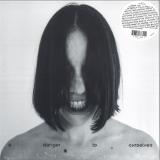
„A Danger to Ourselves“, das neue Album von Lucrecia Dalt, erscheint am 5. September 2025 bei RVNG Intl. und ist eine gewagte und doch intime Reflexion über die ungefilterten Komplexitäten menschlicher Beziehungen. Ohne die fiktiven Erzählungen der letzten Alben der Künstlerin kommt „A Danger to Ourselves“ von einem Ort der emotionalen Aufrichtigkeit. Dalts Stimme steht im Mittelpunkt und wird von einer üppigen akustischen Orchestrierung, perkussiven Instrumenten und einer Reihe hochkarätiger Mitstreiter unterstützt, die sich wie ein tiefes persönliches Gespräch entwickeln.
Die in Pereira, Kolumbien, geborene Dalt wuchs in einer musikbegeisterten Familie auf, die sie im Alter von neun Jahren dazu ermutigte, eine Gitarre in die Hand zu nehmen. Dalt folgte diesem kreativen Impuls, war fasziniert von computergestützter Produktion und verließ eine aufkeimende Karriere als Bauingenieurin, zog von Medellín nach Barcelona und schließlich nach Berlin, wo sie ihren unverwechselbaren, abenteuerlichen Sound entwickelte. Mit „Anticlines“ (2018) und „No era sólida“ (2020) und vor allem mit „¡Ay!“, Dalts bahnbrechendem Sci-Fi-Bolero-Album von 2022, hat sich ihre Arbeit auf immer anspruchsvolleres Terrain begeben. Auf dem Weg dorthin hat Dalt ihre Praxis auf die Vertonung von Filmen wie „On Becoming a Guinea Fowl“ (2024), die HBO-Serie „The Baby“ (2022) und den bevorstehenden psychologischen Horrorfilm „Rabbit Trap“ ausgeweitet, während sie Klanginstallationen und Performances kreiert, die ihre leuchtenden Modulationen und ihren unverwechselbaren, sich entwickelnden stimmlichen Ansatz zur Schau stellen. „A Danger to Ourselves“ entstand aus fragmentarischen Erklärungen, die Dalt aufschrieb, während sie das Leben auf der Tournee von „¡Ay!“ und die prägenden Momente einer neuen Beziehung meisterte. Im Januar 2024 begann sie, diese intimen Fragmente zu musikalischen Kompositionen zu kristallisieren, die allmählich zu einer zielgerichteten Konstellation von Songs wurden. Die Klangarchitektur des Albums basiert auf dynamischen Drum-Loops, die von Alex Lázaro beigesteuert werden, dessen perkussives Rückgrat wie bei „¡Ay!“ zur Leinwand für Dalts vielschichtigen Gesang wurde. Anstatt konventionellen melodischen Strukturen zu folgen, erzeugt das Album Musikalität durch das Zusammenspiel von Basslinien, Rhythmen und kompositorischem Design. „A Danger to Ourselves“ offenbart Dalts kompromissloses Streben nach klanglicher Klarheit, bei dem kühne Produktionsentscheidungen und sorgfältige Aufnahmetechniken Stimme und Instrument mit neuer Tiefe und Strahlkraft harmonieren lassen. „A Danger to Ourselves“ ist eindeutig anti-konzeptionell und ein poetischer Instinkt, mit dem Dalt den Fokus auf die Musik selbst lenkt, indem er Stimmen verwendet, die über die Parameter der Songs hinaus schwingen, und die perlenden Echos der ursprünglichen, romantischen Erregung beobachtet. Dalts klare Aufmerksamkeit für Details ist in jedem Takt spürbar, eine Hingabe, die sich in konzentrischen Kreisen dreht und ein Feld bildet, das das Persönliche und das Ätherische vereint. Das Album basiert auf intuitiven Experimenten und nutzt einfache Gesten und komplexe Kompositionen, um wandernde Linien zu weben, wie in „Divina“, das sich zwischen Spanisch und Englisch durch elastische Klanglandschaften bewegt. Der Titel des Albums geht auf David Sylvians Text „cosa rara“ zurück, der die Zerbrechlichkeit des Lebens, die Schwingungen der Liebe und die treibende Sehnsucht nach dem Wundersamen symbolisiert. „A Danger to Ourselves“ spiegelt diese transzendenten Zustände wider, indem es die Komplexität menschlicher Verstrickungen und den Wunsch nach Befreiung von Dopaminspiralen und gewöhnlichen Pfaden hin zu einer offeneren inneren Welt widerspiegelt. Sylvian selbst hat auf „A Danger to Ourselves“ eine Doppelrolle als Co-Produzent und Musiker gespielt. Es ist eine kollaborative Collage mit Beiträgen zahlreicher gefeierter Künstler. Weitere Kollaborationen ziehen sich durch das gesamte Album: Juana Molina ist Co-Autorin und Interpretin von „The Common Reader“, Camille Mandoki singt bei „Caes“, Cyrus Campbell spielt den grundlegenden Elektro- und Kontrabass, und Eliana Joy steuert bei mehreren Stücken Hintergrundgesang und Streicherarrangements bei. In den leuchtenden Tiefen von „A Danger to Ourselves“ inszeniert Dalt eine tiefgreifende Metamorphose, bei der das Persönliche durch klangliche Alchemie zum Universellen wird. Dieses Album ist sowohl Höhepunkt als auch Aufbruch - ein Portal, an dem ihre früheren experimentellen Reisen zu etwas verblüffend Intimem und doch Expansivem zusammenlaufen. Das Album ist ein Netz emotionaler Offenbarungen, jede Komposition ein präziser Indikator für Verletzlichkeit, in der Dalts Stimme eine Offenbarung in neuen harmonischen Gefilden verkörpert. Dalt hat ein lebendiges Dokument der Intuition jenseits konventioneller Grenzen geschaffen, das den Weg in Bereiche eröffnet, in denen die Musik sowohl Spiegel als auch Fenster ist.
Für Fans von PJ Harvey, Broadcast, St. Vincent, ML Buch, Stereolab, Cate LeBon, Aldous Harding, Mabe Fratti, Dry Cleaning, Juana Molina
„A Danger to Ourselves“, das neue Album von Lucrecia Dalt, erscheint am 5. September 2025 bei RVNG Intl. und ist eine gewagte und doch intime Reflexion über die ungefilterten Komplexitäten menschlicher Beziehungen. Ohne die fiktiven Erzählungen der letzten Alben der Künstlerin kommt „A Danger to Ourselves“ von einem Ort der emotionalen Aufrichtigkeit. Dalts Stimme steht im Mittelpunkt und wird von einer üppigen akustischen Orchestrierung, perkussiven Instrumenten und einer Reihe hochkarätiger Mitstreiter unterstützt, die sich wie ein tiefes persönliches Gespräch entwickeln.
Die in Pereira, Kolumbien, geborene Dalt wuchs in einer musikbegeisterten Familie auf, die sie im Alter von neun Jahren dazu ermutigte, eine Gitarre in die Hand zu nehmen. Dalt folgte diesem kreativen Impuls, war fasziniert von computergestützter Produktion und verließ eine aufkeimende Karriere als Bauingenieurin, zog von Medellín nach Barcelona und schließlich nach Berlin, wo sie ihren unverwechselbaren, abenteuerlichen Sound entwickelte. Mit „Anticlines“ (2018) und „No era sólida“ (2020) und vor allem mit „¡Ay!“, Dalts bahnbrechendem Sci-Fi-Bolero-Album von 2022, hat sich ihre Arbeit auf immer anspruchsvolleres Terrain begeben. Auf dem Weg dorthin hat Dalt ihre Praxis auf die Vertonung von Filmen wie „On Becoming a Guinea Fowl“ (2024), die HBO-Serie „The Baby“ (2022) und den bevorstehenden psychologischen Horrorfilm „Rabbit Trap“ ausgeweitet, während sie Klanginstallationen und Performances kreiert, die ihre leuchtenden Modulationen und ihren unverwechselbaren, sich entwickelnden stimmlichen Ansatz zur Schau stellen. „A Danger to Ourselves“ entstand aus fragmentarischen Erklärungen, die Dalt aufschrieb, während sie das Leben auf der Tournee von „¡Ay!“ und die prägenden Momente einer neuen Beziehung meisterte. Im Januar 2024 begann sie, diese intimen Fragmente zu musikalischen Kompositionen zu kristallisieren, die allmählich zu einer zielgerichteten Konstellation von Songs wurden. Die Klangarchitektur des Albums basiert auf dynamischen Drum-Loops, die von Alex Lázaro beigesteuert werden, dessen perkussives Rückgrat wie bei „¡Ay!“ zur Leinwand für Dalts vielschichtigen Gesang wurde. Anstatt konventionellen melodischen Strukturen zu folgen, erzeugt das Album Musikalität durch das Zusammenspiel von Basslinien, Rhythmen und kompositorischem Design. „A Danger to Ourselves“ offenbart Dalts kompromissloses Streben nach klanglicher Klarheit, bei dem kühne Produktionsentscheidungen und sorgfältige Aufnahmetechniken Stimme und Instrument mit neuer Tiefe und Strahlkraft harmonieren lassen. „A Danger to Ourselves“ ist eindeutig anti-konzeptionell und ein poetischer Instinkt, mit dem Dalt den Fokus auf die Musik selbst lenkt, indem er Stimmen verwendet, die über die Parameter der Songs hinaus schwingen, und die perlenden Echos der ursprünglichen, romantischen Erregung beobachtet. Dalts klare Aufmerksamkeit für Details ist in jedem Takt spürbar, eine Hingabe, die sich in konzentrischen Kreisen dreht und ein Feld bildet, das das Persönliche und das Ätherische vereint. Das Album basiert auf intuitiven Experimenten und nutzt einfache Gesten und komplexe Kompositionen, um wandernde Linien zu weben, wie in „Divina“, das sich zwischen Spanisch und Englisch durch elastische Klanglandschaften bewegt. Der Titel des Albums geht auf David Sylvians Text „cosa rara“ zurück, der die Zerbrechlichkeit des Lebens, die Schwingungen der Liebe und die treibende Sehnsucht nach dem Wundersamen symbolisiert. „A Danger to Ourselves“ spiegelt diese transzendenten Zustände wider, indem es die Komplexität menschlicher Verstrickungen und den Wunsch nach Befreiung von Dopaminspiralen und gewöhnlichen Pfaden hin zu einer offeneren inneren Welt widerspiegelt. Sylvian selbst hat auf „A Danger to Ourselves“ eine Doppelrolle als Co-Produzent und Musiker gespielt. Es ist eine kollaborative Collage mit Beiträgen zahlreicher gefeierter Künstler. Weitere Kollaborationen ziehen sich durch das gesamte Album: Juana Molina ist Co-Autorin und Interpretin von „The Common Reader“, Camille Mandoki singt bei „Caes“, Cyrus Campbell spielt den grundlegenden Elektro- und Kontrabass, und Eliana Joy steuert bei mehreren Stücken Hintergrundgesang und Streicherarrangements bei. In den leuchtenden Tiefen von „A Danger to Ourselves“ inszeniert Dalt eine tiefgreifende Metamorphose, bei der das Persönliche durch klangliche Alchemie zum Universellen wird. Dieses Album ist sowohl Höhepunkt als auch Aufbruch - ein Portal, an dem ihre früheren experimentellen Reisen zu etwas verblüffend Intimem und doch Expansivem zusammenlaufen. Das Album ist ein Netz emotionaler Offenbarungen, jede Komposition ein präziser Indikator für Verletzlichkeit, in der Dalts Stimme eine Offenbarung in neuen harmonischen Gefilden verkörpert. Dalt hat ein lebendiges Dokument der Intuition jenseits konventioneller Grenzen geschaffen, das den Weg in Bereiche eröffnet, in denen die Musik sowohl Spiegel als auch Fenster ist.
Für Fans von PJ Harvey, Broadcast, St. Vincent, ML Buch, Stereolab, Cate LeBon, Aldous Harding, Mabe Fratti, Dry Cleaning, Juana Molina
A“This album is about what it means to be human, and its creation is my offering. I attempt to tell a tale of the human experience in the reflection of my own.”
‘In the Andean mythology, condors are believed to be immortal. It is said that once they feel old, without energy, and useless, they climb to the highest peak and let themselves fall to death.’
The Allegorist is a visionary, enigmatic, transmedia, and boundary-pushing artist known for crafting deep, immersive dark sonic tales. Embracing a wide array of influences, weaving together the mysteries, art and spirituality, the art project defies categorisation, resonating with those who seek the unconventional.
From Birth Until Death is an introspective and immersive concept album that reflects on the essence of the human experience. Crafted over six years by The Allegorist (aka Anna Jordan), the album traces the arc of life—from its fragile beginnings to its inevitable end—using sound art to explore existential and philosophical terrain. Inspired by the Andean mythology of the condor – a symbol of immortality – the album blends electronic soundscapes with raw field recordings, evoking a deep sense of connection between the natural world and human existence.
The album’s progression mirrors the stages of life, starting with the birth of new beginnings and culminating in death, with each track offering a unique reflection on the moments in between. From the dynamic energy of Momentum, to the ethereal, illusionary world of Fata Morgana, the tracks guide the listener through emotions, perceptions, and experiences that shape the human condition.
A distinctive feature of From Birth Until Death is its intricate production. The album incorporates field recordings from Grunewald Forest, a distant roar of a jet, barking dogs, blending the sounds of nature – footsteps in the snow, birdsong, ocean waves – with layered synthesisers and electronic beats. The bass and ambient textures are crafted using an array of analog hardware, while all vocals, both lead and backing, are performed and recorded by Jordan. Some of the vocal takes were intentionally left raw, capturing the spontaneous energy of early recordings, while others were re-recorded to balance the album’s organic yet polished feel. Each element is meticulously crafted, revealing its deeper meaning as the album unfolds like a multidimensional, living sculpture.
At its core, From Birth Until Death is a meditation on the full spectrum of life. The album’s title track, From Birth Until Death, encapsulates this journey, reflecting on the passage of time and the unique experience of being human. The final track, Death, offers a melancholic yet beautiful exploration of endings, not as finalities, but as moments in the grand cycle of life. With its combination of evocative sound design and deeply personal themes, From Birth Until Death invites listeners to contemplate their own lives, offering a moving experience of reflection, growth, and transformation.
About From Birth Until Death
Words By Robin Rimbaud (Scanner)
From Birth Until Death is a deeply personal and reflective album and beautifully crafted. A detailed listen reveals that Jordan was in search of a profoundly human and authentic expression. In an era when so much around us seems defined by speed, Anna Jordan, aka The Allegorist, stands apart – aware that skimming the surface of life is neither sufficient nor rewarding. She reminds us of the value of deep, authentic listening.
The track Andean Condor seductively draws us into a smoky, blurred rhythmic soundscape, capturing the essence of the darkest Berlin nightclub, while Birth pulses with an almost shamanic transformation of sound, moving from the organic to the musical. It features a recording of Jordan’s footsteps in the snow in Grunewald Forest, Germany.
At times, the music feels almost sculptural in shape and tone – lifting, pushing, lilting, opening, and closing – where each piece is given room to fully develop. Many of the works blend synthetic sound with the natural, incorporating the human voice alongside environmental recordings: the wild waves of the ocean, a jet flying overhead, and barking dogs.
With From Birth Until Death, Jordan, like an alchemical architect revealing in the process of getting lost and relinquishing control, leaves us with a taut, immersive soundtrack in which to lose ourselves.
About the album ‘From Birth Until Death’
words by The Allegorist
“The album From Birth Until Death did not come easily to me. I started working on it in 2019, and it underwent many alterations over the years. I produced multiple versions of the tracks each year, but the album name, the track titles, and the album cover art stayed the same for 6 years. Not everything I did fit into the album’s final form, but I hope the heavy selection just made it better. I played this piece live in my techno live set between 2019 and 2020, and in the years after, I performed different art, ambient, and vocal versions of it, most notably the one at the church St. Marienkirche in Berlin in 2022. It just wanted to live and didn’t want to be finished. As I aged, this album aged with me. And now I’m ready to let it go.”
- Hey Man/Hey Self
- Saccade I
- Gone (In The Morning)
- Crying In My Sleep
- Spiritual Kick
- Saccade Ii
- I Feel So Dumb
- I Don't Wanna Be So High
- Saccade Iii
- Baby, My Bad
- A Date For One
- That's Fine
- Bouquet
- Saccade Iv
- Quite Right Kindly
Black Vinyl[24,79 €]
In ,What's The Matter, M. Ross?", dem dritten Album des eigenwilligen Autors M. Ross Perkins, befindet sich unser Junge auf einer Reise nach innen, auf der er das Transzendente und und Existenzielles mit seinem lyrisch bisher bekenntnishaftesten Album verbindet. Multiinstrumentalist Perkins muss man dem Singer/Songwriter-Zeitgeist zurechnen, der für MJ Lenderman und Waxahatchee schwärmt und gleichzeitig Optimismus vermittelt. "What's the Matter, M Ross?" wurde komplett von Perkins komponiert, gespielt und in seinem Studio in Dayton, OH aufgenommen. Die Kopfhörer-Symphonien bewegen sich mit einer bedächtigen, komponierten Raffinesse, während die Texte neues Terrain erkunden. Die Eckpfeiler des Psych-Pop bleiben: die Schnörkel von Nilsson sind noch da, aber auch Gram Parsons und Jonathan Richman. Wenn man "What's the Matter, M. Ross?" geografisch einordnen will, dann ist das Album zu gleichen Teilen Laurel Canyon und Big Pink, mehr Woodstock die Stadt als das Festival. Perkins ist ein in sich geschlossener Teenage Fanclub (aus der Spätphase) mit George Harrisons spirituellem Sinn für inneres Fernweh.
- A1: Tocotronic - Pure Vernunft Darf Niemals Siegen (Superpitcher / Wassermann Mix) (Edit)
- A2: Kaito - Everlasting (Edit)
- A3: Terranova - Paris Is For Lovers (My Love) Feat Tomas Høffding (Edit)
- A4: Justus Köhncke - Timecode (Edit)
- A5: Heiko Voss - I Think About You (Edit)
- B1: Leandro Fresco / Thore Pfeiffer - Neo (Edit)
- B2: The Bionaut - Everybody’s Kissing Everyone (Edit)
- B3: Ada - Lovestoned Feat Raz Ohara (Edit)
- B4: Superpitcher - Mushroom (Edit)
- B5: Rex The Dog - Prototype (Edit)
- C1: Dettinger - Blond 1 (Edit)
- C2: The Field - Over The Ice (Edit)
- C3: Robag Wruhme - Calma Calma (Edit)
- C4: Saschienne - Unknown (Dixon Mix) (Edit)
- C5: Max Würden - Circles (Edit)
- D1: Gas - Pop 1 (Edit)
- D2: Triola - Ag Penthouse (2 Epoche) (Edit)
- D3: Thomas Fehlmann - Making It Whistle (Edit)
- D4: Scsi-9 - All She Wants Is (Wighnomy Bros Mix) (Edit)
- D5: Jürgen Paape - Reval 1 (Edit)
- E1: The Modernist - Pearly Spencer (Edit)
- E2: Aril Brikha - Berghain (Edit)
- E3: T Raumschmiere - Augen Zu (Edit)
- E4: Reinhard Voigt - Superskunk (Edit)
- G1: Mike Ink - Rosenkranz (Edit)
- G2: Reinhard Voigt - Stille Hände (Edit)
- G3: Forever Sweet - The Bionaut (Edit)
- G4: Wassermann - W I.r. (Sven Väth Mix) (Edit)
- G5: Blank Gloss - Coiling (Edit)
- H1: Michael Mayer / Matias Aguayo - Slow (Edit)
- H2: Wighnomy Bros - Wurz + Blosse (Edit)
- H3: John Tejada - Unstable Condition (Edit)
- H4: Sam Taylor-Wood Produced By Pet Shop Boys - I’m In Love With A German Film Star (Gui Boratto Mix) (Edit)
- H5: Jürgen Paape - So Weit Wie Noch Nie (Edit)
- I1: Matias Aguayo - Walter Neff (Edit)
- I2: Voigt & Voigt - Tischlein Deck Dich (Edit)
- I3: Gui Boratto - Beautiful Life (Edit)
- I4: Kölsch - Goldfisch (Edit)
- I5: Gusgus - Rivals (Dj Hell Mix) (Edit)
- K1: Closer Musik - Maria (Edit)
- K2: Wassermann - Fackeln Im Sturm (Edit)
- K3: Jürgen Paape - Take That (Edit)
- K4: Superpitcher - Happiness (Michael Mayer Mix) (Edit)
- K5: Markus Guentner - Regensburg (Edit)
- E5: Schaeben & Voss - Dicht Dran 1 (Edit)
- F1: Dj Koze - Brutalga Square (Edit)
- F2: The Orb - Masterblaster (Edit)
- F3: Michael Mayer - Pride Is Weaker Than Love (Edit)
- F4: Laurent Garnier - From The Crypt To The Astrofloor (Edit)
- F5: Anna & Kittin - Forever Ravers (Edit)
Over the decades, the image of Kompakt as a pirate ship has taken root in our minds, braving the dangers of the seven seas of the music market. Sometimes it glides with a tailwind through calm waters, sometimes it has to survive violent storms. When we set sail in 1993, we never would have dreamt that our journey would still be going on after more than three decades and with 500 releases to date.
In our fast-paced business, the 500 mark is rarely reached, so we want to celebrate it with a lavish 5LP box set. In a democratic process, we have selected 50 pearls from the thousands of tracks released over the last 33 1/3 years and pressed them onto 5 brightly coloured vinyls. Alongside many Kompakt evergreens, there are also some real rarities from the early ‘Kompakt Sound of Cologne’, which have been lovingly remastered here to shine in new splendour.
The box also contains a 144-page book that tells the story of Kompakt from 1993 to today with detailed texts and images. In addition to the manifold musical and graphic achievements of Kompakt, the multidisciplinary links to the visual arts are also highlighted here.
The Bonus Picture Disc opens with the symbolic tolling of 500 bass drums, followed by 50 locked grooves from the 5 Kompakt founders, looping into infinity at 133 1/3 BPM, and the ‘33 1/3 Years Loop Opera’ – in which the loops are combined into one track that, in its reduced essence, is more than the sum of its individual parts. The magic of groovy loop minimalism and the ‘art of omission’ are once again brought to the proverbial point.
On 23 May 2025, the big KOMPAKT 500 art exhibition will open at the venerable Kölnischer Kunstverein to coincide with the release. The entire visual cosmos of Kompakt will be shown here in an unprecedented way on three floors, with the participation of many renowned artists. Of course, there will also be dancing and partying at the vernissage party, with DJ sets and live shows by the Kompakt Allstars.
The last one turns off the bass drum.
Im Laufe der Jahrzehnte hat sich in unseren Köpfen das Bild von Kompakt als Piratenschiff festgesetzt, das den Gefahren der sieben Weltmeere des Musikmarktes trotzt. Mal gleitet es mit Rückenwind durch ruhige Gewässer, mal muss es heftige Stürme überstehen. Als wir 1993 die Segel setzten, hätten wir uns nicht träumen lassen, dass unsere Reise nach über drei Jahrzehnten und mittlerweile 500 Veröffentlichungen immer noch andauert.
Die 500 ist in unserem schnelllebigen Geschäft eine selten erreichte Katalognummer und soll daher mit einer üppigen 5LP-Box gebührend gefeiert werden. In einem demokratischen Prozess haben wir aus den tausenden Tracks der letzten 33 1/3 Jahre 50 Perlen ausgewählt und auf 5 knallbunte Vinyls gepresst. Neben vielen Kompakt-Evergreens finden sich auch einige echte Raritäten des frühen “Kompakt Sound of Cologne”, die hier liebevoll remastered in neuem Glanz erstrahlen.
Die Box enthält außerdem ein 144-seitiges Buch, das mit ausführlichen Texten und Bildern die Kompakt-Geschichte von 1993 bis heute erzählt. Neben den mannigfaltigen musikalischen und grafischen Errungenschaften von Kompakt werden hier auch die multidisziplinären Vernetzungen zur bildenden Kunst beleuchtet.
Die Bonus Picture Disc wird mit einem symbolischen Glockenschlag von 500 Bassdrums eröffnet, gefolgt von 50 Endlosrillen der 5 Kompakt-Gründer, die sich bei 133 1/3 BPM in die Unendlichkeit schleifen sowie der “33 1/3 Years Loop Opera”, in der die Loops zu einem Track zusammengefügt werden, der in seiner reduzierten Essenz mehr ist als die Summe seiner Einzelteile. Die Magie des groovenden Loop-Minimalismus und die “Kunst des Weglassens” werden einmal mehr auf den sprichwörtlichen Punkt gebracht.
Am 23. Mai 2025 eröffnet parallel zum Release die große KOMPAKT 500 Kunstausstellung im ehrwürdigen Kölnischen Kunstverein. Der gesamte visuelle Kosmos von Kompakt wird hier unter Beteiligung vieler namhafter Künstler*Innen in nie gesehener Form auf drei Etagen gezeigt. Selbstverständlich darf zur Vernissagenparty auch getanzt und gefeiert werden zu DJ Sets und Liveshows der Kompakt Allstars.
Der Letzte macht die Bassdrum aus.
With ‘Child Of A Shooting Star’ Tom Furse has created four distinct trips into other worlds. His world’s are complex and multi faceted, full of surprising inventions and unusual terrain. Furse has a peculiar disregard for genres, whilst remaining absolutely coherent, and whether the listener wants to label it future exotica, kosmiche funk or world drifter music is up to them. The most important thing is that the listener close their eyes, open their minds and let the music transport them to Furse’s alternate realities. This is music not just to be listened to, but also to be experienced.
- Wild Waters
- All Good Things Will Come To Pass
- Down On The Freeway
- Sleep Through The Long Night
- Come On
- Tell Me How To Be Here
- New Ages
- All Is Never Lost
- There From Here
Lael Neale's minimalist drone pop draws inspiration from the Transcendentalists, the alienation of modern life, and a rich array of musical influences-ranging from Dionne Warwick and John Lennon to primitive American gospel and Spacemen 3. Her expansive new record, Altogether Stranger, due May 2, was written and recorded in the early morning quiet of Los Angeles. Clocking in at just 32 minutes, the 9-song LP covers an unexpected breadth of musical and lyrical terrain-from garage rock nursery rhymes and creation myths to Motorik dance dirges and solitary Omnichord meditations. A brilliant lyricist, Neale has a unique ability to uncover the extraordinary within the mundane, tackling themes of polarity that recur throughout her work-country vs. city, humanity vs. technology, isolation vs. society. This album is her third collaboration with producer Guy Blakeslee who helps expand the tonal palette while staying true to Neale's commitment to the raw immediacy and hand-made intimacy of home recording. Altogether Stranger - a stunning album filled with dreamlike reverie, Neale's crystalline voice, and echoes of the Velvet Underground - was conceived after four years of oscillating between rural solitude and urban chaos. It finds Neale perched at the piano in a hilltop bungalow, looking down on a rare curve of Sunset Blvd. Here, in this daily ritual of writing, singing, and painting-what David Lynch referred to as "the Art Life"-she creates the space for her most adventurous work to date. Born and raised in Virginia's idyllic countryside, Neale brought the high-lonesome sound of her home state with her when she moved to California to pursue music. After years of writing songs on guitar and playing small venues in Los Angeles, she discovered the Omnichord in 2019, which sparked a new creative direction. This led to her 2021 Sub Pop debut album, Acquainted With Night. That album's 2023 follow-up, Star Eaters Delight, deepened the collaboration with Blakeslee, infusing minimalist soundscapes with a heightened electric energy. The album found a devoted audience, and Neale's subsequent tour included sold-out shows in Los Angeles, New York City, London, and Paris, multiple trips across Europe, and a West Coast run supporting kindred spirit Weyes Blood. This marked yet another return to Los Angeles. Indeed, Los Angeles is not just the backdrop of Altogether Stranger but a lead character. The album's accompanying film - created with Neale's faithful Sony Handycam - builds on her ongoing series of videos, telling the story of Neale as an alien in a suit of mirrors stranded on Earth. Wandering through modern-day LA, she finds both absurdity and beauty in our fragile, untenable way of life. Over the long year it took to write Altogether Stranger, Neale vacillated between childlike optimism and existential melancholy. While she may not have been able to reconcile these opposing states, Altogether Stranger represents an ambitious breakthrough for this singular, self-sufficient artist.
Cassette[15,08 €]
Lunchbox's legendary lost album "Evolver" is lost no more! Sparklingly remastered for the album’s twentieth (and a few!) anniversary and available on CD, cassette and (for the first time) vinyl, this psychedelic masterpiece fills a crucial hole in the band's discography. Recorded in the couple's 1990s Oakland basement between stays in Berlin, tour dates in London, and dreamy sojourns up the rugged Mendocino coastline, "Evolver" fuses jangle and jungle, ambient and dub into a striking pop statement.
Marrying refined songcraft to the serendipitous magic hidden in half-broken reel-to-reel tape decks and vintage synthesizers, the "Evolver" plants its pop flag on the terrain of magic and mystery. Dreamy jangle pop gems emerge seamlessly out of a sea of loops, drones, and dubbed-out horn fanfares, cascades of tape echo feedback and whispers from outer space providing a trance-inducing backdrop to the pop sensibility for which Lunchbox is well-known. Hook-filled and hypnotic, "Evolver" is a sublime slice of post-pop psychedelia that you won't want to miss.
For this special and long-overdue reissue we've raided the bands vaults for three previously unreleased tunes that add extra dimensions to the album's uniquely trippy flow. And for the vinyl heads we're pressing this as a double LP for maximum fidelity and playability, including a vinyl-only fourth side of beats, loops, interludes and puzzling aural ephemera, all taken directly from the original master tapes. Super cool!
Percussion mastermind Ploy arrives on Dekmantel with a double-pack of unbridled dancefloor heat that sees him reconnecting with his house roots.
Before he made a striking breakthrough as Ploy with wayward broken techno for Hessle Audio and Timedance, Samuel Smith's first releases as Samuel were leftfield house excursions. On this release for Dekmantel he wanted to reflect on a decade of releasing music and the many high-impact dancefloors he's shared with the label, from Selectors to De School, over the years.
The common denominator across these eight tracks is no-nonsense house, offering up grooves that will serve a DJ exactly what they want in the mix. At the same time, Ploy doesn't dilute the distinctive edge of his sound, from the abundance of perfectly balanced percussion to the nagging hooks of an off-key synth line dropped at just the right moment. Wry samples inject the mischievous humour he's always creeping into his craft. This is where dancefloor magic is nurtured, hitting the sweet spot between rock solid reliability and the wild card energy that brings a heads-down set to life.
From 'Admirer's big room peaks to 'It's Later Than You Think's cosmic incantations, this is the sound of Ploy showing exactly what it takes to make laser-focused club bombs without losing one iota of his inimitable style.
2x12" Vinyl[32,98 €]
Lunchbox's legendary lost album "Evolver" is lost no more! Sparklingly remastered for the album’s twentieth (and a few!) anniversary and available on CD, cassette and (for the first time) vinyl, this psychedelic masterpiece fills a crucial hole in the band's discography. Recorded in the couple's 1990s Oakland basement between stays in Berlin, tour dates in London, and dreamy sojourns up the rugged Mendocino coastline, "Evolver" fuses jangle and jungle, ambient and dub into a striking pop statement.
Marrying refined songcraft to the serendipitous magic hidden in half-broken reel-to-reel tape decks and vintage synthesizers, the "Evolver" plants its pop flag on the terrain of magic and mystery. Dreamy jangle pop gems emerge seamlessly out of a sea of loops, drones, and dubbed-out horn fanfares, cascades of tape echo feedback and whispers from outer space providing a trance-inducing backdrop to the pop sensibility for which Lunchbox is well-known. Hook-filled and hypnotic, "Evolver" is a sublime slice of post-pop psychedelia that you won't want to miss.
For this special and long-overdue reissue we've raided the bands vaults for three previously unreleased tunes that add extra dimensions to the album's uniquely trippy flow. And for the vinyl heads we're pressing this as a double LP for maximum fidelity and playability, including a vinyl-only fourth side of beats, loops, interludes and puzzling aural ephemera, all taken directly from the original master tapes. Super cool!
First Terrace are thrilled to present the new album Lucid Dreams from the prolific Japanese artist Chihei Hatakeyama on January 23rd 2024.
Renowned ambient composer Chihei Hatakeyama is set to release his latest album, Lucid Dreams, an evocative sonic exploration that invites listeners to drift between the waking world and the dreamscape, to experience “dreams you are aware that you are dreaming”.
Known for his deep atmospheric textures and minimalist approach to sound, Hatakeyama’s new project expands on his signature style and with the help of collaborators Cucina Povera and LA based multi-instrumentalist Nailah Hunter charts new emotional territories.
Chihei expands on the concept of the album, sharing that “For the past two years or so, I have suffered from insomnia at times such as when the seasons change, and at those times all I can think about is wanting to sleep. However, when I'm in that state and I go through repeated light sleep, I can experience a state of "Lucid dreams" where I can't tell whether I'm dreaming or not, and am aware that I am dreaming. One aspect of this album is that it was inspired by that state of light sleep.”
“With that in mind, the theme of this album is the sense of time in a dream, situations that suddenly change unlike the flow of time in real life, surprises and nostalgia - I wanted to create an album that depicts those dream states.”
With a career spanning over two decades, Chihei Hatakeyama has gained an international following for his ability to consistently release music that enchants and rewards listeners. In Lucid Dreams, Hatakeyama continues to explore themes of nature, lucidity and calm, offering listeners an auditory escape from the hustle and noise of everyday life.
Tracks like “End of Summer” guide the listener blissfully through a five minute daydream, gently encouraged along by distant guitar strings on a bed of reverb whilst “Wind From The Mountains” (which features the beautiful work of Nailah Hunter) is the perfect example of what Chihei does so well with subtle movements that encourage your imagination & allow you to be lost in your own dream.
Every so often an album of such deceptive genius, of such aesthetic clarity, comes across our desk and transfixes us. Thought Leadership's III Of Pentacles is one such work of art. It's an instant classic and glides into the pantheon of timeless guitar-soul totems. Originally out on cassette only, we present the first ever vinyl issue. It's a hideously limited pressing of 300 for the world, so don't sleep on this.
Thought Leadership has already garnered big support from such tastemakers as Ruf Dug, Jason Boardman, Nathan Gregory Wilkins, J Walk, Evan Woodward, Justin Robertson and Heavenly's Jeff Barrett. The first time we heard III Of Pentacles, we nearly wept at the thought that something so beautiful, so bursting with real hope, could even exist in this brutal world. To quote the Quietus, "imagine if Stockport was situated somewhere along the Pacific Coast Highway rather than the M60, and you’ll have some idea of the coordinates to the post-industrial, sunburnt dream space opened up here."
So, who is Thought Leadership? What do we know about them? They reside in Stockport and are obsessed with ethereal guitar records. That’s about it. That and these X ideas shared with you, the listener.
Captured on a multitrack recorder in a terraced house in Stockport, this is as DIY as it gets. Glaringly obvious is a love for classic Factory and early 4AD. Perhaps it is the proximity to the River Mersey where the ideas arrived, and there being but three miles between where this and the Durutti Column’s classic “LC” was recorded, as the two operate across a familiar aural plain. Be it geographic or otherwise, limited by a true economy of means, namely guitar, pedals and drum machine, the fruit borne from these humble tools has been indelibly shaped by the perma-gloom that hangs low over the Manchester and Stockport environs.
Ushered in on 808 kicks, “I” opens the record as a beautiful Sketch for Stockport; a chiming maj7 chord dripping in chorus and delay sets us on our way. The Vini Reilly comparisons are unavoidable. “II” is all John McGeoch, with its trippy goth-psyche arpeggiated pattern cascading across the stereo image. Do those drums swing? But goths don’t swing?! They do here. We’re treated to a bit of crunch on the lead guitar part and some really lush reverb. We even step forth into shoegaze territory, albeit briefly, for the middle eight. “III”, a firm Be With favourite, continues the dreamy psyche leanings of the previous track, with an even bigger melody this time. We’re hearing The Teardrop Explodes on quaaludes here. A proto-dream pop cut soaked in melancholy. But watch out! The coda finds Johnny Marr has gotten into the ‘ludes and gatecrashed the final bars with some incredibly ignorant B minor pentatonic noodling.
“IV” ditches the drum machine for the first in a suite of three beatless electric guitar duets. The first of these semi-improvised rubato ideas is a striking departure from the earlier playful pieces, coming over emo and moody. Greyscale sulking for Stratocaster. Sign us up. “V” contains some really lyrical phrasing; a gorgeous conversation between two guitars. Real Stopfordian Primitive; meditative, crude, rain-soaked. We cycle through the same feels, then end on an alluring chord that breaks the pattern. Sometimes thoughts are like this. “VI” creeps in all plaintive, then a huge reverberating descending guitar line comes tumbling in like something off those classic Dif Juz 12”s. There’s some Maurice Deebank in there too, for sure, and the coda nods to early Meat Puppets.
“VII” rounds out the A Side, and succinctly presents a summary of all ideas explored thus far on our journey. The drum machine is back, this time with some wispy delay, before both guitars enter together playing interlocking lines. As we start, we end, with the delayed 808 guiding us out.
Opening Side B, “VIII” sees us embark on the other side of our journey as we slow down and space out. The drum machine is here, but the guitars are different now. Think Sensations Fix or Göttsching at his most peeled out. Drones, ambient drifts of broken chords and distorted lead lines all swirl round the mix. Side B is one for headphones for sure. “IX” is almost too exquisite for words. A New Age Mixolydian voyage through the cosmos. If you’re unmoved by the end you’ve probably got no pulse. We were left blunted ineffable by this one, such is the smudged elegance radiating from this idea. All hail the Thought Leader.
“X” is a full circle moment, and a fitting end. If you’ve not already elsewhere across the platter, you will be getting heavy Robin Guthrie vibes from this piece. Like the rest of Side B, this improvised jam sticks within a framework of related chords but the celestial energies channelled might invite us to wander “outside”, especially when the Tubescreamer is engaged.
RIYL Durutti Coulmn, Cocteau Twins, Dif Juz, Sensations Fix, Spike and adjacent guitar musicks – but, ultimately, this is just its own thing; such is the strength of ideas presented. "It’s good music to chill out to." (??)
Be With is honoured to present the first ever vinyl release of III Of Pentacles, carefully remastered by Be With's engineer Simon Francisco to ensure it sounds better than ever after its initial tape release. Cicely Balston's expert skills have made sure nothing is lost in the cut whilst the records have been pressed to the highest possible standard at Record Industry, in Holland. The original tape cover artwork, so crucial to Thought Leadership's striking visual aesthetic, has been rejigged for vinyl issue here at Be With. Its stark presentation befits the music contained within. They inform us that they shuffled their tarot deck to ask what the album should be called and the card you see on the cover popped out. The III Of Pentacles tarot card represents teamwork, shared vision and the ability to achieve goals through collaboration. We like to think Thought Leadership and Be With have nailed this one.
- Glistening
- She Emerges
- Bold And Undaunted Youth
- I’d Rather Be Tending My Sheep
- The Fancy Cannot Cheat So Well
- Only The Diceys
As a founding member of Dublin experimental folk group Lankum, Ian Lynch explores submerged leylines of music and song. Forging a musical path that is all at once dark, mysterious and foreboding, but ultimately transcendental. His new solo project One Leg One Eye sees him taking a fresh approach to musical arrangement culminating in a sound that is more rooted in the raw aesthetics of second wave black metal than contemporary folk. The project was born across 2021, a period in which Lynch was able to enjoy the freedom of experimenting and exploring different paths of sound design without expectation or pressure. Seeking out interesting settings to record music and gather field recordings, there are several environments, external and interior, whose respective essence have seeped into the spirit of the music and come to represent Lynch’s artistic approach and development with this singular debut album, …And Take The Black Worm With Me. Rediscovered spaces in Dublin and the familiar enclave of his bedroom are intrinsic to the distinct and sometimes harrowing atmosphere conjured throughout the album’s five enveloping compositions. One particular location, an abandoned factory where his father worked when Ian was a child, provided a space of great inspiration and intrigue during this time. Lynch frequently visited the large abandoned warehouse and sang with his shruti box, contented in his solitude. ‘I’d Rather Be Tending My Sheep’, grew into existence from those initial sessions, eventually finding a home as an emotive centrepiece to the album. Reflecting on the overall recording of …And Take The Black Worm With Me, Lynch says, “Everything I was doing with these songs was all kind of new to me; experimenting with different sounds, textures and palettes and seeing what I could come up with by piecing it all together. I spent about a year making the album. I loved the whole process because it was basically just me in my bedroom recording everything. The experience of recording like this and having my own time to do it was amazing. I could focus on recording a specific element and happily spend all day working on that one part, doing it as many times as I wanted. At the end of the day if it didn’t feel right, I could just try it again the next day. When you’re on your own you can spend as much time as you want on particular parts until you feel that it’s absolutely perfect. I found that to be a really liberating experience. It was probably my favourite experience recording music.” The collection of songs (and their chronology) featured on …And Take The Black Worm With Me tell a story unique to Lynch’s experiences with anxiety and recognising his shadow self. Whilst the album became an outlet of personal expression for Lynch, the overarching themes and subsequent journey to confront one’s internal dichotomy of light and dark before accepting this inherent duality is universally shared. The eerie and often unsettling world contained within the album’s texturally dense opener ‘Glistening, She Emerges’, driven by the captivating drone of distorted uilleann pipes, immediately immerses the listener in this transportive work. It descends with a great heaviness, yet woven throughout the arrangement is a fascinating and indescribable entity that draws you further into this otherworldly dimension. This mood continues as the tracklist progresses and transitions into Lynch’s haunting realisation of ‘Bold and Undaunted Youth’ which further demonstrates a cinematic influence to Lynch’s compositional style. Sonically, Lynch effectively builds an impressively vast terrain with brilliantly murky lo-fi recording techniques and an unshakable curiosity to move beyond conventional structures and play with the timbre of the instruments available to him. From recording hurdy-gurdy or concertina to tape and experimenting with loops and effects pedals to stitching field recordings together, there’s an intimacy established between Lynch and his audience established through the simultaneously eerie and beautiful tones courting through …And Take The Black Worm With Me. This culminates in ‘Only the Diceys’, the extraordinary closing track in which we reach a place of resolution mapped into the album’s narrative structure. Mixed by longtime collaborator John ‘Spud’ Murphy in his Dublin-based Guerrilla Sounds Studio and mastered by Harvey Birrell …And Take The Black Worm With Me features contributions from Ruth Clinton (Landless) on church organ and vocals by Laurie Shanaman (Ails, Ludicra). Of Shanaman’s participation, in particular, which further illustrates the lo-fi and DIY ethos to the recording, Lynch says, “Laurie is my favourite black metal vocalist of all time and so I reached out to her hoping to have her involved in some way. She did, and she features on the opening track by providing some incredible screams. She recorded them into her phone and sent them over to me; what appears on the album is literally a phone recording of her screaming in her kitchen!” …And Take The Black Worm With Me continues Ian Lynch’s groundbreaking work with Lankum; recontextualising traditional forms and generating new spheres of music in his wake, confirming his status as one of the most interesting and innovative artists working in Ireland today.
What lies on the terrain for which no map exists? Tifra has volunteered to take the plunge and find out. For the 28th record on Haŵs, the Dutch DJ/producer steps up to the frontline with ‘Terra Incognita’ - a primitive force to be reckoned with that reveres the hypnotising, ominous unknown. Four investigational tracks unify the checkpoints, wandering through themes of 00s/90s leftfield house, prog, and continuous, undulating grooves.
The EP sets sail with ‘Invoke Hysteria’, scavenging through malevolent, hostile waters and a caution of pad synths, drums and agitated melodies.
Relenting onwards, ‘Serpent’ slinks into a mellow respite, moving slowly and deliberately like a snake in the moonless dark. Deep, resonant synths coil around the percussive heartbeat of the track, weaving together velvet layers of bass, wind instruments and steady, surrendering exhalations of breath.
The titular ‘Terra Incognita’ hoists up the anchor and yields to the trance of the summoning liquid night. Repetitive melodies form the contours of its shifting course, moulding a ritualistic rhythm under the dissolving face of the sky.
Admo steps up to the wheel for the remix, smoking out the initial perfume of the atmospherics into a new, tough brutality. Hauling the track out of its initial spacey orbit, he re-embellishes it with dour synths, drums and a primal, subterranean growl.
Some say that there is no worse poverty than that of connection, so why not be the first to take the risk, break the divide and find out what lies beyond the veil? Otherwise, make your own guesses, and then let them guess who you are.