Buscar:terra wan

Estilos
Todo
Remy Solar - Dubs From Earth (Tape)
 
2
También disponible

SS01[13,87 €]


Siren Selector launches its mixtape series with a companion release to Remy Solar’s - ‘Heavy Terrain’ cassette.

“Jamaican music grows in rings like an old tree. From a core of early riddims, the genius of Studio One, versions of original basslines and melodies evolve over time New releases of the same tune follow each other through the 70s, 80s, 90s, into this millennium. Generations of the same family. And then there’s the unreleased versions, the frontier dubs built strictly for sound systems, held close by those who got them and only gradually circulated into the wider audience of selectors and collectors. These are the ones where the bass is heavier, the echoes more mind- bending, the effects wilder and the drums harder. Older sound followers tell stories of how these dubs defined dances, flattened opponents in clashes, inspired a dozen rewinds. Younger followers remember these tales and pass them down. These dubs are folklore.

Who knows how many such versions there are in the vast worldwide archives of Jamaican music? Not me. But as a little taster of a lifetime’s musical journey you can open your ears right now to a few moments: Lacksley’s Castell’s “Unkind”, transported from the sprightly riddim which underpinned it on his Princess Lady album and reengineered into a thunderous version of Ras Michael’s None A Jah Jah Children; “Deceivers” by the Heptones, stripped back into something simultaneously ethereal and bathyspheric; Keith Hudson’s “I’m No Fool” emerging from a pressure cooker of bass and drum; Jah Lloyd’s “Black Moses”, busting down walls with its epic echo and siren opening.

I started collecting these dubs in the late 90s. We were going to Shaka at the Rocket, Aba Shanti in the Arches, then Imperial Gardens. Entebbe somewhere off Mare Street. Iration Steppas in Kingsland Road, Jah Tubby’s in the Rec. We were doing our own parties at the time in east London, Bohemia Place, then Trenz, Dungeons, the old social services office by London Fields. Building up a sound, taking it on the road, crew sitting on the speaker boxes in the back of a Mercedes 508. Under the stars or in warehouses with sweat dripping from the ceiling, lugging crates and amps across fields or up flights of stairs, stringing up boxes under bridges, in car parks or on roundabouts. Waiting for the moment to drop the dubs.

This tape is dedicated to my crew and all the music providers and anyone who also knew or wants to know these moments.“

Fifty Physical Copies - 60 mins - No digital

Reservar17.04.2026

debe ser publicado en 17.04.2026

13,87
Various - Tchic Tchic: French Bossa Nova 1963-1974  Colored Edition LP 2x12"
  • A1: Les Masques - Il Faut Tenir (1969)
  • A2: Isabelle Aubret - Casa Forte (1971)
  • A3: Christianne Legrand - Hlm Et Ciné Roman (1972)
  • A4: Jean Constantin - Pas Tant D'chichi Ponpon (1972)
  • A5: Billy Nencioli & Baden Powell - Si Rien Ne Va (1969)
  • B1-: Marpessa Dawn - Le Petit Cuica (1963)
  • B2: Jean-Pierre Sabar - Vai Vai (1974)
  • B3: Sophia Loren - De Jour En Jour (1963)
  • B4: Isabelle - Jusqu’à La Tombée Du Jour (1969)
  • B5: Sylvia Fels - Corto Maltesse (1974)
  • C1: Frank Gérard - Comme Une Samba (1972)
  • C2: Ann Sorel - La Poupée Des Favellas (1971)
  • C3: Charles Level - Un Enfant Café Au Lait (1971)
  • C4: Andrea Parisy - Les Mains Qui Font Du Bien (1970)
  • C5: Audrey Arno - Quand Jean-Paul Rentrera (1969)
  • C6: Aldo Frank - T’as Vu Ce Printemps (1970)
  • D1: Christianne Legrand - Cent Mille Poissons Dans Ton Filet (1972)
  • D2: Clarinha - Lemenja (1970)
  • D3: Hit Parade Des Enfants - Aquarela (1976)
  • D4: Jean-Pierre Lang - Tendresse (1965)
  • D5: Magalie Noël - Une Énorme Samba (1970)
  • D6: Françoise Legrand - La Lune

Ever since the late 1950s bossa-nova revolution, Brazil’s influence on French music has been undeniable. Pierre Barouh, Georges Moustaki and a vast array of lesser known artists, all made the Musica Popular Brasileira (MPB) an axis of promotion at the service of a cool and metaphysical, modern and mixed Brazilian lifestyle. Some were seduced by the poetic languors of the bossa, some were looking for fun, and others just loved the American hybridization of jazz-bossa, jazz-samba.


What is bossa nova? One of its creators, Joao Gilberto said: "Its style, cadence, everything is samba. At the very start, we didn't call it bossa nova, we sang a little samba made up of a single note - Samba de uma nota so .... The discussion around the origins of bossa nova is therefore useless”. It is nevertheless useful to remember that these magnificent Brazilian songs, which the guitarist describes as samba, were shifted and balanced around improbable chords. "I like things that lean, the in-betweens that limp with grace," said Pierre Barrouh, quoting Jean Cocteau.


With emotion, arrangements for violin and supple guitar licks, bossa nova rapidly changed. A transformation that can be heard in the Tchic, tchic, French Bossa Nova 1963-1974 compilation, the result of a cultural reappropriation, which traveled through the United States and supplemented itself in France.

A musical revolution that has remained significant, bossa nova was born in Rio. From 1956 to 1961, Brazil lived through its golden years. In five years, the country had invented its modernist style. Elected president in 1956, Juscelino Kubitschek de Oliveira, an elegant man with a broad forehead, brandished a promising slogan: "Fifty years of progress in five years". He quickly got to work. Not worried about increasing debt, he launched the project for a new federal capital, Brasilia, designed by the communist architect Oscar Niemeyer. Volkswagen opened state-of-the-art factories and created the “fusquinha”, the Beetle. In Rio, the Vespa made its first appearance. The Arpoador Surf Club crew run into the “girl” from Ipanema, Helô Pinheiro - the tanned garota ("chick"), between a flower and mermaid, who at 17 walked by the Veloso bar, where the fiery author and composer, Tom Jobim and Vinicius de Moraes, were getting drunk on whiskey. From then on, bossa symbolized cool.

In 1958, Joao Gilberto recorded Chega de Saudade, which the directors of Philips denied, calling it "music for fagots". The marketing director, who believed in it, secretly pressed 3000 78-inch vinyls and distributed them at schools around Rio, creating a tidal wave.

American jazzmen then took over. In particular, trumpeter Dizzy Gillespie and guitarist Charlie Byrd. In November 1962, the Brazilian Ministry of Foreign Affairs funded a "Bossa-Nova" concert at Carnegie Hall in New York, inviting the genre’s pioneers. Unprepared, the show soon turned to disaster. But the troupe was invited to the White House by Jackie Kennedy. The first lady loved "the new beat" and in particular Maria Ninguem, a song by Carlos Lyra, later covered by Brigitte Bardot.

In Brazil, the 1964 military coup quickly ended this euphoria. The destructive atmosphere that ensued pushed many Brazilian musicians to leave, if not to exile. Thus, Tom Jobim, Sergio Mendes and Joao Gilberto arrived to the United States. In New York, Joao Gilberto met saxophonist Stan Getz. At the time, he was married to the Bahianese Astrud Weinert Gilberto, who had a German father. She had never sung before, but she knew how to speak English. Getz therefore asked her to replace her husband on The Girl From Ipanema. The Getz/Gilberto record with Tom Jobim on piano, was released in March 1964. Phil Ramone, the "pope of pop" was in charge of sound.

Bossa nova arrived in Paris through the classic “guitar-voice” channel (Pierre Barouh, Baden Powell, Moustaki…) But France loved jazz and Paris had already welcomed its American contributors. All these good people were to pass through Saint-Germain-des-Prés. The cabaret l'Escale became the Mecca of Latin American sound where one could find Pierre Barrouh and his friends, such as the Camara Trio, samba-jazz aces, whose only record was published by the Saravah label. With a band strangely called Les Masques (a band that included Nicole Croisille and Pierre Vassiliu, among others), the Camara Trio recorded an interesting Brazilian Sound, including the track Il faut tenir which is present on this tasty compilation of rarities.

Other enlightened musicians can also be found on the compilation, such as Jean-Pierre Sabar (songwriter for Hardy, Auffray, Leforestier ...) and the French pop rock organist Balthazar. In 1975, Sabar recorded Aurinkoinen Musiikkimatka on a Finnish label, which featured the crazy Vai, Vai, included on this record. We are now following the footsteps of Brazilian electronic musicians such as Sergio Mendes, Eumir Deodato or Marcos Valle who created funk and disco sounds on their keyboards and synthesizers. A style that influenced Véronique Sanson when she wrote Jusqu’à la Tombée de la nuit in 1969 for Isabelle de Funès, the niece of Louis and a great friend of Michel Berger - Sanson did end up singing this track on her 1992 Sans Regret record.


The pinnacle of exoticism and travel, Sylvia Fels’ Corto Maltese includes bongos, sea mist and ocean sounds. The title was taken from Jacky Chalard’s concept album written in 1974, Je suis vivant, mais j’ai peur (I am alive, but I am scared), based on Gilbert Deflez’s science fiction novel.


However, bossa nova extended the scope of popularity. "In the 1970s, I was a fan of Sergio Mendes, Getz / Gilberto. I fell in love with this music that I knew because I had been an orchestral singer, " explained Isabelle Aubret, who in 1971 delivered a composite record of covers by the very funky Jorge Ben, Orfeu Negro, Tom Jobim, Vinicius de Morais and Jean Ferrat. "I recorded this album for Meys Records in Paris, far from Brazil, with wonderful musicians, François Raubert, Roland Vincent, Alain Goraguer...". The latter wrote the arrangements for Casa Forte, a very percussive title borrowed from Edu Lobo, one of the initiators of the bossa who spent time in California. "Jazz and bossa came together and produced very rhythmic music. I love singing, it allows me to dream, to have fun, to feel a high on stage, and these songs brought me joy, made me swing, my singing felt like a dance.”


The world tours of French singers and their desire for the tropics, often brought them to Rio with its hills, forests, caipirinhas and tanned bodies. There are surprises though, like this Iemenja (Iemenja is the goddess of the sea in the Afro-Brazilian candomblé religion). Not unlike the composer and musician Jean-Pierre Lang, based in Sao Paulo, Claire Chevalier taught Brazil to Brazil. In 1970, the singer and painter published a 45-inch vinyl, Mon mari et mes amants (My husband and my lovers), under the improbable pseudonym of Clarinha (little Claire). She was then living in Rio, with her husband, Joël Leibovitz, who founded a band called Azimuth, and who owned a record label specialized in "sambas enredos" songs for samba school parades.


For its B side, she asked Pierre Perret to come up with lyrics for a song composed by Carlos Imperial: "Oh goddess of the sea, o goddess Iemenja, I bring a white rose to adorn your long hair ..." . "Perret came to see us, and we had fun, remembers Joël Leibovitz. We wrote Lemenja for fun, we recorded it at the Havaí studio, behind the Central do Brasil the central station. Erlon Chaves, the arranger who worked with Elis Regina, joined us" adding his share of Afro-Brazilian percussions and funky brass to the mix.

There is a common misunderstanding in Franco-Brazilian history: that bossa, admittedly hedonistic, is perceived as funny, even though the poets who wrote the texts are often philosophizing on the human condition. Its French interpreters pull it towards a carnival inspired universe, far removed from its fundamental essence. Thus, Jean Constantin covered the famous Samba da minha terra, an ode to the art of samba written by the classic Bahian composer Dorival Caymmi, renaming it with the enticing title of Pas tant de tchi tchi pompon: "On your pier there is no tchi tchi / when you arch your back, you know everything is alright ”(lyrics by Gérard Calvi). This expedited bossa aims for the absurd, but retains a certain elegance.

Indeed, Jean Constantin was not an idiot, the rather large man had a huge mustache and liked fantasy, (Les pantoufles à papa, Le pacha, inspired by cha-cha-cha-cha, salsa and jazz) but he was also the lyricist of Mon manège à moi interpreted by Edith Piaf, the composer of Mon Truc en plume by Zizi Jeanmaire and the soundtrack of François Truffaut’s 400 Blows. Le Poulpe, published in 1970, from which this bossa is extract, was arranged by Jean-Claude Vannier, an accomplice of Serge Gainsbourg’s Melody Nelson. In short: "There is enough of samba / By looking at the parasol / Because my poor cabeza / Is going to die in the sun".

Even the American actress Marpessa Down, who was at the heart of the bossa nova revolution with her role as Euridyce in Marcel Camus’ film Orfeu Negro, winner of the 1959 Cannes Palme d'or, fed the clichée with Je voudrais parler au petit cuica - "Tell me how you manage to always make people want to dance / It's true, I must admit that I cannot resist your magic" - in consequence, once can hear the cuica, a little drum inherited from the Bantu.


But bossa nova had many angles. Societal, of course, pushing actresses who were symbols of women's liberation like Brigitte Bardot, Jeanne Moreau, or Sophia Loren to engage in the exercise of accelerated bossa. In February of 1963, Sophia Loren made a record in French in Rome, Je ne t'aime plus, featuring the song De jour en jour, a bossa written by two Italians, Armando Trovajoli and Tino Fornai, which was released a little later by Barclay. Bossa accompanied the 1960s, a decade of moral liberation. Ann Sorel, who interpreted La Poupée des favellas, caused a sensation with L’amour à plusieurs, a provocative song written by Frédéric Bottom and Jean-Claude Vannier. As for the actress Andrea Parisy, she displayed her bourgeois cheekiness in Marcel Carné's Les Tricheurs before interpreting Les mains qui font du bien. And Magalie Noël, the friend of Boris Vian, who sung Johnny fais-moi mal, was hired to sing Une énorme Samba, composed by Alain Goraguer (arranger to Gainsbourg, Bobby Lapointe and Jean Ferrat) with lyrics by Frédéric Botton.

But in the end, of what wood is bossa nova made of? The answer is given by Christianne Legrand, daughter of Raymond the conductor, and sister to Michel the composer: "With me, with jà" - jà means "immediately" in Portuguese. In 1972, the singer, an expert in vocal jazz and a member of the Double Six, published Le Brésil de Christianne Legrand. Two songs included on the Tchic Tchic compilation that demonstrate how bossa, jazz, funk, rock, etc. work like a swiss army knife: the music is used to denounce broken systems, or miracles, HLM et ciné roman, Cent mille poissons dans ton filet, two songs from the O Cafona soundtrack, a successful telenovela broadcast, at the time in black and white, on TV Globo. The first was adapted in French by the fighter and friend of the Legrand tribe, Agnès Varda. The second is content with a play on words, jostling them into a summer fun.


Véronique Mortaigne

Reservar17.04.2026

debe ser publicado en 17.04.2026

27,31
MARC LECLAIR - MUSIQUE POUR 3 FEMMES ENCEINTES LP 2x12"

In Sheep’s Clothing announces the long-awaited vinyl pressing of Marc Leclair’s beloved 2005 album Musique pour 3 femmes enceintes. The album will also be available on streaming for the first time via Community Music Group.

For years after Marc Leclair released Musique pour 3 femmes enceintes, he heard from listeners who had lived with the record in an unusually intimate way. Many described how the music became part of the emotional landscape of the months leading to birth. “I never expected that,” Leclair says. “Many women told me they listened to the record throughout their pregnancies. They said it made a real difference, that it helped them. It became more than just a record.”

First issued on CD in the early 2000s, Musique pour 3 femmes enceintes (Music for Three Pregnant Women) now returns in a new edition from In Sheep’s Clothing Hi-Fi, appearing on vinyl for the first time as a double LP. The record is being pressed in Detroit at Archer Record Pressing, the historic plant behind deep-groove classics by Juan Atkins, Kevin Saunderson, Underground Resistance, UR’s Jeff Mills, and J Dilla.

Listeners who know the Montreal-based Leclair through his better-known work as Akufen might be surprised by the tone here. During the same years he was shaping the intricate micro-sampling tracks that made Akufen a cult figure on labels including Perlon, Force Inc. and Trapez, Leclair was quietly developing this far more personal project. The meticulous craftsmanship remained the same, though the focus shifted from the hyper-detailed cut-up rhythms of his dance records toward something slower and more atmospheric. “I always compare my work to a jeweler,” Leclair says. “It’s really very precise. I’m a bit of a detail freak. I can spend hours or days on just one phrase in one song. Everything has to be perfectly put together.”

The project began almost accidentally. A few members of Leclair’s circle became pregnant nearly simultaneously, including one who had long believed she couldn’t conceive. The first track he recorded for the project wasn’t meant to advance a larger concept, he says. “It was meant to highlight the fact that three of my closest friends became pregnant at exactly the same time.”

Leclair was already a father with a three-year-old daughter, so the emotional terrain of early parenthood was familiar. Gradually the idea expanded. “I began thinking, why not make a whole album that celebrates this and also follows the entire pregnancy, the nine months,” he says. The music developed piece by piece, including a track originally commissioned by the Berlin experimental duo Rechenzentrum that would later become the album’s opening movement.

Nearly seven years passed between the first composition and the finished album, and the music mirrors the strange arithmetic of pregnancy itself. What begins as a single idea multiplies outward, sounds layering and branching until the album feels less like a sequence of compositions than a living process unfolding in time. “I work very slowly,” Leclair says. “Everything has to be something I’m completely behind. I never want to rush anything. I want things to come naturally.” Across its 72 minutes, the album blossoms with the patience of a long meditation on time, growth and emergence.

When Musique pour 3 femmes enceintes first appeared via Mutek, it circulated quietly but steadily. Critics who discovered it later recognized its unusual scope. In a 2006 Pitchfork review, Mark Richardson gave the record an 8.1, calling “150e Jour” “an unfailingly gorgeous and tightly sequenced quilt of guitar and piano samples reminiscent of Tangerine Dream,” and describing “85e Jour” as infused with “viscous pop ambient drift, the gauzy synth pads ebbing and flowing with rhythm.” Boomkat described the album as “a majestic opus from a producer that's always promised so much — here delving into a panoramic construction of almost visibly radiant music that works so beautifully through each and every second of its 72 minute lifespan.”

The new In Sheep’s Clothing Hi-Fi edition finally presents the record in the format Leclair long imagined. “I always thought that record deserved a vinyl edition,” he says. Spread across two LPs, the music now has room to unfold at its natural pace. More than twenty years after it first appeared, Musique pour 3 femmes enceintes remains what it was from the start: a carefully shaped meditation on transformation and the quiet miracle of life beginning.

Reservar24.04.2026

debe ser publicado en 24.04.2026

33,19
Tommy Guerrero - Soul Food Taqueria 2x12"

2026 Repress

It’s rare that a certain sound is entirely an artist’s own. Although undeniably a stew of impeccable influences – from blues to folk to Latin to dusty funk, soul and hip-hop – one cannot hear a Tommy Guerrero song without immediately recognising it as his - and his only.
The cult skater from San Francisco is globally renowned as one of the original members of the legendary “Bones Brigade” team. And as an accomplished multi-instrumentalist, his laid-back soul is beloved by all who’ve basked in its blissful glow.
There’s something elemental about this music that really stirs the soul. Strikingly beautiful and instantly addictive, it’s a kind of funk-fuelled, melody-driven, groove-based magic. There’s a serenity and heart in the playing that radiates warmth and splendour, as if crafted for endless sunsets. His albums that surfaced on Mo Wax at the turn of the century have been treasured since their release and it’s two of his most vital LPs that we’re honoured to reintroduce.
The originals were quietly pressed on to a single piece of vinyl so we’ve worked closely with Tommy this year to bring you these fresh, limited editions. They have been lovingly remastered, cut nice and loud on to heavyweight double vinyl and presented in deluxe gatefold jackets.
Soul Food Taqueria continued Guerrero’s guitar soul but represented a step forward with its polished production and greater complexity of instrumentation. Denied the promotion it deserved upon release, it flew under the radar. It is now the most wanted record of his wondrous back catalogue.
Guerrero’s atmospheric touch and subtle guitar provide lush, glimmering pieces of musical texture. Within his spacious compositions, uniquely arranged instruments flourish alongside each other to create a languid soundtrack for halcyon days.
As ever, the diversity on display is beguiling. From bossa nova, samba and cumbia rhythms to understated folk, funk and soul grooves, this is another exotic set of mellow gold; perfectly represented by ESPO’s memorable artwork. Furthermore, the title’s hybridity reflects the intoxicating sweep of stylistic flavours served up, reminding us that, however tricky it is to categorise Guerrero’s special blend, it’s always a pleasure to indulge in something so creative and adventurous.
Dubby, bass-heavy instrumentals give way to moody folk-soul – witness “It Gets Heavy”, featuring melancholic vocals from Gresham Taylor – whilst “Thank You MK” is a gentle ode to the tropics, featuring ethereal instrumentation, bright bass and warm, jazzy guitars. The second half in particular contains a number of stunning ambient tracks – check “Lost Unfound”, “Another Brother Gone” and “Broken Blood” - built around minimalist, laid-back grooves and detailed guitar orchestrations which wouldn’t be out of place on the latest Jonny Nash release.
Guerrero closes this flawless set with a moment of true beauty. Restrained and graceful, “Falling Awake” is a pared back piece containing meditative guitar melodies set against melancholic piano arrangements. It brings proceedings to the most peaceful close. Seductively good, it reminds you just how great simplicity can sound.

Reservar24.04.2026

debe ser publicado en 24.04.2026

26,85

Ültimo hace: 5 Meses
Kiran Leonard - Real Home LP
  • 1: Pass Between Houses
  • 2: Theatre For Change
  • 3: Real Home
  • 4: Treat Me A Stranger
  • 5: Utopia Of Bog
  • 6: Void Attentive
  • 7: My Love, Let's Take The Stage Tonight
  • 8: The Kiss
  • 9: He Had Always Led

Cathartic avant-rock, literate DIY folk & experimental composition exploring displacement, love, climate change, belonging & the places we call home - RIYL Jim O’Rourke, Richard Youngs, This Heat, Richard Dawson, Flying Nun. ‘Real Home’ is the new album by the Manchester-born, London-based artist Kiran Leonard. His sixth album proper (not including innumerable tour-only CD-Rs and short-run cassettes), since his precocious debut in 2013, ‘Real Home’ finds Leonard invigorated by inspiration and experience, making passionate, literate, and mercurial music that explores displacement, love, memory, climate change, connections to home and more. Encompassing songs recorded after moving to South London, ‘Real Home’ reflects on ideas of belonging and domesticity through folkloric, stream-of-consciousness songwriting. Across nine tracks, Leonard traces lived impressions of the household and the city, expressing sentiments of dislocation, alienation and stasis, but contentment too. Infusing the avant-rock effervescence, terraced dynamics and visionary lyricism of his music with what he defines as a greater sense of openness, Leonard is as versatile, fervent and imaginative as ever on ‘Real Home’, yet his music is somehow more intimate, affecting, and acutely expressive. Shaped by dual considerations of simplicity and formalism, ‘Real Home’ is by turns beautiful, allusive, and ruminative, an album on which Leonard considers what his songs have resembled in the past and what they mean now. In recent years, Leonard has crafted eloquent chamber music inspired by the likes of James Joyce and Clarice Lispector (‘Derevaun Seraun’), responded to contemporary politics and communication breakdown in the digital age (‘Western Culture’), and compiled solo works and ensemble recordings for a longform ode to Jonas Mekas and to one of Leonard’s enduring themes; home (‘Trespass On Foot’). On ‘Real Home’, Leonard reiterates this abiding thematic focus yet ascends to new, different heights, in music of cathartic delicacy and dissonance where all the myriad dimensions of his work to date seem to crystallize. There are sinuous songs about struggle and defying the pace of city life through drift and diversion (‘Pass Between Houses’), stirring songs of intense feeling and crescendo, described as a form of speculative detective fiction (‘Theatre for Change’). There are touching solo piano ballads (the title track), symbolic contentions with carbon capture and climate change (‘Utopia of Bog’), modes of experimental minimalism (‘Void Attentive’), and other profuse feats of compositional range, embroidered with wild tendrils of narrative and lyrical depth. A record to pore over, and get lost in. Exemplifying the vast aesthetic scope of Leonard’s music, lead single ‘My Love, Let’s Take The Stage Tonight’ is inspired by country lodestar Hank Williams, Russian poetry and a late period love poem by William Carlos Williams. Yet for Leonard, the song signals a sense of accessible materiality, and is the product of a more linear approach to writing songs: “My imitation of the great Hank Williams, in spirit if not in substance…This is one of the best efforts on Real Home at a song-as-object. Looking at it now I realise I was trying to write a song that made itself known as a song to the listener, and I wonder whether that’s crucial if you want a song to transcend its context. And that this is either accomplished through a total openness – by being inviting, by laying the tricks of the song out plain to see, as Williams and his many ghostwriters did so well – or by adopting a knowing aloofness, positioning oneself against the listener but letting it be known that that’s what it’s doing. In this song I try both, but mostly the former: as in, I wanted to write a song where every line follows on from the next.” Imbuing the endlessly elaborate and inventive qualities of his music with a newfound streak of candid, clear-cut melodicism, Leonard has reached a special place in his artistry, on a record that feels familial, and expresses closeness. Assembled with affiliates including Lauren Auder, Otto Willberg, Jasper Llewellyn (caroline), Tom Hardwick-Allan (Shovel Dance Collective), Magda McLean (caroline, The Umlauts), Alex Mckenzie (caroline, Shovel Dance Collective), Isabelle Thorn (Dear Laika) & more, the recording process had a significant influence on the subject matter of ‘Real Home’, in sessions defined by close-knit camaraderie and artistic eccentricity: “The theme of the home obviously recurs throughout the record; the album was mostly recorded in domestic spaces with friends, and the name of the album is Real Home. I like the qualifier ‘real’, like you’re getting past the cloak of the word and towards the thing-itself…also nearly all the percussion in this record was recorded on items from my dad’s shed (jam jars, sandpaper, blocks of wood, etc). Real home record!” ‘Real Home’, like anything by Kiran Leonard, is a record of dazzling multiplicity. Yet it’s a companionable prospect with a central premise; a collection of songs where listeners old and new can find a home. An album led by a scene; of Leonard standing at the threshold, ready to welcome you inside. “Exceptional songs that linger” - The Guardian // “An autodidact of amazing talent & energy” – Pitchfork // “A ridiculous amount of talent…confrontational, celebratory, provocative or perverse – he manages all of these emotions & more” - The Quietus /

Reservar24.04.2026

debe ser publicado en 24.04.2026

21,81
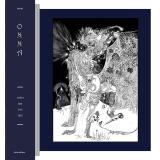
Onna - Onna Last Live 1983 LP 2x12"

Onna Last Live 1983 includes the final performance by the original line-up of Onna, the psych-rock project of revered Japanese manga artist, Keizo Miyanishi. Onna’s legend has largely rested, until now, on one self-released and self-titled seven-inch from 1983. Reissued by Holy Mountain in 2009, its rediscovery, along with several archival live and studio sets that leaked out across the 2000s, signalled to a wider audience the power of Miyanishi’s strikingly hypnotic songwriting. With Onna Last Live 1983, though, we hear the group’s perfect line-up performing at its peak.

While Miyanishi was the core member and conceptualist of Onna, the other members of the group would also go on to make significant contributions to the Japanese underground. Guitarist Michio Kurihara would eventually be known for his membership of YBO2, Ghost and White Heaven, and collaborations with the likes of Boris and Damon & Naomi. Drummer Ken Matsutani formed Marble Sheep & The Run-Down Sun’s Children and The Mickey Guitar Band, while also running the Captain Trip label. Joined by the late bass player Yasui Yutaka, to whom the album is dedicated, this quartet only performed live in 1983; the live set here was recorded at Silver Elephant.

It’s a different line-up to the Onna duo that’s documented on their single. After Miyanishi and fellow manga artist Mafuyu Hiroki recorded that material, Miyanishi decided he wanted to start playing gigs; Hiroki left, and Kurihara, Matsutani and Yutaka joined soon after. This line-up allowed Miyanishi to significantly expand Onna’s powers, leading to a sound that Kurihara once described to Ptolemaic Terrascope magazine as “repetitive and heavy, yet quite orthodox.”

The songs here are simple yet deeply effective in their repetitive power, generally revolving around two or three simply strummed chords for guitar. Bass and drums repeatedly lock into mantra-like grooves as Kurihara’s guitar scales the walls, with Miyanishi’s consumptive moans and sighs sent torquing through FX. The cumulative effect of the seven songs here is very heavy indeed; if the prologue “Always…” drifts beautifully through five minutes of placid, beseeching melancholy, the epilogue, “Never Seen A Light Like This”, spirals out into sixteen minutes of glazed-over psych-rock, completely monomaniacal and thrilling in its slow-motion tumult.

Throughout, you can hear Miyanishi and co. reaching for something ineffable, something beyond and between the notes. It’s a phenomenal performance; it’s also no surprise that the group disintegrated after this show, given its intensity. Matsutani and Yutaka left after the Silver Elephant show, with Miyanishi and Kurihara continuing through the first half of 1984 firstly as a duo, and then a trio with new drummer Yoshiki Ueonyama. Kurihara left soon after. But Onna Last Live 1983 is proof plenty of the powers of the original Onna quartet, sending their Rallizes/Velvets dream-mantras off into darkened, stormy skies.

Reservar24.04.2026

debe ser publicado en 24.04.2026

50,00
Pineal Navigation / Charlton - Combination 3 EP

Dublin meets Rotterdam.
Following the highly acclaimed Combination 2 EP featuring Pineal Navigation & Stanislav Tolkachev, Dublin-based label Awareness System returns with its boldest statement yet. Combination 3 EP unites the rising label head Pineal Navigation with Rotterdam’s prolific techno force Charlton for a powerful six-track split release. This third instalment in the Combination series delivers a deep dive into raw, machine-driven Techno and Electro, embodying the spirit and authenticity of the true underground. Each artist contributes three tracks, creating a dynamic and immersive listening experience designed for peak dance-floor impact.

Charlton opens the record with relentless grooves in “Whats The Answer” and “Relentless Pressure”, setting the tone with punchy Detroit tinged poly rhythmic driving energy. Pineal Navigation answers on Side B with “Forward Ever” and “Datafried”— two tracks of mechanical funk layered with cerebral textures that push the listener into a state of sonic bliss.

The journey continues as Charlton closes Side 1 with “Feeling Cloudy” an emotive track that blends his signature gritty, rhythmic percussion sound with dub-inflected techno elements. On Side 2, Pineal Navigation finishes the EP with “Purpose” exploring his electro influences through hypnotic synth lines and wandering vocal fragments that propels and image of a futuristic terrain.

Combination 3 EP stands as a testament to both artists’ commitment to crafting forward-thinking electronic music while honouring the underground ethos that defines Awareness System

Disponible

En el almacen y preparando para el envío

12,40
Ribé & Roll Dann - Virtus Occulta

Ribé & Roll Dann

Virtus Occulta

12inchMR-043
Mutual Rytm
13.03.2026

Ribe & Roll Dann serve up potent techno on Mutual Rytm with 'Virtus Occulta'.

Built around concepts of unacknowledged work and enduring merit, the release marks their first EP on SHDW's widely
respected label.

Based in Toledo and Madrid, Ribe & Roll Dann are exciting residents at Laster Madrid and Lanna Club, two of Spain's leading venues. Emerging as driving forces in their national techno scene, they have also made an impact on the global landscape, making wider moves through collaborative releases on Klockworks, and individual outings on a number of other influential labels. Having previously featured in the label's Federation of Rytm IV compilation, the pair make their full EP label on SHDW's Mutual Rytm imprint to open March with a deep dive into their expansive sound.

Opener 'Sub Terra' is a pure club tool that is direct, physical and rooted in the underground with a seriously heavy low end. 'Extra Lumen' is more restrained but still built on a steady, forceful rhythm with controlled energy that prefers to operate in the shadows. 'Ars Non Placens' stays true to the idea that music is not made to please, but to exist on its own terms with hunched drums and dubby undercurrents. Next, 'Meritum Negatum' fizzes with static electrical charge and minimal drum funk and is a direct reflection on overlooked skill and unacknowledged work, before closer 'Virtus Persistens' delivers a continuity and a steady pulse rather than an explosive ending, keeping you locked throughout.

In addition, three digital bonus cuts come alongside the vinyl package. 'Labor Inauditus' speaks to hours of technique, production and booth experience that remain invisible. Next come the taught, rubbery rhythms and unrelenting atmosphere of 'Silentium Testium', while 'Sine Aplausu' - which means without applause - brings a ghostly late night vibe that you will never want to end.

Disponible

En el almacen y preparando para el envío

14,92
APRS - DRIFT

APRS

DRIFT

12inchLWP001
Lowpass Records
02.03.2026

Marking his vinyl debut on Lowpass, Berlin-based producer APRS steps forward after a run of striking releases on labels such as Soma, ARTS and Sungate.

“Drift” explores human emotions through drums, melodies and textures with five pieces that refuse to settle into one shape. Each track bends the EP in a new direction without breaking its thread, holding onto a sense of vastness, detail and intimacy. Andy Martin closes the record with a remix that widens the palette even further, pushing the material into heavier terrain while keeping its spirit intact.

LWP001 is less a declaration than a first gesture. Intuition over uniformity; a label shaped by instinct, variation and space; a place for artists to wander and for sound to evolve freely.

Disponible

En el almacen y preparando para el envío

15,55
MADALA KUNENE & SIBUSILE XABA - KWANTU

Bringing together the elder statesman of the Zulu guitar Madala Kunene and internationally acclaimed Sibusile Xaba, kwaNTU pulls two generations of South African guitar mastery into a single point of focus. Under-represented on recordings outside of South Africa, Madala Kunene (b. 1951), the ‘King of the Zulu Guitar’, is revered as the greatest living master of the Zulu guitar tradition. Sibusile Xaba, whose collaboration with Mushroom Hour Half Hour reaches back to his first recording in 2017 (Open Letter To Adoniah/Unlearning), has garnered international acclaim for his unique voice and virtuoso guitar stylings, which bring together multiple South African guitar lineages in an original, spiritualised fusion. Collaborating with Mushroom Hour and New Soil for kwaNTU, the two players come together to weave a filigree sonic fabric which reaches down to the heartwood of Zulu guitar music but moves resolutely outward, building on the past to create a deeply rooted statement about present conditions and future travels. kwaNTU – which can be roughly translated ‘the place of the life-spirit’ – is also conclave of teacher and student, as Xaba has been taught by Kunene for the last decade. Meditative, rich and sonically sui generis, kwaNTU finds these two musicians linking up within the inimitable space of sound and spirit that they share through Kunene’s teaching.

The great masters of South African music have not all had equal exposure. For many years the generation of musicians who were exiled during apartheid took centre stage, as the regime made it very difficult for those at home to be heard. More recently, a new cohort of important voices, especially in jazz, has broken through to international consciousness. But for the generation of musicians in between – those who shone like beacons in the most difficult final years of apartheid and immediately afterward – international recognition has been slow in coming.

Madala Kunene, ‘the King of the Zulu Guitar’, is among this number. A revered figure for current generations of South African musicians, Kunene began his recording career in 1990, at the bitter end of apartheid, with a now classic self-titled LP for David Marks’ storied Third Ear imprint. Born in 1951 in Cato Manor, near Durban, he had determined to be a musician from early childhood, and by the time he first entered a recording studio he had already had a long career as a popular performer. His virtuoso absorption and transformation of the venerable Zulu maskanda guitar tradition and his richly spiritualised approach to music immediately marked him out as someone special, and in the years that followed, Kunene cemented his position as one of South Africa’s musical elders. He is without doubt the grand master of the Zulu guitar tradition, but his sound and sensibility ranges far beyond it into varied sonic terrain, and he has collaborated with a wide range of musicians both at home and abroad. Now in his mid-seventies, he remains a shining light for those that are making music in contemporary South Africa.

‘He is really an amazing person,’ says the guitarist Sibusile Xaba, who has been mentored by Kunene for over a decade, and now invites a collaboration with him on kwaNTU. ‘As a mentor, he's really powerful in showing us the way. For us to have this opportunity to make music together and have a project together is really a blessing to me.’

Xaba himself grew up in Newcastle, KwaZulu-Natal, where his mother had been in a band and his father sang in a church choir, and from early childhood Xaba played homemade tin guitars. He only later realised that music was his calling. ‘I just loved music. I was fortunate. My parents loved music. And when it was time for me to leave home and go to study outside Newcastle, I knew that music was what I wanted to do. There was no second option. It was just music.’ Moving to Pretoria to study music formally, Xaba committed himself to his craft, developing a unique style that draws on both US jazz masters such as Wes Montgomery and Jim Hall, and the rich and varied heritage of the South African guitar, from inspirational jazz players such as Allen Kwela and Enoch Mthalane, to the music of the Malombo groups and Dr. Philip Tabane (Xaba has previously collaborated with Dr. Tabane’s late son, Thabang), and the Zulu guitar tradition embodied by Kunene.

‘I was really in love with the jazz guitar, I really admired it, and I was digging a lot in that direction,’ says Xaba, recalling his first encounter with Kunene’s music, over a decade ago. ‘And then one day on my timeline, Kunene popped up, and I was like – “What's this sound?” I was so connected to it. It really touched me deep. I started checking out his records, and then I found out he's from the same region as I am, which is Zululand.’ After Kunene played a show at the Afrikan Freedom Station in Johannesburg, Xaba make contact with him, and visited him at home in Durban. They struck up a friendship, and Xaba became the elder’s student, as Kunene began to pass on his knowledge and his inimitable way of playing.

kwaNTU is a tribute to this relationship and the deep learning that has defined it. The album was recorded in Zululand in the town of Utrecht, at a cultural centre called Kwantu Village, which gives its name to the album. ‘It's such a broad word,’ Xaba says, ‘but the elders teach us that Ntu is basically an energy, almost chi, an energy, a force that all living beings have within them. It's a living energy, so kwaNTU is like, almost the place of this energy.’ The two men sequestered themselves for five days of jamming, improvising and planning, and then the session was recorded in one take over a single night, with Gontse Makhene joining on percussion and backing vocals and Fakazile on vocals. Other voices and overdubs were later added in the studio in Johannesburg.

The result is a rich and meditative recording that finds two generations in a deeply engaged dialogue. Teaching and passing on his knowledge, the elder Kunene has brought Xaba into a space of sound and knowledge that they now share; Xaba’s own practice of deep communion with nature and his dedication to his musical craft make him the perfect interlocutor for Kunene. The result is an album that foregrounds the two musicians engaged at the highest levels of responsive listening, sympathetic unity, and collaborative concentration. Bringing an elder statesman of South African music to an international listening audience for the first time in decades by pairing him with one of South Africa’s most important new voices, kwaNTU is a meeting of generations and a powerful demonstration of musical lineage and continuity.

‘Before music, there is sound,’ Xaba observes, speaking of Kunene’s unique approach to music. ‘And sound is like a common compartment…it's not restricted to particular people or particular geographic places, you know what I mean? It's sound. Everybody can hear it. So when he constructs that sound into music, I think everybody resonates with the energy behind his construction of sound into song. Here at home, we really love him for preserving our history through the guitar, through his stories as well the music, the songs that he writes. We really, really admire him.’

Disponible

En el almacen y preparando para el envío

23,95
VENERA - EXINFINITE

Venera

EXINFINITE

12inchPANLP153
PAN RECORDS
22.10.2025

Nachdem sie auf ihrem gefeierten Debütalbum ein multidimensionales Klanguniversum definiert hatten, verlassen der Komponist und Filmemacher Chris Hunt und James ,Munky" Shaffer von Korn auf EXINFINITE das Vertraute und driften in ein Reich der Rekursion, wo sie auf ein Gewirr aus gespiegelten Wurmlöchern blicken, die mit unheimlicher Mehrdeutigkeit summen. Das zweite Album von VENERA ist düsterer, heavier und perkussiver als sein Vorgänger, aber es gibt etwas Intimeres in seinen Schaltkreisen, das schwer zu definieren ist - etwas Mystisches, Geheimnisvolles und Melancholisches. Songs materialisieren sich aus dem Nichts, nur um von sauren Synthesizern aufgelöst oder von Hunts geschärften Beats durchbohrt zu werden, während Shaffers dichte, gequälte Riffs durch euphorische, zeitverzerrte Vocals von FKA twigs, Dis Fig und Chelsea Wolfe ausgeglichen werden. Nach ihrer Begegnung mit der Unendlichkeit haben VENERA nach innen geschaut, über die Grenzen der Existenz nachgedacht und ihre tiefsten Emotionen ausgegraben. VENERA entstand 2022, als Hunt und Shaffer nach Aufnahmen mit der albanischen Künstlerin Xhoana X. ihr eigenes musikalisches Terrain betraten. Das Duo improvisierte gemeinsam und experimentierte mit cineastischem, von Science-Fiction inspiriertem Sounddesign und erkannte, dass die Zusammenarbeit Potenzial hatte. So begannen sie, ihren Sound weiterzuentwickeln und zu verfeinern, wobei sie Unterstützung von Deantoni Parks, dem ehemaligen Schlagzeuger von Mars Volta, Alain Johannes von Queens of the Stone Age, dem Post-Punk-Duo VOWWS und den LA-Noise-Rock-Legenden HEALTH erhielten. Nachdem ihr Debütalbum 2023 auf Mike Pattons Label Ipecac erschienen war, setzten VENERA die Dekonstruktion und Neugestaltung ihres Songwritings fort, tauschten Eno-artige Ambient-Atmosphären gegen explosive Beats und dichte Texturen aus und fanden heraus, wie sie die von ihnen eröffnete Erzählung erweitern konnten, ohne alte Pfade zu beschreiten. Auf ,Tear" ist die neue Richtung des Duos deutlich zu hören, wenn Shaffers ursprüngliche Gitarrenklänge zu unheimlichen Widescreen-Expositionen umgestaltet werden, die Hunt mit pneumatischen Kick- und Snare-Zyklen untermalt. Unterbrochen von Luftschleusen-Zischen und leuchtenden Synthesizern, bietet der Track eine Kulisse, die VENERA kontinuierlich verwandelt und das Konzept im Laufe des Albums neu formt. Die Kult-Singer-Songwriterin Chelsea Wolfe gibt dem düsteren ,All Midnights" einen gotischen amerikanischen Touch, indem sie kraftvoll über VENERAs vakuumverpackte Rhythmen und gasförmige Synthesizer singt, und der in Berlin lebende Noisemaker Dis Fig, der bereits mit The Body und The Bug zusammengearbeitet hat, verleiht Shaffer und Hunts tape-verzerrten Industrial-Pops und -Whirrs in ,End Uncovered" hauchige, emotional vielschichtige Töne. Sie lassen squelchigen, verlangsamten Techno in okkulte Noise-Reflexionspools auf dem schlängelnden ,Asteroxylon" einfließen, und Hunt antwortet auf Shaffers hallende Zupftöne mit Nebelhorn-Stöhnen auf dem unheilvollen, nachdenklichen ,uuu773". ,EXINFINITE" baut sich kontinuierlich auf, bis es ,Caroline" erreicht, eine intensive Zusammenarbeit mit FKA Twigs, die ihre unheimlichsten Töne isoliert. Zunächst umspielt sie ihre Worte mit bedrohlichen elektrischen Verzerrungen und verstümmelten, geisterhaften Stimmen, bevor sie in einen aufgeladenen opernhaften Schrei ausbricht, dem Shaffer und Hunt mit flirrenden kybernetischen Beats und dichten Wänden aus Gitarrenlärm begegnen. Dieser Track bricht das Konzept von VENERA vollständig auf, verschmilzt das Synthetische mit dem Natürlichen und löst Dysphorie, Selbstverlust und unendliche Regression aus. So wirken der blutrünstige Lärm und die finstere Atmosphäre von ,Decreation" wie eine dissoziierte Coda. In ,EXINFINITE" werden Zerstörung und Tod nicht überwunden, sondern so lange intensiviert, bis sie sich vollständig verwandeln.

Disponible

En el almacen y preparando para el envío

23,49
Meitei - Sen’nyū

Meitei

Sen’nyū

12inchKI-047LP
KITCHEN. LABEL
18.09.2025

In the final month of 2024, Meitei arrived in Beppu, a city long steeped in vapor, myth, and mineral memory. Invited to create onsen ambient music commemorating Beppu’s 100th anniversary, he immersed himself in the city’s geothermal psychogeography, where sound rises from the ground and time clings to mist.

Known for his Lost Japan (Shitsu-nihon) works, which channel forgotten eras into flickering auditory relics, Meitei took residence in the warehouse of Yamada Bessou, a century-old inn perched by the bay. Over two weeks, he listened intently to steam, to stone, to the atmosphere itself. The resulting work, Sen’nyū, traces the inner spirit of onsen culture. Like water finding its path, the music emerged with quiet inevitability, shaped by Meitei’s synesthetic sensibility and deep attunement to place.

Equipped with a microphone, he wandered Beppu’s sacred sites: Takegawara Onsen, Bouzu Jigoku, Hebin-yu, and the private baths of Yamada Bessou. There, he captured the breath of the springs, bubbling mud, hissing vents, wind against bamboo, and the murmurs of daily visitors. These field recordings became the sonic bedrock of Sen’nyū, an act of deep listening that attempts to render even the rising mist and shifting heat into sound.

Unfolding as a single, continuous piece, Sen’nyū drifts like fog through sulfur and stone. It traverses the veiled madness of Bouzu Jigoku, the spectral resonance of Yamada Bessou’s inner bath, and the hushed voices of Takegawara Onsen. It is a gesture of quiet reverence, for water’s patience, the land’s memory, and the hands that have bathed here for generations.

Where Meitei’s earlier works conveyed his personal impression of a fading Japan, Sen’nyū is grounded in tactile presence, music not imagined but encountered. Here, his practice moves closer to the spirit of kankyō ongaku, environmental music born from place, shaped by it, and inseparable from it.

As part of the project, Meitei conceived a two-day public sound installation inside Takegawara Onsen, culminating in a live performance. Bathers soaked in mineral-rich waters while submerged in sound, an embodied ritual of place, body, and listening.

Sen’nyū marks Meitei’s first full-length work centered entirely on onsen and opens a new chapter of his Lost Japan project under the expanded title 失日本百景 (One Hundred Lost Views of Japan), a series exploring extant sites of longing still quietly breathing within contemporary life. The album will be accompanied by Meitei’s first photo book, a visual document of his time in Beppu. A new layer is added to the world he has, until now, built only through sound.

Sen’nyū continues Meitei’s devotion to Japan as subject, while opening new terrain: both ritual and remembrance, an immersion into the mineral soul of Beppu.

Disponible

En el almacen y preparando para el envío

29,37
Various - Rawbeats Extrasensorial 003

COLLECTING ORDERS FOR 2026 REPRESS

Night falls, the lights dim, and the Extrasensorial Catalog presents its third chapter—an eclectic VA built for late hour mind-bending moments on the dancefloor.

On the A side, we open with Dani Labb and his explosive contribution "Rin Raje", a raw, hypnotic roller designed to twist minds and bodies alike. Saturated grooves, razor-sharp percussion and just the right amount of darkness make this an undeniable peak-time must.

A2 features the Italian craftsman Niki IL B with "Monte Moggio", a mystical excursion into deep, textured terrain. This track feels like wandering through fog-covered hills at dawn—delicate, groovy, and haunting in the best possible way.

Flip to the B side, and Ludovic wastes no time with "Vitesse, Argent, Sexe (5am Mix)", a late-night anthem soaked in tension and sweat. Pulsating basslines and seductive rhythms carry you into a euphoric state where the rules no longer apply.

Closing things off is Kebab Traume with "Mindlock", a cerebral journey that merges dreamy pads, off-kilter drumwork and warped melodies—like stepping into a lucid dream you never want to wake up from. An ideal closer for those deep after-hours rituals.

Reservar

El artículo no se ha publicado. Tú puedes reservar ahora el artículo y después de ser pagado se te será enviado.

13,40

Ültimo hace: 5 Meses
Nate By The Way - Fishbowl EP

Fishbowl EP marks Natebytheway at his most personal, sounding like both a producer and a festival headliner electronic band with soul. His vocals stick instantly, built to work both in sweaty clubs and oversized main stages without losing intimacy. Synths radiate calmness and energy at once, thus mirroring Nate’s spirit: generous, luminous, but never naive.

Because, when he wants, he turns malicious grooves snappy, percussions schematic, and melodies that play dirty tricks. Fishbowl feels destined for permanence, a song that will outlive the night it was born in.
La Gente Es Sexi is a razor-sharp club tool for lovers of Spanish, hips forward, and crooked smiles.

Noodle Bloomers seduces dancers who live between gardens, terraces, daylight and dawn.

And lastly, The Eligible Groovester loops like an obsession its image already imagined as Nate cycling through warm San Francisco streets, collecting strange souls along the way.

Reservar

El artículo no se ha publicado. Tú puedes reservar ahora el artículo y después de ser pagado se te será enviado.

13,03
Section 47 - Drought EP

Section 47

Drought EP

12inchVFS079
Vinyl Fanatiks
06.06.2025

Back in 1995 Section 47 released their final EP on their own Terra Records. Three jungle/drum & bass tracks that became highly sought after (which is obviously why we approached them!). This is probably the rarest record we have released as only 50 white labels came out back in 1995.

There were two EPs prior to this one if you collectors want to dig those out plus the chaps have recently put out a new album, a collection of released and unreleased tracks from 30 years ago which you can find on their Bandcamp page.

Disponible

En el almacen y preparando para el envío

16,18
Tifra - Terra Incognita

Tifra

Terra Incognita

12inchHAWS028
Haws
21.03.2025

What lies on the terrain for which no map exists? Tifra has volunteered to take the plunge and find out. For the 28th record on Haŵs, the Dutch DJ/producer steps up to the frontline with ‘Terra Incognita’ - a primitive force to be reckoned with that reveres the hypnotising, ominous unknown. Four investigational tracks unify the checkpoints, wandering through themes of 00s/90s leftfield house, prog, and continuous, undulating grooves.

The EP sets sail with ‘Invoke Hysteria’, scavenging through malevolent, hostile waters and a caution of pad synths, drums and agitated melodies.

Relenting onwards, ‘Serpent’ slinks into a mellow respite, moving slowly and deliberately like a snake in the moonless dark. Deep, resonant synths coil around the percussive heartbeat of the track, weaving together velvet layers of bass, wind instruments and steady, surrendering exhalations of breath.

The titular ‘Terra Incognita’ hoists up the anchor and yields to the trance of the summoning liquid night. Repetitive melodies form the contours of its shifting course, moulding a ritualistic rhythm under the dissolving face of the sky.

Admo steps up to the wheel for the remix, smoking out the initial perfume of the atmospherics into a new, tough brutality. Hauling the track out of its initial spacey orbit, he re-embellishes it with dour synths, drums and a primal, subterranean growl.

Some say that there is no worse poverty than that of connection, so why not be the first to take the risk, break the divide and find out what lies beyond the veil? Otherwise, make your own guesses, and then let them guess who you are.

Disponible

En el almacen y preparando para el envío

11,98
Gosha Martynov & Natasha Sinyakova - Imena Rek (LP)

Following a fallow 2023, a rejuvenated Growing Bin return to your turntable with this sublime collaborative LP from Gosha Martynov & Natasha Sinyakova. On their first foray into the physical, the duo expand the spectral ambience and medicated breaks of their earlier work with lithe touches of organic jazz and Cafe Del Mar cool, creating a complex assemblage of dreamy downbeat and emotive electronica that's entirely easy on the ears.

Opener "Pozhaluysta" seduces with smart syncopation and beguiling melody, its flute and fretwork finding ample space to slip around Natasha's voice, equal parts Cocteau operatics and jazz-club coquette, in an expression of a want beyond words. The mood shifting "Osvobodi Menia" sees the solemn, snaking sound of a sampled duduk drift into an optimism of airy pads and escapist mantra, suspended in reverb until the end of time. "Ya Tebia Zhdala" began life as a break-led experiment, gradually evolving into a romantic and naive sketch rich with splashes of piano and dynamic chorus pads. Naturalist hymn "O Dereve" weaves a dark and intimate tale from the point of view of a veteran tree as its buzzsaw guitar loops blossom into multilayered vocals full of emotion.

Awash with sonar sweeps, sumptuous pads and rolling subs, the titular "Imena Rek" channels post-rave bliss into the hypnagogic anthem the contemporary IDM-ographic have been searching for. Infectious hooks and spaced out pads ride the breakbeat rhythm for a dreamy experimental pop banger from another planet. The sombre sway of "Rany", filtered through the fog of a broken cassette recorder, trance djembe and unpredictable bass tones rivals the finest Motion Ward or In:dex releases for crepuscular charm, while "Smeshno" sees serrated drones sink into a slinking rhythm, playing counterpoint to the tender chords and yearning vocals.

"Iskra" closes out the chiasmus with a return to the organic experience of the opener, the flute and acoustic guitar augmented with nuanced hand percussion and a music box refrain. Listening to this album is like a midnight walk through an ancient forest - an experience which both scares and tempts you at the same time. From touching damp moss to feeling the thick fog with your body and watching mushrooms glow in the dark, 'Imena Rek' guides you through the terrain.

Flawlessly arranged and executed, this LP alludes to a long lineage of innovative downbeat, feels absolutely essential in the present and pushes the trip hop revivalists towards a fascinating future - Gosha Martynov & Natasha Sinyakova have created a timeless piece of music,
but what else do you expect from the Bin?

Disponible

En el almacen y preparando para el envío

21,81
Mehmet Aslan - Auguri

Mehmet Aslan

Auguri

12inchPLANIS010
Planisphere
09.10.2024

Exploration, collaboration and curiosity define the rhythm at the beating heart of Mehmet Aslan’s exemplary compositions. The Swiss-born producer of Turkish heritage has already forged a singular path through production, DJing and full-band performances, navigating the more esoteric corners of Berlin’s club culture without sacrificing his musical heritage or innate creativity.

A conceptual new LP ‘Auguri’ follows on from 2021’s gnomic, ornate ‘The Sun Is Parallel’, which saw Aslan musically associate with the likes of Valentina Magaletti and Niño De Elche. ‘Auguri’ also has its foundations in collaboration, born out of a musical lab at Lyon’s annual
Nuits Sonores, the forward-thinking festival with whom Aslan has maintained a lengthy creative relationship.

The resulting audio-visual performance, ‘Bird Signals For Earthly Survival’ introduced Aslan, to the Greek filmmaker Stratis Vogiatzis. Drawing on the philosophy of Donna Haraway and envisioning new ways of being, of living on earth, Aslan and Vogiatzis crane their necks to the sky to witness flocks of birds performing spectacular movements in unison. Fluid and ancient, their organic waltz provides inspiration for Aslan’s extension of the project, spanning sonic shades of electro, ambient and modern folk psychedelia.

On the coastline of Vogiatzis’s home country of Greece, as in many places across the world, climate change threatens to effect the ancient migration pattern of millions of birds, just as their fellow beings on terra firma become increasingly entangled in a man-made disaster of their own creation. In unison, ‘Auguri’ is adorned by artwork from designer Xavi Bou. Known for his ‘ornithographies’, this striking visual captures avian life not only as a force, but a wry observer.

“We need to transform our connections with other living beings to protect the Earth and live together harmoniously”, reflects Aslan. “Personally, this project has made me more sensitive to this issue. I wanted to give back in return for the inspiration I've received."

Perhaps upending expectations of a more traditional ‘ambient’ album, Aslan commits some of his finest compositional work and understated songwriting to this urgent imperative, creating original music that nonetheless, has nature flowing through it. ‘Critters’ presents a spectral sound collage on which Aslan himself speaks from the texts composed at the residency, conjuring visions of “the birds flying… shape of the future”. Meanwhile, the undulating, psychedelic ‘Pigeon Blinks’ takes inspiration from more domestic scenes, charting the unexpected roosting and hatching of an egg on a kitchen window, while ‘Auguri’ gives the album it’s title in connecting to a higher plain, demonstrating Aslan’s ability to lure melody and catharsis from looping hypnosis.

Opener ‘Spectra’ provides a forceful, almost industrial breakbeat that establishes the exigency of the album as well as its sense of wonder, while ‘Euphoria’ reaches the potency of its promise slowly, with Aslan’s modular melodies meeting the flourishing percussion of guest player and multi-instrumentalist, POPP. Finally, ‘Aura’ delivers a cinematic conclusion, mixing an elegiac organ motif, haunting guitar chords and the prophetic sense of a scorched earth. Here, with patience and soaring production, Aslan once more makes the abstract and the unthinkable somehow tangible, mixing in sampled birdsong.

Accordingly, ‘Auguri’ is being released in accordance with EarthPercent, the music industry’s climate foundation, co-founded by Brian Eno. A portion of the album’s publishing will be credited as part of ‘The Earth As Your Co-Writer’ initiative, allowing artists to directly credit The Earth in their new compositions. Here, streaming and publishing from Aslan’s recorded sounds are automatically paid back to a number of vital initiatives worldwide.

Leaning into some of the most vital questions and anxieties of our time, ‘Auguri’ is not a project without a sense of hope. From studio to sea, Mehmet Aslan continues to look to the skies and beyond.

Disponible

En el almacen y preparando para el envío

14,71
Shaleen - Consolidation EP

Shaleen

Consolidation EP

12inchSEELEN.008
SEELEN.
26.07.2024

There is propably no single event that has as potent of an
effect on the german Techno- scene as the fall of the Berlin
Wall. A city divided suddenly, in one single night, became
uni¦ed, opening up both sides for the new experiences and
ways to view life the other might have. Berlin’s eastside with
it’s empty, unused warehouses proved to be a fertile breeding
ground for free spirits and those carrying a newfound ¦re in
their eyes. This was the zero hour. The Consolidation. And it
is this mindset, spirit and ¦re of Consolidation that Shaleen
conjures on her debut EP of the same name. The title track
opens up by sampling John F. Kennedy’s legendary “Berlin”
speech from 1964, before absolutely caving in the concrete
with a beyond-heavy kickdrum and a very stripped down but
effective 909-percussion section. Spursed in along the track’s
runtime are droning sirens and JFK continuing to beckon you
to lose yourself in the metropolitan bowels. This is the
anthem of a past revolution. On Deconstruction, Shaleen
goes down a slightly more basement oriented route. The
Percussion shares the title track’s stripped down
effectiveness, but the Groove is more rolling, the Vocal
samples are more distorted and there are sharp synths
cutting through the beats like shards of broken glass. Of
course, a revolution wouldn’t be complete without a mob so
both Cadency aka Hector Oaks and New Frames have put
their spin on the EP’s title track. Mr. Cadeny is up ¦rst and,
being no stranger to revolutionary anthems, has given
Consolidation an almost contemplative mood in his Remix,by adding a very subtle melody. This doesn’t mean it hits any
less hard, mind you, there is an incredibly strong drive to the
track, paired with an almost constantly looping vocal and the
sirens going into overdrive, this would be the track to drive
crowds into a frenzy. Meanwhile New Frames’ track is the
kind of thing you wouldn’t want to encounter alone in a dark
alleyway. The sub-basses are heavy enough to terraform
Mars, the Jungle-esque Synthlines roar and snarl at the
listener and every drop feels like a right hook to the chin. The
original’s vocal is cut in a way that it only adds to the
stomping rhythm, putting you in a mood to throw bricks. So
while this record showcases an aggressive sound and a
mood for revolution, it is important to remember it’s title.
Consolidation. It echoes a message of uni¦cation. Of
standing together. Because together we are, have been and
will always be stronger than by ourselves.

Disponible

En el almacen y preparando para el envío

13,87
KHRUANGBIN & LEON BRIDGES - TEXAS SUN EP

Driving anywhere in Texas can cost you half a day, easy. For example, it'll take you over four hours just to get from R&B singer Leon Bridges' hometown of Fort Worth down to Houston, where the psychedelic wanderers in Khruangbin hail from. The state is vast, crisscrossed with rugged expanses of road flanked by limestone cliffs and granite mountains, forests of pine and mesquite, miles of desert or acres of sprawling grassland, all depending on what part you're in. And it's all baking under the Texas Sun that lends its name to Bridges and Khruangbin's new collaborative EP. "Big sky country, that's what they call Texas," Khruangbin bassist Laura Lee says. "The horizon line goes all the way from one side to another without interruption. There's something really comforting about that." On Texas Sun, these two members of the state's musical vanguard meet up somewhere in the middle of that scene, in the mythical nexus of Texas' past, present, and future-a dreamy badlands where genres blur as seamlessly as the terrain. It calls equally to the cowboys boot-scooting at Billy Bob's in Fort Worth, the chopped-and-screwed hip-hop fans rattling slabs on the southside of Houston, the art-school kids dropping acid in Austin, the cross-cultural progeny who grew up on listening to both mariachi and post-hardcore out on the Mexican borders of El Paso. All of these things, overlapping in a multicolored melange, purple hues as vivid and unpredictable as one of the state's rightfully celebrated sunsets. A journey through homesick reminiscences, backseat romances, and late-night contemplations, the kind of record made for listening with the windows down and the road humming softly beneath you. Like the highways that inspired it, Texas Sun is guaranteed to get you where you're going-especially if you're in no particular hurry to get there.

Disponible

En el almacen y preparando para el envío

18,70
Artículos por página
N/ABPM
Vinyl