Different strokes for different folks. The celebrative 11-track 'xoxo' compilation, originally pressed as a 3xLP, is now also available as three separate EPs. Oceanic takes EP 3 into euphoria on Dala, with sounds that pinch and prickle. Don't DJ follows with nos(e)care, his no-nonsense polyrhythmic signature that'll put your soundsystem's low-end to the test. And there's nothing like a little melancholia to close it out: Haron's De Papaverparade is a tearjerker for the dancefloor
Cerca:tes 2
DJ Support: Ben UFO, Palms Trax and more…
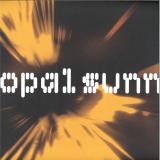
Alex Kassian reunites with Hiroaki Oba as Opal Sunn. Following on from their massive 2024 hit Elastic this latest offering ‘Liquid’ is the second in a trilogy of releases on the ‘buy on sight’ Test Pressing Records. Having taken their live set to the world finest clubs & with Elastic being an end of night anthem for DJ’s such as Palms Trax and Ben UFO. This highly anticipated new release builds on their sound and is sure to be another hit with DJ’s and record buyers alike
Anywhere, Anyway captures a selection of club tools that Makèz and their close circle have tested, refined and played across dance floors worldwide. Each track carries that familiar equilibrium the duo keeps guard over, a steady pull between raw club energy and moments meant for intimate listening.
Much like their recent album on No Art, the EP took shape while traveling, moving from session to session with artists from different musical worlds. Those encounters left their marks, subtle shifts in rhythm, harmony and texture, shaping the edges of the EP. The Amsterdam duo keeps seeking creative impulses from unexpected angles, letting ideas find them wherever they are. Anywhere, anyway.
DJ Support: Sound Metaphors, Castro & Nemo, Luke Una and more
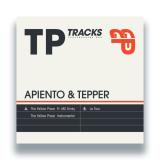
Test Pressing Tracks is a new label from the TP crew with a focus on club music. With three releases lined up we’re pretty excited about whats to come. The first release comes from Apiento & Tepper ft the vocals of MC Kinky (of ‘Everything Begins With An E’ fame) on Yellow Place Chop. On the flip we have Le Tour - a deep electronic journey that sounds best very loud. Artwork for the label comes from Dan Lissivk of Studio. More soon…
First release from the brand new label Modular Dreams run by Sound Synthesis & UTR head honcho JDSK. This label will focus more on the deeper dreamy electro side of Sound Synthesis. MD 101 features 4 high quality cutz that will surely stand the test of time.. Limited hand stamped copies, no repress!
- A1: Manha De Liberdade Feat. Jorge Bezerra
- A2: Float Feat. Octavio N. Santos
- A3: Be My Shelter Feat. Dominique Fils-Aimé
- A4: Conquest
- B1: Language
- B2: Line In The Sand Feat. Ernesto & The Basement Gospel
- B3: Water To Fire Feat. Clyde Beats
- B4: Good Night
The creative bond between Atjazz and Fred Everything is a story decades in the making. It began in 1998 at The Bomb in Nottingham during a DiY label night—a label through which they both released music. That first encounter sparked a lasting friendship and a steady exchange of ideas that would continue for many years. While they collaborated regularly and remixed each other’s work, it wasn’t until the summer of 2022 that they committed to making a full-length album.
The project took shape during an 8-day stay at Martin’s (Atjazz) home in the Midlands of England, where they set themselves the challenge of writing one track per day. Their shared musical language allowed ideas to move quickly, with some tracks forming in under an hour. Over the next three years, the material was carefully developed alongside their respective album projects: Atjazz’s Starbase 17, Fred Everything’s JUNO Nominated Love, Care, Kindness & Hope, and All Is Well’s A Break In Time.
A final session in Montreal in 2024, coinciding with Fred’s 50th birthday, brought the album into focus. From there, the duo invited a select group of world-class collaborators, including Jorge Bezerra (The Joe Zawinul Syndicate / St Germain), Octavio N. Santos (SiR, Lupe Fiasco), Clyde Beats, Ernesto & The Basement Gospel, and Dominique Fils-Aimé.
The result is a personal, well-constructed record that draws on the spirit of 90s deep house while applying three decades of experience to a deeply rooted, forward-thinking sound. It is a sonic testament that honours their mutual love of synthesizers, beat making, and sound design.
It is a project that took 8 days to start, 3 years to finish, and 30 years to perfect.
Memory Remains unveils a deeply emotional and intimate Unknown Artist release, a record driven by feeling rather than form.
Shaped and refined through careful dancefloor testing across 2025, these tracks revealed a rare sensitivity: minimalist structures wrapped in warm grooves, gentle tension, and soulful, intimate vocals that connect on a subconscious level.
This is music that doesn’t demand attention. It breathes, resonates, and stays.
Free from names and narratives, the release invites the listener into a private emotional space, where sound speaks louder than identity.
The journey is visually completed by an original artwork from Alisa Kirik, capturing the same fragile beauty and timeless mood that defines this release on Memory Remains.
- 1-: Opening Scene/ The Currency - Antony Genn, Carlos O’connell And Martin Slattery
- 2-: The Immortal Man - Antony Genn,Carlos O’connell And Martin Slattery
- 3-: Ruby’s Scarf - Antony Genn, Martin Slattery And Grian Chatten
- 4-: Nobody’s Son - Amy Taylor,Tom Coll, Antony Genn And Martin Slattery
- 5-: No Heaven No Hell For Duke Shelby - Antony Genn And Martin Slattery
- 6: People Person - Andrew Falkous, Jack Egglestone, Damien Sayell
- 7-: Duke And Beckett Strike A Deal - Antony Genn And Martin Slattery
- 8-: An Intruder In The House - Antony Genn And Martin Slattery
- 9-: Ada And Duke - Antony Genn And Martin Slattery
- 10-: Opium Dreams - Antony Genn, Martin Slattery And Grian Chatten
- 11: Tommy, Kaulo And Zelda - Antony Genn And Martin Slattery
- 12-: Black Dahlia - Grian Chatten, Antony Genn And Martin Slattery
- 13-: Beckett Tests Duke - Antony Genn And Martin Slattery
- 14-: Close The Door - Antony Genn And Martin Slattery
- 15-: Dukes Descent - Antony Genn And Martin Slattery
- 16-: A Hero’s Death - Grian Chatten, Carlos O’connell, Conor Curley, Conor Deegan Iii, Tom Coll
- 17-: Pig Pen - Antony Genn And Martin Slattery
- 18-: Puppet - Grian Chatten, Antony Genn And Martin Slattery
- 19-: A Gun Is No Good - Antony Genn And Martin Slattery
- 20-: Tommy Vs Duke - Antony Genn And Martin Slattery
- 21-: St Elizabeth’s Mortuary - Antony Genn And Martin Slattery
- 23-: Stable Shootout - Antony Genn And Martin Slattery
- 24-: Red Right Hand (Immortal) - Nick Cave, Mick Harvey And Thomas Wydler
- 25-: The Bullet - Antony Genn And Martin Slattery
- 26-: The Coin - Antony Genn And Martin Slattery
- 27-: Teardrop - Girl In The Year Above
- 28-: Romance - Grian Chatten, Carlos O’connell, Tom Coll, Conor Curley, Conor Deegan (Iii)
- 29-: The Map - Antony Genn And Martin Slattery
- 30-: Angel - Grian Chatten, Antony Genn And Martin Slattery
- 31-: The Tunnel - Antony Genn, Martin Slattery And Grian Chatten
- 32-: Medusa - Grian Chatten, Antony Genn And Martin Slattery
- 33-: Tommy Vs Beckett - Carlos O’connell, Antony Genn And Martin Slattery
- 34: Father And Son - Antony Genn And Martin Slattery
- 35-: Hunting The Wren (The Immortal Man Version) - Lankum With Grian Chatten
- 36-: Ellipsis - Grian Chatten, Antony Genn And Martin Slattery
New label Species hits the ground running with its debut release. The outlet is an extension of globally-renowned booking agency Pieces, and will feature music exclusively from the agency’s roster, which includes some of the scene’s most formidable and talented DJs and producers. The first release comes from an exhilarating project - Punky & The Brain, AKA Otis and Paul Lution. Described by the duo themselves as “scientific experiments” the music is a fusion of playful excursions with their lab equipment, and their musical knowledge.
Together they have been experimenting in the studio, merging incisive technical prowess with straight up dance floor-focused rhythms. Their field research has tested emotional variables on numerous research subjects through live performances in the most renowned clubs. A Fender bass guitar and vocoder bring another dimension to their studio exploits, and this EP is the result of their preliminary scientific findings…
In the rapidly shifting tectonic plates of the global Afrobeats scene, few arrivals have been as seismic as that of Ahmed Ololade—better known to the world as Asake. With his breakout project Mr. Money With The Vibe, the artist didn’t merely debut; he effectively recalibrated the tempo of the Nigerian pop soundscape. The EP functions as a masterclass in synthesis, pulling from the ornate, percussive history of Fuji music and grafting it onto the driving, bass-heavy architectures of contemporary Amapiano. It is a calculated, deeply rhythmic hybridization that manages to feel both nostalgic and jarringly modern.
From a critical vantage point, Mr. Money With The Vibe is defined by its brevity and density. Asake treats each track as a focused vignette, utilizing a vocal delivery that oscillates between a melodic, almost liturgical chant and the staccato urgency of a Lagos street orator. The production—characterized by sharp, frenetic percussion and deceptively simple melodic loops—creates a high-intensity atmosphere that mirrors the relentless pace of urban life. He avoids the pitfall of bloated experimentation; instead, he doubles down on a "street-pop" ethos, prioritizing accessibility without sacrificing the complex rhythmic interplay that gives the genre its distinctive texture.
Ultimately, Mr. Money With The Vibe stands as a pivotal document of the current era, capturing the transition of Afrobeats from a regional powerhouse to a dominant global force. By blending the aspirational "hustle culture" narrative with an increasingly sophisticated sonic palette, Asake established a blueprint that has since influenced a new wave of artists. The project is a testament to the idea that authenticity, when paired with relentless precision, remains the most effective currency in contemporary music.
- A1: Back From Beyond
- A2: Left For Dead
- A3: Roadkill
- A4: Hangin' In The Hood
- A5: Dominant Submission
- B1: Face The Fight
- B2: Will Work For Food
- B3: Cold Fire
- B4: Dazed And Confused
- B5: Finger First
- B6: It Can Happen
Uncle Slam, featuring former members of Suicidal Tendencies and Warrior, was a politically-minded thrash act from the 90's. Their list of influences shouldn’t surprise anyone with a passing familiarity of the genre: early Corrosion of Conformity, Dark Angel, Testament, Megadeth and of course Suicidal Tendencies.
Will Work for Food, originally released in 1993 by Roadrunner Records in Europe, with cover art by the legendary Ed Repka, will now be a available on vinyl for the first time ever.
This album features an iconoclastic take on Led Zeppelin’s “Dazed and Confused” which is one of the record’s highlights, These guys are turning that song’s proto-punk into actual punk. The rest of the album is a blast of antigovernment aggression, and is ready to be rediscovered 30-odd years later!
Will Work For Food is for the first time available on vinyl as a limited edition of 750 individually numbered copies on purple vinyl and includes an insert.
On Lila, his debut LP, Moroccan artist Karim presents a series of undulating electronic rhythms laser-etched into tessellated form: drumless techno from the pre-Sahara, built for communal psychic expansion.
Drumless, yes, but not percussionless. There are shakers, castanets, stabs, plonks, thuds. There are insistent basslines propelling forward, pulsing with energy, rippling in time. There are tones interlocking, rolling, fluttering, pattering. Dancing within, around, between each other. Considered in terms of sheer geometry, Lila is a techno record, unmistakably. But it sounds quite unlike any other techno record you've heard lately.
To write the album, Karim borrowed from the music of the Gnawa, a religious-spiritual musical tradition descended from West African peoples brought to Morocco as slaves hundreds of years ago. Now integrated deeply into Moroccan culture, the centerpiece of Gnawa music is the lila—or "night," in Arabic—an all-night-long ritual of rhythm designed to induce participants and musicians alike into a healing trance state. Which, if you're a dedicated raver, may sound familiar, yes?
Crafted entirely with modular synthesizers, Lila conjures a range of textures and moods. The show opens with "Bakh," a blissful exercise in beatlessness, clear and crystalline. On "Philipoussis," "Kiyex," and "Sonic," arpeggiated synths approximate Gnawa chants while interlaid percussion keeps time in multiple meters. "La" and "Kille" pulse in half-time, ideal for creative mixing. "Joul à lèvre" bristles with electricity, the sound of a charged lightning rod. "Pamil," woozy and lurching, feels like being shipwrecked on a forgotten island. Last and absolutely certainly not least, on the final track, "Miloir," Karim faces West and unleashes the album's only kick drum for a ten-minute psychedelic techno masterpiece. The mind warps; the body moves.
Lila is released on Tikita, Karim's own record label, founded in 2014. Tikita's discography, spare but tightly curated, features artists from across the globe pushing outwards into techno's deepest reaches. Karim's album pushes even farther. Listen for yourself.
- 1: Lille Skotland
- 2: Stevelen
- 3: Along The Low Road
- 4: Letters Melting
- 5: Summer Passing Letting Go
- 6: Tillfrisknandet
- 7: Nine Again
- 8: Along The Low Road (Reprise)
- 9: Quercian Motto
- 10: Here And Not Here
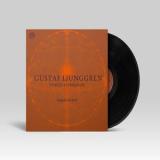
Swedish composer and multi-instrumentalist Gustaf Ljunggren invites listeners into the quiet, reflective world of Along the Low Road , an ambitious solo album that balances delicacy with depth. Following the success of Ljunggren s 2022 release Floreana , this new release offers a gentle, dream dream-like musical journey, shaped by two of the Nordic scene s most imaginative and intuitive musicians. Balancing sparse acoustic instrumentation with sprawling affected soundscapes, the album moves with patience and clarity. Ljunggren s compositions provide a foundation for subtle interplay, where every note and gesture is attentive to the music s unfolding. Featured guest Icelandic bassist Skúli Sverrisson s bass provides warmth and grounding, supporting Ljunggren s guitar, ukulele, and multi multi-instrumental textures. The result is a sound that is at once intimate and expansive, inviting reflection and connection. The tracks draw inspiration from nature, landscapes, and personal experience. Lille Skotland " evokes the rocky coast of Bornholm with gentle, melancholic flow, while Stevelen " captures the quiet power of cliffs and open skies. The title track, Along the Low Road," traces a contemplative path, its cyclical melodies and ambient layers offering perspective and calm. Letters Melting " twists a classical chord progression into a reflective polska, while Summer Passing Letting Go " balances warmth and transition. Brief, hymn hymn-like pieces such as Tillfrisknandet " provide moments of repose, and playful minimalism in Nine Again " captures the wonder of childhood at the cusp of youth. The album closes with Here And Not Here," a meditative reflection on perception and presence, leaving the listener in a quiet, suspended space. Ljunggren and Sverrisson have long been celebrated for their generosity, sensitivity, and courage as collaborators. Their work together on Along the Low Road continues this partnership, offering music that listens as much as it plays. Drawing from jazz, minimalism, Nordic folk, and early music, the duo s sound combines melodic clarity with a sense of freedom, revealing subtle emotional depths in each composition. In concert, Ljunggren and Sverrisson reimagine these pieces in the moment, allowing the music to unfold with a sense of shared discovery. Whether recorded or live, the album is a testament to the duo s enduring musical dialogue and the quiet, immersive beauty of their Nordic sensibility.
Frequencies Rhythm Life proudly presents the new release from Berlin-based DJ Merci. The Orbit EP is a powerful journey through deep grooves and Brazilianinspired rhythms, featuring three original tracks crafted for the dancefloor.
Completing the release is an outstanding remix by Chicago house legend Glenn Underground, who injects his unmistakable acid-driven touch into ‘Test’, pushing the track into a bold new dimension.
Dublin meets Rotterdam.
Following the highly acclaimed Combination 2 EP featuring Pineal Navigation & Stanislav Tolkachev, Dublin-based label Awareness System returns with its boldest statement yet. Combination 3 EP unites the rising label head Pineal Navigation with Rotterdam’s prolific techno force Charlton for a powerful six-track split release. This third instalment in the Combination series delivers a deep dive into raw, machine-driven Techno and Electro, embodying the spirit and authenticity of the true underground. Each artist contributes three tracks, creating a dynamic and immersive listening experience designed for peak dance-floor impact.
Charlton opens the record with relentless grooves in “Whats The Answer” and “Relentless Pressure”, setting the tone with punchy Detroit tinged poly rhythmic driving energy. Pineal Navigation answers on Side B with “Forward Ever” and “Datafried”— two tracks of mechanical funk layered with cerebral textures that push the listener into a state of sonic bliss.
The journey continues as Charlton closes Side 1 with “Feeling Cloudy” an emotive track that blends his signature gritty, rhythmic percussion sound with dub-inflected techno elements. On Side 2, Pineal Navigation finishes the EP with “Purpose” exploring his electro influences through hypnotic synth lines and wandering vocal fragments that propels and image of a futuristic terrain.
Combination 3 EP stands as a testament to both artists’ commitment to crafting forward-thinking electronic music while honouring the underground ethos that defines Awareness System
- A1: La Mosca
- A2: Desfile Na Praia
- A3: Funk Sin Cuenta
- A4: Al Son
- B1: Salir Del Agujero
- B2: Los Bsoaso De Paris
- B3: Quando Lembro
- B4: 6X8 En La Mañana
- B5: San Bon
ElCalefón
Salir Del Agujero
El Calefón's 1985 LP Salir Del Agujero is a rare bird.
Self-produced and privately released in Zurich, the albumdocuments one of the very few South American groups that were resident in Europe at the time, and certainly the only such band working in Switzerland. Co-founded by two Argentinians in Europe – the multi-instrumentalist, vocalist and composer Coqui Recaand the guitarist Pablo Miguez–the group consisted of Argentinian and Brazilian musicians, most of whom were present initially Europe as tourists, but had stayed on, without official sanction, as immigrants.Their music gathered its primary influences from the varied sounds of their home countries, fusing these elements drawn from the manifold indigenous styles of Argentina and Brazil with the international sounds of rock,jazz, pop and pan-Latin music.
Honed and polished by the steady gigging through which the group earned their living in Zurich, the music that appeared onSalir Del Agujero was sophisticated, original and filled with light. Resonating with a freshness undiminished in forty years, the album brims with possibility and hums with tropical warmth, bearing testament to the open-hearted musical freedoms of a mercurial musical era.
Gatefold Sleeve
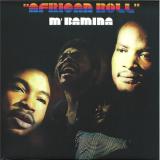
M’Bamina – African Roll (1975)
The story of an album born between Africa, Italy, and the nightclub culture of the 1970s
In the heart of 1970s Italy — a country undergoing profound social change and a music scene just beginning to open itself to distant sounds and cultures — an extraordinary, almost improbable story took shape. It is the story of a group of young African musicians who found their way to Europe, of a Turin nightclub that became a crossroads for communities and experimenters, and of an album which, released in small numbers and largely unnoticed at the time, is now considered a rare jewel of Afro-fusion.
The band called themselves M’Bamina — an ensemble of musicians from Congo, Cameroon, and Benin, who arrived in Italy in the early Seventies. Settling between northern Italy and the Pavia area, they began performing in small clubs and community events, bringing with them a vibrant rhythmic heritage: African polyrhythms, call-and-response vocals, funk-infused bass lines, and Caribbean or Afro-Latin colours absorbed along their musical journeys. Their raw, contagious energy on stage quickly drew attention.
Meanwhile, in Turin, another story was unfolding. There was a venue becoming almost legendary: Voom Voom, one of the city’s liveliest nightclubs, run by Ivo Lunardi. The club attracted an eclectic crowd — students, artists, foreigners, night owls — and Lunardi quickly understood that the dancefloor wasn’t just a place for music, but a melting pot for a new kind of cultural energy. Out of this vibrant atmosphere came his idea: to turn the club’s name into a small independent record label, Voom Voom Music, capable of capturing the spirit of those years and giving voice to unconventional projects.
When Lunardi heard M’Bamina, he immediately sensed that this was the sound he had been searching for: fresh, different from anything circulating in Italy at the time, and capable of blending African tradition with funk and European sensibility. He brought them into the studio.
Production was handled by Lunardi along with Christian Carbaza Michel, while the engineering was entrusted to Danilo Pennone, a young sound technician with a sharp, intuitive ear.
The recording sessions — held in Turin in 1975 — produced a remarkably warm and direct sound. The music feels almost live: grooves rooted in African tradition, but open to funk-rock structures and modern arrangements. It is a natural fusion, never forced. Tracks move between tribal rhythms, funk basslines, light electric guitars, congas and Afro-Latin percussion, with call-and-response vocals and melodies that echo both Congolese tradition and the lineage of Latin jazz. Not by chance, one of the album’s most striking tracks, Watchiwara, reinterprets a Latin standard through M’Bamina’s own rhythmic language.
The album was titled African Roll — a name that was already a statement of intention. It is African music that “rolls,” that moves, adapts, transforms within a new geographic and cultural setting. It is not strictly Afrobeat, nor Congolese rumba, nor Western funk: it is a spontaneous, hybrid blend, shaped more by lived experience than by any calculated aesthetic program.
When African Roll was released, the world around it barely noticed. Distribution was limited, and 1970s Italy had yet to develop a cultural framework for receiving such music. The national music press rarely paid attention to African or “world” productions. The album slipped into silence — though the band’s own story did not.
M’Bamina continued performing across Europe and Africa, even sharing a stage in Cameroon with none other than Manu Dibango. By the late Seventies, they moved to Paris, signed with Fiesta/Decca, and recorded a second LP, Experimental (1978). Meanwhile, the peculiar record they had made in Turin began to resurface quietly among vinyl collectors, Afro-funk enthusiasts, and DJs hunting for forgotten grooves.
That is when the album’s fate began to shift.
Over the decades, African Roll emerged as an almost unique document: a snapshot of an intercultural Italy before the word “intercultural” even existed, a fragment of migrant history, a spontaneous experiment in musical fusion born far from major industry circuits but rich in authenticity. Original copies began commanding high prices on the collector’s market, and the album became recognized as one of the hidden classics of European Afro-fusion from the 1970s.
Today, more than fifty years later, this reissue finally restores visibility and dignity to a project that deserves to be heard, studied, and celebrated. It is not simply an album: it is the testimony of a rare cultural encounter, born in an Italy unaware of how fertile such exchanges would one day become.
It is the story of a visionary producer, an extraordinary band, and a fleeting moment in which music, migration, and nightlife came together to create something genuinely new.
African Roll is — now more than ever — the sound of a bridge: between continents, between eras, between cultures. A record that, after rolling far and wide, has finally come home.
Arodes & Alessio Cristiano / Super Flu / Moeaike / Martim Rola & Mats Westbroek
Unreleased Records Vinyl Sampler
Unreleased Records is the label founded by Arodes, recognized for its afro-house, melodic, and club-oriented sound within the international electronic music landscape. Through a combination of high-quality productions, a strong and carefully developed artist roster, and an expanding live platform, Unreleased Records positions itself as a forward-thinking imprint that bridges underground credibility with international audience reach, and are now, after much demand, debuting on vinyl, with this standout 4 tracker EP with 3 tried and tested club bangers, and 1 unreleased gem.
So far, “Gwele,” “Don’t Mind,” and “Nothing’s Changed” have already been supported by heavyweights of the scene, including, Ante Perry, Black Coffee, Bluckther, Camilo Franco, Carl Bee, Chus & Ceballos (Ceballos), Cincity, Deer Jade, Djuma Soundsystem, Enoo Napa, Facundo Mohrr, Hyenah, Jonathan Kaspar, Joseph Capriati, Mauricio Brigante, Moeaike, Nicolas Masseyeff, Queen Rami, Sasha Carassi, Simone Vitullo, THEMBA, and Xinobi.
Ribe & Roll Dann serve up potent techno on Mutual Rytm with 'Virtus Occulta'.
Built around concepts of unacknowledged work and enduring merit, the release marks their first EP on SHDW's widely
respected label.
Based in Toledo and Madrid, Ribe & Roll Dann are exciting residents at Laster Madrid and Lanna Club, two of Spain's leading venues. Emerging as driving forces in their national techno scene, they have also made an impact on the global landscape, making wider moves through collaborative releases on Klockworks, and individual outings on a number of other influential labels. Having previously featured in the label's Federation of Rytm IV compilation, the pair make their full EP label on SHDW's Mutual Rytm imprint to open March with a deep dive into their expansive sound.
Opener 'Sub Terra' is a pure club tool that is direct, physical and rooted in the underground with a seriously heavy low end. 'Extra Lumen' is more restrained but still built on a steady, forceful rhythm with controlled energy that prefers to operate in the shadows. 'Ars Non Placens' stays true to the idea that music is not made to please, but to exist on its own terms with hunched drums and dubby undercurrents. Next, 'Meritum Negatum' fizzes with static electrical charge and minimal drum funk and is a direct reflection on overlooked skill and unacknowledged work, before closer 'Virtus Persistens' delivers a continuity and a steady pulse rather than an explosive ending, keeping you locked throughout.
In addition, three digital bonus cuts come alongside the vinyl package. 'Labor Inauditus' speaks to hours of technique, production and booth experience that remain invisible. Next come the taught, rubbery rhythms and unrelenting atmosphere of 'Silentium Testium', while 'Sine Aplausu' - which means without applause - brings a ghostly late night vibe that you will never want to end.