Ein in sich geschlossenes, grandioses, Zeichen setzendes Monumentalmeisterwerk, 2026 neu gemastert! Die Lokalmatadore bestehen seit Anfang 1982 und sind aus Mülheims allererster Punkband "Pissrinne" hervorgegangen. "Söhne Mülheims" erschien 2010 und war das fünfte richtige Album der Lokalmatadore und etwas punkiger als der Vorgänger "Männer Rock_n_Roll" anno 2000. Enthalten sind fünfzehn lokalmatadoretypische Hymnen plus ein Bonusstück. Wieso, weshalb, warum ein Bonusstück, dürft ihr selber raten...Neben eigenen Titeln gibt es zwei Coverversionen von Buzzcocks sowie Peter and the Test Tube Babies sowie das Steigerlied als Huldigung an die Bergarbeiter. Fußballmäßig wird der lokale Club V.f.B. Speldorf geehrt und der kosmische Analphabet dürfte einmalig sein. Einmalig Lokal halt, wie so oft.
GERDie Chopi Timbila zählt zu den großen Orchestertraditionen Afrikas und ist tief in der Kultur der Chopi im mosambikanischen Distrikt Zavala verwurzelt. Ihre charakteristischen Mwenje-Holzxylophone sind in sieben gleichmäßigen Tonabständen gestimmt und erzeugen eine mikrotonale Klangwelt, die sich deutlich von westlichen Tonsystemen unterscheidet. Die Ensembles vereinen Musiker verschiedener Generationen und Erfahrungsstufen, während jährlich neue Kompositionen entstehen, die Gemeinschaft, Geschichte und das Leben der Vatxopi widerspiegeln. 2008 wurde die Tradition von der UNESCO als Immaterielles Kulturerbe anerkannt und gilt bis heute als eine der komplexesten und schönsten musikalischen Ausdrucksformen Mosambiks. Mit Ecos Do Legado (Echoes Of The Legacy) ehren die Brüder von Timbila Ta Venancio, allesamt Söhne des legendären Timbila-Meisters Venancio Mbande, das Lebenswerk ihres Vaters und die kulturelle Bedeutung der Chopi-Musik. Die 2026 im Studio Bom Dia in der Provinz Inhambane entstandene Aufnahme interpretiert Mbandes Erbe neu und bewahrt zugleich dessen Geist und Tradition. Die zehn Stücke folgen der überlieferten Reihenfolge einer klassischen Timbila-Aufführung und entfalten eine zusammenhängende musikalische Erzählung. Ecos Do Legado ist damit zugleich Hommage, kulturelles Dokument und eindrucksvoller Beweis für die lebendige Zukunft dieser einzigartigen Tradition.[ENG]The Chopi Timbila is one of Africa's great orchestral traditions, deeply rooted in the culture of the Chopi people of Zavala, Mozambique. Its distinctive mwenje wood xylophones are tuned in seven equidistant pitches, creating a microtonal sound world markedly different from Western musical systems. Timbila ensembles bring together performers of different ages and skill levels, with new compositions created each year to reflect community life, history, and tradition. Recognized by UNESCO as Intangible Cultural Heritage in 2008, the tradition remains one of Mozambique's most celebrated and sophisticated musical forms. On Ecos Do Legado (Echoes Of The Legacy), Timbila Ta Venancio honors the legacy of revered timbila master Venancio Mbande through the work of his sons, who perform and reinterpret his enduring musical vision. Recorded in 2026 at Studio Bom Dia in Inhambane Province, the album serves as both a tribute to Mbande and a celebration of Chopi cultural heritage. The ten pieces follow the traditional sequence of a timbila performance, unfolding as an interconnected musical narrative. Ecos Do Legado stands as a powerful testament to a living tradition whose cultural significance continues to resonate across generations.
Die Chopi Timbila zählt zu den großen Orchestertraditionen Afrikas und ist tief in der Kultur der Chopi im mosambikanischen Distrikt Zavala verwurzelt. Ihre charakteristischen Mwenje-Holzxylophone sind in sieben gleichmäßigen Tonabständen gestimmt und erzeugen eine mikrotonale Klangwelt, die sich deutlich von westlichen Tonsystemen unterscheidet. Die Ensembles vereinen Musiker verschiedener Generationen und Erfahrungsstufen, während jährlich neue Kompositionen entstehen, die Gemeinschaft, Geschichte und das Leben der Vatxopi widerspiegeln. 2008 wurde die Tradition von der UNESCO als Immaterielles Kulturerbe anerkannt und gilt bis heute als eine der komplexesten und schönsten musikalischen Ausdrucksformen Mosambiks. Mit Ecos Do Legado (Echoes Of The Legacy) ehren die Brüder von Timbila Ta Venancio, allesamt Söhne des legendären Timbila-Meisters Venancio Mbande, das Lebenswerk ihres Vaters und die kulturelle Bedeutung der Chopi-Musik. Die 2026 im Studio Bom Dia in der Provinz Inhambane entstandene Aufnahme interpretiert Mbandes Erbe neu und bewahrt zugleich dessen Geist und Tradition. Die zehn Stücke folgen der überlieferten Reihenfolge einer klassischen Timbila-Aufführung und entfalten eine zusammenhängende musikalische Erzählung. Ecos Do Legado ist damit zugleich Hommage, kulturelles Dokument und eindrucksvoller Beweis für die lebendige Zukunft dieser einzigartigen Tradition. ENGThe Chopi Timbila is one of Africa's great orchestral traditions, deeply rooted in the culture of the Chopi people of Zavala, Mozambique. Its distinctive mwenje wood xylophones are tuned in seven equidistant pitches, creating a microtonal sound world markedly different from Western musical systems. Timbila ensembles bring together performers of different ages and skill levels, with new compositions created each year to reflect community life, history, and tradition. Recognized by UNESCO as Intangible Cultural Heritage in 2008, the tradition remains one of Mozambique's most celebrated and sophisticated musical forms. On Ecos Do Legado (Echoes Of The Legacy), Timbila Ta Venancio honors the legacy of revered timbila master Venancio Mbande through the work of his sons, who perform and reinterpret his enduring musical vision. Recorded in 2026 at Studio Bom Dia in Inhambane Province, the album serves as both a tribute to Mbande and a celebration of Chopi cultural heritage. The ten pieces follow the traditional sequence of a timbila performance, unfolding as an interconnected musical narrative. Ecos Do Legado stands as a powerful testament to a living tradition whose cultural significance continues to resonate across generations.
Another long-awaited vinyl shaped through time, pressure, and careful listening. On this record, Spinnski, Ian Oskadev, and CLGR each bring the maximum of their craft, pushing their sound until it holds up under the toughest real-world testing. Airy textures, rolling low-end, sharp rhythmic structure, and hypnotic elements come together into a sound that feels both controlled and alive. Every detail has been checked, adjusted, and refined with precision — not just for the studio, but for real systems. This is a record that translates everywhere, from small rooms to large dancefloors. VAM14 stands as another carefully built piece in the catalogue — balanced, warm, and fully functional. A release shaped with attention, experience, and respect for the sound.
Kashatskikh Studio Mastering
Design & Illustration by Kirill Kashatskikh
Following the passing of our dear friend DJ Romain earlier this year, we've spent a long time reflecting on when to share some of the new music he entrusted to Hard Times Records. The incredible response to 2024’s 'The Lost D.A.T.S.' EPs reignited Romain's creative spark at a time when, unbeknownst to many, he was quietly battling serious ill health. After relocating from his beloved New Jersey to Cleveland, the studio once again became his sanctuary, inspiring a remarkable new chapter of music. The 'New Jersey' and ‘Cleveland’ EPs were the first recordings from that period.
Funky Streets completes the first trio of new EPs, but it is also just a glimpse of the wealth of music Romain crafted before his passing. His final studio sessions became an escape from his daily battles, inspiring a remarkable outpouring of new material that he was determined to finish, knowing his beats would continue to warm dancefloors and further cement the legacy of one of house music's true masters.
Opening with the horn-driven swagger of the title track, the EP moves seamlessly into the soulful groove of 'I Like To Boogie' before culminating in the deep, organ-led dancefloor energy of 'This Is Where I Wanna Be’. Romain signs off with 'The Chocolates’ - an uplifting, guitar-laced boogie jam filled with warmth, joy and unmistakable soul.
Beautifully crafted from beginning to end, Funky Streets stands as a lasting testament to DJ Romain's extraordinary talent, timeless musicality, and enduring contribution to House music. His legacy lives on in every groove.
Excited to share this bomb new release from Scottish techno/house legend Stephen Brown, whose discography reads like a Who's Who of classic techno labels: Transmat Detroit, Djax-UpBeats, Cocoon, Subject Detroit, Theory...
With its instantly recognisable vocal hook, Test 1 is a bona fide, party-starting hand grenade of a tune and destined for track ID requests wherever it drops. Backed by the raw, Chi-town groover Move It (which wouldn't have sounded out-of-place on one of Brown's Djax-up-Beats releases: all off kilter pads, detuned hats and a slamming kick) plus the deeper Tell Him, itself a masterclass in subtlety and groove, this 3-tracker really is quite a package.
All killer: no filler, The Safari EP is essential for fans of proper underground house & techno. Stephen Brown's releases have been falling into the "buy-on-sight" bracket for DJs in the know for many moons now. This release is no different! High quality from Edinburghs finest.
More than two decades after its original release, "Just the Way You Are" is experiencing a remarkable global resurgence. With over 13 million monthly Spotify listeners for the original recording alone, becoming a radio and stadium anthem in new heights! To celebrate its enduring popularity, the track is returning to vinyl with an exclusive limited-edition tricolour pressing, with the added bonus of 2026 remixes.
Originally released in August 2002. While the track did not chart in the band's native Italy, it became an international hit, reaching No. 8 on the UK Singles Chart and securing Top 30 positions in Ireland, the Netherlands, New Zealand, and Romania. In the United States, the song made history as the first official No. 1 on Billboard's Dance Radio Airplay chart, having already topped the chart during its unpublished testing phase.
The song's revival gained significant momentum in 2026 following a viral remix by Australian DJ Mall Grab, which introduced the track to a new generation of listeners and sparked widespread streaming growth and social media engagement. The renewed interest was further amplified by a series of high-profile remixes from Australian electronic duo Pnau, Austrian producer Ely Oaks, and French superstar DJ David Guetta. Together, these releases have cemented "Just the Way You Are" as a cross-generational dance anthem, reaffirming its lasting influence and global appeal more than 20 years after its debut.
SOLAH steps back onto the scene with her second studio album Forever, set for release on 5th June 2026.
Primarily recognised for her soulful melodies, unmistakable voice and down-to-earth artist persona, Forever holds steady onto these qualities, yet finds freedom in straying from expectations. Atmospheric and all-encompassing, the album's list of collaborators spans beyond the UK to the Netherlands, Tokyo, Sao Paulo and beyond - a reminder of drum & bass' global collective identity, and testament to the musical connections and friends in the industry that she has made over the years, since her first album King. 2x12" Gatefold Vinyl - SOLAH's Forever LP is available on sleek double vinyl packaged in a gatefold sleeve, featuring full album tracklist, lyrics and bespoke imagery.
House is the Religion. The DJ is my Deacon. The Music is my God and James Bangura is cool af.
Genuine, passionate, clear, authentic and real…. He isn’t trying, he just is. And his music is the same. It’s fucking cool. It’s real and authentic and it just is James Bangura. So it’s a real honour to add him to the Shall Not Fade roster; from Techno to Jungle to House and everything between the DC native can extract the true essence of a genre and simultaneously make it his own & pay homage to its roots.
So on Jack Sermon there’s no surprise when he flexes a seemingly generationally inherited knack for all things House (and Techno) and delivers four tracks of raw, real, genuine House music. OG shit.
‘House is the Religion, and the DJ is my Deacon, but the music is my God” says the Evangelical vocal on title track ‘Jack Sermon’. Never has there been a more aptly named track…This is a jack sermon… an OG inspired Chi town cut channeling early house music’s soulful beginnings delivered with straight up jacking house beat offset with laidback dusty dub chords….. We don;t say this lightly but we’re calling anthem on this one.
‘Scat Pack’ takes a more percussive and drum forward House motif. Thunderous kicks tease techno but this is still house, NY at heart complete with voguing diva vocals . Blown out and choppy we could say ‘this could have been ripped from a late 90’s club recording on a lost tape’ but that would do disservice to the precise but invisible fusion that's been laid down here..
‘Funk To Berlin’ opens the flip side and in Bangura’s journey to explore classic forms of house and techno, this track may well have taken root from Dub techno pioneers from the past. Deep dub chords and deeper subs lead the track but that jacking percussion makes this more than homage. Machine Funk, Machine soul. AA side business.
‘The Green Line’ closes out the EP in style.. rolling it out with skittering synths that work like percussion, ethereal pads and a faint vocal ‘Chicago’ spiralling into itself making this track one you can get lost in. Some might argue that this one is techno but who cares. It’s the journey not the destination. Two tickets please.
If you don’t know James Bangura’s music already (or even if you do) do some digging.. Look for releases on Mister Saturday Night, K7! and Floorspeed and check his output as part of “Black Rave Culture” with Amal and Nativesun and as a member of Groovedeep with Toronto’s Ciel and fellow DC native Jackson Ryland.
To close, we’ll leave you with this note from James……. told he is cool af.
House music, to me, exists on a wide spectrum. I’m inspired by its many forms: stripped-back minimalism, percussive drive, hypnotic textures, and soulful undertones. Rather than confining myself to one approach, I treat each track as an exploration—testing structure, pushing rhythm, and allowing subtle details to carry emotional weight. The studio becomes a space where groove and atmosphere meet intention. This body of work highlights that process. It reflects how I balance technical precision with feel, tension with release, and tradition with forward motion. Every decision—from drum programming to spatial design—is part of shaping a sound that feels honest and instinctive. - James Bangura
In the rapidly shifting tectonic plates of the global Afrobeats scene, few arrivals have been as seismic as that of Ahmed Ololade—better known to the world as Asake. With his breakout project Mr. Money With The Vibe, the artist didn’t merely debut; he effectively recalibrated the tempo of the Nigerian pop soundscape. The EP functions as a masterclass in synthesis, pulling from the ornate, percussive history of Fuji music and grafting it onto the driving, bass-heavy architectures of contemporary Amapiano. It is a calculated, deeply rhythmic hybridization that manages to feel both nostalgic and jarringly modern.
From a critical vantage point, Mr. Money With The Vibe is defined by its brevity and density. Asake treats each track as a focused vignette, utilizing a vocal delivery that oscillates between a melodic, almost liturgical chant and the staccato urgency of a Lagos street orator. The production—characterized by sharp, frenetic percussion and deceptively simple melodic loops—creates a high-intensity atmosphere that mirrors the relentless pace of urban life. He avoids the pitfall of bloated experimentation; instead, he doubles down on a "street-pop" ethos, prioritizing accessibility without sacrificing the complex rhythmic interplay that gives the genre its distinctive texture.
Ultimately, Mr. Money With The Vibe stands as a pivotal document of the current era, capturing the transition of Afrobeats from a regional powerhouse to a dominant global force. By blending the aspirational "hustle culture" narrative with an increasingly sophisticated sonic palette, Asake established a blueprint that has since influenced a new wave of artists. The project is a testament to the idea that authenticity, when paired with relentless precision, remains the most effective currency in contemporary music.
The highly anticipated collaborative album, GOLDFISH, sees two of contemporary hip-hop's most revered and distinct production minds, Hit-Boy and The Alchemist, finally join forces for a full-length statement. Far from a simple beat-swap, this project is a masterclass in sonic cohesion, blurring the lines between their signature sounds to forge a new, golden-hued identity. Beyond production, the duo step from behind the boards to behind the mic to trade verses throughout the project, adding a personal layer to their creative vision.
GOLDFISH is a deeply immersive listen, perfectly balancing the West Coast muscle and polished, anthemic quality of Hit-Boy's work with the dusty, abstract texture and cinematic suspense that defines The Alchemist's aesthetic.
The result is a sound that feels both street-tested and museum-worthy. A collaborative manifesto, showcasing the infinite possibilities when two generational talents decide to link up, creating an instant classic in the canon of producer/MC albums.
The album from an association of Ukrainian artists called Noneside brought musicians and painters together under the famous words of the writer Lina Kostenko "Sometimes I'm Blinded By Beauty..".
The painting by contemporary figurative artist Danik Manzhos “Decadence/Zaruba” frames the prog, trance housy music of such performers as Saturated Color (Neptune Discs, Nerang Recordings), with a real acid test for you, JJ Fortune’s (Late Night Superglue, BOOOoo! Rizzwax) LSD trip remix on Lostlojic’s tune, Brooht (Mr.Banger, Silias Records) with summer electro fairy-tale, and Slava Los backs with his timeless work “M-14”.
Mastered by Taras Bril, also awesome typefaces of Ivan Tsanko-Khlibovich used in design as always.
First of all, this is the music of love and unity, wherever you are - at home dancing in the kitchen or on the big festival floor - common feelings will unite and spin you in a crazy rhythm, will make you understand that we are not strangers to each other. Together we dance for a better future!
Younger Than Me announces his debut full length "The Golden Age Of Love", to be released on 90's Wax this coming March 2024. The record is the perfect example of the breadth of his irrepressible and unique sound. Featuring collaborations with Massimiliano Pagliara, Brame & Hamo and Pablo Bozzi. The artist is an Italian native known for a modern interpretation of '90s club music' - a dynamic blend of Progressive House, Trance, EBM, Breakbeat, and Techno ideas. This first album is a love letter to a deep-rooted passion for the idiosyncrasies of rave culture and the crossover points with contemporary electronic music.
Younger Than Me, an artistic project by Francesco Mingrino that is steeped in the nostalgia of ‘90s rave, yet not at all trapped in that past. A project that has cemented a special place in the electronic music scene with a string of records on labels like Bordello A Parigi, Amsterdam-Utrecht based platform XXX, Rotterdam’s Bar and Jennifer Cardini’s Dischi Autunno. To this point Francesco has pushed his fun yet forceful sound, with many releases on his own 90's Wax, and collaborations with people like Skatebård, Francesco Farfa, Timothy Clerkin and Curses (as Y2C).
"The Golden Age Of Love" as a package is curated in Younger Than Me's characteristic style. Opening with "Long Life Death", a track that sets the stage with a cinematic soundscape in a classic Carpenter vibe. Picking up the tempo "Zarathustra Dance" takes you right into the golden age itself, its low slung beat and carefully sequenced lead line pushes an ever building tension designed to crack any dancefloor. The track with Massimiliano Pagliara, "Eternal Sunshine Of Solitary Mind", is one of the highlights, perfectly building around a catchy lead with tight arpeggio and sequenced acid. Leading us into the 2nd half of the record "Sadness Is The Only Way To Happiness" is a proto-trance beast, inspired by that period in the early 90s when Trance was less bright lights and big stages and more dark rooms and smoke filled spaces, an ever building progressive run of haunting vocals, rave stabs and rolling bass.
Whilst YTM is at home presenting dancefloor focussed material, we see him explore the other side too, with "Memory Is A Clock" like the earlier "Vortix", he ditches the 4x4 for breakbeat territory. Whilst the bass keeps the solid metronome you would expect, "Memory Is A Clock" is a track that takes a few moments, contemplative melody and trademark arpeggios take the lead. When it comes to the other collaborations on the record, the appearance of Brame And Hamo on "Raver's Heart Is A Mess" sees them lean into the Progressive nature both artists love so much. Then Pablo Bozzi lends his own unique outlook to "We Don't Know The Way, We Just Stay" in one of the standout tracks, epitomising Younger Than Me’s ability to create profound experiences.
The album concludes with "Music Will Never Stop, Heartbeat Will Never Fade, Party Will Never End", less of a title and more of a personal philosophy – the perpetual essence of rave culture and its timeless impact on music. A rhythmic belter, juxtaposed with incendiary synth-lines and staple catchy sequence work, finishing the record with one of the true highpoints. In addition the release also features four digital bonus tracks, including "The Other Face Of Loneliness" and a Prog Dance Reshape of one of the records more eclectic cuts "Zarathustra Dance" all offering an extended exploration into the creative landscape YTM inhabits.
"The Golden Age Of Love" is a debut album that ticks all the boxes; it's a celebration of a bygone era through the lens of the contemporary. Younger Than Me stands as a testament to the enduring spirit and evolving nature of the music that began in the ‘90s rave scene, with an LP that pushes Love, Progression and Fun to the forefront.
Brighter Discs opens with its first release from label founders Kamma & Masalo. Born out of Brighter Days, the duo’s long running party series since 2014. A colourful get together where generations mix freely, DJ legends share space with new voices, and the dancefloor is treated as common ground. Brighter Discs carries this same spirit into recorded form, a natural continuation following the Brighter Days compilation previously released on Rush Hour.
Brighter Discs starts things off with ‘Can’t Fake The Feeling’, built around the original vocal by Renee Mohannon, taken from the 1989 release produced by house music pioneer Joe Smooth. The vocal is fully cleared and officially licensed, with everything surrounding it newly written and produced, resulting in a club track that honours the emotional core of the original vocal while giving it new space to shine.
The ‘Club Mix’ unfolds with immediate lift, a classic yet upfront house energy carried by Kamma & Masalo’s elevating instrumentation moving in lockstep with Renee Mohannon’s vocal. A pure club track celebrating dance music to the fullest.
On the flip you will find K&M’s ‘Unity Dub’, a darker, percussion driven workout that strips things back and presents the track in a different light. A twilight version that highlights the duo’s versatility and deep dancefloor understanding.
Kamma & Masalo have tested both cuts extensively while touring, from sun soaked festival stages to esoteric club spaces. Each version has been shaped in real rooms and refined on the road, ensuring the tracks are heard in their best possible form.
All produced with care and free-spirited party energy, Brighter Discs 001 marks the beginning!
Key To World Peace is the third release by Prophetic Justice Ministry - aka Australian musician Sam Perry. An atmospheric, cinematic album that belies a striking pop songwriting nous at its core, its conductor Prophetic Justice Ministry is at the centre of a new wave of creative, rule-bending Melbourne artists. Romantic, smudged and hazy, Perry emerges from behind a wall of
half-light with a clutch of earworms and affecting emotions.
Recorded in home studios in Belgrade (Serbia), Christchurch (New Zealand) and Melbourne (Australia) over the course of three years, Key To World Peace offers a dichotomy in approach. Shifting on a dime between ambient, filmic washes of sound and more traditional song structures, the approach feels natural, casually acid-tipped and emotionally revealing. While Perry’s
distinctive keys and production melding with melody is evidenced in Melbourne group Who Cares?, as Prophetic Justice Ministry there’s a heightened sense of mystery and space being used.
Swirling in a psychedelic fog with dry iced chords falling down like melting stars, the album pulses with an ominous, distorted intro that sculpts air into blocks of sound before Psyop offers a glimpse through the gloom at the artist navigating through crushed, shoe-gazing chords, singing a consolation into an abandoned building. Side A’s more abstract tone veers from industrial tracks (T-A) to pastoral, impressionistic pieces (Trance) before album highlight Life’s A Party showcases the effortless, classic songwriting lurking in Prophetic Justice Ministry. Built on the tension between the upbeat lyrics and suppressed, rich delivery, the song lopes on an alluring loop with acoustic guitars and Perry’s voice walking a tightrope between irony and sincerity. The song blooms into a bright burst of light, almost inducing synesthesia in the listener and reminding a little of The Beta Band’s most outre and catchy moments.
Opening Side B, Naked Shine’s scintillating guitar is punctuated by a sub bass swell that offsets the yearning vocal performance. With palpable sensitivity the song is shepherded into short, atmospheric passages before Love Drum’s direct delivery: Perry’s vocal and guitar, dancing over a hint of distortion feels like Syd Barrett at his most casually brilliant. Carrying on the tradition of a single cover on every Prophetic Justice Ministry release, here Lana Del Rey’s Mariner’s Apartment Complex is given a stripped back but faithful treatment. With a sound that feels like a hushed, Chris Isaak classic it’s testament to Perry’s own compositions that the cover doesn’t outshine the rest of the album. Album closer and single Spirit House Party combines a classic chord progression with Perry’s double-tracked vocal into a murky but brilliantly catchy chorus. While nowhere near as lush in its production, there’s something in the atmosphere of Prophetic Justice Ministry’s vocal sitting in the mix just so that reminds us of The Electric Prunes’ Holy Are You-era work with David Axelrod.
Key To World Peace flits between displaying a spectrum of blurred emotional resonance in its instrumental passages and vulnerability in the shape of raw, melodic songwriting. With his first release outside of Australia and vinyl debut, Sam Perry’s Prophetic Justice Ministry is a beguiling dance in and out shadows.
There’s no direct English translation for the word “hiraeth”. In the Welsh language, it describes a form of longing for an intangible something, somewhere or someone that no longer exists. Sofie Birch and Antonina Nowacka draw on the concept to guide their second collaborative album, a suite of vulnerable, open-hearted improvisations and reflections that attempt to grasp an image of the past that’s chimeric, dissolving almost as soon as it materializes. The duo’s process follows the same distant beacon; unlike Languoria, their critically acclaimed debut, Hiraeth is, at heart, an acoustic record, informed by in-person improvisations with voices and string instruments that gesture to an era before computers, AI and DAWs. It’s just as lush, but Hiraeth is warmer and more muted than its predecessor.
Nowacka and Birch conceived the album in the wake of a slew of collaborative live concerts, spurred on by serendipitous improvisations and an interest in paring down their setup. Unsound arranged a retreat in Sokołowsko, an idyllic village nestled in the verdant hills of Southern Poland, close to the Czech border. Sokołowsko surrounds a large ruined sanatorium that’s rumored to have inspired Thomas Mann’s 1924 novel The Magic Mountain, and has long been a magnet for artists. The two took the opportunity to rethink their approach completely, arriving with just a guitar, a zither and a portable Nagra reel-to-reel machine. Recording directly to tape, they sketched out ideas with just their voices and instruments, reflecting their surroundings without being distracted or mediated by modern technology.
“We wanted to get away from screens as much as possible,” says Birch, “to bring to the world something vulnerable and honest. Without advance preparation, every day we went out into the open air, finding places to sit, during sunset or the midday sun. We discovered new tunings on our instruments, picked up a melody, and started the machine, playing over
and over till we got a take.” In the autumn, they met again in a Copenhagen studio, sparingly and carefully layering old synths and organs to add more depth without muddying the mix.
Both Nowacka and Birch sing throughout, their voices threading the acoustic instruments and tangling with each other, almost becoming one. But it’s the environment of Sokołowsko, “the birds and the light, even the wind playing against the harps,” that’s woven into the music’s lining. Affected by time spent meditating and in nature, as well as the fact that Birch was pregnant whilst recording, the album feels alive and remarkably present. Even the sound quality of the tape machine gives Hiraeth a tactile, organic quality, as Nowacka puts it, “like being in a warm bath.”
They still have the raw recordings from Sokołowsko on old reels, physical souvenirs of their time spent making music in a “habitat for intuitive songs, a little ecosystem, alive and spirited.” The outmoded gear and remote setting helped the duo disengage from the modern world for a few moments and imagine an existence that’s been lost to time and nominal progress. With digital technology receding into the background, Nowacka and Birch had space to make “intuitive connections with frequencies and people,” as Birch explains. Hiraeth is a testament not to nostalgia, but to the power of kinship.
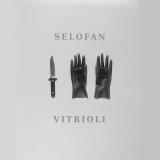
As Selofan's fifth studio album, Vitrioli, from 2018, is a testament to the tragedy of life. The Greek duo, Joanna Pavlidou and Dimitris Pavlidis, who recorded the album in the Fabrika Records home studio, continue on in their poetic, but heartbreaking, music set to a dance beat. Between languages (Greek, English, German, and Spanish), Selofan feels on the brink of mania with Vitroli. However, the madness is controlled, the songs are restrained hysterics that culminate into the alchemic perfection of the band's specific moody sound.
From synthpop to synthpunk elements, the twelve-track LP leads listeners through dark corridors and into haunted, empty beds. There is a resignation to a doomed destiny with Vitroli—a trait that connects all Selofan releases—as a bitter pain and loneliness that cannot, or will not, subside.
The album begins with "Give Me a Reason" whose lyrics feel universal in this day and age: Give me a reason, to get out of bed / I could just watch the ceiling instead. Its heartbreak is profound as bells and voice pads echo under Joanna's voice. The adjacent music video for the song was directed by Dimitris Chaz Lee, and the band describes the video as "depicting the fragile nature, conflicts, emotional demands, and vulnerability of each person in a relationship."
"Billie Was a Vampire" is a story about an undead creature who works at a nightclub followed by the urgency of "Black Box." Brass sounds moan against the fast beat and suggest a frenzied need to escape.
"I'm Addicted" became the second single for the LP. I am addicted, you are mine, Joanna demands of the lover. The music video, also directed by Dimitris Chaz Lee, depicts a clean, white photoshoot primed for the most beautiful creatures of the Athenian wave scene. Alex Macharias, from the legendary Greek band In Trance 95, acts as the photographer for the session, as the models pose and flail under the bright bulbs. The director states: "Addiction is a mental state, something inside all of us. It altered our perception and created a parallel world of avant-garde beings and flashy lights making us part of this everlasting bond."
Lunatic Music returns with its next transmission — welcoming Remmy of Tokyo's underground into the fold.
A record that captures a sound that feels both loose and locked-in — tripped-out, playful, and quietly powerful. Having already been circulating in the right hands from Shibuya to deeper underground pockets across Asia and beyond, these tracks arrive tested and ready.
When The Dawn Breaks sets the tone with a bumping bassline that will get the room feeling much lighter, Ron Zepplin follows with a tougher edge, drawing inspiration that can only be described as Chicago sounds.Flip it and things get real, Underground is this hypnotic number that will command the dancefloor, vocals accompanied by some mind bending synth lines, time for the lunatics to transcend! Finishing off we got some remix treatment from across Timor sea, Fraktal of Indonesia put there spin on things with a stripped back mix.
Cosmic, Dance, and beyond — Another one for the bag.
The latest edition of 'Downtownsounds Classics' arrives from Dublin disco messers Fatty Fatty, just in time for the summer sunshine !
Fully licensed and cut loud on 12 inch vinyl the way God (aka Walter Gibbons) intended, it sees in-house producers Pablo and Shoey take on two choice cuts from the legendary Salsoul label.
Salsoul was the very first label to release a commercially available 12 inch remix - the aforementioned Gibbons and his 9 minute extension of Double Exposure's '10 Per Cent'. They would go on to issue a raft of underground disco classics with mixes by the legendary likes of Larry Levan, Tom Moulton and Shep Pettibone. Having robbed the famous 'Baker-Harris-Young' rhythm section from Philadelphia Records, they defined the disco sound in the second half of the 1970's and kept roaring well into the next decade.
The new mixes pay explicit tribute to two hugely formative influences on the Fatty fellas - The A extends the mysterious and wondrously wonky Big Bear edit of Bunny Sigler's 'By The Way You Dance'. Back in the day, these cosmic under-the-counter 12s helped show the Fatties how to disco real right, and they've stood the test of time wonderfully. This one has been at the front of Pablo's bag for longer than he cares to remember, and now the rest of the world can enjoy it, with some extra Pablo and Shoey disco magic thrown in for good measure...
Speaking of cosmic, the flip sees the lads turn in a stripped-back, ever-building mix of First Choice 'Hold Your Horses'. Having first heard this played by the Cosmic King himself, Danielle Baldelli, they found themselves let down by the commercially available mix. Through the disco haze, and with some subtle stemming, several outer-space whooshes and a string/vocal climax to die for, they've tried to recreate the way they heard Baldelli play it...
With the classic Salsoul artwork also present and correct, this is a love letter to perhaps the most important label in dance music history, with music that still sounds amazing five decades on... Don't sleep!