Originally released in 1987 on a private cassette - this is the first vinyl release of the absolute gem. Comes with obi strip.
Masahiro Sugaya is a Japanese composer with a prolific career in music for film, television, and the performing arts. Renowned for crafting soundscapes that invite deep contemplation, his music blends synthesizers, field recordings, and traditional Japanese instruments, achieving a delicate balance between minimalism, ambient, and folk influences.
In addition to his experimental compositions, Sugaya has been a pivotal figure in Japanese television and cinema. He collaborated with NHK, Japan’s national broadcaster, creating soundtracks for documentaries and educational programs that explored both the everyday and the extraordinary. His ability to translate emotions and landscapes into sound has made him stand out in projects that connect the visual and the musical.
In cinema, Sugaya worked as an arranger for GONTITI, the iconic Japanese guitar duo, and contributed to soundtracks for renowned directors such as Hirokazu Koreeda. His work captures the stillness and subtleties of everyday life, resonating deeply with audiences.
The Pocket of Fever, originally conceived in 1987 as a soundtrack for Pappa Tarahumara’s avant-garde dance company, merges traditional Japanese elements with modern compositional techniques, reflecting the fluid and dreamlike choreography. The album shifts between nostalgia, as in Green of the Future, and the poetic hypnosis of Conversation with the Wind. These pieces invite the listener to explore deeply evocative and intimate sonic landscapes.
Now available for the first time on vinyl, this album was originally released solely on cassette and has been carefully remastered to preserve its delicate textures and vibrant sound. Presented in a limited edition, The Pocket of Fever remains essential for fans of ambient and experimental music. Inspired by figures such as Hiroshi Yoshimura, Midori Takada, and Brian Eno, this timeless masterpiece invites introspection and the appreciation of its serene beauty.
Search:text
Tartiflux is a versatile mini-LP that weaves together many of Margee’s musical influences—downtempo grooves, 90s disco beats, organic house, and acid breaks—into a unique, eclectic sound. Organic textures guide the overall tone, ensuring that the groove remains at the heart of every track.
On the A side, the title track “Tartiflux” takes listeners on a progressive, groovy, and downtempo journey with deep bass, sizzling pads, and distorted guitar sections. It features a remix by NYC legend Justin Strauss, who adds a punchy, rhythmic flair alongside additional productions by W. Andrew Raposo of Midnight Magic.
The B side presents a dynamic lineup, starting with “Help Myself,” a vocal disco-house anthem with an energetic rhythm, crisp drums, and punchy vocal chops. “Maanside” follows, offering a dreamy and melancholic experience with minimalistic grooves. The EP concludes with “Poomee,” the darkest track featuring breakbeats, deep synths, and an engaging sonic journey through acid patterns and robust basslines.
Sasha links up with Joseph Ashworth for epic new single 'HiFiHi' comes on Sasha's Last Night on Earth as two different versions
Sasha has been on an exceptional run of form of late, not least in collaboration with a wide range of innovative producers. His work continues to explore the most moving end of the electronic spectrum, both in terms of well-crafted grooves but also inescapable synth emotions. This time he links with Joseph Ashworth, Sound Of Outside label head and a regular on the likes of Anjunadeep, Needwant and Pets Recordings. His painstakingly crafted sound draws from a wide spectrum of influence, is rich in texture and melody and has seen him serve up indelible DJ sets all over the world.Together these studio wizards cook up 'HiFiHi' which is a sublime seven-minute trip built on bass, full of drama and tension. The silky synth lines weave in and out with rising chords and vocal motifs all enriching it with warmth and soul. After an epic build-up, fresh synth energy breaks out with trance-inducing magic and euphoric chords that bring great emotional release. The LoFiLo Mix is more mellow and with extra vulnerability in the elegant blend of synths and melodies that wash over you in a beautifully serene and escapist fashion.
- Ishi
- Many
- Tonbo
- Horo Horo
- Mushi Dance
- Spells
- Nami
- Wakaranai
- Dottsu
- Kodama
- Tent
- Metallic Gold
- Omajinai
- Ghost
Taba voices a subtle yet surprising shift for the Japanese musician and producer Satomimagae. Observing and absorbing the fleeting scenes and sounds of life flowing outside of her home studio, Taba unfolds as a series of vignettes that document the personal and the universal. Satomi sings beyond herself in an orbit of souls and systems known and unknown, seen and unseen, in the present and in the strange flux of memory, leaving linear songwriting to rest for circuitous stories expanded and expansive in tone and texture. Following the logic of taba, a Japanese term for a bunch, bundle or grouping together of different things, the album is assembled as a loose collection of short stories. Shapeshifting into something like a poet-narrator, Satomi casts her writer's eye to the often perplexing shapes that form from quotidian events and exchanges defining our increasingly alienated age. Where Satomi's last full-length, 2021's Hanazono, bloomed from the lush soil of a private inner sphere, the bird's eye of Taba searches to place the artist_somewhere, somehow_within a wider, wilder world. Collaborations with other artists and musicians close to Satomi's universe further elevate the album's sweeping sonics. Synthesizer lines from Norio, who also helps define the album's visual identity through photo and video, enliven the tender ballad "Kodama." The bell-like Rhodes piano ringing in and around Satomi's guitar on "Dottsu" is played by Akhira Sano, who created the cover art for her 2021 Colloid EP. Yuya Shito's clarinet was the missing puzzle piece that completed "Spells," and it was also Yuya who mixed Taba with an ear for its organic textures and elegantly frayed edges, giving utterance to a distinctly different energy than Satomi's earlier expressions. The tonal and rhythmic play that lay the foundation of these songs also animates a colorful palette of melodic gestures, noisy resonances and pointed moments captured by Satomi's close-at-hand recorder. While Taba is still carried by the innate intimacy that has defined Satomi's music to date, these songs channel her newly spacious and inquisitive songwriting approach, unlocking unusual layers in the process. Some are subsumed in the speculative poetics of sound design, while others peer through the window of bedroom pop. Gathering imagistic reflections, tracing vast ideations and quietly lingering in humble moments, Taba connects vivid lines between the individual and the collective, the constructed and the cosmic, the articulated and the felt. Satomi's sonic tales gain an eloquent coherence by the simple fact of existing in conversation, humming a harmony of parts that buzzes with the tangled circuitry of a life in motion. Taba is the fifth album from Japanese musician, songwriter and dream traveler Satomimagae, following her 2021 album Hanazono and the 2023 reissue of her debut album Awa, both for RVNG Intl. On Taba, Satomimagae leaves linear songwriting to rest for circuitous stories expanded and expansive in tone and texture, unfolding as a series of vignettes that document both the personal and the universal. Some of the songs on Taba feature intimate moments captured on Satomi's hand recorder, poetic moments of sound design animated by tonal and rhythmic bedroom pop foundations. As with Hanazono, Taba's album artwork features a wooden block print by Satomi's sister, the artist Natsumi Magae.
Pop-Singer-Songwriter Marlon Hammer kündigt für das Frühjahr 2025 sein Debütalbum »Szenarien« an und macht schon mit seiner ersten EP deutlich: Hier ist einer, der sich etwas traut. 2022 veröffentlicht er »44803 Bochum 2«, ein Titel, der sich auf das Studioalbum »4630 Bochum« von Herbert Grönemeyer aus dem Jahr 1984 bezieht.
Und auch wenn direkte Vergleiche mit lebenden Ikonen immer dünnes Eis sind: Einige Parallelen lassen sich kaum von der Hand weisen. Marlon Hammer ist ein Kind des Ruhrpotts, und der Bochumer bringt einige unverkennbare Merkmale mit. Seine Stimme sticht aus der Masse heraus – sonor, markant, immer leicht belegt –, seine Texte machen mit kleinen Alltagsbeobachtungen große Bilder auf und, typisch Ruhrpott: Er singt, wie ihm der Schnabel gewachsen ist.
»Ich fass dich nicht« heißt die erste Single aus dem kommenden Debütalbum »Szenarien«, das am 11. April 2025 bei Telamo / BMG erscheint. Es ist der vorläufige Höhepunkt einer rasanten Entwicklung, die dem Pop-Singer-Songwriter in den letzten zwei Jahren eine schnell wachsende Fangemeinde, erfolgreiche Singles wie »Angenehm kühl« und mediale Präsenz bescherte, zuletzt etwa in der VOX-Primetime-Show »The Piano« (wo er neben seiner eigenen Single »Zu dir fällt mir nichts mehr ein« Grönemeyers Song »Halt mich« am Piano sang). Dabei entspann sich zwischen Igor Levit und Mark Foster beim heimlichen Beobachten von Marlons Performance folgender Dialog:
»Das ist gut. Das ist mehr als gut!« (Mark Forster)
»Er klingt nicht wie ein 19-Jähriger.« (Igor Levit)
»Er klingt wie ein 19-Jähriger mit einer geilen Stimme.« (Mark Forster)
»Besonderer Typ.« (Igor Levit)
Kann man so stehen lassen. Und beliebig ergänzen, denn Marlon Hammer ist für seine (mittlerweile) 20 Jahre tatsächlich ein beeindruckend kompletter Künstler. Und wie bei jedem Ausnahmetalent steckt auch dahinter: viel Arbeit. »Ich habe wirklich mega jung angefangen, Straßenmusik zu machen«, erzählt Marlon. Was damals den praktischen Nebeneffekt hatte, sein Taschengeld aufzubessern, ist heute der Grund dafür, dass er ein echtes Multitalent ist: Marlon spielt Gitarre und Klavier, schreibt seine Musik und Texte selbst und hat ein außergewöhnliches Gespür für gute Hooklines.
Isabelline curator and label head Practitioner reveals a stunning selection of his own archival productions with 'Portobello Innocent', the third release on the mysterious and acclaimed Berlin-based imprint. Recorded between 2016 - 2024, these «ve selected works offer a broad look into Practitioner’s sonic sphere. Introspective club re¬ections that cover a grand scope of machine-translated human emotions. The EP feels like a dug-up lost tape, timeless tracks untouched by current modes or trends, each composition progressively digging deeper into unknown chasms of the enigmatic producers' distinct sound.
Raisina - A hypnotic club track featuring sharp drum machine rhythms and a prominent vocal sample from a 1960s North African love song, creating an alluring and surreally beautiful opener. Well-Behaved Boys - Pulsating, shu®ing techno drums take front and centre, as warped frequencies from raves of a bygone era tune in and out, ¬ickering between past and present with frenetic rhythms and spoken fragments. Form & Emblem - An effervescent ambient interlude, its shimmering textures and layered atmospheres provide a meditative pause amidst the EP’s harder edges. Kala - Hazy and dreamlike, this track layers a wandering dub bassline under a steady house beat, glimmering jazz chords and ethereal textures surround the sonic sphere, evoking ¬ickering memories and lingering mystery. Council - A relentless, bassheavy techno groover with sharp vocal cuts and infectious energy. Council feels like a culmination of all that camebefore, resulting in a hypnotic and kinetic underground offering that feels in«nite. With 'Portobello Innocent', Practitioner offers a rare glimpse into his abstract realm, crafting magnetic spaces between memory and rhythm, the ancient and the future, the human and machine.
Der Titel "Amour Colère" - also "Liebe, Zorn" - lässt bereits anklingen, dass Nicholas Michaux auf seiner Platte versucht, mal mehr, mal weniger Gegensätzliches miteinander zu verknüpfen. Einen ersten Hinweis darauf liefert bereits die Trackliste: Französische und englische Songs stehen hier gleichberechtigt nebeneinander. Tatsächlich sieht sich Nicolas Michaux selbst auch in der Tradition des französischen Chansons, die er in seinen Songs mit Anleihen aus der amerikanischen Songwriter-Szene, ein bisschen Classic Rock und New Wave verwebt. Wer bei dem Albumtitel allerdings kitschige Liebesschnulzen oder donnernde Wutausbrüche erwartet, wird von Nicolas Michaux' Stil positiv überrascht sein: Liebe und Zorn beschreiben eher die Stimmung seiner Texte. In seiner Musik schlägt er einen meist nachdenklichen, manchmal schwermütigen, in jedem Fall sehr persönlichen Ton an. Seine Lieder sind einfach gebaut, aber nicht seicht; harmonisch-gefühlvoll, aber nie sentimental. Sein Fokus auf das Wesentliche lässt das Album zeitlos und gleichzeitig modern wirken. Vor mehr als vier Jahren hat der belgische Künstler Nicholas Michaux die öffentliche Bühne betreten. Mit seinem Debütalbum setzte er damals ein musikalisches Ausrufezeichen und gewann viele Kritiker für sich. Nun veröffentlicht der Singer-Songwriter aus Lüttich seine zweite LP und liefert damit ein kleines Füllhorn voller verträumt-melancholischer Songs. Mit seinen Songs lässt Nicolas Michaux die Klassiker des Chansons einmal mehr aufleben und gibt ihnen mit rockigen Akzenten neues Leben, ohne dabei zu aufdringlich zu wirken. Besonders gut eignet sich die CD damit für einen lauen Frühherbstabend, um sich gemütlich zurückzulehnen, zu träumen und still zu genießen.
- Butenfeld
- Kreuzfahrt
- Schnecken
- Schnitt Für Schnitt
- Staub
Neues von Captain Planet: "Reste" umfasst fünf unveröffentlichte Songs aus den Aufnahmesessions des letzten Albums "Come On, Cat" (2023). Natürlich handelt es sich um alles andere als Ausschussware - die gibt es seit der Bandgründung in 2003 ohnehin nicht. Captain Planet treffen einfach immer wieder mit ihrem unverkennbaren, melodischen Emo-Punk und bewegenden Texten ins Schwarze und ins Herz. So auch mit den fünf Perlen auf "Reste". Die EP erscheint als farbige, einseitig bespielte 12" auf recyceltem Vinyl (jede Platte ist ein Unikat), in sehr schönem Inside/Out-Artwork und ist limitiert.
Annie A, the one-off collaborative project between Félicia Atkinson, Time is Away, Christina Petrie and Maxine Funke, arrives on A Colourful Storm with an inquisitive, exploratory composition evoking questions of inconstancy and reconciliation, vastness and finitude and the sometimes cruel deception of human perception. Who will conduct our dreams if we never wake?
It is a geographically diverse yet like-minded ensemble whose seeds were sown during an A Colourful Storm show in London, where time on stage was shared by Atkinson, Time is Away and Petrie. Atkinson had previously found solace in Time is Away's Ballads (ACOLOUR041), Funke's Seance (ACOLOUR035) and particularly the voice of poet Petrie, whose delivery drifts from a wide-eyed stream of consciousness to crystalline sensory expression. It is the perfect accompaniment to Atkinson's hushed tones, spoken sensitively like a mother to a resting child.
Atkinson's evocative sonic landscapes are formed from keyboard, voice and organic materials collected from life on the dramatic coast of Normandy, as well as field recordings from places far and wide. She breathes life into liminal spaces, the sound of wind, whispers and the distant clatter of rocks conjuring visions of places both beautiful and eerily familiar. Time is Away delicately arranges the field of sounds, their weaving and layering likened to the assembly of an Anni Albers textile. The spirit of Albers guides the piece, Petrie's recounting of her loom and thread a symbol of her endurance, vitality and seeking wonder in intricacies. The piece also features an exclusive concluding track by Maxine Funke, whose meditation on vulnerability confronts and surrenders herself to the enchanting natural world.
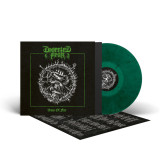
- A1: Into The Burning Lands
- A2: The Truth
- A3: Blind
- A4: Storm Of Resistance
- A5: Embrace The Void
- B1: Rise And Fight
- B2: At The End Of Our Reign
- B3: Echoes In The Silence
- B4: We Are One
- B5: Veins Of Fire
Green Marble Vinyl[37,40 €]
DESERTED FEAR haben sowohl ihr Songwriting als auch den Sound und das musikalische Können mit "Veins of Fire" erneut auf eine neue Stufe gehoben. Die Ostdeutschen sind ihrer Marke zwar wie gewohnt treu geblieben, aber sie haben ihren ausgefeilten Melodien und dem Schlagzeugspiel ein hörbares Upgrade verpasst. Obendrein konnte Frontmann Manuel "Mahne" Glatter seine stimmliche Spannweite noch einmal vergrößern. In den Texten von "Veins of Fire" reflektieren DESERTED FEAR über die aktuellen Themen unserer Gesellschaft, doch ohne jegliche Predigt oder Forderung nach Konformität. In ihren Songs spiegelt sich eine Welt voller Unsicherheit, Ungerechtigkeit und wachsenden Spaltungen. Der Aufstieg von DESERTED FEAR ist ebenso bemerkenswert wie spannend. Als sich das Death Metal Trio im thüringischen Eisenberg gründete, konnten Gitarrist und Vocalist Mahne, Gitarrist, Hauptsongwriter und Produzent Fabian Hildebrandt sowie Schlagzeuger Simon Mengs kaum ahnen, dass sie an der Spitze der deutschen Szene landen würden. Bereits das Debütalbum "My Empire", das die schwedische Legende Dan Swanö produzierte, schlug im Jahr 2012 beim Death Metal Publikum wie eine Bombe ein. DESERTED FEAR brachten neben brachialer Kraft, donnernden Riffs, einem hämmernden Schlagzeug und heftigem Gesang von Anfang an auch ein intensives Gespür für packende Melodien mit. Daher war es nur folgerichtig, dass sich das Gewicht mit jedem folgenden Album weiter auf die melodische Seite verlagerte - ohne dass dabei der nötige Biss verloren ging. Sämtliche Studioalben, "Kingdom of Worms" (2014), "Dead Shores Rising" (2017), "Drowned by Humanity' (2019) und "Doomsday" (2022), erwiesen sich als beeindruckende Meilensteine einer steilen Karriere.
- 01: The Rearranger
- 02: I Can Change Him
- 03: Savannah
- 04: Daffodils
- 05: Let Me Be Wrong
- 06: Novelty
- 07: I Don't Do Drugs
- 08: Tuesday
- 09: Mother Wound
- 10: Praying For Your Downfall
- 11: Massachusetts
Violet[25,17 €]
Die Modern Folk-Künstlerin Jensen McRae hat das Veröffentlichungsdatum ihres mit Spannung erwarteten zweiten Albums „I Don't Know How But They Found Me!“ bekannt gegeben, das am 25. April über Dead Oceans erscheinen wird. Zusammen mit der Ankündigung hat sie auch ihre neueste Single und das Video „Praying For Your Downfall“ veröffentlicht, ein Meisterwerk der Offenheit, das Witz und Charme verbindet, während McRae darüber nachdenkt, wie sie den Drang nach Rache an jemandem, der ihr das Herz gebrochen hat, loslassen kann.
Jensen McRae - Praying For Your Downfall (Official Video)
Vor dem Hintergrund von Herzschmerz, Selbstfindung und der Komplexität der Liebe ist „I Don't Know How But They Found Me!“ eine mutige Entwicklung für die junge Künstlerin. Das elf Titel umfassende Album, das in North Carolina mit Brad Cook (Waxahatchee, Bon Iver) aufgenommen wurde und an dem Nathan Stocker (Hippo Campus), Matthew McCaughan (Bon Iver) und ihr Bruder Holden McRae mitgewirkt haben, ist eine lebendige Sammlung von Songs, die von messerscharfen Texten und zeitlosen Pop-Melodien getragen werden. McRaes Stimme ist so vielseitig wie ihr Songwriting - mal flüsternd und strukturiert, dann wieder klar und hell. Es ist eine Stimme, die sowohl den Herzschmerz des Verlassenwerdens als auch die Stärke des Verlassens verkörpert.
Von Anfang an haben sich die Fans in Jensen McRae verliebt, für ihre scharfsinnigen, aufrüttelnden und klarsichtigen Songs. Ihr Songwriting ist verletzlich, ja, aber es ist auch stark, weil es sich nicht zurückhält. „I Don't Know How But They Found Me!“ zeigt McRaes Entwicklung von einer vielversprechenden jungen Künstlerin zu einer echten Songwriterin und Star. „Die tiefgreifendsten Entscheidungen meines Lebens“, sagt McRae, “haben sich oft wie Dinge angefühlt, die ich getan habe, bevor ich dazu bereit war, und in die ich hineinwachsen musste.“ „I Don't Know How But They Found Me!“ handelt davon, was folgt, wenn man dem widerstanden hat, von dem man dachte, dass es einen vernichten würde. Es geht darum, seine Grenzen kennenzulernen und zu erfahren, wozu man fähig ist. „Ich verband mich mit dem Gedanken, dass ich leicht unter dem Gewicht dessen, was mir widerfahren ist, hätte zusammenbrechen können, aber ich tat es nicht. Ich wusste es nicht einmal“, sagt sie, ‚aber ich war die ganze Zeit kugelsicher“. Jensen McRae ist in L.A. geboren und aufgewachsen und hat fast ihr ganzes Leben lang Musik studiert und gemacht. In der High School nahm sie am Grammy Camp teil und schloss ihr Studium an der USC Thornton School of Music mit einem Abschluss in Popular Music ab. McRaes Debütalbum „Are You Happy Now?“ schrieb sie größtenteils im Alter von 21 Jahren und war der erste Schritt zum Aufbau einer treuen Fangemeinde. „Are You Happy Now?“ navigiert die Identität von ihren tiefsten Grundlagen - dem Leben als junge, gemischtrassige schwarze und jüdische Frau - bis hin zu ihren persönlichsten Überlegungen - vertraue ich dir, vertraue ich mir selbst. McRaes Vertrauen in sich selbst hat sich mehrfach bestätigt, zuletzt und vielleicht am bekanntesten in Form des Songs „Massachusetts“. McRae postete eine Solo-Strophe und einen Refrain, kaum mehr als ein Stück eines Demos, und es fing Feuer im Internet. Covers, Duette und eine Lawine neuer Fans folgten, und McRae krönte den Moment mit einer fertigen Version und einer sommerlangen Tournee als Support von Noah Kahan. „I Don't Know How But They Found Me!“ nimmt McRaes mittlerweile beachtliche Fähigkeiten auf und macht sie massentauglich. „Savannah“ ist ein Song für alle, die schon lange dabei sind. Der pulsierende, an Country angelehnte Song erinnert sofort an das Beste von Phoebe Bridgers, wobei McRae in einem akrobatischen Flüsterton über einer federleichten akustischen Gitarre singt. Wenn „Savannah“ sein Crescendo erreicht, wird klar, dass McRae eine Künstlerin mit einer ganz eigenen Kraft ist, wenn sich Klavier und Gitarre überlagern und McRae eine Reihe bissiger Anklagen mit Schärfe und Überzeugung vorträgt: "You swore you'd raise our kids to end up just like you / well you're a false prophet / and that's a goddamn promise." Währenddessen ist „Let Me Be Wrong“ eine echte Hymne, eine beschwingte Ode an die Ablehnung von Perfektionismus. Wiederum auf einem einfachen Gesang und einer Akustikgitarre aufbauend, steigert sich „Let Me Be Wrong“ Schritt für Schritt in seinem Trotz; die Gitarren schichten sich, das Schlagzeug nimmt das Tempo auf, und McRae macht Platz für die Fehler aller. Wenn McRae knurrt „fuck those girls got everything“, ist das ein Schlag voller Kraft und Verletzlichkeit, der darum bettelt, unisono so laut wie möglich gebrüllt zu werden. Der ungewöhnliche Titel ihres zweiten Albums? Er stammt aus einer Zeile in McRaes Lieblingsfilm „Zurück in die Zukunft“. Ein Hauptdarsteller überlebt einen Kugelhagel, und dieses Bild hat McRae sehr beeindruckt. „Ich habe mich mit dem Gedanken angefreundet, dass ich leicht unter dem Gewicht dessen, was mir passiert ist, hätte zusammenbrechen können, aber das habe ich nicht. Ich wusste es nicht einmal“, sagt McRae, “aber ich war die ganze Zeit über kugelsicher.“
What happens when you combine SUMAC: a band that uses the volume, distortion, and guitar-centric approach of metal to make music that has the malleability of jazz and textural exploration of noise with Moor Mother: a poet and sound artist that has deconstructed hip hop to a point where it"s less about rhyme and rhythm (though obviously both are present in her work) and more about oratorical cadence and power.
The Film is an album that takes attributes of both artists" work and finds common ground in shifting musical patterns, and expressive force. The record is a musical thumbing of their noses at the more traditional approaches of their respective fields, an innovative, powerhouse of an album. The Film"s moniker speaks to the fact that it is conceived and delivered as a complete album, a full story or narrative. Moor Mother puts it best: "The idea is to create a moment outside of the convention. This is a work of art.
Thinking about the work as a Film, instead of an album or a collection of songs. This task is impossible in an industry that wants to force everything into a box of consumption. You won"t understand or get the full picture until the artwork is completed. This work is developing and is requesting more agency within the creative process." The Film is just such a work, a nebulitic collaboration between SUMAC and Moor Mother.
- 01: I Think I Just Died A Lil Bit
- 02: Buzz 1
- 03: Cosas Mueren
- 04: Going Back Home On Street View
- 05: Buzz 2
- 06: Twerk Class (Radio Mix)
- 07: Buzz 3
- 08: There`s Still Fun Stuff To Do
- 09: In This Together
- 10: Buzz 4
- 11: 60° Easy Care
- 12: 143
- 13: Buzz 5
- 14: Tuesday Gossip
- 15: Buzz 6
- 16: I`ll Wait For You In The Mcdonalds Car Park
"The album was created in this back and forth of snapshots - we made most of the decisions impulsively without much questioning. That takes a lot of trust." — Violeta García & Hora Lunga
"I'll Wait For You In The Car Park", the first full length collaboration between Argentinian cellist, improviser and composer Violeta García and Swiss musician and composer Hora Lunga, is a work of extremes. Drawing from the realities of life on two continents, and embodying moods ranging from stoic desire to violent bursts, the album enciphers so-called ordinary moments from everyday life into an alluring collection of musical scenes. Seemingly inconspicuous moments are condensed into a tale of synchronicity: colliding time zones and seasons, metropolitan rhythms raining down onto a glacier's ice field, exploring places through street view, the serendipity of loitering at a kiosk. As such, "I'll Wait For You In The Car Park" brings documentary film essays to mind that carefully observe the private and everyday occurrences.
Violeta García and Hora Lunga crossed paths by chance in 2023 and began discussing and sharing music shortly afterwards. What started as a loose exchange of ideas, sending back and forth sketches and demos between South America and Europe, grew into several studio sessions in 2024. Being sucked into a "quite extraordinary flow", the two musicians recorded, arranged and intervened on a level playing field, using the studio as a playground to record musical layers and interweave them with field recordings and audio notes gathered over the course of a year. Speaking a kindred musical language, they quickly realized how their ideas clung to each other like two familiar souls, complementing, intertwining and merging. From gauzy and eerie textures, musical miniatures floating through time, howling and screaming strings, to tumbling and thundering basses – the sound of the ordinary shapes a body that vibrates, writhes and breathes.
Violeta García is a cellist, improviser and composer from Buenos Aires, Argentina. Based in Spain, she tours a lot with her band Blanco Teta. She is a performer in many art forms, including free improvisation, contemporary and trans-media experimental repertoire in violoncello and electronics and collaborations with dancers, film makers and visual artists. After years of studying classical and popular music on violoncello and, later, contemporary composition and improvisation, Violeta has developed her own musical voice needed to emerge beyond outside specific genres.
Throughout Swiss composer and musician Hora Lunga's work, the focus lies is on exploring boundaries, both musically and in terms of performance and content. Above all, genre designations lose all meaning, as the music always takes place within a dramaturgically conceived overall framework. In recent years, his projects have ranged from pop music productions to experimental works and sound performances, as well astheatre and film productions. His ensemble WIRREN consists of up to fifteen performers.
A stellar collaboration between composer Michael Cashmore (Current 93) and vocalist Marc Almond of Soft Cell fame. Two complementary creative sensibilities in intimate interlock; supreme compositional and vocal talents fusing to make uniquely dramatic musical and vocal interpretations of searing beauty and insight. Specifically, this suite of songs feature the heightened lyricism of a stunning array of cult poets, both contemporary and of yesteryear. 'Feasting With Panthers' is a stellar collaboration between composer Michael Cashmore (Current 93) and vocalist Marc Almond of Soft Cell fame, in the nearest thematic echo and nod, in the latter's vast back catalogue, to the darker gothic influences of his celebrated Marc And The Mambas period and his acclaimed 'L'Absinthe' and 'Jacques' twisted chanson solo albums. This album's defining aesthetic is the setting of outsider poems to music. Poems by Count Eric Stenbock plus unique lyrical translations - by celebrated poet Jeremy Reed - of works by Jean Genet, Jean Cocteau, Arthur Rimbaud, Paul Verlaine, as well as Reed's own poetry. The emphasis throughout is on 'decadent' poems of thwarted love, ill-fated romance, self-destruction and death: many poems are woven with homo-eroticism, laced with opium dreamstates and all are accompanied by Michael Cashmore's haunting and melancholic music that lends the verses a deft yearning for beauty and a bittersweet, melancholic longing for lost innocence and youth. Originally released in 2011 and long since deleted, 'Feasting With Panthers' is now restored to back catalogue availability as a double vinyl album - it's first ever vinyl edition - with a variant of the original album artwork and two printed, full colour inner sleeves complete with lyrics and pictures and featuring four bonus tracks. The album was recorded over several years by the artists sending music files back and forth by e-mail and post; the artists never once recording together in the studio. Berlin based Michael Cashmore worked at home composing the music, playing all of the instruments and adding Marc's vocals from files recorded in London. The resulting album is a glorious union of sensual talents, both in voice and music, complementing the intriguing and evocative poetic texts. The project began after Current 93's David Tibet gave Marc a book of poems by the Baltic German poet Count Stanislaus Eric Stenbock. Marc was instantly attracted to the dark eroticism and the melancholic yearning of the verse and, so, contacted Michael Cashmore, whom he had previously worked with on Current 93's reading of 'Idumea'. He felt Michael would have the right understanding of the verse with his intricate, beautiful musical compositions. From this, the project developed to include many of Marc's favourite poems by some of his favourite 'outsider' poets with common thematic ground.
Legendary New Zealand-born experimental composer and sound art pioneer Annea Lockwood returns to Black Truffle with On Fractured Ground / Skin Resonance, her third release for the label. Having recently celebrated her 85th birthday, Lockwood shows no sign of slowing down in her exploration of new sound sources and collaborations with an ever-growing intergenerational pool of performers – here with Vanessa Tomlinson. Her creative vibrancy is alive as ever on the two recent works presented here, which demonstrate both her engagement with the social dimensions of sound and the deeply reflective, meditative aspect of her art.
On Fractured Ground derives from material recorded with Pedro Rebelo and Georgios Varoutsos for the soundtrack of Maria Fusco and Margaret Salmon’s opera-film, History of the Present (2023). Working together in Belfast, Lockwood, Rebelo and Varoutsos made extensive recordings of the city’s ‘peace lines’, the dozens of walls erected since the beginning of the Troubles in the late 1960s to separate Catholic and Protestant areas of the city. Struck by the immensity of these barriers, ‘the brutal way they sever neighbourhoods’, Lockwood and her collaborators focused not on the sound environment of the city, but on the walls themselves, playing them as gigantic resonant instruments, using their hands and objects such as stones and leaves. Continuing to work in her studio with the material collected for the soundtrack after its completion, Lockwood composed the work presented here, occupying a space somewhere between her own extended-technique percussion music and the Cagean tradition of hyper-amplified small sounds. From deep, gong-like metallic tolling to dry scrapes and uneasy groans, the piece’s sustained attention to single sounds derived from unorthodox sources draws a line all the way back to Lockwood’s classic Glass World (1967-1970). Its spaciousness and delicacy are at odds with the dark historical background of the Troubles, creating a moving listening experience somehow haunted by the shadow of violence and conflict.
Skin Resonance is a collaboration with Australian composer and percussionist Vanessa Tomlinson. Developed through conversations in which the two discussed the idea of ‘sonic attraction’, the piece focuses on Tomlinson’s relationship to the bass drum, reflecting on the complex web of connections embodied in this seemingly simply instrument, which is at once ‘animal, wood, and metal’. Approaching the instrument in a suitably elemental fashion, Tomlinson’s performance strips away conventional technique to explore the resonance and timbral properties of skin, drum, and metal hardware, producing overlapping waves of texture that at times seem closer to wind swishing through leaves or the ocean than anything usually associated with a drum. Emphasising the symbiotic relationship between performer and instrument, Tomlinson’s voice is heard at times, exploring the field of associations and connections the bass drum suggests to her: ‘Maybe the bass drum skin is an ear as well?’
Accompanied by insightful liner notes on both pieces and photographs documenting the recording of On Fractured Ground and a performance of Skin Resonance, this LP is a moving testament to the engagement, generosity, and openness that sustain Annea Lockwood’s work, still finding new directions after more than fifty years of activity.
- The First Song
- Zpine
- Wet Leather
- Leprozenkapel
- The Crying Towel
- Evil Pipe
- Adult Proper
- Totaal Techniek
KLÄMP ist ein britisch-niderländisches Kollektiv aus Mitgliedern von IDLES, Sex Swing, Tall Ships, Manatees, Do Me Bad Things, Pulled Apart By Horses, Petbrick und Mugstar. Seit ihrer LP "Hate You" (2020) bei God Unknown Records hat die Band eine tiefgreifende Transformation durchgemacht. Ihr neues Album "TOTAAL TECHNIEK" deckt ein breites Genrespektrum ab und verbindet nahtlos Elemente aus Krautrock, Breakcore, Industrial und Postpunk. Jeder Track ist eine neue Reise, geprägt von innovativem Sound und komplexen musikalischen Texturen. Ihre Entwicklung vom Trio zum innovativen siebenköpfigen Ensemble macht sie zu einem der aufregendsten und unberechenbarsten Acts der heutigen Szene. Human Worth veröffentlicht eine limitierte "TOTAAL GOLD" Auflage der LP, von der 10% aller Einnahmen an Compass Collective gespendet werden – eine Wohltätigkeitsorganisation, die die Integration junger Flüchtlinge und Asylsuchender im UK durch die Künste unterstützt.
Für Fans von: Swans / Sonic Youth / Black Sabbath / Godspeed You Black Emperor / Mark Lanegan / Einstürzende Neubauten / The Fall / Sunn O))) / Wire / Aphex Twin / Portishead / Godflesh / Earth / My Bloody Valentine / Gnod / Anna Von Hausswolf / The Bug
- The Olive Branch
- Peace River Crossing
- We Belong To Each Other
- Mountain Of Companions
- Elements Of Harmony
- The White Flag
- Change
- Civilian Casualties
- Who Are You?
- Harmonic Allusions
"Movements of Air" is the highly anticipated fifth album from Daniel Herskedal's acclaimed trio, featuring Eyolf Dale on piano and Helge Andreas Norbakken on drums and percussion. Marking his tenth remarkable release with Edition Records, this album seamlessly bridges his foundational trio debut, "Slow Eastbound Train," with previous masterpieces like "The Roc" and "Voyage."
Over the past decade, Daniel Herskedal has consistently pushed the boundaries of the tuba, crafting music that is both profoundly introspective and expansively cinematic. At its core, "Movements of Air" delves into themes of hope, the pursuit of a better future, and the very essence of musical creation. With masterful performances from all members and intricate compositions, Herskedal navigates the delicate balance between good and evil, war and peace. Tracks such as "The Olive Branch" and "Peace River Crossing" showcase his ability to create emotionally resonant soundscapes, while pieces like "Elements of Harmony" and "Harmonic Allusions" highlight his innovative approach to harmony and texture.
This album stands as a testament to Herskedal's extraordinary talent, transcending the traditional limits of his instrument to deliver music that is both emotionally compelling and artistically groundbreaking.
Daniel Herskedal's exceptional achievements further underscore his artistic prowess and versatility. His notable arrangement of"San Francisco (Be Sure to Wear Flowers in Your Hair)" for the 2019 film "The Last Black Man in San Francisco," produced by Brad Pitt, was later featured in Coca Cola's global 'Open Like Never Before' advertising campaign. His extensive collaborations include performances with prestigious ensembles such as the BBC Concert Orchestra, the Royal Norwegian Navy Band, and the Russian Patriarchate Choir of Moscow. His collaborative project with Marja Mortensson won the Norwegian Grammy in 2019, and in 2021,he secured The Ambies Award for Best Original Score and Music Supervision for the podcast "9/12." Additionally, his work with artists like Keaton Henson and Emilie Nicolas on their album "Out of the Fog" further highlights his versatility and collaborative spirit.
- Placelessness I
- Placelessness Ii
Following nearly 20 years of working together as a trio, and numerous cross-collaborations in different configuration between them, Ideologic Organ presents Placelessness, the debut full-length by Chris Abrahams, Oren Ambarchi, and Robbie Avenaim, comprising two long-form works at juncture of ambient music, minimalism, rigorous experimentalism and improvisation, and machine music. Having carved distinct pathways across a diverse number of musical idioms for decades, Chris Abrahams, Oren Ambarchi, and Robbie Avenaim are each, respectively, among the most noteworthy and groundbreaking figures to have emerged from Australia's thriving experimental music scene. Ambarchi and Avenaim first encountered Abrahams when seeing the Necks - the project that has served as the primary vehicle for his singular approach to the piano since its founding in 1987 - together during the late 1980s, not long after having met in Sydney's underground music community. The pair's collaborations date back more than 35 years, criss-crossing Ambarchi's pioneering solo and ensemble work for guitar and Avenaim's visionary efforts for SARPS (Semi Automated Robotic Percussion System), robotic and kinetic extensions to his drum kit. In 2004, fate brought the three together in a trio performance at the What Is Music? Festival, the annual touring showcase of experimental music founded and run by Ambarchi and Avenaim between 1994-2012. For the nearly two decades since, Abrahams, Ambarchi, and Avenaim have intermittently reformed in exclusively live contexts, in Australia and abroad, cultivating and refining the fertile ground first tilled in that early meeting. Placelessness is the first album to present this remarkable trio's efforts in recorded form. Placelessness is the joining of three highly individualised streams, working in perfect harmony; the point at which friendship, mutual respect, and decades of creative exploration produce a singular spectrum of sound. Featuring Abrahams on piano, Ambarchi on guitar, and Avenaim on drums, the album's two sides draw on each artist's enduring dedication to long-form composition. Its two pieces, Placelessness I and Placelessness II, initially began as a single, 40 minute work, before being divided and reworked into distinct, complimentary gestures for the corresponding sides of the LP. Beginning with restrained clusters of reverberant piano tones, Placelessness I progresses at an almost glacial pace, with Abrahams' interventions increasing met by sparse responses, darting within vast ambiences, on guitar and percussion by Ambarchi and Avenaim. Remarkably conversational within its convergences of tonal, rhythmic, and textural abstraction, over the work's duration a progressive sense of tension unfurls and contracts, refusing release, as each of the ensemble's members contribute to an increasingly tangled sense of density at its resolve.While an entirely autonomous work, Placelessness II rapidly realises a distillation of the energy hinted at across the length of its predecessor. Following a luring passage of harmonious calm, Abrahams' launches into shimmering lines of repeating arpeggios, complimented at each escalation of tempo by Avenaim's machine gun fire percussion work and Ambarchi's masterful delivery of tonality and texture, as the trio collectively generate dense sheets of pointillistic ambience within which individual identity is almost lost, before slowly unspooling into unexpected abstractions and dissonances that deftly intervene with the work's inner logic and calm. What could easily be termed a maximalist take on Minimalism, Placelessness is a masterstroke of contemporary, real time composition, that blurs the boundaries between ambient music, experimentalism, free improvisation, and machine music. Drawing on Chris Abrahams, Oren Ambarchi, and Robbie Avenaim's decades of respective solo and collaborative practice, and the culmination of nearly twenty years of working together as a trio, it's two durational pieces - Placelessness I and Placelessness II - take form with a startling sense of effortlessness and grace, neither shying away from explicit beauty or rigorously tension within their forms