Rodina is the project of singer-songwriter Aoife Hearty and partner Joe Tatton, keys-player & co-writer from The New Mastersounds and leader of the Joe Tatton Trio. On Good Company, their first new album in 6 years, the two are joined by other great musicians including guitarist Lucas De Mulder, drummer Luke Flowers, The Filthy Six horns, and members of The Haggis Horns, among others.
Like their previous records there is a strong acid jazz slant to many of the songs, whether interpreted through a modern soul lens such as in opener "Simple Pleasures" or swaying more towards cosmic jazz-funk such as "We Go Out Of Our Way" or "Trust In This Life", which were the first singles lifted from the album.
Throw in some hippy Americana and even a tinge of Gospel and you end up with catchy songs that include both uptempo earworms like the super charged foot stomper "Good People" or the festival anthemic "Inspiration" and some beautiful chilled moments such as "All Over The Sky" and "Flowers".
Recorded at their small countryside recording studio in the Peak District this is the fourth vinyl produced at their studio after The New Mastersounds' Old School and Joe Tatton Trio's Galactico.
out of Stock
Last delivered 15 months ago available to reorder, subject to availability
"The restorations of The Lost Recordings are worthy of those devoted to master paintings." — Le Journal du Dimanche
"We discovered these previously unpublished tapes in the archives of the RBB — the Berlin radio. This discovery is absolutely major because these two incredible musicians had recorded too little together and because this recording offers us the possibility to listen to them in works that were unpublished so far in their discography — notably an extraordinary sonata by Prokofiev! And what can we say about this Bach sonata, with an Andante that brought tears to the eyes of everyone present in the studio at the time." — Frédéric D'ORIA-NICOLAS, Musical treasure seeker
János Starker, cellist, and György Sebok, pianist, were both born in Hungary early in the 20th century. They were welcomed into the formidable Franz Liszt Academy of Music in Budapest, and emigrated to the USA, where they both held the title of Distinguished Professor at the Indiana University School of Music in Bloomington. Both heavy smokers and sometimes reputed — unjustly — to be harsh, austere and insensitive to trends, they were drawn to music in all its varieties and fascinated by its many colours. They had one aim only, one noble objective: to showcase the works all composers, as evidenced by this recording made in the legendary Studio 3 of Berlin Radio on 24 October 1963.
Starker and Sebok were fully imbued with the aesthetics that Prokofiev proclaimed: "I cultivate melody and strive to introduce feeling and emotion into my works. No matter that some call me a cubist, adding that I systematically avoid any emotional or romantic elements in my quest to reach only objectivity."
Next, and at the opposite end of the spectrum, is the Spanish passion of the two pieces by Granados and De Falla, pieces that nevertheless also convey melancholy. Starker and Sebok launch into the works with enthusiasm and intensity.
The last piece, Bach's Sonata in G Major, BWV 1027 for Viola da Gamba and Keyboard, is one of three he composed, probably in Köthen. Because they may have originally been written for other instruments, they can easily be transcribed for the cello and piano. They reveal the rich influences that pervaded the German region during the first half of the 18th century. The two musicians give us a sublime interpretation of the beauty of the counterpoint in this Sonata.
These recordings attest to the importance that the two superb musicians attached to working in the service of the composers. We wonder if, in that enchanted studio in Berlin in 1963, they knew how much further they went to bewitch us and touch us so profoundly.
New Delhi-based Peter Cat Recording Co. will release their debut album, ‘Bismillah’ on June 14, 2019 via French independent label Panache Records. Debut UK live shows are soon also to be announced by the band.
Peter Cat Recording Co. could almost have a question mark on the end of its name. Not least as founder & frontman Suryakant Sawhney refuses to explain where that name really comes from or what it means (perhaps a reference to the Tokyo jazz club owned by Haruki Murakami), but also since the very existence of the band itself raises a raft of questions. When was the last time we fell for an indie rock band for the right reasons? Not because the band in question nostalgically imitate a perceived ‘golden age’ but because they innately embody the fundamentals of such music: fantasy, sincerity and the freedom to make music without rules or career aspi- rations. And when was the last time this kind of band sounded like Sinatra, Barry White, the sweetest doo-wop, humid fanfares and a psychedelic wedding band, all at once? And all of this coming from India?
In truth, the story of Peter Cat Recording Co. was written within the triangle of San Francisco, Delhi and Paris.
In the first of these cities, Sawhney (a native of Delhi) pitched up to study film-making. More distracted by the city’s peaking live scene of the early noughties, this is where he started to make music and to sketch out an idea for the band.“
The people I lived with supported my idea of writing music, they introduced me to great mu-
sic. There used to be a great garage scene in San Francisco, like The Oh Sees also Ty Seagall, Mikal Conin, all those bands. This is a world I had never seen in my entire life. A big inspiration from San Francisco was that you could record yourself. You don’t need to be in a studio and spend a lot of money to make an album. You can do it”.
At the end of the 2000s, Suryakant returned home to New Delhi, and started his band for real, more or less the same band that plays today. “I wasn’t so concerned about will we be performing, will we be the greatest band, will we be trendy. I just wanted to make something that was consequential and important for us, I think. Something which would last, something people could listen to and be like « this is life changing ». It was for the sake of beauty”.
For the first few years and in India alone, this is exactly what Peter Cat Recording Co. did, in total indifference to the rest of the world. This was until young Parisian label Panache stumbled across the band online via Vice’s THUMP subsidiary, stupefied by the band’s cosmic video for seven-minutes-and-counting track, ‘Love De- mons’. And so in spring of 2018, ‘Portrait Of A Time: 2010-2016’ was released on Panache - making the first international release from Peter Cat Recording Co., bizarrely enough, an anthology of re-mastered, hidden gems from the band’s ramshackle back catalogue, previously recorded in Suryakant’s own living room. With Peter Cat’s off-kilter charm hitherto unheard of beyond the fringes of India, the release provided a gateway op-
Whilst the title track found its way onto Tracks Of The Year lists at the Guardian & NME, it was tricky for new PCRC enthusiasts to get a firm grip on the startling push/pull between the immediate, uncanny music this release gathered, and the cultural backdrop of New Delhi at which it was so startlingly at odds.
Opportunity for a wider fanbase to fall in love with their cloud-like, drunken songs for the first time.
If discovering your favourite new band via a ‘Best Of’ feels a curious premise, then ‘Bismillah’ does more than hint towards the promise of Peter Cat Recording Co’s future. Blending gypsy jazz, psychedelic cabaret, space disco, bossa supernova, Bollywood and uneasy listening with kaleidoscopic ease, in many senses, the band’s knack hasn’t altered. Always different, paradoxical, unpredictable yet somehow familiar. The new album opens to the strains of bird chatter, the whisper of a city’s soundscape and the first few notes from an instrument which seem to be calling us to the departure lounge, a fore-shadow of the flight ‘Bismillah’ launches its listener
on. Suryakant sings with the detached, rueful elegance of Sinatra marooned on a desert island, whilst his band create small space-time capsules which navigate their way through genres and eras – including the future – and between nostalgia and eccentricity.
Peter Cat recently trailed ‘Bismillah’ with the release of ‘Floated By’, an appositely titled musing on failure & missed opportunities, punctuated by the fulsome brass section which weaves through so much of the album.
The languid, blue quality to the track is offset by the attendant music video, created with footage shot, implau- sibly enough, at Suryakant’s own marriage ceremony (needless to say, the wedding band hired for the day was of course, Peter Cat Recording Co.) Sawhney dryly notes; “Hopefully it’s not a many-a-times-in-a-lifetime event. You can’t fake that set, those people actually having a good time, being really emotional and intense.” ‘Bismillah’’s colour-drenched album cover also captures Suryakant’s father-in-law making his wedding toast on that same day - a nod back towards the cover of ‘Portrait Of A Time’, itself a black & white image taken at the wedding ceremony of Suryakant’s own father.
A stumbling but gracious collection of songs rooted in a kind of drunken soul music, the melancholy nature of some of the songs on ‘Bismillah’ renders them almost liquid, before they develop into more dance-like shapes. Suryakant’s rangy voice swoops from the falsetto glide of ‘I’m This’ to the beat-up baritone blown along by the warm breeze of ‘Soulless Friends’. The elliptical structure of album opener ‘Where The Money Flows’ also al-
lows for the use of brief bursts of autotune effect on his vocal without feeling incongruous, whilst the desultory lyrics of ‘Heera’ (a Hindi word for diamond) - sharing something with the Morricone school of grand storytelling - have an emotional weight that would impress even coming from a native English speaker. Perhaps the most gleefully unpredictable moment on ‘Bismillah’ comes with the illusory, vocal loops on the intro to ‘Memory Box’, errupting into 8 exhilarating minutes worth of unbridled, string-backed disco joy. A cat might have nine lives, but on ‘Bismillah’ and beyond, Peter Cat Recording Co. are hinting towards an un- knowable multitude of dimensions. Throw them all together, and it equates less to a listening experience and more to an out-of-body experience.
HUGE CONGRATULATIONS TO MOXIE AND THE LOVE INTERNATIONAL X TEST PRESSING TEAM FOR WINNING THE BEST COMPILATION IN THE DJ MAG BEST OF BRITISH AWARDS 2025
“I feel really chuffed as a lot of work went into building this compilation,” beams Moxie, when we congratulate her on the award. “I also worked alongside a great team, including Dave Harvey, Ellie Stokes, Chez de Milo and everyone at Prime Distribution. I’d been manifesting working on a project like this for years, so when it all came together I was so happy with it. But to have recognition from the DJ Mag public vote is the cherry on the cake.”
Few artists have shaped their local scene quite like Alice Moxom under her celebrated Moxie alias. A born-and-bred Londoner, Moxie is a dance music powerhouse whose influence runs deep—from the grassroots to global stages. Her trajectory spans early teenage years digging for garage records, to dubstep sets at legendary club nights, to running her long-standing and beloved NTS Radio residency. For over a decade, she’s been a midweek staple on NTS, championing deep house, Detroit techno, and all things dubby, groovy, and percussive, while regularly platforming artists through guest mixes and interviews with icons like Jeff Mills, Four Tet, and Or:la.
Her latest endeavor, the Love International compilation, brings that wealth of experience to life. 'I’d secretly been manifesting this for a while,' Moxie admits. 'Love International has such a specific energy, and I wanted the compilation to reflect that—dubby, fun, euphoric, deep. It’s all the styles of music I love, pulled together in harmony. Being at Love International always feels like coming home. Whether it’s dancing in Barbarellas or sharing a smile with a stranger on the dancefloor, there’s this sense of unity that’s hard to describe. That’s why I chose ‘U Skladu’ for the sleeve—because that’s what it feels like: in harmony.'
out of Stock
Last delivered 5 months ago available to reorder, subject to availability
It's the quiet ones we should watch, they always say. Which is particularly astute advice right now, when loud, constant self-declaration and saturated 'brand' visibility have become the norm. But above the babble and brightness, some voices will always speak quiet volumes - with calm eloquence and the kind of certitude that comes from valuing the playing out, not just the prize.
Sweden's José González is just such a voice. He first charmed his way into the UK's earshot via the murmurous and elegant, classically finger-picked folk pop of his 2005 album, Veneer, which has since sold over a staggering 430, 000 copies in UK alone. Two years later came In Our Nature, a further exploration of José's influences (Argentinian Folklore, the '60s US folk tradition and the British pastoral folk-pop style of the same era), on which he resisted the temptation to beef up his alluringly introvert aesthetic. The albums made the UK Top 10 and Top 20 respectively.
Conceived as the natural third part in an acoustic trilogy, Vestiges & Claws is a(nother) hushed and delicate solo set that forefronts the artist and guitarist's compellingly intimate vocal style and intricate playing technique, but it's often strikingly rhythmic in nature and cohere's perfectly, with hand claps and taps on the body of his instrument underlining the songs' mantric rise-and-fall pattern, while elsewhere, over-dubbed guitar parts and multi-tracked vocal harmonies entwine to sweetly immersive effect.
The title refers to both cultural practices and biological features that survive despite having lost their original function, and to currently useful tools, ie the 'claws' of modern life.
Vestiges & Claws was recorded almost entirely by José and self-produced, mostly in his Gothenburg home, using computer plug-ins to achieve a warm, analogue sound. He prefers working alone, mainly for artistic reasons. 'There were a couple of things that enabled me to complete this record: one was curiosity, to be able to play percussion and do a lot of harmonies and also to produce and mix the album; the other was aesthetics. I love to listen to Arthur Russell and Shuggie Otis, to music that has been done mostly by one person in their solitary state.'
As José sees it, the record is his personal, 'zoomed-out eye on humanity on a small, pale blue dot in a cold, sparse and unfriendly space. The amazing fact that we are all here, an attempt at encouraging us to understand ourselves and to make the best of the one life we know we have - after birth and before death.
If there is one quality that best sums up the personality and music of Michel Petrucciani, it is generosity.
It was on stage, in the moment, in close proximity to the audience, in the warm intimacy of a club setting, that he most truthfully expressed his passion for sharing.
Many musicians, he confessed, play too selfishly. They play only for themselves and a few happy few. I play to please and to communicate. I’d like to think I’m a very happy person.
That’s why it’s essential for me to transmit and give others the generosity that is vital in art, music, and life.”
This is proven by these magnificent moments captured live in 1997 in Tokyo.
Accompanied by Anthony Jackson and Steve Gadd - two close friends with whom he shared an almost telepathic musical relationship - Michel Petrucciani delivers an intense hour of pianoforte, performing both standards and original compositions to unleash his boundless generosity and sensual lyrical expression live on stage.
Once again, one is struck by the solar clarity of his phrasing, the vigour and percussive precision of his touch (this master of tempo played ‘deep in the note’), and the breadth of his long lines where each note remains distinct and articulate. Michel infused everything he played with great emphasis and nuance - but above all, with sincerity. His heart sang immediately through the piano. This record is the most brilliant demonstration of that.
· Until now, this album had never been released on vinyl. Now available as a 180g double vinyl edition, mastered specifically for vinyl, housed in a 350g leather-textured sleeve with Struktura finish, offering an elegant texture and refined feel.
There are imagined landscapes we all carry within us—dreamed,
half-remembered, or just beyond reach. Lofoten, the new album by
Cate Francesca Brooks on Clay Pipe Music, is a musical reflection on one such place.
Located above the Arctic Circle, Norway's Lofoten Islands are known for their dramatic peaks, open seascapes, and distinctive red fishing cabins dotting the shoreline. Though Brooks has never visited this remote northern region, it became an unexpected source of inspiration.
The project began when Cate listened to a narrated "sleep story" set in the islands. Intrigued, she researched the region and found herself drawn to its stark beauty."I fell in love with creating an impression of somewhere I would probably never visit, but felt a real affinity with," she explains.
This ambitious album translates that connection into sound. Through carefully crafted electronics, melodic themes, richly layered textures and big production, Brooks captures the essence of Lofoten—its icy light, vast horizons, and profound quiet."The other thing that happened around the same time was the first lockdown here in the UK. I had taken the opportunity of having some extra time to learn a new (to me) method of synthesis; that of the Synclavier, which uses one aluminium wheel and an array of buttons to control every parameter of the sound.
"I took to it with intrigue and before I knew it, I had built up hundreds of original sounds, many of which were perfect for the textures I could hear in my head for Lofoten. So that (along with a Prophet synth and a TR-808) became the sound world." Lofoten stands as an evocative testament to how music can transport us to distant places, transforming geographical limitations into imagined creative possibilities.
Mr Bongo proudly presents Ritmo Italiano ‘Unspoken Sounds of Italian Tamburo’ a captivating compilation of percussive-driven, Italian gems curated by Sardinian multi-instrumentalist, percussionist and producer, Gabriele Poso. A journey into the heart of Italian musical history, it celebrates Italy’s rich rhythmic traditions, showcasing a selection of genre-traversing, Italian treasures from the ‘60s to the early ‘90s. Honouring the timeless rhythms of Italian percussion masters, alongside a brand-new exclusive composition by Gabriele, ‘Ritmo Italiano’ shines a light on the universal, primal language of the drum.
A connection sparked from an early age; percussion has always deeply resonated with Gabriele. It led to years of studying percussion traditions across Cuba, Puerto Rico, and Brazil, crafting his own songwriting skills in the process. An acclaimed producer and compiler, his releases on Yoruba Records, BBE and Soundway Records have garnered global support. Yet a growing need to rediscover the essence of his country’s cultural heritage laid the foundations for this new compilation.
In Gabriele’s own words, “Italy has always been a crossroads of civilizations, with influences from the Mediterranean, North Africa, the Middle East, and Europe converging over centuries. Ports like Naples, Genoa, and Venice played a crucial role as gateways for musical exchange, a melting pot of sounds and cultures brought by sailors, merchants and travellers. These influences blended with Italy’s own folk and religious traditions, creating Italy’s unique and emotionally resonant rhythms.”
Across the 12 absorbing tracks, there’s jazz influences, Italian library music aesthetics and experimental beats mixing with Afro-Cuban and Mediterranean rhythms. It’s a broad selection anchored by the drums. The synth-heavy, ‘80s jazz funk flavours of Gegè Munari's ‘Police Man’, sit side-by-side with the samba-infused ‘Napulitano D' 'O Brasil’ by Don Marino Barreto Jr. Tribal, earthly energy radiates from Naco’s ‘Volando Con Milton’, with Tullio De Piscopo serving up cosmic disco brilliance, and blistering jazz funk mastery coming courtesy of Agostino Marangolo. Taking the name of the compilation, a new original track by Gabriele, ‘Ritmo Italiano’, blends traditional rhythms with contemporary energy, Afro-Latin influences with Italian jazz essence. Recorded live in one take, it captures a raw, unfiltered vibe.
“Each track tells a story, connecting the past with the present, and highlighting the deep-rooted traditions that shape Italy’s rhythms. The collection also offers a glimpse into the diversity of Italian music with a variety of styles from the organic, earthy beats to the more experimental and modern takes on traditional rhythms. It’s a reflection of how these rhythms have not only shaped Italian culture but also influenced global music.”
A nice mix of funk, hip-hop and reggae influences go into the melting pot on the latest SuckaSide, with 'Even After All' proving to be a laid back, blunted jam that's backed up with some hard hitting, sturdy beat manouevres. On the edgier sounding flip, meanwhile, a female MC spits with impressive ferocity while a lovely warm - and somewhat familiar - analogue-edge loop works its magic. Both are key components for use at different points in the jam, some badly needed heavy weaponry that Donald Trump can't withdraw from service here.
out of Stock
Last delivered 8 months ago available to reorder, subject to availability
BerettaMusic has long been a cornerstone of Detroit’s underground dance scene, launching the careers of renowned artists like Seth Troxler, Ryan Crosson, Luke Hess, and many more. With its latest release, the label continues to cement its legacy—this time with a standout record from label boss Ryan Sadorus.
Sadorus has been on a production streak, making waves not only in Detroit but across the globe. His recent work includes the deep and driving “Down Below” on Norm Talley’s esteemed Upstairs Asylum label. Now, he teams up with the incredibly talented vocalist Simon Black to deliver a fresh slice of Detroit house music.
Their track “Hot in the D” captures the raw, moody, and hypnotic essence of the city’s signature house sound. While Detroit is often synonymous with techno, its deep and soulful house scene has also made an undeniable global impact. The track has already been turning heads at underground parties in Detroit, with dancers and DJs alike asking, “What is this?!” and “When can I get it?!”
On remix duties, Delano Smith—a true pioneer of the Detroit sound and someone that needs no introduction—delivers his signature deep, rolling, and hypnotic style to “Hot in the D”, making this release a must-have for house music lovers globally. Stay tuned—this one is destined to move dance floors everywhere… Already getting heavy rotation from Jimpster, Gilles Peterson and DJ Harvey to name a few.
out of Stock
Last delivered 4 months ago available to reorder, subject to availability
Originally released in 2012, the debut release from Fatdog quickly became a cult classic amongst fans of low-slung deep house. Outside of the studio his Werk parties were hosting the likes Marcellus Pittman, Theo Parrish, Move D, MCDE, Levon Vincent, Moodymann & Patrice Scott in the North East of England. This EP was a testament to the wild basement energy that culminated from those nights, marrying UK and Detroit influences with consummate ease.‘Remember Me’ sets the tone with Chris Raine’s soulful croon laid over warm organ chords and a restrained electro synth hook, creating a swinging, late-night vibe. ‘U&Me’ drifts into dubbed-out, codeine-laced slo-house territory, deep and narcotic.On the B-side, ‘Cookie’ channels Theo Parrish with its syrupy, hypnotic strut, while ‘Contact’ closes out with an electroid edge—perfect for the 3AM dancefloor stalkers.Some 13 years later, WOLF have reached back into the archives and with permission from the man himself, have reissued this timeless EP for a new generation of record buyers.
out of Stock
Last delivered 12 days ago available to reorder, subject to availability
"Chasing the funky symphonies that filled my head and my dreams..."
December 25th, 2023 - an Instagram post. Stimulator Jones shared half a dozen FIRE tracks from his beat tape archive. We were immediately drawn to the rough hewn boom bap.
"I'd release that", Rob commented.
Hours of material was shared and the result is this: Cool Green Trees (1999-2005). A collection of beats and loops Stimulator Jones created between the ages of 14-20 at home in his basement, bedroom and computer room in Roanoke, Virginia.
You will not believe the profound soulful genius contained within these naive schoolboy melodies.
December 25th, 1998 - 25 years ago to the day and his much-coveted Yamaha SU10 sampler was finally bestowed upon young Stimmy AKA Sam Lunsford: "I immediately hooked up a CD Walkman to the input jack and looped the beginning two bars of Grover Washington Jr.'s "Mercy Mercy Me". I don't know what exactly was so thrilling about hearing two measures of music repeating over and over but it was so infectious and hypnotizing and enthralling to me. I'll never forget that ecstatic rush of making my first loop - an uncontrollable, gleeful smile plastered all over my face." When you hear the pocket breakbeat symphonies featured here on Cool Green Trees, you'll feel the same sense of frisson.
In the wake of his Stones Throw breakthrough - Exotic Worlds & Master Treasures - Stimulator Jones was pegged by many as a 90s throwback artist. However, he literally IS a 90s artist. He's been recording music most of his life and he's now 40. He created the bulk of Cool Green Trees as a teenager. Everything before 2004 was recorded when Sam was still in school. He was in 8th grade when he made the 1999 tracks - he didn't even have his learner's permit. This album is a snapshot of a young man in a simpler time. Things were still mysterious back then and he was flying blind, relying on his ears and having to figure things out for himself: "I had no road map for becoming a beatmaker. I have been collecting music since I was a kid, I am a lifelong digger and seeker of cool and interesting sounds. I was there in the golden age of Hip Hop, and while I may have been a suburban white kid in Roanoke, Virginia, I was tuned in and I bought so many classic albums when they came out. I was attracted to Hip Hop because of the musical and poetic quality. I was hypnotized by the rhythms, partially because I was a drummer. I didn't brag about collecting my breakbeat records or making beats - it was something I did in isolation. It wasn't something I generally wanted to bring attention to and it didn't really score me any cool points. I certainly wasn't flexing on social media about it."
Hell, he can do that now!
Opener "Pharoah Jones" was inspired by Yesterday's New Quintet and Madlib's ability to capture that classic 70s sound whilst playing all the instruments. Sam created this one stoned afternoon by laying down a 2 bar loop and a shaker loop on his Yamaha SU700 sampler. He hung a microphone from the ceiling and played his Yamaha Stage Custom drum kit over the top before adding ender Rhodes and playing his dad's Selmer tenor sax through an Electro Harmonix Memory Man echo pedal. Yes! Up next, "Ghost Gospel" utilises a dope loop from a gospel record and adds some soul-funk drums overtop, whilst working that filter knob. Says Sam: "The loop reminded me of something Ghostface would rap over. The sample was in 3/4 waltz time but I flipped it for a 4/4 groove, a technique I picked up from RZA. "Ill Feeling" uses sped-up pieces from a dusty old funk record and putting them over a classic NOLA drum loop; gain chopping up a slow, bluesy 3/4 time signature and bending it to a 4/4 groove. Classy shit. "Capital Punishment" features drums tapped in live, inspired by MF Doom's Special Herbs series. "Do Not Adjust" consists loops found on a compilation of 70s French music at Happy's Flea Market, a classic Roanoke digging spot.
The sublime, evocative title track, "Cool Green Trees" was created when Sam was still living at home. He dumped samples off his SU10 into the family desktop and arranged them in a demo version of Pro Tools: "This track was sort of my ode to the DJ Shadow style of sample based production. Super spacey, slow, and moody. The heavily filtered drums were inspired by Alec Empire's 'Low on Ice' album. I later added some scratches and sounds from a Spider Man storybook record." "Chill Scratch" snags the final bit of a bossanova record and pairs it with a drum loop before adding experimental scratching run through an Electro Harmonix Memory Man echo pedal. "Poisonous Fumes" was made using a sampler, mixer and a turntable; a kind of mixtape beat collage with added scratches and sounds from various records. Using dialogue from superhero records was a nod to Madlib. "Welcome Aboard The Starship" is dark, downtempo trip-hop with a spooky bent. Sam paired a slow, hard drum loop with a guitar sample grabbed off a psychedelic rock record. To finish, he added various backwards sounds and weird atmospheric effects and a little scratching. Swoon.
Side B opens with "Keep On Runnin", made on a borrowed Roland SP202 sampler. Having always loved the sound of the Lo-Fi filter on those machines, reminiscent of the Emu SP1200, Sam always imagined Del or another of the Hieroglyphics crew rapping over this beat. You can certainly hear why. "Sounds Impossible" sees Sam experimenting with layering multiple kick samples at different volumes to create patterns similar to those heard by Showbiz and Lord Finesse during their God-level 1995 period. "Painted Faces" was made by chopping up a REDACTED record which he had gotten from Happy's Flea Market and paired it with a REDACTED drum loop. By the time Sam recorded "The Knew Style", he had acquired a shitty old 1960s portable turntable off eBay. It didn't function properly when he bought it but his brother opened it up, cleaned it out and got it working: "I remember he told me that there was a bunch of sand inside of it when he opened it up, as if its previous owner had taken it to the beach. I would take that turntable on my Happy's Flea Market digs so I could preview records...that's how I found this loop."
"Chicken Wing Blues Sauce" loops up a classic blues joint and pairs it with some REDACTED drums. A bit of filtering and arranging et voilà! "Kool Breeze", from 1999, is one of Sam's oldest surviving beats, as is "Sexx Bullets". The Roots sampled the same record, leaving Sam frustrated yet vindicated. "Soul Child" was an early SU10 creation, looping a dusty old Soul Children 45 and pairing it with 70s rock drum loops to great effect. "Take Off Runnin" was another loop found digging with a portable turntable. Paired with some boom bap drums it makes for a hypnotic head-nod groove. "Centurian" was intended to be a little beat interlude a la Pete Rock. The sample is from a sun-dappled soft-psych record and it's paired with a Robin Trower drum loop that just happens to fit perfectly. Sometimes you slap things together kind of haphazardly and magic happens. "Bozack" was the first beat Sam made using Pro Tools, his first foray into using chopped sounds instead of loops, an exciting new world. "Church" is beat interlude using a Phil Upchurch loop with the "Long Red" drums - a favourite break of Dilla et al. Sam was really on a tear in late 2004, probably because he was unemployed and phoneless and able to just make beats all day. He made "Splash One" on a borrowed Yamaha SU700 and again was experimenting with tapping the drums in live with his fingers, instead of using a loop or sequenced pattern. Channeling 9th Wonder, Sam used a water splash sound effect from a Batman record as a percussive element, hence the title (also a 13th Floor Elevators reference). The main loop is a backwards portion of one of his favourite Roy Ayers songs.
"Hank" is another fun little beat interlude thing, created on a borrowed Roland SP202 sampler with the fantastic Lo-Fi effect that resembled the Emu SP1200 at a fraction of the price. "73 goatee", from 99, is another of his oldest surviving beats, created in his bedroom with his Yamaha SU10 and his brother's Vestax MR-300 4-track recorder: "This one will always feel special. I can remember having a feeling all the way back then on the night that I created it that this was a solid beat with a catchy loop. There was something in the Fender Rhodes melody that resonated with me emotionally, and I had never heard a producer sample that portion before. I felt like I had found my own unique sound, my own unique loop. It came from an Ahmad Jamal '73. I actually even recorded myself rapping and scratching over this beat way back then, I still have that version in all its imperfect sloppy glory."
Sam explains just how much these tracks mean to him: "They all have immense historical and sentimental value and I'm proud of them. These beats come from an innocent, simple time when I was just figuring out how to craft these sounds. They're something very personal to me. They are the initial part of a journey that I really was taking *alone*. There was no YouTube. I couldn't Google shit. I didn't even know any other beatmakers, producers or DJs in my town that could teach me anything. It was always just me, alone, in a room with some equipment - chasing the funky symphonies that filled my head and my dreams. What I was doing wasn't cool. Most of my peers thought I was a weirdo and couldn't care less. Creating these sounds was an anti-social endeavour. In a sense, I felt like it was me against the world, and all I had to instruct and assist me were the recordings produced by my heroes - RZA, DJ Premier, Erick Sermon, Beatminerz, Showbiz, Diamond D, Beatnuts, Prince Paul, The Bomb Squad, Pete Rock, Q-Tip, E-Swift, Mista Lawnge, DJ Shadow, Cut Chemist, Peanut Butter Wolf, El-P and so many more...I dedicate this collection to them, and to my older brother Joe who has always been a musical and technical guiding light for me.
This was a time before every kid was a self-described producer and beatmaker, before everyone had a DAW, before Kanye and "chipmunk soul", before Red Bull beat battles, before there was any social media beyond chat rooms and AOL Instant Messenger, before Soundcloud, before SP-404 mania, before lo-fi beats to study to, before Splice, before targeted ads for MIDI chord packs, etc. In 99 when I told people that I had a sampler and made beats I was mostly met with bewildered confusion and indifference. Kids and adults alike would wonder why I got this weird machine for Christmas instead of something worthwhile like a Playstation or a mountain bike or even a guitar for that matter because at least that could be used to make "real music". Back then, sampling was still not widely respected as an art form - it was seen as lazy, talentless and unoriginal at best and outright criminal theft at worst. I had gotten respect for playing drums and guitar and things of that nature but this was a step in the wrong direction in the eyes of many."
The cover photo is a picture of Sam standing on his back porch in the latter part of 1998, just before he got his first sampler. He was 13 years old, in 8th grade. His dad took the picture with his 35mm film camera: "I actually wanted to be pointing my dad's .22 pistol at the camera lens but he wouldn't let me. He gave me an old walking cane to use instead. The Tommy Hilfiger puffer jacket came from the lost and found at William Fleming High School where my mom worked as a secretary. I was thrilled when she brought it home because we never spent money on expensive name brand clothing like that - we were for the most part strictly a sale rack, bargain bin, thrift store, yard sale, flea market kind of family when it came to clothes. My watch is some cheap off-brand fake gold department store watch." Mastering for this vinyl edition was overseen by Be With regular Simon Francis and it was cut by the esteemed Cicely Balston at Abbey Road Studios to be pressed in the Netherlands by Record Industry.
out of Stock
Last delivered 15 months ago available to reorder, subject to availability
Compiled by Philip King
“And then came the rise of synth pop : blokes with dodgy haircuts hunched over keyboard-operated
machines stuffed with wires and do-it-yourself tone oscillators making sounds like a brood of geese
passing gas in a wind tunnel. Whoopee! This is the way the ‘70s ended : not with a blood-curdling bang
bang but with a cheap, synthesized, emasculating whimper.”
NICK KENT, NME.
All The Young Droids: Junkshop Synth Pop 1978-1985 is a new compilation that charts the
underbelly of the epoch-defining sound of the synthesiser in 80s popular music. Compiled by Philip
King (previously seen compiling All The Young Droogs, Glitterbest and Boobs - The Junkshop
Glam Discotheque), the music here connects the dots between DIY synth enthusiasts grappling with
new, cheap synthesisers at the tail-end of punk and wannabe, jobbing songwriters enthral to the new
music pioneered by Gary Numan, Depeche Mode and Daniel Miller’s Mute Records. Featuring rare
tracks of auto-didactic progressive pop music, proto-techno punk, shoot-for-the-stars-land-in-the-gutter
chart flops and heralded, underground synth classics, School Daze paints a picture of beautiful failure.
Complete with extensive sleeve notes written by King and never before seen imagery, all 24 tracks
were remastered by RPM in-house engineer Simon Murphy, many from vinyl copies due to lost master
tapes. The story told on All The Young Droids is one of the dawning opportunity presented by both the
emergence to the market of cheaper analog synthesisers and the distribution networks plus indie labels
that exploded with the advent of punk music in 1976. While the music that sprouted out all over the
globe in the wake of these factors was decried as fake, plastic, a refutation of punk’s guitar-led
revolution, it’s telling that much of the music on All The Young Droids.. was created in bedrooms,
ramshackle studios and home-made set ups with often borrowed equipment. In the era of record labels
jumping to capitalise on the success of The Sex Pistols, The Clash (both on major labels, of course)
these artists struggled to stand out from a new gold-rush with next to no budget or PR team. With radio
and labels desperate for the new Yazoo, what resulted was a testament to necessity being the mother
of invention.
At the time, the synthesiser was the music of the future, a shiny new machine that could paint like an
orchestra with a single finger and a 4-track. In the hands of Manchester avant-pranksters Gerry & The
Holograms it’s a pulsing, sardonic weapon.. the only instrument on the Messthetics classic lampooning
of New Wave fashion. In Hamburg, a 16 year old Andreas Dorau used it to write and record (with his
female classmates on vocals) a global smash in Fred Vom Jupiter (later licensed to Mute Records).
The hard-to-find English version (Fred From Jupiter, natch) is included here. Many artists with alreadystoried careers caught the bug and recorded synthesiser-fuelled peons to space, computers, the future
and, of course, love-interests. Harry Kakoulli, late of Squeeze, recorded a solo album in 1979 that
included the incredible power-synth-pop smash-that-never-smashed I’m On A Rocket. Similarly, Ian
North of Neo and American Power Pop stalwarts Milk ’n’ Cookies bought a Korg MS20 and used a
tape machine to record We’re Not Lonely, an absolute lost-classic of minimal synth pop. We’re Not
Lonely also features on the Junkshop Synth Pop sampler 7” twinned with John Howard unreleased
track You Will See, released April 12th 2025.
There are plenty of compilation debuts in evidence. Sole Sister were a mysterious trio who were
featured on the Scaling Triangles compilation of female-fronted, queer-adjacent post-punk /
underground music that also featured The Petticoats. Selwin Image were from San Francisco and
featured members of the recently defunct power pop/punk group The Pushups. Their stupidly catchy
The Unknown fizzes with New Wave energy - think XTC to Sparks but remains unreleased until now.
Dream Unit’s A Drop In The Ocean is an early synth wave cut, positively teaming with Joy Division
instrumentation, previously only released on a long-forgotten and super rare, self-released EP.
Incandescent Luminaire’s Famous Names belies an archetypal struggle of a small-town trying to
make it in a cruel industry but is a thrilling New Romantic-Synth Wave cross over with a OMD
gloominess that’s a joy to hear. Feminist Minimal Wave track I Am A Time Bomb by performance artist
Peta Lilly and Michael Chance is a revelation destined for new found cult status. It was released on 7”
and lost until now.
The flipside to the subterranean, never-made-it synth pop mentioned above are the ambitious, even
fruity attempts at success that have a perennial elegance to their confidence. New Jersey-ite Billy
London (real name Ed Barth) tried to cash in on the synth boom with Woman, released by a major
label, a lurching new wave track built on the Louie Louie rhythm and a wonderfully camp Lou Reedstyle sleazy vocal before exploding in the synthesised chorus. The song bombed but with a chorus like
this, you have to wonder why? Ex-Glitter Band member John Springate’s My Life is truly epic, with
doomed chord progressions and massive sounding drums turning into at least 3 different songs in the
course of the track. Before you wonder what’s going on the song resolves with a glorious return to the
main refrain.
The dry-ice-dressed dance floor is well catered for too. Design’s Premonition and Vision’s Lucifer’s
Friend are stone-cold minimal synth bangers, well loved but given a new lease of life here. The
Warlord’s The Ultimate Warlord was released in 1978, a homespun proto Hi NRG banger that was
later re-recorded by The Immortals in Canada who had a club hit with it. One-man- band Disco
Volante’s No Motion was re-issued by Synth wave label Medical in 2012 but makes its first vinyl
compilation appearance here. Close your eyes and you can imagine what Lawrence of Felt would have
sounded like with some cheap Korgs a little earlier in his career. Gibraltar-based trio The Microbes
imagined a computer programming people to dance - how prescient - and ended up with a propulsive,
robo-funk track with splendid rubbery bass playing over a tectonic drum machine. Previously picked up
by Belgian label Stroom TV, Dee Jay Bert & Eagle’s heavily Euro-accented I Am Your Master
demands the listener to “come to paradise!” In a frankly terrifying manner.
All The Young Droids is the first compilation to peel away from the narrative that dour, Minimal Synth
and Cold Wave were the only musical children of the first rush of synth pop. Philip King and School
Daze Records describe a much more complicated world: along with the austere, Brutalist children of
Daniel Miller (who produced Alan Burnham’s Bowie-Low-influenced Science Fiction here) was a
plethora of desperate cash-ins, accidental mainstream hits, ambitious pop dramas and major label
punts that went nowhere. Crucially, the compilation blurs the line between junk and treasure. What if the
two things are interchangeable. What if it’s all science fiction?
out of Stock
Last delivered 10 months ago available to reorder, subject to availability
Unreleased electronic / jazz / madness from two titans of jazz and experimentation: JOHN SURMAN and KARIN KROG.
I could now write a load of blown up puffery about how amazing this is, but everyone does that, and a lot of the time it’s all a load of bollocks. But basically this was sent to me by Karin / John when I asked if they had anything hanging about that had not been released. This came through and blew my tiny mind. Like something from prime Annette Peacock “Pony” period. Here is what John Surman said…
John Surman writes:
Back in 2012/13 there had been some talk about a big futuristic open air urban dance/theatre production for about 80/100 actors/dancers with lasers and all kinds of lighting effects on different stages. I was invited to get involved and, together with Ben and Karin, we eventually decided to get to work on some ideas. I think that the original plan was that in performance there would be a mixture of live music and electronica.
Not altogether surprisingly, bearing in mind the complexity of the project, it never moved forward and developed into anything more than an interesting idea. It was probably over ambitious & I guess the funding never came through.
The only information I that I can find relating to the production refers to two silent movies made in 1927/1928 by the filmmaker Eugene Deslaw, entitled `La Marche Des Machines´ and `Les Nuits Électriques.These were clearly intended to act as inspiration for the project.
After months turned into years it became obvious that the project was going nowhere, and so the recorded music laid around gathering dust until Johnny Trunk asked Karin if she had any interesting music that he might be interested in releasing. One thing led to another and so, finally, Electric Element found a home!
For anyone interested in the equipment used this will have to be an approximation since the memory might be playing tricks. Karin was probably using a Yamaha Rex50 f/x unit, a Roland VT-3 Voice Transformer and an Oberheim Ring Modulator. I was playing Bass Clarinet and Contrabass Clarinet through various f/x units together with a Yamaha WX5 wind synth. All the instruments and voice were also processed through Ben´s equipment. After writing this I asked Ben for his recollections and he came up with the following:
John, Karin and I created this music in 2 or 3 days in the winter of 2013 at their studio in Oslo, Norway. I followed up with another 2 or 3 days of mixing, editing and post-processing . We kept a collaborative, improvisational and free-form approach to the sessions. I grew up immersed in music such as Cloudline Blue, the 1979 duo album of Krog/Surman, and this felt like a similar approach. I have mixed sound for many of their live duo concerts and I would use effects and electronics as an
accompaniment and counterpoint to the performed music. The relation of organic and artificial sound sources in music has always fascinated. In this case, I used some contemporary digital signal processing to introduce my own aesthetic into the conversation, in particular using granular synthesis to recombine small 'clouds' of sound into alternate forms. Some of the software tools I used included Ableton Live, Max/MSP and Reaktor.
out of Stock
Last delivered 14 months ago available to reorder, subject to availability
Gabba Gabba We Accept You is a children's picture book that tells the story of how a kid who was bullied and felt like a misfit grew up to become a hero to so many as lead singer of The Ramones. This story speaks to one of the greatest silent majorities in the world - all the kids who feel a little off. It contains an essential message that the world of punk rock has always meant to communicate.
All of us, regardless of our diverse and non-exclusive design, have something that we are meant to have and share, in a place that we can call our own. As children, these things may appear to many of us as problems and shortcomings. The challenging passages of life that brought Jeffrey Ross Hyman to the place where he became Joey Ramone provide a natural lesson to young folks navigating their way through the complexities of growing up. Working in collaboration with visual artist Lucinda Schreiber, Jay Ruttenberg guides the story of Gabba Gabba We Accept You in unexpected directions, with Lucinda's lyrical illustrations and colorful design opening the sense of possibility in what feels like the path less traveled on every page.
This is an album made during a crucial period in South Africa’s history during which there was a palpable feeling of a slow turning towards the collapse of the apartheid state side by side with an increasingly well-organised culture of resistance through the formation of the United Democratic Front (UDF) and various affiliated bodies. However, as a result, there was increased pushback from the state security establishment, a turning to dirty tricks and the formation of hit squads whose members murdered and tortured many of our friends and created chaos throughout South Africa as well as neighbouring countries.
This album is situated in this political environment however it took advantage of the new do-it-yourself music technologies available at that time. Technologies that made it possible to make and release records without interference from traditional record company executives. Two musician friends of mine pooled their resources after their respective bands had broken up. Ivan Kadey (National Wake) and Lloyd Ross (Radio Rats) built an 8-track recording studio control room and fitted it out in a second hand caravan and called it Shifty. They parked it in a garage attached to the only house left in a demolished and derelict mining village near Soweto on the outskirts of Johannesburg.
All the work on this album was completed there, mainly after hours and mostly alone where I enjoyed an exhilarating freedom to develop a whole new set of musical skills and ideas, incorporating my love of a wide range of music I’d grown up with. Influences of 1970s progressive/kraut/and psychedelic rock combined with mbaqanga bass styles, early reggae/dub and Indian tabla rhythms. Stockhausen, early Zappa and Holgar Czukay were radio text and shredding influences, and Chris Cutler’s band Henry Cow & Art Bears helped me see a way to political expression. Mostly though was the exciting post-punk and no-wave music coming through to us from Europe and America: bands like This Heat, the Mekons, Raincoats, Sonic Youth and Pere Ubu were immensely important to me as was my reading from the period: J.M.Coetzee’s first 3 novels are strong influences on Free State Fence; the stark landscape, superstition, ritual, and sexual repression are in many of his settings. JG Ballard was a constant presence throughout that period, especially whilst living in such a surreal environment, surrounded by mine dumps, but mostly I think the whole French post-modern philosophical movement—Derrida, Foucault and of course, Baudrillard’s Simulacra and Simulation—set out a new sense of possibilities, possible ways to express oneself, ways to think, and ways to try and analyse the political intersection of public and private life. Most important at that time was the influence of sound recordings I had made and experiences garnered from working as a sound recordist on documentary films. These financed my work and later the studio and were consistent employment throughout the 1980s. Film work also enabled me to experience much of South Africa that was hidden from most. The track Independence Day is a good example; drawn from some time spent in the rural homeland of Venda. This then was the first full length Kalahari Surfers album, completed in summer of 1984 it was taken to EMI pressing plant but rejected by the cutting engineer as being ""political, pornographic and anti religious"". Chris Cutler at Recommended Records took up the challenge and released the album through his label. He wrote the original liner note
Named after a (US) West Coast grocery store chain, The Whitefronts started out in 1982 as a quartet of art and theater students attending UCSB. The band quickly mutated into a sextet. In 1984, they moved north to establish themselves as part of the SF DIY culture. Live shows usually consisted of open jams drawing from what the band was obsessing about at the time—free jazz, The Velvet Underground, Caribbean music, improv noise—as well as their own unheralded genres that popped in and out of existence like subatomic particles. Shows with local bands like Slovenly, Camper Van Beethoven, Caroliner Rainbow, Vomit Launch, Barnacle Choir and Barbara Manning provide some context as to their eccentric position within the indie scene of the era.
In 1985, the band released their sole LP, Roast Belief, on their own Bogden label. This was an ambitious attempt to document the various ideas that were happening live. Though practically unknown today, it’s an extraordinary record—a mid-80s classic serving up eclectic derangement on a par with contemporaries like the Butthole Surfers, Meat Puppets, Sun City Girls, Tuxedomoon and Eugene Chadbourne.
The Mamo Waves LP was compiled from recordings made between 1982-1987. As with Roast Belief LP, it’s a mind-melting jumble of the genres explored by Whitefronts throughout their existence. It was originally supposed to be released by Camper Van’s Pitch-A-Tent imprint, as a couple of WF members were touring with CBV in 1987, but the release fell through the cracks when CBV was airlifted to Virgin Records in 1988. Today, it’s clear that Mamo Waves belongs to the same 1980s Californian sub-underground aesthetic that nurtured mythical 80s bands like Departmentstore Santas and Prominent Disturbance. It’s a real WTF m.o. that still sounds like the future.
New R&B discoveries continue to emerge and entertain the many followers of the New Breed musical cult; nobody finds more than the Kent connoisseurs.
Berna Dean’s two previously unheard recordings are by far her best. They were laid down at Cosimo Matassa’s New Orleans’ studios by GNP Crescendo but eschewed in favour of two relatively average sides. The great 50s R&B songwriter Jesse Stone provides a rocker for the much-admired Jimmy Breedlove and a super-catchy ‘This Morning’ for an unknown mixed vocal group that has a joyous gospel feel. Jesse also penned ‘Private Eye’, a classic early 60s story-song, for Buddy Wilkins which was issued on Al Sears’ Tri-Ess imprint.
The title track is used twice, on two very different Fraternity recordings. Kenny Smith’s version was issued in 1964 and has many followers, but the equally meritorious Coasters-inspired composition by the Citations is newly discovered. Win Menifee’s ‘I’m Runnin’ Around’ from the same Cincinnati label comes complete with a fascinating back-story.
There are three cover versions. Vermettya Royster’s ‘All Around The World’ is backed by James Brown’s 1961 band, while Roosevelt Lee's 1970 update of the 1947-originated ‘Hey Little Girl’ funks the tune up a la Godfather of Soul. The cover that will make the biggest noise is undoubtedly west coast band the Afterglows’ version of Barbara Lynn’s evergreen dancer ‘I’m A Good Woman’ – this is a future monster.
Golden Crest provides two fabulous male vocal group sides – the swinging ‘What’s On Your Mind’ by Eddie Daye’s Four Bars and the delightful harmonies of the appropriately-named, but unknown Delights ‘Mary Don’t You Weep’.
Blues still thrived into the 70s as Albert Washington’s mean and moody ‘Case Of The Blues’ proves. Smokey Wilson took the music into the late 70s with the storming ‘Goin’ Away Baby (Round Like An Apple)’, which benefits here from a 45-style edit. His Pioneer Club on 88th Street in South Central L A provides the atmospheric photo for this collection.
More early 60s movers come from Wilbur “Hi-Fi” White with ‘Don’t Look Now’, future hit songwriter Johnny Madara’s raucous ‘You Make Me Mad’ and Big Boy Groves ‘Bucket O’ Blood’ which brilliantly describes the kind of club these tracks would fit right into.
The LP version loses a few tracks, but so many collectors have strong preferences we’ve thrown the vinyl junkies a lifeline.
The splendid selection heard on The Sonics' "High Time” singles box is reason once again, should we need it, to celebrate this band of bands with seven double-whammy garage-rockin’ slabs of rock’n’roll nirvana.
• Reprising the hottest 45 singles sides that the band released in their 1964-1966 heyday, timeless classics such as ‘Psycho’, ‘Cinderella, ‘Boss Hoss’ and of course the Tacoma legends' debut 'The Witch,’ we also throw in some Sonics essentials that never originally appeared on 45, like 'Strychnine’ and ‘Have Love Will Travel.’
• Additionally, for the first time, items from both the group's Etiquette and Jerden eras appear together, the latter represented by the much-loved ‘Head On Backwards’, ‘Like No Other Man’, ‘High Time’ and, making its debut on vinyl, the rare Audio Recording version of 'Maintaining My Cool’.
• Assembled and annotated by Alec Palao, “High Time” is a handsome package that comes with a detailed booklet filled with rare images from the lens of inimitable Northwest photographer Jini Dellaccio. Long live The Sonics!
In the spring of 2019, a new rock band consisting of four otherwise ordinary Okies would arise out of seemingly nowhere, swiftly turning heads with a grotesque new take on noise rock fuelled by the existential anguish that has defined the 21st Century. Taking its name from the towering mounds of toxic waste that stand as monuments to capitalism’s cruel hubris across its home state, Oklahoma City’s Chat Pile made an immediate impression, soon culminating in the release of its landmark 2022 debut album, God’s Country and 2024’s expansive follow up Cool World
While the massive success of God’s Country would propel the quartet from the status of underground favorites to an international sensation, Chat Pile’s mission to take rock music to new zeniths of intensity was part of the plan from the very start. In fact, during its first handful of months as an active project, Chat Pile began writing and recording some of the heaviest, hellish, and harrowing music of its entire catalogue, laying the foundation of the themes and traits that would eventually manifest in the band’s debut LP. The result of these sessions would be a pair of EPs, This Dungeon Earth and Remove Your Skin Please, released in the summer and winter of 2019, respectively.
Initially put out by Reptilian Records in 2020, The Flenser is proud to present a special reissue of Chat Pile’s pivotal first two EPs, each compiled onto a single disc. This dual EP compilation chronicles the earliest moments of the Oklahoma City quartet’s discography, a snapshot of the band’s pre-Flenser days and of the eight tracks of noxious, nihilistic noise rock that would propel the Midwest band to a globe-spanning, underground heavyweights.
In the spring of 2019, a new rock band consisting of four otherwise ordinary Okies would arise out of seemingly nowhere, swiftly turning heads with a grotesque new take on noise rock fuelled by the existential anguish that has defined the 21st Century. Taking its name from the towering mounds of toxic waste that stand as monuments to capitalism’s cruel hubris across its home state, Oklahoma City’s Chat Pile made an immediate impression, soon culminating in the release of its landmark 2022 debut album, God’s Country and 2024’s expansive follow up Cool World
While the massive success of God’s Country would propel the quartet from the status of underground favorites to an international sensation, Chat Pile’s mission to take rock music to new zeniths of intensity was part of the plan from the very start. In fact, during its first handful of months as an active project, Chat Pile began writing and recording some of the heaviest, hellish, and harrowing music of its entire catalogue, laying the foundation of the themes and traits that would eventually manifest in the band’s debut LP. The result of these sessions would be a pair of EPs, This Dungeon Earth and Remove Your Skin Please, released in the summer and winter of 2019, respectively.
Initially put out by Reptilian Records in 2020, The Flenser is proud to present a special reissue of Chat Pile’s pivotal first two EPs, each compiled onto a single disc. This dual EP compilation chronicles the earliest moments of the Oklahoma City quartet’s discography, a snapshot of the band’s pre-Flenser days and of the eight tracks of noxious, nihilistic noise rock that would propel the Midwest band to a globe-spanning, underground heavyweights.
In the spring of 2019, a new rock band consisting of four otherwise ordinary Okies would arise out of seemingly nowhere, swiftly turning heads with a grotesque new take on noise rock fuelled by the existential anguish that has defined the 21st Century. Taking its name from the towering mounds of toxic waste that stand as monuments to capitalism’s cruel hubris across its home state, Oklahoma City’s Chat Pile made an immediate impression, soon culminating in the release of its landmark 2022 debut album, God’s Country and 2024’s expansive follow up Cool World
While the massive success of God’s Country would propel the quartet from the status of underground favorites to an international sensation, Chat Pile’s mission to take rock music to new zeniths of intensity was part of the plan from the very start. In fact, during its first handful of months as an active project, Chat Pile began writing and recording some of the heaviest, hellish, and harrowing music of its entire catalogue, laying the foundation of the themes and traits that would eventually manifest in the band’s debut LP. The result of these sessions would be a pair of EPs, This Dungeon Earth and Remove Your Skin Please, released in the summer and winter of 2019, respectively.
Initially put out by Reptilian Records in 2020, The Flenser is proud to present a special reissue of Chat Pile’s pivotal first two EPs, each compiled onto a single disc. This dual EP compilation chronicles the earliest moments of the Oklahoma City quartet’s discography, a snapshot of the band’s pre-Flenser days and of the eight tracks of noxious, nihilistic noise rock that would propel the Midwest band to a globe-spanning, underground heavyweights.
After two decades, the indietronic veteran returns with a powerful sonic reflection on today’s sociopolitical climate and a poignant reminder of music’s enduring ability to heal, unite, and inspire. Blending experimental electronics with krautrock sensibilities, the album thrives on spontaneity, collaboration, and the beauty of ‘happy accidents’.
While many of Nitrada’s sonic trademarks remain — intricate, rickety beats; enigmatic field recordings; and gut-punching string melodies — EVERYTHING THAT IS NOT COUNTED WILL BE LOST marks a shift in approach. Experimenting with different constellations of musical machines, Christophe Stoll, the mind behind Nitrada, recorded hours of improvisations (some shared on his Instagram). These sketches became the raw material for more elaborate, carefully structured arrangements.
True to his collaborative spirit, Stoll brought in like-minded artists to shape the final album: Jan Sturm (aka STURM) lends his touch to the shimmering FRAGMENTS OF LIGHT. The euphoric dystopian WE DANCE IN THE CHAOS features Landobe (Marco Heinle) and Patrick Siegfried Zimmer on vocals. Luca di Mira (of Giardini di Mirò fame) contributes synths, cello, and delicate textures to some tracks, while Johannes Schardt’s guitar work brings a visceral, post-rock edge to NO HYMN FOR NOBODY and IL ROMANTICISMO DELL’APOCALISSE, nodding to Stoll’s roots in punk and indie.
“The goal is to take listeners on a journey through different timbres and sonic landscapes — a collage of diverse ideas and inspirations,” says Stoll about his album which effortlessly juxtaposes experimental ambient soundscapes, heavy jagged guitars, and minimal techno pulses, making them feel as though they’ve always belonged together. Because, in the end, they do – all part of the shared vocabulary of our universal language: MUSIC.
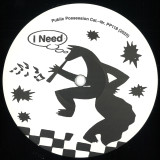
DJ City brings along Manuel Darquart to deliver a standout 12“ titled „I Need“.
Italo, Club & Beatless Version.
Has been a standout in every P.P. Deejay set since the minute it reached our inboxes. Rumor has it that it already blew off the roof of P-Bar more than once. Bad Dads love it and it might evoke some hot, sweaty memories with one or the other. Sing along alert.
out of Stock
Last delivered 5 months ago available to reorder, subject to availability
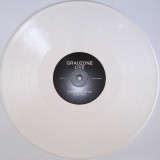
WRWTFWW Records is very happy to release Swiss cult band Grauzone’s recording of their April 12th 1980 live show at Gaskessel in their hometown of Bern. The 9-track album, documenting the very beginnings of the group, is available as a limited edition white vinyl LP in heavy 350gsm sleeve with special artwork by band member Stephan Eicher.
Experience the early Grauzone days, live from Bern, Switzerland, with a concert recorded at legendary local venue Gaskessel, with Martin Eicher on guitar and vocals, Christian G.T. Trüssel on bass, Marco Repetto on drums, Stephan Eicher on synth, and Claudine Chirac on saxophone. The performance is a true time capsule of the early 80s underground, showcasing the punk side of Grauzone with renditions of songs that were never officially released, as well as future fan-favorite “Moskau”. A piece of Swiss music history, This limited release is a must have for all Grauzone fans and DIY archivists.
About Grauzone:
The pioneering band from Bern (Switzerland) had a short-lived but highly-regarded career which birthed a cult discography that still fascinates and resonates today. Consisting of core members Martin Eicher, Stephan Eicher, and Marco Repetto, and on-and-off participants Christian GT Trüssel, Claudine Chirac, and Ingrid Berney, the elusive group broke new grounds in the early 80s, experimenting with punk and industrial music, early techno sounds, minimalism, new wave, pop, and various electronics. With an innovative and polished approach to design, visuals, performance, and all around style and philosophy on top of their superb music, the constantly transforming unit developed a whole experience - the Grauzone experience: wild and unpredictable, yet sophisticated and cohesive, or as Swiss music historian Lurker Grand would call it, "an Art band with a Punk attitude".
Completely rejecting the music industry rules and refusing to play the game of promotion, touring, release schedules, and TV appearances even though they had a multi-platinum international hit with the song "Eisbär", the band quickly disintegrated in full convention-defying glory, leaving behind an inspiring music legacy for the world to discover and discover again, one generation after the other.
Stephan Eicher went on to be, arguably, the most successful Swiss musician ever, with an international career extending from pop chanson to experimental escapades and collaborations with Moondog, artists Sophie Calle and Sylvie Fleury, and author Martin Suter among many other luminaries. Marco Repetto flourished as a techno and ambient producer, releasing multiple projects including releases on Aphex Twin’s Rephlex label.
out of Stock
Last delivered 15 months ago available to reorder, subject to availability
Willie Nile"s "The Great Yellow Light" is the 21st full length release from veteran New York-based rocker that the New Yorker has called "One of the most brilliant singer-songwriters of the past thirty years". The album title is a reference to Vincent Van Gogh"s letters to his brother, Theo, and the light that inspired him in Arles, France where he lived from February 1888 to May 1889. The album was recorded at Hobo Sound, Weehawken, NJ produced by Nile and his long-time producer, Grammy-winner Stewart Lerman (Elvis Costello, Patti Smith, Sharon Van Etten, etc.). Features special guests Steve Earle, Paul Brady, Waddy Wachtel, David Mansfield, and members of Black 47 and The Hooters.
For many all-time-great rock bands in the ascendant, the fourth album is often the point where youthful years of febrile creativity and progressive momentum culminate in a masterwork for the ages, setting the seal on an early signature sound while opening it up to future possibilities. From enchanting 2016 debut Prelude, through 2018's assured II: Sojourn, to 2020's wizardly III: Pentecost, each Wytch Hazel album has embodied that old-fashioned notion of unstoppable progress, and the glittering treasure chest that is IV: Sacrament proves eminently worthy of rising to the toughest challenge. Not just the Lancashire quartet's most classically beautiful production, but their strongest yet front-to-back collection of affecting hooks and ageless melodies.
Eighteen Berlin-schoolish Synthwave tracks published under pdqb's moniker Aipd Q41/B47. Carefully prompted and edited many moons ago with an AI model that is already outdated.
To become aware of transience in our fast-paced world, the album is not available digitally or via streaming. It exists only on tape. A relic on a relic! It's as if reading this text on the paper of an extinct tree.
To remind the listener of their own transience, the tape's appearance is mirror-like silver; one can see their reflection in it, look at themselves, and with the next glance, the previous one is gone.
out of Stock
Last delivered 15 months ago available to reorder, subject to availability
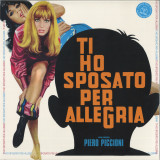
“Ti Ho Sposato Per Allegria” (1967) is a comedy directed by Luciano Salce, taken from the theatrical play of the same name (1965) by Natalia Ginzburg. The main characters are Pietro and Giuliana, respectively interpreted by Giorgio Albertazzi and Monica Vitti. A lawyer from a good family, serious, accustomed to a calm and regular life who got married to a indolent and dazed girl with a difficult past a month after meeting her at a party. Despite Giuliana's inability to transform herself into a good housewife, his relationship with Pietro continues to flourish, because he seems to find enjoyment in each of his wife's many mistakes. The reason for their union lies not in love but, perhaps, in a genuine sympathy, as strong as it is mutual. The story has become a minor classic with each new representation. On both stage and screen the themes of everyday life, and the more complex and existential ones, are addressed. The subtle irony of the work relies on recounting problematic events in a carefree tone: realities such as abortion, death, separation and the couple's incommunicability are underplayed with naturalness. The funny events of the film are commented on by Piero Piccioni's music, published for the first time on vinyl by Musica Per Immagini, with an harmonious tracklist. For this first orchestra rehearsal with the director, which will be followed by other important soundtracks, the composer makes an effective and elegant synthesis: on the one hand he reworks moods and aesthetic intuitions of some previous and happy experiences, while on the other he identifies and anticipates the first bars of that unmistakable sound between bossa nova, funk and lounge nuances that will characterize almost all the production of the Seventies. In fact, the Turin-native artist simplifies in a positive sense the articulated harmonic structures that have always distinguished his authorial figure – where the so called jazz features are to be considered more than central in the musical texture, as prominent elements of the harmonic syntax – and he tries a melodic reduction that will make the compositions more catchy or memorized, but not easier for this. Lightness of spirit and rarefied elegance are the keys of this new Dionysian world.
out of Stock
Last delivered 15 months ago available to reorder, subject to availability
One of the biggest tunes of 2011 gets a reload on Hotflush with a brand new remix from house legend Mr. G.
Hotflush label boss Scuba was a dubstep exile in Berlin running parties at Berghain in 2011, following the release of his landmark album Triangulation the previous year. The SCB project had been launched as a platform for his productions outside of the 140 realm, anticipating a stylistic move that would make a serious impact on the dance scene at large.
‘Loss’ was released on Aus Music that March, proceeded to destroy dancefloors across the globe, and ended the year at number 7 in RA’s ‘Top Tracks of 2011’. In 2025, it retains the unique combination of minimal elegance and trance power that gave it such impact all those years ago.
UK house mastermind Mr. G steps up with a trademark remix - uncompromising in groove and structure, guaranteed to do the business on the floor.
And to round off the package, a previously unreleased version of the original b-side, FutureUnknown is included. The ‘Voxattack’ made many appearances in the Scuba DJ set at the time and qualifies for ‘sought-after lost dub’ status.
out of Stock
Last delivered 8 months ago available to reorder, subject to availability
Décima Víctima were a Spanish-(Swedish) band that, during their short-lived career between 1981 and 1984, developed a very personal sound reminiscent of Joy Division, The Cure and other British post-punk bands. Although commercial success evaded them, rarely has any Spanish band achieved such a high degree of quality and coherence in their music and personality. This LP contains previously unreleased tracks recorded by Décima Víctima in November 1983, one month before their last concert. Seven of these songs feature different lyrics to the ones later recorded for the "Un hombre solo" album. This is the way they performed them that night on the Rock-Ola stage, so this record can be considered, to some extent, an approximation to their last show and to their powerful live sound. After many years a rehearsal session that DV had recorded on an old cassette tape has been resurfaced. It had originally been laid down on a four-track recorder but unfortunately the tape got lost.The story of these tracks goes back to the last weekend of October 1983, when DV went to record at friend Paco Trinidad's family home in the mountains north of Madrid. Paco recorded the latest songs on a four-track tape recorder at the house. It was done live, except for extra takes of clarinet and some guitar details. The garage sound, as the name suggests, was achieved in the garage and an adjoining room where the drums were played. The sleeve design is a photo montage of our performance for the Maqueta de Oro (Gold Demo) at the Diario Pop awards in March 1983, plus another photo of the band in the dressing room at Rock-Ola after playing our last gig. The directness and passion of the tape makes it an interesting item for collectors and fans and the fact that some of the lyrics were not the definitive ones is an added rarity that reveals the development process for the following LP "Un hombre solo".
out of Stock
Last delivered 15 months ago available to reorder, subject to availability
Nail Tolliday is a legendary figure in the UK electronic music scene, hailing from Nottingham, having founded the influential Velocet and 89:GHOST labels, and currently running the *In The Dance* label, Tolliday has played an integral role in shaping the sound of underground dance music, with a career that dates back to the early 90s, his impeccable reputation spans across a wealth of releases on renowned labels such as Classic, Robsoul, and many others, his discography is nothing short of extensive, earning him praise from some of the most respected figures in the electronic music world, including Andrew Weatherall, Colin Faver, Fred Everything, and Danny Howells, beyond his solo work, Nail Tolliday was also part of the iconic group Bent, and in a further testament to his versatility, he has produced multiple tracks for the globally celebrated Sleaford Mods, his sound evokes the essence of classic house and disco from the early 90s, reminiscent of the pioneering works of DJ Sneak, Romanthony, and others who defined the era's vibrant dance scene, this latest EP is a masterclass in the golden era of dance music, seamlessly blending early house vibes with sultry, disco-infused grooves, it exudes a timeless, classy funk that will captivate any dancefloor, the EP as a whole feels like a cohesive journey through Tolliday's rich musical influences, while also carving out its own identity in the modern dance music landscape, each track on the EP is an essential offering, « Shakey » delivers a funky, infectious rhythm that immediately commands attention, the bassline grooves effortlessly, while the vocal snippets add an extra layer of depth, creating an instant floor-filler, « Oh Well » takes a more melodic turn, with smooth chords and a sophisticated vibe, making it perfect for those late-night moments when the energy is just right, « All I Want » is pure house magic, with soulful, driving percussion and a hypnotic vocal that brings everything together in a silky, irresistible package, « Starz » brings an upbeat, celebratory feel, packed with infectious melodies and a buoyant energy that's impossible to ignore, « Feel Like » wraps up the EP with a deeper, more introspective groove, complete with subtle synths and a rich, atmospheric atmosphere that lingers long after the track ends, this EP is a true testament to Nail Tolliday's legacy, showcasing his ability to create music that is both timeless and relevant, his style, while deeply rooted in the traditions of 90s house and disco, is infused with a modern sensibility that proves why he remains a living legend in the dance music world, strikingly, his sound also recalls the work of another recent house maverick, Soundstream, with its deep, raw grooves and unapologetic commitment to the classic roots of house music.
Senselessness 1/2 is the very first solo issue of the Swiss electronic composer Robin Félix, on his own label De l’Aube (Of Dawn), the occasion for him to prove that field recordings can be (or should be?) an integral part of the global matter, when so often they are just something hovering in the background because it’s “nice” or reminds the artist of a place he loves.
Throughout the length of these four tracks, they are litterally central; moreover, they are electronically transformed, manipulated, skewed and twisted in order to form some sort of framework, a backbone on to which sounds and genres intertwine. On Cluster, violins and cellos (recorded in the gardens of the Venice Biennale) are soon transmuted into the abrasions of the electroacoustic realm, until the pulse of a relentless bass introduces a pure and pristine electronic music that knows and uses the roots of dub, drum’n’bass and the meticulousness of Jan Jelinek’s Glitch aesthetics. A tad “housy”, Chi comes as a second pulse where a modified didgeridoo and African percussions (recorded in a Swiss forest) lead the listener to a sort of tribal mode, as suited to dancers than to those who prefer inner journeys; here, the spatial dub of King Tubby moves from background to foreground.
The more abstract Boiler verges on the IDM and the heady, elegant and spartan Detroit techno – headphones reveal its numerous minute and delicate details. Based on the recording of insects, of which one can hear the actual rubbing of elytras, the closing Swarm ends the record with and intricate blend of ambient, which in some way winks to the Aphex Twin and The Future Sound Of London. Overall Senselessness 1/2 is a mesmerising and concise update of the famous Deutsche elektronische musik of old, that gathered on its way the other genres that made Robin Félix tick. Since field recordings have hardly been that meaningful, one wonders where Senselessness 2/2 will lead us to
out of Stock
Last delivered 15 months ago available to reorder, subject to availability
For All The World, the black watch's twenty-fifth (and first double) album is a darkly poppy, brightly moody, many-splendored take on a number of the great themes: Death and Sex, Memory and Lament and Hope and Love. And it is, arguably, this heralded Los Angeles band's most sonically ambitious and moving record yet, since front man/novelist/ex-English professor John Andrew Fredrick formed the group in 1988 in Santa Barbara after he'd seen a London-by-way-of-Canada band called The Lucy Show play to twelve-or-so people in his hometown.
Having recorded 2024's Weird Rooms with producer Misha Bullock and Fredrick's son Chandler at Bullock's studio in Austin, TX, the TBW founder was keen to repeat the experience with, he says, more straightforward, classic psych/jangle/shoegaze songs. The result, though artistically satisfying, spurred a yen in John to write more songs as a sort of reaction against the batch he'd carried with him from LA to Texas. "We had such a productive time recording ‘Weird Rooms’ that I wanted to repeat the experience... without repeating the experience. And once it was over and I left Misha to do what he pleased with respect to mixing and overdubbing, all I could think was 'I need to write another album now.'" So Fredrick brought longstanding producer/engineer and TBW-associate Scott Campbell (Stevie Nicks, Acetone) along this time to help out with engineering and good cheer.
Fredrick, who has been "accused" of being "astonishingly prolific," learned that bandmate Andy Creighton had recently become unemployed, seized the opportunity to have yet another multi-instrumentalist flesh out the new songs he quickly wrote after he came back from Austin. “Achilles Past,” the first single, is in fact a song that John wrote when the production team thought the album was done—and the front man avers that it’s often the case that a very strong song comes to him, as it were, in the eleventh hour. The same could be said for “Listen You Wait”—another number that came late to the Austin sessions.
Nevertheless, the recording of the first half of For All The World has Creighton's signature indelibly stamped on it - especially on such tracks as “Fainting” and “Surely You Rally”- just as the latter half highlights Bullock's formidable talents. "They're both not just brilliant musicians and they understand my aesthetic and bring their own sensibilities to bear on my stuff. Our respective tastes meet in, you guessed it, The Beatles' realm - the great shadow that hangs over all I do, at least."
"There's A Place," the final song on side two, serves in fact as a distinct homage that's been a long time coming for a band that included a cover of "It's All Too Much" as a bonus track and that release a quite punkish, uptempo version of "Eleanor Rigby" on a 7".
Horace Andy has always commanded a place high on the list of Reggae singers from Jamaica. His distinctive haunting vocal style stands strong on any rhythm,song or style he chooses to cover. Of the singers on that long list, he has managed more so than any other, to crossover to a new generation of listeners due to his individual style, helped also by his collaborations with the likes of Massive Attack. Horace Andy (b. Horace Hinds,1951,Kingston Jamaica) like many otherJamaican singers began his musical career at Coxsonne Dodd's Studio One. So impressed with the youth, Coxsonne decided on a name change for theyoung artist and called him after his top songwriter of the time Bob Andy. So Horace Hinds became Horace Andy. His first tune for Coxsonne 'Something On My Mind' was a slow burner in Jamaica, but his belief in his young protégé paid off when followed later by 'Skylarking' a tune that burst the singer all overthe radio and sound systems of Jamaica. After numerous singles and two albums worth of material, Horace moved on to work with many of the topflight Jamaican producers, among them Keith Hudson, Augustus Pablo and Niney the Observer, but it was his work with producer Bunny Lee in the 70's that he cut most of his hits for and from this stable of work, that we have compiled this set. Some of his late 60's classics were recut in the popular1970's style, working with the rhythm kings themselves, Sly Dunbar andRobbie Shakespeare. They have added some shine to the tracks, 'SomethingOn My Mind' and 'Skylarking' and made them hits all over again. Such wasHorace's delivery to the covers he sang like Delroy Wilson's version of theTams 'Riding For A Fall', the Heptones 'My Guiding Star', John Holts'Man Next Door' and Bill Wither's 'Ain't No Sunshine', that these finetunes were made his own. The roots end of his musical style was covered by
Andy originals such as 'You Are My Angel', 'Zion Gate','Money Money'and the cut which we have taken our edited title, the timeless 'Just SayWho'.A bass heavy cut to Bob Marley's 'Natural Mystic' works so well inthis style also. Another nickname Horace acquired was the affectionate title of Sleepy, as he was always hanging around the yards and studios of Jamaica waiting his turn, sometimes so long he would fall asleep. His enthusiasm to get back in the studio to work some more of his magic, to a catalogue of material that has developed into one of the finest in Jamaica. I hope you will agree, this fine set of 1970's classics will sit alongside.
O B8 | AIN'T NO SUNSHINE
out of Stock
Last delivered 12 months ago available to reorder, subject to availability
In 1966, Oscar Agudelo recorded this elusive and lesser-known collector's gem called "Pa' mi muñeca" for Discos Fuentes. It is a rarity where the artist took an unexpected musical turn and performed several porros, paseaitos, gaitas, and cumbias, evoking the swaying motion and rolling waves of Colombia's Caribbean sound. It resonates with the echoes of a romantic minstrel laced with an unexpected richness of nuance, a hallmark of the cumbia sound. It's exactly the kind of music that lights up a tambó or a fandango circle on carnival night. A dozen tracks, none of them new, but suffused with a consciousness that can be understood within the context of their time and with the personality of the artist bold enough to bring them to life. 'Madre cumbia' opens the album with a festive, nostalgic mood, infused with the simple beauty and the electrifying beat of the tropics that immediately makes you want to get up and dance. It's a fantastic example of how to perform a song with passion and make the listener fall instantly in love with an album. 'Pa' mi muñeca', the title track, is a fast-paced paseaito that explores new paths that took a shortcut to the dance halls. A showstopper on the dance floor. 'Está como mango' is a porro-cumbia that charms with a rich tapestry of compliments, the calling card of many old-school tropical songs. 'Cumbia de recuerdo', 'Cumbia suave', 'Cumbia de Santa Marta', are back-to-back cumbias. This is an album devoted to recreating the strength of a musical genre that's been the soundtrack of Colombian life for decades. It's a record dedicated to capturing good times, filled with simple dreams, steeped in joyful energy, and shining with the uninhibited flair, or better said, the quality of the sixties. This album represents a milestone on the route cumbia had taken, both for Discos Fuentes and maestro Agudelo. First time reissue. Includes liner notes by genre expert Don Alirio.