Cerca:the 1975

Generi
Tutto
Soul Jazz Records pres. - BLACK JAZZ RECORDS – The Best of Black Jazz Records (2x12")
  • 1: The Awakening - Mode For D.d. (4.47)
  • 2: Doug Carn - Higher Ground (5.06)
  • 3: Calvin Keys - Aunt Lovey (7.22)
  • 4: Roland Haynes - Eglise (3.06)
  • 5: The Awakening - Slinky (6.0)
  • 6: Walter Bishop Jr. - Coral Keys (5.33)
  • 7: Rudolph Johnson - Diswa (6.34)
  • 8: Henry Franklin - Blue Lights (6.57)
  • 9: Kellee Patterson - Maiden Voyage (5.17)
  • 10: Chester Thompson - Power House (6.33)
  • 11: The Awakening - March On (5.31)
  • 12: Walter Bishop Jr. - Soul Village (6.16)
  • 13: Rudolph Johnson - The Highest Pleasure (7.36)

This album brings together some of the finest music ever released on Black Jazz Records which in its short four-year history, between 1971 and 1975, released over 20 superlative albums which all successfully blending spiritual jazz, funk and soul jazz of the highest calibre. Similar to other independent jazz labels at the time, including Strata-East Records and Tribe Records, Black Jazz focussed on a number of key artists, most of whom first established their career during this period, and all of whom are featured here. Featuring The Awakening, Doug Carn, Walter Bishop, Chester Thompson, Kellee Patterson and more. Black Jazz Records was founded in Oakland, California, by pianist Gene Russell and percussionist Dick Schory.

The label released twenty albums between 1971 and 1975. Artists who recorded for Black Jazz Records included Cleveland Eaton (bassist for Ramsey Lewis), keyboardists Doug Carn and Chester Thompson, vocalist Kellee Patterson, saxophonist Rudolph Johnson, bassist Henry Franklin, and spiritual fusion group The Awakening. The label was distributed and financed by Ovation Records, based in Chicago. Schory founded Ovation in 1969, shortly after leaving RCA. Schory was a Grammy-nominated percussionist who was also known for his development of the stereo recording techniques including Dynagroove and RCA Victor’s Stereo Action. Schory also pioneered quadrophonic sound, and a number of Black Jazz Records were in quadrophonic and other formats such as ¼” tape and 8-track.

Black Jazz launched in 1971 with Gene Russell’s ‘New Direction’. Russell was the creative force behind the label, acting as producer, engineer and A&R and focussed on developing new solo artists. The most successful of these was Doug Carn, who released four albums featuring his wife, Jean Carn, as vocalist. She later changed her name to Jean Carne and became a successful soul singer signed to Gamble and Huff’s Philadelphia International empire.

pre-ordina ora27.03.2026

dovrebbe essere pubblicato su 27.03.2026
28,99

Last In: 2026 years ago
Neil Ardley - Kaleidoscope Of Rainbows LP 2x12"

NEIL ARDLEY – KALEIDOSCOPE OF RAINBOWS The Definitive 2LP Reissue of a Landmark in British Jazz Fusion
Analogue October Records proudly presents the long-awaited reissue of Kaleidoscope of Rainbows, Neil Ardley’s 1976 masterpiece, originally released on Gull Records. Produced by Neil Ardley and recorded at London’s famed Morgan Studios, the sessions were engineered and mixed by Martin Levan, capturing one of the most ambitious and beloved works in British jazz. Following the acclaimed reissues of Courtney Pine’s Journey to the Urge Within (AOR-001-ST) and Neil Ardley’s Harmony of the Spheres (AOR-002-ST)—both praised by the audiophile press including The Tracking Angle—this third release confirms Analogue October as one of today’s most meticulous and exciting reissue labels.
A Suite of Sound and Colour
Commissioned for the 1975 Camden Jazz Festival, Kaleidoscope of Rainbows is structured as a seven-part suite, each movement reflecting a colour of the spectrum. Ardley’s composition weaves together jazz improvisation, progressive rock energy, and orchestral elegance in one of the most imaginative British jazz recordings of the era. Featuring Ian Carr, Barbara Thompson, Tony Coe, Trevor Tomkins, and Geoff Castle, the album is a who’s who of the UK’s vibrant 1970s jazz scene.
Cut at Abbey Road, Pressed at Record Industry
For this definitive edition, Analogue October worked directly from the original Gull master tapes. Mastering was entrusted to Miles Showell at Abbey Road Studios, using his renowned half-speed process to extract every detail and dynamic from Ardley’s score. To give the music the headroom it deserves, the reissue has been expanded to a deluxe 2LP set, pressed on the highest-quality vinyl at Record Industry in Haarlem, Netherlands. The result is a presentation that finally does justice to the scope and brilliance of Ardley’s vision.
Deluxe Package – Restored from the Source
The artwork has been meticulously restored from the original film elements, ensuring a sleeve of unmatched vibrancy and fidelity. Inside, a 12-page booklet printed on heavyweight card features an in-depth essay on Neil Ardley and the making of Kaleidoscope of Rainbows, written by Jazzwise magazine editor Mike Flynn, alongside rare photographs from the period.
Curated and Produced by Craig Crane
As with every Analogue October release, Kaleidoscope of Rainbows has been curated and produced by label founder Craig Crane with a collector’s eye for detail and a deep respect for the music’s legacy. This reissue is not only the definitive vinyl edition of one of the great British jazz fusion albums—it also continues the label’s mission to restore and celebrate the most vital recordings of the era.
Neil Ardley’s Kaleidoscope of Rainbows—vivid, expansive, and timeless—returns as the essential edition for audiophiles and jazz lovers alike.
Retail-ready product description (short form):
Produced by Neil Ardley and recorded in 1976 at London’s Morgan Studios, engineered and mixed by Martin Levan, Kaleidoscope of Rainbows is a cornerstone of British jazz fusion. This definitive 2LP reissue, mastered at Abbey Road by Miles Showell from the original Gull master tapes and pressed at Record Industry (NL), finally gives the music the dynamic headroom it deserves. The deluxe edition includes restored artwork and a 12-page booklet featuring an in-depth essay by Jazzwise editor Mike Flynn.

pre-ordina ora27.03.2026

dovrebbe essere pubblicato su 27.03.2026

40,97

Last In: 2026 years ago
The Gaslight - Hard Times Are Coming, Hard Times Are Her (7")
 
1

The earliest foundations of the Detroit Harmony group ‘The Gaslight’ came when future lead singer Oliver “Butch” Cheatham via an introduction by his sister Jackie joined a group known as ‘The Young Sirs’ who recorded, “There’s Something The Matter (With Your Heart/African Love” for Magic City during 1969. The group included Oliver’s future brother -in-law Allen Cocker (Jackie’s future husband).

Oliver and Allen went on to form a new vocal quartet with Curtis “Kippy” Anderson and Michael Eatmon. Under the group name of ‘The Gaslight’ they signed to Uptight Productions Incorporated, a local production company founded by local businessmen Marvin Figgins and Arnold Wright. The Gaslight were the only vocal harmony group signed to Uptight Productions and as such, it was they who made the most recordings across two label imprints Grand Junction and Black Rock. The Gaslight’s first single “I Can’t Tell A Lie/Here’s Missing You” was released on Grand Junction (GJ1001) in 1970, For the groups second single Figgin’s placed them under the guidance of legendary producer/songwriter, the late George McGregor under whom they recording “Drifting Away/If You See Her” Grand Junction (GJ1002) released in 1971 For their next release Figgin’s switched the group to his Black Rock label to record “Out Of My Hand/I’m Only A Man” Black Rock (2002) under the pseudonym of Butch & The Newport’s With “Butch” being Oliver’s nickname. A later, second release of “I’m Only A Man” but with a different flip side “I’m Gonna Get You” came out on Grand Junction (GJ1100) in 1973 with the performing artist credits reverting back to ‘The Gaslight’.

Upon leaving Uptight Production’s the group found a new home when George McCregor took them to a new fledgling label T.E.A.I (an abbreviation for “Tellin’ Everybody About It”) owned by ‘The Dramatics’ Road Manager Charles Underwood. ‘The Gaslight’s’ first and only release for T.E.A.I, was the mellifluous 1975 double sider “Just Because Of You/It’s Just Like Magic”. Underwood had precured a working relationship with Polydor Records who picked the release up for national distribution three months later. As good as the record was due to poor promotion it failed to make any notable noise and eventually sank with the group soon after breaking up.

During Soul Junction’s later dealings with the late Oliver Cheatham, respected UK Collector Andy Rix mentioned he owned a three track acetate containing the two mentioned T.E.A.I/Polydor tracks plus a third unissued dance track “Hard Times” which through a licensing deal with Charles Underwood Soul Junction now present to you on a three track 45, released under its full title “Hard Times Are Coming, Hard Times Are Here” backed with a previously unissued mix of “Just Because Of You” alongside the issued 45 version of “It’s Just Like Magic”.

pre-ordina ora27.03.2026

dovrebbe essere pubblicato su 27.03.2026

18,07

Last In: 2026 years ago
Various - SALÒ OR THE 120 DAYS OF SODOM LP

Available for the first time on any format, the soundtrack of Pier Paolo Pasolini's controversial 1975 vision of the Marquis De Sade's 120 Days Of Sodom, featuring beautiful and discordant classical compositions, in stark contrast to the shocking and cruel events unfolding onscreen.
Three weeks before the scandalous release of "Salò, or The 120 Days Of Sodom", Pasolini was brutally murdered in Ostia, Italy. In the wake of the tragedy, legendary composer Ennio Morricone wrote 'Addio a Pier Paolo Pasolini' (Goodbye to Pier Paolo Pasolini) for the late filmmaker, included in the final edit.

Following the narrative of one of Pasolini's defining cinematic moments, the soundtrack opens with Ennio Morricone's "Son Tanto Triste", descends into the melancholic minor chords of Bach, Chopin, Orff, Puccini, and Graziosi, incorporates sinister renditions by the cast, and includes Morricone's own sombre tribute to the director.

Disgusted by the flood of crass sexploitation movies which filled the space opened up by his "Trilogy Of Life", Pasolini turned to the most nihilistic thinker in European history for what became his final film. His version of De Sade's 120 Days Of Sodom, amplified with motifs from Dante's Inferno, confronts the ultimate implications of fascism in a series of sexual and moral atrocities. "The only true anarchy is power".

The LP / CD will be released on Friday 13th February 2026, exactly 249 years since the Marquis de Sade was arrested and imprisoned in the dungeon of the Vincennes fortress for charges of "debauchery and immoderate libertinage" that scandalised his contemporaries.

pre-ordina ora27.03.2026

dovrebbe essere pubblicato su 27.03.2026

23,49

Last In: 2026 years ago
Various - Always There / For The Love of Money 7"

The latest from master editor Mr. K, a jazz-funk classic backed by a Philly sure shot!

Debuting in 1975, the jazzy RnB instrumental ‘Always There’ from original Earth Wind and Fire saxophonist Ronnie Laws was a hidden gem until Side Effect’s vocal version took off the following year, one of many cover versions to come (Incognito’s hit the pop top ten in the ’90s). Mr. K's edit streamlines the original, mimicking Side Effect’s distinctive horn stab intro and adding a DJ-friendly drums-only outro. With original 7-inch releases being either fragile styrene or unreasonably short, this extended vinyl pressing is very welcome.

A song that needs no introduction—coming from the very best there is—the O’Jays backed by MFSB! ‘For the Love of Money’ rides one of the most immense bass lines ever committed to wax and, while that would be enough to carry a track on its own (see the Armada Orchestra’s cover), here we have the talents of the timeless O’Jays vocals to top things off. Mr. K has found the perfect balance between the Lp and single versions, giving us the very best DJ-friendly 7" mix that should never leave your bag.

In Stock

Disponibile in Stock e pronto per la spedizione

11,72
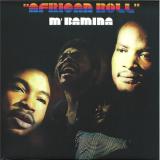
M’BAMINA - AFRICAN ROLL

Gatefold Sleeve

M’Bamina – African Roll (1975)
The story of an album born between Africa, Italy, and the nightclub culture of the 1970s
In the heart of 1970s Italy — a country undergoing profound social change and a music scene just beginning to open itself to distant sounds and cultures — an extraordinary, almost improbable story took shape. It is the story of a group of young African musicians who found their way to Europe, of a Turin nightclub that became a crossroads for communities and experimenters, and of an album which, released in small numbers and largely unnoticed at the time, is now considered a rare jewel of Afro-fusion.
The band called themselves M’Bamina — an ensemble of musicians from Congo, Cameroon, and Benin, who arrived in Italy in the early Seventies. Settling between northern Italy and the Pavia area, they began performing in small clubs and community events, bringing with them a vibrant rhythmic heritage: African polyrhythms, call-and-response vocals, funk-infused bass lines, and Caribbean or Afro-Latin colours absorbed along their musical journeys. Their raw, contagious energy on stage quickly drew attention.
Meanwhile, in Turin, another story was unfolding. There was a venue becoming almost legendary: Voom Voom, one of the city’s liveliest nightclubs, run by Ivo Lunardi. The club attracted an eclectic crowd — students, artists, foreigners, night owls — and Lunardi quickly understood that the dancefloor wasn’t just a place for music, but a melting pot for a new kind of cultural energy. Out of this vibrant atmosphere came his idea: to turn the club’s name into a small independent record label, Voom Voom Music, capable of capturing the spirit of those years and giving voice to unconventional projects.

When Lunardi heard M’Bamina, he immediately sensed that this was the sound he had been searching for: fresh, different from anything circulating in Italy at the time, and capable of blending African tradition with funk and European sensibility. He brought them into the studio.
Production was handled by Lunardi along with Christian Carbaza Michel, while the engineering was entrusted to Danilo Pennone, a young sound technician with a sharp, intuitive ear.
The recording sessions — held in Turin in 1975 — produced a remarkably warm and direct sound. The music feels almost live: grooves rooted in African tradition, but open to funk-rock structures and modern arrangements. It is a natural fusion, never forced. Tracks move between tribal rhythms, funk basslines, light electric guitars, congas and Afro-Latin percussion, with call-and-response vocals and melodies that echo both Congolese tradition and the lineage of Latin jazz. Not by chance, one of the album’s most striking tracks, Watchiwara, reinterprets a Latin standard through M’Bamina’s own rhythmic language.

The album was titled African Roll — a name that was already a statement of intention. It is African music that “rolls,” that moves, adapts, transforms within a new geographic and cultural setting. It is not strictly Afrobeat, nor Congolese rumba, nor Western funk: it is a spontaneous, hybrid blend, shaped more by lived experience than by any calculated aesthetic program.
When African Roll was released, the world around it barely noticed. Distribution was limited, and 1970s Italy had yet to develop a cultural framework for receiving such music. The national music press rarely paid attention to African or “world” productions. The album slipped into silence — though the band’s own story did not.

M’Bamina continued performing across Europe and Africa, even sharing a stage in Cameroon with none other than Manu Dibango. By the late Seventies, they moved to Paris, signed with Fiesta/Decca, and recorded a second LP, Experimental (1978). Meanwhile, the peculiar record they had made in Turin began to resurface quietly among vinyl collectors, Afro-funk enthusiasts, and DJs hunting for forgotten grooves.
That is when the album’s fate began to shift.

Over the decades, African Roll emerged as an almost unique document: a snapshot of an intercultural Italy before the word “intercultural” even existed, a fragment of migrant history, a spontaneous experiment in musical fusion born far from major industry circuits but rich in authenticity. Original copies began commanding high prices on the collector’s market, and the album became recognized as one of the hidden classics of European Afro-fusion from the 1970s.
Today, more than fifty years later, this reissue finally restores visibility and dignity to a project that deserves to be heard, studied, and celebrated. It is not simply an album: it is the testimony of a rare cultural encounter, born in an Italy unaware of how fertile such exchanges would one day become.

It is the story of a visionary producer, an extraordinary band, and a fleeting moment in which music, migration, and nightlife came together to create something genuinely new.
African Roll is — now more than ever — the sound of a bridge: between continents, between eras, between cultures. A record that, after rolling far and wide, has finally come home.

In Stock

Disponibile in Stock e pronto per la spedizione

23,49
YAMASUKI - LE MONDE FABULEUX DES YAMASUKI

In the spring of 1971, somewhere between Brussels, Paris and a collective pop fever dream, Le Monde Fabuleux Des Yamasuki landed on vinyl. It sounded like nothing else then and it still does not today. More than half a century later, Sdban Records proudly presents a reissue of this singular cult album, available from April 3, 2026 on vinyl.

The album was produced by Jean Kluger and written both by Jean and Daniel Vangarde (aka Bangalter, later the father of Thomas Bangalter of Daft Punk), who were alreadywell ahead of their time, long before electronic music rewrote the rules of pop culture.

Released under the name Yamasuki, also referred to as The Yamasuki Singers, or The Yamasuki's, the project was never intended as a conventional band. It was a studio-born fantasy, a concept album disguised as a pop record. What began as a standalone single quickly expanded into a full-blown pan-cultural pop opera that ignored genres and common sense with joyful abandon.

Musically, the album sits at a delirious crossroads. Psychedelic pop collides with funk rhythms, samba and bubblegum melodies, full of chants and choruses in a phonetic pseudo-Japanese, written with the help of a dictionary. Kluger and Vangarde famously recruited a children's choir to perform the vocals, and for added spectacle, they brought in a Japanese judo grandmaster, whose ritualistic shouts and battle cries erupt throughout the record.

Several singles were released. One of them, Yamasuki, with accompanying dance move, appeared in the United Kingdom and France on John Peel's Dandelion label, a fitting home for a record that thrived on the margins of pop culture. Its B-side, Aieaoa, proved even more potent. In 1975, the song was reborn as A.I.E. (A Mwana) by Black Blood, an African group recording in Belgium, this time sung in Swahili. That melody would travel even further. Aie a Mwana became the debut single of English pop group Bananarama, and in 2010 it resurfaced once more as Helele, an official song of the FIFA World Cup, recorded by South African singer Velile Mchunu with Danish percussion duo Safri Duo. That version became the most widely known incarnation of the song. With Jean Kluger directly involved, it was less a cover than a continuation of the original idea.

The album's afterlife did not stop there. Over the years, Yamasuki has been quietly sampled, covered, and featured across media far beyond the realm of novelty pop. Kono Samourai was sampled in The Healer by Erykah Badu (2007), produced by Madlib, while Yama Yama has found its way into recent pop culture as well: appearing in the television series Fargo, on Angus Stone's project Dope Lemon, and on the 2008 Late Night Tales compilation curated by Arctic Monkeys drummer Matt Helders. Proof, if any were needed, that this strange little record carries a deeper musical DNA than its playful exterior might suggest.

This new reissue of Le Monde Fabuleux Des Yamasuki proves the renewed interest and respect for this cult album, faithful to the original spirit while finally giving it back the physical presence it deserves. In an era obsessed with genres and algorithmic neatness, Yamasuki still laughs, dances and karate-kicks its way past definitions. It reminds us that pop music can be playful without being disposable, strange without being cynical and joyfulwithout explanation. The world of Yamasuki was always fabulous, we are just lucky it found its way back to us!

pre-ordina ora03.04.2026

dovrebbe essere pubblicato su 03.04.2026

23,95

Last In: 2026 years ago
Hans Reichel - Dalbergia retusa LP 2x12" + DL

Black Truffle is thrilled to announce Dalbergia Retusa, an extensive double LP selection of the solo guitar music of Hans Reichel, compiled by Oren Ambarchi. Last heard on Black Truffle as one quarter of the joyously anarchic Bergisch-Brandenburgisches Quartett, Hans Reichel (1949-2011) is one of the great figures of experimental guitar music. Though perhaps lesser known than peers like Derek Bailey, Fred Frith and Keith Rowe, Reichel’s rethinking of the instrument was in some ways the most radical of all. Early on, he dispensed with existing guitars to build a series of his own that explored the use of additional strings and fretboards, moveable pickups, extra bridges, special capos, and other innovations documented in the extensive booklet accompanying this release.

Reichel was a long-term resident of Wuppertal, the small Western Germany city that became an unlikely centre of European free jazz in the late 1960s, also home to Peter Brötzmann and Peter Kowald. His solo debut Wichlinghauser Blues was an early entry into the FMP discography and began a relationship with the label that stretched into the 1990s; all the solo performances heard here were first released on FMP. As Reichel says in the charming archival interview with Markus Müller included here, he was ‘always a cuckoo’s egg at FMP’, a label that began as an outlet for roaring European free jazz. What strikes the listener right from the opening selection on Dalbergia Retusa—‘Return of the Knödler show’, from 1987’s The Dawn of Dachsman—is the extraordinary beauty of Reichel’s music, at once alien in the shimmering sonorities and unconventional pitch relationships made possible by his invented instruments, and deeply lyrical, even romantic in its harmonic content. Growing up in West Germany in the 1960s, Reichel’s formative influences were mainly British and American rock bands, a background that shines through in many of the pieces included here: ‘An old friend passes by’ is haunted by the ghost of Hendrix’s rhythm guitar, and the wild closer ‘Heimkehr der Holzböcke’, taken from a rare 1975 7” and the only piece to use overdubbing, layers errant hammer-on and slide tones over a Canned Heat boogie chug.

Reichel was an important source for the development of Oren Ambarchi’s own extended approach to the electric guitar. Appropriately enough, his selection opens with the very first piece by Reichel he ever heard, on a flexidisc included with a 1989 issue of Guitar Player magazine. Though Reichel collaborated with others extensively in many settings and also performed on violin and his other major contribution to instrument invention, the daxophone, his music for solo guitar remains at the core of his oeuvre. Focusing exclusively on solo pieces recorded between 1973 and 1988, the 23 pieces on Dalbergia Retusa showcase the range and consistency of Reichel’s work, allowing the listener to see how his performances developed hand-in-hand with his instrumental inventions. On a piece from his very first LP, played on an 11-string instrument (partly strung with piano strings and using a schnapps glass a slide), we hear his intensive exploration of fret-hammering to create zither-like, chiming tone, which Reichel would hone further in later years with a double fretboard guitar specifically designed to be hammered rather than fretted and picked. On a piece from 1979’s Death of the Rare Bird Ymir, Reichel uses two steel-string acoustic guitars at once, with beautiful results: ‘some even say too beautiful’, he jokes in the interview included here. Many of the pieces from the 1980s make use of varieties of the ‘pick behind the bridge guitar’, instruments of uncanny harmonic richness primarily designed to be played on the ‘wrong’ side of the bridge. At times the unexpected behaviour of attacks, resonance, and decay can almost seem electronic, conjuring up the technology-assisted work of Henry Kaiser or even Fennesz, but realised solely through Reichel’s unorthodox techniques on his invented instruments. Extensively illustrated with photos and Reichel’s own plans and drawings of his instruments, Dalbergia Retusa is an essential introduction to the unique world of Hans Reichel. Rarely has music been at once so strange and so beautiful.

In Stock

Disponibile in Stock e pronto per la spedizione

35,50
Various - I-ROBOTS PRESENTS: TURIN DANCEFLOOR EXPRESS, THE AGE OF VOOM VOOM MUSIC LP 2x12"

Daniele Baldelli
"A pleasant surprise to find in this release various atmospheres and sounds that have always been part of my DJing. It even made me rediscover M’Bamina, whom I used to play back in 1974 at the Tabù Club in Cattolica.
There are afro vibes as well, with Black Line – Myele, which is featured on one of my Cosmic tapes, and Nowhere by the Stratosferic Band recalls a track I used to play at the Baia degli Angeli…
Excellent work!"

Voom Voom Music was an independent Italian record label based in Turin, founded and managed by record producer Ivo Lunardi (Turin, December 6, 1940 – December 9, 2010). A pivotal figure in the Piedmont music scene, Lunardi was active both as a DJ and as the owner of several disco clubs.

The label operated for several years in the latter half of the 1970s, releasing mainly productions connected to the Italian dance and pop scene.
Since 2016, the original master tapes from the Voom Voom Music catalog have been owned by Gianluca Pandullo (I-Robots), a close friend of Ivo and Luca Lunardi. Through his labels Opilec Music and Turin Dancefloor Express, Pandullo oversees their preservation and historical enhancement.

The artistic direction of Voom Voom Music was marked by a distinct sonic identity — eclectic yet visionary. The Turin-based label founded by Ivo Lunardi embraced a sound that blended disco, pop, and rock influences, interwoven with African American grooves in a pioneering, international perspective.

Voom Voom Music was among the first Italian labels to introduce this kind of musical language in the country. A prime example is the Italian edition of the debut album by B.T. Express, Do It ('Til You're Satisfied), released in LP, 8-Track Cartridge, cassette, and 7" single formats.
The label’s productions clearly reflected the influence of black and funk music, as evidenced by the references and inspirations running through its catalogue. The track “Lady Pick-Up”, for instance, includes direct nods to “Do It Good” by KC & The Sunshine Band and Manu Dibango’s iconic “Soul Makossa”, revealing a musically refined and contemporary sensibility.

Among the label’s most representative works is Splash (1977) by the Stratosferic Band, a project conceived by Luigi Venegoni — producer, songwriter, and guitarist of Arti e Mestieri. Venegoni’s artistic journey spanned from progressive rock to space and Italo disco. The album artwork was designed by Piero D’Amore (1944 - 2022), a charismatic and multifaceted figure of Turin’s art scene (one of his works was even acquired by the MoMA in New York).
The record includes a disco reinterpretation of Van Morrison’s classic “Gloria”, and “Splashdown”, a track fusing the disco-rock energy of Rockets and Space. In contrast, “Nowhere” revisits the 1975 single by Hokis Pokis, a soul/disco band from Nassau County (New York), transforming it into a vibrant disco-funk number.

Another significant expression of the label’s catalogue is the afro-rock sound of M’Bamina, an Italo-Congolese group whose rhythmic energy and dialogue between African percussion and Western funk evoke the style of international formations such as Osibisa — themselves linked to a rich artistic history in Italy.

In Stock

Disponibile in Stock e pronto per la spedizione

27,69
Malted Milk - Time Out LP

Malted Milk

Time Out LP

12inchBPLP25001
Blues Productions
10.04.2026
  • 01: What A Night
  • 02: I Feel Numb (Ft. Marco Cinelli)
  • 03: Time Out (Ft. Benin International Musical)
  • 04: Superchild
  • 05: Don&Apos;T You Make Plans On Rainy Days (Ft. Ben L&Apos;Oncle Soul)
  • 06: Midnight Hour
  • 07: Shouldn&Apos;T Talk About It
  • 08: It&Apos;S Alright

Time Out, a pause, like an injunction to suspend the course of events in order to project oneself into a more serene future, is the title of Malted Milk's eighth album. From the haunting Afro beat of the title track to the decadent boogaloo of "I Feel Numb", via the ballad "What a Night" and the funky "It's Alright" , the band demonstrates i ts mastery of arrangements, its creative ability and its talent for revisiting the soul/funk genre. As with the previous album, 1975, Marco Cinelli is back on writing and production duties, bringing undeniable added value to the band's sound and aesthetic. The live translation of this album bears Malted Milk's trademark precision, energy, instrumental talent and group cohesion. Malted Milk once again demonstrates its musical strength and affirms the special place the band occupies on the current soul scene.

pre-ordina ora10.04.2026

dovrebbe essere pubblicato su 10.04.2026

27,31

Last In: 2026 years ago
Various - Tchic Tchic: French Bossa Nova 1963-1974  Colored Edition LP 2x12"
  • A1: Les Masques - Il Faut Tenir (1969)
  • A2: Isabelle Aubret - Casa Forte (1971)
  • A3: Christianne Legrand - Hlm Et Ciné Roman (1972)
  • A4: Jean Constantin - Pas Tant D'chichi Ponpon (1972)
  • A5: Billy Nencioli & Baden Powell - Si Rien Ne Va (1969)
  • B1-: Marpessa Dawn - Le Petit Cuica (1963)
  • B2: Jean-Pierre Sabar - Vai Vai (1974)
  • B3: Sophia Loren - De Jour En Jour (1963)
  • B4: Isabelle - Jusqu’à La Tombée Du Jour (1969)
  • B5: Sylvia Fels - Corto Maltesse (1974)
  • C1: Frank Gérard - Comme Une Samba (1972)
  • C2: Ann Sorel - La Poupée Des Favellas (1971)
  • C3: Charles Level - Un Enfant Café Au Lait (1971)
  • C4: Andrea Parisy - Les Mains Qui Font Du Bien (1970)
  • C5: Audrey Arno - Quand Jean-Paul Rentrera (1969)
  • C6: Aldo Frank - T’as Vu Ce Printemps (1970)
  • D1: Christianne Legrand - Cent Mille Poissons Dans Ton Filet (1972)
  • D2: Clarinha - Lemenja (1970)
  • D3: Hit Parade Des Enfants - Aquarela (1976)
  • D4: Jean-Pierre Lang - Tendresse (1965)
  • D5: Magalie Noël - Une Énorme Samba (1970)
  • D6: Françoise Legrand - La Lune

Ever since the late 1950s bossa-nova revolution, Brazil’s influence on French music has been undeniable. Pierre Barouh, Georges Moustaki and a vast array of lesser known artists, all made the Musica Popular Brasileira (MPB) an axis of promotion at the service of a cool and metaphysical, modern and mixed Brazilian lifestyle. Some were seduced by the poetic languors of the bossa, some were looking for fun, and others just loved the American hybridization of jazz-bossa, jazz-samba.


What is bossa nova? One of its creators, Joao Gilberto said: "Its style, cadence, everything is samba. At the very start, we didn't call it bossa nova, we sang a little samba made up of a single note - Samba de uma nota so .... The discussion around the origins of bossa nova is therefore useless”. It is nevertheless useful to remember that these magnificent Brazilian songs, which the guitarist describes as samba, were shifted and balanced around improbable chords. "I like things that lean, the in-betweens that limp with grace," said Pierre Barrouh, quoting Jean Cocteau.


With emotion, arrangements for violin and supple guitar licks, bossa nova rapidly changed. A transformation that can be heard in the Tchic, tchic, French Bossa Nova 1963-1974 compilation, the result of a cultural reappropriation, which traveled through the United States and supplemented itself in France.

A musical revolution that has remained significant, bossa nova was born in Rio. From 1956 to 1961, Brazil lived through its golden years. In five years, the country had invented its modernist style. Elected president in 1956, Juscelino Kubitschek de Oliveira, an elegant man with a broad forehead, brandished a promising slogan: "Fifty years of progress in five years". He quickly got to work. Not worried about increasing debt, he launched the project for a new federal capital, Brasilia, designed by the communist architect Oscar Niemeyer. Volkswagen opened state-of-the-art factories and created the “fusquinha”, the Beetle. In Rio, the Vespa made its first appearance. The Arpoador Surf Club crew run into the “girl” from Ipanema, Helô Pinheiro - the tanned garota ("chick"), between a flower and mermaid, who at 17 walked by the Veloso bar, where the fiery author and composer, Tom Jobim and Vinicius de Moraes, were getting drunk on whiskey. From then on, bossa symbolized cool.

In 1958, Joao Gilberto recorded Chega de Saudade, which the directors of Philips denied, calling it "music for fagots". The marketing director, who believed in it, secretly pressed 3000 78-inch vinyls and distributed them at schools around Rio, creating a tidal wave.

American jazzmen then took over. In particular, trumpeter Dizzy Gillespie and guitarist Charlie Byrd. In November 1962, the Brazilian Ministry of Foreign Affairs funded a "Bossa-Nova" concert at Carnegie Hall in New York, inviting the genre’s pioneers. Unprepared, the show soon turned to disaster. But the troupe was invited to the White House by Jackie Kennedy. The first lady loved "the new beat" and in particular Maria Ninguem, a song by Carlos Lyra, later covered by Brigitte Bardot.

In Brazil, the 1964 military coup quickly ended this euphoria. The destructive atmosphere that ensued pushed many Brazilian musicians to leave, if not to exile. Thus, Tom Jobim, Sergio Mendes and Joao Gilberto arrived to the United States. In New York, Joao Gilberto met saxophonist Stan Getz. At the time, he was married to the Bahianese Astrud Weinert Gilberto, who had a German father. She had never sung before, but she knew how to speak English. Getz therefore asked her to replace her husband on The Girl From Ipanema. The Getz/Gilberto record with Tom Jobim on piano, was released in March 1964. Phil Ramone, the "pope of pop" was in charge of sound.

Bossa nova arrived in Paris through the classic “guitar-voice” channel (Pierre Barouh, Baden Powell, Moustaki…) But France loved jazz and Paris had already welcomed its American contributors. All these good people were to pass through Saint-Germain-des-Prés. The cabaret l'Escale became the Mecca of Latin American sound where one could find Pierre Barrouh and his friends, such as the Camara Trio, samba-jazz aces, whose only record was published by the Saravah label. With a band strangely called Les Masques (a band that included Nicole Croisille and Pierre Vassiliu, among others), the Camara Trio recorded an interesting Brazilian Sound, including the track Il faut tenir which is present on this tasty compilation of rarities.

Other enlightened musicians can also be found on the compilation, such as Jean-Pierre Sabar (songwriter for Hardy, Auffray, Leforestier ...) and the French pop rock organist Balthazar. In 1975, Sabar recorded Aurinkoinen Musiikkimatka on a Finnish label, which featured the crazy Vai, Vai, included on this record. We are now following the footsteps of Brazilian electronic musicians such as Sergio Mendes, Eumir Deodato or Marcos Valle who created funk and disco sounds on their keyboards and synthesizers. A style that influenced Véronique Sanson when she wrote Jusqu’à la Tombée de la nuit in 1969 for Isabelle de Funès, the niece of Louis and a great friend of Michel Berger - Sanson did end up singing this track on her 1992 Sans Regret record.


The pinnacle of exoticism and travel, Sylvia Fels’ Corto Maltese includes bongos, sea mist and ocean sounds. The title was taken from Jacky Chalard’s concept album written in 1974, Je suis vivant, mais j’ai peur (I am alive, but I am scared), based on Gilbert Deflez’s science fiction novel.


However, bossa nova extended the scope of popularity. "In the 1970s, I was a fan of Sergio Mendes, Getz / Gilberto. I fell in love with this music that I knew because I had been an orchestral singer, " explained Isabelle Aubret, who in 1971 delivered a composite record of covers by the very funky Jorge Ben, Orfeu Negro, Tom Jobim, Vinicius de Morais and Jean Ferrat. "I recorded this album for Meys Records in Paris, far from Brazil, with wonderful musicians, François Raubert, Roland Vincent, Alain Goraguer...". The latter wrote the arrangements for Casa Forte, a very percussive title borrowed from Edu Lobo, one of the initiators of the bossa who spent time in California. "Jazz and bossa came together and produced very rhythmic music. I love singing, it allows me to dream, to have fun, to feel a high on stage, and these songs brought me joy, made me swing, my singing felt like a dance.”


The world tours of French singers and their desire for the tropics, often brought them to Rio with its hills, forests, caipirinhas and tanned bodies. There are surprises though, like this Iemenja (Iemenja is the goddess of the sea in the Afro-Brazilian candomblé religion). Not unlike the composer and musician Jean-Pierre Lang, based in Sao Paulo, Claire Chevalier taught Brazil to Brazil. In 1970, the singer and painter published a 45-inch vinyl, Mon mari et mes amants (My husband and my lovers), under the improbable pseudonym of Clarinha (little Claire). She was then living in Rio, with her husband, Joël Leibovitz, who founded a band called Azimuth, and who owned a record label specialized in "sambas enredos" songs for samba school parades.


For its B side, she asked Pierre Perret to come up with lyrics for a song composed by Carlos Imperial: "Oh goddess of the sea, o goddess Iemenja, I bring a white rose to adorn your long hair ..." . "Perret came to see us, and we had fun, remembers Joël Leibovitz. We wrote Lemenja for fun, we recorded it at the Havaí studio, behind the Central do Brasil the central station. Erlon Chaves, the arranger who worked with Elis Regina, joined us" adding his share of Afro-Brazilian percussions and funky brass to the mix.

There is a common misunderstanding in Franco-Brazilian history: that bossa, admittedly hedonistic, is perceived as funny, even though the poets who wrote the texts are often philosophizing on the human condition. Its French interpreters pull it towards a carnival inspired universe, far removed from its fundamental essence. Thus, Jean Constantin covered the famous Samba da minha terra, an ode to the art of samba written by the classic Bahian composer Dorival Caymmi, renaming it with the enticing title of Pas tant de tchi tchi pompon: "On your pier there is no tchi tchi / when you arch your back, you know everything is alright ”(lyrics by Gérard Calvi). This expedited bossa aims for the absurd, but retains a certain elegance.

Indeed, Jean Constantin was not an idiot, the rather large man had a huge mustache and liked fantasy, (Les pantoufles à papa, Le pacha, inspired by cha-cha-cha-cha, salsa and jazz) but he was also the lyricist of Mon manège à moi interpreted by Edith Piaf, the composer of Mon Truc en plume by Zizi Jeanmaire and the soundtrack of François Truffaut’s 400 Blows. Le Poulpe, published in 1970, from which this bossa is extract, was arranged by Jean-Claude Vannier, an accomplice of Serge Gainsbourg’s Melody Nelson. In short: "There is enough of samba / By looking at the parasol / Because my poor cabeza / Is going to die in the sun".

Even the American actress Marpessa Down, who was at the heart of the bossa nova revolution with her role as Euridyce in Marcel Camus’ film Orfeu Negro, winner of the 1959 Cannes Palme d'or, fed the clichée with Je voudrais parler au petit cuica - "Tell me how you manage to always make people want to dance / It's true, I must admit that I cannot resist your magic" - in consequence, once can hear the cuica, a little drum inherited from the Bantu.


But bossa nova had many angles. Societal, of course, pushing actresses who were symbols of women's liberation like Brigitte Bardot, Jeanne Moreau, or Sophia Loren to engage in the exercise of accelerated bossa. In February of 1963, Sophia Loren made a record in French in Rome, Je ne t'aime plus, featuring the song De jour en jour, a bossa written by two Italians, Armando Trovajoli and Tino Fornai, which was released a little later by Barclay. Bossa accompanied the 1960s, a decade of moral liberation. Ann Sorel, who interpreted La Poupée des favellas, caused a sensation with L’amour à plusieurs, a provocative song written by Frédéric Bottom and Jean-Claude Vannier. As for the actress Andrea Parisy, she displayed her bourgeois cheekiness in Marcel Carné's Les Tricheurs before interpreting Les mains qui font du bien. And Magalie Noël, the friend of Boris Vian, who sung Johnny fais-moi mal, was hired to sing Une énorme Samba, composed by Alain Goraguer (arranger to Gainsbourg, Bobby Lapointe and Jean Ferrat) with lyrics by Frédéric Botton.

But in the end, of what wood is bossa nova made of? The answer is given by Christianne Legrand, daughter of Raymond the conductor, and sister to Michel the composer: "With me, with jà" - jà means "immediately" in Portuguese. In 1972, the singer, an expert in vocal jazz and a member of the Double Six, published Le Brésil de Christianne Legrand. Two songs included on the Tchic Tchic compilation that demonstrate how bossa, jazz, funk, rock, etc. work like a swiss army knife: the music is used to denounce broken systems, or miracles, HLM et ciné roman, Cent mille poissons dans ton filet, two songs from the O Cafona soundtrack, a successful telenovela broadcast, at the time in black and white, on TV Globo. The first was adapted in French by the fighter and friend of the Legrand tribe, Agnès Varda. The second is content with a play on words, jostling them into a summer fun.


Véronique Mortaigne

pre-ordina ora17.04.2026

dovrebbe essere pubblicato su 17.04.2026

27,31

Last In: 2026 years ago
abentis - Dim Grow LP

abentis

Dim Grow LP

12inch2PPLP001
2++
17.04.2026

From Wisdom Teeth’s recent compilation nagoyaka na kaze / 和やかな風 (quiet wind)—which cast a spotlight on the Japanese city of Nagoya—emerges “2++”, a new label launched by abentis, who curated the compilation alongside Facta and K-LONE as a central figure in the scene. Conceived as a series introducing facets of Nagoya’s underground electronic music to the world on vinyl, its inaugural release is abentis’ debut album, Dim Grow.

Across the album, intricately designed electronic mallet sounds—created using Ableton Live’s physical-modeling synthesizer—take center stage. Fresh and percussive like marimba or kalimba, yet simultaneously carrying an otherworldly, unreal quality, these tones form the core of the record’s sonic identity. In moments of near-silence, a crystalline resonance poised between glass and metal shimmers with subtle shifts in temperature, giving the album its distinctive texture.

While resonating with the sonic sensibilities of fellow Wisdom Teeth affiliates such as K-LONE, Tristan Arp, and Salamanda, abentis’ uniquely strange palette can be traced back to one of his strongest influences: Haruomi Hosono. In particular, Hosono’s mid-’70s tropical-infused solo albums — Tropical Dandy (1975), Bon Voyage Co. (1976), and Paraiso (1978) — serve as a key reference point. Symbolically reflected in Hosono’s marimba and vocal performance at a 1976 live show in Yokohama Chinatown, the marimba functioned as a central instrument for constructing imagined exotic landscapes inspired by Martin Denny and Hawaiian music.

For abentis—who worked at a local jazz bar before becoming active as a hip-hop beatmaker—the language of “tension chords,” a harmonic vocabulary rooted in jazz and R&B that hovers ambiguously between brightness and darkness, forms a consistent grammar throughout Dim Grow.

Behind the album’s core theme of “mallets + tension chords” lies a broad musical lineage: the harmonic sensibility of Claude Debussy, who anticipated the tensions of jazz; the proto-minimalist spirit of Erik Satie; the marimba-centered structures of Steve Reich; their continuation in Japan through Mkwaju Ensemble (with Midori Takada and production by Joe Hisaishi); and the subsequent branches into post-rock, electronica, and ambient music.

Growing up in Nagoya—an industrial city where creative independence is deeply valued—and being rooted in punk and hip-hop counterculture scenes naturally fostered abentis’ affinity with these predecessors. His practice between genres, combined with an encounter with the highly cross-pollinated musical perspective cultivated around Wisdom Teeth, provided the framework through which his own musical language crystallized. Dim Grow stands as the natural culmination of that journey.

pre-ordina ora17.04.2026

dovrebbe essere pubblicato su 17.04.2026

26,47

Last In: 2026 years ago
Agustin Pereyra Lucena - Ese Dia Va A Llegar  LP

"I think I have never met anybody, with the exception of Brazilian guitarists Baden Powell and Toquinho, as connected to his instrument as Agustín Pereyra Lucena" – Vinicius de Moraes

Far Out continues its exploration into the singular catalogue of Argentine guitarist and songwriter Agustin Pereyra Lucena with a special Record Store Day edition of his most celebrated album Ese Dia Va A Llegar.

Agustín Pereyra Lucena was one of South America’s outstanding guitarists. Hailing from Buenos Aires but obsessed with the music of neighbouring Brazil, Agustin abandoned his architecture studies to pursue music full-time, earning friendship and collaborations with Brazilian music's greatest figures including Vinicius de Moraes, Baden Powell, Toquinho, Dorival Caymmi, Maria Bethania and Chico Buarque.

Originally released in 1975, the album has been better known in some parts of the world as Brasiliana – a title repurposed by Agustín's European record label in the 70s to exoticize the sounds of South America for the continental market. It finds Agustin and band—which includes key collaborators Guillermo Reuter on contrabass, and Carlos Carli on drums and percussion— at their most blissfully laid back. The album features idiosyncratic renditions of classics by Antonio Carlos Jobim, Vinicius de Moraes, João Donato and Agustin’s personal hero and friend Baden Powell, alongside Agustín's own works which ooze with captivating mystical wonder.

The analog warmth of the recording is such that it feels like you’re there in mid-seventies Buenos Aires, on a balmy late night session at Estudios Audión, with a group of phenomenally impressive musicians. The heat generated is offset only by the cool temperament of everyone involved. On the handful of vocal tracks on the album, Agustin’s gentle voice is responded to by the liquid smooth vocals of Laura Hatton, Luis Maria Cosenza and Patricia Scheuer.

Agustin’s unique position in the annals of his continent’s musical history has been lovingly maintained by Agustin’s nephew Jose Luis Pereyra Lucena, who has entrusted Far Out Recordings to preserve and re-release Agustin’s works. The music has been professionally remastered at London’s Metropolis Studios, using multiple copies of well kept original vinyl.

Reissued worldwide for the first time under its original title and cover as Agustin originally intended, Ese Dia Va A Llegar will be presented in a limited edition obi-stripped gatefold replica sleeve.

pre-ordina ora18.04.2026

dovrebbe essere pubblicato su 18.04.2026

26,85

Last In: 2026 years ago
Gloria Scott - (A Case Of) Too Much Lovemakin' / What Am I Gonna Do 7"

Gloria Scott’s ‘What Am I Gonna Do’ is considered by many as one of the greatest soul records of all time. A masterpiece produced by Barry White, that oozes class, lush instrumentation and the remarkable vocal talent and emotive delivery of Ms Scott.

Selector Series are proud to present arguably the two best songs from the album, the Modern Soul scenes favourite, ‘(A Case Of) Too Much Love Makin’ backed here with the impeccable LP opener ‘What Am I Gonna Do’. Paired together officially for the first time on a 7” since it’s initial limited release in 1975.

Another essential addition to the ever-growing Selector Series discography! Don’t sleep.

In Stock

Disponibile in Stock e pronto per la spedizione

13,40
Freedom - Can’t You See / Sunshine 7"
  • 01: Can't You See
  • 02: Sunshine

Inspiriert von Vorbildern wie Earth, Wind & Fire, The Bar-Kays und Kool & the Gang erwarb sich die 1975 in Mississippi gegründete Formation Freedom im gesamten Süden einen Ruf als kraftvolle Live-Funk-Band. Die Debütsingle "Can't You See/Sunshine" (1977) klang unglaublich souverän, ausgefeilt, pulsierend und voller Potenzial. "Can't You See" mit seinem modernen Soul-Boogie-Sound und "Sunshine" mit knackigen Bläsern, treibenden Rhythmus und ausgelassener Energie. Tolle Reissue auf Miles Away mit türkisgrünen Labels und originalgetreuem Fotocover.

pre-ordina ora24.04.2026

dovrebbe essere pubblicato su 24.04.2026

12,82

Last In: 2026 years ago
Carlos Walker - A Frauta De Pa LP
  • A1: A Frauta De Pã
  • A2: Serenata Do Meio-Dia
  • A3: Estrada Da Intemperança
  • A4: Pote De Mel
  • A5: Via Láctea
  • A6: Cidade Americana
  • B1: O Cavaleiro E Os Moinhos
  • B2: Modinha
  • B3: Debaixo Do Sol
  • B4: Um Dia
  • B5: Alfazema

A Frauta de Pã, released in 1975 when Carlos Walker was just 19, stands as a cult masterpiece of 1970s Brazilian music. An album where MPB (Música Popular Brasileira) sophistication meets jazz-fusion virtuosity and psychedelic imagination.

the album features an all-star cast of musicians, including João Bosco, Hélio Delmiro, José Roberto Bertrami (Azymuth), Gilson Peranzetta, and Roberto Quartin, the record delivers a rich, orchestral sound that continues to captivate collectors and DJs worldwide.

A Frauta de Pã is available as a limited edition of 500 copies on smokey smarble vinyl.

pre-ordina ora24.04.2026

dovrebbe essere pubblicato su 24.04.2026

35,71

Last In: 2026 years ago
Parliament - Osmium (2x12")

Parliament

Osmium (2x12")

2x12inchDEMREC1188X
Demon Records
26.04.2026
  • I Call My Baby Pussycat
  • Put Love In Your Life
  • Little Ole Country Boy
  • Moonshine Heather
  • Oh Lord, Whylord / Prayer
  • My Automobile
  • Nothing Before Me But Thang
  • Funky Woman
  • Livin' The Life
  • The Silent Boatman

Demon Records are proud to present Osmium Deluxe - the first recordings credited to the funk-rock ensemble Parliament-Funkadelic.

Since its re-release in 1990, Osmium has been distributed numerous times by various labels in America, Europe and Japan under alternate titles – including Rhenium and First Thangs. A number of these reissues have featured material that was not included on the original album, such as unreleased tracks and singles that were taken from the same time.

This in-demand, black-vinyl version of the Record Store Day 2024 sell-out compiles together everything from that period 2 LPs and includes; the full Osmium album, the single sides that never made the album, unreleased tracks, demos and jams – all of which made their debut vinyl appearance as one package in 2024.

Many of these recordings are still as far-out as they sounded when first released. However, the tracks here represent the genesis of what would become P-Funk and the entity that would give the world ground-breaking albums Maggot Brain (1971), Mothership Connection (1975), and One Nation Under a Groove (1978). An essential addition to anyone’s collection.

pre-ordina ora26.04.2026

dovrebbe essere pubblicato su 26.04.2026

28,99

Last In: 2026 years ago
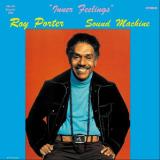
Roy Porter Sound Machine - Inner Feelings

Roy Porter Sound Machine's 1975 follow-up to their 1971 debut, Inner Feelings, drifted deeper into Blaxploitation-era grooves by layering flanged guitars, jazzy horns, undulating basslines and electric piano licks with plenty of the flair that defined their standout debut album, Jessica. Standout track 'Panama' gets its first 7" outing here via a Muro re-edit alongside the original vocal version. The instrumental has busy keys and punchy drums, while the vocal adds bustling character and playful conversation, bringing a lively narrative to the tight funk framework. A seamless bridge between jazz sophistication and cinematic soul that shows off Porter's adventurous spirit and groove mastery.

pre-ordina ora30.04.2026

dovrebbe essere pubblicato su 30.04.2026

18,91

Last In: 2026 years ago
The O'Jays - I Love Music

Ohio's O'Jays were a hugely popular part of Philadelphia's PIR stable throughout the 1970's and 80's.
They cut numerous sides for the label aided by the incredible production and arrangements of the infamous Gamble and Huff hit machine.

This special 4 track EP includes some of the absolute evergreen, stellar and downright soulful tracks they are most known for. It's all here. Influential, uplifting, inspiring and soulful music that will touch everyone. From the string laden and lush extended proto Disco joy of 1975's 'I Love Music', to the deep and soulful Philly stylings of 'Back Stabbers', 'Message In Our Music' & 'My Favourite Person', all of the music contained within this amazing collection is utterly essential if you dig Soul, Funk, Disco, Gospel and even House music. This is it. The real deal. These are some of the roots of contemporary dance music, the building blocks. On top of that, it's simply great music, a solid and essential addition to any record collection from one of the greatest vocal groups of the era, not to mention the world calls production, arrangement & execution from the legendary Gamble & Huff. A real no brainer this one.....

This is a fully legit reissue, made in conjunction with Above Board distribution and Sony music, sourced from their vaults using original source material and remastered and repressed to the highest standard for 2018 and featuring all original PIR label artwork.

Here's your chance to own yet another essential stone cold classic from the archives!

In Stock

Disponibile in Stock e pronto per la spedizione

14,50
Various - Cambodian Nuggets LP

Repress!

Before the Khmer Rouge took power in 1975, unleashing a horrifying genocide, Cambodia had one of the most vibrant and exciting music scenes in Asia. With a mixture of traditional Khmer music and a myriad of western genres (from French and latin music, to rock-and-roll , rhythm-and-blues, surf, psychedelia, soul and many more) the few pre 75 Cambodian recordings that survived -most of them were destroyed- are enough to make anyone with a taste for good music shocked by the amazing quality of the sounds created during those golden years. Gathered in this amazing album are some of the most talented and unique musicians from that amazing era with an explosive collection of tracks sure to blow the mind of the listener. A celebration of some of the best music ever made.

In Stock

Disponibile in Stock e pronto per la spedizione

28,99
Kraftwerk - Radio-Activity (50th Anniversary Edition)

To celebrate reaching its 50th Anniversary, electro pioneers Kraftwerk have announced three new editions of their landmark 1975 album Radio-Activity for release on 15 May 2026. Using the original 16-track master tapes, Kraftwerk founder Ralf Hütter with engineer Fritz Hilpert have created a brand-new Dolby Atmos Mix which takes Kraftwerk’s first all-electronic album and brings vivid new shading, forensic detail and richly layered cinematic depth to the most boldly experimental album in the Kraftwerk catalogue.


The new Dolby Atmos Mix is available as a Blu-ray audio disc and digital release, and the stereo album is pressed as a stunning vinyl picture disc featuring updated artwork.

Single picture disc vinyl LP in a spined sleeve, with die-cut to front cover, shrinkwrap, mktg. sticker.

pre-ordina ora15.05.2026

dovrebbe essere pubblicato su 15.05.2026

30,67

Last In: 2026 years ago
Various - Far East New Rock Invention 1969-1975 (LP)
  • 01: Hideki Ishima – Hanging By The Time
  • 02: Far East Family Band – Birds Flying To The Cave Down To The Earth
  • 03: Takeshi Inomata & Sound L.t.d. - Black Angel
  • 04: Tetsu Yamauchi - Wiki Wiki
  • 05: Flower Travellin' Band & Terumasa Hino Quintet - Dhoop
  • 06: Blues Creation - Atomic Bombs Away
  • 07: Kimio Mizutani & The Better - I Wanna Be Your Man
  • 08: Hiroshi Segawa - White Room Where We Lived
  • 09: Yuya Uchida & The Flowers – Summertime

Freiheit, Rebellion und Trotz – die Rock-/Psychedelic-Rock-Revolution, die Anfang der 1970er-Jahre durch Japan fegte!

"Diese Compilation wurde vor allem zusammengestellt, um Ihnen die freien, innovativen und zutiefst experimentellen Klänge japanischer Musiker näherzubringen, deren Leidenschaft der ihrer britischen und amerikanischen Kollegen in nichts nachstand. Auch über fünfzig Jahre später wirkt die Musik dieses Albums erstaunlich frisch und überrascht und beeindruckt noch immer wie bei ihrer Erstveröffentlichung!" – Sally Kubota

– Vollständig lizenzierte Nippon Columbia Masterbänder.
– Inklusive Track-by-Track-Liner-Notes von Sally Kubota.
– 180g Heavyweight Vinyl-Pressung, Reverse-Board-Cover.

pre-ordina ora15.05.2026

dovrebbe essere pubblicato su 15.05.2026

31,89

Last In: 2026 years ago
Guilty Razors - Complete Recordings 1977 - 1978
  • A1: Hurts And Noises
  • A2: Wake Up
  • A3: I Don't Wanna Be A Rich
  • A4: Terrorist Bad Heart
  • A5: Provocate
  • A6: Lucifer Sam (Pink Floyd)
  • B1: Happy!?
  • B2: So Lazy
  • B3: I Feel Down
  • B4: Stupido
  • B5: Guilty
  • B6: Caroline Says (Loo Reed)

UILTY RAZORS, BONA FIDE PUNKS.


Writings on the topic that go off in all directions, mind-numbing lectures given by academics, and testimonies, most of them heavily doctored, from those who “lived through that era”: so many people today fantasize about the early days of punk in our country… This blessed moment when no one had yet thought of flaunting a ridiculous green mohawk, taking Sid Vicious as a hero, or – even worse – making the so-called alternative scene both festive and boorish. There was no such thing in 1976 or 1977, when it wasn’t easy to get hold of the first 45s by the Pistols or the Clash. Few people were aware of what was happening on the fringes of the fringes at the time. Malcolm McLaren was virtually unknown, and having short hair made you seem strange. Who knew then that rock music, which had taken a very bad turn since the early 1970s, would once again become an essential element of liberation? That, thanks to short and fast songs, it would once again rediscover that primitive, social side that was so hated by older generations? Who knew that, besides a few loners who read the music press (it was even better if they read it in English) and frequented the right record stores? Many of these formed bands, because it was impossible to do otherwise. We quickly went from listening to the Velvet Underground to trying to play the Stooges’ intros. It’s a somewhat collective story, even though there weren’t many people to start it.
The Guilty Razors were among those who took part in this initial upheaval in Paris. They were far from being the worst. They had something special and even released a single that was well above the national average. They also had enough songs to fill an album, the one you’re holding. In everyone’s opinion, they were definitely not among the punk impostors that followed in their wake. They were, at least, genuine and credible.

Guilty Razors, Parisian punk band (1975-1978). To understand something about their somewhat linear but very energetic sound, we might need to talk about the context in which it was born and, more broadly, recall the boredom (a theme that would become capital in punk songs) coupled with the desire to blow everything off, which were the basis for the formation of bands playing a rejuvenated rock music ; about the passion for a few records by the Kinks or the early Who, by the Stooges, by the Velvet mostly, which set you apart from the crowd.
And of course, we should remember this new wave, which was promoted by a few articles in the specialized press and some cutting-edge record stores, coming from New York or London, whose small but powerful influence could be felt in Paris and in a handful of isolated places in the provinces, lulled to sleep by so many appalling things, from Tangerine Dream to President Giscard d’Estaing...
In 1975-76, French music was, as almost always, in a sorry state ; it was still dominated by Johnny Hallyday and Sylvie Vartan. Local rock music was also rather bleak, apart from Bijou and Little Bob who tried to revive this small scene with poorly sound-engineered gigs played to almost no one.
In the working class suburbs at the time, it was mainly hard rock music played to 11 that helped people forget about their gruelling shifts at the factory. Here and there, on the outskirts of major cities, you still could find a few rockers with sideburns wearing black armbands since the death of Gene Vincent, but it wasn’t a proper mass movement, just a source of real danger to anyone they came across who wasn't like them. In August 1976, a festival unlike any other took place in Mont-de-Marsan – the First European Punk Festival as the poster said – with almost as many people on stage as in the audience. Yet, on that day, a quasi historical event happened, when, under the blazing afternoon sun, a band of unknowns called The Damned made an unprecedented noise in the arena, reminiscent of the chaotic Stooges in their early adolescence. They were the first genuine punk band to perform in our country: from then on, anything was possible, almost anything seemed permissible.

It makes sense that the four+1 members of Guilty Razors, who initially amplified acoustic guitars with crappy tape recorder microphones, would adopt punk music (pronounced paink in French) naturally and instinctively, since it combines liberating noise with speed of execution and – crucially – a very healthy sense of rebellion (the protesters of May 1968 proclaimed, and it was even a slogan, that they weren’t against old people, but against what had made them grow old. In the mid-1970s, it seemed normal and obvious that old people should now ALSO be targeted!!!).
At the time, the desire to fight back, and break down authority and apathy, was either red or black, often taking the form of leafleting, tumultuous general assemblies in the schoolyard, and massive or shabby demonstrations, most of the time overflowing with an exciting vitality that sometimes turned into fights with the riot police. Indeed, soon after the end of the Vietnam War and following Pinochet’s coup in Chile, all over France, Trotskyist and anarcho-libertarian fervour was firmly entrenched among parts of the educated youth population, who were equally rebellious and troublemakers whenever they had the chance. It should also be noted that when the single "Anarchy in the UK" was first heard, even though not many of us had access to it, both the title and its explosive sound immediately resonated with some of those troublemakers crying out for ANARCHY!!! Meanwhile, the left-wing majority still equated punks with reckless young neo-Nazis. Of course, the widely circulated photos in the mainstream press of Siouxsie Sioux with her swastikas didn’t necessarily help to win over the theorists of the Great Revolution. It took Joe Strummer to introduce The Clash as an anti-racist, anti-fascist and anti-ignorance band for the rejection of old-school revolutionaries to fade a little.

The Lycée Jean-Baptiste Say at Porte d’Auteuil, despite being located in the very posh and very exclusive 16th arrondissement of Paris, didn’t escape these "committed" upheavals, which doubled as the perfect outlet for the less timid members of this generation.
“Back then, politics were fun,” says Tristam Nada, who studied there and went on to become Guilty Razors’ frontman. “Jean-Baptiste was the leftist high-school in the neighbourhood. When the far right guys from the GUD came down there, the Communist League guys from elsewhere helped us fight them off.”
Anything that could challenge authority was fair game and of course, strikes for just about any reason would lead to increasingly frequent truancy (with a definitive farewell to education that would soon follow). Tristam Nada spent his 10th and 11th unfinished grades with José Perez, who had come from Spain, where his father, a janitor, had been sentenced to death by Franco. “José steered my tastes towards solid acts such as The Who. Like most teenagers, I had previously absorbed just about everything that came my way, from Yes to Led Zeppelin to Genesis. I was exploring… And then one day, he told me that he and his brother Carlos wanted to start a rock band.” The Perez brothers already played guitar. “Of course, they were Spanish!”, jokes their singer. “Then, somewhat reluctantly, José took up the bass and we were soon joined by Jano – who called himself Jano Homicid – who took up the rhythm guitar.” Several drummers would later join this core of not easily intimidated young guys who didn’t let adversity get the better of them.

The first rehearsals of the newly named Guilty Razors took place in the bedroom of a Perez aunt. There, the three rookies tried to cover a few standards, songs that often were an integral part of their lives. During a first, short gig, in front of a bewildered audience of tough old-school rockers, they launched into a clunky version of the Velvet Underground's “Heroin”. Challenge or recklessness? A bit of both, probably… And then, step by step, their limited repertoire expanded as they decided to write their own songs, sung in a not always very accurate or academic English, but who cared about proper grammar or the right vocabulary, since what truly mattered was to make the words sound as good as possible while playing very, very fast music? And spitting out those words in a language that left no doubt as to what it conveyed mattered as well.
Trying their hand a the kind of rock music disliked by most of the neighbourhood, making noise, being fiercely provocative: they still belonged to a tiny clique who, at this very moment, had chosen to impose this difference. And there were very few places in France or elsewhere, where one could witness the first stirrings of something that wasn’t a trend yet, let alone a movement.

In the provinces, in late 1976 or early 1977, there couldn’t be more than thirty record stores that were a bit more discerning than average, where you could hear this new kind of short-haired rock music called “punk”. The old clientele, who previously had no problem coming in to buy the latest McCartney or Aerosmith LP, now felt a little less comfortable there…
In Paris, these enlightened places were quite rare and often located nex to what would become the Forum des Halles, a big shopping mall. Between three aging sex workers, a couple of second-hand clothes shops, sellers of hippie paraphernalia and small fashion designers, the good word was loudly spread in two pioneering places – propagators of what was still only a new underground movement. Historically, the first one was the Open Market, a kind of poorly, but tastefully stocked cave. Speakers blasted out the sound of sixties garage bands from the Nuggets compilation (a crucial reference for José Perez) or the badly dressed English kids of Eddie and the Hot Rods. This black-painted den was opened a few years earlier by Marc Zermati, a character who wasn’t always in a sunny disposition, but always quite radical in his (good) choices and his opinions. He founded the independent label Skydog and was one of the promoters of the Mont-de-Marsan punk festivals. Not far from there was Harry Cover, another store more in tune with the new New York scene, which was amply covered in the house fanzine, Rock News (even though it was in it that the photos of the Sex Pistols were first published in France).
It was a favorite hang-out of the Perez brothers and Tristam Nada, as the latter explained. “It’s at Harry Cover’s that we first heard the Pistols and Clash’s 45s, and after that, we decided to start writing our first songs. If they could do it, so could we!”
The sonic shocks that were “Anarchy in the UK”, “White Riot” or the Buzzcocks’s EP, “Spiral Scratch” – which Guilty Razors' sound is reminiscent of – were soon to be amplified by an unparalleled visual shock. In April 1977, right after the release of their first LP, The Clash performed at the Palais des Glaces in Paris, during a punk night organised by Marc Zermati. For many who were there, it was the gig of a lifetime…
Of course, Guilty Razors and Tristam were in the audience: “That concert was fabulous… We Parisian punks were almost all dressed in black and white, with white shirts, skinny leather ties, bikers jackets or light jackets, etc. The Clash, on the other hand, wore colourful clothes. Well, the next day, at the Gibus, you’d spot everyone who had been at this concert, but they weren’t wearing anything black, they were all wearing colours.”

It makes sense to mention the Gibus club, as Guilty Razors often played there (sometimes in front of a hostile audience). It was also the only place in Paris that regularly scheduled new Parisian or Anglo-Saxon acts, such as Generation X, Siouxsie and the Banshees, the Slits, and Johnny Thunders who would become a kind of messed-up mascot for the venue. A little later, in 1978, the Rose Bonbon – formerly the Nashville – also attracted nightly owls in search of electric thrills… In 1977, the iconic but not necessarily excellent Asphalt Jungle often played at the Gibus, sometimes sharing the bill with Metal Urbain, the only band whose aura would later transcend the French borders (“I saw them as the French Sex Pistols,” said Geoff Travis, head of their British label Rough Trade). Already established in this small scene, Metal Urbain helped the young and restless Guilty Razors who had just arrived. Guitarist for Metal Urbain Hermann Schwartz remembers it: “They were younger than us, we were a bit like their mentors even if it’s too strong a word… At least they were credible. We thought they were good, and they had good songs which reminded of the Buzzcocks that I liked a lot. But at some point, they started hanging out with the Hells Angels. That’s when we stopped following them.”

The break-up was mutual, since, Guilty Razors, for their part, were shocked when they saw a fringe element of the audience at Metal Urbain concerts who repeatedly shouted “Sieg Heil” and gave Nazi salutes. These provocations, even still minor (the bulk of the skinhead crowd would later make their presence felt during concerts), weren’t really to the liking of the Perez brothers, whose anti-fascist convictions were firmly rooted. Some things are non-negotiable.
A few months earlier (in July 1978), Guilty Razors had nevertheless opened very successfully for Metal Urbain at the Bus Palladium, a more traditonally old-school rock night-club. But, as was sometimes the case back then, the night turned into a mass brawl when suburban rockers came to “beat up punks”.

Back then, Parisian nights weren’t always sweet and serene.

So, after opening as best as they could for The Jam (their sound having been ruined by the PA system), our local heroes were – once again – met outside by a horde of greasers out to get them. “Thankfully,” says Tristam, “we were with our roadies, motorless bikers who acted as a protective barrier. We were chased in the neighbouring streets and the whole thing ended in front of a bar, with the owner coming out with a rifle…”
Although Tristam and the Perez brothers narrowly escaped various, potentially bloody, incidents, they weren’t completely innocent of wrongdoing either. They still find amusing their mugging of two strangers in the street for example (“We were broke and we simply wanted to buy tickets for the Heartbreakers concert that night,” says Tristam). It so happened that their victims were two key figures in the rock business at the time: radio presenter Alain Manneval and music publisher Philippe Constantin. They filed a complaint and sought monetary compensation, but somehow the band’s manager, the skilful but very controversial Alexis, managed to get the complaint withdrawn and Guilty Razors ended up signing with Constantin with a substantial advance.

They also signed with Polydor and the label released in 1978 their only three-track 45, featuring “I Don't Wanna be A Rich”, “Hurts and Noises” and “Provocate” (songs that exuded perpetual rebellion and an unquenchable desire for “class” confrontation). It was a very good record, but due to a lack of promotion (radio stations didn’t play French artists singing in English), it didn’t sell very well. Only 800 copies were allegedly sold and the rest of the stock was pulped… Initially, the three tracks were to be included on a LP that never came to be, since they were dropped by Polydor (“Let’s say we sometimes caused a ruckus in their offices!” laughs Tristam.) In order to perfect the long-awaited LP, the band recorded demos of other tracks. There was a cover of Pink Floyd's “Lucifer Sam” from the Syd Barrett era – proof of an enduring love for the sixties’ greats –, “Wake Up” a hangover tale and “Bad Heart” about the Baader-Meinhof gang, whose actions had a profound impact on the era and on a generation seeking extreme dissent... On the album you’re now discovering, you can also hear five previously unreleased tracks recorded a bit later during an extended and freezing stay in Madrid, in a makeshift studio with the invaluable help of a drummer also acting as sound engineer. He was both an enthusiastic old hippie and a proper whizz at sound engineering. Here too, certain influences from the fifties and sixties (Link Wray, the Troggs) are more than obvious in the band’s music.

Shortly after a final stormy and rather barbaric (on the audience’s side) “Punk night” at the Olympia in June 1978, Tristam left the band ; his bandmates continued without him for a short while.

But like most pioneering punk bands of the era, Guilty Razors eventually split up for good after three years (besides once in Spain, they’d only played in Paris). The reason for ceasing business activities were more or less the same for everyone: there were no venues outside one’s small circuit to play this kind of rock music, which was still frightening, unknown, or of little interest to most people. The chances of recording an LP were virtually null, since major labels were only signing unoriginal but reassuring sub-Téléphone clones, and the smaller ones were only interested in progressive rock or French chanson for youth clubs. And what about self-production? No one in our small safety-pinned world had thought about it yet. There wasn’t enough money to embark on that sort of venture anyway.

So yes, the early days of punk in France were truly No Future!

pre-ordina ora22.05.2026

dovrebbe essere pubblicato su 22.05.2026

21,43

Last In: 2026 years ago
George Smallwood - Loser

Beautiful soulful album by George Smallwood - including original material from home sessions prior to George's 1980 self- released LP. The rest, a sampling from the Smallwood mind's library of classic song writers. Huge tip!
"Recorded Live in Hyattsville, MD 1975-2015. George really had no interest in releasing this record. 'Seeing Is believing, they don't need records, trust me I did that, today they getting it live.' So this record is that, live tapes from the house, recorded on a government issued cassette recorder from National Library Service for the Blind. George calls these his practice tapes for songwriting, and performance warm-up, and never beyond his ears were they intended to travel. 'You just got to see me live if you want to really see me.. so when we get there just plug me in, and point me at that crowd' Last time I saw George they had him wired to the club system. He unplugs his Yamaha keyboard, licks the tip of the power cord and taps a beat on it, finally plugging in, synth lights up, tones all at zero, beats at zero. Then he builds from there, counting blind through a preset one hunderd factory tones and rhythm patterns. 'I gotta start off at zero, and go from there.' After the Marshmellow Band disperesed, he got this Yamaha keyboard, same one he's been playing since 1990, endless scrolling over the same presets, trying to make them fit, tempo down, tapping while telling the story and asking if that feels right to you. 'This always gonna be different live.'
Andrew Morgan (Peoples Potential Unlimited)

In Stock

Disponibile in Stock e pronto per la spedizione

27,69
MICHAEL STEARNS - ANCIENT LEAVES LP

In 1975, Michael moved from Tucson to Los Angeles to study with Emilie Conrad at the Continuum Studio. Emilie had ‘live’ music for her ‘movement meditation’ classes, and Michael began performing with Fred Stofflet, Gary David, and Don Preston. Ancient Leaves (25:43) was Michael’s first album, recorded in 1976/77 with a Mini Moog synthesizer and a Finish lap harp (Kantele) onto 4 track tape. To the other instruments, Michael added Emilie chanting, an ascending choir with Susan Harper and Linda Olsen vocalists, Gregorian Chants and a night ambience recorded in the desert outside of Tucson, Arizona, his hometown. It was initially released on LP and cassette. The ‘B’ side, Elysian E (23:13) was performed with an Arp String Ensemble played through an MXR digital delay, one of the first, then slowed to half speed. To this he added Moog and EML synthesizers, The Beam and his voice.

In Stock

Disponibile in Stock e pronto per la spedizione

31,05
VARIOUS - DISCOTECA SOUND - ITALIAN DISCOTECA UNDERGROUND 1975-1986 (2x12")

Everyone knows the story of American disco.
But few are aware that, between the late 1960s and the late 1980s, Italy wrote a parallel one — spontaneous, surprising, and incredibly creative.

It is a story that spans two distinct seasons: the Italian disco of the 1970s — melodic, handmade, sometimes naïve yet always original — and the emerging Italo Disco of the 1980s, electronic, futuristic, and lightheartedly projected toward the future.
Two different languages, yet both driven by the same desire for freedom and modernity. Discoteca Sound — Italian Discoteca Underground 1975–1986 brings together 18 rare tracks — including two previously unreleased — that tell this story of transition: from the orchestral and sentimental disco of Italian dance halls to the synthetic and visionary sound of the first drum machines.
A journey through private archives, local labels, regional studios, and forgotten voices — the sonic map of a country that has always danced, but to its own rhythm. From Mediterranean disco to the first Italo Disco, from the dim lights of provincial dance halls to the early home synthesizers, each track opens a window onto an Italy that dreamed of the dance floor as a universal language of connection during the brief season of revolutionary utopias.

This compilation celebrates ten years of work by Disco Segreta — a decade dedicated to the research, recovery, and appreciation of Italian disco and electronic culture. An act of justice owed to all those artists who had their moment yet were never remembered by history — bringing back to light an essential, still too little known part of our musical heritage.
Because dancing today remains, more than ever, a living act of memory.

Limited edition 2LP, features 2 previously unreleased tracks and a new 2025 version of Coscarella & Polimeno – Station to Station.


f Grazia Vitale – Poi (1975) Previously Unreleased


q Daniel Sentacruz Ensemble – Vivo Solo Con Te (1982) Previously Unreleased


f Grazia Vitale – Poi (1975) Previously Unreleased


q Daniel Sentacruz Ensemble – Vivo Solo Con Te (1982) Previously Unreleased


f B2. Grazia Vitale – Poi (1975) Previously Unreleased


q D4. Daniel Sentacruz Ensemble – Vivo Solo Con Te (1982) [Previously Unreleased]


[f] B2. Grazia Vitale – Poi (1975) [Previously Unreleased]


[q] D4. Daniel Sentacruz Ensemble – Vivo Solo Con Te (1982) [Previously Unreleased]


[f] B2. Grazia Vitale – Poi (1975) [Previously Unreleased]


[q] D4. Daniel Sentacruz Ensemble – Vivo Solo Con Te (1982) [Previously Unreleased]

In Stock

Disponibile in Stock e pronto per la spedizione

32,35
Roxy Music - Love Is The Drug - 50th Anniversary

“The swaggering love song that launched new wave” The Wall Street Journal

Named as one of the 500 Songs That Shaped Rock and Roll by the Rock & Roll Hall of Fame.

Celebrating it’s 50th anniversary in 2025 this 50th anniversary edition is the first full 12” vinyl release for this iconic Roxy Music track that originally reached #2 on the UK Singles Chart in 1975 and is one of their top 3 most streamed tracks.

This 12” features the original and two of the most sought-after remixes, Greg Wilson’s extended edit and Todd Terje’s Disco Dub, as well as the original 7” b-side Sultanesque.


Driven by a seductive, iconic bassline and Bryan Ferry’s confident croon, Love Is the Drug helped redefine the sound of rock‑pop in the mid‑70s—heralded by critics as provocative, stylish, and proto‑new‑wave gold.


The track is one of the 70’s most identifiable tracks – a global chart hit that was an influence on bands such as Gang of Four, PiL, Simple Minds and the Human League, as well as Nile Rodgers of Chic, who acknowledged that its bass riff was a major influence on Chic’s Good Times.

In Stock

Disponibile in Stock e pronto per la spedizione

23,49
Franz Kirmann - Almadies MC

Franz Kirmann

Almadies MC

CassetteBYTES32
Bytes
27.11.2025

The electronic producer Franz Kirmann returns to Bytes for his eighth solo album. The “Almadies” are long wooden boats used by Senegalese fishermen. It is also the name of the neighborhood where Kirmann grew up, in the suburbs of Dakar, Senegal, near the Atlantic Ocean. "These new compositions are the result of sound experiments conducted over the past few months and reflections on the concept of mind-constructed geographies," Kirmann explains. "The way memories and souvenirs shape an image of a place or country that is part reality, part fantasy, part cliché, yet also deeply personal. This experience is influenced by education, social background, history, and other socio-economic factors. " The ten tracks are crafted from collages of electronic sounds blended with field recordings from various places Kirmann has visited — from Dakar to the Caribbean, as well as London and Paris. His aim is to blur the line between electronically generated sounds and real soundscapes, creating music where it becomes difficult to distinguish the real from the constructed. All the sounds on the album were produced using synthesizers and field recordings. No drum machines, percussion or traditional acoustic instruments were used. Influences include Brian Eno and John Hassell’s Fourth World, Vol. 1: Possible Musics (1980), described by Hassell as "a unified primitive/futuristic sound combining features of world ethnic styles with advanced electronic techniques" , which also works in the context of Almadies. Another big influence was Ariel Kalma’s Le Temps Des Moissons (1975) as well as artists including O Yuki Conjugate and Robert Aiki Aubrey Lowe to Susumu Yokota and Michael Banabila.

In Stock

Disponibile in Stock e pronto per la spedizione

12,40
Joshua Sithole - Joshua Sithole's Africa LP

The album delivers masterful arrangements, inventive rhythms, rich harmonies, and a perfect balance of flute and saxophone interplay. Funk, Jazz, Gospel, Afro, and traditional elements all merge seamlessly into something unique and timeless.
Joshua Sithole (1947–1999) was a self-taught multi-instrumentalist and vocalist from South Africa who first started busking with the Kwela kids in 1959 and then went solo in 1978. He became popular in the 80’s, performing widely in Durban and Cape Town.

Originally released in 1975, this overlooked masterpiece is now reissued for the first time by Voom Voom Records — the first 500 copies include a poster of Vladimir Tretchikoff's painting, "The Pennywhistlers" which captures the beauty of Joshua's playing.

“Joshua Sithole, Errol Dyers, and Jonathan Butler come from some of the most influential and esteemed musical families in South Africa. You cannot write about Jazz in Cape Town and not mention some of these families and their contributions to the art form.” — Fanie Jason (Music Photographer - Cape Town)

"South African spiritual funk gem. slick guitar, banks of horns" - Chris Albertyn (Matsuli Records)
"Dynamic South African funk. An album that will make you want to dance from start to finish" - Franck Descollonges (Heavenly Sweetness)

In Stock

Disponibile in Stock e pronto per la spedizione

22,65
Unknown - Give it to you / Faded Edits 7"

Side A takes us across the pond for a British funk-rock classic: “Give It To You” from UPP’s 1975 self-titled LP. Already sacred in sample lore, its breakbeat (written by drummer Jimmy Copley) has fueled Eric B. & Rakim, Gang Starr, Jeru, Del, DJ Shadow & more. This edit amplifies the raw pocket — drums, fills, transitions — pushing them forward w/o losing grit. Produced by Jeff Beck, UPP’s LP fused funk, fusion & rock, giving the break shimmer & weight beyond pure drum programming. For DJs, this is precision-built: roomy enough to drop hats, scratches, or vocals, yet solid enough to ride raw.

On the flip, the S.S.O. Orchestra’s 1977 gem “Faded Lady.” Lush, cinematic textures — strings, vocals, bass, pads — laced in funk/soul arrangements. Sample lineage runs deep: Diamond D (“I Went for Mine”), Busta Rhymes’ “New York Shit,” Nas’ “Something Foul.” This edit doesn’t destroy or over-chop — it finds the sweet spots, letting the horns, pads & mood breathe. Not a break tune but a vibe: atmosphere & weight for DJs to lean into.

Together, these 2 sides deliver a powerful juxtaposition:

In Stock

Disponibile in Stock e pronto per la spedizione

10,29
jp - we’re here all the time

Theory Therapy is pleased to present ‘we’re here all the time’ by jp (aka J.P Wright) – the New York producer behind one of last year’s shinetiac remixes on the OST label, and a member of Housecraft Recordings’ trip-bient group Ahem.

Compiling several years of well-worn material, the Brooklyn artist’s debut solo LP was the result of many hours of hardware jams and happy accidents, later meticulously edited down into these seven arrangements. Blending first-thought-best-thought spontaneity with extended DAW labouring, Wright delivers some of the most immediate music yet on Theory Therapy.

The album is reminiscent of ’90s and early-’00s IDM. Syncopated rhythms and atmosphere swirl into a mutable whole, as hardcore breakbeat, ambient trance and acidic electro bleed together into a liquid mélange. The sequencing drifts from gauzy, ethereal openings into tensile, club-ready pressure before swerving toward moments of stillness – like lingering in an emptied club hours after the crowd has gone.

There’s a distinct physicality to the music too. Kick patterns jitter like loose live wires, delays ripple through the fog-soaked air, yet the album’s finest moments lie in its more subtle textures and tonal shifts. This is proper braindance that keeps you suspended in its pulse, caught in non-linear time. Wright lets the music wander in unpredictable arcs, moments folding back on themselves, stretching in multiple directions at once – tracing and retracing a memory that refuses to settle.

Mastered and cut by Beau Thomas

In Stock

Disponibile in Stock e pronto per la spedizione

20,97
Piero Umiliani - Open Space / Union Pacific

Piero Umiliani four track 45 featuring the first official vinyl reissue of Union Pacific (taken from 1975's Bon Voyage!!!) and Archeologia Sottomarina (taken from 1972's Storia E Preistoria). Licensed by Liuto Edizioni Musicali and edited* and remastered for 45. Vinyl only release. Limited to 300 copies.

In Stock

Disponibile in Stock e pronto per la spedizione

12,82
João do Pife - Garoto Do Pife / Homenagem a Ludugero (7")

Presenting a joyous double dose of Brazilian pífano magic by João do Pife, taken from his iconic Folclore Alagoano LP and pressed for the first time on 7” vinyl. The infectious, uplifting energy of the instrumental track 'Garoto Do Pife' has been a dancefloor weapon for revered selectors such as Gilles Peterson, Cliffy and the Mr Bongo DJs, and we are proud to be reissuing it for the first time.

The pífano, pifaro or pife, which creates the distinctive melodies in these tracks, is a simple seven-hole woodwind instrument from the Northeast region of Brazil. Often made out of bamboo or taquara wood, they are rich in folkloric music tradition and paired with percussion instruments to form the Bandas de Pífanos groups, which originated from the Northeastern states of the country. "Pifeiros” such as João do Pife, Edmilson do Pífano, and Carlos Malta brought the pífano into a wider public eye through their albums and vinyl recordings.

A part of pífano maestro João do Pife’s rich legacy, these two mesmerizing and timeless tracks originate from his sought-after 1975 LP Folclore Alagoano, released on the Tropicana label. Born João Alfredo Marques dos Santos in 1943, in Riacho das Almas, João do Pife became an ambassador of Northern Brazilian culture and folklore through his music, which placed the pífano centre stage.

For this 7" issue, we have curated two of our favourite tracks from the album, 'Garoto Do Pife' and 'Homenagem a Ludugero', that exude a driving and joyous dancefloor energy. With lively accordion and organ accompaniments that weave around João do Pife's sublime pífano playing, they channel a folk spirit that will resonate deep within your soul.

As inspiration for the picture sleeve, we have adapted the original cover photo art for this 7 inch issue. João do Pife’s music, which is housed within, will sweep you away to Northeastern Brazil in an instant.

In Stock

Disponibile in Stock e pronto per la spedizione

16,39
Led Zeppelin - Physical Graffiti 50th Anniversary Deluxe Edition (3x12")

2025 marks the 50th anniversary of Led Zeppelin’s iconic sixth album, and their first double LP, Physical Graffiti.

To celebrate this landmark, Led Zeppelin will release an updated 50th Anniversary edition of 2015’s Physical Graffiti Deluxe Edition 3LP vinyl set, on 180g black vinyl, still featuring the Companion Audio disc, and now including a new bonus replica Physical Graffiti promotional poster (sized 443mm x 610mm).

Released on February 24, 1975 in the US (and four days later in the UK), Physical Graffiti immediately achieved platinum sales status and has recently been certified 17x platinum in the United States.

In Stock

Disponibile in Stock e pronto per la spedizione

63,82
Gibson Brothers - Harlem Bound / Dancin' The Mambo

Welcome to the first instalment of a new collaboration between The Reflex’ DISCOLIDAYS label and Because Music in Paris, remixing gems from the Zagora catalogue.

Created in 1975 by producer Daniel Vangarde (father of Daft Punk’s Thomas Bangalter), the Zagora label created some of the most exciting disco music in France, ranging from cult underground artists Who’s Who and Starbow, to massive international hits by the Gibson Brothers, la Compagnie Créole and Black Blood. Unearthing the multitrack for obscure cuts, The Reflex shifts the focus on the great studio musicians involved in these recordings (Wally Badarou amongst others) and delivers stunning revisions of ‘Harlem Bound’, a
131bpm jazz-funk disco powerhouse cut (1977) and ‘Dancin’ The Mambo’, a 122bpm Chic-esque meets early piano House monster laced with that unmistakable French sound, originally released in 1980.

Both first time-ever remixes from the stems, released on 180g vinyl with custom artwork on card sleeve designed by Al Kent / Million Dollar Disco.

Three more releases will follow, to complete the 4 x 12” vinyl and digital package spread over several months in 2024.

In Stock

Disponibile in Stock e pronto per la spedizione

13,03
AZYMUTH - MARCA PASSO

Azymuth

MARCA PASSO

12inchFARO251LP-BLUE
FAR OUT RECORDINGS
05.09.2025

In an ever-expanding musical universe, Azymuth have long existed as a celestial giant, drawing countless artists, musicians and followers into their orbit. Marking fifty years since their 1975 debut album Azimuth, their new album Marca Passo proves that the band’s alchemic brew of Brazilian jazz-funk and cosmic samba soul remains as vital as ever, as the group honours the profound legacy of their departed founders.

Recorded in Rio de Janeiro, Marca Passo is the first full-length release since the passing of founding drummer Ivan "Mamão" Conti in 2023, following the earlier loss of keyboardist José Roberto Bertrami in 2012. Alex Malheiros, the sole remaining original member, sees his stewardship of the band’s musical legacy as his spiritual duty. He is joined by the equally devoted Kiko Continentino (Milton Nascimento, Djavan) on keyboards, who has been with the group since 2016, and new recruit Renato Massa (Marcos Valle, Ed Motta) on drums.

Yet since their earliest recorded music, Azymuth have always been far greater than the sum of their parts. The "three-man orchestra’s" unmistakable sound is rooted in Brazil's MPB studio scene of the 1970s and early 1980s—a time when artists blended traditional Brazilian rhythms with global jazz, rock, and emerging psychedelic and progressive elements. Marca Passo continues this legacy, seamlessly fusing Brazilian musical traditions with global influences while showcasing the exceptional musicianship that powers Azymuth's distinctive, multi-dimensional sound.

The album is produced by studio mastermind Daniel Maunick, responsible for Azymuth’s two previous studio albums, Fênix in 2016 and Aurora in 2011. Daniel’s credits also include albums by Marcos Valle, Sabrina Malheiros and Terry Callier. Azymuth also invited Daniel’s father, British jazz-funk royalty Jean Paul “Bluey” Maunick, of Incognito, to play guitar on a new version of Azymuth’s eighties classic “Last Summer In Rio”, in tribute to the song’s composer, José Roberto Bertrami. Equally, “Samba Pro Mamao” is a new composition dedicated to Azymuth’s beloved original drummer, Ivan “Mamão” Conti.

Credits:

Alex Malheiros - Bass, Acoustic Guitar & Vocals: 1,2, 3, 4, 5, 6, 7, 8, 9, 10
Kiko Continentino - Keyboards, Organ, Vocoder & Vocals: 2, 3, 4, 5, 6, 7, 8, 9, 10
Renato Massa - Drums & Vocals: : 2, 3, 4, 5, 6, 8, 9, 10
Ian Moreira - Percussion: 1, 2, 3, 4, 5, 6, 8, 9, 10
Sidinho Moreira - Percussion: 1, 2, 3, 4, 5, 7, 8, 9, 10
Dudu Viana - Keyboards & Vocals: 1
Victor Bertrami - Drums: 1
Mangueirinha - Repinique: 3
Jean Paul ‘Bluey’ Maunick - Electric Guitar: 5
Jose Carlos Bigorna - Soprano Sax: 9
Daniel Maunick: Additional Percussion, Synths & EFX: 1, 2, 3, 4, 5, 6, 7, 8, 9

Produced, Engineered, Mixed & Arranged by Daniel Maunick
Co-Produced & Arranged by Alex Malheiros
Executive Producer: Joe Davis


Recorded by:
Daniel Maunick & Leonardo Vieira @ Estúdio Nos Trilhos, Santa Teresa, Rio, Brazil
Daniel Maunick & Amadeu Signorelli @ Sigstudio, Niterói, Rio, Brazil
Daniel Maunick & Alex Malheiros @ Estúdio Basslab, Piratininga, Rio, Brazil
Mixed by Daniel Maunick @ The Sugar Shack, Carluke, Scotland


Artwork & Design: Tyler Askew

In Stock

Disponibile in Stock e pronto per la spedizione

23,11
Weldon IRVINE - The Sisters LP

This 1998 album compiles unreleased sessions from the late 70s featuring Weldon Irvine, Don Blackman and a young Marcus Miller. Known for his rare groove classics like Spirit Man in 1975 and Sinbad in 1976, Irvin's work shines here and highlights come thick and fast. They include the soulful 'Morning Sunrise' which was famously sampled by Jay-Z and Drake, the jazzy funk of 'The Sisters' with Miller's bass and Tom Brown's trumpet and the smooth 'Heard It All Before' which mixes urban sophistication with mellow fusion. Toni Smith's dynamic vocals on the funky 'Think I'll Stay A While' is another doozy which makes this masterpiece rich with jazz, soul and funk goodness.

In Stock

Disponibile in Stock e pronto per la spedizione

40,29
The Jackson Sisters - I Believe In Miracles 7"

Five sisters Jacqueline, Lyn, Pat, Rae and Gennie Jackson were from Compton, California. “I Believe In Miracles” was written and originally recorded by Mark Capanni. The musical tracks were the work of the late Gene Page (string arranger for Barry White). The vocals were produced by Pete Moore of the famous Smokey Robinson & The Miracles along with Bobby Taylor, who also had a group called Bobby Taylor & The Vancouvers. “When I Believe In Miracles was first released in 1973 the sisters were nominated for best new vocal group for the Black Image Awards and best new female artist by Record World Magazine in 1974-1975 which was announced on Soul Train an aired Feb. 22, 1975. However the song did not take off until the UK ‘rare groove’ scene of the 80s, after which an extended version was created which appears for the first here time on 7”

In Stock

Disponibile in Stock e pronto per la spedizione

15,55
EKO - PHONE ME TONIGHT / TAKE ME AS I AM NOW

Eko, or Eko Roosevelt, is a Cameroonian composer, pianist & vocalist. He was born in Kribi in 1946, the son of a local Tribal Chief. Eko developed his love for music at church, later pursuing his growing passionwith music studies abroad, first in Dakar and then in Paris. After concluding his studies in France he went on to a recording career and between 1975 - 1982 released a number of full-length LPs, 7" singles and albums on cassette, before returning to Kribi to take over the role of Tribal Chief from his father, a role he holds to this day.

While the name "Eko" may not be immediately familiar to all, his music will be well known to many, from the DJs to the dancers, the heads to the home listeners. Evergreen classics like “Kilimandjaro My Home”, have remained a mainstay in the record bags & USB crates of disco jocks since its release in the late 70s, while numerous of his other crossover Afro-disco gems have been bootlegged, edited and remixed by a seemingly endless number of both greater & lesser-known producers who have all paid tribute to his work. Eko Roosevelt’s position in the ranks of Cameroon’s great musicians cannot be overstated. As a composer, songwriter, pianist and singer he has influenced generations of musicians both in Cameroon and France and further abroad, while he has written & arranged for many of the Cameroonian musical community.

Here Canopy, with the benediction of Eko himself, officially reissues two of his works that have not been rereleased since their first outings. Stylistically the two songs straddle the line between Afro-disco, funk and pop, with a slightly Balearic, almost AOR sensibility.

“Phone Me Tonight” is taken from a 7” record that has barely resurfaced since it was self-released in 1981 on the “Eko Music’ imprint. The song is an uplifting opus that demonstrates Eko’s deftness for creating catchy songs that succeed in their songwriting prowess and melody crafting, both on and off the dance floor. It is a stripped back composition that employs the key elements to great effect. The groovy bass line is underpinned by a tight Afro-disco beat as Eko’s unmistakeable voice draws us in and with a masterful use of repetition and hooks, creates a song that feels familiar from the outset, while being brand new to almost all listeners. As the song develops, the synth lines lift the song higher and higher, culminating in a euphoric transcendence perfect for elevating the mood of any dancefloor.

“Take Me As I am Now”, is sourced from Eko’s first album, “Nalandi” which originally came out in 1975 on Dragon Phenix. Here we have another fine example of Eko’s ability to hone compositions that blend thelines between pop song writing and more loopy dance floor orientated structures. The vocal hook repeats throughout the song, with only minor variations, making the song feel comfortingly familiar from its early bars. An instantly appealing bass line sets the stage for the sleek guitars and taut horn arrangements. The end result is a feel-good balance of melody and groove that makes for a timeless feel with a positive message!"

In Stock

Disponibile in Stock e pronto per la spedizione

14,50
AZYMUTH - MARCA PASSO

Azymuth

MARCA PASSO

12inchFARO251LP
FAR OUT RECORDINGS
04.06.2025

In an ever-expanding musical universe, Azymuth have long existed as a celestial giant, drawing countless artists, musicians and followers into their orbit. Marking fifty years since their 1975 debut album Azimuth, their new album Marca Passo proves that the band’s alchemic brew of Brazilian jazz-funk and cosmic samba soul remains as vital as ever, as the group honours the profound legacy of their departed founders.

Recorded in Rio de Janeiro, Marca Passo is the first full-length release since the passing of founding drummer Ivan "Mamão" Conti in 2023, following the earlier loss of keyboardist José Roberto Bertrami in 2012. Alex Malheiros, the sole remaining original member, sees his stewardship of the band’s musical legacy as his spiritual duty. He is joined by the equally devoted Kiko Continentino (Milton Nascimento, Djavan) on keyboards, who has been with the group since 2016, and new recruit Renato Massa (Marcos Valle, Ed Motta) on drums.

Yet since their earliest recorded music, Azymuth have always been far greater than the sum of their parts. The "three-man orchestra’s" unmistakable sound is rooted in Brazil's MPB studio scene of the 1970s and early 1980s—a time when artists blended traditional Brazilian rhythms with global jazz, rock, and emerging psychedelic and progressive elements. Marca Passo continues this legacy, seamlessly fusing Brazilian musical traditions with global influences while showcasing the exceptional musicianship that powers Azymuth's distinctive, multi-dimensional sound.

The album is produced by studio mastermind Daniel Maunick, responsible for Azymuth’s two previous studio albums, Fênix in 2016 and Aurora in 2011. Daniel’s credits also include albums by Marcos Valle, Sabrina Malheiros and Terry Callier. Azymuth also invited Daniel’s father, British jazz-funk royalty Jean Paul “Bluey” Maunick, of Incognito, to play guitar on a new version of Azymuth’s eighties classic “Last Summer In Rio”, in tribute to the song’s composer, José Roberto Bertrami. Equally, “Samba Pro Mamao” is a new composition dedicated to Azymuth’s beloved original drummer, Ivan “Mamão” Conti.

Credits:

Alex Malheiros - Bass, Acoustic Guitar & Vocals: 1,2, 3, 4, 5, 6, 7, 8, 9, 10
Kiko Continentino - Keyboards, Organ, Vocoder & Vocals: 2, 3, 4, 5, 6, 7, 8, 9, 10
Renato Massa - Drums & Vocals: : 2, 3, 4, 5, 6, 8, 9, 10
Ian Moreira - Percussion: 1, 2, 3, 4, 5, 6, 8, 9, 10
Sidinho Moreira - Percussion: 1, 2, 3, 4, 5, 7, 8, 9, 10
Dudu Viana - Keyboards & Vocals: 1
Victor Bertrami - Drums: 1
Mangueirinha - Repinique: 3
Jean Paul ‘Bluey’ Maunick - Electric Guitar: 5
Jose Carlos Bigorna - Soprano Sax: 9
Daniel Maunick: Additional Percussion, Synths & EFX: 1, 2, 3, 4, 5, 6, 7, 8, 9

Produced, Engineered, Mixed & Arranged by Daniel Maunick
Co-Produced & Arranged by Alex Malheiros
Executive Producer: Joe Davis


Recorded by:
Daniel Maunick & Leonardo Vieira @ Estúdio Nos Trilhos, Santa Teresa, Rio, Brazil
Daniel Maunick & Amadeu Signorelli @ Sigstudio, Niterói, Rio, Brazil
Daniel Maunick & Alex Malheiros @ Estúdio Basslab, Piratininga, Rio, Brazil
Mixed by Daniel Maunick @ The Sugar Shack, Carluke, Scotland


Artwork & Design: Tyler Askew

In Stock

Disponibile in Stock e pronto per la spedizione

23,11
Articoli per pagina:
N/ABPM
Vinyl