Search:the 3 pieces

Styles
All
Matthieu Faubourg - Scenario EP

LTD repress !

" After the successful "Mind Trip" EP, Pulse Msc releases its 4th release, a 4 track EP by Matthieu Faubourg with a stunning remix by the almighty Black Loops. With multiple kinds of sounds and influences, Scenario' is a beautiful dedication to Lebanon. The French producer was inspired by a trip there and has created these 4 pieces. The result is wonderful, colorful and conducive to the imagination. Expect to be strayed until you find your way. Hope is another important theme in that musical journey, well symbolized in the sentimental tune "Yaret" (which means "I Hope" in Lebanese Arabic). "

collecting

Order now. Collecting orders for repress.

7,52 €
Restive Plaggona - Leaving The Body

Restive Plaggona is the music project of the Corfu-based artist Dimitris Doukas -also producing under Matriarchy Roots, Leftina Osha and Plaggona-. After releasing a series of cassettes in different labels along 2016 and 2017 -including his own Several Minor Promises- 'Leaving The Body' arrives as an electronic composition of beats and synthesizer bodies disguised as a sense of provocation and mystery. Each of the seven pieces offers more than a smattering of interesting textures separated by spans of great decline, but a master class of permutations in-between accompanying sounds, stretching rhythms and viscera-and- violence noises. Driven by a deeply expressive narrative, Restive Plaggona makes a strong statement about

his post-industrial vision adding technoid inclinations in a delightful dystopian world.

In Stock

On Stock and ready to ship

14,08 €
Anjou - Epithymia

Anjou

Epithymia

2x12inchKRANK207LP
Kranky Records
06.04.2017

Ambient power duo Anjou's sophomore statement continues in the vein of their 2014 debut, unfurling a full hour of mesmeric synthetic drift and veiled melodic undertow.

Comprised of Mark Nelson (of pioneering post-rock experimentalists Labradford and Pan·American) and Robert Donne (of Labradford, Aix Em Klemm, Cristal) , the group work largely in long-form suites of sound, alternately spacious and dense.

The new LP's six pieces embrace flux and ambiguity: drones swell and shudder, hushed currents of noise glitch and dissolve, atmospheres congeal and liquify. As with the participants' prior projects, Anjou evoke a shadowed, mysterious mood, variously melancholy and transcendent.

The album is an accumulation of craftsmanship and experience, blurred forms traced in light and fog.

In Stock

On Stock and ready to ship

23,66 €
Mirco Magnani + Ernesto Tomasini - Madame E. LP 2x12"

Madame E. is a musical setting of Georges Bataille's 'Madame Edwarda', a short novel that interlaces themes of eroticism, religiosity and death, and was written under the pseudonym Pierre Angelique in 1941, during the occupation of Paris.
Composer Mirco Magnani wrote eleven electronic pieces and presented them to actor/singer Ernesto Tomasini. They turned them into songs by adding vocal melodies and together they produced a libretto based on Bataille's French text. The result of their dynamic interpretation is a hypnotically spellbinding performance where the audience is transported through worlds - ancient and new - and where Tomasini's haunting falsetto conveys the tormented emotions in Bataille's work and becomes the instrument that articulates the writer's famously obscure themes.
The experimental operatic performance captures the atmosphere of heightened human passion, reminiscent of opera seria and revisited through hazy and minimalistic lens. The resulting dark and twitchy mood amalgamates old vintage electronic devices, string piano and Stella Veloce´s touching violoncello. The stage becomes a space where Eros and Thanatos, real and virtual, analogue and digital, cluster and melody, spirituality and technology are intermixed and turned unidentifiable, hence collapsing the binary logic of dualism.
Written by Magnani/Tomasini and produced by Mirco Magnani, with lyrics taken from "Madame Edwarda" by Georges Bataille, Madame E. was developed between Berlin and London where Magnani and Tomasini are respectively based. Recorded in Berlin, mastered by Murcof and released by Magnani's label Undogmatisch, a collective that also includes Nicolas Defawe (Urban Spree) and Valentina Bardazzi, the painter responsible for the album artwork.

In Stock

On Stock and ready to ship

Last In: 3 years ago
15,55 €
Cassius - 1999

Cassius

1999

2x12inchBEC5156505
Because Music
27.06.2016

1999...after the global supremacy of Oasis and Blur, the world is looking for some musical freshness. Some artists such as Daft Punk and Air have already contributed to globally popularise what the English called the "French Touch", a new term that refers to a large musical French movement. The first album of Cassius is one of the key pieces of this growing genre, and demonstrates once again the variety of the trend. Indeed, after have cooperated for a long time with MC Solaar, one of France's 90's best rappers, the hip-hop influence of both Cassius members had to have an impact on their personal concept, and it did seduce a lot of listeners hungry for new musical flavours: more than 250 000 units sold worldwide and numerous unconditional fans...Before the release of their new album Ibifornia coming out this summer, we're taking you back to basics with a new release of Cassius' first album, for the ones who didn't have the opportunity to hear it, or for those who only have the CD, and would like to get themselves the vinyl edition !

In Stock

On Stock and ready to ship

26,85 €
Common Series - Cs04 (tarantulae)

Fourth release in the Common Series with a tribute to their home country. A collection of abstract pieces and soundscapes with ethnical roots which almost sound as if they have been made for a movie and trippy techno and acid. Limited edition of 200 copies!

In Stock

On Stock and ready to ship

Last In: 2 years ago
7,52 €
Patrick Cowley - Muscle Up LP 2x12"

Dark Entries and Honey Soundsystem Records have teamed up again to release another volume of gay porn soundtracks by San Francisco-based musician and producer, Patrick Cowley. Perhaps one of the most revolutionary and influential people in the canon of disco music, Cowley created his own brand of Hi-NRG dance music, ''The San Francisco Sound.'' Born in Buffalo, NY on October 19, 1950, Patrick moved to San Francisco at the age of 21. He studied at the City College of San Francisco where he founded the Electronic Music Lab. During this time, Patrick, along with his classmates Maurice Tani and Art Adcock, would create radio jingles and electronic pieces using the school's equipment: first a Putney, then an E-MU System, and finally a Serge synthesizer. He would make experimental soundtracks by blending various types of music and adapting them to the synthesizer.

In Stock

On Stock and ready to ship

25,42 €
Art Fine - Dark Silence

Art Fine

Dark Silence

12inchDE065
Dark Entries
27.06.2014

Art Fine was the duo of Fabrice Bellini (electronics, vocals) and Rush Blakemann (guitar, synthesizer) from Tuin, Italy. They met in art school and became friends, inspired by New Wave, dance and electronic music. They recorded their only single 'Dark Silence' in November of 1984, which was released by Discomagic in 1985. It is now remastered for vinyl by George Horn at Fantasy Studios in Berkeley. The vinyl is housed in the original jacket featuring a photo of the duo and that Art Fine logo in puzzle pieces. Each copy includes a double sided postcard insert with lyrics and liner notes by Fabrice Bellini

In Stock

On Stock and ready to ship

12,56 €
Tim Vita & Oliver Gehrmann - 24 Pieces

hey put it quite nicely in that song from Tocotronic: 'The youth have built it themselves.' Tim Vitá & oliver gehrmann
have been fans of Freude-am-Tanzen for a while now. currently these inexhaustible and nuts-and-bolts record-spin-
ning dudes - post their digital label debut '136 Tales' - have a vinyl edition on the way. oliver & Tim are known as solo-
artists in the world of warm beats. Tocotronic once more: 'we had a few words with them. From there we determined
that we like it around here.' a full-throated studio session all together brought about the maxim: let there be house!

In Stock

On Stock and ready to ship

4,16 €
Metaboman - Ja / Noe LP 3x12"

Metaboman

Ja / Noe LP 3x12"

3x12inchMKKRAUSELP005
Musik Krause
18.02.2013

Musik Krause, the label with that special funk and the wide view releases the fourth album in their 10-year history. The circle is complete. In 2002 they started with Metaboman. Now there is the album. As a part of the record-spinning Krause Duo he's known a number of escapades having to do with the 'bash' or rather party culture. Inventively they go about things on a winding path. The have a developed a completely singular metaphoric like a Krauzy schroud and trashno effect. Even if on this long player there is a good deal of gravitation and disengaged handbrake, the beloved notorious krause-vibe swings in every beat, as Metaboman forges the iron. He wants to go further and let himself be taken away, and above all with the musicians he has won over with his live-project to massage the masses from the stage. Krause Duo remains. The album comes in this regard as a gesture providing the direction. Solo here is the conductor, the arranger and the composer in one. Various artists is the keyword, good ol' Metaboman. On all ten songs our friendly neighborhood sonic meister sets the notes and vibes between the skillful, grooving rhythms. In this way there is a bonafied club album in the room that understands rhythm-feeling. Music that in the club context brings an attribute that stands far above the plain acoustic shock and scream. Party But of course, yet still both feet in the game with not a little insubordination, depth, plumes of smoke and indulgence. Metaboman has always had his own vision, which plays out and mirrors his own authentic uniqueness. He doesn't find sounds. He finds shapes and forms and that is the progressive aspect, not the new sounds but rather the new forms. He 's not merely about the subteranean bassdrum, but rather telling his own story. He gives his pieces space and depth. The music itself is positioned somewhere within a sonic cosmos. The listener can functionally hear the record in a club. A freak and his freaks invite you and in your heart you know long before it is apparent that you belong. You can clearly hear that this dude and his folks want me to be there! This album encompasses the moment and keeps it safe for posterity. This music is the language of Metaboman and it is the understood. inkl. digital download code

In Stock

On Stock and ready to ship

Last In: 3 months ago
10,88 €
Museum Of No Art - A Serpent Called Emit

'Museum Of No Art is the pseudonym of the artist and musician Mona Steinwidder. The pieces on the album A Serpent Called Emit document a two-year engagement with the clarinet and other woodwind instruments. In the search for simplicity, one encounters complexity. But the Museum discovers connections between the poles and lets them circle around each other. Impurities have found their place in it and hard cuts are intended to underline the volatility of the moment, to highlight and admire imperfection.'

pre-order now30.09.2026

expected to be published on 30.09.2026

25,63 €
Jordi Santanach - Strata

Jordi Santanach

Strata

12inchCPM34
Cosima Pitz
30.09.2026
 
4

'Music aged in time, resonating from the surface to the core through layers and sediments of stones - the strata. Four morning recording sessions with a separation between them of between three and ten months - a chronozone that will rest for a time and on which the next one will be added, thus forming the total of the six pieces of the album - becoming six strata.
'A slow-moving album that develops landscapes of subtle but continuous evolution, where we find layers of diverse nature created from different procedures, bathed in the calm waters of wabisabi, where melancholy, immensity, insignificance, the potential of the unemerged, coexistence and simplicity converge at the same time.'

pre-order now30.09.2026

expected to be published on 30.09.2026

25,63 €
MIKAHL ANTHONY - MUSE LP

MIKAHL ANTHONY

MUSE LP

12inchRSLP24002
R&S Records
29.09.2026

Hailing from the West side of St. Louis, Missouri, Mikahl Anthony’s sonic roots spread far across the global Alt-Soul / Hip-Hop scene. A highly soughtafter multidisciplinary artist (who has collaborated with the likes of Mick Jenkins, Chance The Rapper, Joey Purp, Smino and more), as well as being a founding member of Chicago’s THEMpeople collective, he now prepares to unveil his masterful full-length debut Muse via R&S Records.

Accompanied by several beautiful, self-directed film pieces, Muse is a record with storytelling at its core. Interspersed with commentary from a range of sources telling their stories to Mikhal, whilst collaboratively analysing their personal experiences, it speaks a candid and honest narrative, which reinforce the heartfelt lyrics within. With the project’s name anchored around a dual meaning acronym (1. Ms. Using sensual energy and 2. Making use of seclusion every day). The record is an audio version of docufilm, that creatively interprets the idea of self-therapy, an internal/interpersonal reflection of life experiences that serendipitously connect to Mikahl’s personal romantic relationships. Mikahl explains: ‘I wanted to use a unique style of songwriting, arrangement and filming with the intention of soundtracking my self-development/maturation process’.

On the project’s lasting impression on the listener, Mikahl elaborates ’The exploration of inner truth and vulnerability is key to the future of good music. I want this project to act as symbolism that highlights the mantra that honest approaches and authenticity still has the most value. I also want people to see how important the use of community is when you can connect them to your subject matter...I'd like my audience to observe and engage in their own self-reflections, approaches by way of listening or interacting with the story.’

Drifting to an elevated state of consciousness, Muse is a deeply intoxicating and engrossing listening experience from front to back. From the sliding, kaleidoscopic shadows of opening track ‘La Flare’, via the trepidation-laced atmosphere of ‘Polyamorous’ and the hazy, reverb drenched saxophone notes of LP closer ‘Eddie Kane’ - Mikahl channels moments of joy and pain, infused with spirit enriching instrumentation and gritty textures.

Visual stimuli play an integral role within Mikahl’s music. His songs represent transparency and openness dipped in funk. Layers of soft velvety vocals emerge from jazz harmonies, trap rhythms, and social commentary sourced from voiceovers/excerpts. His creations are the musical representation of documentary films. His art is imagery embodied.

out of Stock

Order now and we will order the item for you at our supplier.

Last In: 2 days ago
26,68 €
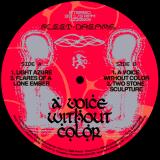
fleet.dreams - A Voice Without Color

Crafting another beautiful experience in sensorial delight, fleet.dreams returns to Vinezza with the label’s 3rd offering “A Voice Without Color” - born from an ever-deepening practice of groove-powered depth tech melded with realms of dubwise kineticism, enchanted cognition, and expressive, dreamlike synthesis.

“A Voice Without Color” finds fleet.dreams’ music in its most rave-activated mode yet, crafting 4 pieces of infinitely mixable spectral matter - all part of their own universe beckoning to be heard under the glow of stars in the night sky, or floating amidst the mesmerizing fog & lights pumping out of the system on your favorite dancefloor.

Awash in kaleidoscopic splendor and psychedelic intrigue, “A Voice Without Color” finds kinship in everything from the best of expansive dancefloor kineticism, time dilated wonder, and the vivid reverbations of the natural world floating in the mix. At once quintessential, contemporary, and ubiquitous is fleet.dreams’ own remarkable production technique, each track unfurling in seemingly endless swells of simmering rhythm and hypnotizing atmospherics - new memories of circadian entrancement in their molten essence, designed to blissfully guide you deeper and deeper towards the primordial exhilaration of movement. Undulating with vivid pulsations and clarion calls for the hips and mind echoing across a spiraling gyre, the sprawling waltz of “A Voice Without Color” glides through dazzling chroma and effulgent radiance greater than the sum of its parts.

Painting with bold, prismatic strokes of iridescent friction amidst the listless gray of our increasingly dispassionate timeline, fleet.dreams delivers another EP of style, substance, and vision for the dancers and DJs alike - a future classic of a possible world ready to be activated together.

*words by Kiernan Laveaux

Early support from: Kiernan Laveaux, Daniel Rincón (NAP), Scott Zacharias & Amelia Holt

out of Stock

Order now and we will order the item for you at our supplier.

Last In: 2 days ago
14,71 €
ICHIKO HASHIMOTO - Beauty LP
  • A1: I Love Your Music
  • A2: Tamare Kurawanka
  • A3: Sculptured Blue
  • A4: Pachacmac
  • A5: Cinnamon And Clove
  • B1: Naja Naja
  • B2: Pegasas
  • B3: Kitsune
  • B4: We Are Only Dancin
  • B5: Catch Me On Merry-Go-Round

Japanese crossover and fusion are hot again now. As either an outgrowth of, or a spin-off phenomenon from, the global reappraisal of
city pop, Japanese fusion has been rapidly rising since around last year.
Widely known as a support member for YMO and also popular on the overseas club music scene through Colored Music, her cuttingedge dance-pop unit with Atsuo Fujimoto, keyboardist, composer, and vocalist Ichiko Hashimoto released this, her second solo work, in
1985. Released on DOMO, the label headed by Kazumi Watanabe, and naturally produced by Kazumi Watanabe himself, who also plays
guitar on the album.
A truly crossover work of remarkable freedom, moving across fusion, techno, piano pieces, danceable music, classical, Japanesque
sounds, bossa nova, ambient, and more. Her fleeting singing voice is wonderful as well.

pre-order now27.09.2026

expected to be published on 27.09.2026

43,28 €
Mary Jane Leach - Pipe Dreams II / III

»Pipe Dreams II & III« presents two new, side-long organ works by Mary Jane Leach, extending the sonic investigations of her 1989 landmark »Pipe Dreams«. Recorded in Ghent and Cologne, the two side-long pieces use shifting stops, resonance and beating tones to turn the pipe organ into a vivid, physical field of sound.

When »Pipe Dreams« was issued on vinyl for the first time by Blume in 2017, it was effectively the first time many of us encountered Mary Jane Leach’s music, finally placing her work in its proper historical context amid the searching Downtown milieu of Julius Eastman, Arthur Russell, Arnold Dreyblatt, Ellen Fullman, Philip Corner, Daniel Goode, and Peter Zummo. Leach collaborated with most of these artists at one point or another, either in Downtown Ensemble or as a guest on their records.

Now »Pipe Dreams II« and »Pipe Dreams III« arrive, recorded in 2023 and 2024 at Miry Concertzaal in Ghent, Belgium, and Kunst-Station Sankt Peter in Cologne, respectively.

»When I was a young child, my family lived next door to a church, where my mother was the organist. I spent many hours lying on the floor of the sanctuary listening to the music, letting the sound of the organ envelop me. I also liked to play the piano loudly with the pedal down, producing clouds of sound, much to my family’s annoyance. These two organ pieces explore some of my earliest musical interests and aesthetics.

In 1989, I lived in a tower attached to St Peter’s Church in Cologne, where I had access to its organ. It had two sets of pipes, front and back, which could create antiphonal effects. I spent countless hours exploring the possibilities of all the permutations of notes, space, and the resulting sound phenomena. I wrote »Pipe Dreams« for that organ. Fast forward to 2023, when I was asked to create a piece for organ for a concert at the Miry Concertzaal in Ghent, Belgium: »Pipe Dreams II«. I had a few days to familiarise myself with the organ, its available stops, and the layout of the console. I choreographed stop changes for a volunteer, as I couldn’t reach them myself. Some amazing sounds began to happen, and at one point the sound was so visceral that I felt as though I were taming a wild beast.

»Pipe Dreams III« was performed in 2024 on the organ that I had spent so much time playing in 1989–90. One big difference, though, was that the console was totally new and computerised. Having access to the organ for only a few hours before the concert, I decided that I did not have enough time to feel comfortable with the console and should not attempt to recreate the piece I had written in 1989. I would instead use the same sequence of stops and perform an improvised piece. I loved the sounds that were being created, and I was having so much fun that at one point I even started to laugh quietly. I began to visualise the beating notes as if they were atoms, opening them up to expose their innards, with the beating, higher-pitched notes — neutrons and protons — shimmering at the top, and the lower notes — the electrons — throbbing away at the bottom. I was playing notes not so much for their pitch value, but for how they affected the notes and sound phenomena already being played. Instead of a time signature, I timed the entries by listening to the beating patterns, waiting for the right moment to enter. And no, I wasn’t hallucinating.«

Mary Jane Leach, 2026

pre-order now25.09.2026

expected to be published on 25.09.2026

30,67 €
Marja Ahti & John McCowen - Errands

Errands is the first duo recording from Marja Ahti, Swedish-Finnish sound artist and electroacoustic composer, and John McCowen, a native of Southern Illinois, now residing in Iceland, whose work centres on a radical exploration of clarinet multiphonics. Working without the aid of electronics, McCowen has spent years finessing performance techniques that allow him to layer beating patterns and split tones that belie their source in a monophonic instrument. Ahti, in contrast, has built up a stunning body of work in recent years using a classic electroacoustic palette of electronic, field recordings and instrumental sounds. Sharing a bill at the 2024 iteration of Stockholm’s Edition Festival, the pair discovered a sensibility shared across their different sonic means, beginning the collaborative process that would eventually result in the mercurial side-long pieces heard on Errands.

The word ‘errand’ suggests something purposeful but routine, and Ahti’s and McCowen’s work is suffused with the everyday. Meeting with McCowen to record in Iceland, Ahti used the opportunity to gather field recordings, capturing not the natural sublimity often associated with the country—think Chris Watson’s shifting glaciers—but everyday life in Reykjavik. Snatches of bustling streets and what could be humming engines thread between static sinewaves, stretches of clarinet resonances and fleeting textures, the latter often at once visceral and impossible to identify. Errands: we are a long way from the grandiose framing devices favoured by the pioneers of electroacoustic music, yet many of their principles are at work here. The gradual metamorphosis of one sound into another, the carefully achieved ambiguity between the acoustic and electronic, the treatment of the stereo field as a compositional element: all of these link Ahti and McCowen’s music to the electroacoustic tradition, yet their sensibility is radically different. The overall effect is a kind of stillness, but one at peace with continuous change. Like the unwieldy but somehow stylish everyday forms captured in the Hertta Kiiski photographs that adorn the record's sleeve, the music seems to prize a kind of deliberate awkwardness, interrupting static held textures not with an abrupt cut, but with a quick fade, suddenly revealing background as foreground.

Ahti and McCowen’s world is everyday and unornamented, but also shadowed by the numinous. Halfway through 'Chorales', we hear an arrangement for overdubbed recorders of an early motet of Messiaen’s, O sacrum convivium! Played on recorders, the piece shrinks into delicacy and dim memories of childhood music lessons, while at the same time its harmonies retain the grandeur of their liturgical origin. This double quality inflects much of what follows on Errands, including snatches of field-recorded water or air, which seem at once elemental and domestic. Enlivened with countless details that repay repeated relistening, Errands is a record that leaves the listener ready to open their ears anew to their own sound environment.

pre-order now25.09.2026

expected to be published on 25.09.2026

24,58 €
The Leaf Library - Library Music: Volume Two (2x12")
  • Flowers At The Border
  • The Long Dead King
  • Bowed Clusters
  • I Learned To Swim Under Water
  • Building Better Worlds
  • Harmonic Runout
  • Kendrick Road
  • Sailing Day (Wintergreen Remix)
  • Versatile Clouds
  • Bells and Thread
  • No Memories, No Plans
  • Everyone I Met Today
  • Tired Ghost In Orbit

Following the much-loved Library Music: Volume One (2022), and hot on the heels of this year’s critically acclaimed ‘After The Rain, Strange Seeds’ (9/10 - Uncut) , London group The Leaf Library return with a second journey through the margins of their catalogue. Gathering together rare recordings, compilation tracks, limited edition releases, collaborations and hidden gems from their ever-expanding musical world, Library Music: Volume Two is another vibrant and varied collection of electronic indie pop, in all its guises.

Far from a conventional odds and ends collection, the double LP compilation reveals another side of a band who have always treated the spaces between albums as places to explore. These are the moments where ideas stretch out; there are hypnotic drones, motorik rhythms, glowing analogue textures, pastoral electronics and the warm, melodic melancholy that has become unmistakably The Leaf Library. There is the electro-pop of Flowers At The Border, the psych rock-adjacent Building Better Worlds, and the gentle chamber shuffle of Kendrick Road. Tracks range from the 22 minute folk kosmiche epic Versatile Clouds to the 59 seconds, record skip punctuation mark of Harmonic Runout, with a whole array of trips, ideas and experiments in between.

Since forming in a pre-Ghost Box, Castles in Space and Clay Pipe world, The Leaf Library have carved out a unique place somewhere between dream pop, kosmische repetition and experimental songcraft — drawing comparisons to Stereolab, Broadcast, Yo La Tengo and the outer edges of library music, while creating a sound entirely their own.

“We’ve always loved making things outside the pressure of a ‘proper’ album,” says singer/guitarist Matt Ashton. “Singles, collaborations and compilation tracks give you permission to follow an idea wherever it wants to go. Looking back, those pieces tell their own story.”

Where their studio albums have shown the group carefully building immersive worlds, the Library Music series maps the pathways between them — the sketches, diversions and unexpected discoveries that often reveal the most about a band.

Across a lucky thirteen tracks, Library Music: volume two is a reminder that some of the best discoveries are found on the shelves you forgot to check.

[a] Flowers At The Border [4.21]
[b] The Long Dead King [7.16]
[c] Bowed Clusters [4.00]
[d] I Learned To Swim Under Water [4.32]
[e] Building Better Worlds [11.59]
[f] Harmonic Runout [0.59]
[g] Kendrick Road [3.36]
[h] Sailing Day (Wintergreen Remix) [3.59]
[i] Versatile Clouds [22.00]
[j] Bells and Thread [2.54]
[k] No Memories, No Plans [4.33]
[l] Everyone I Met Today [1.00]
[m] Tired Ghost In Orbit [9.19]

pre-order now25.09.2026

expected to be published on 25.09.2026

27,94 €
Steve Bates - An Infinite Antenna LP
  • 1: Pink pink pink pink…pink pink
  • 2: Green as a ghost
  • 3: Battles and sieges and street trees
  • 4: Waste, songs of the world
  • 5: Easier sad than done
  • 6: Mountain scene
  • 7: Swiss apartment layouts
  • 8: Decades of river widths
  • 9: Disaster loans
  • 10: Corporate activity, ancient shipwrecks
  • 11: Lettre d’amour à Fly Pan Am
  • 12: Swamps and factories

Montréal-based sound artist Steve Bates expands his strategies and stylistic influences on An Infinite Antenna, his second solo album for Constellation, giving freer reign to melodic components and textural dynamics: leftfield synth work, deconstructed drum machine, pointillist electric guitar, and radiostatic blur are all part of the new brew swirling around his bruitist signal-bending and field-recording sensibility. Arguably a more ambient album than his acclaimed 2022 Constellation debut, An Infinite Antenna is at the same time more densely packed with ideas, dynamics, evocations and earworms. Coming out of the anarcho-punk scene of the Canadian Prairies in the 1990s, Bates founded Winnipeg’s experimental sound festival Send + Receive in 1998 before moving to Montréal to become Sound Coordinator at Hexagram (Concordia University), delving further into sonic research and theory, tape-based composition, and installation work. Alongside the curatorial arc of his own sound art label The Dim Coast, Bates released several solo and collaborative albums on ORAL_records leading up to All The Things That Happen, the 2022 Constellation debut praised by Boomkat for its “grittily iridescent ambient billow rendering maximalist panoramas” and by Backseat Mafia as “extraordinary soundscapes of unstable, destructive cacophony and tender calm, echoes of the threat of power.” Where that album was noisier and single-minded, made with the self-imposed limit of a Casio SK-1, Bates plays more widely with instrumentation and atmospheres on An Infinite Antenna, also drawing on his post-hardcore roots in seeking a sort of track-by-track concision nonetheless driven by the album’s coherence as a seamless work. “I was trying to set durations I associate with punk rather than the longer, sprawling music coming from more ambient styles (that I very much love), and while I wasn’t able to quite pare it down to Minutemen durations, I had that reduction to essential elements as a sort of whisper over my shoulder.” Incorporating source recordings made throughout 2023-2025, including at artist residencies and site-specific sound installation visits in Bosnia and Herzegovina (the album’s cover photo was taken in Sarajevo), Austria, Greece, and Saskatchewan, An Infinite Antenna combines Bates’ “idea of slowly scanning a radio dial” with a soundworld of recurring timbral and textural touchstones that forge an integrated whole.

The album’s 12 tracks work effectively as stand-alone pieces, replete with shifting undercurrents, buried melody, and stuttering kinetics, and as a sequential flow where the brief interstitial silences between them are like short pauses to flip the next page in a sketchbook of perspectival studies of a wide but singular tableau. The glistening atonal synth expressionism of opener “Pink pink pink pink…pink pink” drifts gently toward submerged ambience, darkened by the noised rumble and static interference of “Green as a ghost”, which introduces broken beats and piano chords in its denouement. Tracks like “Battles and sieges and street trees” and “Easier sad than done” work the foundations of low-end field-recording resonance, but dappled with lovely melodic droplets of treated guitar and synth. “Waste, songs of the world” and “Disaster loans” are among the album’s most explicit stylistic references to posthardcore, with distorted ambient bass and gently abrasive drum sampling. Closing track “Swamps and factories”, the album’s longest piece, is perhaps most reminiscent of Bates’ previous record with its sustained dissonant glimmer-drone, but the journey An Infinite Antenna traces to get there is Bates at his most dynamic, diverse, distinctive, and engaging. Thanks for listening.

pre-order now25.09.2026

expected to be published on 25.09.2026

27,31 €
STEVE BATES - AN INFINITE ANTENNA
  • 1: PINK PINK PINK PINKPINK PINK
  • 2: GREEN AS A GHOST
  • 3: BATTLES AND SIEGES AND STREET TREES
  • 4: WASTE, SONGS OF THE WORLD
  • 5: EASIER SAD THAN DONE
  • 6: MOUNTAIN SCENE
  • 7: SWISS APARTMENT LAYOUTS
  • 8: DECADES OF RIVER WIDTHS
  • 9: DISASTER LOANS
  • 10: CORPORATE ACTIVITY, ANCIENT SHIPWRECKS
  • 11: LETTRE D'AMOUR FLY PAN AM
  • 12: SWAMPS AND FACTORIES

Montréal-based sound artist Steve Bates expands his strategies and stylistic influences on An Infinite Antenna, his second solo album for Constellation, giving freer reign to melodic components and textural dynamics: leftfield synth work, deconstructed drum machine, pointillist electric guitar, and radiostatic blur are all part of the new brew swirling around his bruitist signal-bending and field-recording sensibility. Arguably a more ambient album than his acclaimed 2022 Constellation debut, An Infinite Antenna is at the same time more densely packed with ideas, dynamics, evocations and earworms. Coming out of the anarcho-punk scene of the Canadian Prairies in the 1990s, Bates founded Winnipeg's experimental sound festival Send + Receive in 1998 before moving to Montréal to become Sound Coordinator at Hexagram (Concordia University), delving further into sonic research and theory, tape-based composition, and installation work. Alongside the curatorial arc of his own sound art label The Dim Coast, Bates released several solo and collaborative albums on ORAL_records leading up to All The Things That Happen, the 2022 Constellation debut praised by Boomkat for its "grittily iridescent ambient billow rendering maximalist panoramas" and by Backseat Mafia as "extraordinary soundscapes of unstable, destructive cacophony and tender calm, echoes of the threat of power." Where that album was noisier and single-minded, made with the self-imposed limit of a Casio SK-1, Bates plays more widely with instrumentation and atmospheres on An Infinite Antenna, also drawing on his post-hardcore roots in seeking a sort of track-by-track concision nonetheless driven by the album's coherence as a seamless work. "I was trying to set durations I associate with punk rather than the longer, sprawling music coming from more ambient styles (that I very much love), and while I wasn't able to quite pare it down to Minutemen durations, I had that reduction to essential elements as a sort of whisper over my shoulder." Incorporating source recordings made throughout 2023-2025, including at artist residencies and site-specific sound installation visits in Bosnia and Herzegovina (the album's cover photo was taken in Sarajevo), Austria, Greece, and Saskatchewan, An Infinite Antenna combines Bates' "idea of slowly scanning a radio dial" with a soundworld of recurring timbral and textural touchstones that forge an integrated whole. The album's 12 tracks work effectively as stand-alone pieces, replete with shifting undercurrents, buried melody, and stuttering kinetics, and as a sequential flow where the brief interstitial silences between them are like short pauses to flip the next page in a sketchbook of perspectival studies of a wide but singular tableau. The glistening atonal synth expressionism of opener 'Pink pink pink pink_pink pink' drifts gently toward submerged ambience, darkened by the noised rumble and static interference of 'Green as a ghost', which introduces broken beats and piano chords in its denouement. Tracks like 'Battles and sieges and street trees' and 'Easier sad than done' work the foundations of low-end field-recording resonance, but dappled with lovely melodic droplets of treated guitar and synth. 'Waste, songs of the world' and 'Disaster loans' are among the album's most explicit stylistic references to posthardcore, with distorted ambient bass and gently abrasive drum sampling. Closing track 'Swamps and factories,' the album's longest piece, is perhaps most reminiscent of Bates' previous record with its sustained dissonant glimmer-drone, but the journey An Infinite Antenna traces to get there is Bates at his most dynamic, diverse, distinctive, and engaging. Thanks for listening

pre-order now25.09.2026

expected to be published on 25.09.2026

25,00 €
COURANT ZÉRO - SOLARI

COURANT ZÉRO

SOLARI

12inch178472
CONSTELLATION
25.09.2026

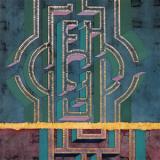
Courant Zéro is the new moniker of Montréal multi-media installation artist and Kohlenstoff label co-founder Maxime Corbeil-Perron, signalling his return to purely recording-based electronic music production following several years focused on award-winning experimental film and audio-visual works. Solari channels his cinematic sensibility and decade-long exploration of sound art and electroacoustic counterpoint into deep cuts of maximalist ambient electronica. Drawing on his early background as a pianist and jazz drummer, Corbeil-Perron weaves a fabric of melodic and rhythmic vectors with his unique timbral palette, intersecting modern composition, IDM, ambient, glitch, and noise on a debut album brimming with sonic detail and emotive resonance. A fixture of Montréal's sound art community as both creator and curator since the early 2010s, Corbeil-Perron's work has ranged from "hypnotic A/V onslaught" (FACT Magazine) to the "richly nuanced acousmatic journey" of his 2018 EP Polychrome (Bandcamp Best Contemporary Classical Of The Month), with earlier electronic and techno-adjacent projects like Political Ritual, Dresden, and Le poisson d'argent garnering accolades from avant-music outlets A Closer Listen, Silence and Sound, and Musicworks, among others. Courant Zéro mobilizes this cumulative wealth of explorative sonic experience in the service of distinctive compositional architectures and electronic music pathways that fans of Floating Points, Jan Jelinek, Squarepusher, Tim Hecker, and Oneohtrix Point Never should find compelling. Title track "Solari" opens the album with a cavernous ambient glitch-drone soundscape that envelops ever-shifting timbres of modular arpeggiation, serving as introduction to the clarion call of "En deçà du réel", an homage to video artist Manon Labrecque, where layers of interweaving melodic counterpoint played on Buchla and other synths slowly build to widescreen immersive intensities; "I have this vision of Labreque vibrating eternally between two frames of magnetic VHS tape_ the slow pace of the piece also inspired by Tarkovsky's approach to scenography" says Corbeil-Perron. "Strange Aorta" is ectoplasmic ambient with wistful melody lines transmuting along a central filament, awash in shifting waves of low-end and ricocheting tonal glitch, the title a reference to "the thumping rhythm beating around the main melody_and the heavy remnants of grief related to my father's passing and a brutal confrontation with my own mortality a few years back." Tracks like "La peau des dents" and "Eroding Us" are more firmly rooted in electroacoustic and aleatory systems music, where colliding loops are shaped into unstable flows of deconstructed slippage and reconvergence. Those two pieces bookend the album's pivotal center: the gorgeous piano digitalia of "Horizon n'arrête" and the skittering electronica of 9-minute opus "Unyeldd", its loping broken beat and cascading melodic glitter like a cluster of wind-up music boxes in a dappled forest _ and for Corbeil- Perron also partly inspired by now fellow Constellation labelmates Do Make Say Think: "I spent a lot of time rediscovering their records after seeing them last September 2024 which definitely influenced this piece." Courant Zéro's debut is a vibrant sonic rebus at the junction of electronic, electroacoustic, noise and ambient music that resists easy categorisation. Solari strikes a compelling balance of unsettled disorientation and hospitable warmth, teeming with real feeling throughout. The album's cover art painting Cryptography I by Yen-Chao Lin represents this prevailing sensibility, its mazelike circuitry distinctly carved and crisply rendered, while filigreed with handmade detail and artisanal patina. Thanks for listening.

pre-order now25.09.2026

expected to be published on 25.09.2026

25,00 €
CHASSOL - Big Sun LP

CHASSOL

Big Sun LP

12inchTRILPFR046
Tricatel
25.09.2026
  • A1: The Big Sun (Introïde)
  • A2: Birds (pt.2)
  • A3: Pipornithology (pt.2)
  • A4: Mario (pt.1 & 2)
  • A5: Organe Phonatoire
  • A6: Dominos (pt.3)
  • A7: Samak
  • B1: La route de la trace
  • B2: Bwa Brillé (Alix et Lisa)
  • B3: Carnaval (pt.3 - Percussions harmoniques)
  • B4: Carnaval (pt.4 - Keupons)
  • B5: The Big Sun (Outroïde)
  • B6: Reich & Darwin
  • B7: Générique Big Sun

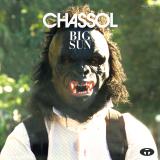
Christophe Chassol's brilliantly-dazzling third album, crowns his trilogy of ultrascores (a method he elaborated for harmonizing, symphonizing real life, the 'here and now'), which started out in Creole-speaking New Orleans (Nola Che?rie, 2011) before pursuing its route through India (Indiamore, 2013).
In March 2014, Christophe Chassol took off for Martinique, his family's birthplace; these West Indies that epitomize everything he dreamt of expressing, from the purely personal to the perfectly panoptic. Hand-in-hand with the production sound mixer Marie-France Barrier and the sound engineer Johann Levasseur, the trio filmed and recorded a myriad of extraordinary encounters, scenes of everyday life, the carnival... a highly-evocative documentary that was to become the matrix of Big Sun.
Back in France, he composed, edited, rehearsed and created the 27 tracks of a 70- minute West Indian space odyssey. Big Sun is a weaveworld of birds' songs and Pipo Gertrude's whistling, Joby Bernabe?s poetry and a te?te-a?-te?te with a lady mountain-dweller, Sissido and Samak's rap, Mario Masse's flute, the Fort de France carnival, conch shell echoes, the ocean's music and the hullabaloo of a game of dominos. And sumptuous pieces of music like La Route de la Trace or Reich & Darwin, which suddenly spring up at a bend in the road and take our breath away.

pre-order now25.09.2026

expected to be published on 25.09.2026

26,01 €
Robin Katz - Hypnos LP

Robin Katz

Hypnos LP

12inchGB4013
Gearbox Records
25.09.2026
  • Floating World
  • Kingdom
  • The Moon
  • My Friend Kushi
  • Stargazer
  • Silent Forest
  • Ukiyo
  • Hypnos

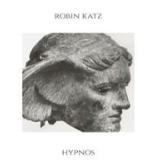
Hypnos , a new collection of his own mesmerising compositions, enchants us with sublime, atmospheric guitar intricacies beautifully constructed over soul- drenched hammond sound-beds. "With Hypnos , I wanted to create something paired back and super simple. These pieces were initially written as etudes for solo guitar, and they reflect the wide range of influences found in the music I love to listen to. A life spent listening to Django Reinhardt and Philip Glass! The inclusion of the Hammond organ came from a desire to pair the nylon- string guitar with an instrument you don't usually hear alongside it. For me, the Hammond evokes gospel and the classic organ trios of Wes Montgomery - it's a soulful, funk sonic and very spiritual. It was a real blessing to have Nathaniel Ledwidge play Hammond on the record and to showcase the softer side of this iconic instrument. Hypnos is the Greek god of sleep, the father of Morpheus, the god of dreams. Is the music dreamy and hypnotic, a brief slumberous escape from the madness out there? I hope so." - Robin Katz It's available as a limited- pressing 180g vinyl 'Gearbox Cut' LP and gatefold CD digi sleeve with obi strip & photo insert.

pre-order now25.09.2026

expected to be published on 25.09.2026

29,62 €
Raphael Loher - Figuren LP

Radically exploratory, Raphael Loher’s Figuren is an album shaped by process and experimentation. Guided by intuition, listening, and a deliberate distancing from his primary instrument—the piano—, the LP marks a decisive step in the Swiss pianist and composer’s artistic development, expanding his sonic vocabulary while maintaining a distinct and personal language.

Figuren draws on ten intimate concert recordings from Keemuun—Loher’s debut for Three:four Records—created during the pandemic and performed in his studio for just one or two listeners. This source material was subsequently developed during a residency in the Blenio Valley, where Loher deconstructed melodic elements, isolated individual tones, and extracted resonances, reassembling them into new configurations. The process generated around 30 initial pieces and also informed his sophomore album, Hug of Gravity, released by Hallow Ground in 2025.

In a further stage of transformation, Loher processed these fragments through a Revox B77 tape machine, subtly altering their pitch before digitizing and reshaping them once again. This iterative cycle of manipulation and recombination forms the core of Figuren’s sonic language.

Departing from the more structured frameworks of his earlier work, Figuren foregrounds experimentation as both method and aesthetic. The compositions range from finely layered rhythmic microstructures to sparse, evolving melodic fragments, each unfolding with a precise sense of restraint.

pre-order now25.09.2026

expected to be published on 25.09.2026

21,81 €
Taroug - Chott LP

Taroug

Chott LP

12inchDEN400
Denovali Records
25.09.2026out soon

On his new album Chott, German-Tunisian producer and composer Taroug confronts his origins. Named after the Chott El Djerid, a vast salt lake in southern Tunisia, the ten-track album revolves around personal history and the search for identity. Chott is a conceptual work shaped by contrasting atmospheres, from minimalistic melancholy to raw, bass-heavy intensity. It blends traditional instruments with contemporary electronic text- ures, drawing lines between past and present.

Personal materials—such as vocal samples from family members—add layers of intimacy and cultural depth, most notably on the title track, featuring an original Arabic poem spoken by Taroug’s father, and on 1995,
a song reflecting on early childhood memories in Tunisia. Beyond these intimate dimensions, he works with sonic imagery that captures the sensory experience of heat and landscape in pieces like Saraab and Sirocco. In Nakhla, recordings of palm trees transformed into repetitive movements evoke scenes of southern Tunisia’s palm plantations, where organic and mechanical sounds converge.

For the artwork, Taroug once again collaborated with architect and designer Marie Brosius, assembling an experimental collage from old personal photographs of Tunisia that visually echoes the album’s themes of heritage and remembrance.

pre-order now

This item has not yet been released. You can pre-order the product now.

30,04 €
VARIOUS - COUNTRY MASTERS - VINTAGE SOUNDS
  • 1: Hank Williams - Hey, Good Lookin
  • 2: Waylon Jennings - Only Daddy That'll Walk The Line (Liv
  • 3: Lefty Frizzell - If You've Got The Money I've Got The T
  • 4: Roger Miller - You Don't Want My Love
  • 5: Marty Robbins - El Paso
  • 6: Kenny Rogers - Jole Blon
  • 7: Webb Pierce - In The Jailhouse Now
  • 8: George Jones - White Lightning
  • 9: Patsy Cline - I Fall To Pieces
  • 10: Willie Nelson - Night Life
  • 11: Chet Atkins - Mr. Sandman
  • 12: Merle Haggard - Okie From Muskogee (Live)
  • 13: Loretta Lynn - I'm A Honky Tonk Girl
  • 14: Hank Snow - I'm Movin' On
  • 15: Eddy Arnold - I'll Hold You In My Heart (Till I Can Hol
  • 16: Ernest Tubb - Walking The Floor Over You
  • 17: Dolly Parton - It Wasn't God Who Made Honky Tonk Angels
  • 18: Johnny Cash - I Walk The Line

Mit der neuen Ausgabe der Vintage Sounds Vinyl Collection steht diesmal die traditionsreiche Welt der Country Music im Mittelpunkt. Die sorgfältig zusammengestellte Compilation vereint 18 zeitlose Klassiker und präsentiert einige der bedeutendsten Künstlerinnen und Künstler des Genres in klanglich überarbeiteten Versionen. Von den unverwechselbaren Stimmen von Dolly Parton und Patsy Cline bis zu den legendären Interpretationen von Kenny Rogers und Willie Nelson bietet diese Sammlung einen repräsentativen Querschnitt durch die Geschichte der Country-Musik. Zwischen Nashville-Sound, Honky-Tonk, Country-Pop und klassischen Balladen entsteht ein stimmungsvolles Hörerlebnis, das die Vielfalt und den nachhaltigen Einfluss des Genres eindrucksvoll dokumentiert. Eine hochwertige Zusammenstellung für Vinyl-Liebhaber, Sammler und alle, die die großen Songs des amerikanischen Country neu entdecken oder wieder erleben möchten.

pre-order now25.09.2026

expected to be published on 25.09.2026

13,40 €
TEODROS MAKONNEN - Teodros Makonnen With His Organ LP 2x12"

Some recordings herald the future in ways that are impossible to see in real time. Teodros Makonnen With His Organ (ቴዎድሮስ መኮንን ከኦርጋኑ ጋር), by the artist Teodros Makonnen, also known as Teddy Mak, is one of those. Today, electronic sounds, synthesizers, and digital production are taken for granted in Ethiopian music, but in the early 1980s, they were novelties that polarized opinion. Even to this day, the story of Teodros Makonnen’s legacy has never been properly told. He played a decisive role in defining the sound of the digital era of Ethiopian music that emerged in the 1980s and beyond, both as a keyboard player and as a producer, songwriter, performer, and sound designer.

Ethiopian music was at a crossroads in the early 1980s. Much like music in the rest of the world, technology and automation heralded either a quantum leap in musical development or the annihilation of musicianship, depending on who you’d ask. The changes were incremental nonetheless, but with the benefit of hindsight one can clearly see that the changes meant different things in different contexts. Drum machines and electric organs came to replace many hotel bands because, all of a sudden, one musician could control drums, melody, and accompaniment. Teodros was one of the first musicians in Ethiopia to explore the possibilities this opened up.

Teodros’ father, Captain Makonnen Beri, was a chief pilot at Ethiopian Airlines and a music enthusiast at that. This would prove important to his development, as Makonnen brought back a piano from Germany, which would lead to the first steps in Teodros’ long musical career. Captain Makonnen’s work as Head of Flight Operations and as a pilot exposed him to the wider world that was far from commonplace for most Ethiopians. In a house where music captivated the whole family, the piano gave Teodros’ talent an outlet. Not only was a piano at home rare in Ethiopian households, his father also brought an Indian teacher to their home to teach Teodros and his brother, Captain Samuel Makonnen, music theory (solfeggio or ear training) and piano. Teodros and his youngest brother, the late great Dereje, a member of both the legendary Ibex Band and the Ethiopian reggae group Dallol, took up music from that point onward, with Teodros beginning to develop his proficiency at the age of eight. His father encouraged him to practice tirelessly at home, and Teodros later received musical schooling at the German School in Addis Ababa.

His obvious talent led to studies and formal education at the Yared School of Music, followed by continued studies in American jazz at Northern Virginia Community College in Virginia. Teodros cut his teeth professionally in his mid-teens, not only as a keyboardist, but also as an arranger for the Wabi Shebelle and Dahlak bands in the 1970s. He mastered electronic sequencing early, rising to prominence through the midnight recording sessions held during the military curfew. The pressures imposed by the curfew required precise and disciplined recordings, and Teodros delivered just that. This, in turn, led to collaborations with iconic artists such as Mulatu Astatke, Aster Aweke, Menelik Wossenachew, Tilahun Gessesse, Mahmoud Ahmed, and Alemayehu Eshete.

In those days, he sat in as a keyboardist with the Dahlak Band when Dawit Yifru took a hiatus to study in Russia, and also with the Ethiostar Band. He secured a residency at the Wabi Shebelle Hotel with the Shebele Band, together with Zelalem Tadese (drums), later succeeded by Elias Bekele, Mulugeta Hailu (bass), Teferi ‘Bibisha’ Mengesha (guitar), Kumelachew G/Selassie (trumpet), and Teshome Deneke (saxophone). A friendly competition developed between the bands associated with the Ras Hotel (the Ibex Band), Ghion Hotel (the Dahlak Band), and Wabi Shebelle Hotel (the Shebele Band). The music scene at Wabi Shebelle saw teenagers commanding the spotlight in an industry otherwise dominated by musicians of an older generation.

At the Wabi Shebelle Hotel, Teodros met a diplomat from Saudi Arabia and later visited him at his home in Addis Ababa, a meeting that had unexpected musical consequences. The man owned a Yamaha double-deck keyboard. That evening, they recorded Teodros Makonnen With His Organ (ቴዎድሮስ መኮንን ከኦርጋኑ ጋር) in one take. This recording, a cornerstone in the early digital sound of Ethiopian music, came about almost by chance, simply because Teodros got the opportunity. Traditional Ethiopian songs were cast in a wholly electronic style.

Once freed from backing duties, Teodros’ keyboards could explore dreamlike soundscapes that took Ethiopian music in new directions. Even though the cassette contained well-known Ethiopian songs, they were given highly original arrangements, performed on an electric organ with drum machine backing and rhythm patterns that left the listener with suggestive, lingering sounds. “Libesh Kabashen” (also known as “Anchi Bale Game”) and “Odu Gol Golesa” wrap you in the very stuff that dreams are made of.

Originally released on cassette only, this recording exudes a mystique that surpasses even some of the most obscure Ethiopian recordings of the day. It remained more or less unknown outside of Ethiopia until now. Some of the tracks, like “Addis Fikir,” are permeated with an almost naive buoyancy, free-floating sounds that lost contact with the ground the moment they were conceived. Others, like “Meche New Hageren Yemayew” and “Lelitu Alnega Alegn,” carry a moodier, quirkier timbre, with pulsating rhythms in the background. Yet even the darker pieces contain an unmistakable wave, something essentially Ethiopian. If most recordings of Teodros’s contemporaries at the time were teeming with atmosphere, his songs seem instead at home in the stratosphere, almost ethereal. Some of the music here could be filed under “lullabies,” were it not for the recurring, almost brooding feeling that engulfs the listener on the aforementioned tracks. You could easily be forgiven for drifting into a blissful haze as the music washes over you.

Up to the advent of electronic music production, Ethiopia was totally dominated by big bands on the one hand, and small groups on the other. The former were tied to large institutions such as the military, the latter emerged from the entertainment industry, in hotel bars and nightclubs. These groups were commercially driven, and bands ultimately had to foster a mercenary approach to employment, albeit not to the passion for music. In the light of this, Teodros’ musical legacy can be seen in two ways. On the one hand, he is a key player in Ethiopian music from the 1970s onwards, leaving an indelible mark through hundreds of compositions and arrangements, including soundtracks for numerous documentary films and advertisements for different companies. On the other hand, the way he and others employed electronics brought Ethiopian music onto a fork in the road.

The replacement of traditional instruments with electronic equipment was seen as impending doom by some. Others, like Teodros, saw new avenues for performance, production, and creativity. Just as later producers like Abegasu Shiota of Admas, Teodros was a trailblazer who opened paths that it took Ethiopian music as a whole more than a decade to rush into. The hotel scene had already been pushed toward electronic music by financial necessity and cost-cutting. Today’s revived global interest in Ethiopian music from the seventies and eighties, alongside a broader resurgence, has changed the reasons for using digital means of music production. They have become tools for musical dreaming. This is where the dreaming began.

out of Stock

Order now and we will order the item for you at our supplier.

Last In: 9 days ago
24,16 €
FUMIO MIYASHITA - WHITE MORNING

First time re-issued on vinyl.

For its third release, Ambient Sans turns to one of the most quietly beloved works in Japanese ambient music.

Recorded at Biwa Studio in 1989, White Morning is the work of Fumio Miyashita — composer, arranger, and multi-instrumentalist whose output through the late 1980s and early 1990s occupies a singular space between healing music, environmental sound, and meditative ambient. Where his contemporaries were mapping the exterior world, Miyashita turned inward: his music was designed for the body as much as the ear, conceived explicitly for rest, focus, and presence.

White Morning distills that vision into its purest form. Two extended pieces — 目覚め (See The Light) and 朝の祈り (Morning Prayer) — built from soft synthesizer layers, delicate acoustic textures, and a stillness that feels less composed than discovered. Music that doesn't impose itself. Music that simply stays.

Originally released on CD in 1991 and circulated quietly ever since among devotees of kankyo ongaku and Japanese new age, White Morning has never appeared on vinyl — until now. Essential listening for anyone drawn to the environmental music of Hiroshi Yoshimura, the meditative depth of Satoshi Ashikawa, or the healing ambient of Klaus Wiese.

out of Stock

Order now and we will order the item for you at our supplier.

Last In: 9 days ago
27,69 €
Martina Bertoni - Electroacoustic Works for Halldorophone LP 2x12"

For her new and most radical album »Electroacoustic Works for Halldorophone«, Martina Bertoni used the electronic instrument at EMS Stockholm to create four pieces that are massive in scale and incredibly intimate, sonically restrained and emotionally overwhelming—almost ambient and always demanding your full attention.

Martina Bertoni returns to Karlrecords with »Electroacoustic Works for Halldorophone,« her most radical album yet. The foundation for the four electroacoustic pieces was laid during a residency at Stockholm’s legendary Elektronmusikstudion (EMS) that the Berlin-based cellist and composer used to explore the curious instrument, originally designed by Halldór Úlfarsson in 2008, as an algorithmic system in order to examine tunings and the mathematical relationships between Aiming to analyse and understand their interaction beyond the composer’s control, Bertoni sought to engage more deeply with the concepts of time, tuning, and, most importantly, control. Accordingly, her four »Electroacoustic Works for Halldorophone« seem both massive in scale and incredibly intimate, sonically restrained and emotionally overwhelming— almost ambient and always demanding your full attention.

While the halldorophone—famously used by Hildur Guðnadóttir for her »Joker« score—roughly resembles a cello and can be played like one, it is an electronic instrument. The vibration of its strings is being picked up, amplified, and then routed through a speaker. This creates a feedback loop that becomes increasingly complex depending on how much gain is added to individual strings. Úlfarsson gave Bertoni a carte blanche for how to handle the instrument, but she stresses that she relied on »minimal interventions—some string strumming and plucking« that set the interactions of different sounds and frequencies into motion. »I decided to not approach it like a cellist would,« she explains. »Instead I used it as a kind of generative organ by turning it into a feedback machine, with tuned feedback triggering more feedback depending on the tuning, which was based on tetraphonic scales that I could apply on the four main strings as well as the sympathetic group of strings.«

Bertoni recorded the material in the EMS studio, later composing and arranging the four complex pieces in her home in Berlin, after which they were mixed and mastered by Ciaran O’Shea. While this can be considered a compositional abstraction process, traces of her concrete work as a performer are firmly ingrained in the music. »The halldorophone doesn’t have a line output, just a double set of speakers, which is why I recorded all sounds with two microphones in the EMS studio,« she explains. »That’s why there’s plenty of breathing sounds here and there—label owner Thomas Herbst and I jokingly refer to the album as my ›chamber music record‹.« And indeed, there is a striking sense of intimacy to these four pieces throughout which individual sounds, harmonic frequencies, and even subtle rhythmic figures seem to move both on their own accord but also according to a underlying vision that steers their interplay.

Indeed, »Electroacoustic Works for Halldorophone« is an album built on and marked by contrasts. The soothing polylogue of single sounds in the higher register on opener »Omen in G« is counterpointed by massive bass drones, while the second piece, »Nominal in D,« plays a cunning game of repetition and difference by combining thick textures with all kinds of rhythmic elements. »Fades in C«—the longest of the four pieces, clocking in at 17 minutes—unlocks the emotional potentials of the sonic qualities of the halldorophone, sounding at once serene and anthemic, and »Organon in D« closes the album by underscoring how Bertoni’s unconventional approach allows her to seamlessly transform simple, quiet tones into complex, towering walls of sound.

pre-order now21.09.2026

expected to be published on 21.09.2026

23,11 €
Nick Malkin - At The Libra Hotel

Nick Malkin

At The Libra Hotel

CassetteOOH035K
OOH-sounds
21.09.2026

Tucked in the heart of Koreatown, Los Angeles, lies The Libra Hotel—the titular architecture of Nick Malkin's new album and site of his musical and psychogeographic exploration. Unlike most musical "site-specific" studies, Malkin remains wholly ambivalent to the documentarian approach, instead sharpening an auteur-like focus on the site as a conceptual and highly expressive backdrop. The Libra is musically explored as a space that houses a noir fragmentation of identity—the exhausted trope of a complicated protagonist walking through rain-soaked street corners and fumy neon lights—where an inner monologue is rendered in both miniature and at a cosmic scale. Casting aside stifling tropes around field recording, ambient, and improvised music, Malkin's work finds its own unique fidelity and emotional core through the assembly and reassembly of memory. Nearly every sound on the album—from frayed saxophones, lambent pianos, and dissected jazz drum kits—are multiplied, shattered, and reconstituted into shapes that adorn The Libra in a motion-blurred fog. The narrative of the Hotel suddenly appears as if out of the mist, with intersecting characters interacting within its walls by happenstance. Adminst the languid set pieces, wraith-like sonic grains gravitate around wide subbass beams that give structural form to The Libra, a narrative tension like when a scene is shot from hundreds of different perspectives: an image both luminous and veiled.

Much like Frank Sinatra's own spatial residency immortalized on "Live at The Sands," "At The Libra Hotel" showcases an exuberant view of entertainment, hospitality, and a form of masculinity, one that can quickly detourn into darkness. Knowing this, Malkin extracts a melancholic core out of The Libra locale. The flickering shadows of American decadence are shown in their ephemeral honesty, lines that trace how even in everyday life virtue is tested, sanity is tested, even reality is tested within the confines of desire, within the night. The album is draped in fleeting textures, carefully arranged with a trance-like microtonality, the faint inflections and articulations of a jazz band cascading into dissipated stillness. Voicemails about changed locations and covert eavesdropping on guests' whispered conversations provide an atmosphere of missed connection and voyeurism—a purloined letter of desire receding into a vanishing point. Like the music itself, The Hotel, a chapel perilous at the intersection of desolation row, the center of it all, yet simultaneously at the edge of town, becomes a structure between libidinous virtuality and actuality—our inevitable half-light.

Ultimately, the pensive atmosphere of "At The Libra Hotel," powerfully asserts a plea for the kinds of intimacy only possible in transient spaces. Here, memory cascades into a force that feels like something supernatural, perhaps even religious, yet always subject to the infidelity of our imagination. Here, the album opens into its primary psychodrama, the transient nature of subjectivity itself and how this becomes fractured in the tumult between our commitments and desires. Within this nocturnal space, to quote Louise Bourgeois, "you pile up associations the way you pile up bricks. Memory itself is a form of architecture."

pre-order now21.09.2026

expected to be published on 21.09.2026

11,64 €
Amosphère - Cosmogonical Ears
 
1

»Cosmogonical Ears« is Amosphère's first album for Hallow Ground. Following her contribution to the Swiss label’s »Epiphanies« compilation and her 2021 full-length debut »More Die of Heartbreak« on 33-33, it features three expansive pieces. The Paris-based composer and multidisciplinary artist delves deeper into themes of time, space, cosmology, human perception, and psycho-physical effects, crafting profound sonic meditations. Drawing on a minimalist approach while blending electronic and acoustic elements, Amosphère’s long-form compositions are living, breathing entities whose sonic richness and evocative power unfold gradually over time, putting »Cosmogonical Ears« in direct kinship with previous Hallow Ground releases by artists such as Kali Malone and FUJI|||||||||||TA.

The album opens with its longest piece, »Land of eternal delight,« composed for the Buddha10 exhibition at the Museo d'Arte Orientale in Turin. Written during three years of isolation—a period in which Amosphère explored meditation practices and diverse belief systems—it merges mythology with personal transcendental experiences, reflecting on a challenging time for humanity. »By blending Buddhist philosophy and sculpture with my own meditation practices, I sought to explore a way for people to transcend the boundaries of space and time—not as a believer, but as an observer,« she explains. Featuring handmade ceramic instruments and recorded by Thomas Lefevre, the piece combines Amosphère’s electronic organ with Marc Lochner’s flute contributions, creating a sound that is simultaneously minimalist and expansive.

The concept of teleportation and how it challenges traditional notions of time and space serves as the foundation for the second piece. »Recent advances in quantum physics suggest that teleportation might be possible through quantum entanglement,« Amosphère notes. »What if science fiction is becoming reality—or has already existed in ancient times?« Drawing inspiration from theories proposed by physicists such as Roger Penrose, Amosphère again worked together with flutist Lochner, this time using her VCS 3 synthesizer. »Teleportation« weaves single notes into intricate, non-linear patterns that defy conventional logic, creating a complex auditory tapestry. The last piece »Black hole in, white hole out« was recorded on Corsica and features Miao Zhao’s bass clarinet drones alongside Amosphère’s church organ. It imagines the possible sound of crossing a black hole while also suggesting the study of its theoretical exit and its potential applications for large-scale time and space travel.
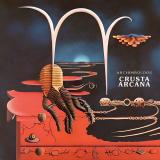
The questions posed by »Cosmogonical Ears« do not yield straightforward answers. Instead, Amosphère’s restrained yet intricately layered compositions require full immersion and concentration from the listener. As expressed by the album’s title—which envisions the birth of a new universe through listening—»Cosmogonical Ears« offers an experimental approach to auditory perception as a tool for seeking truth, freedom, and harmony between the outer world and the inner self.

pre-order now21.09.2026

expected to be published on 21.09.2026

25,17 €
OKI - Live at Café Oto

Oki

Live at Café Oto

CassetteMAIS057CA
Mais Um Discos
21.09.2026

Live at Café Oto is a journey into Ainu music as ancient vocal chants move into intense mouth-harp acapellas as meditative solo tonkori pieces morph into psychedelic dub-heavy work-outs.

The album follows the critical acclaim for Tonkori in the Moonlight,Mais Um's 2022 compilation of OKI's early work that was chosen as one of the best folk albums of 2022 by The Guardian.
Live at Café Oto features mostly unheard repertoire from OKI and family, recorded in Mais Um's favourite venue in London on a sold out night as part of a captivating European tour - when we heard the recording we knew we had to release it.

pre-order now21.09.2026

expected to be published on 21.09.2026

12,82 €
Havantepe, Cristi Cons, Christopher Ledger - Calcite

BERG AUDIO is happy to welcome back one of our favorite producers, Havantepe. In the past few years, the Turkish artist’s output has become rare, greatly increasing our excitement to finally share these masterfully crafted pieces on the label. The release includes a superb collaboration with Christopher Ledger, and a remix from one of Romania’s key artists, Cristi Cons – Artwork by Juli Jah.

stock from02.10.2026

Last In: 10 days ago
12,19 €
Traumer, Kolter - SPLIT EP

Traumer, Kolter

SPLIT EP

12inchBERGASE01
BERG AUDIO
21.09.2026

In response to popular demand, Traumers « District » is finally getting a vinyl release –the Parisian mastermind's hit is accompanied by a new mega club tool, “At Lanta”,as well two beautiful deep techno pieces from one of today’s most prolific artists and BERG AUDIO’s roster essential elements, Kolter.

HANDSTAMPED LIMITED COPIES !

out of Stock

Order now and we will order the item for you at our supplier.

Last In: 10 days ago
12,19 €
TELECTU - OFF OFF LP 2x12"

TELECTU

OFF OFF LP 2x12"

2x12inchZAM012
Holuzam
18.09.2026

Remastered limited edition double vinyl with double-sided screenprinted poster-cover (sleeve folds out to be one huge poster). A real collectors item!

When Off Off came out around June 1984, one couldn’t speak of an independent music scene in Portugal. Warm Records’ vague existence didn’t have any impact and Dansa do Som’s inaugural release appeared only in December. 10 years after the revolution, after two IMF interventions, a lot of political instability (not to say turmoil, in the first couple of years) and the natural excesses of a sudden burst of freedom, the Portuguese consumer had more choices but a generally poor standard of living. There was no entrepreneurial culture and serious second thoughts about investing private money in risky ventures.

After many complaints about the whole music scene (institutions, critics and record label executives, popular and classical music alike), something that would continue well beyond the end of the decade, Telectu decided to finance, record, produce, release and sell an album with complete independence from outside structures. Their karmic reward was profit. According to Vítor Rua, Off Off was the only album fully payed by the duo and the only one that really payed off. Not an easy accomplishment for a double LP housed in a large (also double-sided) screenprint with complicated cuts and folds. The artwork was conceived by António Palolo, a friend and multidisciplinary artist. It was based on a collage of heavily saturated and xeroxed polaroids framed in shocking pink and green. Palolo was considered the third member of Telectu, regularly producing slides, video and other visual support for their shows. The inspiration for the type of cover came from GRM’s Gramme series.

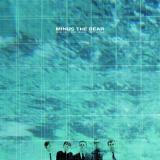
Off Off is divided in four distinct sides, each one corresponding to a “theme” or “function” related to Telectu’s manifold artistic interests and interactions. The titles are also gateways to influences and a small portion of Portuguese cultural life:

- Side 1 / “Diagonale” is dedicated to Egídio Álvaro, art critic and gallery director (he opened Diagonale in Paris). Performance art was arguably his main artistic concern over the years, so the music on this side is suggested for use by one or more performers in live or playback situations. The three tracks segue into each other, linked by a synth arpeggio much in the same way as Telectu’s previous “Belzebu” álbum (1983);

- Side 2 / “Anarké” is dedicated to the composer Filipe Pires, one of Jorge Lima Barreto’s recurring invocations when asked about worthwhile contemporary music in Portugal. It is subtitled “concert music”, proposing «a new form of listening». Three tracks also, and these are separated by “clap interludes”, which basically consisted in the following: JLB and VR each had a pair of headphones on, and they clapped their hands according to the rhythm of the music each one was listening. Both musicians were interacting with a different Steve Reich piece: Vítor with “Music for Mallet Instruments”, Jorge with “Six Pianos”. The result is disjointed clapping, an awkwardly deliberate celebration of their own music. Telectu applauded themselves.

- Side 3 / “Cornucópia” is subtitled “music for theatre” and dedicated to Luís Miguel Cintra and Luís Lima Barreto (JLB’s brother), both connected to the Cornucópia theatre company. The side consists of several short pieces previously used as interludes in the Cornucópia staging of “Mariana Espera Casamento” (1983). Field recordings, mood pieces, ambience and a numeric poem (“Soneto Soma 14x”, by E.M. de Melo e Castro) read by João Perry, a quite well-known stage actor. His voice is treated with a flanger effect;

- Side 4 / “Palolo” is “video music”. It’s a one-take mix recorded from cassette sources (Telectu studio experiences) and done live while watching António Palolo’s Om film (1978) projected on the living room wall. It’s a deep, immersive, quasi-mystical 20-minute piece perfectly suiting the meditative, abstract, fluid images created by Palolo by mixing paint and water inside a bathtub. One imagines the Cosmos, hardly suspecting the technique. The film is 90 minutes long, so the music on the LP is of course edited.

The six titles on sides 1 and 2 evoke demons, all of them with conflicting symbolism, since it varies from culture to culture, religion to religion. No explanation is given and Vítor Rua has no idea where this imagery comes from. During virtually the whole stretch of the 1980s, Jorge was the one in charge of titles and concepts, and Vítor didn’t bother too much even reading the liner notes :) In any case, when you synchronize the listening experience with the imagery, a powerful impression emerges, a feeling of being in the presence of these entities while placing yourself inside the sonic narrative.

Off Off is undoubtedly a seminal album in the history of electronic music, as much Heldon as Fripp & Eno, jazz and American minimalism, cosmic out-thereness, mantric miniatures. Telectu at the height of their powers, still very early on, delivering an album-manifesto advocating intermedia art and the fierce independence of Portuguese musicians «from the scum of capitalist music industry monopolies. It’s a path to follow, albeit one that requires enduring hardships and retaliation from music industry gangsters.» Despite a few journalists deemed «capable of being free», the media are «enslaved by the dominant and fascist imbecility of the speculators of light music.» Off Off is addressed to those journalists «and to an audience angry at the cultural misery imposed upon us ..., certain that this music will open new horizons of musical pleasure in the conception of Portuguese avant-garde music, and in the open consciousness of us all. OFF OFF repeats Freedom.»

Those two words are a direct lift from Alberto Arbasino’s 1968 book Off Off, the basis of which is a critical analysis of Theodor Adorno’s and Dwight MacDonald’s ideas concerning the stratification of culture in different levels (high, mid and low) and the pervasiveness of mass culture in the form of a culture industry. In very simplistic terms, and that is precisely the point that inspired Jorge, Arbasino argued that it was possible and desirable to effect a revolution from below, cultivating alternative circuits completely cut-off from what he termed the in-in reality. Telectu’s record was a deliberate demonstration that it could be done, displaying Freedom in the face of all the gatekeepers and other human obstacles.

pre-order now18.09.2026

expected to be published on 18.09.2026

63,45 €
Archimboldos - Crusta Arcana

Archimboldos have clawed their way out of the starcaves of their primordial past and into the tranquil light of a coral garden on their third full length album, Crusta Arcana, a gumbo stewpot of transcendent electronica suffused with tribal rhythms and liquid ambience. Across a stereo field smeared with tolling bells, post-industrial folk percussion, and tinkling keys, Archimboldos soundtrack a science fictional journey, not into the depths of space, but deep beneath the waves.

In the past the Chilean duo of Nicolás Carcavilla and Felipe Crocco have described their music as “liminal shrimp folk.” Here they continue this strange exploration when they visit the court of the prawns, producing stately electronic chamber orchestrations. Perhaps these are the frequencies used for ritual dream initiation into the mystery schools of drowned Atlantis. Weaving an ancient sacred science, Archimboldos take listeners on a mystic vovage into their singular crustacean mythology, the crusta of their hidden arcana.

Archimbolodos are masters of conjoining cyclonic and centrifugal lines of electricity into spellbinding incantations. These deep-sea transmissions envelope the listener into aquamarine forcefields that are as hallucinatory as they are hypnotic. Navigating these strange fantasias could lead one to getting lost at sea, but the work is buoyed by the somnolent melodies of lonely harpsichords and swelling synth pads whose sustained tones reach towards distant shores. Sailing across a vast expanse of oceanic harmonies and percolating percussion, these pieces are as precise as the hand of a sailor on the rudder, moving with the tide.

Casting their net wide across eight pieces, Archimboldos have made a big catch. From the emotive electronic counterpoint found on “Bursting Armor” to the blocks of seaweed tangled sonic sculpture trawled up from the ocean floor on “Aphelion IX.” Other songs are like samples of biological ambience collected from luminous tide pools: resplendent tones placed into a Petri dish of sound, swirled, cultured and fermented until it undulates with the rhythmic movement of microscopic lifeforms. Alternating between rippling minimalist sonority and pounding, progressive, synth-heavy entrancement, Crusta Arcana charts its own idiosyncratic itinerary of instrumental invention.

All the while light is down streaming from the heavens to pierce the waters, here calm, there choppy. The intrepid musical captains commanding Archimboldos have laid a course for new archipelagos of the imagination, guided by heavenly constellations.

-Justin Patrick Moore, author of The Radio Phonics Laboratory, Telecommunications, Speech Synthesis and the Birth of Electronic Music

pre-order now18.09.2026

expected to be published on 18.09.2026

23,95 €
Volodja Brodsky - Whispering Ln. Vol. II
  • Green Spring Gardens
  • Bethanie’s Salt Water Taffy
  • Low-Tide Observations
  • Monteluka
  • Wind Clock
  • Slow Turn to Port
  • Rehoboth
  • Deep-Brain Stimulation

Whispering Ln. Vol. II was recorded between 2018 and 2019 in America, alongside the pieces that formed the first album. These recordings belong to the same time and space, shaped by the same quiet focus and slow attention to sound.

While remaining rooted in minimalism, this album introduces several more rhythmic pieces, drawing inspiration from early electronic music – echoes of composers such as Tom Dissevelt and Raymond Scott.

Movement and stillness coexist throughout this record. Rhythms and patterns shift and occasionally dissolve. The music asks for little and offers even less explanation, inviting listening without urgency – to slow down and remain present. May it offer a moment of calm, where time loosens, and attention gently settles.

pre-order now18.09.2026

expected to be published on 18.09.2026

23,95 €
Minus the Bear - Bands Like It When You Yell “YAR!” At Them LP
  • A1: Spritz!!! Spritz!!!
  • A2: Women We Haven’t Met Yet
  • A3: You’re Some Sort of Big, Fat, Smart-Bug, Aren’t You?
  • B1: Drop It Like It’s Hot
  • B2: I Lost All My Money at the Cock Fights (Demo)

There was an immediate buzz surrounding This Is What I Know About Being Gigantic, the 2001 debut EP by Seattle indie phenomenon Minus the Bear. It wasn’t the kind of viral interest that translated into a string of sold-out tour dates, but it meant that the tuned-in crowd eagerly anticipated their next move. To help stir up the excitement for their first proper full-length, the band followed up Gigantic with a promo CD featuring two tracks from their upcoming album, a short instrumental interlude, an exclusive new song, and a demo version of another album track. Packaged in a cardboard slipcase, it was the kind of cheaply manufactured promotional item that could be handed out for free at shows or thrown in as a bonus in online orders—a relic of the final years of the CD age before the advent of the iPod and mp3. The sampler CD was christened Bands Like It When You Yell “YAR!” At Them in a nod to the upcoming album Highly Refined Pirates.

While these kinds of promotional items typically had an ephemeral existence, filed away in some neglected binder of CDs or tossed out during one of the many apartment-to-apartment moves of the band’s principal demographic of urban twentysomethings, Bands Like It When You Yell “YAR!” At Them had a curiously persistent presence. Perhaps it was because it was packaged more like a proper EP than a sampler. It certainly helped that it was a free release, meaning anyone who came to a show likely walked away from the evening with the cardboard slipcase tucked in their jacket pocket. It’s also noteworthy that the EP showcased three songs from the back half of Highly Refined Pirates rather than the album’s live staples and fan favorites from side A. Whatever the combination of factors at play, “YAR!” took on a life of its own and was ultimately re-packaged in a jewel case and sold as a proper EP in 2004 in the wake of Highly Refined Pirates’ success. And now in 2026, it’s getting its first proper release on vinyl.

Opening with the driving beat, chirping guitars, and funky low-end of “Spritz!!! Spritz!!!,” Bands Like It When You Yell “YAR!” At Them quickly cements Minus the Bear’s foundation of sophisticated revelry, a spirit further emphasized in the Highly Refined Pirates title choice. Part of the Bear’s lore involves them playing their first show three days after 9/11, and just as New York City’s indie rock scene took a sharp turn towards nightclub debauchery and a rejection of ‘90s rock’s dour fatalism in the wake of the World Trade Center tragedy, so did the Bear turn away from the Seattle’s scene’s penchant for gloom and angst towards a cerebral after-hours pop sound. The inclusion of “Women We Haven’t Met Yet” helped elevate what could have otherwise been seen as an album deep cut into a lead track. The fact that these first two songs essentially served as preview singles over future Pirates hits like “Monkey!!!Knife!!!Fight!!!” and “Absinthe Party At The Fly Honey Warehouse” speaks to the high quality of every song the band cranked out in their early years. The EP’s exclusive track “Drop It Like It’s Hot” presaged Snoop Dogg’s mega-hit single of the same name by two years, but whereas Snoop leaned into restrained minimalism, the Bear unleashes some of their fiercest work here, building off of interwoven riffs and electronic layers to a climax of stabbing guitars and hollered vocals. Much like Nirvana’s Hormoaning EP, Minus the Bear’s Bands Like It When You Yell “YAR!” At Them was initially more of a marketing gimmick than a proper release, but given the popularity of the pivotal studio albums that stemmed from the same recording sessions, these extended plays serve as compelling companion pieces that have earned a special spot in their respective fanbases’ hearts. Suicide Squeeze is proud to offer Bands Like It When You Yell “YAR!” At Them on vinyl on September 18, 2026, nearly 25 years after the band’s first show.

Remastered for vinyl by Bernie Grundman with lacquers cut at 45rpm, this limited edition pressing of 1000 copies on Puget Sound-colored vinyl helps document and preserve the exciting early years of one of American indie rock’s most beloved acts.

pre-order now18.09.2026

expected to be published on 18.09.2026

22,65 €
Stone Music - Into The Cosmic Forest

Stone Music returns with Into the Cosmic Forest, a deep and patient journey into open-air improvisation. The group was founded in 2022 by Tokio Hasegawa, a core member of the legendary Taj Mahal Travellers, and brings together a wide circle of musicians from Japan’s ambient and experimental scenes.

While the name is new, the spirit continues. Stone Music extends the free-form, site-responsive approach that defined Taj Mahal Travellers — music shaped by environment, duration, and collective awareness rather than fixed structure.

Into the Cosmic Forest consists of two long-form pieces, each exceeding 20 minutes, both recorded live outdoors. Side A was captured at Japan’s Off-Tone Festival. It unfolds slowly and organically — layers of voice, strings, electronics, wind instruments, and percussive textures gradually forming a shifting sonic landscape.

Side B was recorded on the grounds of Mithila Museum in the mountains of Niigata, an art space managed by Hasegawa himself. More intimate in atmosphere yet equally immersive, the piece centers on voice and subtle interplay, allowing space and silence to become part of the composition.

What you hear is direct and unpolished: air moving, sound resonating, musicians responding to each other and to their surroundings in real time.

Following tours in India during 2023–24, with performances in national museums and universities, Stone Music continues to explore music as shared space rather than spectacle.

Into the Cosmic Forest invites listeners into that space — unedited, unhurried, and fully alive.

pre-order now18.09.2026

expected to be published on 18.09.2026

23,95 €
Items per Page:

Language