THIRD EAR BAND stammen aus Canterbury und begannen als psychedelische Band namens THE GIANT SUN TROLLEY, die in Südlondoner Clubs lange und improvisierte Sets spielte. Nach einem Auftritt wurde der Band fast die gesamte Ausrüstung gestohlen. So wurden sie aus purem Zufall und offensichtlicher Notwendigkeit eine Akustikband und nahmen den Namen THIRD EAR BAND an. Von 1969 bis 1972 veröffentlichte die Band drei Alben auf dem progressivem Harvest-Label, "Music From Macbeth" (1972) war davon das bekannteste und kommerziell erfolgreichste. Am 24. April 1970 traten die Third Ear Band beim 2. Essener Pop & Blues Festival. Aus welchen Gründen auch immer tauchten sie aber weder auf dem offiziellen Plakat zur Veranstaltung noch in den Programmheften zum Festival auf. Das Billing des Tages war mit Acts wie The Flock, Ekseption, Rhinocerous, The Groundhogs, It"s A Beautiful Day und den noch unbekannten Black Sabbath, die gerade ihr erstes Album veröffentlicht hatten, prall gefüllt. Das Essener Konzert in der Quartettbesetzung mit Sweeney am Schlagzeug, Minns an der Oboe, Coff an der Violine und Smith am Cello fand nur wenige Wochen vor der Veröffentlichung des zweiten Albums statt, das die Fans als "Elements" kennen, obwohl es schlicht "Third Ear Band" heißt und im Juni 1970 erschien. Von den vier Elementen spielte die Band an dem Abend "Earth" und "Water", aber in einer kürzeren Fassung im Vergleich zu den Albumversionen. Erst vor kurzem sind die professionellen Tonaufnahmen vom Festivalauftritt der Third Ear Band wieder aufgetaucht und jetzt restauriert, klanglich aufgearbeitet und gemastert worden.
Alle größten Hits von Edith Piaf, einer der berühmtesten französischen Sängerinnen aller Zeiten, auf einer schönen Picture Disc Vinyl. Darunter die Originalversion des weltberühmten "La vie en rose", das Lied, das in über 50 Filmen gespielt und von mehr als 350 anderen Künstlern gecovert wurde...
The Telescopes Radio Sessions collects together the essence of three live session recordings in 3 different countries over a three year period between 2016-2019. This is the third in a series of radio session releases from Tapete Records that have so far included The Monochrome Set and Comet Gain. More session releases are being lined up for the rest of the year and beyond - enjoy the sonics and stay tuned. Over the years I have read a lot on people’s impressions of The Telescopes. Some folk think it’s a collective, others imagine it used to be a band and feel nostalgia towards what they consider to be the original line-up (even though many had come before, during and since) and some people refer to it as currently a solo career. In a way this is all true and none of it is. When faced with these kind of questions, along with questions about the style of music that The Telescopes make I often say The Telescopes house has many rooms, which explains things perfectly for me but for people on the outside looking in it only serves to increase their confusion. For me, confusion isn’t such a bad thing. Everything is born into confusion, the sense we try and make of that chaos is interesting and excites me. The universe often disorientates, it sends me a jumble of thoughts and impressions coupled with a feeling of something I need to express… if I could only decipher the encryption. This is how The Telescopes music comes to be and it is also how The Telescopes came to me. I regard The Telescopes as an entity of it’s own that introduced itself in my darkest hour and I was chosen as its vessel. From the second it arrived I was obsessed to the point where there was nothing else. A bit like having an imaginary friend. As the obsession grew it began to infect others, everybody loved my imaginary friend and wanted a piece of it. As its success grew however, so did the corruption, until one day the entity fell silent. The silence lasted for years, I tried everything to reconnect but it was having none of it. I had been a bad caretaker, I had let the house become infested and I had lost my way. This epiphany served to remind me of simpler times when anything felt possible with this entity by my side. It had trusted me with something so simplistically profound and I had let it down. The realisation of this was a eureka moment. I am not The Telescopes, I never was and never will be, I am the caretaker, the lighthouse keeper and if a job is worth doing it is worth doing well. With this dawning, I felt a crack open up in the cosmic egg and a familiar confusion in my head. The entity had returned. It was time to start untangling its tangled threads once more, to make sense of what it was saying, this time without corruption. It’s all about listening. I listen to what my cosmic friend sends me and channel this expression into what you hear through your speakers. It may take one person to achieve this, it may take more. There is no set line up or instrumentation that can hold The Telescopes. Whatever it takes to hit the zone, whatever is available, absolute focus is imperative. Sometimes it takes sabotage to keep that line of vision intact, there is no room for preconceptions or complacency in making the music. The Telescopes music is the now
incarnate and a state of total being is necessary to achieve. From the outside looking in... again, it’s all about listening. What comes through your speakers is the only thing that matters. The music either reaches you or it doesn’t. Everything else may seem interesting or confusing but ultimately it is corruption. So if you’ve bought the record, read the sleeve notes and bought a ticket to see a live show, don’t be surprised if the line-up is or isn’t the same as the recording. The only thing that is for sure is that The Telescopes as an entity is speaking to you in its own voice in every scenario.
Of course the difference between albums and live shows is that you can play the record over and over again to the point where you know every line and every note that was played. Whereas with live events you are left with an impression that can only be replayed in your mind. It can be frustrating at times. When you are touring with a great line-up and feel like something exciting is happening, you want everyone to hear it, not just the people at the shows but the people that couldn’t make it on the night as well. There is no guarantee that there will be the same line-up at a live show as there is on the album. This is why live sessions are important, they document a side of things that is often fleeting. Here we have three sessions, all different people transmitting The Telescopes sound on each. Some are regulars, some dip in and out and some were just passing through. In each case The Telescopes chose them as their vessel and as the lighthouse keeper I did everything I could to help them on that journey while trying to be a good caretaker to the house of many rooms. The Telescopes have been invited in for many sessions over the years, the first two were for John Peel on BBC Radio 1. We also recorded a session for Marc Riley and Mark Radcliffe before their
celebrity when they had a show on BBC Radio Manchester. We could have compiled this album from those sessions, it was certainly considered but Tapete and myself believe this selection gives an exciting glimpse into that fleeting side of The Telescopes in a constant state of flux that is left mostly to myth and imagination. For those who listen to the records but have never had the chance to take in the live experience, welcome to the other side. For those that follow us live, here’s a little reminder and a keepsake. Infinite suns. Stephen Lawrie February 2024.
witching seaside ambience for a sound shaped by inner-city living, Atelier’s second full-length studio album, Lights Towards The Exit, channels the mood of a sleepless cityscape.
Lights Towards The Exit is Atelier’s second full-length studio album. After the release of Varsam Court at the end of 2019 on Lossless, run by mentors and friends Mathias Schober and Thomas Herb, the duo experimented with different ideas in the studio, and at the start of 2020 a common thread began to appear between a few of the tracks which laid the foundation for the sound of their second album.
Both Alexander and Jas moved to Berlin in the period before the release of Varsam Court from their hometown of Cape Town, South Africa, where their first album was written and recorded. Moving provided some challenges, particularly with what was the most essential equipment to bring from their previous studio set-up, but those limitations proved to be useful in incorporating new instruments and techniques to the recording process.
Lights Towards The Exit was written and recorded in different spaces in Berlin – from bedrooms in apartment blocks to three different studios across the city. The different locations all had a specific ambience – such as 4th- and 5th-floor bedrooms with busy street views; a studio with no windows in a typical old Berlin backyard complex forever under threat of being sold and gentrified; and a bigger studio with windows on the opposite side of the corridor overlooking the backyard of a mechanic workshop. The final details and edits were completed in Atelier’s current studio, in a contrasting area surrounded by office blocks, plazas, 9-5ers and, most importantly, their friends and colleagues.
Swapping the mountains, sea and seclusion for tall buildings, backyards and a new community, Lights Towards The Exit channels the sensation of being surrounded by people, but still feeling like you're on your own. The album was written through three years of cold winters, sweaty summers and a period where the world stood still during the pandemic. Frustrated with the cease of momentum, but still optimistic, Atelier disappeared from public view, abandoning social media to focus on recording, songwriting and experimentation.
It was a difficult time: the duo longed to perform and continue producing music, and the imposed limitations sometimes felt like an impossible obstacle. Ultimately, though, this would provide inexpected inspiration and influence the sound and direction of the new album.
The sound of Lights Towards The Exit is not a departure from their first album, but a progression: influenced by the new surroundings in the duo’s adoptive city, Atelier’s second album is an ode to first-time experiences, new languages, challenges, club culture and the shift from youth to maturity, as well as a balm to those stuck somewhere in between.
The overall sound is a lift not in tempo, but in energy, matching the openness needed to make a new start in a new place.
out of Stock
Last delivered 12 months ago available to reorder, subject to availability
FIRST TIME ON VINYL
HALF SPEED MASTERED 180 GRAM VIRGIN VINYL PRESSINGS
INCLUDES COVER ART PRINT
INCLUDES EXCLUSIVE CHRIS ISAAC COVER VERSION
INCLUDES DOWNLOAD CODES FOR THE ORIGINAL MIX AND UNMIXED VERSION IN WAV AND MP3 FORMATS
Trentemøller is the Dane who did. He's been making electronic music of one kind of bent or another for over 15 years, first making his name as part of Trigbag, a live house act that toured extensively. But it's his solo material that has impacted on the dance community - and beyond. 'La Champagne' was a game-changer and his remixes of artists like Sharon Phillips secured his place as an artist with some serious chops. But that's not all he is. You can hear that yearning in his productions and it's evident here, a sort of Protestant northern European melancholy. He is aided on his journey towards the Baltic by some heavy hitters, of course: Velvet Underground, Mazzy Star, This Mortal Coil. But that's not the story, it's not where the plot comes from, it's not where we're going. It's just a little indicator to reassure you we know the way. No. For it's in the dark beauty of Low's tremulous 'Amazing Grace' or even the way that the Shangri-Las' '(Remember) Walkin' In The Sand', surrounded by the similarly inclined, takes on a funereal gait. As we navigate the flatlands of your mind, we're helped along by a generous sprinkling of Anders' fellow Danes, like Darkness Falls (the atmosphere of this mix aptly encapsulated right there), Ekko, Chimes & Bells and the Late Night Tales tradition, Trentemøller's cover of Chris Isaacs' 'Blue Hotel', sung by Marie Fisker and Steen Jørgensen.
Originally released in 2010 this mix has gone on to become a classic, it was never released on vinyl at the time, so due to public demand we have carefully mastered each track and carefully cut at half speed for optimum sonic reproduction.
An American soul vocal group that would go on to shape the sound of pop music much farther beyond their imaginations, The Ponderosa Twins Plus One featured two sets of identical teenage twins, Alfred and Alvin Pelham, and Keith and Kirk Gardner, along with Ricky Spicer. The group released a couple of singles and a lone album for Cleveland's Saru label in 1971, breaking up and disbanding as adolescence waned. A recent sample darling of both Kanye West and Tyler The Creator, "Bound" has revealed the Ponderosa Twins Plus One as the real Midwest kid soul deal. Numero is proud to present the first official American repressing of the original 1971 release, with fresh remasters from the original analog tapes, two previously unissued bonus tracks, and a replica tip on sleeve, making this an album you're bound to fall in love with.
Blue vinyl. Since forming in Western New York in 2016, Feeley and his musical partner Matt Cox have blurred the line between absurdism and existentialism, swirling ‘90s melodicism, new-millennium pop-punk energy, and heartfelt emo into a wry, smirking rock sound. Now, on their third album, Gangster of Love, the duo let their melting pot sonic palette go further than ever, exploring the outer edges of their musical spectrums. Produced by Sam Guaiana (Neck Deep, Bayside), Gangster of Love follows
2021’s SUP and 2018’s Tequila Sunrise and found the duo fleeing Buffalo for Los Angeles, where the push and pull between the two songwriters – the real magic at the heart of Super American – was allowed to flourish and grow in a brand-new environment
Diplomat and Beagle are old studio partners from the early 90’s and have recently started to record together again, fusing their musical talents to make some next level hardcore rave.
Their last release was all the way back in 1993 on the label Bogwoppa, an EP titled ‘Small Hours’ under their group name Narc. This EP went onto cult status due to its futuristic and unique take on the sub-genre, changing hands for vast amounts on Discogs.
Featured on this EP is a remix of ‘Equatorial Bass’, a track from the original 1993 EP revamped for 2022.
Hit the turbo!
out of Stock
Last delivered 18 months ago available to reorder, subject to availability
Die »vielleicht letzte wichtige Rock'n'Roll-Band unserer Generation« (Zitat Musikexpress) ist zurück. Wanda, Amore, Bussi, Niente, Ciao! Fünf Alben der österreichischen Kultband Wanda, formal insgesamt weit über 300 Wochen lang in den Charts, mittlerweile 14-mal Platin. Unabhängig davon wachsen die Songs live dargeboten ins Unermessliche; als ekstatische Gewalt auf der Bühne spielt die Band ausverkaufte Konzerte und Festivals in Deutschland, Österreich und der Schweiz.
»Es gab nie einen Plan B, es gab nur das Leben als Problemstellung, Musik und Erfolg, hin oder her«, bringt Sänger Marco Wanda einen Hauch von Bandphilosophie in einem der hunderten Interviews zum Ausdruck. Diese Kompromisslosigkeit spürt man auch. Die Jahre zwischen Bühne, Tourbus und Studio verschmelzen zu einem langen Drahtseilakt ohne Sicherheitsnetz. Und die Energie bei jedem Konzert – jedes Mal spielt die Band als wäre es das letzte Mal – reißt das Publikum ausnahmslos mit.
»Wenn deutschsprachiger Rock'n'Roll tot war, dann haben Wanda ihn wiederbelebt«, sagt detektor.fm über die Anfangszeiten dieser Band, die sich 2014 mit Amore gleichzeitig in die Radio Playlists und die Herzen der Fans katapultierte. In der neuen Single vereinen sich aufgestaute Energie, Sehnsucht und Aufbruchsstimmung, und ziehen gemeinsam durch die Nacht. Die Stadt wird wachgerüttelt, die Botschaft ist klar: »Don't stop the rock«.
Die »vielleicht letzte wichtige Rock'n'Roll-Band unserer Generation« (Zitat Musikexpress) ist zurück. Wanda, Amore, Bussi, Niente, Ciao! Fünf Alben der österreichischen Kultband Wanda, formal insgesamt weit über 300 Wochen lang in den Charts, mittlerweile 14-mal Platin. Unabhängig davon wachsen die Songs live dargeboten ins Unermessliche; als ekstatische Gewalt auf der Bühne spielt die Band ausverkaufte Konzerte und Festivals in Deutschland, Österreich und der Schweiz.
»Es gab nie einen Plan B, es gab nur das Leben als Problemstellung, Musik und Erfolg, hin oder her«, bringt Sänger Marco Wanda einen Hauch von Bandphilosophie in einem der hunderten Interviews zum Ausdruck. Diese Kompromisslosigkeit spürt man auch. Die Jahre zwischen Bühne, Tourbus und Studio verschmelzen zu einem langen Drahtseilakt ohne Sicherheitsnetz. Und die Energie bei jedem Konzert – jedes Mal spielt die Band als wäre es das letzte Mal – reißt das Publikum ausnahmslos mit.
»Wenn deutschsprachiger Rock'n'Roll tot war, dann haben Wanda ihn wiederbelebt«, sagt detektor.fm über die Anfangszeiten dieser Band, die sich 2014 mit Amore gleichzeitig in die Radio Playlists und die Herzen der Fans katapultierte. In der neuen Single vereinen sich aufgestaute Energie, Sehnsucht und Aufbruchsstimmung, und ziehen gemeinsam durch die Nacht. Die Stadt wird wachgerüttelt, die Botschaft ist klar: »Don't stop the rock«.
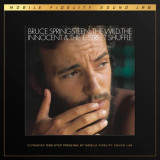
Released only eight months after his exhilarating debut, Bruce Springsteen's The Wild, the Innocent & the E Street Shuffle contains rousing dispatches from the boardwalk, the street, the beach, and the bedroom. It explodes with energy, dares to dream, teases with humour, crackles with tragedy, clings to hope, and overflows with discovery, youthfulness, and personality. It features an unforgettable cast of characters — corner boys, teenage hustlers, doomed lovers, jazz men, junk men, factory girls, fortune tellers, alley cats, pimps, escorts, and more — illuminated by vivid colour, breathtaking detail, and poetic action.
Musically, the heartfelt 1973 record is inhabited by sympathetic vignettes and cinematic arrangements steeped in rock 'n' roll, soul, jazz, and R&B. It finds the New Jersey native looking beyond the parameters of his preceding record and seeking to move on from environments he knows well (and chronicles here) by rushing headlong toward unknown territories, adventures, and people. Underpinned by the singer-guitarist's ambitious poetic enterprise and will to succeed, The Wild, the Innocent & the E Street Shuffle is the album on which Springsteen becomes the Boss.
Mastered on Mobile Fidelity's renowned mastering system, pressed at RTI on MoFi SuperVinyl, and strictly limited to 7,500 numbered copies, Mobile Fidelity's UltraDisc One-Step 180g 33RPM LP set is the definitive-sounding version of Springsteen's sophomore record. Benefitting from SuperVinyl’s nearly non-existent noise floor, superb groove definition, and dead-quiet surfaces, The Wild, the Innocent & the E Street Shuffle plays with a clarity, energy, presence, and openness that complement the expressiveness, dynamics, and scope of the seven restless songs that comprise a work Rolling Stone ranked the 345th Greatest Album of All Time.
Beyond the audiophile sonics that practically place you behind the console at 914 Sound Studios — listen to the separation between the instruments, natural decay of the notes, interplay within the widescreen soundstaging, and nothing-to-lose youthfulness of Springsteen’s voice — this reissue takes seriously this record’s influential merit by presenting it in packaging that underlines its status. Tucked in a beautiful slipcase, the LP is housed in a special foil-stamped jacket with faithful-to-the-original graphics. This reissue is made for listeners who prize sound quality and who want to engage themselves in everything involved with the invigorating set that busted Springsteen loose from the club circuit and landed him on the radio
Determined to liberate anyone within earshot and unafraid to come on strong, The Wild, the Innocent & the E Street Shuffle serves as the debut of the E Street Band — not only heard but seen for the first time by most of the public courtesy of the back-cover photograph. This is where saxophonist Clarence Clemons, organist-accordionist Danny Federici, and pianist David Sancious step out of the shadows — and drummer Vini Lopez and bassist Garry Tallent again stoke a fiery rhythmic engine that helps drive the untamed, reimagined big-band swing of “Kitty’s Back,” breathless R&B thrust of “Rosalita (Come Out Tonight),” and carefree dance steps of the funky “The E Street Shuffle.”
Of course, the main attraction remains a then-24-year-old visionary on the precipice of becoming a sensation and turning a then-bloated rock scene on its head. Recorded over three months while Springsteen and company were busy touring his debut LP, The Wild, the Innocent & the E Street Shuffle reflects the high-octane approach the vocalist embraced onstage and drifts away from the label-dictated acoustic-based frameworks of his debut. The set also witnesses Springsteen deepening his observational skills, with narratives such as the romantically tinged “4th of July, Asbury Park (Sandy)” and redemptive epic “Incident on 57th Street” mirroring changes taking place in the singer’s own life, small towns, and America at large.
A thrilling collision of memories, reflections, and composites — Sandy, Rosalita, and the latter’s parents are all based on actual people Springsteen knew, as is the community depicted in the opening track — the aptly titled The Wild, the Innocent & the E Street Shuffle resonates decades on due to its truths, authenticity, and spirit. Those characteristics — as well as the fact that many of its lengthy songs come on as the equivalent of sweaty, feverish soul revue that won’t stop until you’ve been exhausted — also explain how this now-iconic album triumphed over the reservations of industry “experts” that both demanded Springsteen re-record it and instructed deejays not to play it.
Yet there’d be no stopping a record that saw the past, present, and future, a band whose will would not be denied, and a phenomenon who was born to run. A never-ending invitation to act real cool and stay up all night, The Wild, the Innocent & the E Street Shuffle always feels alright.
THE 1968 ALBUM ON WHICH JOHNNY CASH BECAME A LEGEND: AT FOLSOM PRISON AMONG THE MOST IMPORTANT AND POTENT STATEMENTS OF THE 20TH CENTURY
Johnny Cash already knew his way around Folsom Prison when he and his band stepped inside the institution’s forbidding walls on the morning of January 13, 1968 to record At Folsom Prison. He’d played there two years prior. But this time was different.
Cash took the stage that day for two shows amid a darkening sociopolitical atmosphere and a raging war in Vietnam, as well as the knowledge his career and health hung on by a thread. The Arkansas native shared many of the long odds and abject failures of the inmates for which he performed. The songs he chose, and the conviction with which he delivered them, say as much. The point at which Cash transformed from a country star into a legendary artist, and a bold statement about the American prison state and its commitment to rehabilitation, the triple-platinum At Folsom Prison remains one the most important, potent, and fabled records of the 20th century.
You can hear it echo off the walls of the room; pulse through the itchiness of the Tennessee Three’s acoustic-based boom-chick rhythms; crackle in the announcements conveyed over the intercom; ring in the comedy of the off-cuff remarks and pair of novelty tunes; sense it in palpable energy that wells up within Cash and his audience. And you can experience it like never before via Cash’s knockout singing. The bedrock foundation of all his music, the singer’s baritone resonates with profound degrees of depth, pliability, and passion that underscore how much this appearance meant to him — and the extent he was living the narratives.
Indeed, every song on At Folsom Prison serves a purpose and speaks to the conditions — mental, emotional, physical, geographical, legal, social — the inmates confronted on a daily basis. Beginning with the explicit messages of the opening “Folsom Prison Blues,” Cash makes it clear he understands and shares many of their plights. Not for nothing did the myth of Cash having done hard time persist for decades once this record hit the streets. That’s how real it is, and how dedicated Cash remains to conveying every note with the same truth he invests in the impromptu comments he makes between and amid songs.
Listen to the sorrow, regret, pity, and loneliness of Merle Travis’ “Dark as the Dungeon,” Cash pulling syllables til they threaten to break and inhabiting the mood of bleak phrases such as “pleasures are few” and “the sun never shines.” Witness the isolation, dejection, and sadness punctuating the walking-blues “I Still Miss Someone,” matched in gravity by a solemn reading of “The Long Black Veil” — a traditional dirge that involves murder, cheating, and deception. Cash cuts even deeper on a heartbreaking solo rendition of “Send a Picture of Mother” and plainspoken version of Harlan Howard’s “The Wall,” detailing a suicide disguised as jailbreak through cliched-jaw deliveries that softly curse the impossible situation.
In chronicling temptations, mistakes, mortality, punishment, and life “inside” — for better or worse, the stories of the disenfranchised, forgotten, written-off, and unrepentant — At Folsom Prison also has a blast playing the outlaw role. Cash captures wild-eyed craziness and out-of-control mayhem on a revved-up take of “Cocaine Blues,” taking extra satisfaction in its dastardly tales by way of voice that shifts into character for the sheriff and judge. The gallows humor and racing drama of “25 Minutes to Go”; quicksilver accents and resigned acceptance of “I Got Stripes”; train-whistle blare and twangy locomotion of “Folsom Prison Blues” — all fight the law only to see the law win.
Cash remains deeply committed at every moment, and inseparably connected with the tortured souls removed from the goings-on of the outside world. No wonder all but two songs here stem from the day’s first performance that saw Cash, Luther Perkins, Marshall Grant, and company give everything. As does the Man in Black’s soon-to-be-wife, June Carter. The couple’s fiery duet on “Jackson” scorches; their combination of surrender and fortitude “Give My Love to Rose” puts us in the dying protagonist’s shoes.
And with the closing “Greystone Chapel,” famously penned by convict Glen Sherley, who watched it all happen under the watchful eye of guards, Cash separates the corporeal from the spiritual, relaying lessons about salvation and survival. Heady themes to which he’d return for the remainder of his illustrious career.
Yes, *that* Al Hirt record. Featuring the godlike "Harlem Hendoo", looped unforgettably by De La Soul for the legendary Buhloone Mind State cut, "Ego Trippin' (Part Two)"!
Al Hirt's infamous Soul In The Horn is inextricably tangled up in crate-digger lore. Originally released in 1967, the album has been in heavy, heavy demand for over 30 years, entirely down to the majestic soul-jazz fire of "Harlem Hendoo". And it's a song so good, so vital, so timeless, that it will always tower above everything else in its proximity. This one track alone is worth the price of admission - even if the cost of entry were $100 or even $1000.
However, it would be an error to dismiss this record as merely a one tracker, loaded as it is with dope samples for adventurous beat makers. Certainly the funkiest Al Hirt record, it definitely lives up to the "soul" in the title. Thanks to composer Paul Griffin and arranger Teacho Wiltshire, Hirt got uncharacteristically free and groovy throughout. It comes on more like an obscure KPM library funk record than the easy listening Al was notorious for.
A Louisiana trumpeter and band leader who made Allen Toussaint’s “Java” famous, Al Hirt was also known for TV themes, Dixieland, Swing and being a minority owner of the New Orleans Saints. Unlike every other Al Hirt record - and despite most "diggers" claiming otherwise - this here gem is genuinely hard to come across "in the wild". Normally, you can't give Al Hirt records away, except this particular one, which raises pulses in the crate digging community to life-threatening levels. For every owner claiming to have found their copy for a dollar, there's scores more claiming to have *never* unearthed one in the field. So, paradoxically, you can consider this the most tricky-to-pull "thrift store record", ever. This is why we're finally making it available for everyone, not just those with endless hours to spend scouring the global goodwills!
Soul In The Horn represented an expressive detour into authentic soul-jazz for Al Hirt. Throughout, we're struck by a fierce, fiery energy that's otherwise absent from his typically easy listening work. Without question, the slinky, magical "Harlem Hendoo" is the standout, here. It's also the reason why the record is so scarce and commands awe among crate diggers, sounding like something from an obscure and deeply revered spiritual jazz record. As is often the case, the true genius of the song is tricky to do justice to; it's like a minor miracle of songwriting and performance that simply swooned down from the heavens on the back of horns, bells and harpsichord. It's one of the sweetest musical compositions ever recorded inside a studio - it's only failing is that it's just too short. Sampled brilliantly by De La Soul, it has also been used by The Roots for "Stay Cool" and Nightmares On Wax for "Damn".
The rest of the record makes for a mighty fine listen. From the opening cover of Booker T. & The MG's "Honey Pot", to the propulsive, ultra-funky "Mess Around", it's nothing but a good time. Given its title, the elegant stepper "Calypsoul" sounds exactly as you'd hope whilst the melancholic, wistful "Long Gone" hurts so good. Truly, this is just dying to be looped up, Al's muted playing capturing a soulful longing only horns can often achieve. The bluesy, slo-mo swing of "Sweetlips" oscillates between cool disaffection and swelling pride whilst the graceful, low-key funky "Girl" closes out the A-Side in the fine style. Ushering in the B-Side, the brief but brilliant strut of "Love Ya' Baby" shines brightly before the skipping funky-jazz of true highlight "Sunday-Goin' To Meetin' Time" demands both your attention and your dancing shoes. The mellifluous piano-funk of bass and horn-drenched "Snap Back" serves as the sumptuous prelude to "Harlem Hendoo"'s main character energy before the irrepressible, upbeat R&B of "Ludwig" closes out this quite remarkable album. An album deserving of a place in every serious record collection.
The audio for Soul In The Horn has been carefully remastered by Be With regular Simon Francis, ensuring it sounds better than ever. Cicely Balston's expert skills have made sure nothing is lost in the cut whilst the records have been pressed to the highest possible standard at Record Industry in Holland. The original sleeve has been restored here at Be With HQ as the finishing touch to this long overdue re-issue. This is after-hours music. Let it speak for itself. Listen. Listen to the soul in Al Hirt's horn.
out of Stock
Last delivered 22 months ago available to reorder, subject to availability
Andrea has his roots in the independent musical scene in the first decade of the 2000s. In addition to his compositional and live experience as the first Nadàr Solo drummer, he is one half of the Turin duo Anthony Laszlo with Anthony Sasso, ex guitarist and singer of Milena Lovesick. Andrea Laszlo De Simone made his debut in 2012 when he released his first homemade album, Ecce Homo. Recorded at home by makeshift means and accompanied by the following videos: Solo un uomo, 11:43, I nostri piccoli occhi, Perdutamente.
At the beginning of 2014, he met some experienced musicians from Turin’s underground scene that later, after a few months in a rehearsal room, became his band: Damir Nefat (guitar/backing vocals), Dani C (bass guitar/backing vocals), Filippo Cornaglia (drums/backing vocals), Zevi Bordovach (keyboards/backing vocals) and Anthony Sasso (keyboards/backing vocals/percussions).
Anticipated by the individual tracks Uomo Donna, Vieni a salvarmi and La guerra dei baci on June 9, 2017 - for 42Records - Uomo Donna came out. It’s Andrea Laszlo De Simone’s first real album, a well received work by both audience and critics. It also was pointed as one of the best albums of 2017 by several national music magazines.
Uomo Donna is a complex, articulate and vital album that lives in its own time - where past, present and future coexist. It’s a time in which a sonic world takes shape blending classic and modern, Italian songs with psychedelia, Battisti and Radiohead, Modugno and Verdena, the Beatles and Tame Impala, the magical flight of Claudio Rocchi and the earthly flight of IOSONOUNCANE.
The album was self-produced and then post-produced by Andrea in collaboration with Giuseppe Lo Bue, a sound engineer from Bologna. The recordings were made between October 2014 and the end of 2016 with experimental techniques straddling digital and analogic.
After playing in some important Italian festivals as Siren Festival and TOdays -- that earned him a special mention in the live scores by Rolling Stones -- on October 28, 2017 the first Uomo Donna album tour started in the clubs of the major Italian cities.
On November 30th 2017, Andrea Laszlo De Simone presented his video, Sogno l'amore, during the Torino Film Festival as a short film, shot in Sicily and directed by Francesca Noto and Andrea Laszlo De Simone.
On March 15th 2018 the music video of Gli uomini hanno fame was released, the most political song of the album, an overlook through ferocious human emotions, an eleven and fifty minutes trip within human nature portrayed even in its most ferocious instincts. The music video was directed by Andrea Laszlo De Simone and the mysterious duo Sans. The official cycle of Uomo Donna ends on 31 December 2018 with the music video of Sparite Tutti created by the creative collective Irene&Irene.
2019 was a year of new goals for Andrea, in fact, the album Uomo Donna leaves national borders and got a special mention on social media by the famous American band The Lumineers which included Andrea Laszlo De Simone and Uomo Donna among the most interesting discoveries of the international musical underground and inserts Solo un Uomo in the Spotify playlist “Inspirations”. A few days later, Solo un Uomo was broadcasted by KEXP Radio. On November 4th Andrea and his band were chosen to open for The Lumineers’ only Italian show at Alcatraz, in Milan.
On November 8th Andrea released a brand new work, digitally and on vinyl for 42Records, Immensità, a ‘suite’ of four singles: Immensità, Conchiglie, Mistero and La Nostra Fine. Turned into a medium-length film using Immensità as the soundtrack.
Immensità was presented with four special sold out concerts in Rome, Turin, Padua and Milan. For these shows Andrea Laszlo De Simone was accompanied on stage by a mixed orchestra composed of synths, electronics, choirs, strings and woodwinds. Classic and modern instruments that are intertwined in a nine elements formation: an immersive concert, a contemporary version of chamber music.
In March 2020 Immensità was released also in France, UK, Canada, Belgium and the United States with Ekleroshock/ Hamburger Records (Roster: Benjamin Clementine, Polo & Pan, Limousine and many others). The response of the transalpine press and media, sector and not, was unexpected: major French newspapers and magazines - from Le Monde to Liberation, Vanity Fair and Les Inrockuptibles - dedicated entire pages and rave reviews to Immensità and Andrea Laszlo De Simone. The track Immensità entered, after a few days, at the fourteenth rank of Spotify’s Top viral 50 playlist and broadcasted on France Inter and Radio Nova.
“Immensità” is a complex cross media work of music and images. A project divided into four chapters (the songs) for nine tracks (each chapter has a prologue or a conclusion). A true suite, using the classic term that best describes an instrumental composition in several stages, that can be enjoyed in its entirety only by listening to vinyl or digitally in the innovative single track format, without pauses: a single symphony of 25 minutes and 6 seconds.
In September 2020, Dal giorno in cui sei nato tu was released on all italian platforms, a song dedicated to Andrea’s children, a real love letter in the form of a small speech, where he tries to give them the three keys to approaching life: fantasy, music and irony. Martino, 8 years old, replies to his father’s love letter by making the video accompanying the song, created in Super 8. It's the story of the world through the eyes of the child. It is also an homage to the new little girl in family, Lucia.
Tuk Smith & The Restless Hearts is an American rock band from Nashville founded and fronted by former Biters leader Tuk Smith, originally from Atlanta, now living in Nashville. The band released their debut single "What Kinda Love" on January 10, 2020 and were also added as an opening act for The Stadium Tour with Def Leppard and Mötley Crüe on the same day. Then came the onset of Covid 19. “When the pandemic hit, it was like hitting the reset button on my music career” recalls Tuk, “everything got taken away…album campaign, stadium tour, record deal. The world was in lockdown, and the only way to escape was to throw myself into writing. My thoughts began exploring the past, and the inspiration for the songs just came in tidal waves.”
The new collection is a rock ‘n roll silver lining that came out of the solitude and reflection of the pandemic. Ballad Of A Misspent Youth is the new single (and subsequent album of the same name) released summer of 2022 on Tuk’s new record label MRG, through Virgin Music. Tuk explains, “I decided to make a rock and roll record for me and what I like because there was no label, there was no committee involved…just me and my stories. I wanted to create a setting and an authentic feeling about everything. I reunited with long-time friend Dan Dixon and recorded these songs in his garage studio, and there is a purity to the work that came from all the circumstances of that time.” Growing up as an outsider in rural Georgia, Tuk found solace in hardcore punk acts like Black Flag and The Exploited. From there, Smith branched out into exploring seventies New York bands like The Dead Boys and New York Dolls, which lead him across the sea where he embraced first-wave British acts like The Buzzcocks and the Clash. Smith wasn’t just a casual fan of these acts, he was obsessed with them and traced their lineage with fervent dedication. “I was always into the Clash growing up and Mick Jones’ favorite band was Mott The Hoople, so through the years I ended up developing a love of the first wave of British glam, power pop and things like that,” he explains. Soon Smith was forming his own acts, touring relentlessly and building a following with his high-energy live shows, including his tour of duty as lead singer for the Biters, who he fronted for nearly a decade. He offers “Then after being on the road for years, I had a reckoning about where I was at and the future ahead. …I realized the only way to achieve something meaningful was to be a good songwriter…that clicked. I went on a musical diet where I stripped the obscure stuff away, and I really started focusing on the greats. When I started clicking that it was just about the songs, things changed. I had already put my 10,000 hours in the van to play in the dive clubs, but then I put my 10,000 hours into figuring out how to write. I also started working with other songwriters. I humbled myself… it was an education, like going to school.” Tuk elaborates, “I wanted to kind of branch out musically and do different things, and I figured to go solo would be better. My manager actually suggested I call my new band “The Restless Hearts” and that's what he would call me all the time. It was the title of a Biters song that people loved and I’d seen a few restless hearts tattoos at our shows along the way… and so Tuk Smith & The Restless Hearts was born. I was in a period where I changed everything including the way I lived my daily life. I experimented with different ways to tap into positive/creative energy…it was an evolving overall process (and still is).” Tuk summarizes, “Things used to be about debauchery, and now they’re more about dedication. I mean, I was always driven, but I was sometimes focusing on the wrong things. Now I focus on the music and the craftsmanship of writing and producing and performing. “
For fans of Duster, LSD and The Search for God, The Microphones. Double LP (NO BOOKS!) First official physical copy of fan-made compilation of alternate tracks and demos from cult phenomenon album Deathconsciousness. Freshly remastered. With the broader adoption of the internet around the turn of the century, how people would engage with and discover underground music would change forever. As a result of the new digital era, DIY was now worldwide, and no band embraced this new frontier better than Have A Nice Life. Formed in 2000 by duo Dan Barrett and Tim Macuga, the Middletown, CT-based pair would, throughout the 00s, self-release and share a number of demos and home recordings via early social media channels as well as establish its in-house label ENEMIES LIST HOME RECORDINGS. These first steps set in motion Have A Nice Life’s rise to renown as an icon of underground music in the internet age, culminating with the release of its pivotal 2008 debut album, Deathconsciousness. Through word of mouth and online discussion, Deathconsciousness became subject to viral praise thanks to its synthesis of bleak post-punk, lo-fi shoegaze, and carpets of hypnotic drone music. Eventually, this humble self-released project would attain the status of a post-internet cult classic, amassing Have A Nice Life a fervent online following that the band would interact with in kind. In an effort to thank and continue to engage with Have A Nice Life’s internet cult following, Barrett and Macuga would regularly share links to old demos, works in progress, and outtakes from the recording of Deathconsciousness. Over time, a group of fans would compile these demos into an unofficial release. Dubbed Voids, this fan-made compilation several alternate takes of tracks from Deathconsciousness, as well as a handful of early versions of songs that would appear on Have A Nice Life’s two following albums, The Unnatural World and Sea of Worry. While undeniably reminiscent of their final album version counterparts, the earlier versions of these tracks each feel distinct in a way that makes the moody, decidedly lo-fi aura of Voids an essential slice of the Have A Nice Life discography. Hungry for more from the enigmatic duo, fans swarmed around this compilation, accompanied by loud calls for it to receive a physical release. Seeing that demand and with the band’s blessing, a pair of fan-made tape pressings of Voids would be released via Music Ruins Lives, a DIY label run by Have A Nice Life superfan Thom Wasluck, also known for his band Planning for Burial. Between both instances of the tape swiftly selling out and the compilation’s long absence from streaming services, Voids has historically been an elusive release to track down, only available in the obscurest corners of the internet or physically on the secondary market at eye-wateringly high prices.
Over a decade since its initial, unofficial release in 2011, The Flenser is proud to reissue Have A Nice Life’s Voids for the first time ever in an official capacity in physical form. Originally released digitally in early 2023 and freshly remastered for the occasion, this reissue of the beloved compilation will receive its first-ever wide release on physical formats (CD/LP/Cassette). This release also marks the first time fan-favorite tracks from Voids “Sisyphus”, “I’m Doctor House”, and “Human Error” will be available on vinyl and CD. Like a symbolic passing of the torch, the physical versions of the 2023 Voids reissue come with a foreword essay written by Wasluck, the previous custodian of Voids during the Music Ruins Lives days.
Upchuck are experiencing a moment. The Atlanta punk collective just came off multiple tour runs with their good friend Faye Webster. Their Ty Segall-produced second album Bite The Hand That Feeds, with all its buzzsaw guitars and high-speed rippers and headbanging sludge, arrived in October. Later this year, they’ll make appearances at multiple festivals including Coachella. In the midst of relentlessly barreling ahead, the band and their label Famous Class are taking a beat to revisit how they got here. After working with Segall on Bite the Hand That Feeds, the band floated the notion that they wished they could hear what their collaborator could do with the songs on their 2022 debut album Sense Yourself. Holed up in his studio over Christmas with COVID and nothing else to do, Ty Segall began toying with Sense Yourself, sifting through folders of unlabeled stems to find the best guitar parts, emboldening the drum sound, and bringing greater clarity to KT’s vocals, all while bolstering the urgency of the band’s overall attack. With Segall’s new mix, Upchuck’s intense and righteous debut now impossibly overflows with even more fuzz and fury. In Segall, they found a kindred spirit whose studio approach made sense for just how hard they wanted this music to hit. “When we first went to record with Ty for Bite the Hand That Feeds, Mikey and I walked into the guitar room and Ty said, ‘Don’t touch the EQs.’ We looked at the amp and everything was on 10 except the master volume,” Hoff said. Previously, the band had been encouraged to capture the unvarnished sound of the studio. They’d toured with Segall’s band Fuzz, so everybody had the same goal while recording together: Capture the electricity of their intense live set. The band’s shows have a reputation for coming unglued, and there’s no greater document of that than Sense Yourself’s iconic album artwork. With no text, it’s a candid photo of a moment from a show shot on film without editing: blood streaked across KT’s face as they shout into the mic. In the middle of their EP release show, KT was in the pit as a fan started crowd surfing inside a shopping cart. A loose piece of metal near a wheel caught the singer right near the eyebrow and blood was everywhere, an instant piece of iconography snapped by probably every camera phone in the room. When Hoff revisits the message of this first album and Upchuck’s first songs, he thinks back to the year before the band even started when he and KT were hanging out. “We were sitting around talking for eight hours like ‘fuck, that's fucked up, that's fucked up.’” Upchuck became a vehicle for these five people to process how fucked up everything it is—to digest these formative hours-long conversations and put them to bludgeoning, intense rock music. The music is also fun as hell, and that’s part of the point. “There's a lot we need to do as people and a lot of things we need to fix in society but also like come on man like have your fun, wild out, have your drink,” KT says. “But be on your shit at the same time. Check your folk.”
A landmark recording and masterful symphony of performance, composition, and execution, Miles Davis' E.S.P. established the template jazz would follow for the following decade. The 1965 record splits the gap between accessible hard-bop and the cutting-edge approach Davis increasingly pursued into the 1970s. Adventurous, sophisticated, and yet altogether cohesive, E.S.P. stands out not only due to its elastic compositions but via its chemistry, interplay, and feeling attained by the instrumentalists. The first album Davis' classic second quintet made together, it's also very arguably the group's best. Never before has the effort been experienced in such transformational sound.
Pressed at RTI, this 180g 45RPM 2LP set of E.S.P. renders the music's dynamics, pitch, colors, and textures with lifelike realism and proper scale. Reference-caliber separation, wall-to-wall soundstages, and distinct images magnify the intensity and beauty of Davis and Co.'s creations. Whether it's the distinctive snap of Tony Williams' drum sticks against the snare head, air moving through Davis' trumpet, acoustic thrum of Ron Carter's bass, or upper register of Herbie Hancock's piano, the sound is better than you'd even hear in the most intimate jazz clubs. Prepare to be swayed on every level.
For many, E.S.P. looms among the decade's best albums if only because of the significance of Davis' line-up. While Hancock, Williams, and Carter are holdovers that began playing with one another on 1963's Seven Steps to Heaven, Wayne Shorter functions as the secret weapon and key addition responsible for this ensemble hitting a new peak. Indeed, the saxophonist helped pen two of the seven compositions here – notably, E.S.P. is entirely comprised originals and clocked in as one of the longest-running jazz LPs issued at the time – and, more importantly, grants Davis the confidence and leeway necessary for the eruption of enigma, steadiness, and tension.
As he did with John Coltrane year earlier, Davis hangs back and picks his moments to solo, with Shorter stepping up to supply the churn. Their bandmates respond in kind, itching to take off into new stratospheres all the while keeping their improvisations grounded and connected to the piece at hand. Guided by Davis' visions and inspired by current boundary-pushing works by the likes of Ornette Coleman, Cecil Taylor, and Coltrane, the magnificent results spark with variation, harmony, emotion, energy, and brilliant movement.
Interlocking lines drive "Little One," alternating rhythms pulse through the funky "Eighty-One," melodies soar on the balladic "Iris," the aptly titled "Mood" broods over minor-key structures, and "Agitation" – goosed by a two-minute percussive introduction by Williams – delivers on its promise. No record – and no group of musicians – have ever balanced coherent themes and exploratory playing in better fashion than Davis' quintet on E.S.P. It's the avant-garde record even jazz traditionalists love, and essential on every level.
True audiophile joy — now cut at 45 RPM 2LP for better tracking, exceptional bass!
Remastered by Kevin Gray at Cohearent Audio from the original master tapes
Plated and pressed on 180-gram vinyl at Quality Record Pressings!
Stoughton Printing gatefold tip-on heavyweight cardboard jacket
Praise for the 33 1/3 version of The Smoker You Drink, The Player You Get:
"(Side one) ends with the appropriately titled 'Happy Ways,' a Latin-tinged guitar-fest with lovely chunky bass lines that sounds absolutely glorious on this Analogue Productions pressing. The zing of steel string guitar almost sounds dead on the CD and tired on my ancient vinyl pressing, so this is clearly not one of those remasters that's based on an umpteenth generation copy of the tapes. ... You owe it to yourself to hear this album — and it will not sound any better than this spectacular pressing." — Recording = 8/10; Music 10/10 — Jason Kenedy, Hi-Fi+, Issue 148
"An outstanding new 180gm LP reissue from Analogue Productions, with improved sound thanks to a sparkling new remaster by Kevin Gray at Cohearent Audio, makes it clear that this 1973 release remains — with the possible exception of 1978's But Seriously, Folks . . . — the undisputed highlight of Walsh's solo career. ... Another week, another beautiful-sounding, wonderfully packaged reissue from Analogue Productions." Read the whole review here. — Robert Baird, May 2017
In between his stints with the James Gang and the Eagles, Joe Walsh tackled his second solo studio album The Smoker You Drink The Player You Get which became his most successful solo outing. The 1973 LP continued the heavy and light rock mix of tracks found on his previous release, Barnstorm.
Analogue Productions has done reissue justice to the album that AllMusic decries "features some of the most remembered Joe Walsh tracks, but it's not just these that make the album a success. Each of the nine tracks is a song to be proud of. This is a superb album by anyone's standards."
To obtain the best sound possible we turned to Kevin Gray at Cohearent Audio to remaster this superb album from the original analogue tapes. Next we plated the lacquers and pressed LPs on 180-gram audiophile vinyl at the world's best LP maker, Quality Record Pressings. Top it all off with a deluxe Stoughton Printing gatefold tip-on jacket and you've got the makings for audiophile joy.
But would we stop there? Hardly. Now with our 45 RPM release, the best-sounding version of this rock music gem gives listeners an even richer sonic experience. The dead-quiet double-LP, with the music spread over four sides of vinyl, reduces distortion and high frequency loss as the wider-spaced grooves let your stereo cartridge track more accurately.
This amazingly eclectic rock album has Joe's smash "Rocky Mountain Way," his hit "Meadows," plus "Bookends," "Wolf; Dreams" and more! Walsh's ability to swing wildly from one end of the rock scale to the other is unparalleled and makes for an album to suit many tastes.
To address the weight of the world without speaking of weariness. To march the song to breathlessness but loosen your grip when the band wanders. To tell all your secrets but shield your loved ones from vulnerability. To dress up in the charm and temptation of the pop song but maintain a core of peculiarity, of a single voice trying to navigate this world. This is the project of the Spatulas. Think of the few songwriters who know they're the only ones in the world who could write their songs. The ones who sing in the confidence that the song couldn't exist without them: Peter Jefferies, Jenny Mae, Ron House, Heather Lewis. Jonathan Richman? Put Miranda Soileau-Pratt and the Spatulas on this list. All eleven songs on `Beehive Mind' share a percussive, unshadowed presence, a steady, clear-voiced clop. Every note on the record is a little bit sad on its own but then they're organized in a way that you don't actually notice. Credit this to the band's skill_Jon Grothman, Lila Jarzombek, Kyle Raquipiso and Miranda Soileau-Pratt all play with no limits and they all play with profound ease. The songs breathe in warmth and patience, they are immediate and sweet. And then they start to meander. The guitar skitters with the deliberate unpredictability of a wild animal. Parts repeat and reset with the obsessiveness of an anxious mind. The lyrics open doors to unexpected scenes of lovers, family, and violence. This is all intentional: "I need to play music and listen to music as a form of therapy," explains Soileau. This means safety, this means encouragement, this means trauma, this means hard questions. Only a band so comfortable at the margins, only a band so capable, only a band so trusting can achieve all this. Miranda Solileau-Pratt wrote the first Spatulas song in 2020, while living in Oregon. Since that time, the band has released two cassettes and toured the United States. Members of the Spatulas have also played in The Blimp, Honey Bucket, Hot Gum, and Meerkaz. The band has shared stages with Helen, Lavender Flu, Debt Rag, Pink Reason, Blues Ambush, and Kath Bloom. `Beehive Mind' is their debut LP.
Late Night Tales and Bonobo were pretty much made for each other, it just took them a while to both realise it. Stepping forward into the compilers spotlight for the 33rd edition is Simon Green - aka Bonobo - a musician, producer and DJ perfectly suited to soundtrack an evening spent reclining to some parallel beats. Six albums to the good (most recently 'The North Borders' released earlier in 2013), Green has been on a winning streak since 2010's breakthrough 'Black Sands', which has now sold in excess of 160,000 copies. His music has aided the sales of Citroen cars and Olay creams, as well as soothing the puzzlement of Lost. Wrapped in delicately programmed drums, Green's music is at once both sombre and reassuring. If what comes out the other end is the music of Bonobo, then this is the fuel that keeps the engine running: soul, jazz, classical, pop, funk, leftfield, rock. Pianos and brass are abundantly present. Our ivories are warmed and tickled by the classic, Bill Evans, and new school, with Matthew Bourne's mournfully beautiful 'Juliet' and Dustin O'Halloran's 'An Ending A Beginning'. The brass section comes courtesy of Menehan Street Band's jazzy 'The Traitor', 'Flipside' by the Hypnotic Brass Band. Exclusives include YouTube sensation 'One Thing' by Peter & Kerry . Not only that, but there's Bonobo's special LNT cover version, a brilliant reading of Donovan's 'Get Thy Bearings', As the light dims, the unsettling sounds of Lapalux or maybe even Shlomo pierce the misty evening air, before giving way to the ethereal splendour of Eddi Front's 'Gigantic' or even Nina's paean to an imagined rural idyll 'Baltimore'. Amble down to the riverside. It could be the Great Ouse, as willows weep into the water; it could even be in Brooklyn overlooking the Lower East Side, as the sun slides down the sides of the skyscrapers. Take a notepad for inspiration. Maybe even a hipflask for a slug of something warm. Sit down and reflect and let those beautiful pianos skim the water's surface. Sometimes, you think, life is good. You can't play a symphony alone, it takes an orchestra to play it: Simon Green is your conductor.
out of Stock
Last delivered 10 months ago available to reorder, subject to availability
The phenomenal three-piece band includes members of Oranssi Pazuzu, K-X-P, Grave Pleasures and Aavikko
Svart Records is proud to release the debut album, I, from Haunted Plasma, a powerhouse of futuristic synth in symbiosis with the super violent atmospherics of kosmische Black Metal. Haunted Plasma is “man meets machine” in a cybernetic wasteland, set to a conceptual backdrop of William Gibson and Phillip K. Dick style mind-melt. The highly evolved creatives at the heart of Haunted Plasma’s sound, cite Terry Riley, Massive Attack, a contemporary take on Krautrock hypnosis, psychedelic Black Metal and 90s Techno, resulting in an orgy of mutant sound.
The phantoms at the beating nucleus of this unearthly machine are Juho Vanhanen (Oranssi Pazuzu, Grave Pleasures), Timo Kaukolampi (K-X-P, Op:l Bastards) and Tomi Leppänen (Circle, Aavikko, K-X-P), transmitting a music form evolved from a life of redefining sonic boundaries in their respective projects. Also featuring guest vocals from Mat McNerney (Hexvessel, Carpenter Brut, Grave Pleasures/Beastmilk), Pauliina Lindell (Vuono, Dust Mountain) and Ringa Manner (Ruusut, The Hearing). Haunted Plasma promises an extraterrestrial experience from some of the foremost contemporary musicians at the heart of the Finnish heavy and avant-garde musical underworld.
Haunted Plasma reveals:
“We are liberated futurists, embracing free-form and natural composition, mirroring the merciless forces of cosmic creation. We have a motto to stay true to our feelings, to spawn a sound that’s never been heard before. Servants of music. Energizing, radical and pure”
The first single from Haunted Plasma’s cascading debut, Reverse Engineer, is a creepy, slowly erupting, synthetic nightmare, of a downloaded being waking up in the wrong future. Ghostly vocals demand the listener to “give us what we want” in an Orwellian glimpse into the current dystopia we live in, where information is controlled, and thoughts are bought and sold. As McNerney intones the words “technology of power” he describes the threat of a malevolent and omnipresent artificial intelligence, as much as describing the oppressive and electromagnetic sonar pulse of Haunted Plasma’s sound itself. Psychedelic guitar hypnosis from Vanhanen snakes around Kaukolampi’s molten and morphing synths, while Leppänen’s uncanny man/machine rhythms pull our strings and animate their other-worldly mechanisms. Have a look at the official visualiser of "Reverse Engineer" on the Svart YouTube channel here
Culminating in the full-blown fast Krautrock of the final self-titled track, oozing with blistering noise elements and enigmatic vocals from Ringa Manner, the album's journey reaches its zenith, taking you to unknown territories on a Kubrikian space trip. I is a rare record of talented musicians coming together to create a completely new sound, which is entirely their own, boldly glowing, where no light has shone before. From the dreamy psychedelia of Echoes to the discombobulated Spectral Embrace, Haunted Plasma is a willful force of deliberate sound contortion.
Whether you want to give in to Haunted Plasma’s sound or not, you are being watched, you are being recorded and your every move is monitored. Haunted Plasma will enter your system on the 31st of May 2024. Turn on your phantom circuits and be prepared for an interdimensional excursion into Haunted Plasma’s alien dreams.
The debut album from Haunted Plasma will be packaged in a beautiful tip-on sleeve, swirling fog artwork, complete with 12” booklet and pressed on 3 exclusive vinyl colours: 300 copies on Standard Black Wax, 500 copies in Amber + Black Smoke and 200 copies of Svart exclusive Turquoise/Black Marble. The album will also be available on CD and digital platforms.
Introducing "The Architecture of Oppression Part 2" - the highly anticipated follow-up to Jake Ferguson's critically acclaimed debut album - Part 1. Ferguson is recognised as the ‘other half’ of The Heliocentrics, producing his solo work under the moniker, The Brkn Record. Effortlessly merging the realms of music and activism, he has created a groundbreaking album, which is set to be one of the most important bodies of work that illustrate ongoing systemic racism this side of the millennium. Ferguson takes the listener to a world where artistry and social consciousness intersect. Crafting an array of captivating soundscapes and themes. This album showcases the vocal talents of both established artists and hidden gems discovered through Ferguson's day-job as a former charity CEO and community activist. While Part 1 served as a rallying cry to dismantle oppressive systems, Part 2 offers a compelling soundtrack of a Pro-Black world reclaiming its destiny. This thought-provoking art piece invites listeners to envision alternative paths while avoiding the pitfalls of past paradigms. Unlike a broken record, this The Brkn Record album keeps pushing boundaries— By enlisting the voices of The Global Majority, The Brkn Record creates a platform for genuine expression through sound. Renowned for his production skills, Ferguson has captured the admiration of industry heavyweights including Nas, Madlib and Kanye West. However, rather than seeking popular features, he chooses to amplify the authentic perspectives of the talented youth he collaborates with in Hackney. One such initiative supported by Ferguson, Account Hackney, introduced him to two gifted artists showcased on this album – Great Okosun and Yolanda Lear. ‘This album serves as a visceral demonstration of my anger at the racially founded status quo in this country and globally. The continued oppression of people on the basis of their race is beyond evil, its common place and needs to end. Simple as.’ The album also sees Ferguson joining forces with award winning laureate Anthony Joseph and legendary hip-hop MC Percee P - their dynamic and thought-provoking lyrics seamlessly intertwine with expertly produced musical landscapes. "The Architecture of Oppression Part 2" is not just an album; it is a transformative journey that challenges the listener and wants you to ‘feel’. It’s Art. A musical experience that inspires, compels, and empowers. Over to you!
BBE Music is thrilled to present J Jazz: Free and Modern Jazz From Japan 1954-1988, a
remarkable large-format book covering some of the deepest, rarest, and most innovative
jazz music released anywhere in the post-war era. Compiled by Tony Higgins and Mike
Peden, co-curators of BBE Music's acclaimed J Jazz Masterclass Series, the book also
features a foreword by Japanese jazz icon, Terumasa Hino.
This is the first time a book of this type has been published outside of Japan and the first
anywhere of this size and scale. It is a unique collection of over 500 albums of free and
modern jazz released in Japan during a period of radical transformation and constant
reinvention. An era that saw Japan return from the ravages of World War Two to become a
global economic power and emerge as both a technological leader and an international
cultural force.
Through a unique gallery of albums, J Jazz charts the development of jazz in Japan from the
first stirrings of the modern jazz scene in the mid to late 1950s and on through the hard bop
and modal jazz of the 1960s. It steers the reader into the radical directions of the 1970s when
free jazz, fusion, post-bop, and jazz-funk opened up a growing number of Japanese jazz
artists to a new global audience before consolidating in the mid to late 1980s with a musical
scene that laid the path for the contemporary jazz generation to follow.
Over 500 full-colour sleeves from many of the leading names in Japanese jazz sit alongside
rare and private pressings that tell a story of constant change and musical exploration. J
Jazz includes profiles of several leading record labels such as East Wind, Frasco, King
Records, and Nippon Columbia as well as critical independents such as Three Blind Mice,
ALM, and Aketa’s Disk.
J Jazz includes interviews with celebrated jazz photographer Tadayuki Naito, and pianist
Tohru Aizawa, bandleader on the totemic spiritual jazz album, Tachibana Vol 1, as well as
free-jazz record collector and jazz musician Mats Gustafsson.
The book also features a chapter on albums by non-Japanese artists that only received a
Japanese release, with collectible, rare, and obscure releases by figures such as Herbie
Hancock, Miles Davis, Mal Waldron, Steve Lacy, and Art Blakey. J Jazz includes Japanese
jazz charts from some of the world's leading jazz DJs including Gilles Peterson, Toshio
Matsuura, Paul Murphy, and Shuya and Yoshihiro Okino. Among the specialist content is a
feature on obi strips by record dealer and Japanese jazz expert, Yusuke Ogawa, plus a
special article on Japanese Blue Note albums.
Across its 300-plus pages, J Jazz includes a detailed introduction contextualising the music,
tracing the story of Japan's fascination with jazz back before the war. It also features
biographical information on many of the key artists involved in shaping the post-war
Japanese jazz scene including Sadao Watanabe, Toshiko Akiyoshi, Masabumi Kikuchi,
Masahiko Togashi, Terumasa Hino, Yosuke Yamashita, Fumio Itabashi, Masayuki
Takayanagi, Takeo Moriyama, Isao Suzuki, and many more
SIMON AND GARFUNKEL’S SWAN SONG: BRIDGE OVER TROUBLED WATER FEATURES METICULOUS PRODUCTION, GORGEOUS SONGWRITING, AND HEALING SPIRIT
Sourced from the Original Master Tapes and Limited to 4,000 Numbered Copies: Mobile Fidelity’s 180s SuperVinyl 33RPM LP Plays with Staggering Detail, Clarity, and Definition
1/4" / 15 IPS analogue master to DSD 256 to analogue console to lathe
Unifying, soothing, comforting: Simon and Garfunkel's Bridge over Troubled Water quickly became the album of an era upon release in 1970, the benchmark set serving as a beacon of hope and hymn of reassurance during a time marked by polarizing changes, social unrest, uncertain politics, and the dawn of a new era. These uplifting reasons — to say nothing about the gorgeous songwriting, meticulous production, and watershed performances — attest to why it is more relevant than ever in our current climate. Music, Bridge over Troubled Water simultaneously suggests and proves, heals all wounds and lifts all boats.
The seminal effort Rolling Stone named the 51st Greatest Album of All Time reaches illustrious sonic and emotional heights on Mobile Fidelity’s 180g SuperVinyl 33RPM LP. Pressed on MoFi SuperVinyl and strictly limited to 4,000 numbered copies, this ultra-hi-fi collector's edition brings you closer to music that picks up where the duo's Bookends leaves off. You'll enjoy deep-black backgrounds and pointillist details. Seemingly every note, breath, and movement is reproduced with exquisite accuracy, clarity, and balance. Each rotation benefits from SuperVinyl’s ultra-low noise floor and superb groove definition.
The best-selling record in the U.S. for several years running and winner of six Grammy Awards — including nods for Record of the Year, Album of the Year, Song of the Year, and Best Engineered Recording — Bridge over Troubled Water endures as a staple of accessible sophistication, angelic elegance, effortless singing, unhinged ambition, and therapeutic spirit. While it would turn out to be the final studio set for a duo surrounded by creative and personal disagreement, Simon and Garfunkel's collaborative ethos and soaring harmonies — combined with reflective narratives centred on the American experience, friendship, romance, and farewells — combine to turn the 11-track work into a paean to resolution, reconciliation, calm, and balance.
Home to the legendary title track graced by Garfunkel's pacifying solo lead vocals as well as the equally famous folk ballad "The Boxer," Peruvian-based "El Condor Pasa," upbeat "Cecilia," and rock ’n’ rolling "Baby Driver,” Bridge over Troubled Water remains as renowned for its musical diversity as its lyrical poignancy. Moving beyond the templates they'd perfected on four prior albums, Simon and Garfunkel embrace a then-unimaginable swath of styles. Rock, pop, gospel, country, R&B, South American, and jazz strains course throughout the songs, each sparked with bold experiments yet grounded in a well-orchestrated melange of melody, rhythm, and classicism that makes everything personal, familiar, and warm.
Not for nothing is Bridge over Troubled Water one of the finest-sounding albums ever made. Featuring instrumentation helmed by members of Los Angeles' fabled Wrecking Crew as well as multiple choral and string sections, songs took hundreds of hours to complete and involved pioneering recording techniques. Evoking both Phil Spector's live"Wall of Sound" approach as well as inventive effects, Bridge over Troubled Water is a triumph of texture, atmosphere, and architecture. Our audiophile edition brings the record's unique traits to the fore.
Whether the reverberation generated by Garfunkel's cassette recorder on "Cecilia," echoing drums captured in a corridor heard throughout "The Boxer," automobile noises peppering "Baby Driver," layer upon layer of voices dotting "The Only Boy Living in New York," or echo-chamber percussion on the title track, details comes through with stunning accuracy, clarity, and dimensionality. In every regard, Bridge over Troubled Water exudes genius.
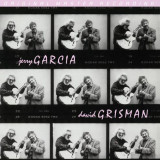
Unadorned with any post-production tricks or overdubs, Garcia/Grisman breathes with naturalism and presence. You will effortlessly detect the full body of the instruments, witness the woody grain textures, and get lost in the surprisingly velvety qualities of Garcia's lullaby-like singing. Our pressing also marks the first time this delightfully joyous affair has been issued in analogue form. You will never hear a better-sounding Americana-styled recording.
Pals since the mid-1960s, Garcia and Grisman bonded over their love for traditional folk and bluegrass. The two teamed up amidst what became a gold rush of top-notch productivity and creativity for Garcia. Partnering with bassist Jim Kerwin and percussionist/fiddler Joe Craven, the pair approaches every passage with innate ease, as if either musician could finish the others sentence. The affable chemistry and soothing interplay wash over a selection of songs as notable for their diversity as the way Garcia and "Dawg" turn them into the equivalent of old friends you haven't seen in years.
Exquisite melodies and jewel-shaped notes decorate the simple, convivial structures of tunes that hop, jump, skip, skitter, and bop. The atmosphere is reminiscent of the legendary gypsy-jazz exchanges between Django Reinhardt and Stephane Grappelli, and equally sharp. Swirling with Middle Eastern modality, the closing 16-minute-plus rendition of Grisman's rippling "Arabia" – complete with a section based on a Cuban fold theme - is alone enough worth the price of admission to this sensational session. But there's so much more.
The quartet delves into Celtic themes ("Two Soldiers"), jazz-grass ("Grateful Dawg"), old-world ballads ("Russian Lullaby"), and Appalachian flavours ("Walkin' Boss") with nonpareil skill and soulfulness. Garcia and Grisman's tandem picking throughout epitomize sublime. And for many listeners, the duo's revised version of the Grateful Dead staple "Friend of the Devil" ranks as the finest-ever recorded, the pace patient, the narrative vocals heartfelt, and the synchronous solos tailor-made for the enveloping progression. Better yet, it's all captured in astonishing fidelity.
"Listen to This." As the original working title for Bitches Brew, the instruction and invitation resonates to this day as the best way to approach a record that shattered conventions, altered music history, and, more than five decades after its original release, still sounds far ahead of its time. The aural Mount Rushmore of jazz fusion, Bitches Brew is rightly ranked by virtually every significant outlet among the 100 greatest albums ever made in any genre. Sewn together with vibrant colours, voodoo textures, and ethereal moods, the 1970 landmark emerges with supreme detail on Mobile Fidelity's definitive 180g 33RPM 2LP set.
Sourced from the original master tapes and pressed on 180g vinyl at RTI, this numbered-edition version of Bitches Brew joins the audiophile ranks of other essential Miles Davis sets reissued by Mobile Fidelity. Having established new possibilities for studio-recording techniques, the record can now be experienced to maximum degree by way of a pressing that widens and deepens the soundstage, opens up separation between instruments, and broadens the dynamic range. If ever a jazz album can be said to have gone to outer space and back, this is it.
Davis conceived Bitches Brew by having the musicians stand in a semi-circle, where he pointed at them with vague directions for tempo, solos, and cues. The collective improvisation and interplay spawned a galaxy of melodies and grooves later spliced together by producer Ted Macero. On this reissue, these creations take shape with utmost realism. Compositions stretch across black backgrounds and paint abstract canvasses on par with those of Axis: Bold As Love and Abraxas. Juxtaposed percussion, loose jams, and melodic segues explode with impressionistic verve.
And "verve" defines Bitches Brew. Gathering a Hall of Fame-worthy lineup of musicians and tweaking it according to his desires, Davis follows through on his idea to "put together the greatest rock and roll band you ever heard." Central to his proposition is the presence of two (and sometimes three) drummers and two bassists, a tactical move that thrusts rhythms into central focus. Akin to the futuristic album cover art, the drum-driven suites head toward distant universes and uncharted territories. At once hypnotizing and grooving, they chart maverick adventures with quixotic rock, funk, and R&B elements.
Conceptually, Davis described Bitches Brew as "a novel without words" and "an incredible journey of pain, joy, sorrow, hate, passion, and love." The vast psychedelic expanses of warped echoes, liquid reverb, and tape loops confirm such ambitious contrasts of light and dark, fear and hope. Yet the most absolute characteristic of this watershed effort lies in how it resists definitive interpretation and encourages free thought — the very principles with which Davis conceived the everlasting beauty and fascination that remain Bitches Brew.
In November 2021, Portland-born rapper Aminé released his latest project, TWOPOINTFIVE. The twelve-track release finds Aminé using the project to explore new sonic territory. This exploration is best evidenced by the project’s lead single "Charmander,” the video for which was lauded by GQ as the "Most Menswear-y Music Video of 2021" for its incredible styling and featured by Pitchfork as one of the best music videos of October 2021. After six months of anticipation, Aminé has prepared a vinyl offering for fans of the project to add to their collection for the very first time. Since its release, the album has amassed over 100 million streams and garnered praise from Billboard, Complex and Highsnobiety, in addition to the aforementioned support from Pitchfork and GQ. The vinyl will be sold online this summer and in-store with select retail partners. Speaking on the project, Aminé shares: "The POINTFIVE projects are the breaks in between albums where I give myself the freedom to make music without expectations, focusing instead of spontaneity and the best of what comes from stream of conscious creation, which is why they arrive unexpectedly without a long rollout. It’s an opportunity to create for my day one fans the way I used to in my bedroom. Thanks for listening." TWOPOINTFIVE takes inspiration from various strains of club and dance music, synthesized in a way that feels distinct to Aminé and his brand of clever lyricism. TWOPOINTFIVE acts as the second act to his 2018 project ONEPOINTFIVE, which is also lead with an introduction from Rickey Thompson and arrived in between Aminé's debut album Good For You and sophomore album Limbo. ONEPOINTFIVE solidified Aminé's status as a hitmaker in the modern hip-hop landscape with tracks like "REEL IT IN" and "BLACKJACK." Listen to TWOPOINTFIVE above and stay tuned for more from Aminé coming soon. Full Press Report PDF - Artist Bio - PR Report
In November 2021, Portland-born rapper Aminé released his latest project, TWOPOINTFIVE. The twelve-track release finds Aminé using the project to explore new sonic territory. This exploration is best evidenced by the project’s lead single "Charmander,” the video for which was lauded by GQ as the "Most Menswear-y Music Video of 2021" for its incredible styling and featured by Pitchfork as one of the best music videos of October 2021. After six months of anticipation, Aminé has prepared a vinyl offering for fans of the project to add to their collection for the very first time. Since its release, the album has amassed over 100 million streams and garnered praise from Billboard, Complex and Highsnobiety, in addition to the aforementioned support from Pitchfork and GQ. The vinyl will be sold online this summer and in-store with select retail partners. Speaking on the project, Aminé shares: "The POINTFIVE projects are the breaks in between albums where I give myself the freedom to make music without expectations, focusing instead of spontaneity and the best of what comes from stream of conscious creation, which is why they arrive unexpectedly without a long rollout. It’s an opportunity to create for my day one fans the way I used to in my bedroom. Thanks for listening." TWOPOINTFIVE takes inspiration from various strains of club and dance music, synthesized in a way that feels distinct to Aminé and his brand of clever lyricism. TWOPOINTFIVE acts as the second act to his 2018 project ONEPOINTFIVE, which is also lead with an introduction from Rickey Thompson and arrived in between Aminé's debut album Good For You and sophomore album Limbo. ONEPOINTFIVE solidified Aminé's status as a hitmaker in the modern hip-hop landscape with tracks like "REEL IT IN" and "BLACKJACK." Listen to TWOPOINTFIVE above and stay tuned for more from Aminé coming soon. Full Press Report PDF - Artist Bio - PR Report
Within the first few seconds of the opening song on Australian troubadour Peter Bibby's latest album, we get an unvarnished look at the man behind the music as he observes the late-night scene of a local watering hole with increasingly bleary eyes:"No one seems to want to talk to me / 'cuz I'm the arsehole, probably." Indeed, that lovable ambivalence is at the heart of Drama King, Bibby's fourth studio album for Spinning Top Records. The project was produced by first-time collaborator Dan Luscombe (The Drones, Amyl and the Sniffers) and mixed by White Denim's Josh Block a frequent collaborator with Leon Bridges. An artist who has been celebrated as inherently working-class and wholeheartedly independent, Bibby comes by this caution honestly, having cut his teeth in the rough-and-tumble underground rock scene centered around Perth's Hyde Park Hotel in Western Australia. Bibby's affable personality has gotten him plenty of mileage as a live act. He's toured the U.S. with Pond and performed at the infamous open mic night at Pappy and Harriet's in the California desert. He's also taken the stage at international festivals such as Laneway, Falls, All Points East, South by Southwest and South Africa's Rocking the Daisies while notching his fair share of rowdy headlining shows.
“Not a lot of people talk about the true origins of bluegrass music,” says Swamp Dogg, “but it came from Black people. The banjo, the washtub, all that stuff started with African Americans. We were playing it before it even had a name.” Blackgrass, Swamp Dogg’s remarkable new album, is no history lesson, though. Produced by Ryan Olson (Bon Iver, Poliça) andrecorded with an all-star band including Noam Pikelny, Sierra Hull, Jerry Douglas, Chris Scruggs, Billy Contreras, and Kenny Vaughan, the collection is a riotous blend of past and present, mixing the sacred and the profane in typical Swamp Dogg fashion as it blurs the lines between folk, roots, country, blues, and soul. The tracklist is an eclectic one—brand new originals and vintage Swamp Dogg classics sit side by side with reimaginings of ’70s R&B hits and timeless ’50s pop tunes—but the performances are thoroughly cohesive, filtering everything through a progressive Appalachian lens that nods to tradition without ever being bound by it. Special guests like Margo Price, Jenny Lewis, Justin Vernon, and The Cactus Blossoms all add to the excitement here, but it’s ultimately the 81-year-old Swamp Dogg’s delivery—sly and playful and full of genuine joy and ache—that steals the show. The result is a record that’s as reverent as it is raunchy, a collection that challenges conventional notions of genre and race while at the same time celebrating the music that helped make Swamp Dogg the beloved iconoclast he’s known as today.
The Dream Of Delphi is an ode to motherhood created in LA, Natasha’s second home, during the Covid-19 pandemic. It’s a sonic archive of a time when Natasha birthed her daughter Delphi earth side. The record weaves together ten song poems, documenting the polarity of navigating both an exterior world that was seemingly turning upside down, whilst also experiencing theprofoundly personal and transformational early moments of mothering Delphi, named after the Greek Oracle, the ancient future teller. The music became Natasha’s sanctuary, born out of stolen trips to the studio, where each track was improvised and completed in a few hours and chronologises her diary like offerings over a period of two years; from “The Midwives Have Left”; to writing a “Letter To My Daughter”; and all the way through to “Waking up”, as well as a cover of her daughter’s favourite song, “Home”.While the storytelling behind Bat For Lashes’ previous albums have traditionally used otherworldly narratives and female lead characters (e.g. ‘Laura’, ‘Daniel’ and ‘The Bride’), for the first ti me, The Dream Of Delphi is about Natasha’s personal experience of the magical and sometimes melancholy intimacy of early motherhood. This record creates a more private form of mythology around the music than her previous work. The Dream Of Delphi touches on more of an instrumental “Bat For Lashes” world, and shows Natasha to be both a confident composer and craftswoman of intimate landscapes. While the music creates a more womb-like, ambient space for the listener, it still leaves ample room for her signature dream pop songwriting to vibrate through. Natasha has worked with Brad Oberhofer, Mary Lattimore and Jack Falby on this record.
The Dream Of Delphi is an ode to motherhood created in LA, Natasha’s second home, during the Covid-19 pandemic. It’s a sonic archive of a time when Natasha birthed her daughter Delphi earth side. The record weaves together ten song poems, documenting the polarity of navigating both an exterior world that was seemingly turning upside down, whilst also experiencing theprofoundly personal and transformational early moments of mothering Delphi, named after the Greek Oracle, the ancient future teller. The music became Natasha’s sanctuary, born out of stolen trips to the studio, where each track was improvised and completed in a few hours and chronologises her diary like offerings over a period of two years; from “The Midwives Have Left”; to writing a “Letter To My Daughter”; and all the way through to “Waking up”, as well as a cover of her daughter’s favourite song, “Home”.While the storytelling behind Bat For Lashes’ previous albums have traditionally used otherworldly narratives and female lead characters (e.g. ‘Laura’, ‘Daniel’ and ‘The Bride’), for the first ti me, The Dream Of Delphi is about Natasha’s personal experience of the magical and sometimes melancholy intimacy of early motherhood. This record creates a more private form of mythology around the music than her previous work. The Dream Of Delphi touches on more of an instrumental “Bat For Lashes” world, and shows Natasha to be both a confident composer and craftswoman of intimate landscapes. While the music creates a more womb-like, ambient space for the listener, it still leaves ample room for her signature dream pop songwriting to vibrate through. Natasha has worked with Brad Oberhofer, Mary Lattimore and Jack Falby on this record.
Darning Woman is an intentional, beautiful, sometimes confrontational album that shreds expectations of DIY, bedroom music, and feminine themes. There's a lushness and maternal instinct at play, as Coope connects the dots between physicality, ephemera, and the ultrafeminine. "I don't really like to deal that much with themes of personal hardships, or heartache and love," says Anastasia Coope. "Ultimately, I work most honestly with the language of what is happening in a moment and the passage of time around it. That, coupled with my reaction to entering the artistic landscape, and my thoughts about what does and doesn't get representation, comprises most of this album." Darning Woman explores, among other things, the meditative aspect of sewing, patching and embellishment, care and repair, collection not as modern, craven consumption but as a counterpoint to materialism. This sort of collection - the good kind, the gathering of things to make a home - can be, in Coope's words, "A very baby way to critique capitalism. Birds make nests, right? It can be a new life for a thing that was made. What you surround yourself with matters." To that end, Anastasia Coope is also the founder and leader of the Bonzo collective and show series, an exciting new home for the type of expansive, profoundly creative scene that New York has been missing for some time. And while Bonzo may well be the ascent of a new community, Darning Woman is the story of Anastasia Coope, herself. It is the sound of Coope entering the world as an artist, acknowledging the tangle of what changes - the gaze of the world, Coope's art in reaction and community to art in general - and what does not: her ideas and her own self.
Darning Woman is an intentional, beautiful, sometimes confrontational album that shreds expectations of DIY, bedroom music, and feminine themes. There's a lushness and maternal instinct at play, as Coope connects the dots between physicality, ephemera, and the ultrafeminine. "I don't really like to deal that much with themes of personal hardships, or heartache and love," says Anastasia Coope. "Ultimately, I work most honestly with the language of what is happening in a moment and the passage of time around it. That, coupled with my reaction to entering the artistic landscape, and my thoughts about what does and doesn't get representation, comprises most of this album." Darning Woman explores, among other things, the meditative aspect of sewing, patching and embellishment, care and repair, collection not as modern, craven consumption but as a counterpoint to materialism. This sort of collection - the good kind, the gathering of things to make a home - can be, in Coope's words, "A very baby way to critique capitalism. Birds make nests, right? It can be a new life for a thing that was made. What you surround yourself with matters." To that end, Anastasia Coope is also the founder and leader of the Bonzo collective and show series, an exciting new home for the type of expansive, profoundly creative scene that New York has been missing for some time. And while Bonzo may well be the ascent of a new community, Darning Woman is the story of Anastasia Coope, herself. It is the sound of Coope entering the world as an artist, acknowledging the tangle of what changes - the gaze of the world, Coope's art in reaction and community to art in general - and what does not: her ideas and her own self.
Available on “Green Tea” colored vinyl, limited to 300. Remixed by Chris Teti & remastered by Kris Crummet for 10th Anniversary. Recommend If You Like: Prince Daddy & the Hyena, Into It. Over It., Blink-182. Maybe it always had to be this way. Posture & the Grizzly formed in Connecticut, in '08, and churned out a couple of demo tapes before dropping their debut LP in early 2014. Busch Hymns was scrappy and raw, all weed smoke and pent-up fury. Songs like "Egg Nog Drunk Off Hilary Duff's Piss" (yeah) and "You Know I Know What You Did Last Summer" exemplify the band's charm perfectly crystalline, wobbly leads ready to burst under bouncy hooks equal parts snarl and singalong. Just a glance at the tracklist lets you know what Posture & the Grizzly's all about: eight goofily titled songs in and out in eighteen minutes. Just in time for the LP's tenth anniversary, it's been given a remix by The World Is…'s Chris Teti, who originally produced and engineered the album back in 2013, along with remastering from Kris Crummett (Knuckle Puck, Dance Gavin Dance). Sometimes when an album like this is remastered, it loses some of its charm; the gloss crowds out the grit, the whole thing is recolored a bit too bright. But not so on Busch Hymns—these songs are crisper, but that doesn't mean they're cleaner. J. Nasty's throaty howls are as ragged as ever, but this time around they stand out against Piss Malone and Cabbage Pile's rhythm section, no longer straining for spotlight but basking in it. Their sound would get streamlined a bit over the course of their next two albums, I Am Satan and Posture & the Grizzly, replacing some of Busch Hymns's bite with a clearer-eyed sparkle and a newfound melodicism. Busch Hymns stands now as a document of the cult punks' early days, a transitional period from their throat-shredding demo days to their all-too-brief time as a pop-punk juggernaut. It's clearer than ever with the Busch Hymns remaster that Posture & the Grizzly was meant to sound like this, was meant for more than basement shows and beer-soaked floors. In this light, Busch Hymns is more than a transitional period; it's a glimpse into the greatness to come. So if you're sick of listening to modern punk too, then quit it. Listen to Busch Hymns instead
'The Singles Collection (The Spinefarm Years)' is a new luxurious compilation of singles by the legendary Finnish doom/death metal band Swallow The Sun. It focuses on the Spinefarm era of the band, which is to say their first six releases - five full-length albums and the 'Plague Of Butterflies' EP.
All of these full-lengths are represented with two songs (the singles) each on 12" singles, while the EP is included in its entirety on the same format, all of them including the original singles artwork and new liner notes provided by the band itself. The booklet pages and
lavish press photos in poster size were made especially for this boxset.
Two versions are available: a limited edition of 300 will come in variously coloured vinyl, and the remaining 700 will offer black
vinyl. In total, a limited and numbered edition of 1000 units which includes certificate of authenticity.
"Swallow the Sun is one of those bands that has created a notable amount of music over the years while remaining true to their
own unique sound. They have managed to consistently innovate their thoughtful voice while maintaining their originality." - Ghost
Cult Magazine
Two years in the making, 25-year-old Angelica Garcia's album Cha Cha Palace is the result of an artist's need to SAY SOMETHING. The second song on the record, "Jícama" might only be a minute and 25 seconds in its entirety, but the message spans generations and is one that resonates deeply for Garcia with her Mexican and Salvadoran roots. Singing/shouting, "I see you, but you don't see me Jímaca, Jímaca, Guava Tree_I've been trying to tell ya, but you just don't see, like you I was born in this country," Garcia tells the reality for millions of Americans unapologetically and with passion.That feeling of being between places is something Garcia knows well having been raised between multigenerational, multicultural, homes with step-parents and half-siblings. Additionally, she made the journey from the West Coast to the East Coast and back again multiple times before finally settling down in Richmond, Virginia.She fondly recalls Mexican ranchera music always playing throughout her childhood. Ranchera was ingrained within the maternal side of her family with her Mother, Grandmother, Uncle & Aunt constantly singing the traditional music throughout the home of her Grandparents.Like Mitski, Lorde, Billie Eilish, and Rosalía, Garcia isn't afraid to tear pages out of her diary and express emotions that might be difficult and oftentimes daunting to share given today's social and political environment. Like her peers, she joins a new chapter of musicians who are connecting with their audiences on a level that lives outside the reaches of technology, trends, and social media, the daily experience of feeling torn between saying something and doing something, for being a voice and speaking with your voice, of being Latina while being American. And it's humanity and honesty that audiences are looking for and will find in spades throughout each note of Cha Cha Palace.
The explorer Walter Maioli makes his most amazing adventure, the journey to the center of the Earth. Retracing the exploits of the Platonic demiurge, he identifies in the cave the deepest meaning of myth. Primordial sounds, not shadows, are at the center of this magical path straddling geology and Paleolithic polyphony. The recordings between 1985 and 2002 capture the sonic imperceptibility of the great subterranean womb, investigate the secret dialogue between the trickling of pond waters and the faint percussive reverberation of stalactites and stalagtites. Rocky sediments are played as tubular organs, glockenspiels, xylophones or stone marimbas. Crystalline timbral variations and subtle microtonal passages recall the chimes of Tibetan gongs and bells, of the scales of Java and Bali. Amidst muffled pauses and silences, trills and rings, echoes and tremolos, hisses and pops of vibration, Maioli builds his most imaginative niche of sound, a magnetic and telluric chant that is pure symphony and archetypal synaesthesia. Co-produced with Holidays Records.