Repress.
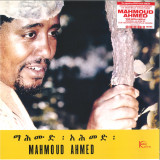
The re-release series of original Ethiopian classic vinyl continues -- the finest Ethio jazz by Mahmoud Ahmed and his band from 1975 plus two tracks from 1978.The liner notes: 'Melancholy blues, piercingly minimalist country airs, brassy, danceable urban jazz, heart-wrenching, off-key crooners: a rich and stirring patchwork of sounds, crossing Afro-beat, Latino-swing moves and Eastern arabesques (Ana�s Prosa�c).' Such were the first -- informed and enthusiastic -- opinions of the music press when the first strains of modern Ethiopian music sounded on our shores. This was in 1984-1985. Such a positive note, struck about such a country at such a time, created plenty of reverb. The country had been so thoroughly trashed by the media's feeding-frenzy, which spewed out a mix of horror and pious pity, bitter denunciation and humanitarian appeals, wallet-tickling clich�s and refusal of identity. In one brutal swoop, TV-reality transformed Ethiopia into a cursed nation, forsaken by God and by man. In contrast to these tragedies, but in the same hackneyed tones, Mahmoud Ahmed's life resembles an edifying fairy-tale where destiny, talent and achievement combine to triumph over poverty, fate and the evil eye. Biography, history and legend, with the help of God, infallibly weave the lesson of merit rewarded. But who can argue, in spite of the mockery that celebrities invariably draw, when faced with one of the greatest voices in all of Africa? Once upon a time, there was a street urchin in Addis Ababa, who started off as a shoe-shine boy and went on to become one of his country's biggest stars, opening the door to Ethiopian music to Western audiences. --Francis Falceto
quête:the arab
Paketo Wilson's 'Immigration' is a hymn to freedom from the Kingston, Jamaica-born artist. It first arrived on the Child of God label in 1982 and is one of the self-declared "positive rastaman"'s finest tunes. He was introduced to music by his father and through watching them play managed to pick up his own skills with no formal turning. His career began at age 16 when he played concerts all around the island with the New Vibration Band before going solo with Daddy U-Roy's King Stur Gav Sound System. Now back in its original form, 'Immigration' is a tune that remains as relevant now as ever.
A holy grail for fans of French boogie, early hip hop, Arabic funk and Balearic bops,"Ettika" has been seriously sought after since Vidal Benjamin found it in the 1€ bin back in 2006. Teasing the ears of the underground via Vidal's 'Balearic Nightmare' mix for Noncollective, copies of the original were soon snapped up completely, and the later adopters were sated by a Blackdisco edit from Alexis Le-Tan (himself gifted Vidal's second copy), which is now also rare as hen's teeth. The fervour for the track is easy to understand. Underpinned by an endlessly buoyant bass groove, chanted female vocals dart out the speakers like a post- modern mantra while synth vamps flare in stuttering stereo.
Middle-Eastern motifs add an air of mystery, but this truly belongs in a dance floor utopia. That the track was the product of a 'back-to-work' scheme aimed at unemployed immigrant youth in Rouen only adds to the appeal. Led by teacher Bernard Guégan, a quartet of students delivered lyrics in French and Arabic inspired by their rejection letters, serving a little social commentary and a lot of funk. If you're mad on Ahmed Fakroun and Shams Dinn, or even those folks in the Bush of Ghosts, then this is a must have for you.
Archeology isn't just about excavation, there should be interpretation too, and in this case it comes from Italian duo Hear & Now and Leeds' The Veteran Delinquents. The former furnish the 12" with two radical takes, the dreamy downtempo stroll of their French Remix - all unhurried percussion, Gilmour-riffing and coastal élan - and the peaktime pump of their Arab Remix, which transports the original vocal into a land of desert new beat and Balearic trance with a little space left for some frazzled fretwork. If you've followed their work with Claremont you know the quality on show.
The Veteran Delinquents, the collaborative vehicle of Leeds stalwarts Craig Christon and Tim Hutton, condense a lifetime of club experiences into their remix, establishing the infectious groove of the original before subverting with chugging bass and winking acid, all augmented with their own slick synth work. The original was an all time classic at Craig's Joe's Bakery nights way back when, and this new interpretation is both respectful and revolutionary.
'You've Changed' was a transcontinental creation that was first released in 1986 on the Sally B label. It melds Jamaican roots with Canadian electronic enhancements at the legendary Channel One Recording Studio. Jamaican reggae don Horace Martin drew inspiration from greats like Dennis Brown, and Horace Andy, and comedy legends like Richard Pryor and Charlie Chaplin and has an eclectic career spans albums like Watermelon Man from 1985 and this one, the avant-garde gem that arrives now on Arabusta. It's a busy and digitally infused reggae sound with elements of dance hall and plenty of catchy rhythms which all lead to international success, performances across 24 countries and having more than 400 songs aired on 9000 radio stations around the world.
''Sulla Rotta Dei Venti'' (On the Route of the Winds) is the brand-new album of Italian ska-jazz maestros North East Ska*Jazz Orchestra (NESJO). A collection of eleven own-penned original tracks, written and composed between 2020 and 2023, that frames a new chapter in the ten-year career of the band. In this record, NESJO bravely explores other worlds through music, which, as we know, is always also an inner quest. It is at the same time an effort to place their own music at the centre of the time and space in which they live, even at the cost of going beyond the stylistic limits linked to the band's chosen musical genre. Although, these new 11 cuts are built around rhythms that are undeniably of Jamaican origin, melodies are tainted with music from other traditions and sometimes also feature pop elements. Somehow, in this new album, NESJO has chosen to let the jazz big-band out of the orchestra pit and to mix with the popular sound of the street. Through the tracks of the record, NESJO creates mixed ensembles with the use of instruments such as strings, accordion, flute, clarinet, horn, tuba… together with the band's regular branding of sax, trumpets and trombones. Another novelty of this work is that the non-instrumental tracks are sung in Italian by the three singers Freddy Frenzy, Michela Grena and Rosa Mussin. And the musical journey takes us to exotic but at the same time very close sounds in 21st century Europe: Balkan (“Piazza Della Liberta”, “CiganSka #1”), Arabic (“Petrolio”), African (“Nimi Muzima”), Italian (“Roma Tokyo Paris”), and ska (“Donna Di Chi”) and a sophisticated ska-jazz suite (“Sulla Rotta Dei Venti”). The opening words of the first track of the album give us a glimpse of the feeling of vindication, brotherhood and hope contained in this set of songs: "Where is the empathy for those in difficulty / in the streets of Trieste that shout with vitality / indifference hearts of stone / dense black Balkan agony".
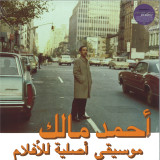
Habibi Funk is thrilled to share a second collection of deep grooves and unreleased songs from Algeria's Ahmed Malek, often compared to Italian heavyweight Ennio Morricone. Malek’s music effortlessly switches between thematic jazz, funk, reggae and Algerian folk – creating indelible soundscapes that intersect the musical innovations made in African jazz by Mulatu Astatke, Bembeya Jazz National along with some of Europe’s finest experimental composers like Piero Piccioni and Janko Nilovic. “Musique Originale de Films, Volume Deux” is out June 28th, 2024 via Habibi Funk.
Whenever an interview asks about a “memorable moment” in Habibi Funk label history, one we always reference is how we got in touch Ahmed Malek’s (22K Spotify Followers, 285K Spotify Monthly Listeners) music and subsequently his family. It all started with us coming across Ahmed Malek’s music on YouTube in 2012. We were mesmerized by how effortlessly the music would switch between jazz, funk and Algerian folk while counterweighting it with an undertone of melancholia. Musical perception is different for every person, but there is a chance that his music will touch you in one way or another. At the time, we had just started the Habibi Funk label and we felt Ahmed’s music might be a good fit for the sound we were trying to highlight. Fast forward three years: we had become captivated with the idea of reissuing some of Ahmed Malek’s music. We knew some people had tried to locate his family but, but with no success. In the end it was an incredible amount of luck that made it possible for you to read these words and listen to Ahmed’s music. We were on a DJ gig in Beirut playing old Arabic records and we mentioned our passion for Ahmed Malek’s music to a friend. She said she knew one person in Algier, and as much as it would be a shot in the dark, she could ask her if she had an idea of how to find Malek’s family. Two weeks went by before we heard back, and what we got was incredibly good news - her Algerian friend was the neighbor of Ahmed Malek’s daughter! We’re not spiritual people, but it felt like the universe wanted to see the release happen. We started to speak with Henya, Ahmed Malek’s daughter and she was more than happy with our idea. She assured us that her father would have loved the plan as well. She provided us with tons of awesome material, from great photos, to unseen video footage and unreleased tracks. Eventually we visited Henya in Algeria and we licensed some of her father’s music, first for one (Habibi 003), then for another (Habibi 005), then we eventually organized an exhibition in June/July 2019 – Planète Malek – Une Rétrospective – at the Musée Public National D’Art Moderne & Contemporain in Algiers, focusing on Ahmed Malek’s artistic life. We also produced a small movie about him that our friend Paloma Colombe shot and directed. “Musique Originale de Films, Volume Deux” is a deep collection of unreleased songs and stemmed grooves from the Algerian master, from jazz, funk, psych to reggae rhythms and Latin flavors, all under the sonic umbrella of “Planète Malek;” and to quote the maestro, “I didn’t choose music, music chose me.” Lead single is the subtlety funky “Thème Rythme Léger,” out May 3rd along with LP Pre-Order (coincided with Bandcamp Friday for a larger impact) a delicate sonic dance between flute, piano and Spanish guitar with a Bossainfluenced groove. The steady, swingin’ drum groove is cloudlike - definitely toe-tapping friendly so just grab a partner to feel the Rhythme Léger. Second single out May 17th is the reggae-infused “L’Empire Des Rêves” – a sultry sax melody weaves through a prismatic rocksteady thematic groove. 3rd and final single “Thème Djalti feat. Aïda Guéchoud” – is a true Western-inspired ode to his Italian counterpart Ennio Morricone. “Thème Djalti” features the haunting vocals of Aïda Guéchoud, and combines elements of baroque and Bossa-jazz in a timelessly thematic way that seems grandiose yet remains uniquely personal to your ears. Swelling strings, trumpet, fem vox, flute, and plucked guitar expertly arranged, feels like you’re riding a horse into the sunset. Focus track “La La La” is fiery afro-arab-funk of the highest order! Put on your dancing shoes as Ahmed cuts the rug and gets us grooving along. Sonically the cut sounds like if Ahmed ran into The JB’s and Fela Kuti at a Cymande concert. Driving guitar and organ solos vie over pulsating bass riffs and afro-funk drumming that’ll have you out on the dance floor in no time. As always, both vinyl and CD come with an extensive booklet featuring background and interviews with Ahmed compiled through found newspaper clippings and newsreels, also including unseen photos, scans and more. “Ahmed Malek: Musique Originale de Films, Volume Deux” will be out everywhere June 28th.
When speaking of Keinemusik as the performing unit featuring Rampa, &ME and Adam Port, one easily can assume the last months being quite momentous. Wherever you look on the globe, chances are one of their frenetically celebrated shows has been taking place there just recently. And the prospects of the upcoming months are looking even brighter. That’s where this highly anticipated new single comes in. Emotively reminiscing all the past touring memories and building up momentum for the ones to come, „Thandaza“ boils down the Keinemusik sentiment to the essence, shaping yet another one of those set-highlights that will turn heads and hips alike. And for this one, they brought in congenial assistance by South African producer Arabic Piano, gracing the tune with his heartwarming croon and old companion Alan Dixon providing one of his utmost catchy and touching piano lines.
Over the past decade, Kasra V has blossomed as a prominent figure in the music industry, particularly through his renowned residency on NTS Radio which has expanded his profound knowledge and expertise in music. Since landing his radio residency in January 2014 he has successfully broadcast over 200 radio shows, making use of the format to explore a wide array of sonic attitudes, styles and systems. To celebrate his achievement Kasra V launches his own imprint V-Sion which he will not only use for his own release output but also to propel his vision of contemporary dance music. To kick things off he presents a stunning 9-track compilation '10:10 Kasra V presents 10 years on NTS Radio' featuring unreleased tracks from some of his most revered guests who have graced his show throughout the years. Each contribution is wholly in line with Kasra V's genre-spanning approach. Over the years some periods have seen him playing straightforward club music, others featuring an extended notion of listening music. One hears a whole breadth of influences in his releases on acclaimed labels such as Radiant Records and Shaytoon Records: collected strands of rave, acid house, San Francisco breakbeat, new beat, ambient, oddball pop from 90s and 80s, UK bleep and so on. The regularity of a broadcasting residency pushed him to carry out a constant study of the history of dance music, and he envisions V-Sion as an output to curate musical output, contributing to the ongoing dialogue between past, future and the ever-changing fulcrum of the sonic present. The tracks presented on 10:10 are also emblematic of this historically-informed approach to dance music. They are all tuned for the floor, but present a range of possible floors to conjure: Fantastic Man's progressive opener, "Neural Filter", is airy and laced with delicate breakbeats, while "Archangel Waltz" by Sepehr presents a shadowy drama of string samples and throbbing bass swells."Qadak" by 500SEC lays an anthemic Arabic melody over bubbling electro; 2 tracks prior, Angel D'Lite circulates a whisper and moan through the mix of a euphoric, rave-stabbed anthem. The latter encouraged Kasra to put out this very compilation, which is just a testament to the value of the company we keep.
- A1: As Can Be
- A2: My Smile Is A Rifle
- A3: Head (Beach Arab)
- A4: Big Takeover
- A5: Curtains
- A6: Running Away Into You
- B1: Mascara
- B2: Been Insane
- B3: Skin Blues
- B4: Your Pussy's Glued To A Building On Fire
- B5: Blood On My Neck From Success
- B6: Ten To Butter Blood Voodoo
- C1: Untitled #1
- C2: Untitled #2
- C3: Untitled #3
- C4: Untitled #4
- C5: Untitled #5
- C6: Untitled #6
- C7: Untitled #7
- C8: Untitled #8
- D1: Untitled #9
- D2: Untitled #10
- D3: Untitled #11
- D4: Untitled #12
- D5: Untitled #13
2024 Repress
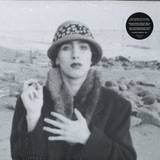
Niandra LaDes And Usually Just A T-Shirt is the first solo record by John Frusciante. Between 1990 and 1992 the guitarist made a series of 4-track recordings, which at the time were not intended for commercial release. After leaving the band Red Hot Chili Peppers in 1992, Frusciante was encouraged by friends to release the material that he wrote in his spare time during the Blood Sugar Sex Magik sessions.
Originally released on Rick Rubin's American Recordings label in 1994, Niandra LaDes is a mystifying work of tortured beauty. Frusciante plays various acoustic and electric guitars, experimenting with layers of vocals, piano and reverse tape effects. Channeling the ghosts of Syd Barrett and Skip Spence, his lyrics are at once utterly personal and willfully opaque.
Frusciante's rapidfire, angular playing shows how key he was in the Chili Peppers' evolution away from their funk-rock roots. His cover of "Big Takeover" perfectly deconstructs the Bad Brains original with laid-back tempo, twelve-string guitar and a fierce handle on melody.
The album's second part - thirteen untitled tracks that Frusciante defines as one complete piece, Usually Just A T-Shirt - contains several instrumentals featuring his signature guitar style. Sparse phrasing, delicate counterpoint and ethereal textures recall Neu/Harmonia's Michael Rother or The Durutti Column's Vini Reilly.
On the front cover, Frusciante appears in 1920s drag - a nod to Marcel Duchamp's alter-ego Rrose Sélavy - which comes from Toni Oswald's film Desert in the Shape.
This first-time vinyl release has been carefully remastered and approved by the artist. The double LP set is packaged with gatefold jacket and printed inner sleeves.
Dudu Tassa, einer der führenden Rockstars Israels, ist der Enkel des kuwaitischen Musikers Daoud Al Kuwaiti, dessen musikalische Zusammenarbeit mit seinem Bruder Saleh, den Al Kuwaiti Brothers, in der arabischen Welt zwischen den 1930er und 1950er Jahren berühmt wurde. Dudu Tassa & The Kuwaitis eröffneten vor einigen Jahren das Coachella-Festival und wurden auch von Radiohead als Vorgruppe auf einer ihrer US-Tourneen ausgewählt. Die Brüder Al Kuwaiti gehörten in der ersten Hälfte des 20. Jahrhunderts zu den größten Komponisten und Musikern in Bagdad. Dudu Tassa hat einige der Aufnahmen der Al Kuwaitis aufgenommen und sie zu seinem eigenen Sound weiterentwickelt und modernisiert. Diese neue Version des Albums enthält zwei Bonustracks, darunter eine Live-Version von 'Eshrab Kasak Withana' (feat. Jonny Greenwood/Radiohead/The Smile).
- A1: Have To Whack It Up
- A2: A Leaping Beauties For Rudy
- A2: B Marcus Junion
- A3: A Xhorkam (Medley)
- A3: B Ramadhan
- A3: C In The Snow For A Blow Part I
- A3: D Better Git It In Your Soul
- A3: E Part Iii
- A4: Uno Tansito Clapori
- B1: A Gum Arabic
- B1: B Confucius
- B2: Nymphenberger
- B3: A Habibi Baby
- B3: B Boehm Constrictor
- B3: C Beast Of Sweden
- B4: Traditional: Arranged By East Of Eden
The new album from Lebanese-American musician Solpara, Melancholy Sabotage, marks his full length debut and return to Nicolas Jaar's Other People label. While it was recorded over Covid lockdowns, Jaar had been talking about wanting to back a Solpara full-length since he put out Swing. The album came to life while Solpara was living alone in a Brooklyn loft, collecting unemployment checks and viewing ample free time as the artist residency he'd dreamed of; he'd previously been forced to make music in odd windows between numerous jobs and the unmerciful pace of city life. Free from obligations, he would wake up early to take Arabic lessons online, read Tracey Thorn's autobiography, and skateboard the deserted streets, then come home and design sounds until he had a track that felt like it needed to be released. While this easy going lifestyle was peaceful in many ways, Solpara found more complex inspiration in the emotion that stemmed from participation in Black Lives Matter protests and the 2020 Beirut Port explosion, which rocked all of his extended family members in Lebanon.
Melancholy Sabotage explores the theme of sabotaging melancholy. Echoing sounds from the post-punk, trip-hop, and ambient genres, it is about sabotaging the cycle of melancholy and looking at this process without ignoring the sources that put it into motion. It may be compared to a rattling breaking free from retention, reaching states of dreamy euphoria while simultaneously acknowledging the sources of retention, viewed from above. The sources can be personal, political, or socio-economic. They are to be apprehended post-melancholy, after the sabotaging of the initial cycle of melancholy. In other words, it is about transcending melancholy and understanding where it came from with some distance. It may be beautiful and healthy to feel for a while, but how may one sabotage this cycle when it becomes paralyzing? Ultimately, this album is about feeling melancholy but also resisting it and naming the sources that initiated it.
"Time To Hold Better" points to neglect on both personal and group levels. "This Time Last Year" is a personal time capsule. "We Keep Us Safe" is about solidarity, autonomy, and care witnessed within protest groups. "Melancholy Sabotage" is a sonic exploration of the album concept illustrating anger and sadness, but finally, resistance and liberation from these feelings. "Measures" is a more fluid exploration of the latter after the initial storm has passed. "We Don't Owe" points to bigger bodies inflicting harm on populations that we owe nothing to. "Breaking Points" harkens the times that we may lose focus while pushing to transcend melancholy. "Eviction" is about being pushed out of a space unwillingly while simultaneously being forced to move forward.
Melancholy Sabotage pulls from a range of genres, uniting electronic sounds under the same post-punky glow. It pulls from complex, heavy themes including damage and injustice, presenting Solpara's most moving body of work to date. It highlights the poignance that has always been at the heart of his fluid sound, which caters to dancefloors and avant-garde spaces in equal measure. Working with a mix of dissonant guitars, distorted drum machines, and distant, reverb-washed vocals, Melancholy Sabotage is Solpara's uneasiest outing to date. The record pinpoints the duality at the heart of Solpara's sound, which is as plaintive as it is searing.
Auf ihrem selbstbetitelten Debüt machten sich WOMEN über eine gewisse lärmende Rotzigkeit her, die sich bei näherem Hinsehen als getränkt mit listigen Popmelodien entpuppte. Mit "Public Strain" macht sich die Band einen Sound zu Eigen, der diesem halldurchtränkten Noise treu bleibt, es den Popmelodien aber doch erlaubt, sich im Rampenlicht zu sonnen. Im Herbst 2009 begaben sich Patrick Flegel (Gesang/Gitarre), Matt Flegel (Bass/Gesang), Chris Reimer (Gitarre/Gesang) und Michael Wallace (Drums) mit einer Vielzahl Ideen ins Studio und arbeiteten um ihre individuellen Zeitfenster und Schichten auf dem Friedhof herum. CHAD VANGAALEN zeichnet sich einmal mehr für die Produktion verantwortlich, mit dessen Hilfe WOMEN sich die Mühe machten, im tiefsten Winter Kanadas ein Album aufzunehmen, das zeitlos klingt. Am Ende erscheint die knirschende, harsche Dissonanz in kleineren, kontrollierteren Dosen; Noise erscheint als Fundament des strukturierten, mehrere Schichten umfassenden Songwriting. Von den ersten Takten von "Can't You See" an ist klar, dass "Public Strain" so viel mehr ist als nur die Fortsetzung des Debüts. Manchmal ist das Album klaustrophobisch und beschwört Wachträume von sexueller Seelenpein und allgemeinem Zerfall herauf; anderswo schwingen sich Retrogitarren und Gesangsmelodien gen Himmel oder kollabieren in faszinierenden Arabesken. "Public Strain" kämpft sich durch Schlaflosigkeit, Paranoia, Resignation und Euphorie, um die Momentaufnahme einer Band einzufangen, die sich gerade genau im Klaren darüber ist, was sie leisten kann.
- A1: James Clay - New Delhi
- A2: Werner-Rosengren Swedish Jazz Quartet - Bombastica
- A3: Sal Nistico Quintet - Ariscene
- B1: Frank Strozier - The Crystal Ball
- B2: Cannonball Adderley Sextet - Primitivo
- B3: Blue Mitchell - Turquoise
- C1: Sonny Red - The Mode
- C2: Clifford Jordan - Sunrise In Mexico
- C3: Lee Konitz Quintet - Thumb Under
- D1: Mccoy Tyner - Valley Of Life
- D2: Joe Henderson - Earth (Feat Alice Coltrane)
Vol.8 PT2[26,01 €]
Vol.9[22,14 €]
Vol.1[23,49 €]
Vol.13 PT2[23,40 €]
Vol.13 PT1[23,49 €]
Vol.15[26,47 €]
Since 2008 our Spiritual Jazz series has presented unlimited horizons. Each album celebrates the rich tradition of African-American songs based on the belief in a higher force than oneself and has also focused on geographical areas, such as Europe or Japan, thus recognizing that these territories have immense cultural riches. Religions, like Islam, whose musical traditions have vivid Arabic and North African resonances, have also been highlighted. The stylistic range of all the above is wide.
Yet historic record labels, from Blue Note and Impulse! to Prestige and Steeplechase, have also featured because their catalogues are musical treasure troves that could not be more relevant to Spiritual Jazz, even though they issued vast amounts of music between the late '30s and present day, that have not been confined to any one school.
Spiritual Jazz 16 is a focus on Riverside and its associated sister labels. Riverside itself was founded in 1953 by Orrin Keepnews and Bill Grauer, and became an important purveyor in that decade and beyond of what would be marketed as of modern jazz. That coinage was itself an amorphous, umbrella term that essentially created a demarcation from the vocabulary of pre-war classic jazz and inter-war big band swing, thus recognizing that improvising artists were breaking new creative ground that would subsequently give rise to a flurry of sub-genres, for example bebop, hard bop, cool, modal and Latin jazz. And it's from this multiplicity of sub-genres that we choose the deepest, most vibrant selections that the vast, pan-generational catalogue of Keepnews & Grauer has to offer
A holy grail for fans of French boogie, early hip hop, Arabic funk and Balearic bops,"Ettika" has been seriously sought after since Vidal Benjamin found it in the 1€ bin back in 2006. Teasing the ears of the underground via Vidal's 'Balearic Nightmare' mix for Noncollective, copies of the original were soon snapped up completely, and the later adopters were sated by a Blackdisco edit from Alexis Le-Tan (himself gifted Vidal's second copy), which is now also rare as hen's teeth. The fervour for the track is easy to understand. Underpinned by an endlessly buoyant bass groove, chanted female vocals dart out the speakers like a post- modern mantra while synth vamps flare in stuttering stereo.
Middle-Eastern motifs add an air of mystery, but this truly belongs in a dance floor utopia. That the track was the product of a 'back-to-work' scheme aimed at unemployed immigrant youth in Rouen only adds to the appeal. Led by teacher Bernard Guégan, a quartet of students delivered lyrics in French and Arabic inspired by their rejection letters, serving a little social commentary and a lot of funk. If you're mad on Ahmed Fakroun and Shams Dinn, or even those folks in the Bush of Ghosts, then this is a must have for you.
Archeology isn't just about excavation, there should be interpretation too, and in this case it comes from Italian duo Hear & Now and Leeds' The Veteran Delinquents. The former furnish the 12" with two radical takes, the dreamy downtempo stroll of their French Remix - all unhurried percussion, Gilmour-riffing and coastal élan - and the peaktime pump of their Arab Remix, which transports the original vocal into a land of desert new beat and Balearic trance with a little space left for some frazzled fretwork. If you've followed their work with Claremont you know the quality on show.
The Veteran Delinquents, the collaborative vehicle of Leeds stalwarts Craig Christon and Tim Hutton, condense a lifetime of club experiences into their remix, establishing the infectious groove of the original before subverting with chugging bass and winking acid, all augmented with their own slick synth work. The original was an all time classic at Craig's Joe's Bakery nights way back when, and this new interpretation is both respectful and revolutionary.
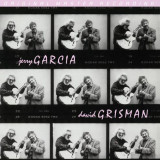
Unadorned with any post-production tricks or overdubs, Garcia/Grisman breathes with naturalism and presence. You will effortlessly detect the full body of the instruments, witness the woody grain textures, and get lost in the surprisingly velvety qualities of Garcia's lullaby-like singing. Our pressing also marks the first time this delightfully joyous affair has been issued in analogue form. You will never hear a better-sounding Americana-styled recording.
Pals since the mid-1960s, Garcia and Grisman bonded over their love for traditional folk and bluegrass. The two teamed up amidst what became a gold rush of top-notch productivity and creativity for Garcia. Partnering with bassist Jim Kerwin and percussionist/fiddler Joe Craven, the pair approaches every passage with innate ease, as if either musician could finish the others sentence. The affable chemistry and soothing interplay wash over a selection of songs as notable for their diversity as the way Garcia and "Dawg" turn them into the equivalent of old friends you haven't seen in years.
Exquisite melodies and jewel-shaped notes decorate the simple, convivial structures of tunes that hop, jump, skip, skitter, and bop. The atmosphere is reminiscent of the legendary gypsy-jazz exchanges between Django Reinhardt and Stephane Grappelli, and equally sharp. Swirling with Middle Eastern modality, the closing 16-minute-plus rendition of Grisman's rippling "Arabia" – complete with a section based on a Cuban fold theme - is alone enough worth the price of admission to this sensational session. But there's so much more.
The quartet delves into Celtic themes ("Two Soldiers"), jazz-grass ("Grateful Dawg"), old-world ballads ("Russian Lullaby"), and Appalachian flavours ("Walkin' Boss") with nonpareil skill and soulfulness. Garcia and Grisman's tandem picking throughout epitomize sublime. And for many listeners, the duo's revised version of the Grateful Dead staple "Friend of the Devil" ranks as the finest-ever recorded, the pace patient, the narrative vocals heartfelt, and the synchronous solos tailor-made for the enveloping progression. Better yet, it's all captured in astonishing fidelity.
Active since 2001, Ayyuka was one of the first bands to look back at 70’s Turkish music to find a new voice. Not caught up in the Retromania but reincarnating Turkish Psychedelic within their own style, the band managed to develop an unmistakeable unique sound. Inspirations of Dick Dale, John Frusciante, and local heroes like Erkin Koray, Orhan Gencebay, make their music more guitar oriented but their fascination with film music and improvisation creates unexpected twists within their songs. Right after their eponymous debut in 2007, the band shared stage with Sonic Youth and Jonathan Richman. Heading to a completely instrumental music, their 3rd studio recording “Sömester” had already become a cult album for record collectors. They’ve collaborated with Orlando Julius, Ilhan Ersahin and had guests on almost every album. Their latest full length “Maslak Halayı” was a creative collaboration with Calibro35 genius Tommaso Colliva. The worldwide hype of "Yukadans” will now be followed by their upcoming EP "Zaman Ziyan”, showcasing four brand new instrumental tracks that will transport listeners through a kaleidoscope of musical landscapes, experimenting with techniques of music writing and flirting with genres like afro-beat, funk, dub or arabesque. Save the date for their very first performance of these, live at babylon, as a part of Akbank Jazz Festival.
Born in Beirut, Lebanon, Rami Gabriel has been a motive force in rock n' roll, jazz, Arabic, and experimental music communities across North America for over twenty years. In that time, he has released numerous projects across genres and under many names. On his debut LP for Sooper Records, Rami trips all the breakers. In his own name and voice for the first time, That's what I been sayin' is not so much a debut as a conflagration in Rami Gabriel's worldly underground. Drawing on Punk, Krautrock, Dub, No Wave, and lo- fi, the territory occupied by That's what I been sayin' is astringent, minimal, and buzzing with the sound of machines dancing in the wind. "I'm used to putting out records based on genre," says Rami of his multiple endeavors. "I was listening to one of the `70s Brian Eno records where he took his experimental work and his songs and put it all together, and I was thinking, `Why don't I try to put all the different ways I've been working for the last couple years onto one record?'" That's what I been sayin' ignites this vision with an album that ranges from the motorik-driven krautrock of "Like a monk" to the unexpected trance-like pairing of "Buzuq synth." That's what I been sayin' is a furnace of Rami's insuppressible impulses, where he undertakes to ask and answer: what is left of punk but making do with what is at hand? At times direct and scorching, at others meditative and wandering, That's what I been sayin' compresses Rami's understanding as a composer, musician, and singer into a restless, 11-track love letter to the underground. For Fans of The Fall, Haruomi Hosono, Brian Eno, and Scientist.
- A1: Al Muqademah 1 (Introduction 1)
- A2: La`lan (Advertisement)
- A3: Mashad Al Fahes (Examination)
- A4: Tango
- A5: Break
- A6: Al Muqademah 2 (Introduction 2) - Inst
- A7: Al Muqademah (Introduction) - Inst
- A8: Tagheer Awal (First Change)
- A9: Oghniyat El Shahadeen
- B1: Tagheer Thani (Second Change)
- B2: Al Piano
- B3: Tagheer Thaleth (Third Change)
- B4: Al Jeel (The Generation)
- B5: Hake Ad Ma Baddak Fee
- B6: Oghniyat El Gharam
- B7: Mashhad Al Hob
- B8: End Of Chapter 1
- B9: Kabbaret Dancing
- B10: Kbareah Wa Mhajjaren
- B11: Slow
- B12: Mashhad Al Serk
- B13: Final - Al Adala
Wewantsounds is delighted to announce the reissue of Ziad Rahbani's cult album "Amrak Seedna & Abtal Wa Harameyah," one of his praised albums from the 80s, released on the sought-after Lebanese label Relax-in in 1987. This release is an event as the album, recorded at Rahbani's By-Pass studio, was only released in Lebanon at the time. Mixing Arabic music with Funk and Fusion Jazz and hints of Boogie, it's a bonified Rahbani classic, sought after by Arabic groove DJs and collectors around the world. The reissue features audio remastered by Colorsound Studio in Paris and a 2 page insert with a new introduction by Mario Choueiry from Institut du Monde Arabe in Paris (English/French).
Nach ihrem von der Kritik gefeierten UK-Top-20-Album 'As Days Get Dark' kehren Arab Strap mit ihrem zweiten Album für Mogwais Rock Action Records zurück, das den treffenden Titel 'I'm totally fine with it don't give a fuck anymore' trägt. Fast 28 Jahre nach ihrem Debüt klangen Arab Strap noch nie so essentiell, so unentbehrlich wie jetzt, und dieses neue Album ist ein glühender Beweis für ihren Laserfokus auf breitere Horizonte. Das Album, das ausschließlich von Malcolm Middleton und Aidan Moffat geschrieben und eingespielt wurde und an dem auch Paul Savage, ein langjähriges Mitglied der Band, mitgewirkt hat, unterstreicht die Wandlung der Band von melancholischen Slow-Core-Romantikern zu wütenden Alt-Pop-Chronisten.