Solipsism is an archival release of music from Mike Simonetti's
tenure as owner of Italians Do It Better Records, spanning from
2006-2013. During that time Mike wrote a lot of music. Some of it
was used for films, some for TV commercials, some for fashion
shows and he even released a record or two.
Influenced by the intersection of 80's arena rock bands like AC/DC and Judas Priest, glam rock/dance bands like Rockets and Supermax, and especially the underground Italian producer Piero Umiliani - the album is chock-full of atmospheric rock-inspired arpeggiated riffs. The mixture of metal and chugging dance music makes for a unique listening experience. Every song has a riff, every song is heavy and dense. Only one song goes above 118 BPM. These are heavy chuggers that make for a tense emotional experience that exceeds your standard, easy-to-write-off 'soundtrack' fare, mainly because it was never written with that in mind. It was meant to be a fist-pumping arena rock inspired thumper! You can hear that in the one two punch of 'A Prayer For War' into 'Illusions", which is an outtake from his "The Magician"
sessions. Other songs like 'Solipsism' showcase the airy melodies
of that were to come with his other project Pale Blue, but that is
not typical on this album. If you listen closely, you can hear how
Simonetti's music and dark vibes inspired his then label partner
Johnny Jewel to take his own bands Chromatics and Glass Candy in a different, more cinematic direction.
This was written and recorded years before the Drive soundtrack and all the hoopla around the sudden soundtrack resurgence. In
2011 Mike was asked to submit some songs for a soon to be
released Hollywood remake. He submitted most of the songs from this album, and they were slated for release on the soundtrack,
but the project fell apart, and the film went in a different direction
and changed producers. Soon after, because of all the drama and foolishness, he left Italians Do It Better to start over with 2MR and Pale Blue. This is the nail in the coffin. Godspeed.
Search:the arc
4th album from Dutch electronic duo Tangent .
Limited Edition 180gm Orange vinyl LP w/DL of full CD tracklisting.
Previous coverage from Arctic Drones, Collective Zine, Igloomag, Soundblab
Approaching Complexity is the fourth album from Netherlands based ambient-beats duo Tangent.
This follow-up to 2016s Collapsing Horizons finds the duo expanding their sound by adding reoccurring expressive piano themes to their composite of skyward ambience and unfolding beat formations.
The album is said by the duo of Ralph van Reijendam and Robbert Kok to be 'about the transition from basic forms to complex struc- tures which are often seen in nature during the transi- tioning of seasons.' They add that 'Life awakens from hibernation and evolves from being introverted to becoming extroverted, even building upon the remnants of previous cycles and evolving into new realms.'
Approaching Complexity for Tangent is all about their evolution as progression has been a clearly defined constant in their output as a whole. Each work effort- lessly transitioning unto its predecessor.
OTHER TITLES FROM TANGENT
- MD248 / Collapsing Horizons / LP
As usual ! Vinyl Only !
For the 3rd release, we are more than happy to welcome the legendary John Tejada alongside his forever partner in crime Arian Leviste. We asked this special duo to dig in their archives and here's what they delivered ! 4 Old school flavoured bomb tracks !
- A1: Stamkoko -Izintombi Zesi Manje Manje (1965)
- A2: Udali - Maphela (1960)
- A3: Sabela - Maphela (1960)
- A4: Usana Lwam - Mississippi Brothers & Beauty Diloane (1940)
- A5: Ukhiye - Susan Gabashane & Her Honeybees (1960)
- A6: Ukuhlupheka - Susan Gabashane & Her Honeybees (1960)
- A7: Umsakazo E Grahamstown - Alabhama Kids (1960)
- A8: Lizzy - Mississippi Brothers (1940)
- A9: Asinamali - Alabhama Kids (1960)
- B1: Baboon Shepherd - Black Duke & Peter Makana (1950)
- B2: Battle Of The Flutes - Black Duke & Peter Makana (1950)
- B3: Shukuma Duke - Black Duke (1950)
- B4: Duke Blues - Black Duke (1950)
- B5: Black John - Peter Makana (1950)
- B6: Blood Mixture - Peter Makana - (1950)
- B7: Egoli Zinyozi - Alfred Dlezi & Dlamini (1950)
16 early vocal & jazzy tunes from the Golden Age of Jive & Kwela in South Africa. Released originally on fragile shellac discs only. Shellac is a very delicate material but the music survived thanks to the archives of ILAM. A truly great source of South African music is being preserved here for new generations, to inspire young and hopeful musicians and singers from all over the world. 180gram vinyl.These pearls of musical genius were recorded in the glory years of jive and kwela, the years 1940-1965 . On side A it is not difficult to recognise the similarities to American popular music like R&B and small combo close harmony singing.
But most of all notice that typical South African swing, that jive, that incredible smooth form of African jazz on side B; Kwela!
The rarest and most treasured finds are collected here, some with the original spoken intro's, 'sketches' as these were called. Characteristic conversations between the musicians, often in a humoristic slang, always extremely funny.
Now available as the fourth issue in the series 'Township Jive & Kwela Jazz'.
The Strictly Rhythm imprint is legendary and is instantly recognisable by connoisseurs worldwide. It's a label that has contributed time and time again to dance music culture across it's almost 30 year lifespan. Countless classics passed through the NYC offices of Mark Finkelstein and Gladys Pizarro and this brand new 'Strictly Classics' series looks to celebrate this cornerstone dance label and it's immense catalogue by going back to the archives and presenting some double-header action for diehard fans and newcomers alike. That's right, the 'proper' mixes, reissued from source and remastered to the highest spec, each track spread across one side of a 12" for optimal sonic playback.
Number 3 in the series kicks off on a proper old-school tip with CLS' mammoth 'Can You Feel It' from 1991, a collaboration between Todd Terry and Benji Candelerio CLS made a huge and lasting impression with this euphoric and anthemic slab of dancefloor madness. Instantly recognisable from it's ravey riff and funky drum programming, file this one under 'rave classic'! Over on the flip side we have South Street Player's smoothed out '(Who) Keeps Changing Your Mind', a rolling and deep jam from Roland Clark and George Morel that came out in 1993. This one's some lights down, honest to god soulful house music, skipping garage drums and that organ driven groove offer the perfect vehicle for Clark's gorgeous vox to soar over. Yet another set of absolutely essential SR cuts from the archive!
Remastered with love by Optimum mastering, Bristol from original master sources. Made in conjunction with Strictly Rhythm 2018.
Out from electronic live improvisations , the first Ep of Destino starts with a
Clusterish ambient track (Orion)...
So DJ friendly , 911's siren and bleeps redefines the archetypical disco flavor of a
101 floor filler track .
Ceremony and it's balearic feeling will strongly warm up your electronic summer
nights.
Finally Loopo up delivers a dark electronic disco groove for cosmic dancers.
-Previous releases or remixes for Partyfine, Colette, Dfa, kill the dj, Tigersushi, Ed banger
*Repress*
The Future Sound of London's long and varied history stretches back almost 25 years and as such a vast amount of unrealised material exists in the FSOL Archives.
1988 to 2018 - 30 years of recorded history
Archived 9 brings further treats from the mammoth FSOL archives - this time ranging from early 90s right up to recent times.
14 unreleased tracks woven together to form over 60 mins of mind bending sound experiments
From light to darkness from forests to deserts
onwards............
Did you know - The Future Sound of London were the first band to distribute their music via the internet, in 1994
Did you know - The Future Sound of London were the first band to use ISDN technology to transmit their music via the internet and also to radio stations across the world - a system that has now been adopted by the radio industry worldwide
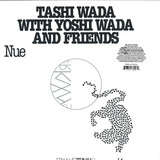
Composer Tashi Wada has performed for years with his father Yoshi Wada—artist, composer, and early member of the Fluxus movement. However, they have rarely appeared together in studio settings. Nue, the fourteenth entry in RVNG Intl.'s intergenerational FRKWYS series, finally brings Tashi and Yoshi, along with an eclectic group of close friends and extended family, together on tape.
Nue draws on aspects of Tashi's background for his widest vision to date—among them the minimalist bagpipe music of Yoshi, who co-composed three of the tracks, the psychoacoustic and perceptual explorations of his mentor, composer James Tenney, and reimagined forms of ancient and devotional music. The album, however, is not a tribute to the past or a recapitulation of familiar sounds. Instead, Nue is an intertwining of people and ideas as a means of growing, of looking inward to move outward, and of looking back to move forward.
To achieve this growth, Tashi assembled a core group of fellow travelers, including Yoshi, composer Julia Holter, producer Cole MGN, and percussionist Corey Fogel, to give life to this multifaceted suite. As an experience, Nue subtly navigates the interactions, intimacy and spaciousness of this group.
The album's title itself is a nod to Tashi's abiding interest in duality and the unknown: nue is a mythological Japanese chimera with the face of a monkey, the legs of a tiger, and a snake for a tail, a composite form, at once disturbing and otherworldly. But, as the composer points out, nue is also French for naked—stripped of complexity, bare and exposed, but also raw and essential.
From the doubling of tones—and the world of harmonic nuances such an action produces—to the rich interplay between individual musicians, all baring their own personalities and experiences through shared performance, Tashi's compositions allow space for these elements to join and grow. The multipartite creature that is an ensemble melds in the simplicity and purity of the music itself.
As explained by Tashi, each part was written with an individual in mind, not simply an instrument. And each individual performer makes their mark, from Holter's vocal performances on the cresting, oceanic 'Mutable Signs' and 'Ondine' with guest vocalists Simone Forti, Jessika Kenney and Laura Steenberge, to Fogel's resonant, precise percussion on 'Bottom of the Sky.' Producer Cole MGN, who has worked extensively with artists like Beck and Ariel Pink, helped to create a world of sound with minimal yet multi-dimensional materials. Like many of its influences, Nue uses deceivingly simple means to create complex, coherent worlds and narratives.
Tashi notes the influence of legendary Brazilian writer Clarice Lispector, whose work looked inward, investigating memory and emotion and dream, to understand the often overwhelming world outside the self. Like Lispector's classic novel Near to the Wild Heart, Nue cleaves these archetypal dualities—world/self, old/new, complex/simple—to create a work that allows them to coalesce into something singular.
As Tashi states in his liner notes: 'My desire was to create something both old and new sounding—ancient and futuristic—and ultimately something of its own world and other. Nue is a vision, an endless night of dreams, and a personal history of sorts, full of joys and demons.'
If you check the credits of The Rolling Stones' Goats Head Soup LP from 1973 you'll find a certain "Pascal" listed on the percussion section. That is none other than Los Angeles based artist Nicolas Pascal Raicevik (1933-1994), aka 107-34-8933, aka Head, aka Nik Pascal, aka Nik Raicevic. Besides his hitting the bongoes on the Stones album, Nik was a great artist on his own, both as a painter and as a musician. As a musician, he was a pioneer in the use of synthesizers, preceeding the Berlin school by some years when his Head LP was released on on Buddah in 1970. Buddah probably saw in Head the opportunity to cash in some money from the remains of the psychedelic scene - the three tracks on the LP are named after drugs used in the late sixties. The sounds, however, are accomplished works that show Raicevic as one of the most interesting pioneers in the use of synths. The album probably didn't do too well, since Buddah didn't renew the contract with Raicevic, who instead took his own way releasing his works on his very own Narco Records and Tapes label. Between 1968 and 1975 Narco would issue 4 LPs credited either to Nik Raicevic (Beyond The End... Eternity) or Nik Pascal (The Sixth Ear, Magnetic Web and Zero Gravity) plus one credited to 107-34-8933 (Numbers, which is in fact the same LP as Buddah's Head, albeit with different cover art). Copies of these LPs came with an ironic sticker over the shrinkwrap that read "Do not listen to this LP if you are stoned".
1972 saw the release of The Sixth Ear (Narco NR666), this time credited to Nik Pascal. A more complex work than Beyond The End..., it adds consistent rhythmic patterns to the mix with the addition of bongoes and also explores some interesting chord progressions.
Besides his musical explorations, Nik was also an interesting painter. His paintings are auctioned from time to time, and are consciousness expanding works influenced by abstract cubism and surrealism, some kind of Salvador Dalí on drugs exploring the outter and inner space. All the artwork on the sleeves of his LPs is done by himself. Spacey landscapes and psychedelic colours that fit perfectly to the music they contain.
"Nik Raicevic's music is at the intersection of radical psycho-electronic weirdness and kraut kosmische music (in particular the scifi-hypno-minimal modules of Conrad Schnitzler in Grun, Rot and Blau). It presents mega epic & tripped out electronic improvisations.
"This is an absolute must for collectors and fans of visceral, neurotic soundscapes." (progarchives)
"As far as late-60s / early-70s American Bedroom' Electronic Music goes, these LPS have to be among the first transmissions from this sector, made all the more attractive when coupled with Raicevic's alien topographIes - the covers are high-color portrayals of Venusian lanes, knotted growths, & future-past architecture in a style you might equate with Vintage' sci-fi pulp-novel covers - & copious Downer' sentiment. This music is imbued with a sort of lonely, anti-social sensibility that's about as far as you can get from the Academic' Early Electronic vector. I will say that if the Steve Birchall, Cellutron & the Invisible, and/or Pythagoron™ seed your garden, this will likely do the same." (twoheadeddog)
Never reissued before on vinyl format, the Wah Wah reissue features original sleeve artwork made of paintings and drawings by Nik himself and reproduction of the famous ironic "Do not listen if you are stoned" sticker. Limited edition, 500 copies only.
If you check the credits of The Rolling Stones' Goats Head Soup LP from 1973 you'll find a certain "Pascal" listed on the percussion section. That is none other than Los Angeles based artist Nicolas Pascal Raicevik (1933-1994), aka 107-34-8933, aka Head, aka Nik Pascal, aka Nik Raicevic. Besides his hitting the bongoes on the Stones album, Nik was a great artist on his own, both as a painter and as a musician. As a musician, he was a pioneer in the use of synthesizers, preceeding the Berlin school by some years when his Head LP was released on on Buddah in 1970. Buddah probably saw in Head the opportunity to cash in some money from the remains of the psychedelic scene - the three tracks on the LP are named after drugs used in the late sixties. The sounds, however, are accomplished works that show Raicevic as one of the most interesting pioneers in the use of synths. The album probably didn't do too well, since Buddah didn't renew the contract with Raicevic, who instead took his own way releasing his works on his very own Narco Records and Tapes label. Between 1968 and 1975 Narco would issue 4 LPs credited either to Nik Raicevic (Beyond The End... Eternity) or Nik Pascal (The Sixth Ear, Magnetic Web and Zero Gravity) plus one credited to 107-34-8933 (Numbers, which is in fact the same LP as Buddah's Head, albeit with different cover art). Copies of these LPs came with an ironic sticker over the shrinkwrap that read "Do not listen to this LP if you are stoned".
Magnetic Web was released in 1973. It appeared under the Nik Pascal monicker and showed a clear evolution in sound, favoured by the addition of an Arp 2600 and some rhythm boxes. It also included percussions and cymbals. The Two Headed Dog site thinks "this is his masterpiece in all of its acid-laced glory."
Besides his musical explorations, Nik was also an interesting painter. His paintings are auctioned from time to time, and are consciousness expanding works influenced by abstract cubism and surrealism, some kind of Salvador Dalí on drugs exploring the outter and inner space. All the artwork on the sleeves of his LPs is done by himself. Spacey landscapes and psychedelic colours that fit perfectly to the music they contain.
"Nik Raicevic's music is at the intersection of radical psycho-electronic weirdness and kraut kosmische music (in particular the scifi-hypno-minimal modules of Conrad Schnitzler in Grun, Rot and Blau). It presents mega epic & tripped out electronic improvisations.
"This is an absolute must for collectors and fans of visceral, neurotic soundscapes."
"As far as late-60s / early-70s American Bedroom' Electronic Music goes, these LPS have to be among the first transmissions from this sector, made all the more attractive when coupled with Raicevic's alien topographIes - the covers are high-color portrayals of Venusian lanes, knotted growths, & future-past architecture in a style you might equate with Vintage' sci-fi pulp-novel covers - & copious Downer' sentiment. This music is imbued with a sort of lonely, anti-social sensibility that's about as far as you can get from the Academic' Early Electronic vector. I will say that if the Steve Birchall, Cellutron & the Invisible, and/or Pythagoron™ seed your garden, this will likely do the same."
Never reissued before on vinyl format, the Wah Wah reissue features original sleeve artwork made of paintings and drawings by Nik himself, and reproduction of the famous ironic "Do not listen if you are stoned" sticker. Limited edition, 500 copies only.
If you check the credits of The Rolling Stones' Goats Head Soup LP from 1973 you'll find a certain "Pascal" listed on the percussion section. That is none other than Los Angeles based artist Nicolas Pascal Raicevik (1933-1994), aka 107-34-8933, aka Head, aka Nik Pascal, aka Nik Raicevic. Besides his hitting the bongoes on the Stones album, Nik was a great artist on his own, both as a painter and as a musician. As a musician, he was a pioneer in the use of synthesizers, preceeding the Berlin school by some years when his Head LP was released on on Buddah in 1970. Buddah probably saw in Head the opportunity to cash in some money from the remains of the psychedelic scene - the three tracks on the LP are named after drugs used in the late sixties. The sounds, however, are accomplished works that show Raicevic as one of the most interesting pioneers in the use of synths. The album probably didn't do too well, since Buddah didn't renew the contract with Raicevic, who instead took his own way releasing his works on his very own Narco Records and Tapes label. Between 1968 and 1975 Narco would issue 4 LPs credited either to Nik Raicevic (Beyond The End... Eternity) or Nik Pascal (The Sixth Ear, Magnetic Web and Zero Gravity) plus one credited to 107-34-8933 (Numbers, which is in fact the same LP as Buddah's Head, albeit with different cover art). Copies of these LPs came with an ironic sticker over the shrinkwrap that read "Do not listen to this LP if you are stoned".
Nik's last album, Zero Gravity (Narco NR123) came under the Nik Pascal name and had a fantastic side long piece on the title track which reminisces of the works of Cluster. B side features four tracks that also bear some Conrad Schnitzler reminiscences. This was to be Nik's last LP before he would sell all his synths to ex car racer and future electronic/ambient music star Steve Roach.
Besides his musical explorations, Nik was also an interesting painter. His paintings are auctioned from time to time, and are consciousness expanding works influenced by abstract cubism and surrealism, some kind of Salvador Dalí on drugs exploring the outter and inner space. All the artwork on the sleeves of his LPs is done by himself. Spacey landscapes and psychedelic colours that fit perfectly to the music they contain.
"Nik Raicevic's music is at the intersection of radical psycho-electronic weirdness and kraut kosmische music (in particular the scifi-hypno-minimal modules of Conrad Schnitzler in Grun, Rot and Blau). It presents mega epic & tripped out electronic improvisations.
"This is an absolute must for collectors and fans of visceral, neurotic soundscapes."
"As far as late-60s / early-70s American Bedroom' Electronic Music goes, these LPS have to be among the first transmissions from this sector, made all the more attractive when coupled with Raicevic's alien topographIes - the covers are high-color portrayals of Venusian lanes, knotted growths, & future-past architecture in a style you might equate with Vintage' sci-fi pulp-novel covers - & copious Downer' sentiment. This music is imbued with a sort of lonely, anti-social sensibility that's about as far as you can get from the Academic' Early Electronic vector. I will say that if the Steve Birchall, Cellutron & the Invisible, and/or Pythagoron™ seed your garden, this will likely do the same."
Never reissued before on vinyl format, the Wah Wah reissue features original sleeve artwork made of paintings and drawings by Nik himself, and reproduction of the famous ironic "Do not listen if you are stoned" sticker. Limited edition, 500 copies only.
Black Truffle is honoured to present the first reissue of a true underground masterpiece, Massimo Toniutti's Il Museo Selvatico (The Wild Museum), originally self-released on LP in 1991. Like his better-known brother Giancarlo (whose classic 1985 Broken Flag LP La Mutazione was reissued by Black Truffle in 2015), Massimo Toniutti was active in the vibrant underground industrial/noise scene of the 1980s, contributing to releases on legendary labels such as Broken Flag and RRR and self-releasing a series of cassettes between 1984 and 1988. Existing in a private world apart from the noise and dark industrial tropes of many of his contemporaries, Toniutti's Il Museo Selvatico is an entirely singular work of domestic electro-acoustic exploration. Made up primarily of what Toniutti calls 'small and rare noises' or sonic 'knick-knacks' recorded between 1987 and 1990, the five pieces that make up the original LP usher us into a crepuscular space populated by mysterious traces of everyday life. Toniutti weaves a loose net of distant clanks, dull thuds, metallic resonance and skittering percussive sounds, allowing the sounds to breathe against a backdrop of near-silent atmosphere. Although the haunted ambience recalls the work of contemporaries like Organum, Toniutti generally steers clear of long tones and drones, preferring to arrange brief, sometimes staccato sonic objects into patters of repeating figures and isolated events whose overall compositional shape remains somehow ungraspable. Although glimpses of recognisable location recordings and instrumental sounds can occasionally be made out, for most of the record the sources of the sounds we hear remain teasingly mysterious, an abstracted memory of everyday actions and atmospheres. l Museo Selvatico is accompanied here by an additional LP of material recorded at the same time, composed especially for this reissue into two side-long suites that inhabit the same haunted space as the original LP while occasionally making use of more maximal compositional strategies. Black Truffle is pleased to return this overlooked masterwork to the world. Essential listening for fans of Organum, Nurse With Wound, Christoph Heemann, and the tradition of outsider musique concrète. Lovingly presented as a double LP in a lavish gatefold with printed inner sleeves featuring archival images and notes. Remastered and cut at D&M, Berlin
Cassegrain announce collaborative EP. The Berlin based duo of Alex Tsiridis & Hüseyin Evirgen will release new work recorded alongside DJ Nobu, Tensal & Lady Starlight via their own Arcing Seas imprint in September. Leaning towards the more heady, high octane end of the genre - the three track EP showcases the duo's natural affinity for collaboration, maintaining Evirgen & Tsiridis' characteristic finish and atten-tion to detail, whilst providing ample space for the guests to properly colour the work. CT01, alongside Tensal, marries caustic drones with a potent lead sequence to produce a perfect peak time roller; whilst CN01, with DJ Nobu, riffs on a more melodic, stepping approach - maintaining that same rousing energy, but with a more psychedelic bent. CLS01, the duo's collaboration with La-dy Starlight comes in at almost 11 minutes, an ambient Techno journey that warps and shifts organi-cally across it's extended run time - complete with beat-less intro and multiple segues that work to bind the piece and it's different sections into one, cohesive narrative. Effective and impeccably produced - but with a keen ear for new & exciting sonics within the genre - this first collaborative outing proves an enviable addition to the duo's already impressive discogra-phy.
You may know of 'Rude Movements', an early dance music classic produced by SunPalace (Mike Collins and Keith O'Connell) back in 1983 that brought together protohouse, balearic beats and funky vibes. In 1984, the tune quickly became an anthem that could regularly be heard at David Mancuso's 'The Loft' or at Larry Levan's 'Paradise Garage' for example.
Thanks to Mike Collins, the studio veteran still in the business after more than 35 years and currently busy perpetuating the legacy of SunPalace, more material from the archives
has been 'surfacing' over the past few years on UK-based record labels. After a very productive meeting earlier this year, Parisian label Chuwanaga is really proud to present four unreleased songs produced between 1982 and 1984! Co-written by Mike Collins from SunPalace and Breeze McKrieth, a founder member of Britfunk bands Light Of The World and Beggar & Co, these Lost Songs are the almost forgotten result of this seminal collaboration, an exclusive musical rendez-vous between experienced studio music makers and funksters at the top of their game, including some of the finest Britfunk musicians. Bringing together eighties influences and futuristic sounds, the result covers a wide range of genres, from jazz-funk to new wave: it captured a unique
moment in British musical history, a smooth transition to a more electronic sound. Definitely not one to be missed!
Inner is the 5th full-length from Bordeaux composer Franck Zaragoza's Ocoeur. Inner evolves from 2016's Reversed by arching away from the piano-centric works and focusing a bit more on ambient synth motifs. The piano (Mother, Unseen), strings (Inner, Shelter), and sound design (Passage, Echo) are still ever present, but Zaragoza elongates his sounds out by allowing the synths to swoon, drift, and decay. Each note having its proper and due time to ascend. While there is a transition in the overall feel of Inner from Zaragoza's previous output, it feels like the natural progression in the Ocoeur catalog.
RAWAX proudly welcomes Russ Gabriel to the Family! The FEROX and Soul On Wax label boss is one of the U.K.'s most respected producers, having recorded nearly one hundred EPs and several albums since 1991. The "Restoration" EP comes directly from the vaults of Russ' endless archives. Timeless music for the Motor City Edition volume ten!
Having Previously Released Some Rare Solo Material From Ende Shneafliet Member Hanjo Erkamp Aka Dr. C. Stein, Artificial Dance Is Now Serving Up Something Special From The Cult Dutch Minimal Wave Band's Lesser-known Side Project, King Ende Shneafliet. The Result Is The First Ever Vinyl Release Of Tracks From The Outfit's Cult Dimension Mix Series.
Adding king' To Their Name In Honour Of Original Dub Maestro King Tubby, King Ende Shneafliet Produced Far More Experimental And Out-there Material Than Their Better-known Big Brother. They Released Their First Cassette, Dimension Mix Chapter I In 1981 Via Cult Label Trumpett, With Batches Of Follow-up Material Trickling Out On Various Obscure Tapes And Later Cd-rs Up To The Year 2000.
Artificial Dance's First Dip Into The Dimension Mix Archives - A Second Vinyl Volume Will Follow Later In The Year - Features Selections From Chapter Ii (1999), Which Was Originally Recorded Between 1981 And '88. The Magical, Mind-altering Music Is Raw, Lo-fi, Spaced-out And Forward-thinking, Combining Effects-laden, Sample-heavy Sound Collages And Reverberating Ambient Soundscapes With Pulsating Proto-electro Jams, Moody Minimal Wave Instrumentals And Kosmiche-influenced Throw-downs. It Effectively Joins The Dots Between Early-80s, Diy Electronic Exploration And Dub Soundsystem Culture.
On her debut EP, Brussels-based multi-instrumentalist Esinam gives us an entrancing insight into her eclectic world of jazztronica.
Released 21st September via Sdban Ultra, her self-titled EP carries influences from different worlds geographically, culturally and musically. Blending traditional and modern instruments with her soulful voice, the acoustic sounds of the instruments are allowed to evolve and take on new dimensions, opening up a kaleidoscopic spectrum of sound and colour.
Esinam Dogbatse is part of a new generation of musicians bringing forth a cultural blend of music. Having opened for the likes of Nakhane and Témé Tan at Les Nuits earlier this year, Belgian rapper Baloji invited her to guest on his latest critically acclaimed album '137 Avenue Kaniama'. She has also supported Alsarah & The Nubatones, Selah Sue and Melanie De Biasio on her sold-out shows at Ancienne Belgique.
For the recording of the EP, Esinam joined forces with Jules Fradet from Studio Planet (Damso, Afrikan Prötökol). Producing and playing most of the instruments herself, the EP was mastered by LA-based producer Kelly Hibbert aka Almachrome (J Dilla, Madlib, Little Dragon, Flying Lotus, Ebo Taylor, Mark de Clive-Lowe and Arca).
Lead track 'Birds Fly Under a Heavy Sky' is a mesmerising opener that smoulders effortlessly against a backdrop of subtle beats and sensual rhythms, with Esinam's soft vocals and hypnotic flute providing the groove.
On 'Do Not Go Into That Black Night', she is dark and direct. It's a magnetic take on jazz noire that doesn't distract from the sultry inflections of her voice, while 'Gavoé' recalls the spirit of her Ghanaian roots in a ballet of instruments that display a level of personal freedom and sensitivity. Through merging different genres of music, we are warmly welcomed into Esinam's musical universe.
Esinam teamed up with Senegalese DJ and producer Ibaaku on the highly charged 'Electric Lady', who provided some distinctive musical hues. A track drenched in afro-futurist colours, sonic samples and collages freely mix with electric and raw sounds, supporting the energetic playing of the flute. The structure of the song remains true to Esinam's signature sounds: surprising ruptures, poetic atmospheres and constant affirmation of groove.
When Esinam performs live, she juggles traditional instruments such as the tama, kalimba and pandeiro, which she loops and blends with the sound of her flute and voice. It sometimes triggers dance, sometimes contemplation
Coming up for breath from a deep dive into the archives, Knowing Something's third offering comes courtesy of the Synapse team. The A-side features the fast-paced, widescreen, electro-techno track Night Moves, unreleased since the late 90s.
The B-side, Untitled #4, initially arrived in 1995 on BPMF's Button EP for Abe Duque's Rancho Relaxo record label. The original, full-length, unedited version takes up the entire side of the 12", allowing the recording's waves to wash over as it builds up and crashes down throughout its twelve minute runtime
Nach Dem Sensationellen Erfolg Des Ersten Albums - oracle Im Letzten Jahr, Erscheint Nun Das Zweite Album Der Deutschen Jazz-supergroup Web Web. - dance Of The Demons Ist Ein Furioser Tanz Mit Den Dämonen - Mal Im Positiven Spirit Soul Jazz Rausch Wie Bei - land Of The Arum Flower , Das Mit Seiner Ergreifenden Melodie An Ethopian Jazz Der 60er Jahre Erinnert, Oder Mal Verrückt, Entfesselt Wie Bei - sandia .
Web Web Spielt Nun Mittlerweile Seit 2 Jahren Intensiv Zusammen, Man Hat Duzende Konzerte Absolviert Und Man Spürt Förmlich Die Geschlossenheit, Intensität Und Kraft, Die Sich Als Homogener Organismus Aus Einem Guß Heraus Zu Einem Phantastischen Sound Zusammenbraut.
Als Einen Besonderen Glücksfall Konnte Die Band Den Berühmten Marrokanischen Sänger Und Gembri-spieler Majid Bekkas Gewinnen, Der In Rabat Beheimatet Ist. Tony Lakatos Arbeitete Mit Majid Und Joachim Kühn In Den Letzten Jahren Immer Wieder Zusammen, Ebenso Roberto Digioia In Zusammenhang Mit Klaus Doldinger. Insofern Lag Es Nahe, Diesen Brillianten Musiker Mit Seinen Nordafrikanischen Wurzeln Mit Dem Ungeschliffenen Konzept Von Web Web Zu Verbinden. In - maroc Blues , Einer Soloperformance Von Majid, Hört Man Den Warmen Klangkörper Der Gembri, Einem Kontrabassartig-klingendem Instrument (dreisaitige Langhalslaute), Sowie Auch Majids Wunderbare Stimme, In Der Sich Die Jahrhunderte Alte Tradition Der Berber Widerspiegelt. - safar Zeigt Ebenso Die Große Improvisatorische Klasse Von Web Web, Vor Allem Wie Sie Auf Allen Ebenen In Die Spirituelle Sprache Eintauchen.
Majid Bekkas Ist Einer Der Bedeutendsten Musiker Und Vertreter Der Gnawa-musik, Die In Der Südlichen Sahara Beheimatet Ist. Am Konservatorium Für Musik Und Tanz In Rabat Studierte Er Seit 1975 Klassische Gitarre Und Oud.
Nach Ersten Erfahrungen Mit Eigenen Bands In Den 80er Jahren Gründete Er 1990 Sein Trio Gnaoua Blues Band, In Dem Er Blues Mit Gnawa-musik Verband. In Den Darauffolgenden Jahren Interessierte Er Sich Zunehmends Für Jazz, Trat Schon Bald Mit Größen Wie Archie Shepp, Louis Sclavis, Peter Brötzmann Oder Hamid Drake Auf.
- dance Of The Demons- Wurde Wie Auch - oracle An Einem Wochenende Live In München Eingespielt
Toningenieur Ist Wie Auch Bei - oracle Jan Krause (beanfield, Poets Of Rhythm U.v.m.)
Das Nächste, Dritte Web Web Album Wird Im Winter 2018 Ebendort In München Aufgenommen, Und Es Werden Wíeder Ein Oder Zwei Hochkarätige Gäste Dazu Eingeladen.
Web Web Sind: Roberto Di Gioia (piano, Synth, Percussion), Tony Lakatos (tenor- Und Sopranosaxophone), Christian Von Kaphengst (upright Bass) Und Peter Gall (drums).
Roberto Di Gioia Arbeitete Mit Zahlreichen Jazz-legenden Zusammen, Wie Z.b. Mit Woody Shaw, Art Farmer, James Moody, Johnny Griffin, Charlie Rouse, Clifford Jordan, Clark Terry, Roy Ayers, Gregory Porter U.v.m.
Anfang 1990 Wurde Er Mitglied In Klaus Doldingers Passport.
Als Pianist Machte Er U.a. Aufnahmen Mit Udo Lindenberg (mtv-unplugged,2011), Charlie Watts (- music Of The Rolling Stones , 2005), Console (- reset The Preset , 2003), The Notwist (- shrink 1998, - neon Golden , 2002).
Seit 2007 Arbeitet Er Zusammen Mit Samon Kawamura Und Max Herre Als Kahedi: Max Herre (- hallo Welt , 2012), Joy Denalane (- gleisdreieck , 2017), U.v.m.
Seine Eigene Band Marsmobil (produziert Von Peter Kruder) Wird Im Herbst Ihr 4.studioalbum Veröffentlichen.
Tony Lakatos Stammt Aus Der Berühmten Lakatos-familie Aus Budapest, Ungarn. Sein Vater War Ein Berühmter Geiger, Ebenso Sein Jüngerer Bruder Roby. Er Begann Mit Dem Saxofon-spiel Als Er 15 Jahre Alt War.
Tony Studierte Auf Dem Bela-bartok-konservatorium In Budapest, Machte Seinen Abschluß 1979 Und Spielte Seither Auf Über 350 Jazzproduktionen Weltweit Mit, U.a. Mit Al Foster, Kirk Lightsey, Randy Brecker, George Mraz, David Witham, Terri Lyne Carrington, Anthony Jackson. Tony War Mitglied Der Band Pili Pili Von Jasper Van´t Hof. Seit 1993 Ist Er Solist In Der Hr Radio-bigband.
Christian Von Kaphengst Bekam Mit 6 Jahren Klassischen Klavierunterricht Im Peter-cornelius-konservatorium In Mainz.
Von 1988 Bis 1995 Studierte Er Jazz-kontrabass Sowie Instrumentalpädagogik An Der Musikhochschule In Köln.
Sein Jazzquartett - cafe Du Sport Absolvierte Im Auftrag Des Goethe-instituts Tourneen Nach Pakistan, Indien, Türkei Und Westafrika. Seit 1999 Ist Er Regelmäßig Bassist Von Patti Austin Sowie Der New York Voices Für Europäische Konzerte.
Von Kaphengst Spielte U.a. Mit Randy Brecker, Nat Adderley, Roy Hargrove, Joe Sample, Charlie Mariano, Katja Ebstein, Xavier Naidoo, Roachford, Yvonne Catterfeld.
Peter Gall Gewann Bereits In Jungen Jahren Erste Preise Bei Jugendjazzt Und Tourte Mit Dem Bundesjazzorchester Unter Leitung Von Peter Herbholzheimer. Er Studierte An Der Berliner Universität Der Künste Und Am Jazz Institut Berlin Bei John Hollenbeck. Gall Absolvierte Sein Masterstudium An Der Manhattan School Of Music Bei John Riley.
Er Arbeitete U.a. Mit Kurt Rosenwinkel, Seamus Blake, Ben Street, Gabriel Rios, Jasmin Tabatabai, Thomas Quasthoff, Peter Fessler.
Feedback - Web Web - oracle :
"oracle Ist Nicht Nur Ungemein Packend, Sondern Klingt Auch Absolut International, Bewegt Sich Auf Einer Ebene Mit Leuten Wie Kamasi Washington Oder Shabaka Hutchings." - Jazzthetik
"ein Wirklich Erstaunliches Erstes Album" - Süddeutsche Zeitung
"sun Ra Wäre Stolz Gewesen Auf Web Web Und Ihr Erstes Album Oracle." - Soultrainonline.de
"...the Album Is Engaging And Fascinating In Equal Measures. ... Sonically, The Album Embraces The Various Late 1960s And '70s Jazz Aesthetics Of Modal, Fusion And Spiritual Jazz Soundscapes, But 'oracle' Isn't A Strata East Or Black Jazz Tribute Record. This Is Very Much A Contemporary Affair With Its Richness Emanating From The Group's Varied Musical Tastes And Sensibilities And It Favours An Entire Listening Experience." - Ukvibe.org
"raise A Glass And Toast This Supremely Enjoyable Recording." - Birdistheworm
"oracle Contains 13 Tracks Of Pure Retro Sounding Perfection. This Is Like A Long Forgotten Treasure. It's Certainly An Album Serious Lovers Of The Genre Will Embrace." - Reviewgraveyard
"wonderful Album!!" - Simon Harrison / Basic Soul
"this Is Amazing. Going To Have To Grab A Vinyl Copy For The Collection" - Kev Beadle
"fantastic Record ! Love It ! We Need More Music Like This !!" - Peter Kruder