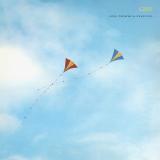
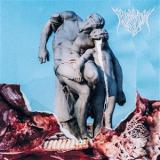
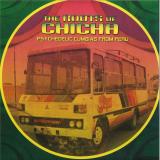
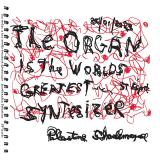
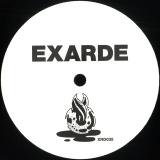
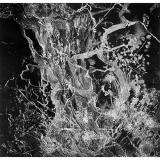
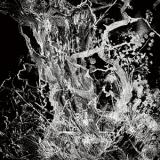
»Even The Horizon Knows Its Bounds« explores sound’s relationship with architecture, inspired by the Naala Badu building at the Art Gallery of NSW. Created from sound prompts responded to by artists like Jim O’Rourke and claire rousay, the work reflects on space, collaboration, and the fluid nature of sonic environments.
I like to think that sound haunts architecture.
It’s one of the truly magical interactions afforded by sound’s immateriality. It’s also something that has captivated us from the earliest times. It’s not difficult to imagine the exhilaration of our early ancestors calling to one another in the dark cathedral like caves which held wonder, and security, for them.
Today the ways in which sound occupies space, the so-called liquid architecture, holds just as much wonder, albeit one that is often dominated by functionality and form. Beyond those constraints however, how sound operates in the material world is something that exists at the fundament of our understanding of music, and moreover within the broad church we know as the canon of sound arts.
Even The Horizon Knows Its Bounds is a record born out of these relations. In a direct sense, the record is the product of an invitation by curator Jonathan Wilson to create a sound environment, reflecting on the Naala Badu building at the Art Gallery Of NSW. The building’s name, which translates from the Gadigal language to ‘seeing water’, was opened in 2022 and this piece was offered as an atmospheric tint to visitors walking through the building throughout the year following its opening.
It’s also a record born out of a recognition for the porousness sound affords, especially as a device for collaborative endeavour. This composition is one born out of generosity and acoustic solidarity. Even The Horizon Knows Its Bounds is comprised not just of my sounds, but also that of an incredible array of artists who have also operated in the orbit of the Art Gallery Of NSW. The players include Amby Downs, Chris Abrahams, Chuck Johnson, Claire Rousay, Dean Hurley, Jim O’Rourke, JW Paton, Madeleine Cocolas, Norman Westberg, Stephen Vitiello and Vanessa Tomlinson.
The piece was constructed around two long form sound prompts that each musician responded and contributed to. These materials there when digested into the final piece you hear. The work could not exist without the substantial offerings these artists made, and I am immensely grateful to each of them.
I’ll finish with a little note that appears on the LP itself.
Place is an evolving, subjective experience of space. Spaces hold the opportunity for place, which we create moment to moment, shaped by our ways of sense-making.
Whilst the architectural and material features of space might remain somewhat constant, the people, objects, atmospheres, and encounters that fill them are forever collapsing into memory.
Lawrence English
Performed by Amby Downs, Chris Abrahams, Chuck Johnson, Claire Rousay, Dean Hurley, Jim O’Rourke, JW Paton, Madeleine Cocolas, Norman Westberg, Stephen Vitiello, Vanessa Tomlinson
Поиск:the architect
Все
Electronic pioneer Sasha links up with Artche for dramatic new single 'Hold On', Artche also provides his own version of the track.
Last Night on Earth founder Sasha sits in his own world after more than 30 years of innovation as a DJ and producer. His meticulously crafted sounds have constantly redefined the underground, and with this label, he has spearheaded the melodic movement with his own music and careful A&R of exceptional contemporary talents. This latest release finds him working again with Newcastle-based producer and vocalist Artche, who has already collaborated to great effect with the likes of Franky Wah and Cristoph on Eric Prydz's Pryda Presents and also released solo on SHÈN Recordings. His mix of deep house and techno has won fans like Pete Tong and Lane B, and he asserts his skills once more here. Says Artche of his return to LNOE.
The fantastic 'Hold On' is a dramatic ride lit up with sweeping, spine-tingling synths. It has a grand architecture and widescreen atmosphere with profound melodies and moody bass rolling down below. Angelic vocal sounds shimmer amongst the epic chords and the whole sophisticated track makes an inescapably emotional impact. The Artche Mix works the drums into airy, dusty broken beats that bring a different vibe while the original vocals and lush synths remain in place and tugging at the heartstrings.
- A1: Sweet Spirit
- A2: Petal
- A3: New Style
- A4: Little Entertainer
- A5: Anemone
- A6: Dancing Anima
- A7: Hora Thello
- A8: Tanana
- A9: Acrobat Of Architect
- A10: Inner Garden
- A11: Flower Myth
- A12: Waggle Dance
- A13: Waggle Dance Reprise
- A14: Hora Auxo
- B1: Water Memory
- B2: Rainy Steps
- B3: Marginalia Song
- B4: Hora Carpo
- B5: Katabasis
- B6: Trans Train
- B7: Of Angels
- B8: Future Nursery
Pink blossom Vinyl[39,08 €]
Mirai is a 2018 Japanese animated adventure fantasy comedy film written and directed by Mamoru Hosoda and produced by Studio Chizu (known for Belle, Wolf Children and The Boy and the Beast). The film stars the voices of Moka Kamishiraishi, Haru Kuroki and Gen Hoshino a.o. It was met with critical acclaim and became nominated for an Academy Award in 2019 for Best Animated Feature Film. Additionally, the movie received an Annie Award in the same year. Mirai follows the story of a four-year-old boy named Kun whose world is turned upside down when he meets his new baby sister. After venturing into a magical garden, Kun encounters strange guests from the past and future, including his sister Mirai, as a teenager. Together, Kun and teenage Mirai go on a journey through time and space, uncovering their family's incredible story. The soundtrack for the film was written by Masakatsu Takagi, who had previously scored Hosoda's Wolf Children and The Boy and the Beast. His work for Studio Chizu has been praised for its magical and whimsical atmosphere. For Mirai specifically, this dreamy aesthetic was mixed with a contemporary sound and made to be simple in tone and be reflective of family. Mirai is available as a limited edition of 500 numbered copies on turquoise coloured vinyl and includes a 4-page booklet.
- Elegy
- Whiplash
- Blackhole
- Everything Ends
- Brain Dead (Feat. House Of Protection)
- Evil Eyes
- Landmines
- Judgement Day (Feat. Amira Elfeky)
- Broken Mirror
- Curse
- Seeing Red
- Chandelier
ARCHITECTS are back and charging forward in the heavy rock world with their latest sonic masterpiece, The Sky, The Earth & All Between. After two relentless years on the road-featuring massive European summer tours with Metallica and top billing at festival stages across Europe, (Rock Am Ring, Rock Im Park, Hellfest, Download, Graspop, Full Force to name a few and headlining Bloodstock) - the band has returned to the studio to deliver their most powerful collection of songs yet. With the creative force of Jordan Fish (Bring Me The Horizon) behind the boards, Architects have captured the explosive energy of their live performances while elevating their signature melodic edge. This album reflects the perfect blend of raw intensity, emotional depth, and innovative production. Already making waves, singles like "Curse" and "Seeing Red" have drawn rave reviews from all major metal press worldwide. "Seeing Red" the "anthem powerhouse" landed because of global success in the top 10 of charts worldwide-amassing over 45 million streams along the way. The Sky, The Earth & All Between builds on the momentum of their 2022 album, the classic symptoms of a broken spirit, which stormed to the top of the UK Rock and Metal Charts. With this new release, Architects are once again set to push the boundaries of modern heavy music, cementing their status as one of the most exciting and essential bands of our time.
Portland-based ambient architect and far afield sound technician Graintable, aka James Cooke returns with his debut outing on Music To Watch Seeds Grow By and his fourth in the R$N stable; 'Blue Flax'. Following his acclaimed and sold out cassette releases 'Herons', 'Universal Ash' and ‘The Rain In The Trees’ on Ransom Note Records, this new collection sees Cooke delving deeper into the intersection of natural processes and liminal organic electronics.
'Blue Flax', the resilient flowering plant celebrated for its delicate blue blooms and medicinal applications, is native to the Pacific Northwest - the region Cooke calls home. This plant has long grown on the ancestral lands of the Wasco, Klickitat, Warm Springs, Cayuse, and Umatilla tribes. Its connection to this landscape underscores the album’s themes, weaving together ten intricate ambient pieces that reflect the plant's dual nature of part healer, part object of wonder. Recorded during the transitional hours of dawn and dusk in his Portland studio, Cooke’s soundscapes capture both the meditative aspects of watching plants grow and the gradual transformation of organic matter into usable forms. The centrepiece of the album Cerulian FIelds, reminds of the early morning light, those inspiring hours before the rest of the world wakes and the first shoots break through the soil into the new dawn. It’s a beautiful crystallisation of what is Cooke’s most comprehensive collection of meditative compositions to date.
For fans of: Steve Roach, Alessandro Cortini, Suzanne Ciani, Davis Galvin
Early support including: Courtesy, Laurent Garnier, Massimiliano Pagliara, DJ Harvey, Domenic Capello
2025 Repress
Anenon's tenor saxophone breathes an emotive contemplation on loss, meshed with sustained piano and field recordings. 'Moons Melt Milk Light' is a hyper-personal statement contained in a visceral beauty.
LA native Anenon returns with a highly anticipated new album 'Moons Melt Milk Light' on Tonal Union, bearing his most personal, expressive, and arresting works to date. Anenon is the ongoing solo studio and live project of Brian Allen Simon, whom since 2010 has released multiple albums and EPs to critical acclaim, including the highly revered 'Tongue' (2018) and 'Petrol' (2016).
'Moons Melt Milk Light' is direct, efficient, and unwavering in its immediacy. Anenon departs from the electronics of previous works, and embarks on a reductive, almost entirely acoustic approach consisting of piano, tenor saxophone, bass clarinet, and field recordings. All of the music was improvised with everything recorded as either a first or second take with no edits. Any layering happened fast and in the moment, and yet the sonic architecture of the whole feels both planned and refined.
"I feel a kinetic and messy honesty that doesn't exist in any of the other music I've ever made. There is also a sense of being settled, of calm. There is no faking it here."
ARCHITECTS are back and charging forward in the heavy rock world with their latest sonic masterpiece, The Sky, The Earth & All Between. After two relentless years on the road-featuring massive European summer tours with Metallica and top billing at festival stages across Europe, (Rock Am Ring, Rock Im Park, Hellfest, Download, Graspop, Full Force to name a few and headlining Bloodstock) - the band has returned to the studio to deliver their most powerful collection of songs yet. With the creative force of Jordan Fish (Bring Me The Horizon) behind the boards, Architects have captured the explosive energy of their live performances while elevating their signature melodic edge. This album reflects the perfect blend of raw intensity, emotional depth, and innovative production. Already making waves, singles like "Curse" and "Seeing Red" have drawn rave reviews from all major metal press worldwide. "Seeing Red" the "anthem powerhouse" landed because of global success in the top 10 of charts worldwide-amassing over 45 million streams along the way. The Sky, The Earth & All Between builds on the momentum of their 2022 album, the classic symptoms of a broken spirit, which stormed to the top of the UK Rock and Metal Charts. With this new release, Architects are once again set to push the boundaries of modern heavy music, cementing their status as one of the most exciting and essential bands of our time.
- 1: This, Is Not That
- 2: Mercy
- 3: Superstitious
- 4: Wonderful Feelin' (Feat. Willie The Kid)
- 5: Know No Better
- 6: The Problem
- 7: Pitiful
- 8: Almanacs (Feat. Sonnyjim)
- 9: Coke With Ice
- 10: My Own Good
- 11: Favoritism
- 12: Mis Amigos
- 13: New Dreams
- 14: Surgery
- 15: Enemies
When Apollo Brown and Crimeapple connect, it’s like old film grain under a projector— gritty, timeless. This album isn’t just boom-bap nostalgia; it’s a rebirth of smoke-stained bars, where Crimeapple plays both poet and philosopher, flipping bilingual manteca rhymes with a chef’s precision, stirring up the street grime and serving it with a side of sharp wit. Apollo Brown, as always, builds his beats like ancient architecture—dusty, soulful, and heavy with forgotten stories. These tracks sound like the cracks in the sidewalk talking back, the perfect companion for long nights and even longer thoughts. It’s a sonic novel, a street sermon, and Crimeapple’s wordplay dances through it like grease sizzling in a pan, a reminder that even in decay, there’s beauty. This, Is Not That.
Years of simmering mutual admiration between Turbo and Architectural finally erupt with Good Night, Whatever That Is, the Asturian producer's first release on the label.
Nothing gets us hot and bothered like the prospect of featuring a true artist on Turbo. In fact, we are so f-ing jazzed to be working with techno genius Architectural that we even dropped scrappy “fun-house” producer Archie Textures from our roster to avoid confusion.
The Good Night, Whatever That Is EP imbues the timeless platonic forms of techno with an energy, craft and depth that will feel instantly familiar to anyone who has built a cathedral with their bare hands. And yet the unadulterated power of lead single “Steampunk” and the even-less-adulterated power of “Tubular Funk,” confirm that this release also has one foot squarely planted on the secular dance floor, coursing with the searing bio-fluids that drive and torment all sexual beings. Meanwhile, your deep human need for contrast will be sated by the IDM-ambient euphorics of “Eternity Land” and the highbrow breaks of “Rousing Rhythms”.
- 01: King Of Rock And Roll
- 02: Hey, Hey, Hey, Hey
- 03: Spreadin' Natta What's The Matter
- 04: Shake A Hand
- 05: Dew Drop Inn
- 06: True Fine Mama
- 07: Great Gosh A'mighty
- 08: Poor Dog
- 09: Send Me Some Lovin
- 10: Slippin' And Slidin
- 11: Bama Lama Bama Loo
Black Vinyl[22,65 €]
Diamond Dogs may be a bunch of renaissance rockers deeply rooted in the early 70s British rock and roll, but just like our forerunners, we owe
almost everything to Little Richard, the architect of it all! It's impossible to even imagine rock and roll without him.
Little Richard is the soul, spirit and passion of the Diamond Dogs lifestyle, and I was six years old when I first heard 'Rip It Up' with love at first feel.
The raw energy and the blood screaming lyrics over that manic hammering piano embodied everything I craved in music, straight from the speakers to my young heart. Even if I discovered a lot of other influences later on in life, I always kept Little Richard close to where he once hit me. One of Diamond Dogs' early tunes is called 'Lunatic Eye-Rolling Delivery' which is a line nicked from a concert review of Little Richard, and we believe it sums up the essence of his greatness pretty well. He was much more than a rock pioneer, the way he dressed up and spoke was something the world had never experienced before.
Little Richard got Paul McCartney to write 'I Saw Her Standing There', got James Brown a new haircut, and put a silly little mustache on Prince!
So, the idea of recording a homage to the true king of rock and roll had been with all of us for many years when Chris Spedding one day called me
and asked if we should record something together. Of course, I immediately said yes, and then asked him to join Diamond Dogs in the upcoming
studio session to record some well selected Little Richard gems for an LP. All said and done, and Chris was extra thrilled that his favorite 'Send Me
Some Lovin'' was among the songs we picked.
And on a cold and windy January day we gathered the Dogs and the new old puppy in the sweet premises of Dog Pound Studios, along with our
beloved friend and engineer Jonas Åhlén.
So, when the room is geared up, we do our melodies as we normally do it, no rehearsals, all live, straight to tape. One hour per track is usually a
good thing! An amazing energy and swagger filled the atmosphere as Diamond Dogs and Chris fulfilled my dream.
Now that I'm listening through the vinyl, I must say that I've never been prouder of anything we've achieved with this shady bunch so far. It's like
walk the full circle, like I've been graduating from the 12-bar rock and roll academy.
Sulo, Stockholm/Sweden, 2024
Sound Like: The Faces, Rod Stewart, Frankie Miller, Elton John, Mott
The Hoople, J Geils Band, The Rolling Stones, Steppenwolf, Little
Richard
Diamond Dogs may be a bunch of renaissance rockers deeply rooted in the early 70s British rock and roll, but just like our forerunners, we owe
almost everything to Little Richard, the architect of it all! It's impossible to even imagine rock and roll without him.
Little Richard is the soul, spirit and passion of the Diamond Dogs lifestyle, and I was six years old when I first heard 'Rip It Up' with love at first feel.
The raw energy and the blood screaming lyrics over that manic hammering piano embodied everything I craved in music, straight from the speakers to my young heart. Even if I discovered a lot of other influences later on in life, I always kept Little Richard close to where he once hit me. One of Diamond Dogs' early tunes is called 'Lunatic Eye-Rolling Delivery' which is a line nicked from a concert review of Little Richard, and we believe it sums up the essence of his greatness pretty well. He was much more than a rock pioneer, the way he dressed up and spoke was something the world had never experienced before.
Little Richard got Paul McCartney to write 'I Saw Her Standing There', got James Brown a new haircut, and put a silly little mustache on Prince!
So, the idea of recording a homage to the true king of rock and roll had been with all of us for many years when Chris Spedding one day called me
and asked if we should record something together. Of course, I immediately said yes, and then asked him to join Diamond Dogs in the upcoming
studio session to record some well selected Little Richard gems for an LP. All said and done, and Chris was extra thrilled that his favorite 'Send Me
Some Lovin'' was among the songs we picked.
And on a cold and windy January day we gathered the Dogs and the new old puppy in the sweet premises of Dog Pound Studios, along with our
beloved friend and engineer Jonas Åhlén.
So, when the room is geared up, we do our melodies as we normally do it, no rehearsals, all live, straight to tape. One hour per track is usually a
good thing! An amazing energy and swagger filled the atmosphere as Diamond Dogs and Chris fulfilled my dream.
Now that I'm listening through the vinyl, I must say that I've never been prouder of anything we've achieved with this shady bunch so far. It's like
walk the full circle, like I've been graduating from the 12-bar rock and roll academy.
Sulo, Stockholm/Sweden, 2024
Sound Like: The Faces, Rod Stewart, Frankie Miller, Elton John, Mott
The Hoople, J Geils Band, The Rolling Stones, Steppenwolf, Little
Richard
In the neon-lit underbelly of Vilnius, where the pulse of the city syncs with the rhythm of the cosmos, Lithuanian sound architect Tourman emerges with his debut EP on Trance-Atlantyk entitled “Identification Mentale.” This electrifying release is a masterclass in neo progressive house soundscapes, featuring three original tracks and one hard-hitting remix.
The EP kicks off with „Restricted Airspace”, igniting senses with its relentless drive and pulsating bass. The track is a cybernetic symphony, weaving together glitchy synth lines and hypnotic beats that propel you into the heart of a digital dystopia. Embracing a darker, more introspective vibe, “Digitalog” is a proper roller that dances effortlessly between the realms of emotion and energy.
The title track boldly attacks your auditory membranes with its earwormy synth stabs, echoing the familiar yet exhilarating sensations of a sonic awakening. This cut also serves as a true manifesto for the modern trance movement, capturing the essence of euphoria and nostalgia in one exhilarating ride. The last word on the EP belongs to the polish power duo Penera, who transform the original title track into a hard-hitting, uncompromising dancefloor stomper that effortlessly blends hardgroove energy with trance nostalgia. Their remix amplifies the intensity, layering driving beats and electrifying synths that explode with energy.
1/4" / 15 IPS / Dolby A Analogue Copy to DSD 256 to analogue console to lathe
Carlos Santana and Company Return to a Dynamic Blend of R&B, Latin, Funk, and Rock: Amigos Aims for the Hips, Spreads Joy, and Includes “Europa (Earth’s Cry Heaven’s Smile)” Amigos has been beloved for decades by both long-time and recent Santana admirers, with multiple generations of fans drawn in by the record’s contagious blend of R&B, Latin, rock, and funk elements. As well as its immense accessibility. Coming off a series of albums that heavily leaned into jazz fusion, the band returns to the more dynamic and concise approaches of its earlier works without losing the sense of adventurousness, craftsmanship, and virtuosity that turned it into a juggernaut embraced by both the mainstream and experimentally minded communities.
Mastered at Mobile Fidelity’s in-house studio in California, pressed at Fidelity Record Pressing, and strictly limited to 3,000 numbered copies, Mobile Fidelity’s 180g 33RPM LP of Amigos presents the 1976 album in audiophile sound for the first time on a domestic release. Part of the reissue label’s Santana series, this collectible version features quiet surfaces and black backgrounds that help reveal the intricate details, distinguished tones, and cohesive interplay that cause Santana’s music to take flight.
The enhanced aural perspectives extend not only to Carlos Santana’s intoxicating fills and solos, but to the rich tapestry of the rhythmic, melodic, and vocal elements that help Amigos feel as fresh today as it did several decades ago. This LP shines a beaming light on the surrounding musicians that simultaneously feed off and inspire their bandleader. The solidity and depth of the bass lines; the wash of the organ; the scope and carry of the vocals; the grip and weight of the low-end frequencies; and, possibly the most enticing traits, the textures of the acoustic guitars, numerous percussive devices, and then-modern synthesizers: all come across with tremendous presence and energy.
Entirely appropriate for a set that kicks from the start, with the opening “Dance Sister Dance (Baila Mi Hermana)” true to the song title’s combination directive-invitation meaning. Tropical, soulful, upbeat, and liberating, it beckons hips to shake and delicious libations to pour. Clinking cowbells, spirited background vocals, hand-tapped congas, and Carlos Santana’s six-string magma pour forth with abundance. The song sets the mood and expectations for a record that contains not an ounce of filler, and which inspires and spreads joy at practically every turn.
On the gold-certified Amigos, the ensemble never seems to run short of zest or happiness. Key in on the Latin bite and searing guitar architecture of “Take Me With You,” an instrumental that shifts tempo at its midpoint and sparkles with a samba-like outro that aims to put everyone in earshot on the dance floor. Surrender to the slow-burn of “Tell Me You Are Tired,” sent up with Greg Walker’s sympathetic vocals and spun around with whirling funk accents. Marvel at the Spanish guitar introduction, Mexican folk foundation, group vocals, and extroverted grooves of the forward-propulsive “Gitano,” with lead singing by conga/bongo expert Armando Peraza.
Having reached the Top 10 in the United States and spawned the hit “Let It Shine,” Amigos marked the final stint for bassist David Brown, the last of the group’s famed Woodstock lineup to depart. His contributions feel especially spirited throughout the album, compass readings that the group uses to chart their course. Just listen to how his passages pop on “Let Me” and frame the can’t-get-it-out-of-your-head “what you need is what you want” refrain. And while Carlos Santana remains the centerpiece of the brilliant and meditative “Europa (Earth’s Cry Heaven’s Smile),” Brown serves as a trustworthy anchor and friendly advocate.
- A Shared Sense Of Purpose
- Rapid Transport Links
- Cul-De-Sac
- Summer All Year Round
- Facilities For All Ages
- Pedestrian Shopping Deck
- A New Town With An Old Sense Of Community
Warrington-Runcorn New Town Development Plan's new album, Your Community Hub, compellingly continues his sonic exploration of the New Towns movement. The issues the councillors, planners, and architects set out to solve still resound and echo throughout society.
For the latest instalment in this unique project, Gordon Chapman-Fox turns his laser eye to focus on Community and the Community Centres that populated Warrington and Runcorn in order to provide all the facilities people needed within a five minute walk from their home. These planning ideas predated the current discussions of fifteen minute cities by fifty years.
Those 50 years have seen a decline in our community centres and services: handy access to a GP or dentist, Post Offices, youth clubs, local shops, banking and much more. Successive governments have undermined and eroded those basic services. The decline in community services has also been matched with a decline in community and shared experiences with a knock-on effect on the population's health and well-being. The disastrous austerity policies imposed over the last 15 years have exacerbated this long, slow reduction in available spaces for people to meet and communicate, with seemingly no recognition of the societal impact that causes. Short-termism at the expense of the community and how we live our lives.
Margaret Thatcher's statement that "there is no such thing as society" has been taken as a mission statement by successive Conservative governments who have aimed to remove as much support and communality from the citizens as possible. It continues now, the wrong-headed idea that everyone can be left to fend for themselves.
Chapman-Fox's latest album decries the cruelty of where we find ourselves in 2024 and his quiet incandescence about the loss of optimism for what communities should be and could be. It's his most powerful work, and as always, it will deeply resonate with those who tune in to his unique vision and unparalleled productions.
As ever, beautifully packaged and designed by Gordon, the album artwork features photographs from the archive of the architect Peter Garvin, which was kindly provided by his son Richard Garvin. The photographs show Peter's work on the Castlefield Community Centre, a sleek modernist structure clad in white ceramic tiles.
Securing his place in the scene as a mainstay after consecutively acclaimed releases on his own record label and beyond as well as lengthy touring around the globe's best venues, Altinbas returns to Token the only way he knows how. The Fuse resident's ethereal mark on driven techno comes this time with an aquatic touch, diving further into his bubbly architecture and melodic intrigue.
'Voyage' can mean many things; the past few years have been an incessant trip across the world's greatest sound systems and most dedicated audiences for the Belgian producer, or then perhaps it's a reference to the climactic and emotional nature of his productions. In any case, it's also the title track for his third EP on Token Records. Balancing warmth and anticipation, Altinbas is able pack in all the elements of a timeless record while still providing the space to breathe. Smooth and introspective, 'Voyage' kicks off the EP on a cloud of a club roller. 'Stygious Night' shares the first side with a more minimal but nonetheless effective approach. The tonal synth work on this record begs for a powerfully round system worthy of only the best dancefloors, and the space that washes around in the background gives it true dimension. Maintaining minimalism with structure through drum arrangement, 'Stygious Night' is reminiscent of a not so distant past in Berlin crafted with a clearly modern approach. As the record flips, 'Venus Ballroom' takes us by surprise with an uncommonly resonant sound at the forefront. This stylistic switch blends perfectly with historic tracks on the label that have come to define its sound since 2007. Hypnotic, psychotic, quirky, and mental - 'Venus Ballroom' proves a deep understanding of the music and appreciation of versatility. 'Psychosphere' closes down the EP with a classic sound of dissonant stabs to resonate through a foggy room. Altinbas highlights his sound with frantic clap sequences and short rides to keep his percussion rolling but dry while his synths create the acoustic he's been known to craft for the past few years. To have everyone agree on level of taste and technical capability is tough, which is why this certainly won't be the last time Altinbas will team up with Token to roll out his cutting-edge work.
- Success
- Feinds Don't Lose
- Monotones
- N.y. Frills
- Inoy
- Take It From Me
- House
- Bullseye
- Julo
- Palace Quarters
- Catacomb
Open Head is a 4 piece experimental ensemble from Kingston, New York. With a taste for the concrete and the spectral, their new album What Is Success sources beauty in brutalist architecture, holography, and the remnants of industrialism that ornament the Hudson Valley landscape. The result is expansive, stratospheric in volume, and brutally material in its punctuation and delivery. Drawing on New York no-wave and the avant-garde history of punk, noise, hip-hop and electronic music, Open Head presents a sound that is itself a landscape-immediate, colossal, ruined and essential. Open Head is Jared Ashdown (v,g), Brandon Minervini (g,v), Jon McCarthy (b), and Dan Schwartz (d).
Burnout Days, the forthcoming sophomore album finds flipturn returning as sonic architects, harnessing their impressive knack for hooks, shimmering soundscapes and "nostalgia-inducing lyrical delivery" (Uproxx). But on Burnout Days, flipturn arrives with more grit, craft and vulnerability than ever before - a clear evolution in the band's sound, and one that reflects their growth as musicians and individuals. Recorded at Sonic Ranch Studios near El Paso, Texas and produced by Chad Copelin (Wilderado, Sasha Sloan, BRONCHO), Burnout Days is inspired by the band's journey on the road, as they sort through challenges like self-esteem, codependency, addiction and the twists and turns of day-to-day life in one's mid-twenties. Together, they uncover the beauty that exists even in times of burnout through a mix of raw, rhythmic moments and sonic experimentation - all with a palpable sense of meticulousness and maturity.
- 1: Reconquista
- 2: Abandon
- 3: Angel
- 4: The Innocent One
Last release of a productive year for Feral Child sees a fabulous mini LP from London based, Japanese Psych band BARBICAN ESTATE. Six beguiling tracks of atmospheric, occasionally acid folk flavoured, melodic > freakout shifts, taking in tips of the hat to Popol Vuh (check Miri’s beautiful vox on “Angel”), Amon Duul and fellow countrymen Acid Mothers Temple and Kikagaku Moyo amongst others. Formed in 2019, this three-piece consists of Kazuki Toneri (guitar, sitar), Miri (bass, flute, vocals), and Koh Hamada (drums, percussion). Each member is well-versed in music, film, and various other arts, drawing inspiration not only from experimental, psychedelic rock, and noise music but also from art across the world, both past and present. Their music weaves solid, architectural elements with destruction into a dark and gloomy soundscape, is often described as "dark psychedelic." They released their first album, “Way Down East”, in 2021. In 2022, they relocated to London, where they performed on UK tours and at festivals. Having already played nearly 50 live shows, they are gaining attention in the local scene. Their latest EP, "Viscum" was released in June 2024. “Barbican City of Tokyo” is a compilation of tunes previously consigned to digital release only that label head, Dom had free rein to assemble an EP from, which luckily the band wholeheartedly agreed upon! …and all four tracks appear on vinyl here for the first time. This release hopefully cements a growing interest in the band’s fabulous music, and early reviews of both the LP here and their live shows are overwhelmingly positive.
- Ascend
- Drift
- Astray
- Barren
- Nyctophobia
- Wreckage
- Scavenge
- Animal
- Phantasmagoria
- Torment
- Perish
The intrepid composer and field recordist Jacob Kirkegaard is no stranger to perilous and hostile regions of the world. His 4 Rooms invoked the radioactive decay through the amplification of architectural resonance in Chernobyl, Ukraine; and he has ventured to the arctic environments of Greenland on a number of occasions to document that barren, icy territory. His recurrent use of shadow and mystery through his work both as metaphor and as extended sonic technique reflects the complex, existential conditions that cross-contaminate what we consider civilization and what we consider wilderness. Waste disposal, firearms, the decomposition of dead bodies, the eerie stillness of morgues. These have also been the source material in Kirkegaard's formidable work.
With Snowblind, Kirkegaard turns to history, and a poetic, failed attempt for a team of Swedish explorers to reach the North Pole by balloon in the late 19th Century. Perhaps driven by blind adventurism, perhaps consumed by his own delusions, S.A. Andrée launched this ill-fated flight in July 1897, registering only two days in the air before crashing into the ice and ultimately failing to navigate the frigid waters and ice floes. Yet documentation of their expedition - photographic, scientific, and diaristic - survived, to be discovered some thirty years after their deaths.
"I wanted to created a cold and hostile album, where there is no escape, no warmth and no happy ending," as Kirkegaard explains about Snowblind. "Yet, I wanted to leave out any immediate drama. It is the creeping shock, the icy feeling from realizing what has been lost and that there's no escape."
Yes, Snowblind is a very bleak album, but one that eschews the isolationist, long-form drone of conceptually similar works by Thomas Köner, Lustmord, Werkbund, and Lull with interconnected constellations of cryptic tone, thrumming reverberation, arctic bluster, and a plethora of harrowing sonic proclamations.
Stick To Your Guns hold a mirror up to society’s ills without blurring its ugliness. In an attempt to unapologetically trumpet real change, the Southern California quintet—Jesse Barnett vocals,Andrew Rose [bass],Adam Galindo[drums], Chris Rawson [guitar], and Josh James [guitar]—never shy away from speaking or screaming unpopular truths from the purest place. Founded in2003, Stick To Your Guns have always written and performed with a sense of urgency, their socially conscious message hitting as hard as their signature hybrid of hardcore, punk, and metal. Over the course of their career, they’ve amassed over 50 million total streams, performed on four continents, and shared stages with the likes of Parkway Drive, Architects, and Every Time I Die. Most recently, Alternative Press praised 2017’s True View as “the result of a long time spent on self-reflection and realization.” The band’s latest release ‘Invisible Rain’ incorporates two new songs that remain quintessentially Stick To Your Guns while incorporating fresh elements. The band’s relentless pursuit of a better world and their critique of societal injustices continues to drive their music and message. In 2024, Stick To Your Guns signed with SharpTone Records, marking a new chapter in their storied career. This partnership promises to bring their potent blend of activism and music to an even broader audience, amplifying their call for change and social justice.
- A1: Acts Of Man
- A2: Backyard Skulls
- A3: Holy
- A4: The Woodpile
- A5: Late March, Death March
- A6: December's Traditions
- B1: Housing (In)
- B2: Dead Now
- B3: State Hospital
- B4: Nitrous Gas
- B5: Housing (Out)
- B6: The Oil Slick
- C1: If You Were Me
- C2: Snow Still Melting
- C3: Escape Route
- C4: Default Blues
- C5: Radio Silence
- D1: Candlelit
- D2: Architect
- D3: Norland Wind
- D4: Holy (Alternate Version)
- D5: The Woodpile (Alternate Version)
- D6: Late March, Death March (Alternate Version)
To celebrate the 10th Anniversary of Frightened Rabbit’s critically acclaimed Pedestrian Verse album, this special edition double vinyl release contains the original 12 track album with an additional 11 bonus tracks.
Disc 1 is pressed on clear vinyl and disc 2 is pressed on black vinyl.
The records are housed in a gatefold outer sleeve with a gold foiled motif on the front cover and printed inner sleeves containing album lyrics.
- Flatbush Zombies, Nyck Caution, Kirk Knight, Cj Fly, Ak - It Ain't Easy, It Ain't Easy 3:41
- Flatbush Zombies, Nyck Caution, Cj Fly, The Underachievers (2), Kirk Knight, Joey Bada$$ - Left Hand 3:43
- Erick The Architect, Cj Fly, The Underachievers, Zombie Juice, Nyck Caution - Problemz 3:47
- Kirk Knight, Meechy Darko, Erick The Architect, Nyck Caution, Joey Bada$$ - Far Away 3:08
- Erick The Architect, Joey Bada$$, Meechy Darko, Kirk Knight, Cj Fly, Issa Gold - Snow In The Stadium 4:38
- Joey Bada$$, Flatbush Zombies - Rubberband 3:50
- Joey Bada$$, Issa Gold, Erick The Architect - Distance 2:13
- Flatbush Zombies, The Underachievers, Nyck Caution, Kirk Knight - Bones 3:29
- Nyck Caution, Erick The Architect, Meechy Darko, Ak (27), Joey Bada$$ - Puke 2:56
- Meechy Darko, Joey Bada$$, Zombie Juice, Kirk Knight - Desperado 3:44
- Meechy Darko, Erick The Architect, Nyck Caution, Joey Bada$$ - One More Round 3:51
- Joey Bada$$, Flatbush Zombies, Kirk Knight, Issa Gold - Coast/Clear 3:48
- Meechy Darko, Kirk Knight, Erick The Architect, Nyck Caution, Ak - Last Choir
The collective has completed many tours together, & its debut album Escape From New York comes across as a collection of high level cyphers from Joey Bada$$, Nyck Caution, Kirk Knight, CJ Fly, Flatbush Zombies & more. Not surprising as the Brooklyn natives, a lot of them friends since childhood, have never shied away from the lyrics-centered tradition of New York hip-hop. Their distinctive voices and skills on the mic, as well as NY-centric storytelling drive the album, & the chemistry is undeniable. The production is tight, but this is also where the supergroup shifts away from musically, perhaps what the title of the project is alluding to. Erick Arc Elliott, Power Pleasant, Sam Wish, and Tyler Dopps lay down slick, bouncy instrumentals as opposed to boom bap, & it's refreshing and fun to hear the group expand its sound. Check out "Distance," "Left Hand," "Snow In The Stadium," "Far Away," and "Coast/Clear." The RSD Black Friday edition features 2LPs on translucent orange color and a Beast Coast Sticker.
Music To Varnish Owls By. Does Geoff Bastow have a claim for the best album title of all time? It's certainly up there. It's also one of the hardest to find library funk records. But don't let the eye-catching name fool you into thinking this isn't serious business.
As a key member of Giorgio Moroder's team, the legendary Geoff Bastow shouldn't need any introduction. You'll be familiar with his singular brilliance as the brains behind the much-sampled boogie/disco classics "You Don't Like My Music (Hupendi Muziki Wangu?!)" and "Don't Stop", released by his group, K.I.D.
But 1975's Music To Varnish Owls By is where it all began for our hero.
It's packed with incredibly soulful, soothing music that - despite being utilised a few times by Knxwledge - remains still largely un-mined. So, beat-makers, get cracking. And instead of that hyper-rare original, spend that £300 on something else.
Born in 1949, Bastow was a Munich-based English songwriter and record producer. Originally working as a guitarist and pianist in dance bands around his home county of Yorkshire, he moved to London in the early 1970s and then Munich in around 1976. He was one of the main architects of the Munich disco sound of electronic innovator Giorgio Moroder and also released heaps of killer library records for legendary labels like Bruton (with brother Trevor), Impress, JW Music Library and the Munich-based Sonoton between the 1970s-2000s. Bastow died tragically young, in Berlin, Germany on 16 March 2007, at the age of just 57. But he left behind a truly incredible electronic music legacy. He deserves to be much better known and this reissue should bring him to a fair few more ears. Let's see why...
Light-hearted opener "The Rough With The Smooth" contains a killer open drum break and is basically guitar-drenched flute-laced piano-funk. However, the first genuine highlight, "Beautiful People", is just majestic. Reflective, pastoral and silky smooth - as the title suggests, it's just straight beautiful; a chiming, deeply soulful instrumental that has to be heard to be believed. Sampled by Knxwledge but nobody else of note, which is crazy. Slo-mo soul beat "Tumbleweed" is another stone cold track just desperate to be laced by a skilled MC. Laconic, lysergic funk with nostalgic overtones, the guitar is prominent but the flute and glock really elevate it to perfection.
"Bits And Bats" is clav-enhanced Blaxploitation-esque street-funk with tough bass and crunchy drums that, despite its hardness, manages to flirt with breeziness. All in all, sumptuous, pounding wah-wah brilliance. Another huge one, up next. The insistent piano-funk head-nodder "A Change Of Pace" is a total sleuth-funk jammer, with a wonderfully soft snare and more hypnotic, melancholic flute lines. Man, we'd love to hear Alchemist chop this up. It even sounds a bit like Bastow was keeping things thoro with this one. Closing out Side A, the bright and breezy Bossa of "Janelle" makes it a perfect run of six untouchable gems. As elegant as it is sleazy, it sounds like it could've been on the classic KPM greensleeve, Piano Viberations.
Side B opens with the Ramsey Lewis-inspired "Time And A Half", a deceptively simple bass, drums and piano workout, decorated with stylish percussion with some great chord changes and hints of drama via a great bass solo. The heavy "Supersplash" is a doped-out drama suite with fuzzy wah-wah guitars, electric piano and glock. "Fillet Of Soul" is a catchy wah-wah propelled shuffle with piano and vibes, super dynamic but also incredibly chill.
"Well Above Average" is exactly that, a funky instrumental that serves as a straight ahead guitar-soul workout. Oozing bass-driven class, it gets better with every listen. Some open drums for your delectation, too. The fuzzy clav-and-vibes funk of "The Clan" - also understandably sampled by Knxwledge - is a monster head-nod slow jam whilst, seeing us out, the uber-relaxed "Sing Song" rounds things off in bright fashion with its slow but insistent clav, electric piano and glock greatness. Swoon.
As ever, the audio for Music To Varnish Owls By has been carefully remastered by Be With regular Simon Francis, ensuring it sounds better than ever. Cicely Balston's expert skills have made sure nothing is lost in the cut whilst the records have been pressed to the highest possible standard at Record Industry in Holland. The original, iconic sleeve has been restored here at Be With HQ as the finishing touch to this long overdue re-issue.
- A1: Freedom Blues
- A2: Greenwood, Mississippi
- A3: Two-Time Loser
- A4: Dew Drop Inn
- A5: Somebody Saw You
- A6: Spreadin’ Natta, What’s The Matter?
- B1: The Rill Thing
- B2: Lovesick Blues
- B3: I Saw Her Standing There
Rock and Roll Hall of Fame Member Little Richard is a musical institution. The Architect Of Rock ’n’ Roll’s 1970 return. Pressed on opaque pink vinyl. Mastered by Grammy®-winning engineer Michael Graves. Lacquers cut by Jeff Powell at Take Out Vinyl/Sam Phillips Recording Service in Memphis. Packaging contains liner notes from Bill Dahl. Some successful recording artists are lucky to enjoy a lengthy career and perhaps one successful comeback after their popularity wanes over time. Rock ’n’ roll pioneer and absolute legend, Little Richard, achieved several. In the ’50s he racked up a non-stop string of smashes for Specialty Records with producer Bumps Blackwell like the blistering cuts, “Tutti Frutti,” “Long Tall Sally,” and “Rip It Up.” The Georgia Peach was deemed too uninhibited and unpredictable for TV variety shows to present to the nation, but the records were undeniable hits. He was clearly, an artist far ahead of the culture and times. Little Richard returned in 1970 with The Rill Thing and instead of sticking around his adopted home of Los Angeles, Richard set out for Rick Hall’s FAME Recording Studios in Muscle Shoals, Alabama to record the album for Reprise, joined by Bumps, who was now his manager. The opening track, “Freedom Blues,” was released in April of 1970 and hit #28 on the charts. The second cut, “Greenwood Mississippi,” was also released as a single in August and also made a Billboard appearance. The marathon title track (running a whopping 10 minutes and 20 seconds) was an intense funk jam that was captured in one take. The album also featured covers of tunes by The Beatles and Hank Williams—it was a different sound by far than the savagely rocking attack he’d ridden to fame like a rocket at Specialty close to a decade and- a-half earlier, but it was every bit as effective. The Rill Thing bore the slogan “The Little Richard Sound” on its labels. “He was at his peak with his vocals on there,” says guitarist Travis Wammack admiringly. “He was just singing his booty off!” The Rill Thing is back as a 12" long player, and pressed on opaque pink vinyl with a printed inner sleeve that includes liner notes by Bill Dahl.
- 1: Arndale (Part )
- 2: Arndale (Part ) Back Patches
- 3: Arndale (Part ) Gm Bus 184
- 4: Minut Men Totems
- 5: Hole In The Road
- 6: Salford Shopping City
- 7: St Peter’s Precinct
- 8: The Education Shop
- 9: Hole In The Road (Part 2)
- 10: Armada Way (Pt. 1 Freedom From Fields)
- 11: Pond Street (Urban Studies)
- 12: Luminous (Plymouth Market)
- 13: Space Age (Merseyway Shopping Centre)
- 14: Outdoor Electronic Escalators
- 15: Oldham C&A In Winter
"This record explores the relationships between mid century architecture, consumerism and community. The gradual or sometimes brutal removal and change of places in the name of progress. These changes leave traces that people have to deal with on a psychological level but probably never really acknowledge. This record explores loss of community and loss or unsympathetic altering of shopping spaces. When something is unceremoniously knocked down or altered and something else replaces it then the thing before it becomes ghost like and is at risk of being forgotten. Not dissimilar to when the Christian faith built their buildings upon Pagan sites. It has a similar purpose (to pray or to shop in this case) but the older thing becomes dreamlike and is confined to folklore. The community is always fed the propaganda of progress but looking back, I certainly cannot deny the beauty of what has now gone. Maybe there is a sense of dissolution and denial about such matters. The record is also interested in the sense of community of these past spaces and how shopping centres have generally declined mainly due to the rise of neo liberalism and tech giants. When you see old footage of these spaces in their prime, you get a sense of a space age future, everything looks new but paradoxically the people look to be from an older time. Today I can see real poverty and complete disenfranchisement from being in these new spaces. It's not all doom and gloom though as spaces, especially the ones in Plymouth are not that much altered and could be brought back to the architects original dreams."
David A.
Repress of DVS1's highly anticipated album that came out on Axis digital during the pandemic. From the perceiving body to the liminal space of the dream-state, audible frequencies send a neurofeedback message. A paradigm-shift is activated in the mind. A movement from the present hour toward the realm beyond measure. The pulse of a synthesized kick. The distance between evolving rhythms of time & place left behind. Sensations created in forgotten corners of the consciousness are distant, yet familiar. A low-penetrating drum beat pulsates. Hypnotic hallucinations reveal detailed layers, oscillating from the back to the forefront of the dream. Synth programming yields abstract ideas into concrete images. Lucid percussion arranged to paint a deeper shade of architecture in this future-memory-system. Be aware that sensations resonate into imagination without warning. The observer extends from rational thought to a deeper state of understanding. The mind-body experience gives way to a transient response from a shock wave to the steady state. The senses reach entrainment.
Coloured[25,17 €]
Ben Lukas Boysen’s new album, Alta Ripa, signifies a seismic shift in his artistic journey. It revisits the foundational impulses of his youth, shaped amidst the serene beauty of rural Germany—a bucolic backdrop where his creative palette flourished. However, it was his move to Berlin in the early 2000s that electrified his sound, infusing it with the city’s pulsating energy and diverse cultural influences. Alta Ripa captures this transformative experience, blending the introspective melodies of his rural beginnings with the bold, experimental tones born from Berlin’s vibrant electronic music scene. This album is a testament to Boysen’s evolution, showcasing how geographical shifts can profoundly shape artistic expression.
Boysen’s fourth studio album under his own name, Alta Ripa is a nod to his beginnings as much as a hint to his future, and as a work, it’s almost contradictory in its boldness and humility. He invites the listener on a journey of self-discovery; both for himself and for them, describing the music as “something the 15-year-old in me would have liked to hear but only the grown-up version of myself can write.”
His last two albums involved working closely with other musicians, including cellist Anne Müller, flugelhorn player Steffen Zimmer, and drummer Achim Färber. However, inspired in part by a recent return to live performance, Alta Ripa sees Boysen circling back to his passion for pure computer music.
For Boysen, the return to his youthful musical language marks a major turning point in his career. It represents a departure from his roots in classical music – his mother was an opera singer and his father an actor with an appreciation for Wagner, Arvo Pärt, Keith Jarrett, and Stockhausen. Although these are still important influences, Alta Ripa encapsulates a new, exploratory interplay between Boysen’s careful craft and his ability to let go of some of the process.
The album’s title comes from the original Roman name of the town that Boysen grew up in, Altrip, where he lived until his early twenties. This formative period is central to the ideas behind this album, from Boysen’s parental ‘schooling’ in classical music through to his sonic journeys through drum and bass, Aphex Twin, and Autechre — all of which changed his idea of what music could be. The extreme energy of tracks like ‘Acperience 1’ by Hardfloor, ‘Tracks & Fragment’ by Cari Lekebusch, ‘Focus2 Implan’ by Jiri.Ceiver, and ‘Low On Ice’ by Alec Empire are also pivotal influences.
For Boysen, this time of his musical development also involved knocking down the pillars that he previously thought had carried his world. A key moment for Boysen was being given a precious (pre-internet) club cassette at school that featured artists like Source Direct, Photek and Goldie. Excited by this new discovery, he introduced his father to the song ‘Dred Bass’ by Dead Dred. After the song finished, Boysen Sr. turned off the tape and proclaimed it was “the end of all music”. This heated exchange sparked a new, and more mature dialogue between the two that involved them sharing and discussing music on a regular basis.
Boysen’s classical and jazz music upbringing might not be easily noticeable from the electronic palette that he uses. But it can be found in its bones; the structure of the tracks and their dynamic shifts. On Alta Ripa, he intentionally embraces a spirit of controlled chaos, churning out sonic ideas to see what sticks.
One of Brian Eno’s Oblique Strategy cards contains the phrase “gardening, not architecture”, and the trajectory of Boysen’s creative path reflects this metaphor. In much of his previous work he followed a sort of Brutalist architect’s approach; here, he was fully responsible for the tracks’ austere structures and planned them with deliberate care. But by sacrificing some of that control on Alta Ripa, he sets the right conditions for a dark and unpredictable, organic growth. It’s a push forward into a new world.
DJ Koze, Arnim Teutoburg-Weiß aka arnim, and the Düsseldorf Düsterboys enchant with a touching homage to Holger Biege - one of the legendary architects of East German soul. DJ Koze once again proves his unparalleled sense for the extraordinary. Around the line "Du hast erzählt, gelacht / Mir gezeigt, wie schön du bist" from Holger Biege's 1978 song "Bleib doch", Koze weaves a small masterpiece, infused equally with nostalgic depth and futuristic elements.
Arnim Teutoburg-Weiß aka arnim (frontman of the iconic Beatsteaks) opens our hearts with his heavenly radiant voice. With full sincerity - pure and straightforward - he sings the love declaration of a lifetime.
Floating on a cloud, the Düsseldorf Düsterboys sprinkle lyrical stardust with their brilliant harmonies - fluffy and bizarre at the same time. It feels as if this cosmic quartet boarded a time machine and returned to the present to plant the essence of days gone by into today's matrix.
"Wie schön du bist" is not just a tribute to Holger Biege's work, but a loving bow to his entire musical legacy. It is an anthem to the timeless magic of music and the enduring power of love that connects us all.
Koze, arnim and the Düsterboys have created something truly unique here: a gem-a homage, a time travel, and a love letter all in one. Music can indeed be something magical.
AA
"Amor," a dandelion of a song, was created in collaboration with Brazilian singer César Lacerda. It is an acoustic love letter in its purest form-warm, crackling, and everlasting.
- A1: Annē - Breeze
- A2: Benza - Back2
- A3: Alec Dienaar & Stipp - Ciara
- B1: Hyden - +10 Agility
- B2: Jks & Lacchesi - L'orologio
- B3: Grace Dahl - What's Up Wit Dat
- C1: Regent - Back 2 Basics
- C2: Mezer The Architect - Be A Hoe
- C3: Julian Muller & Askkin - Viper Mushrooms
- D1: Sicion - Abstract Projection
- D2: The Scan - X-Burn
- D3: D E.s. - Ikigai
Smile Sessions presents its most ambitious release to date, the highly anticipated second edition of the Workout Sessions series!
This double vinyl showcases an electrifying lineup, featuring both renowned artists and fresh talent, all coming together to create a diverse soundscape. Listeners can expect a dynamic mix of old school grooves, cutting-edge modern techno, and tribal influences, expertly crafted to ignite the dancefloor. This release is more than just a collection of tracks; its a celebration of the vibrant techno community and the energy that drives it.
Black[23,49 €]
Ben Lukas Boysen’s new album, Alta Ripa, signifies a seismic shift in his artistic journey. It revisits the foundational impulses of his youth, shaped amidst the serene beauty of rural Germany—a bucolic backdrop where his creative palette flourished. However, it was his move to Berlin in the early 2000s that electrified his sound, infusing it with the city’s pulsating energy and diverse cultural influences. Alta Ripa captures this transformative experience, blending the introspective melodies of his rural beginnings with the bold, experimental tones born from Berlin’s vibrant electronic music scene. This album is a testament to Boysen’s evolution, showcasing how geographical shifts can profoundly shape artistic expression.
Boysen’s fourth studio album under his own name, Alta Ripa is a nod to his beginnings as much as a hint to his future, and as a work, it’s almost contradictory in its boldness and humility. He invites the listener on a journey of self-discovery; both for himself and for them, describing the music as “something the 15-year-old in me would have liked to hear but only the grown-up version of myself can write.”
His last two albums involved working closely with other musicians, including cellist Anne Müller, flugelhorn player Steffen Zimmer, and drummer Achim Färber. However, inspired in part by a recent return to live performance, Alta Ripa sees Boysen circling back to his passion for pure computer music.
For Boysen, the return to his youthful musical language marks a major turning point in his career. It represents a departure from his roots in classical music – his mother was an opera singer and his father an actor with an appreciation for Wagner, Arvo Pärt, Keith Jarrett, and Stockhausen. Although these are still important influences, Alta Ripa encapsulates a new, exploratory interplay between Boysen’s careful craft and his ability to let go of some of the process.
The album’s title comes from the original Roman name of the town that Boysen grew up in, Altrip, where he lived until his early twenties. This formative period is central to the ideas behind this album, from Boysen’s parental ‘schooling’ in classical music through to his sonic journeys through drum and bass, Aphex Twin, and Autechre — all of which changed his idea of what music could be. The extreme energy of tracks like ‘Acperience 1’ by Hardfloor, ‘Tracks & Fragment’ by Cari Lekebusch, ‘Focus2 Implan’ by Jiri.Ceiver, and ‘Low On Ice’ by Alec Empire are also pivotal influences.
For Boysen, this time of his musical development also involved knocking down the pillars that he previously thought had carried his world. A key moment for Boysen was being given a precious (pre-internet) club cassette at school that featured artists like Source Direct, Photek and Goldie. Excited by this new discovery, he introduced his father to the song ‘Dred Bass’ by Dead Dred. After the song finished, Boysen Sr. turned off the tape and proclaimed it was “the end of all music”. This heated exchange sparked a new, and more mature dialogue between the two that involved them sharing and discussing music on a regular basis.
Boysen’s classical and jazz music upbringing might not be easily noticeable from the electronic palette that he uses. But it can be found in its bones; the structure of the tracks and their dynamic shifts. On Alta Ripa, he intentionally embraces a spirit of controlled chaos, churning out sonic ideas to see what sticks.
One of Brian Eno’s Oblique Strategy cards contains the phrase “gardening, not architecture”, and the trajectory of Boysen’s creative path reflects this metaphor. In much of his previous work he followed a sort of Brutalist architect’s approach; here, he was fully responsible for the tracks’ austere structures and planned them with deliberate care. But by sacrificing some of that control on Alta Ripa, he sets the right conditions for a dark and unpredictable, organic growth. It’s a push forward into a new world.
Who is Isabelle Lewis, anyway?
What kind of music does she make? Is she an opera singer? Does she write pop songs? Does she compose ethereal ambient soundscapes? Does she play chamber music on the violin? Is she producing dark, electronic beats?
Well… yes. But Isabelle Lewis is not so much a person as a project. Isabelle’s debut album, Greetings, credits a trio of composer–performers at its heart: producer Valgeir Sigurðsson, vocalist Benjamin Abel Meirhaeghe, and violinist Elisabeth Klinck. The sound of the elusive Isabelle Lewis is heard most clearly in the push and pull between them, the three-way tension that gives the album its musical and emotional drive.
Each of the three brings more to the collaboration than those epithets might imply. Elisabeth’s solo performance practice incorporates composition, improvisation, live electronics, and a close command of bowing and fingering techniques that make her fiddle sing, whisper or whistle as required. Benjamin is a self-taught countertenor - keening, crooning, and swelling to a voluptuous sensuality—but also an interdisciplinary stage director and performer. Well known for his work as a producer and studio collaborator, and as a composer of scores for film and stage, Valgeir’s solo discography interweaves meticulously crafted electronics, drones, noise, and other digital elements with acoustic instruments and vocals recorded with naked, unflinching clarity.
But the extravagant theatricality Benjamin brings to the aptly titled “Drama”—also featuring a heroic violin solo from Elisabeth—grapples against the thudding bass of the implacable digital backdrop. On “Mother, Shelter Me” Valgeir’s austere and detailed production throws the hushed violin and vocals into stark relief. The result is an exquisitely uncanny juxtaposition of past and present, human and mechanical, like a Rococo treasure viewed under cold fluorescent lights, or an 18th-century automaton slowly opening its clockwork eyes.
Even the lyrics seem somehow out of time. On “O Solitude,” Benjamin goes so far as to quote an entire song by the first great English opera composer, Henry Purcell, verbatim. No stranger to Purcell’s music, which has made its way into Benjamin’s theatrical productions as well, here Isabelle Lewis removes Purcell’s melodies and harmonies and sets the text, Katherine Phillips’s 17th century translation of a poem by Antoine Girard de Saint-Amant, to new music whose heightened, archaic character nevertheless seems haunted by Baroque ghosts.
Throughout the album, the outsized emotions and timeless archetypes of Benjamin’s lyrics feel like relics from some half-forgotten past—from the neatly rhymed couplets of “Fisherman,” a seemingly straightforward (but still somewhat askew) character study, to the abstraction of “Moonshell,” whose words seem like the fragments of some ancient, lost lament. It is just another of many ways in which Isabelle Lewis carefully distorts the listener’s notions of time. On a more micro level, time can stop for a moment of weightless, drifting ambience, and then plunge forward as the cloud of harmonies suddenly lock into tempo with the drop of the bass or the change of a chord. Or else that weightless moment is allowed to be, as in the aptly named prologue and epilogue to these Greetings (“Voicemail”/“…and farewell”), or in the interstitial tracks that bind the album together, connecting its dramatic peaks with expanses of meditative stasis.
The album as a whole is elegantly shaped, swelling from an intimate, interpersonal statement into something deeper and more spacious. The first half of the album leans slightly towards self-contained pop songcraft and ticking beats, while side B jumps off from “O Solitude” into the almost symphonic grandeur of songs like “Moonshell” or the instrumental “Not the water, air, or the dirt.”
But as it progresses, the contrasts only grow more sublime: antique and postmodern, human and machinelike. The ominous weight of the droning sub-bass and trombone (guest player Helgi Hrafn Jónsson) only makes the interplay between vocals and violins (guest player Daniel Pioro joining Elisabeth) seem more delicate and vulnerable. The ethereal string tremolos of “Moonshell” seem to pull against the heavy, shuddering electronics and layers of crooning vocals.
And that, in short, is where you will find Isabelle Lewis. Like an ancient stone archway, or a delicate house of cards, the architecture of Greetings is held together by the tension between opposing forces. Not just in Elisabeth’s playing, Benjamin’s singing, or Valgeir’s arrangements and production but in the conflict and contrast that generates the synergy between them.
Oh—Isabelle says hi, by the way. She’s looking forward to meeting you.
Rival Sons play Rock N Roll in its purest form without apology or pretence. Beyond sharing stages with everyone from Black Sabbath, The Rolling Stones, AC/DC to Guns N Roses, they’ve ignited television shows such as The Late Late Show with James Corden & BBC2 Later Live with Jools Holland. Along the way, they’ve architected a critically acclaimed back catalogue that has earned them multiple GRAMMYâ nominations and 100s of million of streams. 2024 marks the 10th anniversary of the 3rd studio album ‘Great Western Valkyrie’. Originally released in June 2014, this album propelled Rival Sons to Rock N Roll royalty featuring the fan favourites ‘Electric Man, ‘Open My Eyes’ & ‘Good Things’ . It became the first Rival Sons album to achieve Top 20 status in the UK Album charts (peaking at #14). This very special anniversary edition includes the original 2 bonus tracks from the album’s 2014 Tour CD-Edition, first time on vinyl. Jay Buchanan’s voice is stunningly soulful whilst Scott Holiday’s signature guitars riffs,licks and solos elevate the sonic landscape that Rival Sons create to another level.
13 tracks from the Rock and Roll Hall of Fame member—many making their vinyl debut. Pressed on opaque orange vinyl. Mastered by Grammy®-winning engineer Michael Graves. Lacquers cut by Jeff Powell at Take Out Vinyl/Sam Phillips Recording Service in Memphis. Packaging contains liner notes from Bill Dahl. Little Richard's place in rock history has never been disputed. "The Architect" returned in 1970 on Reprise Records with The Rill Thing, and during his tenure there, recorded four albums with only three seeing actual release. (Southern Child would remain unreleased until the material appeared on a 2007 compilation, with Omnivore Recordings releasing it in its intended form in 2020.) Along with alternate takes, singles, and appearances on soundtracks including $ (starring Warren Beatty and Goldie Hawn) and composed by Quincy Jones, those tracks were included on expanded CD reissues of King Of Rock And Roll, The Second Coming, and Southern Child. Now, 13 of those performances are available on LP—some for the first time since their original release, and others making their vinyl debut. Settin' The Woods On Fire: The Reprise Rarities collects and showcases Little Richard's dynamic time on Reprise, and offers a deeper look into the man whose output was and is as engaging and original as it had ever been, as he crossed in the 1970s (and beyond). Mastered by Grammy-winner Michael Graves and cut by Jeff Powell at Take Out Vinyl/Sam Phillips Recording Studio in Memphis, Settin' The Woods On Fire offers a look into a man whose musical boundaries were endless, and paves the way for a reissue campaign highlighting those classic albums' return to vinyl.
- Big Love
- Seven Wonders
- Everywhere
- Caroline
- Tango In The Night
- Mystified
- Little Lies
- Family Man
- Welcome To The Room…Sara
- Isn’t It Midnight
- When I See You Again
- You And I, Part Ii
A Universe of Pop: Fleetwood Mac’s Tango in the Night Features Meticulous Production, Includes the Hits “Big Love,” “Everywhere,” “Seven Wonders,” and “Little Lies”
Experience the 1987 Album in Audiophile Sound for the First Time:
Mobile Fidelity’s Numbered-Edition 180g 45RPM 2LP Set Captures the Perfectionist Details
1/2" / 30 IPS analogue master to DSD 256 to analogue console to lathe
The perfectionism involved in crafting Fleetwood Mac’s Tango in the Night reached a level of intensity experienced by few artists before or since. Commercially and creatively, the painstaking efforts paid off. Recorded over the span of 18 months, the triple-platinum album spawned four hit singles and put Fleetwood Mac back at the center of mainstream conversation. Its demands also ultimately forced its primary architect, guitarist-singer Lindsey Buckingham, to leave the group shortly after its completion. Was it all worth it? A thousand times “yes.”
Sourced from the original master tapes, pressed at Fidelity Record Pressing, and housed in a Stoughton jacket, Mobile Fidelity’s numbered-edition 180g 45RPM 2LP set of Tango in the Night presents the 1987 record in audiophile sound for the first time. Everything co-producers Buckingham and Richard Dashut sought to instill in the music — the exacting tones, gauzy textures, plush atmospherics, shifted harmonics, unique pitches, pristine acoustics, biting rhythms — can now be heard with elevated accuracy, range, depth, and detail.
Made under challenging circumstances, Tango in the Night is as much a universe of sound as it is an album. This reissue conveys that sonic spectrum in exhaustive manners that go beyond prior editions by playing with a combination of transparency, imaging, openness, and dynamics that provides uncanny insight into the meticulously layered vocal and instrumental tracks. Equally important, it also amplifies your connection to the elaborate melodies, contagious hooks, and airy highs that account for the album’s ageless pop brilliance.
As for the wondrous array of percussive accents, synthesizer elements, interlaced guitars, and lush choruses — all seemingly occupying the exact right place amid the soundstages and taking on shapes and forms that lend them a living, breathing quality? If your audio system is up to the task, the realism, presence, and warmth of Mobile Fidelity’s collectible edition will have you considering Tango in the Night from a new perspective — one that puts its lavish, gorgeous creations on a par with those from Rumours and Tusk.
Unlike those records, Tango in the Night began from a more individualistic perspective in that it sprang from what originally was intended to become a Buckingham solo effort. Instead, it remains the final album credited to the peak Fleetwood Mac lineup involving Buckingham, Stevie Nicks, Christine McVie, Mick Fleetwood, and John McVie. Though the participation of all the members varies from track to track, the cohesive arrangements and alchemic production on Tango in the Night suggest a unity that remains on a par with the band’s other landmark works.
Largely constructed from laborious methods that involved recording at half speed to achieve the desired sonics and tonal nuances, piecing together verses and choruses to attain seamless synchronicity, and Buckingham using a Fairlight CMI synthesizer/workstation in visionary ways, the songs pair electronic and acoustic elements to radiant effect. Tango in the Night also possesses light dance structures that resulted in several tunes being recast as dance mixes on extended-play singles. Above all, however, this is music that appears to float and cast dreamy spells.
Surrender to the frisky interplay of the opening “Big Love,” big pop punctuated with Buckingham’s back-and-forth “oh-ah” sighs that ping the Top 5 smash with innocuous sensuality and toe-tapping momentum. Delight amid the shimmering lights of “Seven Wonders,” whose shades and shadows shift amid Nicks’ raspy vocals and a large group chorus. Wrap yourself in the warmth of the weightless “Everywhere,” a flawless slice of hummable pop that topped with Adult Contemporary charts for three weeks and towers as an ode to the love everyone desires. Stare into the mysterious landscape of the title track (and dig the synthesized harp) just before it explodes, briefly ceding to a terse riff and locked-in grooves.
Tango in the Night teems with delightful surprises and well-honed specifics, especially when Buckingham and Christine McVie team together. In addition to the aforementioned “Everywhere,” the singer born Christine Anne Perfect plays a major role on four more cuts — all highlights — from the breathy, head-over-heels emotionalism of “Mystified” to the sweet, sweeping escapism of “Little Lies,” a cover-up of romantic despair aided by Nicks’ irreplaceable background vocals.
“If I see you again/Will it be the same,” asks Buckingham on “When I See You Again,” finishing up a song a longing-sounding Nicks had started while voicing words that many likely knew would resonate far beyond the confines of the heartfelt song — a goodbye wearing a faint disguise. Though Fleetwood Mac would never again reach the heights maintained throughout Tango in the Night, and members would go their own way, the album towers as a paean to what’s possible in the fields of pop, rock, and studio wizardry.
Die PBS-Serie Earth Focus befasst sich mit den komplizierten Verbindungen zwischen Südkaliforniens Naturlandschaften und städtischer Entwicklung. Jede Episode erforscht einen bestimmten Ort, darunter den Los Angeles River, das Diablo Canyon Nuclear Power Plant, Joshua Tree National Park und die Mojave Wüste. Der Soundtrack der Serie, komponiert von Elori Saxl, unterstreicht die emotionalen Erzählungen dieser Orte und betont das Zusammenspiel zwischen Menschen und der Natur sowie die Auswirkungen der vom Menschen geschaffenen Umwelt. Dabei ließ sie sich von Künstlern wie Alice Coltrane und Hiroshi Yoshimura inspirieren, Saxl hat die Musik mit digital manipulierten Aufnahmen von Wasser und Wind, analogen Synthesizern, MIDI-Samples und bearbeiteten Holzbläsern gespielt von Stuart Bogie (Klarinette, Bassklarinette, Flöte) kreiert. Diese einzigartige Mischung aus Klängen erinnert an das musikalische Erbe von Los Angeles und an die allgemeine Atmosphäre von Wind, Sonne und südkalifornischer Kultur. Die Musik bezieht sich lose auf die psychedelischen und traumhaften Klänge, die mit der Vergangenheit und Gegenwart von Los Angeles verbunden sind. Sie enthält jedoch einen modernen Twist, der reale und synthetische Elemente vermischt, um das zeitgenössische und zunehmend spürbare der von Menschenhand geschaffenen Landschaft in Los Angeles und den angrenzenden Regionen zu reflektieren.
The seeds of composer Rafael Anton Irisarri’s latest LP were first planted during his 2016 tour in Italy, months before that Autumn’s unexpected presidential election. The linguistic glitch of an innocuous diner in Milan named “il Mito Americano” – meant as “The American Dream” but translated literally to English as “The American Myth” – sparked a series of ideas, both conceptual and musical.
Amid the chaos of 2020, while exploring the stark world of brutalist architecture and inspired by the false fronts of Potemkin villages, a vision started to take shape: FAÇADISMS. Composed over three years, it’s a late capitalist lament of simmering electric despondency.
Irisarri’s obsession with repeating motifs mirrors the cyclical nature of our tumultuous political history. The album’s eight tracks heave and storm like a tempest being drained of its rage. This is the sound of majestic dissipation, of morning afters, fashioned from a mournful haze with cavernous guitars and granular twilight. A euphony of a receding tide as one sifts through the remnants of what remains: dust, delusion, and memory.
Opening with the somber gauze of “Broken Intensification," FAÇADISMS moves fluidly between moments of absence and abandon. Ashen swaths of electronics billow above smoldering embers of melody, guitar, and scattered streaks of processed strings and voice, as on the rapturous doom of “Control Your Soul's Desire for Freedom,” featuring Julia Kent on cello and Hannah Elizabeth Cox on vocals. "The impoverished peoples of the Americas have known all along that 'freedom' is a cruel illusion crafted by the elites, akin to Potemkin's fake villages designed to impress Catherine the Great," Irisarri indicates. "FAÇADISMS illustrates a twisted inversion where the rulers deceive their subjects with illusions of safety, democracy, and free speech to create a grotesque mirage of control over their own lives.”
Elsewhere, Irisarri leans into passages of hushed oblivion (“Hollow,” “Dispersion of Belief”), while ragged drones rumble and disintegrate into wind-battered ambient wreckage. One has the sense that it’s all too late. The hour of fury has passed. The beauty has come and gone. Irisarri’s muse has become the crack in the façade of the unraveling myth.
The record closes with a climax of grand departure. Co-written with Kenyan sound artist KMRU, “Red Moon Tide” surges from flickering elegy to celestial disquiet, roiling waves of hymnal descent, and bristling noise. The effect is unsettling and unmooring: a soundtrack for the soul leaving the body, only to discover a void. It’s the sound of the center not holding, of shared illusions being dissolved in a tunnel of white light.
The cover photograph captures a profound sense of desolation. Taken in the historic shanty town of La Perla, Puerto Rico, where Irisarri spent his childhood, brutal colonial mysteries are lost to time. A skeletal concrete structure decays against an expansive blue horizon. Only the shadow of its shell ripples on the empty sea.
Has the American myth finally run its course?
The seeds of composer Rafael Anton Irisarri’s latest LP were first planted during his 2016 tour in Italy, months before that Autumn’s unexpected presidential election. The linguistic glitch of an innocuous diner in Milan named “il Mito Americano” – meant as “The American Dream” but translated literally to English as “The American Myth” – sparked a series of ideas, both conceptual and musical.
Amid the chaos of 2020, while exploring the stark world of brutalist architecture and inspired by the false fronts of Potemkin villages, a vision started to take shape: FAÇADISMS. Composed over three years, it’s a late capitalist lament of simmering electric despondency.
Irisarri’s obsession with repeating motifs mirrors the cyclical nature of our tumultuous political history. The album’s eight tracks heave and storm like a tempest being drained of its rage. This is the sound of majestic dissipation, of morning afters, fashioned from a mournful haze with cavernous guitars and granular twilight. A euphony of a receding tide as one sifts through the remnants of what remains: dust, delusion, and memory.
Opening with the somber gauze of “Broken Intensification," FAÇADISMS moves fluidly between moments of absence and abandon. Ashen swaths of electronics billow above smoldering embers of melody, guitar, and scattered streaks of processed strings and voice, as on the rapturous doom of “Control Your Soul's Desire for Freedom,” featuring Julia Kent on cello and Hannah Elizabeth Cox on vocals. "The impoverished peoples of the Americas have known all along that 'freedom' is a cruel illusion crafted by the elites, akin to Potemkin's fake villages designed to impress Catherine the Great," Irisarri indicates. "FAÇADISMS illustrates a twisted inversion where the rulers deceive their subjects with illusions of safety, democracy, and free speech to create a grotesque mirage of control over their own lives.”
Elsewhere, Irisarri leans into passages of hushed oblivion (“Hollow,” “Dispersion of Belief”), while ragged drones rumble and disintegrate into wind-battered ambient wreckage. One has the sense that it’s all too late. The hour of fury has passed. The beauty has come and gone. Irisarri’s muse has become the crack in the façade of the unraveling myth.
The record closes with a climax of grand departure. Co-written with Kenyan sound artist KMRU, “Red Moon Tide” surges from flickering elegy to celestial disquiet, roiling waves of hymnal descent, and bristling noise. The effect is unsettling and unmooring: a soundtrack for the soul leaving the body, only to discover a void. It’s the sound of the center not holding, of shared illusions being dissolved in a tunnel of white light.
The cover photograph captures a profound sense of desolation. Taken in the historic shanty town of La Perla, Puerto Rico, where Irisarri spent his childhood, brutal colonial mysteries are lost to time. A skeletal concrete structure decays against an expansive blue horizon. Only the shadow of its shell ripples on the empty sea.
Has the American myth finally run its course?
The seeds of composer Rafael Anton Irisarri’s latest LP were first planted during his 2016 tour in Italy, months before that Autumn’s unexpected presidential election. The linguistic glitch of an innocuous diner in Milan named “il Mito Americano” – meant as “The American Dream” but translated literally to English as “The American Myth” – sparked a series of ideas, both conceptual and musical.
Amid the chaos of 2020, while exploring the stark world of brutalist architecture and inspired by the false fronts of Potemkin villages, a vision started to take shape: FAÇADISMS. Composed over three years, it’s a late capitalist lament of simmering electric despondency.
Irisarri’s obsession with repeating motifs mirrors the cyclical nature of our tumultuous political history. The album’s eight tracks heave and storm like a tempest being drained of its rage. This is the sound of majestic dissipation, of morning afters, fashioned from a mournful haze with cavernous guitars and granular twilight. A euphony of a receding tide as one sifts through the remnants of what remains: dust, delusion, and memory.
Opening with the somber gauze of “Broken Intensification," FAÇADISMS moves fluidly between moments of absence and abandon. Ashen swaths of electronics billow above smoldering embers of melody, guitar, and scattered streaks of processed strings and voice, as on the rapturous doom of “Control Your Soul's Desire for Freedom,” featuring Julia Kent on cello and Hannah Elizabeth Cox on vocals. "The impoverished peoples of the Americas have known all along that 'freedom' is a cruel illusion crafted by the elites, akin to Potemkin's fake villages designed to impress Catherine the Great," Irisarri indicates. "FAÇADISMS illustrates a twisted inversion where the rulers deceive their subjects with illusions of safety, democracy, and free speech to create a grotesque mirage of control over their own lives.”
Elsewhere, Irisarri leans into passages of hushed oblivion (“Hollow,” “Dispersion of Belief”), while ragged drones rumble and disintegrate into wind-battered ambient wreckage. One has the sense that it’s all too late. The hour of fury has passed. The beauty has come and gone. Irisarri’s muse has become the crack in the façade of the unraveling myth.
The record closes with a climax of grand departure. Co-written with Kenyan sound artist KMRU, “Red Moon Tide” surges from flickering elegy to celestial disquiet, roiling waves of hymnal descent, and bristling noise. The effect is unsettling and unmooring: a soundtrack for the soul leaving the body, only to discover a void. It’s the sound of the center not holding, of shared illusions being dissolved in a tunnel of white light.
The cover photograph captures a profound sense of desolation. Taken in the historic shanty town of La Perla, Puerto Rico, where Irisarri spent his childhood, brutal colonial mysteries are lost to time. A skeletal concrete structure decays against an expansive blue horizon. Only the shadow of its shell ripples on the empty sea.
Has the American myth finally run its course?
Mysterious, multifaceted collective i Häxa have unveiled their epic self-titled, full length debut; a ground-breaking conceptual double album shaped by a collision of ancient gods and bleeding-edge technology_ Released as four distinct Parts over the course of the year, `i Häxa' now comes together as a singular vision that weaves together genre-defiant soundscapes, abstract cinema and ancient meteorological mythologies from singer-songwriter and visual artist Rebecca Need-Menear (also of electronic alt-rock duo Anavae) and forward-thinking producer Peter Miles (Architects, Dodie, Fizz). i Häxa is a ritualistic dissection of the world as we know it, a forceful separation of the monotony of modernity from the rites and rituals that for centuries formed the foundations for who we are, how we came to be and where we claim to belong. Disjointed fragments of time collide. Two sides, one of logic and one of chaos, seeking unity and balance through an expression of freedom. This is i Häxa. Whilst the album is composed of four distinct movements, each consisting of four distinct tracks themselves; pulling them apart into easily digestible, standalone singles isn't an easy feat and, as is now clear from the project's sprawling cyclic nature, was never the intention. In an age of fast fun and instant gratification, the ties that bind these works together are intended to transcend tracklisting. With aural, visual and lyrical themes freely intertwining, i Häxa is something to be consumed whole; just as it will, in time, consume you. Charting an existential journey to the very depths of what makes us who we are, with every dark corner illuminated in glitched out, discordant glory; i Häxa is a project years in the making that draws simultaneously from rituals for old gods and the modern day deification of data. i Häxa is both heartwarming and horrifying; i Häxa is ancient history and hyper-real; i Häxa is everybody and no one at all. Check out if you like Radiohead, Julie Christmas, Agnes Obel, Bjork, Fever Ray, Massive Attack, Dead Can Dance, Emma Ruth Rundle, Jenny Hval, Cult of Luna, Eivor, Zola Jesus, Marissa Nadler, Soft Moon