Emmanuel Mario returns to Karaoke Kalk with his third album under his Astrobal moniker for the Berlin-based imprint. »L’uomo e la natura« (»Man and Nature«) sees the prolific drummer and producer, who has worked with artists such as Laetitia Sadier and label mate Pink Shabab, take a different musical route than before. The French electronic music composer pays homage to the spirit of library music while also making concessions to different strains of pop and even classical music. With only two of the ten songs putting words to the music, »L’uomo e la natura« is a masterful exercise in the evocation of atmospheres: expressing much while saying very little outright—show, don’t tell.
The album was born out of a desire to push the envelope. »I wanted to make music that was both pop and ambitious in its chord progressions as well as surprising in its construction,« explains the Paris-based artist. Taking inspiration from library music artists such as Alessandro Alessandroni or Bruno Nicolai as well as the more cosmic strains of electronic instrumental music, he strove »to create a soundtrack that would immediately bring to mind outer space.« The first of the three singles released ahead of the full album, »L’abeille pourpre,« captures this spirit with funky rhythms and an overjoyed interplay of different melodies, all tied together by wordless yet terminally catchy vocals.
The second single, »Miami 2064,« traverses through many different moods in its six-minute run-time: Starting off as neo-noir synth-wave piece, it then proceeds to pay its dues to the masters of the cosmic music tradition such as Tangerine Dream or, of course, Jean-Michel Jarre before slowly descending back to Earth with guitars and dreamy synthetic vocals, playfully punctuated by a plethora of wistful melodies. It is the perfect encapsulation of the open-ended approach Mario follows throughout the entire album, taking full creative licence in regards to songwriting and arrangements. »I wanted to surprise myself,« he shrugs. He succeeded.
»L’uomo e la natura« rewards multiple listens not only emotionally, but also intellectually. »I also wanted to talk about politics and ecology, because it’s impossible not to,« Mario notes. Some of the track titles express this more openly than others and the two title tracks sung by Mario and Nina Savary use French and Italian lyrics, respectively. However, as a whole the album leaves things open to interpretation. Does »The End of Capitalism« sound elegiac or triumphant? And what do you actually make of this musical vision of the Floridian metropolis, whose mere existence is threatened by climate change already today, four decades from now? Mario doesn’t necessarily answer these questions—he doesn’t tell, he shows.
out of Stock
Last delivered 9 months ago available to reorder, subject to availability
Moshe Fisher-Rozenberg returns to Altin Village & Mine with his second album as Memory Pearl. »Cosmic-Astral« reimagines a music programme used by psychotherapists in the 1970s in combination with LSD. While the original album was designed to take the listener on a cosmic journey of personal discovery through classical music, Fisher-Rozenberg draws on the sounds of electronic instruments and a collage-like approach: he converted the scores of the original pieces by Richard Strauss, Alexander Scriabin, and others into MIDI files, manipulated those into entirely new shapes and sounds using a variety of techniques, while also combining them with improvisational input from artists such as Sam Prekop, Joseph Shabason, Moritz Fasbender, Alec O’Hanley, Bram Gielen, and Brandon Valdivia.
Besides his work as a multi-instrumentalist, producer and collaborator of bands such as Alvvays as well as a member of the group Absolutely Free, Fisher-Rozenberg is also a registered psychotherapist and certified music therapist. »Cosmic-Astral« is hence marked by his expertise in both fields while also displaying the conceptual rigour and aesthetic playfulness that had already been in full effect on his Memory Pearl debut, 2021’s »Music for 7 Paintings« for Altin Village & Mine. Aiming to create his own version of the »Cosmic-Astral« programme, but making it more »delicate and tender,« as he puts it, Fisher-Rozenberg combines the ethereal with the terrestrial, abstraction and concretion, synthesization and the organic across these nine tracks.
As a whole, the resulting album is quite literally trippy. »Each piece is meant to bring the listener deeper into their journey,« explains the Toronto-based artist. »You can think of it in terms of space travel, with each tune taking you further out of yourself and deeper into a cosmic realm.« Think about »Cosmic Astral« as a map through which you can find your way towards sonic healing.
out of Stock
Last delivered 19 months ago available to reorder, subject to availability
In the late 1980s, as techno and house made its way around Europe, mutating as it hopped from city to city, one young DJ from Curacao made a mistake that would inspire a brand new sound. While he was performing at Den Haag's Club Voltage, DJ Moortje accidentally dropped a dancehall track at 45RPM rather than 33, and let it play out. Thirsty for a hi-NRG sound, the crowd loved the squeaky vocals and rapid beat, and bubbling (or bubbling house) was born.For the next couple of decades, bubbling was a crucial part of Holland's Afro-diasporic club landscape. And as a new generation of wide-eyed young DJs and producers began to take the reins, it evolved accordingly. In the late-2000s, Den Haag-based teenage prodigy Guillermo Schuurman followed in the footsteps of his uncle DJ Chippie (one of the genre's co-founders) and cousins DJ Daycard, DJ Master-D, Stiko Jnr and DJ Justme, and began performing and writing beats. Using Fruityloops, he fused familiar bubbling rhythms with rap and R&B samples, trance synths and electro house wobbles, and his tracks quickly became a regular fixture on the Dutch circuit."Bubbling Inside" is a collection of Schuurman's most essential cuts from the era (2007-2009), with a couple of newer productions added for context. Crafted solely for the dance, most of these tracks were never properly released and have been painstakingly hunted down and collected by the Nyege Nyege Tapes together with Sascha Roth from Pantropical in Rotterdam and De Schuurman himself. Hearing them together highlights just how forward thinking the young producer was, steering a Dutch institution into the future.2008's 'First One' is a proto-Berghain belter, with booming bass-heavy kicks underpinning the kind of cheeky melodies that remain the calling card of the genre. 'Pier Je Bil!!' ratchets up the tempo, twisting bubbling's syncopated dancehall kicks into a rapid-fire club clatter and decorating them with steel-pan melodies. Elsewhere, 2019's 'Domina' shows how Schuurman's production style has developed as he mutates trap percussion, dubstep bass and eerie synth textures, while retaining the DNA of bubbling. "Bubbling Inside" is a testament to the evolution of the bubbling genre, as witnessed by one of its most visionary producers.
out of Stock
Last delivered 16 months ago available to reorder, subject to availability
In the late 1980s, as techno and house made its way around Europe, mutating as it hopped from city to city, one young DJ from Curacao made a mistake that would inspire a brand new sound. While he was performing at Den Haag's Club Voltage, DJ Moortje accidentally dropped a dancehall track at 45RPM rather than 33, and let it play out. Thirsty for a hi-NRG sound, the crowd loved the squeaky vocals and rapid beat, and bubbling (or bubbling house) was born.For the next couple of decades, bubbling was a crucial part of Holland's Afro-diasporic club landscape. And as a new generation of wide-eyed young DJs and producers began to take the reins, it evolved accordingly. In the late-2000s, Den Haag-based teenage prodigy Guillermo Schuurman followed in the footsteps of his uncle DJ Chippie (one of the genre's co-founders) and cousins DJ Daycard, DJ Master-D, Stiko Jnr and DJ Justme, and began performing and writing beats. Using Fruityloops, he fused familiar bubbling rhythms with rap and R&B samples, trance synths and electro house wobbles, and his tracks quickly became a regular fixture on the Dutch circuit."Bubbling Inside" is a collection of Schuurman's most essential cuts from the era (2007-2009), with a couple of newer productions added for context. Crafted solely for the dance, most of these tracks were never properly released and have been painstakingly hunted down and collected by the Nyege Nyege Tapes together with Sascha Roth from Pantropical in Rotterdam and De Schuurman himself. Hearing them together highlights just how forward thinking the young producer was, steering a Dutch institution into the future.2008's 'First One' is a proto-Berghain belter, with booming bass-heavy kicks underpinning the kind of cheeky melodies that remain the calling card of the genre. 'Pier Je Bil!!' ratchets up the tempo, twisting bubbling's syncopated dancehall kicks into a rapid-fire club clatter and decorating them with steel-pan melodies. Elsewhere, 2019's 'Domina' shows how Schuurman's production style has developed as he mutates trap percussion, dubstep bass and eerie synth textures, while retaining the DNA of bubbling. "Bubbling Inside" is a testament to the evolution of the bubbling genre, as witnessed by one of its most visionary producers.
out of Stock
Last delivered 20 months ago available to reorder, subject to availability
Hardanger is a collaboration by Mariska Baars (aka Soccer Committee), Niki Jansen, and Rutger Zuydervelt (aka Machinefabriek). The title refers to the instrument played by Jansen, the Hardanger fiddle. It’s a fresh addition to the established musical chemistry from regular collaborators Baars and Zuydervelt.
The music on Hardanger started with improvisations by Niki Jansen, guided by Mariska Baars, who responded with vocal and guitar recordings. Rutger Zuydervelt used this material as the building blocks for the two long-form pieces found on the album. These tracks are like two sides of the same coin, one a collage-like electro-acoustic piece, the other more drawn-out and contemplative.
--
Mariska Baars is probably better known as soccer Committee, creating an experimental blend of ambient rooted in folk music, with minimal arrangements. She has been releasing albums since 2005. In addition to her solo output she is part of improvisation ensemble Piiptsjilling and Fean (Laaps, 2020) and has worked on several duo albums with Rutger Zuydervelt. On other occasions she collaborated with a.o. Annelies Monseré, Wouter van Veldhoven, Peter Broderick and Greg Haines.
Niki Jansen is a violinist who plays both the regular and a hardanger fiddle.She specializes in folk music, especially old Dutch folk music. She plays in various ensembles like Twee violen en een bas (with Jos Koning and Willem Raadsveld), and country quartet Daisy Chain. In addition to music, she also works as a sustainability advisor for governments and institutions and manages a food forest in a cooperative.
Rutger Zuydervelt is perhaps better known as Machinefabriek, the alias under which he releases music since 2004. The stream of releases since is vast, many of them collaborations (with Peter Broderick, Gareth Davis, Chantal Acda, Dirk Serries, and many many more). He regularly works with Mariska Baars, with whom he also plays in Piiptsjilling and Fean (Laaps, 2020). Zuydervelt is an avid composer of scores for film and dance performances, and also works as a graphic designer.
out of Stock
Last delivered 20 months ago available to reorder, subject to availability
180g double vinyl, coke bottle green. One of Sweden's currently most celebrated musicians, Daniel Ögren, releases his album "Pine" on February 12th. Thanks to his solid musical background, he has established himself as one of the country's most influential and versatile creators, both as an artist, multi-instrumentalist and producer for some of Sweden's biggest names. He is one of the members of the two-time Swedish Grammy-award-winning band Dina Ögon, who have made a significant mark in the past few years. Recently, Ögren also released the four-track EP "Daniel Ögren med vänner tolkar Allan Edwall" consisting of interpretations of cultural icon Allan Edwall's musical treasure. Additionally, Ögren produced Broder John's new album "Följ inte mig". Beyond his fundamental role in Dina Ögon, Daniel has also collaborated musically with well-known artists such as Sven Wunder, Eva Dahlgren, Amason, Daniel Johnston, Anna von Hausswolff, Fatouma Diawara, The Greys and Anna Järvinen. As a member of Dina Ögon, Daniel has shaped one of the most celebrated and innovative bands in modern Swedish music.
"Langt Fra Jorden" ("Lejos De La Tierra", in Spanish, for the book) is the result of the dialogue between the Spanish photographer and artist Irene Zottola and the Danish musician and artist øjeRum initiated by IIKKI, between June 2024 and November 2024.
øjeRum is Copenhagen based musician and collage artist Paw Grabowski. In his øjeRum guise, he plucks and strums his treated acoustic instruments, sounding at times like church bells, at times like angelic harp, at time like drones, and suspends the listener in the magic of his melodies.
With a deep back-catalogue of releases since 2014 - spanning labels such as eilean rec., Room40, Line, Opal Tapes and many more - he continues exploring his minimal, textural and deeply personal style of ambient music.
Irene Zottola is a Spanish photographer and artist who explores the limits of analog photography to generate a world of dreamlike and poetic character, often accompanying her images with text.
She has been self-taught in Madrid in the laboratory of the Slow Photo collective since 2016. In 2017 she is a finalist in the Rfotofolio Grant.
Her work has been exhibited in Spain, Italy and Morocco. She has published with editorials such as La Bella Varsovia and Lumen (Spain) and magazines such as She shoots film (Australia), Fisheyemagazine (France) and Vostmagazine (Korea).
In 2021 she received one of the Grants to Creation granted by VEGAP with which she began a new project in Paris and was part of the artistic residence ART(e)gileak of the BBK with a participatory photography project. She is one of the 33 authors of the Mission Region project organized by the Community of Madrid and is part of the platform of the National Image Centre in Spain. Winner in 2020 of the V Edition of the Photochannel Contest, she has published with Ediciones Anómalas her first photobook, "Icarus", which has been a finalist in PhotoEspaña and in Les Photobook Awards of Les Rencontres d'Arles 2022.
"Lejos De La Tierra’’ is her second book.
Fine Art Book, Ltd. to 500 copies:
Hardcover book printed on Munken Print Cream 115g/m2 // 80 pages, 17cm x 23cm, 42 photos // Logo and slot embossed // Hot gold stamping // Visible seam and cutting cover pages // Hand-numbered, hand-stamped.
out of Stock
Last delivered 19 months ago available to reorder, subject to availability
Jesse Hackett returns with another unclassifiable co-mingling of genres, this time made in collaboration with Durban-based gqom trio Phelimuncasi. The group met up in Nyege Nyege's Kampala studio last year, spending three days engineering a sequence of tracks that turned the acts' respective sounds inside out, stretching urgent vocals over mutating backdrops of time stretched electronic drums, saturated noise and unstable synths.We last heard from Hackett on last year's chilling 'Shadow Swamps', a chilly, surrealist blast of disembodied folk and vintage electronics that added a cinematic twist to industrial music. Phelimuncasi meanwhile followed their acclaimed debut with the enormous 'Ama Gogela', asserting their dominance with tight, dancefloor-fwd, hook-led jams produced by some of the scene's most important beatmakers. In collaboration, both Metal Preyers and Phelimuncasi materialized a few worlds outside their comfort zones, with the Durban trio's words frothing from Hackett's marshy productions like echoes from another universe.Opening track 'Gidigidi ka Makhelwane' erupts in a fizz of beatbox percussion that loops noisily alongside Makan Nana, Khera and Malathon's stirring vocals, delivered in their local isiZulu tongue. Hackett's process is relatively restrained, offering Phelimuncasi the space to work their rousing magic unimpeded and adding punctuation where necessary. But when he takes more of a destructive role, it's just as impressive: on 'Gqom slowgen Chant', he corrupts his rhythm into a ritualistic pulse, letting the trio's words melt into metallic clicks and nauseous atmospheres.Elsewhere on 'Mgiligi wableka', Phelimuncasi's words create a rousing rhythm against a low-n-slow gqom thud from Hackett, and on 'Coffin Roller' he brings to mind '80s video nasty soundtracks, toying with analog synth sequences against Makan Nana, Khera and Malathon's distant chants. 'Like A Corpse' might be the album's most hollowed-out banger, turning the beat into a chopped 'n screwed drag that scrapes clamorously against Phelimuncasi's gurgling raps. Needless to say, there's nothing else like this.Jesse Hackett returns with another unclassifiable co-mingling of genres, this time made in collaboration with Durban-based gqom trio Phelimuncasi. The group met up in Nyege Nyege's Kampala studio last year, spending three days engineering a sequence of tracks that turned the acts' respective sounds inside out, stretching urgent vocals over mutating backdrops of time stretched electronic drums, saturated noise and unstable synths.We last heard from Hackett on last year's chilling 'Shadow Swamps', a chilly, surrealist blast of disembodied folk and vintage electronics that added a cinematic twist to industrial music. Phelimuncasi meanwhile followed their acclaimed debut with the enormous 'Ama Gogela', asserting their dominance with tight, dancefloor-fwd, hook-led jams produced by some of the scene's most important beatmakers. In collaboration, both Metal Preyers and Phelimuncasi materialized a few worlds outside their comfort zones, with the Durban trio's words frothing from Hackett's marshy productions like echoes from another universe.Opening track 'Gidigidi ka Makhelwane' erupts in a fizz of beatbox percussion that loops noisily alongside Makan Nana, Khera and Malathon's stirring vocals, delivered in their local isiZulu tongue. Hackett's process is relatively restrained, offering Phelimuncasi the space to work their rousing magic unimpeded and adding punctuation where necessary. But when he takes more of a destructive role, it's just as impressive: on 'Gqom slowgen Chant', he corrupts his rhythm into a ritualistic pulse, letting the trio's words melt into metallic clicks and nauseous atmospheres.Elsewhere on 'Mgiligi wableka', Phelimuncasi's words create a rousing rhythm against a low-n-slow gqom thud from Hackett, and on 'Coffin Roller' he brings to mind '80s video nasty soundtracks, toying with analog synth sequences against Makan Nana, Khera and Malathon's distant chants. 'Like A Corpse' might be the album's most hollowed-out banger, turning the beat into a chopped 'n screwed drag that scrapes clamorously against Phelimuncasi's gurgling raps. Needless to say, there's nothing else like this.
out of Stock
Last delivered 17 months ago available to reorder, subject to availability
Hidden Harmony presents the first full-length LP from Estonian composer and keyboardist Volodja Brodsky. The six compositions on 'Whispering Ln.' were entirely recorded during Brodsky's trip to the USA in 2018-2019 and showcased his passion for the transformative power of minimalism as an art form. The follow-up to his keyboard duties on psych funk/rare groove Estonian outfits Estrada Orchestra, Centre El Muusa, Misha Panfilov Septet, on ‘Whispering Ln’ Brodsky reinventing himself as a minimalism evangelist in his own right. From space age pop shimmering sonatas to the monolithic drone/overtone hypnotics, Brodsky created an ascetic yet complex sonic landscape where less is more.
"During this period, I was deeply engaged in the study of this art form. The compositions are meticulously distilled to their most primitive form, crafting an immersive experience that beckons to embark on a journey into the very core of emotions and thoughts. Every pause and each meticulously chosen sound within the album serves a purpose, orchestrating a delicate interplay between simplicity and depth. I hope this music carries you to a place of introspection and serenity, where you may discover the profound beauty within the plainness of life" – Volodja Brodsky
out of Stock
Last delivered 16 months ago available to reorder, subject to availability
Thme is the alias of Paris-based musician Théo Martin. He has released numerous albums on labels such as Seil Records, Vaagner, and Lontano Series, along recent collaborations with artists Agyt and Lamasz.
Anti Atlas is Théo’s first solo work in two years, and his first release on vinyl and cd. The use of magnetic tape remains central to his creative process, enabling him to infuse the sound with a sense of fragility and vulnerability, despite its inherent unpredictability. Feedback loops, emerging from the interactions between tape recorders, served as the guiding principle throughout the entire recording. Longing, heartfelt aspirations, and the quiet hope that keeps us reaching for what lies ahead.
out of Stock
Last delivered 19 months ago available to reorder, subject to availability
We are glad to introduce you to our new full length album, sound designed and arranged by Spanish duo Crime as Service. Their musical output has always been solid and consistent, always offering diverse visions on techno sound.
For this particular work they have explored the deepest side of their sound palette, starting with the beatless intro Unlocked, made of subtle drones and field recordings.
Next track is Altered Circuits, a bass heavy groove on the first bars soon followed by mechanical components colliding with atmospheres and micro drone. A combination of pressure and deepness.
Shadow Crew follows with a continuous sequence over a shuffled beat, the usual textures appear on top of the main synth line spicing the mood, until bleeps and asymmetrical components complete the equation.
Zombie Botnet changes the mood drastically, adrenaline goes up and new sonic components add hypnosis to the overall feel as the track goes by.
Second slice of plastic opens with Lazarus Group, intense and dark with super effected synth lines running through the stereo field wisely.
Darknet Operation, as the title suggests, is opaque and gray but also liquid with water samples appearing randomly along the arrangement. The groove behind is relentless and effective, one more time mixing intensity with mindfulness.
Unknown Exploits shares similar feelings as the previous one, a combination of tension and sonic details.
Closing the release, Deconstructed Blockchain, aimed directly for the dancefloor with a psychedelic approach on the main sound, constantly mutating and evolving as the minutes go.
A solid collection of well-crafted techno tunes, aside from tendencies and hype, made to last.
out of Stock
Last delivered 19 months ago available to reorder, subject to availability
‘Ice Cream Dream Boy’ serves as a celebratory anthem, an ode to manifesting dreams into reality, and a testament to Shanti's knack for creating infectious and uplifting dance music as she explains: “I wanted to make a happy and uplifting vocal summer tune and I just so happened to be in the peak honeymoon romance period with my now partner (The Ice Cream Dream Boy). He had discovered my love for soft plush toys and decided to buy me a cute little fluffy Jellycat Ice Cream so when I made the instrumental I felt insecure and unsure about what lyrics to write, so I just decided to sing about what I was currently experiencing in my life. I had been a fan of Shivum Sharma for a while and I had just done a remix for his amazing song '7am', so after establishing a cute lil connection I thought I’d ask him to help me write the song as I was very new to writing lyrics!”
This limited edition Vinyl features 5 varied remixes, perfect for any scenario.
out of Stock
Last delivered 4 months ago available to reorder, subject to availability
The influence of the UK’s Steel City on electronic music is well documented and undisputed and continues to push the envelope with key figures such as Winston Hazel (Forgemasters, The Step), DJ Parrot/Crooked Man, Richard Benson (RAC, SWAG, Altern 8), Chris Duckenfield (RAC, Popular Peoples Front, SWAG, All Ears Distribution), a thriving underground club scene and the likes of Synaptic Voyager reinforcing the city’s rich musical legacy.
Matt White and Paul Baines have been making off-kilter, emotive, late night electronic jams since meeting in the early 90’s and while life took them on different paths for a while, they have recently blown the thick layer of dust from their synths and drum machines and got busy in the studio to create some amazing new music which draws influence from that classic UK techno sound which played such an important part in the development of dance music culture around the world. With recent releases on Frame Of Mind, Acquit and Telomere Plastic the duo are clearly on a roll, wearing the heritage of their city on their sleeve and delivering what can only be described as heartfelt, authentic machine music made with love and soul.
From the opening beats of lead track Dawn Till Dusk we are drawn in to another place which feels comfortably familiar yet organic, fluid and loose in a way that tugs on the heartstrings. A million miles from cookie-cutter tech house, this is two guys in a bedroom studio, digging deep on hardware machines to create a sound to get completely lost in. Lonely Promontory takes things deeper still with immersive pads, taught electro beats and blissed-out melodic lines which give just hint of optimism and recall those beloved sounds of B12, Redcell and Likemind.
Flipping over we have Stellar Engine which goes a littler heavier on the beats and bass whilst still retaining a floating quality, once again highlighting the hardware jam workflow that Synaptic Voyager utilise in their studio. Once Exposed takes us back to those heady days of the early 90’s when techno, house and ambient electronics combined to create a heady blend of deep atmospherics and driving beats which could work on both dance floors and car stereos alike. Rounding off the EP we have Cognitive Network which goes for a straighter four on the floor techno groove and a killer bassline to lose yourself in. These recordings were delivered to the label in unedited long form (some tracks totalling 15 minutes or more in length!) which Jimpster lovingly edited into the versions which you hear on this release.
out of Stock
Last delivered 19 months ago available to reorder, subject to availability
Far Out Recordings proudly presents Argentinian guitarist Agustín Pereyra Lucena’s 1980 album La Rana. Recorded in Oslo, La Rana features Agustín’s stunning takes on compositions by Ivan Lins, Antonio Carlos Jobim and Agustín’s friend and musical hero Baden Powell. In addition to these, and a number of Agustín’s own compositions including the fifteen-minute masterpiece “Encuentro De Sombras”, the album’s title track is an idiosyncratic version of Joao Donato’s “A Rã” (Eng: The Frog/ Esp: La Rana) from his 1973 album Quem É Quem.
Forming the rest of the quartet are two fellow Argentinians who were also Agustin’s bandmates from the group Candeias: bassist and multi-instrumentalist Guillermo Reuter and flautist Ruben Izarrualde; with Norweigan drummer Finn Sletten on drums and percussion.
Throughout La Rana we hear not only Agustín’s fabled guitar playing, which ascended him to share stages with the likes of Vinicius de Moraes, Dorival Cayymi, Toquinho, Maria Bethania, Chico Buarque and Quarteto Em Cy, but also his talent as a vocalist. He also provided the heartening illustration for the cover art, which perfectly fits the cordial, inviting tone of the music. Inspired in equal measure by South American rhythms and Norweigan glaciers, mountains and waterfalls, La Rana is filled with the warmth, humility and sincerity of a man seizing a joyful moment in life through music.
out of Stock
Last delivered 20 months ago available to reorder, subject to availability
For the first 47 release of 2025, Grenoble-based artist Pause makes his debut on Tommy Four Seven’s imprint. Known for crafting deep, pulsating techno, 47044 sees Pause deliver more heavy yet sophisticated slabs of bass, slinking between rugged, airy grooves and elegant sound design. The 5-tracker also sees Pause explore territories beyond his trademark steady-paced, hypnotic sound via the off-kilter closer, culminating in a polyrhythmic wormhole. 47044 is out February 14th, available as vinyl and download
out of Stock
Last delivered 11 months ago available to reorder, subject to availability
Back in stock due to popular demand, the 23rd release in our signature Brazil 45’s series served up a double header of classics from Sonia Santos and João Donato.
First up, 'Poema Ritmico Do Malandro (Balanço Do Crioulo)' is a beautiful track from the instantly recognisable Sonia Santos. A song that drifts from classic to psychedelic samba, laden with strings, horns and crowd noise. First released on 7” by Copacabana in 1971, but never on an album, originals fetch up to £100 per copy. A different version of this song also appears on the truly excellent Zito Righi Alucinolandia LP.
On the B side, 'Cala Boca Menino' is taken from João Donato’s much sought after and requested Quem É Quem LP. Quirky percussion, bubbling keys, horns and a hypnotic vocal. Donato is a hugely prolific force in Brazilian music and worked with the likes of including Tom Jobim, Astrud Gilberto, Cal Tjader, Dom Um Romao and Gilberto Gil amongst others. ‘Cala Boca Menino’ was released on a 7” in 1973 in Brazil, but is very difficult to find at a reasonable price and in good condition these days.
out of Stock
Last delivered 17 months ago available to reorder, subject to availability
The second album by Wini, Mops, and DJ Pete, the group FOREVAYANG from Germany and Poland. Before we kill the child within us, let’s dance one more time.
26 tracks released on 3 vinyl records in a GATEFOLD sleeve.
Uncompromising lyrics paired with unique humor, set to exceptional arrangements, guarantee a hip-hop journey like you've never experienced before. On the albums guests around the world such as, Michal Urbaniak, Ola Duong, Ceci Loel, D.White, Cool P & more
Swiss DJ and composer Dexter Troy has made a name for himself with notable productions on labels such as King Street Sounds, Groove Culture, and Mood Funk Records, alongside iconic artists like Kerri Chandler, Dennis Ferrer, Masters At Work, Satoshi Fumi and Dimitri From Paris.
For over 15 years, he has shared his passion for electronic music in bars, clubs, and festivals in Switzerland and abroad. His rich and diverse musical universe draws from multiple influences :house, funk, disco, all enhanced with a touch of electro-techno.
out of Stock
Last delivered 13 months ago available to reorder, subject to availability
Volume 1 of this expertly curated project of 90s Italian House - put together by Don Carlos.
If Paradise was half as nice… by Fabio De Luca.
Googling “paradise house”, the first results to pop up are an endless list of European b&b’s with whitewashed lime façades, all of them promising “…an unmatched travel experience a few steps from the sea”. Next, a little further down, are the institutional websites of a few select semi-luxury retirement homes (no photos shown, but lots of stock images of smiling nurses with reassuring looks). To find the “paradise house” we’re after, we have to scroll even further down. Much further down.
It feels like yesterday, and at the same time it seems like a million years ago. The Eighties had just ended, and it was still unclear what to expect from the Nineties. Mobile phones that were not the size of a briefcase and did not cost as much as a car? A frightening economic crisis? The guitar-rock revival?! Certainly, the best place to observe that moment of transition was the dancefloor. Truly epochal transformations were happening there. From America, within a short distance one from the other, two revolutionary new musical styles had arrived: the first one sounded a bit like an “on a budget” version of the best Seventies disco-music – Philly sound made with a set of piano-bar keyboards! – the other was even more sparse, futuristic and extraterrestrial. It was a music with a quite distinct “physical” component, which at the same time, to be fully grasped, seemed to call for the knotty theories of certain French post-modern philosophers: Gilles Deleuze, Félix Guattari, Paul Virilio... Both those genres – we would learn shortly after – were born in the black communities of Chicago and Detroit, although listening to those vinyl 12” (often wrapped in generic white covers, and with little indication in the label) you could not easily guess whether behind them there was a black boy from somewhere in the Usa, or a girl from Berlin, or a pale kid from a Cornish coastal town.
Quickly, similar sounds began to show up from all corners of Europe. A thousand variations of the same intuition: leaner, less lean, happier, slightly less intoxicated, more broken, slower, faster, much faster... Boom! From the dancefloors – the London ones at least, whose chronicles we eagerly read every month in the pages of The Face and i-D – came tales of a new generation of clubbers who had completely stopped “dressing up” to go dancing; of hot tempered hooligans bursting into tears and hugging everyone under the strobe lights as the notes of Strings of Life rose up through the fumes of dry ice (certain “smiling” pills were also involved, sure). At this point, however, we must move on to Switzerland.
In Switzerland, in the quiet and diligent town of Lugano, between the 1980s and 1990s there was a club called “Morandi”. Its hot night was on Wednesdays, when the audience also came from Milan, Como, Varese and Zurich. Legend goes that, one night, none less than Prince and Sheila E were spotted hiding among the sofas, on a day-off of the Italian dates of the Nude Tour… The Wednesday resident and superstar was an Italian dj with an exotic name: Don Carlos. The soundtrack he devised was a mixture of Chicago, Detroit, the most progressive R&B and certain forgotten classics of old disco music: practically, what the Paradise Garage in New York might have sounded like had it not closed in 1987. In between, Don Carlos also managed to squeeze in some tracks he had worked on in his studio on Lago Maggiore. One in particular: a track that was rather slow compared to the BPM in fashion at the time, but which was a perfect bridge between house and R&B. The title was Alone: Don Carlos would explain years later that it had to be intended both in the English meaning of “by itself” and like the Italian word meaning “halo”. That wasn’t the only double entendre about the song, anyway. Its own very deep nature was, indeed, double. On the one hand, Alone was built around an angelic keyboard pattern and a romantic piano riff that took you straight to heaven; on the other, it showcased enough electronic squelches (plus a sax part that sounded like it had been dissolved by acid rain) to pigeonhole the tune into the “junk modernity” section, aka the hallmark of all the most innovative sounds of the time: music that sounded like it was hand-crafted from the scraps of glittering overground pop.
No one knows who was the first to call it “paradise house”, nor when it happened. Alternative definitions on the same topic one happened to hear included “ambient house”, “dream house”, “Mediterranean progressive”… but of course none were as good (and alluring) as “paradise house”. What is certain is that such inclination for sounds that were in equal measure angelic and neurotic, romantic and unaffective, quickly became the trademark of the second generation of Italian house. Music that seemed shyly equidistant from all the rhythmic and electronic revolutions that had happened up to that moment (“Music perfectly adept at going nowhere slowly” as noted by English journalist Craig McLean in a legendary field report for Blah Blah Blah magazine). Music that to a inattentive ear might have sounded as anonymous as a snapshot of a random group of passers-by at 10AM in the centre of any major city, but perfectly described the (slow) awakening in the real world after the universal love binge of the so-called Second Summer of Love.
For a brief but unforgettable season, in Italy “paradise house” was the official soundtrack of interminable weekends spent inside the car, darting from one club to another, cutting the peninsula from North to centre, from East to West coast in pursuit of the latest after-hours disco, trading kilometres per hour with beats per minute: practically, a new New Year’s Eve every Friday and Saturday night. This too was no small transformation, as well as a shock for an adult Italy that was encountering for the first time – thanks to its sons and daughters – the wild side of industrial modernity. The clubbers of the so-called “fuoriorario” scene were the balls gone mad in the pinball machine most feared by newspapers, magazines and TV pundits. What they did each and every weekend, apart from going crazy to the sound of the current white labels, was linking distant geographical points and non-places (thank you Marc Augé!) – old dance halls, farmhouses and business centres – transformed for one night into house music heaven. As Marco D’Eramo wrote in his 1995 essay on Chicago, Il maiale e il grattacielo: “Four-wheeled capitalism distorts our age-old image of the city, it allows the suburbs to be connected to each other, whereas before they were connected only by the centre (…) It makes possible a metropolitan area without a metropolis, without a city centre, without downtown. The periphery is no longer a periphery of any centre, but is self-centred”.
“Paradise house” perfectly understood all of this and turned it into a sort of cyber-blues that didn’t even need words, and unexpectedly brought back a drop of melancholic (post?)-humanity within a world that by then – as we would wholly realise in the decades to come – was fully inhuman and heartless. A world where we were all alone, and surrounded by a sinister yellowish halo, like a neon at the end of its life cycle. But, for one night at least, happy.
out of Stock
Last delivered 85 days ago available to reorder, subject to availability
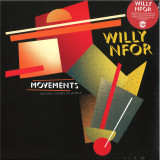
This compilation is more than a selection of songs from Willy Nfor’s solo career in Nigeria—it’s the story of a man’s determination to live his dreams. Known as Willy Ngeh Nfor, he was a founding member of the Mighty Flames. One morning, Willy and his bandmates packed their instruments, grabbed a few clothes, and headed from Cameroon to Nigeria. Crossing the border on foot, they made their way to Onitsha.
“We left Cameroon with no contacts in Nigeria—it was an adventure. We’d heard about the FESTAC Arts Festival and felt we had to be part of it. Our first band in Nigeria was Pentagon Funk Band, sponsored by the 5th Brigade in Port Harcourt. Later, we moved to Onitsha and signed with Right Time Stores, recording Sweet Love (RTLPS 011) as The Mighty Flames. The sessions were at Decca Studios in Lagos, with a 16-track analog system. It was intense—no room for mistakes. We rehearsed endlessly before recording each take.” (Vincent Ekedi, Drummer, Mighty Flames)
Willy’s journey was shaped by his resilience and talent. Losing his mother early and facing family struggles, music became his escape. Inspired by funk and jazz-rock greats like Bootsy Collins, Jaco Pastorius, and Stanley Clarke, he honed his skills on bass and composition, playing with local bands alongside musicians like Vincent Ekedi. Together, they refined their grooves, dreaming of brighter futures.
After his time in Nigeria, Willy moved to Paris, becoming a session bassist for legends such as Manu Dibango, Mory Kanté, Tony Allen, Akendengue, Ray Lema, Jean-Luc Ponty, and Kanté Manfila. Touring extensively, he lived the “Star Life” (Star Life, Cornerstone Records, Feel So Fine, 1981), playing funk grooves with giants in grand venues, fulfilling his dream of the spotlight.
Laufey is Los Angeles-based singer, composer, producer and multi-instrumentalist whose jazz songs are about young love and self-discovery. Raised between Reykjavik and Washington, D.C. with annual visits to Beijing, the Icelandic-Chinese artist grew up playing cello as well as piano and became hooked on the jazz standards of Ella Fitzgerald after digging through her father's record collection. Typical of Me is Laufey’s debut EP including her breakout single “Street by Street” - the 2023 pressing includes an updated cover & expanded insert.
out of Stock
Last delivered 20 months ago available to reorder, subject to availability
So 2020 was going to be the year of Van Weezer -- the big riffs rock album Weezer made as an homage to the metal bands they loved growing up -- until, thanks to the global pandemic, it suddenly wasn't. The entire time, however, Weezer frontman Rivers Cuomo was busy at the piano, writing a very different album that referenced another vital musical touchstone of his youth: The Beach Boys' Pet Sounds.
Throughout the summer of Covid-19, he and the band -- along with a 38 piece orchestra -- chipped away at masked recording sessions until the record was complete. The result is an album called OK Human -- a cheeky nod to Radiohead's technophobic future-trip OK Computer, but sounding nothing at all like that record. Taking the listener bit by bit through parts of Cuomo's every day, it's a Technicolor symphonic spree that meditates on how over-and-under-connected we all are, particularly in a year where we can see each other with greater ease, but actually can't physically be near each other at all.
OK Human is also packed to the brim with some of the best, most personal songs Cuomo has written in the last decade, all of which shine brighter and bolder with splashes of string and horn arrangements courtesy of album producer Jake Sinclair and arranger Rob Mathes. It's hard to imagine any other band who came up in the alt haze of the 90s creating a simply perfect orchestral pop album, but that is exactly what Weezer's done; OK Human is a testament to the excellent, enduring melodies Cuomo has written since Weezer's inception, and the ones he continues to write today.
out of Stock
Last delivered 20 months ago available to reorder, subject to availability
Recorded in 1997, Mountain Top features the commanding vocals of Tony Roots, backed by the legendary Firehouse Crew and produced by the visionary Fada Waz (Clifton Carnegie). This record’s release was driven by the people, evidenced and encouraged by the countless wheel-ups and sing-alongs during King Original’s international tour dates over the last three years whenever this seminal recording was dropped in the set.
Tony Roots, known for his cultural and spiritual themes, delivers a powerful vocal performance, reminding us that life’s most important journey is overcoming obstacles to find ‘Jah Love on the Mountain Top.’ This message is as relevant in today’s fast-paced, easy-come-easy-go consumer culture as it was when recorded three decades ago.
The Firehouse Crew renowned for their work with iconic acts like Luciano and Sizzla—shine brightly on this riddim, with the MPC drum machine-centered sound of 90s Jamaican roots reggae. An up-tempo 4/4 steppers beat layered with rich analogue textures and soulful instrumentation defines this timeless recording.
The first of many collaborations between Studio 55, Before Zero Records, and Footsie, the King Original legacy continues into the future, honouring the enduring contributions of Fada Waz and his collaborators.
Clifton Carnegie aka Ras Wazair aka Fada Waz - Clifton Carnegie, known as Ras Wazair, founded King Original Sound System in 1973, establishing it as East London’s foremost reggae sound. Operating under his Studio 55 moniker, he collaborated with legends like Johnny Osbourne, Barry Brown, Michael Prophet, Cornell Campbell, and Frankie Paul through imprints such as Original Sounds, Studio 55, and Original International. A mentor to many of the UK’s top sound systems and a key figure in London’s RasTafari community, Ras Wazair’s connections with prominent Jamaican artists, bands, and producers like Fattis Burrell ensured that Jamaican music remained an influential force in the UK sound system scene.
King Original Founded in 1973 by Fada Waz, King Original Sound System shaped East London’s reggae scene for over two decades. Fada Waz and his son Footsie—a UK Grime pioneer who in later years expanded the legacy through his KO LP series and sold-out King Original mixed-genre events at London’s top venues—worked together until Footsie assumed full control following Fada Waz’s passing in 2021. Having worked with artists such as Dizzee Rascal, Arctic Monkeys, The Prodigy, D-Double E, Wiley, and Skepta, Footsie’s dedication to King Original has reinvigorated the legacy that underpins all UK bass music—the reggae sound system. Joining Footsie is his brother, Wazair’s last born Ras D also Jah Model, and long-time collaborator Sir Spyro, producer of two UK number-one hits with Stormzy and son of UK reggae stalwart Nerious Joseph. Armed with cutting-edge QSS sound system technology, King Original continues to set trends, shaping the future of UK bass music.
Tony Roots Hailing from Manchester, Jamaica, in the 1980s, Tony Roots emerged alongside iconic figures like Garnet Silk and Tony Rebel. While his peers remained in Jamaica, Tony moved to the UK, where he went on to release ten albums and numerous singles, including hits like Grow Your Natty Dread Locks and Hola Zion. A steadfast champion of Rastafari, Tony has collaborated with legends such as the Firehouse Crew, earning worldwide respect and a devoted following within both the reggae community and the UK sound system scene.
The Firehouse Crew Formed in 1986, The Firehouse Crew became a cornerstone of the 1990s roots-reggae revival. Initially associated with King Tubby’s Firehouse label before establishing their own, the band rose to prominence through collaborations with producer Philip “Fattis” Burrell at Xterminator Records. Their contributions to timeless albums like Luciano’s Where There is Life highlight their extraordinary musicianship. Over the years, The Firehouse Crew has backed iconic artists such as Sizzla, Buju Banton, and Beres Hammond, cementing their legacy as masters of roots reggae.
out of Stock
Last delivered 18 months ago available to reorder, subject to availability
Miki Yui is a musician, artist, and composer, originally from Tokyo, who has been based in Düsseldorf since 1994. Her whose work has long explored multiple forms of media, while documenting liminal zones of perception. On her latest album, As If, Yui creates a subtly connected suite of electronic music, drawn from improvisations and randomised processes that she has engaged with modular synthesis. Deeply poetic in its expression, even at its most minimal, the six pieces on As If have a curious tenor – they are, each of them, intensely sensuous, almost haptic listening experiences, as though the laser focus that Yui displays towards her compositions allows her to engage them as almost physical presences in the world.
One of the keys that unlocks the intimate complexity-in-simplicity of As If was Yui’s encounters with the Amazonian rainforest in Manaus, Brazil in 2018. Finding that the sounds in the rainforest both shadowed and echoed the music she had been making for two decades, she embraced the possibilities of modular synthesis, the sounds of which she discovered “have astonishing similarities to the sounds I experienced in the rainforest.” There is, indeed, something natural about the way these sounds bloom in real time; in their dedicated focus to the subtle development and mutation of several discrete parameters of sound, they grow slowly, gradually, their rhizomic structures suggesting that we are always situated within the middle of sound.
Sometimes, the material here has a kind of febrile energy, as on the ticking, clacking electronics of “Generativ”, a track that seems to rotate in the air in front of the listener, the light reflecting off its multiple surfaces as we catch the intricacies of its micro-patterns. Elsewhere, we slide into a cooled but welcoming environment, like the late-night fire-fly horizon of “Song 4”; there’s also the humid, dripping tropical sunset that’s documented on “Summernight”. It’s a music that’s hard to locate external coordinates for, though there are, perhaps, some parallels with the work of Laurie Spiegel, Eliane Radigue’s Vice Versa, and Pauline Oliveros’s “Roots of the Moment”. But As If is an extraordinary collection of naturally developing, rich studies for slowly mutating, enveloping, elemental electronics.
Gatefold Sleeve and on sea blue 180 GSM vinyl. Recorded as an instrumental by Tractor in Rochdale in 1971 and originally released on LP in 1972 “Shubunkin” has now been sampled by LA band Broken Bells (Danger Mouse/ Brian Burton and James Mercer, the lead vocalist and guitarist for the indie rock band The Shins) as the basis of their track “To Anyone a Ghost”. Julian Cope writes about the Tractor track “Shubunkin” : ...“Then, one night in mid 1972, John Peel played a track that was more mysterious than almost anything I had ever heard. It was the music I thereafter wanted played at my funeral and was most certainly the sound of a soul approaching the canopy of heaven as it left the earth for the last time.” ..“without the proper printed Dandelion label there to guide me, I left a blob of marker pen on the side that began with ‘Shubunkin’ and that became the ultimate beginning to any LP in my collection.” Originally Issued in late 2019 as a vinyl LP as a protest against Rochdale Boroughwide Housing’s plans to knock down four of the Seven Sisters/College Bank Flats- these blocks of flats were home to Tractor’s drummer in the 1970s as well as their manager Chris Hewitt and Andy and Liz Kershaws’ dad and a whole host of poets, musicians, tv producers etc. Many Tractor numbers were worked out in these flats prior to recording at various studios around Rochdale and Heywood. All songs written by Jim Milne and Steve Clayton. Jim Milne -vocals guitar (and bass most tracks), Steve Clayton -Drums and Percussion, Dave Addison- bass on Northern City. The album now starts the way Julian Cope always wanted to run.
Young Croatian cellists Luka Sulic and Stjepan Hauser, together known as 2CELLOS, have achieved sensational success by taking the cello to a new level. Their playing style has broken down the boundaries between different genres of music, from classical and film music to Pop and Rock. 2CELLOS have no limits when it comes to performing live and are equally as impressive when playing Bach and Vivaldi as they are when rocking out AC/DC. Their debut album is a thrilling collection of chart-topping rock and pop songs performed in their signature style.
2CELLOS rose to fame in 2011 when their version of Michael Jackson’s “Smooth Criminal” took the world by storm. The YouTube video became a massive viral sensation leading to a record deal with Sony Masterworks and an invitation to join Sir Elton John on his worldwide tour. The song charted at No. 10 on the Billboard Hot 100 Digital Songs Chart and landed the 2CELLOS’ debut album in the Top 100.
In addition to many sold out solo tours (US, Japan, Europe) and collaborations with the Red Hot Chili Peppers, Queens of the Stone Age and George Michael, the duo have also appeared on major TV shows such as The Tonight Show with Jay Leno, The Ellen DeGeneres Show, The Bachelor and many others. Together with the Chinese classical superstar pianist Lang Lang, they appeared at the CCTV New Year’s Gala for more than 1 billion viewers.
2CELLOS features the duo’s renditions of popular songs such as “Use Somebody”, “Smooth Criminal”, “Fragile”, “Hurt”, “Smells Like Teen Spirit” and more. It is released as a 10th anniversary edition of 1500 numbered copies on white coloured vinyl. It is housed in a heavyweight jacket with soft touch laminate and includes an insert.
Balancing mystic pop, psychedelic ambiance, and pulsating electronica, her debut LP weaves a divine, harmonic universe
Ghent-based singer-songwriter and composer Nele De Gussem (Uma Chine) has today announced her debut solo album The Loom Of Longing, out February 7 2025 on Viernulvier Records.
De Gussem has delivered a sensational album of mystic pop, psychedelic ambiance and pulsating electronica. To shape her divine harmonic universe, she has a preoccupation with soundscaping that involves using her sensual voice and electronic/analog instruments as a sort of palette of rich textures where she’s the auteur, as opposed to the cog in a bigger machine as she’s been with her band, Uma Chine.
“This album celebrates having found desire as a compass in my life and as a medicine to quell fear, holding back and keeping silent.”
— NELE DE GUSSEM
The cracking first single from the album - ‘Wonder’ comes with an eye-popping music video by Belgian visual artist Victor Verhelst (STROOM). Verhelst crafts a unique collage of 90s computer game-inspired motion graphics, which has an otherworldly appeal and highly symbiotic relationship with the music. Rarely do the marriage of visual and musical arts come together so invitingly.
Of the single’s feel, Nele De Gussem says: “‘Wonder’ is about the paradoxical situation of being at a party and finding stillness within. Introspection amid exuberance; tranquillity amid joy. It’s like being swept away by a rush of light - feeling our head in the clouds - but feeling equal magic in the corporeal self.”
Causa Sui returns with a new live album, recorded at their home turf – the legendary Copenhagen venue Loppen, located at the famous, and notorious, freetown Christiania – a venue the band has played more often than any other throughout their 20 year career.
This set is the perfect companion to last year's career highlight ‘From The Source”, which saw the band condense the multiple stylistic aspects of their sound into an awe-inspiring 47 minutes. Represented here are key cuts from that album – including the sidelong 7-part epic ‘Visions of a New Horizon” - as well as a few fan favorites such as ‘Red Sun in June” from the band's Summer Sessions series, which has never previously been released in a live version. In this rendition the band let themselves get carried away, riding on the energy of the room, soaring into jammy Grateful Dead territory. Elsewhere the band explores jazzy, improvisatory group interplay (The Spot) and get as heavy as they can (Soledad, Boozehound). Getting carried away is what Causa Sui are all about when playing live, and that mentality is captured in entirety on this set. Mixed and mastered by Jonas Munk from a multitrack soundboard recording
Young Kingz II marks Krept & Konan’s first album since top-5 charting Revenge Is Sweet, a project which cemented their place in music history as UK rap royalty and saw them become the first British rap act to headline the O2 London. It also follows the duo’s equally ground-breaking 2017 release of 7 DAYS and 7 NIGHTS, which saw them become the first act ever to have two mixtapes simultaneously enter the Top 10 of the Official UK Albums chart, and their 2015 debut album The Long Way Home which debuted at no. 2 on The Official UK Albums Chart, becoming the highest charting British Rap album in UK chart history.
With Young Kingz II, Krept & Konan are set to continue their legacy and undisputed relevance in the British music scene. Returning to their independent roots, they come full circle with the follow up to their 2013 released Young Kingz mixtape which catapulted the duo into the Top 20 of The Official UK Albums Chart, earning them a Guinness World Record for the highest charting UK album by an unsigned act.
Young Kingz was pivotal in establishing Krept & Konan as trailblazers in the UK rap scene, kickstarting their reputation for repeatedly breaking records and consistently breaking ground. With a broad-ranging rollcall of featured artists, it heralded their signature approach to collaborations of enlisting fledgling artists (such as s then little-known MC, Stormzy), alongside more established ones (George The Poet, Chip, Tine Tempah and Giggs). It also saw Krept & Konan gain traction across the Atlantic with US rappers French Montana, Chinx Drugz, Lil Durk stepping up on the remix of the mixtape’s second single release, "Don’t Waste My Time", and garnered them a BET Award (Best International Act) and MOBO Award (Best Hip-Hop Act).
‘Young Kingz II’ is poised to be yet another milestone in Krept & Konan's unstoppable career. As unapologetic pioneers in UK hip-hop, they continue to push boundaries and set new benchmarks in British music.
Rauelsson's third solo album for Sonic Pieces focuses on simplicity and minimalism. It recalibrates his love for ambient with an austere approach that conjures an atmosphere of silence and solitude. On Niu, the artist has traded his craft for shimmering layers of sound clusters and electronic editing in favor of a predominantly raw and acoustic recording.
Recorded primarily in Sofia and Berlin and mixed at Saal 3 of Funkhaus Berlin, Niu presents a 9-song journey that includes orchestral compositions, delicate synth miniatures, and sparse brass and woodwind drones with room for spoken word and a hint of psychedelic noir fable. The result is an album that, despite the eclectic choice of instrumentation, paints a landscape of spiritual clarity; an album that without being typically classical, still feels like a classical album. Three themes vary across the 9 pieces, starting with the purely orchestral "Prelude No. 7" before moving on to airy synth bass arpeggio and pedal steel. With more changing instruments, Raúl next takes us into a fairytale flute composition with guest flutist Heather Woods Broderick and brass vibrations by the trio Zinc & Copper. Finally, Katrine Grarup Elbo recites a poem by Raúl, ending the piece on a somber but beautiful note. The rest of the album continues in this vein, creating a unique sound that surprises the listener at every turn. Niu is a real departure from the artist's previous works in both scope and musicality. Everything was recorded without overdubs and with only minimal editing, trying to preserve the feeling of music coming from a room where musicians play live. Overall, this is music that finds comfort in movement as much as in pause and silence; music in which tenderness and tension exist in the same gesture.
The album also follows a certain mysticism with its poetic interludes, alternate track lists and titles like "Podium Of Riddles", "A Keyhole-Shaped Island" and "Ceramic Swallows, Set Of 3". Perhaps, given enough time, a hidden meaning or a new perception will be revealed. Niu is also set to be expanded into an art book, containing poems and photographs by Raúl, as well as an exhibition. Perhaps the key lies somewhere in there.
WRWTFWW Records is honored to present a one of a kind collaboration release between buzzing UK producer and DJ Pizza Hotline and Swedish electronic and synth icon Mitch Murder, delivering 3 gigantic tracks each for the Anti Gravity Tournament album, now available as a limited-edition LP housed in a heavyweight 350gsm sleeve illustrated by the legendary junkboy. It is also available in digital formats.
Inspired by the classic WipEout video game series, this high-energy boosted split-album transports listeners into the futuristic world of anti-gravity racing, a colorful turbo adventure soundtracked by 6 mega tracks of fast-paced atmospheric jungle, thunderous breaks, and liquid drum & bass. The adrenaline-fueled collection delivers maximum energy and dreamy vibes, a true paradise for fans of 90s/Y2K video games, LTJ Bukem, Peshay, Soichi Terada, and previous efforts by Mitch & Pizza.
Anti Gravity Tournament follows 2 critically-acclaimed albums by Pizza Hotline – Level Select and Polygon Island, both still available on WRWTFWW Records, as well as the limited Low Poly Breaks cassette series which sold out in a few minutes.
Mitch Murder is known as one of the originators of synthwave and has released timeless albums on Rosso Corsa Records, Mad Decent, and My Pet Flamingo (TimeSlave Recordings). He is also the man behind the Kung Fury soundtrack and has collaborated with…David Hasselhoff himself!
The astonishing exclusive artwork comes from the one and only junkboy, creative director at Mojang Studios (Minecraft) and all-around design grandmaster.
Fasten your seatbelt and join the fun.
out of Stock
Last delivered 8 months ago available to reorder, subject to availability
Blending influences from classical, film and electronic music, Angus MacRae's extensive musical output encompasses solo albums, concert performances, and award-winning scores for theatre, film, ballet, television and contemporary dance. His has scored internationally touring dance productions, Olivier Award winning shows heard across London's West End and on Broadway, and acclaimed films screened at international festivals. Drawing on themes of memory and imagination, his immersive solo work transcends its classical roots to create transportive, elegiac compositions of unflinching emotional honesty. Spanning three albums and a number of EPs, his work has reached a global audience.
Vivarium, his third full length studio album, is an otherworldly journey through the lost worlds of childhood imagination. A blend of intimate piano, soaring strings, ethereal voices and haunting electronic textures, Vivarium evokes what the artist describes as "a series of bell jars to be traveled between." Reflecting on the album's genesis, MacRae shares: "I spent years trying to capture the emotional resonance of my childhood imagination. As a child, the world felt as magical, mysterious, and boundless as my dreams. In time, fragments of music emerged that seemed to recapture that feeling—a glimmer in the dark, an echo of the magic, fear, and mystery of those early memories. Through Vivarium, I hope to offer a portal back into those worlds."
This exclusive double vinyl release also includes Bell Jar, an evocative bonus track on Side D, featuring a collaboration with acclaimed New York clarinetist Michael Winograd. In this new composition, MacRae reimagines themes from the album, weaving in Winograd's improvised melodies to create a fresh, expressive piece that brings a touch of Klezmer soul to Vivarium's ethereal soundscape.
In 1971, film producer David Gil and his business partners Robert S Sinn and Paul Frankenberg launched a film company called GSF. Over the next few years, it would be involved in a small number of productions. But, in 1971 the movie business was kind of old-hat, music was where it was at, and so GSF Records, a well-funded label, headed by Larry Newton was formed. Today Newton is largely remembered for his attempts to prevent Louis Armstrong from recording 'What A Wonderful World' but that didn’t stop him from growing ABC from a second division company to an industry leader. As he approached his 52nd birthday he was unveiled as GSF Records’ president a full-service music company, involved in records and publishing across all genres. Through a joint venture with drummer Bernard Purdie the label targeted the R&B charts and soul & funk dominated GSF's release schedule.
Black music ruled and this was reinforced by the hiring of Lloyd Price as head of A&R (veteran R&B star), and producers George Kerr (All-Platinum), Mickey Stevenson (Motown) and Jerry 'Swamp Dogg’ Williams. No wonder then, unintentional as it was, that GSF left behind such an extraordinary legacy of rare soul treasures.
NEW YORK’S BEST KEPT SOUL SECRET Features legendary Northern Soul classics courtesy of Anderson Brothers, Skull Snaps and Connie Laverne Produced by hit makers George Kerr and Motown veteran Mickey Stevenson Starring the Whatnauts and Eddie “Hey There Lonely Girl” Holman
The Durutti Column, Linda Perhacs, Penguin Cafe Orchestra, Judee Sill. Hello and welcome to Decide Which Way The Eyes Are Looking, the new record by Lina Tullgren. It is a deeply gorgeous intervention, a carefully ornamented dilemma, the most inviting crisis. Made with a host of Los Angeles musicians, Decide exposes Tullgren's daring and trust. Each song is a ring of curious sound: the skip of harp strings, the flutter of woodwinds, the ratchet of percussion, the euphonium's sigh. And at the center of each wreath, Tullgren sings, finding this space between Judee Sill and Sam Jayne. It's a tone that signals weariness, but a weariness hand-in-hand with tenacity. There's a clarity, a kind of immovability. Lina Tullgren's first record came in 2016, a homemade, under-the-skin set of laments. Subsequent LPs and constant touring cemented Tullgren's reputation as a composer of "wide-eyed wonder paired with a resonant despair." 2019's Free Cell showed Tullgren lingering in the margins of their songs, finding places both aloof and spare. Floodgates opened; Tullgren spent the subsequent years exploring deep listening, improvised music, and extended technique. They developed a patience and faith in cooperation that ranged at the far edge of song. Collaborations with Mayo Thompson and Claire Rousay furthered this development. This was not a break with the past for Tullgren, rather it was an opportunity to see how far a song could go. And from that distance, deep in a landscape of drone and tension, Tullgren returned to the bright vulnerability of a lyric and a hook. Weaving together the affective and the radical, Tullgren took the quiet isolation of a shoreline cabin to write the songs that would become Decide Which Way The Eyes Are Looking. For Tullgren, Decide is a culmination of all the work they've done throughout their life: the melodic, the dense, the confessional, the unknowable. It's also a tribute to collaboration. Describing the sessions as having "a lot of space and a lot of ease,"" Tullgren invited musicians from a vast field of songmaking to play on the recording: Leng Bian, Zach Burba, Luke Csehak, Corey Fogel, Jenny Hirons, Tara Milch, Tim Ramsey, Michael Sachs, Jude Tedaldi, Marta Tiesenga and Ben Varian. Jonny Kosmo's backhouse was offered as a cozy, easygoing space for the players to create their parts together, and the record was completed by Tullgren and Luke Csehak together at their Los Angeles home. In Tullgren's words: "I feel really strongly that this album is a portrait of the community I found in Los Angeles." Decide Which Way The Eyes Are Looking is a quiet masterpiece: a generous, memorable journey. It is the result of five years of labor, the product of abandoning the pop song entirely and starting over. Whatever wanderings or doubt fueled it, Decide is also entirely at ease: a record on which Tullgren sings "and I know/what to do now" and "I know exactly what to do" in subsequent songs, clear in the revelations this path has given the
Grammy-nominated artist, producer and label-head TOKiMONSTA and prolific composer, producer and songwriter, Suzi Analogue have officially released their collaborative mini-album, Analogue Monsta: BOOM via Young Art Records. Originally released in limited quantities exclusively on vinyl in 2012, the 11-track project has now been remastered. Analogue Monsta: BOOM serves as a time capsule to the eclectic sound of the early 2010’s beat scene, which both TOKi and Suzi’s futuristic production styles helped champion out to a broader audience outside of the world of “bedroom producers.” Suzi Analogue's smooth R&B vocals pair perfectly with TOKiMONSTA's glitchy beats and pulsating bass, demonstrating their versatility and flair for pushing sonic boundaries. The album lays one of the early foundations to the fusion of future bass, alternative R&B and electronica, highlighting the pioneering spirit of two acclaimed female artists.
Analogue Monsta: BOOM marks an important milestone for the two as they reflect on the prescient nature of their early collaboration. “This special project with Suzi Analogue is one of my favorites. It never had a formal release so it feels right to share it with the world a decade later with fresh ears,” states TOKiMONSTA. Both Suzi and TOKi’s journeys converged early in their careers as the two paved the way for a groundbreaking era of femme-identifying producers and songwriters within the music industry. Speaking on the project’s significance Suzi Analogue adds, “The Analogue Monsta project was truly ahead of its time. We felt a strong calling to propel it into the future, recognizing the trailblazing potential it held. It provided a vital space for femme-identifying producers and songwriters to fearlessly explore beats, lyrics and tempos with us. This experimental journey not only influenced the current musical landscape but is poised to leave a lasting mark on the soundscape of the future."
The result is a record that very much is its own world. Where chaos is carefully organized, where being able to ever actually chill out is totally illusory, a trick mirror.
Ginnels never let up. Though it has been, staggeringly, eight long years since the last irresistible jangle pop transmission under the Ginnels moniker, nothing much has changed in Mark Chester's approach when it comes to the practice of music making, even if much everything else for Chester has seen considerable flux – he's now a father of two, and most shockingly of all for an indie popster of his ilk, gainfully employed. "It definitely started the same way all Ginnels stuff starts," Chester explains, "which is just me looking through five years of phone demos and going 'that's a decent song' and 'that's a decent song', and if you keep that up then you have a full album."
The man himself might be coyly committed to making his process sound as pedestrian as possible, but from the moment the delicate chiming introduction of album opener 'The Body Was Gone' goes widescreen – revealing an expanded sonic palette richer in timbre and exponentially wider in scope than anything Chester has let out into the world thus far – it is apparent that "The Picturesque" is poised to be less than parochial in its sonic purview.
From here, "The Picturesque" plays like a gauzy road trip Super 8 footage cutting between scenes of sunset at Monument Valley and B-roll from around middle-Ireland, entirely soundtracked by some enchanted mixtape of heretofore unheard B sides from REM, XTC and The Go-Betweens, unexpected guest appearances from the surprisingly together-sounding ghost of Johnny Thunders and snippets from your coolest friends' unreleased instrumental experiments. All liberally rippled with Chester's unique ear for melody and appetite for the unexpected when it comes to crafting guitar parts. And this, by design, feels like a Guitar Record, above all else.
For all its effortlessly sticky lyrical and melodic twists, "The Picturesque" separates itself within the mighty Ginnels catalogue in both the dexterity in playing and diversity in tone on show across these 12 tracks. And 12, of course as we know, being the optimum number of tracks for any LP to have, so bonus points for that too.
Imaginary friends Akka & BeepBeep share the third release on their label: Floral Ancestors by Raduns. The 12” offers blooming ambient rooted in dub, lush drone and hand-picked cosmic that’s all grown deep in Detroit.
Spacious sonic arrangements vividly swell yet keep grounded within a sculptural rhythmic core. Raduns sows synth basslines and wispy pads next to harmonious guitars and muted field recordings. Grooving propulsion drives throughout. Rhythms appear, in negative space, like outlines between leaves. Recorded with machines direct to SD card, the compositions represent ephemeral blessings of experience. As if strolling into a verdant conservatory, the layered and diverse sensations blend into one cohesive revelatory experience.
On their first record, Raduns draws an ancestral line in Detroit as inspiration. A time when you could ride a streetcar from Dexter-Linwood to Belle Isle. A time before freeway expansion demolished vibrant Black neighborhoods. A time before the rebellion, motown and white flight. A time when Raduns’ great-grandparents were florists in the city, serving the community in times of celebration and times of grief. This melancholic circle shapes the project in which Raduns summons these Floral Ancestors, stretching upward from the darkness of the earth into the light of the world back down once more.
AKKA’s Side: “Grass Boulevard” exhales a luscious soundscape that develops through wave-crashing synths and circulated guitars to a transplanted acid lead. “Spread” lays out a decoration of blended sample and hold synth with kosmische styled guitar licks. Tracked as a single take in a Detroit community studio, the tune intuitively reseeds the symbiotic sprout between krautrock and Detroit techno.
BEEP’s Side: “Metrograde Bouquet” submerges you into the bulb of a handcrafted vase. Dub techno roots grow out into murky water with energy that is subtle yet profound. “Oldest of Arrangements” textures breaths of misty air cascading ventilating in on itself. The track’s time seems to stretch and disappear within a dark and deep undercurrent. A harmonic and reverberant resonance closes the record in a flowering of beauty and peace.
“You’re a flower child. Put this music out.” - Someone Important in Detroit
By the late 90s the independent music scene in San Diego, CA had become synonymous with noisy, post-hardcore bands that were pushing the boundaries of what it meant to be punk. Camera Obscura were one of those bands. They cut their teeth on the angular and abrasive sounds of Antioch Arrow, Clickatat Ikatowi, and Heroin, and incorporated synths and electronics to create their own dark, jarring, experimental rock sound.
The band’s musical output was sparse. In addition to two 45s, the band released their only LP, To Change the Shape of an Envelope in 2000 on Troubleman Unlimited. The album runs the gamut sonically with dark, high energy songs like “Twenty-Five Diamonds” and “Sarasota”, the early industrial sound of “Something About a Nightmare”, and the shoegaze influenced “Cinematheque”.
In October of 2024, the band announced a partnership with Solid Brass records to begin work on reissuing their long out of print album. To Change the Shape of an Envelope has been completely remastered by Pete Lyman at Infrasonic Mastering with new artwork by Sonny Kay (The VSS, GSL Records).
To Change the Shape of an Envelope will be available digitally for the first time ever as well as on limited edition transparent red or opaque white vinyl on 2/7/25 from Solid Brass Records.
By the late 90s the independent music scene in San Diego, CA had become synonymous with noisy, post-hardcore bands that were pushing the boundaries of what it meant to be punk. Camera Obscura were one of those bands. They cut their teeth on the angular and abrasive sounds of Antioch Arrow, Clickatat Ikatowi, and Heroin, and incorporated synths and electronics to create their own dark, jarring, experimental rock sound.
The band’s musical output was sparse. In addition to two 45s, the band released their only LP, To Change the Shape of an Envelope in 2000 on Troubleman Unlimited. The album runs the gamut sonically with dark, high energy songs like “Twenty-Five Diamonds” and “Sarasota”, the early industrial sound of “Something About a Nightmare”, and the shoegaze influenced “Cinematheque”.
In October of 2024, the band announced a partnership with Solid Brass records to begin work on reissuing their long out of print album. To Change the Shape of an Envelope has been completely remastered by Pete Lyman at Infrasonic Mastering with new artwork by Sonny Kay (The VSS, GSL Records).
To Change the Shape of an Envelope will be available digitally for the first time ever as well as on limited edition transparent red or opaque white vinyl on 2/7/25 from Solid Brass Records.
HTRK step into their 21st year on reflective terms, launching a series of collaborations, covers/remixes, installations, and performances alongside the new repress of their full-length debut, Marry Me Tonight. First released in 2009 via Blast First Petite, the album saw its first vinyl pressing in 2015 via Ghostly International and has since been out of stock. In late 2024, Marry Me Tonight becomes available in limited edition pink and black vinyl, also finally on streaming services. Few groups in history elevate mood to such singular, smoldering supremacy as the Australian duo of Jonnine Standish and Nigel Yang, aka HTRK (or "hate rock" if informed). Across two decades of work and wounds, HTRK’s sound has shape-shifted between densities and intensities, noise and nakedness, but never wavered in its delicate poetic gravity. In HTRK’s sound world, cavernous reverberations of dub techno are mixed with frosted post-punk motifs and the gravelly imperfections of industrial, reimagined in the setting of a dingy basement. Like all HTRK albums, Marry Me Tonight was singular in sound and circumstance. It's the only album the outfit recorded from start to finish as a trio, and it's the only HTRK record that bears the co-production stamp of Rowland S. Howard. Breathy, caustic, and rife with contradiction, Marry Me Tonight took the raw material recorded on 2005's Nostalgia and transformed it into a pop record — pop that buckled and warped beneath the glare of Howard, fellow producer Lindsay Gravina, and the HTRK trio: Jonnine Standish, Nigel Yang and Sean Stewart. Howard died at the end of 2009; Stewart died the year after. Things would never be the same. The band would carry on and reach new heights despite it all, but as a trio, this is their definitive document.