
15


Emo-Deutschpunk in den Neunzigern, Indierock-Experimente in den 2000ern und mittlerweile im queeren Power-Pop zu Hause: SCHROTTGRENZE Synthesizer, orchestrale Arrangements und klassische Chöre - die musikalische Reise, die hinter der einstigen Punkband aus dem niedersächsischen Peine liegt, ist erstaunlich. "Wir haben uns nie von der Musikindustrie, einer bestimmten Szene oder kommerziellen Erfolgsansprüchen abhängig gemacht und sind stets unseren gemeinsamen thematischen und musikalischen Vorlieben gefolgt", erklärt Sängerin* Saskia Lavaux, die SCHROTTGRENZE 1994 gemeinsam mit Gitarrist Timo Sauer gegründet hat. Bassist Hauke Röh und Schlagzeuger Lars Watermann vervollständigen das Quartett, das seit 20 Jahren in Hamburg ansässig ist. Als die Band 2017 - nach einer mehrjährigen Schaffenspause - mit dem Album "Glitzer auf Beton" ihr Comeback feiert, wird der Anspruch an die eigene musikalische Unabhängigkeit besonders deutlich. "Damals nahm die queere Trilogie ihren Anfang, die wir 2019 mit "Alles Zerpflücken" fortgesetzt haben und nun mit "Das Universum ist nicht binär" abrunden", fasst Saskia zusammen, die mittlerweile auf ihre ganz persönliche queere Transformation zurückblickt. Produziert wurden die besagten drei Platten, die eindeutig eine neue SCHROTTGRENZE-Ära markieren, allesamt gemeinsam mit Kristian Kühl. Neu hingegen ist die Zusammenarbeit mit Oliver Zülch, der in der Vergangenheit bereits Bands wie Die Ärzte, Sportfreunde Stiller und The Notwist tontechnisch supportet hat. Das Ergebnis: Ein neuer, klarer und empowernder Sound, der dem unabhängigen Bandkollektiv sehr gut steht.

"All This Is Chance" ist das erste Album von Lisa O"Neill auf Rough Trade Records. Der Vorgänger, laut The Guardian das Folk Album of Year 2019, erschien noch beim Imprint River Lea. In ihrer Karriere konnte Lisa bereits fünf BBC Folk Award Nominierungen einheimsen, richtigen Schub erlangte sie aber in diesem Jahr dank eines großartigen Bob Dylan Cover, das im epischen Finale der Serie "Peaky Blinders" zur Geltung kam. Für ihr neues Album beginnt beginnt O"Neill als Erzählerin ihre Reise auf irischem Grund, lässt sich vom Autoren Patrick Kavanagh und dessen Erzählungen über die Große Hungersnot in Irland inspirieren, um daraufhin über die Verbindung zur Natur, zu Vögeln, Beeren, Bienen und Blut zu meditieren. Die Musik dazu ist orchestral, dramatisch, geradezu cinematisch - wie zum Beispiel bei der ersten Single "Old Note", die sich als trauriges Wiegenlied über den Verlust der Verbindung zur Natur entfaltet. Der Song ist dabei eine Reaktion auf ein Interview mit dem traditionellen Musiker Tony McMahon und zwischen den Noten spürt man geradezu die enge Verbindung und Liebe O"Neills zur Tierwelt und der Natur um uns herum. Beim Album wirkten viele etablierter (Folk)-Musiker mit. Angefangen von Joseph Doyle am Bass, Cormac Begley, Colm Mac Con Iomaire, Kate Ellis (Crash Ensemble), der Pianistin Ruth O"Mahony Brady, Lorcan Byrne an den Drums, Produzent Dave Odlum an der Gitarre, Colm O"Hara an der Posaune, Brian Leach am Hackbrett, Mic Geraghty am Harmonium und David Coulter an der Säge. O"Neills Nichte Sadie-Mae O"Neill ist dazu noch als zweite Stimme auf "Old Note" zu hören.

Tasteful double album with outstanding female singers. When it comes to vocal art alone, the jazz world is firmly in the hands of women. Just think of Billie Holiday, Ella Fitzgerald or Nina Simone. But singers of younger days, such as Sarah Vaughan or Diana Krall, are no less impressive with their enchanting voices. Reason enough for the French label Wagram to unite the most renowned female singers of the last decades on a double album.
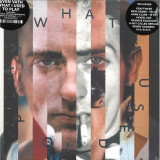
For this uniquely personal retrospective spread over twelve vinyl discs, Sven Väth takes us back to the early days of his DJ career. On What I Used To Play we meet great pioneers of electronic music, gifted percussionists, obscure wave bands, and innovative producers of a bygone 'new electronic' era. Rough beats and irresistible grooves from the identification stage of house, techno, and acid remind us not just how far electronic music has evolved over the past four decades, but how great it was to dance to EBM, techno, and house for the very first time.
If there is one protagonist of the electronic music scene who has remained curious, innovative and at the very cutting edge of music for over four decades, it's Sven Väth. His multi-layered artist albums and Sound of the Season mix compilations have been defining the genre for over two decades, and even today, he is constantly on the lookout for the next top tune to add to the highlights of his next set. At least, that's the case when he's not producing them himself as an artist or remixer. "Actually, it's always been part of my DNA to think ahead," and nothing had been further from his mind than looking back at his past, but when in spring of 2020 the international DJ circuit had to be scaled down to virtually zero, the 'restless traveler' suddenly had time. Time to stop and reflect on "how it actually was back then, at the very beginning of my career..."
"It was a great trip and with every track, beautiful memories came flooding back".
In the London apartment, he had just moved into, Sven has set up a "little music room", where he cocooned himself for several days, "to look way back for the first time and review my musical journey through the eighties, so to speak."
The interim result was six thematically oriented playlists with a grand total of 120 tracks from 'early 80s' to 'Balearic late 80s', together with excursions into afrobeat, European new wave, and EBM sounds and a few epochal techno/house tracks from the USA in between. From these 'Best of Sven Väth's favorites', the project What I Used To Play crystallized. Sven remembers how the Cocoon team reacted to his proposal: "They found the idea of making a compilation out of it MEGA from the beginning and everyone said 'Sven, go for it', but then, of course, the work really started, namely, to clear the rights and to get clean sounding masters of the up to 40-year-old tracks. There was also disappointment, of course. We couldn't clear certain titles because the rights holders in the USA had fallen out with each other or simply disappeared from the scene. In short, it wasn't easy, but now I can safely say we got the most important tracks."
Finally, after two years of research, curation, design, and administrative fine-tuning, the "little retrospective" from 1981 to 1990 is available. The exquisitely packaged, and three-kilo heavy box set is not only physically impressive, WIUTP is also the definitive record of Sven Väth's musical development. On each of the twenty-four sides of vinyl, you can trace track by track, what influenced him during which phase, and how he took off as a DJ from his parents' Queen's Pub straight into the spotlight at Dorian Gray. There and at Vogue (later OMEN), Sven became the style-defining player in the DJ booth that he still is today.
1981 - 1990: Future Sounds of Now
In the early eighties, the crowd in clubs like Vogue and Dorian Gray danced to what nowadays we call 'dance classics' - mainly disco, funk, soul, and chart pop. It was up to a new generation of DJs, including Sven Väth, the youngest protagonist in the Rhine-Main area at the time, to create their own club-ready music mix. Good new tracks and potential floor-fillers were rarities that had to be sought out and found, in order to prove oneself worthy.
Without MP3s, internet streaming, or other digital download possibilities, music didn't just gravitate to the DJ, instead, it had to be tracked down. In well-stocked record stores in Frankfurt and Wiesbaden or even in Amsterdam, London, or New York, Sven and friends sourced the material for countless magical nights. On WIUTP we can follow Sven's very personal journey through this wild, innovative era in which synth-pop, funk, hip-hop, and disco were successively replaced as 'club music' by house, techno, acid, and breakbeat. By the end of the decade, it was clear to see that these once exotic 'fringe' phenomena would soon become 'mass' phenomena.
Early 80s
Dirty Talk by the Italian-American duo Klein & M.B.O. represents the most innovative phase of the Italo-disco genre in the early eighties like no other track. Mario Boncaldo (I) and Tony Carrasco relied entirely on the original synthetic drum and percussion sounds of the Roland TR-808, coupled with the raunchy vocals of Rossana Casale and guitar accents of Davide Piatto. Of course, other tracks from this period were also influential in style, most notably Unit by Logic System, which worked as the perfect soundtrack to the laser lighting system at the legendary Dorian Gray club. With stomping beats and robotic rap interludes, Bostich by Yello also belongs on Sven's eternal playlist - after all, it caught the attention of Afrikaa Bambaataa, who invited the Swiss duo to perform at the Roxy in New York in 1983.
EBM Wave - Mid 80s
From today's point of view, the almost ten-minute-long, downtempo track Giant by Matt Johnson's band project The The, would probably not be considered an obvious club classic. However, a closer (re)listen reveals the rhythmic intricacies of the percussion overdubs by JG Thirlwell (aka Foetus) on Johnson's composition, and it becomes clear why this exceptional piece of music is one of Sven's absolute favorites. Other classics from this phase include Kaw-Liga by the mysterious The Residents, the hypnotic-synthetic Our Darkness by Anne Clark (and David Harrow), and last but not least, the somber, monotonous anthem Where Are You? by 16Bit, one of Sven Väth's projects together with Michael Münzing, Luca Anzilotti from 1986.
US House - Late 80s
You certainly can't talk about Chicago house without mentioning Frankie Knuckles. The resident DJ at the Warehouse not only gave the name to an entire genre, but also produced epochal floor fillers on the Trax label like the timeless Your Love, sung (and moaned) by Jamie Principle. Acid house protagonists Phuture also hail from Chicago, and on We Are Phuture (also released on Trax) we hear the chirping acid sounds of the legendary Roland TB-303 in full effect. Another featured classic is No UFO's by Detroit's Model 500 aka Juan Atkins, who is rightly considered the 'Godfather of Techno' even if the genre-defining track from 1985 still breathes with the spirit of hip-hop and electro from the first breakdance era.
Afrobeat
Le Serpent, by Algerian-born Abdelmadjid Guemguem, is a track that sounds completely different from everything else on WIUTP. Made in 1978, it's a monumental, rousing groove created without bass or synths, just with five congas! Even though Guem sadly passed away in 2021, his immortal, acoustic beats are understood all over the world and will continue to enrich many thousands of DJ sets for years to come. Another classic that not only Sven appreciates beyond measure is Hugh Masekela's Don't Go Lose it, Baby. In addition to being one of the most important jazz pioneers, the trumpeter and freedom fighter from Johannesburg was very experimental, integrating electronic sounds into his music in later years, in a similar vein to Miles Davis and Herbie Hancock. Dutch jazz pianist Jasper van't Hof's afrobeat project Pili Pili has also aged well. The trance-like, almost sixteen-minute-long track of the same name, manages to fill a whole side on the seventh of twelve vinyl discs in the WIUTP box.
UK-US-Euro - Late 80s
Time for a change of scene, in the truest sense of the word, and from a musical perspective, this section is like landing on another planet. First up is Andrew Weatherall's classic remix of Primal Scream's Loaded, featuring the iconic Peter Fonda sample (lifted from the 1966 biker film Wild Angels) that came to personify the mood triggered by the British Second Summer of Love in the late eighties: "We wanna be free to do what we wanna do, and we wanna get loaded...". This period also saw the emergence of M/A/R/R/S whose only single, 1987's Pump Up The Volume, became a club classic with support from DJ legend CJ Mackintosh. In this most eclectic of sections, we also encounter New York house and reggae producer Bobby Konders and his seminal Nervous Acid.
Balearic - Late 80s
Those who know him, know that Sven had already lost his heart to the 'magic island' of Ibiza as a teenager, so with that in mind, the WIUTP project couldn't end without a Balearic chapter. Inspired by Manuel Göttsching's E2-E4, the immortal, eponymously titled Sueño Latino belongs in there without question. Equally popular on the island was, and still is Break 4 Love by Raze, which thinking about it, would also fit perfectly into the house chapter. Last, but not least, there's an overdue reunion with Sven Väth himself, in his role as frontman of the successful Frankfurt trio OFF. Together with Michael Münzing and Luca Anzilotti (later of Snap!) this 'Organization For Fun' created the off-the-wall club hit Electric Salsa in 1986 which incidentally turned into an international chart smash, putting Sven in the enviable position of having to decide between pop stardom and a DJ career. Well, we all know how that decision turned out and the rest, as they say, is history. A not insignificant part of his story is What I Used To Play. Enjoy!

Behold! Yes, Blue Butterfly, one of the absolute stunners on the revered Selected Sound, is finally available for all the beat-heads. Heavyweight library funk with a psychedelic touch, the super in-demand Blue Butterfly from *deep breath* Hardy's Jet Band, Orchestra Klaus Wuesthoff, Jan Troysen Band and Orchestra Gary Pacific - was originally released in 1971. Incredibly ahead of its time, it's been rare and sought-after for decades.
For many aficionados, this is the best Selected Sound release. Loaded with fuzzy wah-wah guitar, deep flute-lines atop soulful psych-rock breakbeats and huge organ action, its uncompromising funk will blow you away. Sampled for many hip hop beats and dropped by well known rare groove DJs around the world, one jewel in particular from this glorious German vault needs little introduction. The intro to Orchestra Gary Pacific's mesmeric "Soft Wind" rides the illest, crispest drum break you've perhaps never heard - like, the drum break to end them all - alongside a smooth, deep bass line from the heavens. It featured notoriously on the beloved Dusty Fingers comps of the 90s and was brilliantly sampled by Pacewon for his eternal "Sunroof Top". Just listen and be dazzled.
Beyond this mini-masterpiece, the other killer tracks offer brilliance in abundance. Hardy's Jet Band take control of the full A side, and it's full of dynamic psych-funk bombs. Hard, "big city" industrial groovers. In particular, the initial one-two of "Sorry, Doc!" and "Wind It Up" provide thrilling funky-blues rock instrumentals showcasing relentless guitars, flutes, sax and organ, the latter containing gorgeous, hypnotic breakdowns; these tracks just slay. The title track, "Blue Butterfly" is a real deep strut of a track with fantastic soloing from guitar and flute over crisp drums whilst the highway banger "What You Call To Be Free" certainly sounds a lot like unbridled, rhythmical liberty.
On the flip, the ghost-riding "Lady In Space" is a string-drenched acid-western foxtrot. Yep. “Pop Happening” by Jan Troysen Band is a heavy, druggy psych-fuzz organ groover whilst their slow beat-organ-flute gem "A Blue Message" is a gorgeous psych floater conjuring deeply strange frontier lands. Preceding their monster "Soft Wind", the soulful, uptempo groover “Ghetto Gap” by Orchestra Gary Pacific contains solo piano and flute whilst closing out the set is the free-and-easy samba beat of "So Far".
Founded in the late 60s by German composer and musician Klaus Netzle (who recorded under the alias Claude Larson for Sonoton) Selected Sound began as a production music company specialising in jazz, orchestral and electronic recordings. You can’t miss those early LPs in their iconic glossy metallic copper sleeves with minimal German typography. Serious, classy stuff.
The audio for Blue Butterfly has been remastered for vinyl by Be With regular Simon Francis whilst Richard Robinson has handled reproducing the glossy metallic (iconic) original Selected Sound sleeve. Essential.

Following up on reissues of the 2000 compilation »Multila« and 2001’s »Anima,« Sasu Ripatti has thoroughly revisited the classic »Whistleblower« for its first ever vinyl issue on the German Keplar label. Ripatti created entirely new mixes of previously unheard-of alternative versions of the tracks that first appeared on CD through his own Huume imprint in early 2007. He thus shines a new, different light on a record that was as much an expression of reaching a turning point in his life as it also showcased a new, more direct and perhaps more abrasive side of his Vladislav Delay project. »Whistleblower« was marked by the insertion of more noise and disruptive elements into Ripatti’s slowly moving take on intricate electronic music that heavily leaned on dub techniques. Fittingly for an album written at the threshold between one life and the other, »Whisteblower« seems at once melancholic and forward-looking in both tone and style.
»Whisteblower« was the follow-up record to 2005’s »The Four Quarters« and produced in the German capital. »I had quite a hard time in Berlin towards the end and I'm sure the track titles and the music reflect some of that uneasiness,« Ripatti says 15 years later. Changes in his personal life had a profound impact on him when making the record. The fifth track, »Lumi,« was dedicated to his daughter who was born shortly after the album was finished. »I had to reconsider what my life had been,« he recalls this watershed moment in his biography. Having already previously embraced a sober lifestyle—hinted at with the last piece’s title, »Recovery IDea«—Ripatti started questioning his life choices more thoroughly. This is also expressed in »He Lived Deeply,« a track inspired by Miles Davis’s love for Duke Ellington whose title can be read as an implicit question that Ripatti nowadays paraphrases thusly: »Had I been living fully, or fully not living?«
The seven tracks also marked a musical turning point in Ripatti’s work as a producer, not only because it was the last one for which he primarily used analogue and vintage equipment. They are also more straightforward on a music level, more demanding and at times more concerned with subtle rhythms than with the thick textures that were so integral to his earlier work. »Whisteblower« represented the first step in a process of focusing less on sonic abstraction and more on direct (self-)expression. While Ripatti admits that he found working on the album difficult back then, he also points out that he was surprised to hear how »gentle and peaceful« it sounded when he started revisiting the original files he used as a basis for these newly mixed versions. »It probably proves how much more comfortable I had become with sound.«

On June 30, 1986, the same day that Diamanda Galás"s The Divine Punishment was released, the Supreme Court upheld the constitutionality of Georgia"s so-called sodomy law in Bowers v. Hardwick, criminalizing consensual sex between men. At the time, about 15,000 people were known to have died of AIDS in the U.S. alone, with little government acknowledgement besides suggestions to quarantine homosexuals on island colonies. By the end of 2021, the number of AIDS deaths globally would exceed 36 million. The first album in her Masque of the Red Death trilogy, The Divine Punishment is one of the most jarring works of art produced in response to the AIDS epidemic, and a milestone in Diamanda Galás"s artistry and activism. Galás uses her famous voice both as an orational instrument and as well as a physical representation of AIDS and those it afflicts.

James Brandon Lewis is a New York-based jazz tenor saxophonist, composer, and bandleader. His instrumental voice marries the emotional power of gospel and the grit and groove of blues and R&B to the modal and vanguard influences of Albert Ayler and John Coltrane, and Sonny Rollins" expressive melodic and tonal discipline. Moments, his 2010 debut, was followed by two outings for Sony Masterworks" revived OKeh imprint: Divine Travels in 2014 and the widely celebrated Days of Freeman the following year. After working American stages and clubs, he toured European and Asian festivals. Radiant Imprints, a duo outing with drummer Chad Taylor, appeared in 2018 and was followed by the quintet offering An UnRuly Manifesto a year later. In 2021, after he was selected as the "Rising Star Tenor Saxophonist" in the Downbeat International Critics Poll, Lewis issued The Jesup Wagon, his debut for Tao Forms. Along the way, Lewis drew the attention of many improvising artists, most notably the saxophonist and jazz deity Sonny Rollins, who doesn"t offer effusive praise very often. Moved by Lewis" deep, spirit-seeking sound, Rollins said "When I listen to you, I listen to Buddha, I listen to Confucius ... I listen to the deeper meaning of life. You are keeping the world in balance." Eye of I opens with 44 seconds of gritty, high-throttling low-down groove, an ear pulverizing opening designed to cleanse all traces of ordinary from the palette. From there, Lewis offers a prayerful cover of Donnie Hathaway"s "Someday We"ll All Be Free" and then the first of his disarmingly addictive originals, "The Blues Still Blossoms" in addition to many others.

Yellow Vinyl
Over their six albums The Go! Team have taken sonic day trips to other lands - musically dipping into other cultures. But now on this, their seventh - they"ve bought a round-the-world ticket.... Benin, Japan, France, India, Texas and Detroit - all stops along the way. Wildly different voices from wildly different cultures side by side but all still sounding unmistakably Go! Team. Setting the course for a kaleidoscopic, cable access, channel hop. On the vocal roll call there"s Star Feminine Band, an all-girl group from West Africa, the Indian Bollywood playback singer Neha Hatwar, Kokubo Chisato from J-Pop indie band Lucie Too, 19 year-old Detroit rapper IndigoYaj, Hilarie Bratset (ex-Apples in Stereo), Brooklyn rapper Nitty Scott, and a whole host of others, alongside Go! Team staple Ninja. Picking up from 2021"s "Get Up Sequences Part One", Part Two continues the feeling of Technicolour overload. It"s a journey spanning Cyclone Tracey wig-outs, chroma key sitar psychedelia, Casiotone anthems, spoken word melodrama and kalimba callouts. Brill building melodies lead into musical handbrake turns, four track into panoramic. Eighteen years after their debut LP The Go! Team are still unlike anyone else and on "Get Up Sequences Part Two" they sound as fresh as a club soda....

Over their six albums The Go! Team have taken sonic day trips to other lands - musically dipping into other cultures. But now on this, their seventh - they"ve bought a round-the-world ticket.... Benin, Japan, France, India, Texas and Detroit - all stops along the way. Wildly different voices from wildly different cultures side by side but all still sounding unmistakably Go! Team. Setting the course for a kaleidoscopic, cable access, channel hop. On the vocal roll call there"s Star Feminine Band, an all-girl group from West Africa, the Indian Bollywood playback singer Neha Hatwar, Kokubo Chisato from J-Pop indie band Lucie Too, 19 year-old Detroit rapper IndigoYaj, Hilarie Bratset (ex-Apples in Stereo), Brooklyn rapper Nitty Scott, and a whole host of others, alongside Go! Team staple Ninja. Picking up from 2021"s "Get Up Sequences Part One", Part Two continues the feeling of Technicolour overload. It"s a journey spanning Cyclone Tracey wig-outs, chroma key sitar psychedelia, Casiotone anthems, spoken word melodrama and kalimba callouts. Brill building melodies lead into musical handbrake turns, four track into panoramic. Eighteen years after their debut LP The Go! Team are still unlike anyone else and on "Get Up Sequences Part Two" they sound as fresh as a club soda....

Yellow Vinyl
Over their six albums The Go! Team have taken sonic day trips to other lands - musically dipping into other cultures. But now on this, their seventh - they"ve bought a round-the-world ticket.... Benin, Japan, France, India, Texas and Detroit - all stops along the way. Wildly different voices from wildly different cultures side by side but all still sounding unmistakably Go! Team. Setting the course for a kaleidoscopic, cable access, channel hop. On the vocal roll call there"s Star Feminine Band, an all-girl group from West Africa, the Indian Bollywood playback singer Neha Hatwar, Kokubo Chisato from J-Pop indie band Lucie Too, 19 year-old Detroit rapper IndigoYaj, Hilarie Bratset (ex-Apples in Stereo), Brooklyn rapper Nitty Scott, and a whole host of others, alongside Go! Team staple Ninja. Picking up from 2021"s "Get Up Sequences Part One", Part Two continues the feeling of Technicolour overload. It"s a journey spanning Cyclone Tracey wig-outs, chroma key sitar psychedelia, Casiotone anthems, spoken word melodrama and kalimba callouts. Brill building melodies lead into musical handbrake turns, four track into panoramic. Eighteen years after their debut LP The Go! Team are still unlike anyone else and on "Get Up Sequences Part Two" they sound as fresh as a club soda....

Der gefeierte australische Sänger, Songwriter und The Go-Betweens Gründer Robert Forster kündigt sein achtes Soloalbum an: "The Candle And The Flame" erscheint am 3. Februar 2023 bei Tapete Records. "The Candle And The Flame" enthält neun Songs, geschrieben von Forster. Das Album wurde produziert von Forster, seiner Frau Karin Bäumler sowie Louis Forster (The Goon Sax) und gemischt von Victor Van Vugt (Nick Cave and The Bad Seeds, PJ Harvey). Mit von der Partie sind die ehemalige Go-Betweens- und Warm Nights-Bassistin Adele Pickvance sowie Scott Bromiley und Luke McDonald (The John Steele Singers), der auch auf Forsters Alben "Inferno" und "Songs To Play" gespielt hat. Großartige, zutiefst inspirierte Musik entsteht manchmal ganz unerwartet - in richtig schwierigen Zeiten, aber manchmal auch in Zeiten größter Zufriedenheit. 2021 hatte Robert Forster eine Reihe von Songs fertig, die er in den vergangenen drei Jahren geschrieben hatte. Diese sollten die Grundlage seines neuen Albums bilden. Die Songs waren stark und emotional wie aus einem Guss. Selbst der Autor war überrascht: Sie boten eine neue Perspektive, waren persönlicher und erzählten von den Menschen, die ihm am nächsten standen. Es gab noch ein weiteres Songfragment - nur Musik und Melodie, noch ohne Text. Da Robert zeitgleich an seinem ersten Roman arbeitete, eilte es nicht. Die neuen Songs konnten auch noch eine Weile warten. Doch das Leben stellte ihn plötzlich vor ganz neue Herausforderungen: Im Juli 2021 erhielt Roberts Frau Karin Bäumler, mit der er auch gemeinsam Musik macht, die Diagnose Eierstockkrebs. Und so standen also erst einmal Krankenhaus, Tests und Chemotherapie auf der Agenda. Eine intensive Zeit voller Angst und Hoffnung. Wie so oft in ihrer seit 32 Jahren währenden Beziehung war Musik der Fels in der Brandung, der Zufluchtsort. "Die Aufnahmesessions für das Album fanden sporadisch über sechs Monate statt. Manchmal nur ein oder zwei Tage im Monat. Das war alles, was Karins Kraft und ihr Zustand zuließen. Wir mussten also "live" aufnehmen, magische Momente einfangen und auf "Gefühl" setzen. Und das ist der Sound des Albums geworden", sagt Robert.


La Tène"s boundary-blurring fragmentation of traditional music is a propulsive and pulsating trip drawing upon Terry Riley and the minimalist masters. La Tène named themselves in reference to a cultural period spanning a few centuries of the late Iron Age, first defined in the mid-19th century after a flurry of archaeological discoveries near a Swiss lake. That"s not a superficial hat tip, either. La Tène"s long, hypnotic, wordless pieces are built from traditional folk instrumentation, wild percussion and blurred, subtle electronic embellishments, and feel as ancient and earthy as those millennia-old artefacts - with all the metal, wood, dedication, and craftsmanship they entailed. Ecorcha / Taillée, their fourth release and third for Geneva"s Bongo Joe label, is the sound of three musicians playing together as intuitively as if hooked up to a central, pulsating brain.

For Dancer Only ist die legendäre Clubnacht von Bill Kealey, dem ebenso trinkfesten wie umtriebigen Sammler und Jäger aus Dublin. Quasi jedes Wochenende ist er mit seinem 7"-Vinylkoffer unterwegs und beglückt die Massen. Da er das schon ein paar Jahrzehnte macht, gehört er zur absoluten Champions League derer, die sich mit Rhythm & Blues der 50er und all seinen Spielarten beschäftigen. Dies ist seine erste Compilation und wir behaupten, dass es eine der Besten ist, die Stag-O-Lee je veröffentlicht hat.

Portuguese multi-instrumentalist, DJ and producer Pedro
Ricardo releases his debut album, Soprem Bons Ventos, on
Soundway Records.
Currently based in Berlin, Pedro Ricardo has been releasing
music for the past eight years under different aliases via labels
such as Wolf Music and his own imprint Hear, Sense and Feel.
An eclectic DJ and selector, he hosts a radio show on South
London’s radio Balamii, guested on Mafalda’s NTS show and
can be found playing in clubs across all Europe.
Stylistically, Ricardo became entranced with jazz from an early
age, while also becoming enamoured with folk music – rooted
in his Portugal childhood, now encompassing sounds from
Cape Verde, Brazil, and Spain along the way. He intertwines
these instrumental influences with field recordings, and
electronics, on Soprem Bons Ventos.
“The album translates to ‘Good Winds Blow’, shares Ricardo.
“This idea of good winds blowing is intertwined with the
feeling of missing something, and sadness. On a positive note,
there is still an overarching sense that happiness also lies
ahead. Soprem Bons Ventos represents an ode to the past, to
those who came before me, connecting with my present and
imagining the future."

1000 black vinyl LPs. London-based ‘indie-supergroup’ SUEP announce their long-awaited debut mini-album Shop, a collection of 6 oddball, car-boot-sale pop songs with a sprinkling of theatrical storytelling. Led by Georgie Stott (of Porridge Radio, Garden Centre) and Josh Harvey, SUEP was born out of a near-decade of playing in sheds and barns with like minded personnel, holding a mutual love for Paul McCartney, Jona Lewie, the B-52s, Devo and other performative freaks enjoying themselves. Following a move to London from Brighton, the pair added George Nicholls (The GN Band, Joanna Gruesome, The Tubs), Will William Deacon (PC World, Garden Centre), and Ollie Chapman (Boil King) to the line-up. The 5 piece take turns writing songs and taking the lead vocal duties in a wonderfully playful but coherent collaboration, with their debut being a kaleidoscopic off kilter pop ride, taking the listener through haunted castles, deprived encounters, days lost to the imagination in bed, and through the integral friendships that give SUEP the energy to keep dancing to their own beat. The album was arranged and recorded in the Red Lion Boys Club, an ex-youth centre in which Georgie and Josh both lived. Using equipment collected by Josh in his travels as a bootsale and market trader, the sports hall was transformed into a makeshift studio for a few days, with sessions conducted by producer Matthew Green (Sniffany & The Nits, The Tubs, etc.) Mark Riley (BBC 6 Music) described SUEP’s debut single and album opener, ‘Domesticated Dream’ (2021) as “perfect pop music.” The joyfully kitsch track brims with a 70s Yamaha disco beat, deep bass, nostalgic drum machines, and hooky melodies. Possibly the most psychedelic and infectious track born out of lockdown, it tackles homelife, drinking too much, and making big plans that never come to fruition, but with a big technicoloured positivity for the future of the human-race, with the chorus’ refrain, “the psychedelic 4000s,” predicting the return of the psychedelic Age of Aquarius in a couple of millennia time. The following single ‘Misery’ (2021) is pure cosmic swing-pop wizardry in part inspired by spy music and The Supremes. Ollie, The track’s baritone vocalist, describes it as “A love song disguised as a song about loss. It's about cherishing the things that matter but it’s also about having the courage to say goodbye,” with each line of the song a small story about a different character. Whilst latest Shop taster ‘In Good Health’ is darkly euphoric like a pleasantly strange meeting of Siouxsie Sioux and Jona Lewie. It’s a playfully discombobulating mix of 80s jangly guitar, chirpy keyboard and moody post-punk tackling mental health, drug addiction, and the power of friendship, written after the song’s vocalist Georgie came out of hospital following a mental health crisis. “I wanted to write a song that encapsulated how important my relationships with my friends and boyfriend were at that time” she explains “…and one that also felt dark like I did at the time. I couldn’t go outside due to anxiety surrounding my health so I stayed inside for weeks. People would visit and watch films with me or let me tattoo them or make music with me. My community helped me recover.” Elsewhere on Shop is ‘Just The Job’ fronted by Harvey and described by him as “About the relief of accepting a menial existence, and allowing life to be boring - but (within that) how the small things are the important ones, how pulling a sicky or extra long lunch break are important things to do for yourself. It’s an anthem for working people who’ve had enough - and a crowd favourite at SUEP gigs. The darker undertones and post-punk angles of the Georgie-fronted ‘Onions’ is inspired by the crapness of cliques, with the band calling the song “A cry of welcome to all;” and finally the hooky ‘Friend of Mine,’ described as “A love letter to all the people that come and go throughout your life no matter how long you know them”. SUEP have received coverage in Independent & Clash, (among many others), with big support from Mark Riley and Steve Lamacq (BBC 6 Music) for early singles.

Embracing his career path as an emcee/entertainer, CRIMAPPLE returns with his latest solo effort, El Cantante, which serves as an ode to Hector Lavoe and The Fania Era of salsa music's profound storytelling.
Although devoid of any guest appearances, CRIME is joined by a supporting cast of praise-worthy producers throughout the project whom include Bohemia Lynch (Westside Gunn), Michaelangelo (Avenue, Vel the Wonder) as well as his frequent collaborator, Buck Dudley, among others. And while there’s tracks that borrow aesthetics akin to latin music—such as the syncopated rhythm patterns on “Tuesday,” or the looping pan flute heard on “Out the Way”—you’ll still find the archetypal soundscapes that have defined CRIME’s discography. These include the soulful/zone-inducing loops on tracks like the album opener, “My Song,” as well as “Together,” “Encore,” and “Precious.” And then there’s the chest-pounding bangers like “Cosos,” where CRIME lyrically remains in his bag with unrelenting, braggadocious rhymes: “You cheesecake, rappers know I get on this shit and eat great / Get better at any take and drop on anyone’s release date”.
All in all, El Cantante is a self realization of sorts as the New Jersey emcee shares his current life perspectives as he touches on what it’s like to be considered a hip-hop legend by many, while also reflecting on the path that brought him to this point in his career.
