Suche:the bad hand

Styles
Alle
Ivor Cutler - Privilege LP
 
38

Ivor Cutler is loved by generations of fans - including Paul McCartney, Billy Connolly and Alex Kapranos - for his unique music and poetic humour. A phenomenal stage presence for 50 years, with a prolific output. Championed by legendary DJ John Peel for whom Cutler recorded 21 sessions. 'Privilege' was produced as a vinyl LP for Rough Trade Records in 1983 and has been unavailable for decades. The album is only one of two where Cutler collaborates with other artists. It is unique in that there is a second voice - singer Linda Hirst. Musicians Steve Beresford and David Toop play several instruments and produced the record.

Auf Lager

Bei uns am Lager und sofort versandfertig

14,92
Unknown - Moxy Edits 001

Unknown

Moxy Edits 001

12inchMYEDITS001
Myedits
06.04.2020
 
1

As peaktime rollers go this little limited edition hand stamped number is about to take the crown as the flushest of them all.

A thumping beat, a heavyweight bassline and a vocal that’s got more sass than you can shake a stack of dollar bills at.

It’s big, bad and about to storm every club with a sound system heavy enough to handle it.

Very limited Handstamped, one sided vinyl biz that’s bang on the money.

Auf Lager

Bei uns am Lager und sofort versandfertig

14,24
Carlo - Take Your Time

Carlo

Take Your Time

12inchBIST2020
Bisiesto
01.03.2020

Intriguing times out there! Much confusion, much uncertainty
and a little bit too much of everything. Even music. And
recording mediums. Greta probably wouldn't approve of
cramming your little apartment with thousands of vinyl discs
that will go to waste at some point. And honestly, does the
world even need another record label? The answer is no.
Except this brand new imprint right here is aiming to put things
a bit into perspective. Bisiesto, meaning leapyear in Spanish
will only issue its releases on every 29th of February. You
know what that means - one release every four years. Less
pollution, less redundancy, essential material that had its time
to ripe, plus it's a fun idea, too. Bisiesto is run and curated by
Carlo and will emphasize on the physical release on vinyl in
limited editions of 366 pieces, hand numbered by the man
himself. Bisiesto #1 is due with four jams by the label honcho
that showcase his variety in an unprecedented manner. The
laid back electro- and e-funk-induced groove of "Momo" opens
that spectrum, maintaining Carlo's unmistakable feeling for
soothing harmonies. "Casiopeia" brings in a bit more of his
signature sound, building up a straightforward feelgood
housetune on thick kickdrums, slapping hihats and energizing
vocal cutouts. You can sum this bad boy up under: Carlo on
top of his game. The following "Tengo" has been released
previously, but appears here in a completely new mix, letting
this bouncy, yet deephouse-tinged piece shine in a slightly
different colour. Closing off is "Domingo" a rather percussive
affair, bringing in some tribal grains, a funked up bassline and
an irresistible breezy disco feel.

Auf Lager

Bei uns am Lager und sofort versandfertig

9,62
Monkey Maffia - Secular Earth Disk

(en) Good things take time - ideally, including a great deal of oomph. At least when it concerns new tracks from within Monkey Maffia's inner circle. It has been four whole years since we received the momentary last piece of the 'Monkey Maffia Music Club', 12 inches full of funky nasty beasts dedicated to the best dancefloors of this world. In the meantime, a remix was released here and a track was presented there, but now we may once again enjoy a full load of Monkey Maffia. And on top of that the now 75th release of Freude am Tanzen!
Monkey Maffia is personally providing the soundtrack for this ceremonial occasion. His tracks continually supply tremendous amounts of oomph to parties as well as loads of gravity and funk. After all, as an experienced DJ he simply knows what an awesome night looks like - a straight bass drum fractured while simultaneously amplified with infinitely warm synths. On one track, bass and percussion are throwing all our worries overboard, on the next one pads and vocals are shimmering to the bet. Whatever may happen, it can be said with utmost certainty that it will never become boring on either secular flat earth.
A1 - Bad Or Good
A total brain and leg screw, that spins and spins and spins. Any DJ willing to test how much funk a dancefloor can bear up to the third decimal place, will be perfectly served with this track as proof.
A2 - Fake Heroes
Short reminder, but detailed clattering minimal with soul does still exist. At first, 'Fake Heroes' frostily shines through aerial heights; however, then submerges all the more into unforeseen depths.
B1 - MiniMi
Somehow jazzy, but was meant as house. Similarly hypnotic, equally free. Common thread is the bass drum, along which anything is possible. File under: secret weapon for truly late hours and DJs with guts.
B2 - Schörless
This is a track that sends Larry Heard on an Orient trip and thereby extends over a much longer period than its brief four-and-a-half-minute length. For all those who are still serious about 'deep' in house.
(de) Gut Ding will Weile haben - und reichlich Wumms am besten gleich noch mit dazu. Zumindest dann, wenn es sich mal wieder um neue Tracks aus dem engsten Kreis der Monkey Maffia handelt. Ganze vier Jahre ist es inzwischen her, dass uns von dort aus der vorerst letzte Teil des - Monkey Maffia Music Club' erreichte, eine 12-Inch voll funky-garstiger Biester für die besten Dancefloors dieser Welt. Zwischendurch erschien ein Remix hier und ein Track dort, doch nun gibt's endlich wieder Monkey Maffia satt. Und das nunmehr 75. Release auf Freude Am Tanzen gleich noch mit dazu!
Der Soundtrack zu diesem feierlichen Anlass kommt von Monkey Maffia höchstselbst. Stichwort Wumms: den bringen seine Tracks stets genauso mit zur Party wie massig Tiefe und Funk. Denn als routinierter DJ weiß der Mann einfach, was eine lange Nacht alles braucht - hier wird die gerade Bassdrum gebrochen, dort mit endlos warmen Synths unterfüttert. In einem Track klappern uns Bass und Percussion die Sorgen aus dem Leib, im nächsten flirren die Pads und Vocals sehnsüchtig um die Wette. Was auch immer passiert, langweilig wird's auf dieser wie jener weltlichen Erdscheibe mit Sicherheit nicht.
A1 - Bad Or Good
Totale Hirn- und Beinschraube, die dreht und dreht und dreht. Wer als DJ testen will, wieviel Funk bis auf die dritte Kommastelle genau so ein Dancefloor eigentlich aushält, ist mit diesem Track als Messgerät bestens bedient.
A2 - Fake Heroes
Kleiner Reminder, aber kleinteilig-klappernder Minimal mit Seele, das gibt's noch immer. - Fake Heroes' schimmert zunächst kalt durch die luftigen Höhen, taucht dann aber umso weiter vor in ungeahnte Tiefen.
B1 - MiniMi
Irgendwie Jazz, aber als House gedacht. Ähnlich hypnothisch, genauso frei. Als roter Faden dient die Bassdrum, entlang dieser geht aber eigentlich alles. File under: Secret Weapon für die ganz späten Stunden und DJs mit Mumm.
B2 - Schörless
Ein Track der Larry Heard auf Orient-Reise schickt und dabei viel weiter trägt als seine knapp viereinhalb Minuten Spielzeit. Für alle, die das - Deep' im House noch ernst meinen.

Auf Lager

Bei uns am Lager und sofort versandfertig

5,84
Octave One - Love By Machine 2x12"

A year after their impressive last album Burn It Down, Detroit techno legends Octave One are back with a nine track double EP that again shows they are masters of big hypnotic grooves.

Entitled Love by Machine, the album's name is a nod to the fact that the Burden brothers are such revered masters of their hardware. Both in the studio, where they cook up atmospheric house and techno with soaring synths and vocals and also in the live arena, where they are celebrated as one of the most accomplished and forward thinking performers in the game today. That is all the more impressive when you bear in mind they have been active since the '80s, most often releasing on their own 430 West label, which is where they appear again here.

Say Lenny: We've been exploring the theme of connection with this project. How technology gives us the illusion that we are closer to each other more than ever. At some point humanity crossed a line where the devices that we created to bring us together are the same devices that are blocking us from organic experiences.'

Technology is only a tool, which we also had in mind during the recording process.' Adds Lawrence. We decided to go back to how we used to make our records, when we didn't have so many 'sophisticated' audio devices. Back to when we interacted in the studio together as musicians.'

Things open up with the loose metallic percussive line that is In Mono, which sets the machine made tone and is filled with promise. Locator then immediately gets to action with a gallivanting techno kick and various synth lines wrapping round each other as you get sucked into the groove. Just Don't Speak (Midnight Sun Redub) is a more deep and house leaning track with big feel good piano keys and slithering synths that will get hands in the air. Proving they have real range, 7 B4 Dawn is a moody and reserved cut with subtle acid pricks, hip swinging claps and a spaced out dead of night feel.


The second half of the album offers peak time business in the form of the spectacular Bad Love II, the whirring and cosmic Sounds of Jericho and the big loops and fluid grooves of (Where) Time Collides. Pain Pressure is a wonky number with big bassline and a focus on percussive patterns as well as some vocals with real attitude and last cut 8 B4 Dawn ends things in a downbeat and sombre way with sad chords and emotive strings. It is pure Detroit, much like the whole album, and rounds out another fine release from these most revered veterans.

Auf Lager

Bei uns am Lager und sofort versandfertig

17,94
Fliptrix - Elevation (LIMITED EDITION Tape)

LIMITED TO 50 COPIES! Hand Numbered, Edition of 50.

‘Elevation’ is album eleven from High Focus Records founder and 1/4 of The Four Owls Fliptrix.

The latest instalment in a formidable run sees the lyricist further his vision of the world in the hope of elevating the collective mind and spirit of both artist and listener across 19-tracks.

Having worked with Forest DLG in some capacity across all of his records over the past fifteen years, from mixing and mastering, but also collaborating on multiple tracks as rapper / producer, it is surprising that it took so long for the pair to come together on a full-length collaborative project.

‘Elevation’ is that record.

Fliptrix reached out to Forest with a view to creating something completely different from his previous boom bap heavy outing ‘Dragonfly’, he is always looking to advance his craft and take things higher, and after Forest responded with a pack of 70+ instrumentals the direction of travel became crystal clear. The result is an album designed to lift the listener into a higher state of consciousness and trigger conversations about the state of the world, in the hope of enacting positive change during tumultuous times.

Fliptrix’s vision and Forest DLG’s style feel perfectly aligned. The album is truly collaborative; Forest going away and creating the artwork inspired by Fliptrix’s otherworldly experiences with the Shipibo tribe in the rainforests of Peru; from the single covers, to the album cover and merchandise as Fliptrix focussed on writing.

Having worked with all the greats in the UK hip hop scene, Fliptrix actively sought out new energies on ‘Elevation’, especially when it comes to the album features. Jungle forefather General Levy on lead single ‘ENERGY! ENERGY! ENERGY!’ Grime legend Frisco on ‘Visionaries’, Ayah Marar on ‘Transform’, Da Flyy Hooligan, Kamakaze, Coops, and a 19-strong HF posse cut in the shape of ‘Dangerous’ make this album a must-listen for anyone looking to elevate.

vorbestellen20.03.2026

erscheint voraussichtlich am 20.03.2026

17,23

Last In: vor 2026 Jahren
Nina Simone - The Essential Collection LP
  • A1: Little Girl Blue
  • A2: My Baby Just Cares For Me
  • A3: You'll Never Walk Alone
  • A4: I Loves You Porgy
  • A5: He's Got The Whole World In His Hands
  • A6: For All We Know
  • B1: Willow Weep For Me
  • B2: Solitaire
  • B3: Black Is The Colour Of My True Love's Hair
  • B4: Summertime
  • B5: Wild Is The Wind
  • B6: Memphis In June
  • B7: I Got It Bad (And That Ain't Good)
nicht am Lager

Bestelle jetzt und wir bestellen den Artikel für dich beim Lieferanten.

10,50

Last In: vor 27 Tagen
BOY GOLDEN - Best Of Our Possible Lives LP

A moonstone glow infuses Boy Golden’s Best of Our Possible Lives, an album that finds its flow state. A pensive, questioning collection, Best of Our Possible Lives is informed by the artist’s intuitive, observational worldview, beaming honesty and levity in its quest for emotional balance. Buoyant, smooth and disarming, the music of singer-songwriter/producer Boy Golden is charmingly undefinable, drawing lines from the Tulsa sound to North Carolina indie, New Jersey DIY to swampy New Orleans folk. From opening riff to swirling final notes, Best of Our Possible Lives ripples like sun on the lake, an invitation to seek each our own bliss. Produced by Robbie Lackritz (Feist, Bahamas, Weather Station), Best of Our Possible Lives brought Boy Golden to Lucy’s Meat Market in Los Angeles with Pino Palladino (D’Angelo), Gabe Noel (Father John Misty), Joseph Shabason (Destroyer) and Abe Rounds (Meshell Ndegeocello) alongside Church of Better Daze founding members FONTINE and Austin Parachoniak. RIYL - Mk.gee, Waxahatchee, MJ Lenderman, Plant & Krauss’ Raising Sand, Paul Simon

vorbestellen13.02.2026

erscheint voraussichtlich am 13.02.2026

22,65

Last In: vor 2026 Jahren
MOGG & THE SIGN OF 4 - DANCING WITH ST. PETER (2x12")
  • A1: Overload
  • A2: Driven
  • A3: Dancing Wth St. Peter
  • B1: Song Keeps A Coming
  • B2: Clap Hands
  • B3: Beautiful Friend
  • C1: Bad On Bad
  • C2: After Glow
  • C3: Falling Down
  • D1: Las Meadows Sanctum Divine
  • D2: Seems To Me

Originally issued in 2002, from the band formed by UFO vocalist Phil Mogg with guitarist Jeff Kollman (Cosmosquad/Mogg/Way), drummer Shane Gaalaas (Glenn Hughes/Uli Jon Roth) and bass player Jimmy Curtain, soon after the release of UFO studio album Sharks. Sparkling with melody, this album combines guitar-based rock and soulful blues perfectly.

vorbestellen05.02.2026

erscheint voraussichtlich am 05.02.2026

21,81

Last In: vor 2026 Jahren
Various - Wizzz! French Psychorama Volume 5 (67-75)

The journey through French-speaking pop archives continues with this fifth volume, packed with fuzz, gimmicks, and dissent. Far from the charts, the selected tracks display a great creative freedom, often backed by corrosive humor. Welcome to the surprising, kaleidoscopic, and colorful world of the late sixties and early seventies, Wizzz!
Born in Montauban, Robert Pico stumbled into music by chance when he met René Vaneste, then artistic director at Pathé-Marconi. René brought him to Paris to record his first 45 RPM EP in 1964. A year later, Pierre Perret introduced him to Vogue, where he recorded his second album with Claude Nougaro’s orchestra. Sylvie Vartan then introduced him to RCA, where he recorded four singles, including the astonishing "Chien Fidèle," a track backed by a hair-rising fuzz guitar. Alongside his solo career, he also composed for other artists like Alain Delon (the song was recorded but remains unreleased), Magali Noël, Bourvil, and Georges Guétary. In the Paris of the sixties, he mingled with Mireille Darc, Elsa Martinelli, Marie Laforêt, France Gall, Françoise Hardy, Petula Clark, Régine, Dani, Serge Gainsbourg, Joe Dassin, Franck Fernandel, Charles Level, and Roland Vincent. Despite his efforts and winning a Grand Prix Sacem for his final record, Robert Pico didn’t achieve the expected success in show business and decided to leave Paris and return to the Southwest, where he devoted himself to writing. He is the author of 23 books (including Delon et Compagnie, Jean-Marc Savary Editions 2025, a memoir about his youth and his many encounters). Today, he is relieved to never have become a celebrity and devotes himself to his work with passion.
In 1969, the Franco-Italian movie Erotissimo was released, directed by Gérard Pirès (who later directed Taxi in 1998, written and produced by Luc Besson). This pop comedy features Annie Girardot, Jean Yanne, Francis Blanche, Serge Gainsbourg, Nicole Croisille, Jacques Martin, and Patrick Topaloff. The soundtrack was written by Michel Polnareff and William Sheller, with lyrics by Jean-Lou Dabadie. "La Femme Faux-cils," performed by Annie Girardot. It recounts the feelings of a rich CEO's wife who seeks to develop her sex appeal under the influence of advertisement and magazines. Groovy, sparkling and light, this track, with ITS lush arrangements humorously critiques consumer society and feminine beauty standards.
“Je suis l’Etat” (1967) is the flagship track of the first EP by singer-songwriter Spauv Georges, aka Georges Larriaga, better known as Jim Larriaga (1941-2022). Born into a family of bakers, the young man was initially planning to become a hairdresser when he discovered English-speaking music through Elvis Presley and the Beatles. After this revelation, he decided he would become a songwriter and gave himself five years to succeed. He recorded his first two EP’s independently for RCA under the pseudonym Spauv Georges; meaning “that poor George”, a nickname given to him by the mother of her friend Jean-Pierre Prévotat (future drummer of the Players, Triangle, or Johnny Hallyday). Portraying a depressed and eccentric young man, Spauv Georges created corrosive and amusing songs that didn’t reach a wide audience, despite a TV appearance with Jean-Christophe Averty.
Supported by his loyal friend and fellow songwriter Jean-Max Rivière, Georges Larriaga met the future singer Carlos in the early '70s, then Sylvie Vartan’s assistant. He wrote songs for Carlos, including the popular "La vie est belle," "Y’a des indiens partout," and "La cantine", which went onto become a huge hit in 1972. He also composed for Claude François (“Anne-Marie”, 1971), Charlotte Julian (“Fleur de province”, 1972), helped launch child singer Roméo (who sold 4 million records), and later wrote the hit "Pas besoin d’éducation sexuelle" (1975) for the young Julie Bataille. In 1971, Jim recorded an album for Disc'Az: “L’univers étrange et fou de Jim Larriaga”, which featured pop gems like “La maison de mon père”.
The story of the song "Zoé" began when Pierre Dorsay, artistic director at Vogue Records, asked Swiss singer and musician Pierre Alain to write a song for a new female singer. The inspiration came when he realized that Zoé (the artist's name) was also the name of France's first atomic battery, created in 1948, which consisted of uranium oxide immersed in heavy water! The lyrics reflect a bubbling energy that must be handled with caution, while the instrumentation echoes this atomic theme, notably with the use of a theremin.
Zoé’s career lasted only as long as a single 45 RPM, but it seems Christine Fontane was the vocalist behind this pseudonym, who is known for several EPs, a good "popcorn" album in 1964, and a handful of children’s singles in the '70s. Regardless, the photograph on the cover is of a different girl entirely.
Later, Pierre Alain continued his career, writing songs for himself, Marie Laforêt, Danièle Licari, Alice Dona, Arlette Zola (3rd place in Eurovision 1982), and achieving multiple gold and platinum records in Canada. Also an inventor with several patents, president of the Romande Academy, and head of the French Alliance in Geneva, he now composes atonal music, books, and poetry. Moreover, he is also the host of "Les Mardis de Pierre Alain" at "Le P'tit Music'Hohl" in Geneva.
Filled with oriental choruses and fuzz guitar, "Fou" is from Jacques Da Sylva's only EP released by Vogue in 1967. Despite the quality of this recording, all traces of this singer disappear after this first effort.
Valentin is a baroque pop singer born in Belgium. He is the songwriter and composer of most of the tracks on his three singles released in the late 60s in Canada. A legend says that he reincarnated himself as Jacky Valentin during the 1970s for a rock'n'roll revival career in Belgium, but his older brother sadly debunked this story. Valentin's first two singles were arranged by Claude Rogen, a Parisian session pianist who had come to Canada to promote the song “Mister A Gogo”, a cover of David Bowie’s “Laughing Gnome”, adapted by singer Delphine, his wife at the time. Far from his usual network, Claude Rogen arranged music for Polydor, including the arrangements for “Je suis un vagabond” in 1969, a jerk tune with string arrangements and a furious optimism.
Jacques Malia wrote, composed, and recorded his only 45 EP for Festival in 1966. “Histoire de gitan” is an incredible beat track with bohemian scat that tells the story of a gypsy musician who came to Paris to make it in the Music-Hall, to no avail. The hero of the song and its author probably shared a similar fate, as Jacques Malia faded into anonymity after this remarkable attempt.
Bernard Jamet recorded two EPs for Barclay in the late sixties and co-wrote several songs with Christine Pilzer, Pascal Danel, and prolific songwriters Michel Delancray and Mya Simile. The track “Raison Légale” (1968), his masterpiece, immerses the listener in a courtroom right when a murderer is being judged, with jerk rhythm and free arrangements. A unique, paranoid, judicial, and psychedelic oddity.
Jean-Pierre Lebrot-Millers started his career in show business in 1967 as a singer and songwriter for the Philips label. After three singles, he wrote several songs of a new kind with his friend Pierre Halioche, in the midst of the sexual liberation movement and the democratization of drugs. With provocative lyrics, “Les filles du hasard” and “Barbara au Chapeau Rose” were released on a Philips singles in 1968. The character of Barbara was inspired by a queen of Parisian nightlife during the psychedelic years: model Charlotte Martin, who dated Eric Clapton from 1965 to 1968, then Jimmy Page from 1970 to 1983. Jean-Claude Petit’s arrangements, with a table-filled intro, soul brass, and Hendrixian guitar, emphasize the flamboyance of a hedonistic and sexy character, whose dog is named Junkie because “Junkie est un nom exquis”! The track was recorded live in three takes with a full orchestra.
Upon its release, the record was censored by Europe 1 and RTL due to its references to drug use. Jean-Pierre Lebrot was then banned from the airwaves and later dismissed by his record label. He changed his artist name to Jean-Pierre Millers, while his companion Pierre Halioche became D. Dolby for a new dreamy composition, “Chilla”, which Jean-Pierre produced himself with arrangements by Jean Musy. Once again, the song was immediately censored everywhere. After this setback, he decided to stop singing and started taking on odd jobs to support his Swedish wife and their son until the day he met Jean-Pierre Martin, then production manager at Decca, who had worked with Manu Dibango. Martin offered Jean-Pierre Lebrot-Millers, then employed at Rank Xerox, the position of artistic director at Decca. He accepted and became, a year later, promotion director (radio, press, TV). He worked on Julio Iglesias’s first album for Decca, which became a massive hit and allowed him to meet Claude Carrère. The latter asked him to write new songs and find their performers, much like a “talent scout.” It’s through him that Jean-Pierre discovered Julie Pietri and Corinne Hermès. He composed “Ma Pompadour” for Ringo, Sheila’s husband, and took the microphone again for the syncope hit “Rendez-Vous” in 1982.
That same year, Jean-Pierre Lebrot-Millers tried to release a track for which he had heavily gone into debt: “Si la vie est un cadeau”. Having recorded it in London, he presented it to numerous professionals, all of whom refused to get involved. The same thing happened with Antenne 2 and the Sacem when he proposed the song as France’s entry for Eurovision. He then met Haïm Saban, who was producing cartoon soundtracks and had just launched the Goldorak theme song. Saban, having listened to the song, declared it had the potential to become a hit. He sent Jean-Pierre and Corinne Hermès to meet the CEO of the Luxembourg radio and television network. The latter received them, asked to hear a verse and chorus a cappella in his office, and immediately hired them to represent Luxembourg at Eurovision 1983. They reworked the arrangements and recorded a new version with Haïm Saban as co-producer. The song ended up winning Eurovision 1983, a great comeback for our hero. He continued producing and hung out with the band Nacash in Belgium when a couple came to introduce their daughter for an impromptu audition in a hotel room. The girl sang “Les démons de minuit” while dancing to a radio cassette. Impressed, he had her take singing lessons for a year and composed a song for her (for which he had the melody and title, but no lyrics). This required him to go on the hunt for a lyricist, who ended up being Guy Carlier. They recorded the song, which was initially a ballad, at Bernard Estardy’s CBE studio, and gave the singer a new name: Melody. They showed the song around their industry network without success. Later, Estardy called Jean-Pierre to suggest changing the rhythm and making it pop-rock. Orlando, Dalida’s brother, liked the result and decided to co-produce the track. “Y’a pas que les grands qui rêvent » became a classic hit. The song has since been covered by Juliette Armanet (as a ballad, like the original) and Valentina.

Born into an aristocratic Breton family, Hervé Mettais-Cartier worked as a DJ at Queen Kiss, a nightclub in Poitiers, where he formed the band Les Concentrés with Michel (an actor) and Christian (a radio technician). Together, they created a repertoire of whimsical songs (“Ma bique est morte”, “J’suis un salaud”, “Fils de dégénéré”...) that they performed on stage dressed in white (in homage to “concentrated milk”). They performed at Bliboquet and Olympia in 1968 for the 10th edition of the “Relais de la chanson Française” organized by L’Humanité-Dimanche and Nous les Garçons et les Filles, sponsored by Pepsi Cola. Winners in the author-composer category, alongside Danish singer Dorte, their visibility allowed them to record a 45, and appear on television in Jean-Christophe Averty’s show. The A-side of the disc features Bruno le ravageur, a casatchok dedicated to Bruno Caquatrix, the director of Olympia, nicknamed in the song “Coq Atroce” or “croque-actrices”. The B-side is dedicated to “Fils de dégénéré”, a quirky tribute to Hervé's aristocratic roots, mixing absurdity with sophisticated vocal harmonies.
After Les Concentrés, Hervé Mettais-Cartier formed the duo La Paire et sa Bêtise with his friend Olivier Robert. They performed in Parisian cabarets and toured with Pierre Vassiliu. In the late 1970s, Hervé began a solo career. He recorded two albums for the Motors label in 1978 and 1979, which did not achieve their anticipated success due to lack of promotion. In 1980, he met Bernadette, with whom he started a family and created a “Chansons à voir” (songs to see) show that he performed until his death at the end of 2024.

Publicité comes from the final EP by the Missiles (Ducretet Thomson, 1966), a disc that also includes “La (nouvelle) guerre de cent ans”, featured on Volume 4 of our Wizzz! series. Please refer to the booklet for the story of the band.

“He’s 1.82 meters tall, 28 years old, weighs 135 kg, is black and Belgian”: this is the description of singer Hegesippe on the back of his sole single (Decca, 1967). He appears on the album cover wearing a Greek toga, like a hippie gag – we are at the end of the year 1967. In “Le crédo d’Hegesippe”, this former bodyguard of Antoine and the Charlots plays the delightful card of the thick brute converted to Flower-Power and non-violence, with arrangements by Jean-Daniel Mercier, aka Paul Mille.
“Ethéro-disco” was released on a promotional record for clients of the Maréchal company (Liège, Belgium) for the New Year 1979. Over a funky rhythm, celebrity impersonations (Brigitte Bardot, Jacques Dutronc, Fernandel…) deliver an enigmatic text about pharmaceutical products like ether, bismuth, and aspartate. The track was composed by Dan Sarravah (responsible for Joanna's “Hold-up inusité” featured on Wizzz! Volume 3) and Tony Talado, who was also a singer (one 45 in 1967), songwriter (with over a dozen credits between 1964 and 1985 in various styles from surf music to disco), author (Devenez Végétarien, Dricot Editions, 1985), ad designer, and psychologist.

Décollez-les is on the A-side of Mamlouk's only single, a pseudonym for Marsel Hurten, who is known for his work on several EPs in the late sixties, as well as composing music for Hervé Vilard’s “Capri, c’est fini”, Claude Channes' “La Haine”, Annie Philippe’s “On m’a toujours dit”, and Nancy Holloway’s “Panne de Cœur”.
This strange song, with Afrobeat horns and absurd dialogues between a chef and his kitchen staff, is the result of a collaboration between Marsel Hurten and one of his neighbors, a photographer from Pavillon-sous-Bois (93), where the musician settled after returning from the Algerian War. A music video was shot to promote the record.
Marsel Hurten was born in Tourcoing (59) into a musical family. At a young age, he joined the brass band founded by his grandfather, playing the piston before studying trumpet at the conservatory, as well as teaching himself how to play the guitar. As an orchestra musician, he toured in France, Belgium, Germany, and England. He released a series of solo 45’s between 1965 and 1968 for the DMF and Az labels before stopping recording to focus on working for other artists (Gilles Olivier, Noëlle Cordier…).
“L’amour nu” (Vogue, 1971) is the work of the short-lived Belgian band Mozaïque. The track, written by singer Jacques Albin, closely resembles another of his compositions, “Carré Blanc”, which he recorded in 1969 for Disc’AZ.
Represented by the Lumi Son micro-label based in Marignane (Côte d'Azur), Jean-Marc Garrigues released two 45 RPMs in the late sixties, defending the French jerk sound. The song “Je dis Non” is a short, joyful ode to youth, pop music, and rebellion.
Songwriter and performer Jacques Penuel released three singles. The first one, “Astronef 328” (Fontana, 1969), features a dizzying series of chords punctuated by sound effects, a sci-fi story, and arrangements by Jean-Claude Vannier.

We would like to sincerely thank Pierre Alain, Moon Blaha, Marsel Hurten, Bastien Larriaga, Jean-Pierre Lebrot-Millers, Bernadette Mettais-Cartier, Robert Pico, Olivier Robert, Claude Rogen, Micky Segura.

nicht am Lager

Bestelle jetzt und wir bestellen den Artikel für dich beim Lieferanten.

23,11

Last In: vor 55 Tagen
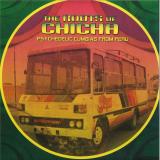
The Roots of Chicha - Psychedelic Cumbias from Peru 2x12"
 
23

The Roots of Chicha, compiled by Barbès Records, was originally released in 2007 and became the first recording to popularize psychedelic cumbia around the world.

From the late 60's through the 80's, Peruvians invented a new popular musical hybrid inspired by music from the Americas. In 1968, Enrique Delgado released his first record on Odeon with his new group, Los Destellos, single-handedly creating Peruvian cumbia. He codified the genre early on by using the electric guitar as the primary melodic instrument, and mixing cumbia rhythms with folkloric huaynos, criollo voicings, Cuban guarachas and guajiras, rock, boogaloo, surf, psychedelia, oriental music, classical music, and bits and pieces from Brazil, France, Chile... All Peruvian cumbia bands for the next thirty years would end up drawing from the exact same sources (Grupo Celeste, Los Mirlos, Juaneco Y Su Combo, Manzanita Y Su Conjunto...).

This new wave of Peruvian cumbia came to be known as chicha. Chicha is originally the name of an alcoholic drink, made of fermented maize, which the Incas were especially fond of. In the past thirty years, however, the word has taken on a pejorative connotation. Peruvian cumbia started being called chicha in the late 70s, around the same time that the music came to be viewed as the expression of the slums – the pueblos jovenes. Little by little, the word became an adjective, and people now talk of chicha culture, chicha press, chicha architecture, even of a chicha president, and none if it – you guessed right – is meant as a compliment. Chicha suggests corruption, shady deals, and cholos – a derogatory term for a person of Andean heritage that, of late, is being reclaimed and worn as a badge of honor by the very cholos it was supposed to demean in the first place.

nicht am Lager

Bestelle jetzt und wir bestellen den Artikel für dich beim Lieferanten.

26,01

Last In: vor 3 Tagen
Langkamer - No LP

Langkamer

No LP

12inchBR081LPW
Breakfast Records
22.01.2026
  • 1: Crocodile Clock
  • 2: Babe Pig In The City
  • 3: The Summer That I Hit The Wall
  • 4: Easterly
  • 5: The Gates
  • 6: Neck
  • 7: Crows 03:0
  • 8: Deansgate
  • 9: Billy
  • 10: Split The Difference
  • 11: Goodnight Zoo

“Innovative, hooky and full of depth” - Far Out Magazine

“Songs that lodge into your brain in the opening ten seconds” - Brooklyn Vegan

“Breezy, melodic… a clear ear for a hook” - UNCUT

“Playful and unexpected, emotional but not overstated” - CLUNK

‘Crows’ is the new single from Bristol’s Langkamer and the first to be revealed from their new album ‘No’, which is due for release on 22nd January 2026. Their fourth album in as many years, ‘No’ saw the prolific band taking to the mountains at the invitation of veteran producer Remko Schouten (Pavement, Personal Trainer, Bull). The much loved Bristol band holed up for a week in the wilds of Southern Spain at his brand new Zarzalico studio. Over a week, under the Murcian heat, they laid down the perfectly formed eleven tracks that make up ‘No’.

Since the band’s conception, Langkamer have worked out of anywhere affordable and available, whether it be the basements of renowned venues (‘West Country’, ‘Red Thread Route’, ‘Langzamer’) or secluded cottages (‘The Noon And Midnight Manual’). Over the years, their frenetic pace and quality of writing has earned them fans across the world, plaudits at UK media, and built an ever-growing musical community around them - not least via Breakfast Records - the independent label that is home to Getdown Services - formed by Langkamer’s Dan Anthony and Josh Jarman in 2006 alongside acclaimed singer-songwriter Jasmine 4.T.

To call Langkamer ‘your mid-level indie bands favourite mid-level indie band” sells them short. They have always scraped by on irregular incomes, plagued both by daily financial pressures and the occasional cash sinkhole so well known to any musician in the current impossible climate. Once Schouten offered to host them at his new studio (Zarzalico), they couldn’t refuse. A relentless recording schedule found the group only breaking for the daily long lunch and to occasionally fire an airgun across the hills. If the last half a decade had been a pressure cooker of constant touring and recording, their brief time in the remote Zarzalico could not have been more symbolic. Lead single ‘Crows’ perfectly captures this nervy balance and is a wiry slice of atmospheric proto-punk, drawing from the shadows of the late-70s UK landscapeit also defies these conventions, striking an anthemic chord from beginning to end. From the scaling chromatic guitars at the breakdown, to the final chants of ‘suffer’ and ‘struggle’, there’s a loud desperation and defiance to ‘Crows’ that lends it an unparalleled urgency. As singer/drummer Josh Jarman states:

“Crows is a song about the crazy shapes we contort ourselves into trying to create art in the era of late-stage capitalism. Working a thousand jobs. Writing songs with the left hand while writing emails with the right hand. Your day is already doomed the moment you open your eyes. Everything’s a bad omen.”.

With ‘No’ arriving early next year, ‘Crows’ is the perfect introduction to Langkamer, a band that has only taken new bold steps with each release, always hiding a keen experimentalism behind a charming hook. It is also the surest sign yet that they are ready to step up, and take on the road once again vision unclouded.

vorbestellen22.01.2026

erscheint voraussichtlich am 22.01.2026

27,69

Last In: vor 2026 Jahren
Stephan Eicher - Spielt Noise Boys
  • A1: Disco Mania
  • A2: Miniminiminiminijupe
  • A3: Noise Boys
  • A4: Hungriges Afrika
  • B1: One Second Too Late
  • B2: Sweet Jane
  • B3: Ping Pong Lied

2025 Reissue.


Münchenbuchsee, a suburb of Bern, Switzerland. Stephan Eicher is the youngest of three children. His father, a radio and TV repairman, is also a jazz violinist and a sound tinkerer in his spare time. In the family home's converted fallout shelter turned studio, Mr. Eicher experiments with homemade sequencers, tortures handcrafted drum machines, and abuses reel-to-reel tape recorders—all under the fascinated gaze of young Stephan.

The boy quickly develops a musical curiosity, exploring sound through various experiments and wanderings. Alongside his younger brother Martin, Stephan crafts audio plays on a homemade multi-track recorder (essentially several cassette decks hooked together!), which they write, record, add sound effects to, and perform for family and friends. Just a couple of nice kids, really...

Then comes 1972, and Lou Reed's Transformer album changes everything for the Eicher kids. For 13-year-old Stephan, it's a revelation—especially "Vicious", the opening track, which he plays on repeat for months. He convinces his father to buy him an electric guitar. Not stopping there, his father also builds him a tube amp using an old radio.

Then comes adolescence. A rough one. Stephan leaves home at 16 and moves to Zurich. With obvious artistic talent, he persuades his art teacher to help him get into F+F, a radical, alternative art school—despite his young age. Accepted, he starts learning video techniques, determined to become a filmmaker.

At F+F, Stephan organizes Dada-style happenings and concerts with a group of friends known as the Noise Boys. Among them: one of his teachers on bass, Veit Stauffer on drums (who would later found ReR/Recommended Records), his girlfriend Sacha on vocals, and Stephan on guitar. In one of their early performances, they release a remote-controlled mouse covered in dull razor blades into the audience to create panic and chaos. Keeping with this aggressive, confrontational spirit, they once played a concert while wearing headphones blasting Tristan and Isolde, trying to perform their own songs simultaneously—to maximize the cacophony. The goal was always the same: clear the room.

Their “songs,” if you can call them that, followed suit. Take "Hungeriges Afrika", for instance—performed entirely with power drills and some drum feedback.

To make ends meet, Stephan returns to Bern on weekends to work as a waiter at the Spex Club, the city’s main punk venue. On September 16, 1980, during a show by proto-electro group Starter, the police raid the club and arrest everyone. Stephan, who manages to avoid arrest, seizes the opportunity to “borrow” Starter’s gear left behind. He suddenly finds himself in possession of a Roland Promars synth, a Korg MS20, and a gorgeous CR78 drum machine, which he runs through a Big Muff distortion pedal to get that perfect gritty sound.

He then sets out to reinterpret some Noise Boys tracks, reworking them during impromptu sessions recorded on a dictaphone (yes, a dictaphone—now the lo-fi sound makes more sense, doesn’t it?). He ironically titles the resulting cassette "Stephan Eicher spielt Noise Boys" ("Stephan Eicher plays Noise Boys"). This gem features seven tracks, which are the ones reissued here.

Back in Zurich, he visits his friends Andrew Moore and Robert Vogel, who have a DIY cassette duplication setup. They make 25 copies of Stephan Eicher spielt Noise Boys for Stephan and his friends. Robert encourages him to visit Urs Steiger of Off Course Records and play him the tape.

Without much hope, Stephan shows up at Urs’s office. But Urs is instantly hooked and suggests releasing a 7” single. Due to space constraints, they reluctantly drop two of the seven tracks ("Hungeriges Afrika" and "One Second"). As for the musical score featured on the cover—it was randomly chosen and remains a mystery to this day. Calling all music theory nerds!

The 7-inch is pressed in 750 copies and released in the first week of December 1980—a date Stephan remembers well, as it’s the same week John Lennon was killed. Smartly, Urs sends a promo copy to François Murner, Switzerland’s answer to John Peel, who hosts a show on alternative station Sounds. Murner falls in love with the record and starts giving it airtime. To Stephan’s surprise, sales follow—and people actually seem interested in his music.

Even this modest underground success scares Stephan a bit. He stops making music for a year and moves to Bologna, where he works as a programmer at Radio Città, a feminist radio station.

Meanwhile, Stephan’s younger brother Martin, who’s also involved in the punk scene, joins the band Glueams as a singer and guitarist. Glueams, named after the fanzine run by two of its members (drummer Marco Repetto and bassist GT), eventually rebrands as Grauzone. Stephan is invited to their shows to project hacked Super 8 visuals live on stage.

Urs Steiger, now working on a compilation titled Swiss Wave – The Album, asks Grauzone to contribute alongside bands like Liliput, Jack and the Rippers, The Sick, and Ladyshave (Fall 1980).

For the album, Martin tasks Stephan with producing their recording sessions. Under Stephan's artistic direction, two tracks emerge: "Raum" and "Eisbär". During "Eisbär", Martin plays a minimalist bass line borrowed from post-punk band The Feelies (just an open string). Drummer Marco Repetto struggles to keep time. Later that evening, unhappy with the takes, Stephan builds a four-bar drum loop from a ¼-inch tape and uses it instead of the flawed original. He then adds bleepy synths and wind sounds to complete the track’s icy vibe before handing it over to Urs.

The Swiss Wave – The Album compilation is released quietly at first, but things snowball thanks to "Eisbär", which eventually becomes a smash hit—selling over 600,000 singles.

Meanwhile, Stephan plays in a rockabilly band called SMUV (named after Switzerland’s social security agency) and begins producing artists, including the debut album of Starter (1981), which includes a more pop-oriented version of "Minijupe".

By early 1982, Stephan starts spending time with the post-punk girl band Liliput (formerly Kleenex). They’re older than him, and he happily drives them around in his Renault Major, acting as their roadie.

By 1983, Grauzone—signed to the major label EMI, which turned out to be a misstep—is falling apart. Stephan begins to pivot toward a more mainstream pop sound with his debut solo album Les Chansons Bleues.

But that... is already another story.

vorbestellen09.01.2026

erscheint voraussichtlich am 09.01.2026

23,11

Last In: vor 2026 Jahren
Vulva - Vulvic Yonification 2x12"

Vulva

Vulvic Yonification 2x12"

2x12inchSOURCE970526
Source Records
15.12.2025

Tim Hutton and Thomas Melchior formed Vulva in 1993 in England. The experimental techno duo signed with the Rephlex label (home of Aphex Twin) and released From the Cockpit in 1993. Vulva's first domestic release was the Mini Space Vulvette EP, for Reflective Records. After a side project for the German Source label called Yoni ("Yoni" and My Little Yoni), Hutton and Melchior released their second full-length for Rephlex, Birdwatch, in 1996. Vulvic Yonification followed in late 1997.

nicht am Lager

Bestelle jetzt und wir bestellen den Artikel für dich beim Lieferanten.

36,56

Last In: vor 3 Monaten
John Also Bennett - Στoν Eλaιώνa / Ston Elaióna LP

Ston Elaióna is John Also Bennett’s first album for Shelter Press since his 2019 solo debut Erg Herbe. The American born, Athens, Greece, based flautist, synthesist, and composer weaves a strikingly singular electroacoustic excursion for bass flute and Yamaha DX7ii, largely recorded in the golden haze of the early morning hours - bending time at the otherworldly juncture of consciousness and place. Translating from Greek as “in the olive grove”, Ston Elaióna is permeated with the ambiences of the ancient and present world, guided into form by a playfully rigorous approach to sound.
Initially emerging during the mid 2000s as part of Columbus, Ohio’s noise scene, before relocating to NYC around 2010, Bennett’s diverse activities picked up an increasing sense of pace over the following decade - performing and recording as a solo artist (JAB), with the trio Forma and with CV &JAB, his prolific duo with his partner Christina Vantzou, as well as playing in Jon Gibson’s ensemble among many other multifaceted collaborations. However, since 2020 the flautist and electroacoustic composer has existed in a semi nomadic state: drifting between Brooklyn, Brussels, extensive tours, and Greece, where he finally came to rest in Athens last year.

Drawing upon a carefully honed attentiveness to the environments and experiences of everyday life, Ston Elaióna is a suite of nine pieces (with an additional track exclusive to physical formats), many of them composed and played live as the early morning sun touched the Parthenon, in full view from Bennett’s studio window in Athens. Bennett’s refinement and restraint, honed over his years adrift, led him to adopt a limited palette focused on his primary instrument, the bass flute, and a Yamaha DX7ii synthesizer tuned to just intonation scales. Alongside a handful of other keyboards, digital oscillators triggered by his flute, and occasional field recordings, this simple palette is reflected by the deeply emotive sense of minimalism that permeates the album’s two sides. Following two solo albums defined by outward facing temperaments - 2022’s Out there in the middle of nowhere (Poole Music), which used a lap steel guitar and generative oscillators to evoke the surreal landscapes of the South Dakota badlands, and the largely synthetic atmospheres of the 2024 anthology Music For Save Rooms 1 & 2 (Editions Basilic) - the shift in Bennett’s worldly circumstances offered an intuitive return to the calm, inward states of creative exploration that have historically defined JAB’s sound. In parallel, context provided clear sources of inspiration for many of the album’s themes, as well as sources for some of its sounds. The aura of Greece, from the ancient to the present, from its stones and olive groves to its traffic, figures heavily across Ston Elaióna’s two sides. John Also Bennett’s Ston Elaióna forms an elegantly rigorous world of electroacoustic sonority, bridging the expanse of time with the immediacies of environment and happening in the here and now: a profound sonic mediation on the countless dimensions unlocked by life in Greece.

nicht am Lager

Bestelle jetzt und wir bestellen den Artikel für dich beim Lieferanten.

29,62

Last In: vor 3 Monaten
Joey Valence & Brae - No Hands LP

Joey Valence & Brae

No Hands LP

12inch0615629613205
Warner UK
08.12.2025
  • A1: Bussit
  • A2: Packapunch
  • A3: No Hands
  • A4: Like A Punk
  • A5: Where U From
  • A6: Intermission 2
  • B1: The Baddest
  • B2: Ok
  • B3: Doughboy
  • B4: What U Need
  • B5: John Cena
  • B6: Omnitrix
auch erhältlich

Blue Vinyl[29,83 €]


JVB released their self-written, self-produced, self-mixed and mastered sophomore album – No Hands – which debuted in the Top 10 on Spotify’s Top US Album’s Chart. The critically-and-fan-acclaimed collection of genre-bending tracks are their most impressive work to date and feature appearances by Danny Brown, Terror Reid and Z-Trip.

nicht am Lager

Bestelle jetzt und wir bestellen den Artikel für dich beim Lieferanten.

30,21

Last In: vor 3 Monaten
Nick Cave & The Bad Seeds - Live God LP 2x12"
  • A1: Frogs
  • A2: Wild God
  • A3: O Children
  • A4: From Her To Eternity
  • B1: Cinnamon Horses
  • B2: Tupelo
  • B3: Conversion
  • C1: Bright Horses
  • C2: Joy
  • C3: I Need You
  • C4: Carnage
  • D1: Red Right Hand
  • D2: Papa Won't Leave You, Henry
  • D3: Into My Arms
  • D4: As The Waters Cover The Sea

Live God“ ist ein eindrucksvolles Zeugnis der Wild God UK- und Europatournee 2024 von Nick Cave & The Bad Seeds.
Auf 15 Tracks fängt das Album die transzendente Atmosphäre jener unvergesslichen Shows ein, die laut Nick Cave selbst „ein Gegenmittel zur Verzweiflung“ waren.

Die Trackliste enthält Live-Versionen des kompletten, hochgelobten Studioalbums WILD GOD (2024) sowie beliebte Klassiker wie „Papa Won’t Leave You, Henry“, „From Her to Eternity“ und „Into My Arms“.

Doppel-LP, gepresst auf schwarzem Vinyl und präsentiert in einem hochwertigen Tip-On-Gatefold-Cover mit Spot-UV-Glanz auf den Innenseiten. Das Vinyl befindet sich in bedruckten Innenhüllen in Vollfarbe mit bedruckten Labels auf dem Vinyl selbst.

vorbestellen05.12.2025

erscheint voraussichtlich am 05.12.2025

39,45

Last In: vor 2026 Jahren
LE CORBEAU - IV - SPIDER BRIDGE

LE CORBEAU

IV - SPIDER BRIDGE

12inchIN283011
HANDMADE RECORDS
28.11.2025

Le Corbeau, the brainchild of Oystein Sandsdalen (Serena Maneesh), has become a formidable collective. here with a trilogy of albums spanning eight years. Why such a productive group choses to release twenty-seven songs simultaneously may be a greater reflection on the myopic nature of record labels -The mystic deities of noir have returned. "The band"s sound bows to the vestiges of V.U., Sonic Youth, and Lynchian glamour- but each of the three albums show ambition to go beyond, by player freedom and improv, exploring textural layers, and nuancing each groove. Many songs remind us what we loved in 2009`s Evening Chill / Montreal of the Mind - surrealistic, seductive, draped in velvet. Some circle to the familiar with punk fuzz and playful themes, like "1000 eyed behemoth": about leaving Oslo"s night life behind. Other times, they are creators of their own classics. Opening track to VI: Sun Creeps Up the Wall, "Blossom with an Evil Light" recorded between 2017-2018, illuminates a a new path of change. The long anticipation is over- come enter the murky and magical waters of Le Corbeau." -Ann Sung-an Lee

vorbestellen28.11.2025

erscheint voraussichtlich am 28.11.2025

21,43

Last In: vor 2026 Jahren
SOFI LOFI - BURIED

SOFI LOFI

BURIED

12inchHMR21
HANDMADE RECORDS
28.11.2025

Mette Sofie Breddam of Indie Noir rockers Le Corbeau"s own constellation. "Sofi Lofi"s Killer on the Loose is an Ode to Riot Grrrls and Rebels. The new track from the Norwegian four-piece is a growling piece of badassery." - Noisey "Buried is full of Riot Grrr, machine gun heavy drums and that rebel touch that make this Norwegian project, unique. A band you should definitely follow." - Bizzarre magazine (UK)

vorbestellen28.11.2025

erscheint voraussichtlich am 28.11.2025

21,43

Last In: vor 2026 Jahren
Bon Jovi - Greatest Hits (2x12")
nicht am Lager

Bestelle jetzt und wir bestellen den Artikel für dich beim Lieferanten.

32,56

Last In: vor 64 Tagen
Forever Pavot - Melchior Volume.1
  • A1: Waiting For The Sign (Feat Lispector)
  • A2: Patch 1985
  • A3: Count To 10 (Feat Domotic)
  • A4: Godbot
  • A5: Skyway
  • A6: Le Robot Gentilhomme
  • B1: Ufo (Feat Lispector)
  • B2: Cosmic Battle
  • B3: Olympus
  • B4: Shoppers On The Run
  • B5: Postcard (Feat Kumisolo)
  • B6: Melchiator

Emile Sornin has a robot in his life. It's not love, but it's not friendship either, and Forever Pavot is releasing an album documenting the affair on Born Bad. After a bunch of bold pop studio albums and a small stack of soundtracks, Emile needed a break. To put an end to it, he embarked with handyman extraordinaire Jonas Euvremer on the manufacture of an automaton destined to make his musician’s life easier. Melchior, who gave his name to the record, has the face of a ventriloquist's dummy, two plastic left hands, preppy clothes and a primitive logic circuit. This goodie two-shoes cousin of Bender’s is supposed to be doing the interviews and deal with socials for Emile. The plan worked admirably : Melchior is a perfect cover-boy, and his very existence has put our man back to work.


They set a path for phat electronic ventures (and by the way, mostly english-speaking). Sub- continental bass & massive drums, heavy-footed and unabashed : as much appreciated as unexpected. The half-android shares songwriting credits and vocal parts vocoded to perfection. Not a jealous lad, Melchior makes way for a guest of choice on “UFO” and “Waiting for the sign” : Lispector. Julie Margat sings and collaborated on the lyrics for these two bangers that provide a lot of context (robot angst is real). Kumisolo, our favorite Japanese « it » girl in Paris, also sent her “Postcard”, more vapour than song, unreal musical cotton candy of arrangements.


Domotic, who mixes and co-produces, gives a nice spin to “Count to 10”, a hip-hop/kraut crossover with a BEAK> flavour. The Forever Pavot, once a big-band, will be touring as a bass/ drums/keys & vocals trio, with Melchior as guest.


Record after record, Emile Sornin has become an increasingly literate musical illiterate. When needed, his music can still become a thicket of ancient and modern finds. « Le robot gentilhomme », a skillful pastiche of baroque composer Jean-Baptiste Lully, would stand a few rounds against Wendy Carlos. His love for oldies also shines through “Skyway”, a nod to the late Pierre Arvay, France’s Colonel Sanders of library music nuggets.


Forever Pavot may have gone wild, but remains indebted vis-à-vis the golden age of film music. Forebears deluxe Ennio Morricone & François de Roubaix make Hitchcock-style cameos: discreet appearances that you’ll watch out for (those syncopated cascades of syllables at the end of « UFO », and I guess we can indulge with some clavichord/ondioline Victoria sponge). His new flirt is all but a toxic relationship. « Melchior, Vol. 1 »: the robo-bromance is not over yet.

vorbestellen07.11.2025

erscheint voraussichtlich am 07.11.2025

21,43

Last In: vor 2026 Jahren
AÄRON KOCH - FOR ONCE LP

Aäron Koch

FOR ONCE LP

12inchUNDAY171LP
UNDAY RECORDS
07.11.2025

Debut solo album from guitar player of Calicos. The result is a record that balances melancholy and raw intensity, where vulnerability is never far from power.Aäron Koch's voice cuts straight through, while the band builds a sound that feels both timeless and urgent, echoing The Veils, My Morning Jacket and Strand of Oaks.


For years, Aäron Koch was the guitarist in other people's bands. Writing intricate riffs and odd time signatures came naturally, but the thought of writing a simple song, a verse, a chorus, a melody that could stand on its own, felt out of reach. He tried and failed, discarded demos, and pushed himself through the humbling exercise of writing "bad songs" just to learn the craft.

'For Once', his debut album (out via Unday Records), is the unexpected outcome of that long struggle. What began as an exercise became a set of songs that refused to stay in the drawer. Months after recording rough sketches, Koch listened back and realized they weren't throwaways after all. With a small heart, he shared them with friends, musicians from bands like Calicos, Uma Chine and Tin Fingers, who immediately heard their potential and joined the project.


The result is a record that balances melancholy and raw intensity, where vulnerability is never far from power. Koch's voice cuts straight through, while the band builds a sound that feels both timeless and urgent, echoing The Veils, My Morning Jacket and Strand of Oaks.

"This music is about weaknesses and vulnerability," Koch says. "Autobiographical really, something I only realized once the album took shape."


That honesty struck a chord. In 2024, after only a handful of shows, Aäron Koch reached the finals of Humo's Rock Rally and was invited to open for Belle & Sebastian at a sold-out Ancienne Belgique. Now 'For Once' shows why: it's the sound of someone learning to write songs the hard way, and discovering in the process that he has something entirely his own to say.

vorbestellen07.11.2025

erscheint voraussichtlich am 07.11.2025

22,65

Last In: vor 2026 Jahren
JESSICA MOSS - UNFOLDING

Jessica Moss

UNFOLDING

12inchCSTLP188
CONSTELLATION
07.11.2025
  • Washing Machine
  • One, Now
  • No One
  • No Where
  • No One Is Free
  • Until All Are Free

Unfolding ist Jessica Moss' meditativstes und klagendstes Soloalbum und vielleicht das erste in der jahrzehntelangen Diskografie der Violinistin und Komponistin aus Montreal, das man zu Recht als Ambient bezeichnen kann. Die ehemalige Mitglied von Silver Mt Zion und Black Ox Orkestar schöpft aus Postklassik, Drone, Minimalismus, Industrial/Metal, Power Electronics, Klezmer und anderen Folk-Traditionen. Es handelt sich hierbei nicht um abstrakte Ambient-Musik; vielschichtige Violinenmelodien, elektroakustische Bearbeitungen, intermittierende Stimmen und Percussion von Tony Buck, dem Schlagzeuger von The Necks, bringen zutiefst emotionale, genreübergreifende Kompositionen hervor, die von einem Geist der Suche und Beschwörung geleitet sind und sich in einer vorherrschenden Atmosphäre von Beschwörung und trauernder Zurückhaltung entfalten. Die Untrennbarkeit von Persönlichem und Politischem hat sich für Moss in den letzten zwei Jahren immer stärker herauskristallisiert. Als Kernmitglied der Montrealer Sektion von Musicians For Palestine hat sie mehrere Benefizkonzerte mitorganisiert und gespielt und im Frühjahr 2024 das Soloalbum For UNRWA veröffentlicht (das über 800 Unterstützer fand und Tausende von Dollar einbrachte). Später im selben Jahr zerbrach ihre langjährige Fernbeziehung aufgrund politischer Differenzen. In enger Zusammenarbeit mit dem Produzenten Radwan Ghazi Moumneh (Jerusalem In My Heart) entstanden ,Unfolding" in den letzten zwölf Monaten, dem zweiten Jahr des Völkermords in Palästina, als direkte Reaktion auf unser kollektives Miterleben, unsere kollektive Trauer, als Portal zur kollektiven Trauer, als Suchscheinwerfer durch unsere inneren Wettersysteme, auf der Suche nach einander in der Dunkelheit. Moss bewegte sich bereits in Richtung einer erhöhten Fragilität und einem tiefen Zuhören, ihre Musik wurde zunehmend langatmig und zeremoniell. Trotz der stark gesunkenen finanziellen Rentabilität von Tourneen wurde ihre Hingabe, Raum zu schaffen, Verflechtungen herzustellen und eine Verbindung zu einem intimen Live-Publikum aufzubauen, zu ihrem kreativen Leitstern, ihre Solo-Praxis wurde durch ihr Engagement und die Kommunikation in diesen Räumen geprägt. Die jüngsten politischen und persönlichen Umwälzungen haben diese ritualisierten, reparativen musikalischen Prozesse nur noch verstärkt. Die beiden langen Stücke auf der ersten Seite von Unfolding verkörpern diese Sensibilität. ,Washing Machine" verwebt Schichten von Streicherdrones und Filigranarbeit, sanft verzerrt durch Verzerrerpedale und Verstärkung, wobei unentzifferbare, ausgeblasene Sprechstimmen den Mix zeitweise als fragmentarische Palimpseste verhüllter Rezitationen und unbeschreiblicher Gefühle umhüllen. Der Ursprung des Stücks liegt in einer Telefonaufnahme einer europäischen Waschmaschine, die Moss aufnahm, als sie neben ihr saß, mit gebrochenem Herzen auf dem Badezimmerboden, und Trost fand, indem sie eine Melodie zu den mechanischen Obertönen der Waschmaschine summte, die ihren Zyklus durchlief. Das Herzstück des Albums, ,One, Now", beginnt als zarte Anrufung mit Basspuls, Glockenspiel und Glocken, gezupften Saiten und traurigen Lead-Violinenlinien, die von jüdischen und arabischen Modi beeinflusst sind. Umgebungsgeräusche, Feldaufnahmen und wortlose Gesänge werden hinzugefügt, während sich Violinenmelodien überlagern und zu einer hypnotisierenden Drone-Landschaft verschmelzen: eine halb improvisierte, lebendige Komposition, die durch Tony Bucks pinselstrichartiges Schlagzeugspiel und Moumnehs ,Schrei in die Leere" am Ende noch weiter belebt wird. Die zweite Seite ist ein vierteiliges Werk mit dem Titel ,no one / no where / no one is free / until all are free", das sich durch Umgebungsgeräusche, elegische postklassische Streicher und verzerrte harmonische Drones zu einem Höhepunkt aus liturgischer Orgel, rituellen Glocken und schimmernden elektronischen Spuren entwickelt, der die Bühne bereitet für den letzten Song des Albums: die erschütternde Chor-Komposition ,until all are free", eine weltliche Hymne, die aus Jessicas mehrspurigen Gesangsaufnahmen besteht (die sie aber gerne mit anderen im Konzert singen würde). Unfolding ist ,einem freien Palästina in unserer Lebenszeit" gewidmet. Danke fürs Zuhören.

vorbestellen07.11.2025

erscheint voraussichtlich am 07.11.2025

24,79

Last In: vor 2026 Jahren
Molly Nilsson - Amateur (LP)

The word "amateur" originates from the Latin word "amator," meaning "lover" or "admirer". This Latin term is derived from "amare," which means "to love". The French adopted "amateur" from Latin, and the English then borrowed it from French, initially retaining the sense of someone who loves or is devoted to something. Over time, the English usage of "amateur" also developed a meaning related to a lack of professional skill or experience. How did a word derived from love become a slur? Is love really so defenseless? They say love conquers all, but in reality isn’t love quite ridiculous? It has no intention, no motive, no agenda. How could it possibly prevail? It can’t be bought or sold, or so they say.Its mere existence can't be proven or even measured. What an impossible thing. Trying and failing, time and time again, no wonder cynicism always seems to win. I see “amateurism” as a delighted, even foolish, protest. Protest against everything. Of what’s expected of someone, or expected of someone to desire or strive for. To be elite, to be expert, to be professional, to be a master, to excel and succeed. Where’s the joy in that? I just want to have fun. I want to want. I want to love. And keep doing it, forever. I want to have fun, even when it’s tiring and sometimes even heaven is boring as hell. I want to be bad. I want to do my own thing. “I vant to be alone”. I want to be someone so dedicated to their passion that it starts to seem like there’s something wrong with them. All the way. We can take it all the way, and never get it back. ” - Molly Nilsson Amateur is the 12th studio album by Molly Nilsson. Deep in the teeth of a career that threatens to tip into something resembling a “legacy,” Molly Nilsson celebrates with an album recorded instinctively, quickly and bursting with so many moments of emotional brilliance and clarity it may be her greatest yet. Hers has been a career spent reaching out, perennially powerful in her earnestness, a warrior ridiculously defenceless and armed with a glittering sincerity. Shearing herself of the machinations of the music industry, recording at home, writing direct to the heart. Amateur is a jubilee for losers. A treatise in 13 songs, Amateur states clearly that we should live our life with eternal curiosity, offers us an open hand of comradeship out of the rat race. The songs on the album are both some of the most personal of Nilsson’s career and the most anthemic. First single How Much Is The World asks us to re-evaluate value in the face of a Neo-liberal system squeezing the life out of our loves. Pulsing opener Die Cry Lie satirises the commercialisation of emotion in the form of a shout-along diss-track. With a pounding rhythm track held down by gorgeous chord changes, heartbreaker Valhalla carries the torch for the main themes of the album: never growing up, making mistakes with kindness, moving on. When the drums crash in on the line “It’s going to get better now, you’ll see, going to be much better off without me” there is a world of feeling swirling about in the vocal delivery. One reading of the track might be that it’s a break up song but the subtext is classic Molly Nilsson: by living truthfully, making mistakes, we’re active agents against the myriad oppressions of the world. All The Way takes the theme for a run into the eternal sunset. It’s a manifesto for living fully. “Take it all the way, and never get it back” - it’s the process that’s the important point. The journey not the destination. Big Life, follows on like a part 2: An ode not only to Molly Nilsson’s career of endless gigs, endless connections with people, it’s a massive ode for following your dreams, doing it yourself. Closer The Bitter End is a powerful anthem for friendship, another definition of love infused in Nilsson’s work, A beautifully poignant ode to comradeship til the end, it seems to be the songwriter approaching aging, approaching life’s inevitability with the same vigour and earnestness, the same love of life she enjoyed at the onset of her career. There are moments on Amateur shrouded in reverb, slightly out of focus, forcing the listener to step deeper into the Mollyverse.. Nilsson’s open-armed beseeching to the world permeates every beat, every chord. These are songs exploding with life: the chunky, aggressive bassline on the punker Get A Life can’t hide its massive, catchy chorus. The sweeping Swedish Nightmare might be a tongue-in-cheek self-reference, but at its heart it’s a song about the duality of living life large, what is a dream, what is a nightmare? Molly Nilsson says you can’t have one without the other, and why would you want to? Here’s to making mistakes.

nicht am Lager

Bestelle jetzt und wir bestellen den Artikel für dich beim Lieferanten.

23,32

Last In: vor 4 Monaten
The Beths - Auckland, New Zealand, 2020 LP 2x12"

The Beths

Auckland, New Zealand, 2020 LP 2x12"

2x12inchCAK177LPC
Carpark Records
24.10.2025

The anticipation is there in Elizabeth Stokes’ solo guitar riff under the opening lines of “I’m Not Getting Excited”: a frenetic, driving force daring a packed Auckland Town Hall to do exactly the opposite of what the track title suggests.

As the opener of The Beths’ Auckland, New Zealand, 2020 expands to include the full band, the crowd screeches and bellows. It’s a collective exhalation, in one of the few countries where live music is still possible.

The album title, and film of the same name, deliberately include the date and location, lead guitarist Jonathan Pearce says. “That’s the sensational part of what we actually did.” In a mid-pandemic world, playing to a heaving, enraptured home crowd feels miraculous.

In March 2020, everything seemed on track for another huge year for The Beths. Home after an 18-month northern hemisphere tour, they had just finished recording sophomore album Jump Rope Gazers and were primed for more extensive touring. But within days, New Zealand’s lockdown split the band between three separate houses. All touring was cancelled.

“It was existentially bad,” Stokes says. As well as worrying about economic survival, they lost something crucial to the band’s identity: live performance. “It's a huge part of how we see ourselves... What does it mean, if we can't play live?”

The band found an outlet through live-streaming, returning to the do-it-yourself mentality of their early days to connect with a global audience. The album and film have their genesis in that urge to share the now-rare experience of a live show, as widely as possible.

The fuzzy-round-the-edges live-streams pointed the way aesthetically. Native birds, wonkily crafted by the band from tissue paper and wire, festoon the venue’s cavernous ceiling while house plants soften and disguise the imposing pipes of an organ. The presence of the film crew isn’t disguised: much of the camerawork is handheld; full of fast zooms and pans.

With much of the material still fresh, the band was less focused on re-invention than playing “a good, fast rock show”, Pearce says. The tempo is up on crowd favourites “Whatever” and “Future Me Hates Me” (released as a live single on its third anniversary) as both band and audience feed off the mutual energy in the room.

Certain songs have taken on special resonance post-Covid. Pearce has found “Out Of Sight”, a tender rumination on long-distance relationships, hits particularly hard with live audiences.

Album closer “River Run” visibly brings Stokes to tears as a mix of achievement and relief kicks in. “You can finally relax at that point … You play the last note, breathe out a sigh and look up - and you’re in a giant room full of people happy and smiling.”

vorbestellen24.10.2025

erscheint voraussichtlich am 24.10.2025

23,49

Last In: vor 2026 Jahren
Ruth - Polaroïd Roman Photo (40th Anniversary Edition) + 7"

INTEMPORARY AND INDETRONABLE FRENCH COLD WAVE CLASSIC in a SPECIAL EDITION to celebrate the 40th anniversary of this mythical album.


This edition includes a 45T with 2 previously unreleased tracks, available nowhere else.


Thierry Müller, who initiated the RUTH project, is not at his first try when the album POLAROÏD/ROMAN/PHOTO including the eponymous track is released in 1985. His older brother Patrick along with one of their cousins make his musical education and he quickly becomes familiar with contemporary and experimental music. He starts quite early to tinker sounds on old tape recorders by himself but it is in 1977 that Thierry launches with some friends his first group, ARCANE, while studying at the School of Applied Arts. Their sound is weird, a mixture of saturated scratches and feedback tapes: there is no discographic or scenic testimony of this experience.


Alongside ARCANE, Thierry is already working solo on his ILITCH project / concept, an experimental and innovative work, whose first album Periodmindtrouble is released in 1978 on the Oxigène label. Despite insubstantial sales, this album brings Thierry recognition and success in the very elitist circles of experimental and underground music.


ILITCH’s musical bias was too narrow for Thierry’s ceaseless experimental curiosity, parallel to these activities, he therefore develops a Punk project called RUTH ELLYERI with the author, actress and photographer Murielle Huster. The title is an anagram of Thierry Müller (the complete name is Ruth M. Ellyeri). The character is meant to impersonate one of his schizophrenic facets and allows him to extend his field of expressions to musical styles differing from those in ILITCH.

From this work, the very cult punk piece Mescalito emerges, song that can be found on the mythical but unfortunately very rare compilation 125g de 33 1/3 tours (1979) of the Oxigène label (first “french punk” sampler). At the end of 1978, he meets Philippe Doray at the Oxigene office. Doray is another big name of French experimental music. Thierry moves to his home near Rouen, a remote farmhouse with a music studio made of odds and ends.


They work on their respective creations but meet from time to time on experimentations in common, including CRASH (a tribute to JG Ballard) As early as 1982, a first version of the track Polaroïd/Roman/Photo is out under the name of the project RUTH. “I wanted to write a piece to make the girls dance and make fun of the boys. I plugged a small handmade clock on my Farfisa organ as a sequencer. I had a small Roland synth-guitar, I put the organ in it and that’s how it started.” Philippe is quite amused by the idea of working on a more Pop project and offers to write the text. Thierry works on other tracks for the future LP and asks some friends to write other texts : Edouard Nono, visual artist, writes the lyrics of Mots, Frédérique Lapierre those of Misty Mouse and Tu m’ennuies . It is her voice you hear on these 2 tracks and on the first version of Polaroïd/Roman/Photo. Later, Thierry settles down in the Anagramme recording studio to carry out acoustic sound recordings. But when the sessions are over, the 2 musicians are not too happy with the results of Polaroïd/Roman/Photo: according to them, they lack “flamboyance”. They decide then to record a new female voice with a professional singer and the sound engeneer Patrick Chevalot offers to mix the track in the Synthesis studio “so that it blows out”.


With his tape ready and the help of Jacques Pasquier (S.C.O.P.A. / Invisible records where Ilitch’s second album, 10 Suicides, is released) he starts to contact record companies. “I visited almost all the major record companies and was thrown out every time. Only at RCA’s I found someone interested in my music. It was Francis Fottorino who had signed Kas Product but when it reached the the big boss, no way! Philippe Constantin from Virgin records raised some hope but in vain.


The album was finally released in 1985 with Paris Album, a small independant label.” The album barely sells 50 copies in 1985, despite the eponymous title as a potential success. « In 2004, 2 DJs Marc Colin and Ivan Smagghe discover the track Polaroïd/Roman/Photo and decide to exhume it from oblvion. They release it on a compilation called So Young but so cold (Tigersushi) and then with Born Bad records on the BIPPP compilation in 2008. Thanks to them, the track and the album start a new life.


Alongside his activity as graphic designer, Thierry Müller carries on producing music under his name, those of ILITCH and RUTH for his own creations and various collaborations.

nicht am Lager

Bestelle jetzt und wir bestellen den Artikel für dich beim Lieferanten.

23,95

Last In: vor 55 Tagen
Jessica93 - 666 Tours de Periph'

Jessica93

666 Tours de Periph'

12inchBBLP192
Born Bad Records
10.10.2025

Jessica93, prodigal bastard of our glorious french squat scene, relocated on Born Bad : this is no picnic. Geoffroy Laporte, alone against all odds, alternates bass and guitar to build harsh loops with a drum machine spitting pre-Gulf War patterns. That’s where it gets tricky : every musical posse claims him. Grunge, sure, but Jessica doesn’t indulge in necrophilia. His circuit is punk, he doesn’t dress the part though. Cold wave, the atmosphere fits somehow, but the gear does not. The self-confident rock horde saw him playing with hair in his eyes… but he never joined the Party. Metal had something to say but sadly, nobody listened. Maybe it's time to give it a rest and let Jessica93 cook his great misery broth on her own, called « 666 tours de périph’ » (666 laps on the beltway). Witnessing Jessica93 live makes you dread that he'll get up the next morning, drive 200 miles and one nap later kick it again, when it takes us a good week to recover from the bad half of that same evening. Like so many other unknown soldiers during our very own world war of music, he patrols small venues relentlessly.


At the heart of this cultural pentacle painted by french weirdos Bryan's Magic Tears, and Carine Krinator, Jessica93 has built a sound validated by years of chosen vagrancy, birthing bands with joyously stupid monikers, in the humid jungle of small labels. Jessica93's debut album had a track celebrating Omar Little, HBO’s gay bandit from Baltimore. This story begins on the beltway, where Florence Rey, accidental copkiller turned to political icon of the 90’s. Geoffroy offers his brilliant analysis : " C’est la police qui nous tire d’ssus / C’est mon trou d’balle qui leur chie d’ssus « (Police shoots us down / my dripping asshole gets the job done).


A previous album was haunted by bedbugs, this one is essentially about love, a delicious scourge just as hard to eradicate. Two black diamonds peek out of the LP : ’’La colline du crack’’, heartbreak song about the ultimate temptation of violent delights, located on crackhead central in Paris. The brilliant chorus, ‘Take my hand and come with me to Crack Hill’ will put an end to the rumours, almost everything was really false. And Bébé Requin, alternative obituary that’ll make you shiver, where our nice couple states ‘’on kiffe la drogue dure et les ptits chiens’ (‘we love hard drugs and little dogs’). And that is the reason we face the wall of sound jostled by unnecessary shoulder thrusts: those nice fat chunks of charcoal poetry, hidden under light sarcasm.


The rest of the record demonstrates the know-how acquired in loop-by-loop construction of ruins that are pleasant to squat in together. There’s your classic doom delicatessen, with bits of heavy metal inside, crafted with the manic care typical of hard wankers. Arthur Satàn, who produced and mixed the album at home in Bordeaux, helped him get his head out of the reverb safe house. And Jessica93 took the opportunity to switch to the dark side of the language : french at last. Worth the wait ! Sing along : « nique sa mère / nique sa grosse mère » (translate that yourself).

vorbestellen10.10.2025

erscheint voraussichtlich am 10.10.2025

22,65

Last In: vor 2026 Jahren
DAUGHTER - STEREO MIND GAME

Eco Coloured Edition
Elena Tonra ist zwar keine passionierte Schwimmerin, aber der Sound auf dem neuen Daughter Album "Stereo Mind Game" klingt wie ein Ozean, in den man eintauchen möchte. Das dritte Album der britischen Band, gleichzeitig das erste Studioalbum seit sieben Jahren, setzt sich damit auseinander, was es bedeutet, von geliebten Menschen und auch von sich selbst getrennt zu sein - ein komplexes Thema. Daughter, das Trio bestehend aus Elena Tonra, Igor Haefeli und Remi Aguilella - wurde 2010 gegründet. Nach der Veröffentlichung von zwei Studioalben, "If You Leave" (2013) und "Not to Disappear" (2016), und dem Videospiel-Soundtrack Music "From Before the Storm" (2017), beschlossen sie, eine Auszeit voneinander zu nehmen. Kurz zuvor jammten sie allerdings noch gemeinsam in Los Angeles, zwischen einer Support-Tour für The National und ihren ersten Headline-Shows in Südamerika. Hier begann die Arbeit am neuen Album. Danach herrschte erst einmal Stille - als Band und untereinander. In den nächsten Jahren, in denen die Mitglieder an ihren eigenen Projekten arbeiteten, darunter auch Tonras Soloplatte als Ex:Re, trafen sich Daughter gelegentlich zum gemeinsamen Schreiben in Studios in London, Portland und San Diego, wo Haefeli 2019 für sechs Monate lebte. Die zentrale romantische Figur der Platte ist jemand, den Tonra dort kennengelernt hat, als sie aus London zu Besuch kam. Sie teilten eine bedeutende Verbindung, aber sie wusste, dass der Atlantik zwischen ihnen liegt. Daughter begann 2021 konkret mit den Aufnahmen für die zwölf Songs des Albums. Haefeli, der in Bristol lebt, traf sich mit Tonra in den Middle Farm Studios in Devon. Aguilella, der in Portland, Oregon, lebt, nahm seine Schlagzeugparts im Bocce Studio in Vancouver, Washington, auf. Haefeli produzierte eine Reihe der Songs, während Tonra "Junkmail" produzierte. Den Rest haben sie gemeinsam produziert. Die Sehnsucht, physische Entfernungen zu überwinden, ein Gefühl, das sich während der Pandemie noch verstärkt hat, ist in viele dieser Stücke eingeflossen. Auf "Wish I Could Cross the Sea" hören wir Sprachnotizen von Tonras junger Nichte und ihrem Neffen, die in Italien leben. "(Missed Calls)" enthält eine weitere Sprachnotiz, in der ein Freund einen Traum beschreibt. Gefüttert mit einigen modularen Effekten, klingt er geisterhaft eindringlich. Diese Nachrichten, Versuche einer Verbindung von geliebten Menschen, die man nicht sehen kann, "können einen aus dem Brunnen ziehen", sagt Tonra - aber nur, wenn man den Hörer abnimmt. Wenn man andere hereinlässt, kann Schönheit entstehen. Tiefes Gefühl kommt von den Bögen des 12 Ensemble, dem in London ansässigen Streichorchester, das bei vielen Stücken des Albums zu hören ist. Die von Haefeli und Tonra arrangierten und von Josephine Stephenson orchestrierten Stücke wurden, passenderweise, im The Pool aufgenommen, einem Raum in Bermondsey im Süden Londons, der eine ehemalige Badeanstalt war. Ein Blechbläserquartett verleiht auch "Neptune" und "To Rage" eine wohlig klangliche Wärme. Während Daughters frühere Arbeiten ihre Kraft in ihrer entwaffneten und emotionalen Ehrlichkeit fanden, handelt "Stereo Mind Game" von gegensätzlichen Gefühlen. "Es geht darum, nicht in absoluten Kategorien zu arbeiten", sagt Haefeli. Nach mehr als einem Jahrzehnt, in dem sie die dunkelsten Emotionen darstellten, haben Daughter ihr bisher optimistischstes und ein fast schon strahlendes Album aufgenommen.

nicht am Lager

Bestelle jetzt und wir bestellen den Artikel für dich beim Lieferanten.

16,39

Last In: vor 5 Monaten
Walter Trout - Sign Of The Times - LP
  • A1: Artificial
  • A2: Blood On My Pillow
  • A3: Sign Of The Times
  • A4: Hurt No More
  • A5: Too Bad
  • B1: No Strings Attached
  • B2: Mona Lisa Smile
  • B3: Struggle To Believe
  • B4: I Remember

• nicht nur Blues - es ist ein Aufschrei.
•  2025 wird Trout sowohl im Sommer also auch im Oktober auf Deutschland Tournee sein.
•  Umfassende Online-Kampagne über Facebook/Instagram, YouTube und alle wichtigen Webseiten.
•  ’Sign Of The Times’ ist Walter Trouts Statement zur Lage der Welt

Walter Trout - Sign Of The Times
Große Künstler sind immer am Puls der Zeit. Der unverwüstliche Blues Gitarrist Walter Trout hat in dem halben Jahrhundert in dem er auf den Bühnen dieser Welt steht, seinen Fans nie gesagt, was sie denken, wie sie fühlen, wo sie politisch stehen oder was sie auf ihre Protestplakate kritzeln sollen.Aber in einer Zeit, in der sein Heimatland - und die ganze Welt - an den Fronten des modernen Lebens zerreißt, ist das neue Album mit dem Titel 'Sign Of The Times' ein Urschrei und ein Druckventil, das wir alle dringend brauchen. „Ich wollte die Wut und die Angst, die in der Welt vor sich geht, zum Ausdruck bringen“, erklärt der 74-Jährige. "Für mich ist das Schreiben dieser Songs eine Therapie. Sie handeln nicht nur von dem, was da draußen passiert, sondern auch davon, wie es sich in deinem Kopf auswirkt. 'Sign Of The Times' war einfach der naheliegende Titel..."
 
Sign Of The Times erscheint am 5. September bei Artone / Provogue

vorbestellen26.09.2025

erscheint voraussichtlich am 26.09.2025

25,84

Last In: vor 2026 Jahren
Various - Dolores: Salsa & Guaracha From 70's French West Indies

In Guadeloupe, many people think that jazz and ka music are like a ring and a finger. To some extent, the same could be said about so called Latin music and the music played in the French West Indies.

Both aesthetics were born in the Caribbean and bear so many connections that they can easily be considered cousins. In constant dialogue, there are lots of examples of their fruitful alliance and have been for a while. The English country dance that used to be practiced in European lounges came to be called kadrille in Martinique and contradanza in Cuba. They both featured additional percussion instruments inherited from the transatlantic deportation. Drawing from shared feelings about the same traumatized identity – later to be creolized – it would be hard not to assume that they were meant to inspire each other. The golden age of the orchestras that graced the Pigalle nights during the interwar period further proves the point. As soon as the 1930s, Havana-born Don Barreto naturally mixed danzón and biguine music in a combo based at Melody's Bar. In the following decade, Félix Valvert, a conductor who was born and raised in Basse-Terre in Guadelupe, also worked wonders in Montparnasse with La Coupole, which was an orchestra made up of eclectic musicians. Afro- Caribbean performers of various origins were often hired on rhythm and brass sections in jazz bands, which used to enliven the typical French balls of the capital. In the 1930s and onwards, Rico’s Creole Band was one of them.


Martinican violinist-clarinettist Ernest Léardée, who would become the king of biguine music as well as the main figure of French Uncle Ben's TV commercials (a dark stigma of post-colonial stereotypes), had musicians from the whole Caribbean sphere play at his Bal Blomet – and they all enchanted "ces Zazous-là" (according the words of Léardée's biguine-calypso piece). In les Antilles (French for French West Indies), music history started to speed up in the 1950s, when trade expanded and radio stations grew bigger. The Guadelupean and Martiniquais youth tuned in their old galena radio sets to South American and Caribbean music. As for the women traders, les pacotilleuses, they bought and sold goods across different islands (the "passing of items through various hands" was thought to be most pleasurable) and brought back countless sounds in their luggage. Such was the case of Madame Balthazar, who once returned from Puerto Rico with the first 45rpm and 33rpm to ever enter Martinique.

Out of this adventure was created the famous Martinican label La Maison des Merengues, a music business she opened and undertook with her husband and which proved to be a major landmark. At the end of the 1950s, in Puerto Rico, Marius Cultier competed in the Piano International Contest playing a version of Monk's Round 'Midnight. He won the first prize and this distinction foreshadowed everything that was to come. Cultier, the heretic Monk of jazz, was quickly praised for writing superb melodies, always tinged with a twist that conferred a unique sound to his music. It didn't take long for the gifted self-taught musician to get to play with Los Cubanos, making a name for himself thanks to his impressive maestria on merengues.

The rest is history. Besides, in the late 1950s, Frantz Charles-Denis, born into the upper middle class in Saint-Pierre and better known by his first name Francisco, went back home after working at La Cabane Cubaine – a club located rue Fontaine where he had caught the Latin fever. Francisco's music was therefore heavily marked by his Cuban cousins' influence, which gave the combos he led a specific style and also led to renewal. Things were swinging hard in La Savane, located in the main square in Fort-de-France. He set up the Shango club close by and tested out the biguine lélé there, a new music formula spiced up with Latin rhythms. Soon afterwards, fate had him fly to Puerto Rico and Venezuela.

As for percussionist Henri Guédon (percussions were only a part of his many talents), he was born in Fort-de-France in May 22nd 1944, the day marking the celebration of the abolition of slavery. As an old man, he could remember that in " his father's Teppaz, a lot of hectic 6/8 music was constantly playing...". In the opening lines of his Lettre à Dizzy, a small illustrated collection of writings published by Del Arco, he highlighted the huge impact that cubop had on him as a teenage boy, around 1960. He eventually turned out to be the lider maximo in La Contesta, a big band steeped in Latin jazz. He was also the one who originated the word zouk to describe music which brought the sound of the New York barrio to Paris. It was the culmination of a journey that started in Sainte-Marie: "a mythical place for bélé, the equivalent of Cuban guaguancó". In the early 1960s, the tertiary economy developed to the detriment of agriculture. Yet rural life was where roots music emerged in Martinique and in Guadeloupe.

Record companies played a major part in the process of Latin versions sweeping across the islands – before reaching everywhere else. Producer Célini, boss of the great Aux Ondes label, and Marcel Mavounzy, both the head of Émeraude records - a firm which was founded in 1953 - as well as the brother of famous saxophonist Robert Mavounzy, were big names to bear in mind. Although there were many of them - all of whom are featured on this record - Henri Debs was definitely the major figure in the recording adventure. He proved to be so influential that he even got compared to Berry Gordy. In the mid 1950s, when he acquired his first Teppaz, he worked on his first compositions: a bolero and a chachacha. Then, he became the one man who made people discover Caribbean music, from calypso to merengue. He was among the first ones to rush out to San Juan, Puerto Rico, to buy records and distribute them through a store run by one of his brothers in Fort-de-France. He had members of the Fania All Star come and perform there, which he was madly proud about. He was also the first one to pay attention to Haitian music, such as compas direct and various other rhythms which would soon flood the market. As a result, many of the combos hitting his legendary studio would end up boosted by widespread "Afro-Latin" rhythms. However, he never denied his identity: gwo ka drums were given a major role, although they were instruments which had long been banned from the "official" music spheres. The present selection bears witness to such a creative swarming. Here are fourteen tracks of untimely yet unprecedented cross-fertilization: all types of music rooted in the Creole archipelago have found their way, whatsoever, to the tracklisting. Whether originating from the city or being more rural, they all go back to what Edouard Glissant, in an interview about the place of West Indian music in the Afro-American scope, called "the trace of singing, the one which got erased by slavery." "It is so in jazz, but also in reggae, calypso, biguine, salsa... This trace also manifests through the drums, whether Guadelupean, Dominican, Jamaican or Cuban... None of them being quite the same. They all point to the idea of a trace, seeking it out and connecting to each other through it. This is the hallmark of the African diaspora: its ability to create something new, in relation to itself, out of a trace. It may be the memory of a rhythm, the crafting of a drum, a means of expression which doesn't resort to an old language but to the modalities of it." The opening track features one of the emblematic orchestras of this aesthetic identity, criscrossing many music types from the archipelago. The 1974 Ray Barretto guajira – Ray Barretto was a major New York drummer influenced by Charlie Parker and Chano Pozzo – is magnificently performed by Malavoi, a legendary Fayolais group (i.e from Fort-de-France). Additionally, the compilation ends on a piece by Los Martiniqueños de Francisco. It symbolically closes the circle as it is a genuine potomitan of Martinique culture which also functions as a tireless campaigner for Afro-Caribbean music. Practicing the danmyé rounds (a kind of capoeiria) to the rhythm of the bèlè drum, it delivers a terrific Caterete, a kind of champeta of Afro- Colombian obedience which was originally composed by Colombian Fabián Ramón Veloz Fernández for the group Wgenda Kenya. The icing on the cake is Brazilian Marku Ribas, who found refuge in Martinique in the early 1970s, bringing his singing to the last trance-inducing track. These two "versions" convey the whole tone of a selection composed of rarities and classics of the tropicalized genre, swarming with tonic accents and convoluted rhythms. It is the sort of cocktail that the West Indians never failed to spice up with their own ingredients. For instance, the Los Caraïbes cover of Dónde, a famous Cuban theme composed by producer Ernesto Duarte Brito, has a typical violin and features renowned Martinique singer Joby Valente and his piquant voice.


The track used to be – or so we think – their only existing 45rpm. The meaningful Amor en chachachá by L'Ensemble Tropicana, a band which included Haitian musicians among whom was composer and leader Michel Desgrotte, also recalls how Latin music was pervasive in the tropics in the mid-1960s. They were the ones keeping people dancing at Le Cocoteraie in Guadelupe and La Bananeraie in Martinique. Around the same time, another "foreign" band, Congolese Freddy Mars N'Kounkou's Ryco Jazz, achieved some success on both islands by covering Latin jazz classics – such as their adaptation of Wachi Wara, a "soul sauce" by Dizzy Gillespie and Chano Pozo whose interweaving of strings and percussions can have anyone hit the dancefloor. How can you resist Dap Pinian indeed, a powerful guaguancó by Eugene Balthazar, performed by the Tropicana Orchestra and published by the Martinique-founded La Maison des Merengues? It also acts as a symbol of the maelstrom at work. Going by the name Paco et L'orchestre Cachunga, Roger Jaffory used to play guaguancó too: his Fania-inspired Oye mi consejo is one example of his style. Baila!!!!! Dancing was also one of the Kings' focus points. Oriza is a Puerto Rican bomba and a "classic" originally composed by Nuevayorquino trumpeter Ernie Agosto, which reserves major space for brasses, giving it a special sheen.

Emerging from the New York barrios crucible was also La Perfecta, a Martinique group originating from Trinidad, whose name directly references the totemic Eddie Palmieri figure as well as his own band, also called La Perfecta. Here they borrow Toumbadora from Colombian producer and composer Efraín Lancheros and interpret it by emphasizing percussions, which set fire to the track even more than the wind instruments. The same goes for Martinique's Super Jaguars, who use Tatalibaba – a composition by Cuban guitarist Florencio "Picolo" Santana which was made famous by Celia Cruz & La Sonora Matencera – as a pretext for sending their cadences into a frenzy. In a more typically salsa vein, the Super Combo, a famous Guadelupean orchestra from Pointe-Noire that was formed around the Desplan family and had Roger Plonquitte and Elie Bianay on board, adapt Serana, a theme by Roberto Angleró Pepín, a Puerto Rican composer, singer and musician also known for his song Soy Boricua. Here again, their vision comes close to surpassing the original. In the 1970s, L'Ensemble Abricot provided a handful of tracks of different syles, hence reaching the pinnacle of the art of achieving variety and giving pleasure. They played boleros, biguines, compas direct, guaguancó and even a good old boogaloo - the type they wanted to keep close to their hearts for ever, "pour toujours", as they sang along together in one of their songs. Léon Bertide's Martinican ensemble excelled at the boogaloo which had been composed by Puerto Rican saxophonist Hector Santos for the legendary El Gran Combo.


Three years later, in 1972, Henri Guédon, with the help of Paul Rosine on the vibraphone, tackled the Bilongo made famous by Eddie Palmieri. Such a classic!!!!! And so were the Aiglons, the band from Guadelupe: choosing to execute Pensando en tí, a composition by Dominican Aniceto Batista, on a cooler tempo than the original, they noticeably used a wonderfully (un)tuned keyboard in place of the accordion. On the high-value collectible single – the first one released by Les Aiglons under the Duli Disc label – there is a sticker classifying the track under the generic name "Afro". Now that is what we call a symbol. Jacques Denis

nicht am Lager

Bestelle jetzt und wir bestellen den Artikel für dich beim Lieferanten.

21,43

Last In: vor 8 Tagen
BAD RELIGION - ALL AGES - US EDITION

Spanning some eight albums and multiple line-ups, "All Ages" contains the very best of Bad Religion"s Epitaph years. It includes live versions of "Do What You Want" and "Fuck Armageddon..." with artwork that is culled from original show flyers! The lyrics sheets are also the original hand-written versions; some of which were scribed on bedroom walls!

vorbestellen29.08.2025

erscheint voraussichtlich am 29.08.2025

22,65

Last In: vor 2026 Jahren
Horace Andy - Get Wise
  • 1: I Will Forgive You
  • 2: Root Of All Evil
  • 3: Holy Mount Zion
  • 4: Sexy Jean
  • 5: Let The Teardrops Fall
  • 6: I Don’t Want To Be Outside
  • 7: Eighty Percent Badness
  • 8: Get Wise
  • 9: Youth Of Today
  • 10: Feel Good

With his honeyed falsetto, Horace Andy has long been considered one of roots reggae's most inimitable voices. His signature tune, "Skylarking," is one of a handful of songs that can be instantly recognized by even the most casual of reggae fans. Making his debut with producer and mentor Phil Pratt at the age of sixteen, Andy's expressive vocal style is immediately distinctive, bearing the soulful influence of American artists Otis Redding and Smokey Robinson as well as fellow countryman Alton Ellis.

1975's Get Wise collects a series of singles produced by Pratt including versions of hits "Money, Money" ("Root Of All Evil") and "Zion Gate" ("I Don't Want To Be Outside"). Recorded between 1972 and 1974, these sides were captured at legendary studios Channel One, Black Ark, Dynamic Sound and Randy's Studio 17 with house engineers Ernest Hoo Kim, Lee Perry, Carlton Lee and Errol Thompson at the helm.

Originally released on Pratt's Sunshot label, the album doubles as a showcase for The Soul Syndicate Band, a typically ad-hoc session group which featured Sly & Robbie, Aston "Family Man" Barrett and Earl "Chinna" Smith, among others.

Get Wise delivers ten tracks of Andy's finest material and should be in the collection of any aficionado of the classic '70s Kingston sound. Liner notes by JR Gonne.

vorbestellen22.08.2025

erscheint voraussichtlich am 22.08.2025

26,47

Last In: vor 2026 Jahren
LATE NIGHT DRIVE HOME - AS I WATCH MY LIFE ONLINE LP 2x12"
  • As I Watch My Life Online
  • She Came For A Sweet Time
  • Day 2
  • Opening A Door
  • American Church
  • Modern Entertainment
  • Uncensored On The Internet
  • If I Fall (Would You Crawl Under My Skin)
  • Deadstar
  • If I Knew I Was Dying (I Would Stare At The Sun)
  • Last Seen Online
  • Terabyte
  • She'll Sleep It Off

late night drive home have never known a world without Wifi - without access to the endless stream of joy, sorrow, heartbreak, and hope that we all tune in and tune out to on the daily. In many ways, the guys can"t really extricate themselves from that reality - even their band name comes from a random Wikipedia page - but they"re trying to at least grapple with it. "Most of us grew up on the internet with unsupervised access at a very young age," says singer Andre Portillo. "As we started foreseeing all the outcomes - both good and bad - of this kind of access and advancement, we started writing... forming a sound and message that would become our next record." The culmination of that, then, is the buoyant yet ominous as I watch my life online, the band"s debut album. late night drive home was born in El Paso, Texas, and Chaparral, New Mexico, hardworking communities where folks built their houses by hand and collars were mostly blue. Comprising guitarist Juan "Ockz" Vargas, singer Andre Portillo, drummer Brian Dolan, and bassist Freddy Baca, the entirely self-taught quartet released their first digital EP as a full band, 2021"s Am I sinking or Am I swimming?, and blew up with the single "Stress Relief," a blast of early-Aughts indie that racked in tens of millions of streams. After they signed with Epitaph Records in 2023 - and releasing 2024"s grunge-inspired 3 song EP i"ll remember you for the same feeling you gave me as i slept - they found themselves playing stages their indie idols previously shredded: Coachella, Shaky Knees, Austin City Limits, and Kilby Block Party. Since the end of the pandemic, though, the band had been dreaming up as i watch my life online. "I started thinking about the time after the pandemic and how much things were changing," says Vargas. "So the whole album is a critique of social media and the way we use the internet to distance ourselves from each other." The resulting suite of tracks is a series of online vignettes that hammers home the band"s message: the photos on your phone shouldn"t be your identity; your posts aren"t your inner monologue. A bigger life is lived where there"s no service - in your hometown on a late night road with your friends, and on stage, where the band finally found their destination after that long drive.

vorbestellen08.08.2025

erscheint voraussichtlich am 08.08.2025

29,83

Last In: vor 2026 Jahren
Rasheed Chappell & 38 Spesh - Checks & Balances
  • A1: The Toast (Intro)
  • A2: Wedding Bands Ft. Dj Eclipse
  • A3: Barrel
  • A4: Fistful
  • A5: Ramu$ Ft. The Musalini
  • B1: Project City
  • B2: We Outside Ft. Maf & B.a. Badd
  • B3: Type Time
  • B4: Affidavit

Two titans of the underground link up for a sharp, cinematic journey through the realities of street life, loyalty, and legacy. On Checks & Balances, veteran lyricist Rasheed Chappell delivers thought-provoking bars with precision and grit, while 38 Spesh handles the boards and mic with equal finesse. The production is raw and soulful, driven by moody loops, neck-snapping drums, and minimalist flourishes that let the verses breathe. The chemistry is undeniable—this is a record that demands your full attention and rewards every listen with layers of wisdom, hunger, and mastery.

vorbestellen01.08.2025

erscheint voraussichtlich am 01.08.2025

21,43

Last In: vor 2026 Jahren
New York Dolls - New York Dolls
  • Personality Crisis
  • Looking For A Kiss
  • Vietnamese Baby
  • Lonely Planet Boy
  • Frankenstein (Orig.)
  • Trash
  • Bad Girl
  • Subway Train
  • Pills
  • Private World
  • Jet Boy

The extroverted blend of attitude, energy, and ostentatiousness that spills from the New York Dolls’ self-titled debut can be seen in full view on the album cover. Depicting the quintet in its hallmark flash-and-trash apparel and in drag appearance, the 1973 album scared away a considerable amount of potential listeners while capturing the attention of a sizable audience that recognized the band for what it was: zeitgeist pioneers who helped develop the punk and glam rock movements.

Named by Rolling Stone the 301st Greatest Album of All Time and by Mojo the 49th greatest album of all time, New York Dolls receives long-overdue audiophile treatment on Mobile Fidelity’s numbered-edition 180g 45RPM 2LP set. Sourced from the original master tapes, pressed at Fidelity Record Pressing in California, and housed in a Stoughton gatefold jacket, this collectible version marks the first time the group’s career-making statement is available to be experienced in audiophile quality.

Far from harboring the crude elements that became associated with the punk scene, New York Dolls benefits from keen production overseen by none other than Todd Rundgren. Though more accustomed to working far higher-caliber musicians, Rundgren — taken by the New York Dolls’ charisma and cool, if not their instrumental approach — fully understood the ensemble’s aesthetic. He captured what went down at New York City’s Record Plant with an astute blend of live-on-the-floor feel, raw authenticity, and professional acumen.

On Mobile Fidelity’s definitive-sounding reissue, you can hear those facets as well as key details, dynamics, and textures with previously unimaginable insight. Rundgren preserved generous degrees of grit, grime, and grease while bestowing the raucous music with elevated levels of separation, solidity, and impact every landmark recording deserves. His vision extends to introducing choice accents — barroom piano notes, Moog synthesizer passages, Buddy Bowser’s honking saxophones — that add to the songs’ appeal without interfering with the primary architecture.

Afforded extra groove space on this pressing, the tenor, presentation, and attack of both vocalist David Johansen and now-iconic guitarists Johnny Thunders and Sylvain Sylvain come across with stunning vibrancy and vitality. The New York Dolls often seem headed off the rails and into the red, but somehow, the strut, swagger, and sloppiness — and the associated sleaze and scruff, scrape and snarl, frenzy and feverishness those characteristics entail — remain together as a whole that shakes its collective fist at the frustrations, isolation, disarray, and disillusionment of youth chaos and urban decay.

Kicking off its debut with “Personality Crisis,” cited by Rolling Stone as one of the 500 Greatest Songs of All Time, the band makes obvious its grasp of alienation, deviance, displacement, and suburban disaffection — as well as its capacity to play hanging-by-a-thread boogie, noisy rock ‘n’ roll, and Brill Building-inspired pop. The lipstick-kissed New York Dolls possesses traits many of its harsher predecessors would overlook: joyfulness and melody, topped with a knack for knowing how and where to take a song inside of three-and-a-half minutes.

Dive and dash with the belligerent “Looking for a Kiss”; stomp your feet and clap your hands to the big choruses of “Jet Boy”; surrender to the demands and provocations of the coded “Vietnamese Baby”; decide whether “Bad Girl” yearns to explode or implode. It’s one of several tunes here that allude to the world coming to end. Of course, that doesn’t mean there isn’t time for a fling before everything burns. “There’s no place I gotta go,” yowls Johansen. And he means it.

Adorned with tonal crunch, glitter, and gristle, New York Dolls takes pride in its brashness and brattiness. The rambunctious effort, which earned the band the distinction of being voted both “Best New Group of the Year” and “Worst New Group of the Year” in the pages of Creem, displays knowing reverence for the blues without calling attention to the style. The folk-laden “Lonely Planet Boy” is nothing if not a collision of heart-on-the-sleeve emotions and the desire in the face of challenges to maintain a tough-skinned exterior. An interpretation of Bo Diddley’s “Pills,” complete with shivering harmonica and clattering rhythms, announces there’s no cure for what infects this band. It’s that contagious. And how.

His deliveries gushing with campy fun, playful irreverence, and sheer decadence, Johansen doubles as the equivalent of an open fire hydrant that spouts at will. He’s at once tender and vicious, serious and tongue-in-cheek. On arguably his finest hour on the album, Johansen’s phrasing, passion, and lyrical ambiguity alone turn “Trash” into an insistent glam-rock gem whose echoing harmonies and girl-group references stamp it a pop classic.

Too much, too soon? Only for those averse to some of the finest rock ‘n’ roll ever put on tape.

vorbestellen31.07.2025

erscheint voraussichtlich am 31.07.2025

88,19

Last In: vor 2026 Jahren
GG ALLIN & THE HOLY MEN - YOU GIVE LOVE A BAD NAME
  • Swank Fuckin
  • Bloody Mary's Bloody Cunt
  • Tough Fuckin' Shit
  • I'm A Rapest
  • Sick Dog
  • Teenage Twats
  • Beer Picnic
  • Stink Finger Clit
  • Scars On My Body / Scabs On My Dick
  • Garbage Dump
auch erhältlich

BLOOD MOON VINYL[23,32 €]


"You Give Love a Bad Name" is the third studio album by the transgressive American punk rock musician GG Allin, and is jointly credited to Allin and a one-time studio band named The Holy Men. The Holy Men featured such New York City heavies as Gerard Cosloy (Conflict fanzine, Matador Records) and Mike Edison (Raunch Hands, Sharkey's Machine) and originally released on Homestead Records in 1987. That year, Cosloy's Homestead label signed Allin and released this album with the Holy Men, You Give Love a Bad Name. Featuring some of GG's best work like "Scars on My Body, Scabs on My Dick" and a cover of Charles Manson's "Garbage Dump". His second effort for Homestead was 1988's Freaks, Faggots, Drunks & Junkies, a fan favorite that introduced some of the most popular numbers in his later repertoire.

vorbestellen25.07.2025

erscheint voraussichtlich am 25.07.2025

23,32

Last In: vor 2026 Jahren
GG ALLIN & THE HOLY MEN - YOU GIVE LOVE A BAD NAME

GG ALLIN & THE HOLY MEN

YOU GIVE LOVE A BAD NAME

12inchMVDLPV17514
AWARE ONE RECORDS
25.07.2025

"You Give Love a Bad Name" is the third studio album by the transgressive American punk rock musician GG Allin, and is jointly credited to Allin and a one-time studio band named The Holy Men. The Holy Men featured such New York City heavies as Gerard Cosloy (Conflict fanzine, Matador Records) and Mike Edison (Raunch Hands, Sharkey's Machine) and originally released on Homestead Records in 1987. That year, Cosloy's Homestead label signed Allin and released this album with the Holy Men, You Give Love a Bad Name. Featuring some of GG's best work like "Scars on My Body, Scabs on My Dick" and a cover of Charles Manson's "Garbage Dump." His second effort for Homestead was 1988's Freaks, Faggots, Drunks & Junkies, a fan favorite that introduced some of the most popular numbers in his later repertoire.

vorbestellen25.07.2025

erscheint voraussichtlich am 25.07.2025

23,32

Last In: vor 2026 Jahren
Massi NPL - Fragments MC

Massi NPL

Fragments MC

Cassette003
Herah
25.07.2025
 
3

Massi NPL’s EP debut on House on the Strand’s label 'Herah' is a wonderful cluster of ambient club adjacent works
Producer and sound artist Massi NPL has spent close to a decade honing his craft as a producer with an impressive growing list of accolades that have seen him try his hand at everything from scoring award winning video games and theatre productions at the Zurich theater to DJ at events and radio stations around the globe.
While the producer’s output may be slim it is considered and precise. His new Fragments EP is a deeply personal project that is the product of years of work.
These select 3 pieces are crafted from a series of field recordings spanning 3 cities that have shaped much of the producers life. These ambient club adjacent works are equally promising at decibel sound system shaking volumes as they are within tucked away headphone and home listening environments. They exude expansive soundscapes, featuring a rich array of washed out synth backdrops and percussions.
As featured on Alex Ruder’s Pacific Notions on KEXP
Mastered by artist engineer Adam Badí Donova (ulla, mu-tate, dj lostboi, Torus)

vorbestellen25.07.2025

erscheint voraussichtlich am 25.07.2025

11,72

Last In: vor 2026 Jahren
Solene & J.Rawls - Midnight Angel LP
  • I'm Ready
  • Midnight Angel
  • Rise In Colors
  • Can't Catch Me In Love
  • Bad Man (Ft. Niko Is)
  • Quick Hands (Ft. Anonymuz)
  • The Fontaine Blues
  • Lady Day
  • Love Moon
  • Down 'N' Doomed
  • 24: K Rose (Ft. Talib Kweli)
  • What A Way To Go

A deeply personal journey of an aspiring artist (Solene) navigating the harsh realities of Hollywood. An album that explores the emotional toll of being a hopeless romantic in a city full of predators and narcissists. A raw look at survival — and the trauma that follows. A narrative arc that takes the listener from LA to Las Vegas, only to find the same demons follow: addiction, vices, self-destruction, and the allure of illusion but ultimately setting on a journey of healing: picking oneself up, learning from pain, and choosing hope again and again. A love letter to Jazz, honoring Solene’s roots, with Hip Hop providing the fire and framework, produced by J. Rawls, to create something new: a genre-bending sound that’s soulful, futuristic, and fearless. Midnight Angel is not just an album — it’s a testimony of recovery, and of rebellion.

vorbestellen11.07.2025

erscheint voraussichtlich am 11.07.2025

28,99

Last In: vor 2026 Jahren
Artikel pro Seite:
N/ABPM
Vinyl