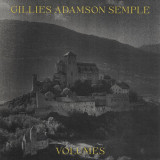
Artist and musician Gillies Adamson Semple explores the material resonance of drone
on new vinyl-only album Volumes.
In 2022, Gillies Adamson Semple made a pilgrimage to the Valère Basilica in the Swiss Alps to play the oldest functioning pipe organ in the world. Built in 1435, this unique instrument is the centrepiece of this sensitive and stirring 6-track release, tracing the elemental themes of spirituality, anatomy, ecological collapse, and the nature of listening in its glacial minimalist drones.
Drawing inspiration from the long-form compositions of Sarah Davachi and Kali Malone, Volumes was built from in-situ recordings Semple made in Switzerland, with the aim of capturing the physical qualities of the sound, from the stops and pedals to the air rushing through the organ’s ancient pipes. Treated like sculptural material and re-assembled at Semple’s London studio in the tradition of musique concrète, the tracks evoke a sense of exquisite timelessness, at once part of and floating free of their environment.
As Semple explains: “What I like about the organ is that you can make it feel very physical. It has all these mechanical parts that sound really beautiful. And the piece is never performed. It is something that is rooted in the site. The whole pilgrimage to see this organ in Switzerland ended up acting like that, where you’re going to this very sacred place to see this specific instrument, but all you’re taking back is recording.”
Released on vinyl via Fourth Sounds, Volumes was initially conceived as the soundtrack to Semple’s 2023 exhibition of the same name at Cedric Bardawil in London.
Edition of 200 with risograph insert, liner notes by Anton Spice. Fully remastered for vinyl.
quête:the beautiful
A bit more than half a decade on from his widely acclaimed debut Vanishing Points from 2018, Swiss guitarist, composer, and improv musician Manuel Troller releases his new record Halcyon Future. A rhythmically dense and ambiguous, yet joyful ride for unstable times, a plea for warmth and hopeful resistance.
Troller’s mode of incorporating, zooming in, and expanding on small elements from improvised sessions creates a multilayered work of driving rhythms and abstract, vibrating textures. Opening with Halcyon Future I’s distinctive open pulse, this first piece guides us through subtle harmonic shifts that are almost unrecognizable as they take place over extended time, overlapping and creating a sense of ambiguity until the piece reaches an almost optimistic level with Mario Hänni’s unexpected introduction of driving acoustic drums. Relentlessly and with increasing excitement, heavy electronic 80s bass drums and an armada of layered hi-hats push them on, leading to the all-incorporating melodic finale.
The two long pieces Halcyon Future I and Halcyon Future II focus on forward momentum. In between them stands DNA, a purposely directionless contemplation on emotion as such. It is raw, naked, and confrontational, with a tender and subtly changing chord progression creating intimacy and proximity, abstraction and warmth, like a beautifully vibrant hologram for the listener to walk around in.
The B-side with its 20-minute Halcyon Future II features playful futuristic guitars, enhancing and challenging the stereo image that Troller is already well-known for. As it’s given time to develop and take root, the ever-varying guitar interactions densify and the staccato patterns jump out of the speakers with joy, creating excitement and building momentum. Compared to Side A, things turn to a slightly more complex rhythmical, melodic, and harmonic feel here. There are easy references, such as Manuel Göttsching’s E2-E4 or Pat Metheny performing Steve Reich’s Electric Counterpoint, but Troller goes a different and very much more concrete way. Although the piece has been recorded in various places and through a long process of overdubbing, there is an astonishingly strong live feel to it, from beginning to the end, from the slow rise to the full spectrum and the almost krautrock-like finale. Improvisers Hans Koch on soprano saxophone and Michael Flury on heavily fuzzed trombone join in, while Troller and Mario Hänni on many guitars, bass, drum machines, and acoustic drums provide a joyous driving entity, not giving up until it all breaks down again. There is overkill and brute force, though never without depth and a vision of future.
In the musical scope of Halcyon Future, there is no need for an absolute definition of things. A continuously changing interpretation of repetitive and variable elements fading in and out of focus tells a story of an excited sense of acceptance. Feelings of transcendence stem from Troller’s layering of constantly shifting rhythmic structures with unforeseen improvised harmonic changes. Drum machine parts overlayed with acoustic drums shift between musical modes, anchoring the album on the verge of a jazz-influenced, motorik, post-ECM balearic plateau. Abstract textural elements gently swirl around and behind all that is rhythm, providing a submissive counterpoint. As with much of Troller’s work, Halcyon Future is an album that unfolds slowly, revealing more of its richness, detail, and subtle beauty at each listen.
Halcyon Future is a joint release by three:four records and meakusma.
Forest Law's debut album, "Zero," is a vibrant journey blending Balearic funk with urban Tropicalia, showcasing his adept guitar playing, old-school sampling, and UK- styled beats alongside his mellow yet sombre vocals. Recorded across eclectic locations from Icelandic fish net factories to a garden shed in Romford, this innovative release marks a new chapter for the multi-instrumentalist producer.
Released in collaboration with the UK home for jazz and electronic sounds, Total Refreshment Centre, Zero is Forest Law’s first release since his debut EP on Brownswood Recordings four years ago, marking a new and exciting chapter for the up-and-coming talent.
Crafted over seven years, "Zero" is deeply influenced by Law's experiences, from immersive stays in Porto where he delved into Portuguese music to an artist residency in a remote Icelandic fishing village. The album was finished, and recorded in his garden shed in Romford, East London. It’s a beautiful juxtaposition about a boy from Essex, who fell in love with international music, discovered the world, and then produced a musical treatise about his adventures from his shed.
Big tip!
Revised eight track re-issue of Maria Somerville's much lauded debut album. This new edition features an additional cut 'Lakes' - a 5+ minute blown out instrumental recorded live on tour in 2019.
" Stirring and beautiful songs, with a consistent optimism underlying even the murkiest of moments."
Recorded in Connemara and Dublin. Mixed by Brendan Jenkinson. Mastered by The Bastard.
Mr Bongo proudly presents the debut album from Tasmania-born, Melbourne-based, Finn Rees. Gliding across a swirling palette of saturated hues, Dawn Is A Melody feels vintage yet vibrant, new but familiar at the same time. A spiritual, deep and textured jazz record, tipping its hat to greats from the past, capturing memories and reformulating them into new ideas with the help of some of Melbourne’s finest talent.
Expert keys player for the likes of 30/70 and Elle Shimada, alongside one-half of Close Counters, this debut LP was Finn’s conscious departure from the realm of groove-based jazz. Instead, Dawn Is A Melody places the piano and arrangements centre stage, giving Finn and his fellow Melbourne crew freedom to explore the spaces in between, new emotions and alternate soundscapes.
In Finn’s own words: “My intention with Dawn Is A Melody was to create a world; a microcosm of colour. Something rich and beautiful that allowed the melodies and compositions to reach their full potential. It was driven by hope, curiosity and the search for beauty and reassurance in this ever-changing world. The emotion behind the music is really about the journey of life, growing up and changing, as well as my relationship with Tasmania’s natural landscapes where I grew up, a part of the world that is incredibly unique and beautiful.”
The album arcs between opening, middle and end. Beginning with the optimism of ‘Looking Up’ and ‘Lagoon’, the former a celestial, string and harp marbled slice of positivity, the latter a spiritual journey of exuberance and hope, Finn’s fingers dancing across the ‘70s Yamaha grand piano. From there the songs blossom outwards with the cinematic soulful journey of ‘It’s Behind Me Now’ and Brazilian-inspired ‘Expansion’, as the divine ‘Crossing’ signals a transition to a new realm. The energy is transformed from the rich cosmic textures to a more intimate and personal feeling with ‘Ablaze’, ‘Between Spaces’ and ‘As It Passes’ which blissfully fades down to simply piano and strings to close out the record.
Recorded at Rolling Stock in Collingwood, Melbourne, Henry Jenkins was drafted in as recording and mix engineer, his minimal vintage mic setups giving a live aesthetic and warmth to the arrangements. Lucky Pereira and Blakely McLean Davies form the rock-solid rhythm section, with a hand-picked line-up of other Melbourne talent on display, including Cheryl Durongpitikul on tenor sax, Siwei Wong on harp, Audrey Powne on trumpet and Allysha Joy on vocals to name only a few.
Plotting a course from Alice Coltrane, through Herbie Hancock, to Arthur Verocai, this is a debut nourished by the past but firmly made in the present. A record unable to be age-stamped, casting ambiguity as to when, what era and by whom it has been crafted. Like a vintage lens capturing a current scene, Dawn Is A Melody is warm and familiar yet focused on the here now.
- A1: Dustin O'halloran - An Ending A Beginning
- A2: Bonobo - Get Thy Bearings (Exclusive Donovan Cover Version)
- A3: Darondo - Didn't I ?
- A4: Nina Simone - Baltimore
- A5: Menehan Street Band - The Traitor
- A6: Romare - Down The Line (It Takes A Number) (It Takes A Number)
- B1: Shlohmo - Places
- B2: The Invisible - Wings (Floating Points Remix)
- B3: Badbadnotgood - Hedron
- C1: Matthew Bourne - Viii Juliette
- C2: Airhead - South Congress
- C3: Matthew Halsall - Sailing Out To Sea
- C4: Dorothy Ashby - Essence Of Sapphire
- C5: Peter & Kerry - One Thing
- D1: Eddie Front - Gigantic
- D2: Bill Evans - Peace Piece
- D3: Benedict Cumberbatch - Flat Of Angels (Part 3 - Exclusive Spoken Word Piece)
Late Night Tales and Bonobo were pretty much made for each other, it just took them a while to both realise it. Stepping forward into the compilers spotlight for the 33rd edition is Simon Green - aka Bonobo - a musician, producer and DJ perfectly suited to soundtrack an evening spent reclining to some parallel beats. Six albums to the good (most recently 'The North Borders' released earlier in 2013), Green has been on a winning streak since 2010's breakthrough 'Black Sands', which has now sold in excess of 160,000 copies. His music has aided the sales of Citroen cars and Olay creams, as well as soothing the puzzlement of Lost. Wrapped in delicately programmed drums, Green's music is at once both sombre and reassuring. If what comes out the other end is the music of Bonobo, then this is the fuel that keeps the engine running: soul, jazz, classical, pop, funk, leftfield, rock. Pianos and brass are abundantly present. Our ivories are warmed and tickled by the classic, Bill Evans, and new school, with Matthew Bourne's mournfully beautiful 'Juliet' and Dustin O'Halloran's 'An Ending A Beginning'. The brass section comes courtesy of Menehan Street Band's jazzy 'The Traitor', 'Flipside' by the Hypnotic Brass Band. Exclusives include YouTube sensation 'One Thing' by Peter & Kerry . Not only that, but there's Bonobo's special LNT cover version, a brilliant reading of Donovan's 'Get Thy Bearings', As the light dims, the unsettling sounds of Lapalux or maybe even Shlomo pierce the misty evening air, before giving way to the ethereal splendour of Eddi Front's 'Gigantic' or even Nina's paean to an imagined rural idyll 'Baltimore'. Amble down to the riverside. It could be the Great Ouse, as willows weep into the water; it could even be in Brooklyn overlooking the Lower East Side, as the sun slides down the sides of the skyscrapers. Take a notepad for inspiration. Maybe even a hipflask for a slug of something warm. Sit down and reflect and let those beautiful pianos skim the water's surface. Sometimes, you think, life is good. You can't play a symphony alone, it takes an orchestra to play it: Simon Green is your conductor.
The Prodigy Carlos Nilmmns Is Back on Skylax With Once Again a Splendid 12 Inch! His Style Is a Mixture of Refinement and the Most Beautiful Things That House Music Has Ever Produced, Moodymann, Theo Parrish in the Lead but Not Only That, We Must Also Add the Masters Lalo Schifrin, Donald Byrd and Even Henry Mancini. This Ep Starts With a Bang With the Sublime "Nes", Three Letters Which Alone Sum Up the Small Miracle of Bringing Together Both the Ghosts of Detroit and the Most Beautiful Cinematic Music Directly Inherited From the Glorious 70s. "Believe" Plows the Same Furrow With a More Mental Universe and to Conclude "Parisian Nights" (Jazz Version) Which We Swear Would Not Have Been Missing on an Impulse Album. Side B Opens With "Celebration" Which Sounds More Club Tool for Once With Obviously This Je Ne Sais Quoi That Is Far Superior to All Current House Productions. and This Ends With the Club Version of "Parisian Nights", a Real Volute of Sound. His Style Reminds Us Very Strangely and Quite Paradoxically of the Illustrious Terre Thaemlitz Aka Dj Sprinkles. Music for the Soul and the Body....
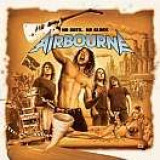
Mit "No Guts. No Glory" perfektionierten Airbourne weiterhin ihren rauen, mitreißenden Rock 'n' Roll. Der bombastische Bombast der Band verhalf dem Album zu einem Top-10-Debüt in den Billboard US Top Rock Albums Chart und den Top 100 der Billboard Top 200. Neben Knallern wie "Blonde, Bad and Beautiful" erschien das herausragende "Raise The Flag" in Videospielen wie Madden NFL 10 und Twisted Metal. Blabbermouth nannte es "eine durch und durch vergnügliche Übung in dezibelfreudigem Hardrock, die nach der Begleitung mehrerer Flaschen Whiskey verlangt". 2010 erschien das zweite Album der australischen Hardrocker Airbourne, "No Guts. No Glory" ist "ein überschwängliches Fest jugendlicher Verve, Vitalität und, unvermeidlich, Rebellion". "No Way But the Hard Way", "Blonde, Bad and Beautiful", "Back on the Bottle": Allein die Songtitel erzählen alkoholgetränkte und manchmal schmutzige Geschichten von hartem Rock, hartem Alkoholkonsum und der Tatsache, dass man im Allgemeinen nichts mehr zu verlieren hat. BBC
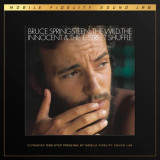
Released only eight months after his exhilarating debut, Bruce Springsteen's The Wild, the Innocent & the E Street Shuffle contains rousing dispatches from the boardwalk, the street, the beach, and the bedroom. It explodes with energy, dares to dream, teases with humour, crackles with tragedy, clings to hope, and overflows with discovery, youthfulness, and personality. It features an unforgettable cast of characters — corner boys, teenage hustlers, doomed lovers, jazz men, junk men, factory girls, fortune tellers, alley cats, pimps, escorts, and more — illuminated by vivid colour, breathtaking detail, and poetic action.
Musically, the heartfelt 1973 record is inhabited by sympathetic vignettes and cinematic arrangements steeped in rock 'n' roll, soul, jazz, and R&B. It finds the New Jersey native looking beyond the parameters of his preceding record and seeking to move on from environments he knows well (and chronicles here) by rushing headlong toward unknown territories, adventures, and people. Underpinned by the singer-guitarist's ambitious poetic enterprise and will to succeed, The Wild, the Innocent & the E Street Shuffle is the album on which Springsteen becomes the Boss.
Mastered on Mobile Fidelity's renowned mastering system, pressed at RTI on MoFi SuperVinyl, and strictly limited to 7,500 numbered copies, Mobile Fidelity's UltraDisc One-Step 180g 33RPM LP set is the definitive-sounding version of Springsteen's sophomore record. Benefitting from SuperVinyl’s nearly non-existent noise floor, superb groove definition, and dead-quiet surfaces, The Wild, the Innocent & the E Street Shuffle plays with a clarity, energy, presence, and openness that complement the expressiveness, dynamics, and scope of the seven restless songs that comprise a work Rolling Stone ranked the 345th Greatest Album of All Time.
Beyond the audiophile sonics that practically place you behind the console at 914 Sound Studios — listen to the separation between the instruments, natural decay of the notes, interplay within the widescreen soundstaging, and nothing-to-lose youthfulness of Springsteen’s voice — this reissue takes seriously this record’s influential merit by presenting it in packaging that underlines its status. Tucked in a beautiful slipcase, the LP is housed in a special foil-stamped jacket with faithful-to-the-original graphics. This reissue is made for listeners who prize sound quality and who want to engage themselves in everything involved with the invigorating set that busted Springsteen loose from the club circuit and landed him on the radio
Determined to liberate anyone within earshot and unafraid to come on strong, The Wild, the Innocent & the E Street Shuffle serves as the debut of the E Street Band — not only heard but seen for the first time by most of the public courtesy of the back-cover photograph. This is where saxophonist Clarence Clemons, organist-accordionist Danny Federici, and pianist David Sancious step out of the shadows — and drummer Vini Lopez and bassist Garry Tallent again stoke a fiery rhythmic engine that helps drive the untamed, reimagined big-band swing of “Kitty’s Back,” breathless R&B thrust of “Rosalita (Come Out Tonight),” and carefree dance steps of the funky “The E Street Shuffle.”
Of course, the main attraction remains a then-24-year-old visionary on the precipice of becoming a sensation and turning a then-bloated rock scene on its head. Recorded over three months while Springsteen and company were busy touring his debut LP, The Wild, the Innocent & the E Street Shuffle reflects the high-octane approach the vocalist embraced onstage and drifts away from the label-dictated acoustic-based frameworks of his debut. The set also witnesses Springsteen deepening his observational skills, with narratives such as the romantically tinged “4th of July, Asbury Park (Sandy)” and redemptive epic “Incident on 57th Street” mirroring changes taking place in the singer’s own life, small towns, and America at large.
A thrilling collision of memories, reflections, and composites — Sandy, Rosalita, and the latter’s parents are all based on actual people Springsteen knew, as is the community depicted in the opening track — the aptly titled The Wild, the Innocent & the E Street Shuffle resonates decades on due to its truths, authenticity, and spirit. Those characteristics — as well as the fact that many of its lengthy songs come on as the equivalent of sweaty, feverish soul revue that won’t stop until you’ve been exhausted — also explain how this now-iconic album triumphed over the reservations of industry “experts” that both demanded Springsteen re-record it and instructed deejays not to play it.
Yet there’d be no stopping a record that saw the past, present, and future, a band whose will would not be denied, and a phenomenon who was born to run. A never-ending invitation to act real cool and stay up all night, The Wild, the Innocent & the E Street Shuffle always feels alright.
True audiophile joy — now cut at 45 RPM 2LP for better tracking, exceptional bass!
Remastered by Kevin Gray at Cohearent Audio from the original master tapes
Plated and pressed on 180-gram vinyl at Quality Record Pressings!
Stoughton Printing gatefold tip-on heavyweight cardboard jacket
Praise for the 33 1/3 version of The Smoker You Drink, The Player You Get:
"(Side one) ends with the appropriately titled 'Happy Ways,' a Latin-tinged guitar-fest with lovely chunky bass lines that sounds absolutely glorious on this Analogue Productions pressing. The zing of steel string guitar almost sounds dead on the CD and tired on my ancient vinyl pressing, so this is clearly not one of those remasters that's based on an umpteenth generation copy of the tapes. ... You owe it to yourself to hear this album — and it will not sound any better than this spectacular pressing." — Recording = 8/10; Music 10/10 — Jason Kenedy, Hi-Fi+, Issue 148
"An outstanding new 180gm LP reissue from Analogue Productions, with improved sound thanks to a sparkling new remaster by Kevin Gray at Cohearent Audio, makes it clear that this 1973 release remains — with the possible exception of 1978's But Seriously, Folks . . . — the undisputed highlight of Walsh's solo career. ... Another week, another beautiful-sounding, wonderfully packaged reissue from Analogue Productions." Read the whole review here. — Robert Baird, May 2017
In between his stints with the James Gang and the Eagles, Joe Walsh tackled his second solo studio album The Smoker You Drink The Player You Get which became his most successful solo outing. The 1973 LP continued the heavy and light rock mix of tracks found on his previous release, Barnstorm.
Analogue Productions has done reissue justice to the album that AllMusic decries "features some of the most remembered Joe Walsh tracks, but it's not just these that make the album a success. Each of the nine tracks is a song to be proud of. This is a superb album by anyone's standards."
To obtain the best sound possible we turned to Kevin Gray at Cohearent Audio to remaster this superb album from the original analogue tapes. Next we plated the lacquers and pressed LPs on 180-gram audiophile vinyl at the world's best LP maker, Quality Record Pressings. Top it all off with a deluxe Stoughton Printing gatefold tip-on jacket and you've got the makings for audiophile joy.
But would we stop there? Hardly. Now with our 45 RPM release, the best-sounding version of this rock music gem gives listeners an even richer sonic experience. The dead-quiet double-LP, with the music spread over four sides of vinyl, reduces distortion and high frequency loss as the wider-spaced grooves let your stereo cartridge track more accurately.
This amazingly eclectic rock album has Joe's smash "Rocky Mountain Way," his hit "Meadows," plus "Bookends," "Wolf; Dreams" and more! Walsh's ability to swing wildly from one end of the rock scale to the other is unparalleled and makes for an album to suit many tastes.
The phenomenal three-piece band includes members of Oranssi Pazuzu, K-X-P, Grave Pleasures and Aavikko
Svart Records is proud to release the debut album, I, from Haunted Plasma, a powerhouse of futuristic synth in symbiosis with the super violent atmospherics of kosmische Black Metal. Haunted Plasma is “man meets machine” in a cybernetic wasteland, set to a conceptual backdrop of William Gibson and Phillip K. Dick style mind-melt. The highly evolved creatives at the heart of Haunted Plasma’s sound, cite Terry Riley, Massive Attack, a contemporary take on Krautrock hypnosis, psychedelic Black Metal and 90s Techno, resulting in an orgy of mutant sound.
The phantoms at the beating nucleus of this unearthly machine are Juho Vanhanen (Oranssi Pazuzu, Grave Pleasures), Timo Kaukolampi (K-X-P, Op:l Bastards) and Tomi Leppänen (Circle, Aavikko, K-X-P), transmitting a music form evolved from a life of redefining sonic boundaries in their respective projects. Also featuring guest vocals from Mat McNerney (Hexvessel, Carpenter Brut, Grave Pleasures/Beastmilk), Pauliina Lindell (Vuono, Dust Mountain) and Ringa Manner (Ruusut, The Hearing). Haunted Plasma promises an extraterrestrial experience from some of the foremost contemporary musicians at the heart of the Finnish heavy and avant-garde musical underworld.
Haunted Plasma reveals:
“We are liberated futurists, embracing free-form and natural composition, mirroring the merciless forces of cosmic creation. We have a motto to stay true to our feelings, to spawn a sound that’s never been heard before. Servants of music. Energizing, radical and pure”
The first single from Haunted Plasma’s cascading debut, Reverse Engineer, is a creepy, slowly erupting, synthetic nightmare, of a downloaded being waking up in the wrong future. Ghostly vocals demand the listener to “give us what we want” in an Orwellian glimpse into the current dystopia we live in, where information is controlled, and thoughts are bought and sold. As McNerney intones the words “technology of power” he describes the threat of a malevolent and omnipresent artificial intelligence, as much as describing the oppressive and electromagnetic sonar pulse of Haunted Plasma’s sound itself. Psychedelic guitar hypnosis from Vanhanen snakes around Kaukolampi’s molten and morphing synths, while Leppänen’s uncanny man/machine rhythms pull our strings and animate their other-worldly mechanisms. Have a look at the official visualiser of "Reverse Engineer" on the Svart YouTube channel here
Culminating in the full-blown fast Krautrock of the final self-titled track, oozing with blistering noise elements and enigmatic vocals from Ringa Manner, the album's journey reaches its zenith, taking you to unknown territories on a Kubrikian space trip. I is a rare record of talented musicians coming together to create a completely new sound, which is entirely their own, boldly glowing, where no light has shone before. From the dreamy psychedelia of Echoes to the discombobulated Spectral Embrace, Haunted Plasma is a willful force of deliberate sound contortion.
Whether you want to give in to Haunted Plasma’s sound or not, you are being watched, you are being recorded and your every move is monitored. Haunted Plasma will enter your system on the 31st of May 2024. Turn on your phantom circuits and be prepared for an interdimensional excursion into Haunted Plasma’s alien dreams.
The debut album from Haunted Plasma will be packaged in a beautiful tip-on sleeve, swirling fog artwork, complete with 12” booklet and pressed on 3 exclusive vinyl colours: 300 copies on Standard Black Wax, 500 copies in Amber + Black Smoke and 200 copies of Svart exclusive Turquoise/Black Marble. The album will also be available on CD and digital platforms.
Yes' 90125 was a departure from their progressive style but it introduced the band to a new generation of fans, reaching No. 5 on the Billboard 200 and No. 16 on the U.K. albums chart. The 1983 album remains their best-selling album with more than 3 million copies sold in the U.S. "Cinema" earned the group a Grammy Award for Best Rock Instrumental Performance, while "Owner Of A Lonely Heart" was the band's first and only single to reach No. 1 on the Billboard Hot 100 chart.
Named for its Atco catalog number, 90125, the album — the band's 11th studio effort — it was born out of the band's self-reinvention. Begun as Cinema, a new band by Chris Squire and Alan White, the project grew to include the slick production of Trevor Horn, the new blood (and distinctly '80s guitar sound) of Trevor Rabin, and eventually the trademark vocals of returning founder Jon Anderson. His late entry insured that Rabin and Horn had a heavy influence on the sound. The album also marked the return of prodigal keyboardist Tony Kaye, whose crisp synth work on "Changes" marked the band's definitive break with its art rock roots.
"Owner Of A Lonely Heart" was a huge crossover hit, and its orchestral break has been relentlessly sampled by rappers ever since. The vocal harmonies of "Leave It" and the beautifully sprawling "Hearts" are additional high points,
90125 is a significant and well-regarded album in the Yes discography.
Analogue Productions is proud to offer the definitive reissue deluxe 180-gram 45 RPM 2LP of 90125. For Yes fans, this is a can't-miss addition to your album collection.
Kata No Wadachi is the latest album by Banetoriko, the solo noise project of Tamaki Ueda. Her first release both on An’archives and on vinyl, it follows several albums for the Neurec imprint – 2017’s Beside the Sluice and 2022’s Yorioto Hogiokuri – and several other cassettes and CD-Rs. With Kata No Wadachi, the Banetoriko world, inspired by the Yokai (“strange apparitions” – supernatural figures, ghosts, spirits) of Japanese folklore, is at its most resonant yet.
Recorded across 2022 and 2023, the three tracks on Kata No Wadachi have Ueda performing in a particularly elevated manner. Her sound is highly tactile and grittily sensuous, the better to capture the ritualistic repetitions, and hypnotic methodologies, core to Banetoriko. The scrape and scratch of Ueda’s self-made metal instrument, the Banetek, gives these improvisations a unique throb, even as their mood, of introverted focus and elaboration of minutiae, gestures towards broader histories of noise and abstract art. Kata No Wadachi evokes, to some degree, the urban ritual noise of the likes of The New Blockaders, Organum, or Ferial Confine; elsewhere, the abraded, rough-housing textures bring to mind the eighties tape works of Hands To and John Hudak.
Ueda embraces the dream evocation that’s possible when loops of blurred texture collide with the gnaw and groan of energised metal, while mantric, dissociated vocals, and the oppressive weight of deep breath, gather around these compositions like a ghost’s shroud. While she’s been making noise for some time, since the nineties, Banetoriko was formalised as a project in 2011, while Ueda lived in Los Angeles. Relocating to Osaka in 2021, she’s carved out an utterly unique space for herself in Japanese noise, and her music contains an absolutely elemental vibration. Framed beautifully with poetic liner notes by Aurélien Rossanino, Kata No Wadachi is an oppressive, yet quixotically blissful trip.
Strawberry Wind, produced by Richard Swift (Nathaniel Rateliff and The Night Sweats, Foxygen, The Shins) not only delivers on a promise to create an honest album for kids and parents but it represents what Baylin calls the “beautiful divide,” of juggling family life with her creative life, a difficult task by any measure. “The divide in me is easy to feel because I invest 100% of myself into my family and often the creative gets put to the side,” she explained, “so when I decided to begin writing for this album it just poured out of me.” Now singer / songwriter Jessie Baylin shares that creative outpouring on her debut children’s album, ‘Strawberry Wind’. Throughout the album, Baylin doesn’t hold back on telling it like it is. Weaving through lyrical themes of dream life, supermoons and summertime vibes are some gentle doses of reality. “I don’t want to lie to my kids. Life is hard sometimes and you need to find a way to deal with it... there will always be things in life you can’t control. But, you can dream of a better world and make your own refuge,” says Baylin, who is mom to 4-year-old Violet and is expecting her second child with her husband. Baylin, who’s released four critically-acclaimed albums over the years, says the seed was planted for this album after recording a cover of Harry Nilsson’s He Needs Me from the kids’ film Popeye. “The song has a childlike sense, but the message is very deep. It’s magical, it’s dark, and it hit all the right notes. I wanted to do an album that feels like that” she says. “Since becoming a mother, I found myself being around the house a lot and I started gravitating to these wonderful albums I remembered from my own childhood - The Beatles, Harry Nilsson’s The Point!, John Lennon, Roger Miller’s Robin Hood and Carole King’s Really Rosie." The magic of those iconic 1970s records she mentions is that they’re all grounded in solid songwriting and were never dumbed down for the audience. “Those records felt very honest and that was my mission here. I also wanted it to feel magical and remind people of the child inside of all of us that is filled with a sense of wonder and pure joy and hope.”
Darning Woman is an intentional, beautiful, sometimes confrontational album that shreds expectations of DIY, bedroom music, and feminine themes. There's a lushness and maternal instinct at play, as Coope connects the dots between physicality, ephemera, and the ultrafeminine. "I don't really like to deal that much with themes of personal hardships, or heartache and love," says Anastasia Coope. "Ultimately, I work most honestly with the language of what is happening in a moment and the passage of time around it. That, coupled with my reaction to entering the artistic landscape, and my thoughts about what does and doesn't get representation, comprises most of this album." Darning Woman explores, among other things, the meditative aspect of sewing, patching and embellishment, care and repair, collection not as modern, craven consumption but as a counterpoint to materialism. This sort of collection - the good kind, the gathering of things to make a home - can be, in Coope's words, "A very baby way to critique capitalism. Birds make nests, right? It can be a new life for a thing that was made. What you surround yourself with matters." To that end, Anastasia Coope is also the founder and leader of the Bonzo collective and show series, an exciting new home for the type of expansive, profoundly creative scene that New York has been missing for some time. And while Bonzo may well be the ascent of a new community, Darning Woman is the story of Anastasia Coope, herself. It is the sound of Coope entering the world as an artist, acknowledging the tangle of what changes - the gaze of the world, Coope's art in reaction and community to art in general - and what does not: her ideas and her own self.
It could be argued that Brained and Cooloorta are the definitive NWW E.Ps. Both classic and timeless fan favourites appear for the first time together on one single album. Both E.Ps marked a distinctive change in the NWW sound. Brained from 1984 showcases NWW at their mid 80's finest. The relentless churning and uncompromising music of Brained by Falling Masonry is complimented by the eccentric mania of JG Thirlwell's vocals. A Short Dip in Glory Hole takes us into the murky depths of a David Lynch influenced nightmare, a lysergic unhinged movie for the ears, which greatly influenced the Peter Strickland film Berberian Sound Studio. Cooloorta Moon from 1989 takes us in a whimsical direction and further highlights the boundless originality of NWW. The evolution of NWW utilising more traditional instrumentation and bordering on the verge of song structures started coming to the fore on this E.P. In addition to all the original songs from the Cooloorta and Brained EPs, the 2010 track, Sarah's Beloved Aunt perfectly closes this collection. Lovingly remastered by Andrew Liles. Agian, this arrives in a beautiful die-cut sleeve with Babs Santini artwork.
An’archives presents the latest album by Japanese free saxophonist and vocalist Harutaka Mochizuki, Doppelgänger ga boku wo. Since the early 2000s, Harutaka has quietly, yet steadily, released a string of solo and collaborative releases that have allowed multiple perspectives on one of the most singular voices in modern music. In collaboration, he seems to prefer the duo format, and digging through his discography, you’ll find releases where he pairs with Tomoyuki Aoki (of Up-Tight), Michel Henritzi, and Hideaki Kondo. But Harutaka’s solo performances, with their lyricism and physicality, are where the magic truly happens.
If earlier albums, like Solo Document 2004 (Bishop, 2005) and Pas (no label, 2014), were raw documentations of solo alto saxophone performances, in recent years, Harutaka’s solo albums have become more complex, more mystifying. Most significantly, they’ve become more personal; there are few musicians extant whose albums feel quite so much like diaristic interventions, and Harutaka’s music now is deeply moving in its intimacy. Developing that thread of revelation, Doppelgänger ga boku wo offers a still richer exploration of many facets of Harutaka’s artistry.
The two double-tracked alto saxophone performances here feel consummate, with Harutaka shadowing himself, exploring the possibilities of the multiple self: Doppelgänger is me, indeed. The playing here is rich with affect, but still exploratory, voiced with rigour and intent. Two short pieces for keyboard and voice (about Giacometti and Genêt, respectively) are fragile miniatures, with clusters of chords, and passing phrases, wrapping around Harutaka’s untutored but lovely singing.
The ‘karaoke’ performance that closes the album, of “Woman ‘W no higeki’ yori”, speaks to the iterative aspects of Harutaka’s music. A cover of the Hiroki Yakushimaru song, the theme to Shinichirō Sawai’s 1984 film W’s Tragedy, he’s returned to this song several times, and here, his delivery perfectly captures the spirit of what Michel Henritzi, in his typically beautiful liner notes, evocatively details as “one of those sad love songs that accompany lonely sake drinkers in smoky night bars, sharing their spleen.”
Gorgeous, human, heartrending - Doppelgänger ga boku wo is Harutaka Mochizuki in element and in spirit.
Listening to The Softies has always felt like peeking into a diary, with no personal detail spared. Lyrically the band documents a lovelorn heart in every manifestation, and hope is the bright silver lining adorning each song. As the third Softies album, Holiday in Rhode Island KLP119 presents a more accessible view to the humble honesty of their emotive universe. When Holiday in Rhode Island was originally released in Sept. 2000, it had been three and a half years since The Softies previous album Winter Pageant [KLP061]. In that time Jen and Rose's introspective musings are reborn, sparkling with renewed vision, both musically and spiritually. The trademark harmonies between Jen Sbragia (All Girl Summer Fun Band) and Rose Melberg (Tiger Trap, Gaze) simply shimmer, brighter than ever before, benefiting from strong yet simple arrangements and excellent production (at a house on Galiano Island near Victoria, British Columbia) by Dave Carswell and John Collins. The beautiful surroundings and supportive production crew inspired The Softies to extend their minimalist blueprint of two delicately jangling guitars and two crystalline voices to include acoustic guitar embellishment on "Just a Day," "You and Only You;" piano and sparse drums on "Me and the Bees;" a xylophone makes subtle appearances here and there. Holiday in Rhode Island is a stunning artistic accomplishment from these two much heralded pop icons.
Castle Face present Dan Rincon’s (OSEES, Wild Thing, Apache, Personal and the Pizzas) premier solo release Spotlight City.
Artificial landscapes and melodies comprised of Moog Grandmother, Mellotron and a kinky Modular system span from beautiful and lilting to haunting and etherial. The album was a years long learning experience of getting all components and ingredients to link arms and blend comfortably. Wrangling was part of the process. Strings soaring and sines weaving. Sometimes in the atmosphere, sometimes in the Earth’s core, sometimes flanked by neon blur as it hums & weave patterns through a world imagined in vintage sci-fi pulp.
“I was listening to a lot of solo Roedelius and Conrad Schnitzler records while writing this record and I’d say that both have been hugely inspirational on what I want to do as a solo recording artist. The way both of those of those artist pushed the early, chaotic electronic music into something more melodic is really inspiring to me, it’s not that dissimilar than trying to get melodies out of a modular synthesizer.”
An absolute necessary slab for anyone a fan of CF, OSEES, Popol Vuh soundtracks , 8 bit video game accompaniment & 80s Tangerine Dream. Burn one and burn out.