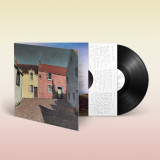
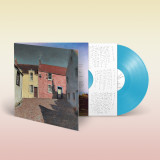
Car Therapy Sessions is an EP of new and re-imagined songs by Faye Webster recorded at Spacebomb Studios with a 24 piece orchestra. The orchestra was headed by Trey Pollard who was responsible for both conducting and arranging, and Drew Vandenburg produced and mixed the EP. Car Therapy Sessions will be available on vinyl in the fall and is available to pre-order on April 13th. "I have a vivid memory of walking around London in 2018 listening to a mix of Jonny, which I had just written. I remember thinking "I want to perform this song with an orchestra". I truly have had my heart set on it since then, always talking about it and figuring out how or when to make it happen," says Webster. On the EP, Webster reimagines three songs from her critically acclaimed 2021 release I Know I'm Funny haha and 2019's Atlanta Millionaires Club. The songs "Kind Of", "Sometimes" and "Cheers" take on a cinematic and glimmering new sheen. In addition to the title track -"Car Therapy" - she also shares a sprawling and emotional work - "Suite: Jonny" - which combines fan-favorites "Jonny" and "Jonny (Reprise)." The two songs originally appeared on the Atlanta Millionaire's Club tracklist, two different views on the same narrative. Here they're presented together. It's remarkable how beautifully Webster's work can take on this orchestral treatment. Like Cole Porter, or Judy Garland - her delicate and emotional delivery packs a gut punch when dramatized by the EP's robust arrangements.
quête:the beautiful
Part 2[13,66 €]
Repress!
Shadow Child returns with his Connected collaborations album.
Album sampler 1 of 2 features 'Um' with Bodhi which bends the rules of drum programming and brings beautiful haunting vocals, his sought after remix of Jaydee's classic 'Plastic Dreams and previously unreleased solo track 'Steak Fingers' which is exclusive to this release.
The first bunch of remixes for Kito Jempere's Green Monster. The album itself was a versatile journey thought all music styles and patterns you can imagine, remixes are keeping the same direction.
EP opens with a remix from multi-talented and prolific studio genius Ewan Pearson, the man behind hundreds of remixes, production and studio engineering duties for artists like Tracey Thorn, Pet Shop Boys, Depeche Mode, The Chemical Brothers and many many more. And Mr Pearson is taking Kabwato on a journey! Originally recorded as two and half minutes as some say mid-album filler, this boat (kabwato in chewa language) is going deep down the tropical river and through breezy morning rainforest valleys. A perfect trip for your midday staying home alone errands or for your early morning ray of light at the bar with a beautiful panorama.
Same track is getting treatment from the mighty Cable Toy! Unmistakable peak time euphoria manifest - going back to my roots-esque piano meets 90s cable tv dance show house party!
On the flip is the remix by The Dawless. The Dawless are Ramil' Goddeem from LAUD and Sergey Gol'd, producer and owner of GoldxFish Music studio. They recently released their debut album "Broken Aux" on System 108, got remixed by DMX Crew and became residents of LOUD BOYZ label. The project has simple ethics: computers not allowed, only real gear and vibes. The duo has created a true rage rave anthem for Kito Jempere now. Having already been played in a lot of DJ-sets blasting through packed warehouses, now it became available to everyone.
EP closing opus is by Kito's frequent collaborator - UK born and Japan based producer Max Essa. Every Kito's album was accompanied by Max's remixes and this time he's delivering pure beauty again. Creating some Golden-era "8 1/2 weeks" vibes, Max transforms the track into a post-summer voyage anthem.
Clear Vinyl
The fourth Exposure Series release is upon us. If you have not heard, the Exposure series is our signature compilation series that features multiple artists and is pressed on vinyl for the most discerning DJs and collectors. 'Linear Radiance' gathers together 4 extremely hot artists in the scene for one special 12'.
The EP begins with 'Raizel' by the hot newcomer Grush. This early set builder is smooth in the constraint it has rolling along in the sweet spot. A beautiful jaunt that is rich and fluid.
Next, is the amazing Philipp Priebe. 'So Glad' is another Priebe heater. A very talented producer, you can always count on him for great dancefloor business. The melody sneaks up on you as it builds from deep within. A sublime and subdued corker!
'Sonic Shadows' starts out on the B-side from skillful Nicolas Barnes. His contribution is a combination of a big club techno sound and a melodic flow that is almost reminiscent of some prime late 1990's progressive house.
Finally, is 'Grey Rythem' by Cirkel Square. Riding a catchy micro dub sound that is clever, fun, and surprisingly deeper than we could have ever hoped! All four tracks make for a healthy, well-balanced piece of wax!
Linear Radiance is lovingly pressed and shared on crystal clear 180- gram vinyl. Act quick while copies are in stock. This compilation is sure to get picked up by DJs, collectors, and fans.
"Partial Traces continue to evolve on their fourth LP, Stay Dreaming. The stripped down pandemic-era recording techniques they employed during the recording of their previous record, Wild Surf / Quiet Blues, helped the band evolved to a significantly sparser sound.
On Stay Dreaming the band has made a beautiful and sometimes haunting synth heavy record with rich, dreamy layers and plenty of feedback that evokes The Jesus and Mary Chain or Beach House."
- A1: Forever Chemicals (Live In Europe 2023)
- A2: Beautiful James (Live In Europe 2023)
- A3: Scene Of The Crime (Live In Europe 2023)
- A4: Hugz (Live In Europe 2023)
- A5: Happy Birthday In The Sky (Live In Europe 2023)
- B1: Bionic (Live In Europe 2023)
- B2: Surrounded By Spies (Live In Europe 2023)
- B3: Sad White Reggae (Live In Europe 2023)
- B4: Try Better Next Time (Live In Europe 2023)
- B5: Too Many Friends (Live In Europe 2023)
- C1: Went Missing (Live In Europe 2023)
- C2: For What It's Worth (Live In Europe 2023)
- C3: Slave To The Wage (Live In Europe 2023)
- C4: Song To Say Goodbye (Live In Europe 2023)
- C5: The Bitter End (Live In Europe 2023)
- C6: Infra-Red (Live In Europe 2023)
- D1: Shout (Live In Europe 2023)
- D2: Fix Yourself (Live In Europe 2023)
- D3: Running Up That Hill (Live In Europe 2023)
Premium Box Set, Limited Edition (316 x 316 x 20 mm) = Clear Vinyl 2LP Gatefold, Blu-ray, CD Softpack-Gatefold, exklusives Faltposter 30 x 60 cm
Collapse Into Never - Placebo Live in Europe 2023, aufgenommen @ Low Festival, Spanien
This Is What You Wanted -> Blu-ray mit Full-Length-Konzertfilm, aufgenommen in Mexico City 2023
Live From the White Room -> Live-CD mit "Never Let Me Go" Albumtracks im Softpack-Gatefold, aufgenommen @ Studio 1, Twickenham Studios
- A1: I Know That It's Like This (Baby) 04:32
- A2: A Bad Wind Blows In My Heart Pt. 3 03:57
- A3: If Tomorrow Starts Without Me 03:06
- A4: We Don't Need Them 04:55
- A5: I Hold Something In My Hand 03:04
- A6: This Can't Go On 04:30
- B1: …And The Sea… 02:10
- B2: Nothing To Be Done 04:02
- B3: It's Today Again 03:33
- B4: Christinha 04:04
- B5: How Beautiful I Am 04:18
- B6: Thankfully For Anthony 04:54
- B7: Nos Da 01:37
Blue Vinyl[24,58 €]
Bill Ryder-Jones veröffentlicht sein 5. Studioalbum "Iechy Da" am 12. Januar 2024!
Iechyd Da ist das fünfte Studioalbum von Bill Ryder Jones. Es wurde über die letzten Jahren in Bills West Kirby Yawn Studio aufgenommen. Bill setzt sich auf Iechyd Da mit verlorener Liebe, Trauer und seinen persönlichen Dämonen auseinander. Die 13 Tracks reichen von dem zarten Gal Costa-Sampling "I Know That It's Like This (Baby)" über die ausgedehnte Downbeat-Soundlandschaft von "...And The Sea..." bis hin zu der gewaltigen orchestralen Explosion von "This Can't Go On". Umhüllt von Streicherarrangements und überschwänglichen Gesangseinlagen des Chors der Bidston Avenue Primary School ist dies ein Album, das ein überwältigendes Gefühl der Hoffnung ausstrahlt, aber auch die Entschlossenheit, dass die Dinge besser werden können und werden.
Durch seine Liebe zur walisischen Musik (u.a. Gorky's Zygotic Mynci & Super Furry Animals) und die Nähe der Halbinsel The Wirral zur walisischen Grenze war Bill bereits ein Cambrophile (A lover of Wales or Welsh culture). Doch seine Leidenschaft für Cymru vertiefte sich, als er die verlorenen walisischen Wurzeln seiner Familie entdeckte, was ihn dazu veranlasste, Walisischunterricht zu nehmen und schließlich auch zum Albumtitel führte. Wörtlich übersetzt bedeutet "iechyd da" so viel wie "gute Gesundheit" und ist der walisische Ausdruck, mit dem man auf etwas anstößt.
- A1: I Know That It's Like This (Baby) 04:32
- A2: A Bad Wind Blows In My Heart Pt. 3 03:57
- A3: If Tomorrow Starts Without Me 03:06
- A4: We Don't Need Them 04:55
- A5: I Hold Something In My Hand 03:04
- A6: This Can't Go On 04:30
- B1: …And The Sea… 02:10
- B2: Nothing To Be Done 04:02
- B3: It's Today Again 03:33
- B4: Christinha 04:04
- B5: How Beautiful I Am 04:18
- B6: Thankfully For Anthony 04:54
- B7: Nos Da 01:37
Black Vinyl[23,74 €]
Bill Ryder-Jones veröffentlicht sein 5. Studioalbum "Iechy Da" am 12. Januar 2024!
Iechyd Da ist das fünfte Studioalbum von Bill Ryder Jones. Es wurde über die letzten Jahren in Bills West Kirby Yawn Studio aufgenommen. Bill setzt sich auf Iechyd Da mit verlorener Liebe, Trauer und seinen persönlichen Dämonen auseinander. Die 13 Tracks reichen von dem zarten Gal Costa-Sampling "I Know That It's Like This (Baby)" über die ausgedehnte Downbeat-Soundlandschaft von "...And The Sea..." bis hin zu der gewaltigen orchestralen Explosion von "This Can't Go On". Umhüllt von Streicherarrangements und überschwänglichen Gesangseinlagen des Chors der Bidston Avenue Primary School ist dies ein Album, das ein überwältigendes Gefühl der Hoffnung ausstrahlt, aber auch die Entschlossenheit, dass die Dinge besser werden können und werden.
Durch seine Liebe zur walisischen Musik (u.a. Gorky's Zygotic Mynci & Super Furry Animals) und die Nähe der Halbinsel The Wirral zur walisischen Grenze war Bill bereits ein Cambrophile (A lover of Wales or Welsh culture). Doch seine Leidenschaft für Cymru vertiefte sich, als er die verlorenen walisischen Wurzeln seiner Familie entdeckte, was ihn dazu veranlasste, Walisischunterricht zu nehmen und schließlich auch zum Albumtitel führte. Wörtlich übersetzt bedeutet "iechyd da" so viel wie "gute Gesundheit" und ist der walisische Ausdruck, mit dem man auf etwas anstößt.
Four essential cuts from Ghana & Cape Verde, compiled by Arp Frique...
Music is a great connector, bringing people together in many ways. On his journey in music so far, Arp Frique has been fortunate to meet many beautiful artists. The songs on this first edition of "Radio Familia" are deeply connected to the musicians he performs with. Join the music family on a trip through exciting sounds from Ghana and Cape Verde and listen to their story in both words and music.
Arp Frique never played a show without including Americo Brito’s epic song “C’est Dudu”. The song originally appeared on his album “Fidjo Di Mizeria” from 1989 but he had been performing his anthem for years and it came in many shapes and forms. After spending a lot of time in Paris, he (like many others in those days) got inspired by new records from Guadeloupe and Martinique, especially “kadans”. Incorporating latin piano motifs borrowed from salsa and merengue and a bold choice to sing in French, the song and album became an instant success for Americo in and outside the clubscene (note: DJs were not the primary source of dance music in those days, bands played all night to keep the dancers moving). The addition of C’est Dudu to this compilation became especially relevant since Americo recently passed away. Fortunately, his anthem just like all his other music will remain with us for decades to come.
While going through the archives with Americo Brito for the Radio Verde compilation, he introduced Arp Frique to a band called Imilux Star, of course again well connected with Americo. This Cape Verdean band residing in Luxemburg (where there is a substantial Cape Verdean community) definitely added a different flavor to the musical pallet the islands are famous for: heavy syncopated rhythms coming from the drum computer. They released two albums which both became very popular in their scene and the track “Yolanda” from their 1988 album “Jota Dê” got to Arp Frique’s attention too late to add to the Radio Verde comp. The band is still performing to this day in the Luxemburg-Cape Verdean live circuit.
While Arp Frique was on the road with his lead singer Mariseya, they talked much and deep about Ghanaian music (especially highlife) and he learned a lot about the community from Ghana in the Netherlands, mostly in Amsterdam and The Hague. Mariseya’s dad, Nana Adomako Nyamekye, came to see their liveshow while in the UK which was very special to them considering he is one of the highlife artists Arp Frique has grown to be very fond of. His deeply funky and bubbly bass driven song “Obra Twa Owuo” is about life and death, telling us we should all love each other as we still have life to live. Originally released on “Ano Plan” from 1982, the album is filled with philosophical advice. In his own words: “A message to all humans that something awaits us all at the end of life. Let’s live together with love.
Bnnyhunna, from the Ghanaian community in the Netherlands, joined Arp Frique’s live experience several times playing keyboards and synthesizers. His dad Elvis Kwasi Ankomah, just like him, developed a high level of musicianship while performing regularly in church. The song “Fa Wokoma Mame” (give me your heart) from his only studioalbum “Mfa Menko” released in 1995 is about showing his love to a lady but only if she puts her trust in him completely. The album talks about love, pain, relationships and life. Having worked with artists like Daddy Lumba, Nana Ampadu, Amakye Dede and many other hiplife and highlife legends, he still plays in church every week and has been doing so ever since he was 15 years young.
In 1994 the South London collective Archive was formed by Darius Keeler and Danny Griffiths together with female singer Roya Arab and young rapper Rosko John. Unfortunately, a few months later, they broke up, however Darius and Danny regrouped and continued releasing more Archive albums. Their 1996 debut album Londinium features a very strong mix of trip-hop, electronica, string arrangements, and female vocals from Roya Arab. Rosko John’s tough-spoken words are very similar to Tricky, Future Sound Of London and Massive Attack. The original 1996 issue only came out as a limited edition advance release, and has steadily built in reputation as a rare and expensive record to get a hold of. Fun fact: the song “Londinium” was featured on the Playstation
1 demo-disc and the music video was directed by Matt Cook.
This 25th Anniversary Edition of Londinium by Archive features the singles “So Few Words”, “Londinium” and more. It is packed in a gatefold sleeve, and includes a 4-page booklet with song lyrics and credits.
Four dazzling, extended engagements with mbalax master-drumming.
The contribution from Holy Tongue is chase-the-devil steppers — thumping, clangorous, reverberating — super-charged with energy and atmosphere. From the off drummer Valentina Magaletti detonates a hard rain of small bombs, rounds of fire, ticking fuses. Musical co-ordinates are somewhere between classic On-U Sound crew like African Head Charge, The Mothmen, and Creation Rebel, and the experimental funk of the Pop Group and 23 Skidoo, at their funkiest. Thrillingly, the two dubs are increasingly deranged.
Adjusting the same wavelengths as her superb Workaround LP, Beatrice Dillon plays spaced-out, abstract synth-work against the bodily physicality of the ancient, shifting mbalax rhythms. The music is poised, mindful, tentative; but also limber, fleet, and magical.
Phantasmagorical and efflorescent, Lamin Fofana’s one-two is simply stunning. Both excursions are wide-open, beautiful, epic, and propulsive — the first mix is banging and headlong, the second more syncopated and serpentine — teeming with freshly sublime, funkdafied updates on Jon Hassell’s Fourth World possible musics.
The two parts of LABOUR’s Etu Keur Gui engage the same sequence of drum patterns (called bakks) from different perspectives. The duo performed portions of this piece at the opening ceremony of the Dakar Biennial in 2022, at the Grand National Theater, with thirty sabar players from the family of Doudou Ndiaye Rose. This Wolof phrase for the inner-court of a home — a meeting-place — doubles here as a metaphor for inner space on a metaphysical level; and Pan Sonic, Muslimgauze, Zoviet France, early Shackleton… all ghost across the threshold.
Epic, grooving, dazzlingly creative, perfectly attuned blends of complex mbalax drumming, field recordings, thumping kick-drum, and cosmic, bubbling, jamming synths and electronics.
The opening is suitably liminal, haunted by a diachronic sense of times past, present, and to come: ancestral ghosts, scratched playback, scraps of old recordings, voices strangulated or just out of range; puttering drums; futuristic, kosmische keys. Part II picks up the pace; III gives the drummers some, and heightens the atmosphere of enchantment. Jon Hassell’s Fourth World music courses through a kind of Dream Theory In Dakar.
Toco SOS, the second side, is a thumping, throbbing, mesmeric future-classic; perfect for fahr’n fahr’n fahr’n on the Autobahn… in a spacecraft. Expert hand percussion, call-and-response singing, bin-trembling foot-drum, spaceways keys. Sleekly funky as prime Popol Vuh.
Both sides range expansively by way of Berlin, where Lamin resided for a few years: you can hear something of T++’s brilliant, landmark HJ record on the A, and elements of Mark Ernestus’ crucial Ndagga project, on the B.
Half an hour of stunning music; in a beautiful sleeve, with mirror lettering, and an intricate spot-gloss rendition of salt crystals, laid over a photograph of the salt mines at Lac Rose, outside Dakar.
Four new and reworked songs from Wave Temples delivered on a beautifully exotic 7".
Further into the jungle, the submissive touch of the deepest thicket. Of beachside oracles and openers to the path of penetrating rituals of night. Moist treasure; Exotic dream.
Sparky Deathcap AKA Los Campesinos! multi-instrumentalist R N Taylor is the first to admit he’s an unlikely candidate for viral stardom. And yet, almost 15 years on from his final EP, Taylor’s alt-folk solo project is now getting a much-deserved reappraisal, entrancing a whole new generation of listeners. Championed by prominent Twitch streamer/YouTuber Wilbur Soot, his beautifully bruised pocket symphony ‘September’ has racked up over 36m streams on Spotify and soundtracked more than 750,000 creations on TikTok. Now, Los Campesinos!’s own indie imprint Heart Swells are delighted to release a newly mixed edition of its parent EP, Tear Jerky. Musically, you can trace the influence of Phil Elverum’s Microphones, of Magnolia Electric Co and Sufjan Stevens, and of Ys-era Joanna Newsom. From the beautifully lo-fi baroque-pop of ‘Glasgow Is A Punk Rock Town’ to ‘Send It To Oslo’s’ maximalist mix of analogue sounds, these ambitious yet intimate compositions prove the perfect foil for deeply autobiographical tales of heartbreak and recovery.
Trailblazing instrumental synth pop experiments created to soundtrack Japan’s booming 1980s cartoon and comic industries. The brightly futuristic instrumentals on this collection reflect the mindset of composers and musicians who believed in a technological future where everything was possible.
In the late 1980s Japan experienced a brief but heady period where societal changes combined with new-found wealth to open up a world of possibilities. A huge influx of cash - artificially created by slashed interest rates after an agreement with the US to weaken the dollar relative to the yen - resulted in the inflation of real estate and stock market at a rapid pace. While the economic bubble it created was unprecedented and impossible to sustain, for a while money was in plentiful supply.
The musical genre City Pop reflected the aspirations of the country’s booming leisure class. Video games flourished with Nintendo's 1983 launch of their Family Computer (or FamiCom). Studio Ghibli was founded 1985 to later became one of the most famous and respected animation studios in the world, and Anime and Manga were established as major forms of entertainment for all generations of the Japanese public.
Music was no mere footnote to the anime and manga boom: the two forms of media often went hand in hand, and not simply through the presence of background melodies. With generous budgets available, even two-dimensional static manga comics could be released with an accompanying soundtrack of original music known as an ‘Image Album’.
Composer and arranger Kazuhiko Izu was one such beneficiary of this open budget approach. Written to accompany artist Katsuhiro Otomo’s manga comic Domu, the composer and arranger took advantage of the world-leading (and wallet-busting) Japanese synthesiser technology available at King Records’ fully equipped studio. Featured on this compilation, A3: Act 2 Scene 26 reflected the story’s sci fi themes with a blazingly futuristic yet warmly funky slice of synth pop that presents a joyful celebration of synthesisers and their seemingly endless possibilities.
Kan Ogasawara was another composer who made early mastery of the litany of synthesisers, drum machines and sequencers that had become available. Two tracks written to accompany the 1985 period manga Yume No Ishibumi are featured here; Honowo’s experimental electronic textures add spice to a jaunty electro pop melody that recalls the Rah band’s 1983 hit Messages From Stars; the jazz-tinged Utage rounds out Ogasawara’s shimmering synth textures with beautifully crafted backing from legendary musicians Yuji Toriyama (guitar), Pecker (percussion) and Jun Fukamachi (piano).
Before becoming one of the pioneers of Japanese Kankyo Ongaku (Ambient Music), Takashi Kokubo worked on the proto techno track Kiki (Jungle At Night). It was put together for the 1984 anime film Shonen Keniya (Kenya Boy) using some of the most expensive music technologies available at the time. This Africa-Inspired dance track offers a contemporary parallel to the early techno music that young Detroit based producers were then creating using cheap Japanese Roland drum machines and synthesisers.
This is the first compilation of Japanese anime and manga soundtracks curated by Kay Suzuki and Rintaro Sekizuka from Vinyl Delivery Service (a Tokyo based online record shop which also operates in East London's renowned wine and hifi shop Idle Moments). With a cover by artist Kazuki Takakura and two pages of liner notes, this vinyl only compilation of music never before released outside of Japan, captures a vital aural snapshot of an era whose forward-thinking sounds went hand in hand with cutting edge technology.
#40 ON ROLLING STONE'S 500 GREATEST ALBUMS OF ALL TIME: ANTICIPATES LATE 1960S TURBULENCE VIA PROPHETIC SONGS AND DARK THEMES
1/4" / 15 IPS analogue master to DSD 256 to analogue console to lathe
Any discussion about the finest psychedelic rock record ever recorded is incomplete if it doesn't grant consideration to Love's Forever Changes. Ranked by Rolling Stone as the 40th greatest album ever made, and named by Mojo the second-greatest psychedelic set in history, the effort is an internationally recognized seminal work of art. Transcending language and convention, its magnitude and magnificence need to be heard again and again. For here is an effort whose mind-boggling acoustic complexities and kaleidoscopic nuances are tailored for high-fidelity playback.
Nearly unlimited headroom, vast instrumental separation, transparent clarity, artifact-free atmospherics, and faithful balances appear out of jet-black backgrounds. Turn it up as loud as you want; the sole limitation will be your system's potential.
Commercially ignored upon release in November 1967, Forever Changes confronts the alienation, paranoia, violence, and strife that would soon plague the countercultural movement and send the Summer of Love into a tailspin. Apart from its lyrical themes and prescient malaise, the record's enduring nature equally owes to intertwined arrangements sewn together with Latin guitar-picked lines, finessed folk harmonies, mariachi-inspired horn charts, and subdued strings.
The seemingly opposing combination – ominous, dark reflections situated amidst lush, light melodic beds – affords Forever Changes a distinguished tension of claustrophobia and openness, dourness and ecstasy, ugliness and elegance enjoyed by no other record in the rock canon. Much of the contrast owes to leader Arthur Lee's mental state and pertinent observations. Lee, whose suppressed romanticism often surfaces even amidst the blackest shadows and most cynical moments, believed he would soon die, and hence channeled everything from lasting hopes to acid-addled decay to the chilling testimony of a Vietnam veteran in his narratives.
Alternatively sad and beautiful, the album-opening and flamenco-inspired "Alone Again Or" establishes the mood for what follows. Vocals overlap and soar; tempos rise and fall; surrealism trades places with reality.Forever Changes thrives both because of and in spite of a surfeit of labyrinthine chords and difficult notes that never repeat. Its ambitious construction almost forced the already fractured band to cede responsibilities to session musicians, which appear on two tracks. The quintet's resolve to not only complete the album, but to do so with such poignancy and curiosity, further enhances Forever Changes' standing.
No wonder that, in the twilight of his troubled career, Lee performed the record in its entirely during concerts met with overwhelming critical acclaim. It was, and will always be, a personal manifesto of timeless relevance and appeal.
Classic Solo Album From Founding Member of The Byrds!
"... one of the greatest singer/songwriter albums ever made." -All Music
Gene Clark's 1971 classic "White Light" is a bittersweet and knowing statement from a singer/songwriter at the peak at his creative powers. Having fronted The Byrds, Clark on his own here is stripped down in guitarist Jesse Ed Davis' stark production. The lyrics, singing and guitar playing are so powerful that less production here is immeasurably more musically.
White Light was 100% Analogue Mastered by Kevin Gray at CoHEARent Audio from the best source available- phenomenal-sounding 1/2" safety copies of the original stereo master tapes. The results are amazing! The beautiful guitar playing is finally full and rich, and you can hear the full body of the instruments, not just the strings. Gene's aching vocals have never been so emotive and immediate.
Featuring a fabulous mix of R&B classics such as "That's the Way of the World" (Earth Wind & Fire), "Lovely Day" (Bill Withers), "You're the One I Love" (Barry White), "Kiss" (Prince) with more contemporary pop material like "I Belong to You" (Lenny Kravitz), "It Runs Through Me" (Tom Misch), "Roads" (Portishead) and others, Vanessa and Tim Pierce (arranger) have delivered a supremely satisfying and ultra-rewarding album, one that is also beautifully recorded (tracked and mixed by maestro Michael C. Ross).
Many plaudits must also be directed at the magnificent group of creme de la creme LA-based session musicians who are backing Vanessa's latest effort. This is basically the same outstanding group that played on her previous album (GRV1200 I Want You): Tim Pierce (guitars), Alex Al (bass), Victor Indrizzo (drums), Jeff Babko (keyboards), Felipe Menolio (acoustic guitars), and Luis Conte (percussion). Felipe, a brilliant young guitarist from Brazil, is the one new addition and delivers some truly incredible playing - wait till you hear his solo on the samba-driven version of "It Runs Through Me"!
- 01: Hexagram
- 02: Needles And Pins
- 03: Minerva
- 04: Good Morning Beautiful
- 05: Deathblow
- 06: When Girls Telephone Boys
- 07: Battle-Axe
- 08: Lucky You
- 09: Bloody Cape
- 10: Anniversary Of An Uninteresting Event
- 11: Moana
Deftones classic self-titled album was their fourth long-player released in 2003. Now hitting its 20th Anniversary in 2023, the band celebrate by releasing this limited edition ruby red vinyl version. Featuring the singles Hexagram and Minerva.
- On The Sunny Side Of The Ocean
- Special Rider Blues
- St Louis Blues
- How Green Was My Valley
- (Poor Boy) Long Way From Home
- The Death Of The Claptop Peacock
- Spanish Two Step
- In Christ There Is No East Or West
- Steam Boat Gwine Round The Bend
- Sligo River Blues
- Poor Boy
- When The Springtime Comes Again
- On The Sunny Side Of The Ocean
David Tattersall, the Wave Pictures guitarist and frontman releases a solo album of interpretations of John Fahey tunes, recorded live in the studio. "I have been a fan of John Fahey's music since I was very young; it has always been with me and I can't remember a time when I wasn't affected by it. It is weird music, and very good. Of course, Fahey is an important cult figure in the history of music: as the first man to find a language for steel string guitar that can stand proudly alongside the established tradition of nylon string classical guitar; as one of many men who rediscovered obscure old blues musicians and recorded them for a new generation in the 1960s; as one uniquely able to reconcile 20th century avant-garde music with folk tradition; as an early indie-label DIY pioneer. For me personally, Fahey went beyond technique, and to some extent beyond historical or intellectual justifications for his work. He explored his emotions through his instrument of choice, and in so doing made the case for the guitar as the ultimate conduit for emotional expression. While there are many imitators who try to play ''like Fahey'', I avoided using his fingerpicking style or sense of rhythm, and tried instead to use his music to explore my own emotions, my own dreams and memories. I was more interested in the lyrical and expressive aspects of Fahey's music than in the techniques of it. I tried to find myself within his compositions and without composing anything I feel that I have managed to make a David Tattersall record that says as much about me as any of the many albums that I have written. John Fahey's beautiful discography shows that the guitar can carry as much mystery and soul as the human voice, and simply put, I wanted in on a little of this action. This is my second all-instrumental solo acoustic album, and where this differs from my first attempt, Little Martha, is that here I improvised freely. I used Fahey's originals only as guides. I'm not sure what I was looking for, perhaps something beyond explanation, but I tried to be as free as possible, and I am delighted by the spontaneous results. Hopefully, they will make the listener feel happy and dreamy, just like the effect that Fahey's many albums have on me. One of the most important things that Fahey ever said was his advice to guitarists to try to feel the emotions that each chord they play on a guitar brings forth. He is telling guitarists to not only play the guitar, but to let the guitar play them. I did my best to follow this advice. I hope you enjoy listening to the album, that it brings you some dreamy moments, and that it sends you back to happily explore the originals. I had a great time recording it. Naturally, I can't put the experience adequately into words but that's the whole point. I think Fahey was a genius of the kind that creates a whole genre single-handedly. There could be thousands, millions, of reinterpretations of his compositions. In fact, there probably already are. And long may this continue. All tracks were recorded live with no tampering."