Imaginative re-workings and improvisations by Andrew Tuttle of the late great Michael Chapman's unfinished instrumental album. Sonic explorations that bridge the Southern and Northern Hemisphere via the Caribbean, remote Northumberland and sub-tropical Australia. Navigating calm seas and turbulent waters of ambient corals, new-age pirates, waves of lapping banjos and drifting eroding guitars.
When Michael Chapman passed away in September of 2021, at the age of 80, he did so – as he spent much of his life – as both a pioneer and a legend. A veteran of the British blues/folk/jazz scene, Chapman emerged in 1966 and continued working throughout his life, always pushing the boundaries of his creations while collaborating with a slew of similarly heralded musicians along the way: Bert Jansch, Mick Ronson, Elton John, Thurston Moore, Steve Gunn; to name just a smattering of those he worked alongside over the years.
It's the latter of those – Brooklyn guitarist and songwriter Steve Gunn – who Chapman flourished alongside in recent years, the two collaborating on 50 and True North, two of Chapman’s final and finest records. It was through that friendship that Chapman’s music found Andrew Tuttle, the Brisbane-based multi-instrumentalist who has toured Australia several times alongside Gunn.
In the aftermath of Chapman’s passing, his partner Andru discovered Tuttle’s Fleeting Adventure LP, describing it as “one of the albums that kept me sane during that first brutal winter on my own.” The pair met in Australia shortly after, and before Andru had even made it back home to the north of England, Tuttle had begun working on the recordings she shared with him at that time. Those recordings were part of a project Chapman was working on at the time of his death, called Another Fish – what would have been a companion piece to his previously-released LP, simply called Fish.
Though Chapman had spent time in his local studio playing all the guitars, layering the different sounds and effects, he’d always intended to do much more work on the songs, however fate had its way and he never got to ribbon-bow those ideas and bring the album to its conclusion.
Though there was little intention in terms of how to finalise the project, Tuttle spent valuable time with those recordings. What materialised, eventually - with time, care, and diligent attention - is a two-disc set Another Tide, Another Fish, something both unusual and completely distinctive. The first disc, Another Tide is centred around Tuttle’s own work, which shaped all seven of Michael’s songs and ideas into new songs of their own, and the second disc which simply incorporates the recordings that Michael left behind.
“On all of the tracks I also ‘played along’ on banjo to the originals several times until I learned an approximation,” Tuttle continues. “This ended up resulting in a ‘hybrid’, where some works are easily identifiable to those who know Michael’s originals, and some took that inspiration to head altogether elsewhere. Each of the tracks, even where not obvious, does have at the very least a trace element sample of the original recordings so that it’s a true collaboration.”
What we’re left with is indeed a hybrid: part remix album, part cover album, both a solo work and a collaboration, of sorts. Inspired by Chapman’s original ideas and with new track titles directly referencing the numbered but otherwise untitled source material, Tuttle adds his own flashes of colours throughout, including editing, sampling, MIDI transposing and signal processing that twists these songs into beautiful new shapes. Perhaps Tuttle’s greatest achievement here then is that Another Tide sounds so effortlessly free of all this context.
Whether you know Michael’s, Andrew’s or even Andru’s story or not, these recordings will bristle with enchantment and intrigue, worlds are built, and while some thrive and grow, others fizzle out in a burst of light, such is the way. “It's been a long, long road but we got there and I think it's been more than worth it,” Andru says in the record’s liner notes. “I really hope you think the journey was worth it too.”
Guitars and effects by Michael Chapman recorded by Alex Warnes at Phoenix Studio, Brampton, Cumbria, 2017 Banjo, effects and edits by Andrew Tuttle at Bella Vista, Brisbane / Meanjin, 2023-2024

Поиск:the caribbean
Все
"Suddenly" is the fifth album by British R&B icon Billy Ocean, pressed here on Ltd Ocean-Coloured vinyl to celebrate its 40th anniversary. The album debuted Top 10 in the UK and the US, and includes some of Billy's most loved hits - the Grammy-winning US #1/UK Top 10 'Caribbean Queen (No More Love On The Run)', and the first of his killer ballads - 'Loverboy' and 'Suddenly'. The album spent a whole year in the US charts, hitting Double Platinum, and is certified Gold in the UK. Marketing activity.
We’re excited to present you Yurk’s First Vinyl album on Chomp! Chomp! This six-track all original music by Yurk, is diverse and rhythm heavy across the electronic genres. Kicking off the album with “Delay Tech,” this 90s-inspired acidic house track is festival-ready with big energy. Then we dive into “Bustin’” - a bouncy Tech House with punchy and multiform tones. Follow by “Sin Control,” warm Jazzy House grooves accompanied by delayed filled Trumpet theme. On the B side, “Cosita” - a hard-hitting Detroit-inspired dub techno composition that treks into 90s territory. Follow by “El Nuevo Jazz”, a playful and dynamic track which combines punchy percussive electro breaks with a high-spirited bassline. To conclude the album - “Satori,” takes us on a spaced-out acid house journey, inspired by the Japanese Buddhist term for awakening, offering a psychedelic and uplifting finale.
Yurk is a dynamic producer and DJ from Puerto Rico, now making waves in Brooklyn's music scene. Blending Latin rhythms with global electronic beats, he has released music with local labels like Mechanical in Queens, NY. As the head of Organized Disorder, Yurk hosts a biweekly radio show, along with an all vinyl monthly Saoco! Party focused on Caribbean and outernational music.
All Tracks written and produced by Yurk. Mixed and mastered by Justin Van Der Volgen. A3 trumpet by Robert PM. B1 vocals by Timo Lee. Album Art by Bráulio Amado. "Dedicated to Erik and my beloved mother Laura, whose spirits guide every note with love and grace.” -Yurk
Comparsa is the third studio release by the musical group Deep Forest. The group consists of the duo Michel Sanchez and Éric Mouquet and are known by composing a style of world music, mixing ethnic with electronic sounds and beats. Comparsa features a pronounced focus on Latin and Caribbean grooves, provided by musicians from Cuba, Belize, Mexico and Madagascar, among other places. It became #8 French export album of 1998 and was certified Platinum by SNEP Export Awards, with more than 500,000 albums sold outside France.
Part 1[9,20 €]
This is the second package of remixes for the hypnotic folk music of the Ainu a cappella group Marewrew.
Ukouk Remixes Pt. 02 is dedicated to dub-infused remixes, featuring Elijah Minnelli and Peter Presto on a 7" single.
Elijah Minnelli is a producer of dub music. The London-based artist specialises in a fusion of folklore and dub, which he masterfully demonstrates on his latest release Perpetual Musket on the FatCat label. His remix of Marewrew's Uekap is a deep and breathing take on the mesmerising round singing vocals, dubbed in a live take through his mixing desk. The chopped vocals are used like percussion instruments. Elijah Minnelli has also contributed a moody DJ mix to the Pingipung podcast series, sharing some of his knowledge of pre-reggae roots music from the Caribbean and South America.
Pingipung founder Peter Presto remixes the same track, Uekap, with his unmistakable dubby playfulness. The vocals are merry, the groove stumbling and slow. The flute melody qualifies as a perfect stress antidote.
The electronic dub trio Cloud Management added their version of Honkaya to the digital package. There is an Andi Otto remix in the bundle, Hunpe Yan Na. The song is about a whale that has stranded ashore; Otto dubs the song with Heiko Gogolin’s bass clarinet, blown organ pipes and his cello. Finally, Californian folk wizard Contact Field Orchestra adds his atmospheric, haunted version of Etukuma Kara.
2024 Repress

Alleviated Records presents the first-time vinyl reissue of Larry Heard's mid-90's gem ''Sceneries Not Songs, Volume 1''. The album stems from a time when the tempo slowed down and Heard reached a perfect synthesis of jazz influences, deep electronic ambiance and the house sound he was known for. The result is a brilliant album that should cater to both house and R&B heads alike. Now for the first time released as a 2x12''
Mystery colored vinyl (a unique and kooky mix-up from an exotic palette) and limited edition of 600 copies only!
From the mystical realms of a secluded ancient island, rising from the icy spray of the forbidden northern waters, comes the haunting, savage beat of a mysterious and primitive ritual. In this forgotten place, awash with wonder and enigma, echoing with the booming of sharkskin drums and bone rattles, the rock speaks with the voice of the gods. Weaving strange and terrifying tales, and tales of beauty and joy, Pagan Rites is a breathtakingly exotic tone poem that will make any Tiki bar come alive. Ixtahuele - the modern masters of exotica - legendary debut album finally back in print! The aim of the group is to provide the perfect soundtrack to bring your mind's eye on a time-traveling, round-the-world trip; taking you to faraway exotic islands, lost lands, and ancient cities - bringing back the Ottoman Empire, Port Royal, or even the mythical continent of Mu. Ixtahuele try to push the limits of where they can take you while still staying true to the genre; because after all the true armchair traveler can't make the Hawaiian Village the destination for every trip, but must also go to the Amazon, Micronesia, the Middle East, the Caribbean, and Indochina. All aboard!
Hot off the heels of an active summer tour across the festival circuit, South London Samba present their debut EP "Tempo!". Across 5 tracks, band leader Adam Ouissellat drives a tight rhythmically focused sound, with influence from Brazil and across the African diaspora.
"We have been performing these tunes for a long time and it felt right to archive them when we came up to our 10 year anniversary (the band started in April 2013).
We recorded them at Midi Music Company which is where we have rehearsed and ran classes since the beginning! These tunes have stood the test of time and are loved by audiences wherever we play."
Recorded in Deptford in single takes without overdubs, and expertly engineered by Ahmad Dayes (brother to Yussef).Tempo!is a vignette of their live performances. It encapsulates the raw power of a drumming orchestra carefully disposed to drive a unique interpretation of samba rhythms.
Adam says"The idea was to capture the spirit of carnival whilst adding to the rhythmic culture of drumming ensembles. Each piece has melodies and motifs running throughout which makes it a listening experience as well as something anyone can groove to."
Tempo!collects global inspiration from the Caribbean, Dutch Brass bands and Latin America and represents a desire to grow their community, and to "push the genre into new territory".Having already supported the likes of the Black Eyes Peas, Disclosure and performed at the O2 arena and regulars at Notting Hill Carnival, SLS are cementing their prowess with a technical dexterity that is immediately profound.
After two very intimate solos albums, pianist and singer Gregory Privat returns with PHOENIX, a luminous album celebrating the cycle of life and the constant rebirth from the ashes. A metaphor for the firebird, it's a continuation of the album SOLEY released in 2020. With double bassist Chris Jennings and drummer Tilo Bertholo, this unique trio blends spiritual jazz with urban pop, Creole songs, and electronic music.
Born in Martinique in December 1984, Gre\u0301gory Privat is the son of pianist Jose\u0301 Privat, known for his participation in the internationally recognized Caribbean group, Malavoi. Attracted by the piano at an incredibly young age, he took private lessons from the age of six and devoted himself for 10 years to a classical apprenticeship before turning to improvisation techniques and jazz.
Performers on this recording:
Gregory Privat - piano; Chris Jennings- double bass; Tilo Bertholo - drums
Comparsa is the third studio release by the musical group Deep Forest. The group consists of the duo Michel Sanchez and Éric Mouquet and are known by composing a style of world music, mixing ethnic with electronic sounds and beats. Comparsa features a pronounced focus on Latin and Caribbean grooves, provided by musicians from Cuba, Belize, Mexico and Madagascar, among other places. It became #8 French export album of 1998 and was certified Platinum by SNEP Export Awards, with more than 500,000 albums sold outside France.
Numero's Hottest Sounds Around trio gathers castaway late-'70s grooves from across the Greater Antilles. Stan Chaman's Trinidadian Semp concern delivered Wilfred Luckie's wobbly "My Thing" and the Hamilton Brothers' calypso-disco smash "Music Makes The World Go `Round" in 1978. Across the sea, Frank Penn's G.B.I studio tracked Stephen Colebrook's Doobies-inspired "Stay Away From Music" for the cruise ship curious. All three are housed in a custom Numero sleeve inspired by Edward Seaga's Caribbean music manufacturing and distribution powerhouse WIRL (West Indies Records Ltd.)
Guadeloupe’s Manix is a self taught musician drawing inspiration from traditional Caribbean Folk and Beguine, to Salsa, Reggae and beyond. In 1980 Manix met the group ‘Tamtam 2000’ in Mulhouse, France. Embarking on many worldwide tours, Manix cemented his place in the group with 'Ti Cherie’ becoming a global hit beloved throughout the Antilles, Cape Verde, and La Réunion. Describing his singular philosophy of inciting joy ”At this moment I realised quickly that the simple act of playing wasn't just about one’s own satisfaction, but rather the need to create and share music”.
Browsing the French Football Federation's website, Dijon’s ‘Under Radaar’ was able to track down Manix as he was once the match report coordinator for his club ‘Red Star Richwiller’. It’s now our pleasure to share his music once again.
Words from Manix:
"Now in my 70s, what a joy it is to discover my songs now being loved in new parts of the world that I could never have imagined them spreading to in the mad 80s. A reissue is like a renaissance, a second wind that reaffirms my believe that both music and love will never die”
We are so excited to share our debut release which has already received support from Antal, Hunee and Palms Trax.
Colombian-born, New York-raised producer and instrumentalist Felipe Quiroz aka Prince of Queens brings his unique synthesis of trans-caribbean culture with house and techno to RNT on his Merida EP.
Known for releases on Names You Can Trust and his band Combo Chimbita, this lush and varied EP invites you into a world where vintage tropical sounds and modular synthesizers live side-by-side on the dance floor. With 6 songs stretched across two sides, the record explores a wide range of tempos and electronic Latin vibes, and boasts gorgeous cover art that suits the emotion of the music perfectly.
Although he is a seasoned producer, Prince of Queens is still a relatively new name on the club scene…but with this definitive musical statement it’s a name that the heads will remember.
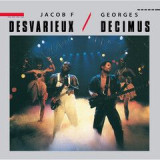
S
Brand new vinyl reissue to celebrate the 40th anniversary of seminal
album Yelele by Georges Decimus and Jacob Desvarieux, from zouk
pioneers Kassav', includes the massive worldwide crossover hit "Zouk-la
se sel medikaman nou ni"
Whether in concert, or on the radio or TV, the image of Kassav' remains vivid in
the minds of listeners and spectators. The group, founded in 1979 by Jacob
Desvarieux, Georges and Pierre-Edouard Decimus, has become legendary, putting
Guadeloupe and Martinique on the musical map of the world. Touring the world
with zouk, a musical movement introduced and popularized by Kassav', their
albums have repeatedly been rewarded with both gold and platinum discs.
A victim of Covid in 2021, the loss of Jacob Desvarieux leaves a huge void.
The mix of Jacob Desvarieux and George Decimus with Jocelyne Beroard, JeanPhilippe Marthely, Patrick Saint-Eloi and Jean-Claude Naimro has played sold out
concerts in 82 countries. With texts recounting real life in the Caribbean world
their lively music draws on the rhythms of Guadeloupe's gwo-ka and Martinique's
ti-bwa. Transcending the well-defined codes of Caribbean music, they have turned
the 1980s and all the succeeding decades into a fabulous ballroom.
They have been welcomed in Japan and the USSR, where they became the first
group of black musicians to tour. Forty years after the group's creation, their
timeless hits continue to resonate
Maritime Blue Colored Vinyl. Numero's Hottest Sounds Around trio gathers castaway late-'70s grooves from across the Greater Antilles. Stan Chaman's Trinidadian Semp concern delivered Wilfred Luckie's wobbly "My Thing" and the Hamilton Brothers' calypso-disco smash "Music Makes The World Go `Round" in 1978. Across the sea, Frank Penn's G.B.I studio tracked Stephen Colebrook's Doobies-inspired "Stay Away From Music" for the cruise ship curious. All three are housed in a custom Numero sleeve inspired by Edward Seaga's Caribbean music manufacturing and distribution powerhouse WIRL (West Indies Records Ltd.)
Comes with insert and download coupon.
Imagine a Latin remake of Back to the Future. The mad scientist is Arsenio Rodriguez (the godfather of salsa) and the young student who travels through time with him is Eblis Alvarez (Meridian Brothers). This album can only be described as the perfect soundtrack for that movie that never was.
After the massive buzz generated by his first solo album, Mentallogenic, Alex Figueira got back in the studio to work in a more collective fashion this time, carefully assembling the second album of his largest project to date, Conjunto Papa Upa; a team of 6 musicians, spanning 3 generations of some of the best talent in the Latin and avant-garde scenes.
In an era where tropical music is dominated by purely electronic and rhythmically uniform sounds, the ten songs encompassed in “Fruta Madura” (“Ripe Fruit”) wander through the most diverse tempos, rhythms, and motifs effortlessly. A real breath of fresh air that gracefully incorporates soul, funk, jazz, psychedelia, and electronics into a solid tropical, irresistibly polyrhythmic foundation, without ever succumbing to the many genre clichés.
The distinctive production and catchy songwriting of Figueira shine in a very distinctive light on this second full-length. Living up to his reputation (Miles Cleret, founder of Soundway Records, called him “one of the scene's truly authentic and eccentric producers”), he takes the opportunity to show he’s not afraid to keep walking his own path.
Taking the band for a wild ride through the traditions of Africa, America, and the Caribbean; contrasting them with a ridiculously wide plethora of vintage, contemporary, and futuristic sounds, and pivoting on the exuberant musicality displayed by his musicians; the result leaves no doubt: this album is destined to be considered a future classic of the exciting tropical psychedelic music of the 21st century.
Addressing the most diverse themes in this new collection of songs, things take on a much more mature tone, as the title clearly suggests.
The opening track “El segundo es más sabroso” (“The second one is tastier”) sets the tone in the most assertive way imaginable, with the band boldly declaring, through multiple metaphorical references (laid upon a crazy mix of Dominican merengue, Detroit techno, classic and free jazz, dub, and electro), that the bar will be set higher with this second album.
The remaining compositions touch upon the most diverse subjects, with a fair dose of humor, sarcasm, and postmodern “magic realism”. “El Algoritmo” (The Algorithm) is a parranda-cumbia hybrid (for lack of a specific term) about the omnipresence of technology in our lives. The sophisticated Latin soul of the titling track “Fruta Madura” makes a case for the beauty of the maturity process. Some key philosophical teachings of Marcus Aurelius (the role of causality, the impositions of “the logos” and the importance of self-control) get a twisted cumbia treatment on “Reos del Deseo” (Prisoners of Desire). “No le pongas Coca-Cola” (“Don’t put Coca Cola in it”) shows us the most satirical side of the band, accusing those who mix Coca Cola with Rum of committing "sacrilege", on a powerful base of Dem Bow (the grandfather of Reggaeton), intertwined with touches of soul, salsa, and Cuban comparsa.
"Háblame Claro" (“Talk to me clearly”) is a story of heartbreak that evokes in its first part the spirit of the erotic salsa of the 80s (a subgenre deeply despised by purists), and after an unexpected samba interlude, leads to the hardest salsa of the 70s (a subgenre adored by purists), to end up in the surprising form of pure Afro-Cuban ceremonial music.
“Tu mamá tenía razón” ("Your Mom Was Right") is an attempt to exalt the spirit of the Latin American soap opera in the key of “acid bachata”, to recount a real-life case, witnessed by the band on countless occasions: the partying woman who arrives at the show accompanied by her bitter husband, who obviously does not like to dance. A very cheeky song to talk about the very serious and pertinent topic of female empowerment.
“La misma vaina” (“The same thing”) with its indescribable blend of bantú, candomblé, and Mozambique rhythms with abstract synthesizers, is an ode to adventure in favor of the aversion to taking risks and seeking predictability.
“Amigas picadas” (“Salty friends”) is another humorous song recounting another real-life case witnessed by the band on countless occasions: a love encounter sabotaged by the girlfriend's friends, who all happen to fancy the same guy. A jazzy take on the ancient Dominican rhythm of pambiche (grandfather of merengue), with generous psychedelic touches, resembling the classy late 60s releases of Guadeloupe's legendary producer / label owner Henri Debs.
“Vinimos a hablar” (“We came to talk”) takes sarcasm to the highest level, to ridicule the absurdity (also experienced by the band firsthand) seen in live music venues where people pay a ticket to go and have conversations that could be carried out much better on any bar, where no band is playing. The music alternates between a delicate melody with loose, sparse percussion and a full-on, pumping Angolan semba, with a techno kick drum included; bringing things to an apotheotic grooving finale, where the peculiar swing of Venezuelan calypso from the Callao region is thrown on top of all the precedent elements; closing the album in the most uplifting, “end of the carnival parade” feel.
The artwork is a delicate and impactful oil painting by Colombian artist Kevin Simón Mancera, who has collaborated many times with the label before (“Maracas, tambourines and other hellish things” tape and the Lola’s Dice LP).
What the experts are saying:
“Alex (Figueira) dove into this work with a brutal cohesion between lyrics and synths. Timbre poetry, sound poetry (you name it). And that, superimposed on his always impeccable percussive base, confirms the title of “avant-garde visionary of our beautiful Latin music”".
EBLIS ALVAREZ (MERIDIAN BROTHERS)
“Papa Upa's infectious quirkiness is a balm against boredom. A mature album, but without an expiration date”.
GLADYS PALMERA
“Here there is a lot of strength, drum, cadence and psychedelia, lost dance rhythms, united in an intercontinental Latin/African/and Caribbean journey, a unique winning combination that we could consider the new “Ritmo Figueira”.
DISCODELIC
Conjunto Papa Upa are:
Alex Figueira - Timbales, percussion, vocals.
Gerardo Rosales - Congas, percussion, vocals.
Ramón Mendeville - Bongos, percussion, vocals.
Randy Winterdal - Bass.
Andrew Moreno - Guitar.
Nico Chientarolli - Organ, piano, synths.
All songs written by Alex Figueira.
Arranged and performed by Conjunto Papa Upa.
Recorded, produced, mixed and mastered by Alex Figueira at Heat Too Hot, Amsterdam.
Repress.
British-Trinidadian poet/musician/author Anthony Joseph’s latest album was inspired by and echoes the fertile London scene. Anthony has surrounded himself with some of the best musicians on the local scene, including Jason Yarde, Shabaka Hutchings (Sons Of Kemet, The Comet Is Coming), Crispin Robinson (founder of the iconic acid jazz band Galliano,) and Rod Youngs (Gil Scott Heron’s drummer). Operating as a dedication to poetic ancestors and a coming together of musical generations, ‘The Rich are Only Defeated When Running for their Lives’ is also an almighty jam. Recorded live in August 2020, it shows off the prowess of a team of master musicians from Paris and London. Jason Yarde, who also produced Joseph’s 2018 album ‘People of the Sun’ is credited as producer/ composer/arranger - to startling, albeit intimate, effect. Running throughout the release are inter-connected themes: memory, place, belonging and acts of homage. Anthony Joseph has released seven previous albums - six on Heavenly Sweetness - and collaborated with Archie Shepp, Keziah Jones and Meshell Ndgeocello who produced his album, ‘Time’ in 2014. He is the author of four poetry collections and three novels. His 2018 novel Kitch: A Fictional Biography of a Calypso Icon was shortlisted for the Republic of Consciousness Prize, the Royal Society of Literature’s Encore Award, and long listed for the OCM Bocas Prize for Caribbean Literature.
Formed in Montreal, eight-piece funk band Cane and Abel melded Caribbean elements with soul, blues and psych, frontman Frenchie Thompson holding plenty of bite and the full horn section including former Dragonaires trumpeter Norris Ridguard. After early singles on GRT, the group signed to Epic and relocated to the US but made their biggest splash in France, where they cut two LPs in 1972; this self-titled rarity has Thompson’s ‘Girl You Move Me,’ percussionist Blinky Bostic’s ‘Who’s Gonna Take The Weight,’ and likeable takes of Wilson Picket’s ‘Don’t Knock My Love,’ ‘Green Grass’ and ‘Toe Hold.’ A lost funk classic!
Emotional Rescue continues its love affair with Glen Ricks here by reissuing his solo debut release. 'Keep On Dancing' is a cult and hugely coveted cut that fuses disco and reggae in some style. Ricks had a first successful musical career in The Fabulous Flames then moved between Canada and Jamaica and eventually got stuck into music in earnest again in the Caribbean. He wrote this one with writer and producer Chris Stanley and it came out first on 7" in 1981, then on 12" a year later. It has a superbly soulful vocal and a groove full of subtle bump that is sure to bring joy to any dancefloor. Idjut Boys' Dan Tyler also adds his own spin under his NAD alias for a more heavy and dub-laden take.
Sweet soul and sentimental music has never really gone out of style, and in the particular cases of the innovative wave of 1950's filin era Cuban boleros, or 1960's Nuyorican street soul, they both remain a thriving beacon of timelessness and universality, capturing a particular style of breezy Caribbean romantic music that has stubbornly thrived in the tough concrete landscape of New York City.
Perhaps there is some love in the heart of the city, as the new ensemble La Triunfadora has managed to tap into something of significant substance on their debut recording, Clasicos Sentimentales Para Una Nueva Generación. Co-produced by band leader Benjamin R. Juliá and renowned talent William Holland aka Quantic (recorded and mixed at the latter's Selva Recording studio in Brooklyn), the group has managed to capture the essence of this reemerging style of classic music, while further injecting their own inspired vision of experimental and psychedelic arrangements.
On A-side display for this debut 7-inch release on Names You Can Trust are two canonized Cuban boleros from maestro composer and guitarist Cesar Portillo De La Luz, stacked together in an old school continuous medley, and transformed with lush orchestration that has the talented musicians sparkling behind the duet of lead vocalists Candace Camacho and bandleader Juliá.
The B-side jumps from 1950's filin into Ralfi Pagan's iconic 1969 latin soul masterpiece "Hijo De Mama." Once again La Triunfadora peppers in just enough exquisite arrangements and musicianship to transform the original into something fresh, yet still guided from an analog sensibility, and ultimately performed with a familiar romanticism that these classic lovers' songs have managed to express over the decades to different generations.
2024 Restock
BaianaSystem are from Bahia, the state with the strongest African cultural heritage in the country and a motherlode for Brazilian music. BaianaSystem manifest and champion the sound of the Black Atlantic, deep and future connections between Africa, Brazil and the Caribbean, from the roots of samba to global bass culture.
Numero's Hottest Sounds Around trio gathers castaway late-'70s grooves from across the Greater Antilles. Stan Chaman's Trinidadian Semp concern delivered Wilfred Luckie's wobbly "My Thing" and the Hamilton Brothers' calypso-disco smash "Music Makes The World Go `Round" in 1978. Across the sea, Frank Penn's G.B.I studio tracked Stephen Colebrook's Doobies-inspired "Stay Away From Music" for the cruise ship curious. All three are housed in a custom Numero sleeve inspired by Edward Seaga's Caribbean music manufacturing and distribution powerhouse WIRL (West Indies Records Ltd.)
Tropics Green Colored Vinyl. Numero's Hottest Sounds Around trio gathers castaway late-'70s grooves from across the Greater Antilles. Stan Chaman's Trinidadian Semp concern delivered Wilfred Luckie's wobbly "My Thing" and the Hamilton Brothers' calypso-disco smash "Music Makes The World Go `Round" in 1978. Across the sea, Frank Penn's G.B.I studio tracked Stephen Colebrook's Doobies-inspired "Stay Away From Music" for the cruise ship curious. All three are housed in a custom Numero sleeve inspired by Edward Seaga's Caribbean music manufacturing and distribution powerhouse WIRL (West Indies Records Ltd.)
Samosa Records cranks up the summer groove with another sizzling release in the outstanding (Re) Funk+Head series – a collection of juicy tracks from the Samosa back-catalogue selected and re-edited by the man himself, De Gama.
This sumptuous vinyl cut of ITALO Funk and Boogie kicks off with Mexico’s finest, The Funk District and the enigmatic ‘La Rapina’. This is pure, unfiltered Funk District chemistry from the first bar. Snake hips guitar, rolling bass and that super-solid 4-4-4 beat pound into your consciousness whilst the hypnotic chant and Latino-infused vocal tempt you into sin.
Next up on the A-side is Samosa head honcho DeGama and his deliciously refreshing ‘Piňa Colada’ - a new edit of the original 2011 version never previously released on Samosa. And what a mystery box it is. Tight beats, punchy bass, looped synth and house-tinged high-hat lead us to a haunting, melodic vocal breakdown. There’s a subtle Afro flavour to this one, definitely for sipping cocktails in a hammock or Caribbean beach bar.
On Side B Italian Maestro Paul Older takes the beats down several notches with the explosive ‘Daboom’ – the DeGama Re-Groove of Paul’s first vinyl release way back in 2019. This is a straight up, mid-tempo peacock strut down Funksville Boulevard. Possibly wearing a Zoot Suit. Imagine having breakfast with Herbie Hancock and you might get an idea of just how funky this tune is. He’s passing you the eggs and you’re buttering the toast.
The last track sees DeGama delve into his dark magic box for the mind-melting, film noir themed ‘Higher’. The tempo is scaled right back to 92bpm for this portrait of pain, joy, lust and hallucinogenic dreams. ‘Higher’ reveals a side of DeGama that we know lurks in there, but only sometimes makes it to the surface. Smokey, sassy and sultry, this is definitely one for the dimly-lit after party.
The latest episode in the (Re) Funk+Head has set the Samosa bar even higher. This simply has to be in your summer record box and don’t you dare leave home without it.
Numero's Hottest Sounds Around trio gathers castaway late-'70s grooves from across the Greater Antilles. Stan Chaman's Trinidadian Semp concern delivered Wilfred Luckie's wobbly "My Thing" and the Hamilton Brothers' calypso-disco smash "Music Makes The World Go `Round" in 1978. Across the sea, Frank Penn's G.B.I studio tracked Stephen Colebrook's Doobies-inspired "Stay Away From Music" for the cruise ship curious. All three are housed in a custom Numero sleeve inspired by Edward Seaga's Caribbean music manufacturing and distribution powerhouse WIRL (West Indies Records Ltd.)
Da Best Riddim Eternal Action Krew ! Here is the mission that DA BREAK has given itself for this 3rd album : To drop a new
opus of great quality, which will remain eternally engraved in the memories of Soul Music... BOOM! As simple as that! ;)
Jennifer "Hawa" Zonou & Rémy Kaprielan, founding members of the group, have decided to tighten the ranks and clarify
the content of their music: an aesthetic still anchored in their dear 90's Soul Hip Hop culture, but also with a sharpened ear,
attentive to today's world and sounds, always searching for federating grooves and warm vibes.
DA BREAK has entrusted the production of the LP to Pierre Vadon (also the band's Live keyboard player) who has already
proved the quality of his compositions and arrangements on the second album LET IT SHINE. The mission remains
unchanged: to gather, in the line of the social values defended in the 90s urban music, crib of their inspiration. Grounded,
conscious, questioning, celebrating, comforting, staying open to the world and to each other. Each song is a painting, a
story, a reflection...
Composed during an intense period on the emotional level, this album is a subtile mixture of musical influences: from the
most old school Hip Hop beat to the most contemporary flow, going from West Coast vibes to Caribbean colors. DA BREAK
IS BACK and its key word remains the same: GROOVE.
INSIDE is the third album (and second in a row on Brixton Records) by the respected ten-piece group from Barcelona that fuses Jamaican music and jazz. DROP COLLECTIVE bravely faces the so-called third album syndrome and makes a sincere declaration of principles, a public manifestation of their musical identity. The two sides of the album are clearly identified. Side A is Inside-Out, displaying five own-penned compositions, including three songs sung in Catalan and two in English, in which DROP COLLECTIVE make it clear what they like to do and what they are capable of offering. The album opens with "Com Estimo Jo" (The Way I Love), a reggae ballad composed by Andreu Domènech (baritone sax) that is dedicated to the growth and learning we do when we love. It is followed by "Let Us Dance", a fluid ska with Latin airs and an invitation to dance, which recaptures the sound of some of the most celebrated passages from their previous album. "Estel" (Star) is a melancholic reggae song, sung in Catalan, in homage to someone who is no longer here - "now you are the star that watches over us from up there, bright, bright". Prior to the release of this LP, four advance tracks have been published on digital platforms, but "Life's Too Short" is, perhaps, the album's single. This resounding reggae with a powerful brass section could have easily taken more elaborate instrumental and studio developments, however, the band has preferred to produce a compact track brimming with strength and lasting less than three minutes. “Ombra" (Shade) closes this side of the album with solemn roots sonorities. The B-side is Outside-In, four reinterpretations of jazz classics that DROP COLLECTIVE internalize, make their own and, therefore, also form part of their identity. The choice of pieces is hair-raising, because of the risks they take. "Yearnin'" is a cover of the song originally included in one of the most epic albums in the history of jazz, "The Blues and the Abstract Truth", by saxophonist Oliver Nelson. DROP COLLECTIVE take the song to their own territory with the skill and freshness of expert ska-jazzers and with the special collaboration of trumpeter Joan Mar Sauqué, they make one of the most famous riffs in jazz sound unashamedly contemporary and... Caribbean. "Day by Day" is an adaptation of the standard from the late forties of the last century that was part of the regular repertoire of, among others, Frank Sinatra. The result is a swinging ska love themed, sugary and romantic, with an exquisite interpretation. And to close the album, two extraordinary trials by fire for Maria del Rio, the band's vocalist, which she solves with total ease and mastery of the situation. "What a Little Moonlight Can Do", a composition by Harry Woods that the legendary Billie Holiday recorded in 1935 and which, after 90 years, still sounds fresh in up tempo ska mode, and "Sinnerman", a traditional spiritual from the early 20th century made popular worldwide by Nina Simone, becomes a lively ska-jazz with soulful touches and an infectious organ solo by Daniel Ferruz. INSIDE is an album with a compact, solid, and synchronous sound, but full of details, which gives a total sense of permanence and singularity to their skareggae- jazz mastery, in which many universes fit.
- A1: Srirajah Sound System - Si Phan Don Lovers Rock
- A2: Perikas - Laberinto
- A3: Mac Thornhill - No Way To Control It
- A4: King B. - Love Is Crazy
- B1: L'innovateur Djoe Ahmed Et Le Zoukabyle - Amek Amek
- B2: Champagn’ - Bel Ti Négress
- B3: Androo - Lyriso
- B4: Hidrogenesse - La Carta Era Muy Larga (Dub)
- C1: Kajou - Tet Chajé
- C2: Conjunto Baluartes - Nira Gongo
- C3: Landshark - Tie Me Up - The Nas T Version Instrumental
- C4: Pellegrin El Kady - Selva De Carnaval
- D1: Lee Jackson - Call On Me
- D2: Lta - What Comes To Ya?
- D3: Urban Volcano - Ame No Uta (Rain Song)
Black[28,36 €]
To celebrate 10 years of one of London’s most loved underground club nights, Tangent, Mr Bongo are thrilled to launch this new compilation series. Crafted by its two residents, John Gómez and Nick the Record, it aims to transmit a taste of Tangent’s spirit. A party rooted in inclusivity and open-mindedness, whose name captures the spontaneous switches in musical direction that are a defining element of their nights. For the compilation, the pair have cherry-picked a selection of their prized, rare and dancefloor-ready tracks from around the globe, that have soundtracked the past decade of parties.
Friends for close to 20 years, music lovers, record obsessives and internationally renowned DJs in their own right, John and Nick have two lifetimes worth of musical knowledge to draw from. John a long-standing NTS Radio resident and compiler for Music From Memory. Nick one of the UK’s go-to record dealers, resident DJ since the ‘90s at one of Japan’s pioneering parties, Life Force, and co-captain / co-edit-expert of Record Mission with Dan Tyler (Idjut Boys).
In 2014, the pair decided to bring some of Life Force’s grassroots principles to the UK, whilst channelling underground clubbing institution Plastic People’s meticulous attitude to sound. Tangent grew from being a small gathering of friends, to an established fixture in London’s nightlife, whilst always maintaining a strict no guest DJ policy. “As London’s clubs have become increasingly reliant on international guests, we wanted to emphasize the importance of a club night growing through its residents”, John and Nick reflect. With 10 years of the duo at the helm, an intimate connection between DJ and dancefloor has been built, allowing for freedom of expression on both sides of the decks.
Tangent reaches around the globe and across different eras to make connections that stimulate emotional reverberations in the unfamiliar. Where the blissfully Balearic ‘Laberinto’ by Miguel Perikás, goes hand-in-hand with the Cameroonian hip-house of King B.’s ‘Love is Crazy’. The thundering ‘Amek Amek’ by L'Innovateur Djoe Ahmed et le Zoukabyle, rubs shoulders with the soulful Caribbean-influenced touch of Champagn’s ‘Bel Ti Négress’. And Pellegrin El Kady’s afro-cosmic ‘Seiva de Carnaval’, crosses paths with Kajou’s Kompa disco anthem ‘Tet Chajé’.
Tangent’s longevity is in part down to it having always embraced contemporary sounds. The sub-rattling bass of Srirajah Sound System’s stunning Molam dub stepper ‘Si Phan Don Lovers Rock’ and the slow, woozy mantra of leftfield dancehall explorer Androo’s ‘Lyriso’, are two shining examples.
This compilation represents an ongoing dialogue between past and present, transporting listeners to the heart of a pure musical experience, where open minds and open hearts are eager to follow the tangent.
Cetu Javu was a German synth-pop band lead by singer Javier Revilla Diez and synth wizard and composer Chris Demere. They started with the band in 1984 and in the spring next year surprisingly reached the third place in a young talent festival in Hanover. Several other shows followed but the highlight was a concert in December of 1986 as the opening act of Erasure. Their first maxi single “Help Me Now” was released in the spring of 1987 on their own label’s. Through the mediation of Talla 2XLC, Cetu Javu got a record contract with major company ZYX Records and released their debut album “Southern Lands” in 1990.
When the song “A Dónde”, a B-side sung in Spanish included on the single “So Strange”, hit number two in Spain, the band surprisingly achieved a great success and toured all this country. The second full-length, “Where Is Where”, was released in 1992 in Spain. The success did not stop here and led Cetu Javu became very popular in some other countries such as Argentina and Mexico. Unfortunately, in 1994, between problems and having to make decisions about the future, the group withdrew from the music scene and each member moved to focus to other activities.
“Where is Where” is re-released contains the original album along with some extended versions and remixes from the singles “¿Por Qué?”, “Dame Tu Mano” and “Una Mujer”. Limited edition of 500 copies on gatefold sleeve and a poster.
The large and humanistic ensemble Black Lives , led by bassist Reggie Washington (brother of drummer Kenny Washington) and his wife Stefany Calembert, is working to fulfil a dream - some would say a utopia - that is as much musical as it is social. Musicians from the U.S., Africa, the Caribbean, and Europe are united by a common language in their fight for equality and justice. It's about the future of our societies, which are lost in the excesses of all-consuming materialism and mistrust of others. A natural convergence of musical and cultural aesthetics - jazz, soul, funk, hip hop, blues - is shaping a declaration of love and an act of resistance. Hearts beat fast and fists are raised high! The watchwords call for a world of unity, peace, and freedom. It's a strong belief in tomorrow. 'If you unite and struggle, it's possible to change.'
2025 Repress
Operation Sole like the summer, hopefully, imminent; “Operazione Sole” like the 1967 song by Peppino Di Capri, considered, perhaps wrongly, the first ska in Italy, but certainly the first to talk about Jamaica and upbeat rhythms.
The record you have in your hand is intended to be a testimony to how much the sounds born in Kingston between the '60s and '70s had a significant influence on local pop.
With the first explosion of reggae in England between 1968 and 1970, as well as with the rise of Bob Marley to a worldwide cult phenomenon, parallel to the all-English phenomenon of Two Tone and the ska revival, Italy, always attracted by the new trends not only English, he certainly couldn't stay on the sidelines.
Therefore these innovative and unknown upbeat sounds, derived from the blues of the 1950s and mixed with a Caribbean sauce, have also taken hold in the Bel Paese.
It began as early as 1959 with the song “Nessuno” by Mina, considered to all intents and purposes a Jamaican shuffle, to arrive in a few years at blue-beat (I4 di Lucca, Claudio Casavecchi) and ska (Margherita, Peppino Di Capri , Silvano Silvi, Renzo and Virginia) and be exposed to the first reggae (for example Jo Fedeli and his Italian version of “Israelites” by Desmond Dekker). Thus, we quickly reach the end of the decade of the economic boom and the culture, styles, references change: everything becomes more busy (on a cultural, artistic and political level).
After a stalemate phase that lasted more than five years, Bob Marley's reggae (considered a sort of new Messiah) conquers the planet, including Italy: the producers and artists, even at a high level, for a few years do not remain at all indifferent to this novelty and decide to introduce the "upbeat", primarily reggae, into the various pop repertoires: well-known names such as
Loredana Bertè, Mario Lavezzi, Rino Gaetano, Ivano Fossati, Ilona Staller, Adriano Celentano, Edoardo Bennato throw themselves headlong into new sonic adventures, in a pioneering way, but often with excellent results.
The "Operazione Sole" collection wants to take the credit, instead, of proposing and discovering lesser-known artists (with the exception of Gino Santercole, former associate and relative of Il Molleggiato), often real meteors in the Italian musical panorama, who have tried to achieve (or achieve again) success by adapting the pop that was so popular in those years to the new black sounds prevailing in the West.
We are in the early 80s and we range from the most classic reggae, to Italo-disco contaminated by dub up to the true Neapolitan style which, on more than one occasion, in its being endemically "black" and full of groove, has wrung out the watch out for agreements made in Kingston and London.
“Operation Sun”: a pleasant philological work, but surrounded by an equally pleasant aura of disengagement.
- A1: Thought I Had Me A Good Thing Going
- A2: Natural Grown Man
- A3: The Door You Closed To Me
- A4: Coal Mine
- A5: Love Makes The World Go Round
- B1: Peace & Love Is The Message
- B2: Clown
- B3: John Henry
Initially formed in southeast London in the mid-1960s as the Coloured Raisins, obscure black rock quartet Black Velvet infused their sound with soul and reggae undercurrents, a testament to the Caribbean origins of the group members, and the pervasive styles inspiring the black communities that inhabited London’s marginal outskirts. Produced by Don Lawson for the Beacon label, which was launched by the Antiguan businessman and future politician Milton Samuel, Black Velvet’s powerful debut is a snapshot in time of London’s black underground that will appeal to anyone interested in the black British music scene of the early 1970s.
For the fourth time now Jaqee introduces herself to the World with her impressive voice and her unique attitude. Born in Kampala, the Capital of Uganda, she began her vagabond like life the moment she was born. During her childhood, she travelled the rural areas of her home country with her parents. This is where she collected her first impressions of the life as a nomad. From birth on, wandering the earth became a part of her destiny. In the early nineties she undertook a huge step and immigrated to Sweden. The City of Gothenburg would become her adopted home from where she was able to access all the different destinies and directions, which were on offer to her. Through all the borders Jaqee crossed, music has always been her steady companion whereas it never was a stereotype thing that let her get down with any special genre, than more like a special feeling. “To do what I want in a particular moment is my motivation. I like to express myself in all kind of sounds.” So above all, she became a true nomad in the world of music. After several successful co-operations with numerous artists, in 2005 Jaqee made an impact with her debut album “Blaqalixious”, which was mainly a Soul and R&B album. “That was my direct contact to the music that a rural community in the Diaspora plays” she explains. But it did not end up there because a nomad like Jaqee does not settle anywhere. After further creative and fruitful collaborations, Jaqee released her second long player “Nouvelle d´ amour” in 2007. This time, the sound was more of a rocking, bluesy vibe. It seemed to be the total opposite to her debut album but for Jaqee it was only the next step on her path in the circle of life. “Everything is possible as long as it is real. I never wonder about things like genre as long as the vibe fits.” One step further on, she encountered the songs of Billie Holiday, which lead to the album “A letter to Billie” recorded together with Bohuslänbigband, a lovely homage to the great American Jazz Singer. Both of her first two albums each received a Swedish Grammy nomination and several appearances in the Swedish national television increased her standing as a passionate and soulful Singer. So Teka, producer and creator of many successful riddims for his co-found German label, Rootdown Records considered her to be part of his new project “Koala Desperados“, which link Caribbean vibes like Cumbia to Reggae, and while working on it a totally new idea was born. Jaqee and Teka decided to combine both their talents into one album. The results of which you can now hear on “Kokoo Girl” a refreshing mix of Old School Reggae sounds from the seventies combined with up-to-date Beats, electronic twists and turns and of course the amazing voice of Jaqee. For her, this means that she has achieved some of her ambitions. “I grew up with African Gospel, in sad and turbulent environment, so for me, this means I grasp and totally understand the reggae and its non ending struggle for the common man.” No sooner said than done and “Kokoo Girl” will become Jaqee’s fourth and newest release. All the paths she followed, countries she crossed and influences she absorbed are a part of this album. She sings with the freedom of spirit of the travelling people. The word “Kokoo” is the only memory that remains everlasting. It is just a word but its impact is so huge that Jaqee does not really like to explain it. “It implies irony and seriousness as well as sarcasm and fun.” It is more than a gimmick. “Kokoo” is a very special feeling and a clear view of the world from an artist who has seen more of it than all the people that have settled down.
" Brand new vinyl reissue to celebrate the 40the anniversary of zouk pioneers Kassav’ .
Who hasn’t retained at least one memory of the group Kassav’ from their youth? For whether in concert, or onthe radio or TV, the image of Kassav’ remains vivid inthe minds of listeners and spectators.
The group,founded in 1979 by Jacob Desvarieux, Georges andPierre-Edouard Décimus, has become legendary, putting Guadeloupe and Martinique on the musicalmap of the world. Touring the world with zouk, amusical movement introduced and popularized by Kassav’, their albums have repeatedly been rewarded with both gold and platinum discs .A victim of Covid in 2021, the loss of Jacob Desvarieux leaves a huge void. The mix of Jacob Des varieux and George Decimus with Jocelyne Béroard, Jean-Philippe Marthély, Patrick Saint-Éloi and Jean-Claude Naimro has played soldout concerts in 82 countries. With texts recounting reallife in the Caribbean world their lively music draws on the rhythms of Guadeloupe’s gwo-ka and Martinique’sti-bwa. Transcending the well-defined codes of Caribbean music, they have turned the 1980s and all the succeeding decades into a fabulous ballroom.
They have been welcomed in Japan and the USSR, where they became the first group of black musicians to tour. Forty years after the group’s creation, their timeless hits continue to resonate. "
Four years after releasing their debut record, Indus are back in 2024 with Negra, their second album. This record explores the essence of the night through dance, seduction and mystery, while paying homage to Colombian amphibious cultures and the land as that place that has seen us moving and that we always return to. With these ten songs Barranquilla producer Oscar Alford, along with Andres Mercado and a select group of collaborators, builds a bridge between the sounds and histories of the Pacific and the Caribbean, bringing together territories like a river running through them and connecting them. Oscar says that on this record "there's this confluence of various cultural universes, on the one hand there's the traditional music of the coast and river areas, there are various maestros who collaborated on the record and they brought that, also there's electronica which is a universal language, and even hip hop and more urban genres like dembow." The record kicks off with "Deja," a ritual of initiation, a galactic, synthetic entrance into a place of plenty, a journey to the ethereal and the night. It's followed, like light and guide, by the song "Alfa Indi," with Gamero singer Nelda Piña, a release of electronic sounds evoking creation in all its senses. The night is an excuse for and a generator of desire, seduction and flirting in "Candela tu Trá," in collaboration with Tomás Llerena, grandson of the legendary Petrona Martínez. The earth is evident in tracks like "Canción del muerto," homage to the marimba maestro Gualajo, with his brother Pacho Torres and Bogotá rapper N. Hardem, a song that could be a farewell ritual and tribute to the land as the place to which we always return, one that holds the history of those who walked that land and left their mark on it. We hear this in "Corre Cimarrón" with Ka Oddun, portraying the journeys of fleeing enslaved ancestors as they tried to survive until they reached the palenque, a place of freedom. Negra explores the mysticism of the night and the cosmos within the Colombian musical tradition. A dialog between root rhythms, voices and synths with bases oscillating between techno-champeta, afro-tech and future-dembow. With this record Indus comes across as one of the most versatile acts on the Latin American scene, especially in the way they reinterpret ancestral music and resignify its sound.
JAZZ MONEY, the debut album from multiinstrumentalist, composer, and producer Zacchae'us Paul is an irreverent, fresh take on "America's classical music" that speaks to the 24 year old artist’s deep-beyond-his-years understanding of Black music and the African diaspora. Paul stretches and bends jazz sounds around the Atlanta hip-hop he grew up with, the gospel sounds and philosophies that have long shaped his music making, and the Caribbean rhythms he learned studying in Puerto Rico. He has created a wholly personal sound that is youthful, and thoughtful all at once.
"When you listen to this album, listen to it again," Paul says. "A lot of the songs have multiple meanings, and I'd love for people to have different perspectives on them." Made with a cast of improvising upstarts and veterans that includes the album's executive producer, Terri Lyne Carrington, fellow Atlanta native and Candid recording artist Morgan Guerin and Paul's fiancée and star vocalist Melanie Charles, Jazz Money is jazz music for this, and future, generations.
- You're So Cool (Main Title)
- I Think I Love You
- To The Club
- Not My Clothes
- I'm Your Son
- Father Goodbyes
- Stars At Dawn
- Alabama Hit
- Start Over
- Needed Gun
- Elevator Tension
- Police Comes In
- Shootout
- End Scene
- You're So Cool / Main Title (Alternate I)
- You're So Cool / Main Title (Alternate Ii)
- You're So Cool / Main Title (Remix)
- You're So Cool (Extended Single Version)
- Stars At Dawn (Extended Single Version)
- Amid The Chaos Of The Day
Enjoy The Ride Records in conjunction with Morgan Creek Entertainment proudly presents the True Romance Original Motion Picture Score, composed and conducted by Hans Zimmer.
In celebration of the iconic film's 30th anniversary, the True Romance Original Motion Picture Score is pressed at 45 RPM across 2 LPs for optimal sound quality.
Recorded on a budget of nine musicians (after being told the plans for a full orchestra had to be scrapped due to director Tony Scott going over budget), Hans Zimmer's True Romance score features percussion instruments xylophones, and marimbas to create innocent noise, a reflection of the lead characters - Alabama and Clarence Worley - in the violently dark comedy written by Quentin Tarantino. Featuring original art by Steven Wild, the art captures the spirit of the iconic characters of the cult classic film.
German film score composer and record producer Hans Zimmer has composed over 150 film scores in his vast career, some of which include Crimson Tide, The Dark Knight Trilogy, Gladiator, The Lion King, The Pirates of the Caribbean series, and True Romance. This carefully mastered score will bring you back to the innocence and intensity of the film, which fans had only been able to experience by watching the film in the theater or in their homes.
A deep, zouk/electronic dancehall crossover track from Cameroonian artist Maréchal Papillon, including a brand new dub version from Canadian producer Poirier Ferdinand ‘Maréchal’ Papillon was part of the makossa wave that moved from Cameroon to France and across the African diaspora in the 80s and 90s, bringing the sounds of rhythms of Douala and Yaoundé to the clubs and dancefloors of Paris. Although best known for his Sakissa style - his own uptempo take on the makossa of Cameroon - Papillon also regularly featured zouk and reggae influenced tracks on his albums, combining Caribbean and African influences into a unique sound that has stood the test of time. ‘Moulongo’ originally appeared on Papillon’s highly sought after 1995 album “Homme fort….je suis sérieux” and was recorded at Studio de la Madeleine in Paris. The Moulongo session features a who’s who of the Paris scene of the time - Aladji Touré and Toto Guillaume from Cameroon as well as Congolese guitar greats Ngoma Lokito and Nene Tchacou - and combines dancehall, zouk and makossa elements for a pan-African dancefloor sureshot.
As we embark on this musical journey, we begin with a series of singles by female-led groups that celebrate ancestral traditions through a feminist lens.
Orito Cantora and Jenn del Tambó (Orijenn), an extraordinary musical duo with more than two decades of artistic experience, have left a deep mark on the Colombian music scene as well as in various international festivals.
Orito Cantora is a talented luthier, singer-songwriter, producer, composer and feminist from Barranquilla. Jenn del Tambó, born in Barrancabermeja, is a producer, feminist, and master percussionist specializing in the rhythms and drums of the Colombian Caribbean.
She is the founder, leader and teacher of the First Network of Drummers of Colombia and Switzerland. Their music not only makes people vibrate, but also makes them think and strengthens the cause of gender equality. Their passion for music is powerfully intertwined with their social commitment, creating energetic and passionate sonorities.
Brooklyn Sounds legendary 1971 debut album, full of heavy Nuyorican underground salsa dura propelled by raw trombones and in-your-face percussion, born of the barrio streets and the band’s Caribbean heritage.
Fully authorized by producer Bobby Marin, with liner notes detailing the Brooklyn Sounds story, featuring never-before seen photos and pressed on 180g vinyl.
Solo Throat is the first solo LP from vocalist, composer and movement artist Elaine Mitchener. Drawing on the work of African-American and African-Caribbean poets Edward Kamau Brathwaite, Aimé Césaire, Una Marson and N. H. Pritchard, these twelve new vocal compositions disrupt semantic sense, play with the margins of lyrical translation, and give rise to new voicings. Elaine Mitchener is a veteran of vocal expression in the global Black Avant Garde, traversing free improvisation, cross-disciplinary music theatre and contemporary composition with clarity and joy. Most recently, Mitchener has been improvising and composing with the written word as source material - challenging classical ensembles with her piece (“the/e so/ou/nd be/t/ween”), and commissioning composers Matana Roberts, Jason Yarde and George Lewis to respond to the work of Sylvia Wynter (“On Being Human as Praxis”, Donaueschinger Musiktage, 2020). Her performance of Umbra poet N.H Pritchard’s text FR/OG at OTO in 2021 was a revelation - a solo vocal recasting of the powerful visual-material form that Pritchard uses to disrupt semantic ‘sense’. Building on this performance, Solo Throat takes the work of Pritchard alongside poets Edward Kamau Brathwaite, Aimé Césaire and Una Marson as its source material. Its compositions are a loose translation - a carrying from text to voice which holds multiplicity and celebrates the transformative power of literary possibility. Surrendered to the spacing and repetition of consonants and vowels, Michener’s exceptional phonetic freedom gives rise to a sensuous experience which intensifies the roles of rhythm, timbre and breath in expressing meaning. Solo Throat comes together as much through difference as similarity. Mitchener’s own solo improvisations sit alongside the work of Brathwaite, Césaire, Marson and Pritchard, forming a constellation of unlikely alignments which make no aesthetic conclusion. Instead, Solo Throat is a site of encounter, an irreducibly plural de-composition of words into a heterogeneous assemblage of sounds and impulses, emphasising what Anthony Reed calls, “the play on and the surplus of margins of lyrical translation to resituate other pathways of expression”. Just as the poets cited use white space to complicate our act of reading, so Mitchener utilises silence and multiphonics to complicate the act of voicing and the way we listen. Genre: Experimental / Vocal / Poetry
- A1: 53°31’41 2”N 9°58’25.7”E
- A2: 28°05’53 3”N 37°49’34.2”W
- A3: 31°46’29 9”N 32°31’22.1”W
- A4: 35°04’50 5”N 34°13’24.0”W
- A5: Wildness Of Waves I
- A6: 38°24’10 8”N 28°27’19.4”W
- A7: 38°36’07 4”N 28°49’43.5”
- B1: 34°55’35 4”N 36°16’14.3”W
- B2: 17°01’15 0”N 61°45’41.2”W
- B3: 30°53’47 0”N 46°52’31.8”W
- B4: 25°22’17 8”N 54°09’20.2”W
- B5: Wildness Of Waves Ii
- B6: 32°24’23 2”N 41°13’35.9”W
- B7: 54°53’17 8”N 8°18’06.4”E
- B8: 17°01’11 5”N 61°45’35.3”W
Drawing from her compositions for Helena Wittmann's film DRIFT (2017), Nika Son creates a sonic journey across the Atlantic Ocean. Following a weekend at the North Sea, one of Wittmann's two protagonists embarks on a journey across the Atlantic to the Caribbean, during which unpredictable waves and deep sleep foster a transformative experience. Capturing the essence of this cinematic encounter through sound, Nika Son's compositions allow the water itself to become a storyteller, immersing listeners in the resonating body of the boat and plunging them into the profound depth of the ever-shifting ocean. Whether illuminated by daylight or veiled by night, the nature of this material world emerges through an exploration of the ocean as a distinct and tangible space, inviting contemplation of its transformative power. The line between reality and imagination blurs, and the waves echo the emotions of the voyage.
Little Beat More is proud to present you a two-track EP by Turist, a Vienna based psychedelic Dembow project, founded to combine the energy of a live band with the tightness of an overdub session. ?Turist made it their mission to revive handmade music from the 60's and 70's aiming for the dancefloors of today!
The two tracks demonstrate how they interlace heavy basslines, colorfully echoing guitars and driving drums, drawing inspirations spanning from Ghanian highlife to Peruvian cumbia.
“Skeet”, on Side A, is the band’s manifesto with their special blend of Caribbean dance rhythms and Californian surf music psychedelia. Side B's "Ez Up" is a straightforward champeta song, the Afro-Colombian style that fuses sweet soukous guitar lines with uplifting soca rhythms, making you want to immediately look for the nearest Pico Soundsystem.
Set off on a rhythmic journey following Turist in their musical nomadism with us!
Erste Vinyl-Reissue des Joe Yamanaka & The Wailers-Albums "Reggae Vibration", das 1982 nach dem Tod von Bob Marley in den Tuff Gong Studios in Kingston aufgenommen wurde, als der japanische Psych-Rock-Sänger Joe Yamanka zu The Wailers stiess. Roots-Reggae mit Rockeinfluss. Die neue LP-Auflage enthält ein 60x30cm grosses Poster.
Little Beat More is proud to present you a two-track EP by Turist, a Vienna based psychedelic Dembow project, founded to combine the energy of a live band with the tightness of an overdub session. ?Turist made it their mission to revive handmade music from the 60's and 70's aiming for the dancefloors of today!
The two tracks demonstrate how they interlace heavy basslines, colorfully echoing guitars and driving drums, drawing inspirations spanning from Ghanian highlife to Peruvian cumbia.
“Skeet”, on Side A, is the band’s manifesto with their special blend of Caribbean dance rhythms and Californian surf music psychedelia. Side B's "Ez Up" is a straightforward champeta song, the Afro-Colombian style that fuses sweet soukous guitar lines with uplifting soca rhythms, making you want to immediately look for the nearest Pico Soundsystem.
Set off on a rhythmic journey following Turist in their musical nomadism with us!
- A1: Surfing Zavial
- A2: Hangout Feat Hedvig Larsson & Cutty Wren
- A3: The Rooster Calls Feat Josephine Nightingale
- A4: Zambujeira
- A5: Porto De Abrigo Feat Ally Garrido
- B1: Till I Landed Feat Tiago Saga
- B2: Ganja Day Feat Naomi Falcon
- B3: Just Dancing Feat Ally Garrido
- B4: Land Of The Healers & Dealers Feat Cutty Wren & Josephine Nightingale
- B5: Rui's Garage
Sundub Society - featuring Josephine Nightingale, Ally Garrido, Tiago Saga, Naomi Falcon, Cutty Wren, Hedvig Larsson. The Bahama Soul Club are a German-based group whose unique blend of soul, jazz, funk, blues, bossa nova, afro and Caribbean influences has firmly put them on the map as one of the most exciting contemporary outfits of the black music scene. Inspired by the blissful energies of the sun drenched coast and the multicultural verve of tattooed wave riders, spiritual seekers, rainbow healers, mystic maidens and dreadlocked beauties, .... and of course the funky smell of sandy flip flops. Lush arrangements painted with sun-soaked brushes, captivating hangout vibes, shuffling bits of Reggae, woven threads of 70s roots, traditional rhythms and beats and sounds of the South Western Algarve. Sincere, artistic, full of spirit and definitely unique. No striving for the worldly charts. An album recorded mainly with the local legends. Stoned troubadoures, poetic pirates, authentic rebels. The songs were born from a vague idea after the release of "Bohemia After Dawn", the last album on which a few artist friends from the Algarve had already contributed. There is always a special magic in the neighborhood when sunny midday jams morph to sundown sessions to party-till-dawn skanks. We then just put those jams on tape. So, ten sundubby love songs to 'Oh, those sandy beaches'!
Afro-Cuban star Daymé Arocena has announced her new album 'Al-Kemi' which will be released on February 23 via Brownswood Recordings. It is her first album since 'Sonocardiogram' in 2019.
Dayme's new single "American Boy" accompanies her album announcement. No other song on the album embodies Arocena’s artistic liberation like “American Boy” - an exhilarating, futuristic slice of progressive pop. “I wrote it ten years ago, but thought it was too much of a pop song,” Dayme reflects. “In an indirect way, the music industry had shown me that I wasn’t welcome in that world. There isn’t a Black woman like me who enjoys the kind of success usually reserved for Rosalía or KAROL G. The image of music genres like salsa or bachata has been painfully distorted throughout the years. You are supposed to clone and fuse yourself in order to conceal your Black or indigenous side. They told me I didn’t fit in that world, but I’m going to prove them wrong.”
When Daymé decided to switch gears and record her fourth studio album in Puerto Rico with the iconic producer Eduardo Cabra (Calle 13), she never imagined that she would end up moving there.
“From the moment I stepped foot on the island, I realized that I never wanted to leave,” says the 31 year-old Cuban singer/songwriter with a hearty laugh. “At the time, I had spent three years away from Cuba, living in Canada with my husband. I called and asked him to come over to Puerto Rico, and to please bring all my stuff. It wasn’t a conscious decision on my part. It was simply love at first sight.”
Relying on instinct and intuition is how Daymé has managed her career since she burst on the international scene with 'Nueva Era,' her prodigious debut album, in 2015. Now, she has fully reinvented her sound with 'Al-Kemi,' a revolutionary – and transformative – fusion of neo soul singing, Afro-Caribbean beats and slick new millennium pop.
The album is titled 'Al-Kemi' with the Yoruba word for alchemy. "It means the cosmovision of transformation," she explains. "It is mixing all the elements to achieve an unbeatable result, full of shine and light, like gold springing from the skin."
From the cosmopolitan smoothness of lead single “Suave y Pegao” – an effortless fusion of jazz, bossa nova and urbano stylings with reggaeton star Rafa Pabön on guest vocals – to the smoldering neo-soul of “A Fuego Lento,” with Dominican singer Vicente García, Daymé’s latest album relies on sacred formats of the past but rearranges them in a conscious quest to redraw the very definition of what Latin pop is supposed to sound like.
“It was definitely a team effort,” she reflects from her new home in San Juan. “Flexibility may well be my biggest virtue. I’m always open to every possible suggestion when it comes to making things better. My piano player, Jorge Luis "Yoyi" Lagarza, and I worked on the demos with the rest of my band. Then with Eduardo Cabra’s direction, we enlisted musicians from all over the Caribbean – Cuba, Puerto Rico, the Dominican Republic. Everybody added their energy and coloring.”
It was Daymé’s piano player who originally suggested she contact Eduardo Cabra known for combining commercial aptitude with a refined sense of craftsmanship. Not only did Cabra accept the singer’s offer, but he also invited her to stay at his home during the four months when they recorded 'Al-Kemi' in his Puerto Rico studio.
“I had no idea that he was familiar with my music,” she enthuses. “Eduardo has been in the industry for a long time, and he comes from a world that is more global and commercial than mine. He was the ideal candidate for this project, but I initially didn’t know if he would understand the social, psychological and personal complexities of the message that I wanted to express.”
“Daymé is one of the most talented musicians that I’ve ever worked with,” says Cabra. “Working together was a joy, because she knew exactly the kind of fusion that she was going for: a cross between her Afro-Cuban roots – which clearly are strong on this album – with the more contemporary vein of analogue synths, samples and a bit of electronica. We wanted both worlds to communicate, to be both respectful and disrespectful to the ancestral colors. I feel comfortable with both, and even Calle 13 walked the two paths. This is also the album where Daymé opened up to the Caribbean at large. Her understanding of harmony and her performance skills are out of this world.”
Born in Havana in 1992, Daymé grew up immersed in Afro-Cuban folk, but also listening to cassette tapes of Sade Adu, her father’s favorite singer. She was identified as a prodigious
talent at only 8 years old and soon started studying music. After studying at the prestigious Amadeo Roldán conservatory, she became co-founder and band member of the Cuban-Canadian jazz collective Maqueque in 2017. With the collective, she launched several international tours and earned a GRAMMY nomination.
“In Cuba, the emphasis on technique is exacerbated,” Daymé explains. "At the same time, opportunities are scarce on the island. A career in music provides a potential for escape, which is why the competitiveness is off the charts.”
nit is the genius underdog of the current French chanson scene. After playing along with Sébastien Tellier or Juliette Armanet (a huge success in France), after remixing Phoenix, Myd, Dita Von Teese, Cola Boyy, Tony Allen or Jane Birkin, here he comes with his debut album. The balearic sound is always a big nit influence, feel good electronics & lush acoustic chords.
Spotted by French label Record Makers (Sébastien Tellier, Kavinsky, AIR, Cola Boyy) with his 2017 “Dessous de plage” first EP, nit has since grown from funky DIY library music to a lush and complex groovy sound. The magic of this debut album “Big Bang Puzzle” is a keen sense of composition and an innate affinity for 90’s European electronica.
It’s a playful album, the work of an artist at the peak of his craft, determined to twist styles and references (Daft Punk, Ennio Morricone, Robert Miles, Vangelis...) in order to give them a new form.
“Big Bang Puzzle” is a tangle of psychedelic and cartoon-esque pieces, an abstract modernist painting of sounds inspired by vintage pop music. The cover, created by Swiss artist Flora Mottini, offers a first glimpse of his brand new universe.
But it’s also by collaborating with French iconic design studio H5 that nit suddenly enters the French Touch genealogy. nit takes the shape of an n that grows legs and arms to become a cheeky cartoon character traveling through a real space-time continuum. Parisian H5 studio has been involved since the end of the ‘90s in the design of strong visual concepts for French Touch’s elite (Etienne de Crécy, AIR, Mirwais). French music at its best from which nit is a direct descendant. And one who expands and opens even further: pop, italo-disco, trip-hop impulses, Morriconian cavalcades, lo-fi aesthetics, Caribbean music. Producer and mixer Lucien Krampf (Oklou, Ascendant Vierge, Casual Gabberz, CRYSTALLMESS) was the person in charge of mixing this ambitious record.
nit is both a question and an answer, and a musical enigma that pushes us to explore the far reaches of our imagination…
The AKAGERA trio released their debut album Serpente in 2019. The subtle blend of African music and jazz laid the foundations for a new sound driven by an unconventional ensemble of instruments.
Their new album, Traverse, is the soundtrack to the imaginary travel diary of three intrepid musicians forced to put a hold on their adventures. Over a period of three years, they took time out from improvisation sessions to collectively compose a repertoire reflecting the diversity of their backgrounds and influences: classical and contemporary music for Benoit, mixed music from South America and the Caribbean for Stéphane, and African rhythms and Brazilian grooves for David, all to the backdrop of their shared passion for jazz.
David Georgelet: drums
Benoit Lavollée: vibraphone, marimba
Stéphane Montigny: bass trombone
One of the greatest, heaviest, and most sought-after guitar records from 1970s West Africa, available on vinyl for the first time in over a decade!!!
Bamako, Mali, 1973: Rail Band, the official orchestra of the Malian state railway, drops their self-titled LP. It’s a relentlessly soulful and hypnotic blend of American funk, jazz horns, and Afro-Cuban music, reflected through centuries-old Mandé tradition and blasted at top volume by some of the continent’s greatest artists.
Led by legendary trumpet and saxman Tidiani Koné and held aloft by the intricate web of Djelimady Tounkara’s rumbling, reverb-soaked guitar, Rail Band’s sprawling compositions embody West African storytelling traditions while exulting in the technology and modernity of a newly independent Mali. Vocalists Salif Keita and Mory Kanté, two heroes of African music who would achieve global fame as soloists, are endlessly emotive, oscillating between silky ballads and funk screams. The band’s sound is filled out by layers of percussion, rolling guitars, and melodic horns filtered through the Caribbean.
Starting in 1970, Rail Band played five nights a week, from 2 pm til the early hours, at the Buffet Hotel de la Gare. Their audience was an international array of businessmen, young partiers, and people of the Bamako night. The band was incredibly versatile, switching genres, rhythms, and styles to meet their crowd. It was a volatile mix, one that would fall apart soon after these recordings were made, with Salif Keita’s departure to start the rival Les Ambassadeurs. Though Rail Band continued in many distinguished forms, the eight songs on this album reveal one of the greatest bands to ever exist, at the height of their creative powers.
On “Duga”, a composition dating back to the 13th century and passed on through oral tradition by the jelis (griots), the Rail Band replace balafon with the interplay of Cheick Tidiane’s speaker-rattling bass and Alfred Coulibaly’s tasteful organ. “Marabayasa,” with its iconic sax intro and Mory Kanté channeling James Brown, is a deep-cut favorite of DJs around the world. Part of a long and regal lineage of Malian guitar orchestras initially tasked with translating the region’s traditional music to modern instrumentation, Rail Band morphed and reenvisioned those traditions with a style and energy that has never been matched.
With his latest release, Swingin’ Live at the Church in Tulsa, Taj adds to his legendary legacy with an extraordinary set recorded at the Tulsa studio best known as the home base of the late, great Leon Russell. The ten songs reach across multiple genres that he has explored in his incomparable career, and feature his long-time quartet—bassist Bill Rich, drummer Kester Smith, and guitarist/Hawaiian lap steel player Bobby Ingano—augmented by dobro player Rob Ickes and guitarist and vocalist Trey Hensley. In a career spanning seven decades and almost 50 albums, Taj Mahal has not only helped popularize and reshape the scope of the blues, but he has also personified the concept of “World Music” since years before the phrase even existed. From a base of traditional country blues, Taj has explored and incorporated reggae, Latin, R&B, Cajun, Caribbean, gospel, West African, jazz, calypso, Hawaiian slack-key, and countless other musical styles into his astonishing body of work.
Swingin’ Live at the Church in Tulsa by The Taj Mahal Sextet, released 22 March 2024.
This version of Swingin’ Live at the Church in Tulsa comes as a 2xLP in a(n) Gatefold Sleeve packaging.
The vinyl is pressed as a splatter, white & gold disc. Another vinyl is pressed as a splatter, white & gold disc.
- A1: Walter Rizzati - L`unica Chance
- A2: Chrisma - Amore
- A3: I Robots - Tabù Tubà (Part 1)
- B1: Luca D`ammonio - Oh Caron
- B2: Ramasandiran Somusundaram - Contrabbando Di Fagioli
- B3: Jean Paul & Angelique - Africa Sound
- C1: Weyman Corporation - Kumbayero
- C2: African Revival - Soul Makossa
- C3: Lara Saint Paul - The Voodoo Lady
- D1: Beryl Cunningham - Why O
- D2: Augusto Martelli & The Real Mccoy - Calories
- D3: Prognosi Riservata - M A.a.g.o
Africamore: The Afro-Funk Side of Italy (1973-1978)
Continuing Four Flies' dedication to delving into lesser-explored periods of Italian music, Africamore takes us on a captivating journey into the intersection of Afro-funk and the Italian soundscape during the six years between 1973 and 1978 - a time when disco was looming on the horizon and the nightclub market was rapidly expanding.
Before reaching Italian shores, the infectious sound originating from African and Afro-Caribbean roots traversed both the Mediterranean and the Atlantic, landing on New York dancefloors, where DJ Dave Mancuso discovered "Soul Makossa" by Manu Dibango. In 1973, from Mancuso's Loft parties, the song's hypnotic groove spread to the rest of the globe, including in Italy, where it sparked a wave of imitations and variations.
Tribal influences thus found their way into Italian soul-funk and early-disco productions released between 1973 and 1978 – from psychedelic-tinged tunes like Jean Paul & Angelique's "Africa Sound" to the Afrobeat-inspired club banger "Kumbayero" by composer/producer Albert Verrecchia (aka Weyman Corporation); and from groundbreaking Afro-cosmic songs like Chrisma's "Amore", co-written by Vangelis and featuring the rhythms of Ghanaian-British Afro-rock band Osibisa, to mind-blowing floor-fillers like Beryl Cunningham's "Why O", a re-write of Nat King Cole's "Calypso Blues" arranged by Paolo Ormi, with percussion breaks that sound pretty much like what would later become known as techno.
Combining feel-good vibes with driving rhythms, world-style percussion, and even synths, all these productions pushed the boundaries of dance music at a time when disco had not yet taken over. In doing so, they sowed many of the seeds of the later Italian cosmic scene and its unique mixture of African elements, disco-funk and electronic music.
This was a brief but nuanced period in Italian music history, one that deserves to be rediscovered, with love.
Africamore is due out on March 22nd and will be available as a gatefold 2LP and digipak CD. Both formats come with stunning artwork by Kathrin Remest and liner notes by Pierpaolo De Sanctis and Elena Miraglia.
- Trio Rosario - Cuando Yo Muera
- Fefita La Grande - Cana Brava
- Aristides Ramirez - Los Lanbones
- Bilo Y Sus Tipicos - La Negra
- Negrito Figueroa - Por La Mananita
- Trio Royecell - La Pasion De Cristo
- Victor Suriel Y Trio Rio Verde - La Mecha
- Rafaelito Roman - Que Mala Suerte
- Bilo Y Sus Tipicos - Cuande Baje De La Loma
- Trio Ramirez - Me Gustan Las Pegajosas
Merengue Típico: Nueva Generación! delves into the heart of Dominican merengue, a genre whose significance often eludes the spotlight. Bongo Joe's venture into unexplored terrain takes us to the Caribbean, specifically the Dominican Republic, shedding light on its musical tapestry. Curated by Xavier Daive, aka Funky Bompa, the compilation unveils rare '60s and '70s gems, providing a glimpse into a transformative period following the fall of the Trujillo regime.
With over 20 years in the Dominican Republic, Xavier Daive meticulously sources original 45s, offering a snapshot of merengue's evolution during a creatively charged era post-Trujillo. The genre's roots, dating back to the 19th-century Dominican Republic, predate salsa, establishing its unique identity with the introduction of accordions via German trade ships. The genre's classic típico configuration emerged in the mid-'60s, leaving a lasting impact on its evolution.
Focused on the explosive '60s and '70s merengue típico scene, influenced by genre pioneers like “Tatico” Henríquez and Trio Reynoso, the compilation showcases technical finesse and high-speed rhythms. Tracks like Rafaelito Román’s "Que Mala Suerte" embody the genre's infectious energy. Aristides Ramírez’s "Los Lanbones" adds a touch of humor, cautioning against pub freeloaders. Merengue Típico: Nueva Generación transcends the realms of a typical reissue; it's an immersive journey into mthe roots of Dominican merengue, expanding its narrative beyond borders to enrich the global musical landscape.
This compilation goes beyond individual tracks, providing a historical and cultural context, enriching our understanding of the genre's evolution in the Dominican Republic during a crucial period. Designed for both connoisseurs and wild dancefloors, this compilation is not only a historical and cultural exploration but also a treasure trove for DJs seeking to infuse their sets with the vibrant rhythms of merengue típico.
- A1: Tina Turner - Let's Stay Together
- A2: Jocelyn Brown – Somebody Else’s Guy
- A3: Gwen Guthrie – Ain’t Nothin’ Goin’ On But The Rent
- A4: Womack & Womack - Teardrops
- A5: Joyce Sims - Come Into My Life
- A6: Princess - Say I’m Your Number One
- A7: Loose Ends - Hangin' On A String (Contemplating)
- A8: Will Downing - A Love Supreme
- B1: Whitney Houston - How Will I Know
- B2: Alexander O'neal – Criticize
- B3: Aretha Franklin - Who's Zoomin' Who?
- B4: Lionel Richie - Dancing On The Ceiling
- B5: Laura Branigan - Self Control
- B6: Imagination - Body Talk
- B7: Hi-Gloss - You’ll Never Know
- C1: Ashford & Simpson – Solid
- C2: Irene Cara - Fame
- C3: Diana Ross - My Old Piano
- C4: Donna Summer - Love Is In Control (Finger On The Trigger)
- C5: Odyssey - Inside Out
- C6: Terri Wells - I'll Be Around
- C7: Daryl Hall & John Oates - I Can't Go For That (No Can Do)
- C8: Fat Larry’s Band - Zoom
- D1: Rufus And Chaka Khan - Ain't Nobody
- D6: Billy Ocean - Caribbean Queen (No More Love On The Run)
- D7: Sister Sledge - Thinking Of You
- D2: Womack & Womack – Love Wars
- D3: Steve Arrington - Feel So Real
- D4: Miami Sound Machine - Dr. Beat
- D5: Jermaine Stewart - We Don't Have To Take Our Clothes Off
NOW Music is proud to present the third in our ongoing series of vinyl compilations, NOW That’s What I Call 80s Dancefloor. Each edition features an essential collection of tracks representing key genres of 1980’s Dance music. This volume, featuring 30 tracks across 2 LPs pressed on flaming yellow and orange vinyl, presents the best from the era of Soul and Disco.
The first LP kicks off with Tina Turner's landmark remake of ‘Let's Stay Together,’ a testament to her timeless vocal prowess. Jocelyn Brown’s ‘Somebody Else’s Guy’, brings a fabulous fusion of Funk and Soul, followed by Gwen Guthrie’s anthem ‘Ain’t Nothin’ Goin’ On But The Rent. Womack & Womack's ‘Teardrops’ blend of captivating lyrics and rhythm, leads into Joyce Sims' ‘Come Into My Life’, before the Stock Aitken Waterman written & produced ‘Say I’m Your Number One’ from Princess. Loose Ends' ‘Hangin' On A String’ offers a smooth, jazz-infused sound, echoed by Will Downing's very first hit, ‘A Love Supreme’, which closes this side.
Side B takes you on a whirlwind trip around the dancefloor with Whitney Houston's ‘How Will I Know,’ showcasing her stellar vocal range. Alexander O'Neal’s ‘Criticize’ and Aretha Franklin's ‘Who's Zoomin' Who?’ bring a blend of irresistible beats. Lionel Richie's ‘Dancing On The Ceiling’ makes you want to move, and Laura Branigan’s ‘Self Control’, alongside Imagination's debut single, ‘Body Talk’, offers a cross of Hi-NRG Disco with a sensual groove. Hi-Gloss's ‘You’ll Never Know’ is a gem of smooth, elegant Soul to finish the first LP.
Side A of LP 2 begins with the iconic duo Ashford & Simpson's ‘Solid,’ a celebration of enduring love. Up next is the #1 Disco anthem ‘Fame’ from Irene Cara, and Diana Ross's ‘My Old Piano’ - showcasing her unique ability to blend Pop with Soul on this Chic-produced classic. Donna Summer's Grammy-nominated single ‘Love Is In Control (Finger On The Trigger)’ fuses Disco with a Funk edge, while Odyssey's ‘Inside Out’ provides a smooth, and melody filled dance. Terri Wells's ‘I'll Be Around’ is a soulful delight, and Hall & Oates' ‘I Can't Go For That (No Can’t Do)’ mixes Rock with Soul, and became a hugely sampled and influencial track. The side ends on a romantic note with Fat Larry’s Band's ‘Zoom’.
The final side opens by showcasing Rufus and Chaka Khan’s ‘Ain’t Nobody,’ a masterpiece of Funk and Soul synergy. Womack & Womack make their second appearance with ‘Love Wars’, followed by Steve Arrington's ‘Feel So Real’ - a true example of the era's crossover with Disco and Soul. Miami Sound Machine's ‘Dr. Beat’ injects Latin-infused Pop rhythms, while Jermaine Stewart's biggest hit ‘We Don't Have To Take Our Clothes Off’ became a global dance-floor smash hit. Billy Ocean's Grammy award winner, ‘Caribbean Queen (No More Love On The Run)’, blends Soul, Disco and Pop, and Sister Sledge's ‘Thinking Of You’ is the perfect closer, uplifting and full of joy.
A Limited edition pressing, and an essential addition to any collection. Perfect for collectors, DJs, and anyone who loves to get down to the greatest dance-floor-fillers of the ‘80s. NOW That’s What I Call 80s Dancefloor: Soul & Disco is released on February 23rd 2024.
ARN4L2 (pronouced arn-al-dos) aka Arnaldo Berdugo is a producer and DJ from Cartagena, Colombia. He grew up surrounded by music, namely the vinyl treasures that his grandfather accumulated as director of a local radio station in San Estanislao de Kotska, Bolívar, a Colombian Caribbean town with a large Afro-descendant population.
In his productions, ARN4L2 combines Colombian musical traditions such as Bullerengue, Chalupa and Tambora with electronic elements such as synthesizers, samplers, and drum machines, resulting in a unique sound that reflects his own, strongly African- influenced Caribbean vision.
Galletas Calientes is proud to release his first solo project on vinyl: a collection of 5 upbeat tunes for the floor, blending Congolese soukous, Colombian Bullerengue, Nigerian highlife, Caribbean soca, and House; with a uniquely distinctive, progressive and psychedelic touch.
His Colombian, Caribbean and African roots have been shaping this young producer’s personality as an artist and a human being, and the distinguished style he has developed over the years is definitely the result of all these influences.
“Caribe” is the third volume of Galletas Calientes Records “Colombian Singles Series”, a series with a purpose of awakening interest in modern Colombian electronic music.
- A1: Los Megatones De Lucho - El Tumbaleque
- A2: Sonora Venezuela - Pero En Caracas
- A3: Los Megatones De Lucho - Muñeca
- A4: Al Ramos Y Su Orquesta - El Candidato
- A5: Orquesta Sonoramica - Oye Como Suena
- A6: Microbanda Marabina - Maracaibo
- B1: Principe Y Su Sexteto - Salsa De Guaguancó
- B2: Genaro Y Sus All Stars - Mambo Tema
- B3: Orquesta Universidad - Atado A Un Recuerdo
- B4: Los Kenya - No Salgas De Tu Barrio
- B5: Nelson Y Sus Estrellas - Disparo Goajira
- C1: Los Kenya - Pa' Puerto Rico
- C2: Principe Y Su Sexteto - Analiza
- C3: Supercombo Los Tropicales - Juana Guaguancó
- C4: Los Satélites - El Tostao
- C5: Johnny Sedes Y Su Orquesta - Algo Diferente
- D1: Los Satélites - Fiesta En Venezuela
- D2: Rodrigo Mendoza - Lija
- D3: La Renovación - Mi Redención
- D4: Los Blanco - Corta El Bonche
- D5: Grupo Yakambu - Si Eres Tú
Established in 1948 by César Roldán, Discomoda is one of the earliest record labels of Venezuela and the oldest family operated label in the country. Home to one of the most complete folkloric and popular music catalogues of Venezuela, the label also invested heavily in Afro-Caribbean and tropical rhythms that became popular in the 60s and 70s.
In the 1960s and before the Salsa era truly kicked off, Venezuela had a significant dance orchestra and big band movement. Unlike local record competitors dedicated to selling foreign productions, Discomoda achieved its leading position by recording the most important national bands, including Los Megatones de Lucho, Orquesta Sonoramica and Super Combo Los Tropicales; all featured in this compilation.
Later on, surrounding the festivities for the 400th anniversary of Caracas in 1967, the word "Salsa", which had been recently coined by famed radio host Phidias Danilo Escalona, was formalized to identify an Afro-Caribbean musical style with growing popularity in Venezuela and beyond. By then, the country was among the top 20 music markets in the world, with the local label Discomoda leading the way, responsible for one out of every five records sold in the country.
With the prolonged celebrations approaching due to the 400 years of the city, Discomoda and other labels began to capitalize on this new musical style by betting on both established and new local bands, such as Nelson y sus Estrellas, Los Kenya, Principe y su Sexteto and Los Satélites. As a result, this would kick off what could be considered a golden era of Salsa in Venezuela and which lasted until the mid-70s.
As we approach the 80s and with the emergence of new musical styles and bigger multi-national record labels funded by larger pockets, a lot of the previously popular bands begin to disband or choose to leave the country. Nonetheless, a few artists, like Rodrigo Mendoza, La Renovación and Grupo Yakambu, were still pushing out quality music.
We are thrilled and honored to celebrate one of Venezuela's and, equally, Latin America's most significant record labels, and to share a slice of their enduring influence in advancing Venezuelan-made Salsa music.
Reggae and Jamaican music have long embraced a symbiotic relationship with the movies. Rooting back to the island's golden era, countless arrangements have either been direct covers, or inspired by, the musicality and mood found in both cinema and television. These reinterpretations would become part of the backbone of the instrumental sound that accompanied the Jamaican record industry's acceleration from the mid-60s and beyond. Talented young musicians, rising from Alpha Boys School and the early studios of Coxsone, Duke Reid and others, found a showcase for their unique playing style on hundreds of different recordings, while appealing to the country's own love affair with Westerns, James Bond canon, and other rebellious themes and motifs that were projected from Hollywood during this time.
In this same tradition, in a new interval, arrives the debut release of Anant Pradhan and Larry McDonald, the latter a master percussionist with direct participation in some of Jamaica's earliest recordings. McDonald, although often uncredited, was a legitimate influence in helping to bridge the Afro-Caribbean sound from calypso into ska and later reggae with his iconic style on hand drums and percussion. A kindred spirit of McDonald, despite 50 years separating them, Anant Pradhan is a bonafide member of the next generation. Although this is his first "solo" record, the talented saxophonist has already played on dozens of incredible sessions for the likes of Victor Axelrod, The Inversions, Andy Bassford, Channel Tubes, Ralph Weeks and Combo Lulo. As an official member of the current touring group of the legendary Skatalites, Pradhan has honed his musicianship under some of the greats of reggae music. His particular soulful, instrumental arrangements are an homage to that influential era of Jamaican music. Pradhan and his band's performance retain the skill and innovation of the old vanguard, and like the generations before, capture a magic that may only be possible when cinema goes reggae.
A cult favorite from A Nightmare Before Christmas, Danny Elfman's "Sally's Song" was immortalized in Tim Burton's 1993 classic stop-motion film. It's immediately recognizable in all its haunting charm, and now, Pradhan and McDonald have managed to transform it into an irrefutable reggae classic, reinvented with its melancholic lead sax and bombastic percussion. The prolific Henry Mancini is already entrenched in the Jamaican canon, yet nobody has knowingly attempted to recreate one of his most magical numbers, "Meglio Stasera" aka "It Had Better Be Tonight," that of the riveting one-take scene in 1963's The Pink Panther. The galloping percussion of the original is transposed through a cloud of smoke, slow and low in a roots style at the hands of McDonald. Pradhan's sax leads the way over the locked-in rhythm section, both deep and cheeky all at once. These first two productions of Anant Pradhan and Larry McDonald are a deserving entry into the canon of reggae covers, and are equally adept to be heard on the screen and or at the dance alike.
BlackCat is the sister label to WhiteWolf Records. Its purpose is to
showcase undiscovered NY talent and friends of WhiteWolf. High
quality beats and intrinsic groove for your dancefloor.
With BC001 we introduce Ṣonuga aka Femi Shinuga-Fleming. A NYC
based techno producer and DJ with Nigerian and Caribbean roots and an extensive background in live experimental electronic music.
Ṣonuga is interested in the intersections of deep textural soundscapes, layered percussion and shuffled rhythms.
His debut EP, 'Airing' explores themes of sound and space influenced by his architectural studies, while also exploring and paying homage to contemporary dub techno.
From Star Wars, Harry Potter, Gladiator, Pirates of the Caribbean, Munich, Madagascar, Sherlock Holmes, come and rediscover these cinema masterpieces like you've never heard them before.
Bringing together the 15 musicians of the vibrant Curieux Orchester, this unique experience offers an immersion that is both intimate and dynamic through the major works of these two genius composers: John Williams and Hans Zimmer
Saxophonist Joe Henderson expanded his palette on his vigorous 1966 album Mode for Joe with a dynamic septet featuring Lee Morgan, Curtis Fuller, Bobby Hutcherson, Cedar Walton, Ron Carter, and Joe Chambers that delivers powerful performances of originals including ‘A Shade of Jade’, ‘Black’, ‘Caribbean Fire Dance’ and the transcendent title track.
This Blue Note Classic Vinyl Edition is stereo, all-analog, mastered by Kevin Gray from the original master tapes, and pressed on 180g vinyl at Optimal.
Bella Brown & the Jealous Lovers Unveil "Soul Clap" LP: A Fusion of Retro Soul/Funk and Modern Grooves
Los Angeles-based retro soul/funk sensation Bella Brown & the Jealous Lovers are set to ignite the music scene with their highly anticipated LP, "Soul Clap." Born from the creative genius of Grammy Award-winning vocalist/songwriter Carol Hatchett, Bella Brown emerges as a diva with a fiery stage presence, drawing inspiration from the likes of Tina Turner and Sharon Jones, and channeling the empowered female leads of 70s Blaxploitation films. Led by producer/bassist/songwriter Daniel Pearson, The Jealous Lovers assemble an impressive ensemble of A-list musicians, boasting pedigrees that include names like Mick Jagger, Elton John, Whitney Houston, Prince, and Stevie Wonder. This musical collective is on a relentless quest to redefine the boundaries of music, infusing soul and funk with elements of jazz, rock, and Afro-Caribbean influences.
The essence of "Soul Clap" is derived from the cultural phenomena it is named after—a shared and improvised rhythm-making by a collective. The LP, spanning 40 minutes of pure musical bliss, invites the audience to immerse themselves in the groove and discover their individual truths in the music.
The title track, "Soul Clap," and the infectious "Living Proof" serve as funky dance bangers, echoing the spirit of Bohannan and The Tramps. These tracks, punctuated with jazzy improvisations and soulful horn arrangements, are simple yet joyful expressions of shared humanity and self-love.
"Coming For You" is Bella's audacious response to the soul/funk classic Apache, boldly announcing her and The Jealous Lovers' arrival on the modern soul landscape. "I Found You" takes a northern soul love song approach, reminiscent of Gloria Jones with a touch of modern influence, giving it a distinct Amy Winehouse feel.
Bella Brown seamlessly weaves social commentary into her art. "Bang Bang Bang," an uptempo, funky Motown groove, cleverly uses Curtis Mayfield's sense of sarcasm to reflect on American gun culture. "Lady Time" takes a driving afrobeat groove, employing brassy horns and reggae-like echoes to address the issue of homelessness.
However, the album is not without its lighthearted moments. "Fast As Lightning" celebrates a cleaner future by imagining Jimi Hendrix joining Ike and Tina Turner's band to create a classic Chuck Berry car song. "There Is Love" blends horns, strings, and vocals reminiscent of The Stylistics over a Chi-Lites style rhythm section, to create a lush message of support to those among us that may find the world a bit overwhelming at moments. Finally, "What Will You Leave Behind," is a revamped version of the group's sold-out vinyl 45 release. This track serves as a powerful call to action for a better future, delivered over a straight-up Motown groove with a funky Sly Stone finish.
Bella Brown & the Jealous Lovers have crafted an album that transcends genres, embracing the roots of soul and funk while pushing musical boundaries.
"Soul Clap" is a celebration of individual truths, shared experiences, and the timeless power of music.
Rated 5/5 in UK Music Republic Magazine
COTONETE is back!
After releasing numerous and now collectable standalone singles, plus some now famous collaborations with Dimitri from Paris, 2019 saw Parisian based 8 piece, Cotonete release their first long player in 15 years! Under the guidance of Melik Bencheikh from Paris’ rare record emporium, Heart Beat Vinyl. The dark moody mover "Super-Vilains" came out to great success on Heavenly Sweetness.
After playing some packed live shows around France and the UK, including the acclaimed Sunday at Dingwalls in Camden, hosted by Gilles Peterson and Patrick Forge. Somewhere along this part of the journey, they came across the Brazilian music legend and vocal powerhouse, Di Melo. He softened their souls, and from this love affair came the album "Atemporal". Released on Favourite Recordings, this 8 track album would end up being sampled by Canadian superstar Drake, for his 2023 album ‘For All the Dogs Scary Hours
Edition’.
So now into 2024, and we have Cotonete full length number two. They’ve enlisted the producer Guts to guide them towards sunshine, groove, warmth and all the colours in his rainbow. With their tongues firmly in their cheeks, the album is titled ‘Victoire de la Musique’ - a dig at the annual French music award ceremony. Taking the band deep, producer Guts showed them new and exciting rhythms from all corners of the world. The record’s first example of this is ‘Venezuela’, a track directly inspired by the jazz funk from the great Caribbean nation.
Other key musical exploration on the record can be attributed to the late composer Francis Lai. On ‘Cinq Pour L'aventure’ - an almost 15 minute epic monster showcasing the band’s love for 70's French movies soundtracks. “L’aventure c’est l’aventure”, was a movie by one of the most famous French directors Claude Lelouch The single from the soundtrack was sung by French music superstar Johnny Halliday.
Guests are scattered very tastefully across the album, on the only cover version of the record, the Brazilian master Jorge Ben’s ‘Bebete Vãobora’, Sabrina Malheiros was invited to lend her lungs. The daughter of Azymuth’s Alex Malheiros helps join perfectly the dots from a band that are without a doubt Cotonete’s biggest influence. Brazilian jazz funk, now with an added French touch.
On ‘Day in Day Out’ a powerful performance is given from Leron Thomas on vocals and trumpet. Perhaps also known for his role as the musical director for Iggy Pop and touring member of his band. This track is an already tried and tested dance floor filler, emphasizing just how tight the band really can play - the track even found its way into BBC Music’s Craig Charles’ ‘Track Of The Year’ selection.
No record so soulful would be complete without a trip to the UK. Omar, London’s Godfather of New Soul pops in. Having recorded with artists like; Courtney Pine, Level 42 & Erykah Badu, in his distinctive smooth style, he blesses the track ‘What Did Run You For?’ The final vocal visitor is Gystere Peskine, a Parisian based musical hero, who shows off his retro future funk feels on ‘O Ceu es Preto’ - which literally translates as ‘the sky is black’ - although given the hugely uplifting and almost Gospel Soul of this Russian/Brazilian singer, he
has us seeing things far brighter.
Cotonete have endeavored to build a worldwide rainbow warrior team of merry boys and girls. Fighting the brave fight to shine light towards the fact that music will always win…. "Victoire de la Musique" - a symphony of spring, songs of the new world, a "Victory Of Music”
The long lost 1968 debut album by singer-songwriter, Scott Fagan, once tipped to be bigger than Elvis, is set for release on 9th February 2024 via Earth Recordings. 'South Atlantic Blues' will be reissued for the first time in its original artwork, with an iconic portrait of Fagan by famed rock photographer, Joel Brodsky, following a widely celebrated 2015 release. Revisiting his mystical, mythical, and deeply soulful masterpiece, this psych-folk gem doffs a Tropicalia hat direct from downtown New York. "His songs embrace a broad sonic fantasia, swirling in '60s New York R&B and '40s jazz, as well as the Caribbean rhythms of calypso, meringue and Pachanga." New York Times Scott Fagan's story is worthy of a movie in itself. A swinging hipster who landed in 60s Greenwich folk scene, escaping the abject poverty of his U.S. Virgin Islands upbringing, Fagan found himself mentored by the Brill Building's Doc Pomus and Mort Shuman, and feted as the next big thing. "Forget Rodriguez, forget Searching for Sugar Man," says Sharyn Felder, daughter of the late Doc Pomus, the legendary songwriter who signed Fagan to management in 1964. "Scott was so much more. He was cut from a different cloth." 'South Atlantic Blues' is the perfect soundtrack to this tale, an epic song cycle wrapped around an impassioned love story, driven by Fagan's dense, allusive lyrics, and production by Elmer Jared Gordon (Pearls Before Swine) and rich arrangements by Horace Ott (Nina Simone, Sam Cooke, The Shirelles). The Earth Recordings reissue coincides with a resurgence in activity for Fagan, with a new album in the works - the never-recorded soundtrack to 'Soon', the 1971 Broadway rock musical he co-wrote and starred in - and a documentary 'Soon: the Story of Scott Fagan' currently filming through Scissor Kick Films, from director Marah Strauch, writer Chris Campion (who rediscovered the singer-songwriter in 2015), and producer Eric Bruggeman. Classic Black Vinyl + DLC
Fabled jazz-rock group Soft Machine present this heartfelt tribute to one of the greats of British jazz - trumpeter Harry Beckett - covering his stunning “The Dew at Dawn” on this limited edition 7” vinyl, with a cover of a classic Softs tune on the B side.
This is the second 7” in My Only Desire Records’ Brit Jazz 45s series, which sees some of their favourite contemporary jazz acts each making brand new studio recordings of two classic compositions from the golden era of ‘60s and ‘70s British jazz.
Now led by guitar master John Etheridge, an original Soft Machine member since the mid-‘70s and Canterbury scene veteran saxophonist Theo Travis, the band has undergone some recent lineup changes with bassist Fred Thelonious Baker (a former Harry Beckett bandmate) joining for 2023’s ‘Other Doors’ album. This is also the first recording with drummer Asaf Sirkis, who has replaced the late British jazz legend John Marshall.
Etheridge and Travis’ unique arrangement has upped the tempo of the “The Dew at Dawn” (originally released on Ogun Records in 1975) pushing the Caribbean-infused groove to the fore. Beckett’s joyful theme - first played on Etheridge’s guitar and then picked up by Travis’ mesmeric soprano saxophone - evokes the sun rising over the misty Hackney marshes and the hope of a better future. The track is underpinned by Baker’s nimble bass guitar and Sirkis’ scattering drums, with Etheridge’s superb soloing honed over a stellar five-decade career.
- 01: Trio Rosario - Cuando Yo Muera
- 02: Fefita La Grande - Caña Brava
- 03: Aristides Ramirez - Los Lanbones
- 04: Bilo Y Sus Típicos - La Negra
- 05: Negrito Figueroa - Por La Mañanita
- 06: Trio Royecell - La Pasion De Cristo
- 07: Victor Suriel Y Trio Rio Verde - La Mecha
- 08: Rafaelito Roman - Que Mala Suerte
- 09: Bilo Y Sus Típicos - Cuande Baje De La Loma
- 10: Trio Ramirez - Me Gustan Las Pegajosas
Merengue Típico: Nueva Generación! delves into the heart of Dominican merengue, a genre whose significance often eludes the spotlight. Bongo Joe"s venture into unexplored terrain takes us to the Caribbean, specifically the Dominican Republic, shedding light on its musical tapestry Curated by Xavier Daive, aka Funky Bompa, the compilation unveils rare "60s and "70s gems, providing a glimpse into a transformative period following the fall of the Trujillo regime.
Language: English
We Jazz follows the success of the sold out debut issue of their new magazine with issue number 2 (Fall 2021), entitled “Pursuance”. The cover story by Ashley Kahn features John Coltrane in connection to the new release “A Love Supreme – Live In Seattle”. Other inspiring stories on music include Irreversible Entanglements by Daniel Spicer, Ben Lamar Gay by Stewart Smith, Linda Fredriksson by Arttu Tolonen, Marshall Allen by David Mittleman, French Caribbean Music by Markus Karlqvist, Pablo Held by HT Nuotio, record reviews, book reviews, plus more. This is a magazine put together by a quality cast of writers and illustrators/photographers with references such as The Wire, The Quietus, Pitchfork, Jazzwise, etc. All content is original and exclusive to this edition.
Ebony Steel band is one of Europe's leading steel band and one of the first steel bands set up in the UK. The band was founded in 1969 by a group of dedicated Caribbean and British men and women who shared a love of steel bands and steelpan music and wanted to promote steelpan music across the UK and Europe.This time, "The Model" and "Tour De France" are single cuts from their Kraftwerk covers album "Pan Machine". With Japanese imaginary jacket.
Hard salsa with rocking tropical electric guitar! Príncipe's 1967 debut album, featuring powerful Afro-Latin rhythms like guaguancó and pachanga played with youthful exuberance and originality. Truly unique sound from the dawn of salsa in Venezuela. Príncipe y Su Sexteto, from Caracas, Venezuela, were early pioneers of "salsa con guitarra eléctrica" (salsa with electric guitar), a subset of the salsa genre where the electric guitar is the main melodic rhythm instrument, often taking the spotlight in place of the piano and brass section. They were the perfect combination arriving at the right moment, when salsa spontaneously emerged as a new musical movement coming from working-class youth of the barrios in Caracas. All the compositions are original to the band, and hold up really well more than 50 years later. Though the arrangements and playing are deceptively simple, the effect is both mesmerizing and energizing, like early rock 'n' roll fed through a Caribbean filter. This first time reissue has been remastered directly from the original tapes and licensed from Discomoda. With in-depth liner notes it has also been augmented by three smoking bonus tracks that were never released during Príncipe y Su Sexteto's existence as a band. 180g vinyl.
Caribe, the third album by Cuban cellist and composer Ana Carla Maza, is a renewed declaration of love for Latin American music, already expressed in her previous work, Bahia Released in 2022, Bahia was followed by a tour of 150 concerts in 14 countries. At the crossroads of her travels, Ana Carla Maza has transformed the intimacy of the cello into a colorful, energetic and danceable Latin jazz sextet. Classically trained, Ana Carla takes her own liberties here in the Caribbean and beyond (Argentina, Brazil). The first of these is to impose her sensitivity and her voice as a woman. "I wrote Caribe while travelling the world. In a studio in Rome, on the shores of Lake Annecy, in a castle in Portugal, on a plane to Mexico... It was a kind of search for my identity, which started in Guanabacoa, the district of Havana where I grew up with my grandparents and which happens to be the epicenter of the "rumberos", the percussionists from the pure Afro- Caribbean tradition". Ana Carla Maza: cello & voice Arnaud Dolmen: drums Irving Acao: saxophone, flute Norman Peplow: piano & keyboards Luis Guerra: percussion Fidel Fourneyron: trombone Noe Clerc: accordion
Reissue of the highly sought-after 7” from 1979 by Chicago
reggae outfit Gypsy Fari.
Gypsy Fari was a project born in the south side of Chicago
after a chance meeting between St Kitts expat Leroy Webster
and local music grad Kevin Coleman. The pair set out to blur
the boundaries of genre with their unique brand of music,
spearheaded by Webster’s Caribbean roots and fused with
the soul and blues the midwest is famous for.
A striking stand-out of the band’s repertoire comes via their
debut recording, laid down at Curtis Mayfield’s legendary
Curtom Studios. The EP opens with Chi-Town Reggae - a
super-charged blend of reggae and disco, led by Websters
infectious vocal, steeped in soul and powered by a relentless
rhythm section. Hail Jah follows closely, written on the hilltops
of the outskirts of Kingston, Jamaica, it’s a deadly roots reggae
missile that pays homage to Websters beginnings.
Once dubbed by a local news outlet “Gypsy Fari are to
Chicago reggae what Muddy Water is to Chicago blues” -
now remastered, repackaged and made available again for
the first time since its initial release
Error Subcutaneo was born under the sweltering sun of Santo Domingo, Dominican Republic, but their project portrays the colder, more urban side of life in the Caribbean, where cacophonous violence and Cold War monoliths collide with dreams of a better tomorrow The duo take elements of hip- hop, modular electronics, island syncretism, and bebop to twist and distort contemporary narratives on music composition, representing the greater movement of Latin American resistance directly from its epicentre Temporada Ciclonica is a recollection of alibis from a quenched island imaginarium. Palm trees dance in sync with the gales, an omen of the upcoming hurricane season. Pictographic technologies seek refuge in time's embrace, as eerie scents of petrichor and blood fill the corridors beneath the temple steps.
The cyclone's ravaging beauty and destruction bring rain, fertility and life to the land, an allusion to the cyclical nature of creation. Masters of musical past ride the storm's eye, a semiotic double- entendre on the spinning nature of the vinyl medium. A pupil glimmers from the dark, a kid rubs its belly in the womb. Press: Truth and Lies - review "a challenging but exhilarating journey through the minds of two young artists who's deep knowledge of local and international music places no harness on their creativity. Raw and instant, these boys look at the world as it is and let its contradictions flow into their creations. 9/10" Received airplay on BBC Radio 6 Music (Gilles Peterson), BBC Radio 3 (The Late Junction - Wolf Eyes' Mixtape) + The Lot Radio NYC - Marco Wibel - Darker Than Wax
Enter COMPASSA! Finally Tom Trago & Charles Levine formally known as The Compass Joint arrived at a new identity that pays homage to their shared musical influences and dedication to compassion, mindfulness, life and music.
At this moment they proudly present The Compass Choice EP, a sonic foundation representing another taste of their range and capabilities with this collaborative project. This latest release dives deeper into a love of FM synthesis and a dance floor interpretation of these mixed up electro-Caribbean-techno-futuristic flavors!
These songs, rhythms and melodies are born out of a pureness of heart and designed to bring positivity, joy and a little Compassa magic to you!
Repress!
Veteran Drum & Bass producer Zero T returns to The North Quarter as he teams up with blind jazz pianist Andre Louis (PKA Onj) on their conceptual album Kilburn.
Having fortuitously discovered that they are neighbours in autumn 2021, Zero T & Onj began writing music together almost immediately. The duo's chemistry was undeniable as Kilburn was written over the course of just three months. With Kilburn being historically known for its large Caribbean and Irish communities, and Zero T being Irish and Onj of Caribbean heritage, it felt undeniable to dedicate the album after the London area it was written in.
The result is a rich, versatile collection of tracks, showing off intricate rhythms along with smooth chord progressions, perfectly marrying the worlds of both artists and their Jazz, R&B and Jungle influences. The darker, heavy side of Zero T’s sound is present on 'Some Type of Way' and 'We Juggle Different', both featuring Neo Soul singer Terrell King. More delicate, soulful tracks include “Everyday Struggles” featuring Jordan Max, “Rodeo Drive” featuring Mercy's Cartel and “Darkness” featuring Steo. Other featured vocalists are the iconic Ursula Rucker, Manchester's T-Man and Ms Nayé. The album also includes a collaboration with Nu Jazz duo Unitsouled, who previously appeared on Zero T’s debut release on The North Quarter Baby Grand.
A Flor de Piel, the new album from singer-songwriter and composer Maria Monica Gutierrez (aka Montañera), is a meditative journey of self-discovery across oceans, time, and the traditional confines of genre. Originally from Bogota, Colombia, Gutierrez began the album as a way to explore her identity after a difficult move to London left her feeling untethered in a strange new place. The result is an examination of the immigrant's experience through a rich sonic lens of ambient pop textures, inspired by sources as disparate as Colombian traditional music, traditional Senegalese music, and whalesong from the depths of the Atlantic. The album begins with the title track "A Flor de Piel," Gutierrez's indelible vocals floating above a vast expanse before being joined by deep, silky bass and the plucks of a koto-like stringed instrument. "The song was inspired by traditional Japanese music," Gutierrez explains, "It's about making my heart a little lighter; I know that inside of me I can be as light as mist in heat, I can be fragile as the song of a sparrow." That sentiment perfectly encapsulates much of what makes A Flor de Piel so special. The album comes with a message of healing for all people, without forgetting the centuries of struggle and hurt that form the bedrock of modern society. The track "Santa Mar," for instance, is inspired by the musical traditions of afro-pacific women in Colombia, and the crucial role that they play as peacebuilders in the region. Backed by a hypnotic beat, the song features contributions from marimba player Cankita, alongside Las Cantadoras de Yerba Buena, an all-female vocal group that utilizes traditional Afro-Colombian music to preserve their history and promote peace. Standout track "Como Una Rama" is a futuristic take on bullerengue, a traditional style of music and dance originally developed by Maroon communities on Colombia's Caribbean coast. Deeply affecting, the song combines Gutierrez's indomitable voice with electronics that recall Steve Reich's rhythmic minimalism. "Cruzar," the final track on the album, feels almost like a lullaby, with a meditative harmonic style and trance-like vocal melody. "The lyrics," Gutierrez explains, "are a personal reminder of what is important to me: healing, letting go, breathing, evaporating, forgetting, changing, crystallizing." Across the 40-odd minutes of A Flor de Piel, Gutierrez triumphs at recontextualizing traditional sounds and sentiments into a modern form using synth-based and electronic textures. It's a fitting representation for the personal struggles that the artist endured during her move to London. Rather than dwelling solely on the past Guitierrez uses A Flor de Piel to summon the strength of past generations, and forge a new path forward. As she describes it, "The album has accompanied me through inner journeys of finding myself in a new territory _ of redefining myself, of remembering who I am _ in a strange place." As we drift towards an increasingly frightening and uncertain future, perhaps Montañera's A Flor de Piel is exactly what we need: something to give us strength, to bring us peace, and to accompany our journey into a strange new place.
Considered one of the most innovative groups on the Colombian musical circuit in 1973, Columna de Fuego forged its sound by creatively and organically mixing elements of heavy rock with rhythms rooted in the music of the Pacific and Caribbean coasts of the country. Columna de Fuego, the first Colombian rock band to tour outside South America, was the supporting act for Leonor González —La Negra Grande de Colombia— for months and featured members of Los Young Beats, Los Speakers and Siglo Cero. Their only LP, recorded in Spain and released in Colombia only in 1974, was a turning point in the history of Colombian rock, an album full of funk, soul, cumbia and currulao that maintains a fast pace from start to finish. After unsuccessful attempts to establish themselves in Europe, the group parted ways; some members returned to Colombia and others stayed in Europe as part of La Banda Salsa, a vibrant and little mentioned chapter in the history of Latin rock. Roberto Fiorilli, the stand-out drummer of Colombian rock, returned to his native Italy. Over the following five decades, the myth of Columna de Fuego, that wonderful Bogota rock band that dared to experiment with the music of the Colombian coastline, grew. The curiosity of musicians interested in the traditional music and folklore of the coasts since the late 80's, the consequent mixture of different musical genres (modern and roots) at the end of the 20th century and the almost impossible desire of collectors to find a copy of the album or one of the band’s singles, gave it the status it should always have had as a pioneer, milestone and beacon. After remaining unavailable for five decades, we are proud to now present the first-time reissue of this obscure gem with its original artwork, including an insert with notes and rare photos. Sleeve
Blackfoxy is a jazz-funk group originating from Villeneuve La Garenne in the Parisian region. The group was formed in 2011 at the initiative of Kalid Bazi and Klaus Blasquiz (the singer of the legendary group Magma with Christian Vander, Jannick Top, etc.). They are notably known for the hits "Talk About Peace" (featuring Nina Attal, MB14, and Princess Erika), dedicated to the victims of the Bataclan attacks in 2015, as well as their performance on France 4 with 50 drummers on the Michael Jackson song "Don"t Stop" & "Til You Get Enough" One of their most notable features is their ability to innovate by skillfully and uniquely incorporating elements from "Blaxploitation" film music and African, Cuban, and Caribbean musical traditions into their funk, characterized by a high-quality brass section and arrangements borrowed from both 70s and 80s Funk. Blackfoxy"s music also stands out due to the complementarity of its two singers, Klaus Blasquiz (baritone and tenor, he sings over 5 octaves!) and Sista Wyndyz. Lastly, since the attacks of 2015, Blackfoxy has been involved in the movement (sponsored, among others, by Manu Katché) to promote the values of peace through music in popular neighborhoods and rural areas in France and elsewhere.
- A1: Chameleon (Taggy Matcher Disco Mix)
- A2: Money (7 Samuraï Disco Version)
- A3: Music (The Dynamics Disco Version )
- A4: Brick House (Taggy Matcher Disco Mix)
- B1: Suit & Tie (John Milk Version)
- B2: Everybody's Talkin (Blundetto & Grandmagneto Original Version)
- B3: Rapper's Delight (Taggy Matcher Dub Version)
- B4: Move On Up (The Dynamics Original Version)
- B5: Saturday Night Fever (Grandmagneto Original Version)
Volume 2[17,27 €]
Repress!
Stix Records is a sub-division of Favorite Recordings, recently launched with a first official single by Taggy Matcher Birdy & Nixon (STIX033), who pleased us with two Reggae-Rocksteady renditions of the famous Black Keys. Precisely specialized in the exercise of producing covers with a Reggae twist,
the new label presents his first album entitled "Disco Reggae". Many artists faithful to the stable of Favorite Recordings and its various sub-labels are invited for the occasion: The Dynamics, Blundetto, Grandmagneto, 7 Samurai, John Milk or Taggy Matcher. All came and brought their respective touch to this first compilation, with among other things some of the rarest titles from their Big Single Records' years, but also 4 new and exclusive productions. Each of them delivers a great isco-Reggae version of classic hits by some artists as diverse as Madonna, Herbie Hancock, Justin Timberlake, The Commodores, The O'Jays, Curtis Mayfield, Harry Nilsson or Sugarhill Gang. Whatever the genre or the period, nothing can resist their inventiveness and creativity, to the point sometimes we confuse between originals and covers. Everything is remastered and cut at Carvery Records (UK), known for their expertise in Caribbean and Disco music. The vinyl LP comes in a deluxe version, housed in an old-school Tip-On Jacket.
RIYL: The Fall, Royal Trux, The Dead C, Shirley Collins, ’70s British progressive rock, Dean Blunt.
Throughout their legendary, decade-long run, the Shadow Ring were an enigmatic force on the international musical sub-underground. Before their disbandment in 2002, this shambolic rock outfit, formed by a group of rowdy teenagers in southeast England, left behind a mighty run of eight LPs, a handful of 7"s, and a spate of raucous live shows and cryptic zine appearances on both sides of the Atlantic, all which have bolstered their enduring word-of-mouth mystique. Beginning this year with the first-ever vinyl pressing of the self-released pre-Shadow Ring tape The Cat & Bells Club (1992), Blank Forms Editions is conducting a systematic retrospective of the storied group, including a multi-year LP reissue effort and a forthcoming comprehensive CD box set and an over five hundred page book. Recorded in summer of 1994 at S.H.P studios (frontman Graham Lambkin’s parents’ home), the group’s sophomore record Put the Music In Its Coffin is a more sinister, saturnine affair than their debut City Lights. Coffin was many listeners’ introduction to the Shadow Ring, who had hitherto self-released their music, courting a steady stable of international fans through the magazine and mail-order catalog Forced Exposure. For their follow-up, the duo reached out to the ascending Philadelphia label Siltbreeze, whose eclectic roster of sneering, low-fidelity rock and noise connected disparate subterranean scenes from rust-belt America to the English Midlands, Dunedin, and beyond. As luck would have it, Siltbreeze proprietor Tom Lax was already a fan of the band’s first record and arranged to release both a 7” and their “difficult second album.” The connection proved to run deeper than vinyl within six months, Lax would pick up the pair from the airport for their spring 1995 US tour. This episode marked not only their first trip to the States but their first live performances at all, formally introducing the Shadow Ring to the American underground and solidifying the allure of the Folkestone pair. From the get-go, the record has a menacing, vile ambience. Its opening track “Horse-Meat Cakes,” inspired by an anecdote by pulp author Philip K. Dick about how he and his wife subsisted off low-grade pet food when he first arrived in San Francisco, sets the tone lyrically and sonically. Subsequent tracks are filled with Rabelaisian body horror and sinewy, haptic diction. “I try to pass out vital organs, convinced that they are waste,” intones Lambkin in “Heart, Liver & Lungs,” before a chorus of detuned guitars kicks in, nearly drowning out the speaker’s account of consuming chevaline intestines. Later songs similarly detail vernacular cooking (“Caribbean Porridge,” about a cornmeal hangover cure), bodily processes (“Nocturnal Middle Rumbles,” about nighttime defecation), and creaturely conflict (“Crystal Tears” and “Spin The Animal Dial”). The album’s makeshift percussion and teenaged rawness resembles the verve of City Lights, while its screeching strings and gnarly distorted vocals give it a sparse, miasmic atmosphere that look towards the uncompromising, otherworldly experimentation of the band’s Hold Onto I.D. (1996) and Lighthouse (1997), making this one of the Shadow Ring’s most distilled musical statements
Following on from 2020"s debut album "Vodou Alé" and two EPs last year, the collaboration between Haitian seven-piece Chouk Bwa and Belgian production duo, The Ångströmers return with their second album "Somanti". Full of Afro-Caribbean voodoo polyrhythms and bass-weight dub electronics, the group count the likes of Gilles Peterson, Gideon Coe, Trevor Jackson, Worldwide FM as fans.
- A1: Intro (Ghetto Kumbé Remix) 05 00
- A2: Sola (Les Enfants Sauvages Remix) 07 37
- B1: Vamo A Dale Duro (Uproot Andy Remix) 05 24
- B2: Djabe (Monte Remix) 05 42
- B3: Pila Pila (Trooko Remix) 02 44
- C1: Cara A Cara (Dj Firmeza Remix) 03 54
- C2: Tambó (Nickodemus Remix) 04 21
- C3: Está Pillao (Studio Bros Remix) 05 39
- D1: Pide Mas (Montoya Remix) 04 02
- D2: Lengua Ri Suto (Cero39 Remix) 03 50
- D3: Bomba Feat Walshy Fire & Sky Monroe
Purple[23,49 €]
For this album Ghetto Kumbé has enlisted an all-star roster of artists from four different continents, they’ve put together a fresh version of their debut album that’s been specifically geared to the world’s diverse slate of dancefloors, whether at home or in the club, this double 12” 45 RPM is the perfect format to experience this music. There's no denying the power of the drum. It's primal, it cuts across borders and most importantly, it makes you want to move. Ghetto Kumbé don't just understand that they celebrate it, and it's why the tambor was at the heart of the Bogotá-based trio's 2020 self-titled debut album. Rooted in mysticism and the Afro-Caribbean rhythms they'd grown up with all their lives, the critically acclaimed LP thrillingly updated the traditional Latin template, folding in elements of modern hip-hop, house and bass music while also delivering a transportive Afro-futurist vision. On Clubbing Remixes, that vision has been further amplified, as Ghetto Kumbé who were already one of Colombia's most prominent alternative acts have now gone fully global; enlisting an all-star roster of artists from four different continents, they've put together a fresh version of their debut album that's been specifically geared to the world's diverse slate of dancefloors. As the title implies, the new LP is meant for the club, which is why Ghetto Kumbé have turned to Latin music heavyweights like Trooka a multiple Grammy winner whose resume includes work with Lin-Manuel Miranda and Residente and Monte (a.k.a. Bomba Estéreo founder Simón Mejía), along with top-shelf DJs like Nickodemus and Uproot Andy, two NYC artists who've spent decades championing Afro-Latin rhythms. True to the LP's global spirit, the record also includes reworks from batida maestro DJ Firmeza, fellow Afro-Portuguese outfit Studio Bros and Parisian house groovers Les Enfants Sauvages, plus genre-blurring remixes from sonically adventurous Colombians Montoya (himself another ZZK artist) and Cero39. Even the artwork on Clubbing Remixes is a remix, as Ghetto Kumbé have tapped Uganda's Denzel Muhumuza to transform the cover of their debut album into a new, explicitly Afro-futuristic illustration. Depicting a strong Black face and glowing neon fauna beneath a sparkling moonlit sky, the fantastical image speaks to both the ritual magic and Afro-indebted heritage of Ghetto Kumbé's music, and thanks to Clubbing Remixes, the group's passionate, drum-fueled sounds will soon be blasting out of soundsystems around the globe.a
- A1: Dejen Bailar Al Loco (2 42)
- A2: Ahorita Va Llove (2 34)
- A3: El Limoncito (2 48)
- A4: Libre De Pacado (2 54)
- A5: Pa' Goza Candela (2 20)
- A6: Dos Almas (2 39)
- B1: No Es Un Gato (3 28)
- B2: Carta De Mamita (3 21)
- B3: Quiero Casarme Contigo (2 19)
- B4: Los Goles De Pele (2 05)
- B5: Cobardia (2 36)
- B6: Trisagio Del Soltero (3 01)
Despite his popularity in Peru as a famous comedian, Melcochita devoted himself to music for many years and worked as in-house studio musician for the label Discos MAG, taking part in countless sessions. This album was recorded between 1967 and 1968, accompanied by the orchestras of Betico Salas, Joe di Roma, Nilo Espinoza, Carlos Muñoz and Tito Chicoma. The album comprises amazing guarachas, mainly international hits, and the hilarious bolero 'Cobardía' where Melcochita brings in his comedian talent. First time reissue! - Back in 1968, the year "Dejen bailar al loco" was released, Pablo was still known as Pacocha (the name of a popular brand of soap) and worked during the day as a session musician for the MAG label. At night, from eight to six in the morning, he used to play percussion in clubs. Then, at the weekends, he performed on the popular variety show La Peña Ferrando, which featured "Quality acting; very funny, simple sketches", impersonations and musical performancs. Most of the guarachas on the album are international hits, such as 'El limoncito' and 'Pa' gozá candela'. The track, 'Quiero casarme contigo' has Mexican origins, and it has been adapted to guaracha style by Betico Salas' orchestra. The humorous 'No es un gato' hails from Colombia, while 'Ahorita va a llové' and 'Carta de mamita' come from Cuba. 'Dejen bailar al loco' and 'Libre de pecado' are also from the Caribbean Island. 'Cobardía' and 'Dos almas' are classic boleros, which were already part of the repertoire of most singers back then and were also included on this album. The only way to perform them to the demanding audience at La Peña without being booed was to put a new spin on the songs, deconstruct them and reinvent the structure, as the Tito Chicoma and Joe di Roma orchestras did, and above all Melcochita, who sang them in a supernatural voice and a created Creole scat that must have wowed the audience, who would then burst into applause and laughter, going home happy after a great night out.
- A1: Alqa - The Witch's Curse
- A2: Herlights - Dolphins
- A3: Lovethemachine & The Fokker - Magdalain
- A4: No - Dry Cut
- B1: Le Chocolat Noir - Caribbean Market Rush
- B2: Scannoir - Kawasupra
- B3: Lovethemachine - Gagarin In Drugs
- C1: Israel Padilla - Zona Exterior Segura
- C2: Smforma - Morbia
- C3: Ramon Moya - Control Resistance
- D1: Le Chocolat Noir - Dali
- D2: Dark Vektor - The Program
- D3: Asymetric 80 - In The Deepest
#Coldroom103 is a Barcelona social media private club composed of truly fanatics of the dark sounds in all its subgenres. They’re the responsible for the curation / selection of the new edition of the acclaimed ALEATORY CHAOS series.
You could expect a mix of different styles, from post-punk to industrial and from modern techno new beat to electro. It comes presented in DOUBLE GATEFOLD format in a ONE-OFF truly limited edition of 300 copies lacquered pressed on 180 gr. high quality solid BLACK vinyl. All tracks have been specially mastered for vinyl by Daniel Hallhuber at Young and Cold Studios (Germany).
Sung by I Jah, co-produced by First Eye, with guitar by James Shepherd and harmonies by Tree (a classical singer from Trinidad), this is immediately identifiable as a classic in the truest traditions of the Caribbean community. Add it to your playlists, honour the memory of the Windrush Generation and discover exactly why they had to be Tuff Like Iron
These obscure shellac 78s have managed to cross about 70years without brakes or sand damages. This fine selection of very rare and never released sides on vinyl are coming right away from Jamaïca in the early 1950"s ! Tracklisting: 01. Innocentay-Gimme De Rum 02. Duke Of Iron-Kuckeemoonga 03. Jamaican Calypsonians-Not Me 04. The Four Deuces-Four Day Morning 05.Count Owen-Bull Dog 06. Lord Beginner-Black Market 07. The Charmer-Back To Back Belly To Belly 08. Lord Melody-Mama Look A Booboo 09. Bedasse-Night Food 10. Cecil Knott-Banana 11. Young Tiger-Single Man 12. Count Casher-Trek To England 13. Louise Bennett-Bongo Man 14. Count Bernadino-Changa
- A1: Maroon Commandos - Bi Sophia N°1 (El Sofia)
- A2: Issa Juma & Waanyka - Ateka (El Corín Tellado)
- B1: Orchestre Shika-Shika - Diabanza (La Gallina Java)
- B2: Viva Makale - Safari (La Mecedora)
- B3: Les Mangelepa - El Trouble Pt 1 (El Trouble)
- C1: Nairobi Matata Jazz - Dada Mwajuma (La Pistola)
- C2: Les Volcano - Hakuna Dawa Ya Mapenzi (La Guitarra Sónica)
- D1: Lawi Somona - Safi (El Mapache)
- D2: Les Kilimambogo - Wakumbuke Wazazi (El Coyote)
- D3: Les Mangelepa - El Trouble Pt 2
This compilation takes us on a journey to the Colombian coast where the passion for African music burns bright.It's impossible to understand this love affair without first looking to San Basilio de Palenque - the first free town in colonial Latin America, established in 1691 as a place of refuge and autonomy for black slaves. It's a place where pride in African heritage and culture could be kept alive, just 50 km away from Cartagena de Indias.
The Afro Caribbeans' connection to their roots gave rise to the "picós" - artisanal, high-powered sound systems akin to those found in Jamaica. These music aficionados have a keen ear for African melodies, leading to a vibrant collector's scene that brought Afro sounds to the streets of Barranquilla, Cartagena, and Santa Marta. This compilation showcases the best of Kenyan Benga music - a unique style with a distinct guitar-picking method that draws from traditional instruments like the nyatiti and orutu. Learn everything about the history and stories behind these African tracks, from the carefully guarded "exclusives" to the piconema - the practice of renaming songs in Spanish based on their lyrics or the reaction of the dancefloor.
The project has been led by Spanish vinyl collector Joan Pujol aka Golfo De Guinea surrounded by a team of passionate music lovers including Don Alirio, a musicologist from Barranquilla who offered a coastal perspective, and George Ouma, a Kenyan DJ, collector, and Benga advocate who helped with track selection and securing rights. The result is a compilation that captures the joy and energy of sub-Saharan polyrhythm, bringing together a vibrant mix of genres that are sure to move your feet. So sit back, turn up the volume, and let yourself be transported to the vibrant streets of the Colombian coast and the shores of Lake Victoria.
REPRESS
Codek is the brainchild of Jean-Marie Salaun who grew up in Paris influenced by the folklore of the inner city. In 1978 he joined art rock group SpionS alongside Gregory Davidow and recorded two singles. Diving into the Paris post punk scene he met Claude Arto and designed the artwork for Claude's single on Celluloid Kwai Systeme / Betty Boop.' Robin Scott (M Pop Music') had produced the SpionS first single and wanted to collaborate further. With Claude, Jean-Marie wrote Me Me Me', intended for a choir, for M. Then SpionS split and Robin was off to Switzerland to record an album to follow-up his hit single. That left Jean-Marie alone in London, where he began working as Codek, a play on the brand name Kodak The Me Me Me' single was released by MCA Records in 1980. Back in Paris, now with some studio experience, Celluloid Records hired Jean-Marie to produce records for Artefact and Les Orphelins. Over the next 2 years he began working on ideas for the next Codek single Closer / Tam Tam'
Closer' started its life as an electric baseline played by Jean-Marie. Claude Arto sequenced the floating synthesizers. Laurent Grangier and Frédéric Lapierre of reggae band Immigration Act played the horns. The lyrics Hard to say. Easy to do. We don't need to say what we do' were a statement on creation as narration expressed Jean-Marie's ennui, I'm tired with it.' Tam Tam' was inspired by Burundi drummers playing on the plaza in front of Beaubourg where the song was recorded. Jean-Marie enlisted one of the drummers from the circle, Georges Atta Dikalo, to lay down percussion for the song. The female singers were from the French Caribbean and added falsetto tribal chants. JM was part of the the African night scene in Paris, remixing Xalam's Kanu' and Touré Kunda's Salaly Muhamed.' Claude achieved complex rhythmic patterns using a modular synthesizer and heavy processing. Jean-Marie recorded himself beating his chest for the thump noises. The recording of Tam Tam' and Closer' spanned over two years. They started on 16-track in Studio d'Auteuil, where JM blew the woofers, before resuming in Studio Centre Georges Pompidou with an added 8-track recorder. Jean-Marie was producing other bands, and a lot of this was recorded on "borrowed" studio time. The single was released in 1981 on West African Music, a tiny label from the Ivory Coast, and was re-released a year later by Island Records in the UK (where the B-side was re-named Tim Toum'). Both tracks were staples in the DJ sets of Beppe Loda and Daniele Baldelli, finding a spiritual home in the Cosmic scene of Italy.
Both songs have been remastered for vinyl by George Horn at Fantasy Studios in Berkeley. The jacket is an exact replica of the 1981 edition with artwork by Angela Boy, inspired by primitive electronics and African paintings. Each copy includes an doubles-sided insert with photos and liner notes by Jean-Marie Salaun.
Codek is the brainchild of Jean-Marie Salaun who grew up in Paris influenced by the folklore of the inner city. In 1978 he joined art rock group SpionS and collaborated with Robin Scott (M 'Pop Music'). He began working as Codek, a play on the brand name Kodak with the 'Me Me Me' single released in 1980. In 1981 the 'Tam Tam'/'Closer' single was released on West African Music, a tiny label from the Ivory Coast, and re-released a year later by Island Records in the UK (where the B-side was re-named 'Tim Toum'). 'Tam Tam' was inspired by Burundi drummers playing in the plaza in front of Beaubourg where the song was recorded. Jean-Marie enlisted one of the drummers from the circle, Georges Atta Dikalo, to lay down percussion for the song. The female singers were from the French Caribbean and added falsetto tribal chants. Claude Arto achieved complex rhythmic patterns using a modular synthesizer and heavy processing. Jean-Marie recorded himself beating his chest for the thump noises. The recording of spanned over two years. They started on 16-track in Studio d'Auteuil, where Jean-Marie blew the woofers, before resuming in Studio Centre Georges Pompidou with an added 8-track recorder.
In 2017 we reissued the 'Tam Tam'/ 'Closer' single and shortly after the 24-track master tapes were discovered in Paris by original engineer Gérard Chiron. We arranged for graphic designer Maycec to pick up the tapes and immediately began to think of remixers for this project. First up is producer and DJ Daniele Baldelli who gave the original single a spiritual home in the Cosmic 80s scene of Italy. Here he's teamed up with Marco Dionigi for two remixes. Remix A goes full on funky disco baseline while Remix B a more balearic affair. We remember Justin sharing a memory of DJing the original Island Records promo at the Mudd Club in 1981 so we had to ask him for remix. He teamed up with his Whatever/Whatever production partner Bryan Mette and delivered an hypnotic pulsing house remix and an extended edit. All songs have been mastered for vinyl by George Horn at Fantasy Studios in Berkeley. The jacket is new twist designed by Eloise Leigh on the 1981 edition artwork by Angela Boy, inspired by primitive electronics and African paintings.
- A1: Prince Buster & The Maytals – I Got A Pain
- A2: The Maytals – He Is Real
- A3: T. Mccook – Cast Your Faith To The Wind
- A4: Prine Buster - Faith
- A5: The Ska Busters – Georgia
- A6: Prince Buster – Have Mercy
- B1: The Maytals– I Love You So
- B2: Eric Morris–Those Teardrops
- B3: Prince Buster–Chinaman Ska
- B4: The Skatalites–Super Charge
- B5: Don Drummond–Ska Town
- B6: Prince Buster–Ska School
Ska icon Prince Buster changed the face of Jamaican popular music by helping give birth to the form in the late 1950s by blending Caribbean cadences with a rhythm-and-blues backbeat, its rhythmic emphasis shifted to the afterbeat rather than the fore. National Ska: Pain In My Belly is a killer various artists compilation that Buster produced in 1964 for Blue Beat Records in Britain, its blistering contents featuring Toots and the Maytals, Eric ‘Monty’ Morris, and the Prince himself, as well as the pivotal musicians Don Drummond and Tommy McCook, who would shortly form the Skatalites. Essential listening for all true ska devotees!
Raised on Colombia's Caribbean coast and united by its capital, Bogota, Ghetto Kumbé combines the rich musical heritage of their home, to invoke the spirit of digital rumba in audiences all over the world. The secret behind their irresistible electronic ritual lies in their powerful percussion base; Caribbean house beats and traditional afro-Colombian rhythms inherited from West Africa. The album's co-producer, The Busy Twist, adds all the legacy of UK's Bass scene to the Afrofuturistic sounds of the 3 Colombians. Inspired by the different revolutionary movements emerging all over the world, Ghetto Kumbé will release their first full-length album in July 2020 on pioneering Latin Ameri-can electronic label ZZK. Their self-titled debut is visceral, committed, and rebellious, denouncing through frantic rhythms the inequalities and abuses imposed by corrupt governments, while simultaneously enticing listeners to join in the fight. Dance mingles with awareness to create a global community, where family, friends, and strangers come together through our shared love of music and activate change amongst themselves. Using musical motifs from Africa and Colombia's Caribbean coast such as the gaita, call-and-response vocals, and an array of hand drums and rhythms, coupled with the elegant electronic production of Tech/House, Ghetto Kumbé creates an Afro-futurist soundscape with lyrics to motivate, elevate, and inspire. Their first single to come out, `Vamo a Dale Duro', is a fluorescent criticism of the unjust divide between the poor and the rich, the rising prominence of dirty politicians, and the ethics of the capitalist sys-tem while encouraging people to stand up and fight for a dignified existence. The al-bum's tone fluctuates fluidly between tracks that include ancestral chants, voices both deep and resounding, and anthems to uplift and inspire, as well as features by up-and-coming Réunion island artist Melanie and the Palenque-based folk/hip-hop band Kombilesa Mi. In the Americas, Ghetto Kumbé has become one of the most important alternative groups to come out of Colombia. They've played Barranquilla's world famous Carnival, Bogotá's recent Boiler Room, and have even opened for Radiohead. The ancient yet modern sound of the three powerful musicians has made them a legitimate representative of the new Afrohouse scene burgeoning all over the world.
- A1: Vai Te Curar (Voilaaa Remix) 04 56
- A2: Chuva (Poirier Remix) 03 48
- A3: Menina Me Encanta (Uptown Funk Empire Remix) 05 33
- A4: Sete Ventos (Alternate Version) 03 53
- B1: Passarinho (Patchworks Remix) 02 51
- B2: Por Um Amor (Berimbau Remix) 03 10
- B3: Cantar Cantar (Art Of Tones Remix) 03 16
- B4: Sete Ventos (Ireke Remix) 04 21
After the success of “Navegar” (2021) Joao Selva continues to spread wings, taking us on a journey into his musical universe, always as sunny as it is abundant. His new album “Passarinho” span a generous palette of musical influences: from Angolan semba to Cape Verdean funaná, via Caribbean zouk or Congolese rumba – João Selva's music channels the musical pulse of the Black Atlantic. In the most (im)pure Brazilian tradition, he also digests the contribution of North American music and freely incorporates elements from elsewhere into the irresistible rhythms of Brazil.
This new album transposes the elegant melodies and magnetic vocals of Joao Selva into unexpected musical universes, each producer having had complete freedom to add their own soundscapes. Patchworks present a sublime acoustic version of "Passarinho" mixing Caribbean percussion and captivating vocal harmonies. Art of Tones brings its sense of fiesta, transforming the infectious optimism of “Cantar cantar" into exuberant Afro-Latin euphoria. Voilaaa serve us his raw afro-disco grooves on “Vai te curar” adding smooth horns, sparkling funky keys and acid basslines. Canadian dancefloor killer Poirier takes "Chuva" to another dimension, adding his science of beats and a powerful bass to keep us dancing all night long (and even in the rain!). Uptown Funk Empire delivers an additive version of the irresistible "Menina me encanta", while Ireke elegantly revisits “Sete Ventos”.
Joao Selva and his crew distill lively and joyful music, full of good vibes and perfect for fully enjoying the summer. Take your caipirinha and go dance!
Wildfire was a household name in Tropical Island music circles due to their excellent albums and performances throughout Trinidad, Tobago, the Caribbean & US Virgin Islands and French Guadeloupe. In 1962 they started off as ‘The Sparks’ (a well-respected Calypso outfit who released a bunch of successful singles) but with the release of their hit single ‘Come On Down’ from 1975, they exploded into Wildfire.
Wildfire had a very fruitful career and released four top full-length albums and a vast amount of singles before calling it quits. Led by bandleader Oliver Chapman (bass & guitar player, vocalist, arranger, producer and co-writer for the majority of the bands’ songs) and comprised out of high talented musicians, Wildfire was out there with the big boys in the niche they carved out for themselves.
On the album we are presenting you today (Time Is The Answer from 1980) you’ll find the perfect mix of funk, soul and disco, basically the popular sounds of the day, and all tracks are originals. The album is FUNKY and the production quality can rival with any of their peers and records produced/recorded in the US. The performance of Wildfire on this album is beyond excellent. This release was also the first time the group took control over production and getting their album out in the world. Also included is the hit single ‘Say A Little Prayer For The Children’ which is just one of those songs that will be stuck in your head forever.
Besides virtuoso Oliver Chapman: the talent that was featured on ‘Time Is The Answer’ is exceptional. Anstey Hamilton carries around a rich noticeable tenor voice. Arthur Byron who also did vocals on the album, has a beautiful rasping tone that can knock you out anytime he gets into his act. Fitzroy Isaac on keyboards and Donald Leid on drums are the guys that were responsible for keeping the groove tight. Clifford Wilson like Oliver had been with band since the start. He is calm in his approach, he played the bass guitar and sung background vocals, he also chipped in with Oliver whenever they wrote songs together. Finally we have Cyllan Charles, who was known as the Wildfire voice. Cyllan had been doing most of the lead vocals since he joined the group in 1972, he was the most experienced of all the members, and can really take you to higher heights anytime he gets into doing his thing both on stage and on wax.
“Time is the Answer" by Wildfire is a scarce and increasingly sought-after LP. Filled with hit-bound songs it comes as no surprise that the album has now become a much-wanted item due to its addictive and original-sounding nature. This is a must-have for any self-respecting record digger!
Waking at Dawn was released in 2016 as a follow-up to Roy's debut EP, Exis. The projectfeatures the hit single, "Gwan Big Up Urself", inspired by his Caribbean roots & brought to lifeby Jamaican producer KRS. Another critically acclaimed single off the project, "How I Feel",shines light on Roy's ability to bend genres and vocal styles effortlessly.
The release brings to life the diverse talents of Roy Woods and his ability to write and singsongs that range in sound. Now his fans can finally listen to it on limited edition red vinyl
Guyana folk music reinterpreted and infused with Afroroots and culture, reissued on vinyl for the first time.
A year after their debut album ‘Ojinga’s Own’, the Yoruba Singers from Guyana released the singles ‘Black Pepper’ and ‘Basa Bongo’. These two songs were recorded in Barbados and released on the Green Shrimp label and became extremely popular throughout the Caribbean
and South America. The music also became an integral part of the very beginnings of what was later to become the Champeta Criolla sound in the Caribbean coast of Colombia.
Bonded over the struggles of the pandemic and a mutual love for Motown, Soul and Afrobeat, Denmark"s renowned outlet for jazz, April Records proudly presents "Moko Jumbie", the debut by it"s latest outfit "A Plane To Catch". The vibrant Danish jazz scene came to a crashing halt along with the rest of the world in early 2020, and a tight-knit community of up-and-coming musicians were thrust into a void, robbed of the largest part of their livelihood and joy, live performance. Gathering in a graffiti-smudged artist"s space in an old industrial facility in Copenhagen"s outskirts, they created a space for themselves to improvise in a funky, groove-based setting. What came out was an expression of longing for all that was lost during the pandemic - a musical antidote to the loss of fun, joy, community, movement, travel and youthful abandon that the pandemic had temporarily put a halt to. Exploring the rich exchange between West African musical traditions and Western funk and soul, this is music meant for dancing, transporting the listener to dance floors both real and imagined. Featuring warm, raw production the record creates a real sense of energy and intimacy, as if the listener is in a dark club with an electric jam band. Through the eight compositions the quintet joyfully navigates familiar harmonic clichés from 70"s soul tunes, a variety of infectious toe-tapping grooves, playful improvisations and melodic duo horn arranging. Explorations of darker tonalites popularied be Ethio-Jazz legend Mulatu Astatke provide a welcome departure through harmonic contrast and propulsive polyrhythmic groove. The title "Moko Jumbie" derives from a mythical character in Afro-Caribbean folklore. During carnival season masked Moko Jumbies can be seen dancing on stilts in colorful garments, towering over the crowds. Part gods, part healers, part ghosts, and most importantly: moving expressions of freedom and the perfect mascot for this celebratory album.
Renowned Italian spiritual jazz master, DJ, producer, guitarist, and bandleader Nicola Conte proudly presents his new album Umoja via London based label Far Out Recordings.
A joyous exultation across ten tracks, Umoja taps into the abundant well of knowledge Conte has amassed over his career as connoisseuring compiler and archivist of deep jazz, latin, afrofuturist, bossa-nova and soul music from around the world. Expressing unity, oneness and harmony in Swahili, Umoja coalesces universal feelings through the multifaceted global music Conte has spent his life studying and researching.
Having released music with Blue Note, Impulse! and Schema records, Nicola Conte’s relationship with Far Out began over a shared love of hard-edged bossa-nova and swinging samba-jazz. Between 2009-2013 Nicola Conte compiled five volumes of forgotten 60s Brazilian music for his Viagem series. He then released his critically acclaimed Natural album: a collaboration with vocalist Steffania Dippiero, featuring jazz standards alongside covers of lesser known Brazilian gems.
The music of Umoja draws on the deep-dug 70's independent spiritual and free jazz sounds, private-press soul records, and African and Afro Caribbean rhythms in Conte’s collection. But he equally recognises his debt to many of the decade’s more celebrated musical icons, such as North American cosmic jazz masters Lonnie Liston Smith and Gary Bartz, and Afrobeat originators Fela Kuti and Tony Allen.
Since founding the Bari-based bohemian cultural movement and club night Fez at the dawn of the nineties, Conte has proven to be a pillar of the contemporary, international soul-jazz scene. Composed alongside his long time friend, guitarist Alberto Parmegiani, Conte brings together a dazzling host of guests from around the world, including award winning British vocalist Zara Mcfarlane, acclaimed Finnish saxophonist Timo Lassy, french vibes player Simon Mullier, US vocalist Myles Sanko, rising South African drummer Fernando Damon, former Roy Hargrove bassist Ameen Saleem and Serbian flute sensation Milena Jancuric.
Proudly revivalist, Umoja was recorded direct to analog tape, with just two takes for each track. “Searching for an unadulterated, spontaneous, almost improvised feeling”, Nicola made sure that the few overdubs were also transferred to tape in order to retain the colour and warmth of the analog sound. “Very little post production or editing has been added, so what you hear is largely what happened in those magical live sessions”.
Celebrating the debut release of a talented musician Super JV on the new record label DISCO.VERY. Four dreamy balearic dance floor heaters are perfect for your summer parties.
"Secret Dream" is a groovy track that combines Chicago house vibes with dreamy piano riffs. The killer bass line and the rhythm pays tribute to 80s music culture. Opening chords evoke love and good vibes, the piano chords and melodic lines on flute and vibraphone infuse the track with captivating shades of that era.
“Caribbean queen” emerged spontaneously blending 707 rhythm and DX7's kalimbas and JX-3P’s violin added the necessary lightness to the track. A story of love for nature, or rather its melodic image. Lipelis’s «Dance in your dream» remix of the first track is a stunning sunrise banger made in collaboration with James Isaacs from Donald’s House duo.
"Eastward" embraces the roots of late 80s dance music and captures the warmth and vibrant aesthetics of dream house.
Support from
Alex Egan, Kiko Navarro, Red Rack’em, Alex Barck (Jazzanova), Nascii, Pete Herbert, Hunee, Felix Dickinson, Severino, JKriv, Hunee, Aroop Roy, Luke Bestrom and others.
El Nido: a welcoming embrace in uncertain times. The world changed forever in the second quarter of 2020. The life we were used to ceased to be, as we were overcome by constant fear, distrust in all that surrounded us and a fatalist attitude towards the world we lived in. With the pandemic came lockdown, mandatory isolation for months, empty streets, face masks, hand sanitizer, the fear of going out, an absurd roll call of Covid fatalities, the daily tension of not knowing when it would all end and the urge to "get back to normal," something that certainly never happened. Out of that pandemic saturation and that urge for "normality" came El Nido ("The Nest"), the third album by Italy-based Colombian producer Montoya, who describes this record as "becoming virgins of destiny again, facing up to that fatalist world and creating that longing for tranquility. Savoring that moment prior to the pandemic, that instant when the most important thing wasn't the immediate reality or the global situation." Montoya sees El Nido as that quiet place that you think of when you close your eyes; it is a beach or a mountain, a sunrise or a sunset, a wave in the sea refreshing your body, or an almost-whispering wind that immediately silences everything around you. On his previous records, Iwa in 2015 and Otún in 2019, his work as a producer prevailed, feeding the growing wave of Latin American electronica, fusing IDM and techno with indigenous root music, Andean folklore and rhythms from the tropical Caribbean coast and ancestral Pacific in terms of instrumentation. But on El Nido Montoya splits the balance, offering us five merely instrumental tracks and six collaborations with Latin American artists, including Colombians Nidia Góngora on "Soñé," Montañera on "Sierra" and Pedrina on "Nubecita." It also features Mexican artist Pahua on "Flor del Mar," the Peruvian Lara Nuh on "El Faro" and the Franco-Venezuelan La Chica on "Palosanto." Starting from the name itself ("The Nest"), an evocation of home, El Nido is also a Filipino municipality on the island of Palawan, a place that turned out to be Montoya's last live experience before the pandemic. That place with crystal clear seas and white sand became the scene and starting point for this work, reflecting on the abstraction of a chaotic world and proposing blurred destinations with each song, like places that exist within memories when we close our eyes, letting us inhabit them, for a couple of minutes at least. On the other hand, it's a record that approaches love; as a yearning and a refuge, as a guide and an anchor, but also as a rhetorical figure that makes us vibrate and elevates us, while at the same time keeping us grounded and letting us settle in the place that we can use as our shelter.
Ches Was born in Barbados, and from that faraway small group of islands comes this outstanding piece of Caribbean Soul. Like many of the artists we love, Ches had his fair share of travels and troubles. He dedicated his whole life to music pursuing that ideal of living by the dream we all keep sticking to when it comes to soul music. After the teenage years spent listenting to the sound of the American Black Music legends of the times, whose frequencies made it to the radio stations in the middle of the Atlantic Ocean, he decided to pack up and go big studying music in New York City thus finding he was gifted with songwriting, where he always puts soul, jazz and a touch of reggae music. Wirl label (West Indies Record Ltd.) was his recording home with which he released a number of tunes both solo and with his band The Outfits. He then traveled far and wide, spending a couple of years in Canada (another proof of Canada’s music industry solid ties with the sound from the islands), eventually ending up where Funk Investigators’ patrol member Yann Vatiste has found him and secured the license for this release. Stay tuned for more tales about this man, he might be closer to you than you think.
A wild and funky collection of Afro grooves that was ahead of its time in 1977 and has become a collector’s item in recent years, especially due to the growing international interest in Colombian picó sound system culture. Fruko and his studio bands Wganda Kenya and Kammpala Grupo treat us to a diverse set of African and Caribbean styles, laced with crazy synths, psychedelic guitar and infectious pan-African polyrhythms. By the time Discos Fuentes released the album “Wganda Kenya Kammpala Grupo” in 1977, Wganda Kenya’s discography was expanding with many 45 singles and appearances in various artists collections. The group’s 1975 debut record “África 5.000” was a full length LP in the U.S. and a various artists compilation in Colombia, which was followed by the self-titled long player the following year. However, Kammpala Grupo, which shared the album’s title and was credited to three songs on the record, had never appeared before, yet was basically the same studio group as Wganda Kenya. Most likely the creation of this short-lived studio band was just a ploy by the label to make it seem like there were more groups playing the type of exotic afro tracks favored by the picotero DJs of Colombia’s Caribbean coast (especially in Barranquilla and Cartagena). 1974 Discos Fuentes’ management had sent musician, band leader and producer Julio Ernesto “Fruko” Estrada to the coast on an A&R mission to discover what people were dancing to in the verbenas (communal open air neighborhood parties) run by the owners of picó sound systems (decorated mobile DJ rigs). Always game for an adventure, Fruko was tasked with bringing some popular examples of these esoteric, hard-to-find African, French and Dutch Antillean records back to Medellín to serve as inspiration (or to outright copy) so that the label could enter into the growing regional market and spread its popularity to the interior of Colombia and other Latin American countries via its own studio creation, Wganda Kenya. Fuentes was always returning to exploit the rich African-rooted culture of the coast as it had with the cumbia and other regional genres before, so in a way it was not surprising that they were attuned to this particular niche phenomenon from a marginalized sector of the population. The most popular genres with the champeta dancers in the 70’s and 80’s were styles like Congolese rumba, highlife, afrobeat, juju, mbaqanga and soukous as well as the music of Haiti, Guadeloupe, Martinique, Curaçao and Dominica, all of which were fiercely guarded by the DJs who had managed to acquire them often through extreme means of travel, barter and intense digging. The record kicks off with the joyful ‘El Gallo Africano’ which features exquisite interplay between Sepúlveda’s highlife style guitar and an authentic-sounding African style saxophone, perhaps played by Carlos Piña. In reality it was ‘Go Call Police Chief’ by prolific Nigerian highlife guitarist Chief Oliver Sunday Akanite, aka Oliver De Coque. Next up is Kammpala Grupo’s ‘La Yuca Rayá’ (‘Grated Yuca’), written by Isaac Villanueva in a style he termed son haitiano which sounds much more like Zimbabwe Shona mbira music. Wganda Kenya’s ‘Caimito’ (star apple, a type of tropical fruit), on the other hand, is actually a cover of a relatively well-known Haitian merengue song. Kammpala Grupo then takes us from the French Antilles to the multi-cultural discotheques of Paris, where a cover version of Black Soul’s Afro-boogie anthem ‘Black Soul Music’ is retooled and renamed ‘King Kong’, perhaps in a nod to the 1976 remake of the monster flick of the same name. Side two introduces us to the infectious merengue rebita of Angola via ‘La riphyta’ with “Paparí”, aka Mariano Sepúlveda, doing the vocals and faithfully replicating the Angolan guitar style. ‘La Trompeta Loca’ (‘The Crazy Trumpet’), probably the nuttiest track on the album, is an ingenious cover of ‘Ye Gbawa Oo Baba (Tribute To Nigeria)’ by Joe Mensah of Ghana. As with all their covers of African tunes, this rendition tightens up the original with some pop sheen, more consistent drumming and higher production values, remaking it into a powerful slow-burning dance floor filler. This is followed by one of the most powerfully original songs to come out of the entire Wganda Kenya project, Mike Char’s reggae anthem ‘El Nativo’ with Joe Arroyo on vocals. The record ends on a more authentically Caribbean sounding note with the instrumental ‘El testamento’, a cheerful islands banger with bright brass, syncopated calypso beats and chunky cuatro guitar (or ukulele). The original was in the mento genre and titled ‘Sweet meat’, written and recorded by Jamaican trumpeter Bobby Ellis. First time reissue. 180g vinyl.
This second volume of Mangle Rojo is a tribute to the spirit of celebration and diversity that reigns in the festivities of Colombia´s town squares. We created this compilation in vinyl format, in which we continue to explore the traditional sounds of the Caribbean and Pacific coasts, which have a rooted Afro tradition.
We begin this journey with field recordings of traditional groups such as Sexteto Tabalá from Palenque de San Basilio, who plays the sextet format heir to the Cuban Son and Los Alegres del Telembí, exponents of the marimba music of the Colombian South Pacific.
We continue this voyage with proposals that fuse traditional rhythms with modern instruments and musical genres: The popular singer Nelda Piña makes a featuring with the afrobeat orchestra La BOA and the marimba band Saborimba, from a small town on the Pacific coast, collaborates with urban musicians.
In addition, we find new protagonists like the big band formats that have been popular in Colombia since the beginning of the 20th century: the Papayera band (Calentanos Brass Band) and the Chirimía format (Chirrimía Balsámica), this last one with the collaboration of the renowned singer Alexis Play.
Finally, we invite artists who use traditional rhythms to develop electronic proposals, such as Ghetto Kumbé and the well-known singer Nidia Góngora.
Milestone album from n°1 Dancehall artist in Europe available for the first time ever on vinyl. Includes the monster hits "Bad" and "World Whin" as bonus tracks.
Blaiz Fayah currently lives between Paris and London and comes from a family of musicians. Songwriter- singer-composer, he made a name for himself thanks to the Dancehall and Moombahton djs who selected him for their best mixes around the world.
After making the world dance with his track « Bad » and its millions of streams, Blaiz Fayah is the dancehall hit maker of the moment.
Blaiz Fayah is the most exciting dancehall artist of his generation !
The French artist has been very successful all over the world and this has brought him to the South American, Caribbean and European dancehall scenes.
Independent and unstoppable, his freshness and talent have pushed him to the top with several million streams per month thanks to hits such as : Best Gyal, Bubble & Whine, Bounce it, Call The Police... With millions of views on TikTok, his hit "Bad" (with Tribal Kush) has gone viral, accumulating thousands of videos.
Independant and unstoppable, his freshness and talent have pushed him to the top with several million streams per month and a string of hits...
Blaiz Fayah, with his charisma and accompanied by his dancers on stage, brings to each of his live performances, a crazy energy and happiness to the public.
Formerly known as James Lascelles’ Quartet, Talking Spirits present a unique blend of world jazz. These highly respected London based session musicians - with a very mixed repertoire - have touched audiences wherever they play. The quartet mixes up world music, folk, jazz and Anglo/Caribbean grooves, inspired by influences from all over the world.
They have honed their skills over the decades working with some of the biggest names in music, including Frank Zappa, Joan Armatrading, Lee ‘Scratch’ Perry, L Shankar, Ginger Baker, Jeff Beck, Steve Winwood, Incognito, Van Morrison, Billy Ocean, Mick Taylor and Steve Harley & Cockney Rebel.
The new Talking Spirits album ‘Hands’ will be released on Zephyrus Records early June. Tracks feature regular band members James Lascelles (various keys and percussion), Tim Herniman and former bandmates from the legendary Breakfast Band Richard Bailey (drums and percussion) and Kuma Harada (bass and guitar). Guests appearances by Tony Maronie on congas, Didier Malherbe (once of “Gong”) on duduk and sax, and the wonderful Mongolian group Andaunion, for whom James specially wrote Grasslands to feature the haunting morinhuur (horse-hair fiddle) and hoomei or overtone singing.
Colombian sisters Elia and Elizabeth Fleta recorded a handful of songs between 1972 and 1973, accompanied by Jimmy Salcedo and his group La Onda Tres, mixing soft-pop with a touch of tropical-pastoral funk, singer-songwriter sweetened by the subtle perfume of Caribbean music and psychedelia. We are now happy to present two of the most celebrated songs by the Colombian sisters together on a 45 for the first time. A Tropical funk pop gem! Colombian sisters Elia and Elizabeth Fleta recorded a handful of songs between 1972 and 1973, accompanied by Jimmy Salcedo and his group La Onda Tres, mixing soft-pop with a touch of tropical-pastoral funk, singer-songwriter sweetened by the subtle perfume of Caribbean music and psychedelia. These elements blended graciously, brimming with freshness, in a perfect partnership of sharp melodies with lyrics inspired by a genuine juvenile curiosity about life's mysteries, love and nature in their simplest forms. The songs of Elia y Elizabeth remain among us as part of the most wonderful pop legacy of all time. ‘Alegría’ and ‘Ponte Bajo el Sol’ are two of the most celebrated songs by the Colombian sisters. We are now happy to present them together on a 45 for the first time. TRACKLIST Side A Alegría Side B Ponte bajo el sol
Death Is Not The End's 333 sub-label drops a much needed reissue of Rupie Dan's My Black Race 12" from 1982. A huge Shaka selection featuring one of the heaviest dubs available from this era of UK roots production. Originally written and produced by Rupie for his Flag Records label, with engineering from Tony Addis (later of Addis Posse and the Warriors Dance label).
"The lyrical idea for My Black Race came about during the 1980/81 social/racial revolution that took place in several cities all over England, including London, Liverpool, Birmingham, Leeds etc. I was living in Bradford, West Yorkshire at the time and was a DJ/Sound System operator on Jah Scorcher International Sound. I also co-hosted a Reggae show on an independent radio station Called Pennine Radio 235. In my regular job I was a youth and community leader with the Bradford education council. I was fully connected and in touch the community.
Seeing how the media used the events of the social uprising as a weapon to further discriminate against the African & Caribbean community committed me to say and do something to elevate the minds of especially young people who were already demoralised by the rhetoric that brought about the so called "riots" of the time. It was during this time that the lyrical foundation of "My Black Race" was laid. The rhythm came later after hearing Barry Brown's "No Wicked Shall Enter the Kingdom of Zion". In the summer of 1982 I entered into the Addis Ababa recording studio on Harrow Road, Paddington and recorded the song having moved to London the previous year. Musicians featured included Victor Cross on bass and Mark Wright on drums (both from the Ariwa band), Rizzo on guitar, Tan Tan and Bami on Horns (all 3 from Aswad band), Bubblers on Piano/Organ (Undivided Roots/Ruff Cutt Band). Lead vocals were provided by myself, with backing vocals Jenifah Gad and Niomi who was working with David Bowie at the time. The engineers were Bubblers and Tony Addis (later of Addis Posse & the Warriors Dance label).
Jah Shaka was in the studio during the entire recording session. I was aquatinted with him as I was previously involved in a 3 way soundclash with Shaka, Quaker City and my sound at the time Jah Scorcher. Some years later I was in Terry's Dub studio in North Acton cutting some dubs when King Jammys and Bunny Lee walked in and heard the song. Bunny was responsible for the production of Barry Brown's "No Wicked Shall Enter the Kingdom of Zion". Thankfully they were both impressed by the track which delighted me as a young up-and-coming artist/producer. The rest is history as we know it. Jah Shaka was mystically constant hence his attachment and love for the song. Jah bless and guide him."
Introducing a new scintillating, transatlantic collaboration from Names You Can Trust and Loboko, a new group created in the fertile ground of modern New York City's melting pot. The band's debut recording features the young Congolese vocalist and guitar virtuoso, Yohni Djungu Sungu, alongside Soukouss-Stars legend and master bassist in his own right, Ngouma Lokito. The group is rounded out by drummer and co-founder Morgan Greenstreet (himself a contributor to NYCT and Combo Lulo's debut recording, amongst others). He, along with Yohni, helped spawn the group's few but raucous NYC live appearances with various members throughout a couple year period before 2020.
Built upon those influential jam sessions, Loboko took two original compositions to the studio in an effort to document some of the traditional Congolese music they have been cooking up. Rooted in a now ubiquitous guitar-driven sound of African soukous that have permeated the greater Caribbean music landscape for up to six decades, Loboko's take on the ethnic Baluba rhythm, mutuashi, adorns the single's A-side as "Kanyunyi." The B-side stand-out "Ekenge" draws from the Seben style. It's a familiar sound to those sound system aficionadas, an intoxicating guitar combination that has reverberated from the heart of the Congo, through a wave in France's popular African music industry, and into the discerning selections of Colombia's Pico culture. Loboko's original take on these rhythms is quite unique in 2023, eschewing any modern production crutches for the raw pedigree of an electrified trio, and ultimately represents a clear window into the group's authentic live performances.
Soundway presents a double-sider of raw, West Indian Funk from 1977. Led by King Wellington’s ‘Shango’, the stand-out cut harvested from his Sooner Or Later LP finally gets the 45 treatment
it deserves.
Inspired by the Shango ritual with its roots in Yoruba culture, traces of Calypso music are driven by hypnotic bass and Wellington’s signature vocal, making up a musical blend only found in the
Caribbean.
Hidden on the B-side, ‘Mystery Music’ fronted by Canadian musician Tony Springer, embarks on a dreamy, dynamic and even a touch psychedelic trip.
Steel pans coupled with floating horns, electronic keyboard effects, crisp drums and subtle guitar licks cook up a soundscape baked by the Trinidad sun. While original copies climb their way to impossible-to-find status, enthusiasts will be excited to hear this sought after piece of music is available on the 45 format again.
Taj Mahal can rightfully be called a living legend for his contributions to
popular music
With a voice as instantly recognisable as Louis Armstrong, Ray Charles, or Dr.
John, Taj Mahal has throughout his career pushed the envelope of American
music forward by incorporating sounds from the Caribbean, Africa, traditional
blues and jazz. He has won 3 Grammys from 15 nominations, was inducted into
the Blues Foundation Hall of Fame, and presented with a Lifetime Achievement
Award from the Americana Music Association.
With 'Savoy', Taj takes a new direction in his musical journey, exploring classics
from the American songbook with his good friend and acclaimed record producer
John Simon, whose resume includes producing classic albums by The Band,
Leonard Cohen, Gordon Lightfoot and Blood Sweat & Tears. 'Savoy' is the
realisation of a musical collaboration they had been planning for decades, finally
locking in the studio time to make it happen in August 2022.
Recorded with the hottest musicians in San Francisco, 'Savoy' is a loving
throwback to the sounds of the swing jazz big band era, titled as a tribute to
Harlem's Savoy Ballroom where the music composed by the likes of Duke
Ellington, Louis Jordan, George Gershwin and Louis Armstrong was performed by
a who's who of iconic artists, and now brought back to life by the one and only Taj
Mahal.
- A1: Orinoco Flow
- A2: Caribbean Blue
- A3: Book Of Days
- A4: Anywhere Is
- B1: Only If…
- B2: The Celts
- B3: Cursum Perficio
- B4: I Want Tomorrow
- C1: China Roses
- C2: Storms In Africa
- C3: Pax Deorum
- D1: The Longships
- D2: Ebudae
- D3: On My Way Home
- D4: Boadicea
- E1: Watermark
- E2: Portrait (Out Of The Blue)
- E3: Miss Clare Remembers
- E4: Shepherd Moons
- F1: March Of The Celts
- F2: Lothlórien
- F3: From Where I Am
- F4: Afer Ventus
- G1: Oriel Window
- G4: Willows On The Water
- H1: Morning Glory
- H2: No Holly For Miss Quinn
- H3: The Memory Of Trees
- I1: Evening Falls
- I2: Paint The Sky With Stars
- I3: Angeles
- I4: Athair Ar Neamh
- J1: La Soñadora
- J2: Aldebaran
- J3: Deireadh An Tuath
- J4: Eclipse
- J5: Exile
- K1: On Your Shore
- K2: Evacuee
- K3: Marble Halls
- K4: Hope Has A Place
- L1: The Sun In The Stream
- L2: Na Laetha Geal M'óige
- L3: Smaoinim
- G2: River
- G3: Tea-House Moon
Originally released as a limited edition three-CD set in 1997, Enya’s ‘A Box of Dreams’ has become a must-have collector’s item among fans. 25 years later, ‘A Box of Dreams’ will receive a long-awaited reissue when it is released on vinyl for the very first time, within a beautifully designed six-disc eco-friendly box set which has been manufactured using 100% recycled board and vinyl. The set compiles highlights from the first half of Enya’s storied career, spanning selections from her self-titled debut album (later reissued and expanded as ‘The Celts’) through to the single ‘Only If…’ which had just been released and featured on her first ‘best of’ ‘Paint The Sky With Stars’.
Back in 2013 we took ourselves on a discographic adventure without really knowing what we were doing! Who would have thought that 10 years later, we'd be releasing our 50th 45 RPM record?
As luck would have it, we are happy to announce our new release, in collab with one of the flagship bands from today's funk scene, Germany's own "Mighty Mocambos", who have been delivering their instrumental groove and Caribbean vibes via their alter ego, "Bacao Rhythm & Steel Band" across Europe for more than fifteen years.
So, what better way to immortalize the raw and intense live sound that they're famous for than releasing a record on our favourite format?
Two sides recorded live on tape during the "Queen 16 B-Girl battle" in Berlin in 2022. Somewhat reminiscent of Can's "Vitamin C", the A side "International Cypher" has an oriental funk feel thanks to the use of the sharp sound of an electric Phin (Thai guitar), while thestraight up percussive funk instrumental "Queen 16 theme" pays tribute to the B-Girls onlyfestival, of which the soundtrackwas designed for the occasion.
- Max Cilla - La Flûte Des Mornes
- Kallaloo - Star Child
- Ophélia - Red Light Lady
- The Revolution Of St. Vincent - The Little You Say
- Wganda Kenya - El Testamento
- Richard Duroseau Et Son Orchestre - Compas Jupiter
- Max Et Henri - Mizik A Ka Kafé
- The Beginning Of The End - Come Down
- Afrosound - Caliventura
- Super Combo - Rosita Femme Chaud
- Camille Soprane - Si Ou Dit Ça Çé Ça
- Henry Guedon - Bomba Des Musiciens
- Simon Jurad Feat Les Frères Déjean - Mawa
- Wganda Kenya - Pim Pom
- Max Cilla - Crépuscule Tropical
- Gordon Henderson - More Power
- Shleu Shleu - Alouette
- Les Aiglons - Musiciens De Grande Classe
- Skahshah - Racine Core
- Afrosound - Salome
Rare Groove Collection Explore the fusion of world music with soul, funk and disco through the Rare Groove Collection. With this new volume, discover unique groove tracks straight from Jamaica! Fully remastered original versions Caribbean RARE GROOVE Discover the multi-cultural musics from around the Caribbean Islands. From Haïti to the Bahamas, passing by the French West Indies, this journey explores traditional rythms from Soca, Calypso or Biguine. Musicians as Gordon Henderson, Max Cilla or the band Skah Shah knew how to use Soul, Funk and Disco influences to create a unique groove with multiple faces.
Canto A Lo Divino is the unique musical expression of the Chilean peasant world - a conversation with the divine nourished by Biblical and other sacred texts. It is communal music, played in packed rooms throughout the night on the 25-string guitarron, its ancient melodies transmitted through the 10-line decima form originating in Spain and found across the Caribbean, South America, and even into the Mississippi Delta. Rooted in the remote Central Valley of Chile at the skirt of the mountains and following the slopes of the major rivers, the Canto tradition has persisted for centuries in the voices of hundreds of men and women who sing of saints, divine images, and angelitos (very young children who have died). The verses are also centered around daily life in the valley - labor and drought, family, animals, and plants. There are countless entonaciones (melodies) that define this region, its communities, and its unique worldview. Mississippi Records is privileged to work with the Museo Campesino En Movimiento and their archive of hundreds of hours of intimate field recordings of the Canto - music rarely, if ever, heard outside of the region. Artwork is provided by another inhabitant of Chile's Central Valley, a baker called Frederico Lohse, who brought divine visions from the Cantos to life, painted on reused flour bags. Canto A Lo Divino celebrates the complexity and solemn, stunning beauty of this nocturnal, communal form of musical devotion. Double vinyl LP comes housed in deluxe gatefold jacket with 8 pages of lyric translations and liner notes about the Canto tradition by researcher Danilo Petrovich.
Oscillate / verb – to move or swing back and forth in a regular rhythm. Alexander Flood has developed and refined a strong, progressive voice and style on his kit through his 17 years performing and studying. Previously graduating top of his year, he has been the recipient of many prestigious awards including Australia's Best Up-andComing Drummer in both 2012 and 2016, The John ‘Slick’ Osborne Scholarship in 2017 and the Helpmann Academy Jazz Award for Top Overall Graduate in 2018. In 2020 he signed with 6x Grammy nominee Christian Scott aTunde Adjuah to release Alex’s debut LP “HEARTBEAT” and “The Space Between” in 2022. 2023 finds Alexander aligning w/ Berlin’s Jakarta Records to release LP “Oscillate” - a blistering, hard-hitting meld of infectious rhythms, pulsing keys, and a swingin’ groove that melds into a genre-defying conglomeration of creative compositions and collaboration. In mid 2022 Alex travelled from Australia to Berlin, where he assembled a dream team crew of creative innovators featuring Hungarian keyboard player Àbáse, Australian bass guru Horatio Luna, and Brazilian flautista Paulo Cedraz. Together the group cut six unique dance tracks at Berlin’s iconic Jazzanova Studios, engineered by Grammy nominated Axel Reinemer. From the shuffling broken beats and dancing flute melodies in title track “Oscillate” to the experimental uptempo “Deja Vu”, the momentum of the music ceases to stop. “U R THA 1” features a driving jungle sound of repitched drums, vocal chops and 808 bass, and “Berlin” captures a classic funky 90s house feel powered by 4-on-the-floor kick and melodic basslines from Horatio Luna. Paulo Cedraz shines on flute in the Caribbean influenced “Ginealach”, and the LP finishes with the head-bopping “Hüpf” giving the listener a taste of some down-tempo beat music atop a bed of Àbáse’s lush rhodes. From top to bottom, the unique voices and powerful musicianship of each band member is obvious. Australian influence is at the core of the sound not only through the bass and drum chair, but through the punchy characteristic mix by Melbourne’s Lewis Moody and master by Gareth Thomson. The final piece of the puzzle was bringing in Alex’s childhood drum and percussion teacher Joel Prime, where they overdubbed additional percussion parts together in London. Artwork was stunningly put together by Robert Winter (Suff Daddy, Bluestaeb, K, Le Maestro) with visualizers put together by the stalwart KARL-F. Jakarta is ecstatic to share such a high-water mark of an album, out everywhere physically / digitally May 12th. Check the accompanying Press Sheet for Campaign Schedule and more. Besides online promotion from the label and artist profiles, the album will further be promoted by external agencies within the US and UK.
Today sees Belgian-Caribbean provocateur Charlotte Adigéry and her long-term musical partner, Bolis Pupul announce their debut album Topical Dancer, due for release on March 4 2022 via Soulwax’s iconic label DEEWEE.
Cultural appropriation. Misogyny and racism. Social media vanity. Post-colonialism and political correctness. These are not talking points that you’d ordinarily hear on the dancefloor but Charlotte Adigéry and Bolis Pupul are ripping up the rulebook with their debut album Topical Dancer. The Ghent-based duo, who broke out with their 2019 Zandoli EP, are rare storytellers in electronic music: they take the temperature of the time and funnel them into their playful synth concoctions – never didactic and always with a knowing wink.
Their debut studio record – which cements them as a duo under both their names for the first time and is co-written and co-produced by Soulwax – is both a triumph of kaleidoscopic electro-pop and “a snapshot of how we think about pop culture in the 2020s.” It captures Charlotte and Bolis’s essence as musical collaborators and the conversations they’ve had over the past two years on tour, as well as their perspectives as Belgians with an immigrant background, Charlotte with Guadeloupean and French-Martinique ancestry and Bolis being of Chinese descent.
Beyond the album’s thematic heft, Topical Dancer reflects Charlotte and Bolis’s idiosyncratic sound: it’s thoughtful but it bangs. Their take on familiar genres is always off-kilter; songs sound undone or a little wonky; but these are nocturnal heaters to make the club throb. “We like to fuck things up a bit,” laughs Bolis. “We cringe when we feel like we're making something that already exists, so we're always looking for things to combine to make it sound not like a pop song, not like an R&B song, not a techno song. We’re always putting different worlds together. Charlotte and I get bored when things get too predictable.”
Topical Dancer is fizzing with ideas – there’s certainly no filler among its 13 tracks. But above all, perhaps, it has a restlessness, a desire not to be boxed in and to escape others’ narrow perceptions of who they are. It’s summarised by the refrain of their new single, ‘Blenda’: “Don’t sound like what I look like / Don’t look like what I sound like.” “One thing that always comes up,” says Bolis, “is that people perceive me as the producer, and Charlotte as just a singer. Or that being a Black artist means you should be making ‘urban’ music. Those kinds of boxes don’t feel good to us.”
‘Blenda’ in particular references how “I am a product of colonialism,” says Charlotte, “and I feel guilty for taking up space in a white country.” The song was inspired in part by Reni Eddo-Lodge’s book Why I’m Not Longer Talking To White People About Race. “It talks about the colonial past and post-colonial present in the UK,” Charlotte continues, “but that isn’t merely a British or American problem, Belgium is part of that as well.” She says that her home country is likewise “oblivious to a big part of its history” which “results in general ignorance and a lack of understanding and empathy towards Belgian inhabitants of immigrant descent.”
On Topical Dancer, it’s less about finger pointing or being dogmatic about all the things they speak about. It’s about emancipation through humour. “I don’t want to feel this heaviness on me,” says Charlotte. “These aren’t my crosses to bear. Topical Dancer is my way of freeing myself of these issues. And of having fun.”
Edition OF 500 copies, Comes with insert and download code.
An album that sounds like The Menahan Street Band playing in a tropical jungle, at dawn, right at the point when the first rays of sunlight penetrate the dark depths of the forest. During the 2022 summer of natural disasters, under an unprecedented heatwave, and haunted by news reports of ancient relics, sunken ships, and hunger stones resurfacing as rivers dried-up all-over Europe, Amsterdam based multi-instrumentalist producer Alex Figueira started to hear uncanny metallic vibrations And eerie melodies of untraceable origins, day and night. He recalls nightmares of winged creatures inside timeless structures of Escherian architectures playing cosmic instruments amidst tropical storms
and acid rains. As the visions came more often, his wife reported that he babbled during his sleep about South American demon Yurupari. Soon, Alex found himself in a sleepless state and decided to cleanse the studio, with hallowed rites and
the intense burning of Palo Santo. After almost burning the studio down, he turned to his neighbourhood’s most experienced psychic, seeking answers. He was told there were “cosmic entities” trying to manifest a message “too complex for us to understand in this dimension” and the only way he could find peace was to deliver those messages in a decipherable form. It was then he decided to transmute his hallucinations into music, an all-or-nothing cathartic solution.
Alex entered a feverish dream, fuelled by the kaleidoscopic motion of the cosmos, ancient meteor showers, and visions of forgotten interstellar South American gods. He remembers very little of the work, but the outcome is this record. Entirely composed, recorded, produced, and mixed in a frenetic nine-day studio stint.
How the experts describe it:
”Just when outernational vinyl vampires thought they had it all sewn up, the metronomic makeshift
magician known as Alex Figueira unravels the entire fabric of your record collection to expose a gaping
hole where PUNKUMBIA and Transplant-Tropicalia should be. Reducing an expansive palette of
influences to a recipe that tastes wildly exotic but comfortably over-familiar, Alex’s roles as both
scavenger and chef, bookend a whole ensemble of other highly adept musical personalities in between.
Discover this record NOW, or wait until all your friends (or enemies) recommend it to you later.”
Andy Votel (Finders Keepers)
“Incendiary, lysergic takes on South American and Caribbean music from one of the scene's truly
authentic and eccentric producers. You can always count on Venezuelan-born, Amsterdam-based,
multi-instrumentalist, music-fanatic Alex Figueira to surprise and innovate, whilst consistently keeping it
true and real. The former Fumaça Preta drummer & front-man's debut solo album does not disappoint!”
Miles Cleret (Soundway)
“The one man band Alex Figueira comes through with some major flavors on this one. Cumbia beats and
psychedelic elements with that Latin touch of soul & Funk!”
Kenny Dope (Masters at Work)
“I really respect Alex Figueira’s DIY ethos. From running his own little funky recordstore to running his
own label and making his own music by playing every instrument himself. I was already a fan of the song
“Aprende” which he released on 7 inch and with“Mentallogenic” he takes it a step further in that same
vibe. From songs like “La Culebra” making use of a vocoder in his typical latin sound to songs like
“Serious” playing with rhythmic changes and topping it off with some synth flavors. A lovely and fun
album”.
Antal (Rush Hour).
Alternative Hip Hop Artist Rebel ACA Channels his Pain in "Migraine" ft. Spragga Benz, Rodney P
LONDON - The word "migraine" can make you twinge, especially if you experience the pounding head, vertigo, and tinnitus associated with migraines. Imagine if you put all those feelings into music - that is what Rebel ACA did with his latest single, "Migraine."
Rebel ACA's new single flows through his twenty-year journey of advising on international tax by day and rapping and producing by night. Perhaps, the ACA stands for his accounting qualification.
Dropping in April, there will be two versions, an original version and a DJ Phantasy Remix of "Migraine" on streaming platforms. Depending on the version, "Migraine" is a musical representation of a severe headache. The drum and bass mix features a funky, constant drone throughout the track, while the original version is a funk-latent hip-hop song.
"I suffer very badly from migraines every week," said Rebel ACA. "To me, it was logical to write a song about migraines. The lyrics talk about what it feels like by using synthesizers to bring out the feeling of a migraine."
Joining Rebel ACA on the single is Spragga Benz and Rodney P. The duo shares their thoughts on using marijuana to cure a migraine. While Rebel ACA acknowledges he is not a medical doctor, studies have shown that smoking weed can reduce migraine pain.
"We talk about smoking weed to fight the migraine," he said. "The lyrics revolve around what it feels like to have one in your head. Doctors have told me that migraines are caused by triggers like alcohol and getting f*cked up. Then you get a migraine and now you get more f*cked up on pills or weed to feel better." This revolving cycle spirals throughout the single.
Born and raised in the UK, Rebel ACA experienced London's musical melting pot from birth. Hailing from northwest London, he was exposed to the rich Caribbean influence and massive underground music scene.
From squat parties to illegal raves, London's music was all mashed up, and Rebel ACA soaked up every genre and cultural influence. As a result, he is a successful singer/songwriter/producer who fuses hip hop, reggae, and indie sounds to create his unique style.
"Where I come from, the UK hip hop is like the 90s hip hop in America," he stated. "There is a hip hop scene that talks about poetry. I'm trying to keep it real with my lyrics and talk about things that are important other than guns, money, and bitches."
Rebel ACA's music is versatile but uniquely his own by utilizing numerous live instruments and coming in hard with a big boom-bap sound. The Rebel ACA sound is born by adding a funk influence on his tracks aligned with funky bass. On "Migraine," he uses some vintage 70s French influence vibes to give the single a flavor of its own. There is nothing out there like "Migraine."
Rebel ACA records under Buttercuts Records, a company he owns and operates. The London-based production company has been "bashing out buttery beats" since 2000. Buttercuts Records is the go-to place for releasing hip hop, reggae, breaks, funk, soul, and folk records with a tongue-in-cheek attitude and marketing that surpasses witty wordplay.
As "Migraine" gains international attention, it is easy to understand how Rebel ACA combines old and new hip hop with effortless flows and brilliant lyrics. Maybe the world is ready for an international tax advisor who drops bars and vibes out to some wicked rhymes.
Make sure to stay connected to Rebel ACA on all platforms for new music, videos, and social posts.
a A1. DJ PHANTASY VOCAL MIXfeat. Rebel ACA
b A2. DJ PHANTASY DUB MIXfeat. Rebel ACA
[c] A3. DJ PHANTASY INSTRUMENTAL MIX [feat. Rebel ACA]
[d] B1. OLD KOOL F U NKY MIX [feat. Rebel ACA]
[e] B2. OLD KOOL F U NKY INSTRUMENTAL [feat. Rebel ACA]
[feat. Rebel ACA]
- 1: Intro (Ghetto Kumbé Remix)
- 2: Sola (Les Enfants Sauvages Remix)
- 3: Vamo A Dale Duro (Uproot Andy Remix)
- 4: Djabe (Monte Remix)
- 5: Pila Pila (Trooko Remix)
- 6: Cara A Cara (Dj Firmeza Remix
- 7: Tambo (Nickodemus Remix)
- 8: Esta' Pillao (Studio Bros Remix)
- 9: Pide Mas (Montoya Remix)
- 10: Lengua Ri Suto (Cero39 Remix
- 11: Bomba Feat. Walshy Fire (Sky Monroe Remix)
There's no denying the power of the drum. It's primal, it cuts across borders and most importantly, it makes you want to move. Ghetto Kumbé don't just understand that_they celebrate it, and it's why the tambor was at the heart of the Bogotá-based trio's 2020 self-titled debut album. Rooted in mysticism and the Afro-Caribbean rhythms they'd grown up with all their lives, the critically acclaimed LP thrillingly updated the traditional Latin template, folding in elements of modern hip-hop, house and bass music while also delivering a transportive Afro-futurist vision. On Clubbing Remixes, that vision has been further amplified, as Ghetto Kumbé_who were already one of Colombia's most prominent alternative acts_have now gone fully global; enlisting an all-star roster of artists from four different continents, they've put together a fresh version of their debut album that's been specifically geared to the world's diverse slate of dancefloors. As the title implies, the new LP is meant for the club, which is why Ghetto Kumbé have turned to Latin music heavyweights like Trooko_a multiple Grammy winner whose resume includes work with Lin-Manuel Miranda and Residente_and Monte (a.k.a. Bomba Estéreo founder Simón Mejía), along with top-shelf DJs like Nickodemus and Uproot Andy, two NYC artists who've spent decades championing Afro-Latin rhythms. True to the LP's global spirit, the record also includes reworks from batida maestro DJ Firmeza, fellow Afro-Portuguese outfit Studio Bros and Parisian house groovers Les Enfants Sauvages, plus genre-blurring remixes from sonically adventurous Colombians Montoya (himself another ZZK artist) and Cero39. Even the artwork on Clubbing Remixes is a remix, as Ghetto Kumbé have tapped Uganda's Denzel Muhumuza to transform the cover of their debut album into a new, explicitly Afro-futuristic illustration. Depicting a strong Black face and glowing neon fauna beneath a sparkling moonlit sky, the fantastical image speaks to both the ritual magic and Afro-indebted heritage of Ghetto Kumbé's music, and thanks to Clubbing Remixes, the group's passionate, drum-fueled sounds will soon be blasting out of sound systems around the globe.
Balearic believers rejoice! Japanese tropical-fusioneers Coastlines are back with the worldwide vinyl release of Coastlines 2. The follow-up to their classic debut, this is the sound of Coastlines's global influences. If the dedication to intricate sonic details is particularly Japanese, the overarching feel captures the sprawling grandeur of the international balearic community. As they put it, Coastlines 2 presents "a more precise and beautifully polished magic hour." If that isn't Balearic, we don't know what is.
Takumi Kaneko and Masanori Ikeda don’t radically alter their sumptuous template with this second LP; and we wouldn't want them to. Yet with a more focused flow from first track to last, both Coastlines and Be With feel this is an even stronger album than their first. One thing that hasn't changed is the use of instrumentals instead of words to express their themes; namely, "the emotional expression of being soaked."
Opener "Tenderly" is appropriately titled, a gentle Latin shuffle easing you back into the Coastlines sound. An organ-heavy synthy exotica that's in step with Lovelock's contemporaneous "Washington Park". Their über-horizontal take on Hawkshaw & Bennett's "Mile High Swinger" (from Synthesiser And Percussion, reissued by Be With!) evokes cocktails-by-the-pool as the sun slowly sets. The blunted deep jazz-funk swing of "Alicia" is a rearranged reimagining of the Gabor Szabo song from his classic Jazz Raga LP. This here sounds like an outtake from The Chronic.
As the sun goes down, "Combustione Lenta" soundtracks the relaxing slow burn of an idyllic bonfire on an isolated beach. Displaying a beautiful new side of Coastlines, we're treated to Moments In Love vibes and melancholic guitar arcs. The piano-laden early morning wonder of "Night Cruise" started life as a completely different song, but the duo found a particularly good loop from the initial sketch and reconstructed it into this sophisticated 80s instrumental soul groove. "Waves And Rays" is all undulating acid waves and lighthouse light. A chopped and screwed steel drum G-Funk with soaring synths and nods toward the squelchy machine soul of Mtume and Jam & Lewis. Yes, *that* good.
The bouncy futureboogie cosmic chug of "Sky Island" represents the beginning of the sunrise, casting images of 80s Japanese fusion and definitely one to play out early doors to get the crowd stepping. "Area Code 868" is the strutting staccato sound of Joe Sample waking up in the Caribbean to craft his piano funk drenched in sunshine. Accordingly, the tentative, naive melodies of "Sand Steps" represent that vivid feeling first thing in the morning, as you step on to the sandy beach in the sunshine and take a deep breath. The world is yours.
The emotional, organ-piano-steel drum-driven "Song For My Mother" is a slo-mo show of sincere gratitude to all the great mothers. "Yasmin's Theme" is Coastlines's Brazilian homage, recalling for them that early summer feeling. It's propelled laconically by the carnival beat of batucada`s big bass surdo drum and complimented by sweeps of warm keys and radiant vocal harmonies. Blissful beatless closer "Asafuji" conjures a scene from a wonderful morning spent with the people of Shizuoka, the symbolic mountain of Japan, Mt Fuji and its inhabitants. It sounds like Dâm-FunK jamming with Sabres Of Paradise.
Coastlines 2 was painstakingly crafted, across the pandemic, at Masanori's rented place in Tokyo and then brought back to his home studio and worked on slowly and repeatedly. With limited time to see each other, the duo became more united in their "consciousness with natural progress."
Mastered by Simon Francis and cut by Cicely Balston at Air Studios, this magnificent double LP has been pressed by the good people at Record Industry.
Following on from 2020s acclaimed album Vodou Ale, Chouk Bwa turn up the heat for this exhilarating trip into their bush of ghosts by introducing a new stripped down line-up to fire up the dance floor, based exclusively on the drums and rhythms of the Haitian kongo rite and deep electronic dub expansions by their trusted Belgian counterparts The Ângströmers. As Afro-Caribbean polyrhythms meet bass-weight dub electronics, the two part EP has documented the group experimenting with a stripped back form which focuses on the dimension of trance. Opening with a cermonial chant and designed to enduce dancefloor delirium, the first track taken from the EP is the raw, high-octane, primordial techno of "Zemedo".
With his new album, Gecko Turner confirms that he is a standout artist in the global groove scene, a must for the outernational sounds aficionados.
Somebody From Badajoz is the fifth studio album in his much lauded discography and his first in seven years, eagerly anticipated by both his fans and himself: "this business of dedicating yourself to music and making songs... it's a long game."
With the release of his first two, remarkable, albums, Guapapasea! (2003) and Chandalismo Ilustrado (2006), Gecko started cultivating what one astute journalist defined as Afro-maduran soul—the "maduran" bit referencing Extremadura, a region in central-western Spain.
Badajoz, Gecko's birthplace, is the biggest city in the area, on the border with Portugal, by the Guadiana River. It is a place that oozes history, where there is constant movement at the border, and people's character is friendly and open-minded with foreign habits.
Gecko's Afro-maduran soul isbuilt on Afro-American music and drenched in Brazilian, African, Latin American and Jamaican sounds. There are also echoes of a youth marked in equal parts by our man's admiration for the Beatles and the flamenco that could be heard everywhere in Badajoz in the seventies. It makes for a singular sound and a musical language of its own—spicy, succulent, full of nuances, but with a very personal flavour.
The album opens with the Nigerian talking drums of Twenty-twenty Vision, (neo) soul in a magical falsetto, carried by a sumptuous orchestral arrangement with a cinematic flavour: "I'd been thinking about doing something called 'Twenty-twenty Vision' for some time, making a play on words with the vision we have of the world after the year 2020 and the medical expression, which, in ophthalmological terms, means 'normal or complete vision.' Beyond that particular song, I think that's the mood of the album: a look at society in the twenties of the 21st century and the feelings and demons it produces."
It's followed by De Balde, a very special song born from a posthumously discovered lyric by the great writer Carlos Lencero, a regular collaborator of Camarón, Pata Negra, and Remedios Amaya, and also from Badajoz. While conceived as a fandango, Gecko has moulded it into his sound in such a seamless way it now seems as if the words could only have been written to be embraced by the percussion, brass, and backing vocals heard on the album. It's the only lyric on Somebody From Badajoz not written by Turner, still it sits rather comfortably with the rest, sharing the same emotivity and sensitivity, as well as the trademark humour and irony.
Other tracks see more protagonism for the rhythm.The beat-driven Ain't No Fun Preachin' to the Choir features Gecko's vocals walking the thin line between singing and talking over a phenomenal afro-disco-funk-infused trailblazer. In Am I Sad? it's impossible to not bob your head to the queen of Papatosina's mongrel rhythm, as close to the banks of the Guadiana river as it is to the shores of the Mississippi. Qué Siesta Tan Buena, He Babeao Y To! is an ode to the snooze in true Afro-Maduran fashion. And in Come And Try, the Caribbean influence is evident—lovers' rock that invites you to dance in good company.
In these songs, and throughout the album, for that matter, the musicians accompanying Gecko, who himself plays many of the instruments as well, shine brightly. All hailing from Extremadura, Javi Mojave (percussion), Álvaro Fdez 'Dr. Robelto' (bass), and Rafa Prieto (guitar) have been carrying him with delicate forcefulness since he started out as a solo artist. At the same time, the wonderful and essential voices of Deborah Ayo, Astrid Jones, Fani Ela Nsue, and Miriam Solís give the album a sunny variety of colours. And there are many more—a sensational group of musicians contributes dazzling harmonic bursts to many of the songs. The palette of sounds is very diverse and rich in textures and nuances, including, for example, the ngoni, bells, and various repurposed kitchen utensils.
The groove is always around, moving between the magical border sound of Everybody Knows Somebody From Badajoz and Little Dose, the silky soul of The Sibariteo Appreciation Society, and the exultant celebration of End Of The World (which surprisingly sees Gecko turning to the occasional use of autotune), a piece that could be used for the final credits of a Monty Python film and, in fact, closes the album.
Gecko Turner has done it again with Somebody From Badajoz, looking to the future without losing sight of the roots. In times of upheaval all over the globe, when people are looking for purity, he delivers a formidable piece of work: risky, optimistic in spite of everything, and with a decidedly bastard sound. Let's rejoice.
First time reissue of a legendary and undeservedly obscure salsa collector’s album from 1969. Led by rebel accordionist Alfredo Gutiérrez and featuring singer Lucho Pérez of Sonora Dinamita fame, “Así es… Con salsa!” is just that: raw, heavy duty NYC salsa performed through a Colombian “Costeño” tropical filter, with trombone, accordion and deep bass. Contains three hot bonus tracks in the same style and insert with liner notes. “¡Así es… Con salsa!”, by Colombia’s Alfredo Gutiérrez y Los Caporales del Magdalena, is a legendary collector’s album, yet still undeservedly obscure (and perhaps sonically surprising) for the uninitiated. It’s an experimental mash-up of seemingly disparate genres from different origins that on paper would seem to be at cross purposes. Yet at the same time the release is a masterpiece of raw pan-Latin fusion from the dawn of Colombian salsa that holds its own as a bonafide heavy duty pioneering record of the genre, despite its outsider status. Probably the most shocking musical element is Alfredo Gutiérrez’s fiery accordion, an unexpected instrument in the idiom of salsa, as it’s usually associated with the tropical music of Gutiérrez’s Caribbean home region of Sucre. Gutiérrez has always been a provocateur, never shying away from the controversial or outlandish, which has earned him the richly deserved sobriquet, “El Rebelde Del Acordeón” (The Rebel of The Accordion). Gutiérrez started Los Caporales in 1968 as a rival to Discos Fuentes supergroup Los Corraleros de Majagual, and the band had made three popular albums prior to “¡Así es… Con salsa!”, yet most of the repertoire on those records consisted of typical Colombian tropical and coastal rhythms and genres, none were purposely devoted to the newly minted genre of salsa. From the start, Gutiérrez lays down a salsa manifesto when the album kicks off with ‘Guadelupe no va’, a four-minute workout with pile-driving force that demonstrates the uncompromising power of this 14 piece orchestra. The listener is instantly hooked by the rawness of the sound, the bouncy energy, heavy brass and piano arrangements and the looseness of the improvisational sections. Gutiérrez was given the green light by Codiscos A&R head Humberto Moreno to dedicate an album to New York style salsa, giving more prominence to the voice and compositions of Lucho Pérez, an already proven expert in Cuban genres who previously had been only one among many vocalists in the band. Several tunes on the record are remakes of older compositions by Lucho Pérez from his early tenure with Discos Fuentes group La Sonora Dinamita, the new versions are much more raw and menacing, as if put through a Bronx filter. The band was made up of Codiscos’ regular stable of ace studio musicians from Medellín for the recording date. The album was both a success and also not abnormal in its mixing of salsa and costeño Colombian sounds, as there were several other similar hybrid records by other artists at the time. Both the desperation of the lyrics (about not being able to afford anything) and Lucho Pérez’ forceful delivery leave an indelible impression of street wise authenticity, which is backed up by the fact that both band members grew up poor
- 1: Jamaica Girls - Rock The Beat
- 1: 2 Denroy Morgan - High On Your Love
- 1: 3 The Jiving Juniors - Sugar Dandy
- 1: 4 Chico Booth & The Upsetters - The Shimmy
- 1: 5 Lloyd Williams - Funky Beat
- 1: 6 Tommy Mccook & The Supersonics - Work Your Soul
- 1: 7 Owen Gray - Something To Remind Me
- 1: 8 Stranger & Patsy - Give Me The Right
- 1: 9 Vernon Vermont - Too Late
- 1: 0 Jimmy James - Come To Me Softly
- 1: Pat Kelly - Try To Remember
- 1: 2 Ronald Russell - Rhythm Hips
- 2: 1 Denroy Morgan - Happy Feeling
- 2: Marcia Griffiths - Everything I Own
- 2: 3 Norma Lee - Hurt
- 2: 4 The Downbeats - Thinkin' Of You
- 2: 5 Laris Mclennon - Turn Me Loose
- 2: 6 Jimmy James & The Vagabonds - Hey Girl
- 2: 7 Adiche - Chuka-Ja (Get Ready)
- 2: 8 Norma Lee - Rolling On
- 2: 9 Phyllis Dillon - Humpty Dumpty
- 2: 10 Hoagy Benson - Kangaroo
- 2: 11 Sugar Simone - Take It Easy
- 2: 1 Maynell Wilson - Motown Feeling
Rare Groove Collection Explore the fusion of world music with soul, funk and disco through the Rare Groove Collection. With this new volume, discover unique groove tracks straight from Jamaica! Fully remastered original versions Jamaican Rare Groove From the beginning of the 60s to the end of the 80s, Jamaica had a worldwide influence with ska, rocksteady, dub and reggae, but the small Caribbean island did not escape the global trends of funk, soul and disco. This mix of influences has given birth to unique groove songs, highlighted by this Jamaican Rare Groove. Double vinyl Jamaican Rare Groove From the beginning of the 60s to the end of the 80s, Jamaica had a worldwide influence with ska, rocksteady, dub and reggae, but the small Caribbean island did not escape the global trends of funk, soul and disco. This mix of influences has given birth to unique groove songs, highlighted by this Jamaican Rare Groove.
- A1: Gimme Love (Feat K O G)
- A2: No One (Captain Planet Disco Edit)
- A3: Jodia
- B1: Toxic Tropic (Feat Anthony Joseph/La Reyna)
- B2: Light
- B3: Di Yo (Feat Flavia Coelho)
- C1: Vanse Carnival
- C2: La Vi A Bel
- C3: An Lot Soley (Feat Ballake Sissoko/Vincent Segal)
- D1: Soul Tropical
- D2: Don't U
- D3: Night In Madinina
- D4: Kle (Feat Ballake Sissoko/Vincent Segal)
David Walters's new album Soul Tropical on French label Heavenly Sweetness is perfectly titled. It is a lush collection of soul so tropical you feel as if you're dancing deep in a steamy jungle as the music uplifts and truly nourishes. It draws on his family heritage in the West Indies and finds David once again singing about this famous string of sun-kissed islands across 13 joyful cuts. These are tracks with rich arrangements and plenty of world instruments making a fusion of disco, zouk, Caribbean, Afrobeat and funk that make a lasting impression. An essential album as summer approaches.
With his new album, Gecko Turner confirms that he is a standout artist in the global groove scene, a must for the outernational sounds aficionados.
Somebody From Badajoz is the fifth studio album in his much lauded discography and his first in seven years, eagerly anticipated by both his fans and himself: "this business of dedicating yourself to music and making songs... it's a long game."
With the release of his first two, remarkable, albums, Guapapasea! (2003) and Chandalismo Ilustrado (2006), Gecko started cultivating what one astute journalist defined as Afro-maduran soul—the "maduran" bit referencing Extremadura, a region in central-western Spain.
Badajoz, Gecko's birthplace, is the biggest city in the area, on the border with Portugal, by the Guadiana River. It is a place that oozes history, where there is constant movement at the border, and people's character is friendly and open-minded with foreign habits.
Gecko's Afro-maduran soul isbuilt on Afro-American music and drenched in Brazilian, African, Latin American and Jamaican sounds. There are also echoes of a youth marked in equal parts by our man's admiration for the Beatles and the flamenco that could be heard everywhere in Badajoz in the seventies. It makes for a singular sound and a musical language of its own—spicy, succulent, full of nuances, but with a very personal flavour.
The album opens with the Nigerian talking drums of Twenty-twenty Vision, (neo) soul in a magical falsetto, carried by a sumptuous orchestral arrangement with a cinematic flavour: "I'd been thinking about doing something called 'Twenty-twenty Vision' for some time, making a play on words with the vision we have of the world after the year 2020 and the medical expression, which, in ophthalmological terms, means 'normal or complete vision.' Beyond that particular song, I think that's the mood of the album: a look at society in the twenties of the 21st century and the feelings and demons it produces."
It's followed by De Balde, a very special song born from a posthumously discovered lyric by the great writer Carlos Lencero, a regular collaborator of Camarón, Pata Negra, and Remedios Amaya, and also from Badajoz. While conceived as a fandango, Gecko has moulded it into his sound in such a seamless way it now seems as if the words could only have been written to be embraced by the percussion, brass, and backing vocals heard on the album. It's the only lyric on Somebody From Badajoz not written by Turner, still it sits rather comfortably with the rest, sharing the same emotivity and sensitivity, as well as the trademark humour and irony.
Other tracks see more protagonism for the rhythm.The beat-driven Ain't No Fun Preachin' to the Choir features Gecko's vocals walking the thin line between singing and talking over a phenomenal afro-disco-funk-infused trailblazer. In Am I Sad? it's impossible to not bob your head to the queen of Papatosina's mongrel rhythm, as close to the banks of the Guadiana river as it is to the shores of the Mississippi. Qué Siesta Tan Buena, He Babeao Y To! is an ode to the snooze in true Afro-Maduran fashion. And in Come And Try, the Caribbean influence is evident—lovers' rock that invites you to dance in good company.
In these songs, and throughout the album, for that matter, the musicians accompanying Gecko, who himself plays many of the instruments as well, shine brightly. All hailing from Extremadura, Javi Mojave (percussion), Álvaro Fdez 'Dr. Robelto' (bass), and Rafa Prieto (guitar) have been carrying him with delicate forcefulness since he started out as a solo artist. At the same time, the wonderful and essential voices of Deborah Ayo, Astrid Jones, Fani Ela Nsue, and Miriam Solís give the album a sunny variety of colours. And there are many more—a sensational group of musicians contributes dazzling harmonic bursts to many of the songs. The palette of sounds is very diverse and rich in textures and nuances, including, for example, the ngoni, bells, and various repurposed kitchen utensils.
The groove is always around, moving between the magical border sound of Everybody Knows Somebody From Badajoz and Little Dose, the silky soul of The Sibariteo Appreciation Society, and the exultant celebration of End Of The World (which surprisingly sees Gecko turning to the occasional use of autotune), a piece that could be used for the final credits of a Monty Python film and, in fact, closes the album.
Gecko Turner has done it again with Somebody From Badajoz, looking to the future without losing sight of the roots. In times of upheaval all over the globe, when people are looking for purity, he delivers a formidable piece of work: risky, optimistic in spite of everything, and with a decidedly bastard sound. Let's rejoice.
Record Kicks presents "Yours Truly", the new album by Bordeaux's "Soulboy", Mr. Alexis Evans.
Like fine Red Wine, "Soulboy" Alexis Evans gets better with Age. The best evidence of this is his brand new album "Yours Truly", set for release on February 3rd, 2023 on LP, CD and digital via Milan-based label Record Kicks. Produced and mixed by Louis-Marin Renaud (Lou Doillon, Theo Lawrence, Desmond Myers), "Yours Truly" is the third studio album by Bordeaux-based singer-songwriter Alexis Evans and sees the light 4 years after his previous LP "I've Come A Long Way", defined "Soul album of The Year" by Rolling Stone France. "Yours Truly" consists of 12 brilliantly soulful cuts that take direct inspiration from 60's & 70's classic soul music adding a sound that is firmly rooted in the new millennium.
Anticipated by the first single "Mr Right On Time", the album was recorded between Bordeaux and Nantes during 2021 and beginning of 2022. The idea behind the new album was to find a unique sound, mixing classic 60's & 70's soul music with more contemporary influences such as hip hop beats, jazz, reggae, and Caribbean sounds. To do that, Alexis paired up with producer Louis-Marin Renaud, known for his work with French-English singer, actress and model Lou Doillon and country-soul rising star Theo Lawrence, who took part in the arrangements and mixed the album.
"All instruments were recorded live, some titles were completely live and others got modified, cut, sampled, depending on the tunes in a kind of beatmaking way. It was a very fun and fulfilling project that will sound awesome on stage for sure," explains Alexis.
Lyrically, the album could be described as soulful everyday rhymes. "Love may be the number one subject in soul music and clearly has its place of honor in a few songs ("Close to me", "What is this feeling"), while other songs tend to deal with it in a more cynical but poetic way, for instance on "Mister right on time", in which beauty remains in simplicity," states Mr. Evans. He continues: "Another topic of the album is abandonment ("It matters to me", "The only apple", "Close to the water"). Whether it is the fear of being left behind or the sadness after a loss, this album still bears some traces of lockdown and I was aiming at giving another perspective on different matters, looking at them in a dreamlike way." The themes of the album are reflected in the cover artwork, made by Adrià F Marquès.
Alexis Evans, songwriter with a timeless style based in Bordeaux, France, found the love of music and learnt to play guitar thanks to his father, an English musician. His inspirations range from Marvin Gaye and Sam Cooke to David Bowie. At the age of 17 he debuted with his first project "Jumping to the Westside", with which he was awarded the "Cognac Blues Passion" prize and flew to the "International Blues Challenge" in Memphis, Tennessee, where he impressed the American audience even though he was still a teenager. Mr. Evanshas built a household name in the scene as the "enfant prodige of soul" starting with his first album, released in 2015, and consolidated his reputation with his second long play "I've Come a Long Way", released in 2019 on Record Kicks. Rolling Stone France described it as "The Soul album of the year", while Blues & Soul Magazine and BBC 6 defined him as "One of the most exciting additions to the international Soul Scene". Following the release of the album, Alexis toured in France and Europe extensively, stopped only in 2020 by the Pandemic. Thanks to the forced break, Alexis started to lay down the new album, and he's now ready to present the fruit of his hard work: "Yours Truly".
Jon Lucien is one of the most amazing vocal soul singers, nicknamed ‘the man with the golden throat’; he also had his own percussive style, and was prolific in the 70’s writing many timeless classics over the years. Dynamite Cuts take four of these wonderful songs from the Mind’s Eye LP – these titles are first time on 7” vinyl and all cut @ 45 rpm. A perfect Soul Jazz funk release, don’t miss out
Exclusive and limited 7” with two new recordings by The Phenomenal Handclap Band and Buscabulla, recorded for the new RELATIN project (the reimagining of Latin musical roots from another time for our generations).
The Phenomenal Handclap Band is a dance music trio from NYC, a heady mix of raw soul, vocal harmonies, African percussion, fuzzy guitars and analog synthesizers. They take the first single from the colombian sisters, from 1971… imagine the mix: Sweet sixties soft pop meets funk & club culture.
Buscabulla is the music project of Puerto Rican duo and Brooklyn resident.
Their diverse influences make up a hybrid that combines a mellow Caribbean sensibility. Their particular taste for tropical and unique
chilled sounds now added to Elia y Elizabeth. This version is exclusive to this 7”.
In the late '70s Wild Fire was one of the more popular groups in Trinidad. Formed by Oliver “Stompy” Chapman back in 1962 the group was originally named the Sparks. By the disco era Wild Fire were the house band at night clubs like Disco Tracks and the Upper Level. The group was very influenced by disco, especially the famous British group, Hot Chocolate known for the classic disco hit ”You Sexy Thing.” Hot Chocolate’s chief songwriter, Tony Wilson was originally a Trinidadian native and also great friends with Oliver Chapman. The opening track on this compilation is "Try Making Love", a floor-filling track written by Tony Wilson in 1977 and recorded at Coral Sound Studio in Port of Spain. It was there that Oliver Chapman laid down the unforgettable bass line, solidifying its status as a surefire hit. The infectious tune held steady at the number one slot for six weeks in Trinidad and eventually climbed to the top of the charts in Barbados. Recorded at KH Studios, “Living On A String” with its unique disco synth sound by keyboard player Calvin Duncan was about the hard living of one trying to survive as a musician and hoping to one day partake in the material strappings of fame. “The Rebels” was more about the political struggle for the young in the country at the time. There was a lot of corruption in the government and a lot of young people out of work. The song called to stand up and rebel against the regime. And years later in 1990 it did happen when the Muslim group Jamaat al Muslimeen stormed the Red House (Trinidad’s Parliament House) and took cabinet members hostage. Wild Fire would go on to tour the Caribbean extensively including stops in Barbados, Antigua, St. Thomas and Guadeloupe. The group had a massive local hit with their track “Say A Little Prayer.” The group would disband in 1985 and Oliver Chapman would move to America. Wild Fire - Dance Hits is a collection of Wild Fire's more dance friendly material.
Composer Valtteri Laurell Pöyhönen presents his Nonet formation on We Jazz Records. Their debut album Tigers Are Better Looking is released 3 Feb and the ensemble features internationally renowned Finnish clarinetist Antti Sarpila, plus a strong cast of Helsinki-based musicians from several of the top Finnish groups.
Based on the writings of British-Caribbean author Jean Rhys (1890–1979), the 6-track album is a melancholy, intimate chamber jazz creation. Laurell's music swings, yet he doesn't stop there, but moves further to paint an original, richly-toned sonic image with the highly potent Nonet.
Laurell states Gerry Mulligan, Miles Davis's "Water Babies" and Charles Mingus among the key musical influences of his compositions on this album. Through Rhys's text, Laurell finds a special sense of detachment and melancholy evident in his new material. Antti Sarpila's masterful clarinet provides the icing on the cake, floating high above the clouds of sound.
Following on from the first edition released earlier this year, Les Disques Bongo Joe are pleased to announce "Ayiti Kongo Dub EP#2" by Chouk Bwa & The Ângströmers. Following on from 2020s acclaimed album Vodou Ale, Chouk Bwa turn up the heat for this exhilarating trip into their bush of ghosts by introducing a new stripped down line-up to fire up the dance floor, based exclusively on the drums and rhythms of the Haitian kongo rite and deep electronic dub expansions by their trusted Belgian counterparts The Ângströmers. As Afro-Caribbean polyrhythms meet bass-weight dub electronics, the two part EP has documented the group experimenting with a stripped back form which focuses on the dimension of trance. Opening with a cermonial chant and designed to enduce dancefloor delirium, the first track taken from the EP is the raw, high-octane, primordial techno of "Zemedo".
Reissue of Amédée Ô Suriam's banger 'Hot Shot' in editted form, comes with two very dope remixes by 'Manoo'.. Sourced from the master tapes and properly remastered!
Amédée Ô Suriam was one of those flamboyant souls touched by grace. Percussionist, author, composer, singer, stylist, sculptor, the Martiniquan put his divine inspiration at the service of a hybrid and visionary creation. His sudden death in 1992, while in his thirties, left behind him "Tension Hot-Shot", his only solo release from 1989. A resolutely avant-garde track, whose fusion of traditional African and Caribbean music with the beginnings of the house movement in Europe is underlined by the subtitle "Afro House" on the A side of the EP, a term that was barely used until then. It is this mysteriously precursory track that Chineurs de House has found, remastered and reissued today, finally shedding light on the fascinating work of an artist who had fallen into oblivion.
Vocals (Tension Hot-Shot) : M.C. Kann, Amédée Ô Suriam & Marie-José FA
Chorus-Keyboard (Tension Hot-Shot) : Luther Pérau
Chorus (Tension Hot-Shot) : Prosper St-Aimé, Rémi Laposte
Synth-Bass (Tension Hot-Shot) : Fred Montabord
Saxophone (Tension Hot-Shot) : Pietro Lacirignola
Structure (Tension Hot-Shot) : Allan Dee, J.C. Broche
Mastering : Perception Mastering
Remix (Tension Hot-Shot) : Manoo
Remix (Laissez Yo) : Jonquera
Remix (Roulé) : Manoo
Written & Composed by Amédée O Suriam
Recto picture : Rail Production
Verso picture : Bruno Resdedant
Graphic Design : Patrick Richard re-arranged by Clara Carpentier
Stylists : Joseph Zim & Amadéus
Special Thanks
Joëlle Suriam, Baptiste Heiles, Gildas Lointier, Aurélien Lévêque
If, among the Afro-Peruvian music groups that have emerged in recent years, there is one that has dared to take the sound to new dimensions, it is Perkutao. Heirs to the best Afro-Peruvian tradition, they have been able to integrate Afro-Cuban elements and various contemporary popular styles, which they play with amazing with speed and precision. "Mis ancestros", is their debut album for Buh Records. Perkutao is an Afro-Peruvian percussion ensemble founded in 2005, directed by Percy Chinchilla, musician, percussionist, zapateador and teacher of young generations of percussionists. "Mis Ancestros" (My ancestors) is their first record under the production of Manongo Mujica and is the fourth title of the collection "Perspectivas de la Música Afroperuana" (Perspectives on Afro-Peruvian Music). Chinchilla shares the artistic direction of Perkutao with William Nicasio 'Makarito', another outstanding percussionist. Both grew up in the famous Callejón del Buque, in the district of La Victoria, a spot preferred by bohemians and known by local music partying -jaranas criollas. Both were also formed in Perú Negro, an emblematic Afro-Peruvian ensemble, and both carry in their blood the cult of percussion and Afro tradition. Chinchilla comes from a family of Afro-Peruvian musicians including Caitro Soto and Ronaldo Campos. And Makarito is the son of Macario Nicasio and grandson of El Niño, legendary Cuban percussionist in charge of introducing congas and bongo to Afro-Peruvian rhythms. Perkutao arose precisely from the merging of these traditions, Afro-Peruvian, Afro-Cuban and Caribbean music, and have become one of the most sought-after percussion ensembles due to the intensity of their sound and their powerful performances that include stage movements and surprising acrobatic skills. In addition to Chinchilla and Makarito, the ensemble is completed by Edu Campos, Andree Liendo and Víctor Sánchez Pitín. "I follow in the footsteps of my ancestors, to the beat of the cajita, the quijada and the cajón, to the rhythm of a zamacueca, a festejo and a good landó". This is an excerpt of the lyrics of "Poema", the opening track of the album, the rhythmic base accompanies Chinchilla's voice and then increases in a crescendo that announces the paths to be explored by Perkutao. "Azañero Colorao", "Trucutum Kiti Pa" and "Cancha con Sabor", composed based on minor percussion (cajita, quijada), zapateo and cajón, respectively, are compositions that serve as an introduction, a tribute to the essential instruments of the Afro-Peruvian tradition. The last one in particular already defines Perkutao's style: a trepidant and orgiastic rhythm, hypnotic and hard hitting, Dionysian and cathartic. With "Madre Africa" and "Al Tayta Bukense", for djembes and congas, respectively, we find Perkutao retaking the Afro-Cuban heritage embedded to the Afro-Peruvian sounds, abakuá and festejo. "Lloraré", a version of a famous Cuban song, mirror the ensemble's fascination with Caribbean music (salsa is another genre cultivated by its members). "Mis ancestros" is an album about a tradition, but it is also a renewal. Perkutao opens a new direction for Afro-Peruvian music, its sound is an evocation and the here and now, it is deep-rooted but freely flowing percussion. Perkutao are Percy Chinchilla, William Nicasio "Makarito", Edu Campos, Andree Liendo y Víctor Sánchez Pitín. Produced by Manongo Mujica y Daniel Mujica. Recorded and mixed by Juan José Salazar at La Encía del Leopardo Estudio, Chorrillos, Lima, Perú. Mastered by Mario Breuer en Sensei Mastering, Córdoba, Argentina. Cover and Design by Yerko Zlatar.
Many music fans will remember Jimmy Salcedo due to his wonderful work as arranger and producer with the duo Elia and Elizabeth in the early 70s. Their delicate songwriting acquired, after his treatment, a special Tropical aroma that even included the funk influences received by Salcedo at that time. He released with his band, La Onda Tres, a few LPs and singles that had a limited distribution, mainly in Colombia only. This anthology comprises a selection of songs that celebrate Salcedo's sound signature: a base of coastal funk with vocals and melodic bubblegum-bomb arrangements and hints of light psychedelia. Many of the compiled songs became popular radio hits in Colombia that Jimmy Salcedo and La Onda Tres recorded and arranged at the Zeida studios in Medellín. These recordings include Latin-jazz tracks ('Mira') with stunning percussion solos, songs recorded under a heavy Caribbean-soul influence ('Qué linda es Colombia!' and 'Lo mismo de siempre') 'Maranguango', an irresistible mix of Afrolatin percussion and catchy Tropical harmonies spiced up with moog keyboard sounds, fuzz and wah wah guitars and even touches of hammond, in a psychedelic funk style, an exhilarating moog driven instrumental with a heavy Afro-funk rhythm ('Moogambo') and revisited Latin classics ('Moliendo Café').
One of pianist Ray Pérez's rarest releases and his first on his own label Pyraphon, "They Do It" (1971) was also his final collaboration with Perucho Torcat, a talented sonero who died tragically young in NYC the following year. The record sports an impressively diverse array of rhythms and genres, including the popular Cuban, Puerto Rican and New York sounds that the young Venezuelan salsa groups excelled in at the time (guaguancó, bolero son, son montuno and Latin soul / boogaloo). Other Caribbean modes like calypso (the coast of Venezuela is very near Trinidad and Tobago), pambiche (a slow form of Dominican merengue developed for tourists), and even traditional Venezuelan merengue (a completely different rhythm from the Dominican genre of the same name) appear on the album. Full of classic dance floor burners, the album has been lovingly restored, mastered from the original tapes, fully licensed, with its original artwork intact, preserving the legacy of this great Venezuelan music for today's generation of salsa dura lovers everywhere. The LP is highly collectible and is now being reissued by Vampisoul for the first time.
For Dizzy everything starts and ends with laughter. In the meantime, all paths are possible. That of melancholy, of dance or of political commitment... Dizzy is everywhere at once, always elusive, he is this explorer who, after having been one of the founders of Bebop in the 40's, will never stop experimenting, surprising and pushing back the borders. Proud of his Afro-American heritage, he knew like no other how to confront it with other cultural horizons such as Latin America or Cuba. On 25 August 1973 Dizzy Gillespie came to the Dutch public in Laren. True to form, he introduced his musicians in a mischievous and generous mood and then launched thunderously into a Caribbean tempo that lasted 19 minutes! Then, in a deep voice, Dizzy evokes his friend Martin Luther King. He dedicates "Brother K" to him, a tender ballad punctuated by flashes of storm and anger. As a conclusion Dizzy invokes his roots: "The Blues", where he abandons his trumpet to unleash the full force and warmth of his voice. The musicians withdraw to a surprisingly light theme. We leave as we arrive, on tiptoe. However, we leave with a certainty: "Yes Dizzy, you made it".
Dizzie Gillespie, Trumpet and Vocals
Mike Longo, Piano
Alexander Gafa, Guitar
Earl May, Bass
Mickey Roker, Drums
Guest Artist : Jon Faddis, Trumpet on tracks 9 and 10
Recorded at the Singer Concert Hall
Laren Jazz Festival, 25.VIII.1973
STEREO ℗ 1973 VARA
Remastered by ℗ & © 2017 FONDAMENTA
Made and printed in Germany
What if Lee Perry and Lex Baxter have been caught in a firetrap altogether? A weird experiment in dub & reggae coined in 1973, the sole album of this interstellar venture was a case in point. Jamaican rhythms (provided by the almighty Trojan records crew) with legendary prog/psych keyboardist Ken Elliott (former member of influential british bands such as Second Hand and Seventh Wave) creating groovy instrumental on top. 10 tracks including the Joe Meek classic Telstar and a spacey rendition of The Skalaties' »Guns Of Navarone« for an album that might sounds like a caribbean easy listening session on dope. A truly gem on its own, incredible strange music for the suburbs.
It's been 5 years since Nicolas Cubillos started his musical odyssey with his band Lachinos. In 2020 they released their first EP America Lachina with the label Goutte d'Or Records. Through these four songs full of lysergic magic, they offer an ode to Latin American music that was danced at home.
In the fall of 2022, Lachinos will release his second EP entitled Costa Brava, still on Goutte d'Or Records. This record, which mixes surf rock, merengue, cha cha cha and cumbia with Japanese tints, is a sincere exploration through their colorful and festive universe.
With the added bonus of two brilliant remixes by Voilaaa and Matias Aguayo Currently, the group is composed of important actors of the avant-garde music scene in Peru and Colombia: Ernesto Velarde
(Moldes, Juan Wauters) on drums, Santiago Jimenez (Mamíferos, Las Migrañas) on keyboards and vocals, John Socha (Romperayo, Nkumba System, the Caribbean Makina) on bass.
Black Vinyl[33,57 €]
Smoked Coloured Vinyl[36,09 €]
Strawberries & Cream Coloured Vinyl[28,15 €]
Raspberry Ripple Coloured Vinyl[28,15 €]
Yellow Vinyl[26,01 €]
Pink Vinyl[26,01 €]
Black Vinyl[26,01 €]
Red Vinyl[24,79 €]
Black feminist punk band Big Joanie have announced their upcoming second album 'Back Home', set for release 4th November on Daydream Library Series in the UK and Kill Rock Stars in the US. The brand new album 'Back Home' follows on from last month's one-off single 'Happier Still', and the release of their 2020 single ‘Cranes in the Sky’, a cover of Solange Knowles released on Jack White’s Third Man Records. Recorded at Hermitage Works Studios in North London, 'Back Home' was produced and mixed by Margo Broom (Goat Girl, Fat White Family) and features violin courtesy of Charlotte Valentine of the experimental art rock project No Home, who recently collaborated with the LA-based artist SASAMI. 'Back Home' is a dramatic leap forward for the band; the band build on their tightly knit, lo-fi punk formula to bring forth a collage of blazing guitars, down tempo dance punk, and melancholic strings that evoke the full depth of the band’s expansive art punk vision. The album title references a search for a place to call home, whether real or metaphysical. “We were really ruminating on the idea of a home and what it means,” explains Stephanie. “It’s about the different ideas of home, whether that’s here in the UK, back in Africa or the Caribbean, or a place that doesn’t really exist; it’s neither here nor there." The band worked with multidisciplinary artist Angelica Ellis to design the striking embroidered cover art, which is a depiction of Chardine’s nephew at the barbers. The artwork is a reference to the embroidered wall hangings popular in Caribbean homes post-Windrush that were a callback to the homes they left behind. The album’s strength lies in the band’s bold and varied new sound. Album opener ‘Cactus Tree’ is an eerie, gothic folk tale that tells the story of a woman waiting for her lover while a wall of euphoric harmonies and screaming feedback roll in the background. Lead single ‘Happier Still’ is a driving, Nirvana-influenced track that grapples with the idea of wanting to push through a depressive episode. Inspired equally by the melodic rock of Hüsker Dü and the mystical sensibilities of Stevie Nicks, closer ‘Sainted’ brings the club-ready sentiment of the 2018 single ‘Fall Asleep’ to its natural conclusion. Big Joanie live dates 2022 Sun 31st July - Liverpool International Festival @ Camp & Furnace Sat 20th August - La Route Du Rock Festival St Malo, France Sun 28th August - Greenbelt Festival, Kettering, United Kingdom Could the song splits across the sides be changed to this: Side A 1.Cactus Tree 2.Taut 3.Confident Man 4.What Are You Waiting For? 5.In My Arms 6.Your Words 7.Count to Ten Side B: 1.Happier Still 2.Insecure 3.Today 4.I Will 5.In My Arms (Reprise)6.Sainted
[l] 12 IN MY ARMS [REPRISE]
Black Vinyl[33,57 €]
Smoked Coloured Vinyl[36,09 €]
Strawberries & Cream Coloured Vinyl[28,15 €]
Raspberry Ripple Coloured Vinyl[28,15 €]
Yellow Vinyl[26,01 €]
Pink Vinyl[26,01 €]
Black Vinyl[26,01 €]
Black Vinyl[23,11 €]
Black feminist punk band Big Joanie have announced their upcoming second album 'Back Home', set for release 4th November on Daydream Library Series in the UK and Kill Rock Stars in the US. The brand new album 'Back Home' follows on from last month's one-off single 'Happier Still', and the release of their 2020 single ‘Cranes in the Sky’, a cover of Solange Knowles released on Jack White’s Third Man Records. Recorded at Hermitage Works Studios in North London, 'Back Home' was produced and mixed by Margo Broom (Goat Girl, Fat White Family) and features violin courtesy of Charlotte Valentine of the experimental art rock project No Home, who recently collaborated with the LA-based artist SASAMI. 'Back Home' is a dramatic leap forward for the band; the band build on their tightly knit, lo-fi punk formula to bring forth a collage of blazing guitars, down tempo dance punk, and melancholic strings that evoke the full depth of the band’s expansive art punk vision. The album title references a search for a place to call home, whether real or metaphysical. “We were really ruminating on the idea of a home and what it means,” explains Stephanie. “It’s about the different ideas of home, whether that’s here in the UK, back in Africa or the Caribbean, or a place that doesn’t really exist; it’s neither here nor there." The band worked with multidisciplinary artist Angelica Ellis to design the striking embroidered cover art, which is a depiction of Chardine’s nephew at the barbers. The artwork is a reference to the embroidered wall hangings popular in Caribbean homes post-Windrush that were a callback to the homes they left behind. The album’s strength lies in the band’s bold and varied new sound. Album opener ‘Cactus Tree’ is an eerie, gothic folk tale that tells the story of a woman waiting for her lover while a wall of euphoric harmonies and screaming feedback roll in the background. Lead single ‘Happier Still’ is a driving, Nirvana-influenced track that grapples with the idea of wanting to push through a depressive episode. Inspired equally by the melodic rock of Hüsker Dü and the mystical sensibilities of Stevie Nicks, closer ‘Sainted’ brings the club-ready sentiment of the 2018 single ‘Fall Asleep’ to its natural conclusion. Big Joanie live dates 2022 Sun 31st July - Liverpool International Festival @ Camp & Furnace Sat 20th August - La Route Du Rock Festival St Malo, France Sun 28th August - Greenbelt Festival, Kettering, United Kingdom Could the song splits across the sides be changed to this: Side A 1.Cactus Tree 2.Taut 3.Confident Man 4.What Are You Waiting For? 5.In My Arms 6.Your Words 7.Count to Ten Side B: 1.Happier Still 2.Insecure 3.Today 4.I Will 5.In My Arms (Reprise)6.Sainted
[l] 12. IN MY ARMS [REPRISE]
With Canne à sucre, the Parisian Hip-Hop/beats producer delivers his 5th album. This new project maintains a strong presence in Hip-Hop while being inspired by traditional Caribbean music such as Gwoka and Bèlè.
As Valet started his musical career in 2007 with his group Electric Conversation. As a solo artist, he has worked with japanese imprint Moamoo and released electronica / deep-house record for London based Futuristica Music imprint. After A.k.w.a and Inner Journey, Canne à sucre marks the 3rd collaboration between As Valet and a night on canopy.
With each new release, As Valet offers us a new experience, drawing both from its Caribbean roots and personal influences, forming its own golden triangle : New York, LA, Fort-de-France.
Wganda Kenya was ahead of its time, anticipating current contemporary Afro-Latin-funk trends in a prescient way that has inspired a legion of fans across the globe. As part of that legacy, "Africa 5.000" (1975) has a legendary reputation as one of Discos Fuentes' best hard-to-find Afro Caribbean funk records and is a highly prized collector's piece. This LP features several classic dance floor gems as well as some lesser-known nuggets and a non-album bonus cut, plus informative notes. "Africa 5.000" (1975) has a legendary reputation as one of Colombia's best hard-to-find Afro-funk records and is a highly prized collector's piece today. The epic 'La torta' ('The Cake') kicks things off with a lively Colombian interpretation of Haitian compas. The tune is still remembered as a big picó (amplified sound system) hit at the verbenas (outdoor dance parties). 'Fiebre de lepra' ('Leprosy Fever') was also released as a 45 single and is certainly one of Wganda Kenya's wilder tracks. Funky wah-wah guitar, makossa style bass, manic organ, and feverishly insane vocals (from Wilson "Saoko" Manyoma and Joe Arroyo) indicate that Fruko and his pals were having a ball goofing around in the studio. If for no other reason, "Africa 5.000" is sought after for being the album containing Fruko and Javier García's outrageously funky and off-kilter 'Tifit hayed', which has become a tropical dance floor favorite in recent years. Again the "kitchen sink" approach is employed, including massive Latin bass lines, tasty Farfisa organ stabs, a bluesy, jazzy piano solo, and plenty of humorous vocal sound effects (including animal noises and lip burbling). However, it's the stomping break beats and cowbell counterpoint that has kept dance floors busy. Side B leaps out of the speakers with the heavy, strutting 'El caterete', which was the flip side to the 'Fiebre de lepra' single and is based on the 1970 song 'Cateretê' by Brazilian singer/songwriter Marku Ribas. Like its sibling Fuentes studio band Afrosound, Wganda Kenya was ahead of its time, anticipating current contemporary Afro-Latin-funk trends in a prescient way that has inspired a legion of fans across the globe, and this reissue of "Africa 5.000" will only serve to further cement the band's growing reputation amongst today's diggers of tropical psychedelia. First time reissue.
Emotional Rescue finally gets around to reissuing some House music with the start of a 3 x 12 series from Miami's Dancefloor Records. Covering House and Freestyle, this is music as worthy as any other explored to date.Founded by British ex-pat Jeffery Collins in 1983, Dancefloor Records was the culmination of a music industry journeyman's long career from swinging sixties London to bohemian seventies NYC before relocating to the sunnier climbs of Miami.Taking in the City's unique mix of American, Latin and Caribbean sounds, Dancefloors early success came via a long association with reggae turned disco star King Sporty. While his legacy will be looked at in future, this series concentrates on Dancefloor's shift to the growing club sounds emanating from Chicago and NYC.First is the little is known Eighth Ray. As often the case, a project by a group of musician friends who went on to release under various pseudonyms. From the opening spoken word intro of Axis Of Love, the spaced-out 4/4 and spiritual, pulsing arps, this could be mistaken for the then in-vogue 'Italian House'. With Rimini in its sights, the vocals are the journey, underpinned by simple, up'n'back bass and Mateo and Matos style keys, pure 6am sunrise. Backed with the deeper 8th Ray, the EP eschews the bumpin' House then coming from NYC and looks to the sound system vibes out across the Atlantic. Deep House before the term had grabbed hold, been twisted and contorted and donned head-to-toe in black. Simply, real House music.
Opaque pink vinyl LP. For fans of: Tirzah, Caroline Polachek, Erika de Casier, Oklou, Smerz. Between the ages of 2 and 18, Cora Gilroy-Ware lived in a haunted place. On the outside, this small edge of Connecticut coastline was a quintessential New England town. Yet beneath its quaint surface was a netherworld that got steadily darker over the course of those sixteen years. From a serious drug problem to environmental pollution leading to deadly illnesses, frequent suicides and an above average number of fatal accidents, something about this place was cursed. Amid this world Cora was an outsider, someone who preferred pop and RnB to the music of her peers, who mostly subscribed to the dregs of a Deadhead culture that was more nihilistic than utopian. Still, she found herself on weekends drinking in the woods with the rest of them, playing along until it was time to leave. Christmas breaks and summer months were spent across the Atlantic in a completely antithetical environment. In London, the city of her birth, Cora spent her teen years taking the bus home at dawn after raves under the railroad arches, or riding the tube to her cousin’s house in Camden. For a long time, Cora’s life was composed of these two strands—ghostly East Coast suburbia and inner-city London—which she was forced to fold in and out of one another like a two-strand French braid. She quickly learned to adapt and be whoever the particular moment demanded. Her outsider status was intensified by the fact that, being of mixed Afro-Caribbean and European descent, her family didn’t look like the others in Connecticut. In the 2000s, this meant Cora had to contend with a deeply ingrained kind of folk-racism, both conscious and unconsciously expressed. Nobody talked about these things back then, and she internalized a lot of shame. The ability to shape-shift became integral to Cora’s artistic practice. Her survival mechanism at school was to carve out her own worlds through visual art and dance. Music was less of a creative outlet than a way of life, something like a form of religion for her family, who all played instruments and saw music as the form to which all art aspires. She studied violin and learned enough guitar chords to write her first songs. Cora always wanted to be a performer, but, having moved around constantly, craved stability and independence. Eager to make her own way in the world, she began to write about painting and sculpture, which eventually led to time spent working in Naples, Italy and a day job teaching the History of Art at university level. It wasn’t until 2018 that Cora first shared her first songs with the wider world. Having collaborated and played live with Jam City (Jack Latham, who has co-produced each of her releases), she finally embarked on a solo career, which for her felt inevitable, only a matter of time. Following four acclaimed EPs—Toxic Femininity (2018), Lashes in a Landfill (2019), Dreamcatcher (2020) and Maiden No More (2021), this year will see the release of her debut album The Golden Ass. For her artist name she chose, “Fauness”: a play on the Latin faunus, a woodland god with the body of a man and the horns, ears, and legs of a goat. The feminine equivalent—fauness—is a modern invention, made up by rococo sculptors in 18th century France. Cora was drawn to this pseudonym because of its temporal layers and amalgamation of beauty and beast, which, for her, captures something of her complex personal story. an utterly individual voice in underground pop music" - The FADER // "a sparkling sweet pop ride" – NYLON // “It is hard to write a perfect pop song. It’s even harder to make it look as easy as London artist Fauness” - GUARDIAN GUIDE // Tracks 01. Lonely 02. Mystery 03. Peaches 04. Hours 05. Siena 06. Grape & Grain 07. Laura 08. High 09. Cinnamon 10. Girl In The Moon
Commissioned for Fela Day in Amsterdam Paradiso Noord, Raul Monsalve y Los Forajidos celebrates the legacy of the father of Afrobeat, Fela Anikolapu Kuti, with this new 10’’ vinyl on Super Sonic Jazz Records, where Nigerians rhythms travel the Atlantic ocean to meet Venezuelan Calipso , sangueos, and more.
First in Venezuela, Monsalve played with a number of bands before forming the first incarnation of his Forajidos band. A move to Paris, via London, led to opportunities to share stages with a vast array of musical giants, not least of all the legendary Nigerian saxophonist Orlando Julius, as well as the Heliocentrics, Venezuelan master percussionist Orlando Poleo and members of Fela Kuti’s legendary bands, Afrika 70 and Egypt 80.
“Calipso Time” is none other than a cover of Fela’s Koola Lobitos’ “Highlife Time. Taking the original track to the region of El Callao in Venezuela, where the population from Trinidad & Tobago and other islands in the Caribbean settled themselves at the end of the 19th century when they started to work in mineral exploitation. As a result, this region of Venezuela has a particular language, mixing English and Spanish elements, and of course the celebration of the Carnival and the birth of Venezuelan calipso .
Side B brings the Afrobeat madness of “Deo e’ Mono”, the very first track Monsalve did for the project back in the day. As Raul says “I just took the opportunity to celebrate Fela’s anniversary by recording this track as I dreamed it should sound when I was starting the project, learning Afrobeat only through records” . For this Monsalve called Chief Uduh Essiet, the original percussionist of the Egypt 80 and with the Forajidos’ Mario Orsinet on drums the rhythm section was without doubt cooking immediately. As on their last record, “Bichos” on Olindo Records, these two tracks are full of psychedelia, rough electronics, powerful vocals and tons of traditional Venezuelan percussion.
West Mineral return with a followup to Mister Water Wet’s 2019's subtropical ambient slow-burn debut ‘Bought the Farm’, expanding Iggy Romeu's horizons to contrast feverish Afro-Caribbean ambient jazz with jaunty illbient and atmospheric freakouts. Low-lit heat that’s highly recommended if yr into Nick León, Carlos Niño, Kelman Duran, Gonçalo F. Cardoso.
Mister Water Wet continues to excavate the tropical soundscapes that simmer the producer's Kansas City home with his Puerto Rican roots, on a new album of extended vignettes and mood pieces that cross a late 90’s Mo Wax instrumentals vibe with present day feelings of displacement and ennui.
LP opener ‘Bory’ tunes us into Water Wet’s weirdly fuzzed frequencies, where tremeloed strings and found sounds resemble what might have been a lost dean blunt x dean hurley sound design concept for Inland Empire, while ‘I Saw the Green Flash' opens a swirl of strings and traditional rhythms caught in a reflecting pool of canned classical orchestrals and 1950s theremin wails. 'Good Apple’, meanwhile, cranks up the mood with aged x looped piano paired with an undulating, bass-heavy shuffle that wouldn't sound out of place on a Kelman Duran x Martin Denny mixtape.
'When Kennybrook Burned to the Ground' leans into heady jazz vapours, spreading crackle over pitch-fucked horn samples, but it’s the producer's weird use of percussion that keeps us gripped: scattering his arrangements across the grid, mimicking an ensemble of players deployed in irregular formations. Romeu embraces trip-hop on 'Any Other Time', blending Afro-Caribbean percussion with a swung downtempo beat, while ‘Isthmus’ reminds us of the clatterbox plunder of Moonshake’s PJ Harvey hookup ‘Just a Working Girl’ - with all its asymmetric hooks.
The extended closing track 'Losing Blood' takes a leaf out of Fennesz's glitched rulebook, stretching and folding disintegrating loops through an 11 minute descent into the elegiac aether.
- A1: Plays Albert Ayler 1 10 01
- A2: Plays Albert Ayler 2 09 45
- B1: Plays John Cassavetes 1 09 58
- B2: Plays John Cassavetes 2 09 57
- C1: Plays Hubert Fichte 1 10 01
- C2: Plays Hubert Fichte 2 09 59
- C3: Plays Cornelius Cardew 1 04 01
- D1: Plays Cornelius Cardew 2 04 03
- D2: Plays Robert Johnson 1 04 04
- D3: Plays Robert Johnson 2 04 00
Ekkehard Ehlers' seminal plays series was originally released on three 12inches (Staubgold) and two 7inches (Bottrop-Boy) in very limited runs. The entire series was previously only available as a CD compilation or digitally. Keplar finally presents it on double vinyl for the first time, featuring a new cover artwork.
Domestic ethnology: Ekkehard Ehlers plays.
‘Play’ is a word in English with many meanings attached. Each one sends you down a different cognitive pathway. When I think of ‘playing’, in the sense of a game, I think of an activity involving more than one person. When Ekkehard Ehlers plays, he is very much on his own. Or, at least, alone but at the same time keeping intimate company with the artistic innovators named in his titles. Robert Johnson. John Cassavetes. Albert Ayler. Cornelius Cardew. Hubert Fichte. Is he playing with them, against them, about them, for them, to them? This can never be known.
It is certainly a mistake to try to hear the ‘work’ of these originals in the sounds played by Ekkehard. They’re not cover versions. They’re hardly tributes in the conventional sense. Cassavetes and Fichte are not even musicians, although music played an important part in both their careers. Sure, there are little nods and flashes of recognition – tiny guitar licks among the minimal beats of ‘Robert Johnson 2’; rich bowed instruments in ‘Albert Ayler’, recalling the violin, cello and double bass arrangements on Ayler’s 1967 Live in Greenwich Village LP; the elongated organ lines of ‘Cornelius Cardew 1’ gesturing towards passages in Paragraph 1 of the British composer’s 1971 Marxist monolith, The Great Learning. Ekkehard is not so much playing these figures as allowing himself to be played by them.
Playing as an activity also suggests freedom. Maybe the only thing all five named persons have in common is that they were all quiet radicals. In music, literature and cinema, they all stepped, without self-promotion or fanfare, into unmapped territories. Once there they found it necessary to invent new languages in order to survive. Necessity was the mother of their inventiveness. They were also uncomfortable avant gardists. Lonely types, fighting their corners out on the margins, with little reward, often misunderstood, ridiculed or ignored.
All died unfairly young. Fichte a victim of HIV/AIDS, Cassavetes of cirrhosis of the liver. (‘Cassavetes 2’ sounds like a tender farewell played across the 59 year old alcoholic director’s death bed.) The deaths of Johnson, Ayler and Cardew have never been satisfactorily explained, and remain shrouded in myths and conspiracy theories. The pioneering expeditions of all five began in that spirit of playful freedom, but inexorably drew them towards the heart of darkness.
So these ‘plays’ are micro-dramas, sonic soliloquies, monolog-ins to the private accounts of various geniuses in Ekkehard’s ‘follow’ list. Hacked sensibilities. Artistic manifestos boiled down and distilled, skinned and dried in the digital smokehouse. (Ekkehard Ehlers Flays.) Each of these plays was originally floated out into the world alone on its own disc. The collected works play well as a team – a tranquil, introspective experience where each artist has his own identifiably unique sound character. As an album, Plays is a ‘Plattenragout’ – a ‘record stew’ – which was the title of Hubert Fichte’s LP review column in the leftist culture magazine konkret in the 1960s. The novelist’s work investigating the cultures of South America and the Caribbean islands has been called ‘domestic ethnology’. The writer himself referred to his ‘ethnopoesie’. Ekkehard Ehlers’s intuitive electronic portraits are a form of domestic ethnology in themselves. Invoking another of Ekkehard’s musical aliases, they are portraits of cultural ‘autopoiesies’ – creators whose works were strong enough to have their own self-regenerating life force. (by Rob Young)
All tracks written and produced by Ekkehard Ehlers.
Featuring Stephan Mathieu, Joseph Suchy, Anka Hirsch.
Tracks A1 to C2 originally released on three 12inches via Staubgold.
Tracks D1 to D4 originally released on two 7inches via Bottrop-Boy.
Plays originally released as CD compilation in 2002 by Staubgold.
Mastered by Rashad Becker.
Cut to vinyl by Lupo, Berlin, 2022.
Redesigned by Sandra Kastl, 2022.
Photos by Ludger Blanke
Eight years after their first collaboration, ‘The Compass Joint’, slipped out as an ultra-limited white label, Charlie Soul Clap and Tom Trago have reunited to bring us a similarly warming, sun-splashed sequel, ‘The Compass Jawn’.
Like its predecessor – a now near-mythical 12-minute epic recorded late one night in Tom’s former squat-turned-studio close to legendary Amsterdam venue Trouw, and subsequently championed by DJ Harvey – ‘The Compass Jawn’ was inspired by the pair’s mutual love of both Caribbean keyboardist and FM synthesis enthusiast Wally Badarou, and the 1980s output of Chris Blackwell’s legendary Compass Point studio in Nassau, the Bahamas.
As sequels go, ‘The Compass Jawn’ is a bit of a belter. During the recording in 2019, Tom and Charlie sought to subtly evolve the original’s memorable lead line, reaching the for Yamaha DX7’s percussion patch – something utilized many times by Badarou during the 1980s.
The resultant ‘Studio Version’ is, if anything, even more emotive and uplifting than its predecessor. Underpinned by a shuffling rhythm pattern, the track ebbs and flows brilliantly, with jaunty synth stabs, undulating melodies and sparkling keyboard riffs ushering in held-note chords and a gorgeously rushing, ever-rising lead line. Throw in some starry pads and sunset-ready synth motifs, and you have another gorgeous, life-affirming treat.
‘The Compass Jawn’ comes backed with two top-notch alternative mixes. First up is an ambient ‘Dub’ mix from Trago that strips back the beats and instead focuses on the track’s many key melodic elements. Pushed forwards by drum machine handclaps, it’s a bubbly, sun-bright revision full to bursting with twinkling electronic motifs, jammed-out motifs, hands-aloft riffs and a bleeping take on the fluid and kaleidoscopic lead line.
Rounding off the package is the duo’s original demo mix – a raw, tough, and slightly more sub-heavy affair that’s notably more percussive and sweat-soaked whilst still sporting the key lead lines and FM synth sounds that make the studio version such a memorable and mood-enhancing affair.
Repressed !
Raised on Colombia’s Caribbean coast and united by it’s capital, Bogota, Ghetto Kumbé combine the rich musical heritage of their home, to invoke the spirit of digital rumba in audiences all over the world. The secret behind their irresistible electronic sound lies in their powerful percussion base; Caribbean house beats and traditional afro-Colombian rhythms inherited from West Africa. The album’s co-producer, The Busy Twist, adds all the legacy of the UK’s Bass scene to the Afrofuturistic sounds of the 3 Colombians.
Inspired by the different revolutionary movements emerging all over the world, their self-titled debut is visceral, committed, and rebellious, denouncing through frantic rhythms the inequalities and abuses imposed by corrupt governments, while simultaneously enticing listeners to join in the fight. Dance mingles with awareness to create a global community, where family, friends, and strangers come together through our shared love of music and activate change amongst themselves.
Using musical motifs from Africa and Colombia’s Caribbean coast such as the gaita, call-and-response vocals, and an array of hand drums and rhythms, coupled with the elegant electronic production of Techno and House, Ghetto Kumbé creates an Afro-futurist soundscape with lyrics to motivate, elevate, and inspire. This has not gone unnoticed and they’ve played Barranquilla’s world-famous Carnival, Boiler Room, and have even opened for Radiohead.
If someone would have told me years ago, when I started the label, that one day I would be releasing music by Ernesto Djédjé, the king of Ziglibithy himself, I would have personally driven them to the closest psychiatric institute such is the magnitude of the artist and his iconic tune “Zighlibitiens”.
The star of Ernesto Djédjé started rising in the late 60s, when he became the guitar player and leader of Ivoiro Star, founded by Amédée Pierre, star of Dopé, the leading musical style at the time. Annoyed by the “congolisation” of the Ivorian music that was taking place within the band, Ernesto left the group and emigrated to Paris in 1968 to record his first few singles arranged by Manu Dibango and influenced by Soul, Rhythm & Blues and Jerk. Those recordings reflect the musical mood at that time which was dictated by two musical trends within the Ivoirian scene: Traditional music, embodied amongst others by Amédée Pierre on one hand and imported music from the States, Cameroon and Zaïre on the other. And while the first trend was generally neglected, the youth fully embraced the second and as a result bands such as „Les Black Devils“, „Djinn-Music“, „Bozambo”, “Jimmy Hyacinthe”, shot to stardom overnight by recording mainly funk and disco music. It is within this context that Ernesto would draw the inspiration for a future formula.
Returning to Côte d‘Ivoire in 1974 Ernesto began looking for like minded musicians to form the mighty “Ziglibithiens”. Diabo Steck (drums), Bamba Yang (keyboards & Guitar), Léon Sina (Guitar) and Assalé Best (chef d´orchestre and Saxophon) would become the core of the group and together with Ernesto they began thinking of ways of combining the rhythms and chants of the Bété people and fuse them with Makossa, Funk and Disco and create a musical style that was both Ivorian and International. He called his experiment Ziglibithy and his first two albums, immortalised at the EMI studios in 1977 in Lagos and released on the Badmos label, took West Africa by storm turning Ernesto Djédjé into an icon overnight and one of the legends of African music.
Ernesto Djédjé died in mysterious circumstances on June 9th, 1983 - at the age of 35 - shocking the whole Ivorian nation. And although the end came abruptly, it didn’t come soon enough, and Ernesto had time - within 5 albums - to cement his legacy as one of the most innovative artists the Ivory Coast ever produced.
The song Zighlibitiens, brought to Colombia by an aeronautical mechanic in the early 1980, would become a huge hit on the Caribbean Coast. Renamed “El Tigre” by locals soundsystem operators - certainly due to the Badmos logo - that particular song would reach legendary status in Barranquilla and Cartagena. Setting fire to uncountable local parties, it has become one of the most sought-after Album in that part of the world. And so, while Ziglibithy has mostly disappeared from the airwaves of its country of birth, on the other side of the Atlantic, its fire continues to shine bright.
Based in Miami, Sole Aspect is an independent vinyl-only label, owned / A&R by Amare; driven, spirited, and focused on deep soul music.
We are an artist first and forward-looking label, where evolved aspects vibrate at a purer, more loving frequency and assists you as a guide on your current sole journey.
Trinidadian Deep New York, NY brings the bruk to Sole Aspect's 2nd release with 3 Caribbean infused broken beat cuts. Trini's music is singular, no one does it like him.
- A1: Desmond Dekker & The Aces – Unity
- A2: The Heptones – Peace And Harmony
- A3: Dennis Brown – Revolution
- A4: Ken Boothe – Freedom Street
- A5: U Roy & The Jamaicans – Peace And Love
- A6: The Maytals – We Shall Overcome
- B1: The Ethiopians – One Heart, One Love
- B2: Delroy Wilson – Conference Table
- B3: The Melodians – Let's Join Hands (Together)
- B4: The Maytones – Black And White
- B5: The Viceroys – We Must Unite
- B6: Nicky Thomas – Love Of The Common People
- C1: Ken Boothe – Freedom Day
- C2: Delroy Wilson – Better Must Come
- C3: Dennis Brown – Equal Rights
- C4: Lee Perry & The Upsetters – Justice To The People
- C5: Danny Ray – White And Wonderful, Black And Beautiful
- C6: Junior Byles – Demonstration
- B1: Bob Andy – Life
- B2: Max Romeo – Don't Be Prejudice
- B3: Sharon Black – Struggling
- B4: Ken Boothe – Is It Because I'm Black?
- B5: Billy Dice & The Untouchables – Unity Is Love
A collection of powerful songs from across the Trojan catalogue, calling for unity and solidarity.
Trojan Records played a pivotal role in bringing Jamaican music to the UK and Europe; not only did it provide comfort and a sense of home for the Caribbean community living in the UK, but it also became an outlet for many thousands of white, working class youths, drawn to the exciting new sounds of reggae. This in turn created a new youth subculture within the UK.
Trojan became more than a music label, it also brought people together through culture, style and fashion. For the first time, people of all races and creeds would unite in the dancehalls, and friendships blossomed because people shared a common love for one thing - the music.
This collection of songs communicates an intergenerational, international story that, on the one hand, elucidates the black experience; on the other, repeats the call for us all to come together in unity.
- A1: Max Cilla – La Flûte Des Mornes
- A2: Kallaloo – Star Child
- A3: Ophélia – Red Light Lady
- A4: The Revolution Of St Vincent – The Little You Say
- A5: Wganda Kenya – El Testamento
- B1: Richard Duroseau & Son Orchestre – Compas Jupiter
- B2: Max & Henri – Mizik A Ka Kafé
- B3: The Beginning Of The End – Come Down
- B4: Afrosound – Caliventura
- B5: Super Combo – Rosita Femme Chaud
- C1: Camille Soprane – Si Ou Dit Ça Çé Ça
- C2: Henry Guedon – Bomba Des Musiciens
- C3: Simon Jurad & Frères Déjean – Mawa
- C4: Wganda Kenya – Pim Pom
- C5: Max Cilla – Crépuscule Tropical
- D1: Gordon Henderson – More Power
- D2: Shleu Shleu – Alouette
- D3: Les Aiglons – Musiciens De Grande Classe
- D4: Skah-Shah – Racine Core
- D5: Afrosound – Salome
This volume "Caribbean Rare Groove" is an invitation to discover music from the cultural mix of the islands and countries located on the Caribbean Sea. From Haiti to the Bahamas via the French West Indies, this journey explores the traditional rhythms of Soca, Calypso or Biguine that musicians such as Gordon Henderson, Max Cilla or the group Skah-Shah have skilfully blended with Soul, Funk or Disco influences, creating a unique groove with multiple facets. Have a good trip!
P&F Recordings takes a quick break from original material to welcome back everyone’s favourite Episcopalian Minister/DJ: JAZ.
When it comes to left-field floor fillers, JAZ (née John Zahl) is in a league of his own. Over the past 13 years, he's churned out celebrated home listening mixes, jaw-dropping DJ sets, and extended edits with a pace that belies the usual slow-motion tempo of the majority of his selections.
Here, he serves up four colourful, cosmic, dance floor delights. EP opener ‘Cloud Worship’ marries a chugging prog-rock-esque bassline with virtuosic synth work. Then ‘Pick a Toy’ gets us sweating with some serious Caribbean flair.
On the flip side, ‘Puzzle’ delivers exotic chants and an infectious, serpentine beat - and lastly ‘Friday Night’ closes things out with infectious, retro positivity.
While one might wonder how JAZ consistently unearths these obscure -yet essential- gems, it's obvious that he's driven by a higher purpose.
Let the ceremonies begin!
Kinetika Bloco's 'Legacy' now on limited-edition vinyl with 6-panel poster
of the cover artwork
'Legacy' celebrates the 21st anniversary of the carnival group of the same name,
which was founded by Mat Fox in South London. Usually around 100 strong, this
scaled-down group of Kinetika alumni led by Mat's son Ruben Fox revisit some of
the Bloco's iconic pieces on this landmark recording and features saxophonist
Nubya Garcia, pianist Reuben James and trumpeters Mark Kavuma, Claude
Deppa and Ife Ogunjobi.
They revisit some of the Bloco's iconic pieces on this landmark recording. What is
effectively a big band with guitar, Hammond B3 and a four-piece rhythm section
of Brazilian surdos (bass drums), bells and snare drums, their sound is
refreshingly new, enthralling, and vibrant.
George Clinton: "Don't ever stop grooving like that, you (Kinetika Bloco) own the
world."
Press quotes:
"Kinetika Bloco has created a unique new British carnival sound, drawing its
influences from the Caribbean, Brazil, Africa and New Orleans." - Jazzwise
"Kinetika Bloco are a phenomenon - over the last twenty years the percussion and
horn heavy collective have evolved their own irresistible version of carnival music,
drawing on the many traditions of the Black Atlantic, while acting as a hothouse
for talent development for generations of young London musicians." - Jazzviews
"The group sounds like a British carnival for today, drawing on a Caribbean,
Brazilian, African and New Orleanian influence. Legacy celebrates Kinetika Bloco's
21st anniversary." - Jazz Journal
Kinetika Bloco were featured in the Queen's Platinum Jubilee Pageant, as seen on
TV by millions.
Sarah Brown releases her debut album ‘Sarah Brown Sings Mahalia Jackson’ on 20th May 2022, preceded by a new single ‘Walk Over God’s Heaven’ on the 6th May. The record sees Sarah offer her interpretations of some of the classic tracks of arguably the most famous gospel singer of the last century who gave Brown hope and sanctuary through hard times faced over the years. Having recently appeared on Radio 4’s Woman’s Hour performing her debut single ‘I’m On My Way’, she is currently on tour with Simple Minds with whom she has been playing with for the last 15 years.
Sarah explains: “For as long as I can remember, Mahalia Jackson with her fever pitched performances have been a soothing note to my tapestry. At 10 years old, I remember hopelessly trying to sing along to her bellowing thunder of a voice. In my bedroom I would become her. I chose these songs because they tell of my story. Growing up in a Caribbean home to parents who were a long way from their home. Anger and fear were the two prominent emotions that I lived with.
The style I was trying to achieve was influenced by early jazz, blues and the spirituals. I am happy with the sound/style of the album. It was always going to be an experiment but I had no idea that it was going to sound as good and as authentic as it does. ‘Didn’t It Rain’ as a jazz feel. ‘Nobody Knows’ as a spiritual feel then it goes into swing jazz. ‘Walk over God’s Heaven’ as a hint of rock & roll with a bit of early swing.”
You may not know Sarah Brown’s name but you’ll definitely have heard her voice. From her collaborations with the likes of George Michael, Stevie Wonder, Duran Duran, Simply Red, Roxy Music, Pink Floyd, Simple Minds … Sarah Brown is one of the most prolific and in-demand vocalists in the world. Jim Kerr from Simple Minds comments: “In a sane world Sarah’s colossal talent would ensure that she would be front of stage every night, so I would be in the front row. Every night. I am her biggest fan after all”
Mahalia Jackson (October 26, 1911 – January 27, 1972) is widely considered as a major influence on Mavis Staple, Little Richard, Aretha Franklin, Sam Cooke, Donna Summer, Ray Charles, and a civil rights icon (Malcolm X noted that Jackson was "the first Negro that Negroes made famous”, Harry Belafonte stated "there’s not a single field hand, a single black worker, a single black intellectual who did not respond to her”, and it was Mahalia who prompted Dr. Martin Luther King, Jr to improvise the ‘I Have a Dream’ speech.
- A1: La Cigarrona
- A2: Mara Del Carmen
- A3: Tambo Tambo
- A4: Virgen De La Candelaria
- A5: Perdi Las Abarcas
- B1: Mi Machete
- B2: La Muerte De Eduardo Lora
- B3: Martha Cecilia
- B4: Cuando Lo Negro Sea Bello
- B5: Asi Se Goza
- C1: Cumbia En La India
- C2: Que Te Vaya Bien
- C3: Por Ahi Es Que Va La Cosa
- C4: La Mochila Tercia
- C5: Rosa Y Mayo
- D1: La Pava Congona
- D2: Yo Amaneci
- D3: Las Mellas
- D4: Mercedes Elena
- D5: La Sanjacintera
Re-released after being unavailable for 2+ years. Andrés Landero embodies like no other the spirit that made it possible to bring cumbia to the world. His legacy represents a creative pinnacle of tropical music and has influenced countless artists. This collection gathers tracks from 1966 to 1982, taken from his albums on Discos Fuentes and other labels. They all are extraordinary masterpieces of Colombian popular music. Includes liner notes by Carlos Mario Mojica (Don Alirio).
Andrés Gregorio Landero Guerra, born in 1931 in San Jacinto, Colombia, embodies like no other artist the spirit that made it possible to bring cumbia music to the world. Synonymous with the evolution of this musical genre, inevitably any selection of Landero's best songs cannot aspire to do him full justice.From the very first note he played, Landero managed to charm audiences through a complex weave of compositions, shot through with local nuances and diverse derivations from his native Caribbean province. A torrent of words and refreshingly original, he constantly sought to create his own language while remaining acutely alive to tradition. Driven by a strong personality and undeniable abilities, and solely governed by his desire to follow his musical vocation and write songs that faithfully reflect the stories of his pure native land, Landero left home at seventeen, manifesting his passion to take artistic creation to the limit while demonstrating his belief in freedom and communal living, expressed through the free rein he gives to transparent narratives in all of his songs.
Not one of the records released during Andrés Landero's career is bad, mediocre or dispensable. His coherent and constant efforts to build on the foundations of the cumbia tradition form an extraordinary legacy rich in masterpieces of Colombian popular music. Sixteen years after his death, he continues to be the creative summit of an entourage of names associated with the folk music of the tropics. He is the author of a polyphonic blossoming whose beats still sound fresh today and the outstanding figure through which to appreciate, from a historical perspective, the syncretism of indigenous and African slave music from the Caribbean coast, namely cumbia.
Romperayo is back, with a brand new tropical 9 track album full of tropical riddims and humid Caribbean jams.
After two long sold out albums, Romperayo (Discrepant, 2015) and Que Jué? (Souk, 2019), Pedro Ojeda’s unique update on classic Colombian music returns for a full long player of future tropical instrumental tunes, heavy on the drum grooves mixed with slow, languid experimental interludes.
This is 21st century Colombian popular music taken to the next level by one of the most singular figures currently active on the Colombian scene. Romperayo’s, aka Pedro Ojeda (Los Pirañas, Chupame el Dedo) solo project uses his irreverent drumming techniques and filters them through a lens of new school psychedelia, historical sampling and acid synth solos.
With his sound obsessions clearly present over all of his work (and this record), Pedro effortless mixes the old school with the new with an avant-garde collage approach to composition, never forgetting his academic studies on Latin American drumming styles. The result expands the frontiers of Colombian tropical music and provides a new, multicultural dialogue whilst using many of the rhythms and melodies of the Colombian historical repertoire to a new generation. The Colombian Caribbean coast sonido never sounded so fresh!