" The record tells of oases of trust.“ (Viola Klein)
Viola Klein’s records are supremely earthy and astrally inclined. In her DJ sets, she navigates with harmonies through a music selection that combines experimental house from the US Midwest, West African polyrhythms, and music in the tradition of Can from Cologne. Klein was invited to shape the sound of a club night alongside Kampire and Nídia. She has collaborated with Unity Fellowship Church New York, Georgia Anne Muldrow, Ndongo Samba Sylla, the James and Grace Lee Boggs Center in Detroit, Julion De’Angelo, and Whodat. For her own party series, originally called Bring Your Ass and later No Adoration, No Humiliation, she invited artists such as Aaron Carl, K15, and Kyle Hall when he was just 18 years old.
Her latest solo release, Confidant, offers a fresh approach to deepness.
Cerca:the center house
- A1: Sinus Wave 35 555 Hz
- A2: Sinus Wave 71 111 Hz
- A3: Sinus Wave 142 222 Hz
- A4: Sinus Wave 284 444 Hz
- A5: Sinus Wave 568 888 Hz
- A6: Sinus Wave 137 777 Hz
- A7: Sinus Wave 275 555 Hz
- A8: Sinus Wave 4551 111 Hz
- A9: Sinus Wave 9102 222 Hz
- B1: Sinus Wave 53 333 Hz
- B2: Sinus Wave 106 666 Hz
- B3: Sinus Wave 213 333 Hz
- B4: Sinus Wave 426 666 Hz
- B5: Sinus Wave 853 333 Hz
- B6: Sinus Wave 1706 666 Hz
- B7: Sinus Wave 3413 333 Hz
- B8: Sinus Wave 6826 666 Hz
- B9: Sinus Wave 13653 333 Hz
- C1: Bass Sweep Sinus Wave 142 222 Hz - 17.777 Hz Log
- C2: Bass Sweep Triangle Wave 142 222 Hz - 17.777 Hz Log
- C3: Bass Sweep Saw Wave 142 222 Hz - 17.777 Hz Log
- C4: Bass Sweep Square Wave 142 222 Hz - 17.777 Hz Log
- C5: Bass Sweep Pulse 142 222 Hz - 17.777 Hz Log
- C6: Bass Sweep Smooth Saw Wave 142 222 Hz - 17.777 Hz Log
- C7: Bass Sweep Smooth Square Wave 142 222 Hz - 17.777 Hz Log
- C8: Bass Sweep Smooth Pulse Wave 142 222 Hz - 17.777 Hz Log
- D1: Sweep Grid 1/2
- D2: Sweep Grid 1/3
- D3: Sweep Grid 1/4
- D4: Sweep Grid 1/5
- D5: Sweep Grid 1/6
- D6: Sweep Grid 1/7
- D7: Sweep Grid 1/8
- D8: Sweep Grid 1/16
- E1: Eisler - Run In Groove
- E2: Eisler - Run In Groove
- E3: Eisler - Run In Groove
- E4: Eisler - Run In Groove
- E5: Eisler - Run In Groove
- E6: Eisler - Run In Groove
- E7: Eisler - Run In Groove
- E8: Eisler - Run In Groove
- F1: Eisler Tonal Loop
- F2: Eisler Tonal Loop
- F3: Eisler Tonal Loop
- F4: Eisler Tonal Loop
- F5: Eisler Tonal Loop
- F6: Eisler Tonal Loop
- F7: Eisler Tonal Loop
- F8: Eisler Tonal Loop
- G1: Drum Pattern
- G2: Drum Pattern
- G3: Drum Pattern
- G4: Drum Pattern
- G5: Drum Pattern
- G6: Drum Pattern
- G7: Drum Pattern
- G8: Drum Pattern
- H1: Drum Pattern
- H2: Drum Pattern
- H3: Drum Pattern
- H4: Drum Pattern
- H5: Drum Pattern
- H6: Drum Pattern
- H7: Drum Pattern
- H8: Drum Pattern
- I1: Sonar
- I2: Sonar
- I3: Sonar
- I4: Sonar
- I5: Sonar
- I6: Sonar
- I7: Sonar
- I8: Sonar
- J1: Ping
- J2: Ping
- J3: Ping
- J4: Ping
- J5: Ping
- J6: Ping
- J7: Ping
- J8: Ping
- K1: Hi Surface
- K2: Hi Surface
- K3: Hi Surface
- K4: Hi Surface
- K5: Hi Surface
- K6: Hi Surface
- K7: Hi Surface
- K8: Hi Surface
- L1: Surface Tonal
- L2: Surface Tonal
- L3: Surface Tonal
- L4: Surface Tonal
- L5: Surface Tonal
- L6: Surface Tonal
- L7: Surface Tonal
- L8: Surface Tonal
- M1: Shepard
- M2: Shepard
- M3: Shepard
- M4: Shepard
- M5: Shepard
- M6: Shepard
NOTON and The Vinyl Factory are pleased to announce the release of the new edition of Carsten Nicolai’s ∞ (Endless Loop Color Edition), under his alias Noto.
This new limited edition box set celebrates Carsten Nicolai’s beloved interactive installation, bausatz noto, currently featured at The Vinyl Factory: Reverb exhibition at 180 Studios.
The exhibition features an expanded version of Nicolai’s artwork bausatz noto (1998) – an interactive piece centered around four Technics SL-1210 turntables and a selection of colored vinyl records. Visitors are invited to select and play the records, each of which has been cut with 9 or 8 unique locked grooves on each side. As Nicolai explains, “the different colors indicate different sound material, from the very abstract to the graphic” that users can loop and layer to create infinite permutations and combinations.
Previously released as a sold-out signed edition with a hardback book, this 2024 box set edition brings the installation into your own space. Comprised of twelve 10” colored vinyl records, each featuring 18 or 16 unique locked grooves (9 or 8 per side), the concept remains the same: Nicolai provides the tools to build your own soundscapes.
The records are sleeved in twelve custom-made archive folders, housed in a handmade box with artwork. Limited to 1000 copies worldwide.
Lacquers created by Lupo / Calyx Mastering
- A1: Heaven, Or Paradise; And Hell (Ft Adrien Soleiman)
- A2: Our Dead Can’t Rest (Old Jugha Flute Dance)
- A3: Miracle
- A4: The Crane Has Lost Its Way Across The Heaven
- A5: Unraveling (Interlude)
- B1: Zephyr
- B2: Far From The Eye, Far From The Heart
- B3: What Solace Can I Give (Ft Adrien Soleiman)
- B4: …Nothing Matters More Than Touching You Although I Haven’t Touched You Yet
Lara Sarkissian’s long-awaited debut full-length, ‘Remnants’ is an ornate patchwork of ancient and modern sonic shapes that uses the vernacular of electronic music to reformulate Armenian traditions and memories. Taking digitally modeled instruments (such as the kanun, a large zither, and the duduk, an ancient double reed woodwind instrument), vocals, davul and dhol drums, tenor saxophone (from acclaimed Paris-based player Adrien Soleiman) and myriad electronic elements and techniques, Sarkissian tangles the old and the new, creating an immersive, narrative-driven experience that’s powered by history, mythology and her own familial connection to the West Asian landscape. It’s an album that’s best absorbed like a film; only multiple encounters can reveal its layered themes and references to industrial music, noise, various club styles, ambient and traditional folk.
Born and raised in San Francisco and currently based in Los Angeles, Sarkissian has developed her unique approach to composition over years of relentless experimentation across various disciplines. Her interest in music production initially stemmed from her filmmaking and video editing work, when she began to sculpt her own sound collages and scores to accompany the visuals. Since then, she’s constantly blurred the boundary between dance and experimental music, DJing around the world, producing AV installations and scoring film and video projects that have been exhibited in Berlin’s Gropius Bau, Montréal’s Musée d’art contemporain, the Music Center Los Angeles and other prestigious institutions, and releasing music with labels such as Tresor, Knekelhuis, All Centre, Silva Electronics and CLUB CHAI, the label and event series she co-founded. In recent years, she’s also been able to advance the theory behind her art, publishing a conversation with ethnomusicologist Sylvia Alajaji in the Journal of the Society of Armenian Studies in 2021, and unveiling her methodology in Norient’s ‘This Track Contains Politics – The Culture of Sampling in Experimental Electronica’ a year later.
‘Remnants’ is a new stage in Sarkissian’s evolution as an artist; not only is it her first proper album, but it’s the inaugural release on her new platform btwn Earth+Sky. She sees the label as a place to encourage collaborations between musicians and producers and prioritize sound in visual arts realms, and ‘Remnants’ is the ideal proof of concept. It opens with ‘Heaven, or Paradise; and Hell’, a track that’s inspired by the layout of the Armenian sharakan (or hymn) ‘Aravot Luso’. Sarkissian imagines the original piece’s harmonies and melodies as parts of a dreamy electronic opera, using digital kanun sounds to punctuate her woozy, evocative synths. Soleimen joins on tenor sax in the third act, while Sarkissian repeats the chant and Jace Akira adds ghostly traces of electric guitar and bass. And on the rousing ‘Our Dead Can’t Rest (Old Jugha Flute Dance)’, Sarkissian chops urgent davul and dhol drum rhythms with spine-chilling shvi woodwind sounds lifted from a documentary about Old Jugha. The title is a reference to the moving of graves by Armenian families; the area initially housed over 10,000 elaborately carved khachkars (cross stones), one of which is pictured on the album’s cover, provided by historian Argam Aivazian’s archive.
On ‘Miracle’, Sarkissian samples atmospheres from the post-Soviet Armenian comedy film ‘Կիսանդրի’ (Kisandri). She takes this opportunity to lighten the mood a little, powdering her smudged samples with tightly edited breaks and bass thumps. It’s not until the album’s middle section that the duduk, perhaps Armenia’s best-known instrument, makes its appearance. Its familiar reedy tones, popularized by Djivan Gasparyan on his many Hollywood soundtrack appearances, emerge on ‘Unraveling (Interlude)’, weaving through the acidic ‘Zephyr’ and ‘Far from the eye far from the Heart’, a post-punk inspired stomper. Sarkissian mutates the instrument almost beyond recognition, pitching and layering it into a voice-like wail that creeps between her woody, dancefloor-primed percussion on the former, and turning it into a gentle, ghostly moan on the latter. And she brings ‘Remnants’ to a close with two of her most cryptic tracks, marrying digital kanun strings with Soleiman’s resonant tenor hums on ‘What Solace Can I Give’, and looping the same saxophone sounds until they dissolve into the air on the beatless closer ‘…nothing matters more than touching you although i haven’t touched you yet’.
It’s an album that ties up Sarkissian’s various interests and experiences, finding a romantic, poetic glimmer of light in history’s darkness. But most of all, ‘Remnants’ is about the optimism of starting anew, and rebuilding a life from the pieces of everything that’s been left behind.
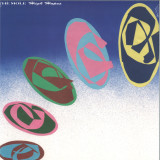
High Hopes - New album from the Mole.
High Hopes is 17 songs across 40 minutes on one slice of wax that, as advertised, sounds nothing like last month’s Ep, High Dreams. Here, rather than the long form dance form, is a continuation of the beat tape pacing from the last album, a collection of moments posing as ideas posing as a narrative stuffed with oddities and surprises that reward the close listen.
What’s heard on High Hopes is the Mole’s exploration of a love letter, from one person to a family, from the northern Pacific to the southern Atlantic, from a boy to a painted bird. Vancouver Island to Manantiales. The songs range from ambient sound bath and hip hop sludge, up to micro boogie and almost House before tumbling back down and forth again. Bubbling synths, MPCs swung out, samples chopped and chewed, bass and violins from Rick and Sophie, field recordings of birds and frogs and beaches, friends and family and fiestas. Did we mention the love ?! This album has got it all! Original collages from Antonio Carrau envelope this wax: jacket, sleeve and cookie. Antonio’s work is typified by playful combinations and bold statements about living in a embrace of analog and digital health. His co lages marry the corporeal world with an updated, digitalized age of reproduction, inducing feelings of gratitude for the simple everyday scenes we sometimes lose touch with when we forget to slow down. Good living, like breathing, requires inhaling as well as exhaling.
We can’t always produce content, make art, we must also pause, and listen. And enjoy. The Mole is joined by friends and colleagues on several songs included on High Hopes. Rick May plays bass on both Que Rico and album stand out GoinF4er. Sophie Trudeau (Godspeed You Black Emperor) plays and arranges violins on GoinF4er and Danuel Tate (Cobblestone Jazz) and Julz Chaz (Wagon Repair) both play Vibes and Emaxx throughout the album. Working with these incredible talents not only enriched this album, but fulfilled a long standing goal of the Mole’s; to work again with the musicians from whom he learned so much. People who helped inform the shape of Mole to come.
The Mole who was As High As The Sky. The Mole has been ‘recognized’ by the ‘global underground’ since his critically celebrated premiere album, As High As The Sky, but his earlier Eps (Wagon Repair, Philpot, Musique Risquee) got the attention of Top DJs, clubs, and festivals around the world first. His sound remains unique, fresh and deep: enjoying plays in a wide variety of spaces and places.
High Hopes is the Mole’s 5th solo album and his 2nd album for Circus Company (The River Widens) who have also proudly released two eps of Mole magic (Little Sunshine, High Dreams).
*Isn’t that too much time for one record? Short answer - No. Long answer - depends on the material. Due to the many quiet passages in the album, the groove spacing can be modulated and the needle can slow it’s progress towards the center/end resulting in longer sides with continued high gain and low distortion.
High Hopes - New album from the Mole.
High Hopes is 17 songs across 40 minutes on one slice of wax that, as advertised, sounds nothing like last month’s Ep, High Dreams. Here, rather than the long form dance form, is a continuation of the beat tape pacing from the last album, a collection of moments posing as ideas posing as a narrative stuffed with oddities and surprises that reward the close listen.
What’s heard on High Hopes is the Mole’s exploration of a love letter, from one person to a family, from the northern Pacific to the southern Atlantic, from a boy to a painted bird. Vancouver Island to Manantiales. The songs range from ambient sound bath and hip hop sludge, up to micro boogie and almost House before tumbling back down and forth again. Bubbling synths, MPCs swung out, samples chopped and chewed, bass and violins from Rick and Sophie, field recordings of birds and frogs and beaches, friends and family and fiestas. Did we mention the love ?! This album has got it all! Original collages from Antonio Carrau envelope this wax: jacket, sleeve and cookie. Antonio’s work is typified by playful combinations and bold statements about living in a embrace of analog and digital health. His co lages marry the corporeal world with an updated, digitalized age of reproduction, inducing feelings of gratitude for the simple everyday scenes we sometimes lose touch with when we forget to slow down. Good living, like breathing, requires inhaling as well as exhaling.
We can’t always produce content, make art, we must also pause, and listen. And enjoy. The Mole is joined by friends and colleagues on several songs included on High Hopes. Rick May plays bass on both Que Rico and album stand out GoinF4er. Sophie Trudeau (Godspeed You Black Emperor) plays and arranges violins on GoinF4er and Danuel Tate (Cobblestone Jazz) and Julz Chaz (Wagon Repair) both play Vibes and Emaxx throughout the album. Working with these incredible talents not only enriched this album, but fulfilled a long standing goal of the Mole’s; to work again with the musicians from whom he learned so much. People who helped inform the shape of Mole to come.
The Mole who was As High As The Sky. The Mole has been ‘recognized’ by the ‘global underground’ since his critically celebrated premiere album, As High As The Sky, but his earlier Eps (Wagon Repair, Philpot, Musique Risquee) got the attention of Top DJs, clubs, and festivals around the world first. His sound remains unique, fresh and deep: enjoying plays in a wide variety of spaces and places.
High Hopes is the Mole’s 5th solo album and his 2nd album for Circus Company (The River Widens) who have also proudly released two eps of Mole magic (Little Sunshine, High Dreams).
*Isn’t that too much time for one record? Short answer - No. Long answer - depends on the material. Due to the many quiet passages in the album, the groove spacing can be modulated and the needle can slow it’s progress towards the center/end resulting in longer sides with continued high gain and low distortion.
- Big Love
- Seven Wonders
- Everywhere
- Caroline
- Tango In The Night
- Mystified
- Little Lies
- Family Man
- Welcome To The Room…Sara
- Isn’t It Midnight
- When I See You Again
- You And I, Part Ii
A Universe of Pop: Fleetwood Mac’s Tango in the Night Features Meticulous Production, Includes the Hits “Big Love,” “Everywhere,” “Seven Wonders,” and “Little Lies”
Experience the 1987 Album in Audiophile Sound for the First Time:
Mobile Fidelity’s Numbered-Edition 180g 45RPM 2LP Set Captures the Perfectionist Details
1/2" / 30 IPS analogue master to DSD 256 to analogue console to lathe
The perfectionism involved in crafting Fleetwood Mac’s Tango in the Night reached a level of intensity experienced by few artists before or since. Commercially and creatively, the painstaking efforts paid off. Recorded over the span of 18 months, the triple-platinum album spawned four hit singles and put Fleetwood Mac back at the center of mainstream conversation. Its demands also ultimately forced its primary architect, guitarist-singer Lindsey Buckingham, to leave the group shortly after its completion. Was it all worth it? A thousand times “yes.”
Sourced from the original master tapes, pressed at Fidelity Record Pressing, and housed in a Stoughton jacket, Mobile Fidelity’s numbered-edition 180g 45RPM 2LP set of Tango in the Night presents the 1987 record in audiophile sound for the first time. Everything co-producers Buckingham and Richard Dashut sought to instill in the music — the exacting tones, gauzy textures, plush atmospherics, shifted harmonics, unique pitches, pristine acoustics, biting rhythms — can now be heard with elevated accuracy, range, depth, and detail.
Made under challenging circumstances, Tango in the Night is as much a universe of sound as it is an album. This reissue conveys that sonic spectrum in exhaustive manners that go beyond prior editions by playing with a combination of transparency, imaging, openness, and dynamics that provides uncanny insight into the meticulously layered vocal and instrumental tracks. Equally important, it also amplifies your connection to the elaborate melodies, contagious hooks, and airy highs that account for the album’s ageless pop brilliance.
As for the wondrous array of percussive accents, synthesizer elements, interlaced guitars, and lush choruses — all seemingly occupying the exact right place amid the soundstages and taking on shapes and forms that lend them a living, breathing quality? If your audio system is up to the task, the realism, presence, and warmth of Mobile Fidelity’s collectible edition will have you considering Tango in the Night from a new perspective — one that puts its lavish, gorgeous creations on a par with those from Rumours and Tusk.
Unlike those records, Tango in the Night began from a more individualistic perspective in that it sprang from what originally was intended to become a Buckingham solo effort. Instead, it remains the final album credited to the peak Fleetwood Mac lineup involving Buckingham, Stevie Nicks, Christine McVie, Mick Fleetwood, and John McVie. Though the participation of all the members varies from track to track, the cohesive arrangements and alchemic production on Tango in the Night suggest a unity that remains on a par with the band’s other landmark works.
Largely constructed from laborious methods that involved recording at half speed to achieve the desired sonics and tonal nuances, piecing together verses and choruses to attain seamless synchronicity, and Buckingham using a Fairlight CMI synthesizer/workstation in visionary ways, the songs pair electronic and acoustic elements to radiant effect. Tango in the Night also possesses light dance structures that resulted in several tunes being recast as dance mixes on extended-play singles. Above all, however, this is music that appears to float and cast dreamy spells.
Surrender to the frisky interplay of the opening “Big Love,” big pop punctuated with Buckingham’s back-and-forth “oh-ah” sighs that ping the Top 5 smash with innocuous sensuality and toe-tapping momentum. Delight amid the shimmering lights of “Seven Wonders,” whose shades and shadows shift amid Nicks’ raspy vocals and a large group chorus. Wrap yourself in the warmth of the weightless “Everywhere,” a flawless slice of hummable pop that topped with Adult Contemporary charts for three weeks and towers as an ode to the love everyone desires. Stare into the mysterious landscape of the title track (and dig the synthesized harp) just before it explodes, briefly ceding to a terse riff and locked-in grooves.
Tango in the Night teems with delightful surprises and well-honed specifics, especially when Buckingham and Christine McVie team together. In addition to the aforementioned “Everywhere,” the singer born Christine Anne Perfect plays a major role on four more cuts — all highlights — from the breathy, head-over-heels emotionalism of “Mystified” to the sweet, sweeping escapism of “Little Lies,” a cover-up of romantic despair aided by Nicks’ irreplaceable background vocals.
“If I see you again/Will it be the same,” asks Buckingham on “When I See You Again,” finishing up a song a longing-sounding Nicks had started while voicing words that many likely knew would resonate far beyond the confines of the heartfelt song — a goodbye wearing a faint disguise. Though Fleetwood Mac would never again reach the heights maintained throughout Tango in the Night, and members would go their own way, the album towers as a paean to what’s possible in the fields of pop, rock, and studio wizardry.
- Court And Spark
- Help Me
- Free Man In Paris
- People's Parties
- Same Situation
- Car On A Hill
- Down To You
- Just Like This Train
- Raised On Robbery
- Trouble Child
- Twisted
Joni Mitchell Gets Jazzy, Counterbalances Love and Trust with Freedom and Confusion on Court and Spark
Mobile Fidelity's UltraDisc One-Step 180g 45RPM 2LP
Plays with Definitive Detail and Clarity: Pressed on MoFi SuperVinyl Strictly Limited to 5,000 Numbered Copies
Box Set Features New Liner Notes
1/4" / 15 IPS / Dolby A analogue master to DSD 256 to analogue console to lathe
Court and Spark, the most commercially successful album of Joni Mitchell's trailblazing career, arrived after a year in which she took some time to breathe and kept a low profile. The pause led to more breakthroughs for the singer-songwriter. Marking Mitchell's increasing drift toward jazz (and affinity for Miles Davis and John Coltrane), Court and Spark garnered four Grammy nominations, earned the Best Album of the Year vote in the prestigious Pazz & Jop poll, and ranks #110 on Rolling Stone’s list of the 500 Greatest Albums of All Time.
Sourced from the original analog master tapes, pressed at Fidelity Record Pressing on MoFi SuperVinyl, strictly limited to 5,000 numbered copies, and featuring new liner notes, Mobile Fidelity's UltraDisc One-Step 180g 45RPM 2LP box set presents the 1974 classic with definitive detail, tonality, and directness. Marking the first time the revered LP has received audiophile-quality treatment, it's one of six iconic 1970s Mitchell records Mobile Fidelity is reissuing on vinyl and SACD sets.
Benefitting from a virtually nonexistent noise floor, dead-quiet surfaces, and superior groove definition, this collectible edition reproduces without compromise the textures, details, and breathtaking craftsmanship that help make Court and Spark into what many fans believe is the Canadian native’s finest hour. Notes bloom and decay as they do amid an acoustic live environment. Soundstages extend far and deep, with black backgrounds and balanced tones adding to the uncanny realism.
The reference-grade presence and openness put in transparent view Mitchell’s incisive words and unique phrasing, as well as the contributions of her prized support musicians — including Tom Scott and the L.A. Express as well as guest turns by the likes of David Crosby, Graham Nash, Jose Feliciano, and Robbie Robertson. Mitchell, experimenting with the melodic parameters of guitar and piano, is rightly found at the center of it all. The jazz-rock rhythms of drummer John Guerin, slippery guitar lines of Larry Carlton, vibrant horns and reeds laid down by Scott — crucial to the songs’ shape-shifting arrangements — can now also be heard with fresh ears.
Visually and physically, the packaging of the Court and Spark UD1S set complements its distinguished status. Housed in a deluxe slipcase, both LPs come in foil-stamped jackets with faithful graphics that illuminate the splendor of the recording. This reissue is for listeners who desire to engage themselves in everything involved with the album, including Mitchell’s “The Mountain Loves the Sea” painting — a picture of waves embracing and receding away from a mountain, a metaphor for the record’s lyrical themes — on the cover art.
Pitching deceptively light compositions against underlying tensions, Court and Spark witnesses the singer-songwriter finding her footing with a group of top-shelf musicians who seemingly understand her visions as well as expanding her lyrical palette and venturing further into territory no artist had dared explore. Mitchell’s accessibly complex structures, beat-propelled rhythms, and spirited interplay with Scott & Co. both give the music a different identity than her prior efforts and point in the directions she soon headed.
Lyrically, Court and Spark matches the wit, integrity, originality, and intellect of anything in Mitchell’s oeuvre — no small feat. Offsetting positives with negatives, and considering circumstances from multiple angles, Mitchell explores issues connected to love and freedom, certainty and confusion, and trust and fear with unfettered boldness and introspective empathy. She teeters between surrender and retreat, and spends a majority of the record sussing out the complications and sacrifices involved with such actions.
Mitchell addresses the transactional nature of desire (the intimate title track, the upbeat “Raised on Robbery,” complete with rock ‘n’ roll pep from Robertson and zesty sax from Scott); anticipation and disappointment of romance (“Car on a Hill,” “”Down to You); fame and celebrity (“A Free Man in Paris,” “People’s Parties”); and sanity (the dark and stormy “Trouble Child,” a satirical cover of Annie Ross’ “Twisted”). Throughout, she sings with an emotionally penetrating beauty and devastating honesty that teaches about ourselves.
Or, as Mitchell relays on “People’s Parties”: “Laughing and crying/You know it’s the same release.”
Rolf Gehlhaar (1943-2019) was an instrumental and electronic music composer, and a pioneer in computer controlled interactive music. He grew up in the US where he studied philosophy and composition at Yale University. In 1967 he moved back to Germany to become Stockhausen’s personal assistant and member of his performing ensemble. In 1969 Gehlhaar co-founded, along with Johannes Fritsch (Metaphon 012) and David Johnson, the Feedback Studios in Cologne, a new-music performance center and publishing house. He later moved to England, where he became in 1979 a founding member of the Electro-Acoustic Music Association and later on senior lecturer in design and digital media. Gehlhaar's compositions include symphonies, instrumental works, experimental and electronic music, interactive computer controlled music and everything in between. The three previously unreleased tracks on this LP only show a glimpse of the versatility of his adventurous and innovative musical ideas.
Belgian saxophonist, composer, and producer Mattias De Craene (Nordmann, MDCIII) announces a new solo album, ‘A House Where I Dream,’ on VIERNULVIER Records. On his second album, he delivers a highly personal and healing journey, presented as an alternative soundtrack to the 1973 cult film ‘The Holy Mountain.’
The record will be released on October 11 on vinyl LP and through all digital platforms.
"The Holy Mountain" is a surreal Mexican film from 1973 directed, written, and produced by Alejandro Jodorowsky, who also stars in the film. The film holds a prominent place in avant-garde cinema and explores themes such as spirituality, mysticism, and the quest for enlightenment. It is in this vein that ‘A House Where I Dream’ is crafted.
“My mind and soul - and thus my music - come home to this motion picture” - Mattias De Craene
The album will be presented live with the film on October 16 at Videodroom during Film Fest Gent.
ABOUT THE ALBUM
With hypnotic tape loops, grainy textures, and mesmerizing saxophone, Mattias De Craene creates possible worlds that herald a spiritual transformation. From the Scottish Highlands and desolate mountains to the deepest recesses of the soul, this music has the power to create cinematic landscapes that transcend time and space. The sound of these 8 tracks is closely related to the minimalist compositions of Terry Riley, but the work of contemporary artists like KMRU or William Basinski is also drawn from the same material.
Above all, this album is a deeply personal journey and unintentionally serves as a metaphor for De Craene's ascent of his own mountain. For the Videodroom festival by Arts Center VIERNULVIER, the saxophonist began working on a new soundtrack for the film ‘The Holy Mountain’ in 2023, but his body and mind abruptly called him to a halt, forcing him to take a professional break. However, this project never left him, leading to an honest and raw quest to find himself as both a person and an artist, with Jodorowsky as a companion de route and music as an anchor. It initiated a long process of dismantling, searching, healing and back again. The album not only provides a sanctuary for dreaming to all who listen, but for its creator it also serves as both an outcry of despair and a source of comfort during challenging times.
All the tracks on 'A House Where I Dream' share an unfiltered grain of life, as one can almost feel the damp breath of the saxophone blowing.
The album opens with the three-part strong 'Transcention,' where the hypnotic interplay between soprano sax and lo-fi tape loops leads to higher realms of the mind and soul.
Alternating between deep frequencies and farout folk modalities, this mantra-like triptych acquires an alchemical character and ultimately transcends time and space.
In the ethereal 'Away,' one can peer into an abyss of resonance while a saturated tenor sax lends guidance in the spirit of Terry Riley's productions. 'You and Me' also bathes in a similar atmosphere, albeit in the vein of healing 90s ambient as granular sax tones converge with celestial chants. 'Gazing Upwards Towards The Sky,' offers different shades of blue as a slumbering tenor sax is juxtaposed to swift sax patterns. On 'A Stranger That Moved Me,' beauty lands in a soft and subtle manner, while the closing track 'Shepherd's Glow' drifts like a mountain wind flaring up at the darkest hour of the night.
The artwork is created by Gent-based artist Sam Timmerman, who portrays the world of 'A House Where I Dream' with playful repetition and mystique.
For his brand-new project Blues Experience, Jake Shimabukuro joins forces with his friend, drumming legend and founding member of Fleetwood Mac, Mick Fleetwood, to create a fresh new take on the Blues. The result is something exhilarating and unique, as these two titans of their instruments reinterpret some of the greatest songs written by some of their favorite songwriters in a Blues setting. Since gaining prominence in the early 2000's, ukulele marvel Jake Shimabukuro has mesmerized audiences with his innovative and dynamic style, taking the instrument to dizzying new heights. Over a dozen solo albums, Shimabukuro has shown a knack for moving effortlessly between genres, sometimes in the same song. Shimabukuro has played the world's most venerable venues, from The Hollywood Bowl to Lincoln Center to the Sydney Opera House and collaborated with some of the world's greatest musicians, including Yo-Yo Ma, Bela Fleck, Jimmy Buffett, Jack Johnson, Ziggy Marley, Sonny Landreth, Billy Strings, Willie Nelson and Warren Haynes. In 2021 he was nominated by President Joe Biden to serve as a Member for the National Council on the Arts.
We are excited to announce the creation of Dentelles Records, a new sub-label of Diki Records, founded by Greg All, the visionary behind the Les Dentelles Electroniques festival, known for its festive atmosphere and resounding successes.
To mark this debut release, Dentelles Records highlights the La Fontaine concept, a flagship event of Les Dentelles Electroniques, centered around House, Tech House, and Afro House sounds. This vinyl features four tracks created by the La Fontaine residents: Francesco Marra, Laurent Top, DJ Steven, and Greg All himself, capturing the very essence of the rhythms that make the most energetic parties come alive.
With this first vinyl, Dentelles Records immerses the listener in festive and enchanting grooves, reflecting the unique atmosphere of La Fontaine and offering a true dive into the world of these parties.
- Live At Harvard Square Theater
- Cambridge, Ma, November 20, 1975
- Recording Supervised By Don Devito; Mixed By Sean Brennan
- 1: Introduction – Bob Neuwirth
- 2: Edith And The Kingpin
- 3: Don’t Interrupt The Sorrow
- Live At Music Hall
- Boston, Ma, November 21, 1975
- Recording Supervised By Don Devito; Mixed By Patrick Milligan
- 4: Introduction – Bob Neuwirth
- 5: Harry’s House
- Live In Bangor
- Bangor, Me, November 27, 1975
- Recorded By L.a. Johnson & Petur Hliddal
- 6: A Case Of You
- Live At Montreal Forum
- Montreal, Qc, Canada, December 4, 1975
- Recording Supervised By Don Devito; Mixed By Sean Brennan
- 1: Intro To Coyote
- 2: Coyote
- 1976: Tour Of The United States
- Recorded By Stanley Johnston From Pa Mixes By Brian Jonathan
- (Courtesy Of The Estate Of Stanley Tajima Johnston)
- Live At Music Hall
- Boston, Ma, February 19, 1976
- 3: Free Man In Paris
- 4: Shades Of Scarlett Conquering
- Live At Nassau Coliseum
- Uniondale, Ny, February 20, 1976
- 5: For Free
- Side Three
- Live At Music Hall
- Boston, Ma, February 19, 1976
- 1: Shadows And Light
- 2: In France They Kiss On Main Street
- 3: Intro To Furry Sings The Blues
- 4: Furry Sings The Blues
- Hejira Demos
- A&M Studios, Hollywood, Ca, March 1976
- Recorded By Henry Lewy; Mixed By Patrick Milligan
- 5: Traveling (Hejira)
- 1: Black Crow
- 2: Amelia
- Rolling Thunder Revue
- Tarrant County Convention Center, Fort Worth, Tx, May 16, 1976
- Recording Supervised By Don Devito; Engineered By
- Don Meehan; Mixed By Patrick Milligan
- 3: Intro To Song For Sharon
- 4: Song For Sharon
- Hejira Sessions
- A&M Studios, Hollywood, Ca, Summer 1976
- Recorded & Mixed By Henry Lewy
- 1: Refuge Of The Roads (Early Mix With Horns)
- 2: Don Juan’s Reckless Daughter (Early Rough Mix)
- Don Juan’s Reckless Daughter Sessions
- A&M Studios, Hollywood, Ca
- Recorded & Mixed By Henry Lewy
- 3: Otis And Marlena (Early Rough Mix)
- Mingus Sessions
- Electric Lady Studios, New York, Ny
- Recorded & Mixed By Henry Lewy & Jerry Solomon
- 4: Sweet Sucker Dance (Vocals & Drums Version – Take 5)
- Live At Bread & Roses Festival
- Greek Theatre, Berkeley, Ca, September 2 & 3, 1978
- Recorded & Mixed By Henry Lewy
- 1: Introduction
- 2: The Dry Cleaner From Des Moines
- 3: Intro To Goodbye Pork Pie Hat
- 4: Goodbye Pork Pie Hat
- 5: Intro To The Wolf That Lives In Lindsey
- 6: The Wolf That Lives In Lindsey
- Mingus Early Alternate Version
- Electric Lady Studios, New York, Ny And A&M Studios
- Hollywood, Ca, 1978 & 1979
- Recorded & Mixed By Henry Lewy & Jerry Solomon
- 15: God Must Be A Boogie Man
- 1: Sue And The Holy River
- 1979: Tour Rehearsals
- Sir Rehearsal Studios, Los Angeles, Ca
- Recorded By Joel Bernstein
- 2: Jericho
- 3: Help Me
- 1979: Tour Of The United States
- Live At Forest Hills Tennis Stadium
- Queens, Ny, August 25, 1979
- Recorded By Joel Bernstein From Pa Mix By Ed Wynne
- 4: Big Yellow Taxi
- 5: Just Like This Train
- 6: Raised On Robbery
- 1: The Last Time I Saw Richard
- Live At Greek Theatre
- Los Angeles, Ca, September 13, 1979
- Recorded By Andy Johns & Henry Lewy; Mixed By Patrick Milligan
- 2: Intro To A Chair In The Sky
- 3: A Chair In The Sky
Features Unreleased Studio Sessions, Alternate Versions, Live Recordings, Rarities, And 36-Page Book With New Photos & An Extensive Conversation Between Joni & Cameron Crowe
Sourced From Original Stereo Reels, Nagra Film Recordings, Multi-track Tapes, Radio Airchecks & Cassette Tapes
Throughout the latter half of the seventies, Joni continued to creatively break ground with her fearless and fluid exploration of jazz. Rather than tread the same path, she challenged and reinvented her style with a folk fusion like no other. Ascending to an unrivaled sonic peak, this innovative sound took shape across the gold-certified HEJIRA 1976, the gold-certified double-LP DON JUAN’S RECKLESS DAUGHTER [1977], her collaboration with Charles Mingus entitled MINGUS [1979], and live album SHADOWS AND LIGHT [1980]. Channeling the thrill and excitement of these records, she delves even further into this season on JONI MITCHELL ARCHIVES, VOL. 4: THE ASYLUM YEARS (1976-1980), due October 4th.
Available as a 6CD, 4LP (featuring Joni's personal favorites from the 6CD set), and digitally, this comprehensive and essential set spans one of the most prolific periods of her storied career. It boasts powerful live tracks from her time in Bob Dylan’s Rolling Thunder Revue during 1975 and 1976 Tour of the United States. It pulls back the curtain on the music by showcasing early recordings and alternate takes from the respective sessions for HEJIRA, DON JUAN’S RECKLESS DAUGHTER, and MINGUS. It covers the Bread & Roses Festival as well as the Anti-Nuclear Rally. Finally, VOL. 4 chronicles her 1979 tour, even showcasing two tracks from that year’s Tour Rehearsals. Not to mention, it showcases her versatility and adaptability, housing collaborations with everyone from Herbie Hancock and Jaco Pastorious to Wayne Shorter and Pat Metheny.
Vol. 4 culls the previously-unissued material from original stereo reels, cassette tapes, CD-Rs, and even a radio broadcast. Newly mixed tracks came from multi-track tapes, while a handful of hi-res digital tracks have been sourced from the Bob Dylan Archives.
Each version includes a book with never-before-seen photos and liner notes comprising a deep dive discussion between Mitchell and longtime friend Cameron Crowe. As part of their candid conversation, she shares intimate anecdotes, memories, and stories from that five-year creative run.
Jade Hairpins waste no time fulfilling their second album's titular demand. From its harmony-drenched opening note to its baroque-anthemic conclusion, Get Me the Good Stuff is positively loaded with musical ideas, an absurdist buffet of sound and aesthetic that comes with one hell of a floorshow as the Hairpins stack those ideas higher and higher, almost daring them to crash to the floor. Instead, those elements - punksploitation, power pop, baggy, funk, and Italo disco are just some touchstones - are not only held aloft, they defy gravity and convention. These pyrotechnics are, in true Jade Hairpins fashion, something of a sleight of hand. While the music swaggers and gallops, Get Me the Good Stuff grapples with anxiety and self-doubt, obfuscating pain and alienation with sparkling wit and some straight-up ravers. Get Me the Good Stuff opens with one of those, "Let It Be Me," in which Jonah Falco shouts lyrics about being alone with one's shortcomings against guitars, synths, and harmonized vocals that are on the verge of closing in. The song is just over 90 seconds long, hitting with the gnarled-barb ferocity of punk and the gleeful insanity of theatrical art rock. It is, in other words, overwhelming. Or it would be if Jade Hairpins - Jonah Falco and Mike Haliechuk - weren't remarkably nimble in their ability to bring unity to sounds by placing them in competition against each other. When those sounds are adjacent, like the glam and disco that saturate "Drifting Superstition," the thrill of those universes colliding in the heat of an absolutely filthy clavichord line turns its lyrics, about the habit of solving personal problems by ignoring them, into a winner's anthem on the order of Bowie or Hot Chocolate. Get Me the Good Stuff arcs towards unequivocal joy as Falco, Jade Hairpins' primary lyricist, breaks these cycles and attempts to run away with his dreams. The arc is roughly analogous to how the album came to fruition. Four years removed from Harmony Avenue, an album of material that proved too strong to be contained within the narrative universe of Fucked Up's Dose Your Dreams, Jade Hairpins have gelled as a live act - with Tamsin M. Leach and Jack Goldstein centering them on stage - and planted their flag in the UK punk scene in which Falco has embedded himself. Working out new material live, Falco noticed that crowds were digging into his unfinished lyrics, and the album tightened around the anxieties of being in the spotlight, of being worthy of attention. At times, those songs are eager to please, like the album's title track in which a winking self-deprecation rubs up against the self-congratulatory bombast of Freddie Mercury, Falco simultaneously turning heads as a shooting star and a burning car. Elsewhere, as in "Better Here Than in Love," Jade Hairpins pitch themselves towards creating gorgeous soundscapes that exist nowhere else, channeling postpunk through the glimmering haze of '80s Japanese electronic music. Theatrical and personal, absurd and true-to-life, playful and serious, Get Me the Good Stuff is album of tremendous personal and artistic growth that signposts towards dozens of potential futures to come. It's not only worth the attention, it continuously rewards it.
Jade Hairpins waste no time fulfilling their second album's titular demand. From its harmony-drenched opening note to its baroque-anthemic conclusion, Get Me the Good Stuff is positively loaded with musical ideas, an absurdist buffet of sound and aesthetic that comes with one hell of a floorshow as the Hairpins stack those ideas higher and higher, almost daring them to crash to the floor. Instead, those elements_punksploitation, power pop, baggy, funk, and Italo disco are just some touchstones_are not only held aloft, they defy gravity and convention. These pyrotechnics are, in true Jade Hairpins fashion, something of a sleight of hand. While the music swaggers and gallops, Get Me the Good Stuff grapples with anxiety and self-doubt, obfuscating pain and alienation with sparkling wit and some straight-up ravers. Get Me the Good Stuff opens with one of those, "Let It Be Me," in which Jonah Falco shouts lyrics about being alone with one's shortcomings against guitars, synths, and harmonized vocals that are on the verge of closing in. The song is just over 90 seconds long, hitting with the gnarled-barb ferocity of punk and the gleeful insanity of theatrical art rock. It is, in other words, overwhelming. Or it would be if Jade Hairpins_Jonah Falco and Mike Haliechuk_weren't remarkably nimble in their ability to bring unity to sounds by placing them in competition against each other. When those sounds are adjacent, like the glam and disco that saturate "Drifting Superstition," the thrill of those universes colliding in the heat of an absolutely filthy clavichord line turns its lyrics, about the habit of solving personal problems by ignoring them, into a winner's anthem on the order of Bowie or Hot Chocolate. Get Me the Good Stuff arcs towards unequivocal joy as Falco, Jade Hairpins' primary lyricist, breaks these cycles and attempts to run away with his dreams. The arc is roughly analogous to how the album came to fruition. Four years removed from Harmony Avenue, an album of material that proved too strong to be contained within the narrative universe of Fucked Up's Dose Your Dreams, Jade Hairpins have gelled as a live act_with Tamsin M. Leach and Jack Goldstein centering them on stage_and planted their flag in the UK punk scene in which Falco has embedded himself. Working out new material live, Falco noticed that crowds were digging into his unfinished lyrics, and the album tightened around the anxieties of being in the spotlight, of being worthy of attention. At times, those songs are eager to please, like the album's title track in which a winking self-deprecation rubs up against the self-congratulatory bombast of Freddie Mercury, Falco simultaneously turning heads as a shooting star and a burning car. Elsewhere, as in "Better Here Than in Love," Jade Hairpins pitch themselves towards creating gorgeous soundscapes that exist nowhere else, channeling postpunk through the glimmering haze of '80s Japanese electronic music. Theatrical and personal, absurd and true-to-life, playful and serious, Get Me the Good Stuff is album of tremendous personal and artistic growth that signposts towards dozens of potential futures to come. It's not only worth the attention, it continuously rewards it.
On Chastity’s upcoming, self-titled fourth record, Williams decided to write a fully non-fiction work. Out Friday, September 13 2024 on Deathwish (US), Dine Alone (Canada), and Big Scary Monsters (UK/E) ‘Chastity’ is a 13-track record about the things that have always run through the band’s records—struggle, death, despair, redemption, darkness, and light—but this time, the songs ascend to new depths of intensity and desperation, new heights of resolution and power. “It’s really about the first nosedive that I did as a young person,” says Williams. “It’s a record about struggle, about the missing years. It’s also a thank you to some people in my life.” The record hurtles through melodic hardcore, shoegaze, and emo, all magnificently and enormously rendered thanks to slick work from John Paul Peters (Propagandhi, Comeback Kid), who engineered and mixed the record. Chastity’s first three full-length records—2018’s Death Lust, 2019’s Home Made Satan, and 2022’s Suffer Summer—formed a trilogy that defined a 4-year arc of the band’s contribution to outsider music. Each record was informed by Williams’ life, but each was also conceptual and interpretive, refracting his experiences through a level of remove. On the self-titled record there’s a beautiful and affirming ending to it’s closer, centered on the band’s first and enduring idea: life is less shitty if we live it together.
- Prologue
- Main Title
- Dead Vampires
- Survival
- The States
- Dead Vampires (Taken Away)
- Pit Smoke
- Goes For Supplies
- Killing Vampires
- Wife Gone
- To The Cemetery
- Face From The Grave
- Sunrise
- New Discovery
- Vampires Iron Stakes
- Dog Is Hurt
- Buries The Dog6
- Girl's Existence
- Injection Needle
- Girl Infected
- Transfusion
- Vampire Bop
- To The Chapel
- Beside Casket
- Watching Home Movie
- Retrospect
- Baby's Room
- Smoke
- Taking The Dead
- Still Troubled
- The Deserted Lab
- Death Of Baby
- Raging Inferno
- Transfusion A Success
- Iron Lancers Attack
- After The Last Man
- Last Man Shot (93X)
- Last Man Shot
- End Title
- Besides Casket #2
- Fights Off Vampires #2
- Finds Vampires At House #2
- Face From The Grave #2
- End Title #2
- Fights Off Vampires
- Finds Vampires At House
Rob Zombie and Waxwork Records have partnered to release an exclusive, curated line of classic Horror movie soundtracks! “Rob Zombie Presents” features several never-before-released film soundtracks that were personally selected by the singer, songwriter, and filmmaker.
“I have always been a huge fan of movie soundtracks. So I jumped at the opportunity to work with Waxwork on this project.” Says Zombie, “I can’t wait to release these albums. So many of these films are greatly under appreciated and, they all contain such great music. So, to be able to release these deluxe packages is a dream come true.“ - Rob Zombie
Rob Zombie and Waxwork Records are thrilled to announce the debut vinyl release of THE LAST MAN ON EARTH Original Motion Picture Score by Paul Sawtell & Bert Shefter. The Last Man On Earth is a 1964 post-apocalyptic science fiction horror film based on the 1954 novel I Am Legend by Richard Matheson. Starring Vincent Price, the plot follows Dr. Robert Morgan (Price) who lives in a world where the human population is infected by a plague that has turned them into undead, vampiric creatures that cannot stand sunlight, fear mirrors, and are repelled by garlic. Every day, Morgan follows a routine where he marks days off the calendaqr and sets out to hunt the vampires, killing as many as he can and then burning the bodies.
After working together on the successful release of the official soundtracks to Zombie’s films House of 1000 Corpses, The Devils Rejects, 3 From Hell, The Lords of Salem, Halloween 1 & 2, and The Munsters, Zombie explored other ways to collaborate with Waxwork in an effort to unearth, re-master, and release classic, left-of-center Horror soundtracks from films that he is a life-long fan of. The line of soundtracks features deluxe packaging, heavyweight colored vinyl, new artwork by prominent Horror illustrator Graham Humphreys, liner notes and interviews conducted by Rob Zombie with filmmakers and actors. Titles include premiere releases of Spider Baby, Carnival Of Souls, The Last Man On Earth, The House On Haunted Hill, The Legend of the Seven Golden Vampires, and many selections from the HAMMER film library.
On August 16, Toronto-based musician and producer David Psutka aka ACT! (fka Egyptrixx / Anamai / Ceramic TL) will release his latest project ‘Face to Face, Day by Day’ for his own Halocline Trance imprint.
This is is Psutka’s third album proper as ACT! following the release of the “sonic mixtape” ‘Universalist’ in 2018 and the augmented reality soundtrack ‘Grey Matter AR’ in 2021; a series of Snapchat filters created by artist Karen Vanderborght and soundtracked by ACT! which explored the poetic and existential potential of AR and social media.
“Aesthetic accidents in the periphery of the ‘work’ can be the message. In 2018, at an Egyptrixx concert at Bagni Misteriosi de Teatro Franco Parenti - a gorgeous, sprawling outdoor pool theatre in Milan - I had a clarifying moment. Gigs around then had mostly been in pummelling, dark music venues, so I wasn't prepared for this expansive space (and the thoughtful work of the organisers who had layered sheets of plastic film on the pool to parallel eco-materialist themes from a previous album). It was the midday soundcheck that struck me most - brittle digital sounds from the set echoed off the colonial Milanese facades and ricocheted down the Via Carlo Botta, pinging off buildings in the distance and clashing with the noise of traffic, tourists and whatever else. It was a strange, collisionist moment, and a reminder that my essential approach to music is, above all, a preoccupation with the materiality of sound.
Everything on Face to Face, Day by Day began as an improvisation. Openness to accidents and the emotional complexity that comes from centering them in composition has become important to my work, and helps the music go beyond the possibility of what is playable, imaginable. I also wanted to channel adventurous solo pop records of the 1970’s and 80’s, like Yasuaki Shimizu, Jon + Vangelis and Stevie Wonder. These came from an interesting era in commercial music as studio production techniques became increasingly formalised as compositional devices, like AMS RMX16 percussion sounds and early digital stereo effects.
Like many musicians, I’ve been travelling and performing less since the pandemic and as a result, have wanted studio sessions to feel more collaborative and improvisational. There were great writing and recording sessions for this album. Vox, synth, sax and guitar jams - much of what ended up on the record isn’t edited much, if at all. I jammed a sm57 into Colin Fisher’s sax bell and created feedback loops using various preamps and distortion units. The clunky sounds were sampled and used as percussion elements. I also had a great synth jam session with Jeremy Greenspan at Barton Building Studio in Hamilton, which was recorded by filmmaker Liz Adler.
I’ve had a few months to sit with this album and see clear throughlines connecting it to previous projects. There are aspects of the experiential and structuralist sound design ideas from the EGYPTRIXX records; and also some arrangement tricks borrowed from ANAMAI - specifically, the use of interruptionist sound events. Perhaps most of all, it feels connected to the Ceramic TL + Ipek Gorgun record ‘Perfect Lung’ and its splattered take on musical complexity. “ (David Psutka)
In addition to ACT!, Psutka has released music with numerous projects including Anamai, Egyptrixx and Ceramic TL, he has collaborated widely with artists such as Junior Boys, Ipek Gorgun, and Kuedo as well as Jessy Lanza (2016) and an official remix for Massive Attack’s ‘Hymn of the Big Wheel (2012). The contributions on this album, from Robin Dann and Ben Gunning, reflect the deeply collaborative nature of the Halocline Trance label and the Toronto creative scene more broadly.
Many of Psutka’s releases have received critical acclaim from media outlets such as Pitchfork, Exclaim, The Quietus and Resident Advisor. As a live performer, he has toured extensively including performing at Sonar Festival, Roskilde, Mutek, MOMA PS1 Warm-UP and CTM Festival. He’s also presented sound installations at various institutions such as Galeria Civica Commune di Modena, and Art Gallery of Ontario (AGO).
In 2015, Psutka launched Halocline Trance as a home for his various sound projects, events and collaborations. Now a creative collective and label, it has grown to include a diverse array of artists including Casey MQ, Xuan Ye, Myst Milano, Colin Fisher and others. The label is described as “genre-agnostic” and conceptually open, supporting work across a wide spectrum of creative fields including soundtrack recording, AR design and traditional artist albums. Their impeccable roster also includes, theorist/improviser Eldritch Priest, and AR/VR artist Karen Vanderborght. In recent years, Halocline Trance has established itself as a platform that facilitates many of Canada’s most exciting creative music projects. Many of the releases have received critical acclaim from outlets including Pitchfork, Exclaim, Bandcamp and Resident Advisor.
- A1: Centerline Ft Popa Chubby
- A2: Get Down To The Nitty Gritty Ft Alabama Mike
- A3: Mama, I Love You Ft. Kevin Burt
- A4: You Can't Judge A Book By The Cover Ft. Christone "Kingfish" Ingram & Rayne Castiglia
- A5: All Our Past Times Ft. Danielle Nicole & Joe Bonamassa
- B1: Till They Take It Away Ft. Ally Venable
- B2: Come On In This House Ft. Rick Estrin
- B3: You Were Wrong Ft. Jimmy Carpenter
- B4: The Dollar Done Fell Ft. Josh Smith
- B5: No Tears Left To Cry Ft. Gary Hoey
- B6: What My Momma Told Me Ft Rick Estrin & Monster Mike Welch
Multi-Blues Music Award-Winner Albert Castiglia Assembles All-Star Cast of Righteous Souls on His New Gulf Coast Record Album including Joe Bonamassa, Josh Smith, Danielle Nicole, Christone "Kingfish" Ingram, Popa Chubby, Ally Venable, Kevin Burt, Monster Mike Welch, Gary Hoey, Rick Estrin, Jimmy Carpenter and Alabama Mike.
"During last year's "Blood Brothers" tour, Mike Zito informed me that it was time for me to do another solo album. At that moment, I felt I was ill prepared for the task. I had been constantly touring with Mike for the last two years, doing very little writing so I didn't have a lot of original material. My last two studio albums were quite thematic. With 'Masterpiece' the album centered around the discovery of my daughter. 'I Got Love' was fueled by my life during the pandemic of 2020. What would be the thing that fuels the next one? It concerned me because if I'm not living the songs, it'll never work. It had to mean something to me. Mike suggested we make it an album with guests, my friends so to speak. I was concerned my friends wouldn't have time to devote to the project. I was wrong, so wrong. Joe Bonamassa, Josh Smith, Kevin Burt, Gary Hoey, Ally Venable, Popa Chubby, Rick Estrin, Kid & Lisa Andersen, Alabama Mike, Jimmy Carpenter, Kingfish Ingram, Danielle Nicole, Monster Mike Welch, Jerry Jemmott, D-Mar Martin, Jon Otis, Jim Pugh and others stepped up for me. My daughter, Rayne even participated which was the cherry on top. Suddenly, the theme became clear. It's about friends and family. It's about 'Righteous Souls'." - Albert Castiglia
Gregory T.S. Walker’s Minstrels & Minimoogs was self-published by a young, nomadic composer and virtuoso in 1988 to accompany an immersive multimedia performance at the University of Colorado Boulder’s Fiske Planetarium. Created with this outer, and other, world setting in mind, the four tracks find Walker stretching toward an ancient-to-future vision where Egyptian myths and Hieronymus Bosch-ian tableaus are rendered in a screaming three dimensional circuitry of electronic drums, synth guitars, and, of course, Minimoog. Given the musical terrains and outmoded topics traversed, and that this entirely DIY effort was originally released as a micro one-sided 12” edition, Minstrels & Minimoogs is as perplexing and euphoric a document lost-to-time as it is now found.
Born in 1961 into an intensely musical family spanning four generations, Gregory’s mother Helen Walker-Hill was a noted musicologist specializing in the rediscovery and work of historical Black female composers, while his father, George Walker, was the first African American composer to win the Pulitzer Prize for music. Both parents studied with the famed (and famously strict) Nadia Boulanger in Paris in the 1950s, and held to lofty aesthetic standards in their home life. Walker began studying the violin as a child, but when a burgeoning interest in the electric guitar and rock music as a teen manifested, it was largely verboten in the household. The rule was that the music played in the home was to be acoustic and classical. Although the elder Walkers eventually relented and allowed Gregory’s guitar to be plugged in for a brief interval on the weekends, the remaining days he settled for strumming it sans amplification.
Gregory, conditioned and eager for a life in music but looking to get out from under the influence and yoke of his famous composer father, ultimately chose to study computer music at the University of California at San Diego, where he earned a Master of Arts. This was followed by another MA in electronic music composition at that hotbed of West Coast experimental music, Mills College. Intermedia and multimedia in the arts was the rage in the 1980s, and Mills was one of the centers for it; audacious spectacle meeting visionary performance, such as one of the realizations for Anthony Braxton’s music for multiple orchestras a young Gregory performed in with his violin.
After a series of solo synthesizer concerts around California, Gregory followed a girlfriend on a mid-country move to Boulder, Colorado. After picking up yet another composition degree at University of Colorado Boulder, his life as a composer really started, writing a piece for extended technique for guitar, a passacaglia for vocoder and orchestra, as well as Minstrels & Minimoogs.
Envisioned as a multimedia performance such as the kind he’d experienced at Mills (which was all but unknown in Boulder at the time), Gregory roped in a number of college going or aged friends of varying skill levels and musical sympathies to accompany him with distorted sax or oblique spoken interludes. Confronted with a lack of finances, but driven to get his ideas captured in a complete musical package, the album was recorded in his brother’s apartment. If not every player assembled was on Gregory’s virtuosic level, so be it; it was more about capturing the spirit of his intentions and embracing the serendipity of mistakes.
An inspired attempt at world building, Minstrels & Minimoogs draws on the deep well of musical knowledge Gregory gathered from his parents and teachers, but all the while subverting that historical basis by incorporating mutant strains of prog and pop music. The work accumulated is not unlike the playful 1980s work of Gregorio Paniagua, where medieval estampies and rondeaus are wrenched into an anachronistic present where Hildegard Von Bingen and Kate Bush are contemporaries. Ars nova, new art, a 20th century minimalist jester and troubadour.
A one sided LP was the cheapest option Gregory found to have Minstrels & Minimoogs memorialized on vinyl, so somewhere between 50 to 100 copies were pressed. There was no distribution, outside of copies that were handed out to friends or sold at the performances at the planetarium. Gregory T.S. Walker’s cosmic-futuristic forays into oblique pop and baroque subversion could forever reside perfectly in both the domed simulacrum of our universe for which it was composed, in the formats it is being reintoduced now, and our own biblical firmament. For in the words of Gregory, straight from the original liner notes: “God Is A Minimoog”
Gregory T.S. Walker’s Minstrels & Minimoogs arrives again August 23, 2024 on vinyl and digitally as part of uncommon¢ (“uncommon sense”), an open-ended, serialized endeavor from Freedom to Spend that provides new meaning for rarefied recordings from music's outermost fringe.
- Jam
- China Cat Sunflower
- Mud Love Buddy Jam A.k.a. Mind Left Body Jam
- I Know You Rider
- Beer Barrel Polka
- Truckin
- Other One Jam
- Spanish Jam
- Wharf Rat
- Sugar Magnolia
- Eyes Of The World
- Sugar Magnolia
- Scarlet Begonias
- Big River
- To Lay Me Down
- Me And My Uncle
- Row Jimmy
- Weather Report Suite: Prelude/ Pt. 1/Pt. 2-Let It Grow
- Jam
- Jam (Cont.)
- U.s. Blues
- Promised Land
- Goin Down The Road Feeling Bad
- Sunshine Daydream
- Ship Of Fools
When we were offered the most welcome opportunity of choosing another “virgin” (as in never released on vinyl before) volume from the Dick’s Picks catalog, we did our Dead diligence, combing through the many chat rooms online to see which one the fans really wanted to see come out on LP. It will come as no surprise that opinions were varied and vehement…but a consensus emerged that Dick’s Picks Vol. 12—Providence Civic Center 6/26/74 & Boston Garden 6/28/74 was the one. Which is interesting, because that Pick is a little different, combining the second sets of two different nights instead of offering a single show. But it’s the exception that proves the rule—the playing is so extraordinary, and the repertoire so unusual, that one can understand why Dick Latvala played more curator than archivist here. Side A picks up the second set from Providence three songs in, featuring a short jam that leads into what many have labeled the most extraordinary live version of “China Cat Sunflower” ever recorded, complete with a sublime transition (“Mud Love Buddy Jam” a.k.a. “Mind Left Body Jam”) into “I Know You Rider.” The revelatory moments continue throughout the Providence set, highlighted by a dazzling, 15-minute “Spanish Jam.” But the second set of the Boston show—which appears here complete, after a superb encore performance of “Eyes of the World” from Providence—is the one that has passed into legend among Dead fans (a performance of Phil Lesh and Ned Lagin’s electronic music piece “Seastones” provides an appropriately adventurous interlude). The set boasts one of the most renowned live jams of the band’s career, a flawless, 14-minute “Weather Report Suite: Prelude/Pt. 1/Pt. 2-Let It Grow” leading into a 27-minute “Jam” that is simply one of the most far- ranging, telepathic improvisations ever played by, well, anybody. That this set also includes a separation of the “Sunshine Daydream” section from “Sugar Magnolia” for only the second time ever is just gravy. This is, of course, a “Wall of Sound” concert, so we’re working with something of a special audio source to begin with. So, we enlisted Jeffrey Norman to master the release for vinyl from the original tapes (pictured on the enclosed insert), and enlisted Clint Holley and Dave Polster over at Well Made Music to cut the lacquers. Gotta Groove Records, our manufacturer of choice, has pressed the 6 LPs on to 180-gram black vinyl housed inside a two-piece hardshell box, and we have a little stencil surprise for ya on Side L. Limited edition of 3000 hand- numbered copies!