While brothers Simon and Robin Lee have kept themselves busy, both with EPs as Faze Action and numerous offshoot and solo projects, it's been almost 12 years since we last heard a fresh, full-length excursion from the long-serving duo - at least under their most famous moniker. Predictably, Distant Dreams was worth the wait, with the Lee siblings continuing their richly organic approach - think live bass, guitars, strings, keys, flute and percussion alongside synth sounds and drum machine beats. Musically, it draws on their now well-known influences - warming disco, jazz-funk and Balearica with nods to other musical cultures - and delivers eight impeccable tracks that undoubtedly sit amongst their classiest work to date. It's good to have them back.
Buscar:the city
From Wisdom Teeth’s recent compilation nagoyaka na kaze / 和やかな風 (quiet wind)—which cast a spotlight on the Japanese city of Nagoya—emerges “2++”, a new label launched by abentis, who curated the compilation alongside Facta and K-LONE as a central figure in the scene. Conceived as a series introducing facets of Nagoya’s underground electronic music to the world on vinyl, its inaugural release is abentis’ debut album, Dim Grow.
Across the album, intricately designed electronic mallet sounds—created using Ableton Live’s physical-modeling synthesizer—take center stage. Fresh and percussive like marimba or kalimba, yet simultaneously carrying an otherworldly, unreal quality, these tones form the core of the record’s sonic identity. In moments of near-silence, a crystalline resonance poised between glass and metal shimmers with subtle shifts in temperature, giving the album its distinctive texture.
While resonating with the sonic sensibilities of fellow Wisdom Teeth affiliates such as K-LONE, Tristan Arp, and Salamanda, abentis’ uniquely strange palette can be traced back to one of his strongest influences: Haruomi Hosono. In particular, Hosono’s mid-’70s tropical-infused solo albums — Tropical Dandy (1975), Bon Voyage Co. (1976), and Paraiso (1978) — serve as a key reference point. Symbolically reflected in Hosono’s marimba and vocal performance at a 1976 live show in Yokohama Chinatown, the marimba functioned as a central instrument for constructing imagined exotic landscapes inspired by Martin Denny and Hawaiian music.
For abentis—who worked at a local jazz bar before becoming active as a hip-hop beatmaker—the language of “tension chords,” a harmonic vocabulary rooted in jazz and R&B that hovers ambiguously between brightness and darkness, forms a consistent grammar throughout Dim Grow.
Behind the album’s core theme of “mallets + tension chords” lies a broad musical lineage: the harmonic sensibility of Claude Debussy, who anticipated the tensions of jazz; the proto-minimalist spirit of Erik Satie; the marimba-centered structures of Steve Reich; their continuation in Japan through Mkwaju Ensemble (with Midori Takada and production by Joe Hisaishi); and the subsequent branches into post-rock, electronica, and ambient music.
Growing up in Nagoya—an industrial city where creative independence is deeply valued—and being rooted in punk and hip-hop counterculture scenes naturally fostered abentis’ affinity with these predecessors. His practice between genres, combined with an encounter with the highly cross-pollinated musical perspective cultivated around Wisdom Teeth, provided the framework through which his own musical language crystallized. Dim Grow stands as the natural culmination of that journey.
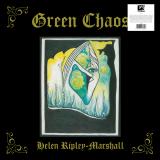
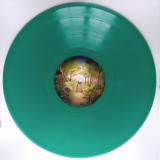
Fresh Hold Releases presents Helen Ripley-Marshall's mysterious Australian ambient electronic album "Green Chaos", reissued for the first time on vinyl LP. Originally released in 1988 on Sydney based private press label Freefall, "Green Chaos" marks the sole release from Ripley-Marshall.
In the late 80's Ripley-Marshall lived a Bohemian lifestyle in inner city Sydney; "surrounded by musicians, actors and artists, there was an amazing creative experimental vibe going on". While playing in new wave/art rock band "D Face" she began Green Chaos as a personal project to counteract the creative friction sometimes experienced within a group dynamic, heavily inspired by Arnold Frolows' "Ambience" radio show on Australia's Triple J and particularly the music of Tangerine Dream, Harold Budd and Brian Eno.
Initially a solitary endeavour, once she decided to record in a studio Green Chaos morphed into a somewhat collaborative, improvisational project with other musicians invited into the studio to improvise and add their own interpretations and ideas, additional layers and dimensions, resulting in a work that combines a clear influence from the electronic repetition of the Berlin school with a meandering, futuristic lyricism. Although influenced by the long form sonic journeys of artists like Tangerine Dream, Ripley-Marshall's background in art rock and new wave brings a more concise approach, each song a self-contained universe that says only what is necessary in the arrangement.
After completing a sound engineering course Ripley-Marshall recorded the album at Sydney's Exeter House Studio over several months alongside studio engineer Andrew Knight, met through a fellow member of D Face. Knight ran Freefall, a private press recording label releasing folk and bluegrass music, which had Green Chaos as its sole ambient release. Ripley-Marshall self distributed the album to local inner city record stores and dropped a copy to Triple J, where it became a regular staple of Arnold Frolows' show.
These days Ripley-Marshall has moved away from music and is predominantly focused on visual art. "Green Chaos" stands as the only released product of her musical years, both a personal window into the vibrant experimental art scene of late 1980s Sydney and a deep, timeless anomaly of Australian electronic music.
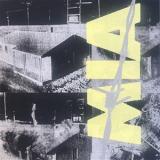
USA Hardcore/Punk Geschichte! M.I.A. wurden 1980 in Las Vegas gegründet, zogen 1981 nach Orange County und begannen im berüchtigten Cuckoo's Nest zusammen mit Fear, Shattered Faith, T.S.OL. u.a. Shows zu spieln. Ende '81 gingen sie in ein lokales Tonstudio in Costa Mesa und nahmen an einem Nachmittag neun Songs auf, bis ihnen das Geld ausging - 300 Dollar gut angelegt! Eine Kassette wurde rasch kopiert und herumgereicht. Eine Kopie der Kassette wurde KevinSeconds bei einem Gig mit 7 Seconds in Reno gegeben. Kevin gab sie an Tim Yohannan von Maximum Rocknroll weiter. Schließlich gelangte sie in die Hände von Felix Alanis von Smoke Seven und Greg Shaw von Bomp. Mitte 1982 waren M.I.A. dann auf drei Vinyl-Veröffentlichungen vertreten: "Tell Me Why" auf der Compilation American Youth Report von Bomp, "New Left" auf Maximum Rocknroll Presents: Not So Quiet On the Western Front von Alternative Tentacles und acht der neun Tracks landeten auf der berüchtigten Split-LP mit Last Rites auf Smoke Seven. Alle 9 Tracks des ersten Tapes sind hier versammelt, zum ersten Mal richtig abgemischt. Der Begin von M.I.A. (US) und gleichzeitig das letzte Lapitel der Moder City Records-Reissue-Reihe zur Band. « ...In one corner is M.I.A., a band originally from Las Vegas, the champions of punk's positive side. They've managed to fuse a super tight thrash sound with enlightened attitudes_"I Hate Hippies" is obviously meant as a satire with a moral, and the results are absolutely stunning. » _Jeff Bale's 1982 review of the Last Rites for...-Split-LP in Maximum Rocknroll #2 2.Auflage, Cover Metallic Blue, Vinyl Dirty Turquoise, plus 24seitigem Booklet.
- 1: Bender
- 2: Leyden Girl
- 3: No Man
- 4: Tomic Bomb
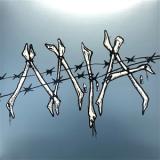
Die aus Las Vegas / Orange County stammende Hardcore-/Punk-Band M.I.A. ist zum ersten Mal seit 40 Jahren mit neuem Material zurück! Nachdem sich die Band 2008 zu einem Gedenkkonzert anlässlich desvorzeitigen Todes ihres Sängers Mike Conley wieder zusammengefunden hatte, spielte sie noch einige Jahre mit dem ursprünglichen Sänger Todd Sampson weiter. Leider verstarb Todd kurz darauf an einem Hitzschlag. Die verbleibenden drei Mitglieder beschlossen, weiterzumachen, wobei Gitarrist Nick Adams nun den Gesang übernahm. Im Jahr 2017 veröffentlichte Darla Records die letzten beiden Alben der Band, ,Notes From the Underground" (1985) und ,After the Fact" (1987), erneut auf CD. Ab 2023 begann Modern City damit, den gesamten Katalog der Band auf Vinyl neu aufzulegen, darunter das bahnbrechende Album ,Murder In a Foreign Place" von 1984 (in Zusammenarbeit mit Alternative Tentacles) und ihren Teil der LP ,Last Rites for Genocide and M.I.A." aus dem Jahr 1982. Die Titel dieser neuen Veröffentlichung wurden im Dezember 2025 aufgenommen und umfassen drei brandneue Songs sowie "'Tomic Bomb", einen sehr alten, unveröffentlichten Song, der 1980 von der allerersten Inkarnation von M.I.A. geschrieben wurde, die damals als The Swell bekannt war. Diese Veröffentlichung ist auf 300 Exemplare limitiert und erscheint mit einem handgedruckten Cover und auf farbigem Vinyl.
Repress
The Collaboration - Having toured together over the years, Lattimore and Barwick now join forces to co-write and record this full-length album. Their creative synergy brings together harp, voice, and analog synths in a deeply emotional, immersive sound journey. The album was recorded at the Philharmonie de Paris with co-producer Trevor Spencer (Fleet Foxes, Beach House). This album continues a unique series of collaborations between the label and the Musée de la Musique, featuring historical instruments in contemporary composition. Since 2017, InFiné and the Philharmonie de Paris have co-developed a series of albums designed to highlight the extraordinary instrument collection of the Musée de la Musique. Following the albums InBach by Arandel (2020) and Saturn 63 by Seb Martel (2022), this third release is a meeting of two iconic contemporary ambient voices: Mary Lattimore and Julianna Barwick. The project offers the artists full access to the museum’s playable instruments for recording, sound conservation, and creative reinterpretation.
--
Tragic Magic brings together Julianna Barwick and Mary Lattimore, two of contemporary ambient, experimental and electronic music’s most celebrated composers, for a unique collaboration at the Philharmonie de Paris, with extraordinary access to the Musée de la Musique’s instrument collection, in partnership with the French label InFiné. The album features seven immersive, evocative compositions guided by the human spirit – intimate, grounded in friendship, both earthly and cosmic – and part of a greater continuum, reflecting the solace and transformative power of artistry across generations.
Co-produced by Trevor Spencer (Fleet Foxes, Beach House), Tragic Magic was created in just nine days, a testament to the “musical telepathy” that has developed between Barwick and Lattimore over years of touring and friendship. Arriving in Paris from Los Angeles shortly after the 2025 wildfires, their sessions combined improvisation with the emotions and experiences they carried, in a setting both inspiring and deeply supportive. Lattimore selected harps tracing the instrument’s evolution from 1728 to 1873, while Barwick chose several iconic analog synthesizers, including the Roland JUPITER and Sequential Circuits PROPHET-5. In freeform dialogue between voice and instrument, they create a meditation on tragedy, wonder, and the restorative power of shared experience.
The duo, often joined by Spencer, also explored the city, sharing meals and visiting museums and landmarks, each encounter leaving an impression on their next session. The experience allowed them to work intimately with rare instruments, blending their personal sensibilities with centuries of history, resulting in music that honors the past while remaining a deeply authentic expression of the present.
Throughout Tragic Magic, Barwick and Lattimore find something beyond themselves: a sense that while everything may not be okay, beauty persists. Their approach – transforming life into music, observing, feeling, and creating – continues a lineage of creative expression and visionary invention, embodied in the very instruments they employed for this project.
Matthias Wolf & Tilman Sillescu & Alex Röder & Arm
Anno 117: Pax Romana (Original Soundtrack) (LP 2x12")
- A1: Latium Side A Terra Cognita
- A2: Dolphins Of The Azure
- A3: Umbrae
- A4: The Manacles Of Syrah
- A5: All Roads Lead From Rome
- A6: Mare Nostrum
- A7: While Rome Burns
- A8: Impostors
- B1: Bay Of Laurels
- B2: Child Of Morning
- B3: Lavender And Laurels
- B4: The Families
- B5: Mansions Of The Proud
- B6: Tyrrhenian Sunset
- B7: Necropolitans
- B8: Drum And Signum
- B9: Sic Itur Ad Astra
- C1: Albion Side A What Might Have Been
- C2: Terra Incognita
- C3: Chalk Horses
- C4: Carraig Mhor
- C5: Falling Skies
- C6: The Rook Of Whitecliff
- C7: The Way Of The Spear
- C8: The Plebs Are Revolting!
- C9: The Fall
- D1: High-Stepping Ponies
- D2: A Braided River
- D3: The Celt Within Lives On
- D4: Foreign Currencies
- D5: Glade Of Cernunnos
- D6: The Reedfolk
- D7: Lugh's Bounty
- D8: One Sneeze Starts It All
- D9: Ambushed!
Ubisoft and Laced Records have forged a new trade alliance, expanding their economic tree to bring the lavish music of Anno 117: Pax Romana to glorious vinyl.
This vinyl set celebrates the ornate score for Ubisoft's richly detailed city builder, capturing the spirit and splendour of the Roman Empire at its peak. From the beautiful heartland of Latium to the mysterious Celtic wetlands of Albion (where no civilized Roman wants to be), every musical cue is steeped in world-building and crafted with remarkable care.
The outer sleeve features striking landscape art from the game, while the inner sleeves present detailed track lists framed with ornate motifs inspired by Roman architecture and pattern work. The result is a set that feels like a treasure from the imperial archives.
The soundtrack charts a journey across the empire, weaving together atmospheric strings, ancient-inspired instrumentation, and sweeping orchestral cues that capture both the serenity of prosperous provinces and the political tensions throughout. The music reflects every choice you, the governor, must make. Diplomacy or domination, tradition or transformation. An emotionally rich and immersive soundtrack worthy of Rome itself.
- A1: Lily Was Here
- A2: The Pink Building
- A3: Lily Robs The Bank
- A4: Toyshop Robbery
- A5: Toys On The Sidewalk
- A6: The Good Hotel
- A7: Second Chance
- B1: Here Comes The Rain Again
- B2: Alone In The City
- B3: Toyshop (Part One)
- B4: The Coffin
- B5: Teletype
- B6: Inside The Pink Building
- B7: Percussion Jam
- B8: Peaches
- B9: Lily Was Her (Reprise)
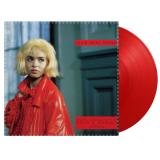
Lily Was Here is the soundtrack album to the 1989 Dutch drama film of the same name (original Dutch title: De Kassière, The Cashier), released in 1989 and produced and largely written by British musician David A. Stewart, known as one half of the pop duo Eurythmics.
The most notable element of the soundtrack is its title track, an instrumental duet pairing Stewart’s guitar work with saxophone performances by Candy Dulfer. The track was released as a single and achieved chart success in multiple countries, including reaching #1 in the Netherlands for five weeks, number six on the UK Singles Chart and number eleven on the US Billboard Hot 100.
In addition to original compositions, the album includes a newly recorded version of the Eurythmics’ 1984 song “Here Comes the Rain Again,” featuring vocals by Annie Lennox. It also features vocals by Virginia Astley on "Second Chance"
The soundtrack of Lily Was Here is available as a limited edition on red vinyl.
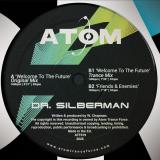
Dr. Silberman makes a welcome return to Atom Trance Force and kicks things off in 2026 with his EP 'Welcome To The Future'. Two mixes of the title track are included: The fast paced original and the trance mix. The original is a serious ode to the late 90s Hamburg hard trance sound, and you can hear the influence of labels like EDM, Tunnel & Spaceflower. For the trance mix, he brings the tempo back down to 140 and moves more towards older Positiva energy. Rounding off the EP is Friends & Enemies, keeping the energy high but the quality to match.
From Atom - we thank you for your continued trust, and bigups to those supporting this release:
1995 Trance Sessions, Adam (Last Of The Mohicans) Apple FM, Adam Bellew Global Hard House Radio, Angie (FR), Busho, Choci, Digital Devil, Dimitri Kechagias, DJ Brisk [Stimulant DJs], DJs Present, Evolving Suns Audio [Cohesion / The Attic], Giuseppe Ottaviani, J.O.E [Tomorrows World], Jake Ayres, Jake Grace [TranceUnite / FCM Live], Jake Nicholls [Uprising], Loki [Terminal Trax], Louk / Hidden Identity, Mat Phat & Fugee Show [Newport City Radio], Mind Control [Noise Pollution], Mindflux, Paul Nineham [Brisk], Pete Morton [Harderfaster], Remnis, Renegade System, Rennz [Distorted Dreams], Rightsound [Dancesation / Timewarp], Rocco Jonsson [Collide / The Carnival Sweden], Spaceman [Tuned Flow], Spektral Noise, Suzy Solar, Tjerk Coers
- A1: Jugganauts
- A2: Recognized Thresholds Of Negative Stress
- A3: Boogie
- A4: Muzic Appreciation (Sweet Music)
- A5: Mark Of The Beast
- A6: Altered States Of Consciousness
- B1: Honeydips In Gotham
- B2: Strange
- B3: Old Man Jacob's Well
- B4: Bronx Bombas
- B5: Salt Water Taffy (Slo Jam)
- B6: Riders Of The Storm
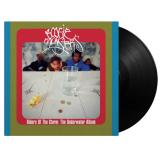
Boogiemonsters were an American hip hop group composed of Bronx‑born rapper Mondo McCann, Alaskan native Vex Da Vortex (Sean Pollard), and Jamaican‑born brothers Myntric (Sean Myers) and Yodared (Ivor “Al” Myers). The members met while attending Virginia State University, quickly connected, and began recording demos and performing at campus events. Their early momentum led them to win first place at Howard University’s Hip‑Hop Convention.
Pendulum/EMI record label signed the four MCs and released their debut album Riders Of The Storm: The Underwater Album in 1994. The first single, “Recognized Thresholds of Negative Stress,” introduced their thoughtful, alternative approach to hip hop. It was followed by “Honeydips in Gotham,” a smooth tribute to the fly sistas of the city, and “Strange,” built around a slick Cameo sample. Another standout track, “Salt Water Taffy (Slo Jam),” is noted as one of the earliest non‑Roots session appearances by future producer Scott Storch.
Riders Of the Storm: The Underwater Album delivers a focused blend of rugged beats, sharp lyricism, and atmospheric production that stands apart in the 90s hip hop landscape. Its mix of conscious themes and deep grooves makes it essential for fans of underground hip hop. The album’s mellow, funky, alternative sound sits comfortably alongside groups like A Tribe Called Quest and De La Soul, giving it a timeless place in the era’s most creative and forward‑thinking releases.
- 1: Snake
- 2: Moses Kill
- 3: Golden Arm
- 4: Lunch
- 5: Special Power
- 6: The Void / Madison
- 7: White Shirt
- 8: Radiator
- 9: Icepick
- 10: <
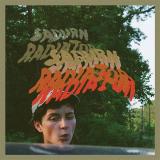
Intimacy is manifested in every moment of Radiator, the debut album from Philadelphia's Sadurn. This feeling of closeness, of being able to lend your every sense to one's confessions of internal conflict, is due in large part to the circumstances under which this album was created. Much of the world fell apart in 2020, but Sadurn tucked themselves away in a Pocono's cabin, creating and recording what would become their first full-length. Within the confines of their close quarters, passing animals as the only auditory witness to a makeshift recording studio created by moving furniture, Sadurn created an album that will break your heart and then slowly piece it back together.Sadurn started as the solo project of Genevieve ??DeGroot. Picking up guitar in 2015, DeGroot started writing songs, eventually playing DIY shows throughout the city of Philadelphia. With time, the direction, sound, and members of Sadurn changed. The beginning of 2020 was meant to serve as their debut as a four member band (Jon Cox on guitar/tenor guitar, Tabita Ahnert on bass, and Amelia Swan on drums), but the world had other plans and the group adapted.Taking influence from artists like Gillian Welch, Alex G, and Jason Molina, Sadurn's emotive indie rock explores the struggles and eventual beauty of grappling with multiple emotional realities, particularly when it comes to relationships. That conflict, the idea of being forced to choose, even when terrified, is present on singles like "Radiator" and "Golden Arm." The latter is an unhurried ballad that shows its truest colors with time, eventually blossoming with unexpected admissions of desire and uncertainty. Indecision, heartbreak, and attempting to live out your days against the actual backdrop of a gradually worsening hellscape is a shared commonality among us all, but on Radiator Sadurn breaks down walls that others so often put up. It's a fleeting, impactful glimpse at one's whole heart, and its sweeping, special nature is evident from the moment the album opens.
Guests is the home recording project of Jessica Higgins and Matthew Walkerdine. Vaguely named as such to avoid any problems with the poster if they pull out of a gig (which has only happened once, about a year and half before any songs were actually written to be fair) but also to capture a sense of reverse hospitality. That is, arriving at your door with a bottle of good wine (can’t turn up empty handed) or a fist full of savoury or sweet snacks (time of day dependant); oversharing at the afters (and then passing out on your couch); reading to your toddler while you make their lunch or put everything back where it was meant to go (only to get torn apart again). So, something about what happens when private worlds meet each other, making or having been made a space for. But at times, it’s a different kind of intimacy, a temporal or material one, like the feeling of crisp fresh sheets, and abundant and soft, body-part appropriate towels in a hotel in a city you’ve been to before and love to go back to.
Their debut record, “I wish I was special”, was variously described as “a collage of concrète experiments and outerzone pop gestures, music that sounds as if it’s been written from the depths of a dream”; “music for people who love music but also hate it too”; “something like chasing ghosts or befriending a wild animal”; “pulling apart nervous sensations with haphazard ease and requisite humour”; and “a melody of refusal, of being all-in (…) finding the exact right WRONG sound to express the discontent”. Common Domestic Bird continues in this vein, layering synthesiser, keyboards and samples over rudimentary drum rhythms and field recordings, which are in turn sung or spoken with to create nine new songs.
Written and recorded between autumn 2024 and summer 2025 in Reading, Berkshire, the music has matured since its last outing, in a way, leaning less into collage and more toward structured composition and melodic depth, yet retains a healthy dose of indeterminacy and off-kilter rhythms for the forever-amateur. The songs on Common Domestic Bird hint at some “about”-ness through a series of discrete vignettes which sound a bit like architecture or end of year lists, gossip or over-thinking subjectivity, like disappearances and impressions, the support structure of the spine, letters and signs offs, things you could really do without and where they should go, hoping you’ll see something that isn’t there, pretences and performance. At times they feel kind of funny, others kind of sad or a bit angry and annoyed, a bit like you really.
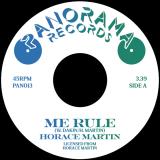
Back on PANORAMA Records, we turn to a beautiful slice of under-the-radar Jamaican reggae with Horace Martin – “Me Rule.”
Born in Kingston, Jamaica, Horace Martin was just 20 years old when he stepped into Channel One Studio to record the track in 1974. At the time he was building his name locally, performing in clubs and talent shows around the city while cutting sides in Kingston’s vibrant studio scene. “Me Rule” captures that moment perfectly — youthful confidence over a deep, steady rhythm.
This record earned its place among the deepest collectors: Proper rootsy dancefloor reggae that feels just as good today as it did when it first came out of Kingston.
On the flip, things open up with a dubbed-out version of the rhythm titled “Rule,” credited to Prince Huntly. Stripped back, the dub extends the track — echo, percussion, and bass doing the work.
As always, PANORAMA Records continues its search for overlooked gems from across the globe — records with history, character, and real musical weight. Carefully remastered and brought back on 7inch, PAN013 is another example of these records finding their way back to the turntable.
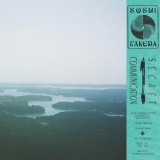
Tokyo deep house master Soshi Takeda returns with a long-awaited six-song sequel to 2021’s landmark Floating Mountains, surfing deeper into mystery, motion, and liquid dreams: Secret Communication. Recorded across 2022 and 2023 at his home studio with a unique assemblage of 80’s and 90’s hardware, the tracks cruise through a latticework of skyways on lush pads, bubbling bass, and blissed BPMs, dusted in sunrise acid and cosmic piano. His is a dance music of idyllic emotions and inner worlds, yearning for new horizons.
Dramatic events overlapped with the album’s creation: “Wars broke out. On the other hand, my child was born. There were sad and beautiful moments in my life.” Secret Communication contains vistas, valleys, glimpses of lives unled, swirling above the grey noise of the city. From the jazzy daydream of “Can Imagination Transcend Distance?” to the sleek starlight house of “Rainstorm” to the farewell ecstasy of the title track, Takeda’s music touches and transports, a portal to places beyond. Fantasy and feeling, intention and inspiration, all become one: “When I listen to beautiful deep house, I feel a mysterious atmosphere. Dreamy scenes come to mind. I aim to create that sound.”
- 1: Layer After Layer
- 2: Indalo
- 3: No Abiding City
- 4: Rising Falling
- 5: The Bridge
- 6: Mama Carries
- 7: Eating The Other
- 8: What Did The Rain Say?
- 9: Tulip
Shimmering Xhosa traditions and deep electronic futures vibrate as South African sonic poet and composer Dumama unveils her groundbreaking debut solo album, Towards An Expanse. Sometimes gospel, sometimes electro-psychedelic space travel, Towards An Expanse unfurls from a languid lament into an ever-expanding sonic universe. Dumama defies conventional genre boundaries while excavating deep personal and cultural histories in this concise but boundaryless collection, recorded between New York, Johannesburg and Berlin. Dumama first gained international attention with her acclaimed 2020 collaborative album, Buffering Juju, created with fellow South African musician and artist Kechou, and lauded as Global Album of the Month by The Guardian. Her new solo work draws on a rich lineage of South African voices. Gugulethu Duma (aka Dumama) is a musician / composer / sonic poet / creative producer from the Eastern Cape Province of South Africa. Dumama is one of the few uhadi players in the world. Her use of the traditional Xhosa bowed instrument guides her profound story-telling, blending ancestral roots into an urgent electro-acoustic palette. The album was born out of sessions with acclaimed musician and producer Shahzad Ismaily in New York and South African powerhouse Nandi Ndlovu in Johannesburg.
- 1: 二十歳の恋 - Lamp
- 2: Empire State Of Mind - Nautilus
- 3: Sarah's Theme - Nova70
- 4: Valdez In The Country - 5Trio
- 5: Being Suggestive - Kazumi Kaneda
- 6: Dover D - Kutiman
- 7: Campus Suite - Hover
- 8: All Caps / Supervillain Theme - Pat Van Dyke
- 9: Head Nod Shxt - Emapea
- 10: Be - Hf International
- 11: Do Da Dance (Kool Breeze Version) - Shinsight Trio
- 12: Mas Que Nada - Groove Train
- 13: A Song For You - Golden Throat Note Feat. Mariko Nakabayashi
Named after the Latin word for the humble house spider, Oonops started his career as a club DJ in the early 2000s and has been collecting and playing strictly vinyl ever since.
In 2013, he started his own radio show » Oonops Drops«, a monthly mixtape-style show featuring a host of international top DJs, broadcast on Brooklyn Radio in New York City. This show inspired the first volume of this compilation, which was released in early 2018 on Agogo Records, alongside the album and 7-inch releases featuring artists from his radio network. Then, exactly five years ago, Oonops finally founded his own sustainable music label bearing the eponymous name. Now, just in time for the 200th episode of his Brooklyn Radio show, Oonops returns to Agogo Records with Vol. 3, which is packed with favourites and rare gems discovered through his extensive community of like-minded collaborators. As you would expect, it includes many unreleased songs that were previously only available digitally or were incredibly difficult to obtain on vinyl – true rarities from the crates. Expect a broad selection of genres, ranging from Japanese jazz and head-nodding beats and hip hop to samba-esque funk, rare groove, reggae and Brazilian-influenced styles. Get ready, enjoy and rewind!
- 01: The Blak Fire (Sogno I)
- 02: Benzocrazia
- 03: Le Basi H Si Alzano In Volo
- 04: Mila Nel Bosco
- 05: Il Giorno Di Zaha'kol (Sogno Ii) (Feat. Julinko)
- 06: Dentro Un Bus Proiettato Nel Vuoto
- 07: Heyran
- حیران) 08 Daēvā – Falso Dio
- 09: La Dama Con Il Corpo Di Uccello (Sogno Iii)
- 10: Frrepa (Feat. Liz Van Der Nüll)
- 11: Idoli Rotti Fatti Di Paura Ed Oro (Feat. James Jonathan Clancy)
- 12: Disintegrazione
- 13: Un Sequestro Lungo 10.000 Anni
In an age that demands hyper acceleration, kinetic flashes and byte voracity, Blak Saagan sticks out like a sore thumb with a sprawling body of work that requires attention and unlocks profound symbols and meaning with every passage. After a 5 year gap, the Venetian composer returns with his most personal and openly political statement yet, ‘Un Sequestro Lungo 10.000 Anni’, a staggering 108 minute triple album soundtracking a dystopian city through flashes of futuristic fourth world visions, warehouse 80s rave-ups, meditative trance and dark rumblings. Following his acclaimed ‘Se Ci Fosse La Luce Sarebbe Bellissimo’ was never going to be an easy feat but Samuele Gottardello (Blak Saagan) approached the fresh canvas with a renewed sense of commitment sparking a dense parallel world inhabited by paranoia, control and repression. A world that is relieved by the figure of a woman with the body of a bird emerging from the asphalt and freeing humanity from the “sequestro” (kidnapping) to which it has long been subjected. Dystopia pushed to the limits and sadly close to our current affairs.
- 1: Dummy
- 2: Tons Of Futons
- 3: Mad Flute
- 4: Omw
- 5: Where My Keys
- 6: In The Rain
- 7: Spooky Town
- 8: 1Bowl Of Croutons
- 9: Who Cares
- 10: But This
- 11: Exchange
- 12: Hard To Handle, Hard To Hold
Radiohop are a four-piece jazz / hip-hop band from Amsterdam, exploring the boundaries between groove, texture and improvisation. Hard to Handle is their second album and the first drop on Melting Pot Music. As the title suggests, Radiohop are going hard on this one.
Radiohop are Joshua Lutz (keys), Euan Jenkins (drums), Johnny Biner (guitar) and Joel Svedberg (bass). All four of them moved to Amsterdam around 2020 to study jazz and quickly plugged into the city’s bubbling scene.
Each band member plays an equal role in shaping the music as a single organism, emphasising feeling and atmosphere rather than ego or individual spotlight.
The compositions arise from experimentation, intuitive collaboration and deep listening, an approach that has as much to do with their backgrounds as improvisers and beat-makers as it does with their roots in jazz.
Radiohop have performed as the rhythm section for artists like Soul Supreme and Juju Rogers. Beat-heads might be familiar with Joshua’s solo project, Halfpastseven, which has collaborated with FloFilz and Jake Milliner
Deeply rooted in Japanese culture, Tanoshii Crew returns with an extraordinary new musical connection from Yamato, released through Tanoshii Records. In the summer of ’24, the label made its debut with the City Pop 1994 EP by Rukatama — marking Tama-chan’s very first vinyl release outside Japan. Now, the Italian collective presents something truly distinctive: a carefully curated vinyl compilation celebrating a wide spectrum of musical styles, designed to delight devoted record collectors and adventurous listeners alike — perfectly embodied by the Japanese word Tanoshikatta (“it was fun” / “a joyful experience”).
- 1: Lonely Me, Lonely You
- 2: Yesterday Man
- 3: Raining Dreams
- 4: Who's Afraid
- 5: Sad Day
- 6: Jesus Fish
- 7: Heartattack & Vine
Die aus Las Vegas und Orange County stammende Hardcore-/Punk-Band M.I.A. spielte 1987 ihr letztes Konzertund löste sich auf. Mitte 1988 gründete Sänger Mike Conley die Band Naked Soul zusammen mit dem ehemaligen M.I.A.-Mitglied LarzPearson am Schlagzeug und seinem langjährigen Freund Jeff Sewell am Bass. Inspiriert von Bands wie The Replacements, den kanadischen The Doughboys oder The Nils, begann Mike, Songs zu schreiben, die den poppigen und doch kantigen Sound, der auf M.I.A.s ,After The Fact" seinen Anfang genommen hatte, mit vielschichtigen Arrangements und Gesangsharmonien weiterzuentwickelten. Diese erste Besetzung löste sich bald auf, doch Mike gab nicht auf und stellte eine neue Band zusammen mi tMike Brown am Schlagzeug und Carlos Soria von The Nils an der zweiten Gitarre. Die Band ging dann mit Richard Andrews (Big Drill Car, All, Jawbreaker usw.) ins Studio und nahm die drei sorgfältig ausgearbeiteten Popsongs auf, die hier zu hören sind, darunter der Naked Soul-Klassiker, ,Lonely Me, Lonely You", der ihnen schließlich einen Vertrag bei einem Major-Label einbrachte. Unterdessen begann der ehemalige M.I.A.-Gitarrist Nick Adams, mit dem Schlagzeuger Miles Gillettvon El Grupo Sexo am Schlagzeug und Bob Gnarly von Plain Warp am Bass zu spielen. Sie nannten das Projekt Flatbed und machten sich daran, einfach nur Spaß zu haben und rohen, harten und melodischen Rock'n'Roll zu spielen. Danny Wallis von Don't No übernahm bald den Bass und die Band ging ins Studio, um ein paar Eigenkompositionen und ein Tom-Waits-Cover aufzunehmen. Diese Veröffentlichung fängt einen Ausschnitt aus der Zeit Ende 1989 ein, als zwei Bands mit gemeinsamer musikalischer Vergangenheit unterschiedliche Wege einschlugen. Limitiert auf 300 Exemplare in handgestempeltem Cover und auf farbigem Vinyl.