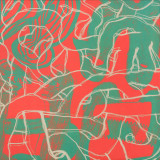
In 1997 legendary producer Orlando Voorn delivered two tracks for the Get Lost and Past-Present+Future compilations, as well as the idea of a full length album for his Ultra moniker. This was completed in 1998 shortly before the initial shutdown of Multiplex. Some tracks were scattered onto other releases, but this Planet Ultra EP is compiled of five previously unreleased compositions from the Multiplex album of the same name, plus the Barwork track - finally on vinyl after more than twenty years.
DJing since at the age of 12, he won the Dutch DMC championships in '86. Going on to produce a multitude of club bangers since the early 90's. Spanning many genres, his short lived Ultra alias was reserved for a deep electro vibe.
On ice for two decade these classic electro tracks reference the early UK breakbeat of the 90's as well as the obvious sci-fi connection. To that effect we kick off with "Teflon" and "Plasma", followed by the funky "In The Galaxy" which adds a touch of Herbie Hancock. On the flip side "Ultra Light" evolves to an all-encompassing, atmospheric trip, before the deep "Barwork" and finally "Open".
Cerca:the connection
Third LP of Cabaret Contemporain, French band (featuring Fabrizio Rat on keys) who use acoustic instruments (piano, guitar, bass, drums, contrabass) to produce a « hand-crafted » club music infused with techno. Inspired by Jeff Mills, Robert Hood or Drexciya, the five members already had a career on classical scene; their idea is not to replay classical techno tunes but to create a new path for the electronic music. 2 tracks featuring with the label boss, Arnaud Rebotini.
« Ballaro », which opens Cabaret Contemporain's third album, begins with light percussions, which seem to turn on themselves, while being conveyed by reverberations close to dub. After a few minutes of convolutions, the piece gets out of hand, transporting the listener into a rich form of pulsating trance, irrigated by a soaring melody and punctuated by persistent piano tones. « La selva »; more subdued, has the same energy, the track ending in an even more powerful way, a kind of paroxysm.
Finally, the strangest and most minimal « Cactus », features a singular groove, which evokes the most brutal house from Chicago, or the sometimes obsessive techno from Detroit. Just like other tracks such as « Transistor » or « TGV », fuelled by sweat and trance, Séquence Collective bears all the intensity of a techno cut for clubs' dancefloors. The only difference being that their music is not played with synths, drum machines or software, but with acoustic instruments. Dual curriculum The band is composed of five musicians and a sound engineer: Fabrizio Rat on piano, Giani Caserotto on guitar, Julien Loutelier on drums, Ronan Courty and Simon Drappier on double bass and of course Pierre Favrez on console. They are all in their thirties and met at the prestigious Paris Conservatoire in the late 2000s. However, all the musicians in the band have a double curriculum and navigate freely between the institutional realm and the underground or pop music scenes. Through classical or contemporary music, jazz and improvisation, rock and experimentation, they share a common passion for the original and futuristic techno of the 1990s, that of Jeff Mills, Robert Hood or Drexciya, which they have decided to reinvent and further in their own way. Not as a simple stylistic exercise practiced by virtuoso musicians, but rather as a new path for modern music, and for their generation. « The original idea » they say, « was to make club music by hand, like craftsmen. Like in the early days of jazz, our band managed to transform itself into a kind of dancing machine. Our music is therefore functional because it is danceable, but also mental and abstract, while offering several layers of listening. You can dance and play, have a purely physical and sensory connection to the music. But you can also immerse yourself in its listening, perceive refined harmonies or more complex rhythmic superpositions »
If the tones of Cabaret Contemporain are truly unique it is because each member of the band has developed a very personal approach through the use ''prepared'' instruments. The strings of their piano, guitar or double bass may recall strange machines with literally incredible sounds, obtained using objects such as chopsticks, clothes pegs, foil, hangers, a tiny pie mould or many other utensils from a DIY store. A collective energy
Cabaret Contemporain is first and foremost a live band that has been performing in venues and festivals since its inception in 2012 (Nuits Sonores, Siestes Electroniques, L'Aéronef, Le Trabendo, Philharmonie de Paris, Gaîté Lyrique, Rewire, Dancity, Barcelona Accio Musical...), both at traditional jazz and contemporary music venues, and more often at electro music hubs. When facing the audience, the band, which plays each of its sets in one go, without a break, shows an intense physical presence, which competes with the musical power of DJs who share the stage with them. Their performance, full of tension and repetition, which requires maximum concentration and a state close to trance from the musicians, is sometimes, according to them, « a mental journey and a mystic experience ». A dimension that brings to mind the historical techno culture and its dancers who, communicating on the dancefloor, were carried until the early hours of the morning by the power of the beat. An album inspired by the stage Since their beginnings, their compositions on record have drawn their energy directly from the practice of their concerts, whether referring to Terry Riley (2014) or Moondog (2015), an EP and an album dedicated to the repertoire of the two American artists, the original compositions of Cabaret Contemporain (2016) and Satellite EP (2017), as well as this new album. Séquence collective can be listened to as a condensed transcription of their inventions and their live experiments. The tracks, more than half of which were improvised during sessions held in the former Vogue studios near Paris, were recorded in live conditions, « like an old school rock band » they say. As usual, they invited a new musician to join them in the studio. After collaborating with Étienne Jaumet or Château-Flight, Arnaud Rebotini, César winner for best film music, added a welcome synth touch on two tracks (Pro- One, Prophet 600), which boosted the group's formidable collective energy. The album ends with « October Glide », again performed with Rebotini, a lyrical and lively track, built on a powerful and slow progression of timbres and percussions, which would ideally find its place at the core of a techno party « peak time »
Faces Records proudly presents "Cross Section", the debut album of Kez YM, the Berlin based japanese producer.
.
It's been a long way since his debut EP at 4Lux Recordings was played by Moodyman back in 2008. Since then he also received support from influential people like Theo Parrish, Rick Wade and Cassy, just to name a few.
Strongly rooted on his Detroit/Chicago Deep House/Funk/Disco/Afro he rocks dancefloors from Berlin to Tokyo, and he's one of the current leading deep house dj's from Japan.
From downbeat to more uptempo tracks, this album is a perfect extension of Kez's path until now. Classy and lustful synths pave the way for a combination of elements that draw inspiration from his jazz masters, his motorcity heroes and a strong percusssive connection to Africa.
Metshka and Roman Delore met at the heart of vibrant Paris. One was more into
Djing, the other into production, but they instantly felt a strong musical connection,
sharing a common vision of underwater, detailed and a bit nostalgic techno. Here
they started their collaboration then created their own label, Aperçu Records. Soon
after, Stara Zagora EP was born. Strongly inspired by their childhood memories,
plains of Bulgaria and warm coasts of the south of France, these three tracks are a
perfect representation of their mental soundscapes.
From four individual parts, with distinct musical pasts but also
overlapping histories, a new unified chapter begins with Piroshka and
the quartet's thrilling debut album 'Brickbat'.
The album is named after the word for a missile, which nails the
record's heavyweight lyrics if not the music's gorgeous, bittersweet
and euphoric pop. Think of 'Brickbat' as a wolf in sheep's clothing -
which suits the name Piroshka, the Hungarian take on the wolf
terrorised fairytale hero Little Red Riding Hood - a subtle nod, too, to
a certain red hairdo that stood out in the 1990s Brit-guitar-pop
scene...
The four band members are former Lush vocalist / guitarist (and
former redhead) Miki Berenyi, former Moose guitarist KJ 'Moose'
McKillop, Modern English bassist Mick Conroy and former Elastica
drummer Justin Welch. The connections between them are a
veritably tangled family tree. Before they lived together and raised a
family, Miki and Moose were notable figures on the so-called
shoegaze scene, while Elastica were Britpop peers. After post-punk
pioneers Modern English split for a second time, Mick became a
latterday member of Moose, while Justin joined the reformed Lush in
2015. And when Lush required a bassist for what proved to be their
final show (in Manchester) in November 2016, Mick stepped in.
It was the rehearsals for that Manchester show that laid the
foundations for Piroshka. 'We sounded great!' says Justin. 'Like a
proper punk band. Mick brings a huge amount of enthusiasm and
livens up the room, and I thought, this is the kind of band I want to
be in again.' Mick agreed. 'I'd seen Lush so many times, it was like
playing with old friends. Miki agreed it was good fun too. And with
Moose available, we thought, let's all have a bash, see what
happens.'
Though 'Brickbat' kicks off with a squeal of feedback, the album is far
from a proper punk record, with as much sublime delicacy as physical
force, with guitars to the fore but also electronic flourishes in all
manner of spaces. Combined, they drive the nuggety melodic bombs
long associated with Miki's songwriting
LP format includes digital download code.
Tradition and experimentation are two familiar
territories that C'mon Tigre, a duo who find
their identity by working with musicians from
all over the world, can balance between very
well. As they did for their debut album (2014),
they have put together a multicolored collective
for their second record 'Racines', out on
February 15, 2019 for BDC/K7.
The title is a French word that means "roots",
referring to the musical roots in which C'mon
Tigre's feet, head and heart are immersed, and
from which their contaminated tracks sprout to
create unusual and original sound environments. In their new album the sounds of the
Mediterranean - the sea of their land -
intersect, intertwine and overlap with a
kaleidoscope of other sounds and a new
approach based - they explain - "on the type of
work we had done when we rearranged the first
album for live shows, by emphasizing the
synthetic part of our tracks". This time around
they did it from the very beginning: "The
composition of the pieces immediately included
the use of machines and synthesizers as a
basis for acoustic instruments. The goal was to
reprocess the terrain of Mediterranean
influences that was undoubtedly our starting
point".
Imagine a work in progress where bass and
guitars interact with woodwind, synths, percussions, vibraphones, dipping the listener into a
sensual and hypnotic musical journey. Sailing
from the Mediterranean basin and being guided
by the fascination for Africa and the Middle
East, C'mon Tigre give rise to a personal
language, made up of mixtures with jazz,
afrojazz, the rhythmics of hip hop, funk, 70s
disco. All without ever confining their songs to
one style, but pushing the exploration as much
as possible, into a dimension that every journey
worthy of this name should encompass. "With
the musicians we work with the exchange and
experimentation continue till the end, the
songs can take different directions at any time'.
The result is a mixed, cosmopolitan record,
which escapes from any label for the affirmation of a free attitude. The attitude that led
C'mon Tigre to seek a connection with dancefloor culture, even if considered only as an
evocation to revisit in an absolutely personal
way
Names You Can Trust presents the second installment of Rueda de Bullerengue, a collaborative series with NY-based Bullerengue collective, Bulla En El Barrio. Named after the group's ongoing monthly performance and workshop in Brooklyn, Bulla's collaborative spirit and dedication to the tradition of los bailes cantados has made an indelible mark on the bubbling tropical music scene of New York City, and in turn, found their way into the crates and sets of DJs and vinyl aficionados via their first 7-inch release on NYCT in 2017. Since those initial moves, Bulla has continued to grow and add working members while maintaining a philosophy and connection grounded in the traditions of their Colombian origins. They've studied and collaborated with elders and legends like Emilson Pacheco and Darlina Sáenz, and this past year embarked on a recording with Barranquilla-based collective Tonada Baile Cantado — the focus of this edition's recording and release.
Considered one of the premier groups advancing the tradition of Bullerengue within Colombia, this incredibly talented group of young musicians are a rarity for their skill and age. In a region where there are ongoing festivals celebrating the tradition of Bullerengue that still command massive audiences and performers, Tonada is a true representative of what can happen when such an amazing tradition is passed forward to an eager next generation. Produced by Bulla members Camilo Rodriguez and Diana Herrera (aka Carolina Oliveras) in between their time smashing stages across the U.S. for Combo Chimbita, this is a carefully nurtured and powerful bridge to the beloved traditions of Colombia's Caribe region.
Without further ado, here lies Volume 2 of Rueda de Bullerengue, featuring Tonada Baile Cantado, a new generation of traditional Colombian dance music transmitted directly from Barranquilla — Four dance floor crashers in the styles of fandango and chalupa, ready-made for your 45 spins in the inimitable style of Names You Can Trust.
birthportal presents its first release featuring tracks from Don Stan.
Swinging drums and wild synths row profuse at Don Stan's. With a bit to look back on and something to hang on to, we arrive at the magic of asking. Luck of any sort may eventually present itself as a heated dance floor, a synchronous connection, or a well-deserved mental disparity. And thus, from sacred cash to elevated divination, there appear many a cut of tech, 'tro, and tracks in between.
Vinyl limited edition, includes lyrics booklet, white vinyl, silver layer printed on cover art, % donated to charity.
To be released on World Mental Health Day, part of the album's proceeds will be donated to a UK-based mental health charity. 'I often wonder how sadness moves through people,' Emika says, 'through time, through stories and history, and if it's something that becomes us rather than coming from us.'
% of album sales will be donated to charity Help Musicians UK
emikarecords. com Invites fans to anonymously share their experiences of depression and create a waterfall of comments inspired by the song Wash It All Away
Studio video promoting the album via Soundcloud, Autumn
Live / DJ video, promoting the album with Beatport, Autumn
Live streaming of the album from Emika's studio via FB, Insta, YT, September.
Bookings by Christopher at Melt Bookings. Team chose to give fans time to listen to the album first, shows starting early 2019, special album show with live band and dome visuals planned in the Berlin Planetarium Feb 2019. A few promo shows summer / fall 2018.
Boiler Room live show as part of Open Dance Floor series tbc
* Given its years of manifestation behind the scenes of other projects, Falling In Love With Sadness reflects a renewed understanding of Emika's own genealogy, kindred lineage and its connection to modernity. Marking a drastic departure from the menacing, stripped-down qualities of albums past, Dva and Drei, Emika has surfaced with a new upwelling of sound gracing the bittersweet, melancholic and sanguine.
* With the interplay of myriad genres both rhythmically and melodically intertwining between spacey, dub tinged Promises, lush synth pop hooks on Escape and the title track's soulful electro, a full spectrum of musicology remains primary to the ever-evolving chroma of Emika's umbrous sound.
* Further characterised by the breathy sibilance and sultry tones of Emika's noirish, vocal aesthetic, the album navigates through the morose and trappings of misanthropy by illuminating a narrative of emotional resilience and recovery.
* Co-produced with Robert Witschakowski of The Exaltics, and continuing her collaboration with guitarist Chris Lockington (as heard on Drei and Dva), Falling In Love With Sadness provides a fifth solo album for Emika, but moreover, defines itself as an overture for her future works.
Brainchild of Multi Culti A&R, Sascha Funke and Niklas Wandt were introduced by Dreems, who charted a course for the seasoned Berlin-based producer and funky multi-percussionist and singer.
Wandt was just about to enter the scene forcefully with his collaborative 2LP with Wolf Müller and the debut single of his band Neuzeitliche Bodenbeläge. In the icey cold of his warehouse rehearsal space, Funke had him record a variety of slapped, bowed and scratched percussions (congas, talking drum, prepared cymbals played with a bass bow) over his tracks. These first efforts were later expanded into joint sessions at Sascha's home studio and, within a few weeks, the journey reached it's destination: Wibe strasse, Deutschland.
At first glance, they seem an odd couple: a techno veteran of almost thirty years meets a side-burned upstart socialized in Free Jazz and Krautrock. But the shared sonic influences come through in the hypnotic, dubbed-out sound, perhaps rooted in the close connection the two share to the Rheinland region in West Germany, Funke as part of the Kompakt family and Wandt by origin and socialization in the Cologne and Düsseldorf music scene centered around the Salon des Amateurs. Regional flavours, global appeal.
Multi Culti, promoting local collaboration, one freaky record at a time.
fifth blueten release for the barcelona-berlin connection from gimenö and stefan helmke with three dub/break/techno sounds ! vinyl only !
If you read the name Shankar you may right away think of Ravi Shankar, the grand master of contemporary Indian folk music who was very popular in the 60s due to his connection with the music industry in the United States despite staying away from the pure pop music by maintaining his classic sitar and tabla style ragas to express himself musically. Ananda Shankar used to be his nephew who also made a journey to the USA to gather inspirations from rock artists like Jimi Hendrix among others. His first album from 1970, a conglomerate of classic Indian folk tunes and instrumental versions of the hottest rock songs of the day clothed in a veil of sitar melodies and backed up with tabla drum grooves, was an attempt to combine the spiritual approach of his cultural origins with the light minded blissful attitude of western psychedelic pop music. It worked well in the sense that it is still, nearly fifty years later on, a groovy little album that leaves nobody sitting around at any random hippie party. He took a five year break from recording to create what should become his second album and this is what I am about to present to you now. The cover-tunes were replaced by all original compositions with a lush instrumentation that features the typical sitar, tabla and bowed string instruments such as sarong and sera arrangements mixed with sounds that have a definite western origin such as rock guitars, Hammond organ and moog synthesizers plus full drum kits that take care to enhance the actual groove. Psychedelic rock, raga, fusion-jazz and funk flow into each other quite naturally giving birth to something fresh and exciting I would label as Bengali pop'. The borders between eastern and western music get abrogated here. If it was not for a few deeply mythical chants on a bed of drones here and there you could not even tell this was a record by an Indian artist. This album is quite accessible most of the time and comes with a certain slickness that makes it easy for the listener to understand and appreciate what is going on. Still there is the other side of the coin, the depth pop music often lacks. So in the end this might have been too far out for the average western mainstream fanatic back in 1975 when disco began to rule but it is an awesome sound trip for fans of psychedelic dance music like INCREDIBLE BONGO BAND and all eastern influenced popular rock.
With a meeting point of Old school electro Acid sound this EP dig for the real underground side electro acid famillies and connections... Labels notes about this production is 'The circle is an ancient geometric figure, used since prehistoric times, representing endless cyclicity.
The circle is in fact a continuous line, which could be traced to infinity in a circular sense that represents energy and
spirituality,
the sense of belonging to something, to a group, to a thought.'
Don't Bite Records are happy to announce the release of producer/rapper Tom Dice's solo LP. The witty title has been more than prophetic. These are not just rhythms of Dice but rhythms of life. Reflection, auto biography and idiosyncricity are abundant, as shown on the final track, 'Irrepressible'. 'Put on a uniform, conform, consume, dance to another man's tune that's off key. That never was and never will be the essence of a man like T.o.m D".
From 'The Death of Me''s dark refrain 'How ironic I died from a shock electronic.....clutching at the MPC, finally..... music got the better of me, the energy', we know that Dice is fearless in pushing the envelope and the boundaries of what can be lyrically possible. However Dice acknowledges his influences and the importance of their recognition on 'Authentic'.
On 'Tears Run Dry' Tom touches on feelings of alienation: 'I'm not a loser cos I can't win, I'm just an outsider still looking in' whereas on 'Feelings' he examines the connection between emotion and physical feeling. 'Feelings- computers don't have it, they try to emulate that basic human magic'
On the LP Rhythms of Dice and particularly the track 'Rhythms of Dice' he is rhyming from a producers point of view. 'All you guys who do like 6 tracks a day...how good are they You need to focus your mind or really just stay...wondering....You heard my beat in a studio and just wandered in'
Tom is ably assisted by long time collaborators/ label mates The Phantom and Jumpsteady. While he explores the exploitation of the thug genre on 'Thug killer', he also comes with a new style on 'Interchange' where he and Jumpsteady rap the first 4 bars of each others rhymes causing 1, seamless, verse. We hope you enjoy this tenth release from Don't Bite Records which continues to strive for individual style and originality and embrace our motto that "Only pirates take that which is not yet theirs!"
DJCJ returns to his home on West End Communications, after a solid 4-tracker released on the the SMS digital series earlier this year. Powerful and energetic tracks to start, balanced with electro/ambient cuts on the flip."
DJCJ (real name Craig Johnston, CJ) (22 years young) has also released with my friends over at Craigie Knowes, both solo and under the Highfield Casuals alias as a collab project with our very own The Burrell Connection.
From the redwood forests of Big Sur and the industrial warehouses of downtown Los Angeles comes PFEIFFER, a label dedicated to quality and a diverse musical output. Pfeiffer has quickly built a name for itself by releasing a wide range of techno and house with a common thread of unique and unpredictable energy. Pfeiffer draws inspiration from the raw simplicity and effortless magnetism of its namesake location on the central coast of California.
Pfeiffer's fourth release brings a prolific U.K. producer to the fold, Manchester's own Jozef K. Following recent signings to some of the biggest labels in house and techno, we are excited to share this latest record from Jozef. A-Side 'Devotion' is a straight club killer, 90's house affair. You can definitely feel Mr. K's early acid house connection with Manchester institution the Hacienda in this jam. Already racking up support from Kim Ann Foxman on Boiler Room, this cut is sure to continue setting dancefloors alight across the globe. On the flip, 'Anti-Star System' (taken from Daft Punk's mistaken translation for the word 'underground') is true to Jozef's underground roots with jacking 909 drums and uplifting old school piano hits.
Tokyo-based Dj And Producer Tsuyoshi Ogawa Launches His New Record Label tokyo Hell' With tokyo Yakuza Society Ep'. tokyo Hell' Is Tsuyoshi's Mission Of Bringing Back The Japanese Positive Life Values After The Tragic American Bombing During The Second World War In Tokyo. A1 tokyo Yakuza Society' Reflects Human Deeply Connection Giri-ninjo And Taking Care Of Each Other, With Compassion And Empathy. B1 dance Yakuza' Is Tsuyoshi's Personal Version Of The Influence Of Chicago Label dance Mania' In The Tokyo Club Scene Over The 90s. B2 ghost Story In Yotsuya' Pays Tribute To A Strong Japanese Tradition: one Hundred Ghost Stories - The Lantern Ghost, Oiwa' By Hokusai, Extremely Respected Artist In Tokyo.
Abstand is a duo project by Martin Brugger and Simon Popp, both members of the Munich-based jazz group Fazer. On their debut 12 Opek they provide off-kilter polyrhythmic percussion psychedelia, layering live and unedited drum tracks blended with sparse electronics that add a subtle Middle Eastern tint. On the B side we're treated with a remix by Stefan Schwander aka Harmonious Thelonious. The Salon des Amateurs denizen serves us a pulsating and more club-leaning take showing why he can always be trusted with turning live percussion into bold, hypnotic jams for the perceptive clubgoer. The Munich-Duesseldorf axis has once again been proven fertile and we will likely hear more coming out of that connection.
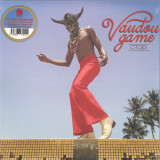
No one had been through those doors in years. Unchanged, seemingly untouched, just a Guard watching over it, one wondered whether the place would ever see the light of day again. Built in the 70s by Scotch, there were only twenty such places in the entire world. Twenty studios, all identical. Most had undergone a digital makeover in the 80s, but not this one; situated in Lomé, this studio had stayed true to its original form. Silent and uninhabited but waiting for one thing, and one thing only: for the sacred fire to be lit once again. That of the Togolese Recording Office, is studio OTODI for those in the know. Through thick layers of dust, the console was vibrating still, impatient to be turned on and spurt out the sound so unique to analog. That sound is what Peter Solo and his band Vaudou Game came to seek out.
The original vibrations of Lomé's sound, resonating within the studio space, an undercurrent pulsing within the walls, the floor, and the entire atmosphere. A presence at once electrical and mystical sourced through the amps that had never really gone cold, despite the deep sleep that they had been forced into. In taking over the studio's 3000 square feet, enough to house a full orchestra, Vaudou Game had the space necessary to conjure the spirits of voodoo, those very spirits who watch over men and nature, and with whom Peter converses every day.
For the most authentic of frequencies to fully imbibe this third album, Peter Solo entrusted the rhythmic section to a Togolese bass and drum duo, putting the groove in the expert hands of those versed in feeling and a type of musicianship that you can't learn in any school. This was also a way to put OTODI on the path of a more heavily hued funk sound, the backbone of which maintains flexibility and agility when moving over to highlife, straightens out when enhanced with frequent guest Roger Damawuzan's James Brown type screams, and softens when making the way for strings. Snaking and undulating when a chorus of Togolese women takes over, guiding it towards a slow, hypnotic trance. Up until now, Vaudou Game had maintained their connection to Togo from their base in France. This time, recording the entire album in Lomé at OTODI with local musicians, Peter Solo drew the voodoo fluid directly from the source, once again using only Togolese scales to make his guitar sing, his strings acting as channels between listeners and deities...