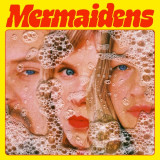
New Zealand indie trifecta Mermaidens, are set to make a resounding splash in the music scene yet again with the announcement of their fourth self-titled album and release of the project's first single ‘I like to be alone’. The trio, comprising of Gussie Larkin (guitar/vocals), Lily West (bass/vocals), and Abe Hollingsworth (drums), has been on an impressive journey of musical excellence, boasting three critically acclaimed albums, international tours, and a slew of accolades to their name. With a sound that is both bold and adventurous, Mermaidens' music is a testament to their unwavering creativity and relentless work ethic. Their upcoming self-titled album, a product of the band's tireless efforts between 2019 - 2022, promises to be a captivating sonic journey, delving into themes of self-awareness, introspection, long-term love, and even channelling political anger and frustration. Recorded mainly at Surgery Studios in Wellington, with the engineering prowess of Lee Prebble and produced by Samuel Flynn-Scott of The Phoenix Foundation fame, the album also saw the band stepping up their production game with Gussie and Lily working their magic with Protools in their DIY home studios, showcasing their growth and versatility as artists. “Working with Sam has really been a round-trip in our creativity,” as Lily explains, “we grew up listening to Sam’s early records and here we are getting the inside scoop on how to make that kind of magic. Listening to Pegasus today still transports me to a time when I listened to music on a Walkman. In the best possible way - sometimes it felt like we’d added an evil genius to the mix, we’d be working on a song and he’d come in like a mad scientist with fresh ideas to try.” To give fans a taste of the upcoming album's brilliance, Mermaidens have released new single 'I like to be alone.' The song has been part of the band's live repertoire for a while and explores the fulfilling contentment of being alone and the struggle to convey this sentiment to a partner. Its relatable lyrics capture the essence of cherishing solitude while navigating the complexities of human connections. Gussie's candid and honest approach to self-discovery is complemented by the song's, Michel Gondry inspired video, as Gussie explains: “The giant jean pocket and denim world were created by Hannah Webster, a textile designer and illustrator based in Wellington. Hannah took all the wild ideas for props and made them come true! I’m still in awe of how she managed to sew a 6x6 metre backdrop for the denim world out of whatever scraps she could find. The video captures our playfulness and sense of humour, and is a hint of what’s to come for the rest of the music videos. I love the way the story wraps up with the three of us together, literally playing “in the pocket”. Mermaidens' self-titled album will be released on Friday 3 November 2023 and is available for pre-order now. UK listeners will be able to pick up an exclusive Rough Trade vinyl pressing in transparent red, along with an A3 poster and jumbo bumper sticker. Having released their last two albums through iconic local label Flying Nun, Mermaidens will be released independently. Creative control is an important pillar for the band, who are hands on in every facet of their projects. Mermaidens gather their community close via their hugely popular multi-city boutique festival Mermgrown, hosting peers including Womb, Hans Pucket, Vera Ellen (Girl Friday) and Kōtiro from 2021 onwards. They've been invited to share the stage with Death Cab For Cutie, Sleater-Kinney, Gang of Four, Parquet Courts, Lorde and The Veils, and have toured extensively in Europe, the UK, and Australia.
quête:the connection
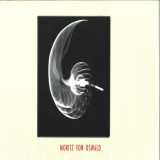
What are the differences and similarities between human and artificial sound, between oscillations generated by vocal cords and synthesizer voices, voltage amplified by speakers? On Silencio, his latest album for Tresor Records, Moritz von Oswald works with a 16-voice choir to explore this concept.
Drawing from the ensemble works of long-standing inspirations Edgard Varèse, György Ligeti and Iannis Xenakis, von Oswald and Vocalconsort Berlin delve into the space between sounds, creating a deeply textured collection that shifts between light & ethereal and
dark & dissonant.
As masterfully demonstrated in the early work of von Oswald and Mark Ernestus’ influential Basic Channel project, repetition and reduction are key elements here, much in the tradition of techno and minimalism. The vast dynamism of the human voice adds to the
profound weight of electronics while offering up a rhythmic source and sonic noise palette unexplored in von Oswald’s repertoire. In Silencio, von Oswald dredges a dank murk, pulling clouds over a distant pulse. It hangs, ready to take on new forms.
The compositions were written in von Oswald’s Berlin studio on classic synthesizers, such as the EMS VCS3 & AKS, Prophet V, Oberheim 4-Voice and the Moog Model 15. These abstract recordings were transcribed to sheet music for choir by Berlin-based Finnish composer and pianist, Jarkko Riihimäki and performed by Vocalconsort Berlin in Ölberg church in the city’s Kreuzberg district, only few metres down the road from where Dubplates & Mastering and Hard Wax opened their doors for music enthusiasts for many years so long. The recordings of the choral versions were then incorporated into the synthesized parts of the album and brought into anew electronic context; in Silencio, the focus is not on using one means to imitate the other, but to sonically discuss the tensions and harmonies between the two worlds and create a dialogue between them.
The relationship between von Oswald and Tresor Records goes back thirty years, all the way to Blake Baxter’s Dream Sequence in 1991 - which von Oswald engineered alongside Thomas Fehlmann. The collaboration with Fehlmann lived on, seeing the duo team up as 3MB with Eddie Fowlkes or Juan Atkins. More recently, the Detroit-Berlin connection continued as Juan Atkins & Moritz von Oswald present Borderland.
For von Oswald, Tresor Records and also the participating guest musicians of the choir, this release brings together audiences from other musical areas, cross-pollinating; Silencio is an album that stands for itself beyond the musical genre boundaries.
- A1: Mel & Tim - Keep The Faith
- A2: Impact - Sara Smile
- A3: Billy Paul - It's Too Late
- A4: Esther Phillips - I Hope You'll Be Very Unhappy Without Me
- B1: John Edwards - Tin Man
- B2: Roy Ayers - What You Won't Do For Love
- B3: Arnold Mcculler - Gringo
- C1: Richie Havens - Dreams
- C2: Brenda Russell - I Want Love To Find Me
- C3: Patti Labelle - Monkey See - Monkey Do
- C4: The Main Ingredient - Euphrates
- D1: The Isley Brothers - Listen To The Music
- D2: Dionne Warwick - Dedicate This Heart
- D3: Chaka Khan - Fate
- D4: Keni Burke - Love Is The Answer
lim. two color Vinyl. Gatefold Cover with sticker and download code on postcard.
Welcome Back, friends, to the Yacht Soul cruise that never ends!
This theme, explored at length in the previous installment of this series, is a fertile one that just keeps on giving, and give it certainly does on the tracks we have dug up for your perusal, enlightenment, edification and enjoyment on Yacht Soul 2.
For those just joining us, the concept here concerns R&B and soul artists mining the songbooks of their white contemporaries for cover versions that serve the dual purposes of potentially garnering some crossover radio airplay as well as introducing great songs to segments of the listening public who might otherwise miss them. Some of these versions might have come about because they were personal favorites of the artist in question, others might have been strongly suggested by their labels or by the publishing company, but all of them provide an entirely new perspective on what were already fantastic songs to begin with.
So there you have it--a further dig into this nebulous concept that reveals more unexpected connections and crossed paths. Understanding the hows and whys of the way these particular covers and collaborations came to be is as fascinating as just enjoying the music itself, and there really is a lot of great music to dig into this time around! We hope you enjoy listening to it as much as we did putting it together.
VITAL SALES POINTS:
- Second volume from the YACHT SOUL series. First volume is the second best selling "Too Slow To Disco" compilation so far.…
- Extensive Global Promo by Tobias Kirsch/Germany and Special Requests UK
- Record Relase Parties planned.
Yearly compilation album RADAR by KEROXEN returns with its fourth volume in the ongoing series of themed based albums showcasing the talents and misfortunes of carefully selected musical projects based or connected with the Canary Islands.
With its first volume released in 2020 aiming to promote and divulge adventurous Island based music, the Keroxen imprint now presents Vol.4 with another showcase of the various insular musical scenes made in the outermost regions – in this case, a very rare incursion outside the Canary Archipelago by way of handpicking friends and colleagues working in the further most regions we can think of. A very special showcase then, featuring the Azores Islands, Reunion Island, Canary Islands and French Guiana - a true connection of likeminded minds whom demonstrate once again that you do not need to be in an western hipster mecca to make interesting work.
The presentation format sticks to its breakable rules, with each artist offering one track per side and the full thing of course wrapped up in Pura Marquez dizzying post-tropical art.
The album opens with the Julee Cruise inspired project Akane by Tenerife’s Carolina Machado where synth arpeggios intertwine organically with her soothing voice, setting the tone for Reunion Island’s Jako Maron and his unique take on local Maloya music by way of electrifying it into a trance like looping beat. Enter French Guyana’s Daryanna Jean unique sound artistry with sampling, cutting and pasting local(?) sounds into a disorientating needle jump glitch fest. Side A eventually closes with a very Azorean take on the very English hauntological sound by borrowing those pastoral melodies and synth riffs of yesterday and transposing it to the remote Sub-Tropical fields of São Miguel island, in the Azores, courtesy of Flipping Candy.
Side B emphatically reinforces the compilation’s original concept that no matter where you are, in this post internet, post everything world, outsider music thrives and keeps raising the invisible bar, true that!
The band’s true skill, though, lies in how their instruments interlock, the structuring of movements that grow songs from rotted dirges to triumphant war cries, rhythmic tension building until a riff explodes it into something unexpected and completely satisfying. Notably, the band welcomes Andre Sanabria to take over vocal duties, “Andre has been a musical force in all his previous bands. His vocal intensity is compelling,” Howell says. Sanabria screams like he’s trying to tear the songs apart, though he manages to find moments of almost zen-like contemplation. It’s a deft and mesmerising performance, aided by his deeply thoughtful lyrics about, as Howell says, the steady dismembering of the things that bind us.Whilst the album is a depiction of people losing connection with each other, the shows that the band put on see their audiences coming together in catharsis and fighting back against this separation. In this case, hope inspires action - a knock-on effect of community through art.
Dark Hell Marbled[24,79 €]
Polluted Inheritance were a Dutch technical death
metal band, formed in 1992 with nods to bands
such as Atheist, Death, Hellwitch and Pestilence.
‘Ecocide’ was their debut album from 1993 and
‘Betrayed’ was their second full-length album,
originally released in 1996 by the legendary DSFA
Records label.
Both albums are now available on vinyl for the very
first time, on Dark Hell Marbled coloured vinyl or
classic black wax.
Tracklisting
‘Betrayed’
Forgotten Cause
Mental Connection
Elimination
Betrayed
Black Vinyl[21,43 €]
Polluted Inheritance were a Dutch technical death
metal band, formed in 1992 with nods to bands
such as Atheist, Death, Hellwitch and Pestilence.
‘Ecocide’ was their debut album from 1993 and
‘Betrayed’ was their second full-length album,
originally released in 1996 by the legendary DSFA
Records label.
Both albums are now available on vinyl for the very
first time, on Dark Hell Marbled coloured vinyl or
classic black wax.
Tracklisting
‘Betrayed’
Forgotten Cause
Mental Connection
Elimination
Betrayed
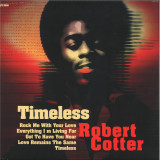
Worthy re-issue of Robert Cotter's second late 70's soul album! Comprising five songs, with four of them being quite lengthy and well-structured for the dance floor, was entirely recorded in the United States by top-notch American musicians. "Timeless", a fresh and lively expression of late 70s soul music, was recorded at the Sundragon Studio in New York. This studio was home to legendary bands such as Talking Heads and Ramones, as well as a few 'disco studio groups' like Andrea True Connection, Tony Valor Sound Orchestra, and Camouflage, who recorded songs that later became considerable hits. For this reason, it's believed that the positive outcome of the album can be partially attributed to Ned Liben, an eclectic New York musician and co-founder of the studio in the Flatiron district of Manhattan, served as an exhaustive interlocutor for any artistic and technical needs. He was also the arranger of "Rock Me With Your Love", the most significant song on the album. Ned's successful mission was to capture the maximum timbral fidelity of Robert Cotter's voice using appropriate recording techniques, assisted by Michael George Ewing, a talented engineer who had previously worked on similar projects with well-known artists like Carol Williams, Maryann Farra & Satin Soul, Touch and Tony Valor. In fact, the piece features original and melodious lines, coupled with an excellent steady rhythm, spanning approximately 8 minutes and 30 seconds - in short, "a delightful sound for every beat." This ensured that the performance of the young singer-songwriter from New Jersey was faithfully reproduced without neglecting the overall musical landscape. The other four songs, arranged by Ben Lazzaroni with the same musicians as the first piece, are no exception. Best Record also delivered on the promise to Robert's older brother, Karl Potter, a powerful percussionist transplanted to Rome, for whom the roman label produced "Sweet & Salty Cha-Cha-Cha" (12", 1986). Robert Cotter, an artist about whom almost nothing has been written, is poised to gain recognition once word spreads about his album, which has been entirely remastered by Dom Scuteri and features a more congenial tracklist. This album is destined to be truly 'timeless', ready to captivate audiences around the world. Even the new cover artwork, created by Nerina Fernandez, pays homage to an artist who, despite expressing himself with elegance and simplicity, radiates energy and exudes love. "Timeless" is an inevitable revelation for anyone who missed it at the time, and for the next 40-plus years, it will remain an absolute must-listen for Robert Cotter's many fans, leaving them all in awe. In addition to the reissue on the classic glossy black vinyl, a strictly limited edition on red vinyl will be released exclusively by Clone Distribution.
Worthy re-issue of Robert Cotter's second late 70's soul album! Comprising five songs, with four of them being quite lengthy and well-structured for the dance floor, was entirely recorded in the United States by top-notch American musicians. "Timeless", a fresh and lively expression of late 70s soul music, was recorded at the Sundragon Studio in New York. This studio was home to legendary bands such as Talking Heads and Ramones, as well as a few 'disco studio groups' like Andrea True Connection, Tony Valor Sound Orchestra, and Camouflage, who recorded songs that later became considerable hits. For this reason, it's believed that the positive outcome of the album can be partially attributed to Ned Liben, an eclectic New York musician and co-founder of the studio in the Flatiron district of Manhattan, served as an exhaustive interlocutor for any artistic and technical needs. He was also the arranger of "Rock Me With Your Love", the most significant song on the album. Ned's successful mission was to capture the maximum timbral fidelity of Robert Cotter's voice using appropriate recording techniques, assisted by Michael George Ewing, a talented engineer who had previously worked on similar projects with well-known artists like Carol Williams, Maryann Farra & Satin Soul, Touch and Tony Valor. In fact, the piece features original and melodious lines, coupled with an excellent steady rhythm, spanning approximately 8 minutes and 30 seconds - in short, "a delightful sound for every beat." This ensured that the performance of the young singer-songwriter from New Jersey was faithfully reproduced without neglecting the overall musical landscape. The other four songs, arranged by Ben Lazzaroni with the same musicians as the first piece, are no exception. Best Record also delivered on the promise to Robert's older brother, Karl Potter, a powerful percussionist transplanted to Rome, for whom the roman label produced "Sweet & Salty Cha-Cha-Cha" (12", 1986). Robert Cotter, an artist about whom almost nothing has been written, is poised to gain recognition once word spreads about his album, which has been entirely remastered by Dom Scuteri and features a more congenial tracklist. This album is destined to be truly 'timeless', ready to captivate audiences around the world. Even the new cover artwork, created by Nerina Fernandez, pays homage to an artist who, despite expressing himself with elegance and simplicity, radiates energy and exudes love. "Timeless" is an inevitable revelation for anyone who missed it at the time, and for the next 40-plus years, it will remain an absolute must-listen for Robert Cotter's many fans, leaving them all in awe.
There’s a connection between the musical history of the Mediterranean that can’t be explained through academia alone. It’s an expression of simultaneous grief and celebration that trespasses cultures and generations; and demands to be felt, or even better, danced, to be understood. The same spirit weaves Rebetiko from the ashes of the Ottoman empire to the heavy Hafla soundtracks on the Koliphone label in ‘70s Jaffa, or rebellious Turkish psychedelic music to the first generation of surf guitarist migrants in America. It's an infectious feeling that travelled and evolved wherever it was called, and that passion is embodied in “Back to the Taverna”, the new album by Berlin based bouzouki quintet, Cherry Bandora.
On the milestone of their third release, original members Liad Vanounou (Bouzouki) and Lorena Atrakci (Vocals) have bolstered their sound with longtime friends and collaborators Moshe ‘Moosh’ Lahav on Keyboards and flute, Tamir ‘Hassan’ Chen on Bass and Nimrod Lieberman on Drums to create an album celebrating the ecstasy of being able to drink and perform together again, freed from the anathema of the last years. The band has evolved considerably since their beginnings ten years ago as an Agean-influenced part of the local Balkan Swing scene; the most significant addition being the deployment of “The Hardest Working Man in Tropical Music” Alex Figueira as musical director for this album. His scorched fingerprints are unmissable throughout the extended psychedelic breakdowns and percussive overdubs that make “Back to the Taverna” such a dynamic offering.
Cherry Bandora have always been a very personal band; collecting songs from nearby cultures and history and blending them into their own experience by developing new arrangements or lyrics, just as musicians from those times would have. Lorena delights in expressing herself away from her mother tongue or providing modern lyrics for an updated feeling, as she does to the beloved Turkish standard, “Rampi Rampi”. In this interpretation she uses her native Hebrew in a saucy lockdown-delivery-guy romance... This track also features Baris Öner from local Turkish rock band Kara Delik on his signature flanging Saz.
Singing in Greek, English, Turkish and Hebrew was also a natural choice on the album, representing the “multikulti” area of Berlin that the band lives and records in. These languages would all be heard on the street as they walked to record in the analog Studio Wong in Kreuzberg.
“As descendants of Mizrahi Jews (Jewish migrants from non-European countries), growing up listening both to Beatles and Umm Kulthum, playing in jazz music departments in high school, and now living in Kruezkölln, we basically pay tribute and revive this shared heritage in the context of the global music scene of today” says Lorena.
The opening track, The Sound Of Baglama, is an interpretation of the anthemic Tsitsanis homage to the tavernas and sweethearts of Thessaloniki. It lays the ground for what to expect from Cherry Bandora’s exceptional live performances, featuring effortless switch-ups between surf rock choruses and laid-back verses dipping into Persian disco funk. This song will be accompanied by a tour-collage “found footage” style film clip in production at this
time.
Cherry Bandoras show their dedication to the bit with a rousing English version of the canonical rembetiko tune Dimitroula Mou. This amour song, popular with generations of female singers, is accompanied by real studio plate smashing, a ritual which sealed their final session for the album. 2 bonus tracks are included on the digital release, both a little more raw from the band’s home studio: the reeling dervish Rubi Rubi (which will be released as a second single with a video clip) and the emotionally dense and hypnotic slow burner Esý.
The album will be released digitally and on vinyl as a collaboration between Rebel Up Records (Belgium) and Rumi Sounds (Berlin) on Friday 3 november 2023 and is a prime example of what a raunchy, open minded and tireless bouzouki band can do as they hit their prime.
An extensive highlighted review will appear in Songlines magazine #135 December issue and the track ‘Benimde Canim Var’ will be featured on their free compilation. Also radioplay on Radio Campus France playlist (allover) during November and December.
Toy Machine skateboard's seminal 1996 video “Welcome To Hell” features a unique and progressive patchwork of skateboarders, most of which would become icons in their world, and helped redefine
what the modern skateboarding video could be. A young Joseph Shabason felt that impact. The acclaimed musician hit rewind on his VHS copy of “Welcome To Hell” hundreds of times in his youth,
each watch as thrilling as the last. That invigorating, improvisational, full-body experience of skateboarding is one that Shabason likens to jazz, where a shared language exists between the wheels and woodwinds. The way the skateboarder and musician command that language is what distinguishes them, adding definition to the mercurial concept of “style.” This connection becomes most apparent in collaboration; ensembles of skaters and musicians are a noisy, creative bunch.
Reflecting on this relationship and the Toy Machine classic would ultimately lead Shabason to wonder: what does hell sound like? The answer was a concept album that, like his previous records, lives in
the personal. One that, much like skateboarding itself, would push him to try something new: rescoring "Welcome To Hell". Out on October 20th, 2023.
Hannah White's searingly honest lyrical style and gift for adhesive melody
have had her gaining ever more momentum over the course of several
widely-praised albums
The last two were both recognised by the Americana Music Association UK, with
a nomination for her project with the Nordic Connections followed by a highly
popular win for UK Song of the Year in January 2023 with the moving, personal
Car Crash, from the About Time album. But Sweet Revolution is anything but a
push-button re-run of those achievements. With production by frequent live and
studio collaborator Michele Stodart of the Magic Numbers, these are songs that
take White into exhilaratingly new territory. They have the cohesive, multi-layered
excitement of a modern- day Fleetwood Mac, driven by earworm tunes and her
characteristically perceptive, soul-baring imagery.
Naarm/Melbourne-based soul artist and proud Noongar woman Bumpy presents her new single, ‘Return Home’, it illuminates the transportive nature of BUMPY, guiding the listener through a world in which vulnerability is strength and power is quiet but self-assured.
Described by Bumpy as an ode to home and “the people, places and connections that make us feel grounded and at ease”, ‘Return Home’ is propelled by stirring strings arranged by Aaron Wyatt, who recently marked history as the first Indigenous conductor of an Australian state orchestra.
In the 1950s and 60s, the blues was the dominant form of Black vernacular music throughout Texas and the surrounding areas In segregated neighborhoods, community members gathered in saloons, dancehalls, and each other's homes to hear their neighbors sing their stories of sorrow, heartbreak, jubilation, and triumph. Robert "Mack" McCormick, an academically untrained but fanatical devotee of the blues, stepped into this world and became one of its most devout advocates and documentarians. By photographing Black and Latino Texans and their neighborhoods, as well as recording and interviewing musicians, many of whom never stepped foot into a proper recording studio, McCormick endeared and eventually embedded himself into these communities. By the time he died in 2015, McCormick had amassed a collection of 590 reels of sound recordings and 165 boxes of manuscripts, original interviews and research notes, thousands of photographs and negatives, playbills, and posters. Because McCormick never published or released most of these materials, his collection became a thing of legend and intense speculation among scholars, blues aficionados, and musicians alike. 'Playing for the Man at the Door..' is the first compilation of music drawn from this fabled collection, which indelibly documents a pivotal moment in African American history. It features never- before- heard performances not only from musicians who became icons in their own right, including Lightnin' Hopkins and Mance Lipscomb, but also, crucially, performers whose names may be unfamiliar to even the most devoted blues fans and scholars. Newly mastered recordings and accompanying photographs bring to life many of these forgotten figures: offering insight into their lives and illuminating in new, enlightening ways their joys and anguish, deep social connections, distinctive voices, and cultural networks. The collection spans gospel, ragtime, country blues dirges, the unclassifiable music of George "Bongo Joe" Coleman, and more, showing that no community, no matter how tight knit, is monolithic. Accompanying the music is a 128- page book, which contains breathtaking photographs by McCormick and his associates, as well as contextual essays by producers Jeff Place and John Troutman on McCormick's life, and by musicians Mark Puryear and Dom Flemons on some of the marginalized communities throughout "Greater Texas" to which McCormick devoted his life's work.
Aho Ssan debuts on Other People with second solo album and book 'Rhizomes' featuring Nicolás Jaar, Moor Mother, Angel Bat Dawid, clipping., Blackhaine and more
Paris based composer Aho Ssan, the artist moniker of Niamké Désiré, presents his new full-length 'Rhizomes' on the Other People label following his debut LP 'Simulacrum' (2020) and collaborative record 'Limen' (2022) with fellow musician KMRU.
'Rhizomes' draws inspiration from a concept coined and developed between Gilles Deleuze and Felix Guatarri. The idea of an ever evolving structural model, constantly in motion and spreading out in all directions at once. It has no beginning and no end, but always remains in a middle, through which it grows and overflows.
"The root thought is the one that kills everything around itself while the rhizome is the root that stretches out to meet other roots," Désiré explains considering the works of French writer Édouard Glissant who addresses questions of identity, crossbreeding of cultures and its evolution.
Much like the name it borrows, Aho Ssan's 'Rhizomes' is a multimedia project that embarks on a myriad of disparate, unique musical and artistic partnerships. This piece adapts this concept to explore the influence of sound materials on creation, the appropriation of a sound object, and the collaborative nature of a composition that responds to modernity.
"Rhizome represents an underground stem system that fosters connections between various organisms and allows them to flourish collectively. It's an album that celebrates collaboration and brings together a diverse group of talented artists," Désiré continues.
Aho Ssan collaborated with a comprehensive cast of artists to create a musical rhizome including Nyokabi Kariuki, Josefa Ntjam, Blackhaine, Nicolás Jaar, Resina, R?n C?p ?uôi, Richie Culver, clipping., Lafawndah, 9T Antiope, James Ginzburg, Exzald S, Valentina Magaletti, Moor Mother, Angel Bat Dawid and Mondkopf. Cooperation and community are at the root of this project and the lens through which all the compositions can be understood through.
Aho Ssan will present 'Rhizomes' AV show together with visual artist Sevi Iko Dømochevsky at Berlin Atonal 2023. 'Rhizomes' received a Honorary Mention at Prix Ars Electronica 2023 Digital Music
Ouverture feat Nyokabi Kariuki
The Living Mountain is the second solo album from songwriter Jenny Sturgeon (singer and multi- instrumentalist in Salt House and Northern Flyway), recorded and produced by Andy Bell at Clashnettie Arts Centre in the Cairngorms National Park.
The Living Mountain is inspired by Nan Shepherd's book The Living Mountain and Jenny's experience growing up near, and walking in, the Cairngorms. In the album Jenny explores her own connection to this highland area as well as delving into Nans philosophy of being in the mountains and peoples connection to the wild.
The twelve songs take inspiration from the chapter titles of Nans book; the lyrics tell of exploration, love, loss and wonder at the natural world from small scale mosses and moths to the wider landscape and ecosystem.
The album features Mairi Campbell on viola and vocals, Su-a Lee on cello, Grant Anderson on bass and vocals, and sound recordings from Jez Riley-French and Magnus Robb.
- A1: The Connection Machine - Echoes From Tau Ceti
- A2: Direct Movement - Natural Chemistry
- A3: Paradise 3001 - Surfin The Cuban Waves
- B1: Exquisite Corpse - Strange Attractor
- B2: Orlando Voorn - Still
- B3: Nyx - Delphi (Rewaxed)
- C1: Stefan Robbers - Afridisiac (Jumpy Mix)
- C2: Fluxland - Fluxland
- C3: This Side Up - Glider
- D1: Georgio Schultz - Trance
- D2: Quazar - Cycle Drops
- D3: 2000 And One - Crystal
Vol.2[25,17 €]
Through 35 hedonistic highlights stretched across three volumes, Music For The Radical Xenomaniac delivers the first ever deep dive into The Netherlands’ colourful house sound of the 90s and the under-celebrated producers and record labels whose music soundtracked a countrywide cultural movement.
Plenty of books and documentaries have celebrated the riotous raves, legendary clubs, high profile DJs and promoters who shaped The Netherlands’ hedonistic house scene throughout the 90s. Music For The Radical Xenomaniac dares to challenge these narratives by shining a light, for the first time, on those who created the scene’s kaleidoscopic, game-changing and globally influential soundtrack.
Leading the charge were a disparate group of key creators who not only forged links with their counterparts in Detroit, Chicago, New York, Belgium, Germany and the United Kingdom, but also became celebrated figures on the worldwide electronic underground (Eric Nouhan, Aad De Mooy, Orlando Voorn, Stefan Robbers and Steve Rachmad). Alongside key underground imprints (Stealth Records, Basic Energy, ESP, Prime and Outland Records included) and lesser-known producers, these pioneers gave flavour to a radical musical movement via open-mindedness, unheard-of creativity and a genuinely futuristic ethos. All of these artists and labels are represented throughout the series.
So, what defined this hedonistic house sound from The Netherlands? Stylistically, it was varied – as the series so emphatically proves – but was defined by a set of distinctive sonic characteristics: emotive musical motifs, high-frequency synth sounds, mellow basslines, pulsating rhythms and more than a touch of hallucinatory intent.
Volume 3 is packed with in-demand tracks and hard-to-find gems, including a previously CD-only cut from Dutch techno originator Orlando Voorn (1999’s ‘Still’), a genuine rave classic from The Hague by hardcore DJ Charly Lownoise as Fluxland, and a killer cut from prolific producer – and genuinely influential pioneer – Aad De Mooy AKA D-Shake. He’s represented on this volume by Paradise 3001 cut ‘Surfin The Cuban Waves’, which first appeared on ESP Records in 1993.
Other highlights include Direct Movement’s ‘Natural Chemistry’, a sought-after slow house cut produced by Dennis Buné, who had an enormous impact on the Dutch house scene as Jaimy, and ‘Delphi (Rewaxed)’ by NYX, a highly regarded and hard to find single from former new wave and synth-pop producer Bart Barten, and occasional studio partner Hanz Meyer.
Packed full of forward-thinking 90s gems remastered for today’s dance floors by Alden Tyrell, Music For The Radical Xenomaniac Volume 3 is a life-affirming celebration of a distinctly Dutch musical movement, whose rich textures and melodies are still inspiring new generations of DJs and dancers today.
Prolific producer Stu Bangas is back with a new collection of hard-hitting collaborations on Death Wish (Part II), the much anticipated sequel to the 2021 original. The project finds the Boston beatsmith rocking with some of his favorite emcees of all time as well as familiar names who always seem to bring their best work to his instrumentals.
For Stu, it’s an honor to work with the likes of Ras Kass and Psycho Les (of the Beatnuts). He made the connections while creating the phenomenal Empires LP with Eric Bobo (of Cypress Hill), and it led to the bangers you hear on Death Wish (Part II). The track with Ras, “Sus,” is an equally hilarious and hardcore takedown of weak-willed phonies, while Psycho Les teams with Celph Titled for the gangster-but-lighthearted “Y’all Clowns.”
“I grew up on all the Beatnuts albums, my whole group of friends loved them,” Stu says. “And Soul on Ice by Ras Kass? That’s a certified classic for any hip-hop head.”
LP Edition of 300 copies in Matt Laminated Sleeve with Black paper Innersleeve.
Ab'bhau's debut album was forged in fire in the year 2018 after mysterious live apparitions and rehearsal sessions. The aim behind this first exploration was void invocation, void materialization. The project is formed by established musicians of the Spanish underground noise, experimental, and metal scene. Connections to bands and projects like Black Earth, Suspiral, Inhumankind, Phicus, Triple Zero, Gárgara, or Sudaria can be traced. The ritualistic essence of this artistic incarnation is based upon the rupture of repetitive patterns through improvisation as a medium to convey abject forces into the shape of what the band has called 'Black Metal Destruktion', stemming Heideggerian terminology. A form that appears to disappear or to be registered, but impossible to reproduce. Even though the recordings vary on the album formats, they are the same album, the same whole, the same essence... exhaled through three different forms of sonic manifestation. Artwork by Heresie Studio.
A captivating work of impressionistic memories, observations and intimate confessions, Ebony wrote her debut self-titled solo album while coming into prominence as an in-demand portrait photographer within New Zealand’s contemporary literature and independent music scenes. The release comes five years after her alt-country band, Eb & Sparrow, amicably parted ways in 2018.
Recorded on vintage analog studio gear and mastered to tape, EBONY LAMB finds Runga and Nielson placing Ebony’s distinct, fragile-but-firm voice within a cinematic confluence of jazz, folk, psychedelia, alt-country and ambient pop. Written over the last five years while coming to terms with the realities of a changing world, themes of gratitude, loss, acceptance and aspiration run through the album like a river, especially in the nocturnal groove of ‘My Daughter My Sister My Son’ and ‘Brother Get Me Home’.
From the album’s opening notes, Ebony expresses herself in non-judgmental terms, singing with a raw tenderness that draws listeners into her reflections on friendship (‘Drive Me Around’), the complexity and contradictions of success (‘Successful Feelings’), and connections in seemingly hopeless moments (‘Come, Put A Record On’). Yet while her songs can feel like she’s sitting just across from you, Runga and Nielson’s production imbues them with an expansive sensibility. Spare, vivid and moving,
EBONY LAMB is an album that captures a defining artistic leap from a talented artist coming into her own. Singing to herself and the listener, she implores us to continue reaching forward without losing sight of what we have and the elements of our lives that truly matter.
Tallahassee, FL singer-songwriter Sarah Morrison's debut studio album
Attachment Figure depicts the strangeness of exploring new
relationships with subtle and spacious electronic production - As a
former live keyboardist in Locate S,1, Morrison co-produced Attachment
Figure with fellow bandmates Ross Brand and Clayton Rychlik, both of
whom also play in Of Montreal's backing band
She was motivated to experiment with looser song structures and more
unconventional chord progressions by her collaborators' fondness for avantgarde jazz, as well as Locate S,1 frontwoman Christina Schneider's idiosyncratic
writing style.
Throughout the album, echoing keys, woodwinds, and guitar ripple like a moonlit
lake from which Morrison's voice emerges. Her presence is spectral, yet
conversational, willing to conjure concrete imagery of mango- flavored vitamins
and the warmth of phone chargers alongside ghost stories of mannequin corpses
and epistolary curses, a balance shaped by an obsession with the theatrical
sincerity of Kate Bush and Mark Hollis.
Lyrically, Attachment Figure meditates on questions about identity, personal
growth, and helplessness - whether within a relationship or the oppressive
structures of society itself - often rooted in Morrison's experiences growing up in
the South. "There's a connection between Southern hospitality and femininity and
just allowing things to happen," Morrison says. "I've been in many relationships
with people who have used that 'southern charm' to their advantage. I think a lot
of people, non- men in particular, put on this charm instinctively. It's a defense
mechanism that I was interested in studying."
Attachment Figure is perpetually suspended between states of being, harmony
and dissonance, and contradictory sentiments we all hold as we enter into the
arms of someone new, but ultimately, it's guided by a desire for authentic love--
and a flair for intricate, intuitive songcraft.
For Volker Bertelmann, aka HAUSCHKA, music is not solely about its sound, but also a means to facilitate the exchange of ideas and foster meaningful interactions between individuals, revealing his fascination with human connection and engagement. Despite being known for his distinctive prepared piano sound, the Academy Award-winning composer intentionally named his 15th solo studio album PHILANTHROPY to express his compassion and openness. The album's song titles, such as "Diversity," "Nature," "Loved Ones," and "Altruism," perfectly align with their respective musical compositions. HAUSCHKA's albums often serve as a platform to provoke dialogue on specific themes, and PHILANTHROPY follows this pattern, aiming to offer optimism and energy in response to the challenges of recent years. The album combines upbeat and pensive pieces, featuring moments of joy, introspection, and peaceful interludes. Overall, PHILANTHROPY showcases HAUSCHKA's compositional prowess and serves as a gift that sparks reflection and celebration.
OVERVIEW: This is essential. We don't just refer to the album title: this new record by multi-instrumentalist and producer Thysenterprise is essential material for lovers of spiritual jazz with a hip-hop edge. As described in the liner notes: "The spirit of Pharoah Sanders, Archie Shepp, and Coltrane permeate the music here. At times, Thysenterprise and his guests meld the influence of the great jazz cannon with the rhythms of hip-hop."
'ESSENTIAL' moves with ease from spiritual sounds to hip-hop-infused head nods. The liner notes by writer John Morrison perfectly encapsulate the type of sonic trip you're in for: "While the improvisational heights that Thysenterprise and crew reach throughout the album owe a debt to hardbop and the avant-garde, there are beats and textures here akin to the work of Karriem Riggins or A Tribe Called Quest. The result is a truly contemporary sound that plays freely within the depths of human feeling."
'ESSENTIAL' is by far Thysenterprise's most personal album to date. From beginning to end, he pays a heartfelt tribute to his late father. The artist revisits and rearranges melodies from iconic jazz records that formed a profound connection between the two of them. Throughout the album, there are nods to songs that were essential for Reinier's musical upbringing. It shows that the saxophonist plays with heart and doesn't shy away from expressing grief and loss. Or as stated in the liner notes: "We play for pleasure, we play to understand ourselves and the world around us, we play to celebrate and remember our loved ones."
Renowned Dutch alto saxophonist Benjamin Herman joins Thysenterprise for intimate call-and-response on "Feedback of Silence." Next to that, Michael Moore graces "Happiness Is a Memory" with a heartfelt bass clarinet solo. Moore is part of the Han Bennink-founded ICP Orchestra. It's safe to say that Thysenterprise builds on that rich lineage of improvisation, playfulness, and distinct originality. On 'ESSENTIAL,' he takes that to new heights. The album comes beautifully packaged as a gatefold 2LP with vinyl-exclusive alternate takes on the D-side.
Channeling the speed of youth and the heaviness of a fleshy, lived life in equal proportion, Upchuck’s second LP, Bite the Hand That Feeds, is a Trojan Horse par excellence, craftily smuggling in waves of sentimental emotion and clever pop songwriting under a veil of pulsing rhythms and scorching riffs. What binds Upchuck together is a purity of intention, an organic loyalty to a thick knot of uncalculated friendships, struggles, and desires. These are songs about the joy of continuing to live, songs that find each other in the rush of a crushing reality, propelling the listener onward towards a collective release, however brief it may last. Themes of surviving through the night, youth-blinded love, cheap champagne soaked back-alley parties, and chaotic street protests are subsumed under a single unifying thread: the needs we have for one another, our shared hunger for connection. In a world saturated with arbitrary rules and paper-thin moralism, Upchuck offer free¬dom through sensation, a type of unserious transcendence found through the swirl of bodies melting into one another in the passion of dance. With Bite the Hand That Feeds, Upchuck isn’t trying to tell anyone how to live. Rather, they are simply trying to find a way to make life more worth living for both themselves and their friends—if the music compels you to move, you might as well consider yourself their friend too. Shortly after the release of their debut album Sense Yourself, Upchuck absconded to Southern California to record Bite the Hand That Feeds, enlisting the production talents of Ty Segall and the airy reprieve of his secluded Topanga Canyon home studio. Upchuck credits Segall, who recorded the entire record live to tape over the span of five days, with helping to elevate the arrangements of their second record to bold new heights—fans of Segall’s extensive catalog will undoubtedly recognize the shadow of his creative touch in Bite the Hand That Feeds’ commanding, layered drum polyrhythms, tasteful use of oddball effects, and fuzzed out, every-guitar-pushed-into-the-red ethos. All the same, final credit for Upchuck’s evolution from Sense Yourself to Bite the Hand That Feeds must be paid to the band itself. Following the release of their debut LP, Upchuck embarked upon a break-neck string of live shows, touring alongside the likes of Segall’s Fuzz, Amyl and the Sniffers, Negative Approach, OFF!, and Sub¬humans. The razor tight focus of Bite the Hand That Feeds was forged in the fire of these live shows, speaking directly to the power of their in-person presence—these are songs meant to be heard pressed up against a barricade, blasted through dimed guitar amps placed so close to your ears that you can practically reach out and touch them. In its totality, Bite the Hand That Feeds offers a sonic portrait of what it feels like to be young and caught up in the thrill of it all, coursing between ripping dance grooves and thundering dirges, anti-self-serious crowd anthems and charming pop hooks.
Nouveau Départ is the eighth album from Bordeaux-based composer Franck Zaragoza and his electronically focused Ocoeur eponym.
Zaragoza's recent Ocoeur collections have focused on personal introspection as a solid thematic basis, and Nouveau Départ continues an arch that began with 2021's Connection. In recent years, Zaragoza began practicing attentive mindfulness, consciously focusing on his connection with the world, believing that happiness is attainable in the moment and not something that is only fleetingly tangible in the future. Zaragoza comments, "We can all transform our emotions from anger and sadness to happiness and compassion. Such a transformation in thought can profoundly affect the people around us. Nouveau Départ was composed in the spirit of love, empathy, and deep understanding."
Nouveau Départ is an aural representation of this kind of mindfulness and could be viewed as a soundtrack to foster feelings of humanity and thoughtfulness for those around us. Beginning such consideration is the start of a journey, and Nouveau Départ is a great companion for such passage.
Fantastic Twins, the ongoing project of Julienne Dessagne, is a sonic exploration of dual characters born from one distinct perspective. A producer, songwriter, and acclaimed live performer, Dessagne has spent the last decade sculpting a unique world.
On an ambitious new album entitled ‘Two Is Not a Number’, Dessagne immerses herself more fully than ever in the concept that inspired her artist name, exploring the entwined lives and fates of her imaginary twins, their schizophrenic dreams, small dramas, and big tragedies - a metaphor for our own psyche, our inner conflicts, and our relationship to others and otherness. These musings on the psychological, emotional, biological, and metaphysical qualities of Twins are expressed with assured clarity, using a palate of icy deep techno, eerie atmospheric soundtracks, tranced-out dark wave, and synth pop-noir. Whether through airborne dancefloor ascension, diamond hard rhythms, electronic thundercracks, or empathy drenched vocals and the palpable sense of unease, this standout album brings Dessagne’s powerful, affecting art into sharp focus.
I Was First takes listeners to the Fantastic Twins’ origin, a vocal transmission from within a sonic womb, as our protagonists prepare to emerge. Sisters at Odds sees our siblings emerge incongruous and freshly awoken to life’s absurdities in slow-motion. Suspensefully, the percussive heartbeat of Land of Pleasure Hi Fi wrings tension from numerology, blossoming into a scorched industrial ballet, a mirage of multiplicity.
Following the gothic connection of Master & Disciple, Silver Moon Dial incants a trance-like state that captures the physical energy of Dessagne’s live show, as Fantastic Twins take advantage of ‘putting the moon on speed dial.’ Euphoria soon splinters into tragedy with Twins Can’t Love, extracting unexpected melody and melancholy in brittle, IDM tinged electronics, beautifully tangled with Dessagne’s longing intonations.
From Above sees Dessagne’s vocals once again shift into a new form for a haunting interpretation of something approaching a ballad, echoing around a chamber from which the Twins have seemingly disappeared. Ultimately All of This is Resolved, both in title and form, within this album’s cathartic yet uneasy conclusion. Dessagne sends the siblings home at last... But what will we find if we follow?
Part Two of the Album "Let Me Dance"
Oliver Marquardt aka Dj Jauche, one of the avant-gardists and pioneers of the Berlin techno and house scene, releases his new album "Let Me Dance".
During the last 3 years, he has incorporated influences and experiences from over 35 years - as a DJ, event organiser and clubber - into his album.
The idea to produce this album was born in the lock-down and with it the desire to make people dance again - house music, in all its facets.
New The Hague based recordlabel Otherminds is landing with their first ever release ’Symbolic Language’, from local cosmox.
From day one OTM witnessed his obsession for electronics. Manifested by throwing countless raves, playing otherworldly dj-sets, co-running an atomic studio bunker & label and making mind-bending music. Now it’s time for his solo vinyl debut.
The 5-track EP is a blend between IDM, ambient and techno influenced pieces. A story which symbolizes a deeply shared connection and a transformative period in which the producer expands his palette further into the sonic realm.
RIYL: The Fall, Royal Trux, The Dead C, Shirley Collins, ’70s British progressive rock, Dean Blunt.
Throughout their legendary, decade-long run, the Shadow Ring were an enigmatic force on the international musical sub-underground. Before their disbandment in 2002, this shambolic rock outfit, formed by a group of rowdy teenagers in southeast England, left behind a mighty run of eight LPs, a handful of 7"s, and a spate of raucous live shows and cryptic zine appearances on both sides of the Atlantic, all which have bolstered their enduring word-of-mouth mystique. Beginning this year with the first-ever vinyl pressing of the self-released pre-Shadow Ring tape The Cat & Bells Club (1992), Blank Forms Editions is conducting a systematic retrospective of the storied group, including a multi-year LP reissue effort and a forthcoming comprehensive CD box set and an over five hundred page book. Recorded in summer of 1994 at S.H.P studios (frontman Graham Lambkin’s parents’ home), the group’s sophomore record Put the Music In Its Coffin is a more sinister, saturnine affair than their debut City Lights. Coffin was many listeners’ introduction to the Shadow Ring, who had hitherto self-released their music, courting a steady stable of international fans through the magazine and mail-order catalog Forced Exposure. For their follow-up, the duo reached out to the ascending Philadelphia label Siltbreeze, whose eclectic roster of sneering, low-fidelity rock and noise connected disparate subterranean scenes from rust-belt America to the English Midlands, Dunedin, and beyond. As luck would have it, Siltbreeze proprietor Tom Lax was already a fan of the band’s first record and arranged to release both a 7” and their “difficult second album.” The connection proved to run deeper than vinyl within six months, Lax would pick up the pair from the airport for their spring 1995 US tour. This episode marked not only their first trip to the States but their first live performances at all, formally introducing the Shadow Ring to the American underground and solidifying the allure of the Folkestone pair. From the get-go, the record has a menacing, vile ambience. Its opening track “Horse-Meat Cakes,” inspired by an anecdote by pulp author Philip K. Dick about how he and his wife subsisted off low-grade pet food when he first arrived in San Francisco, sets the tone lyrically and sonically. Subsequent tracks are filled with Rabelaisian body horror and sinewy, haptic diction. “I try to pass out vital organs, convinced that they are waste,” intones Lambkin in “Heart, Liver & Lungs,” before a chorus of detuned guitars kicks in, nearly drowning out the speaker’s account of consuming chevaline intestines. Later songs similarly detail vernacular cooking (“Caribbean Porridge,” about a cornmeal hangover cure), bodily processes (“Nocturnal Middle Rumbles,” about nighttime defecation), and creaturely conflict (“Crystal Tears” and “Spin The Animal Dial”). The album’s makeshift percussion and teenaged rawness resembles the verve of City Lights, while its screeching strings and gnarly distorted vocals give it a sparse, miasmic atmosphere that look towards the uncompromising, otherworldly experimentation of the band’s Hold Onto I.D. (1996) and Lighthouse (1997), making this one of the Shadow Ring’s most distilled musical statements
Returning fresh off of his last project 'Goes On EP', Darone is back with another 12". This time, his project pays homage to two places which he calls home. A juxtaposition of his birthplace, Los Angeles, and where he feels a strong connection, Armenia. The A-Side features 'Dance of the Sun Worshipers', which was written with the petroglyphs of Ughtasar and the Armenian Stonehenges of Syunik in mind. The henges in question were set as an astronomical observation tool to view the Milky Way Galaxy by the ancient natives of the land.
Parts of the petroglyphs have carvings of beings dancing around a wheel of fire. A representation of the Sun or early signs of the Armenian Eternity Wheel. The B-Side features 'Far Away' by Sassounian and a remix of the same track by Byron The Aquarius. Far Away was written at the height of lockdown, with a local collective of the same name in mind.
Operating as a cassette label, mixtape series, and party, Far Away was based in Los Angeles, run by Cooper Saver and Jen Ferrer. Darone would frequently attend their events in Los Angeles and find comfort in a community that he can call home. On remix duties, Byron The Aquarius delivers a raw and chuggy tip to Darone's track, 'Far Away'. A dub of the original, Byron programs this one into a full and thick driving force for the dance floor and the heads. This is Rocky Hill.
Introducing the eagerly awaited second instalment of Fabio's meticulously curated collection of liquid Drum & Bass classics - 'Generation Liquid.'
Fabio, a true legend in the music industry for over three decades, kickstarted his illustrious career as a Pirate Radio DJ in the mid-80s. Throughout the years, he masterfully evolved his style across various musical genres, ranging from Dub and Hip Hop to House, until he ultimately solidified his position as one of the pioneering forces behind Jungle and Drum and Bass. Fate played a remarkable role in Fabio's extraordinary musical journey. Serendipitously, he landed a pivotal spot on the pirate radio station Phase One, all thanks to a connection through a close friend. This opportunity allowed Fabio to showcase his raw talent and hone his early skills. As destiny continued to guide him, Fabio formed a powerful partnership with Grooverider, and together, they soared to fame, headlining numerous major outdoor raves and orbital M25 parties during the late '80s acid house boom. The duo's magnetic presence and innovative sound captivated audiences, setting them apart as trailblazers in the electronic music scene.
As club culture blossomed, Fabio and Grooverider became the distinguished residents at the iconic club night RAGE, hosted at Heaven in the heart of London. Their influence was immense, as they were credited with moulding the early Jungle sound and orchestrating the world's first-ever weekly Jungle night. Fabio's unwavering passion and dedication to music have not only left an indelible mark on the industry but have also inspired countless aspiring artists. His boundless creativity and willingness to push the boundaries continue to shape the ever-evolving landscape of electronic music, solidifying his status as a true pioneer and a living legend.
After the Jungle scene declined and underwent a distinct shift in sound and style, Fabio took the initiative to establish London's first dedicated soulful deep Drum and Bass night, known as Speed. Week after week, Fabio shared the decks with LTJ Bukem, and their skilful sets eventually garnered immense popularity, drawing in not only junglists but also celebrities, club kids, record label A&R representatives, and the who's who of the West End at that time. When the curtain fell on Speed Fabio's legacy continued to flourish with the inception of his legendary Swerve weekly residency at The Velvet Rooms, which later relocated to the iconic club, The End. The influence of Swerve was profound, serving as a catalyst for the creation of influential labels like Hospital Records, Tony Coleman (also known as London Elektricity) became a regular attendee, further contributing to the scene's growth and innovation.
The term 'Liquid', was born out of Fabio's deep admiration and support for his protégé, the talented Northern Irish producer and DJ, Dominick Martin, famously known as Calibre. This inspiration led to the creation of his acclaimed 14-year radio show on BBC Radio 1, 'The Liquid Funk Show', which drew from Calibre's masterful productions that Fabio likened to "liquid gold" for the ears. Through this show, Fabio played a crucial role in breaking numerous iconic records, and artists such as Chase & Status, High Contrast, and many many more.
Now, 'Generation Liquid' takes the baton from the legacy of Speed, Swerve, and 'The Liquid Funk show', capturing the essence of the era and the soulful, deeper music that Fabio has championed throughout his illustrious career. This meticulously curated collection celebrates records that embody the spirit of soulful D&B, making it a must-have for anyone who has followed Fabio's musical journey since the vibrant days of the 1990s up until now.
The second volume of this immersive exploration into the soulful realm of Drum & Bass is just as indispensable as its predecessor. It boasts a curated collection of rarities, timeless classics, and straight-up anthems from the vibrant liquid D&B scene. Esteemed artists such as DJ Marky, Calibre, Calyx & TeeBee, and dBridge all contribute to what is undeniably becoming a seminal anthology of the subgenre. The track selection and seamless programming are expertly guided by none other than Fabio himself, providing listeners with a nostalgic glimpse into the electrifying atmosphere of being right on the dance-floor at iconic events Speed and Swerve.
- A1: Intro (0 43)
- A2: Beware (3 07)
- A3: Super Lyrical (3 24)
- A4: Taster's Choice (Skit) (1 20)
- A5: Still Not A Player (3 54)
- A6: Intermission (0 21)
- A7: The Dream Shatterer (3 30)
- B1: Punish Me (4 20)
- B2: Pakinamac (Part 1 - Skit) (1 33)
- B3: You Ain't A Killer (4 14)
- B4: Pakinamac (Part 2 - Skit) (0 55)
- B5: Carribean Connection (3 15)
- B6: Glamour Life (4 49)
- C1: Capital Punishment (4 14)
- C2: Uncensored (Skit) (2 16)
- C3: I'm Not A Player (3 34)
- C4: Twinz (Deep Cover 98) (3 45)
- C5: The Rain & The Sun (Interlude) (1 44)
- C6: Boomerang (3 36)
- D1: You Came Up (3 47)
- D2: Tres Leches (Triboro Trilogy) (4 18)
- D3: Charlie Rock Shout (Skit) (0 23)
- D4: Fast Money (3 48)
- D5: Parental Discretion (4 35)
'Capital Punishment is the debut studio album by Puerto Rican rapper Big Pun, released by RCA Records, Loud Records and Fat Joe's Terror Squad Productions. Released on April 28, 1998, it is the only album released during his lifetime and was regarded as "super groundbreaking" upon release. The album peaked at number five on the Billboard 200 charts and number one on the Top R&B Albums chart for two weeks. It was nominated for Best Rap Album at the 1999 Grammy Awards. Ltd double Black LP Vinyl
Zum 25-jährigen Jubiläum von Big Puns legendärem Debütalbum "Capital Punishment" erscheint diese 2xLP-Edition auf schwarzem Vinyl. Das ursprünglich 1998 veröffentlichte Album etablierte Big Pun als einen der begabtesten Songschreiber in der Geschichte des Hip-Hop und zeigt seinen unglaublichen Flow und seinen brillanten Wortwitz. Durch die Zusammenarbeit mit Hip-Hop Schwergewichten wie Fat Joe, Inspectah Deck und Busta Rhymes enthält "Capital Punishment" einige der kultigsten Hip-Hop Tracks, darunter "I'm Not A Player", "Twinz (Deep Cover 98)" und "You Came Up".
- 01: Theme From The Friends Of Eddie Coyle
- 02: Mr Connection
- 03: Guns To Artie/Artie Examines The Guns
- 04: Partridge Robbery/Take A Walk
- 05: Jackie Meets Pete And Andrea (Mr Connection)
- 06: Clean Cut
- 07: Baylis Robbery
- 08: Shopping Center (Mr Connection)
- 09: The Stakeout
- 10: Whalen Robbery
- 11: Eddie Is Hit
- 12: Friend&Apos;S Requiem/End Title
- 13: Mr Connection (Alternate)
"The Friends of Eddie Coyle" may not be Dave Grusin's best known or most celebrated score but, like both book and film, it's a quiet classic." David Toop
Dave Grusin's cult funky soundtrack for Peter Yates' 1973 superb crime movie, 'The Friends of Eddie Coyle,' was never released at the time. It is finally out 45 years after for RSD 2018 on Wewantsounds, remastered from the original tapes with one bonus alternate take and featuring a new essay by leading UK writer and musician David Toop. Housed in a beautiful gatefold sleeve, the release also features a stunning cover by highly sought-after Alternative Movie Poster illustrator Oliver Barrett.
[m] 13: MR CONNECTION (ALTERNATE) [BONUS TRACK]
'New World Artifacts' is the debut album from Rouen, France-based group Unschooling, arriving following their 2021 'Random Acts of Total Control' EP and 2019's 'Defensive Designs' tape. Out October 6th via Bad Vibrations, it's a collection of lo-fi post-punk clocking in at 30 minutes, underscored with subtle pop melodies and structures but never far away from bouts of chaotic no-wave dissonance. Here, Unschooling claim loud and clear their desire to return to a sound which is less calibrated, less obvious. As they themselves write, "New World Artifacts is an ode to the unexpected, a tribute to many art rock bands who are always where you least expect them." Already heralded as one of the most exciting up-and-comers in the new school of post-punk revivalists, having spent the last couple of years playing to busy crowds and festival fields across the continent, 'New World Artifacts' might just mark them out as the best in class. The Unschooling quintet, as referred to on the album's collage artwork, is made up of Vincent Fevrier (Vocals/Guitar), Damien Tebbal (Bass), Paul Morvant (Guitar), Marc Lebreuilly (Guitar/Synth) and Thomas Fromager (Drums). Although their music might revel in discord, it is a calculated one. The musicianship is complex and meticulous, hardened by their time spent together playing on the road. For 'New World Artifacts', additional musicians were also brought in to expand the sound in new ways, including saxophonists Levi Gillis (The Dip, Beat Connection) and Emeline Morisset (Les Agamemnonz), and Kyleen King (Stephen Malkmus & The Jicks, My Morning Jacket) on strings. Pressing Info: 180g blue vinyl, limited to 300 hand-numbered copies ww, download card included.
- Want Fi Goh Rave
- It Noh Funny
- Sonny's Lettah (Anti-Sus Poem)
- Independent Intavenshan
- Fite Dem Back
- Reality Poem
- Forces Of Vicktry
- Time Come
- Want Fi Goh Rave (Ext.) 12” Single Version
- Funny Dub
- Iron Bar Dub
- Brain Smashing Dub
- Reality Poem (Ext.) 12” Single Version
- Victorious Dub
In 2003 David Bowie included Forces of Victory in a list of his 25 favourite albums – Confessions of a Vinyl Junkie…
“… some of the most moving poetry to be found in popular music. The quite achingly sad “Sonny’s Lettah (Anti-Sus Poem)” is alone worth the price of admission … this must be one of the most important reggae records of all time. I gave my original copy just recently to Mos Def, in whom I see connections to Johnson, thinking I had already got it on CD. Dammit, I haven’t. So now I’m searching high and low for a copy”
A musician's life becomes a patchwork of places and fleeting connections. Playscapes is an inner journey from Estonia to Sweden, Finland, England and Japan. Staking out new territories for the accordion and redefining Tuulikki Bartosik as an innovative composer.
- A1: Dual To The Death (Outro)
- A2: Tinkerhatfield
- A3: Me Love Me A Lot
- B1: Tanoy
- B2: Slowchain
- C1: Hense The Name
- C2: Remains
- D1: Tubular Heaven
- D2: Acidjamprophet12
- E1: Made Up Reality
- E2: Drag A Friend
- E3: Ibogastomp145
- F1: Life Is A Glitch And Than You Die
- F2: Kaal Ii9
- F3: Gums
- G1: Intentionally Beat
- G2: Daydreamdenhaag (070)
- H1: Bubbles (Korrel - P155)
- H2: Dlpfc
- I1: The Memory Palace
- I2: Sensed
- J1: Onehundredand64 (Ft Spekki Webu)
In a realm where the threads of fate intertwined with the tapestry of existence, there existed a timeless construct we call “MENG”. This transcendental domain pushed a sanctuary where an unholy wisdom was safeguarded. Within its twenty-two walls, the experiences of countless sages and seekers resided, forming a reservoir of enlightenment, of vision and of identity.
Among the enigmatic texts that adorned the shelves of The Memory Palace, one stood out—the "Tubular Heaven," a chapter that held the essence of the universe's patterns and transformations. The book we speak of is the Book of Change - I Ching. Legend has it that the Memory Palace embodied the vibrations of those who sought its wisdom, guiding them to the Slow-Chain’s pages where hexagrams unveiled the secrets of existence.
Amidst this cosmic dance of knowledge, there lived a young wanderer whose name we do not say out loud. Driven by a deep yearning for understanding, this Warrior ventured into the city of Tanoy. With every step, he felt the resonance of centuries long gone, as if the walls whispered to him the essence of reality itself - “you may fall as long as you stand up again. Repeat this 1000 times and you will understand me. Only then can we control the sound.” As he reached for the illuminated Book of Change, a light was cast onto a newly fabricated realm of questions.
One hexagram, in particular, was essential. The cryptic symbolism was perplexing. Upon meditation, we slowly begin to realize that life is indeed a tapestry of imperfections, yet from these glitches we arise with profound growth and transformation.
As our curiosity spikes, we delve into the pages that follow, discovering an unexpected connection between I Ching and the world of Jeans, no denim. In ancient times, the craft of weaving denim mirrored the wisdom of these hexagrams. Just as threads interwove to create a durable fabric, I Ching reveals how life's experiences intertwine to form a meaningful existence. Denim, like life, is sturdy yet adaptable - a true testament to the harmonious balance between falling and standing.
As this journey comes to a gentle end, we must stress that hexagrams prove that other divination systems exist. It has become clear that the patterns hitherto observed are not confined to one culture, tradition, mind or body. Instead, they echo throughout history, manifesting in various divination systems across our globe. Hexagrams are a universal language, transcending boundaries and demonstrating the interconnectedness of humanity's pursuit of higher understanding.
We can now truly emerge from the Memory Palace, carrying the wisdom of everything above us. It’s time to Drag A Friend into this Made Up Reality. Or is it? We now understand that life's glitches are the catalysts for growth and that just as threads wove together to create denim, experiences wove together to create a meaningful existence.
As we walk beneath the open sky, we whisper into the wind, "Hexagrams are the echoes of universal truths, proving that the search for wisdom knows no bounds."
The chimes tingle in the deep subset of your imagination. As the pages of the Book of Change unfurl one last time, the shimmering tapestry of our shallow minds unravels.
We have revealed the kaleidoscopic corridors where perceptions dance in hallucinogenic symphony to the hymns of our rich minds.
Another Michael, the captivating and introspective musical artist, is poised to make a profound impact with their highly anticipated upcoming record, “Wishes to Fulfill.” Comprised of Michael Doherty (vocals, guitar), Nick Sebastiano (bass), and Alenni Davis (drums), the band has honed their craft and expanded their sonic horizons, promising a musical journey that will resonate deeply with listeners.
With “Wishes to Fulfill,” Another Michael continues to delve into the depths of human experience, exploring themes of longing, hope, and the pursuit of dreams. The album showcases their signature heartfelt songwriting, as well as their ability to craft intricate melodies and lush arrangements. Michael Doherty’s evocative vocals guide listeners through a tapestry of emotions, inviting introspection and connection on a profound level.
Anticipation for “Wishes to Fulfill” has been steadily building, with fans eagerly awaiting the band’s next chapter. Another Michael’s previous releases have garnered critical acclaimand a devoted following, and their latest record promises to be a culmination of their artistic growth and exploration. With its thoughtful lyrics, mesmerizing instrumentation, and captivating performances, “Wishes to Fulfill” is set to solidify Another Michael’s position as one of the most exciting and introspective acts in contemporary indie music.
'Dreamer Awake' is the fifth album from Rachel Sermanni, her first for
Navigator Records (Katherine Priddy, Kitty Macfarlane, Sam Kelly & The
Lost Boys, Bellowhead)
Hailing from the Scottish highlands, Sermanni is an enchanting singer-songwriter,
whose performance and lyrics draw from a deep well of mysticism, dreams,
nature and the simple-complex experience of being human; a contemporary folk
musician influenced by a wealth of genres including jazz, rock, old- time and
traditional.
'Dreamer Awake,' was recorded at Middle Farm Studios, Devon with co-producer,
Peter Miles. Recording live to tape with people that, "most of the time, are jazz
improvisers," the sessions were conducted with an almost Lynchian approach,
with Sermanni choosing "to flow through the experience like a dream". The result
is an album that captures the intimacy of the room, and the immediacy of these
songs that transform thought, memory and emotion into such wondrous light.
Channelling the metamorphic experience of becoming a mother, and processing
the demise of a long-term relationship, Sermanni dove deep into her psyche and
returned with songs that have a sharpness, an acuity of feeling, and that capture
the fluidity of our mind and the depth of our emotional experience.
Rightly described by critics as a "Folk noir gem" (MOJO), "Stately, poetic" (CLASH)
and "Folk of the Highest Order" (Time Out), Rachel Sermanni has been making
music for over a decade and has developed her artistic voice over her many
releases, each time pushing boundaries and experimenting with different musical
textures while maintaining the raw emotional connection, to herself and others,
that defines her music.
Rachel Sermanni has toured the globe, played alongside artists such as Mumford
& Sons, Fink, Ron Sexsmith, John Grant, The Staves, Karine Polwart, The Maes
and many more at venues and festivals all over, most recently playing with Charlie
Cunningham. She also runs a songwriting workshop called Cultivating A Creative
Life and her podcast, Rachel Sermanni's Finger That Points To The Moon,
similarly explores her relationship to creativity and inspiration, with the hope that
it will help point in the direction of truth for herself and those listening
Ladies and Gentlemen, meet Jogo Duro, a collaboration between Ilhan
Ersahin and some outstanding Sao Paulo musicians Guizado, Ze Nigro,
Samuel Fraga, Chicao & Tony Gordin who also happen to be great friends
These are players who will be familiar to those following the careers of Ceu, Otto,
Curumin, Tulipa Ruiz and the late, great Gal Costa. This record is the result of the
amount of time Ilhan has spent in Sao Paulo over the last decade due to putting
on the Nublu Jazz Fest there every year. With all the contacts, connections and
friendships formed over the course of making an annual music festival happen,
musical cross-pollination (usually simply referred to as "jams") was inevitable but
this time it was decided to do it in a studio with tape rolling rather than on stage,
which is certainly a more productive approach than merely talking about it over
beers at a local bar!
Everything happened fairly spontaneously over three days in the studio,
everybody brought songs, ideas and creative energy and before you know it an
album was born, which will be released in November after three singles come out
over the spring and summer.
Ladies and Gentlemen, meet Jogo Duro, a collaboration between Ilhan
Ersahin and some outstanding Sao Paulo musicians Guizado, Ze Nigro,
Samuel Fraga, Chicao & Tony Gordin who also happen to be great friends
These are players who will be familiar to those following the careers of Ceu, Otto,
Curumin, Tulipa Ruiz and the late, great Gal Costa. This record is the result of the
amount of time Ilhan has spent in Sao Paulo over the last decade due to putting
on the Nublu Jazz Fest there every year. With all the contacts, connections and
friendships formed over the course of making an annual music festival happen,
musical cross-pollination (usually simply referred to as "jams") was inevitable but
this time it was decided to do it in a studio with tape rolling rather than on stage,
which is certainly a more productive approach than merely talking about it over
beers at a local bar!
Everything happened fairly spontaneously over three days in the studio,
everybody brought songs, ideas and creative energy and before you know it an
album was born, which will be released in November after three singles come out
over the spring and summer.
What comprises a dream?
An astral plane of our own making where thoughts, love, and desires of the inner mind abound with irreverence - ripe with connection & perspective beyond constraints of time, set, and setting.
Azu Tiwaline exists within the wonders of these interstitial worlds, diving deeper towards inner sanctums of mystic imagination, sublime intrigue, & profound understanding on her second full length LP “The Fifth Dream”.
Released again through her beloved partnership with I.O.T Records, “The Fifth Dream” finds Azu painting an expansive vision towards unified multitudes, mercurial realities, & abundant inner sanctums.
Where her first album “Draw Me a Silence” was a loving ode to her family & upbringing in the form of an elegant diptych, “The Fifth Dream" is the enactment of actualizing her roots into new routes, taking her multifaceted identity into new means of communication towards herself, the world, & the cosmic unknowns that surround her.
Throughout The Fifth Dream’s 54-minute runtime, we hear all elements of the uniquely transcendental sound that Azu is beloved for worldwide. “Antennae Opening”, “Blowing Flow”, & “Amen Dub” embody her talents for tectonic, dubwise soundscapes that channel the innately maternal elements of bassweight into bold & abstracted pulsations, indebted to the most psychedelic & body activating ends of dubstep.
Still attuned to the spatial awareness of dub sonics but giving way to the hypnotic syncopation & synaptic frequencies of techno, “Reptilian Waves”, “Long Hypnosis”, & “Mei Long” bring forth her spectacular expertise for entheogenic rave rhythms - guiding us warmly towards trance-inducing hyper states of dance & delight. Fluctuating between an adventurous velocity and enveloping stasis, the expansive abyssal planes of “Golden Dawn”, “Night in Palm Tree”, & “Canope Imaginaire” conjures a wondrously invigorating rhythmic enlightenment & celestial comprehension - simultaneously moving us forward, inwards, & outwards through Azu’s uniquely omnidirectional & kaleidoscopic musical visions.
Adorned with sampled field recordings of her deeply inspiring home in the desert of El Djerid in South Tunisia, Azu opens a portal into the synergistic inner sanctums of being, self, and the world around us that’s essential to her work as an artist - from the macro levels of humanity’s naturally intimate connection to the Earth we share, down to each of our own micro levels of culture, ancestry, and belonging. All of this is alchemized through a combination of timeless Saharan knowledge & modern cybernetic tools, creating new dimensions of bewitching, euphonious sonic energy. This is music that gives back as much as the listener wants to give themselves unto it - detailed and layered, orbiting a steady core as ethereal swirls and intonations of the natural world embrace us warmly within a spellbinding journey.
8 of the album’s 9 tracks feature a deep level of collaboration from innovative Franco-Iranian percussionist Cinna Peyghamy. Cinna’s use of Tombak, the principle drum of Iranian music throughout time, is beautifully sonorous - channeling the passion of centuries of Southwest Asian rhythm & expression into his own personalized flourishes, with Azu adding her own electrifying frequencies & undiluted artistic freedom to their shared interplay. This profoundly communicative diasporic essence is transmuted between Azu & Cinna, their expression, & the listener. Both are music lovers, intimately connected to their respected Iranian and Tunisian cultures - concurrently acknowledging the wisdom of their resonant pasts, while proudly bringing the sounds of their heritage into the present & future.
“The Fifth Dream” embodies a cosmic anodyne for those feeling caught in between life’s abyssal inbetweens, whilst aiming for a consonant awareness of where our home truly lies in the swells of life’s spiritual maelstrom. This dream belongs at once to none & to many, that of a common language unified in concentric depth - finding beauty in all aspects of our world, and ultimately, within oneself.
In Flight, BNL's eighteenth studio album, retains the dry wit and keen observation we expect from vocalist/ guitarist Ed Robertson, bassist Jim Creeggan, keyboardist/guitarist Kevin Hearn and drummer Tyler Stewart, but adds a strong sense of maturing and lessons learned.
There is also a sense of joy (which is exemplified in the first single, "Lovin' Life) and appreciation. On the new single, "One Night", BNL honor "...the magical connection that happens between a whole audience and a band." Songwriter Robertson, says, "When it goes right - which it almost always does - for that 'One Night', it's a very intense connection."
In addition to the eight songs written/ co- written by Ed Robertson, the album features four songs from Kevin Hearn, (two of which are love letters to Toronto - "See the Tower" and "The Peace Lady") and two from Jim Creeggan (including "Wake Up", a co-write with the Arkells' Max Kerman). Produced by Grammy and Award-Winning producer Eric Ratz, In Flight is ready for takeoff.
Top Left Club are a budget Brighton band from the depths of 2020. Ease into the sleaze and get ready to submit to the filthy frequencies about to be unleashed. Raw, pure songs filled with visceral energy will saturate every corner of your mind, potentially changing the course of your life. Top Left Club take no prisoners
Loser Edition auf kupferfarbenem Vinyl! Die Singer-Songwriterin JESCA HOOP lässt ihr neues Album "Memories Are Now" auf Sub Pop, dem Qualitätslabel aus Seattle, erscheinen. Zuletzt hatte sie dort zusammen mit Sam Beam (IRON & WINE) das Album "Love Letter for Fire" veröffentlicht, nun folgt ihr Soloalbum. Es ist ein Album voll wunderbarer Songs, die ursprünglich und voller Energie sind, und von einer Künstlerin stammen, die über viel Lebenserfahrung und emotionale Tiefe verfügt. JESCA HOOP zeigt in ihren Liedern ihr einzigartiges Talent für musikalische Erzählkunst und folgt weiter ihrer Berufung. Als grandiose Live Performerin ist sie bekannt für ihren wunderbar eklektischen Zugang zu Folk, Rock und elektronischer Musik. HOOP hatte vor der Kooperation mit Sam Beam schon fünf Alben und zwei EPs veröffentlicht, darunter die Kritikerlieblinge ,Hunting My Dress" und ,The House That Jack Built", und mit Künstlern wie SHEARWATER, WILLY MASON, BLAKE MILLS, ANDREW BRID, THE DITTY BOBS, GUY GARVEY und ELBOW getourt und kollaboriert und für die Labels Bella Union und Vanguard aufgenommen.
Omnivium is the third studio album released by German death metal band Obscura, and the second album of Obscura's four album concept. The album was recorded at Woodshed Studio in southern Germany with engineer Victor Bullok (also known as V.Santura). It was released by Relapse Records on 29 March 2011. The album is based on Friedrich Schelling's Clara: or On Nature's Connection to the Spirit World (1810). Obscura released the track "Septuagint" to the public on 19 January 2011. The second song from Omnivium, "Vortex Omnivium", was released to the public on 24 February 2011. Omnivium debuted at #11 on the USA's Top Heatseekers chart, and at #14 on Germany's Media Control Newcomer chart. furthermore, within the first week the album sold 2,000 copies the US
Blue Dolphin was a wild, iridescent punk band from Austin, Texas circa 2016. Over the course of a year, they created a buzzing, liberatory sound, a dark blood mix of melodic ease and existential gloom. This pairing suggests monuments like ’Peace?’ or ‘Is This Real?’ but Blue Dolphin found this path all on their own, through trust and reliance, that practice space unity that the best bands build simply through the joy of playing with each other.
Emboldened by this connection, the band birthed memorably fractured, brisk music full of daring and revelation.
At times, the songs barrel along as if the band is struggling to keep their instruments under control, an unrestrainable, breathless frenzy of notes. Other times, they take on a pensive ache, a weighted despair. Every time they form a perfect skeleton for Sarah Sissy’s vocal shove. The songs will squall and sway, reach overload, rattle half to death, and yet the moment Sissy begins singing they snap into a focused beam, a bulldozing, clear-eyed force.
‘Robert’s Lafitte’ is a rush of darkness, resilience, mystery and bliss, exactly what you’d want from a record named after Texas’s oldest running gay bar, and a band maybe named after the indescribable freedom of ocean life or maybe named after a type of ecstasy.
The LP contains the entire recorded output of Blue Dolphin, including all three self-released tapes and four previously unheard songs.
Members of Blue Dolphin have played in other bands like C.C.T.V., Chalk, Mystic Inane, Chronophage and NOSFERATU.
For fans of Silver Abuse, Chalk, Twelve Cubic Feet, Chronophage, C.C.T.V., Mystic Inane.
Includes poster / insert.
Flint, Michigan-based rapped MC Breed and his crew DFC (Da Funk Clan aka Dope Flint Connection) put the Midwest on the map in 1991 with the release of their self-titled debut album, an underrated gem of the early 90s. The lead single, "Ain't No Future in Yo' Frontin'" with a boomin’ west coast sound would get radio play across the country and video rotation on YO! MTV Raps, BET’s Rap City, and Ralph McDaniels' Video Music Box. The album’s second single “Just Kickin’ It” with MC Breed’s laid-back vocal style over a funky groove landed in the top 10 on the Hot Rap Singles Chart. Tracks like “Underground Slang” have an 80s electro vibe and “Better Terms” has Breed rapping a little faster over a Bomb Squad influenced beat with his DJ on the cut. MC Breed would go on to release another 11 albums and collaborated with artists such as 2Pac on "Gotta Get Mine" and Too $hortís "Gettin It” as well as features with Slum Village, Pimp C, Kurupt, Erick Sermon, and The D.O.C. among others. Breed passed away in 2008 from kidney failure, but his legacy lives on having influenced other Midwest artists including Eminem, Proof, D12, Common, and Slum Village. Out of print on vinyl since 2018, Get On Down is bringing back this Midwest 90s classic on limited edition colored vinyl.
Void Terra Firma was Defiance’s second studio album and first album with new singer Steev Esquivel. Defiance belonged to the San Francisco Bay Area thrash scene that gave us bands such as Testament, Exodus, Forbidden, and Death Angel.
This is Bay Area thrash at its finest, listen to standouts tracks like the title track, “Skitz-Illusions,” and “Last Resort (Welcome to Poverty)” for some mighty fine examples of that sound. The record also contains a cover of Iron Maiden’s “Killers”.
The seemingly telepathic connection between the rhythm and lead guitarists sounds phenomenal and newcomer Esquivel also steps up to the plate on this one.
Void Terra Firma is available as a limited edition of 1000 individually numbered copies on red & black marbled vinyl and includes an insert with lyrics.
It’s been nearly eight years since the last Mondo Drag album came out. In that time, the Bay Area psych-prog band toured the US and Europe, performed at major festivals and—once again—reformed their rhythm section. But in the context of the band’s nearly two-decade existence, this period may have been the most fraught. Vocalist and keyboardist John Gamiño lost friends and family members. Meanwhile, humanity suffered the throes of a global pandemic. “It was a dark chapter,” he recalls. “I was going through a lot of stuff personally—there’s been a lot of death, loss of family members, and grief. Plus, the band was inactive. It felt like time was slipping away from me. I felt like I was wasting my opportunities. I felt like I wasn’t participating in my story as much as I could have.” This feeling of time slipping away is the prevailing theme on Mondo Drag’s new album, Through the Hourglass. “For me, Through the Hourglass really encompasses the quarantine/pandemic years,” Gamiño says. “But in a way that includes a couple of years before that for us, because the band was stagnant during that time. Living with that was really impactful on our daily lives. So, the album is reflective. It’s looking at time—past, present, future.” Luckily, Mondo Drag emerged from this dour period reborn. Freshly energized by bassist Conor Riley (formerly of San Diego psych squad Astra, currently of Birth), who joined in 2018, and drummer Jimmy Perez, who joined in 2022, Gamiño and guitarists Jake Sheley and Nolan Girard have triumphed over the seemingly inexorable pull of time’s passage. “Astra was the one contemporary band that we felt was on the same tip as us,” Gamiño says. “We saw the similarities and felt the same vibe. Conor moved to San Francisco in 2018 and heard we were looking for a bassist, so we got in touch. For us, it was like, ‘The synth player from Astra wants to play bass for us?’ We couldn’t think of anybody more perfect.” Perez, meanwhile, brings deep psych-prog knowledge and impeccable skill. “He’s an amazing drummer, and he allowed us to do what we’ve been trying to do,” Gamiño says. “Before he came along, it was like, ‘Where are the drummers who like psych and prog and can play dynamically?’ We ended up trying out metal drummers, but they couldn’t swing. Jimmy was the final piece of the puzzle.” The result is a dazzling and often plaintive rumination on the hours, days, and years—not to mention experiences—that comprise a lifetime. Two-part opener “Burning Daylight” smolders with melancholy, offering a whirl of multi-colored and hallucinatory imagery. “It’s about the California wildfires and a feeling of helplessness,” Gamiño explains. “There’s a juxtaposition between the dark lyricism and upbeat music which is meant to imply a sort of delusional state—and choosing our own delusion to overcome the crushing despair of reality.” Eleven-minute centerpiece “Passages” is a sprawling prog-rock adventure, festooned with lofty guitar melodies, sweeping organ flourishes and a delicately finger-picked outro. But the heaviest song, thematically speaking, might be the mournful and hypnotic “Death in Spring,” which borrows its title from the like-named Catalan novel. “In the novel, people are placed inside opened trees and their mouths filled with cement before they die to prevent their souls from escaping,” Gamiño explains. “The song is about three people I knew who lost their lives to gun violence, addiction, and mental health. It’s my way of cementing their souls in song form.” Mondo Drag fans might be surprised by this blend of hard reality with literary surrealism, but it’s a perfect example of how the last several years have impacted Mondo Drag—and Gamiño in particular. “On all of our previous albums, the lyrical content is more psychedelic and out there,” he acknowledges. “This is the most personal stuff I’ve ever done, so I’m definitely feeling vulnerable on this one.” The title Through the Hourglass comes from the opening of the long-running soap opera Days of Our Lives. It’s less inspired by a predilection for daytime TV than Gamiño’s connection with his late mother, who passed during the time since the last album. “I used to watch Days of Our Lives with her everyday growing up,” he explains. “The song is kind of a reinterpretation of the theme song, although it’s different enough that probably no one will catch it. Now that I’m getting older, I like to put these little Easter eggs in the songs for myself and for archival purposes—for memories.” Through the Hourglass was tracked at El Studio in San Francisco, with an additional ten days of recording at the band’s rehearsal space, which doubles as a hybrid analog-digital recording studio. The album was engineered and mixed by Phil Becker, drummer of space-punk mainstays Pins Of Light. “We’re still here,” Gamiño says. “We’ve been in the studio working on our craft and honing our skills. Now we’re re-emerging for the next stage of our life cycle.”
- A1: Dvd 2 16
- A2: In Your Eyes 3 28
- A3: F1 Racer 2 26
- A4: Heat On, Lips On 1 48
- A5: End Of The Road 2 16
- A6: Somehow She's Still Here 2 47
- B1: Kissing 3 00
- B2: Say That 3 49
- B3: Need U Tonight 0 46
- B4: If And When 3 58
- B5: Tender Hearts Meet Sky 3 06
- B6: A Deities Encore 2 47
- C1: Q 2 02
- C2: Quartz 3 26
- C3: Transit Map (Flattened) 2 59
- C4: Satellite 7 1 57
- C5: Satellite 9 3 01
- C6: Satellite 6 (Corrupted) 2 21
- D1: Zone 3 (City Limits) 1 32
- D2: Zone 2 (Last Connection) 1 11
- D3: Zone 1 (24 Hours) 5 26
- D4: Industry 1 34
- D5: Human Voices
Black Vinyl[38,03 €]
- 1: Hello
- 2: A Love From Outer Space
- 3: Crack Up
- 4: Timewind
- 5: What's All This Then?
- 6: Snow Joke
- 7: Off Into Space
- 8: And I Say
- 9: Yeti
- 10: Conundrum
- 11: Honeysuckleswallow
- 12: Long Body
- 13: In A Circle
- 14: Fast Ka
- 15: Miles Apart
- 16: Pop
- 17: Mars
- 18: Spook
- 19: Sugarwings
- 20: Back Home
- 21: Down
- 22: Supervixens
- 23: Insect Love
- 24: Sorry
- 25: Catch My Drift
- 26: Challenge
A.R. Kive collates the three most astonishing works from that most miraculous of duos - A.R. Kane - comprising the ‘Up Home’ EP from 1988 that signified the band’s dawning realisation of their own powers and possibilities, their legendary debut LP ‘sixty nine’ (1988) and its kaleidoscopic, prophetic double-LP follow up ‘i’ (1989).
In founder-member Rudy Tambala’s new remastering, the music on these pivotal transmissions from the birth of dream pop, have been reinvigorated and re-infused with a new power, a new depth and intimacy, a new height and immensity. Vivid, timeless and yet always timely whenever they’re recalled, these records still force any listener to realise that despite the habits of retrospective myth-making and the
safe neutering effects of ‘genre’, thirty years have in no way dimmed how resistant and dissident to critical habits of categorisation A.R. Kane always were. Never quite ‘avant-pop’ or ‘shoegaze’ or ‘post-rock’ or any of those sobriquets designed to file and categorise, A.R. Kive is a reminder that those genres had to be coined, had to be invented precisely to contain the astonishing sound of A.R. Kane, because
previous formulations couldn’t come close to their sui generis sound and suggestiveness. This is music that pointed towards futures which a whole generation of artists and sonic explorers would map out. Now beautifully repackaged, remastered and fleshed out with extensive sleeve notes and accompanying materials, ‘A.R. Kive’ reveals that 35 years on it’s still a struggle to defuse the revolutionary and inspirational possibility of A.R. Kane’s music.
A.R. Kane were formed in 1986 by Rudy Tambala and Alex Ayuli, two second-generation immigrants who grew up together in Stratford, East London. From the off the pair were outsiders in the culturally mixed (cockney/Irish/West Indian/Asian) milieu of the East End, with Alex and Rudy’s folks first generation immigrants from Nigeria and Malawi, respectively. The two of them quickly developed and fostered an innate and near-telepathic mutual understanding forged in musical, literary and artistic exploration. Like a lot of second-generation immigrants, they were ferocious autodidacts in all kinds of areas, especially around music and literature. Diving deep into the music of afro-futurist luminaries such as Sun Ra, Miles Davis, Lee Perry and
Hendrix, as well as devouring the explorations of lysergic noise and feedback from contemporaries like Sonic Youth and Butthole Surfers, they also thoroughly immersed themselves in the alternate literary realities of sci-fi and ancient history (the fascination with the arcane that gave the band their name), all to feed their voracious cultural thirsts and intellectual curiosity.
It was seeing the Cocteau Twins performing on Channel 4 show the Tube that spurred A.R. Kane into being - “They had no drummer. They used tapes and technology and Liz Fraser looked completely otherworldly with those big eyes. And the noise coming out of Robin’s guitar! That was the ‘Fuck! We could do that! We could express ourselves like that!’ moment”, recalls Tambala - and through a mix of
confidence, chutzpah, ad hoc almost-mythical live shows and sheer innocent will the duo debuted with the astonishing ‘When You’re Sad’ single for One Little Indian in 1986. Immediately dubbed a ‘black Jesus & Mary Chain’ by a press unsure of WHERE to put a black band clearly immersed in feedback and noise, what was immediately apparent for listeners was just how much more was going on here - a
tapping of dub’s stealth and guile, a resonant umbilicus back to fusion and jazz, the music less a conjuration of past highs than a re-summoning of lost spirits.
The run of singles and EPs that followed picked up increasingly rapt reviews in the press, but it was the ‘Up Home EP’ released in 1988 on their new home, Rough Trade that really suggested something immense was about to break. Simon Reynolds noted the EP was: Their most concentrated slab of iridescent awesomeness and a true pinnacle of an era that abounded with astounding landmarks of guitar-reinvention, A.R. Kane at their most elixir-like.
If anything, the remastered ‘Up Home’ that forms the first part of ‘A.R. Kive’ is even more dazzling, even more startling than it was when it first emerged, and listening now you again wonder not just about how many bands christened ‘shoegaze’ tried to emulate it, but how all of them fell so far short of its lambent, pellucid wonder. This remains intrinsically experimental music but with none of the frowning orthodoxy those words imply. A.R. Kane, thanks to that second generation auto-didacticism were always supremely aware about the interstices of music and magic, but at the same time gloriously free in the way they explored that connection within their own sound, fascinated always with the creation of ‘perfect mistakes’ and the possibilities inherent in informed play.
‘sixty nine’ the group’s debut LP that emerged in 1988 had
critics and listeners struggling to fit language around A.R. Kane’s sound. As a title it was telling - the year of ‘Bitches Brew’, the year of ‘In A Silent Way’, the erotic möbius between two lovers - and as originally coined by the band themselves, ‘dream pop’ (before it became a free-floating signifier of vague import) was entirely apposite for the music A.R. Kane were making. Crafted in a dark small basement studio in which Tambala recalls the duo had “complete freedom - We wanted to go as far out as we could, and in doing so we discovered the point where it stops being music”. There was an irresistibly dreamy, somnambulant, sensual and almost surreal flow to ‘sixty nine’s sound, but also real darkness/dankness, the ruptures of the primordial and the reverberations of the subconscious, within the grooves of remarkable songs like ‘Dizzy’ and ‘Crazy Blue’. Alex’s plangent vocals floated and surged amidst exquisite peals of refracted feedback but crucially there was BASS here, lugubrious and funky and full of dread, sonic pleasure and sonic disturbance crushed together to make music with a center so deep it felt subcutaneous, music constructed from both the accidental and the deliberate, generous enough to dance with both serendipity and chaos. ‘sixty nine’ remains - especially in this remastered iteration - ravishing, revolutionary.
The final part of this ‘A.R. Kive’ contains 1989’s astonishing double-LP ‘i’ which followed up on ‘sixty nine’s promise and saw the duo fully unleash their experimental pop sensibilities over 26 tracks, plunging the A.R. Kane sound into a dazzlingly kaleidoscopic vision of pop experiment and play. Suffused with new digital technologies and combining searingly sweet and danceable pop with perhaps the duo’s strangest and boundary-pushing compositions, the album did exactly what a great double-set should do - indulge the artists sprawling pursuit of their own imaginations but always with a concision and an ear for those moments where pop both transcends and toys with the listeners expectations. Jason Ankeny has noted that “In retrospect, ‘i’ now seems like a crystal ball prophesying virtually every major musical development of the 1990s; from the shimmering techno of ‘A Love from Outer Space’ to the liquid dub of ‘What’s All This Then?’, from the alien drone-pop of ‘Conundrum’ to the sinister shoegazer miasma of ‘Supervixens’ — it’s all here, an underground road map for countless bands to follow.” Perhaps the most overwhelmingly all-encompassing transmission from A.R. Kane, ‘i’ bookended a three year period in which the duo had made some of the most prophetic and revelatory music of the entire decade.
After ‘i’ the duo’s output became more sporadic with Tambala and Ayuli moving in different directions both geographically and musically, with only 1994’s ‘New Clear Child’ a crystalline re-fraction of future and past echoes of jazz, folk and soul, before the duo went their separate ways. Since then, A.R. Kane’s music has endured, not thanks to the usual sepia’d false memories that seem to maintain interest in so much of the musical past, but because those who hear A.R. Kane music and are changed irrevocably, have to share that universe which A.R. Kane opened up, with anyone else who will listen. Far more than other lauded documents of the late 80s it still sounds astonishingly fresh, astonishingly livid and vivid and necessary and NOW.
This song, co- written and produced by Jamie Safir (Kylie, Birdy, Will Young) is from the brand-new collection 'Greek Street Friday' released later this year on all formats. With an ace band, which includes drummer Ian Thomas (George Michael, Van Morrison, Celine Dion) and guitarist David Preston (Melody Gardot, Curtis Stigers), this collection will also feature, on a beautiful new take of Rickie Lee Jones' 'Blinded By The Hunt', the world-renowned saxophonist Iain Ballamy (Everything But The Girl, Hermeto Pascoal, Loose Tubes). 'To Be Held' is a lullaby for our times. The title, inspired by a Truman Capote interview, with Dick Cavett, expands into a beautiful tribute to lost friends, the power of connections, imperfections and navigates the strangeness and beauty of being alive 'on this beaten-up planet of ours'.
Ian Shaw is back with force and with 'the quirks and character tics of every day living, . . . brought into euphoric focus Shaw tours his smart and soulful show' (The Guardian)
London based label Natural Selection present their forthcoming release in the form of a 4-track 12" EP, courtesy of Versalife (aka Conforce), entitled "Genetic Cluster EP". Mastered by Dadub Studios, Berlin and cut by Simon at The Exchange Vinyl.
Based in Rotterdam, Versalife has seen his music released by the most highly esteemed of Electro labels such as Frustrated Funk, Clone, Delsin & TRUST. Versalife returns to Natural Selection after releasing with the label via their inaugral VA compilation release "NS001" in 2021, with his track "Nostalgia", which has gained support by some of the most respected DJ's worldwide, inc. Dave Clarke, Plant43 & more.
Genetic Cluster is an impeccably crafted Electro release that maintains bite and aggression, whilst its textures and atmospheres spiral into the ether, taking the listener on an unpredictable emotional journey.
After forming a close connection to Natural Selection in recent years, Versalife has now cemented himself as one of the main front-line artists within the London based imprint.
Following up his recent record on NAFF, Cousin returns to the Moonshoe home front for his latest offering. Introspective and unbound sounds etched into the latest mini disc - delicately staunch cuts that may both pluck at your heart strings and rattle your bones. Recommended connection to the call as it phones home.
RIYL: Sigur Ros, Explosions in the Sky, Bark Psychosis, Caspian, Mogwai, This Will Destroy You. Exclusive vinyl colour (Opaque Mix Hellfire), limited to 1000 copies, and features a gatefold jacket, printed two-sided Euro sleeves, four art prints, and download code. Breaking from the strange monotony and abnormal norms that took hold during two years of pandemic life, Hammock returns with Love in the Void, an album that looks to the future, seizes the present, and unabashedly relishes the experiences and bonds that bring meaning to our days. Known for crafting orchestral works of stirring cinematic ambience, on Love in the Void the Nashville-based duo of Marc Byrd and Andrew Thompson bring guitar-forward, heart-pounding urgency to songs that shout through and shatter the static of complacency. Since forming as Hammock in 2003, Byrd and Thompson have released 14 critically-acclaimed albums and are renowned for their unique talent for bringing inexpressible emotion to life. The Covid-19 pandemic followed closely after one of Hammock’s career-defining works, the Mysterium, Universalis, and Silencia trilogy that chronicled the incomprehensible loss of Byrd’s 20-year old nephew. At their homes and apart, Byrd and Thompson then recorded Elsewhere, an album of shimmering ambience that channelled alienated longing and displacement into avenues that gave way to worlds and possibilities yet realized. Shaken awake and needing to break free of frustrations and longings, Love in the Void pulses with an unbridled spirit for action and experience and a burning desire for connection. Across songs that hammer home the keenly felt emotions of life’s highs and lows, Byrd and Thompson crest soaring crescendos awash in reverb and delve to keenly felt moments of quiet introspection, with unflinching lyrics on tracks like “Undoing” and “Denial of Endings’’ that weigh choices made and circumstances that can’t be changed. Lush and dramatic string orchestration from Matt Kidd (Slow Meadow) and emphatic drumming from Jake Finch heighten the stakes in play, and Christine Byrd’s (Lumenette) ethereal vocals leave mysteries lingering in the haze. Love in the Void is Hammock’s loudest album to date, embracing daring and vulnerability with palpable vitality at its core, and moving into an unknown future without fear.
- Rainy Day Women #12 & 35
- Pledging My Time
- Visions Of Johanna
- One Of Must Know (Sooner Or Later)
- I Want You
- Stuck Inside Of Mobile With The Memphis Blues Again
- Leopard-Skin Pill-Box Hat
- Just Like A Woman
- Most Likely You Go Your Way (And I'll Go Mine)
- Temporary Like Achilles
- Absolutely Sweet Marie
- 4: Th Time Around
- Obviously 5 Believers
- Sad Eyed Lady Of The Lowlands
Blonde on Blonde: A double album that transcends time, defies space, suspends reality, and looks through the human soul and tells the listener characteristics about themselves they didn't know. Professor Sean Wilentz, historian-in-residence for Bob Dylan's Web site, comes as close to summing up its brilliance in his superb Bob Dylan In America as any who've tried: "The songs are rich meditations on desire, frailty, promises, boredom, hurt, envy, connections, missed connections, paranoia, and transcendent beauty – in short, the lures and snare of love, stock themes of rock and pop music, but written with a powerful literary imagination and played out in a pop netherworld." No lie.
As part of its Bob Dylan catalogue restoration series, we are thoroughly humbled to have the privilege of mastering the iconic LP from the master tapes and pressing it on 45RPM LPs at RTI. We feel that the end result is the very finest, most transparent edition of Blonde on Blonde ever produced. Forever renowned for what the Bard deemed "that thin, that wild mercury sound," the album's famed aural character lives and breathes on this superb version, with wider and deeper grooves affording playback of previously buried information and lifelike presentation of the studio sessions.
Prized for a unique sound that cultural critic Greil Marcus tagged "the most glamorous record imaginable; listening you can see the chequered jester's suit Dylan had worn on stage for the nine previous, furious months," Blonde on Blonde is to music, production, prose, and performance as what hydrogen is to water. The secret to its inimitable aural character partially stems from Dylan's request in Nashville to producer Bob Johnston to remove the baffles from the studio room, allowing the musicians to interact as well as the music to assume a more organic quality that drifts from one microphone to another.
The story of Blonde on Blonde is almost as compelling as the music within. Dylan, frustrated with how initial attempts fared in New York, relocating to Tennessee and pairing with Nashville's top session players as well as members of what would become the Band, feverishly chasing perfectionism while also arriving at an on-the-fly feel that remains a reference point for recorded music. The Bard sweated over lyrics, demanded his band get the exact sounds he heard in his head, and limited most takes to a handful at most. A majority of songs were recorded long after midnight, the post-A.M. vibe reflected in the nocturnal aura, woozy optimism, inversion of intervals, and spiritual soulfulness of the playing.
- A1: Earthen Sea - Gleaming Beach
- A2: John Beltran – Elevate It
- A3: Jeremy Wentworth – Relaxed
- B1: Arthur Robert – Remember Me
- B2: Kmru - In A Distance
- C1: The Album Leaf - Md 10
- C2: Len Faki – Flew Away
- D1: Wata Igarashi – Our Place
- D2: Laraaji – Beloved
- E1: Can Love Be Synth – Marzipan
- E2: Biri - Neverending Celestial Dance
- F1: Exos - Shifting In The East
- F2: Future Beat Alliance – Memory Sketch
- F3: Max Cooper – Contour
A year after its first edition, the Open Space series returns in order to keep exploring what ambient music might mean nowadays.
A breadth of fresh artists, some new to the label and others renowned for their more dance-centric works, the compilation aims to give each individual artist their creative freedom to explore the space.
Techno producers such as Arthur Robert or label head Len Faki himself keep the beats present but this time focus on evoking states of introspection rather than the shuffle of dancefloors.
On the other end of the spectrum, we find seasoned multi-instrumentalist Laraaji, who has been crafting deeply meditative soundscapes since the 80’s. Using the special opportunity, the label reaches outside its usual sphere, inviting artists like the modular synth expert Jeremy Wentorth or Jimmy LaValle’s band project The Album Leaf. All while still featuring some well known veteran producers the likes of John Beltran or Exos.
No matter their respective scene or background, all artists are using their unique approach to display something deeply emotive. Be it the warm, expansive electro of Future Beat Alliance or a bubbly cosmic arpride by Hamburg Duo Can Love Be Synth.
Truly living up to its name, the Open Space series aims to open up possibilities for artists to freely pursue their creativity in a completely undefined area, a space for exploration and connection.
’The Celestial Suite’: a body of work rooted in the unconscious, displaying a deep connection between Pale Jay and his musical guides such as Donny Hathaway, J Dilla and Khruangbin. Pale Jay’s self-produced debut EP ‘The Celestial Suite’ showcases his fragile falsetto floating over dusty beats and serene strings glued together by ageless arrangements.
Curren$y & Harry Fraud's fifth joint project - 'The Director’s Cut' featuring: Snoop Dogg, Larry June, Styles P & Trippie Redd. Just two months following the release of their fourth joint album, The OutRunners, Curren$y and Harry Fraud returned with a brand new project called The Director’s Cut. The longtime cohorts latest project features 9 tracks with guest appearances by Trippie Red, Larry June, Snoop Dogg and Styles P. Initially, the artists intended for The Director’s Cut to be a deluxe version of The Outrunners, but once they went to work they ended up with a standalone project. Curren$y describes the connection between The Director’s Cut and The OutRunners best: “It’s not a deluxe album, it’s the director’s cut of an underground film that garnered a nice bit of mainstream notoriety, with alternate endings, added scenes, secret characters and verses unlocked!
Recorded over the course of a 4,000-mile cross-country roadtrip,
Canadian Taylor Ashton's new album is a sonic odyssey through the heart
of America, one that works its way geographically from coast to coast as
it meditates on the meaning of closeness and connection
The performances are warm and inviting, anchored by Ashton's deft guitar and
banjo work and rich, easygoing melodicism, and the recordings-- helmed by
producer Jacob Blumberg and captured with a broad range of collaborators
including Courtney Hartman, Big Thief's Buck Meek, Lake Street Dive's Rachael
Price, Vulfpeck's Theo Katzman, and Late Show bandleader Louis Cato-- are
alternately sparse and lush. From a blanket in Brooklyn's Prospect Park to a
spiritual vortex in Sedona, AZ, the settings are inextricable from the songs, and
the result is a moving collection that evokes both the gentle virtuosity of Nick
Drake and the buoyant wit of Paul Simon.
The tender and curious songs on the first album by songwriter and preschool teacher Mr Greg and acclaimed indie chameleon Cass McCombs
celebrate the joys of learning and discovery
The pair of longtime friends make connections for young children just beginning
to find their own way in the world and for parents regaining their own childlike
sensibilities. Set to tunes straight from the mold of Ella Jenkins and Woody
Guthrie, the duo sings about the importance of friendship, understanding those
different from yourself, and taking care of your body. They also pay musical
tribute to heroic figures of bravery and justice like Ruth Bader Ginsberg and
Harvey Milk. These songs are bridges to many adventures in the making and
include suggested activities for youngsters to supplement their listening and
exploration.
Coverage in Pitchfork, Stereogum, Under the Radar, Brooklyn Vegan, SPIN, Our
Culture
Long Island Sound follow up their acclaimed debut album and accompanying remix EP with Don’t Let Me / Air a limited white label release featuring 2 brand new dancefloor-certified anthems that signal a new era for the duo in both style and effect, while certifying them as masters of their house domain.
The Dublin-based duo of Rob Roche and Tim Nolan have made impressive strides as Long Island Sound for close to a decade now, honing their swooning dance craft via beloved EPs on their Signs Of Space imprint while becoming mainstays of their island’s club and festival circuit thanks to multiple acclaimed DJ sets.
Last year, they reached an impressive feat that few Irish dance acts have before them by releasing their debut album Lost Connection.
A 7-track opus that fused dynamic electronic sounds with contemporary styles of house, techno, and breaks, it signalled an exhilarating new direction for the duo that showcased their exceptional artistry in melody and production and subsequently earned them great acclaim.
An accompanying 5 track remix EP followed this year, featuring quality club reworks of various album cuts from producers Cromby, James Shinra, Mor Elian, and Benjamin Damage.
Signing off on that notable era, the duo moves swiftly on with this limited 2 track white label of unadulterated festival-ready house epics that have been highlights of their sets over the past year.
Don’t Let Me glides along a chromatic world of lasered synths, pitched diva croons and shuffling pistons before a breathtaking swell of cinematic rave harmonics reaches a magnificent combustible peak that’ll have you gasping for Air.
The flip cracks the window open, dialling down the frenzy with a magnificent swooning melody sits on top of a growling Reese bassline and mechanized 2-step beat where a romantic ambience grows.
Limited stock. First come first served!
DJ Support:
Pete Tong Radio One Support 21.07.2023
Tim Sweeney supports 'Don't Let Me' on his Beats in Space podcast on Apple Music
John Digweed supports 'Air' on his recent Compiled and Mixed podcast for Apple Music
Jenny Greene 2FM Ireland supports 'Don't Let Me'
Long Island Sound Guest Mix on Jenny's 'The Greene Room' on 2fm Ireland
The concept of strict musical genre has arguably been dead for decades, and the latest offering from Danish powerhouses Gustaf Ljunggren and Emil de Waal once again reinforces this notion. Their third collaborative album "Stockholm Kobenhavn", a spacious, cinematic and boundaryless exploration of their shared musical connection is set to release on July 7th on April Records. Emil de Waal has been one of Denmark"s leading drummers for three decades. Gustaf Ljunggren initially studied the saxophone at the Rhythmic Conservatory of Copenhagen, where whispers spread throughout the school that he was the best saxophone player in town and yet never practiced. His career has seen him prove that he can bring grace, musicality and heart to any instrument he touches, from the pedal steel guitar, to the bass, piano, and more. In the words of Danish multi-instrumentalist Kresten Osgood, "Although an instrument may be new to him he is able to play it like he has had a lifetime of experience working with it. Over the years I think the only instrument I haven"t seen him play is the drums." "Stockholm Kobenhavn" has a vast array of influences including Jazz, Americana, Film Music and Electronica. It is full of space, coaxing the listener into a meditative state and inviting them to drift away with their own imagination. The record plays as a series of open-ended sketches or moods, absent of big defining melodies or familiar song-like structures. Each piece evolves over time, providing musical interest in the form of rhythmic ideas, rich harmony, texture, and repetitive melodic patterns from a guitar or rhodes. Imaginative electronic production techniques combine the warm sounds of acoustic instruments with a constantly developing palette of otherworldly textures and effects. Grounded by an unwavering pulse, the combination of programmed beats and acoustic drums provide the hypnotic foundation over which the pair explore and challenge their common musical ground. The album closes with an intimate recording from a performance at STUK in Belgium, with a comforting guitar-led Americana tune bringing the listener back into the room and sharing in the joy the duo have felt in playing together over the past twenty years.
Healing Force Project continues its sonic journey towards territories of dub/reggae derivation. In this case, creating for Analog Versions, two tracks with a dark flavor, introspective but never banal. In the piece "The Bathysphere Stalks The Ganja", which gives the title to the 10inch record, there is a well-defined rhythmic gait, obviously with a markedly dub timbre and a structure that almost transforms into a jungle mantra, almost giving the listener a feeling of sensory loss. Continuing on this type of production and composition, "Jah Connection" develops on a slow groove in the first bars of the track, and then opens up to contexts close enough to the breakbeat and with a voice that repeatedly punctuates the riddim that is created step by step. Bottom line: whoever listens to this project just has to let themselves be carried away by these timeless sounds.
- A1: Maroon Commandos - Bi Sophia N°1 (El Sofia)
- A2: Issa Juma & Waanyka - Ateka (El Corín Tellado)
- B1: Orchestre Shika-Shika - Diabanza (La Gallina Java)
- B2: Viva Makale - Safari (La Mecedora)
- B3: Les Mangelepa - El Trouble Pt 1 (El Trouble)
- C1: Nairobi Matata Jazz - Dada Mwajuma (La Pistola)
- C2: Les Volcano - Hakuna Dawa Ya Mapenzi (La Guitarra Sónica)
- D1: Lawi Somona - Safi (El Mapache)
- D2: Les Kilimambogo - Wakumbuke Wazazi (El Coyote)
- D3: Les Mangelepa - El Trouble Pt 2
This compilation takes us on a journey to the Colombian coast where the passion for African music burns bright.It's impossible to understand this love affair without first looking to San Basilio de Palenque - the first free town in colonial Latin America, established in 1691 as a place of refuge and autonomy for black slaves. It's a place where pride in African heritage and culture could be kept alive, just 50 km away from Cartagena de Indias.
The Afro Caribbeans' connection to their roots gave rise to the "picós" - artisanal, high-powered sound systems akin to those found in Jamaica. These music aficionados have a keen ear for African melodies, leading to a vibrant collector's scene that brought Afro sounds to the streets of Barranquilla, Cartagena, and Santa Marta. This compilation showcases the best of Kenyan Benga music - a unique style with a distinct guitar-picking method that draws from traditional instruments like the nyatiti and orutu. Learn everything about the history and stories behind these African tracks, from the carefully guarded "exclusives" to the piconema - the practice of renaming songs in Spanish based on their lyrics or the reaction of the dancefloor.
The project has been led by Spanish vinyl collector Joan Pujol aka Golfo De Guinea surrounded by a team of passionate music lovers including Don Alirio, a musicologist from Barranquilla who offered a coastal perspective, and George Ouma, a Kenyan DJ, collector, and Benga advocate who helped with track selection and securing rights. The result is a compilation that captures the joy and energy of sub-Saharan polyrhythm, bringing together a vibrant mix of genres that are sure to move your feet. So sit back, turn up the volume, and let yourself be transported to the vibrant streets of the Colombian coast and the shores of Lake Victoria.
Renowned Danish trumpeter Kasper Tranberg reforms his delicate chord-less trio with Nils Davidsen (bass & cello) and Frands Rifbjerg (drums) for the release of "Nobody"s Heart". Active on the jazz and improv scenes since the early 90s, Tranberg has been described as a player of great heart and purpose. Inspired by the iconic improvisers of our time, the album explores the connection between their instrument, their body and their soul. A collection of eight songs that Tranberg has deemed his favorites of the past few decades, the repertoire ranges from tin pan alley legends Rodgers and Hart, to visionaries like Ornette Coleman, to contemporary Danish singer/songwriter C.V. Jorgensen. On selecting the repertoire, Tranberg says "it was not about surface flash, technique or speed, but I followed my heart, my own footsteps and encounters in the previous 2 or 3 decades". Tranberg, Davidsen & Rifbjerg have been performin together since the early 1990"s, united by their passion for an exploratory and unpredictable playing style. With emphasis on stillness, melody, and texture, the record"s tone is melancholy, peaceful, and restorative. Tranberg"s intimate, warm trumpet sound soars above a bed of fluid bass and drum texture, slowly evolving from miniscule and sparse to dense and chaotic. Egoless, mature, and without flash, it is apparent the ensemble holds listening in high regard The trio seems to breathe as one, with each member aiming to make every note and sound mean something. Capturing the essence of each of the songs and making them undeniably their own, "Nobody"s Heart" is deeply personal, meditative and intricate. "Sometimes something else sings through the room and music - not often, but it"s a great feeling when it happens." - Kasper Tranberg
In an era defined by futility, isolation, and precarity, it can be difficult to envision a utopia. But on Skeleten’s thrilling, immersive debut album, Under Utopia, the Sydney musician dares to imagine new ways of being that are not characterized by doom or despair. Across eleven tracks of free-flowing, transcendent, and often euphoric electronic music, Skeleten praises the power of comradery and community; while dreaming of a future that is joyously boundless.
Skeleten, real name Russell Fitzgibbon, has always been fascinated by the ideas of utopias. He’s thought a lot about how the concept has shifted and morphed throughout history, and how the goal post for a utopia is always moving further and further away. “We're more familiar with the idea of a dystopia in the modern world - that's more close to our consciousness. I think on this album I wanted to explore the importance of imaging and embodying a new world.”
Written before and during the pandemic, the album was born out of a desire to connect with others and to shake the mantle of introspection that had been placed on his previous works. From the opening notes of the otherworldly album opener “Generator”, it's clear that this record prioritises immediate pleasures without forgoing intimacy. The lyrics are also more explicit, reaching outward with inviting choruses and mantra-like melodies. “I think the album came out of the experience of feeling this great desire to reconnect and dreaming of the power of community,” says the musician.
This is especially present in lead single ‘Sharing The Fire’, a song that crackles with optimism. A sprawling dance track with pulsating synths and Fitzgibbon’s gentle, warm vocals, the song is about futures that are full of brightness and bliss. As the artist repeats in the song’s chorus: “for all that you know, summer could be around the corner.” The song is about an “almost frustrated desire to connect with more people and feel that sense of community through shared goals.” The accompanying video clip, shot on 35mm, is similarly invested in ideas of companionship and gathering. Shot in a clinical, drab office space, friends and revelers fill the space with warmth and energy.
Elsewhere, this invocation of paradise is infused in the stripped-back, singular title track “Under Utopia”. The song was significant to Fitzgibbon, as it allowed him to gather all his thoughts and ideas about his new music under one message. “It’s something I wrote when I had this collection of songs and wanted to give it a single voice, which was about seeing the world entirely new, full of hope and beauty, and all of us underneath pushing it upwards.”
An antidote for gloom presented in Under Utopia is the transformative power of love. There’s “Heart Full Of Tenderness”, a woozy, languorous love song, awash with cloudy vocals and glistening synths; the truncated beats and hypnotic pleading of “Territory Day” and “Right Here It’s Only Love” which explores the icier and ambient side of R’n’B.
Another hallmark that characterizes Under Utopia is Fitzgibbon’s airy and spacious mix, which gives his songs room to sprawl out and simmer; as well as allowing his calming baritone to come to the fore. This is notable in the contemplative, synth-laden “Colour Room”, the funk-tinged “Walking On Your Name,” the previously released “No Drones in the Afterlife,” and the beloved early single “Mirrored,” which speaks of finding yourself through a connection to those around you.
Fitzgibbon has been enmeshed in the Sydney music scene for years. Skeleten emerged out of a need to experiment and make music without worrying about the outcome. “It was just me making music that felt right, and very much focusing on this kind of meditative aspect of exploring without any goal,” says Fitzgibbon. But as the project has evolved, the artist has gained clarity on what he hopes his music will achieve: bringing people together, and creating an atmosphere of elation. Or as Fitzgibbon puts it on Under Utopia’s hallucinatory album closer “We’re gonna get everything we need in the world.”
After the release of "3.3 magnitude" and the remixes of the single "1.3 HDG" unveiled last February, H3 Records continues its musical exploration between rap and electronic music with a new release, "Music 4 Tesla".
This time, rapper Kaba joins forces with producer Hyas and unveils a slender and festive 6-track track, true to the label's identity.
Hyas started producing music in 2017 and released his first projects completely independently. Today, he has more than twenty releases on labels such as 99CTS and Casa Voyager. The Lyon native, resident of Le Sucre and Rinse FM, has a string of dates and festivals in France and abroad and founded his own label Bardouin Music in 2020.
For his part, Kaba has released three singles this year, including two featuring Karmen (formerly Tortoz) and Samy Ceezy, and a 10-track "Long Story Short", a joint project with the young beatmaker Keno.
The connection between the two artists was very natural: the rapper's ambitions and Hyas' influences complemented each other and led to a first draft of tracks, convincing enough to form the basis of a joint project. With influences from UK Garage, Acid House, Ghetto House and 2step, "Music 4 Tesla" is a high-flying, catchy, danceable, warm and sunny project. Throughout the tracks, Kaba borrows incisive old school flows (like on "4daMob") but also "DMV" (overlap flows where the phrases overlap like on "Original G") and enriches the musical universe of the project, which carries in it this fever of H3 Records' sounds.
Between pervasive house influences and bouncy bass, borrowed from funk sounds, "Music 4 Tesla" depicts throughout its 20 minutes a captivating gradation of festive ambiences, and proves again that the marriage of rap and house is definitely made to last.
Connection ist das fünfte Album von Ceramic Dog und auch ihr bisher bestes ... ein Werk, das die Spannung zwischen Marc Ribot’s Ceramic Dogs Punk/New Music/Pop-Ausgangspunkten und den JazzRock-Ambitionen, die sie immer (nie zu weit) unter der Oberfläche vergraben haben, in Songs auslebt. Nach 18 Jahren kollektiven Lebens auf der Straße/in dieser Welt ... scheint ihre ‚Connection‘ die einzige Währung zu sein, die Ceramic Dog noch akzeptiert. Und auf
"Connection" spielen sie mit/für sie, als gäbe es kein Morgen.
In 2023 Deutsche Grammophon celebrates a wonderful milestone: its 125th birthday. To mark the occasion the Yellow Label makes a selection of LPs available on vinyl for the first time ever. Including legendary recordings by Daniil Trifonov, Hélène Grimaud, Hilary Hahn, Jan Lisiecki and many others. Perahia's grandiose recording of Bach's French Suites is a true feast for music lovers and connoisseurs. Never has Bach sounded so natural and casual as in the hands of Perahia. The New York-born, multiple Grammy and Echo Klassik award winner has felt a close connection with Bach for decades. At the age of 15, a performance of the St. Matthew Passion made such an impression on him that it sparked a remarkable passion for the master of baroque music. Thanks to Perahia's intensive study of Bach's works, one can enjoy the enormous emotional range of the French suites from the very first minute: From bittersweet melancholy to exultant joy, Bach's masterpiece covers an incomparably rich spectrum of emotions. Due to Perahia's brilliant interpretation, this recording will certainly join the ranks of the most legendary contemporary piano recordings.
For the first release out on Entered Records it's EYA boss and London tastemaker, Jos, stepping up with four cuts of moody spirited machine sounds.
Entered, a label set up with the intention to create connection between the U.K, European and Naarm (Melbourne) scenes through music offerings. First up, the EP is full of spiraling emotive melodies and throbbing bass. This includes the introspective title track ‘Absence Of Thought’ with a refreshingly modern breakbeat rethink from Naarm based artist Dashiell alongside it.
Moving onto the B side you have rumbling 909 toms with dramatic swells of synth tension. Coiled energy in the restless amorphous zone, combining progressive elements of techno, electro, acid and everything in between. The EP closes fusing sci-fi melancholic synths, forward moving beats and a bass-line designed to ignite the dancefloor.
Heads-down, locked in music full of precision and class. A perfect alignment of analog sounds channelled from two sides of the globe. Out in July on Entered Records.
Five years after the release of ‘Luyando’, Zimbabwe’s most celebrated music export returns with their long-awaited follow-up album ‘Tusona: Tracings in the Sand’. The six musicians from Victoria Falls are refining their unique sound: infectious Afro grooves deeply connected to Zimbabwe’s cultural DNA. ‘Tusana’ is their most danceable album to date, a DIY production recorded in Zimbabwe. It features horns by Ghanaian highlife outfit Santrofi.
Every Sunday, there is a gathering in the sweltering heat on grounds of an old local beer hall in the Chinotimba township in Mosi-o-Tunya (Victoria Falls). Entertainment is provided by various traditional groups including the Luvale Makisi masquerade. It is a day full of singing, drumming, dancing and storytelling. Mokoomba’s lead vocalist Mathias Muzaza can often be found here singing with a voice both soaring and vulnerable. In the course of the afternoon the other band members - guitarist Trustworth Samende, bass player Abundance Mutori, keyboard player Phathisani Moyo, percussionist Miti Mugande and drummer Ndaba Coster Moyo - often join in with singing. The drum driven song “Bakalubale” featured on their new album invites you to this gathering.
Mokoomba recorded ‘Tusona: Tracings in the Sand’, the follow-up album to ‘Luyando’ (2017, Outhere), in Zimbabwe during the pandemic. Instead of working with outside producers like Manou Gallo or Steve Dyer as they have in the past, this album was entirely recorded in a DIY fashion by Mokoomba. The collective from Zimbabwe put in all the experiences made over the previous years and have forged their music into a unique Zimbabwean sound. On popular demand from their fans in Zimbabwe they have even re-recorded three songs from their last more acoustic album ‘Luyando’ turning them into dancehall bangers (featured on the CD and digital versions of the album). In short, this album is more Mokoomba than any of the ones before.
On the album Mokoomba are singing about love, loss, courage in a changing society. The first single “Nzara Hapana” means “no money” in Shona. The song talks about a man who wants to ensure the future of his wife and family and is trying to protect them against the greed of his relatives. The danceable up-tempo song “Nyansola” praises the goddess of harvest and asks her for rain. “Makisi” is sung in Luvale. It celebrates the beauty of the initiation ceremony for which the whole community comes together. “Manina” is a song about losing a loved one. It was written during the pandemic and features the young singer Ulethu from Harare. Mokoomba sing in many different local languages. Their songs are in Tonga, Luvale, Shona, Nyanja and even Lingala used in “Makolo” when they team up with Congolese singer Desolo B. (The album also features horns by Nobert Wonkyi Arthur (trumpet), Bernard Gyamfi (trombone) and Emmanuel Arthur (sax) from Ghanaian highlife outfit Santrofi.)
The title of the album is a nod towards their immense respect for tradition. ‘Tusona’ refers to an ancient system of signs and symbols, drawn in the sand and used for instruction during initiation ceremonies by the Luvale in Southern Africa. Another important part of the Mukanda initiation ceremony is the incredible Makisi masquerade. Since 2008 the Makisi dances are on the UNESCO list of intangible heritage. The Makisi are masked characters, representing the spirit of deceased ancestors. During the yearly initiation ceremony the Makisi return to the living world to teach the young children to become responsible adults among the Lubale people of Southern Africa. In the last decade the interest - especially among the young people – has faded and the Makisi dances have nearly died out.
“Our inspiration comes from these gatherings”, Trustworth Samende explains, “from listening to and playing pure traditional music with everyone in the township. We then add influences from music that we listened to in our homes growing up and the sounds we experience travelling around the world.” It is the connection with the cultures around them that gives Mokoomba’s music its spiritual power. When you hear Mathias Muzaza singing and you watch closely, you will see the music carrying him away to a different sphere, a place where he is singing with the ancestors. Only a split second later though Trust Samende’s sparkling guitar riffs kick in, blending Congolese influences from neighbouring Kasai with Zamrock and Mbira inspired Chimurenga music, making you want to hit the dancefloor. It is this unique blend of local musical styles with contemporary dance music that is at the heart of Mokoomba’s music. The strong reference to tradition is also reflected in the cover illustration by young Zimbabwean visual artist Lomedy Mhako.
It has been nearly 10 years since this young energetic band from Zimbabwe has exploded onto the international music scene. Since then they have shared their music with fans all over the world: Mokoomba have performed in over 40 countries, rocking audiences in places like Roskilde festival (Denmark), WOMAD festival (UK), Sziget festival (Hungary), SXSW (USA), Apollo Theatre (New York) to name but a few.
Like anywhere in the world Africa’s musical output has become more and more producer based. Mokoomba are the living proof that Africa’s great guitar band heritage is well alive and ready to set any dancefloor on fire. Most important though is that deep below the surface of Mokoomba’s sound - flowing like the Zambezi River - you can still hear the heartbeat and the rhythm of a community connected by its music. Like ‘Tusona’, it is a source of rejuvenation, resilience and strength in these changing times. May the tracings in the sand not fade.
In 1983 there came a sound from the depths of the Brazilian rainforest that was primal, ground-breaking, and completely ahead of its time. The roaring of amplifiers and the beating of drums was the sound of Max and Iggor Cavalera creating their debut cult-classics 'MORBID VISIONS' and 'BESTIAL DEVASTATION', and now it seems that after many years, the Cavalera brothers will be returning to their raw upstarts with a full re-recording of these beloved yet obscure albums.
When 'MORBID VISIONS' and 'BESTIAL DEVASTATION" were first spawned it was done in ramshackle conditions in Belo Horizonte, where the duo grew up. Max and Iggor were 14 and 13 years old during the original recording, and they had all the tenacity and energy of a pack of wild dogs. Only, their sound was not quite refined at that time, their adolescence bled through on those early records. It is well known that Max's guitars were completely out of tune on those sessions, and Iggor's drums often swung around tempos crazily. There's an air of youth and passion that could only be achieved by two teenagers that wanted to shock the world. Four decades later and it is plain to see that they certainly did gather the world's attention.
Despite the production being rough around the edges and the band still carving out their direction, there was a noticeable level of craftsmanship to the song structures and a clear indication that given their desire to thrash like maniacs, these kids from Brazil were going to tear the place up night after night. These albums still hold a dark, mystic and at times eerie quality to them that many have come to love over the years. For some, the music does not have to be delivered with perfect technical precision, the spastic live delivery is something to be cherished, and even with their guitars out of tune, they played like the gates of hell were opening. The crossroads of a shamanistic spiritual summoning at a back-alley metal show in downtown Belo Horizonte.
It is a task of heavy magnitude to try and cross the gap between the accomplished artists that they are today to the scrappy boys that they were when they first wrote these songs, but the duo have executed the performances flawlessly. The perfect bridge between the unbridled energy of the original sessions and the high-quality sound of a 21st century production. It is truly astounding to hear Max once again growl like a monster during "Troops Of Doom" and riff at insane speeds through "War" and "Crucifixion". Iggor's barbaric drumming on "Anti-Christ" is like the galloping hooves of a death-rider. Accompanied by bassist Igor Amadeus Cavalera (HEALING MAGIC, GO AHEAD AND DIE) and lead guitarist Daniel Gonzales (POSSESSED, GRUESOME) the quartet is a force to be reckoned with.
How this re-recording attained such a familiar tenacity is almost a mystery, like some spell that brought these albums back from the grave. Within the first few beats you can hear that the Cavalera’s have lost no momentum, attacking the songs at maximum speed and ferocity. In fact, it seems that the brothers have only empowered their connection through music over the decades. You can feel the spark that those two create, a dynamic sound rich with subtleties and ear-grabbing hooks. As Iggor counts in each song with his drumsticks, and Max's guitar feedbacks loudly as he approaches the microphone, there is palpable apprehension. It is apparent that when these two icons get together to play, they are going to electrify the room with their presence.
Few have had the incredible careers that Max and Iggor have achieved through their music. Even fewer had faith in the young boys that wrote 'MORBID VISIONS' and "BESTIAL DEVASTATION' all those years ago. Yet here they still stand ripping through their earliest works with decades of experience under their belts. For them, it is a breath of fresh air to finally give these songs the desired production that they deserve. They both feel that the fans also deserve a fresh look at these albums, a chance to appreciate them in a completely new light.
From start to finish 'MORBID VISIONS" and "BESTIAL DEVASTATION" are a torrential whirlwind of riffs, beats, and screams. A blast from the past that is sure to take every last listener back to the raucous live shows of the eighties.
Mysterious clouds form above an old cathedral, the summoning of dark magic is upon us, and the troops of doom march forth to announce the arrival of 'CAVALERA'!
Tresor is proud to present the debut split 12" from Chloe Lula and Ireen Amnes. Meeting in the darker, harder-edged side of the Berlin techno scene in 2019, the pair have regularly collaborated and performed together, but Synergy marks the first time they've shared a record sleeve. Amnes describes Synergy as "the world we built while thinking about our journey as friends and the connection we share as people and artists," and while the record highlights their relationship and shared influences, it also showcases how each has grown into their respective lane.
Amnes' tracks lean into significantly more distorted territory, characterized by a dense fog of grainy pads punctured by sharp, expertly-programmed percussion. On "Our Bodies," these fragments are sculpted into driving hardware gear, replete with distant vocals and acidic squelches, where "Fragments of Desire" makes space for a more somber attitude, descending into murky, psychedelic electro.
In counterpoint to Amnes' deep atmospherics, Lula's contributions are driven by intricate sound design and a focus on dancefloor
impact. Taking cues from Regis and the Birmingham techno sound, she reins in the distortion of 2021's Errant Bodies for aufnahme + wiedergabe in favor of rolling techno and breakbeat-inspired rhythms that nod to her EBM influences. Making use of the extra space, she builds tension through heaving, textured basslines and crescendos of noise, and on EP closer "Event Horizon," she carves through the beat with her own metallic vocals.
Synergy includes a digital bonus track from each artist. Lula's sees her pushing deeper into finely-tooled techno territory, her drums at a swift, driving gallop, surrounded by ominous swaths of reverb. In contrast, Amnes crafts a gritty warehouse trip, sharpening the angles of her drums and detuning her synths until they sound bent and alien. Complete with the EP's physical cuts, these tracks are a testament to how the pair can simultaneously complement and contrast with each other, departing from their shared sonic origins and ending up in wildly dierent destinations.
After five years of adventure, Label Affaire finally unveils its first vinyl release with its deep house-tinged 5-track project: Coalescence!
The performance is a fusion between crew's producers (A-Link, yAs, Dis-Louis) and special guests (Denyl Brook & Romeo Louisa), offering a technical and cutting-edge experience.
As fresh as a bivouac night, the EP is the next freeze-dried expedition: light and unusual, yet vital and tasteful. Let yourself be guided on the journey offered by colorful, vibrant tracks, put on the sunglasses and don't forget the sunscreen.
Visually, "Coalescence" is the fruit of meticulous research and development over many months. Designed by Eiviloks and Hugo Wirth, it completes the experience with refined elements, such as a majestic summit offering a detailed panoramic view.
Get ready for a unique musical journey, and don't forget your water bottle!
From Alehouse to Playhouse Bjarte Eike and his barnstorming Barokksolistene capture the vital spark of Restoration London’s entertainment scene with a captivating new recording for Rubicon Classics! The Playhouse Sessions will be released on 23 September 2022 to coincide with Barokksolistene’s concert double-bill at London’s Southbank Centre.
‘A smattering of Purcell, dances from Playford’s Dancing Master, shanties, reels and ballads succumb to a nine-piece ensemble drawing on Baroque, jazz and folk styles for a no holds barred hooley of riotous improvisatory give and take,’ (BBC Music Magazine review of The Alehouse Sessions, August 2019)
London’s musicians, pushed in the 1650s, to the margins of society by order of Oliver Cromwell, found room for new forms of entertainment in city-centre taverns and alehouses. They remained there long after the restoration of the monarchy, performing sets of dances, theatre songs and bawdy ballads to audiences glad to be free from Puritan constraints on pleasure.
Norwegian violinist Bjarte Eike and his Barokksolistene have restored the spirit and substance of those long-forgotten performances with their Alehouse Sessions, hailed by The Times as ‘irresistible’ and ‘fabulously unrestrained’ by The Guardian. Five years ago the Norwegian violinist and his band scored a best-selling album with The Alehouse Sessions on Rubicon Classics. They return to the label with another compelling collection of music and words of the kind on offer more than three centuries ago at Henry Purcell’s favourite Westminster watering holes. The Playhouse Sessions, set for release on Rubicon Classics on 23 September 2022, reflects the uplifting energy and engaging emotional contrasts of Barokksolistene’s Alehouse performances.
“The album contains a sort of inner narrative that runs through the recording,” says Bjarte Eike. “It has become like a play in its own right, with each track being a small tale within a larger story.” The recording’s tracklist includes Eike’s beguiling arrangements of music from Purcell’s semi-opera The Fairy Queen and his own original compositions on words from the play on which it is based, Shakespeare’s A Midsummer Night’s Dream; popular songs and ballads such as ‘The Irish Washerwoman’, ‘I often for my Jenny strove’ and ‘The Three Ravens’; tunes from Purcell’s welcome odes and stage shows, Come ye sons of art and Dido and Aeneas among them; the ‘Willow Song’ from Shakespeare’s Othello; Eike’s own voice in Puck’s monologue from Act 5 of A Midsummer Night’s Dream; and John Dowland’s sublime air ‘Can she excuse my wrongs’.
London’s theatres were closed at the start of the English Civil War in 1642 and remained shut until the Restoration. Alehouses offered redundant musicians, actors and dancers a place to scrape a precarious living and soon became their creative refuge. “Although a few surviving theatres reopened in 1660 with the return of Charles II, there was little money around to rebuild those that had been demolished,” observes Bjarte Eike. “And a generation of musicians had already found an audience in places like the Black Horse in Aldersgate Street. So popular were their alehouse sessions that Cromwell tried to abolish them! But they outlived him and became part of Restoration musical life.” The form of a Barokksolistene Alehouse, he adds, is like a creative room. “Within its framework I can frequently refurbish the show with new contents. The Playhouse project is likewise an extension of the ever-evolving Alehouse Sessions. Together they tell the story of music and theatre in London during Cromwell’s time and after the Restoration. Of course there’s an historical context to what we do. But there’s also the practical context – which is even more important to me – of connecting with a contemporary twenty-first century audience. An Alehouse / Playhouse performance is not something for the museum; it's about music made in the present moment, just as it was in the London alehouses of Purcell’s day -- with their playhouses annexed to the rear of the beer-drinking saloons. The encounter of musicians onstage and the audience in the hall is the real magic of it. We have to fuse the audience into the action of our performance!”
The Playhouse Sessions will be launched on Friday 23 September with a late-night concert at the Purcell Room and a post-concert Alehouse Session in the foyer of the Queen Elizabeth Hall. Soprano Mary Bevan is set to join Eike and his Alehouse Boys for the first half of their Southbank Centre double-bill, offering unique interpretations of songs from Purcell shows and other hits from the late seventeenth-century London stage. “The Southbank Centre is a direct descendant of concerts given in the 1650s in the alehouses of London,” notes Eike. “These alehouses after all staged some of the world’s first public concerts. Later, after the Restoration, it became common for promoters to advertise alehouse concerts in the press and offer subscription tickets. Purcell and his fellow musicians were thus just as at home performing there as they were in the chambers of the royal court or in London’s new theatres.”
Bjarte Eike launched his Alehouse Sessions in company with like-minded musicians 15 years ago. The ensemble comprises a core of regular performers, all of whom have committed to memory a huge setlist of up to four hours of music. Typically they meet a day or so before a concert tour to share a meal and make music together; then next day, re-grouping thirty minutes before the show, they discover Eike’s select-menu for the evening. “That ensures that every show is fresh,” he notes. “I make sure we never repeat the same programme twice. It’s therefore essential to work with people who share my outlook and dare to adventure. We’re into a high-risk sport, with lots of traps and places where the unexpected appears - for good or for ill. And so the audience knows we’re vulnerable. But our skill is seen in how we re-act on the hoof to the unpredictable. That’s authenticity and honesty - and above all it’s a performance that’s genuine.”
Armed with a classical training and a background in folk music and improvisation, Bjarte Eike was drawn naturally to Early Music in all its stylistic variety. “I never really felt at home with only one genre,” he recalls. “Early Music allowed me to study profound, complicated compositions, but performing it has also opened up the chance of rebellion and uproar! Early music offers wide, multi-faceted areas of musical exploration for me. You find, for instance, links to different types of music wherever you look in seventeenth-century English repertoire. And I am fascinated by all these connections. They offer a foundation for the Alehouse Sessions and for all Barokksolistene performance more generally. Every member of the group plays, sings, dances and improvises without limitation. We’re all interested in the many different fields of being a stage performer and pushing hard at the ‘normal’ boundaries of what it means to be a classical musician.”
Clear LP[22,65 €]
Blue Lake is the musical moniker of American born, Copenhagen based multidisciplinary artist and musician Jason Dungan, who signs to the Tonal Union imprint for the release of his new longform album ‘Sun Arcs’. It follows 2022’s release ‘Stikling’, earning a nomination for ‘Album of the Year’ at the Danish Music Awards plus warm praise from The Hum blog and musicians and DJs alike including Jack Rollo (Time is Away/NTS) and Carla dal Forno. A self taught player, Dungan began freely experimenting with self-built multi-string instruments, preferring to build his own hybrid 48-string zither and working in the realms of left-field ambient music, off kilter folk and improvised acoustic minimalism.
The starting point of ‘Sun Arcs’ saw Jason travel for a week alone to Andersabo, a cabin set in the idyllic Swedish woods just outside of Unnaryd, known also as the music project, festival and residency space which has been run by Dungan since 2016, hosting artists like Sofie Birch, Johan Carøe and Ellen Arkbro. Whilst writing 1-2 pieces per day, a conscious decision was made to leave behind everyday distractions and shut out the outside world to instead focus on the natural passage of time as Dungan recalls: “My only sense of time came from these daily walks out in the woods with my dog, and an awareness of the sun’s path as it moved across the sky each day.”
The album’s immersive world unfolds with the opener ‘Dallas’, an ode to his home state and a musical synthesis of these two disparate spaces (Texas and Denmark), the touchstones of Dungan’s life. A folk-esque single acoustic builds to a flowing arrangement of clarinets, organ and cello drones coupled with percussion. ‘Green-Yellow Field’ chimes in as the first of two solo oriented zither recordings twinned with the dreamlike title track ‘Sun Arcs’, both densely rich as cascading and overlapping harmonic tones resound. ‘Bloom’ emerges with a krautrock psyche before an eruption of cello drones, slide guitar and free-ranging zither playing, ushering in the anticipation of spring. With half of the recordings conceived in Andersabo, Jason returned to Copenhagen to form the album's centre piece ‘Rain Cycle’ which features a tempered Roland drum machine alongside shifting zither improvisations. ‘Writing’ explores the shimmering harp-like qualities of sweeping playing figurations with Dungan mapping out adjusted tuning “zones” on the zither for unconventional but creatively liberating effects. ‘Fur’ captures the feeling of openness and the momentum of time, seeing Dungan perform waves of solo clarinet, often in one takes and embellished with textural drones, a zither solo, and layers of guitar. ‘Wavelength’ the album's closer is fondly inspired by the film works of Michael Snow and Don Cherry’s seminal live album ‘Blue Lake’ (1974), as it builds out from a drone-generated zither chord and features an alto recorder solo. Dungan found a deep connection to Cherry’s stripped back performance ethos, focusing on the core beauty of minimal instrumentation creating a genre-less meeting between folk and jazz. A dialogue is formed between the solo and the bandlike performances, interlinked in a geographical duality with all finding a sense of commonplace as musical sketches of visited landscapes. The bountiful instrumentation ebbs and flows as further layers emerge with Dungan constructing his material much like an artist would, recording and reviewing, adding and subtracting.
Musically it portrays a form of double life led by an American-identifying person living in Scandinavia, and a new found presence in Denmark, seeking out underdeveloped marshlands and barren stretches of beach adrift from other rhythms and distractions. Highlighting their individual and potent importance Dungan concludes: “Both places feel like “me”, I think on some level the music is always some kind of self-portrait.” ‘Sun Arcs’ depicts the intricate balance of nature’s cycles and the paths outlined by the seasons, from a winter dormancy to a warm sun drenched scene. The album scales new glorying heights and further defines Dungan’s musical narrative, inhabiting a unique space in left-field, improvised and experimental music, borning his most accomplished compositions to date. A singular and visionary expression, drawing on an array of instruments and sound worlds with a renewed sense of joy and discovery.
The album's rich tapestry was mixed by Jeff Zeigler (Laraaji, Mary Lattimore, Kurt Vile /Steve Gunn) and mastered by Stephan Mathieu (Kali Malone, KMRU, Félicia Atkinson).
Tucked in the heart of Koreatown, Los Angeles, lies The Libra Hotel—the titular architecture of Nick Malkin's new album and site of his musical and psychogeographic exploration. Unlike most musical "site-specific" studies, Malkin remains wholly ambivalent to the documentarian approach, instead sharpening an auteur-like focus on the site as a conceptual and highly expressive backdrop. The Libra is musically explored as a space that houses a noir fragmentation of identity—the exhausted trope of a complicated protagonist walking through rain-soaked street corners and fumy neon lights—where an inner monologue is rendered in both miniature and at a cosmic scale. Casting aside stifling tropes around field recording, ambient, and improvised music, Malkin's work finds its own unique fidelity and emotional core through the assembly and reassembly of memory. Nearly every sound on the album—from frayed saxophones, lambent pianos, and dissected jazz drum kits—are multiplied, shattered, and reconstituted into shapes that adorn The Libra in a motion-blurred fog. The narrative of the Hotel suddenly appears as if out of the mist, with intersecting characters interacting within its walls by happenstance. Adminst the languid set pieces, wraith-like sonic grains gravitate around wide subbass beams that give structural form to The Libra, a narrative tension like when a scene is shot from hundreds of different perspectives: an image both luminous and veiled.
Much like Frank Sinatra's own spatial residency immortalized on "Live at The Sands," "At The Libra Hotel" showcases an exuberant view of entertainment, hospitality, and a form of masculinity, one that can quickly detourn into darkness. Knowing this, Malkin extracts a melancholic core out of The Libra locale. The flickering shadows of American decadence are shown in their ephemeral honesty, lines that trace how even in everyday life virtue is tested, sanity is tested, even reality is tested within the confines of desire, within the night. The album is draped in fleeting textures, carefully arranged with a trance-like microtonality, the faint inflections and articulations of a jazz band cascading into dissipated stillness. Voicemails about changed locations and covert eavesdropping on guests' whispered conversations provide an atmosphere of missed connection and voyeurism—a purloined letter of desire receding into a vanishing point. Like the music itself, The Hotel, a chapel perilous at the intersection of desolation row, the center of it all, yet simultaneously at the edge of town, becomes a structure between libidinous virtuality and actuality—our inevitable half-light.
Ultimately, the pensive atmosphere of "At The Libra Hotel," powerfully asserts a plea for the kinds of intimacy only possible in transient spaces. Here, memory cascades into a force that feels like something supernatural, perhaps even religious, yet always subject to the infidelity of our imagination. Here, the album opens into its primary psychodrama, the transient nature of subjectivity itself and how this becomes fractured in the tumult between our commitments and desires. Within this nocturnal space, to quote Louise Bourgeois, "you pile up associations the way you pile up bricks. Memory itself is a form of architecture."
Selected by Jim O’Rourke for his Tone Glow list of 25 albums that “never got their due”, Org was founded in the early 90’s by Espen Jensen and Kjetil D Brandsdal who would later go on to variously record as Elektrodiesel, Noxagt and Ultralyd in the swirl of the highly active Norwegian underground. “Org" was the only album the pair recorded as a duo, pressed in a meagre edition of just over 100 copies which disappeared almost as soon as they were made, lodged in the memory of the select few who have managed to hear it in the years since.
Made up of three long tracks, the near 20-minute ‘001’ opens the album with an extended organ zone-out matched with scraping factory machinery saturated into a dense cloud of harmonic fuzz. There's something transcendental about the sound that intersects with microtonal Alice Coltrane (particularly the unfairly maligned organ-only edition of "Turiya Sings"), as well as Pauline Oliveros and Ramleh. It’s music that pulls you in subconsciously; before you know it, you're fixating on the uncomfortable grind of metal on metal, buried mechanical rhythms and liturgical organ vamps that wind between industrial cacophony and sacred ritual music. For its last few seconds, we go into a full death metal tearout that fades out before it takes full flight, a glorious wtf.
‘002’ connects between minimalist drone styles and shoegaze, distorting fuzzed organ into pliable, dreamlike warbles that end up sounding like Kevin Shields' ‘Loveless’-era glides, or even Sunn O))) at their most devotional. Never losing the numbing overdriven mettle, its a piece that sounds spiritually entwined with Matthew Bower's Skullflower - a minimalist re-reading of high-contrast guitar music that takes all the psychoacoustic power and none of the annoying posturing.
For ‘003’, subaqueous organ is joined by synth and drum machine, sounding like the inspirational spark for Religious Knives' screwed 'n chopped cosmic psychedelia. The choice of sounds links it to Antena's foundational electro samba recordings too, but the overwhelming drone - a constant on all three compositions - connects the music to minimalist spirituals that have simmered beneath the DIY/avant garde for decades.
‘Org’ sits heavy on the nerves with overproof levels of mulched amp worship and ungodly, palms-down organ chords and wheezing, bezonked lines of melodic thought. 25 years out of sight and marinading in the archives, with the benefit of hindsight we can better understand the role these sounds played in the development of music in the contemporary sphere. It’s an important piece of the puzzle, one that makes valuable connections that, over time, have looked progressively more faint.
- 1: This Is Mongol
- 2: Yut Hövende
- 3: Triangle
- 4: Teach Me
- 5: Upright Destined Mongol
- 6: Sell The World
- 7: Black Thunder
- 8: Mother Nature
- 9: Bii Biyelgee
- 10: Segee
- 11: Shihi Hutu
- 12: Tatar Warrior
- 13: This Is Mongol (Warrior Souls) (Feat. William Duvall Of Alice In Chains)
- 14: Black Thunder (Feat. Serge Tankian And Dl From Bad Wolves)
- 15: Mother Nature (Feat. Lp)
Solid White Vinyl[34,03 €]
Following the success of the initial standard version of this album, which connects the world to Mongolian culture and its unique core values of natural preservation and spiritual connection with the earth, The HU return with a deluxe version anchored by features from William DuVall of Alice in Chains, DL of Bad Wolves & Serj Tankian of System of A Down, plus LP. This 2xLP set includes vinyl exclusive acoustic audio tracks and has five colour variants in addition to a matte finish border with UV gloss patterns and a high gloss centre anchored by red foil stamp imagery. This new version will also see an accompanying coloured cassette and CD with poster insert and exclusive trading card for all eight band members. The HU continue to carry their core values throughout with the same deeply meaningful lyrics that are uplifting, while the band wishes for prosperity and peace among all.
- 1: This Is Mongol
- 2: Yut Hövende
- 3: Triangle
- 4: Teach Me
- 5: Upright Destined Mongol
- 6: Sell The World
- 7: Black Thunder
- 8: Mother Nature
- 9: Bii Biyelgee
- 10: Segee
- 11: Shihi Hutu
- 12: Tatar Warrior
- 13: This Is Mongol (Warrior Souls) (Feat. William Duvall Of Alice In Chains)
- 14: Black Thunder (Feat. Serge Tankian And Dl From Bad Wolves)
- 15: Mother Nature (Feat. Lp)
Black Vinyl[34,03 €]
Following the success of the initial standard version of this album, which connects the world to Mongolian culture and its unique core values of natural preservation and spiritual connection with the earth, The HU return with a deluxe version anchored by features from William DuVall of Alice in Chains, DL of Bad Wolves & Serj Tankian of System of A Down, plus LP. This 2xLP set includes vinyl exclusive acoustic audio tracks and has five colour variants in addition to a matte finish border with UV gloss patterns and a high gloss centre anchored by red foil stamp imagery. This new version will also see an accompanying coloured cassette and CD with poster insert and exclusive trading card for all eight band members. The HU continue to carry their core values throughout with the same deeply meaningful lyrics that are uplifting, while the band wishes for prosperity and peace among all.
Ned Milligan is a New York based elementary school teacher and occasional musician. He’s behind the great small-run label Florabelle since 2015. This is his sixth solo album.
"My work in the past five years has been grounded in recording and playing outdoors, trying to communicate the meaning of being in a particular location and finding meaning in interacting with whatever sounds or elements are equally present. I'm still excited by all of it! This sense of purpose continues with Considerable and the most I could wish for is that the specificity of what I am doing and where I'm doing it manages to evoke something in anyone listening--a connection to their own environments and spaces. None of these pieces is strictly documentary or one-take in approach or composition, but I hope that the combination of processed and "factual" sounds achieve integrity."
chimes, singing drum, autoharp, field recordings, processing: Ned Milligan
campfire recording in "Sky Smokes & Electronics": Jerome Klap
additional percussion in "Mosey With Me": Rory Milligan
singing: graciously and anonymously donated
recorded mostly outdoors, sometimes indoors in York, Maine.
Repress!
**NEW 2018 ALBUM FROM KIKAGAKU MOYO**The shifting dimensions of Masana Temples, fourth album from psychedelic explorers Kikagaku Moyo,are informed by various experiences the band had with traveling through life together, ranging from the months spent on tour to making a pilgrimage to Lisbon to record the album with jazz musician Bruno Pernadas. The band sought out Pernadas both out of admiration for his music and in an intentional move to work with a producer who came from a wildly different background.
With Masana Temples, the band wanted to challenge their own concepts of what psychedelic music could be. Elements of both the attentive folk and wild-¬-eyed rocking sides of the band are still intact throughout, but they're sharper and more defined.
Kikagaku Moyo started in the summer of 2012 busking on the streets of Tokyo. Though the band started as a free music collective, it quickly evolved into a tight group of multi-¬-instrumentalists. Kikagaku Moyo call their sound psychedelic because it encompasses a broad spectrum of influence. Their music incorporates elements of classical Indian music, Krautrock, Traditional Folk, and 70s Rock. Most importantly their music is about freedom of the mind and body and building a bridge between the supernatural and the present. Improvisation is a key element to their sound.
More than the literal interpretation of being on a journey, the album's always changing sonic panorama reflects the spiritual connection of the band moving through this all together. Life for a traveling band is a series of constant metamorphoses, with languages, cultures, climates and vibes changing with each new town. The only constant for Kikagaku Moyo throughout their travels were the five band members always together moving through it all, but each of them taking everything in from very different perspectives. Inspecting the harmonies and disparities between these perspectives, the group reflects the emotional impact of their nomadic paths. The music is the product of time spent in motion and all of the bending mindsets that come with it.
The Search for God is a wake-up call for a troubled world that’s still worth saving, animated by a belief in the power of small connections to add up to big changes. At 10 songs delivered in a brief 15 minutes, Jimmy Whispers’ long-awaited sophomore album feels present in a way that feels brand new for the cult auteur. Like many of us, Jimmy has been affected by the pressure of the past few years. After embracing sobriety in 2019, and now as a filmmaker sharing the stories of lesser known Los Angeles community members, he’s brought his dreaming down to earth, while turning its direction even further out.
Recorded with his longtime friend Ziyad Asrar of the band Whitney (and re-recorded after a hard drive incident destroyed the original files), The Search for God was created in the wake of Jimmy’s COVID isolation, and returns to some teen influences that are out of step with the chill/lo-fi LA indie rock scene he’s found himself lumped in with. Created mostly with two vintage synths, a single Roland CR5000 drum machine, and a busted karaoke machine, it channels Midwestern emo, the Beach Boys’ Smile, subtle nods at hyper-pop production, and forgotten jewel-box era college radio of the early aughts into a pure pop sound that transcends easy categorization.
The album’s standout single—and its statement of purpose—is “Hellscape,” which packs more into a minute and 40 seconds than you’d think possible: multiple immediately-unforgettable hooks, kaleidoscopic keyboards, and a bracing reminder that even the most transcendent moments are rooted in a world full of suffering. “This is a fucking hellscape,” Jimmy sings. “This is real life / this is happening.”
That may sound like punk nihilism, but The Search for God is anything but. Every lyrical acknowledgment of how fucked things are right now comes with a promise that we can still make positive changes. Jimmy calls it “God”; you might call it Love or Peace or A Place In the Universe That Makes Some Kind of Sense.
Will The Search for God deliver whatever that is to you? Of course not. At its heart, it’s still just a really good pop album. But maybe that’s enough. For a minute or two at a time, Jimmy’s music cracks open a space where the divine can enter our lives. The utopia we’ve all been dreaming of is already here if we’re just willing to build it. Jimmy Whispers is there, ready to add his voice, whenever we want to reach out.
Did you know that if we go back 10 generations, we could count for each of us some 2,046 ancestors, going back 20 generations there would be 2.097.150 ancestors and going back 40 generations each of us would have more than a trillion ancestors, which is more than all the people who have ever lived on earth?
This complicated paradox, known as the Pedigree Collapse, however, leads to the simple conclusion that we all share at least one ancestor with each other.
Inspired by this reflection, "How many ancestors do we have?" is the latest EP by Woxow, sound mixologist and mastermind of Little Beat More, translating the concept into a profound journey in search of the roots of music, to find that ancestral vibration that has resonated in every human being since the dawn of time.
Jazz atmospheres, refined hip hop beats, world music overtones, dub rhythms and reggae reminiscences, all enriched by the dense and meaningful voices of London's Reggae RoastMC Natty Campbell, the eclectic and electric Raashan Ahmad and the legendary rapper and
performance poet Azeem, bringing to light the infinite connections that unite all humanity.
The album is further enriched by the precious remixes of underground legend Koralle, electronic shaman Deela, dub master Paolo Baldini Dubfiles, and gifted hip-hop head Luke Beats, who hybridise Woxow's ancestral vision with their skillful artistry, giving a new dimension to the tracks.
The artwork by visual artist and filmmaker Simone Brillarelli captures the essence of the album in a vibrant bloom of colourful flowers sharing the same soil, and ultimately the same planet, reiterating the message of shared family and unity that is celebrated in the music.
The EP is available both as a gatefold with two 7-inch vinyls and as a single 12-inch vinyl, as well as digital. Join the family now.
Did you know that if we go back 10 generations, we could count for each of us some 2,046 ancestors, going back 20 generations there would be 2.097.150 ancestors and going back 40 generations each of us would have more than a trillion ancestors, which is more than all the people who have ever lived on earth?
This complicated paradox, known as the Pedigree Collapse, however, leads to the simple conclusion that we all share at least one ancestor with each other.
Inspired by this reflection, "How many ancestors do we have?" is the latest EP by Woxow, sound mixologist and mastermind of Little Beat More, translating the concept into a profound journey in search of the roots of music, to find that ancestral vibration that has resonated in every human being since the dawn of time.
Jazz atmospheres, refined hip hop beats, world music overtones, dub rhythms and reggae reminiscences, all enriched by the dense and meaningful voices of London's Reggae RoastMC Natty Campbell, the eclectic and electric Raashan Ahmad and the legendary rapper and
performance poet Azeem, bringing to light the infinite connections that unite all humanity.
The album is further enriched by the precious remixes of underground legend Koralle, electronic shaman Deela, dub master Paolo Baldini Dubfiles, and gifted hip-hop head Luke Beats, who hybridise Woxow's ancestral vision with their skillful artistry, giving a new dimension to the tracks.
The artwork by visual artist and filmmaker Simone Brillarelli captures the essence of the album in a vibrant bloom of colourful flowers sharing the same soil, and ultimately the same planet, reiterating the message of shared family and unity that is celebrated in the music.
The EP is available both as a gatefold with two 7-inch vinyls and as a single 12-inch vinyl, as well as digital. Join the family now.
- A1: Solid As A Rock Feat Natty Campbell
- A2: Blueprint Feat Raashan Ahmad
- A3: Enough Is Enough Feat Azeem
- B1: Blueprint Feat Raashan Ahmad (Koralle Remix)
- B2: Enough Is Enough Feat Azeem (Deela Remix)
- B3: Solid As A Rock Feat Natty Campbell (Paolo Baldini Dubfiles Remix)
- B4: Enough Is Enough Feat Azeem (Luke Beats Remix)
Did you know that if we go back 10 generations, we could count for each of us some 2,046 ancestors, going back 20 generations there would be 2.097.150 ancestors and going back 40 generations each of us would have more than a trillion ancestors, which is more than all the people who have ever lived on earth?
This complicated paradox, known as the Pedigree Collapse, however, leads to the simple conclusion that we all share at least one ancestor with each other.
Inspired by this reflection, "How many ancestors do we have?" is the latest EP by Woxow, sound mixologist and mastermind of Little Beat More, translating the concept into a profound journey in search of the roots of music, to find that ancestral vibration that has resonated in every human being since the dawn of time.
Jazz atmospheres, refined hip hop beats, world music overtones, dub rhythms and reggae reminiscences, all enriched by the dense and meaningful voices of London's Reggae RoastMC Natty Campbell, the eclectic and electric Raashan Ahmad and the legendary rapper and
performance poet Azeem, bringing to light the infinite connections that unite all humanity.
The album is further enriched by the precious remixes of underground legend Koralle, electronic shaman Deela, dub master Paolo Baldini Dubfiles, and gifted hip-hop head Luke Beats, who hybridise Woxow's ancestral vision with their skillful artistry, giving a new dimension to the tracks.
The artwork by visual artist and filmmaker Simone Brillarelli captures the essence of the album in a vibrant bloom of colourful flowers sharing the same soil, and ultimately the same planet, reiterating the message of shared family and unity that is celebrated in the music.
The EP is available both as a gatefold with two 7-inch vinyls and as a single 12-inch vinyl, as well as digital. Join the family now.
Take part in the sound of Bogota's eclectic cumbia scene that permeates the ritual sonido of 'Noches de Medialuna', the latest album by Conjunto Medialuna out now on Little Beat More!
Enter the labyrinth that transcends the danceable and psychedelic, guided by the Colombian accordion and ecstatic percussion of their slow-pitched beat. A tribute to the power of guacharaca, and the street parrandas where each song becomes a discovery of new archetypes of what has always been traditional but today makes part of the urban tribes of Latin America and the world.
Collaborations with artists such as N. Hardem, Mismo Perro, Son Rompe Pera, MC Hydro, or the Japanese-Latin connection with percussionist Muupy elevate this musical journey to a universal level that transcends cultural boundaries.
Cécille has a long-standing history with Leon dating back to 2009 when he released his second career track. His mesmerizing production 'Rain in Rio' claimed the Nr.1 spot on Beatport in 2009 and earned esteemed recognition from Mixmag as one of the best tracks of the season.
Since then Leon has held prestigious residencies at iconic venues like Marco Carola's Music On Ibiza a residency he has maintained since its inception in 2012. Additionally he has captivated audiences at Cocoricò renowned as the most awarded club in Italy. Leon's talent and presence have left an enduring impact on the global music
scene.
Now, he returns to Cécille with some fabolus new club-cuts, accompanied by a remix from the highly acclaimed Manchester trio, Mason Collective. Known for their deep connection to the city's club culture, Mason Collective has been touring the globe with tremendous success, solidifying their position as one of the most dynamic acts
to emerge from Manchester in recent years turn in their interpretation of ‘Sissy’s Track’, extracting the core groove and soul of the original while stamping their own mark on things via intricately intertwined synth work, a murky bass groove and an overall bumpy house feel.
Welcome to the modern Brazilian disco world of Processman and Cady. We know you're going to love it here.
DJ and producer Processman is from Salvador, Bahia. A passionate and talented musician, he has played in a number of bands in his city, which is famous for artists such as his heroes Gilberto Gil, Joao Gilberto and Jorge Amado.
Processman was introduced to Cady, a fellow Baiana and a very fine solo artist in her own right, by a mutual friend.
The connection was instant and they started making music that very day.
Fast forward to when Dicky Trisco was passing through Salvador after playing the magnificent Mareh festival in Bahia. Processman drove Dicky and a group of friends to local hot spot Pelourinho, and the first track he played in the car that night was 'Adupe'. Dicky was blown away by the track. The brilliant Brazilian percussion, the beautiful layered vocals, the spiritual, synth boogie-laden vibes and those delightful melodies. He was absolutely hooked. The second track Processman played was 'Sou Baiana' and a record deal was already a sure thing. They hadn't even made it to the bar yet.
A year later and the release is ready to let loose its magical, spiritual, boogie-laden vibes.
NYC Brazilian aficionado JKriv, the perfect choice for a remixer for this sound, has delivered an essential, cosmic disco dub of 'Adupe'.
While Dicky Trisco takes on 'Sou Baiana', stripping it down and pumping it up into a truly rocking dance floor bomb.
File it under Modern Brazilian Disco. A truly International sound.
LET'S VAMOS!
-2023 Repress-
Following his acclaimed Scars of Intransigence album of 2014, Emile Facey (Plant43) is back on terra Shipwrec. On skeletal rhythm supports strings and bass intertwine, link and disappear. Facey performs audio alchemy, transforming cold chords into organic warmth, transfiguring electrical impulses into palpable emotion. Frigid currents flow through bright bars, ephemeral percussion snap at heels of soaring keys as Plant 43 draws you deeper and deeper into the bare and beautiful brilliance of Grid Connection.
Jaguar was formed in December 1979 in Bristol. After intensive touring they released their debut album Power Games, in 1983. An album with a no-nonsense high-speed approach. Jaguar played faster and more aggressively than any other band during the early days of the NWOBHM movement and according to the band’s history, they are considered among the inventors of the speed metal and thrash metal subgenres. They were influential for many other bands in later years including bands such as Metallica.
Power Games is available as a limited edition of 1000 individually numbered copies on red and silver mixed vinyl.
Nothing, nowhere. #is the musical endeavor of Vermont songwriter, singer and guitarist Joe Mulherin. For Mulherin, nothing, nowhere. #is about a connection. It's one he finds with fans around the world, who gather to see him play on tour and to listen to his songs online. It's that connection that urges the singer to place his fears aside and step onstage each night to share his art. He sees the potential to help, to make a change, however small it may be and that is why he brings his music out of the Vermont wildness.
Laura Poitras’ Oscar-nominated film »All the Beauty and the Bloodshed« is an epic, emotional and interconnected story about internationally renowned artist and activist Nan Goldin. Told through intimate interviews, photography, and footage, central to the story is her personal fight to hold the Sackler family accountable for the opioid crisis. The film cuts to the bone with its incandescent celebration of life and condemnation of those who threaten it. Art and activism are one and the same.
Helping to interweave Goldin’s past and present, multi-disciplinary duo Soundwalk Collective soundtrack her personal and political struggles to sublime effect. The contemporary sonic arts platform of founder and artist Stephan Crasneanscki and producer Simone Merli, the pair work with a rotating constellation of artists and musicians, developing site-and-context-specific sound projects through which to examine conceptual, literary, or artistic themes. And for all the beauty and the bloodshed on show here, the duo strike the balance just right; their compositions in collaboration with Zacharias Falkenberg and Johannes Malfatti producing a trance that oscillates between grace and madness.
Within the score, Crasneanscki draws connections with the life and work of German poet Friedrich Hölderlin, who was removed from society through confinement in institutions. In his last poems, written as fragments while he was plagued by mental illness, Hölderlin renders nature, in all its fragility and ephemerality. Similar themes merge in Laura's portrait of Goldin and serve as an inspiration for the composition of the choral songs and cantus within the soundtrack. Through the repetition of words and the layering of voices, the lyric scansion operates like a language possessed, echoing various styles from sacred music to modern minimalist techniques. The music is characterised by quivering strings and swells, de-tuning and lingering, shifting around the surreal, and creating a spectrum of musical experience. Exerts of Nan’s narration are featured in two of the tracks, her powerful narration offering a more direct approach to the storytelling.
In »All the Beauty and the Bloodshed,« Poitras shows protest is really Goldin’s great artwork: Her entire life had been leading to this moment of passionate expression, an inspired situationist gesture which fused the personal and the political. Art can change the world, which Poitras and Goldin tell us with powerful results. While there are multiple threads in this remarkable portrait which could have carried entire films, the soundtrack provides a sonic identity that helps keep track of proceedings. Utterly unique in their approach, Soundwalk Collective have delivered a gripping and thoughtful score, helping turn Goldin’s personal pain into culture-rattling impact.
Bristol’s Remotif makes his highly-awaited debut on space•lab with his wormhole of a new EP, ‘Substation Fever’. Kicking things off on the A side, the title track enters the scene with spacious, organic drums, building in energy as we tunnel through its course; travelling from the cool, oxygenated air of a forest-scape into dazzling, far-reaching intergalactic realms.
Next up, ‘Substation Fever’ gets a dreamy reimagining courtesy of Leeds legend and space•lab regular, Adam Pits. Channelling the energy of Remotif’s original into a hazy, blissed-out cloudscape, this track was made for accompanying early morning sunrises where orange-hued dashes of light reflect off the surface of gently rippling water.
On the flip side, ‘Hi Tek Lo Life’, crackles with the fluctuating electrical impulses of a TV without signal or a radio between channels. Flecked with corroded vocal samples and billowing synthlines, this is a track that explores the inbetween - the moment when connection is almost lost, but not quite. There is a beauty in the roughened-edges of these partially obscured details.
The final track of the EP, ‘The Signal Prevails’ is perhaps an answer to its precursor. Opening out onto trip-hop-esque terrain, this track follows the path set out by a blurred-out, echoing vocal as it deftly works its way through narrow, winding pathways of powerful 90s-style breaks.
A much-loved DJ regularly making an appearance on space•lab’s lineups, we are delighted to now showcase Remotif’s skill in the studio with this mind-opening new EP.
It fell on me in the spring, like a Normandy storm. Piece after piece, day after day, guided by the experience, I found the pleasure of making music again. Once satisfied, I sent a selection to my manager. I had gotten into the habit of regularly sending him projects with no connection, and he
had gotten into the habit of not answering them. His text message at 1:10 a.m.: «Damn, that’s good!» was a commitment.
This release will come in 10 alternative sleeves limited to 100 copies of each so the bedroom design of the front cover has been painstakingly adapted for devotee’s of; 1. Sex Pistols 2. The Clash 3. The Jam 4. Buzzcocks 5. The Damned 6. The Stranglers 7. Siouxsie & the Banshees 8. Generation X 9. Ramones and 10. Blondie… and that design comes with a signed and stamped print of that design inside…
Mal-One’s new five track 12’’ offering has broached the tender subject of the bedroom wall and what as a teenager we would cover it with, as we revelled in our teenage glory. During what we now fondly remember as the Punk Rock period, this would have been the promo posters, gig tickets, flyers, badges, t- shirts anything we could find to extend our allegiance to the Punk Rock cause. Track one of this extended play covers this dilemma in fine style:
Side One
1. Punk Rock Pictures on my Wall …from floor to ceiling and ten feet tall !!!
2. JJ’s Alright relates a true story of Mal-One’s run in with the Euroman Cometh himself and finding out first hand that
even if his band The Stranglers were to become Punk’s social outcasts that in fact JJ was Alright and so in fact was
Hugh….
Side Two
1. The Buzz-Cocks Are Coming tells the Buzzcocks connection to this movement and their entry point into the affray.
2. Damned Disciple tells what is required to become a Damned devotee. Which includes amongst other requirements
and as stated on one of their early badges ‘skipping off school to see them play’
3. The Satellite Kid tells the engaging story of Mr Paul Weller coming to London seeing the Sex Pistols for the first time
at the Lyceum Ballroom on The Strand. In doing so he found some likeminded souls and more importantly people the
same age that he could relate to and forge an identity with.
Hopefully to hang on your bedroom wall… it’s never too late Punk….
The Inter-Atlantic duo of George Btp Dan Piu & Roger K. Versey return to your shores to traverse more mystery, adventure, and musical journey with an all new double 12" album.
Passport - Wonderful Elixir. Named for its nutritious flavor and mixture, Wonderful Elixir is crafted for the deep frequency connoisseurs, explorers not constrained to genres, not afraid to vibe with the tides of life, but rather seek the deeper feeling that is true and Indigo Blue. The main ingredients are 10 visions that await inside the fine grooves of two 180 gram disks crafted to capture the moments in the best way; a seamless connection of Air, Land and Seaways that harbor elements of Jazz, Acid, Deep House and Street Beat. From the organic forests to the concrete jungles, From Zurich to St.Louis, your Wonderful Elixir is here. Featuring very special appearances from DJ Nata, Jesus Gonsev, and Grant.
Presented on 2×12" vinyl by the legendary No Acting Vibes label, and on CD and Digital by Deep Inspiration Show. Includes original acrylic paintings by Zara Versey.
- 1: Dummy Discards A Heart
- 1: 2 My Diamond Star Car
- 1: 3 Heart Failure
- 1: 4 Panda Panda Panda
- 1: 5 Apple Bomb
- 1: 6 Flower
- 1: 7 Sealed With A Kiss
- 1: 8 L'amour Stories
- 1: 9 Hayley And Homer
- 1: 0 Dinner For Two
- 1: The Forbidden Fruits
- 1: 2 Adam+Eve Connection
- 1: 3 Blue Cash
- 2: 1 Panda Panda Panda (First Performance 00)
- 2: My Diamond Star Car (Live 00)
- 2: 3 Dummy Discards A Heart (Live 003)
- 2: 4 The Forbidden Fruits (Chris Demo)
Deerhoof's fan-favorite breakthrough album, Apple O', gets a 20th-anniversary edition after years of being out of print in the physical realm. They say the fruit from the Tree of Knowledge was actually a pomegranate. But Pomegranate O' did not sound as catchy. Of course, knowledge of what, exactly? Could be the serene and orderly discipline of music, it could be the ability to instantaneously destroy the entire species in an apocalyptic fireball. This album is a love story. It is about Satomi's mom being a Japanese girl when Truman got that ecstatic glint in his eye and blew up chunks of her country in a mushroom cloud, and next thing you know Satomi has moved to San Francisco and taken over an American noise-rock band. It is also about a different US president with an ecstatic glint in his eye, selling a criminal invasion with lies about weapons of mass destruction. This edition of Apple O' is on vinyl the color of cotton candy accompanied by a bonus 7" of previously unreleased live recordings.
Unlike the majority of previous Davis albums, E.S.P. consisted entirely of new compositions written by members of the group. Despite the profusion of new material, only one tune ("Agitation") is known to have appeared in the group's live performances. "Little One" might be best known for being revisited on Hancock's landmark album, Maiden Voyage, recorded a few weeks later. This version is somewhat more embryonic; Carter's bass is halting, and Davis and Shorter state the theme with winding, interlocking contrapuntal lines that evoke Davis and Coltrane's version of "Round Midnight". Hancock's solo on Carter's composition, "Eighty-One", also presages his work on that LP - particularly its title track.
The title track is reminiscent of Jackie McLean's "Little Melonae", which Davis had recorded with John Coltrane in 1956. "Iris", by contrast, is another Coltrane-like ballad, not too dissimilar to "Infant Eyes" on Shorter's Speak No Evil album. Shortly thereafter, Shorter's compositions would begin to dominate the Quintet's recordings, though here he contributes only two of the seven songs.
This was the first time Wayne Shorter recorded with Miles, and the band - in this configuration - had been together for less than a year. As you will hear, the connection between the musicians is uncanny, as if they had been playing together for decades. Especially notice Wayne Shorter's brilliant interplay with Miles on the closing track "Mood," the haunting ballad written by bassist Ron Carter. At over forty-eight minutes, E.S.P. is one of the longest jazz albums of its period.
An explorative sonic landscape with the beautifully eclectic sounds of drum and bass at its core, Sustance’s debut album is every bit as thought-out, polished, and innovative as we’ve come to expect from one of drum and bass’ brightest prospects.
Having grown up listening to seminal Shogun albums like Spectrasoul's 'Delay No More' and Icicle's 'Under The Ice', ‘Perceived Connections’ acts as a full circle moment for the producer, who now finds himself following in the footsteps of the artists who profoundly influenced his approach to creating music.
Written between London and Berlin across a twelve-month period, 'Perceived Connections' encapsulates both of the alluring sides of Sustance's sound. In the same fashion that the album's writing process pivoted between two capital cities, Sustance's debut album presents both deep and expressive tracks such as 'I Want You' and 'Sweet Relief', as well as showcasing heavy, sound system-destroying tunes like 'Undercurrent' and 'Ten Ton’.
“The album title comes from the Zen idea that everyone perceives the world through their own perspective. Two people can listen to a record side by side and have totally different experiences. I really liked that idea as music is inherently so subjective. Sustance
Accompanying Sustance on this LP voyage is a plethora of D&B’s hottest talent, with Pola & Bryson, Visages, Flowdan, Strategy, Duskee, T-Man, Catching Cairo & Zara Kershaw all sprinkling their own flavours across the album.
Traversing an array of sounds, styles, and genres throughout, 'Perceived Connections' is nothing short of an exceptional extended body of work from a producer whose razor-tight approach to music has seen him emerge with one of the crispest and most captivating sonic palettes in drum and bass music.
Nusantara Beat, the six-piece band hailing from Amsterdam, is quickly becoming a must-see act. With a deep connection to their Indonesian roots and a passion for honoring their cultural heritage, Nusantara Beat brings a fresh and modern take on traditional Indonesian music.
Nusantara Beat creates a unique sound that blends traditional Indonesian songs from the 20th century with their own style and creativity. The result is a mesmerising mix of tropical and mystical sounds that take the audience on a journey to the land of their ancestors.
But Nusantara Beat isn't just about honoring tradition. They also strive to showcase the rich diversity of Indonesian music and take it into the future. With their music, they pay tribute to traditional sounds while bringing their own innovative twists to the mix.
Unrilis drops the latest release in its reinvigorated Rilis release series with a four-track EP by Ritzi Lee who is known for his hypnotic grooves and analogue sounds.
Rino Cerrone launched the Rilis series in the '90s as an outlet for his own experimental tracks and in 2022 the Unrilis team decided to relaunch the project.
Ritzi Lee is a Dutch artist based in Amsterdam who is well-known for his releases on underground imprints ranging from Bas Mooy's Mord to Ben Klock's Klockworks and his dark and dystopian style with raw percussion is a perfect fit for the Rilis style.
Talking about his new Rilis series release, Ritzi Lee said: 'I'm a big fan of the early Rilis releases. That sound was always integrated to my DJ sets and a big inspiration for most of my productions. The early Naples techno sound was always about pushing the limits, but at the same time keeping it groovy and funky. So, I was able to use those rules and apply them into this release while still combining my own signature sound. I think it's best described as ruff edged with a minimalistic approach, but making sure to keep it warm sounding. I'm really happy with the result, as feels like there is a strong Amsterdam/Naples connection in this sound and I would say it is a perfect match.'
Underdog Recordings is Proud to present the Touchdown Ep by Dark Dean & Hankinson with crowd Hype from MC Shadow & also featuring MC Stevie A.
Originally started in 1993, one of Bournemouth's foundation Jungle Labels, Underdog Recordings taps into the wealth of Jungle talent on the south coast and the Destiny connection is strong with this release. Touchdown Junglist tracks started under lockdown by Dark Dean & Hankinson feature a sample of Fusion & Destiny's Master of Ceremonies & old friend MC Shadow. After an authentic old skool jungle mix was completed, it was decided to bring the track upto date with a 170bpm Future Mix to complement the '94 style original .
Add in the much requested Dub Mix of Good Samaritan featuring another Destiny soldier, MC Stevie A that has only previously been available in the digital format and the haunting vocals of Carmen Naida on Good Vibrations and you have a fully loaded 4 track Ep on vinyl, the 16th release from Underdog On a limited Translucent Blue 12" Vinyl
- A1: N.y's Finest - Do You Feel Me (Club Mix)
- B1: Groove Committee - Dirty Games (Victor Simonelli Club Mix)
- B2: Street Players Vol. 1 - Make It Thru The Night
- C1: Sound Of One - I Know A Place (118 Bpm Mix)
- D1: Inner Faith - I've Been Changed (Club Mix)
- D2: International Connection - I Can't Help Myself (Previously Unreleased Instrumental Mix)
Vol.1[31,05 €]
In the words of Bill Brewster - DJ History
‘At the turn of the 1990s, there were few more successful New York house producers than Victor Simonelli. Under a dizzying array of aliases – Solution, NY’s Finest, Groove Committee, Critical Rhythm and Cloud 9 being amongst the better-known – the Brooklyn-born DJ/producer delivered a string of underground club hits during the city’s early ’90s house boom.’
BTG presents “Victor Simonelli: The Early Years Vol 1” a collectors edition double Vinyl release - 2 X 12’s in each Vol
Launching the first Behind The Groove collectors edition vinyl series is New York’s finest Victor Simonelli with ‘The Early Years Vol 1 & 2’ double Vinyl releases. Featuring seminal house tracks such as Cloud 9’s ‘Do You Want Me’, Solution’s ‘Feel So Right’, Instant Exposure’s ‘Wanna Be With You’ and rare mixes of Raiana Page and EZ-AL, this collection brings together classic and rare Victor Simonelli cuts that reflect the early raw energy and buzz of the New York House scene. With ‘Vol 2” scheduled to follow shortly after, this is the most comprehensive collection of rare Simonelli cuts that firmly establishes his esteemed role in 90s House Music as well as introducing new fans to his inimitable sound.
Victor Simonelli is one of the early kings of NYC sampling In house music. The real deal - Victor danced at the legendary David Mancuso’s Loft sessions and developed a serious appreciation for good music. He interned for Arthur Baker at his renown Shakedown Studios (where Arthur worked with the iconic Afrika Bambatta on the seminal dance floor ’Planet Rock’ track) and went on to release hugely influential releases on seminal NYC labels 4th Floor and Nu Groove. Victor’s music was championed by the hugely celebrated iconic House Music DJ pioneers, Larry Levan and Tony Humphries at Paradise Garage & Zanzibar/WBLS/Kiss FM respectively.
Revered as a New York house heavyweight and prolific producer since the turn of the 1990s, Victor Simonelli grew up in Brooklyn, NYC, nurtured by a music loving family, with an avid record collecting father who also worked as a local party DJ. He took music lessons in piano, drums, guitar and bass, before discovering his first love, tuning into NY’s Radio Mix Shows on WBLS, WKTU and WRKS,98.7 Kiss FM) where he discovered the art of mixing and in his own words, ’I just simply got lost in the music’.
Graduating from NYC’s Centre For Media Arts, Victor got an internship in the legendary producer, Arthur Baker’s Shakedown Studios. Soon graduating to editing, mixing and then producing he worked for artists David Bowie, Quincy Jones, Debbie Harry, Sinead O’Connor and Talking Heads. Teaming up with fellow NYC producer Lenny Dee to become the Brooklyn Funk Essentials, they released records ‘Critical Rhythm’ and ‘Subliminal Aurra’ on 4th Floor before Victor went solo as Groove Committee releasing the classic ‘I Want You To Know’ on the legendary Nu Groove Records. Paradise Garage legend, Larry Levan broke ‘I Want You To Know’ rocking 2 copies on his last tour of Japan whilst King of NY House Music,Tony Humphries broke Victor’s new ‘Feels So Right’ across New York on his WBLS/Kiss FM Mastermix show and at his legendary Zanzibar club sessions. It was only a matter of time before Victor’s name became synonymous with quality House music ensuring a worldwide platform for his productions.
In the early 90s alongside his own productions, Victor Simonelli worked on high profile projects, including James Brown’s album, “Love Overdue” BeBe and CeCe Winans single featuring Mavis Staples “I’ll Take You There” and Quincy Jones’ “I’ll Be Good To You” featuring Chaka Khan and the legendary Ray Charles. Never straying too far from his clubland roots, Victor worked with Danny Tenaglia on his classic “The Harmonica Track”.
DJ gigs across the world started flooding in and Victor found himself recording for a dizzying array of labels including Tribal America, Sub-Urban, Bassline, King Street Sounds and Vibe, under a wide range of aliases. He also produced, wrote and remixed for artists such Nile Rodgers (Chic), Afrika Baambata, Hall & Oates, Frankie Knuckles, Kerri Chandler, Madonna and Michael Jackson. Famed for his own productions “It’s So Good” by Creative Force, “I Know A Place” as Sound Of One - the first release on Roger Sanchez One Records -, “Dirty Games” as well as the “Street Players Vol 1 EP”, Victor went on to set up Suburban Records with Tommy Musto and Bassline Records with two other partners. Notable releases on this label include “Do You Feel Me”, Connie Harvey’s gospel inspired, “Thank You Lord”, Urban Blues Project’s “Deliver Me”, Colonel Abrams “Not Gonna Let”, and Mone’s “Better Way”. Never ceasing to produce, DJ, run his own label and host radio shows like Groove Lift, Victor has worked with virtually every NYC producer and has nurtured a next generation talents including Angel Moraes, Jazz ‘N’ Groove, Urban Blues Project, Harlem Hustlers, Jay Jay and Julius Papp. Victor’s releases have also been used on M&S’s “Salsoul Nuggett” hit and Eddie Amador’s underground smash ‘House Music’.
In the late 90’s Victor launched his new Westside Productions, notable for the “Latin Impressions 1 & 2” releases, opened up a studio in Italy as he found himself increasingly working in Europe and now divides his time between New York and Italy. Suffice to say his unique sound of uplifting and spiritual music has kept him at the forefront of House Music and he is credited as one of its leading exponents with his string of classic releases and remixes.
Behind the Groove, branches out from its digital platform to embark on a programme of releases from the iconic pioneer producers of House Music. Esteemed for their high quality features and mixes that continue to explore, celebrate and venerate the contributions of highly respected, scene-shaping Labels, Artists, DJs and Special Events, BTG seeks to bring these talents and tales to the attention of the wider community. Unlocking the stories surrounding the pivotal roles they played and continue to play today in shaping the underground music scene we have come to know and love.
BTG presents “Victor Simonelli: The Early Years Vol 1” a collectors edition double Vinyl release, released on May 12th 2023. ‘Vol 2” follows on May 26th 2023 . These releases are the most comprehensive collection of rare Victor Simonelli cuts that firmly establish his esteemed role in 90s House Music and introduces new fans to his carefree sound.
Aptly titled, ‘Welcome’ is the debut album from Don Glori. A kaleidoscopic free dive into his world, featuring 8 recordings of revolving jazz, Brazilian, soul and funk inspired compositions spinning together and blurring into a genre bending slew of new music.
There is an intangible element of joy and connection sitting just outside the grasp of description or definition that can be felt throughout this album. Each song on this album captures the spirit and irrepressible energy that underpins the core of the Don Glori project.
Imperfections are captured along with the moments of transcendence. Layers of vocal harmonies oscillate next to pulsating samba rhythms while spiritual overtones permeate throughout. Congas and percussion form a holy union with the drum kit, co-piloted by Don Glori’s own bass lines.
Saxophones, horns and flutes flutter in between the musical canyons carved out by the piano and vibraphone. When you press all of these forces together you can start to feel the intangible; the intrinsic human elements existing in the creases. The sweat, excitement and willingness of each musician to dedicate their spirit and take risks on every track of this album.
It’s clear from the outset that this is an expansive body of work, from the spiritual jazz opener ‘Maiden Waters’ to the bubbling street party that is ‘Dlareme’, and ending on the unashamedly seductive ‘Commodore’. This is the kind of record that will translate equally well to both the dance floor and the lounge room rug.
- A1: Intro
- A2: Oodles Of O's
- A3: Talkin' Bout Hey Love
- A4: Pease Porridge
- A5: Skit 1
- A6: Johnny's Dead Aka Vincent Mason (Live From Bk Lounge)
- A7: A Roller Skating Jam Named "Saturdays
- B1: Wrms' Dedication To The Bitty
- B2: Bitties In The Bk Lounge
- B3: Skit 2
- B4: My Brother's A Basehead
- B5: Let, Let Me In
- B6: Afro Connections At A Hi 5 (In The Eyes Of The Hoodlum)
- B7: Rap De Rap Show
- C1: Millie Pulled A Pistol On Santa
- C2: Who Do U Worship?
- C3: Skit 3
- C4: Kicked Out The House
- C5: Pass The Plugs
- C6: Not Over Till The Fat Lady Plays The Demo
- C7: Ring Ring Ring (Ha Ha Hey)
- D6: Skit 5
- D5: Keepin' The Faith
Vinyl[32,35 €]
Despite their rapid success and recognition, De La Soul continued to prove themselves as one of the most original, authentic and creative groups in hip-hop, with the release of their sophomore album, De La Soul is Dead on May 14, 1991.Featuring once again, the production of visionary producer Prince Paul, their second album further fanned the flames; landing on charts around the world, receiving a five-mic rating in The Source and securing Gold status by the RIAA. To this day, the project is considered one of the groups best albums to date, having left fans with several certified classics like, "A Roller Skating Jam Named Saturdays", "Ring, Ring, Ring (Ha Ha Hey)" and "Keepin' the Faith". Another absolutely essential slice of Hip Hop history that’s been unavailable for some time.
Take a look at the cover of Rodney Crowell's brilliant new album, The
Chicago Sessions, and you might recognize a familiar callback to the
legendary songwriter's 1978 debut "In a lot of ways, this album feels like that very first record to me," Crowell reflects.
"When my daughter Chelsea suggested we lay the artwork out similarly, the connection made perfect sense. There's something very simple, very innocent about it. It's just me and the band in a room together, loose and live and having fun." Produced by Wilco's Jeff Tweedy, The Chicago Sessions is indeed a throwback to Crowell's early days of making records, but it's no nostalgia trip. The
songs here are vital and timely, touching on everything from love and mortality to race and religion, and the performances are nothing short of intoxicating, fueled by raw guitars, honky-tonk piano, and tight, punchy drums. Tweedy wields a light touch as a producer, his influence subtle yet unmistakable, and engineer Tom Schick's mixes are dynamic and alive, alternately lush and spacious in all the right
places with a spotlight fixed firmly on Crowell's warm, weathered vocals throughout. Put it all together and you've got a masterful, cross- generational collaboration that manages to feel both fresh and familiar all at once, an incisive, engaging collection that balances careful craftsmanship with joyful liberation at every turn
RAMBADU - EN VIRON
Rambadu's latest release "EN VIRON" aims to make you see life in a new light. He experimented with a unique tuning that holds a closer connection with our environments. Each day we go through cycles and especially when we remove ourselves from urban areas; some of these natural patterns become very distinct.
"En Viron", in the late afternoon life is the most vibrant and lush. The sun is high in the sky and all plants emit a fluorescent green glow.
"Ruutan", as the sun sets the creatures of the night slowly take over, filling the calm darkness with high pitched rattling noises that keep dancing in our inner ears.
"Zaouia", when the morning comes the first birds will sing and almost sound like an alarm that announces a new sequence and day.
The sounds and colors of nature will always be present to guide us.
All sleeves are hand-made with love!
For Zylva, creating is a form of healing. In 2020, the producer, illustrator, and poet found herself struggling with her mental wellbeing: a fresh arrival in locked-down Berlin, and newly heartbroken in a city known for its harsh winters and fleeting connections, Zylva imagined a place for hope, creating her debut album "Poems from the Dark".
Drifting somewhere between avant pop, lo-fi and celestial R&B, "Poems from the Dark" sets out on an emotional journey that unfolds over the course of twelve deeply personal tracks.
First released back in 2014 on Greg Wilson’s Super Weird Substance label, as a limited 12'' vinyl run of 500, ‘Don’t You Worry Baby The Best Is Yet to Come’, has subsequently become a much sought after record with modern soul enthusiasts, copies currently selling at well over £100.
It was soul legend, Colin Curtis, who suggested, at last year’s We Out Here festival, that a 7'' pressing may be timely. Colin’s connection with the track goes back to hallowed Northern soul club, the Blackpool Mecca, in ‘70s, where the Bessie Banks original, never issued in the UK, was a cult-classic.
The Reynolds are Merseyside twins, Carmel and Katherine Reynolds, who worked with Greg across various projects on the label. Katherine takes the lead on this track, and handles it like a veteran, her vocal elegantly gliding the groove – Greg working in collaboration with Wolverhampton DJ/musician Peza, who programmed and co-mixed the track.
- A1: Intro
- A2: Oodles Of O's
- A3: Talkin' Bout Hey Love
- A4: Pease Porridge
- A5: Skit 1
- A6: Johnny's Dead Aka Vincent Mason (Live From The Bk Lounge)
- A7: A Roller Skating Jam Named "Saturdays
- B1: Wrms' Dedication To The Bitty
- B2: Bitties In The Bk Lounge
- B3: Skit 2
- B4: My Brother's A Basehead
- B5: Let, Let Me In
- B6: Afro Connections At A Hi 5 (In The Eyes Of The Hoodlum)
- C1: Rap De Rap Show
- C2: Millie Pulled A Pistol On Santa
- C3: Who Do U Worship?
- C4: Skit 3
- C5: Kicked Out The House
- C6: Pass The Plugs
- C7: Not Over Till The Fat Lady Plays The Demo
- D1: Ring Ring Ring (Ha Ha Hey) (Ha Ha Hey)
- D2: Wrms Cat's In Control
- D3: Skit 4
- D4: Shwingalokate
- D6: Fanatic Of The B Word
- D7: Skit 5
- D5: Keepin`the Faith
Cassette[19,29 €]
Despite their rapid success and recognition, De La Soul continued to prove themselves as one of the most original, authentic and creative groups in hip-hop, with the release of their sophomore album, De La Soul is Dead on May 14, 1991.Featuring once again, the production of visionary producer Prince Paul, their second album further fanned the flames; landing on charts around the world, receiving a five-mic rating in The Source and securing Gold status by the RIAA. To this day, the project is considered one of the groups best albums to date, having left fans with several certified classics like, "A Roller Skating Jam Named Saturdays", "Ring, Ring, Ring (Ha Ha Hey)" and "Keepin' the Faith". Another absolutely essential slice of Hip Hop history that’s been unavailable for some time.
Already a multi award-winning and established artist, with a growing global reputation, South African artist Bokani Dyer presents his newest record ‘Radio Secheba’ - due for release on digital, CD & LP vinyl formats on 12th May 2023 via Brownswood Recordings.
This 15-track album continues Dyer’s creative journey of making rich and immersive music which places him amongst the new wave of South African jazz artists, including the likes of Siya Makuzeni and Nduduzo Makhathini.
‘Radio Sechaba’ provides an intimate view into South Africa’s multifaceted people - and an opportunity for global connection through music. The meaning behind ‘Sechaba’ in the album title is nation. The record hones into the related topics of nation-building and unity and this is no ordinary topic for Dyer, who was born into a Botswanan community in exile from apartheid. The title of this thought-provoking album echoes that of “Radio Freedom” - the voice in exile of the African National Congress.
Dyer’s career highlights include acclaim as a solo artist (including being named the Standard Bank Young Artist Award winner for Jazz in 2011) and with his trio (the Bokani Dyer trio’s Neo Native won the South African Music Award for Best Jazz Album in 2019). Bokani features on the opening track of the critically acclaimed Johannesburg scene jazz compilation, ‘Indaba Is’ - released in early 2021. Bokani played at the 2022 North Sea Jazz Festival in Rotterdam, Netherlands, was a part of the South African Songbook (2019) at the Lincoln Centre USA, London Jazz Festival (2015), headlined the Cape Town International Jazz Festival (2015) and held an artistic residency at the Bird’s Eye jazz club in Basel, Switzerland (2014).
Trace is a masterclass in sound design. Alison Chesley"s formidable skill as a cellist and composer ground the compositions with rich organic sounds of cello and bow. Will Thomas"s equally deft hand-manipulated electronics, and keyboards create potent frameworks that bolster the sense of mystery and searching across the album. Chesley and Thomas"s unique voices as composers remain discernable and present throughout the album, but Trace is a celebration of the connection of collaboration with an acute sense of details and the power they convey. On Trace, the duo utilizes timbre, tone, and dynamics as essential tools in crafting stunning emotive narratives. Together, the duo wields sound with inquisitive aplomb, burrowing into each other"s sonic aesthetics and unearthing irrefutable beauty. Chesley is an unparalleled cellist and composer who has been making boundaryless music for nearly three decades under the moniker Helen Money. From her work in Verbow to her solo releases, extending to her work as a highly sought-after collaborator with Jarboe, Bob Mould, Steve Albini, Neurosis, and many more, Chesley has remained a singular voice and a pioneer in expanding the scope and perception of the cello. Will Thomas is an active composer for commercials, TV, and film (GvsE, CSI, The Haunted Swordsman). He has also contributed to several of Helen Money"s solo albums and an ongoing collaboration with Roger Eno.
Taavi Suisalu is an Estonian media artist particularly interested into complex and adventurous sounds, field recordings and harsh audio emergencies, organized under the form of symphony or as a result of performative interactions.
In 2014 Suisalu received the Young Estonian Artist Prize as curator of Project of In-existent Villages, an articulate exhibition full of installations and site-specific sound performances. The use of peripheral spaces and the crossovers, sometimes extremely creative, of human interactions, data, sounds and technologies, are recurring in the works of Suisalu, whose subjective perspective unconventionally investigates different social and cultural phenomena. He is always attracted by the different forms of technologies. It can be an old seismograph he reconstructs to record the underground vibrations of a volcano, or, it can be some 3D models he uses to analyze a grain of soil coming from the ancient Pompei. The results of the researches would lead to the installations. The whole set of data is often the premise of a narration, a datafiction, as in the case of the signals recorded from some abandoned satellites, who are later presented with a speed set by the position of other satellites gravitating above the gallery hosting the event.
“Noisephony of Lawn Mowers" was originally composed in 2013, but it was unreleased until now, when Staalplaat, a fundamental label for its unusual experimental connections and for the sound events performed in unconventional spaces, decided to publish it. It's a score for lawnmowers, whose making is given to a conductor and executed by a group of artists. Suisalu reminds us that historically, lawn has been a symbol of power and wealth as it required substantial upkeep and unused land. Today, it still indicates wealth, but is mainly maintained by the owners themselves. This puts us in a schizophrenic situation where we strive to be privileged by taking the role of the servants.
“Silver Meets Ted” is the other track included in the selection. It's a recording of over ten minutes, whose trend cryptically moves on and with some unsettling minimal tolls, always more metallic. Some deaf beats follow, and then we have a splash of water and some slightly hinted neighs, chirps, different spills of liquid, more intense and measured, clackings and vibrations, some hardly identifiable frequencies and again a series of punctuated metal bells. The work by Taavi Suisalu stands out as a calibrated combination of mathematical coherence and elements of surprise, automatized and causal processes, some small oblique utopias, that work well together by improving highly subjective resources and create some slightly unsettling final results.
About the album TEKHENU: Holistic, soundscape storyteller The Allegorist takes inspiration from the ancient world for her fifth studio album, set for release on her label Awaken Chronicles.
A sonic fable titled TEKHENU, it continues the trajectory that the Berlin-based electronic producer and sound-designer has been following since the beginning – conceptualising narrative-heavy LPs centered around mythical lands. Her new works depict a lost protagonist and her spiritual, inward search across ten enrapturing chapters.
The title of the LP is a nod to the towering monoliths by the ancient Egyptians. Known to most by their Greek-given name “obelisk”, they stand tall around the world and it’s their global dispersion that inspired The Allegorist for the title of the album, seeing it as an allegory of a common bond, a point of connection. The Tale of TEKHENU, for the seekers Written by The Allegorist TEKHENU For the seekers
- A1: Ss-Say - Care
- A2: Oskarova Fobija - Beli Dekolte
- A3: Danton's Voice - I Hear The Bells
- A4: Sympathy Nervous - Polaroid
- A5: Pas De Deux - Cardiocleptomanie
- B1: Robert Lawrence & Mark Phillips - Computer Bank
- B2: The Fast Set - Kaleidecon
- B3: Reserve - Destination Pour L'inconnu
- B4: Kym Amps - You Don't Know My Name
- B5: Unovidual & Tara Cross - Microphone Connection
A compilation of Minimal Wave from around the world ‘79-‘85. »The Hidden Tapes« features rare, unreleased, and licensed tracks from as far as Japan and the former Yugoslavia. Most of the bands on this compilation recorded on 4-track tape in their bedroom studios while two of them went further to collaborate by sending tapes through the mail. The sounds on this record range from raw proto-industrial to naive danceable Belgradian new wave, to filmic synthesizer music to more complex, vocal-driven melodic synthpop.
Following on from Soundway’s 2022 compilation, Padang
Moonrise, are two late 1960s tracks from Java, Indonesia. one
instrumental psychedelic organ version of Classic Indonesian
track ‘Bubuj Bulan’ and the other a raw funk cut sung in
Arabic.
Rully Djohan recorded this unique, psychedelic instrumental
version of Benny Corda’s classic ‘Bubuj Bulan’ for his album
of instrumental organ versions of popular Indonesian songs
recorded in 1971-72. With echoes of Indian, Ethiopian and
Egyptian jazz melded with traditional Javanese music this
version is a shimmering, dubbed-out take on a song that
has been recorded by many Indonesian vocalists. Djohan is
backed by The Galaxies Band, and led by one of Indonesia’s
most original band leaders and arrangers Jopie Item, who
also plays sitar and guitar alongside Djohan’s electric organ.
On the flip-side, Munif Bahasuan delivers a deep funk track
sung in Arabic. Munif was a Jakarta-based vocalist who sung
mostly in Arabic and English. Jakarta has a small population
of Arabic, ethnically Middle Eastern people who settled in
Indonesia via connections with Islam and Islamic culture, the
dominant religion in Java, Sumatra and many other of the
main islands in the Indonesian archipelago
London based label Natural Selection present their 4th release in the form of a 4-track physical and digital Techno EP courtesy of Rommek, entitled "Devil's Playground EP". Cut by Simon at The Exchange Vinyl and mastered by Dadub Studios, Berlin.
Based in London, Rommek has seen his music released by the heaviest of renowned labels such as MORD, ARTS & James Ruskin's Blueprint Records. Rommek returns to Natural Selection after releasing with the label via their widely acclaimed VA compilation fundraiser "In Aid Of Ukraine" in 2022, with his track "All Blood Is Red", which has gained support by some of the most respected DJ's worldwide.
Since his debut release in 2014, Rommek has creatively expanded his own sound and has firmly established himself within the global techno and experimental scene. His extensive interest in sound design is crafted within the dense atmospheres, heavy broken drums and dynamic tones found within his productions. After various releases that grounded him within the Blueprint family, Rommek then completed his most established work to date, the 'Set In Stone Trilogy' in 2018. The three part release compromises of 12 tracks, original and remixes from key members of the Blueprint team; James Ruskin, O/V/R (James Ruskin & Regis), Broken English Club and Makaton.
After releasing over 15 solo EP's, Rommek has gained a wide range of noteworthy support, from being played on BBC Radio 1, to features and reviews in Mixmag, The Wire and The Quietus magazines. In 2018 he was featured within the top 100 globally charted artists on Resident Advisor. From this, it is clear that Rommek is driven to continue expanding his capabilities and keep excelling forward. After forming a close connection to Natural Selection in recent years, he has now cemented himself as one of the main front-line artists and residents within the London based imprint.
Natural Selection are well known for bridging the heavier spectrum of Techno, Electro, IDM, Acid, etc. with new, experimental style and form. One can always expect cutting-edge, hard-hitting, underground electronics from Natural Selection, with extreme diversity in sound.
Lost in the depths of space, AAKAARA takes listeners on a journey to the outer limits of the sonic universe with their latest album “Obsidian Promises”. Blending influences from punk and metal, EBM, architectural design and certain celestial objects, AAKAARA offers a fresh take on industrial techno.
This body of work is dark and brooding, full of haunting and thought-provoking soundscapes. Metallic and cold one moment, blisteringly hot the next. Pounding drums create searing rhythms, acid-drenched synths weave abrasive textures, and noise permeates the stereo field. Inspired by the mysterious and alluring world of black holes, the producer explores the beauty of extremes through sound. “If you know my work or me,” AAKAARA says, “it’s no secret that I have a spiritual connection to, and an obsession with, black holes.
It’s not about doom and gloom, but about beautiful extremes: infinite calmness, ultra-high energy, being deeply centered, and inevitable attraction.” “I try to sonify this in a naive sense. It isn’t an attempt at science; it’s a way for me to practice a makeshift spirituality about these entities through craft and functional dance music for people.”
Spirituality and stellar inspiration were essential to AAKAARA’s life during the three years they spent between Los Angeles and London, while writing this album. It provided a sonic home during a period of transition, when they didn’t feel at home and didn’t have access to a studio.
Everything was made “in the box” using only Ableton 10. After collecting guitar pedals and amplifiers for years, AAKAARA has shifted away from a hardware-focused mindset and is now more invested in the conceptual framework, narrative, and cultural implications of their work. Visuals also play an integral role in this maximalist experience.
The outer sleeve (front and back cover) conveys the “big ideas” visually, while the companion poster includes custom typography, detailed drawings, symbol design, and poetry. The poetry provides a textual counterpoint to the lyric-less music, written in parallel but later stages of the production process. The visual identity of this work is inseparable from the music, describing it in an integral way. It’s the other side of the coin, not simply an accompaniment. With its spiritual connection to the infinite and mysterious, “Obsidian Promises” harnesses the beauty and intensity of celestial entities as musical inspiration, transforming the science into mystical, narrative-driven sonic experience. Get ready for a ride through the unknown as AAKAARA’s latest offering takes you on a high-energy trip through the black hole’s playground.
Tom Zé and Faust collide in Domenico Lancellotti's "machine samba"
Domenico Lancellotti's SRAMBA reaches back to the roots of samba whilst completely revamping its blueprint, indoctrinating guitar and percussion-led rhythms with analogue synthesisers, courtesy of album producer Ricardo Dias Gomes.
The majority of SRAMBA was recorded over two months in The Cave - Domenico's home studio in Lisbon, the city both Brazilian ex-pats reside in, where the arrival of a couple of Russian-designed synths purchased by Ricardo influenced the direction of their initial experimentation: "Ricardo had these instruments, modular machines" remembers Domenico, "and I had my guitar, some percussion instruments. On the first day we started making sounds and recording them, and songs started to appear, sambas started to appear."
The son of a renowned samba songwriter, at home Domenico would watch his father play and compose. At parties, the adults would hand his father a tamborim (a small tambourine) and ask him to play along. "I grew up inside samba, it's my roots", he says. "For me, everything is samba, I bring it into whatever style of music I am making".
Domenico and Ricardo instantly saw how the synthesisers were not at odds with the sambas they were playing, instead they had a similar sound to its typical percussion instruments (ganza, repinique, surdo, tarol). What's more, they saw a connection with roots samba, the samba that existed before bossa nova and samba jazz came along. This was rhythmic samba, with grooves that could go on ad infinitum. "It's samba de clave, geometrically structured" says Domenico. "It's ostinato samba", adds Ricardo.
"Diga" is a great example of what their proposal is capable of, as what begins as a glitchy machine whirring into action soon turns into a glorious samba in which the gurgles and scratchy beats coming from the analogue equipment only add to the arrangement. Likewise, on "Tá Brabo" it's an aching melody from one of the synths that gives the guitar rhythm its needed counterpoint, and shows how the duo's greatest accomplishment is not in invention alone, but in creating a great samba album. It's an album that can go from the opening track "Ere" with its reverberant bass thud, mantra-like vocals and staccato rhythms to the string-accompanied "Nada Sera de Outra Maneira", a swooning samba that pays tribute to the Brazilian ensemble Tamba Trio, who along with Tom Zé's Estudando O Samba, Domenico names as the biggest influence on their treatment of samba.
Other important reference points are made clear on "Um Abraço No Faust". One of three instrumentals on the album its title riffs off a JoãoGilberto song, "Um Abraço no Bonfá", but whereas JoãoGilberto was giving a hug (um abraço) to bossa nova guitarist Luiz Bonfá, Domenico and Ricardo are giving theirs to the German avant-gardists Faust. "Quem Samba", with its horn section and dramatic melody give a whiff of Domenico's Italian ancestry, while "Descomunal" is devoid of rhythm whatsoever, guest vocalist Tori singing over a bed of electronic drums, cello and swirling synths, that highlights the duo's unwillingness to stick to a particular formula.
Both Domenico Lancellotti and Ricardo Dias Gomes are revered names within Brazilian music over the past 20 years. As a member of the +2's, with Moreno Veloso and Kassin, Domenico released a trio of albums on Luaka Bop in the early 00s that pioneered a new Rio samba sound with elements of funk and psychedelia. With Veloso and Kassin he would later form Orquestra Imperial, a big band intent on reviving ballroom (gafieira) samba, and that has worked with guest vocalists such as Seu Jorge, Elza Soares and Ed Motta. SRAMBA is his fourth solo album. Multi-instrumentalist Ricardo Dias Gomes first came to notice as a member of Caetano Veloso's band Cê which helped reinvigorate Caetano's career with a sound influenced by British new wave. As well as collaborations with Lucas Santtana, Negro Leo and Thiago Nassif, and work with his own group Do Amor, he has released a series of acclaimed solo albums that reveal a restless music-maker.
SRAMBA is a glorious showcase of the duo's style, uniting Domenico's playful lyrics and rhythmic, samba-rooted songs with with Ricardo's assured accompaniment of unorthodox textures and instrumentations. It may be a new language for samba, machine samba (samba de máquina), but as Domenico says, "samba da máquina is samba".
Multi-Award winning, hugely influential musician Feist returns with Multitudes, her sixth solo album and first since 2017’s Pleasure.
Multitudes was produced by Feist with longtime collaborators Robbie Lackritz (The Weather Station, Bahamas, Robbie Robertson) and Mocky (Jamie Lidell, Vulfpeck, Kelela). Blake Mills (Bob Dylan, Fiona Apple, Perfume Genius) and Joseph Lorge came in to mix, with Mills as a co-producer in the final stages.
Multitudes took shape soon after the birth of her daughter and sudden death of her father, a back-to-back convergence of life-altering events that left the Canadian singer/songwriter with “Nothing performative in me anymore.” As she cleansed her songwriting of any tendency to obscure unwanted truths, Feist slowly made her way toward a batch of songs rooted in a raw and potent realism which is touched with otherworldly beauty.
Largely written and workshopped during an intensely communal experimental show of the same name through 2021 and 2022, the songs on Multitudes developed in parallel with and were deeply influenced by the mutuality of the unconventional experience. The production, developed by Feist with legendary designer Rob Sinclair (David Byrne’s American Utopia, Peter Gabriel, Tame Impala) was formulated to bring people together as they re-emerged from lockdown while providing an outlet for connection between artist, art, and community.
- A1: Büþra Kayýkçý - Genius Loci
- A2: Pavel Milyakov - Gtr Chords Movement 1
- B1: Felicia Atkinson - Le Poème De L’angle Droit
- B2: Carmen Villain - Luften Imellom
- C1: Kuniyuki Takahashi - Moere
- C2: Kmru - Stretch Mabati
- D1: Ana Quiroga - London Fields
- D2: Abul Mogard - Teatro Romano Di Tuscolo
- D3: Pedro Vian - Neue Nationalgalerie
it’s a pleasure to bring together, on this album, musicians with whom we feel a very special connection, namely Felicia Atkinson, Büþra Kayýkçý, Carmen Villain, Kuniyuki Takahashi, Pavel Milyakov,
KMRU, Ana Quiroga, Abul Mogard and Pedro Vian. All of them have been very generous in their willingness to participate in an artistic experiment: to build bridges between architecture and music.
Each of these artists chose a space and translated it into a piece of music, and the result is a sonic kaleidoscope through which specific territories can be gazed upon from unexplored points of view. The
compositions that make up this compilation are synaesthetic windows through which we can observe with our ears. To look through them, all we have to do is listen and we’ll be able to contemplate, in a unique
way, spaces located in such different places as Vilches (Chile), Istanbul (Turkey), Oslo (Norway), Sapporo (Japan), Nairobi (Kenya), London (England), Rome (Italy), Berlin (Germany), or even in imaginary universes.
- A1: Erstes Kapitel (Verschliffen)
- A2: Zweites Kapitel (Ruckartig)
- A3: Drittes Kapitel (Ungesagt, Dann Vergessen)
- A4: Viertes Kapitel (Bewusstseinsfrei)
- B1: Fünftes Kapitel (Kreuzweis)
- B2: Sechstes Kapitel (Herausgewunden)
- B3: Siebentes Kapitel (Verflochten)
- B4: Letztes Kapitel (Halb Vermutet, Halb Gesehen)
11th album by the one-of-a-kind collective: psychedelia and free form jazz (not jazz) trigger a sophisticated excursion into weird textures with drastic turns. Dislocated dense music full of secret connections!
Kammerflimmer Kollektief – "Schemen"
Before reason prevails, invoked by those who want everything to remain as it is, Kammerflimmer Kollektief disrupts the established supply chains of sound. It seeks more interesting ways to assemble them. Trusting in this, because of the fact that every sound that still comes out of a guitar, a bass, a harmonium, drums and electronic devices has already been taken into the common mangle of meaning anyway. Enough of all that. Here, nothing is explained. Here we speak in schemes. Polished and jerky.
The images that Kammerflimmer Kollektief conjures up therefore happen not in the focus of consciousness, but rather in its outer realms. In those to which one does not give one's full attention at the moment, but which are nevertheless perceived. For example, when a leaf falls from the ground back up to the tree in the corner of your eye, and for an instant you think this is possible, before you realize it was a small bird flying into the tree; it is in just such irritating moments between perception and realization that the art of the Kollektief also unfolds. On "Schemen", familiar fragments float gently around their core – a Fender Rhodes tone, a bass figure, a guitar motif, a masterful drum shuffle, a moment of icy stasis borrowed from the harmonium playing of Christa 'Nico' Päffgen. Triggering brief associations, they slowly rush off in other directions through free jazz-informed editing work, whereupon such zones can also arise in which perception has a few tricks ready and earlier experience suddenly breaks into the now in a completely different way. Half suspected, half seen.
Half-music like Can from Cologne – also masters of improvised editing – sometimes produced a few decades ago in their in-between moments. The first minutes of "Future Days" for example, which fade in gently, sketch a barely graspable figure emerging from all directions of the room. Kammerflimmer Kollektief also engages in similarly open moments of development. Loosely, it eludes the first formative impressions, keeping itself ready for moments that do not follow any logic of appointment. This looseness in handling makes Kammerflimmer Kollektief so fluidly audible, even when dissonant peaks and free playing arise. What Karlheinz Stockhausen is to Can's understanding of composition, the recordings of The Cocoon are to Kammerflimmer Kollektief. The Cocoon, a meeting of garage psychedelics from the Hannover area with free jazzers from the Galaxie Dream Band, whose album "While The Recording Engineer Sleeps", recorded in 1985 in unguarded moments, operates in a very similar way with decentralized perceptual ambivalences and only appeared more or less secretly four years later on Wilhelm Reich Schallspeicher. Other traces of "Schemen" lead to the debut album of Quicksilver Messenger Service. The guitars of Gary Duncan and John Cipollina, which refer to themselves in an unforced manner, are instructions to let go. They don't want to be traced in every note as a solo, but they give their music a sense that the essential takes place off center, in the mutual and intuitive gift of loving attentions. Consciousness-free.
Loving turns like the little guitar phrase that, like a kind of leitmotif, is repeatedly ghosting more or less unchanged through all of the Kammerflimmer Kollektief albums. A Coricidin induced, very catchy slide idea filtered out of ancient Æther, which – who knows – maybe even centuries ago found its way from somewhere to America – the old, the eerie – and from there wafted on through the ages to southern Germany, to a smoky studio in the Upper Rhine lowlands. A memory of which even the memory no longer knows what it once reminded. Unsaid, then forgotten.
In Kammerflimmer Kollektief you will also find a friend of slowly building, unhurried music, which probably would have been appreciated by the old Franz Mesmer, who 200 years ago, after tranquilizing treatments, sometimes used to play for his patients ambient melodies on the enormous glass harmonica. However, in order not to surrender completely to the flow of one's own life energy, as Mesmer had in mind with his therapies, Kammerflimmer Kollektief occasionally adds hectic tensions, gently embraced by the droning of a sine wave generator, as if a trance could briefly refesh. This old analog sine wave generator is new in the Kammerflimmer assortment of sounds. So, the art of the Kollektief likes to dock occasionally in modern times, yet with the past in mind. Mental states begin to flicker between imagination and certainty, between culture-bound art expression and coincidences: A cawing and scraping can always just be a cawing and scraping with Kammerflimmer Kollektief, the way Andy Warhol's mushroom eater just eats a mushroom.
Heike Aumüller's cover works, which illustrate all the Kammerflimmer Kollektief albums, additionally act as amplifiers of unexplained refractions. Her style consists of eye-corner art that remains so, even when looked at directly. Her shots remain disquieting because they do not jolt themselves into a reassuring order, even in retrospect. Rather than evading the fear that arises when looking at them by trying to impose some irrational rhyme or reason, that fear must simply be endured. This strategy of endurance is equally applicable to the music. The trick is to let parts be parts without compulsively seeking delusional patterns that lull us into a false sense of security and in doing so, possibly delude ourselves. In this context, freedom means not having to anxiously attach a fantasized superior meaning to everything. "Schemen" has an conspiracy disintegrating effect.
b A2 Zweites Kapitel (ruckartig) [feat. Heike Aumüller]
Summer Forever And Ever succeeds Blue Gene Stew, 2019’s debut by the Wolfmanhattan Project, a collective unit co-starring three musicians familiar to In The Red listeners: singer-guitarist Mick Collins, front man of the seminal Detroit-bred garage units the Dirtbombs and the Gories, singer-guitarist Kid Congo Powers who played in such legendary bands as the Gun Club, the Cramps, and Nick Cave and the Bad Seeds, and drummer-vocalist Bob Bert, whose skin work has distinguished albums by Sonic Youth, Pussy Galore, Lydia Lunch’s Retrovirus, and Jon Spencer and the HITmakers. The group was founded as a studio project by three musicians who are kept busy by their primary bands. Blue Gene Stew was written and recorded quickly. Powers says, “I think that the new record was much more a group effort. I think there’s more of a group kind of sound, as eclectic as it is. I feel like we all played together, as opposed to playing on each other’s songs.” Bert notes that the band’s music is grounded in spontaneity: “Me and Mick went in and had a couple of rehearsals, and I would come up with a beat, he would come up with a riff. I still have a cassette Walkman, believe it or not, and we’d put it down on that. It wasn’t even a full song. We’d just put down a bunch of ideas. When it came to recording we’d lay down the basic tracks and work out different things, and a lot of it was made up on the spot. It really is a great collaboration.” Recorded and engineered by Mark C. of Live Skull at his studio, Summer Forever And Ever finds Powers playing piano and the Kaoss touch-pad effects unit and Collins playing synthesizer, in addition to their usual instruments. The album reflects the same eclectic mix of musical styles heard on the debut. References and sometimes even direct quotes from sources as diverse as the Andrea True Connection, Captain Beefheart, the Count Five, and Eurythmics leap out of the speakers.
Ayami Suzuki is a Japanese singer and sound artist who uses her voice and field recordings to create ambient experimental mindmelts. Her new LP, Umbilical, hears the virtuoso team up with Brazilian musician Carlos Ferreira, who normally stays rooted in meditative styles from drone to post-rock.
The pair take up equal weight space on this calming, umbral new cassette album, which was made remotely between Japan and Brazil. Few know how these two masterminds met, but what we do know is that the LP evokes a usually very difficult-to-pin mood - its course makes us imagine the feeling of encountering some otherworldly nymph, or half-divine fairy, in a baroque outdoor bathhouse on one sunny May morning.
Aiming to reflect Suzuki and Ferreira’s intimate and close connection across the distance that separated them, it is (not by coincidence) certainly a gap-bridging album, spanning everything ethereal, REM-sleepy, and stretched-out.
Brainticket was an obscure Krautrock band born out of a 60's jazz group featuring Belgian born keyboardist Joel Van Droogenbroeck, based in Switzerland. The leader went for a fortunate solo career after the former group disbanded, reaching a cult status especially in Italy with a series of sought after libraries. Released in 1978 on Cenacolo, Images Of Flute In Nature is pure magic translated in music. Conceived by Joel with a little help from vocalist Carole Muriel (an American performer already involved in Brainticket and Drum Circus), the album is literally a deep connection between kosmische music, ambient and ethno-global rhythms.
- A1: Petit A Petit (Feat Agnès Hélène) 4 20
- A2: Man Bo Diak (Feat Amatah Keo) 5 06
- A3: Femme Qui Danse (Feat Pat Kalla) 4 11
- A4: Bas Les Masques (Feat Charly Sanga) 4 14
- A5: Oh Ma Cherie (Petit À Petit Part 2) (Feat Agnès Hélène & Charly Sanga) 3 39
- B1: Love Is Jokin (Feat Pat Kalla) 4 35
- B2: Metissage (Feat Sana Bob) 4 24
- B3: Kinkeliba (Feat Jy Cooly) 3 33
- B4: Electro Highlife (Instrumental) 5 10
- B5: T’es Haut (Instrumental) 4 18
After Joao Selva, Dowdelin, The Bongo Hop, Underdog Records continue their exploration of the Black Atlantic with IREKE.Ecstatic brass, 70’s keyboards, elastic guitars, round bass and world percussion: from this sonic heritage, Ireke makes a unique fusion, enhanced by the audacious contribution of his dub science, and a few electronic touches
IREKE
Ireke? Sugar cane in Yoruba. Like her, the duo loves tropical climates and intoxicating rhythms, quick to liberate the bodies gathered on a dancefloor. Afrobeat urgency, funk suppleness, dub alchemy, highlife jubilation: with Tropikadelic, Ireke summons the heritage of the masters and the audacity of machines to give life to new sonic territories. At the crossroads. For the love of groove.
From the West, with their ears to the Black Atlantic, Julien Gervaix and Damien Tes- son are both children of the collective and of improvisation, playgrounds for these complete multi-instrumentalists.
The first one puts his talents of arranger-saxophonist at the service of the Nantes collective Soulshine and of numerous formations - in turn funk or rhythm’n blues - where swinging is the rule.This is notably the case of the afrobeat group Walko, in which Julien Gervaix had the honour of sharing the stage and the studio for several years with Kiala Nzavotunga, guitarist extraordinaire for Fela Kuti and Egypt 80. Meanwhile, Damien Tesson was being trained as a dubmaster-guitarist-arranger at the reggae roots school with the digital option of the Vendée collective Shi Fu Mi Temple.This initiation led Damien Tesson to join, among others, the Nantes-based group BIBA (Bingy Band) and then to collaborate with Jideh High Elements, a key figure on the international dub scene, Roberto Sanchez and the team of his Lone Ark Studio, as well as Sana Bob, a famous reggae singer from Burkina Faso.And then, life being well done, the paths of Julien Gervaix and Damien Tesson ended up crossing within the jazz-funk combo Playtime, before meeting again in the Vendée a few years later.
With an obvious tropism for Afro-Latin grooves, tropical colours, electronic tricks and furious swaying, the two musicians create Ireke like a glass of well arranged rum. Here’s to us, here’s to you! As if guided by the spirit of the plant, Ireke toasts the immense richness of these danceable rhythms, true generators of life, connection and energy.
Like Legba, the Yoruba orisha of intersections and crossroads, Ireke thrives in the between worlds.Aware of the lineage of goldsmiths who preceded them, Ireke
knows his classics and humbly draws inspiration for Tropikadelic from the musical genius of Pat Thomas, Poly-rythmo Orchestra, King Tubby,Tony Allen, Fela Kuti, Maître Gazonga, Ernesto Djédjé or the Vikings of Guadeloupe. Ecstatic brass, 70’s keyboards, elastic guitars, round bass and world percussion: from this sonic heritage, Ireke makes a unique fusion, enhanced by the audacious contribution of his dub science, and a few electronic touches patiently flushed out in the studio - which the duo considers as an instrument in its own right.
Finally, to give voice to his compositions, on Tropikadelic, Ireke calls upon an army of serious enthusiasts, each member of which has come up with his or her own lyrics. Thus, alongside Ireke, we find the groove griot Pat Kalla (“Femme qui Danse”,“Love Is Jokin”), the Franco-Laotian reggaeman Amatah Keo (“Man Bo Diak”), the Vendée- based Agnès Hélène (“Petit à Petit”,“Oh Ma Chérie”) and Charly Sanga (“Bas Les Masques”,“Oh Ma Chérie”), the Burkinabè lion Sana Bob (“Métissage”) as well as the Nantes soulman Jy Cooly (“Kinkeliba”).
For the duo, music is above all a collective practice, an active liberation, a rhythmic approach to letting go, a source of communicative joy... In short, groove is the weap- on! And Ireke knows how to use it.
When Leon Michels and El Michels Affair released their first record, Sounding Out The City, in 2005, it was hard to guess what was next for Michels and his then-introduced, now-patented “cinematic soul” sound. Now, four EMA studio albums and scores of tribute and remix projects later all while producing for some of the biggest names in the industry Michels has trademarked his sound, with each project taking audiences somewhere new and pushing the boundaries of what he is known for. The man is a river, not a lake and this time he takes his golden touch into the realm of hip-hop laying down a musical bed for one of the greatest to ever rhyme into a microphone: Black Thought of The Roots crew.
Releasing on Big Crown Records, the LP is called Glorious Game and it is a remarkable debut partnership in more ways than one. Michels provides his bottom-heavy, soul-tinged production for Black Thought who gives us some of the more personal and transparent verses we've ever heard from him. Michels and Black Thought have been in each other's orbit for a while now. The two first met in the 2000s when Thought was first getting familiar with the contemporary soul scene. "Out of that whole world, Menahan Street Band was probably my favorite," recalling the funk and soul group Michels was a founding member of back in 2007. Fast forward a few years and musicians from that collective Dave Guy on trumpet and Ian Hendrickson-Smith on sax are now full time players with The Roots. This connection eventually led Leon and Thought to doing a few fundraising events around NYC and Philly together. "Before long, Black Thought was coming around the studio and would jam with us from time to time," Michels explains. "Then, fast forward to 2020 and COVID lockdowns, he just hit me up out of the blue, wanting me to send him stuff to write to. We both were looking to stay busy."
Being that Black Thought is the co-founder and emcee for, hands down, the best live-band group in hip-hop. Michels took a decidedly different approach to this project and instead of sending recorded tracks of live compositions, he pulled out the sampler and sampled himself and some records from his collection. "I'm a big fan of soul music," as if Michels has to remind us. "And part of hip-hop's appeal to me has always been the sample-based production".
For Glorious Game, Michels would make wholly composed and recorded soul songs in his studio, sample himself, then chop and/or loop up his sounds and create instrumentals for Black Thought. On some tracks he took a more traditional hip-hop approach, starting from samples of other people’s music but then adding live instrumentation on top. But for the most part, it's him reinterpreting his own compositions into something new.
The result is an organic feel of loop-based tracks that breathe and fluctuate enough for Black Thought to ‑ex on. "What I write about is determined by the equation of the producer's energy and my energy," Black Thought says. "It's about where we meet." So armed with Michels sampled and re-sampled soul cinematics, Black Thought rhymes through personal memories and distinctive.
T4T LUV NRG present the first vinyl release by Gynoid 74, the beloved Glaswegian DJ known also as Miss Cosmix. Label heads Eris Drew & Maya Bouldry-Morrison (Octo Octa) met Gynoid 74 through their work with the queer Shoot Your Shoot event series in Scotland. Gynoid 74 has been DJing for 20 years and has shared her knowledge of DJing and sound with so many artists in Glasgow that she’s truly beloved there for her contributions to the scene. She’s as likely to be DJing as she is to be working sound at a local club or huddled off in her home studio. The three artists all formed an immediate connection because of their mutual love for old school electronics, tape culture, and proper house music. When the label finally heard Gynoid 74’s original music they were blown away. Gynoid 74 tracks are a truly refreshing mix of 12-bit sampling and raw breaks alongside “tracky” house music that could have come from Chicago in the 80s, but didn’t. The songs on the “Shroom E.P.” are elemental and elegant, each one recorded on a limited kit of gear by a special artist who makes timeless music for herself, creating little worlds of her own to exist in.
The vinyl release includes the incredible original artwork of ocypode_quadrata, which beautifully illustrates Gynoid 74 in communication with her snails and mushrooms.
When Leon Michels and El Michels Affair released their rst record, Sounding Out The City, in 2005, it was hard to guess what was next for Michels and his then-introduced, now-patented "cinematic soul" sound. Now, four EMA studio albums and scores of tribute and remix projects later - all while producing for some of the biggest names in the industry - Michels has trademarked his sound, with each project taking audiences somewhere new and pushing the boundaries of what he is known for. The man is a river, not a lake and this time he takes his golden touch into the realm of hip-hop laying down a musical bed for one of the greatest to ever rhyme into a microphone: Black Thought of The Roots crew. Releasing on Big Crown Records, the LP is called Glorious Game and it is a remarkable debut partnership in more ways than one. Michels provides his bottom-heavy, soul-tinged production for Black Thought who gives us some of the more personal and transparent verses we've ever heard from him. Michels and Black Thought have been in each other's orbit for a while now. The two first met in the 2000s when Thought was first getting familiar with the contemporary soul scene. "Out of that whole world, Menahan Street Band was probably my favorite," recalling the funk and soul group Michels was a founding member of back in 2007. Fast forward a few years and musicians from that collective - Dave Guy on trumpet and Ian Hendrickson-Smith on sax - are now full time players with The Roots. This connection eventually led Leon and Thought to doing a few fundraising events around NYC and Philly together. "Before long, Black Thought was coming around the studio and would jam with us from time to time," Michels explains. "Then, fast forward to 2020 and COVID lockdowns, he just hit me up out of the blue, wanting me to send him stuff to write to. We both were looking to stay busy" Being that Black Thought is the co-founder and emcee for, hands down, the best live-band group in hip-hop. Michels took a decidedly different approach to this project and instead of sending recorded tracks of live compositions, he pulled out the sampler and sampled himself and some records from his collection. "I'm a big fan of soul music," as if Michels has to remind us. "And part of hip-hop's appeal to me has always been the sample-based production" For Glorious Game, Michels would make wholly composed and recorded soul songs in his studio, sample himself, then chop and/or loop up his sounds and create instrumentals for Black Thought. On some tracks he took a more traditional hip-hop approach, starting from samples of other people's music but then adding live instrumentation on top. But for the most part, it's him reinterpreting his own compositions into something new. The result is an organic feel of loop-based tracks that breathe and uctuate enough for Black Thought to ex on. "What I write about is determined by the equation of the producer's energy and my energy," Black Thought says. "It's about where we meet." So armed with Michels sampled and re-sampled soul cinematics, Black Thought rhymes through personal memories.
SKY HIGH BLUE COLOURED VINYL
When Leon Michels and El Michels Affair released their rst record, Sounding Out The City, in 2005, it was hard to guess what was next for Michels and his then-introduced, now-patented "cinematic soul" sound. Now, four EMA studio albums and scores of tribute and remix projects later - all while producing for some of the biggest names in the industry - Michels has trademarked his sound, with each project taking audiences somewhere new and pushing the boundaries of what he is known for. The man is a river, not a lake and this time he takes his golden touch into the realm of hip-hop laying down a musical bed for one of the greatest to ever rhyme into a microphone: Black Thought of The Roots crew. Releasing on Big Crown Records, the LP is called Glorious Game and it is a remarkable debut partnership in more ways than one. Michels provides his bottom-heavy, soul-tinged production for Black Thought who gives us some of the more personal and transparent verses we've ever heard from him. Michels and Black Thought have been in each other's orbit for a while now. The two first met in the 2000s when Thought was first getting familiar with the contemporary soul scene. "Out of that whole world, Menahan Street Band was probably my favorite," recalling the funk and soul group Michels was a founding member of back in 2007. Fast forward a few years and musicians from that collective - Dave Guy on trumpet and Ian Hendrickson-Smith on sax - are now full time players with The Roots. This connection eventually led Leon and Thought to doing a few fundraising events around NYC and Philly together. "Before long, Black Thought was coming around the studio and would jam with us from time to time," Michels explains. "Then, fast forward to 2020 and COVID lockdowns, he just hit me up out of the blue, wanting me to send him stuff to write to. We both were looking to stay busy" Being that Black Thought is the co-founder and emcee for, hands down, the best live-band group in hip-hop. Michels took a decidedly different approach to this project and instead of sending recorded tracks of live compositions, he pulled out the sampler and sampled himself and some records from his collection. "I'm a big fan of soul music," as if Michels has to remind us. "And part of hip-hop's appeal to me has always been the sample-based production" For Glorious Game, Michels would make wholly composed and recorded soul songs in his studio, sample himself, then chop and/or loop up his sounds and create instrumentals for Black Thought. On some tracks he took a more traditional hip-hop approach, starting from samples of other people's music but then adding live instrumentation on top. But for the most part, it's him reinterpreting his own compositions into something new. The result is an organic feel of loop-based tracks that breathe and uctuate enough for Black Thought to ex on. "What I write about is determined by the equation of the producer's energy and my energy," Black Thought says. "It's about where we meet." So armed with Michels sampled and re-sampled soul cinematics, Black Thought rhymes through personal memories.
Tape
When Leon Michels and El Michels Affair released their rst record, Sounding Out The City, in 2005, it was hard to guess what was next for Michels and his then-introduced, now-patented "cinematic soul" sound. Now, four EMA studio albums and scores of tribute and remix projects later - all while producing for some of the biggest names in the industry - Michels has trademarked his sound, with each project taking audiences somewhere new and pushing the boundaries of what he is known for. The man is a river, not a lake and this time he takes his golden touch into the realm of hip-hop laying down a musical bed for one of the greatest to ever rhyme into a microphone: Black Thought of The Roots crew. Releasing on Big Crown Records, the LP is called Glorious Game and it is a remarkable debut partnership in more ways than one. Michels provides his bottom-heavy, soul-tinged production for Black Thought who gives us some of the more personal and transparent verses we've ever heard from him. Michels and Black Thought have been in each other's orbit for a while now. The two first met in the 2000s when Thought was first getting familiar with the contemporary soul scene. "Out of that whole world, Menahan Street Band was probably my favorite," recalling the funk and soul group Michels was a founding member of back in 2007. Fast forward a few years and musicians from that collective - Dave Guy on trumpet and Ian Hendrickson-Smith on sax - are now full time players with The Roots. This connection eventually led Leon and Thought to doing a few fundraising events around NYC and Philly together. "Before long, Black Thought was coming around the studio and would jam with us from time to time," Michels explains. "Then, fast forward to 2020 and COVID lockdowns, he just hit me up out of the blue, wanting me to send him stuff to write to. We both were looking to stay busy" Being that Black Thought is the co-founder and emcee for, hands down, the best live-band group in hip-hop. Michels took a decidedly different approach to this project and instead of sending recorded tracks of live compositions, he pulled out the sampler and sampled himself and some records from his collection. "I'm a big fan of soul music," as if Michels has to remind us. "And part of hip-hop's appeal to me has always been the sample-based production" For Glorious Game, Michels would make wholly composed and recorded soul songs in his studio, sample himself, then chop and/or loop up his sounds and create instrumentals for Black Thought. On some tracks he took a more traditional hip-hop approach, starting from samples of other people's music but then adding live instrumentation on top. But for the most part, it's him reinterpreting his own compositions into something new. The result is an organic feel of loop-based tracks that breathe and uctuate enough for Black Thought to ex on. "What I write about is determined by the equation of the producer's energy and my energy," Black Thought says. "It's about where we meet." So armed with Michels sampled and re-sampled soul cinematics, Black Thought rhymes through personal memories.
Multi-Award winning, hugely influential musician Feist returns with Multitudes, her sixth solo album and first since 2017’s Pleasure.
Multitudes was produced by Feist with longtime collaborators Robbie Lackritz (The Weather Station, Bahamas, Robbie Robertson) and Mocky (Jamie Lidell, Vulfpeck, Kelela). Blake Mills (Bob Dylan, Fiona Apple, Perfume Genius) and Joseph Lorge came in to mix, with Mills as a co-producer in the final stages.
Multitudes took shape soon after the birth of her daughter and sudden death of her father, a back-to-back convergence of life-altering events that left the Canadian singer/songwriter with “Nothing performative in me anymore.” As she cleansed her songwriting of any tendency to obscure unwanted truths, Feist slowly made her way toward a batch of songs rooted in a raw and potent realism which is touched with otherworldly beauty.
Largely written and workshopped during an intensely communal experimental show of the same name through 2021 and 2022, the songs on Multitudes developed in parallel with and were deeply influenced by the mutuality of the unconventional experience. The production, developed by Feist with legendary designer Rob Sinclair (David Byrne’s American Utopia, Peter Gabriel, Tame Impala) was formulated to bring people together as they re-emerged from lockdown while providing an outlet for connection between artist, art, and community.
Released in the UK in January 1967 by Decca Records and February by London Records in the US – Between The Buttons was the Stones’ fifth British and seventh US studio album. Released as the follow-up to Aftermath, this album marked a high point in the band’s career, continuing their ventures into psychedelia and baroque pop balladry, it is among the band’s most musically eclectic works. Brian Jones sidelined his guitar on much of the album, instead playing a wide variety of other instruments including organ, marimba, vibraphone, and kazoo. Piano contributions came from two session players: former Rolling Stones member Ian Stewart and frequent contributor and studio legend Jack Nitzsche. It was the last album produced by Andrew Loog Oldham, the band’s manager and producer of all of their albums to this point.
The album has one of the most striking sleeves of the period, featuring a classic Gered Mankowitz image on the cover. The photo shoot took place at 5:30 in the morning following an all-night recording session at Olympic Studios. Using a home-made camera filter constructed of black card, glass and Vaseline, Mankowitz created the effect of the Stones dissolving into their surroundings – according to Mankowitz… ""to capture the ethereal, druggy feel of the time; that feeling at the end of the night when dawn was breaking and they’d been up all night making music, stoned.”
The songs continued Aftermath’s lyrics of acute social observation and savage insight, their earlier raw, rootsy power enhanced by other influences of the period – notably The Beatles, The Kinks, and again Dylan. It is one of their strongest, most varied LPs, with many great songs that remain unknown to all but Stones devotees.
The inventive arrangements and innovative instrumentation on brooding near-classics like All Sold Out, My Obsession and Yesterday’s Papers brought a new dimension to the music. She Smiled Sweetly shows their hidden romantic side at its best, Connection is one of the record’s few pieces of more conventional driving rock and album closer Something Happened To Me Yesterday includes Keith’s first solo vocal.
The US version includes contemporaneous hits – the two songs that gave the group a double-sided number one in early 1967: the shameless and controversial Let’s Spend The Night Together and the beautiful, melancholy Ruby Tuesday.
Released in the UK in January 1967 by Decca Records and February by London Records in the US – Between The Buttons was the Stones’ fifth British and seventh US studio album. Released as the follow-up to Aftermath, this album marked a high point in the band’s career, continuing their ventures into psychedelia and baroque pop balladry, it is among the band’s most musically eclectic works. Brian Jones sidelined his guitar on much of the album, instead playing a wide variety of other instruments including organ, marimba, vibraphone, and kazoo. Piano contributions came from two session players: former Rolling Stones member Ian Stewart and frequent contributor and studio legend Jack Nitzsche. It was the last album produced by Andrew Loog Oldham, the band’s manager and producer of all of their albums to this point.
The album has one of the most striking sleeves of the period, featuring a classic Gered Mankowitz image on the cover. The photo shoot took place at 5:30 in the morning following an all-night recording session at Olympic Studios. Using a home-made camera filter constructed of black card, glass and Vaseline, Mankowitz created the effect of the Stones dissolving into their surroundings – according to Mankowitz… ""to capture the ethereal, druggy feel of the time; that feeling at the end of the night when dawn was breaking and they’d been up all night making music, stoned.”
The songs continued Aftermath’s lyrics of acute social observation and savage insight, their earlier raw, rootsy power enhanced by other influences of the period – notably The Beatles, The Kinks, and again Dylan. It is one of their strongest, most varied LPs, with many great songs that remain unknown to all but Stones devotees.
The inventive arrangements and innovative instrumentation on brooding near-classics like All Sold Out, My Obsession and Yesterday’s Papers brought a new dimension to the music. She Smiled Sweetly shows their hidden romantic side at its best, Connection is one of the record’s few pieces of more conventional driving rock and album closer Something Happened To Me Yesterday includes Keith’s first solo vocal.
The US version includes contemporaneous hits – the two songs that gave the group a double-sided number one in early 1967: the shameless and controversial Let’s Spend The Night Together and the beautiful, melancholy Ruby Tuesday.
Award-winning Vibraphonist Lewis Wright with Matt Brewer (Double-Bass) and Marcus Gilmore (Drums) partnered together in 2019 on their 'The Color of Intention' CD album. We believed that the recordings deserved release on vinyl.
“The Colour of Intention refers to the creative process itself: that in order to express yourself honestly in music, you have to generate clear intentions developed from thoughts and emotions which then colour the work rather than explaining every aspect of it. In the moment of performance, the goal then becomes to put all these previous investigations out of mind and exist in the present. The colour of intention is describing everything except performance; the slower processes of development, reflection and refinement and how they’ll seep, often unpredictably, into everything that ends up being realised. Working with Matt (Brewer) and Marcus (Gilmore) adds the last and most engaging dimension. How they interpret the music, interact and bring their own highly developed languages to bare, creates something that’s both a reflection of my intentions and also infinitely more sophisticated than it’s possible for me to conceive of. I think in this sense, human connection is the greatest element of what it is we do as musicians.” – Lewis Wright
- 1: Over The Dune
- 2: Painterly
- 3: Scattering
- 4: Basin
- 5: Morning Mare
- 6: Libration
- 7: Paper Limb
- 8: Rhododendron
Steve Gunn and David Moore's Let the Moon be a Planet is a volume of improvisatory exchanges between classical guitar and piano, and a meeting place where two artists become acquainted through instrumental dialogue without a single expectation distracting them from the joy and open field possibility of collaboration. A project enveloped by an aura of reciprocity, Let the Moon Be a Planet unfolded from an invitation to connect between two New York-based musicians who admired each other's work but had never intersected: guitarist and songwriter Steve Gunn, whose solo, duo, and ensemble recordings represent milestones of contemporary guitar-guided material, and pianist and composer David Moore, acclaimed for his minimalist ensemble music as the leader of Bing & Ruth. The exchange began remotely as Gunn and Moore responded to one another's solo improvisations, embarking on a synergistic progression of deep listening and connection through musical conversation. "We were both fans of each other's music and this was a chance to try a different process which was much more open," says Moore. "It felt like something I needed personally as an artist, to not be so controlling over the final output, and to truly collaborate with somebody else." Similarly for Gunn, who was exploring new pastures and passages in classical guitar when the dialogue began, the project was an invitation for pure conversation and exchange, creating space for him to revisit foundational forms with his playing: "I was trying to break out of what I was doing, to have something that just pulled away all the elements of usual structured things." Let the Moon Be a Planet intertwines the trajectories of two musicians acclaimed for pushing the boundaries of their instruments, unified by a shift away from what they recall as more "detail-oriented" approaches to composition. Fueled by the magnetism of their call and response exercise, Gunn and Moore set out on a nomadic songwriting venture without an intended destination. "We didn't know it was going to be an album," Gunn explains. "There was never pressure on us to complete or make something. It was interesting to start realizing that this could be an album and to take a step back_ to arrive at a project after the fact." Calibrating their focus to connect with a spectrum of inner and external emotional realities, the duo found their way into a world where the most subtle of gestures can eternally flow. Let the Moon be a Planet is an ode to experimentation over outcome; it holds a candle light to the corners of introspection and captures the patterns that flicker within. Cast across the compositions of the album is a gritty, filmic grain _ a quality that emerged partially from recording "without the greatest microphones" or their usual studio environments. For both artists, this lo-fi sensitivity felt integral to the record and its production, and they worked closely with engineer Nick Principe to preserve its otherworldly haze in the final mixes. Across the record's eight compositions, the rippling impulses of Gunn and Moore's inner worlds converge in the spirit of two strangers wandering the same path, engaged in a daydream state of natural back and forth. Melodic tableaux arise, drift and disperse across serene open spaces, painted in earthy hues of nylon string and balmy, undulating keys _ side by side, the duo converse in tessellating motifs and gestures of lucid introspection, cultivated by a shared desire for intuitive play. "This project was such a simple idea," says Gunn. "It got down to the very core of where I am or where I was, and where I'm trying to be as a musician. Making this record became a very beneficial ritual for me, almost a meditative process." As Moore recalls, "Our only motivation for making these tracks was that it felt good to make them and there was nothing else behind it_ I don't know that I've ever made a record that came about so naturally." While Let the Moon Be a Planet was envisioned through a deeply collaborative process, it uncovered a path for Gunn and Moore to respectively return home as musicians. Imbued with the forces of interconnection and balance, the record is an exploration of creative synergy while following the currents of inner experience _ of looking outwards to arrive at one's natural self. Steve Gunn and David Moore's Let the Moon Be a Planet will be released March 31, 2023 in LP, CD, and digital editions. The album represents the first volume of Reflections, a new series of contemporary collaborations orchestrated by RVNG Intl. A portion of the proceeds from this release will benefit St. John's Bread and Life, whose mission is to respect the dignity and rights of all persons by ensuring access to healthy, nutritious food and comprehensive human services resulting in self-sufficiency and stability.
"Hungarian guitarist Gabor Szabo (1936-82) issued only three live recordings during his lifetime. Significantly, the first of these, The Sorcerer (1967), remains the most popular album in the guitarist’s all-too abbreviated discography. But there were also More Sorcery (1968) and Gabor Szabo Live with Charles Lloyd (1974), offering Szabo totally in his element and at his bewitching best.
Several more of Szabo’s concert recordings have surfaced in the intervening years, including this one, superbly captured for radio broadcast live in 1976 at the 600-seat Agora Ballroom in Cleveland, Ohio. It is a revelation. There is a sense here that concert patrons may have been hearing an altogether different Gabor Szabo than record buyers.
For one thing, Szabo is heard fronting what is likely his own group, rather than an army of studio musicians. In 1976, Szabo was leading a tremendous quartet with George Cables (or Joanne Grauer) on piano, Tony Dumas on bass and Sherman Ferguson on drums. Szabo had not had a band with this much jazz clout since his famed quartet with Jimmy Stewart in 1967-68 – and it is a union worth savoring: Szabo’s records during this period were light, at best, on jazz.
It’s unclear if any of these musicians are on the Agora date, but as Dumas’s “It Happens” opens the program, it’s a good bet, at least, that the bassist is on board here. But as Szabo’s ’76 quartet is not known to have recorded a studio record, Live in Cleveland is the closest thing to what a mid-seventies Szabo jazz album would sound like.
Gone, are the strings, vocals and concessions to commercial consideration so prevalent on so many of Szabo’s studio records at the time. What is present, though, is fine craftsmanship, tremendous interplay, and the exciting improvisation that good jazz always yields.
This particular concert was part of Sansui’s “New World of Jazz,” a series of 13 hour-long jazz concerts recorded at Cleveland’s iconic Agora Ballroom and broadcast over 40 FM radio stations. The series was sponsored by Sansui Electronics, a Japanese manufacturer of audio and video equipment, which previously sponsored a similar series of rock concerts recorded at the Agora as well.
Sansui was promoting its matrix QS 4-channel sound system – offering, what was considered at the time, superior diagonal separation and stereo compatibility. The firm, partnering with Agora Ballroom and Agency Recording Studio owner Hank LoConti (1929-2014), was looking to take advantage of what they rightly felt was the then-current jazz renaissance.
Each show’s 16-track master tape was mixed through the Sansui QS 4-channel encoder,” according to an August 1976 Billboard article detailing the arrangement, “for distribution to the 40 FM stations throughout the United States that bought the series” – allowing for three commercial spots for local dealers to advertise."
The recording is available for the first time on CD and VINYL. Mastering by grammy-nominated Jessica Thompson.
Steve Gunn and David Moore’s Let the Moon be a Planet is a volume of improvisatory exchanges between classical guitar and piano, and a meeting place where two artists become acquainted through instrumental dialogue without a single expectation distracting them from the joy and open field possibility of collaboration.
A project enveloped by an aura of reciprocity, Let the Moon Be a Planet unfolded from an invitation to connect between two New York-based musicians who admired each other’s work but had never intersected: guitarist and songwriter Steve Gunn, whose solo, duo, and ensemble recordings represent milestones of contemporary guitar- guided material, and pianist and composer David Moore, acclaimed for his minimalist ensemble music as the leader of Bing & Ruth.
The exchange began remotely as Gunn and Moore responded to one another’s solo improvisations, embarking on a synergistic progression of deep listening and connection through musical conversation. “We were both fans of each other’s music and this was a chance to try a different process which was much more open,” says Moore. “It felt like something I needed personally as an artist, to not be so controlling over the final output, and to truly collaborate with somebody else.”
Similarly for Gunn, who was exploring new pastures and passages in classical guitar when the dialogue began, the project was an invitation for pure conversation and exchange, creating space for him to revisit foundational forms with his playing: “I was trying to break out of what I was doing, to have something that just pulled away all the elements of usual structured things.”
Let the Moon Be a Planet intertwines the trajectories of two musicians acclaimed for pushing the boundaries of their instruments, unified by a shift away from what they recall as more “detail- oriented” approaches to composition. Fueled by the magnetism of their call and response exercise, Gunn and Moore set out on a nomadic songwriting venture without an intended destination.
“We didn’t know it was going to be an album,” Gunn explains. “There was never pressure on us to complete or make something. It was interesting to start realizing that this could be an album and to take a step back... to arrive at a project after the fact.”
New Jersey punk legends The Bouncing Souls have announced their upcoming new full-length, Ten Stories High, due out March 24th via Pure Noise Records. For over three decades The Bouncing Souls have been one of the most reliably joyful bands in punk rock, fostering an incredibly close kinship with their loyal listeners. Now on Ten Stories High, the band have taken this connection even further, creating an album of songs directly inspired by the stories of their fans. To mark the announcement, The Bouncing Souls have shared two new songs, "Ten Stories High" and "Higher Ground." Both tracks highlight the band in their anthemic element, with sharp production courtesy of Will Yip (The Menzingers, Title Fight, Tigers Jaw). The new songs bookend the record with massive choruses that are sure to inspire singalongs at upcoming shows.
The second Abstract Cuts release is an EP split four ways, but with new, unconventional approaches to the dancefloor at the heart of each submission and all using vintage drum machines and samplers. The Robot Dance Connection's 'Powers Of Ten' (R2d2 live edit) kicks off side one, shiny high frequency polish played off against a gorgeously stubborn techno beat, before the slinkier and smoother 'Gold Saucer' by Brunzi offers an equally danceable but less angular counterpoint. Flip it over and Tomska's 'Lethal Overdose' (Touch dub 2022) offers rushing sonics, off kilter snare damage and four to the floor thump, before Emille's 'Jeu Froid' completes the set in grimy basement style.
White Vinyl
300 copies, red cardboard folder, foil embossed, incl. 6 prints & 17-minute digital bonus track
arbitrary presents »Delirious Cartographies« by composer, improviser and synthesist Richard Scott. Part of the Danish imprint’s Framework editions, this release includes three pieces on 12” vinyl and 6 printed drawings – as well as a text by Scott – published as a limited edition portfolio folder.
"These compositions capture aspects of my personal sonic experience of specific times and places. Extending beyond my usual work with analogue synthesizer, these pieces open the doors and windows to the outside world, incorporating field and live recordings made in various locations and situations. Rather than intending any clear sense of narrative, these are molecular dialogues between elements and geographies which do not necessarily share organic points of connection, other than my own incomplete experience and memory of them."
The final piece »6 Graphic Etudes« (included as digital prints) is intended as a set of visual / sonic sketches, each of which describes a discrete kind of movement or texture. These may have a variety of uses; as musical exercises, as scores, combined as parts of scores, or simply as stand-alone visual propositions / artworks.
The pieces were composed between 2017 and 2021 at Sound Anatomy, Berlin, Spektrum Berlin, EMS Stockholm, NOVARS, University of Manchester University, Boliqueime, Portugal and the Electronic Music Studios University of Huddersfield.
As well as various microphones, hydrophones and recorders, the instruments used on this recording are mostly analogue and modular synthesisers: Hordijk Modular, Serge Modular, EMS Synthi A, various Eurorack modules, Buchla Thunder midi controller, Oberheim Xpander, Clavia Nord Micro Modular, CataRT and maxMSP, Rob Hordijk Blippoo box. On “Thunder, actually bicycles...” Axel Dörner plays a Holton Firebird trumpet with additional live-sampling via maxMSP and a controller interface developed by Sukandar Kartadinata.
Written & produced by Richard Scott. Drawings by Richard Scott. Graphic design by Mads Emil Nielsen. Mastered & cut by Kassian Troyer at D&M, Berlin.
Thanks to Axel Dörner, Rob Hordijk, Beatriz Ferreyra, Ricardo Climent, David Berezan, Joseph Hyde, Richard Whalley, Pierre Alexandre Tremblay, Tim Scott, Andy Adkins, Electric Spring Festival, Sines & Squares Festival, Basic Electricity and Sound Anatomy.
Sometimes, a change of view can transform a person’s world. On ‘Don’t Come Down’, the artist formerly known as Matt Pond PA can be found with his “shoulder on the concrete” of a pavement, scoping out the world anew. This granular realignment of perspective serves as an open door to the debut album from The Natural Lines. At once clearly Pond’s work yet a huge leap forward in its measured songcraft, melodic immediacy, collaborative detail and wryly questioning lyrics, the result is a gorgeous album of intimate reflections from a relocated, renamed, revivified talent.
Recorded with close collaborators and friends over a period that saw Pond make vital adjustments to his life, its stealth emergence reflects his desire to set a fresh pace for himself and come from somewhere new, somewhere more open.
Now based in Kingston, New York, with his partner and wild dog Willa, Matt explains the album’s gestation thus. “It was something different from the start. I wanted to write as purely as I could. Instead of getting stuck in the ‘tour, write an album, release an album, tour’ cycle, which is not a natural way of writing or living, I wanted to write an album and when it was done I wanted to make sure it was done. I didn’t want this feeling of, ‘Oh, we didn’t have time’, or, ‘I don’t know whether I believe in the songs but it’s coming out anyway.’ I used to be always racing to the finish line, but I’m not anymore.”
For Matt, the call to ring the changes came with the recognition of “a certain nihilism or narcissism” involved in making music. “In some ways, you have to get in your own head and I think I went too far with that, with drinking and shutting people out. In something that I believe is collaborative, it’s not helpful.”
“I quit lying,” he adds. “I checked my harsher tones. I cut my drinking down. I went to therapy and figured out how to stop shouting at cars.”
Car troubles inspire ‘No More Tragedies’, the album’s standout second track, where he wryly details his desire to dampen his twinned impulses to take pictures of license plates blocking his parking space or take bricks to said car windshields. Warming melodies and harmonies soothe his rage, a balance maintained elsewhere on the album.
A need for connection underpins the lilting ‘Alex Bell’, where Matt’s lyrics playfully reference the inventor of the telephone over a plaintive cello and bubbling keyboards – evidence of the album’s carefully nurtured arrangements. With nimble sequencing, ‘My Answer’ follows with a question: do artists really need to get messed-up to create? Matt may not have the answer, he admits, but he articulates the question beautifully, channelling the influence of Blue Öyster Cult’s ‘Don’t Fear The Reaper’ into a song of fleet, melodic electric-folk drive.
Featuring 17-year-old MJ Murphy on misty backing vocals, the softly insistent ‘Don’t Come Down’ is an album centrepiece, detailing a need to see things anew. Like The Flaming Lips writing a classicist piano ballad, the twinkling ‘Artificial Moonlight’ finds Matt writing late at night, illuminated by the lights from streetlamps. Finally, ‘Mahwah’ closes the album on a note of arrival. While Matt Pond PA’s albums emerged from the disconnection of touring and living in vans, Pond is now happily – cruel winters aside – ensconced in Kingston. “I have found a place I love. Mercury Rev lives near here. It is a cool place to be, an artistic, mountainous, wild place to live. So – maybe this is it.”
In the case of The Natural Lines, a sense of arrival suggests itself. For Matt, the album follows two decades’ worth of Matt Pond PA records and soundtrack works. In a career he once described as “a series of benign mistakes,” Matt travelled far, moving from his band’s starting point in Philadelphia to Florida, Oakland and beyond while releasing 14 well-received albums. In 2017, he declared his intent to retire the Matt Pond PA name, though it lived on briefly in the reissue of The State Of Gold and EPs such as Free Fall, a tribute to Philadelphia.
Now, the name change honours his collaborators. Among a revolving cast, one constant presence in his work has been Chris Hansen, who plays guitar, bass, keys, saxophone and vocals on The Natural Lines’ debut. Matt’s partner, Anya Marina, contributes vocals. Other band members number Hilary James (cello/vocals), Kyle Kelly-Yahner (drums), Louie Lino (keys), Sarah Hansen (horns), Sean Hansen (drums/bass), Kat Murphy (vocals) and, also on vocals, MJ Murphy, for whom Matt brims with praise: “She can do anything she wants to musically.”
A heartening rebirth for Pond and his friends, the result also pays warming, witty, reflective and infectious testimony to the value of reconfiguring one’s outlook. “Once I took control of my mind, I could see what I wanted to say more clearly,” says Matt. “Instead of random floods of mania and panic, I felt like I was composed and composing. It has become as simple as reading the words of a sentence in the right order. As small as the pause before I hit ‘send’.” A development, you might say, conducted along the most natural of lines.
The 6th album from the Ohio band finds them adding a member and polishing the jagged edges off their lo-fi pop anthems ever so slightly, letting the album's twelve tracks dance and shimmer like sun glinting off the waters of the Scioto river, perfectly capturing the undeniably midwestern attitude of melancholic joy. For fans of: Sebadoh, Guided By Voices, Car Seat Headrest, The Men, Mike Krol, The Replacements, The Stevens.
Tape
The 6th album from the Ohio band finds them adding a member and polishing the jagged edges off their lo-fi pop anthems ever so slightly, letting the album's twelve tracks dance and shimmer like sun glinting off the waters of the Scioto river, perfectly capturing the undeniably midwestern attitude of melancholic joy. For fans of: Sebadoh, Guided By Voices, Car Seat Headrest, The Men, Mike Krol, The Replacements, The Stevens.
'Unconscious Collective' is the first album by PS5 - the new ensemble led by Pietro Santangelo (Nu Guinea, Slivovitz, Fitness Forever) - and it will be out for Hyperjazz Records on 21th May 2021.
It's a musical experiment where layered memories and hidden feelings resonate as if they arise directly from the most recondite part of the unconscious and produce a suspension of the stream of consciousness. With the aim to create a state of trance and override the human reason, this is an imaginary round trip across the Mediterranean Sea and the Atlantic Ocean, ideally connecting Naples with North Africa and Latin America.
The arrangements wrote by Santangelo are based on great freedom of improvisation: while the melodic textures of the two saxophones didn't give any clear references, the other musicians followed the rhythmic pulse and its unpredictable ways. The music moves naturally along an imaginary line highlighting the ancestral connection between Jamaica and Ethiopia or between Nigeria and Cuba. In the background, Naples is a synthesis of all the sonic ingredients, mixed and cooked in its own mystical and spicy belly.
Besides Santangelo himself on the tenor and soprano saxophones, the collective is made up of: Paolo Bianconcini, a brilliant Neapolitan percussionist with a very deep Afro-Cuban background; Giuseppe Giroffi, young and talented alto and baritone saxophonist; the bassist Vincenzo Lamagna and the drummer Salvatore Rainone, both loyal members of the former Santangelo's trio.
Recorded live at the Auditorium Novecento in Naples, the legendary studio of Phonotype Records, 'Unconscious Collective' is mixed in analog format by Fabrizio Piccolo, and mastered by Davide Barbarulo at his 20Hz20KHz Studio.
Pietro Santangelo
Pietro was born, lives and plays in Naples. As a saxophonist and composer, he has released five albums with Slivovitz and one with his PS3 trio (Clinamen, Emme records 2017). Graduated in Digital Sound Processing at the Faculty of Physics of Federico II University, he is involved and engaged in the Italian scene of radical improvisation (Franco Ferguson, Elio Martusciello and Officina Arti Soniche, Collettivo NISE).
Multi-instrumentalist since forever, he has collaborated with Nu Guinea, Enzo Avitabile, Fitness Forever, Marzouk Mejri, Dennis Bovell and many others.
He's also author of soundtracks and electronic musician. He appreciates analog photography, loves walking outdoors. He hates biographical notes.
- A1: The Star Of A Story Ft. Lisa Fischer
- B1: Deep Burnt Ft. Axel Tosca
- C1: Change Your Mind Ft. Bernard Fowler
- D1: Another Day In My Life
- E1: Seven Mile Ft. Moodymann
- F1: Come Away Ft. Kerri Chandler
- G1: Music Is My Life Ft. Unlimited Touch
- H1: You Got Me Dancing Ft. Audrey Wheeler & Cindy Mizelle
- I1: Chimi Ft. Elements Of Life
- J1: Love Has No Time Or Place Ft. Elements Of Life (Unreleased Instrumental Dub)
- K1: Atmosphere Strut Ft. Dj Spinna
- L1: Cosmic Witch Ft. Anané
- M1: How He Works Ft. Nico Vega
- N1: A Place Where We Can All Be Free Ft. Janine Lyons
- O1: Touch The Sky Ft. Tony Momrelle
- P1: Dreaming Ft. Cindy Mizelle
- Q1: All My Love Ft. Robyn
- R1: Feel So Right Ft. Honey Dijon
- S1: Free To Love (Louie Vega & Karen Harding)
- T1: It's All Good (Louie Vega Remix) (Bebe Winans Ft. Debbie Winans Lowe & Korean Soul)
There is a global musical movement happening right now, and an integral part of this rhythmic and cultural evolution is the legendary Grammy award-winning DJ / Producer / Artist Louie Vega.The movement is comprised of the Expansions In The NYC album and the Expansions NYC events, and it represents the very best in music, dance and club culture from New York City to London to Miami to Ibiza and every locale around the world where people appreciate the power of house music.
Up next in the continuing series of product releases and events in connection with the Expansions juggernaut, a limited edition Expansions In The NYC 7” boxset on Nervous Records.
“Releasing vinyl has always been part of my mantra, but this is a unique one,” said Louie Vega. “For the first time having our music released on a (10) piece 7” set along with new original art by Andrew Thiele (who also created the Expansions In the NYC Album cover), it’s a highlight in the history of all my vinyl releases. Not too many artists release 10 pieces of vinyl within a set. And what makes it even more special is the calibre of all the amazing artists who worked on the tracks and songs with me. This is a landmark and essential collector’s item. A veritable “Must Have!” Never before have all these artists graced one album together from Honey Dijon to Lisa Fischer, Moodymann to Bernard Fowler, Robyn to Unlimited Touch, and Karen Harding to Kerri Chandler. It’s a dancer’s and vinyl collector’s paradise.
- A1: Quasimodo - Esmeralda
- A2: Cortex - Pourquoi
- A3: Janko Nilovic - Pop Impressions
- A4: Philippe Sarde - L'appartement (O S.t. "Deux Hommes Dan
- A5: Daniel Janin - Red Mood
- A6: Jack Arel - Tracking (O S.t "Aux Frontières Du Possible
- B1: Claude Thomain - Un Soir De Banco
- B2: Jean-Claude Petit - Turn Around
- B3: Daniel Janin - Rolly Pollyb
- B4: C C.p.p. - Clavinet Shit
- B5: Jean Vasca - Moi Je Suis De La Nuit
- B6: Godchild - Pas Un Brin De Vent
- C1: Edition Spéciale - Tu Naîtras Demain
- C2: Claude Denjean & Synthesizer - Kiss This
- C3: Tony Barthele - Running Bass
- C4: Francis Lai - Somewhere In The Night (O S.t. "Madly")
- C5: Cliff Cardwin - Funky Music
- D6: Serge Gainsbourg - Fugue (O S.t. "Les Loups Dans La Ber
- D1: Cortex - A Winning Team
- D2: Bernard Estardy - Ala Mia Thra
- D3: Bruno Leys - Maintenant Je Suis Un Voyou
- D4: Gilles Pellegrini - Caravan
- D5: Karl-Heinz Schäfer - La Victime (O S.t. "Les Gants Blan
With French Connection, discover rare tracks of Funk, Soul and Jazz made in France. 23 avant-garde nuggets from the 60"s and 70"s gathered in a nice double vinyl! With: Cortex, Janko Nilovic, Godchild, Francis Lai, Bernard Estardy, Philippe Sarde, Edition Spéciale, Bruno Leys, Jean-Claude Petit, Serge Gainsbourg...
Portland is a project born of instant connection, yet it’s also one
that has survived some of the darkest life can throw at them.
Dreamy songwriting bathed in beauty, the Belgian two-piece
thrive on pure expression, infusing their beatific, ethereal work
with incredible honesty. New album, ‘Departures’, pushes them
to the brink, forcing them to open up as never before, and in the
process discover themselves all over again.
The story starts almost a decade ago. Sarah Pepels was new in
town, a music student attempting to make some roots. Hearing
music coming from down the corridor in her student home, she
knocked, and met Jente Pironet for the first time. One
conversation led to the next, and within hours they were writing
together, playing each other their ideas and sharing some
profound secrets. “We shared the same passions,” she reflects.
“We became best friends, soul mates… and the band emerged
from that.”
The two won the prestigious De Nieuwe Lichting prize - one of
Belgium’s top honours for young songwriters - before releasing
their precocious debut album ‘Your Colours Will Stain’ in 2019.
Word quickly spread on their hazy dream pop - reminiscent of
Beach House or School Of Seven Bells - but the pandemic
pulled the shutters down on their burgeoning careers. As Jente
puts it: “We went through some difficult times, I guess. The
pandemic was very isolating for us both, and as a result the
music took on board those emotions.”
‘Departures’ was born of this. Put simply, it’s magnificent - all
the promise of their earlier work realized, it drifts between the
grace of Slowdive and a sense of classic songwriting that
recalls everyone from Fleetwood Mac, say, to Angus and Julia
Stone. Sonically beautifully and emotionally gripping, it’s a
profound song cycle, the work of musicians digging deeper than
ever before.
For fans of Beach House, Angus & Julia Stone, Mazzy Star,
Ben Howard.
Portland is a project born of instant connection, yet it’s also one
that has survived some of the darkest life can throw at them.
Dreamy songwriting bathed in beauty, the Belgian two-piece
thrive on pure expression, infusing their beatific, ethereal work
with incredible honesty. New album, ‘Departures’, pushes them
to the brink, forcing them to open up as never before, and in the
process discover themselves all over again.
The story starts almost a decade ago. Sarah Pepels was new in
town, a music student attempting to make some roots. Hearing
music coming from down the corridor in her student home, she
knocked, and met Jente Pironet for the first time. One
conversation led to the next, and within hours they were writing
together, playing each other their ideas and sharing some
profound secrets. “We shared the same passions,” she reflects.
“We became best friends, soul mates… and the band emerged
from that.”
The two won the prestigious De Nieuwe Lichting prize - one of
Belgium’s top honours for young songwriters - before releasing
their precocious debut album ‘Your Colours Will Stain’ in 2019.
Word quickly spread on their hazy dream pop - reminiscent of
Beach House or School Of Seven Bells - but the pandemic
pulled the shutters down on their burgeoning careers. As Jente
puts it: “We went through some difficult times, I guess. The
pandemic was very isolating for us both, and as a result the
music took on board those emotions.”
‘Departures’ was born of this. Put simply, it’s magnificent - all
the promise of their earlier work realized, it drifts between the
grace of Slowdive and a sense of classic songwriting that
recalls everyone from Fleetwood Mac, say, to Angus and Julia
Stone. Sonically beautifully and emotionally gripping, it’s a
profound song cycle, the work of musicians digging deeper than
ever before.
For fans of Beach House, Angus & Julia Stone, Mazzy Star,
Ben Howard.
When Italian composer Bruno Bavota and Dutch songwriter Chantal Acda first met several years ago, they knew almost instantly that they wanted to make music together. Bavota was already a fan of Acda's dreamy, orchestral folk, and in Bavota's intimate, picturesque piano compositions, Acda saw a potential for collaboration that was begging to be explored. As it would happen, the inherent loneliness and isolation of the COVID-19 pandemic would provide a most unusual opportunity to craft an album together - without ever being ion the same room. Originally conceived as a brief two- or three-song EP, A Closer Distance is the result of a month of seemingly endless and effortless creative connections between Bavota and Acda. Spawned from the opening piano phrase that became the album's title track, the nine songs that make up A Closer Distance were written and recorded by Bavota and Acda in their respective homes. No stranger to long-distance collaboration - having worked with an array of artists from Alan Sparhawk and Mimi Parker of Low to guitar legend Bill Frisell - even Acda was surprised by the ease and pace with which A Closer Distance came together: "This all came so weirdly natural. It woke up a part of me that had been asleep for a while." Mostly built around Bavota's solitary piano arrangements and Acda's layered, ethereal vocals, the songs on A Closer Distance reflect the intimacy and tranquility of their conception. It is a magical collection that connects to the listener with the same air of comfort and familiarity that inspired its creation.
Hit-writing anti-icons, Das Koolies emerge to explode three decades of digression as Super Furry Animals with their electronic depth-charge debut EP: The Condemned. Huw Bunford, Cian Ciarán, Dafydd Ieuan and Guto Pryce restore original Furry vision with techno-inspired, heavy-tech sound inspired by illegal rave roots.
A past fades out for a future to begin as the long-running, secretive DAS KOOLIES ‘dream project’’, emanating from Cardiff’s post-industrial docklands, delivers its first consignment of complex, wired euphoria: The Condemned. Chains of decayed connection and shackles of genre-expectation are audibly broken as Huw Bunford, Cian Ciarán, Dafydd Ieuan and Guto Pryce re-route their paths as notorious scientists of sound, taking the outside lane to arrive close to where it all began for Super Furry Animals.
Soldering human touch to synths and samplers, Das Koolies come through on their manifesto pledge of incinerating acoustic guitars while unsafely loading as much noise- making machinery onto their studio mains supply as possible. The Condemned, a confrontational, synth-driven outsider anti-anthem comes through as a warm-blood-on-cold- steel rope act of strict automation and humanity, commanding computers and code to find compromise with Ieuan and Bunford’s vocals.