Since its formation in 2010, the Melt Trio has become one of the world's most innovative guitar trios in contemporary jazz. And way beyond. Stylistically speaking: If you like Tortoise, Khruangbin, but also Philip Catherine, Bad Plus or Marc Ribot, you can already look forward to one of the outstanding albums in November of this crisis-ridden year.
On their countless concerts and tours all over the world, the three Berliners have refined their special style more and more and show an even stronger will to create in details. Their combination of acoustic and electronic sounds seems more subtle and at the same time more powerful than ever, specific influences from jazz and classical modernism to post- and prog rock can at best be made out dimly, because the music simply sounds like Melt Trio. It is and remains a guitar trio that does without any comparison. "Melt is neither Nirvana on jazz, nor Bill Frisell Trio in rock, nor Massacre in ambient. Melt is Melt, unique, individual, gripping and moving," it was once said elsewhere.
quête:the consumer
"Neulust," the latest EP from Neuzeitliche Bodenbeläge, introduces listeners to the talents of Joshua Gottmanns and Niklas Wandt. Wandt's captivating voice invokes a sense of nostalgia, reminiscent of the era when Thorsten Fenslau was active, infusing tracks with poetic recitations. Wandt's drumming harmonizes perfectly with Gottmanns' warm chords and captivating melodies. Together, they debuted on Zurich's Lustpoderosa label with "Neulust," aiming to redefine their musical connection. Their presence in the central European underground scene has been marked by releases on Themes for Great Cities or Bureau B, accompanied by their vintage German Wave sound and lively performances. Regular touring has been part of their journey. "Neulust," recorded with minimal intervention, delves into themes of love, estrangement, and consumerism, blending haunting electro, deep house, NDW, and Euro Dance Elements. The EP signifies a significant stylistic shift and stands as the band's most compelling offering yet in their ongoing musical evolution.
Nurtured on 90s alternative indie, lucky break's music melds the emotional directness of Fiona Apple, the wide-eyed warmth of Bedouine and the Americana-leaning alt rock of Lucinda Williams. Fans of Alvvays, Hole, Phoebe Bridgers and The Breeders will find familiar touchstones here. lucky break is a hand-drawn cartoon character and a girl with a guitar, an ever-expanding container for the feelings that come with making art. She can be very sad and very joyful, living somewhere between worlds. On her debut for Fire Records, made it!, lucky break builds a new world for her character to inhabit. made it! collects songs written between the ages of 19 and 23, documenting the uncertainty of early adulthood, the end of a first major relationship and the process of learning to stand up for yourself. Tracks like "Crush" pair sharp lyrical insight with big drums and crisp bass, while "Head Down" uses bright, dreamy guitars to explore themes of politics, consumer culture and moral complacency. Confessional, direct and emotionally precise, lucky break's songwriting is matched by a versatile and expressive vocal performance that shifts across moods and styles throughout the record. Produced with Elliott Woodbridge in Burbank, made it! is a playful, self-assured debut from a young artist who has already found her voice and is stepping confidently into a bright future. Digisleeve-CD and coloured Vinyl-LP w/ dlc available!
- 1: Big Swing
- 2: Burning String
- 3: Camp Song
- 4: City Lights
- 5: Crush
- 6: Darklight
- 7: Head Down
- 8: If People Could Fly
- 9: Pictures Of Herself
- 10: Red Balloon
- 11: Spinning Cup
SILVER VINYL[26,01 €]
Nurtured on 90s alternative indie, lucky break's music melds the emotional directness of Fiona Apple, the wide-eyed warmth of Bedouine and the Americana-leaning alt rock of Lucinda Williams. Fans of Alvvays, Hole, Phoebe Bridgers and The Breeders will find familiar touchstones here. lucky break is a hand-drawn cartoon character and a girl with a guitar, an ever-expanding container for the feelings that come with making art. She can be very sad and very joyful, living somewhere between worlds. On her debut for Fire Records, made it!, lucky break builds a new world for her character to inhabit. made it! collects songs written between the ages of 19 and 23, documenting the uncertainty of early adulthood, the end of a first major relationship and the process of learning to stand up for yourself. Tracks like "Crush" pair sharp lyrical insight with big drums and crisp bass, while "Head Down" uses bright, dreamy guitars to explore themes of politics, consumer culture and moral complacency. Confessional, direct and emotionally precise, lucky break's songwriting is matched by a versatile and expressive vocal performance that shifts across moods and styles throughout the record. Produced with Elliott Woodbridge in Burbank, made it! is a playful, self-assured debut from a young artist who has already found her voice and is stepping confidently into a bright future. Digisleeve-CD and coloured Vinyl-LP w/ dlc available!
Mean Field Mutation is a thermodynamic phenomenon occurring just below the vaporization point of voracious growth. It relies on the debris of false and almost forgotten narratives. Astral residue of consumer angst, echoes of obsolete newspeak and oscillations of promotional imbecilities collide with free floating particles hovering under the radar of the megamachine. In steady intervals, this results in a meltdown producing random waves of reconfigurations driven by cryptic but sanguine naivety.
Released on Lustpoderosa, Mean Field Mutation is the first musical output by Des Coda. Written and produced by Piero Scherer during the pandemic winter of 2021 in his bedroom studio in Zurich. Moving between playful
serenity and feral distortion, it was produced by layering sounds from field recordings, radio and TV clips, as wellas sequences from drum machines and analogue synthesizers. Taking a stance against commercial copyright, all stems of this production are available for download free of charge and ready to be reappropriated.
Des Coda is an open field for collaborative, cultural experiments beyond the conventional understanding of authorship and representation. It engages with an artistic position that defines the creative process as an interplay between context and concept. The resulting work is not a rigid product of authoritarian ingenuity, but a sensitive, living organism guided by the tensions between society and individual. Des Coda is the zestful curiosity rummaging through the rubble of the present in search of future aesthetics.
Inspired by Sam Kidel’s ›mimetic hacking‹ concept, Berlin-based composer Jasminev Guffond pipes opiated brass and woodwind motifs into a reverb chamber modelled on an Amazon fulfilment centre.
»Muzak for the Encouragement of Unproductivity« is a poetic inversion of Muzak’s traditional role in stimulating seamless productivity in the workplace. Beginning as a pre-radio music distribution network (1934, U.S.), Muzak was transmitted along electrical wires with the intention of being at once ubiquitous and indiscernible, always present yet easily ignorable. As a pseudo-science the aim was to capitalize on the potential of music to have a psychological effect on listeners, and with the goal of maximum productivity, was employed as a sonic disciplinary force in the work place.
Previously installed for Dystopia Sound Art Biennial (2024), at the Amazon Packing Station located before HAUNT-Frontviews in Berlin, Muzak for the Encouragement of Unproductivity sonically addresses utopic notions of seamless, efficient productivity, inherent to capitalist cultures, and their very real dystopic effects from labour exploitation to the impacts of over-production on the environment. This poetic inversion, further developed as an album, is not meant as a kind of melodic control but rather a reflective space in which to consider the benefits personally, globally and environmentally, of slowing down.
Reverb, essential to the Muzak aesthetic, is programmed (using convolution reverb) with the dimensions of the Berlin Amazon fulfillment centre, DBE2. Amazon fulfillment centers are global contemporary factories, promising a consumer utopia of next day delivery of almost any product imaginable. Inspired by Sam Kidel’s concept of »mimetic hacking«(1), the reverberation characteristics of the DBE2 facility perform a symbolic sonic break-in to the guarded Amazon fulfillment center, a trespass to the flow of production.
Guffond’s ambient Muzak with its drifting horn, clarinet and synth-like modulations is just too down-tempo for upbeat spending. If this is Muzak it is possibly Muzak for the end of the world, thoughtfully seeking transcendence through implied questioning after all avenues for shopping have been exhausted.
LSD or Linear Sound Delivery In audio, means a system reproduces an audio signal without altering its characteristics, except for a consistent change in volume. This means that all frequencies within the signal are delayed by the same amount, preserving the temporal integrity and natural sound of the original audio. Straight from producer to consumer, no filters, my input is your output.
Mastered at : BurbiDub
Artwork : Marcos Pedrero
Gusgus are continuing their weird fusion of 80’s and 90’s vibes in the spirit of their last album DanceOrama. This time its nostalgic futuristic raving, delivering 2 nasty bits for those Dj’s bringing stranger journeys on floor, or some madness when the crowd is vulnerable for some alter reality experience.
- A1: Don The Armor
- A2: Czartacus
- A3: Lumberjack Match
- A4: Nightcrawler (Feat. Method Man)
- A5: World Premier (Feat. Large Professor)
- B1: The Great (Czar Guitar)
- B2: Red Alert
- B3: Junkyard Dogs (Feat. Juju Of The Beatnuts)
- B4: Sgt. Slaughter
- C1: When Gods Go Mad (Feat. Gza)
- C2: Ka-Bang! (Feat. Mf Doom)
- C3: Deadly Class (Feat. Meyhem Lauren)
- D1: Escape From Czarkham Asylum
- D2: Sinister
- D3: Good Villains Go Last (Feat. Ra The Rugged Man)
Repress!
Sophomore release from the acclaimed trio of Inspectah Deck (Wu-Tang Clan) And 7L & Esoteric. Features MF Doom, GZA, Method Man, Large Professor, Juju Of The Beatnuts, Ra The Rugged Man, & Meyhem Lauren. Packaged in a 70+ Page Hardcover CD Casebook / 2LP on Clear vinyl with Lyrics & Cover Art From L'amour Supreme (Mishka NYC). Includes a comic, written by Esoteric with artwork by Gilberto Aguirre Mata (El Ultimo Codice) & L'Amour Supreme. CZARFACE - Wu-Tang founding MC Inspectah Deck and veteran Boston duo 7L & Esoteric - isn't concerned with the glitz and the B.S. that modern consumer culture is pushing. And neither are the group's fans. In 2013, the trio appeared relatively unassumingly with their self-titled debut, which was chiefly produced by DJ 7L and included guests ranging from Ghostface Killah and Cappadonna to Vinnie Paz, Action Bronson and Roc Marciano. The soon-to-be acclaimed group found out quickly that there was a groundswell of hip-hop fanatics thirsting for the lunchpail, lyrics-above-all-else rap they fell in love with in the '90s. Several pressings of the album on CD, 2-LP and even cassette later, they are back and ready to up the ante. This time around the group is the same, but it's fair to say that all three men have stepped up their game. We knew how we felt about the last album, but weren't sure how it would be received by listeners,' explains MC Esoteric. But people really responded to it, even more than we had hoped. That gave us the confidence to really spread our wings and let loose on this one. The chemistry is even tighter this time around. We know exactly what lanes we are cruising in and what weight class we are fighting in for Round 2.' Inspectah Deck adds, Czarface is like the Danger Room for the X-Men, I can use all my weapons on there. When I'm in Wu-Tang, I have to come a certain way because we have a certain style of fan, when I'm here doing the Czarface projects, it allows me to actually be an MC, it allows me to actually just spit...I love that. I love when i can just spit freely and just be an MC.' The fighting analogy - whether drawn from pugilism or '80s wrestling, both which figure into Every Hero Needs A Villain - is an apt one, considering the unrelenting lyrical attacks that Deck and Esoteric unleash on track after track, each trying to one-up the previous verse. Best of all, it is friendly camaraderie, based around a loose theme of renegade mutant MC talents running wild. DJ 7L explains, All three of us are influenced by comics, sci-fi movies, TV, wrestling. Czarface encompasses all of that, and it helps with the visuals as well.' On the production side, 7L shows yet again - as he did with the group's debut - that he remains a formidable yet underappreciated musical force, constantly providing hard, funky and alternatingly ominous backdrops for the assembled MCs to use as lyrical luge paths. If that wasn't enough, it's all iced with a ridiculously intricate and beefy 70-plus page, hardcover CD casebook with lyrics and extensive artwork by Gilberto Aguirre Mata (El Ultimo Codice) and L'amour Supreme, and with Death & Abduction,' a comic written by Esoteric, and an explosive, comic-book-inspired cover by L'amour Supreme (Mishka NYC).
01. Don The Armor
02. Czartacus
03. Lumberjack Match
04. Nightcrawler (Feat. Method Man)
05. World Premier (Feat. Large Professor)
06. The Great (Czar Guitar)
07. Red Alert
08. Junkyard Dogs (Feat. Juju Of The Beatnuts)
09. Sgt. Slaughter
10. When Gods Go Mad (Feat. Gza)
11. Ka-Bang! (Feat. Mf Doom)
12. Deadly Class (Feat. Meyhem Lauren)
13. Escape From Czarkham Asylum
14. Sinister
15. Good Villains Go Last (Feat. Ra The Rugged Man)
LP on blue coloured vinyl in printed inner sleeve.This is country as it was meant to be: raw and honest. Not perfect-and it doesn't need to be. The beauty lies in the off-note, the stumbling rhythm, the simplicity of three chords that tell you everything you need to know.
The West is crumbling. It's values, once unshakable, have buckled under the weight of a world spinning ever faster and growing ever more hollow. Revival Of The West, Blue Gene's debut album, is his exploration of this collective malaise-a call to rediscover meaning in a world that has grown estranged from itself.
On his debut, Blue Gene gives voice to the contemporary themes that keep him awake at night: consumer hysteria, the numbing grip of social media, the solace found at the bottom of a bottle, the crushing weight of taxes, and the paralyzing complexity of a world where humanity seems to have been reduced to a cog in the machine. Yet, despite all the despair, his songs always carry a spark of hope: after the fall, you can rise again. These stories are wrapped in the sound of classic country music-music about life as it truly is: bent, battered, but full of resilience.
This is country as it was meant to be: raw and honest. Not perfect-and it doesn't need to be. The beauty lies in the off-note, the stumbling rhythm, the simplicity of three chords that tell you everything you need to know. Blue Gene's country music is the song of a man wrestling with life and himself, infused with humor, sharp lyrics, and anecdotal musical moments. Because sometimes, we just need to remember to laugh. In short, it's a mirror showing us our demons, but also a reassurance that teaches us how to live with them.
And yet, the question lingers: who is Blue Gene? Is he just a country singer putting strugglesto music? Or is he a modern Robin Hood in cowboy boots, a voice trying to do justice to lost ideals? Blue Gene exists in the grey area where music and meaning meet-and it's precisely there that he finds his strength.
Revival Of The West is no nostalgic longing for a bygone era. It's an invitation to reinvent the values we've lost. It urges us to return to a place where life can be honest again-where music doesn't aim to please, but to say something real. Because sometimes, a song is all it takes to make sense of the world around us.
Blue Gene (vocals & rhythm guitar) is joined on Revival Of The West by his loyal band of outlaws: Nathan Ysebaert (lead guitar & vocals), Tijl Van de Casteele (drums & percussion), and Tom Vienne (bass guitar, saxophone & vocals). The record is further enriched by guest appearances from Bart Vervaeck (pedal steel), Nils De Caster (violin, mandolin), Mathijs Steels (piano), Ciska Dhaenens (vocals), and Harry Descamps (vocals). Recorded in spring 2023 by Michiel Renson, mixed by Jan Chantrain and Michiel Renson, and mastered by Uwe Teichert. Produced, composed, and written by Timotheus De Beir.
Revival Of The West will be released on January 24, 2025, via On The Level.
Fan Club Orchestra (FCO) has its roots in collaborative performances and recordings that began taking place in the late nineties in Brussels. These continued into the second decade of the new millennium around Belgium and neighbouring countries. At a time when large contemporary arts spaces were less professionalised, less obedient to
funding and attendance numbers, and Still tuned to their founding DIY impulses, FCO were able to nurture their nebulous cast of players with their unconventional ensemble of instruments to their own ends. The apparent informality of their performances, mixed with the sheer spectacle of their unfolding, transplanted the experimentalism of New York's downtown scene of the 1960s into the cracked consumer electronics period of new media art at the turn of the century. A newly regrouped FCO now present their album 'VL_Stay' on 12th Isle. This literation of FCO sees Baudoux joined by Ann Appermans on guitar and bass, and Zéphyr Zijlstra on trumpet. Appermans is an original FCO member as well as a frequent collaborator with Baudoux. Zijlstra is a jazz student at the Royal Conservatoire of Brussels. Recorded in just two weeks, the trio invoke the pedigree with which FCO first toyed, while sketching a continuity with new references.
- A1: The Slow Cancellation Of The Future
- A2: The Future Is Now The Past
- A3: Generic Protocols
- A4: Stockhausen Was Right
- B1: Consumer Tethering
- B2: New Times End
- B3: The Failure Of Modernity
- B4: Airport 3
- B5: Core Planning
- C1: Rem Kiss
- C2: Agency
- C3: Null
- C4: Deep Isolation
- D1: Shuggy
- D2: Human Latch
- D3: Floatation
- D4: Internal Sunrise
“Sleep Deprivation” began in 2006, during a time when our sleep patterns were drastically altered by constant travel and late-night gigs. This relentless cycle of broken sleep became a persistent part of our lives, and over time, we noticed something remarkable: our music became more emotional, raw, and vulnerable. Sleep, or the lack of it, affects every aspect of life, and its influence on our creative process was undeniable. For this album, we chose to embrace that emotional intensity, allowing it to take centre stage over traditional arrangements. Sleep deprivation blurs the lines of logic, and the part of the brain that usually handles structure and order begins to falter. In that haze, deeper feelings rise to the surface, unfiltered and honest. With this album, we surrendered to that experience, letting the emotional chaos shape the music, and the result is an exploration of what happens when you’re pushed to your limits, both physically and creatively.
Heavyweight special-effect 12" vinyl (three colors, marbled) with two-sided printed information insert about the album. Mastered and lacquer cut by Stefan Betke (Scape Mastering).
Taevalaotus delivers his second album "Ringlus" ("Circulation") as the second release from Estonian based Taevas Records label, comprised of five original tracks plus a remix from Octal Industries.
In a way, everything eventually returns to its starting point. With everything in constant movement, departure and arrival are nothing more than the beginning and the end of a circle. "Ringlus" as an album wanders along the path of its creator's fantasy. No third-party samples are used, the music's fabric is woven from original, natural sounds such as analog oscillators, vibrations of bass guitar strings, sonic echoes of nature, and cracking of the ice recorded underwater. The tracks contain sound and field recordings from the years 2013 to 2017 that were almost forgotten but then rediscovered from Studio Master 468 archive tapes. The aim was to circulate without taking notice of time and to create soundscapes with original resonance, structure and flow that serve as an antidote to contemporary rushed consumerism.
Hardware used: Alesis A6 Andromeda, Dave Smith Instruments Evolver, Elektron Analog Rytm, Yamaha electric bass, Tibetan singing bowls, wooden drum, Otari MTR-12, Drawmer 1974. 1973 & 1978, various analog effect pedals, scientific hydrophone in ice lake, Konka hand made ("organ-pipes") long distance microphone and portable Sony pcm-d50 in the field recordings.
"...too G to take a knee, still I gave you all of me.”
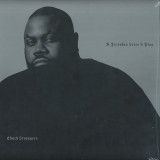
A pivotal force in the early ‘10s NYC rap revival, now LA-based rapper and producer Chuck Strangers steps into the limelight on new solo LP A Forsaken Lover’s Plea.
The album sounds markedly lush, candid rhymes bolstered by a slew of guest producers—including The Alchemist, Animoss and Strangers himself. Chuck’s own production feels current without ditching its previous homeliness, a seamless compliment to his honest, lived-in raps.
A Forsaken Lover’s Plea is laced with guest verses from a collection of fellow New York rap torchbearers, from Pro Era comrade Joey Bada$$ & Flatbush Zombies' Erick the Architect to Queens’ own Remy Banks.
Strangers’ tangled romance with hip-hop is the crux of the project—the culmination of a decade’s unwavering dedication to his craft, with its lofty highs, inevitable lows, and rough lessons of humility, patience, and process.
It’s Chuck’s most comprehensive solo project since Consumers Park, his 2018 debut, and follows The Boys & Girls EP, released May 2023.
A Forsaken Lover’s Plea is available on heavyweight green vinyl, silver tape and CD.
"Deep Dancefloor Jams of African Disco, Funk, Boogie, Reggae & Proto Electro Music 1977-1986reggWhen a passionate DJ and crate digger intuitively selects music for a DJ compilation, without artistic compromise and without the burden of trends, AfroMagic vol.1 emerges from the depths of his soul. Herewith we present the new favorite phonomancer’s tool for all the DJs who experience the dance floor as a sanctuary and a source of freedom and love.
The most fundamental thing that defines African music is that it was created for dancing. In African dance, there is often no clear distinction between ritual celebration and social recreational entertainment – one can seemlessly merge with the other. Because dance and rhythm have more power than gesture and more richness than words, and because they express the deepest experiences of human beings, dance is in itself a complete and self-sufficient language. It is truly an expression of life with all of its emotions – joy, love, sadness and hope – without which there is no African music and dance. For the African people, dance and music are integral parts of the body and soul, thus depicting the expression of life, current emotional states, visions or dreams. Through hypnotic repetitive music and dance, people communicate with each other and with the souls of the dead, the animals, the plants, the stars, the Gods… They free the body and the spirit through ecstatic states, reaching a healing sense of freedom, happiness, and satisfaction.
Throughout history, this transcendental perception of rhythm and dance originating from Africa, influenced popular music worldwide, thus creating new living and breathing forms of musical genres – freeing them from their industrial mold. Funk, disco, soul, boogie, reggae, dancefloor jazz etc., developed in parallel all over the world. It is foolish to perpetually discuss where they originated from and who were the creators of all these fiery dance floor genres – being obvious that they directly or indirectly originate from the African continent and its people who were as well, over the centuries, influenced by disturbing socio-cultural factors of colonialism. However, no one can enslave the soul. The seeds of free and uninhibited dance and rhythm, true to their original form, initially first sprouted onto the USA’s fertile fields of clubbing and popular music while later evolving in other parts of the world.
The disco funk club culture manifested itself as a phenomenal explosion of artists and grooves in the second half of the 70s in the USA. Shortly it spread around the world continually reigning over charts in its various forms – to this day. Clubs emerged where the DJ is an almighty shaman and the dancers are a tribe united under one roof. This urban ritual had and still has a single goal: togetherness, freedom, and love. Clubs have evolved into temples where we free ourselves from the burden of a consumerist lifestyle and suppressed emotions – a place where we receive love and give love – to be who we really are.
Disco funk clubbing was such an influential global phenomenon that its influence can be observed in various other genres from the disco funk era i.e. progressive rock, which mutated by layering complex rock arrangements with a disco funk groove resulting in hybrids, highly sought by today’s diggers, producers and collectors. The profit-hungry music industry of the 80s very quickly commercialized the original disco funk sound by amputating of its original Afro groove to be able to easily ‘sell’ it globally. So, the original disco funk groove became underground again, and it has remained so until this day. Today, for a DJ to unearth that ravishing groove that will lead the dancers to the stars, he must dig passionately like a true musical archaeologist in search of that groove that picks you up after just a few initial beats. That groove which forces the atoms in your body to vibrate, that groove which unites the body and releases the burden.
The AfroMagic compilation series is created as a tool for real DJs who stick to the aesthetics and essence of clubbing.
This continuation of the Afromagic compilation by DJ Borovich was created in a private jam session which served as an escape route from intense and complex love problems.
Unconsciously driven by intuition and emotion and following a live mix tape framework where many tunes are arranged instantaneously, Borovich narrates his story with a strong rhythm that cuts loose even the most blocked off energy nodes and restores happiness to the spirit and the body.
The musical experience of the groove is completed by the lyrics of the songs, which symbolically give DJ Borovich universal answers to his questions arising from questioning the boundaries, nuances and other forms of love.
When considering that Borovich’s selection was created to facilitate an escape from the burdens of reality through rhythm and dance, we can be sure that Afromagic Vol. 2 will have a 100% uplifting, energized and spaced-out effect on the listeners.
The intro to A1, “Feeling Happy” by the Apostles, introduces us to an experienced and slow, cool and irregularly tight groove containing a confidently sung chorus that instantly gives a sense of freedom and hints at the remainder of Afromagic Vol. 2: “I’m gonna feel happy, ´cause I know I’m gonna be myself.” After the anthemic song mantra of the Apostles, Aigbe Lebarty uncompromisingly continues with a dirty disco rhythm. Acidified by accented synths that elevate it to shamanic levels and held together by a female tribal choir, we embark on an uncompromising ritual disco journey. Without a moment to take a breather the prog funk band Mighty Flames and their Road Man launch a highly vicious and raw, thick funk groove spiced with acid synths and dirty RnR breaks, raising the bar for the A side. Jimi Hendrix himself would surely praise it given the ultimate freedom and virtuosity in the solo sections. With the last tune on A side DJ Borovich decides to burn the floor with Geraldo Pino’s psychedelic, acid furious groove and lyrics which describe this HEAVY part of love problems: “The way she walk, the way she talk, the way she does a funky dances, she is really really heavy – that woman”.
While the A side represents a compact intoxicating afro groove machine that separates us from reality and lifts us up to the stars in over 23 minutes, the B side is a treasure trove of proto sub-genres gems. This selection represents the mission of the Afromagic: to find singular events in African recorded discography of popular music from the 70s and 80s that give evidence to the birth of new modern genres on the Dark Continent even before they emerged in the U.S.A. or Europe. The beginnings of electronic music influenced genres are represented back to back with 80s synth jazzy pop, all painted in African colours.
The B side opens big with Jake Sollo and a huge reggae blues number singing about the humiliation of a man – goosebumps guaranteed! “You think I’m nobody that’s why, you don’t know the way for me, I’m somebody I know, I found myself at last”. Adolf Ahanotu then enters the scene with a hard sliding tackle at B2 and an exotic rare disco funk dancefloor napalm. A ‘Sensation’ that would ignite even the coldest of introverts. While we approach the end of the compilation the narrative revolves again and takes a different turn. No less and no more than to the proto-electro that Baad John Cross serves us in “Give Me Some Lovin´”. The fat and repetitive broken electro synth groove, championing many early 90s electro tracks, is presented here without hesitation and with constant tension accompanied by a mantric chorus “Gimme some, gimme some, gimme some looooovin’, EVERBODY!!!”. Finally, we’re guided to the end of Afromagic Vol. 2 by Eji Oyevole’s 80s synth pop style presented in an authentic afro manner, giving us a glimpse at yet another released Afromagic edition, as well as giving an answer to DJ Borovich’s love problems. A smoothly broken electronic rhythm resembling electrified highlife sounds, carried on the wings of a virtuoso dreamy saxophone on top of which Eji presents the most intimate parts of himself. Finalizing the track with a symbolic chorus, on the surface referring to the dancefloor and simply having fun, but in actuality referring to the skill and happiness of living: “I´m a dancer, I can dance”. So, get up and dance among the stars with DJ Borovich and Afromagic.
- 1: Exactly What Nobody Wanted
- 2: Except For The Fact That It Isn't
- 3: My Girlfriend Doesn't Worry
- 4: Depression! Despair!
- 5: Till Question Marks Are Told
- 6: Lps
- 7: Knucklehead/Happy Rain
- 8: Take It For Granted
- 9: In Certain Orders
- 10: Where Is The Machine
- 11: Dogs Of My Neighborhood
- 12: Not Supposed To Be Wise
‘Bad Wiring’ by Jeffrey Lewis & The Voltage, originally released in 2019 and long ago sold out, is re-released in UK/Europe on Blang Records. Recorded in Nashville by Roger Moutenot (Lou Reed, Yo La Tengo, Sleater-Kinny) the album blends raw lo-fi garage-punk with acoustic interludes. His trademark literate lyrics, moving between the poignant and the hilarious, shift from personal anxieties to existential dread (often in the same song eg, ‘My Girlfriend Doesn't Worry'), record stores ('LPs') and under-appreciated artists ('Exactly What Nobody Wanted'). The album was greeted with widespread acclaim in 2019 with many reviewers declaring it his best yet. Jeffrey Lewis & The Voltage play End Of The Road in September with a UK/Europe tour planned to follow.
Press For Bad Wiring In 2019:
" The “and about our relationship” refrain of ‘My Girlfriend Doesn’t Worry’ will have you replaying the album instantly." grade A- Robert Christgau, Consumer Guide (top albums of the year 2019).
" terrific wordplay." ******* Rob Hughes, Uncut
"Thick with the evergreen anti-folkie's charm." **** Mojo
"Electrifying, again." **** Q Magazine.
"one of the most consistently enjoyable records Lewis has made in his 18-year career." ********- HotPress
"possibly his best studio album yet." **** The Skinny.
"Jeff Lewis sits comfortably with Lou Reed and Leonard Cohen as an exemplary songwriter. Reed always strived for street cool and Cohen’s words were imbued with mysticism and his love of women. Lewis has the courage to open up his heart and lay out all the horrible neurosis, paranoia, and despair that we all fall prey to. Reed the cool, Cohen the mystic and Lewis the honest. A better triumvirate you couldn’t hope for.” Louder Than War.
"There’s a strong suggestion that this is the best album his written to date and after listening to just a handful of songs you’d be hard-pushed to disagree – you’ll also be left wondering why in the hell Lewis is not better known than he is, this album is filled with unforgettable songs that set his songwriting apart from anything else you’re likely to hear today." Folk Radio UK.
- Sorry Again
- There's Only One Thing Left To Say
- Tripping Wires
- I Can't Stop Smiling
- The All-Consumer
- Drug Girls
- Rubble
- Labrador
- Hey You, Get Off My Moon
- Medio Core
- What You Left Behind
- Wake Up, I'm Leaving
- Marzipan
- Labrador (Drum Machine Version)
- Diamond Jubilee
- What You Left Behind (Reprise)
- Your Silent Face
- You're So Good To Me
- Seven Seas
- Breaking Lines
2LP-Erstauflage auf farbigem Loser-Vinyl: "BIO PETROL" Disk 1 und "MAGENTA" Disk 2. "¡Simpatico! (Remastered and Expanded)" bringt das lange vergriffene zweite Album von Velocity Girl aus dem Jahr 1994, "¡Simpatico!", mit einem superfrischen Mastering und einer Menge Bonus-Tracks aus der "¡Simpatico!"-Zeit endlich wieder raus. Das Originalalbum klingt besser als je zuvor und wird durch ein komplettes Album mit B-Seiten und Raritäten ergänzt. Velocity Girl wurde um 1989 an der University of Maryland außerhalb von Washington DC gegründet, mit dem Gitarristen Archie Moore (Black Tambourine), dem Gitarristen Brian Nelson (Black Tambourine), dem Schlagzeuger Jim Spellman (Starry Eyes, Foxhall Stacks, High Back Chairs, Julie Ocean, Piper Club), dem Bassisten Kelly Riles (Starry Eyes) und der Sängerin Sarah Shannon (Starry Eyes, The Not Its). Die Band kombinierte englisch inspirierten, lauten Shoegaze-Fuzz mit rauem US-Indie-Rock und klassischem Pop-Songwriting im Stil der 60er Jahre. Eine Killer-Single auf Slumberland und ununterbrochene Tourneen erregten die Aufmerksamkeit der Indie-Rock-Kenner, und bald darauf unterschrieb Velocity Girl einen Vertrag mit Sub Pop auf einer Motorhaube in Hoboken, New Jersey. Nach der Tournee zur Unterstützung ihres Debüts ,Copacetic" verbrachte die Band den größten Teil des Jahres damit, eine Reihe von Songs für ein zweites Album zu schreiben. So hatten sie noch nie gearbeitet - es war eine neue Erfahrung, Zeit und Budget (vom Label!) darauf zu verwenden, ein Album zu produzieren, das kein selbst produziertes Punkrock-Studioalbum war. Nachdem sie ihr neues Material monatelang im lauten Stil von ,Copacetic" gespielt hatten, waren die Bandmitglieder von den Songs begeistert, wollten sich aber von der rauen, amateurhaften Atmosphäre ihrer früheren Alben lösen. Und ihre Einflüsse waren diesmal etwas anders: weniger My Bloody Valentine und Wedding Present, mehr New Order. Jemand bei Sub Pop brachte die Band mit John Porter zusammen, dem ehemaligen Mitglied von Roxy Music, der The Smiths, Billy Bragg, The Alarm und eine Reihe anderer Acts der 80er Jahre produziert hatte. Sie trafen sich während einer Tournee in Los Angeles. Er erklärte sich bereit, das Album in einer dreiwöchigen Session in den Cue Studios in Falls Church, Virginia, zu produzieren. Er war genau das, was die Band brauchte: ein Redakteur, Arrangeur und Zuchtmeister. Als er gnadenlos jeden unnötig wiederholten Takt herausschnitt, merkte die Band, dass sie sich zu einem klareren Sound hingezogen fühlte und fast komplett auf die laute Gitarre verzichtete, zweifellos beeinflusst durch Porters Präsenz. Velocity Girl waren super zufrieden mit dem Ergebnis, und ,¡Simpatico!" kam im Juni 1994 raus. Diese erweiterte Neuauflage enthält eine Reihe von Songs, die einige Monate nach den Albumaufnahmen in den Inner Ear Studios in Arlington, Virginia, aufgenommen wurden. Die Sessions lieferten spielerisch-experimentelle B-Seiten für die Singles des Albums, zwei Cover-Songs (das New-Order-Cover ,Your Silent Face" und ein Beach-Boys-Cover) für eine Single auf Merge Records und einen Compilation-Track.
- A1: Robert Pico - Le Chien Fidèle
- A2: Annie Girardot - La Femme Faux Cils
- A3: Spauv Georges - Je Suis L'état
- A4: Zoé - Zoé
- A5: Jacques Da Sylva - Fou
- A6: Valentin - Je Suis Un Vagabond
- A7: Jacques Malia - Histoire De Gitan
- A8: Bernard Jamet - Raison Legale
- B1: Jean-Pierre Lebort - Barbara Au Chapeau Rose
- B2: Les Concentrés - Fils De Dégénérés
- B3: Les Missiles - Publicité
- B4: Hegessipe - Le Credi D'hegessipe
- B5: Marechalement Votre - Ethero Disco
- B6: Mamlouk - Decollez Les
- B7: Mozaique - L'amour Nu
- B8: Jean-Marc Garrigues - Je Dis Non
- B9: Penuel - Astronef 328
The journey through French-speaking pop archives continues with this fifth volume, packed with fuzz, gimmicks, and dissent. Far from the charts, the selected tracks display a great creative freedom, often backed by corrosive humor. Welcome to the surprising, kaleidoscopic, and colorful world of the late sixties and early seventies, Wizzz!
Born in Montauban, Robert Pico stumbled into music by chance when he met René Vaneste, then artistic director at Pathé-Marconi. René brought him to Paris to record his first 45 RPM EP in 1964. A year later, Pierre Perret introduced him to Vogue, where he recorded his second album with Claude Nougaro’s orchestra. Sylvie Vartan then introduced him to RCA, where he recorded four singles, including the astonishing "Chien Fidèle," a track backed by a hair-rising fuzz guitar. Alongside his solo career, he also composed for other artists like Alain Delon (the song was recorded but remains unreleased), Magali Noël, Bourvil, and Georges Guétary. In the Paris of the sixties, he mingled with Mireille Darc, Elsa Martinelli, Marie Laforêt, France Gall, Françoise Hardy, Petula Clark, Régine, Dani, Serge Gainsbourg, Joe Dassin, Franck Fernandel, Charles Level, and Roland Vincent. Despite his efforts and winning a Grand Prix Sacem for his final record, Robert Pico didn’t achieve the expected success in show business and decided to leave Paris and return to the Southwest, where he devoted himself to writing. He is the author of 23 books (including Delon et Compagnie, Jean-Marc Savary Editions 2025, a memoir about his youth and his many encounters). Today, he is relieved to never have become a celebrity and devotes himself to his work with passion.
In 1969, the Franco-Italian movie Erotissimo was released, directed by Gérard Pirès (who later directed Taxi in 1998, written and produced by Luc Besson). This pop comedy features Annie Girardot, Jean Yanne, Francis Blanche, Serge Gainsbourg, Nicole Croisille, Jacques Martin, and Patrick Topaloff. The soundtrack was written by Michel Polnareff and William Sheller, with lyrics by Jean-Lou Dabadie. "La Femme Faux-cils," performed by Annie Girardot. It recounts the feelings of a rich CEO's wife who seeks to develop her sex appeal under the influence of advertisement and magazines. Groovy, sparkling and light, this track, with ITS lush arrangements humorously critiques consumer society and feminine beauty standards.
“Je suis l’Etat” (1967) is the flagship track of the first EP by singer-songwriter Spauv Georges, aka Georges Larriaga, better known as Jim Larriaga (1941-2022). Born into a family of bakers, the young man was initially planning to become a hairdresser when he discovered English-speaking music through Elvis Presley and the Beatles. After this revelation, he decided he would become a songwriter and gave himself five years to succeed. He recorded his first two EP’s independently for RCA under the pseudonym Spauv Georges; meaning “that poor George”, a nickname given to him by the mother of her friend Jean-Pierre Prévotat (future drummer of the Players, Triangle, or Johnny Hallyday). Portraying a depressed and eccentric young man, Spauv Georges created corrosive and amusing songs that didn’t reach a wide audience, despite a TV appearance with Jean-Christophe Averty.
Supported by his loyal friend and fellow songwriter Jean-Max Rivière, Georges Larriaga met the future singer Carlos in the early '70s, then Sylvie Vartan’s assistant. He wrote songs for Carlos, including the popular "La vie est belle," "Y’a des indiens partout," and "La cantine", which went onto become a huge hit in 1972. He also composed for Claude François (“Anne-Marie”, 1971), Charlotte Julian (“Fleur de province”, 1972), helped launch child singer Roméo (who sold 4 million records), and later wrote the hit "Pas besoin d’éducation sexuelle" (1975) for the young Julie Bataille. In 1971, Jim recorded an album for Disc'Az: “L’univers étrange et fou de Jim Larriaga”, which featured pop gems like “La maison de mon père”.
The story of the song "Zoé" began when Pierre Dorsay, artistic director at Vogue Records, asked Swiss singer and musician Pierre Alain to write a song for a new female singer. The inspiration came when he realized that Zoé (the artist's name) was also the name of France's first atomic battery, created in 1948, which consisted of uranium oxide immersed in heavy water! The lyrics reflect a bubbling energy that must be handled with caution, while the instrumentation echoes this atomic theme, notably with the use of a theremin.
Zoé’s career lasted only as long as a single 45 RPM, but it seems Christine Fontane was the vocalist behind this pseudonym, who is known for several EPs, a good "popcorn" album in 1964, and a handful of children’s singles in the '70s. Regardless, the photograph on the cover is of a different girl entirely.
Later, Pierre Alain continued his career, writing songs for himself, Marie Laforêt, Danièle Licari, Alice Dona, Arlette Zola (3rd place in Eurovision 1982), and achieving multiple gold and platinum records in Canada. Also an inventor with several patents, president of the Romande Academy, and head of the French Alliance in Geneva, he now composes atonal music, books, and poetry. Moreover, he is also the host of "Les Mardis de Pierre Alain" at "Le P'tit Music'Hohl" in Geneva.
Filled with oriental choruses and fuzz guitar, "Fou" is from Jacques Da Sylva's only EP released by Vogue in 1967. Despite the quality of this recording, all traces of this singer disappear after this first effort.
Valentin is a baroque pop singer born in Belgium. He is the songwriter and composer of most of the tracks on his three singles released in the late 60s in Canada. A legend says that he reincarnated himself as Jacky Valentin during the 1970s for a rock'n'roll revival career in Belgium, but his older brother sadly debunked this story. Valentin's first two singles were arranged by Claude Rogen, a Parisian session pianist who had come to Canada to promote the song “Mister A Gogo”, a cover of David Bowie’s “Laughing Gnome”, adapted by singer Delphine, his wife at the time. Far from his usual network, Claude Rogen arranged music for Polydor, including the arrangements for “Je suis un vagabond” in 1969, a jerk tune with string arrangements and a furious optimism.
Jacques Malia wrote, composed, and recorded his only 45 EP for Festival in 1966. “Histoire de gitan” is an incredible beat track with bohemian scat that tells the story of a gypsy musician who came to Paris to make it in the Music-Hall, to no avail. The hero of the song and its author probably shared a similar fate, as Jacques Malia faded into anonymity after this remarkable attempt.
Bernard Jamet recorded two EPs for Barclay in the late sixties and co-wrote several songs with Christine Pilzer, Pascal Danel, and prolific songwriters Michel Delancray and Mya Simile. The track “Raison Légale” (1968), his masterpiece, immerses the listener in a courtroom right when a murderer is being judged, with jerk rhythm and free arrangements. A unique, paranoid, judicial, and psychedelic oddity.
Jean-Pierre Lebrot-Millers started his career in show business in 1967 as a singer and songwriter for the Philips label. After three singles, he wrote several songs of a new kind with his friend Pierre Halioche, in the midst of the sexual liberation movement and the democratization of drugs. With provocative lyrics, “Les filles du hasard” and “Barbara au Chapeau Rose” were released on a Philips singles in 1968. The character of Barbara was inspired by a queen of Parisian nightlife during the psychedelic years: model Charlotte Martin, who dated Eric Clapton from 1965 to 1968, then Jimmy Page from 1970 to 1983. Jean-Claude Petit’s arrangements, with a table-filled intro, soul brass, and Hendrixian guitar, emphasize the flamboyance of a hedonistic and sexy character, whose dog is named Junkie because “Junkie est un nom exquis”! The track was recorded live in three takes with a full orchestra.
Upon its release, the record was censored by Europe 1 and RTL due to its references to drug use. Jean-Pierre Lebrot was then banned from the airwaves and later dismissed by his record label. He changed his artist name to Jean-Pierre Millers, while his companion Pierre Halioche became D. Dolby for a new dreamy composition, “Chilla”, which Jean-Pierre produced himself with arrangements by Jean Musy. Once again, the song was immediately censored everywhere. After this setback, he decided to stop singing and started taking on odd jobs to support his Swedish wife and their son until the day he met Jean-Pierre Martin, then production manager at Decca, who had worked with Manu Dibango. Martin offered Jean-Pierre Lebrot-Millers, then employed at Rank Xerox, the position of artistic director at Decca. He accepted and became, a year later, promotion director (radio, press, TV). He worked on Julio Iglesias’s first album for Decca, which became a massive hit and allowed him to meet Claude Carrère. The latter asked him to write new songs and find their performers, much like a “talent scout.” It’s through him that Jean-Pierre discovered Julie Pietri and Corinne Hermès. He composed “Ma Pompadour” for Ringo, Sheila’s husband, and took the microphone again for the syncope hit “Rendez-Vous” in 1982.
That same year, Jean-Pierre Lebrot-Millers tried to release a track for which he had heavily gone into debt: “Si la vie est un cadeau”. Having recorded it in London, he presented it to numerous professionals, all of whom refused to get involved. The same thing happened with Antenne 2 and the Sacem when he proposed the song as France’s entry for Eurovision. He then met Haïm Saban, who was producing cartoon soundtracks and had just launched the Goldorak theme song. Saban, having listened to the song, declared it had the potential to become a hit. He sent Jean-Pierre and Corinne Hermès to meet the CEO of the Luxembourg radio and television network. The latter received them, asked to hear a verse and chorus a cappella in his office, and immediately hired them to represent Luxembourg at Eurovision 1983. They reworked the arrangements and recorded a new version with Haïm Saban as co-producer. The song ended up winning Eurovision 1983, a great comeback for our hero. He continued producing and hung out with the band Nacash in Belgium when a couple came to introduce their daughter for an impromptu audition in a hotel room. The girl sang “Les démons de minuit” while dancing to a radio cassette. Impressed, he had her take singing lessons for a year and composed a song for her (for which he had the melody and title, but no lyrics). This required him to go on the hunt for a lyricist, who ended up being Guy Carlier. They recorded the song, which was initially a ballad, at Bernard Estardy’s CBE studio, and gave the singer a new name: Melody. They showed the song around their industry network without success. Later, Estardy called Jean-Pierre to suggest changing the rhythm and making it pop-rock. Orlando, Dalida’s brother, liked the result and decided to co-produce the track. “Y’a pas que les grands qui rêvent » became a classic hit. The song has since been covered by Juliette Armanet (as a ballad, like the original) and Valentina.
Born into an aristocratic Breton family, Hervé Mettais-Cartier worked as a DJ at Queen Kiss, a nightclub in Poitiers, where he formed the band Les Concentrés with Michel (an actor) and Christian (a radio technician). Together, they created a repertoire of whimsical songs (“Ma bique est morte”, “J’suis un salaud”, “Fils de dégénéré”...) that they performed on stage dressed in white (in homage to “concentrated milk”). They performed at Bliboquet and Olympia in 1968 for the 10th edition of the “Relais de la chanson Française” organized by L’Humanité-Dimanche and Nous les Garçons et les Filles, sponsored by Pepsi Cola. Winners in the author-composer category, alongside Danish singer Dorte, their visibility allowed them to record a 45, and appear on television in Jean-Christophe Averty’s show. The A-side of the disc features Bruno le ravageur, a casatchok dedicated to Bruno Caquatrix, the director of Olympia, nicknamed in the song “Coq Atroce” or “croque-actrices”. The B-side is dedicated to “Fils de dégénéré”, a quirky tribute to Hervé's aristocratic roots, mixing absurdity with sophisticated vocal harmonies.
After Les Concentrés, Hervé Mettais-Cartier formed the duo La Paire et sa Bêtise with his friend Olivier Robert. They performed in Parisian cabarets and toured with Pierre Vassiliu. In the late 1970s, Hervé began a solo career. He recorded two albums for the Motors label in 1978 and 1979, which did not achieve their anticipated success due to lack of promotion. In 1980, he met Bernadette, with whom he started a family and created a “Chansons à voir” (songs to see) show that he performed until his death at the end of 2024.
Publicité comes from the final EP by the Missiles (Ducretet Thomson, 1966), a disc that also includes “La (nouvelle) guerre de cent ans”, featured on Volume 4 of our Wizzz! series. Please refer to the booklet for the story of the band.
“He’s 1.82 meters tall, 28 years old, weighs 135 kg, is black and Belgian”: this is the description of singer Hegesippe on the back of his sole single (Decca, 1967). He appears on the album cover wearing a Greek toga, like a hippie gag – we are at the end of the year 1967. In “Le crédo d’Hegesippe”, this former bodyguard of Antoine and the Charlots plays the delightful card of the thick brute converted to Flower-Power and non-violence, with arrangements by Jean-Daniel Mercier, aka Paul Mille.
“Ethéro-disco” was released on a promotional record for clients of the Maréchal company (Liège, Belgium) for the New Year 1979. Over a funky rhythm, celebrity impersonations (Brigitte Bardot, Jacques Dutronc, Fernandel…) deliver an enigmatic text about pharmaceutical products like ether, bismuth, and aspartate. The track was composed by Dan Sarravah (responsible for Joanna's “Hold-up inusité” featured on Wizzz! Volume 3) and Tony Talado, who was also a singer (one 45 in 1967), songwriter (with over a dozen credits between 1964 and 1985 in various styles from surf music to disco), author (Devenez Végétarien, Dricot Editions, 1985), ad designer, and psychologist.
Décollez-les is on the A-side of Mamlouk's only single, a pseudonym for Marsel Hurten, who is known for his work on several EPs in the late sixties, as well as composing music for Hervé Vilard’s “Capri, c’est fini”, Claude Channes' “La Haine”, Annie Philippe’s “On m’a toujours dit”, and Nancy Holloway’s “Panne de Cœur”.
This strange song, with Afrobeat horns and absurd dialogues between a chef and his kitchen staff, is the result of a collaboration between Marsel Hurten and one of his neighbors, a photographer from Pavillon-sous-Bois (93), where the musician settled after returning from the Algerian War. A music video was shot to promote the record.
Marsel Hurten was born in Tourcoing (59) into a musical family. At a young age, he joined the brass band founded by his grandfather, playing the piston before studying trumpet at the conservatory, as well as teaching himself how to play the guitar. As an orchestra musician, he toured in France, Belgium, Germany, and England. He released a series of solo 45’s between 1965 and 1968 for the DMF and Az labels before stopping recording to focus on working for other artists (Gilles Olivier, Noëlle Cordier…).
“L’amour nu” (Vogue, 1971) is the work of the short-lived Belgian band Mozaïque. The track, written by singer Jacques Albin, closely resembles another of his compositions, “Carré Blanc”, which he recorded in 1969 for Disc’AZ.
Represented by the Lumi Son micro-label based in Marignane (Côte d'Azur), Jean-Marc Garrigues released two 45 RPMs in the late sixties, defending the French jerk sound. The song “Je dis Non” is a short, joyful ode to youth, pop music, and rebellion.
Songwriter and performer Jacques Penuel released three singles. The first one, “Astronef 328” (Fontana, 1969), features a dizzying series of chords punctuated by sound effects, a sci-fi story, and arrangements by Jean-Claude Vannier.
We would like to sincerely thank Pierre Alain, Moon Blaha, Marsel Hurten, Bastien Larriaga, Jean-Pierre Lebrot-Millers, Bernadette Mettais-Cartier, Robert Pico, Olivier Robert, Claude Rogen, Micky Segura.
The 10th release on ALIM Music, a stone-cold classic, has been reborn. Gil Scott-Heron and Brian Jackson’s The Revolution Will Not Be Televised, the iconic song of protest and Black Consciousness, has been reimagined and revitalised for a new generation. With new lyrics and vocal performance from Black Thought, a reworked and bassline-heavy production by Masters at Work, Brian Jackson has recreated an absolute masterpiece.
Originally taken from Gil’s poem as performed on his Small Talk at 125th & Lenox and then released as a proto Hip-Hop song featuring Bernard Purdie’s drumming on the 1974 Pieces of a Man album, this new version updates the track’s original powerful lyrics to include references to the propaganda of Fox News, social media tropes, live streaming, taking the knee and modern day consumerism. Delivered by Black Thought in his imitable style and accompanied by Brian Jackson’s incisive jazz flute, these new lyrics represent a Black Liberation call to action for today’s world.
Louie Vega and Kenny Dope’s production gives The Revolution Will Not Be Televised a dancefloor edge that embraces a Jazz Hip-Hop flow with the absolute clarity of the message. Taken from Brian Jackson’s forthcoming and aptly titled BBE Music album, Now More Than Ever, The Revolution Will Not Be Televised will unite Boomers, Millenials and Gen-Z in its multi-generational cross-over appeal bringing the original Gorillas together with Neo-Soul and Hip-Hop heads of today.
'Total Spook' mixtape is Artetetra's homage to the forgotten cassette and CD culture of mass-distributed commercial Halloween sound effects, horror tales, and spooky music productions across the eighties and nineties.
Mainly produced in the U.S. these objects featured some of the famous names of the entertainment and commercial industry such as Prince's Dr. Fink (yes, that synth master), Elvira, the Mistress of the Dark and Hallmark as well as unknown and anonymous creatives and artists. In these tracks engineers, musicians and producers arguably had carte blanche in experimenting with extreme samples and vocal manipulation, time-based effects, extended techniques, spooky sound fonts and stock sound effects developing their unique ideas around the sound ambience of the Halloween and horror imagery's campy cliches.
After digging around 30 hours of material gathered from dedicated YouTube channels and playlists such as the ones created by 'Beetlemuse' and 'Caleb Jones', I have compiled a 100' mixtape showcasing some of the most endearing, weird and experimental sound designs long forgotten in the vaporware-like consumer culture of the '80s and ‘90s.