Buscar:the cop

Estilos
Todo
Almond Joy - Oh Henry!

Almond Joy

Oh Henry!

7"-VinylIPU149
K Records
30.09.2022

This is international pop underground vol. CXLIXI. Almond Joy Oh Henry! is a co-release between Perennial and K. West Coast Fog Pop USA. Almond Joy are the celestial comet heading the West Coast Fog Pop Revival. Featuring a cohort of Bay Area scene stars Jordan Almond (Rays, The World), as well as Muzzy Moskowitz (Froogie’s Groovies, Color Green), Tika Hall (Warp), Staizsh Rodriguez (Children Maybe Later), Britta Leijonflycht (Rays, Galore) , and Pat Thomas (Cool Ghouls). Recorded by Jordan Almond, mixed by Maxwell Mericer with additional mixing to 1/4” tape by Capt. Tripps Ballsington in Olympia WA. Mastered by Amy Dragon. This release continues the rich tradition of DIY bands crafting instant pop hits entirely on their own terms, which has long been the hallmark of the International Pop Underground series. Look for the video for singles “Candy”, “San Francisco”, and “Fosta/Sesta” And a show or two....Whatever happens it is quite assuring that whatever these times may bring bands can still put out music as good as this EP. 600 vinyl copies. 4 tracks 45RPM.

Tracklist 1. Oh Henry! 2. 100 Grand 3. San Francisco 4. Candy

Reservar30.09.2022

debe ser publicado en 30.09.2022

9,66
Caitlin Cary - While You Weren't Looking (20th Anniversary Edition)

In celebration of the album's 20th anniversary, Yep Roc Records is
pleased to announce the limited edition release of Caitlin Cary's first fulllength album, While You Weren't Looking for the first time on vinyl
Produced by Chris Stamey and co-written by Cary and Mike Daly, the 2002 record
showcases Cary's powerful, soothing vocals and features Caitlin performing on
violin, creating a wistful and intimate acoustic feel. With only 1,000 copies
available worldwide, this limited edition LP includes the original tracks from While
You Weren't Looking plus 3 bonus tracks - "Trickle of Whiskey," "The Fair (Band
Version)," "Keys to the Fair." Pressed on Frosted Blue color vinyl.

Reservar30.09.2022

debe ser publicado en 30.09.2022

28,61
SHUGGIE OTIS - HERE COMES SHUGGIE OTIS (COLOURED VINYL)

Here Comes Shuggie Otis is the debut album by guitarist and songwriter Shuggie Otis, released when he was only 18 years old. Produced and arranged by his father, Johnny Otis, the set features nine original cuts co-written by the pair. The album is evenly divided between vocal tunes and instrumentals. It was this effort that earned him the title of “child prodigy”. The album stands the test of time, since tracks like “Gospel Groove” and “Funky Thithee” are fan favourites to this day.

Here Comes Shuggie Otis is available as a limited edition of 1500 individually numbered copies on orange & gold marbled vinyl.

Reservar30.09.2022

debe ser publicado en 30.09.2022

29,83
Thielemans, Toots - Two Generations

Toots Thielemans was a jazz harmonica virtuoso from Belgium. Together with guitarist Philip Catherine, pianist Joachim Kuhn and other session musicians, he recorded the 1974 album Toots Thielemans/Philip Catherine & Friends, which was later reissued as Two Generations. The album features some of his best known works such as “Bluesette” and “Inner Journey”, which were previously cd-only compositions.

Two Generations is part of the Timeless Records 45th Anniversary Jazz Series and is available as a limited edition of 750 individually numbered copies on white coloured vinyl. The sleeve features the artwork of the
1996 reissue.

Reservar30.09.2022

debe ser publicado en 30.09.2022

31,57
MAGMA - WURDAH ITAH

Magma

WURDAH ITAH

12inchMOVLP3045
Music On Vinyl
30.09.2022

It was 1974 when Magma’s fourth studio album Ẁurdah Ïtah came out. Originally, the album was released under the name of Tristan Et Iseult as a solo studio film soundtrack by founding member Christian Vander. He recorded the music for Yvan Lagrange’s 1872 avant-garde film Tristan Et Iseult. The recordings took place only a month prior to the sessions which produced Köhntarkösz. For these recordings for Ẁurdah Ïtah, only a core quartet of Magma members took part, including Christian Vander, Jannick Top, Klaus Blasquiz and Stella Vander providing only drums, bass, piano and vocals. Fifteen years later, in 1989, the album was re-released with Magma’s distinctive logo.

Ẁurdah Ïtah is available as a limited edition of 2000 individually numbered copies on purple coloured vinyl, housed in a gatefold sleeve.

Reservar30.09.2022

debe ser publicado en 30.09.2022

31,05
Dave-Id Busaras - Smegma Structions Don’t Rhyme

• On Vinyl for the very first time, the debut solo album from ex Virgin Prunes vocalist • Remastered for vinyl • New artwork • Virgin Prunes catalogue is now being issued by BMG with Benelux & France being a stronghold for fans • Limited to 450 copies Side 1: 1. Loaded in a Crazy Dream of Hell 2. Sick for Her Love 3. Trapped in A Web 4. Cry Like a Rainy Day 5. Lost in The Ozone 6. Oh, Sweet Baby 7. Wedding Day Side 2: 1. Sol Sunset 2. The Night the Rain Pissed Down 3. Rainy Day (Reprise) 4. Mother Forgive Me 5. Man Falls Down 6. Kiss Before Betrayal 7. Who Wants To Look Like Dave-id?

Reservar30.09.2022

debe ser publicado en 30.09.2022

20,59
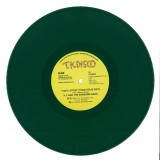
K C & The Sunshine Band - I Get Lifted - Todd Terje Edit
 
2
También disponible

Part 2[13,66 €]

Part 1[13,66 €]


2022 Repress

Miami's TK Disco unleashes the official Todd Terje Edit of K C & The Sunshine Band's "I Get Lifted"

Limited copies. Only available to Record Store Day 2015 registered stores in the UK, France, Holland and the USA

No en stock

Haga su pedido ahora y le encargaremos el artículo en nuestro proveedor.

12,56

Ültimo hace: 2 Años
CAMILLA GEORGE - IBIO-IBIO LP

Camilla George

IBIO-IBIO LP

12inchEVER102LP
EVER
30.09.2022

Saxophonist, composer, bandleader and innovator Camilla George makes a stunning return with her third album 'Ibio-Ibio' - a rich, cultural journey dedicated to her Ibibio tribe of south eastern coastal Nigeria, out on Ever Records / !K7. The album is a heady mix of afrobeat, hip hop and jazz coproduced by Camilla George. Across eight tracks, Camilla's virtuosic alto saxophone performance collaborates with a stellar line-up of some of the hottest players in London's jazz scene including Daniel Casimir (bass), Shirley Tetteh (guitar), Winston Clifford (drums), Sheila Maurice-Grey (trumpet), Rosie Turton (trombone), Renato Paris (vocals), Sarah Tandy (keys), plus Senegalese kora player Kadialy Kouyate, acclaimed US drummer Daru Jones (Jack White, Pete Rock, Talib Kweli), and Birmingham's finest MC Lady Sanity.

Reservar30.09.2022

debe ser publicado en 30.09.2022

21,81
CAMILLA GEORGE - IBIO-IBIO LP

Camilla George

IBIO-IBIO LP

12inchEVERLPC102
EVER
30.09.2022

Saxophonist, composer, bandleader and innovator Camilla George makes a stunning return with her third album 'Ibio-Ibio' - a rich, cultural journey dedicated to her Ibibio tribe of south eastern coastal Nigeria, out on Ever Records / !K7. The album is a heady mix of afrobeat, hip hop and jazz coproduced by Camilla George. Across eight tracks, Camilla's virtuosic alto saxophone performance collaborates with a stellar line-up of some of the hottest players in London's jazz scene including Daniel Casimir (bass), Shirley Tetteh (guitar), Winston Clifford (drums), Sheila Maurice-Grey (trumpet), Rosie Turton (trombone), Renato Paris (vocals), Sarah Tandy (keys), plus Senegalese kora player Kadialy Kouyate, acclaimed US drummer Daru Jones (Jack White, Pete Rock, Talib Kweli), and Birmingham's finest MC Lady Sanity.

Reservar30.09.2022

debe ser publicado en 30.09.2022

23,91
ALEXIA - THE PARTY LP

Alexia

THE PARTY LP

12inchM2204
DWA Records
28.09.2022

1998 esce l’atteso secondo album di Alexia dal titolo “The Party”. L'album contiene quattordici brani tra cui i due singoli più gettonati dell’estate 1998 ovvero “Gimme love” e “The music I like”. L’album si aggiudica numerosi dischi d’oro e di platino con le sue oltre cinquecentomila copie vendute. “Gimme love” e “The music I like” sono stati al no. 1 delle classifiche quasi simultaneamente, vendendo un totale di più di centomila copie, un vero record nel mercato italiano. Nell’estate del 1998 Alexia domina la scena musicale in vetta alle classifiche, più di ogni altra artista italiana della dance music. In quel periodo, in Inghilterra, esce il remix di “Uh la la la”. E’ il primo singolo di Alexia ad uscire in quel mercato e diventa subito un successo, top ten in classifica. Questo particolare remix é contenuto
nell’album “The Party” come bonus track.

No en stock

Haga su pedido ahora y le encargaremos el artículo en nuestro proveedor.

24,33

Ültimo hace: 3 Años
Golden Earring - Live (Remastered)

Live is a double live album released by Dutch rock band Golden Earring in 1977. With its long, spun out versions of classic Golden Earring songs (lasting between 5 and 12 minutes each), this record is vastly different than other live registrations by the band. It’s also one of only three albums where guitarist Eelco Gelling was a band member, adding a new dimension to the band’s sound. Furthermore, this album emphasises Golden Earring’s strong rhythm section on swinging songs like “Mad Love’s Comin’” and “Radar Love”.

Live celebrates its 45th anniversary in 2022 and is therefore being remastered for the first time from the original master tapes. This 2LP is available as a 45th anniversary edition of 2000 individually numbered copies on “Blade Bullet” coloured vinyl.

Reservar28.09.2022

debe ser publicado en 28.09.2022

31,20
C.M. Art - Planet Uthboar LP

C.m. Art

Planet Uthboar LP

12inchUTHB-001
Uthboar
27.09.2022

Planet Uthboar is a conceptual album that takes the listener on a journey to the fictive planet of Uthboar, where two heroes are on a quest to stop the supervillain Art from exterminating every living being on the planet. The album is inspired by old comics and 70’s sci-fi animation movies, so think of a kind of H.G. Wells dark sci-fi style mixed with lofi house and electro - all recorded straight to an old dusty cassette recorder!

Planet Uthboar is the first release on the new Copenhagen-based label Uthboar run by C.M. Art


Key dj support:

Vladimir Ivkovic - Salon Des Amateurs: Cassette culture indeed. Nice, enjoyable one. Thank you!

Bill Brewster - Late Night Tales, Home Taping Is Killing Music: Art is super gloopy Chicago-style electrosoul.

Sean Johnston - Hardway Bros, A Love From Outer Space: Great EP!

Massimiliano Pagliara - Panorama Bar, Ostgut Ton, Live at Robert: nice tunes!

Mr Ties - HOMOPATIC: chicago from the future

Diego Cortez Salas - Correspondant, Live At Robert Johnson: love it!

Richard Sen - Firehouse, Emotional Response, D-Edge Re: Art is the sound of late 80s Chi-tow

No en stock

Haga su pedido ahora y le encargaremos el artículo en nuestro proveedor.

18,03

Ültimo hace: 3 Años
Lee Tracy & Isaac Manning - Is it What You Want LP

As the sun sets on a quaint East Nashville house, a young man bares a piece of his soul. Facing the camera, sporting a silky suit jacket/shirt/slacks/fingerless gloves ensemble that announces "singer" before he's even opened his mouth, Lee Tracy Johnson settles onto his stage, the front yard. He sways to the dirge-like drum machine pulse of a synth-soaked slow jam, extends his arms as if gaining his balance, and croons in affecting, fragile earnest, "I need your love… oh baby…"

Dogs in the yard next door begin barking. A mysterious cardboard robot figure, beamed in from galaxies unknown and affixed to a tree, is less vocal. Lee doesn't acknowledge either's presence. He's busy feeling it, arms and hands gesticulating. His voice rises in falsetto over the now-quiet dogs, over the ambient noise from the street that seeps into the handheld camcorder's microphone, over the recording of his own voice played back from a boombox off-camera. After six minutes the single, continuous shot ends. In this intimate creative universe there are no re-takes. There are many more music videos to shoot, and as Lee later puts it, "The first time you do it is actually the best. Because you can never get that again. You expressing yourself from within."

"I Need Your Love" dates from a lost heyday. From some time in the '80s or early '90s, when Lee Tracy (as he was known in performance) and his music partner/producer/manager Isaac Manning committed hours upon hours of their sonic and visual ideas to tape. Embracing drum machines and synthesizers – electronics that made their personal futurism palpable – they recorded exclusively at home, live in a room into a simple cassette deck. Soul, funk, electro and new wave informed their songs, yet Lee and Isaac eschewed the confinement of conventional categories and genres, preferring to let experimentation guide them.

"Anytime somebody put out a new record they had the same instruments or the same sound," explains Isaac. "So I basically wanted to find something that's really gonna stand out away from all of the rest of 'em." Their ethos meant that every idea they came up with was at least worth trying: echoed out half-rapped exhortations over frantic techno-style beats, gospel synth soul, modal electro-funk, oddball pop reinterpretations, emo AOR balladry, nods to Prince and the Fat Boys, or arrangements that might collapse mid-song into a mess of arcade game-ish blips before rallying to reach the finish line. All of it conjoined by consistent tape hiss, and most vitally, Lee's chameleonic voice, which managed to wildly shape shift and still evoke something sincere – whether toggling between falsetto and tenor exalting Jesus's return, or punctuating a melismatic romantic adlib with a succinct, "We all know how it feels to be alone."

"People think we went to a studio," says Isaac derisively. "We never went to no studio. We didn't have the money to go to no studio! We did this stuff at home. I shot videos in my front yard with whatever we could to get things together." Sometimes Isaac would just put on an instrumental record, be it "Planet Rock" or "Don't Cry For Me Argentina" (from Evita), press "record," and let Lee improvise over it, yielding peculiar love songs, would-be patriotic anthems, or Elvis Presley or Marilyn Monroe tributes. Technical limitations and a lack of professional polish never dissuaded them. They believed they were onto something.

"That struggle," Isaac says, "made that sound sound good to me."

In the parlance of modern music criticism Lee and Isaac's dizzying DIY efforts would inevitably be described as "outsider." But "outsider" carries the burden of untold additional layers of meaning if you're Black and from the South, creating on a budget, and trying to get someone, anyone within the country music capital of the world to take your vision seriously. "What category should we put it in?" Isaac asks rhetorically. "I don't know. All I know is feeling. I ain't gonna name it nothing. It's music. If it grabs your soul and touch your heart that's what it basically is supposed to do."

=

Born in 1963, the baby boy of nine siblings, Lee Tracy spent his earliest years living amidst the shotgun houses on Nashville's south side. "We was poor, man!" he says, recalling the outhouse his family used for a bathroom and the blocks of ice they kept in the kitchen to chill perishables. "But I actually don't think I really realized I was in poverty until I got grown and started thinking about it." Lee's mom worked at the Holiday Inn; his dad did whatever he had to do, from selling fruit from a horse drawn cart to bootlegging. "We didn't have much," Lee continues, "but my mother and my father got us the things we needed, the clothes on our back." By the end of the decade with the city's urban renewal programs razing entire neighborhoods to accommodate construction of the Interstate, the family moved to Edgehill Projects. Lee remembers music and art as a constant source of inspiration for he and his brothers and sisters – especially after seeing the Jackson 5 perform on Ed Sullivan. "As a small child I just knew that was what I wanted to do."

His older brother Don began musically mentoring him, introducing Lee to a variety of instruments and sounds. "He would never play one particular type of music, like R&B," says Lee. "I was surrounded by jazz, hard rock and roll, easy listening, gospel, reggae, country music; I mean I was a sponge absorbing all of that." Lee taught himself to play drums by beating on cardboard boxes, gaining a rep around the way for his timekeeping, and his singing voice. Emulating his favorites, Earth Wind & Fire and Cameo, he formed groups with other kids with era-evocative band names like Concept and TNT Connection, and emerged as the leader of disciplined rehearsals. "I made them practice," says Lee. "We practiced and practiced and practiced. Because I wanted that perfection." By high school the most accomplished of these bands would take top prize in a prominent local talent show. It was a big moment for Lee, and he felt ready to take things to the next level. But his band-mates had other ideas.

"I don't know what happened," he says, still miffed at the memory. "It must have blew they mind after we won and people started showing notice, because it's like everybody quit! I was like, where the hell did everybody go?" Lee had always made a point of interrogating prospective musicians about their intentions before joining his groups: were they really serious or just looking for a way to pick up girls? Now he understood even more the importance of finding a collaborator just as committed to the music as he was.

=

Isaac Manning had spent much of his life immersed in music and the arts – singing in the church choir with his family on Nashville's north side, writing, painting, dancing, and working various gigs within the entertainment industry. After serving in the armed forces, in the early '70s he ran The Teenage Place, a music and performance venue that catered to the local youth. But he was forced out of town when word of one of his recreational routines created a stir beyond the safe haven of his bohemian circles.

"I was growing marijuana," Isaac explains. "It wasn't no business, I was smoking it myself… I would put marijuana in scrambled eggs, cornbread and stuff." His weed use originated as a form of self-medication to combat severe tooth pain. But when he began sharing it with some of the other young people he hung out with, some of who just so happened to be the kids of Nashville politicians, the cops came calling. "When I got busted," he remembers, "they were talking about how they were gonna get rid of me because they didn't want me saying nothing about they children because of the politics and stuff. So I got my family, took two raggedy cars, and left Nashville and went to Vegas."

Out in the desert, Isaac happened to meet Chubby Checker of "The Twist" fame while the singer was gigging at The Flamingo. Impressed by Isaac's zeal, Checker invited him to go on the road with him as his tour manager/roadie/valet. The experience gave Isaac a window into a part of the entertainment world he'd never encountered – a glimpse of what a true pop act's audience looked like. "Chubby Checker, none of his shows were played for Black folks," he remembers. "All his gigs were done at high-class white people areas." Returning home after a few years with Chubby, Isaac was properly motivated to make it in Music City. He began writing songs and scouting around Nashville for local talent anywhere he could find it with an expressed goal: "Find someone who can deliver your songs the way you want 'em delivered and make people feel what you want them to feel."

One day while walking through Edgehill Projects Isaac heard someone playing the drums in a way that made him stop and take notice. "The music was so tight, just the drums made me feel like, oh I'm-a find this person," he recalls. "So I circled through the projects until I found who it was.

"That's how I met him – Lee Tracy. When I found him and he started singing and stuff, I said, ohhh, this is somebody different."

=

Theirs was a true complementary partnership: young Lee possessed the raw talent, the older Isaac the belief. "He's really the only one besides my brother and my family that really seen the potential in me," says Lee. "He made me see that I could do it."

Isaac long being a night owl, his house also made for a fertile collaborative environment – a space where there always seemed to be a new piece of his visual art on display: paintings, illustrations, and dolls and figures (including an enigmatic cardboard robot). Lee and Issac would hang out together and talk, listen to music, conjure ideas, and smoke the herb Isaac had resumed growing in his yard. "It got to where I could trust him, he could trust me," Isaac says of their bond. They also worked together for hours on drawings, spreading larges rolls of paper on the walls and sketching faces with abstract patterns and imagery: alien-like beings, tri-horned horse heads, inverted Janus-like characters where one visage blurred into the other.

Soon it became apparent that they didn't need other collaborators; self-sufficiency was the natural way forward. At Isaac's behest Lee, already fed up with dealing with band musicians, began playing around with a poly-sonic Yamaha keyboard at the local music store. "It had everything on it – trumpet, bass, drums, organ," remembers Lee. "And that's when I started recording my own stuff."

The technology afforded Lee the flexibility and independence he craved, setting him on a path other bedroom musicians and producers around the world were simultaneously following through the '80s into the early '90s. Saving up money from day jobs, he eventually supplemented the Yamaha Isaac had gotten him with Roland and Casio drum machines and a Moog. Lee was living in an apartment in Hillside at that point caring for his dad, who'd been partially paralyzed since early in life. In the evenings up in his second floor room, the music put him in a zone where he could tune out everything and lose himself in his ideas.

"Oh I loved it," he recalls. "I would really experiment with the instruments and use a lot of different sound effects. I was looking for something nobody else had. I wanted something totally different. And once I found the sound I was looking for, I would just smoke me a good joint and just let it go, hit the record button." More potent a creative stimulant than even Isaac's weed was the holistic flow and spontaneity of recording. Between sessions at Isaac's place and Lee's apartment, their volume of output quickly ballooned.

"We was always recording," says Lee. "That's why we have so much music. Even when I went to Isaac's and we start creating, I get home, my mind is racing, I gotta start creating, creating, creating. I remember there were times when I took a 90-minute tape from front to back and just filled it up."

"We never practiced," says Isaac. "See, that was just so odd about the whole thing. I could relate to him, and tell him about the songs I had ideas for and everything and stuff. And then he would bring it back or whatever, and we'd get together and put it down." Once the taskmaster hell bent on rehearsing, Lee had flipped a full 180. Perfection was no longer an aspiration, but the enemy of inspiration.

"I seen where practicing and practicing got me," says Lee. "A lot of musicians you get to playing and they gotta stop, they have to analyze the music. But while you analyzing you losing a lot of the greatness of what you creating. Stop analyzing what you play, just play! And it'll all take shape."

=

"I hope you understood the beginning of the record because this was invented from a dream I had today… (You tell me, I'll tell you, we'll figure it out together)" – Lee Tracy and Isaac Manning, "Hope You Understand"

Lee lets loose a maniacal cackle when he acknowledges that the material that he and Isaac recorded was by anyone's estimation pretty out there. It's the same laugh that commences "Hope You Understand" – a chaotic transmission that encapsulates the duality at the heart of their music: a stated desire to reach people and a compulsion to go as leftfield as they saw fit.

"We just did it," says Lee. "We cut the music on and cut loose. I don't sit around and write. I do it by listening, get a feeling, play the music, and the lyrics and stuff just come out of me."

The approach proved adaptable to interpreting other artists' material. While recording a cover of Whitney Houston's pop ballad "Saving All My Love For You," Lee played Whitney's version in his headphones as he laid down his own vocals – partially following the lyrics, partially using them as a departure point. The end result is barely recognizable compared with the original, Lee and Isaac having switched up the time signature and reinvented the melody along the way towards morphing a slick mainstream radio standard into something that sounds solely their own.

"I really used that song to get me started," says Lee. "Then I said, well I need something else, something is missing. Something just came over me. That's when I came up with 'Is It What You Want.'"

The song would become the centerpiece of Lee and Isaac's repertoire. Pushed along by a percolating metronomic Rhythm King style beat somewhere between a military march and a samba, "Is It What You Want" finds Lee pleading the sincerity of his commitment to a potential love interest embellished by vocal tics and hiccups subtlely reminiscent of his childhood hero MJ. Absent chord changes, only synth riffs gliding in and out like apparitions, the song achieves a lingering lo-fi power that leaves you feeling like it's still playing, somewhere, even after the fade out.

"I don't know, it's like a real spiritual song," Lee reflects. "But it's not just spiritual. To me the more I listen to it it's like about everything that you do in your everyday life, period. Is it what you want? Do you want a car or you don't want a car? Do you want Jesus or do you want the Devil? It's basically asking you the question. Can't nobody answer the question but you yourself."

In 1989 Lee won a lawsuit stemming from injuries sustained from a fight he'd gotten into. He took part of the settlement money and with Isaac pressed up "Saving All My Love For You" b/w "Is It What You Want" as a 45 single. Isaac christened the label One Chance Records. "Because that's all we wanted," he says with a laugh, "one chance."

Isaac sent the record out to radio stations and major labels, hoping for it to make enough noise to get picked up nationally. But the response he and Lee were hoping for never materialized. According to Isaac the closest the single got to getting played on the radio is when a disk jock from a local station made a highly unusual announcement on air: "The dude said on the radio, 107.5 – 'We are not gonna play 'Is It What You Want.' We cracked up! Wow, that's deep.

"It was a whole racist thing that was going on," he reflects. "So we just looked over and kept on going. That was it. That was about the way it goes… If you were Black and you were living in Nashville and stuff, that's the way you got treated." Isaac already knew as much from all the times he'd brought he and Lee's tapes (even their cache of country music tunes) over to Music Row to try to drum up interest to no avail.

"Isaac, he really worked his ass off," says Lee. "He probably been to every record place down on Music Row." Nashville's famed recording and music business corridor wasn't but a few blocks from where Lee grew up. Close enough, he remembers, for him to ride his bike along its back alleys and stumble upon the occasional random treasure, like a discarded box of harmonicas. Getting in through the front door, however, still felt a world away.

"I just don't think at the time our music fell into a category for them," he concedes. "It was before its time."

=

Lee stopped making music some time in the latter part of the '90s, around the time his mom passed away and life became increasingly tough to manage. "When my mother died I had a nervous breakdown," he says, "So I shut down for a long time. I was in such a sadness frame of mind. That's why nobody seen me. I had just disappeared off the map." He fell out of touch with Isaac, and in an indication of just how bad things had gotten for him, lost track of all the recordings they'd made together. Music became a distant memory.

Fortunately, Isaac kept the faith. In a self-published collection of his poetry – paeans to some of his favorite entertainment and public figures entitled Friends and Dick Clark – he'd written that he believed "music has a life of its own." But his prescience and presence of mind were truly manifested in the fact that he kept an archive of he and Lee's work. As perfectly imperfect as "Is It What You Want" now sounds in a post-Personal Space world, Lee and Isaac's lone official release was in fact just a taste. The bulk of the Is It What You Want album is culled from the pair's essentially unheard home recordings – complete songs, half-realized experiments, Isaac's blue monologues and pronouncements et al – compiled, mixed and programmed in the loose and impulsive creative spirit of their regular get-togethers from decades ago. The rest of us, it seems, may have finally caught up to them.

On the prospect of at long last reaching a wider audience, Isaac says simply, "I been trying for a long time, it feels good." Ever the survivor, he adds, "The only way I know how to make it to the top is to keep climbing. If one leg break on the ladder, hey, you gotta fix it and keep on going… That's where I be at. I'll kill death to make it out there."

For Lee it all feels akin to a personal resurrection: "It's like I was in a tomb and the tomb was opened and I'm back… Man, it feels so great. I feel like I'm gonna jump out of my skin." Success at this stage of his life, he realizes, probably means something different than what it did back when he was singing and dancing in Isaac's front yard. "What I really mean by 'making it,'" he explains isn't just the music being heard but, "the story being told."

Occasionally Lee will pull up "Is It What You Want" on YouTube on his phone, put on his headphones, and listen. He remembers the first time he heard his recorded voice. How surreal it was, how he thought to himself, "Is that really me?" What would he say to that younger version of himself now?

"I would probably tell myself, hang in there, don't give up. Keep striving for the goal. And everything will work out."

Despite what's printed on the record label, sometimes you do get more than one chance.

No en stock

Haga su pedido ahora y le encargaremos el artículo en nuestro proveedor.

23,49

Ültimo hace: 3 Años
KSM - TE QUIERO / I LOVE YOU

Ksm

TE QUIERO / I LOVE YOU

12inchBENE001
Molto Bene
26.09.2022

Like in a fever dream she’s calling out to you to let you know… She loves you…

Original copies of this feel-good evergreen are few and far between but now it’ll finally make its way to your bag as for the first time in 30 years, KSM’s “Te Quiero” will see an official reissue. Originally released on X-Energy Records, one of Italy’s OG independent dance labels, it has everything you’re looking for in Italian deep house: silky pads, pianos, flutes, a killer vibraphone solo, and of course a sultry vocal. Non dormire, molto bene!

No en stock

Haga su pedido ahora y le encargaremos el artículo en nuestro proveedor.

12,19

Ültimo hace: 5 Meses
ERIC COPELAND & JOSH DIAMOND - RIDERS ON THE STORM LP

Basslines like a clumsy, exuberant puppy. A braid of guitar notes tickling your neck. The jittery buoyance of a marimba, so cartoonish you can picture its unblinking technicolor eyes. A snare that cracks like every friend knocking on your door at once. These are the fragmentary beats and visions that Josh Diamond and Eric Copeland spent the last two years exchanging, the magnetic, romantic, completely unashamed chunks stacked into the bubbling delight of "Riders on the Storm." These two are, yes, known for vastness, transcendence, and suffocation. Eric is a founding member of Black Dice, weaponizers of volume, misdirection, and alien language. Josh is a founding member of Gang Gang Dance, whose haunted, murky explorations drag listeners to infinite, irreversible revelations. Given these pedigrees, it's natural to anticipate their collaboration as an itchy, opaque monolith. Within the shit and terror of 2022 it's even understandable to yearn for something like that. But "Riders" with its light heart and wiggle and squirm is actually the record we need. "It's intentional," confirmed Josh of the record's lightness: "just wanting to make the opposite of what's going on outside." Eric reinforced this feeling of liberation and inversion, recalling the freedom of sharing unfinished ideas, of trusting Josh's creativity. "Nobody was vying for anything," he explained, "we were just trying to do it for each other." The completed exchange of sound unrolls like a laughter-filled conversation, Josh and Eric each banking on the other's improvements and re-configurations. The most remarkable thing about this trust, this generosity, is how their pair have managed to invite listeners into it, making everyone a part of this free-spirited dance. "Riders on the Storm" is the first full length collaboration between Josh Diamond and Eric Copeland, following their contribution to Mary Staubitz and Russ Waterhouse's 2020 `Distant Duos' project. It was recorded and mixed with the guidance of Ivan Berko (Hidden Fees, Ghost Exits). In addition to their work with Black Dice and Gang Gang Dance, Eric and Josh are both solo artists. Diamond released his debut solo album, "Seek Rips," in 2021. Copeland released his 16th solo album, "Spiral Stairs," in 2022.

Reservar23.09.2022

debe ser publicado en 23.09.2022

21,22
Jean Claude Vannier - L'enfant Assassin Des Mouches

Within the last ten years the resurgence of sixties Gallic Pop, once known as Ye-Ye music, has escalated beyond an inter-stellar dizzy height. What might have been a waning, embarrassing genre destined for a shelf life/death gathering dust amongst the Eurovisions of yesteryear, the ‘jerk-beat’ psychsploitation records of the latter day French-Disco had soon found new floor space in some of the most credible nightspots in London and Japan.

Without a shadow of doubt, the flagship LP with best odds on becoming a discerning household object was “Histoire de Melody Nelson” by one Serge Gainsbourg. An inimitable, 45-minute concept LP handcrafted by a bass-driven psychedelic rock group and a heaven sent, 1001 piece orchestral and choral symphony. The album left hip hop producers alongside progressive rock aficionados crying out for more and more for years to come. This LP was in a league of its very own… or was it?

The seldom-sung musical arranger for Melody Nelson has become one of the most enigmatic names in French-funk; lorded by many as the “French David Axelrod” Jean-Claude Vannier’s name is the lesser-spotted, tell-tale seal of sample-friendly quality when it comes to crate-digging ‘en Francais’. Suitably, when rumours amongst French record dealers claiming “the band who played Melody Nelson recorded a follow-up lp” became a legend of psychedelic folk-lore. Another unconfirmed rumour about JCV taking the remaining out-takes of the beloved Melody Nelson to create a promo-only experimental rock LP left sample hungry producers and DJs in turmoil…

For those in the know the answers to these mysteries lay flat between the anonymous gatefold sleeve of an undiscovered conceptual album bizarrely entitled “L’Enfant Assassin des Mouches” by a custom-built avant-rock entourage called Insolitudes. The rocking-horse manure treasure hunt began.

So here we have it. The mythical teen-tonic for all those suffering from Melody Nelson withdrawal symptoms. For record collectors looking for that special something, this LP contains the extra-special EVERYTHING. Peruse the following genres: Psychedelic, Classical, Soundtracks, Jazz, Hip Hop, Samples, Avant Garde, Funk. Then place a copy of “L’Enfant Assassin des Mouches” in each section.

History denotes that when ‘our man in Paris’ Msr. Gainsbourg first heard the initial bones of this LP he took his poetic pencil to paper providing bizarre liner notes, thus consummating the most extraordinary concept album of all time. The story “The Child Assassin Of The Flies” was to be included as the only information to grace the LPs highly collectible, concertina gatefold sleeve. The story in full is reproduced in its native-tongue on this very special re-release package. The CD also includes the bonus track “Je M’ Appelle Geraldine”, a beat heavy John Barry-esque track taken from Vannier’s super-rare 7? EP “Point D’Interrogation”.

DJs and Producers such as Jim O’Rourke, Stereolab’s Tim Gane and David Holmes have spent sleepless nights in perusal of original copies of this perfect release and now regard it as ‘One Of The Best’. Recent copies on eBay have commanded ridiculous price-tags, and is now one of the most sought-after articles amongst the vinyl hungry hip-hop community.

Reservar23.09.2022

debe ser publicado en 23.09.2022

14,50
VARIOUS - SINTOMAS DE TECHNO: UNDERGROUND ELECTR. WAVES FROM PERU LP

This compilation presents for the first time various underground techno groups and projects that emerged in Lima in the mid-1980s. Projects such as Disidentes, Paisaje Electrónico, T de Cobre, Meine Katze Und Ich, El Sueño de Alí, Cuerpos del Deseo, Círculo Interior, Ensamble and Reacción. Disidentes and T de Cobre brought extreme sounds to local electronics, and which has made them an unavoidable reference for any historical account of techno and industrial music in Latin America. This compilation presents for the first time various underground techno groups and projects that emerged in Lima in the mid-1980s. Projects such as Disidentes, Paisaje Electrónico, T de Cobre, Meine Katze Und Ich, El Sueño de Alí, Cuerpos del Deseo, Círculo Interior, Ensamble and Reacción were responsible for introducing styles such as techno-pop, EBM, industrial and minimal synth in Peru. Coinciding with the explosion of punk in Lima and the appearance of the so-called Rock Subterráneo underground rock, these techno groups shared the same DIY spirit, performing in many punk concerts and even creating their own fanzines, and, above all, opening a space for other types of sonic experiences. Meine Katze Und Ich, El Sueño de Alí and Paisaje Electrónico were also the parallel projects of the members of Narcosis, the iconic punk band, one of the founders of Rock Subterráneo. Disidentes and T de Cobre brought extreme sounds to local electronics: viscerality, mechanical rhythms and the use of Casiotones or synthesizers, which resulted in an atypical sound that, in turn, portrayed a critical time in Peru, and which has made them an unavoidable reference for any historical account of techno and industrial music in Latin America. The title of this compilation is inspired by the name of a concert held in Lima in 1991, considered to be the first techno concert to have taken place in Peru. Even though not all intervening groups were doing techno at that time, they did share the fact that they all used keyboards. Four of them, however (Cuerpos del Deseo, Ensamble, Círculo Interior and Reacción), were in fact affiliated to an electronic sound (techno-pop, EBM). The concert was a sign of the diversification of musical styles in Lima's alternative scene, and in particular of the emergence of a micro scene, for which the concert Síntomas de techno [Symptoms of Techno] represented an important step towards the development of a local culture of electronic music during the 90s. Many of the recordings included here are extracted from demos with limited circulation, practically impossible to find. Other tracks are unpublished pieces which come from the private archives of the artists themselves. The compilation has been made by Luis Alvarado and is part of the Essential Sounds Collection, with which Buh Records is making available a vast archive of avant-garde Peruvian music. This compilation is published in vinyl format in a limited edition of 300 copies, with extensive information and visual documentation. Mastered by Alberto Cendra. Art by René Sánchez. Cover photography by Rogelio Martell. This project was awarded with funding from the Economic Stimuli program of the Peruvian Ministry of Culture.

Reservar23.09.2022

debe ser publicado en 23.09.2022

29,20
Teielte - Melancholizm

Teielte

Melancholizm

12inchUKM100COLOR
U Know Me Records
23.09.2022

Melancholia is a made-up medical condition manifested in an incessant moment of reflection. The newest album is a soundtrack to different stages of it and the accompanying feelings. The extremes of those got illustrated by Wojtek Łebski who designed the graphic identity of the album.

"I wrote this music during the last 3 years which for me and to many others were the most bizarre time on the planet we live. Lots of dilemmas, problems, ups and downs, self-doubt and permanent anxiety I transformed into different frequencies of sound. From the very first song, you can hear my fascination with the bass and half-step music scene. Thanks to Mr Envee who mixed the album, it sounds exactly how I imagined - deep and worm. Welcome to the journey." - says the author.

Teielte is a very important person to U Know Me Records - his debut album was the first one in the history of the label. To honour the album properly, the "Melancholizm" was labelled with the number UKM 100 and it will be released exactly 12 years after the famous debut of Taielte's album "Homeworkz".

The album will be released in two versions - classic black LP and limited colour LP. What's special about the limited edition is that every copy is different and is numbered by hand (100 copies). Also, both versions have different covers designed by Wojtek Łebski

Reservar23.09.2022

debe ser publicado en 23.09.2022

33,57
Venom - Black Metal (40th Anniversary) LP

Venom are an English extreme metal band formed in 1979 in Newcastle upon Tyne. Coming to prominence towards the end of the new wave of British heavy metal, Venom's first two albums—Welcome to Hell (1981) and Black Metal (1982)—are considered a major influence on thrash metal and extreme metal in general. Venom's second album proved influential enough that its title was used as the name of the extreme metal subgenre of black metal. The band classic line-up trio of Cronos, Mantas and Abaddon recorded two further studio albums At War With Satan (1984) and Possessed (1985) and live album Eine Kleine Nachtmusik (1986). Often cited by bands such as Metallica, Behemoth, Celtic Frost and Mayhem as major influences, they are one of the most revered bands of their generation. Venom are still fronted by original singer/bassist Cronos and headline festivals all over the globe and continue to release new music.

This silver and black splatter vinyl is to celebrate the 40th Anniversary of Black Metal. LIMITED TO 1500 COPIES IN THE UK.

Reservar23.09.2022

debe ser publicado en 23.09.2022

30,21
Dio - Killing The Dragon (20th Anniversary) LP

Killing The Dragon is the 9th studio album by Dio, released on 21st May 2002. This album, which introduces Doug Aldrich on guitar to the band, refers to technology as the ‘dragon’.

This red and orange swirl vinyl is to celebrate the 20th Anniversary of Killing The Dragon. LIMITED TO 1500 COPIES IN THE UK.

Reservar23.09.2022

debe ser publicado en 23.09.2022

30,21
Artículos por página
N/ABPM
Vinyl