
No en stock
Haga su pedido ahora y le encargaremos el artículo en nuestro proveedor.
Ültimo hace: 13 Meses
14,08 €
Haga su pedido ahora y le encargaremos el artículo en nuestro proveedor.

Musique Pour La Danse is proud to present the Donkey Kong Country 3 OST Recreated of the much appreciated and globally followed Donkey Kong Country OST recreation project led by NY-based composer and producer Jammin’ Sam Miller.
Using hex SPC data crudely converted to MIDI, Jammin' Sam Miller painstakingly recreated DKC's soundtrack note by note, by finding the original equipment used to create it, translating the MIDI into a modern studio context, adding in keyboard samples, and re-mixing the sounds with added effects and mastering. To find out more about his process watch an explanatory video here: cutt.ly/ulUHE6J
Remastered for vinyl, licensed, and presented in a limited edition blue cascade double LP.
En el almacen y preparando para el envío
Deaf Star is a shoegaze / noise-pop / electronic project founded in San Francisco and now based in Barcelona, Spain. Rooted in melancholy-driven personal songwriting, the project drags those intimate impulses through blown-out textures, crude production, bass-heavy electronics, and walls of distortion, arriving at a sound that feels both fragile and annihilating.
Drawing from the jet-engine narcotic haze of Astrobrite, damaged intimacy of Sebadoh, nocturnal drift of Bowery Electric, dubwise productions of Andy Stott and The Bug, Deaf Star occupies a space where beauty is constantly on the verge of collapse, where “the nightmares were rehearsals”.
The album was mastered by Simon Scott (Slowdive) and features a collaboration with Dania.
All music by Ivan Zoloto, except 4 (with Dania Shihab). Voice message on 8 by Danielle Lefczik. Recorded and mixed in San Francisco, Belmont, and Barcelona. Mastered by Simon Scott. Photography by Nina Rathbone.
debe ser publicado en 11.09.2026

Brånd is one weird/post black metal act from the Upper Austrian town of Linz.
Started off in 2015 as a solo act by Vritra (also in Kringa and Weathered Crest) with the need for a form of expression free from perfection or boundaries, over the past ten years the ever-evolving project ventured into various soundscapes, from crude black metal to lo-fi ambient and from ferocious post-punk to psych downer rock, all while splitting releases with extreme underground torchbearers like Absolute Key, Calvary and Rosa Nebel.
Joined by musicians to evolve old and new ideas, Brånd debut full-length album grew from 4-track demos gathered over the last decade to become an album of richly arranged songs from all over the fields of interest, breaking from their lo-fi tradition to new horizons.
To describe thoroughly “Tåg & Nåcht” is possibly the hardest task to do, given all the influences that are skilfully intertwined and perfectly balanced. In this witches’ brew the most schooled listeners will hear some angular post-punk à la Gang Of Four sustaining pagan declamations in the vein of Fenriz folk metal excursus Isengard. Straight forward dark anarcho punk assaults are mitigated by almost new age juxtapositions. Traces of 70’s German krautrock like La Düsseldorf are melted into a heavy metal cast, while wind instrument raids that are equally James Chance and Death In June seem to drop when least expected.
The sound is crunchy and surprisingly warm, contrary to what one might expect of a band emerging from a black metal background. But right now, Brånd is so much more than this: they can master a wide range of sounds that span from 70’s space rock, passing through 80’s post-punk and UK82, reaching 90’s black metal and 2000’s blackgaze, all in one incredibly coherent album. If this sounds too good to be true, suit yourself and press Play.
Split released with Tour De Garde in US/CA.
debe ser publicado en 29.05.2026
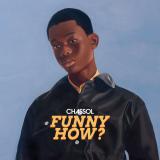
Funny How? is Christophe Chassol’s fifth album.
While it builds directly on his work with the “Ultrascores,” it also marks a turning point: a more contemporary sound, broader songwriting, and more explicitly political and social themes make Funny How? his most accomplished album to date. It’s also his most accessible: inspired by American stand-up comedy, Funny How? sounds like a joyful mix of all the music that inspires the artist: soul, jazz, rap, musicals… Thus, throughout the album, major stand-up figures like Dave Chappelle, Marina Franklin, Dulcé Sloan, and Tiny Thickemz appear alongside emerging comedians filmed in more intimate comedy clubs, composing a moving portrait of the new American scene.
Drawing on archival footage and sequences shot for the project in New York and Chicago, and true to his principle of harmonizing reality, he reveals its hidden notes, replaying and developing them throughout a fascinating process. The result is a major work, a choral, political, and deeply musical narrative. In concert, the work unfolds majestically through a hybrid performance where music and images respond to and converse with one another.
The premiere of Funny How? on April 17 and 18, 2026, at the Cité de la Musique in Paris is already sold out. The album is scheduled for release on May 22, 2026.
debe ser publicado en 22.05.2026
On "Not Around But Through", Portland-based experimental musician and tape wizard Amulets
navigates the process of acceptance and the tumultuous journey of looking within. Over the course of 8 tracks he explores the emotional path of moving through rather than circumventing, in the process soundtracking a purposeful desire to face trauma and vulnerability.
Infusing his trademark ambient soundscapes with ambitious blends of post-hardcore, emo, and metal, "Not Around But Through" connects the dots between personal and social dislocation, leaving us with a taste of the fragmented and fallen future we are all steeling ourselves for. Traversing a landscape that varies from gentle and meandering to explosive and cathartic, Amulets uses cinematic tension and relentless attention to detail to construct his sonic apparitions. On "Lifelike" he collaborates with Midwife, incorporating Madeline Johnston's voice into a song that pulsates with post-shoegaze transcendent energy.
Amulets is the solo project of Portland-based audio + visual artist Randall Taylor. Amulets employs handmade cassette tape loops and live processed guitar loops to create live, lush soundscapes and immersive drones. Through the recontextualisation of cassettes, sampling, field recording, and looping, these long-form compositions blur the genres of ambient, drone, noise, and electronic music.
debe ser publicado en 21.02.2025

Fresh from beasting the end-of-year charts with her 'I Miss Your Love' remix project, Ghost Assembly, aka Manchester DJ and writer Abigail Ward, is back with a double A-side: RESIST! / I Keep on Making the Same Mistake.
RESIST! (Extended 12" Mix)
Laid down quickly and angrily after attending a demo in Manchester city centre, RESIST! aims to capture the galvanising spirit of protest and put it on wax.
A 111bpm acid chugger that will leave dancefloors of an ALFOS or Optimo persuasion begging for more, this is uncompromising machine funk at its crudest.
Duelling 303s twist around each other whilst a taut, snaking 707 groove underpins unexpected blasts of Arabic rhythm, almost as if DJ Pierre had remixed 'Get UR Freak On', relocating it to the Middle East.
As a stuttering Harper Hay vocal sample urges us to RESIST!, the track climaxes with an ice-cold acid house string coda banged out on a disobedient synth. Please note: the sub on this record may trouble your duodenum.
RESIST! (Utter Kunt Mix)
The Utter Kunt mix is a sparse and daring Sleng Teng-inspired avant-dub affair strictly for discerning dancefloors only. Improbably combining hints of the Mission Impossible theme, Les Negresses Vertes' 'Zobi La Mouche' and the rough-hewn sampling of 'Duck Rock', this is a radiant obstacle in the path of the obvious. Warning: collectors of On-U, EBM and New Beat could experience a spate of nocturnal emissions upon purchasing this record.
The A-side closes with a BONUS BEATS version of the Utter Kunt Mix: a must-have DJ tool.
I KEEP ON MAKING THE SAME MISTAKE
Picking up the pace to 120, 'I Keep on Making the Same Mistake' sees Ghost Assembly returning to her string-drenched sad banger comfort zone, pairing a chilly breakbeat with a bass riff reminiscent of Joey Beltram having a gut-wrenching cry wank. Keening vocals supplied by Hazel Grove are chopped up, tormented and eventually hurled down a K-hole as the strings build and the drama escalates.
When the credits roll on this cinematic masterpiece we hear a wistful French lesbian talking about 'borrowed bliss'.
A future comedown classic; also sounds good slowed down to 33rpm.
The E.P. signs off with a stunning string-a-pella that will linger long after the needle hits the run-out groove.
Haga su pedido ahora y le encargaremos el artículo en nuestro proveedor.

new project from Remy Pablo (The Anomalys, Weird Omen, King Khan Unlimited, Escobar), with Triple Axelle (The Silly Walks) on drums, Weird Ben (Weird Omen) on guitars and Quentin Tarantula (72 records Bruxelles) on bass. "The album is a classic case of a punk-oriented Jack-of-all Trades-Master-of-None production effort laced with influences of psyche, post-punk, and industrial. "Harder We Fall" falls into such a description with Pablo's distorted, wailing vocals over crude, looping riffs reminiscent of the early Wax Trax! releases, screaming-loud psychedelic-guitar cues taking influence from the Kiss To The Brain LP by Helios Creed album, and hard-hitting multi-tempo drum work." (Matthew Hutchison, New Noise Magazine)
debe ser publicado en 29.09.2023

Abstrakce recover this lost gem recorded in 1999 and published by Keliehor himself in a very short-run CD named "Create Music", which had almost no diffusion.
An outstanding collection of exotic tracks with a wide range of influences from primitive cultures all over the world. An unexplored region where the Minimalism concepts developed by Steve Reich, La Monte Young, or Terry Riley and renewed by Midori Takada meet Jon Hassell's 4th world ideas.
You will find here repetitive patterns that evolve and transform the sound space, unlikely instruments gathered together in a perfectly harmonic way, making flow an unusual melodic sense when the uncommon combinations of these instruments interact with one another. Simple instruments, yet exotic, primitive sound makers with complex personalities, timeless sound treasures unchanging a hundred years. Crude or sophisticated, most of the instruments, compel us to listen to them. A more flexible and wider range of tonality is discovered by limiting the number of instruments that play together and choosing those whose tones and harmonics resonate together.
The record results from a didactic project for nursery and primary school environments while searching for ideas to guide children in following the details of music. The music architectures are often transparent, even repetitive, but the culminative effect soon becomes more than that. These pieces are aural landscapes for dreams and adventures, doorways to imaginative worlds.
The Artists:
Jon Keliehor and Signy Jakobsdottir performed together in Seattle, Venezuela, and Scotland. During their stay in Seattle, both had studied gamelan music with Gamelan Pacifica under the direction of Jarrad Powell. After returning to Scotland, they continued to study and perform with Gamelan Naga Mas, in Glasgow, in projects directed by dhalang Joko Susilo, dancer/director Nyoman Wenten, and Professor Matthew Issac Cohen.
In Scotland, they created adult and children's workshops under the banner of Luminous Music. Preceding the formation of Luminous Music, Keliehor had worked as percussionist and composer with contemporary dance companies, both in London and Seattle. Following on studies in percussion music at Dartington College of the Arts, Signy moved to Seattle to begin work with Jon. The partnership that ensued brought them to Caracas, Costa Rica, Brazil and Spain to create music for the dance company DanzaHoy. In 1996, they returned to Glasgow, and continued to work together at the newly created Luminous Music Studios. Signy's involvement with musicians/groups has continued beyond this to include genres in Scottish/Celtic traditions, in Jazz, as well as music innovations of her own design.
debe ser publicado en 20.06.2023

BROODING PSYCHEDELIC REVELATIONS FROM THE STAVANGERIAN OUTSIDERCORE
The uncanny is never out of bounds in the debut release by shadowy Norwegian duo Firmaet Forvoksen. Gaute Granli and Thore Warland, two archetypes of the Stavanger experimental scene long active through solo work (Gaute Granli’s recent Ultra Eczema notoriety, for one) and other collaborative projects (Thore Warland’s ongoing drum devolutions with Golden Oriole, for another), have joined forces under multiple configurations over the years in order to finally coalesce under the FF banner. Together they project an ever-unfolding vision that sonically erodes into a radiant abyss, like some serious atonement from probable jazz school fugitives.
Undone Shal is an unfurling tapestry of erratic guitar pickings, muffled percussive conjurings, barging synths, and moans that are part lamentation, part incantation. These arrangements evoke a definite psychedelia, plunging the listener into unsettling yet luminous expanses of liminality that recall only the most brooding of outsiders. Like craggly rocks piled on top of each other forming an incomprehensible, gravity-defying tower, Firmaet Forvoksen’s disjointed musical deployments forge something lucid and concrete while grazing the edges of complete inscrutability. This strange relic of a record follows the lineage of KRAAK rosterees past and present - the KRAMPs, Ignatzes, Red Bruts and Calhau!s of our hearths - through its assemblage of crude elements that incite the universe to vomit its hidden harmonies and forcibly test the boundaries between fluency and unintelligibility. No Norwegian wood wisecracking to be made here, for these two dwell in a malleable zone where chaos aligns to draw you in, hinting at all that is obfuscated like a marching band to nowhere.
debe ser publicado en 24.02.2023

Musique Pour La Danse is proud to present the Donkey Kong Country 2 OST Recreated of the much appreciated and globally followed Donkey Kong Country OST recreation project led by NY-based composer and producer Jammin’ Sam Miller.
Using hex SPC data crudely converted to MIDI, Jammin' Sam Miller painstakingly recreated DKC's soundtrack note by note, by finding the original equipment used to create it, translating the MIDI into a modern studio context, adding in keyboard samples, and re-mixing the sounds with added effects and mastering. To find out more about his process watch an explanatory video here: cutt.ly/ulUHE6J
Remastered for vinyl, licensed, and presented in a limited edition green forest double LP.
Haga su pedido ahora y le encargaremos el artículo en nuestro proveedor.

Recorded both in Spain and Finland, the 13-track album Myriadi documents Tatu Rönkkö and Raúl Pastor Medall's first standalone collaboration, entirely created, performed and mixed by the pair. With Myriadi, the two artists walk listeners into a world that somehow manages to feel ancient and modern at the same time. It is peaceful and dreamy but also raw, solemn and unsettling. Tatu's improvisational, crude and almost ritualistic sonic approach blends in seamlessly with Raúl's more melodic and melancholic schemes of composition. With its simplicity and clarity, Myriadi belongs in the realms of dark ambient and drone as much as it belongs to a tradition of minimal acoustic music. Myriadi embraces loose ends, harmonic freedom and even atonality; regardless of whether it involves the sound of glass-blowing water bottles, a small Finnish harp, bell-like sounding metal plates or piano strings played with paint brushes and sticks, the overall improv-based character of the project gives Myriadi a primal, unpredictable and meditative feel. This spontaneous study of form and timbre has room for bold rhythmic pieces played with a drum set consisting of six floor toms, but also for hypnotic chants of granular flute-like sounds and spoken word poetry (featuring voices by Raúl and Tatu's moms). The spontaneity and lack of premeditation that permeate through Myriadi paradoxically reinforce the cohesiveness of the record, reminding us that sometimes creativity really benefits from avoiding too much analysis and overthinking. Rauelsson (Raúl Pastor Medall's musical moniker) and Tatu Rönkkö met in 2015 through common friends. They both have released music on the Berlin-based label Sonic Pieces and have collaborated on stage and in the studio on a number of occasions. Tatu appeared as a guest musician on Rauelsson's Mirall (2018) and contributed significantly on some film and TV projects that Raúl has worked on for the last couple of years. For the recording sessions of the dystopian TV Series Anna (2021) Tatu travelled to Spain where they explored countless rhythmic ideas with relatively untraditional instrumentation. These free and relaxed creative meetings led to other recording sessions completely unconnected to any scoring project, planting the seed for what Myriadi would become. RIYL: Ben Salisbury and Geoff Barrow, Alva Noto and Ryuichi Sakamoto, Jefre Cantu-Ledesma, Rafael Anton Irisarri, Brian Eno TRACKLIST: A1 Rombo A2 Vidre A3 T A4 Keinu A5 Ryminä A6 Ö B1 K B2 Silta B3 Golondrina B4 U B5 Kuvakudos B6 Pont B7 Muinoin
debe ser publicado en 16.12.2022

"Black Truffle proudly presents The Refrain from Melbourne-based artist Francis Plagne, whose growing catalog of collaborative and solo releases range from song-based work to abstract audio collages.
Closely aligned with Plagne's Moss Trumpet LP (released by Penultimate Press in 2018), The Refrain’s two side-long tracks mix sounds of the mundane with the otherworldly; rising, receding and overlapping. The result feels like being led through a series of scenes devoid of context or direction. Furthermore, it’s hard to define the scenes as either inviting or disconcerting, as they’re often both at the same time. As the record progresses sounds reappear and are juxtaposed so as to only hint at the familiar. A hall of mirrors, perhaps?
Completed in 2020 using material recorded from 2012-2020, the record uses tapes of shelved, unfinished, and forgotten projects that featured field recordings from various locations, domestic sounds of plastic bottles, bubble wrap, creaking chairs, voice, and instrumental recordings, including an appearance from crys cole on Casio. These pieces were re-amped, processed and edited, then additional instrumental pieces featuring synths, guitars, plastic saxophone, melodica, and percussion were added, the results shaped into drifting, episodic assemblages.
Although essentially a tape piece, The Refrain presents as a crude, non-idiomatic composition that feels both timeless and transitory. It’s a million miles from the polish and rigour of GRM, perhaps more in line with Jacques Bekaert’s eponymous Igloo LP, or Costin Miereanu’s Luna Cinese. The Refrain could be read as a psychedelic Krapp’s Last Tape; one man’s response to listening through forgotten and discarded tapes, reflecting, reconciling, and forging a new path. A potent tonic for these absurd times."
-- Nick Hamilton, August 2021
Haga su pedido ahora y le encargaremos el artículo en nuestro proveedor.

Black Truffle is delighted to offer up a rare serving of unheard works by legendary Swiss artist Anton Bruhin. Active as a visual artist, poet, and musician since the 1960s, Bruhin has created important work in forms as varied as concrete poetry and landscape painting, imbuing everything he does with wit, humility, and absurdist humour. A recognised master of the jew’s harp (or Trümpi, as this ancient folk instrument is known in Swiss German), Bruhin’s sound work also encompasses tape collage, sound poetry, and manipulated bird song. On Speech Poems/Fruity Music we are treated to 26 short pieces made between 2006 and 2008 using the audio software Fruity Loops. These pieces carry on Bruhin’s long-running project of exploring the creative use and misuse of cheap, accessible technologies. In many of his analogue works, Bruhin explored the possibilities of simple cassette equipment. He invented DIY approaches to layering sounds by using multiple tape machines, experimented with distortion and tape speed, or, in his classic Inout (1981) created a maniacally single-minded audio monument to the pause button. Like the computer pixel drawings the artist produced around the same time as these recordings, Speech Poems/Fruity Music extends this approach to consumer software, presenting two parallel sequences of works that make use of Fruity Loops’ inbuilt synthetic instruments and its speech synthesis function. The instrumental works play like a twisted take on the aesthetics of 1980s video game soundtracks, using synthetic accordion and harpsichord sounds to realise jaunty little ditties that exploit their machine-realisation by making use of improbable pitch-bends and humanly impossible tempos and articulations. Between these samples of Fruity Music, we are treated to the Speech Poems, a series of recitations by a lone computer-generated voice. Many of them are in fact songs, as the synthetic voice crudely and hilariously changes pitch as it moves through its fragmented syllables and odes to cream in coffee. Carrying on Bruhin’s interest in the creative misuse of technology, many of the Speech Poems attempt to force Fruity Loops’ voice synthesis, designed only to speak English, to speak German. By entering phonetic text into the program, Bruhin gets it to produce a passable German alphabet and a series of approximations to a proper pronunciation of his name. Hilarious while strangely austere, entertaining but bizarre, Speech Poems/Fruity Music is classic Anton Bruhin, arriving in a beautiful mosaic cover by the artist, with the text of the ‘abc für anglophone’ on the back cover.
Haga su pedido ahora y le encargaremos el artículo en nuestro proveedor.

'Garage bands suddenly obtain cult status and become the antithesis of their initial appeal'
Garage Class were a group of reluctant outliers who produced one of the finest contributions to the wave of UK DIY music that emerged during the late 70s and early to mid-80s.
Hailing from Alsager in North West England and comprised of Tim Shutt (vocals) Phil Murphy (lead guitar) Clive Williams (guitar) Lynne Sanders (bass) and Phil Bourne (drums / bass on studio recordings) Garage Class originally went by the name of The Pits before their then manager Steve Hurt imposed an alias which, though unpopular within their ranks, would nevertheless reflect the shambolic art they would eventually capture on their first and only single.
As The Pits the group offered a loutish inflection on glam-punk flamboyance, evoking Johnny Thunder hitting the north and remaining disowned yet undeterred in a dreary old boozer. But as Garage Class the group distilled a roughcast and homespun primitivism that felt quintessentially their own. In this they proved too unruly to be assimilated into any wider scene. Early gigs descended into acrimony and recognition proved elusive. Yet what they managed to make back then now sounds like an extraordinary article of underdog ambition.
Released in 1984, four years after it was originally recorded, the Terminal Tokyo single is an unlikely triumph of exceptional messthetic punk. Though raw and unpolished the songs here are precariously pop-minded and indisputably anthemic. The titular A-side reveals the dry and detached drawl of Shutt aka The Subliminal Kid, a sharp, jaded and poetic voice that has some of the most iconic lines never heard in punk. Accompanied by second-hand guitars, on-the-fly handclaps and a chorus like a terrace chant this is the cult hit that never was, a heroically artless masterpiece that has all the ragged character and misfit euphoria of Swell Maps and The Buzzcocks if they were more impulsive and boisterous, and left to their own devices in the remote margins of a Cheshire town. The original B-side is here substituted for I Got Standards, a track that, until now, has somehow remained unreleased. An ideal twin to Terminal Tokyo there's the same brusque and dog-eared quality to the band's delivery, as well as the same upfront emphasis on strong hooks and insistent momentum. Yet again, Shutt is on impeccable form, perfecting an inflated, adolescent antagonism that has all the sardonic, malcontented charm of similarly 'shirty' buggers like Dan Treacy (Television Personalities), Patrik Fitzgerald and Mark Perry (Alternative TV).
Although never accepted in their own time both tracks represent a brief but inspired moment of fervent imperfection, one that epitomized the best of a diffuse and autonomous underground movement spearheaded by The Desperate Bicycles and built upon by the likes of Amos & Sara, The Homosexuals, The Cleaners From Venus and Family Fodder. Like them Garage Class were situated at a point where punk, art, humour and a sense of stubborn independence all intersected.
In the years since Terminal Tokyo has accumulated a retrospective appeal among certain trusted circles, with Jon Dale celebrating the single in his exhaustive and essential Story of UK DIY for Fact Magazine, and original copies regularly changing hands for a foolish forty quid or so. With this inaugural release on the Outer Reaches label Terminal Tokyo is not only restored for the very first time but given a worthy expansion courtesy of JD Twitch (Optimo).
Continuing his own fascination with the fringe history of UK DIY - documented on his own outstanding compilation Cease & Desist: DIY! (Cult Classics From The Post Punk Era 1978-1982) and in his re-edits of Crass Records classics for an early release on RVNG INTL - Twitch reinterprets I Got Standards as an incisive, dubwise outing that pictures Jaki Liebezeit and Muslimgauze on a bender in England's provinces, tasked with remixing the raw product of local punks. A new slant on Garage Class' crude magnificence, built to play loud on contemporary soundsystems.
Although the latter part of 1980 spelled the end for Garage Class with members moving on to other projects (Bourne fell in with The Colours Out of Time, Murphy went on to front The Regular Guys and Shutt eventually left to form Happy Refugees) this reissue attempts to give their fleeting time together and the unique single statement they made the treatment it deserves. If this means Garage Class have obtained cult status, their initial appeal remains. Just listen for yourself.
Haga su pedido ahora y le encargaremos el artículo en nuestro proveedor.
