ORKA is a duo comprising Francine Perry from London and Jens L. Thomsen from the Faroe Islands. They crossed paths in the vibrant club scene of London, an immersive world that had a profound impact on their creative journey. ORKA's music draws inspiration from the Hardcore Continuum and UK sound system culture, blending it with elements of minimal techno, progressive electro, and ambient music, resulting in a diverse range of stylistic influences. Now ORKA emerges with their long-awaited new album. Once again, they greet us with their distinct blend of earthy tones and a bold, adventurous spirit, taking us to a realm bursting with neon-lit hues, pulsating club beats, and an abundance of sensory stimulation. Aptly named "All At Once," the album title provides a clue to the auditory and sensory experience that awaits the listener in this immersive record. ORKA has continuously evolved as a project over many years and iterations, embracing fluidity and a relentless quest for fresh sonic amalgamations. Their journey has been marked by a gradual refinement, stripping away layers to reach the core essentials. This transformative process has unfolded over the years, reaching from their site-specific, cowshed sampling and band-based expedition in "Livandi oyða" (2007) to the bold, innovative exploration of minimalist techno in "Vað" (2016). However, their latest release, "All At Once," signifies yet another remarkable leap forward in their artistic evolution. The seeds of this artistic progression were already planted in previous releases like the <13 EP (2017) and the hard-hitting techno single "Juno" (2018). However, it is with the arrival of the album "All At Once" that ORKA's vision fully blossoms, unveiling a vivid and expansive sonic landscape. This latest offering presents a glorious and vibrant tapestry, showcasing a maximalist approach to techno that pulsates with energy coupled with their signature meticulous attention to sound design, reflecting a deep awareness and intentionality in their creative process. If this album was to be thought of as a place, it would be a shimmering, futuristic, buzzing kind of city with vibrating night-time drizzle from above and endless glowing lights in the distance. Several of the tracks are built around cut-up vocal samples that are divided from their semiotic meanings and reconfigured as loops, and thus mined for their timbral and percussive qualities. Recurring collaborators South London duo LV (Hyperdub, Keysound, Brownswood) are featured on a handful of these tracks, mixing in their complex cocktail of grime and bliss. The result is a sort of queer erotic dance-floor mysticism, and the closest to a full-blown dance record that ORKA have ever made. There must be a club in that shimmering futurist city of the night.. and it is a collective, inclusive and alluring place. There is no need to fear any dancefloor exhaustion by listening to this album though, as there are also moments of floating cyber beauty and pure enveloping warmth to be found among its tracks. As always, following the artistic journey of ORKA is a joyous experience, filled with unexpected twists and turns that keep us captivated.
BOTANICA is the newly established Japanese label created by DJ/ Producer, Iori Wakasa. It was formed for him to utilize it as a foundation for the realization of his own unique, artistic expression.
And now, he has the pleasure to announce his label’s inaugural title with the release of his own BOTANICA EP.
Born in 1988 in a rural Japanese city surrounded by mountains and the sea with a mild climate, Iori grew up playing RPGs with a father who was a devoted game aficionado. And he was introduced to electronic music through game music from an early age and formed his musical sensibilities through playing the classical piano around the same time.
Influenced by the spirituality and idiosyncrasies of punk rock and ethnic and indigenous music in his youth, also gradually influenced by the Tokyo club scene and the music, it didn't take him long before
he made the choice to start DJing at the age of 17 and soon afterwards, started exploring the path of music production as a form of self-expression.
Iori set up Botanica to convey 2 main concepts of 'presenting music that provides each listener with their own viewpoint' and ‘to construct a fusion between 'nature' and 'man-made objects and human
activity’. Through the experience of traveling around Japan, Europe and Asia and connecting with people of different languages and cultures, he became to appreciate that music transcends all languages and grooves, and the framework in which he would like to shape his perspective and embody it as his way of life is what he envisions as the vital expression for BOTANICA, The two tracks and the artwork included in this first EP are the first steps towards hopefully chronicling the story of the vortex that he resides in now and the new forest that he plans to weave in the future with his label.
'The Pure Land' means in Japanese 'Gokuraku-Jodo (= a space where you can live in bliss)', but in English it is closer to 'utopia' or 'paradise'. However, 'The Pure Land' is a musical work that evokes a
hypnotic and pleasant euphoria through the gradual layering of multiple rhythms and soft particles of spatial sound design. It is also shaped with the aim of liberating the listener and guiding them towards their primal self.
In contrast, 'Lunar Down' expresses the changes that occur in the human state of mind during the extended period from moonrise to moonset especially when the moon sets from its zenith and is completed with a focus on maximum dance floor impact via an inner voice that resonates in the brain that echoes throughout a well-textured bass line and rhythm track.
The artwork for the front cover of this EP was created by SHINOZAKI HILOSHI, an illustrator who has been traveling and painting to express his true way of life that he learnt in the 10+ years of commuting between Tokyo (the end) and the Hawaii Islands (the beginning), and the graphic designer hiro, who stands by Iori`s side as his life partner and as the person who understands him the best. Iori`s first steps are complemented by the label design and art direction by graphic designer hiro, who stands by his side as his life partner and most understanding partner, and the proof is the physical cut, which is presented as the foundation for the future.
out of Stock
Last delivered 20 months ago available to reorder, subject to availability
Le Magnifique is a cult film. Many a viewer has memorized the lines of this character, whose role was tailor-made for Jean-Paul Belmondo. In the year of our Lord 1973, Belmondo reunited with director Philippe de Broca, a pair who, decades before the Jean Dujardin version of OSS 117, were unknowingly making meta cinema. The film's soundtrack, by Claude Bolling, successfully navigates between the first and second degree, without ever sinking into the clumsiness of "fantasy music". For the record, Claude Bolling is none other than the chief composer of the all-female group Les Parisiennes and of some 100 film scores, including Borsalino, which is certainly the best-known. Above all, he is a genius of French jazz, whose talent makes his music sound relaxed and familiar, even when you're listening to it for the first Tme. From the very first track on the album, "TaQana", postcard images of Mexico spring to mind. Claude Bolling plays with the codes of film music without ever losing a certain communicaTve jubilaTon. With the soundtrack to Le Magnifique, Claude Bolling equals the Anglo-Saxon masters of the easy-jazz pop genre, such as Henri Mancini. Fans of jerks to dance to at the ambassador's parTes will be delighted by the composiTon "Pop Mod". Even today, those who invented the term "lounge core" would go out of their way to own an original Claude Bolling vinyl. Thanks to Claude Bolling and his original French Touch, before thedays of Dimitri From Paris and Bob Sinclar who, if they hadn't been able to take advantage of this musical and cinema to graphic heritage, wouldn't have had anything to sample.
'A bold voice for a frustrated generation, Mae Muller makes pop music that packs a real punch, and her debut album is no exception. The 17 track LP is full of songs that are deeply personal yet demonstrate her deft ability
to celebrate the female experience at large, capturing the mood of her generation with playful precision. Mae explores love and loss, dating and relationships with fearless honesty, confronting her own experiences whilst also capturing the broader frustrations of young women today. Whilst a fierce feminism often informs her songwriting, her new music exposes a much more vulnerable side. Beginning a dynamic new era, 2023 has been an incredible year for Mae. In January she was chosen to represent the UK at the 67th Eurovision Song Contest in Liverpool with dance-pop anthem, ‘I Wrote A song’. Following the show, the track became the No.1 trending song in the UK and charted Top 10 this week, giving Mae her first top 10 single.
Following the success of their EPs released last year on Scissor and Thread, Frank & Tony return with another outing of deeper than deep house with a three track EP including an expansive collaborative exploration with Comatonse recording artist Will Long.
The title track, Understanding takes a nod to 90s Chicago deep house with a slow rolling groove set against plush pads and euphoric stabs sure to send dancefloors swirling in the earliest of nights and mornings alike. We Begin, a dreamy trip of emotive soundscapes, kicks things up a notch with jazzy undertones but a drive meant for peak times as it unfolds in moods and grooves for ages.
The EP then culminates with a vast rework of the same track in collaboration with Comatonse artist and DJ Sprinkles collaborator, Will Long, pushing the EP to psychedelic lengths as the essence of what we call a house groove reaches new idiosyncratic heights. Essential.
out of Stock
Last delivered 20 months ago available to reorder, subject to availability
'This will be his first greatest hits record. Includes his five #1 hits “Your Man” – certified 4x platinum by the RIAA, “Would You Go With Me” certified 3x platinum by the RIAA, “Why Don’t We Just Dance,” certified double-Platinum by the RIAA; “All Over Me,” certified Gold by the RIAA; and “Hometown Girl,” certified double-Platinum by the RIAA. Turner has sold more than six and a half million records, and reached five and a half billion global streams. Socials: FB: 3.25M, TW: 541,561, IG: 213,480, YT: 1.09M, TT: 611,100. Formats: CD, LP (Ivory).
Foxbam Inc is a new label from underground Scottish talent Foxtrot and countryman and long-time acid lover Egebamyasi. Both feature on this first EP which is a various artists affair inspired by many years of playing and partying in the dance world. HIs 'Freaky Foundations' kick off with flat-footed and hard-assed techno, then comes Mr Gasmark who has roots in back metal but loves "a dark acid cocktail". He serves up a high-octane 303-laced monster banger here in the form of a remix of Araknoid. Egebamyasi's 'Fryer State Of Unconsciousness' is a wall of distorted noise and sheet metal synths that never let up. Last of all is a remix from Mark Archer, half of the legendary Altern8, and here offers up a jacking house cut with fat acid lines tearing it up.
out of Stock
Last delivered 2 years ago available to reorder, subject to availability
Alex Silvi also known as Alien Signal is an Italian composer who profoundly tasted the creation and evolution of electronic dance music. He grew his music interest during the late 80s in Belgium under the strong ascendancy of key venues such as La Rocca, Boccaccio, and Fuse. Consequently moving to Rome in the early 90s where the techno scene was flourishing. In 1992 released on Upland Recordings, managed by S.Paganelli author of Defcon 5 And Altitude, the album "Alien Signal" - "The Search Begins" including the track called "Atomic", which very soon became one of the anthems for the Roman techno hood of that time. Superluminal Recordings is honored to guide you through trance-progressive themes of evangelical nostalgia. "Circularity" induces inner meditation due to melancholic strings and slow-descending ethereal scenarios, fresh-tasting melodies blended into soft-decaying instrumental charm. All compositions have been re-collected from an early 90s Alien Signal archive.
out of Stock
Last delivered 20 months ago available to reorder, subject to availability
The most famous songs of one of the greatest names in the history of Musical in Broadway and who has his star on the Walk of Fame in Hollywood. Including "Cheek To Cheek", "Steppin" out with My Baby"...
These are the kinds of things I learned from my teacher and mentor, the incredible Ukrainian pianist Mikhail (Misha) Alperin. Misha turned my world upside down from the moment we met. I was 19 then, and he continued to have a huge influence on me ever since. We didn't see each other very often in later years, but every time we did, I was filled with energy and inspiration. And in every meeting, he said at least one little thing that I would think about for months afterwards, whether it was during a brief conversation in the academy hallway, or a two-hour monologue in his office. He was intense. He celebrated life and love.
He was singing, dancing and certainly living through his music. His death has left a void in our world that can never be filled, and he is sorely missed. Helge Lien, December 2022
A.R. Kive collates the three most astonishing works from that most miraculous of duos - A.R. Kane - comprising the ‘Up Home’ EP from 1988 that signified the band’s dawning realisation of their own powers and possibilities, their legendary debut LP ‘sixty nine’ (1988) and its kaleidoscopic, prophetic double-LP follow up ‘i’ (1989).
In founder-member Rudy Tambala’s new remastering, the music on these pivotal transmissions from the birth of dream pop, have been reinvigorated and re-infused with a new power, a new depth and intimacy, a new height and immensity. Vivid, timeless and yet always timely whenever they’re recalled, these records still force any listener to realise that despite the habits of retrospective myth-making and the
safe neutering effects of ‘genre’, thirty years have in no way dimmed how resistant and dissident to critical habits of categorisation A.R. Kane always were. Never quite ‘avant-pop’ or ‘shoegaze’ or ‘post-rock’ or any of those sobriquets designed to file and categorise, A.R. Kive is a reminder that those genres had to be coined, had to be invented precisely to contain the astonishing sound of A.R. Kane, because
previous formulations couldn’t come close to their sui generis sound and suggestiveness. This is music that pointed towards futures which a whole generation of artists and sonic explorers would map out. Now beautifully repackaged, remastered and fleshed out with extensive sleeve notes and accompanying materials, ‘A.R. Kive’ reveals that 35 years on it’s still a struggle to defuse the revolutionary and inspirational possibility of A.R. Kane’s music.
A.R. Kane were formed in 1986 by Rudy Tambala and Alex Ayuli, two second-generation immigrants who grew up together in Stratford, East London. From the off the pair were outsiders in the culturally mixed (cockney/Irish/West Indian/Asian) milieu of the East End, with Alex and Rudy’s folks first generation immigrants from Nigeria and Malawi, respectively. The two of them quickly developed and fostered an innate and near-telepathic mutual understanding forged in musical, literary and artistic exploration. Like a lot of second-generation immigrants, they were ferocious autodidacts in all kinds of areas, especially around music and literature. Diving deep into the music of afro-futurist luminaries such as Sun Ra, Miles Davis, Lee Perry and
Hendrix, as well as devouring the explorations of lysergic noise and feedback from contemporaries like Sonic Youth and Butthole Surfers, they also thoroughly immersed themselves in the alternate literary realities of sci-fi and ancient history (the fascination with the arcane that gave the band their name), all to feed their voracious cultural thirsts and intellectual curiosity.
It was seeing the Cocteau Twins performing on Channel 4 show the Tube that spurred A.R. Kane into being - “They had no drummer. They used tapes and technology and Liz Fraser looked completely otherworldly with those big eyes. And the noise coming out of Robin’s guitar! That was the ‘Fuck! We could do that! We could express ourselves like that!’ moment”, recalls Tambala - and through a mix of
confidence, chutzpah, ad hoc almost-mythical live shows and sheer innocent will the duo debuted with the astonishing ‘When You’re Sad’ single for One Little Indian in 1986. Immediately dubbed a ‘black Jesus & Mary Chain’ by a press unsure of WHERE to put a black band clearly immersed in feedback and noise, what was immediately apparent for listeners was just how much more was going on here - a
tapping of dub’s stealth and guile, a resonant umbilicus back to fusion and jazz, the music less a conjuration of past highs than a re-summoning of lost spirits.
The run of singles and EPs that followed picked up increasingly rapt reviews in the press, but it was the ‘Up Home EP’ released in 1988 on their new home, Rough Trade that really suggested something immense was about to break. Simon Reynolds noted the EP was: Their most concentrated slab of iridescent awesomeness and a true pinnacle of an era that abounded with astounding landmarks of guitar-reinvention, A.R. Kane at their most elixir-like.
If anything, the remastered ‘Up Home’ that forms the first part of ‘A.R. Kive’ is even more dazzling, even more startling than it was when it first emerged, and listening now you again wonder not just about how many bands christened ‘shoegaze’ tried to emulate it, but how all of them fell so far short of its lambent, pellucid wonder. This remains intrinsically experimental music but with none of the frowning orthodoxy those words imply. A.R. Kane, thanks to that second generation auto-didacticism were always supremely aware about the interstices of music and magic, but at the same time gloriously free in the way they explored that connection within their own sound, fascinated always with the creation of ‘perfect mistakes’ and the possibilities inherent in informed play.
‘sixty nine’ the group’s debut LP that emerged in 1988 had
critics and listeners struggling to fit language around A.R. Kane’s sound. As a title it was telling - the year of ‘Bitches Brew’, the year of ‘In A Silent Way’, the erotic möbius between two lovers - and as originally coined by the band themselves, ‘dream pop’ (before it became a free-floating signifier of vague import) was entirely apposite for the music A.R. Kane were making. Crafted in a dark small basement studio in which Tambala recalls the duo had “complete freedom - We wanted to go as far out as we could, and in doing so we discovered the point where it stops being music”. There was an irresistibly dreamy, somnambulant, sensual and almost surreal flow to ‘sixty nine’s sound, but also real darkness/dankness, the ruptures of the primordial and the reverberations of the subconscious, within the grooves of remarkable songs like ‘Dizzy’ and ‘Crazy Blue’. Alex’s plangent vocals floated and surged amidst exquisite peals of refracted feedback but crucially there was BASS here, lugubrious and funky and full of dread, sonic pleasure and sonic disturbance crushed together to make music with a center so deep it felt subcutaneous, music constructed from both the accidental and the deliberate, generous enough to dance with both serendipity and chaos. ‘sixty nine’ remains - especially in this remastered iteration - ravishing, revolutionary.
The final part of this ‘A.R. Kive’ contains 1989’s astonishing double-LP ‘i’ which followed up on ‘sixty nine’s promise and saw the duo fully unleash their experimental pop sensibilities over 26 tracks, plunging the A.R. Kane sound into a dazzlingly kaleidoscopic vision of pop experiment and play. Suffused with new digital technologies and combining searingly sweet and danceable pop with perhaps the duo’s strangest and boundary-pushing compositions, the album did exactly what a great double-set should do - indulge the artists sprawling pursuit of their own imaginations but always with a concision and an ear for those moments where pop both transcends and toys with the listeners expectations. Jason Ankeny has noted that “In retrospect, ‘i’ now seems like a crystal ball prophesying virtually every major musical development of the 1990s; from the shimmering techno of ‘A Love from Outer Space’ to the liquid dub of ‘What’s All This Then?’, from the alien drone-pop of ‘Conundrum’ to the sinister shoegazer miasma of ‘Supervixens’ — it’s all here, an underground road map for countless bands to follow.” Perhaps the most overwhelmingly all-encompassing transmission from A.R. Kane, ‘i’ bookended a three year period in which the duo had made some of the most prophetic and revelatory music of the entire decade.
After ‘i’ the duo’s output became more sporadic with Tambala and Ayuli moving in different directions both geographically and musically, with only 1994’s ‘New Clear Child’ a crystalline re-fraction of future and past echoes of jazz, folk and soul, before the duo went their separate ways. Since then, A.R. Kane’s music has endured, not thanks to the usual sepia’d false memories that seem to maintain interest in so much of the musical past, but because those who hear A.R. Kane music and are changed irrevocably, have to share that universe which A.R. Kane opened up, with anyone else who will listen. Far more than other lauded documents of the late 80s it still sounds astonishingly fresh, astonishingly livid and vivid and necessary and NOW.
Here John Cohen, Mike Seeger, and Tracy Schwartz provide backing for Cousin Emmy, the skilled banjo player, fiddler, and singer, whose legacy as a country music pioneer is cemented in the memories of those who heard her animated performances onstage and on the radio. This album contains some of her only recorded material, including several of her own compositions along with selections of old-time and bluegrass repertoire.
Queer tweemo from the pop fringe of Little Rock, Arkansas's thriving '90s DIY scene. Paper Airplanes, Paper Hearts gathers Everyone Asked About You's complete recorded works, including the Let's Be Enemies LP and their two and a half 7"s released between 1997-2000. Remastered from the original DATs for maximum nostalgic crunch, this deluxe 2xLP is housed in a gatefold tip on sleeve and includes a 20-page book crammed with flyers, photos, lyrics, and an extensive essay on this crucial missing link between midwest emo and the Moog synthesizer.
out of Stock
Last delivered 3 years ago available to reorder, subject to availability
Queer tweemo from the pop fringe of Little Rock, Arkansas's thriving '90s DIY scene. Paper Airplanes, Paper Hearts gathers Everyone Asked About You's complete recorded works, including the Let's Be Enemies LP and their two and a half 7"s released between 1997-2000. Remastered from the original DATs for maximum nostalgic crunch, this deluxe 2xLP is housed in a gatefold tip on sleeve and includes a 20-page book crammed with flyers, photos, lyrics, and an extensive essay on this crucial missing link between midwest emo and the Moog synthesizer.
Queer tweemo from the pop fringe of Little Rock, Arkansas's thriving '90s DIY scene. Paper Airplanes, Paper Hearts gathers Everyone Asked About You's complete recorded works, including the Let's Be Enemies LP and their two and a half 7"s released between 1997-2000. Remastered from the original DATs for maximum nostalgic crunch, this deluxe 2xLP is housed in a gatefold tip on sleeve and includes a 20-page book crammed with flyers, photos, lyrics, and an extensive essay on this crucial missing link between midwest emo and the Moog synthesizer.
New Zealand disco-boogie outfit Flamingo Pier plant some Brooklyn roots with their fresh new ‘Beneath the Neon EP’ on Razor-N-Tape. Known for parties in East London and their massive hometown festival, as well as previous releases on Soundway, the Kiwi collective deliver a trio of new songs that solidify and expand their signature danceable blue-eyed indie-soul sound.
Lead off single 'How 2 Feel' shows a clubbier side of the band, with a pulsating house rhythm track and layers of angular synth stabs, vibey horn lines, and vocal chants. 'Beneath the Neon' and 'Remedy' are more familiar Flamingo Pier territory, upbeat indie disco anthems that boast incendiary vocal hooks, funky guitar work, and crisp production by Luke Walker.
Rounding out the EP are remixes by Chicago house legend Glenn Underground, and RNT co-head JKriv, whose mix features a guest appearance by Afro-boogie royalty Steve Monite.
Oozing with hazy sun, Beneath the Neon is the perfect soundtrack to soak up the dog days of summer.
Coming in blazing-hot off the heels of their very welcome reunion set for the recent Glossolalia LP, Dave Aju & The Invisible Art Trio are apparently out for no mercy here on their potent Elbow Grease debut for the label’s third offering.
“Next 2 You” was a deep jam session-based composition started overseas some 8+ years back in an earlier
incarnation, with the raw-edged flavors and voodoo feels of the OG underground era and has now been unearthed and blessed for pure dancefloor detonation by the everelusive LA-based musical squad.
out of Stock
Last delivered 3 years ago available to reorder, subject to availability
This release heralds the launch of a new 7” series from Mr Bongo. In partnership with London-based DJ and digger, Miche, the series will feature his latest discoveries, as well as choice cuts, taken from his 'With Love' compilations. For the inaugural offering, we take a trip to hazy San Francisco, California, in 1977. Smoke, Inc. were an emerging band in the Greater San Francisco Bay area and a regular fixture in the buzzing live music scene. They had a strong following and were in rotation in most of the Bay area clubs, as well as opening for numerous prestigious acts such as Sly & The Family Stone, Taj Mahal, The Pointer Sisters and Toots and The Maytals. Members of the group worked with Jimi Hendrix, Stevie Wonder, Frank Zappa, Martha Reeves & The Vandellas, and many others considered the cream of the crop of the music world.
Smoke, Inc. featured Roy Schmall on keyboards and vocals, Stan Terry on lead vocals and harmonica, Michael 'Ollie' Schotka, on bass and vocals, Keith Stafford on drums and vocals, and Archie Williams Jr on guitar. They went on to release one 12" EP and two 7" singles. One of those 7’s included 'Waitin' For Love’. It was first released in 1977 and came out on the band's own self-titled imprint. It has gone on to become their rarest and most sought-after recording, now fetching up to an astonishing £2,500 on Discogs. It is a breezy, feel-good, modern/crossover soul beauty, with an infectious sing-along chorus, floaty flute solo, and packed with pure, uplifting dancefloor energy. The B-side features a cover version of the Holland Dozier & Holland-penned classic 'It's the Same Old Song’, made famous by the Four Tops.
Miche enthuses, “I included this gem on my first ‘With Love’ compilation and knew that it deserved its own dedicated reissue complete with original artwork. I’m delighted to get the chance to make that happen for this incredible, soulful AOR glide from a band that is well due another round of appreciation. It’s very rare, and consequently very expensive, so here it is for you all to spin and add to your record collections.”
46 years since its original release, it is our privilege to help Roy and the gang’s light shine once again and let a whole new audience relish the beautiful sounds of 'Waitin' For Love'.
out of Stock
Last delivered 2 years ago available to reorder, subject to availability
On the 25th August, Burna Boy will release his brand-new album ‘I Told Them…’. It will be available to stream everywhere as well as on CD & Vinyl. The Pre-order will go live alongside the album announce on the 28th July. ‘I Told Them…’ features Burna’s newest hit singles ‘Sittin’ On Top Of The World (feat. 21 Savage)’, ‘Talibans II’ & ‘Big 7’ as well as a whole host of album features.
Burna Boy was born Damini Ogulu in Port Harcourt, Rivers State, Nigeria, in 1991 and began making music at just ten years old. As a teenager he honed his craft on Nigeria’s southern coast, delving into dancehall, reggae and Afrobeat’s. In the early 2010s Burna Boy emerged as one of Nigeria’s fastest-rising stars, combining influences from his Nigerian heritage with hook-filled pop stylings to create unforgettable tracks. His 2012 single ‘Like to Party’ broke into the global mainstream and paved the way for his full-length debut L.I.F.E, a year later.
Over the next five years, Burna Boy released two more albums and collaborated with a long list of high-profile artists including J Hus, Skales, Fall Out Boy and Lily Allen. African Giant was released in 2019 followed by his fifth album Twice as Tall in 2020 (which featured collabs with Chris Martin and Youssou N'Dour), both charted in several countries across the globe andgarnered worldwide acclamation, with the latter winning a Grammy Award for ‘Best Global Music Album’. Breaking cultural boundaries, he became the first Nigerian to headline a show at New York’s Madison Square Garden, he released his sixth album, Love, Damini, last year (featuring collabs with the likes of Ed Sheeran and Khalid). It deservedly became the highest-charting Nigerian album in history and currently holds the record for the only African artist to earn a no. 1 on iTunes in 16 countries worldwide.
out of Stock
Last delivered 2 years ago available to reorder, subject to availability
The fourth EP from HOMO-CENTRIC Records presents GIDEÖN's broad musical vision, with tracks that span genres such as house and techno, as well as other influences, and includes his latest offering, “A Road Called Destiny”, his headiest offering yet and hot on the heels of previous anthem “Brighter Day”. This latest gospel belter has been tearing up dancefloors all summer and the track reaches euphoric heights comparable with the Baptist sermons featured in the house classics from the likes of Kerry Chandler and Robert Hood. "Hector’s Revenge" is a dark sleazy queer techno anthem already slaying Berghain’s main floor, "Vasquez Goes East" is a "raw basement cut that tips its hat to Junior Vasquez’s Sound Factory classic "Get Your Hands Off My Man” whilst “Fridays” serves up classic Swing 52 style chopped-up vocal cuts straight from vintage 90s NYC. Scope, range and diversity, but all quintessentially GIDEÖN
out of Stock
Last delivered 2 years ago available to reorder, subject to availability
RYUICHI SAKAMOTO'S LANDMARK 1981 ALBUM REISSUED FOR THE FIRST TIME IN DECADES OUTSIDE OF JAPAN. THE ALBUM WILL BE REISSUED IN ITS RARE JAPANESE EDITION TOGETHER WITH A 2-LP LIMITED EDITION FEATURING THE ALBUM PLUS A 2ND LP FEATURING ITS NEVER-RELEASED FULL INSTRUMENTAL MIX, ALL REMASTERED BY BERNIE GRUNDMAN.
Wewantsounds is proud to announce the reissue of Ryuichi Sakamoto's third solo album "Hidari Ude No Yume" (Left Handed Dream), originally released in 1981 on the Alfa label. Save for a small-scale Dutch vinyl release in 1981, it is the first time the album's original Japanese edition is released outside of Japan (the European release on Epic Records included significantly different tracks and mixes). Newly remastered from the original tapes by renowned engineer Bernie Grundman, this LP edition comes with original artwork featuring a striking cover shot by famous photographer Masayoshi Sukita (sourced from the original negative), OBI strip and 4-page insert with new introduction by journalist Anton Spice. The album will also be released as a 2-LP limited edition gatefold including the album's full instrumental mix.
Ryuichi Sakamoto's third album, "Hidari Ude No Yume" was recorded at the legendary Alfa Studio 'A' in Tokyo during the Summer of 1981. it came after "B-2 Unit" in 1980 and his debut album "Thousand Knives Of" in 1978, the very year Sakamoto was invited by Haruomi Hosono to join Yellow Magic Orchestra alongside Yukihiro Takahashi. In the process, they became global stars as the group rewrote the rules of electronic pop and toured around the world, yet Sakamoto was keen to remain active as a solo artist.
?In 1981, the musician decided to record an album rooted in Pop, following "B-2 Unit" which had a more of an experimental edge and his landmark electro debut from 1978. For this new album entitled "Hidari Ude No Yume," Sakamoto invited British producer Robin Scott, who had had huge hit with 'Pop Muzik,' to co-produce. They entered the Alfa studio in July 1981, accompanied by a handful of musicians. These included his fellow YMO musicians Haruomi Hosono and Yukihiro Takahashi, keyboard programmer extraordinaire Hideki Matsutake who'd been on Sakamoto's first two albums and became YMO's unofficial fourth member, violinist Kaoru Sato, saxophonist Satoshi Nakamura and American guitarist Adrian Belew who'd played with David Bowie, The Talking Heads' "Remain In Light" and more recently, Tom Tom Club’s debut (co-writing 'Genius Of Love').
?Together, they created a fascinating mix of pop, ambient and electronic music with elements of avant garde and traditional Japanese music, the whole firmly rooted in a solid groove. Sakamoto wanted to give the album a spontaneous feel and decided to let ideas flow and evolve organically during the sessions as musicians would develop them together. From the funk of 'Relâché' to the new wave feel of 'Venezia' and the ambient minimalism of 'Slat Dance,' the album is remarkably consistent while displaying a wealth of global influences as shown by the diversity of instruments featured on the credits: Marimba, didgeridu, traditional Japanese instruments such as the Sho and Hichiriki flutes.
?The album was released in Japan in 1981 and Epic Records picked it up for Europe a year later but decided to release it in a significantly altered version. The sequencing was completely reshuffled and two tracks, 'Saru No Ie' and 'Living In The Dark' were completely dropped while three others, ‘Relâché’, ‘Tell 'em To Me’, ‘Venezia’ were heavily remodelled with english lyrics and became 'Just About Enough', 'Once In A Lifetime' and 'The Left Bank'. Last but not least, a new English-sung track, 'The Arrangement,' was added, making the album nine tracks instead of ten for the Japanese edition.
Altogether this International version called "Left-Handed Dream" was a very different album from the Japanese one and although both were successful at the time and further established Ryuichi Sakamoto as a global solo artist, the Japanese edition of "Hidari Ude No Yume" remains largely unknown to international ears.
Wewantsounds is now delighted to release this original Japanese edition for the first time in decades as a single LP together with a 2-LP limited-edition set adding, as a bonus, its fascinating instrumental mix, discovered in the label's vaults a few years ago (Note that 'The Garden Of Poppies', 'Slat Dance' and 'Saru No Ie' are instrumentals but for the consistency of the album we kept them on the Instrumental Mix). "Hidari Ude No Yume" is an essential album in Ryuichi Sakamoto's rich discography. It is now available in its purest original Japanese form.
out of Stock
Last delivered 5 years ago available to reorder, subject to availability
Ocela can be a dance album if you want it to be, but above that, it is an album about dancing. The second instalment in a planned trilogy, it regards dance as a form of pathmaking, a physical chronology of a journey. Its voyager is the eponymous Ocela // an invented feminine form of the word steel // who wields both strength and brittleness. While the first album (Spojky Čiary) focused on Ocela's inception and youth, here she is mature // on a resolute trajectory between birth and passing away.
Ocela is not a concept album // unless you want it to be // but it is an album built around beats. While there is a loose precedent for rhythms in the two-piece project Jamka, the trilogy also marks Daniel Kordik's solo return to melodical composition. On this record, Ocela dances on her orbits in patterns that are harmonious but always slightly elliptic. Each song on the album travels with its own varying velocity, before it abruptly finds itself at the subjective beginning. Then it goes through further revolutions, with determination bordering on a lack of choice.
Recorded live onto a 4-track before mixing, Ocela is unlike its predecessor in that it shuns any form of field recording, and was instead made using only hardware (Elektron Octatrack MK1, Elektron Digitone, Jomox Mbase01).
Daniel Kordik, also known as Iskra, is one half of Jamka, member of the Urbsounds Collective, co-founder of Earshots Recordings and Ocela is his second release on the melodramatic label Weltschmerzen.
• “Hearts For Sale” is the fifth and latest in our series of 12-inch vinyl albums spotlighting the US girl group sound of the 1960s. The collection opens with ‘Street Dance’ by Bonnie Jean, a little-known must-have for collectors of the genre, with Darlene Love and the Blossoms clearly audible on background vocals. Issued on Lew Bedell’s Doré label, this exciting faux-live deck in the style of Shirley Ellis’ ‘The Nitty Gritty’ was written by Guy Hemric and Jerry Styner, a hip team known for supplying songs for the soundtracks of B movies such as Muscle Beach Party and Thunder Alley.
• The Hollywood-based Doré imprint is also the source of ‘You Really Never Know Till It’s Over’ by the Vel-Vetts (which shares a backing track with the Superbs’ ‘I Was Born When You Kissed Me’), ‘One Way Street’ by the Swans, a soulful update of the Teddy Bears’ ‘To Know Him Is To Love Him’ by the Darlings and – featuring lead vocals by Sheilah Page, a former member of groups such as the Bermudas, Becky & the Lollipops, the Majorettes, Joanne & the Triangles and Beverly & the Motor Scooters – ‘He’s Groovy’ by the Front Page & Her.
• Other highlights include the Sweethearts’ Supremes-influenced ‘No More Tears’, the sophisticated slowie ‘Lonely Girl’ by the Lovettes (that’s them on the front sleeve), ‘My Heart Tells Me So’ by the Del-Phis (an early incarnation of Martha & the Vandellas) and the Fran-Cettes’ terrific recording of ‘Heart For Sale’. As with the earlier volumes in the series, the album comes with a fully-illustrated inner bag featuring a 2,500-word track commentary by compiler Mick Patrick.
Brand new 7-inch from the incredible duo The Double. Their first release since their debut album Dawn Of The Double in 2016. The Double are Emmett Kelly and Jim White—two dudes with resumes so massive it's not even worth bothering to try and drop names. For the recording session that produced this single they brought in bassist Matt Lux. The music The Double make is rhythmic, hypnotic and percussive. Says The Double of this new single, “after the Dance Craze, we took off to go relax in the jungle with our buddy Matt Lux”. 400 copies made.
Selected Songs 1997-2003 compiles some of the finest moments in the recording history of Hydroplane, the Melbourne-based indie-pop three-piece that operated alongside The Cat’s Miaow through the second half of the nineties. It’s the third release in what feels, now, like a loosely planned series by World Of Echo, documenting the music made by this group of friends in Melbourne sharehouses (The Cat’s Miaow’s Songs ’94-’98, 2022), or in the case of The Shapiros (Gone By Fall, 2023), while traversing the International Pop Underground.
Hydroplane would be familiar to anyone already following these breadcrumb trails – Andrew Withycombe, Bart Cummings and Kerrie Bolton were the group’s core, all members of The Cat’s Miaow. With Cat’s Miaow drummer Cameron Smith itinerant, having moved to London, the trio used this opportunity to expand their music. It’s a subtle, but important shift. If The Cat’s Miaow was about the perfect, minimalist, two-minute pop song, Hydroplane’s music was far more open-ended, embracing the loops and drones, sampled house-y shuffle beats, the burbling of a Roland Jupiter-4 synth, all of which the trio joined, effortlessly, to their endless capacity for moving, elegant melodicism.
They may have only planned to release one seven-inch single, but the sound Hydroplane created was so bewitching, so compelling, that the project’s lifespan ran for around half a decade, and they ended up releasing three albums, including a self-titled debut recently reissued by Efficient Space, and seven singles. There are all kinds of compelling things happening in the music compiled here – the hazy repetition of the gentler side of Krautrock is in here, somewhere, which also suggests Stereolab at their most intimate and disarmed; the gently drifting guitars, gauzy and oneiric, set the songs adrift and floating, each one lost in its own imagined, distracted world. Songs like “The Love You Bring” set indistinct tonal floats across dance rhythms, in a way not quite heard since My Bloody Valentine’s “Instrumental” – but with the added gift of Bolton’s gorgeous voice.
This loose coalition with dance music, and the quiet experimentalism at the heart of Hydroplane, also gestures towards peers like Hood, Acetate Zero and Other People’s Children, and releases on renegade labels like Wurlitzer Jukebox and Enraptured. Like those groups and labels, The Cat’s Miaow were reconciling independent pop music’s past – sweet melody and melancholy, chiming and droning guitars – with the futures promised by DIY electronics and nascent digitalia, the interface of indie and IDM that led to some of the underground’s most blissful, texturally swoonsome music. All that is here, but also, the poise of the melodies is pure Cat’s Miaow, though, with Bolton’s voice sailing, pacifically, over some of the most pared-down, gorgeous music made during their decade.
It was a time, too, when such music could make waves – “We Crossed The Atlantic”, one of their early singles, was picked up by John Peel, who played it repeatedly on his legendary radio show, the song reaching #13 on his 1997 Festive 50. That the song itself was a cover of a tune by 1960s Australian beatnik-pop-poet Pip Proud felt even more perfect – a group of outsiders paying tribute to another outsider, played on the radio one of the few broadcasters brave and human enough to take a chance on this music. But it was a time where everything was up for grabs, and genres were flowing into each other: folk songs went drone; indie re-discovered noise; ambient pop floated, again, out onto the dancefloor. And while they may have been sequestered away in Melbourne, Australia, Hydroplane felt core to that scene, a quietly driving force.
Compiling material from across their brief but mercurial career, this double album perfectly captures the magic and mystery of Hydroplane’s dreamlike, perfect pop songs.
out of Stock
Last delivered 3 years ago available to reorder, subject to availability
A truly enigmatic character from the golden era of Jamaican roots music, Icho Candy is an artist that has, to me, always been shrouded in mystery. A devout rastafarian born with a gift for prophetic songwriting, Candy always writes in a way that is true to himself and his deep seated beliefs, regardless of the external pressures he endures as a veteran artist, an incredible feet for an independent artist with a career that spans fifty years.
First recording for the great Joe Gibbs and Jack Ruby in the late seventies, Icho’s big break in the industry came with the hit record “Captain Selassie”, a track that is widely considered to be one of the greatest rastafari anthems in dancehall. During this time Icho also recorded for labels such as Jah Life, Rockers International, Tesfa, Jah Shaka and many more. Like so many of the great artists in the eighties Icho recorded and toured in America for an extended period alongside Sugar Minott, Nicodemus, Nitty Gritty, King Kong before returning to Jamaica to record two amazing albums for the late Jah Shaka.
The A side of this latest seven inch gives us the classic writing style of Icho Candy. Pairing his lyrical depth with an early 70’s Phil Pratt style production. An eerie horns line meets the clean sharp, older school backing vocals provided by The Mighty Viceroys to create something magical, the type of record we thought we may have already heard on some scratchy 45 deep in a soundmans crate.
Yakka once again returns to the label on B side duties, providing another Tubby inspired voyage into dusty fx units and quick draw fades. The bassline increases, the vocal decreases but the vibe never ceases.
Welcome home Icho Candy
out of Stock
Last delivered 3 years ago available to reorder, subject to availability
Unreleased at the time – “Something’s Wrong”, a long-time dance floor hit that was included in the 2013 Motown 7’s box set.
Now, 10 years on, thanks to Motown, we present the first ever stand-alone single coupled with her legendary version of the Frank Wilson classic “Do I Love You (Indeed I Do)”
out of Stock
Last delivered 3 years ago available to reorder, subject to availability
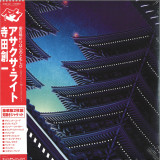
Back in 2015, Japanese DIY house pioneer Soichi Terada stepped back into the limelight courtesy of Rush Hour's 'Sounds From The Far East', a Hunee curated retrospective of material first released on his own Far East Recording label in the 1990s and early 2000s. Buoyed by the positive response and renewed interest in his work, Terada went back into studio to record his first new album of house music for over 25 years, Asakusa Light.
Developed over 18 months, Terada tried to recreate the mental and physical processes that led to the creation of his acclaimed earlier work. Those familiar with Terada’s celebrated, dancefloor-focused sound of the 1990s – a vibrant, atmospheric, and emotive take on deep house powered by the twin attractions of groove and melody – will find much to enjoy on Asakusa Light.
“I tried to recall my feelings 30 years ago, but when I tried it, I found it super difficult,” he explains. “I didn’t even know what I thought about myself five years ago, and the mental metabolic cycle seems to be faster than I thought. I tried different methods, including digging up my old MIDI data and composing by remembering old experiences. With the help of Rush Hour, I found some of the light from my heart that I had 30 years ago. I nicknamed the light I found in my heart, ‘Asakusa Light’.”
Produced using the very same synthesizers and drum machines that powered his 1990s work, the album is a joyous, colourful and life-affirming collection of timeless house music that not only recalls Terada’s own impeccable back catalogue, but also that of similarly celebrated contemporaries such as the Burrell Brothers or Ben Cenac (Dream 2 Science, Sha-Lor).
Terada, who has spent much of the last two decades writing video game music, has always had a gift for combining warm, undulating synthesizer basslines and perfectly programmed machine drums with stirring chords, smile-inducing melodies and mellow musical flourishes. It’s this immersive, sun-kissed and tuneful trademark style that takes centre stage on Asakusa Light, an album for the ages.
The set begins with the alien-sounding chords, soft-touch percussion and dawn-friendly warmth of ‘Silent Chord’ and ends on a high via the bouncing string stabs, starlight chords and thickset grooves of ‘Blinker’; in between, you’ll find a deluge of effortlessly feelgood music that’s the aural equivalent of a dopamine rush at sunrise.
There are subtle variations aplenty throughout the album – see the 8-bit lead lines and pulsing electronic textures of ‘Takusambient’, the vintage Tony Humphries flex of ‘Diving Into Minds’ and the effortlessly funky ‘Marimbau’ – but it’s the uniquely atmospheric, vivid and tactile nature of Terada’s loved-up sound that resonates. After well over 30 years in house music, the light in his heart is shining brighter than ever.
out of Stock
Last delivered 82 days ago available to reorder, subject to availability
Tripped's second full length album has arrived, roughly one year after Unboxed (PRSPCT273) and is once again ready to take you on another journey through hard techno, industrial, acid, breaks & hardcore techno.
Tripped digs deeper into raw & analog techniques that will teleport you back to the wastelands of 90's warehouse raves.
While slowly building in Bpm and intensity, It features both emotional and kickheavy tracks ready to take on any dancefloor.
It also includes a Slave To Society remix of 'Tank', earlier released on MADINCH003.
While we once again recognise the artwork style from past releases (painted by himself) we notice another personal concept linked to the album . 'A Thing About Something' addresses mental health issues, anxieties & depression and aspires to keep fighting the daily struggles.
out of Stock
Last delivered 2 years ago available to reorder, subject to availability
Hand-Numbered, Limited to 500. Big Boss Man have produced a hip-Hammond hybrid of 60'S R'N'B, Latin, Soul, Bongo-Fuzz and Funk since 1998. As well as playing hundreds of concerts and festivals across the UK, Europe and even Russia, Big Boss Man's music may sound familiar to you, being regularly played on film and television, including Come Dine With Me, Strictly Come Dancing and I Used To Be Famous, and broadcast on BBC Radio, by presenters including Gideon Coe, Cerys Matthews and Craig Charles. Their track 'Party 7' was featured in the international Nike World Football '06 Campaign advert featuring Thierry Henry and Eric Cantana. The entire soundtrack to The Mighty Boosh's BAFTA nominated short film "Sweet" was provided from tracks taken from the Big Boss Man's "Humanize" album. The band have performed live on national Spanish television and had tracks included on XFM London Radio and "Later" magazine compilation albums (100,000 plus copies). Big Boss Man's official remix of Modfather Paul Weller's single "The Bottle" went straight in to the UK Top 20, and fast became a collector's item. Know enough yet? Well you'll need to see them live too! Big Boss Man's explosive live shows are legendary. They've been blasting stages since their earlier days in The Loafers, Skooby and Espadrille, amongst a few others. Big Boss Man have released four studio albums, and six 7" singles, and have appeared on countless compilations. This twin-spin 7" single has two new dance floor fillers from Big Boss Man's most recent recordings, and are sure to pack out dance floors across the globe, and further.
Survival Paradox is dark machine poetry programmed in the cold dark north of Denmark. Fusing a hypnotic black & white dance of despair and anguish this release is equally enjoyable at home or on fogged out dark dance floors worldwide. His debut EP "Dysfunctionalism" is a 5 track cerebral deep dive into relentless hopelessness and confined aggression that is deceptively simple yet crawls under the listener's skin. This carefully crafted EP unveils its complexities by spreading into every cell of the timbres and sequences within. With influences ranging from minimal techno, old-school Goa Trance and 90's EBM : "Dysfunctionalism" can best be described as a kind of Hypnotic Body Music. The release includes an edit by SARIN. Released by X-IMG & available as a limited run of 300 records + digital. Mastered by Alain Paul.
out of Stock
Last delivered 12 months ago available to reorder, subject to availability
Attarazat Addahabia & Faradjallah's album came to us as quite a mystery. Our friends from Radio Martiko got access to the studio archive of the Boussiphone label and a reel labeled “Faradjallah” was among the items they had found there. After listening to the selection of reels they borrowed, Radio Martiko felt it was not a fit for their label and helped us licensing it from Mr. Boussiphone instead. We knew nothing about the band. We just had the reel with the music but very little information. What we knew was that the music was incredible and very unique. Gnawa sounds were combined with funky electronic guitars, very dense layers of percussions and female backing vocals more reminiscent of musical styles further south than Morocco. We started asking around whether anyone knew the band with no immediate success until we asked Tony Day, a musician from Morocco who helped us during our search for Fadoul’s family. His sharp memory came through once again, remembering all the names of the Attarazat Addahabia band members and even how to contact the bands singer and leader Abdelakabir Faradjallah. After visiting him at his home in Casablanca with our Moroccan colleague Sabrina multiple times, he shared his personal story. His father arrived in Casablanca from Aqqa at the age of six and his mother came from Essaouira. Abdelakabir was born in the neighbourhood of Benjdia in 1942. Abdelakabir Faradjallah studied fine arts in Casablanca, graduating in 1962. He also played soccer in the second team of "Jeunesse Societe One". His brother-in-law Ibrahim Sadr worked for one of the biggest football teams of the time in Morocco called "Moroco Sportive Union", which allowed him to travel to France occasionally. While Ibrahim was never part of the band he brought along a few instruments from trips.
Yet the majority of the instruments they could not afford to buy were build by Faradjallah and Abderrazak, Faradjallah's brother who passed away early. For instance they had built a Spanish guitar and a drum made of wood barrel and sheepskin by themselves.During the 1950s Faradjallah was booked as a singer for surprise parties with friends. He started to write his first songs including "L’gnawi" in 1967 and wanted to make people discover Gnawa culture, or maybe rather his take on the culture to be more exact. Faradjallah recalls his first interaction with the genre in the streets of the Dern neighbourhood, where he used to go to elementary school. Gnawa is one of the essential musical genres of Morocco. It combines ritual poetry with traditional dances and music linked with a spiritual foundation. Musically a lot of influences originated from West Africa as well as Sudan. Gnawa is usually played by a selection of specific instruments such as the qaraqab (large iron castanets centrally associated with the music), the hajhouj (a three string lute), guembri loudaâ (a three stringed bass instrument) and the tbel (large drums). People would put shells on their clothes and instruments and use incense at their parties. "Sidi darbo lalla - lala derbo khadem..." came from Gnawa verses Faradjallah used to sing when he was 14. The lyrics tackle a global (im)balance of power and the question of social status in this course. The band Attarazat Addahabia was formed in 1968. The original line-up included 14 members, all from the same family. They played their first small concerts here and there starting in 1969. Later in 1973 they performed bigger shows for instance at the Municipal Theatre followed by the "Al Massira Show" at Velodrome Stadium in downtown Casablanca. Their first album "Al Hadaoui" (the one you are listening to) was recorded at Boussiphone studios in 1972 and was never released before. Nobody seems to remember the exact reason why Boussiphone ended up deciding not to put the album out. The album's title track also served as the basis for Fadoul's "Maktoub Lah", who frequented the same circles as the band for some time.
Their shows sometimes could go as long as 12 hours, starting at 5pm in the afternoon, with an occasional break here and there. In the 1980s the band took a brief break. Faradjallah recalled the reason for that break like this: "Zaki, the bands drummer, had fallen in love with a young girl from Mohammedia. Soon after, he fell very ill. The group members were convinced that the girl had given him ‘s'hor’ (a kind of local Moroccan version of "black magic"). For four years, the whole group stopped playing. It was unthinkable to find another drummer to replace Zaki, even temporarily." So they waited four years for Zaki to "get back on his feet" before going back on stage. Apart from very few gigs here and there Faradjallah stopped playing music in the mid 1990s. Some members from the younger generations formed a new band and still play frequently to this day. Faradjallah runs a television repair shop coupled offerings beverages and snacks in the Belevedere /Ains Sbaa district of Casablanca. While Faradjallah was primarily a musician, he would work for the local cinema and paint their posters for new movies by hand and he designed all artworks and cover posters of the band.
And this eventually led to him participating actively in our first exhibition dealing with Habibi Funk’s work in Dubai 2018. He helped us by creating calligraphic complementations on large photo prints for that show.
The life-affirming energy at the heart of Sven Väth‘s recent album Catharsis is revisited, reanimated, and remixed by some of the most exciting names around, closing the circle on a superlative burst of
recent work that has not only given us the epic original LP, but also the extraordinary compilation What I Used To Play.
Roman Flügel, Benjamin Damage, Robert Hood, Planetary Assault Systems, Mano Le Tough… do we need to go on? This hand-picked list of luminaries have answered the call and certainly don’t disappoint, each fusing their signature sound with Sven‘s DNA to create a wild, uncompromising companion piece to the original album.
True to form, the running order is very much rooted on the dance floor, Silvi‘s Dream, revisited by Damiano von Erckert, explodes like a Balearic sunrise. Dreamy strings with a touch of Detroit create a lovely atmosphere while the beautiful piano sound goes right into your heart and appears as if you could feel the warm sun on your skin. Roman Flügel’s acidic rework of What I Used To Play is a homage to the 80s and the early sound of electronic music which creates nostalgic feelings and offers a greatly produced retro soundscape à la Kraftwerk. Staying close to the original, but with the perfect amount of spin, it’s a symbiotic interplay of synthetic bass pads, and a tiny bell melody. Robag Wruhme’s cranking minimal funk takes us down The Worm-hole. A concise interference sound builds
up sustained tension, tangled but structured, deep and yet driving. Robag took over the deep and dirty rhythms of the original perfectly and delivers a versatile piece. This opening salvo oozes quality and
sets things up perfectly for the electrified celebration of hi-octane technology come.
Jonathan Kaspar‘s growling interpretation of We Are provides a melancholic atmosphere with fascinating percussion parts. Zaps shoot through the air like small laser pistols while we let ourselves
be carried away by the bass, the frisky vocal stutter effect is the icing on the cake. Speeding things up, the euphoric trance that engulfs Krystal Klear’s epic version of Feiern. Expansive strings increase up
to ecstasy and guide us to a love-filled unity. This remix is sure to be an excellent peak-time smasher for the open-air season. On to a wild ride of pure techno with Benjamin Damage, who delivers a dry and uncompromising Berlin Techno version of Mystic Voices. Harder pace but the string synthesizer harmony brings light to an otherwise gloomy environment. Next up is Luke Slater’s PAS Deep Heet Mix to add a retro nineties vibe to proceedings on Nyx. Entering a rough space with gigantic clap impacts, we are blessed with straightforward Techno. Shimmering and spooling, this groove hits the
mark. Then, as if it was ever in doubt, Sven‘s lofty place in the techno firmament is underlined by a peak-time contribution by non-less than Detroit legend Robert Hood. Unmistakable, you must recognize the signature Robert Hood drive on Butoh. Chord stabs fulfill the Detroit feeling with offtaking string elements and high-energy vocal transformations. It’s a warm embrace that triggers emotions. Planetary Assault Systems then blasts things ever deeper into the cosmos on a second outing of Nyx. Reduced and to the point but of course, true to form, with powerful tribal percussion parts and intensive cutting hi-hats.
From there on in, the collection gradually re-enters the atmosphere, burning with a phosphorescent, melancholy glow. Harald Björk extrapolates Being In Love into a hypnotic groove for the early hours. A playful and atmospheric electronica interpretation to soothe our souls due to disharmonious synth pads and a dreamy deformation of the original melody. Mano Le Tough harnesses the ethno-rhythms
and brooding energy of Catharsis into a low-slung, tribal stomper. Anomalous organ parts ring out and link up with a trance-like sequence, summer feelings arouse as you feel like you can almost smell Ibizan air. The collection comes full circle with a second equally seductive interpretation of Silvi‘s Dream by Florian Hollerith. Stripped-down and hypnotic, the homage to Sven's girlfriend Silvi is extended as a reverence to Sven himself. Sven's profound vocal clearly infuse time and space and leave a forever-lasting memory of love.
By accident or design, it somehow leaves us with the reassuring sense that, although this specific part of the journey may be drawing to a close, the mission of the man behind it all most definitely isn't.
written & produced by: Sven Väth & Gregor Tresher
out of Stock
Last delivered 3 months ago available to reorder, subject to availability
First appearing on TV screens in September 1968, Joe 90 was a unique nine year old boy with the ability to absorb the brain patterns of top experts
enabling him to become the most special agent of W.I.N. (World Intelligence Network).
Whilst there are arguably better-known scores amongst Barry Gray's sublime catalogue of work with the Andersons, the composer's work for Joe 90 is in many ways
the most consistent and inventive selection he ever wrote. Developing a theme for the new series was always the musician's starting point, and for Joe 90, the pop charts breezed into Gray's studio,
with an opening tune featuring a genuine groove. Mixing Gray's inventive electronics with 60s "surf rock" guitars was an inspired decision.
It is no wonder that this piece has gone on to enjoy a second life as a Northern Soul disco floor-filler.
For episodic incidentals, Gray was freed from the detached unearthly premise of Captain Scarlet and able to bring back a playful sensibility
and a more mature musical palette which are amply illustrated in this 24 track collection.
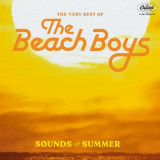
"To kick off the yearlong celebration and provide the perfect summer soundtrack, Capitol Records and UMe will release a newly remastered and expanded edition of The Beach Boys career-spanning greatest hits collection, Sounds Of Summer: The Very Best Of The Beach Boys, on June 17. Originally released in 2003, the album soared to no. 16 in the US and stayed on the chart for 104 weeks. Now certified 4x platinum for sales of nearly four and a half million albums, the collection has been updated in both number of songs and audio quality, expanding the original 30-track best of with 50 more of the band’s most beloved songs for a total of 80 tracks that span their earliest hits to deeper fan-favorite cuts and from their 1962 debut album, Surfin’ Safari through to 1989’s Still Cruisin’.
Assembled by Mark Linett and Alan Boyd, the team behind 2013's GRAMMY® Award-winning SMiLE Sessions and last year’s acclaimed boxed set, Feel Flows – The Sunflower and Surf's Up Sessions 1969-1971, Sounds Of Summer features nearly every US Top 40 hit of The Beach Boys’ incredible career, including “California Girls,” “I Get Around,” “Surfer Girl,” “Surfin’ U.S.A.,” “Fun, Fun, Fun,” “God Only Knows,” “Good Vibrations,” “Be True To Your School,” “Wouldn’t It Be Nice,” “Kokomo,” “Barbara Ann,” “Help Me, Rhonda,” “In My Room,” and many others. Fifty additional tracks showcase a broad mix of songs from across their wide-ranging catalog with some of the many highlights including “All Summer Long,” “Disney Girls,” “Forever,” “Feel Flows,” “Friends,” “Roll Plymouth Rock,” “Sail on Sailor,” “Surf’s Up,” and “Wind Chimes.”
The collection boasts 24 new mixes including two first-time stereo mixes, plus 22 new-and-improved stereo mixes, which in some cases feature the latest in digital stereo extraction technology, allowing for the team to separate the original mono backing tracks for the first time.
The expanded edition of Sounds Of Summer will be available in a variety of formats, including a 3CD softpack, and as a Super Deluxe Edition 6LP vinyl boxed set on 180-gram black vinyl in two options – a standard set or a numbered, limited edition version featuring a rainbow foil slipcase and four collectible lithographs. Both versions will feature color printed sleeves that replicate the original “Capitol Catalog” sleeves that highlight the entire Beach Boys discography, and all formats will include a booklet with new liner notes and updated photos. The original 30-track version will also be available in its newly remastered and upgraded form on single CD or double gatefold LP on standard weight vinyl or as a higher-end limited edition numbered version pressed on 180-gram vinyl with a tip-on jacket and a lithograph. "
PAURA explores the horror repertoire from the precious CAM Sugar archives taking us on a hypnotic journey into the labyrinths of fear, through the different variations that Italian horror took on from the esoteric and supernatural to the slasher films of the early 1970s; to reinterpretations of Romantic literature and gothic fiction to the splatter films of the ‘80s; and from witchcraft to metropolitan horror. This is not a real “best of” but an eclectic menu full of mysterious voices, childlike lullabies, sweet melodies, obsessive music boxes, obstinate harpsichords, crazy distortions and threatening synthesizers, conceived as a succession of sequences, as if a film edit. The new collection includes some of the most creative music ever written and strives to do justice not only to some of the best known composers in this genre, but also to many great unsung composers: From celebrated composers like Ennio Morricone, Riz Ortolani & Stelvio Cipriani to long-forgotten personalities who fed the industrial backbone of Italian cinema such as Daniele Patucchi, Marcelo Giombini & Berto Pisano. The collection includes 6 previously unreleased tracks plus 3 tracks released on vinyl for the first time and 5 tracks available commercially for the first time (originally released only as a limited promo item).
Men at Work already had an album in the Top Ten when the Australian ensemble released Cargo, which continued the momentum gained by its record-setting debut. As ambitious and even more diversified than its initial salvo, the 1983 effort firmly established the band as new-wave pioneers – a group whose goofy playfulness, sharp hooks, brass accents, and memorable choruses helped define the decade's landscape. Any doubts about Men at Work's quirky sensibility were promptly answered by the iconic cover art gracing this multi-platinum set.
Mastered on our world-renowned mastering system and pressed at RTI, this LP not only brings the artwork back into full-scale glory but also takes the enjoyably melodic pop-rock to new sonic heights courtesy of improved imaging, separation, and balance. Previously obscured details jump to the surface, and leader Colin Hay's unique voice takes on life-like dimensions that hover between the speakers.
While remaining true to the approach that garnered them a Grammy Award for Best New Artist, Men at Work expands the creative palette on Cargo by giving guitars a more prominent role and increasing the rhythmic textures. With the sweeping ballad "Overkill" and politically savvy cynicism of "It's a Mistake," the band furthered their radio domination and extended their run of Top 10 singles. A third hit, "Dr. Heckyll and Mr. Jive," cracked the Top 30. Well-tailored melodies and whimsical imagination definitely had a place in the public's consciousness, and no group understood this more.
As the final album captured by the original lineup, Cargo remains an indelible piece of the 1980s audio terrain and a reminder of the era's endless fun. Bolstered by lively saxophone solos, self-effacing humor, and instantly catchy refrains, the album is as good as excuse as any to turn on the stereo, sit down, forget your worries, and dance to leisurely pursuits so perfectly captured by this beloved group.
Suff Daddy (578k monthly listeners on Spotify), is one of the legendary beatmakers who shaped a whole era of bedroom producers. His unique approach and musical understanding sets him apart from all the other fish in the pond. He has released countless genre-defining albums and EP’s over the past 15 years building a loyal fanbase. Suff Daddy's songs have previously been featured in many editorial playlists including Spotify's "Jazz Vibes" (2.1M Likes), "BUTTER" (770k Likes), "Sweet Soul Chillout" (1.2M Likes) and many more.
Introducing "Hair Of The Dog," Suff Daddys musical journey that blends instrumental hip-hop, electronic, and dance genres. This captivating album, produced with his own Suff Style invites listeners to unwind From start to finish. Once again a Suff Daddy album thrives on the pure brilliance of his on way to create music. The album's cover art, masterfully crafted by the renowned painter Mitch (@itsallinsideus, 165k Followers), adds an intriguing visual dimension to the experience. Both artists have known each other for a long time and are currently preparing their audiovisual release- event for August 18th in Berlin. Bringing their art together as a unique experience for their audience.
The phrase "Hair of the dog that bit you" commonly denotes consuming alcohol as a remedy for a hangover, aiming to alleviate its effects. Suff Daddy plans to introduce his own hangover solution, which will be plant-based and devoid of alcohol. Through all of his career he frequently played with alcohol references and now its the perfect timing to release his own hangover cure. Additionally, this endeavor will serve as a social media catalyst for the entire project.
out of Stock
Last delivered 3 years ago available to reorder, subject to availability
Mirai is a 2018 Japanese animated adventure fantasy comedy film written and directed by Mamoru Hosoda and produced by Studio Chizu (known for Belle, Wolf Children and The Boy and the Beast). The film stars the voices of Moka Kamishiraishi, Haru Kuroki and Gen Hoshino a.o. It was met with critical acclaim and became nominated for an Academy Award in 2019 for Best Animated Feature Film. Additionally, the movie received an Annie Award in the same year.
Mirai follows the story of a four-year-old boy named Kun whose world is turned upside down when he meets his new baby sister. After venturing into a magical garden, Kun encounters strange guests from the past and future, including his sister Mirai, as a teenager. Together, Kun and teenage Mirai go on a journey through time and space, uncovering their family's incredible story.
The soundtrack for the film was written by Masakatsu Takagi, who had previously scored Hosoda's Wolf Children and The Boy and the Beast. His work for Studio Chizu has been praised for its magical and whimsical atmosphere. For Mirai specifically, this dreamy aesthetic was mixed with a contemporary sound and made to be simple in tone and be reflective of family.