2026 Repress
The clergy is pleased to introduce you to a new initiate: Birds ov Paradise. This highly anticipated Hypnus debut comes split into three separate EP's which will be released one each full moon starting October.
Some of you may be acquainted with the music of Birds ov Paradise already as he's put out two stellar records on Jens and Aniara Recordings in 2016-2017, as well as making a contribution to our podcast series The Memoir where his sound was put on a grand display. Those of you who are new to the fantastic dream world of this very talented artist will quickly get lost in the flowing rhythms that drives his magical deep techno sound.
Early support from Etapp Kyle, Ness, Slam, Iori, Refracted, Svreca, Cio D'Or and Dorisburg to name a few.
quête:the earl
Das neue Album "The Jacket" von WIDOWSPEAK wurde vor und nach der Veröffentlichung ihres letzten gefeierten Albums "Plum" geschrieben. Für das Duo, das aus der Singer/Songwriterin Molly Hamilton und dem Gitarristen Earl Thomas besteht, fühlt es sich an, als ob sich mit dem neuen Album ein Kreis schließt. Thematisch beschäftigen sie sich weiter mit der eigenen Zeit und Arbeit, und mit dem, was sie umgibt. Dies ist teilweise darauf zurückzuführen, dass das Duo kürzlich wieder zurück nach New York City gezogen ist. Dort wo für sie als Band alles begann, haben sie ihr neues Album zusammen mit Homer Steinweiss von Daptone Records aufgenommen. Doch Wiedervereinigungen führen immer zur Reflexion und Hamilton gibt zu, dass ein Großteil der Themen des Albums mit ihren prägenden Erfahrungen in den frühen Jahren der Band zu tun hat. So behandeln einige Songs den Prozess des Weitermachens ("Unwind", "Salt"), während andere das Bedauern behandeln ("True Blue", "Forget It"). Der namensgebende Track des Albums befasst sich mit den buchstäblichen und bildlichen Verkleidungen. Diese Verkleidungen bekommen mit der Zeit eine große Bedeutung, bis man sich dazu entschließt diese abzulegen. Durch vage Erinnerungen an Arbeit, Musik und Nachtleben formt man eine neue eigene Vergangenheit. Klanglich zeigen sich WIDOWSPEAK auf "The Jacket" in gewohnter und bester Form: Die Dynamik wechselt nahtlos zwischen sanften, treibenden Balladen und energievollen Jams, die aus dichten Gitarren, fokussierten Perkussions und kraftvollen Basslines bestehen. An anderen Stellen hört man skurrile Flöten, chorale Texturen und Heimorgeln. Thomas' Gitarrenspiel ist so ausdrucksstark und gefühlvoll wie eh und je und Hamiltons betörender Gesang ist ohnehin eine Klasse für sich. Diese Dynamik wird im Mix von Chris Coady (YEAH YEAH YEAHS, BEACH HOUSE) noch verstärkt. WIDOWSPEAK vermischen ihren Americana-inspirierten Indie-Folk gekonnt mit Slow-Core und Dream-Pop, der sowohl an die 60er als auch an die 90er Jahre erinnert. Dieser Sinn für klangliche Nostalgie fügt ihren Texten eine weitere Ebene hinzu, die über alte, erfundene und wahre Persönlichkeiten reflektieren.
A defining electroclash anthem returns to wax. Tiga & Zyntherius's cult classic Sunglasses at Night gets the deluxe vinyl treatment, featuring the iconic original 12" mix that set dancefloors ablaze in the early 2000s-plus a thunderous rework by techno titan Chris Liebing, who injects it with deep, industrial muscle for the modern floor.
Whether you're chasing nostalgia or sonic intensity, this is a must-have release for collectors, selectors, and nocturnal creatures alike.
- Quaterverse
- Room At The Top
- Hellfire Club
- Found Footage
- Lucky 7
- Tulpa Lover
- Glass Delusion
- Big Blue Beach Blues
- Quatermass 2
Quatermass III bestehen aus Mitgliedern von World of Twist, Earl Brutus, The Dials, der British Experimental Rocket Group und Science Monthly. Ihr Sound ist Space-Rock mit Anleihen aus Progressive- und Glam-Rock. Ihre erste Single "Room At The Top" ist inspiriert von J.G. Ballards Kurzgeschichte "Billenium" (1962), einer düsteren dystopischen Erzählung, die die Unterdrückung urbaner Räume, zwielichtige Mietwohnungen und Überbevölkerung thematisiert. Doch dieser Track ist alles andere als düster: Er bringt seine Absichten mit sprudelndem Gesang, schwebenden Gitarren und "Devil's Interval"-Akkordwechseln zum Ausdruck. Er wird euch umhauen. Genauso wie das selbstbetitelte Debütalbum "Quatermass III".
– "Der okkulte Sound von Eno, Joy Division, Northern Soul/Glam-Beats, Robert Calvert Vox und Open University-Synthies." – MOJO
– "Ein exquisit produziertes Werk." – Crayola Lectern, Musiker
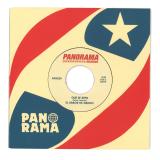
We keep the fire burning with PAN009, a scorching slice of Latin soul from Puerto Rico’s own Nacho Sanabria, better known as El Sabor De Nacho. Originally released in 1973, his version of “Que Se Sepa” takes the Roberto Roena classic and injects it with a new energy — fiery brass, driving percussion, and that unmistakable swagger that defines the golden age of salsa.
Born in Cataño, Puerto Rico in 1929, Nacho Sanabria grew up surrounded by the rhythms of bomba and plena, performing on stage as early as age nine. After relocating to New York in the late 1940s, he became a key figure in the Latin dance scene, performing with groups like Sonora Boricua, Orquesta Panamericana, and later Rafael Cortijo’s Combo. By the mid-1960s, Sanabria formed his own band, El Sabor De Nacho, combining tight horn arrangements, sharp percussion, and his signature charismatic delivery. His 1970s recordings — including Alma Primitiva and Salsa Caliente — stand as shining examples of Puerto Rican salsa at its peak.
Sanabria’s version isn’t a straight cover — it’s his own Puerto Rican interpretation, full of character and swing. The rhythm section stays tight and earthy, the horns punch with intent, and his vocal delivery brings that effortless charm only a seasoned bandleader could deliver. A proper Latin soul mover that sits somewhere between the barrio and the dancefloor, perfect for warm evenings and deeper DJ sets.
Rescued from obscurity and lovingly restored for today’s floors, PANORAMA Records continues its mission to reintroduce rare and essential music to new generations. From deep funk, jazz and global grooves to Latin dancefloor heat, the label’s 45s series shines a light on overlooked gems that still sound fresh today. Supported by tastemakers like Gilles Peterson, Patrick Forge, and the Mr Bongo DJs, this one’s destined to move both hips and feet.
- Warriors
- Dead Star
- New Adventure
- Sky Orbit
- Technological Mind
- Tunnel Of Mind
- The Landing
- Technoid (Vocoder Version)
Das legendäre Album „Technological Mind“ von Laserdance aus dem Jahr 1992 ist endlich wieder erhältlich – jetzt als farbige Vinyl-Neuauflage!
Die Spacesynth-Pioniere liefern auf diesem Album ihren typischen, futuristischen Sound: treibende Synthesizer, galaktische Melodien und pulsierende Beats, die den Geist der frühen 90er perfekt einfangen. Mit Tracks voller Energie und kosmischer Atmosphäre ist Technological Mind ein absolutes Highlight für alle Fans von Spacesynth, Italo Disco und RetroElectronic Sounds.
Ein zeitloses Meisterwerk elektronischer Musik – Laserdance – Technological Mind, jetzt endlich wieder auf Vinyl!
Laserdance‘s legendary 1992 album „Technological Mind“ is finally available again – now as a coloured vinyl reissue!
On this album, the space synth pioneers deliver their signature futuristic sound: driving synthesizers, galactic melodies and pulsating beats that perfectly capture the spirit of the early 90s. With tracks full of energy and cosmic atmosphere, Technological Mind is an absolute highlight for all fans of space synth, Italo disco and retro electronic sounds.
A timeless masterpiece of electronic music – Laserdance – Technological Mind, now finally back on vinyl!
- Mean Street
- Dirty Movies
- Sinners Swing!
- Hear About It Later
- Unchained
- Push Comes To Shove
- So This Is Love?
- Sunday Afternoon In The Park
- One Foot Out The Door
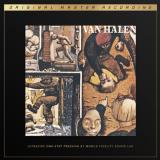
The song titles on Van Halen's aptly titled Fair Warning don't lie. The likes of "Unchained," "Mean Street," "Push Comes to Shove," "One Foot Out the Door," and more indicate the mood the band channels on its double-platinum 1981 record — the nastiest, darkest, and fiercest album of the group's storied career. For the fourth time in four years, Van Halen throws down the gauntlet to all challengers and emerges victorious.
Sourced from the original analog tapes, pressed on MoFi SuperVinyl at Fidelity Record Pressing, and strictly limited to 5,000 numbered copies, Mobile Fidelity's UltraDisc One-Step 180g 45RPM 2LP set plays with unfettered clarity, dynamics, and immediacy. Benefitting from superb groove definition, an ultra-low noise floor, and dead-quiet surfaces, this vinyl edition captures what went down in the studio with tremendous realism and involving presence.
Taking a more controlled approach in the studio and still completing everything in less than two weeks, Van Halen and producer Ted Templeman relied on studio amplifiers to direct the sound. Further diverging from the live-on-the-floor approach of its earlier albums, the ensemble also employed overdubs to great effect. The result: Dense, stacked architecture that underlines the hard-hitting tenor of the songs — and which comes alive like never before on this reference edition that looks as good as it sounds.
The premium packaging and gorgeous presentation befit the reissue's select status. Housed in a deluxe slipcase, it features special foil-stamped jackets and faithful-to-the-original graphics that illuminate the splendor of the recording. Aurally and visually, it is made for listeners who want to immerse themselves in everything involved with the album, including the iconic cover art adopted from William Kurelek's haunting painting, "The Maze."
Isolated frames from Kurelek's childhood-inspired work — including a man bashing his head into a brick wall, a guy pinning down an adversary as he delivers bare-fist blows to his face and others watch with apparent glee, a boy tied down on a conveyer belt and being sent through the equivalent of a meat saw — adorn the front and back covers. The sunnier visual disposition of Van Halen's prior efforts gives way to something sinister and tortured, traits reflective of the music within. The band members, too, are visually depicted not in glamorous shots but in a serious black-and-white portrait in which the quartet is clad in black leather jackets.
Tough, aggressive, stark: Fair Warning comes on like a series of bare-knuckled punches to the solar plexus and boasts lyrical narratives to match. Though not a concept record, the concise album revolves around themes of roughing it on the streets and struggling to survive amid dim prospects. Singer David Lee Roth reportedly penned many of the initial lyrics after traveling to Haiti and observing extreme poverty. The characters and situations populating Fair Warning reflect hardscrabble existence, last-chance desperation, and underlying danger.
Witness the crazies, poor folks, and hunters of “Mean Street”; the former prom queen turned pornographic actress on “Dirty Movies”; the menace and vice of “Sinners Swing!”; the streetwise hustle of “Unchained”; the isolation and alienation of “Push Comes to Shove”; the desire for escape on “One Foot Out the Door”: A carefree California beach party Fair Warning is not.
Having said he felt angry and frustrated during the sessions, guitarist Eddie Van Halen uses the forceful arrangements as a playground for his seemingly unlimited arsenal. Supported by a crack rhythm section and a hyped-up Roth, he performs with an almost impossible combination of punk-like intensity, technical finesse, lyrical fluidity, and unbridled emotion. The virtuoso was increasingly butting heads with Templeton and seeking a freedom in the studio he believed denied him.
No wonder he plays like a bat out of hell. Listen to the rapid-fire manner in which he slaps the high and low E strings on the 12th fret of his instrument on “Mean Street,” instilling the tune with funk flair and metal-spiked sharpness. For the pouty strut of “Dirty Movies,” Eddie Van Halen contributes slide guitar magic made possible after he sawed off the lower portion of a Gibson SG so he could reach further down the fretboard.
Related intensity, urgency, and daredevil momentum punctuate the surging “Sinner’s Swing!” A heavily flanged, delicately melodic introduction frames the attitudinal “Hear About It Later,” among the most creative arrangements of Van Halen’s career. And do riffs come any bigger or magnetic than those on the high-wire kick of “Unchained”? As for the out-of-left-field “Sunday in the Park,” an instrumental composed on an Electro-Harmonix micro-synthesizer: Who but Eddie Van Halen to supply creep factor in such an ingenious way?
Despite selling fewer quantities than Van Halen’s prior efforts, Fair Warning remains for many diehards the record that epitomizes all of the band’s immense strengths —Roth’s manic energy and tongue-wagging humor, Alex Van Halen’s rhythmic heartbeat-in-your-chest bombast, and Michael Anthony’s lucid bass lines included. Arriving when the New Wave of British Heavy Metal and new-wave movements were taking flight, it signaled a shot across the bow from a band determined to stay a step ahead and provide proof nobody could touch what it delivered.
More than four decades later, Fair Warning still sounds that alarm.
- A1: (Part I)
- B1: Prelude (Part Ii)
- B2: Maiysha
- C1: Interlude
- C2: Theme From Jack Johnson
The capstone of Miles Davis’ electric period, Agharta reigns as a funk-rock fireball — a blazing comet streaked energy and elan, a fearless organism feasting on adventure and freedom, a seven-headed Godzilla stomping its way through Osaka, Japan. Recorded on February 1, 1975 at Osaka Festival Hall at the first of a two-show stand, the double album offers an endless abundance of surprises and shifts — as well as a road-proven ensemble whose chemistry and abilities equal that of any of Davis’ celebrated bands. If the true measure of jazz is the capacity to adapt to the moment and challenge perception, Agharta is consummate.
Sourced from the original master tapes, housed in a Stoughton gatefold jacket, and pressed at Fidelity Record Pressing in California, Mobile Fidelity’s numbered-edition 180g 33RPM 2LP set of this epic live release presents it in audiophile sound on a domestic pressing for the first time. Offering greater degrees of separation, detail, and richness than the compressed CD editions and more clarity, openness, and presence than older vinyl copies, this version of the 1975 release helps bring the concert stage to your home. Just make sure your turntable and speakers are up to the challenge of Davis and Co.’s explosive performances — and producing the decibels they demand.
Teeming with vibrant colors, tones, and pace, Mobile Fidelity’s reissue captures the hear-it-to-believe-it flow, sweep, and moodiness of the music. Though the group honors looseness and freedom with religious verve, the specificity and scale rendered by this remaster allows you to detect methods behind the alleged madness that are often otherwise harder to discern. This insight extends to the understated changes in volume, harmonics, and phrasings. In many ways, you can listen as Davis himself did that early February evening as he helped coordinate the overall direction and decided on whether to blow his wah-wah-wired trumpet or take a turn on the organ.
Tellingly, Agharta would likely never have been made if not for Davis’ ventures overseas and, specifically, to the Land of the Rising Sun. Having for years faced a backlash on his native soil for his choices to experiment and blow past all known borders, Davis was welcomed with open arms in Japan. The concert documented on Agharta — as well as the day’s later show, captured on the equally exciting Pangea — stemmed from a sold-out three-week tour that would ultimately mark Davis’ final public appearances for years, as he soon settled into semi-retirement and nursed the wounds connected to an unprecedented stretch of restless and relentless output.
For all the band-fueled merit of Agharta — and there’s plenty, given the cast of saxophonist Sonny Fortune, bassist Michael Henderson, drummer Al Foster, percussionist James Mtume, and guitarists Reggie Lucas and Pete Cosey seemingly blasts off to outer space and travels distant galaxies by the time this minimally edited record runs its course — Davis’ own playing often remains overlooked. As critics Richard Cook and Brian Morton observed, it is “often fantastically subtle, creating surges and ebbs in a harmonically static line, allowing him to build huge melismatic variations on a single note.” He attacks like a man on a mission, out to prove naysayers wrong and bent on trailblazing another new path forward. Convention and skeptics be damned.
Noisy and furious, dark and discordant, abstract and off-balance, radical and intense, abrasive and atmospheric, strangely beautiful and hypnotically eccentric: Agharta evades simple description, and refuses to be pinned down in any established category — rock, jazz, punk, ambient, prog, avante-garde, or otherwise. Shot through with trench-deep grooves, screaming riffs, scalding solos, and free-improv leads, its cosmic thrust comes on as the equivalent of an animated pointillist painting comprised of millions of textured dots, dashes, and dabs that hold your attention so raptly you want to revisit the ideas again and again.
Always steps ahead of everyone else, Davis knew what he was doing even when Agharta debuted in Japan before later hitting U.S. markets. Though “Maiysha” and “Theme from Jack Johnson” are identified in the track listing, the record contains a number of uncredited references to other Davis works, including a nod to “So What.” This decision to bypass labels only adds to the art of the reveal — the rare black magic in which Agharta expertly deals.
- Ben Zanatto
- Stop
- Devil's Dance
- Dead And Gone
- Stranded
- Killing Zone
- 100: Years
- Things To Come
- Blast 'Em
- Endrina
- White Knuckle Ride
- Sick Sick World
- Tattoo
- That's Entertainment
- Clockwork Orange
- The Brothels
- Just A Feeling
- Brixton
- Emperor's Lap Dog
- I Wanna Riot
- Kill The Lights
- Blacklisted
- X-Mas Eve (She Got Up And Left Me)
- Fuck You
Rancid is without question one of the most successful and influential punk bands ever, not to mention being among the most prolific. Their nonstop songwriting and marathon studio sessions often result in far too many songs to fit onto their albums. True Rancid fans know that in addition to their classic long players, many of their finest tracks have been released as single B-sides, bonus tracks, on compilations, or in some cases have remained in the band's vault. That is why B sides and C sides is no mere throwaway record, but an essential part of this classic band's catalog. The songs collected here represent a cross section of everything that has made this band so beloved worldwide, including their creative genre hopping from blazing punk rock to danceable ska, to reggae, rockabilly, and more, all executed with some of the most impressive playing in the history of underground music. The songs range from fan-favorites like "I Wanna Riot" to obscure hidden gems from rare or hard-to-find compilations, and a handful of studio recordings that were completely unreleased before this album, several coming from the fertile recording sessions for the band's sprawling 1998 masterpiece Life Won't Wait. Originally released on CD in 2007, most of the tracks range from the band's early days through their sixth album, Indestructible, although the 2012 track "Fuck You," from the Pirates Press Records compilation Oi! This is Streetpunk! Volume 2 was added to place a definitive final word on the collection when it was pressed on vinyl. With the album being out of print and hard to find in its own right for the past ten years, Pirates Press Records is thrilled to partner with our friends in Rancid to remedy that situation and make this essential piece of punk rock history available to their many fans across the globe - this time as an incredible double 12" with super deluxe coloured vinyl and matching sleeve art!
- My Baby Left Me
- Rollin And Tumblin
- Got Love If You Want It
- Gin House Blues
- Baby What You Want Me To Do
- When Things Go Wrong
- Matchbox
- Mystery Train
- So Glad You're Mine
- Bright Lights, Big City
- Lightnin's Boogie
- Lifeis Good
Throughout a professional career defined by early pop successes, every single one of Andy Fairweather Low's performances has been shaped by his blues, gospel and soul influences, and although the many hits he has enjoyed have to some extent overshadowed his undeniable credentials as a great bluesman - his talent for the blues hasn't escaped the notice of some of the world's finest artists who have drawn on his skills as a guitarist and singer Eric Clapton of course leads this impressive list of Andy's discerning employers and collaborators which includes, BB King, Benmont Tench, Bill Wyman, Bob Dylan, Bonnie Raitt, Buddy Guy, Charlie Dore, Charlie Watts, Chris Barber, Chris Rea, Clarence 'Gatemouth' Brown, Dave Edmunds, David Crosby, David Gilmour, David Sanborn, Donald 'Duck' Dunn, Edie Brickell, Elton John, Emmylou Harris, Garth Hudson, George Harrison, Georgie Fame, Gerry Rafferty, Helen Watson, Jackson Browne, Jeff Beck, Jimi Hendrix, Jimmy Page, Joe Cocker, Joe Satriani, John Mayall, Kate Bush, Levon Helm, Linda Ronstadt, Lonnie Donegan, Mary J. Blige, Mick Hucknall, Otis Rush, Paul Weller, Paul Young, Pete Townshend, Phil Collins, Richard and Linda Thompson, Rick Danko, Ringo Starr, Roger Waters, Ronnie Lane, Sheryl Crow, Steve Gadd, Steve Winwood, Stevie Nicks, The Impressions, The Who, Van Morrison, Warren Zevon, and hundreds more. But, despite the blues having become such a hugely popular genre internationally these days, and Andy having been in the thick of it for most of his professional life, he has largely missed the recognition he deserves in that field because up until now, he has never released a blues album. That's why I wanted to make a record that reveals the identity of the Invisible Bluesman to the world beyond his existing loyal fans. Meet Andy Fairweather Lowdown!
Here are 4/5 of the early work of Dj Ultramars, before he created his own label, Mars Assault Records.
Dj Ultramars drew inspiration from records from the begining of Hard Techno; from some work of the Spiral Tribe, but also just from the musical impression he had after attending his my first free parties.
Those tracks corresponds to a certain moment in the history of the free party movement, so a release on Toolbox Killerz was logical.
The tracks have been edited so that the arrangements would be more relevant to nowadays standards, and to alow a better sound quality on vinyl. Back in 1997, we didn't know better about vinyl cutting & premastering, so we went to a legacy cutting studio that had made all the cuts for Rock & Pop for decades, and they didn't understand the specifics of such Tekno music. Therefore on their first release, those tracks didn't make much sense without the highest frequencies... This time we have their ultimate cuts, the way they should always have been cut on vinyl, thanks to the legendary Hervé @ DK mastering studio.
This is the gloriously remastered version of an all time classic: Dj Excel's "Just When You Thought It Was Safe".
Originally releases in the very early 90's, it has been beautifully remastered and recut, alongside some absolutely devastating remixes from the likes of The Criminal Minds, Stu Keating, Abyss, and Dj Stephano, and it also includes the four bonus beats from the original pressing.
This version is the extensive Move-E Series 2 Double Pack, which comes on coloured vinyl, and with a ridiculously cool sleeve and label design plus poster!
- Down
- Magic Mirror
CHILD OF PANOPTES channels the psychedelic spirit of the late '60s and early '70s, blending British freakbeat, popsike, and American garage-psych rock Following their stunning debut album "Child of Panoptes" and their first 7" single "Walk With Me", their brand-new release "Down" offers two dark psychedelic tracks wrapped in a brilliant and truly "eye-catching" cover design. The title track "Down" features the legendary Frank Durban (LES PLAYBOYS) on bass guitar and French drummer Daniel Aprosio. This rockin' tune is infused with cool vocals, a wild Hammond organ, and a trippy vibe. The B- side, "Magic Mirror" , pays homage to APHRODITE'S CHILD, with instrumental orchestration performed by LE CHIFFRE ORGAN- IZATION, including drummer Alexandre Besson's effortlessly cool vocals. CHILD OF PANOPTES delivers a perfect blend of late '60s psychedelia and jazzy, Hammond-driven '60s garage rock, all with a modern twist that is sure to blow your mind!
- A1: 3-Minute Rule (Demo)
- A2: Hello Brooklyn (Demo)
- A3: Johnny Ryall (Demo)
- A4: Johnny Ryall (Demo 2)
- A5: Looking Down The Barrel Of A Gun (Demo)
- A6: Egg Man (Demo)
- A7: The Sounds Of Science (Demo)
- B1: 33% God (Get Off The Mic) (Get Off The Mic)
- B2: Full Clout (Shake Your Rump) (Shake Your Rump)
- B3: Dust Joint (Car Thief) (Car Thief)
- B4: Dust Joint (Alternative - Demo 2)
- B5: Shake Your Rump (Extra Early Version - Demo)
- B6: Dust Joint (Instrumantel - Demo)
- B7: Full Clout (Instrumental - Demo)
The tapes for “Ronnie McNeir Makes A Move” were found in Mickey Stevenson’s extensive master tape collection. A full new LP of classic McNeir is an absolute treat for his many soul fans; particularly in Europe where he is so admired.
Ronnie recorded over twenty tracks with Mickey Stevenson’s production company in 1971. Eleven of these were featured on his RCA LP “Ronnie McNeir”, but another ten were left in the vaults.
The title track, ‘Let’s Make A Move’ is an urgent, exciting funk sound, composed with Ronnie’s frequent writing partner, Andre Moore. ‘I’m Sorry’ is an earlier version of ‘Gone Away’ which featured on the 1972 RCA “Ronnie McNeir” LP, without the female singer’s vocal response track.
‘Say You’ is the Motown song first recorded by the Monitors in 1965. It has a more laid-back treatment here, giving it a whole new dimension. We issued the single version on a Kent Select 45 in 2022; both versions are featured on the CD. Another re-envisaged Motown number is ‘The Girl’s Alright With Me’ which features Hodges, James, Smith & Crawford’s backing vocals − as do other tracks on this album. Surprisingly, Bob Dylan’s ‘Blowing In The Wind’ is also covered; in a pleasing, jaunty treatment.
‘My Day Will Come’ is a slow-burning number Ronnie co-wrote with his wife Mona. It is one he is particularly proud of and has been picked up by modern soul DJs as a potential crossover hit. ‘Tell Your Mama’ is a sensuous, Marvin Gaye-influenced groove, while ‘East Side, West Side’ is more streetwise, dealing with the social problems that face many young people.
As a multi-instrumentalist, heavily influenced by jazz, it comes as no surprise that Ronnie would record two jazz / soul instrumental jams which he simply named ‘Ronnie’s Bag #1’ and ‘Ronnie’s Bag #2’. The tracks are keyboard-lead, piano and possibly organ – or more likely one of the early synthesisers that Ronnie pioneered. ‘Ronnie’s Bag #1’ is more jazz-oriented, while ‘Ronnie’s Bag #2’ goes funky.
- A1: Optograms (11 51)
- A2: Xertz (12.09)
- B1: Origin Flows (5 07)
- B2: Minimally Conscious (15.05)
- B3: Northern Point (D-4 Mix) (4 51)
Psychedelic electronica, which breathes the open mindset of early 70s German synth pioneers, but the music still the signature of Brian Dougans and Gary Cobain, The Future Sound of London. The album breathes and feels organic beside the electronic and in many respects partners FSOL's Synthi a album. Plenty of digitana synth on this expanded edition of the digital only 4 track release from 2017 here on CD and LP.
Arepas Records follows up its debut serving with a second course of flavoursome house music: “Ceylon Treats EP” by Erwin. True to the Arepas concept of combining dancefloor functionality with culinary storytelling, “Ceylon Treats EP” is all about mood, texture and pacing rather than obvious peaks. Erwin’s production leans on warm basslines, rolling drum programming and hazy chords, spiced with percussive details and small melodic phrases that flicker through the mix like passing smells from an open kitchen. Some moments are cosy and intimate, others are more driving and hypnotic, but everything is tied together by a deep, inviting groove that works from warm-up to after-hours. AREPAS002 feels like a natural evolution of the label’s first chapter: still deep, still soulful, still obsessed with flavour, just with a new recipe and different ingredients. House, deep house, dub house and tech house come together in one coherent, story-driven EP that rounds off the flow of a day, night or early morning like a carefully prepared dessert course. No skips, no fillers. Just pure flavour. Beats & treats.
Alvorada is Montanha’s first long play: an ambient-leaning work, nocturnal in mood yet touched by electricity, tracing a journey from waking activity into dream logic. Recorded mostly in the late hours of the evening with windows open to the city, letting its air and sounds influence the music, it sometimes reached the early moments of sunrise. The title, meaning “dawn,” reflects both the liminal hours of its making and the band’s own renewal. These tracks are closer to drawings than songs: narratives written between instruments, moments of tension and release, fragments of memory and dream. The tracklist follows this nocturnal voyage with the patience of Eno, the disquiet of Uematsu, and the madness of Miles Davis’ Decoy, oscillating between streets and sleep, routine and reverie.
Montanha was formed in 2010 by André Azevedo, Nuno Oliveira, João Sarnadas, and Tito Silva, bonding over architecture school all-nighters on videogame soundtracks (Age of Empires, Super Mario). They began as a psychedelic rock combo and in 2013 released their self-titled EP which introduced a raw, improvised energy. But the album that was meant to follow was abandoned as the band entered hiatus. The four members turned their creative drive towards co-founding Favela Discos, where experimentation with media and form reshaped their ideas of music, and developed their taste, their way of playing, and a more personal sound that was more open and disconnected from a defined genre.
By 2017, Montanha had returned to the studio with new experience, no longer a rock band in the traditional sense but a project devoted to improvisation and electronic soundscapes. An ever gentrifying city forced them to abandon acoustic drums, and they embraced electronic beats instead, and became mobile; one guitar dissolved into full synths, leaving the other to converse with bass. Improvisation remained their compass. In improvisation there are no mistakes, only missed opportunities. Montanha found their opportunity in the routine of the studio to break routines of pop and experimental. The result is a body of nearly fifty hours of recordings, sculpted into an album.
Alvorada is not only Montanha’s first LP but also the dawn of their new phase. Improvised yet carefully sculpted, the record expands the territory of the song into nonlinear narratives, letting the language of night, dream, and city seep into its form.