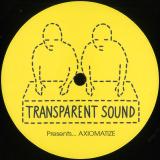
Transparent Sound presents - AXIOMATIZE - The Ultra EP
The new Transparent Sound presents series. Axiomatize are will not to be compromised with there. Slipstream the next phase adjust the gauge deliverance. Shacking the cage with the extremely impressive EP thats a must own release.
Re-issue of the long out-of-print Kerri Chandler remixes. The Instrumental remix was previously available as a limited 12inch mentioning 'TSIY -KERRI001' while the vocal remix became even more popular when used in the nightclub scene at the start of the Black Mirror episode 'Striking Vipers' (S5 E1). Pure hypnotic synth chords and bass pressure!
Nug-Net returns to vinyl with another best-of selection from last year's contest entries. The disc compiles a pair of anytime anywhere cruisers on the A-side from returning Nug-Net alum Guessbeats and newcomer Tanda. The Big Paneer's contribution harks back to the early days of Limousine Dream (pitch drift on high) while Franz Fraiz strays into what do you even call it indie-pop-house territory. Take the Nug-Net production course yourself at nug-net
Coin-Op Records serving up another killer 4 track EP, this time from The Sentinel.
Title track "Theme from Sentinel" is a slab of jacking, relentless, robotic funk that will get heads nodding like nothing else. "Binary Communication" recalls 00's tech; punchy drums and drifty intro pads set the scene before dropping into a heavy stabs-n-bass groove.
On the flip, "Fight or Flight" builds from driving percussion into a gorgeous peak-time synthy slammer. Closing track "Climbing Cosmos" is in the classic B2 style; laid-back, groovy deepness, with glassy chords and 808 drums lifting you up to round off the EP.
Out soon via Heads In The Clouds - H004 - Josh Wink & DJ ESP - Stairway To Headphones (12") Re-issue from 1995
Communique Records re-issues an classic by Josh Wink & ESP aka Woody McBride on the sublabel "Head In The Clouds"
from 1995. All tracks are re-mastered and re-recorded from original DAT.
Highly recommended!
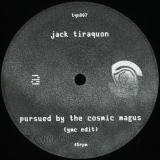
Synth heavy club tracks from Jack Tiraquon aka Space Dimension Controller.
The original A-side version surfaced in 2025 as the sold out (now repressed) Rush Hour Store exclusive white label “SHOP006”.
For TQN007, Tiraquon has invited the elusive YMC to help reshape the material with a new edit.
This is the first physical transmission from Tiraquon Recordings since the sold out compilation in 2022
Deep frequencies beamed out from Brixton’s front line. Four highly sought-after cuts from Grant Dell’s back catalogue that need little introduction now gathered onto a single 12”. The record highlights the infectious and rolling house groove Grant became synonymous with in the early 2000s which is as relevant today as it was then.
-
Recorded between 2002 and 2005 the record features ’So Good’ originally released on Jay Tripwire’s Spaced Out and ‘Acid Bubble Baby’ ft. DJ Deano on Stupendous. The other side see’s a reissue of Grant’s Chicago Transit Authority alias with ‘Still Disillusioned’ and also ‘Be Good Tonight’ originally released on his own label, Cove Records.
-
Written and produced between 2002-2005 by Grant Dell except A2 featuring DJ Deano.
Remastered by Justin Drake
Pressed by Vinyl Presents
Distributed by Palace Vinyl
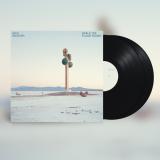
Oscar-nominated composer Max Richter's new album While The Flood Rages, drawn from Richter's latest collaboration with choreographer Wayne McGregor, MaddAddam, inspired by Margaret Atwood's trilogy.
Across 15 tracks split into three acts, Richter blends orchestral writing, electronics, processed field recordings, choir and piano to create an immersive sonic journey.
Themes of ecological collapse, technological acceleration and resilience run throughout, with recurring piano motifs providing moments of reflection amid dense, cinematic soundscapes.
Kisah Pasar Baru: The Modern Sound of 1950s Indonesia
When Indonesia gained its independence from the Dutch colonial government in 1945, politicians and soldiers weren’t the only ones playing a major role in building the sense of national identity.
Also working on the nationalist front were merchants and traders of phonograph records, who prior to the country’s independence served as local agents for foreign labels like Odeon and Beka. In Batavia, one of these traders were Tio Tek Hong, distributor of the international label Odeon and the other figure was Soejoso Soekarso, who also served in the Indonesian Military as an Air Force Marshall.
Irama Records, the music label he founded in 1951, was first attempt to “nationalize” the means of production of “indigenous music” from both foreign labels and intermediaries like Tio.
Soejoso stood at the intersection of music, business, and nationalism. He was the vanguard in the process of popularizing of a new breed of “national” music, especially the type he showcased in the compilation Kisah Pasar Baru: The Modern Sound of 1950s Indonesia, released in 1958.
Yet, the idea of an indigenous music championed by Soejoso was in fact the amalgamation of a myriad of cosmopolitan strands. As an air force officer, Soejoso spent some of his time playing in the Hawaiian band Lieve Souvenier in Semarang before relocating to Jakarta and started jamming with the band Elshinta Hawaiian Senior.
In addition to Hawaiian music, Soejoso was a versatile musician who also had the chops for jazz, a musical genre wildly popular in the 1940s and early 1950s Indonesia. And it was jazz that he first recorded for his Irama Records label.
One night in 1951, he squeezed pianist Nick Mamahit, bassist Max van Dalm, drummer Dirk van der Capellen, and guitarist Dick Abel into a 2×3-meter studio on Jl. H. Agus Salim, Central Jakarta, to record the first local jazz album of the post-independence era.
Kisah Pasar Baru is a compilation of hybrid music that Soejoso and his coterie of musicians championed in the early 1950s, a mix of Hawaiian, Keroncong and Jazz and it became a hit soon after being release.
One of the best compositions on this album, “Pajung Fantasi,” composed by the legendary composer Ismail Marzuki, is essentially built from Bing Slamet’s baritone—Indonesia’s equivalent of Bing Crosby--and the distinctive Hawaiian-styled steel guitar. The most famous song on the album, “Sabda Alam,” also written by Ismail Marzuki, follows the same pattern, its steel-guitar works now backing Theresa Zen’s hauntingly ethereal vocals.
Kisah Pasar Baru was never designed to be a long-playing record, and its presence on the market was to capitalize on a new trend in the recording industry. The album is a greatest-hits compilation, with songs in this album previously circulating individually on 78-rpm discs—a format that was gradually abandoned following the invention of the 7-inch single and the 12-inch long-play vinyl.
This is the first time this monumental record is being reissued for the international market outside of Indonesia.
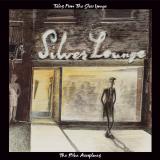
The Blue Aeroplanes have been delivering their distinctive brand of rackety sprechgesang for four decades now, and they are showing no signs of slowing down. Their new studio album, ‘Tales From The Silver Lounge’ is based on overheard conversations between the clientele of The Silver Lounge, a rather louche café/bar in an unnamed city on an unknown planet much like ours, and in an unknown time, though the decor tends to the late 50’s, early 60’s.
The identities of the members of the Silver Lounge are, of course, confidential.
This is the 14th Blue Aeroplanes studio album and the third with the current line-up, which is:
Gerard Langley: vocals
Bec Jevons: guitar, vocal and backing vocals
Mike Youé: guitar, vocal and backing vocals
Rita Lynch: guitar, vocal and backing vocals
Chris Sharp: bass and backing vocals
John Langley: drums and percussion
Ed Taylor: many different instruments and backing vocals
Wojtek Dmochowski: dance
Alexander Dmochowski guests on saxophone and clarinet, Will Diamond on violin and Steve Bush adds backing vocals.
After two best-of compilation albums were released by Chrysalis Records in 2025 (‘Magical Realism’: The Best Of The Blue Aeroplanes’ and ‘Outsider Art’: The Other Best Of The Blue Aeroplanes’), the band are now back firmly in a sort of present with a new album that features all the guitar-band flavours that anyone could need, with poems that cover name-doppelgangers, falconry terms, Don Marquis, postcards, Greek mythology, abandoned Teslas, the First World War and the surreal nature of music-hall jokes.
“The Blue Aeroplanes? Not my cup of tea, but I can see what people see in them.” Mark E. Smith
The Blue Aeroplanes have been delivering their distinctive brand of rackety sprechgesang for four decades now, and they are showing no signs of slowing down. Their new studio album, ‘Tales From The Silver Lounge’ is based on overheard conversations between the clientele of The Silver Lounge, a rather louche café/bar in an unnamed city on an unknown planet much like ours, and in an unknown time, though the decor tends to the late 50’s, early 60’s.
The identities of the members of the Silver Lounge are, of course, confidential.
This is the 14th Blue Aeroplanes studio album and the third with the current line-up, which is:
Gerard Langley: vocals
Bec Jevons: guitar, vocal and backing vocals
Mike Youé: guitar, vocal and backing vocals
Rita Lynch: guitar, vocal and backing vocals
Chris Sharp: bass and backing vocals
John Langley: drums and percussion
Ed Taylor: many different instruments and backing vocals
Wojtek Dmochowski: dance
Alexander Dmochowski guests on saxophone and clarinet, Will Diamond on violin and Steve Bush adds backing vocals.
After two best-of compilation albums were released by Chrysalis Records in 2025 (‘Magical Realism’: The Best Of The Blue Aeroplanes’ and ‘Outsider Art’: The Other Best Of The Blue Aeroplanes’), the band are now back firmly in a sort of present with a new album that features all the guitar-band flavours that anyone could need, with poems that cover name-doppelgangers, falconry terms, Don Marquis, postcards, Greek mythology, abandoned Teslas, the First World War and the surreal nature of music-hall jokes.
“The Blue Aeroplanes? Not my cup of tea, but I can see what people see in them.” Mark E. Smith
Truths and secrets often reveal themselves at night, under the freedom of shadowy darkness, away from prying eyes. In creating Given to the Night, sisters Valentine and Clementine Nixon have crafted a world that drifts through the in-between: between dream and reality, between day and night and the undefined, and ultimately a world that embraces the discomfort of being untethered. A process that follows simplicity and intuition rather than pre-determined narratives. “We recorded songs as they appeared, which sometimes felt like catching light. Before we realised it we had a record”, the duo explain.
While making the record Valentine and Clementine gently pushed away from the world- deleted social media, retreated into the trees of their native New Zealand - and only invited a couple of people in during the recording process. From that space, the album came together in an eerily easeful way.
There is a dream-like drift and sonic timelessness to the the record, as reflected in its nocturnal title, which can be read in two ways:
“Being taken by, or being inclined towards nighttime, preferring its blurry cloak of shadows to the harsh light of day; or giving oneself up to night, in sacrifice, letting go of fear and melting into the darkness.”
Written during a time of personal transition there was “a sense of finding the light in the shadow” they add. Guitar lines float, synth lines entwine, tapes hiss and vocals stream creating a kaleidoscopic montage of transient memories and emotions. A spectrum of feelings arise - isolation and joy, insomnia and manic highs, confusion and fleeting clarity, grief and healings. In the record, these feelings all merge and fade into one another in a nonlinear manner, as life tends to do; creating something deeply human that simultaneously gestures towards the transcendental.
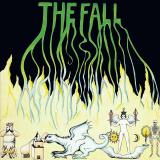
7–Early Years–79 was The Fall's first comp ever. Originally released on Step-Forward in 1981, the LP compiles the group's first four singles recorded for the label between 1977 and 1979 – Bingo-Master's Break-Out, It's The New Thing, Rowche Rumble and Fiery Jack – none of which appeared on any of the band's studio albums. (Also included is "Dice Man" from 1979's Dragnet.) Taken together, these 7-inches are The Fall as they initially emerged from the primordial soup of '77 Manchester, pushing out from founder Mark E. Smith's poetry-collective origins into the early punk scene.
Right from the first track, "Repetition," Smith and crew's working-class art punk is in full effect. His obtuse lyrical brilliance and inimitable vocal delivery ride atop the band's ringing atonal guitar, looping basslines and propulsive drumming – complemented by wheezy combo organ tones. The tracks from each 7-inch are presented here in reverse chronological order. The Fall's fierce contrarianism defines the early UK punk sound and, at the same time, sounds nothing like any of their contemporaries.
The revolving cast of band members includes Martin Bramah, Una Baines and Karl Burns as well as Marc Riley, Craig Scanlon and Stephen Hanley who would remain in The Fall's classic '80s lineups. Many of their best-known songs are featured here – from "Psycho Mafia" and "Rowche Rumble" to the Mayo Thompson-produced "Fiery Jack."
Superior Viaduct's edition is the first time that 77–Early Years–79 has been reissued on vinyl. Includes liner notes by Stephen Malkmus.
Unlock the allure of The Hot Spot through its unforgettable soundtrack, a captivating collection that brings the film's sultry ambiance to life.
Set against the backdrop of a small Texas town, The Hot Spot follows Harry Madox, a charming drifter with a dark past. As he arrives in town, he becomes embroiled in a web of seduction and deceit, navigating his way through a love triangle involving the sultry waitress, Gloria, and the alluring femme fatale, Dolly. Tensions rise and passions ignite, leading to a thrilling climax where desire and danger intertwine. Directed by the visionary Dennis Hopper, the film is a masterclass in mood and atmosphere, capturing the essence of 1990s neo-noir.
The Hot Spot has garnered acclaim for its stylish cinematography and gripping narrative, but it's the music that truly sets it apart. It's an amalgamation of swampy blues, jazz and rock — all mixed and recorded in a sparse, bloomy and eerie sort of way.
Critics hailed the soundtrack as "an electrifying fusion of jazz and blues that perfectly complements the film's seductive undertones." The blend of sultry melodies and haunting instrumentals creates an immersive experience that resonates long after the credits roll.
This recording is just so damn fine, so airy and warm. And the musicians aboard on this Dennis Hopper film are a who's who, including Miles Davis, John Lee Hooker, Taj Mahal, Roy Rodgers, Earl Palmer and Tim Drummond. This has long been a highly sought-after and collectible record among audiophiles. This soundtrack is essential for any music lover or film buff, capturing the very essence of the film's seductive spirit.
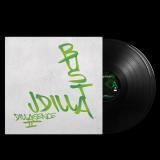
In the history of hip-hop, certain collisions alter the orbit of the culture entirely. When Busta Rhymes first stepped into the otherworldly, swing-heavy universe of J Dilla, it was an alignment of two unstoppable titans—the most chaotic, kinetic vocalist in rap history meeting the quiet deity of raw soul and sub-bass perfection. Their original pairing set a gold standard for what happens when top-tier lyrical warfare meets sacred production. Now, the vault opens to unveil DILLAGENCE II: a resurrection of that mythic frequency, bridging the raw grit of the streets with a legendary, earth-shattering grandeur.
Authorized directly from the Yancey estate, DILLAGENCE II pairs Busta’s razor-sharp, rapid-fire flows with Dilla’s nastiest, most sought-after unreleased beats. Built upon rare MPC canvases unearthed from Dilla’s legendary vault, the album captures both masters in a state of absolute, unchained ascension. Every track hits like a heavyweight knockout—blending off-grid snares, filthy basslines, and soaring soul chops with Busta’s apocalyptic precision. He treats every lost Detroit tape like a battleground, unleashing a larger-than-life energy that turns unreleased boom-bap into a stadium-sized manifesto.
Forget the cheap nostalgia cash-ins and posthumous butcher jobs. DILLAGENCE II hits with the weight of two master craftsmen operating at the absolute peak of their powers. By locking Detroit’s deepest low-end grooves directly into New York’s loudest, most relentless vocal engine, this record doesn't just honor Dilla's legacy—it kicks the door off its hinges and demands you listen.
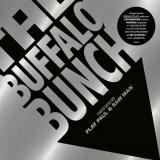
A key name from the golden era of French Touch, The Buffalo Bunch return to the spotlight with a selection of some of their most essential cuts, including their highly sought-after remix of Phoenix’s “If I Ever Feel Better” — a track that has become increasingly elusive on vinyl over the years.
Also featured is We In Music’s “Grandlife”, a cult early-2000s gem born from the same creative circle. Built on addictive disco-funk loops and straight-to-the-floor energy, it sits perfectly alongside The Buffalo Bunch’s signature productions.
Filtered house, disco, funk and raw groove collide throughout the compilation, capturing the unmistakable sound of a duo whose records have become firm favourites among DJs and collectors.
More than twenty-five years after their first releases, TMS Records brings these tracks back into circulation with a vinyl edition made for the dancefloor, the record bag and a new generation digging deeper into the French Touch legacy.
Originally released on Flying Nun in 1983, Fall In A Hole is a double LP of an especially incendiary Fall show at Mainstreet Cabaret in Auckland, NZ in August 1982. The second of a two-night stand, this would be the band's final concert of its successful first tour of Australia and New Zealand. Recorded by longtime Flying Nun associate Chris Knox – who also made the striking cover artwork – Fall In A Hole follows the release of earlier live albums Totale's Turns and A Part of America Therein, 1981.
Besides capturing The Fall onstage during one of its most feral and exhilarating periods, Fall In A Hole is historically significant for several reasons. It heralds the end of Marc Riley's tenure with the band, an era considered by many Fall fans to be the group's peak, and showcases the two-drummer lineup heard on 1982's Hex Enduction Hour, with both Paul Hanley and Karl Burns sharing drumkit duties onstage. With Riley and Craig Scanlon on dual guitars and Stephen Hanley on bass, The Fall was stepping out in its final iteration with a majority of personnel rooted in their late '70s lineup.
The setlist is peppered with a mix of singles and album tracks old and new – including several that had yet to be released. Rarities like "Fantastic Life," "Backdrop" and "Solicitor In Studio" are given epic, feedback-drenched airings, while fan favorites like "Hip Priest," "Prole Art Threat" and "The Classical" radiate with lively, raucous energy.
Superior Viaduct's edition is the first time that Fall In A Hole has been reissued on vinyl. Includes liner notes by Roy Montgomery. Digital transfers made from analogue master tapes in the Flying Nun Collection and Chris Knox Collection held at the Alexander Turnbull Library (National Library of New Zealand).
A cassette-only collection of scratchy one-away dubplates and 45s from the vaults of Jah Massagan Sound, featuring plates cut at the studios of legendary producers and engineers such as King Tubby, Lee Perry, JoJo Hoo Kim, and Joe Gibbs among others during the peak of the roots sound in the mid 1970s through to the early 1980s.
Beginning in Leyton in 1972, owner-operator Lloyd alongside childhood friend and amp builder Tony Mass were part of a wave of reggae soundsystems formed in London and across the UK immediately after the Windrush generation. Focused on preserving and promoting the authentic Jamaican roots, Jah Massagan has remained a small but steadfast cornerstone in the East London scene more than 50 years later. Eljay Mass, the son of owner Lloyd, takes the reins for this cassette-only document, as the torch is passed on inter-generationally to continue the sound’s work.
2026 Repress in White Vinyl
There are few people across the globe, who will have not been touched by the work of Frankie Knuckles. Forever regarded as ‘The Godfather of House’. A Grammy Award winner, Frankie had a street in Chicago named after him where the old Warehouse once stood to commemorate the first ever Frankie Knuckles Day on 25th August 2004. Five years ago, Frankie passed away in Chicago on 31st March 2014 leaving behind one of the greatest house music legacies spanning almost four decades.
Now he is commemorated once again by long time writing and production partner Eric Kupper who will release part II of the special commemorative album on vinyl around this date. Eric, himself a seasoned DJ producer and writer, working side by side with Frankie on many his seminal classics, as well as personally working on over 116 Billboard #1 Dance Records. Having both worked together for many years they established themselves at ‘Director’s Cut’ from 2011 and set about producing original releases and remixes based on the classic ‘Def Mix’ sound while sharing equal credits for their creations.
The album features some of Directors Cut’s best works with the Re-Directed version of the seminal classic ‘Baby Wants To Ride’ plus their re rubs of Inaya Day, Sybil, Hardsoul and Lou Rawls - You’ll Never Find Another Love Like Mine (Kenny Summit, Frankie Knuckles & Eric Kupper Unreleased Anthem).
This album is to be released in collaboration with The Frankie Knuckles Foundation who work to continue Frankie’s legacy whilst focusing on music in schools, LGBTQ youth homelessness, AIDS research / prevention & diabetes research / education.
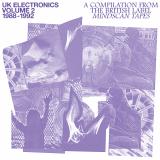
For this second volume of UK ELECTRONICS, we’ve once again selected, here at Delodio, some of our favourite tracks from Mindscan Tapes, an English DIY label active from 1988 to 1994, run by Robert Maycock, a young Englishman with an extraordinary ear.. Its Beatronic and UK Electronics compilations brought together electro, early techno, ambient, experimental, house and industrial music at a time when most labels stayed within clearly defined genres.
Here at Delodio, we are amazed by the contrast between the quality of these cassettes and the label’s extremely underground nature: its best-selling title has barely sold 30 copies.
More than a compilation, the album is a tribute to the artists involved, Robert’s artistic vision, and the pre-internet DIY culture that connected music obsessives through mail, flyers and home-copied cassettes.
A snapshot of an era when a young Englishman spent his dole money bringing unheard music into the world.
Bobby Rush (born Emmett Ellis Jr. in Homer, Louisiana on November 10th, 1933) is an American blues musician, composer, record producer, and singer. His style incorporates elements of blues, rap, funk, as well as a comic sense about blues tropes.
Rush has won twelve Blues Music Awards and in 2017, at the age of 83, he won his first Grammy Award for the album Porcupine Meat. He is inducted into the Blues Hall of Fame, Mississippi Hall of Fame, and Rhythm & Blues Music Hall of Fame.
Earth Libraries is proud to share a glance back in Bobby Rush's incredible career with a track that shows off his funky side to the utmost degree. "She Put The Whammy On Me b/w Gotta Have Money", originally recorded in the 80s to be marketed towards DJs, are funky, disco inspired tracks you can't help but dance to.
Claps and stomps through the wreckage of heartbreak. Jangly guitars and jubilant horns disguise the sharp edges of emotional neglect, asymmetrical desire, abandonment, and longing—while the music mirrors the fevered shifting of blame. Never bitter but brutally honest, Thao recounts love’s collapse in a delicate balance of near-obsessive detail and poetic ambiguity. A soundtrack for sad people who dance—even if it’s on the ruins of love. Produced by Tucker Martine, with guest appearances by Andrew Bird, Blitzen Trapper, Horse Feathers, Laura Veirs, and Tune-Yards.
A.P. and Rowland The Bastard provide 2 tough warehouse techno tracks each for the iconic Cluster label. A.P. gets slightly funky on City Fever but then pounds hard on You Are What You Are, whilst Rowland delivers sinister grooves on Barabas, and more straight ahead dynamic power on Overlab Sub Stab.
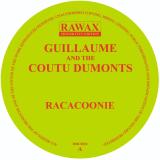
RAWAX proudly presents the 5th release by Gerald Mitchell on his own RAWAX MOTOR CITY - series.
This time we have the honor to present you "Groove Within The Groove". This classic came originally out on 430 WEST in 1999!
Don't feed the Discogs Sharks!
Audio Werner opens with "Major Relief," a floor-forward technoid cut featuring slamming drums and skittering chords. Jozef Conor follows on the A2 with "Hand it Over," a pacy hands-up moment for the night. On the B side, Melina and Jakob Seidensticker deliver "Gold Diggin"," toting classic percussion wrapped in slinking sampled pads. Anderson closes with "Sine Language," a nod to the Italian deep house greats.
Somewhere between extraterrestrial techno and intergalactic disco lies Oli Silva. A waveform of multi-dimensional energy filled with analog heart and electric soul.
His first outing finds him land his spaceship directly on Craig Richards' The Nothing Special, with the genre bending Unlikely Punctuality EP.