• Fame collectors know how rare this 45 is to find in the wild; it hardly ever happens. ‘Go Away With Me’ is a fabulously, catchy dance number from 1963 when the little-known Dixon wandered into the Fame Studios in Muscle Shoals and laid these track down. It is one of Dan Penn’s very early compositions and the nascent talent of the writer is in evidence here.
• The tuneful self-penned ‘Time Will Tell’ flip reveals another accomplished musical bent to the singer who, though he only cut two 45s, was revered as a major Muscle Shoals influence by the likes of Jimmy Johnson, Donnie Fritts and David Hood.
out of Stock
Last delivered 3 years ago available to reorder, subject to availability
Is It Balearic finally offer up four cuts from Coyote's fantastic The Mystery Light album. First up is Dan Lissvik on the remix of 'Simpsons Sky' with its loose-limbed Balearic drum funk and tropical synth work. Then come Reverso 68 who layer in some superb arpeggiators for the silky piano sounds of sunset gem 'Copacetic.' Japanese downtempo boss Calm brings his signature mellow acid lushness to 'Outsider' and last of all Chris Massey reworks Coyote's 'Cami Sa Valeta' which was a tribute to Tony Pike. Here it is a go-slow, blissed out and cosmic star-gazer.
out of Stock
Last delivered 3 years ago available to reorder, subject to availability
Single-LP edit of Piñata lacquered at half speed master by Metropolis Mastering in London for the highest fidelity.
After the original release Freddie Gibbs & Madlib's Piñata in 2014, cover artist Jeff Jank made a new sleeve for the album in the style of a 1964 Blue Note album.
Featuring Danny Brown, Mac Miller, Earl Sweatshirt, Raekwon, Scarface, Domo Genesis, Ab-Soul, Polyester the Saint, BJ The Chicago Kid, Big Time Watts, G-Wiz, Casey Veggies, Sulaiman, Meechy Darko & Freddie Kane.
Freddie Gibbs is the product of violent, drug-laden streets but unlike most rappers with similar resumes, he brings the block to the booth without inhibition or an exaggerated rap persona. Piñata, a 17 track collaboration with producer Madlib, is the best distillation yet of his transparent approach to making music, combining an at times stark honesty with electrifying talent as a lyricist and performer.
Piñata is a gangster Blaxploitation film on wax, says Gibbs, who came up on the streets of Gary, Indiana, the disregarded city previously best known for producing Michael Jackson. Here he is joined by Mac Miller, Earl Sweatshirt, Raekwon, Scarface, Domo Genesis, Ab-Soul and a host of others in setting his soliloquies of the streets alongside film snippets and dusted funk, soul and prog musical tapestries. While this is the latest in a series of single-artist collaborations for Madlib, after Jaylib (J Dilla), Madvillainy (MF Doom) and the street-centric O.J. Simpson with Detroits Guilty Simpson, the pairing is unique as it is the first time for Gibbs working with just one producer.
On Piñata, where Gibbs can shift from textbook lessons in robbing and drugging on trackslike Scarface and Knicks, to perhaps the albums most personal song, Broken, a collaboration with Scarface, who, along with Tupac, DMX and 50 Cent, make up the rappers own Mount Rushmore of MCs (Youre getting a hurricane of all those motherfuckers hitting you at once when you listen to Freddie Gibbs, he says). Deeper, a Gibbs favorite and the third single from the album after Thuggin (2012) and Shame, (2013) is an ode to hip-hop in the mold of Commons I Used to Love H.E.R.; High, featuring Danny Brown, is self-explanatory and just what you would expect from Gibbs, Madlib and one of Detroits finest; while on Real, Gibbs addresses an old score just as Michael Corleone settled all family business on baptism day.
As a producer, Madlib, quite simply, is music, and ten years into his career-a time when other artists become comfortable-Gibbs remains restless, focused, with an eye on the competition and their position relative to his ascent. This is because mentally, hes still on the corner hustling, which would be the downfall of the average rapper. With Piñata, Gibbs confirms that he is anything but average.
out of Stock
Last delivered 3 years ago available to reorder, subject to availability
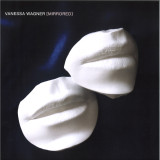
French pianist Vanessa Wagner collects solo piano studies of graceful minimalism and rare finesse for new album Mirrored.
Quickly following March 2022’s Study of the Invisible album, Vanessa Wagner returns with a new collection of work that paints in many colours. The application of shadow in Mirrored evokes haunting poignancy; the care and delicateness of its negative space leaves room for undulating melodic motifs to ebb and flow; its bold splashes of luminescence are striking and rich. And while the album collates re-interpretations of works by composers as varied as Philip Glass, Nico Muhly, Moondog, Leo Ferré and Camille Pepin, the potency and effect of the collection as a whole reflects only Vanessa Wagner and the extraordinary breadth of her abilities.
Performing solo, exposed to timbre, tempo and clarity, many of the pieces here - such as “Sea Horses” by (Vanessa’s one-time mentor) Moondog or Philip Glass’ “Etude 4” - demand virtuosic abilities as a performer and interpreter. But in Vanessa Wagner’s hands, they are not only made her own, but made mesmeric and magical by the sensitivity of her touch.
out of Stock
Last delivered 3 years ago available to reorder, subject to availability
Seit Veröffentlichung einer ersten Single via Soundcloud in 2013 zählt sie in Großbritannien zu den meistbeachteten Newcomern: Holly "Låpsley" Fletcher. Ihre so eigenwillig wie traumwandlerisch arrangierte Musik zwischen Pop und schwebender Elektronik wird von den einschlägigen Gazetten sowie Radio-Stars wie BBC-DJ Zane Lowe über alle Maßen gelobt. Eine Berücksichtigung in der international renommierten "BBC Sound-Poll" ist da ganz folgerichtig. Mit ihrer ebenso verführerischen wie zerbrechlichen Stimme versteht es Låpsley auch live, restlos zu verzaubern - sei es auf der Glastonbury-"BBC Introducing"-Bühne, beim Reeperbahnfestival oder in Clubshows. Nach der 2015er-Single "Hurt Me", die sich in den deutschen Airplaycharts gut platzieren konnte, kommt pünktlich zum Jahresbeginn 2016 auch endlich ihr Debütalbum in die Läden. Produktionshilfe für "Long Way Home" leistete Rodaidh McDonald (Adele, The xx, Damon Albarn, Savages). Zwei Songs wurden mit Paul O'Duffy aufgenommen. Die erste Single-Auskopplung, "Love Is Blind", ist ein weiterer Fingerzeig dafür, dass Låpsleys Debüt eine neue Qualität an Tiefe und Wahrhaftigkeit in den elektronischen Pop einbringt.
out of Stock
Last delivered 3 years ago available to reorder, subject to availability
LP repress on limited green vinyl. This album is in the Scottish album of the year shortlist. Co-produced by Stephen McAll and Shimmy-Disc founder Kramer. RIYL: Mazzy Star, The National, Will Oldham / Bonnie “Prince” Billy, Nick Drake. Constant Follower’s debut album "Neither Is, Nor Ever Was" was borne out of a respect for change, and the inevitable passing of time that frightens, comforts and humbles every one of us at once. It is a haunting testimonial to the temporary joys and fleeting moments that define the human experience no matter the individual passages it takes. The name of the outfit itself is a reflection of those things that we carry through life, for better or worse, that ultimately make us who we are. The current band consists of Stephen McAll (vocals, acoustic guitar, electric guitar, synth, bass), Andrew Pankhurst (electric guitar), Amy Campbell (backing vocals and synth), and McAll’s partner Kessi Stosch (backing vocals, synth and bass). "Neither Is, Nor Ever Was" co-produced by Scottish singer-songwriter Stephen McAll and the legendary record producer Kramer. The recording for the album began in early 2020 at La Chunky studios in Glasgow with engineer Johnny Smillie. This was interrupted by the birth of McAll’s daughter. If you listen closely, her cries are just audible during some of Kessi’s backing vocals, and shortly afterwards by Covid 19 restrictions. McAll began recording the rest at his own CFFC studio in Stirling. The recording was then beautifully mixed by Kramer. Once the LP was complete Kramer also did the final mastering. The videos for the release are truly short films that have been submitted to film festivals. They are enchanting, ethereal and immersive, the band’s visuals are as moving and cinematic as their sound. Martin J Pickering, who is renowned for his work with Dua Lipa, Paloma Faith and Lethal Bizzle, is behind their latest music video for “Set Aside Some Time”. The result - intense pangs of emotion interspersed with moments of reflection and acceptance, an ephemeral ode to the passing of time.
Welcome to the Parish. Come, gather round dear lambs, as today’s sermon is about to begin. Crypt of the Wizard proudly presents the highly anticipated debut LP from pastoral proto-metal power trio Parish, available to pre-order on vinyl now. The two years since the release of their EP God's Right Hand have proved to be no fallow period for the band, who used the time to write and hone the 10 songs laid out on their self-titled debut. They returned to the majestic Holy Mountain to record the album. Making use of the studio's bumper crop of vintage equipment, Parish were able to unearth a sound that draws on the roots of heavy metal. The band's lyrics continue to revel in notions of the pastoral. Themes concerning the works of witches and the changing of the seasons are explored with economic and elegant storytelling. Songs of villagers besieged by strange travellers and poor wretches locked away in gaol conjure up a feeling of uncanny dread. Elsewhere, other songs suggest a sacerdotal attitude towards the earth and those who walk it. Parish stir up sweet memories of those subtle moments of perfection found deep in the discographies of heavy metal’s historic luminaries. Their sound reaches into places previously ventured by the likes of Wishbone Ash, Pagan Altar and Budgie, as well as folk revivalists Fairport Convention - a less obvious resource for heaviness, but a fine repository for musical depth. With any luck, Parish will in time join the aforementioned bands whose records will be played on repeat, locked in the unchangeable hearts of those unbothered by novelty and changes in musical fashions. Now our sermon has come to a close, peace be with you, and go forth in glory.
-European fall tour is sold out across all venues, with a U.S. tour set for 2023. Supported by fans and listeners of Thundercat, Silk Sonic, Jungle and Steely Dan. Album single, “Rolling Back” has been featured across multiple editorial playlists via major DSPs, including Spotify’s Soul ’n’ the City, Retro Pop, Stay Tuned!, Happy Stroll and Ready for the Day. Young Gun Silver Fox, the acclaimed indie duo from the UK with yacht-rock tendencies comprising of Andy Platts of Mamas Gun and Shawn Lee (vagabond award-winning video game composer) announce their highly anticipated fourth studio album Ticket to Shangri-La. The album showcases a band at the very top of their game, fine-tuning their potent brew of sun-kissed pop-soul, west coast AOR and natural groove with a skill for composition and production that sees them forging ahead down a musical highway blessed with blue skies and positive vibrations. For both participants, the chance to make a new record together is always a liberating experience, as Andy explains; “I always come back to Young Gun Silver Fox like taking a drive to the coast and I just smell the ocean and the air and it’s like ‘wicked I’m back here again’ and I can just kick back and enjoy it.” The chemistry and craftmanship on Ticket to Shangri-La means that Young Gun Silver Fox do exactly as the title suggests, transporting the listener to a magical, mythical world of sunshine and good vibes, a musical and spiritual ethos born from the minds of two gifted musicians that stand as the embodiment of all they do best, whilst providing the perfect invitation into their unique world.
Crypt of the Wizard is proud to announce the debut LP from Riders of Rohan. Arise now, arise, and listen to these here ballads of courage, kinship, gracious good and ultimate evil heralded by Sweden’s Riders of Rohan. This power trio of epic proportions was forged in the dark smithies of Gothenburg and founded of black steel by Marcus Ferreira Larsen at No Master's Voice studio in Copenhagen. Our heroes play an enchanted breed of heavy adventure-rock, where KISS-like melodies merge with the punk rock 'n' roll delivery of Dead Moon to tell tales written for the love of Tolkien. Don't miss out on the first release from this fine fellowship. Stream it now or look out for it on cassette and vinyl later on this year. Ride now, ride now, ride! Ride for ruin and the world's ending! Death! Death! Death! Forth Eorlingas!
‘Hot For The Moon' is the long awaited second (and final) EP from Bristol slacker rockers Dogeyed, recorded & mixed straight to tape in one day back in Autumn 2020. These four snappy little numbers see the pups at their poppiest, heaviest and spookiest. Fans of indiscriminate whammy bar will not be disappointed, a band at their peak, just before their demise. Dogeyed is dead. Long live Dogeyed. Recorded & Mixed by Pete Miles at Middle Farm 14th October 2020 / Mastered by Ian Farmer at The Metal Shop 2021 / Black vinyl in a risograph foldover sleeve limited to 500 copies
Finally available on vinyl for the first time, with extra tracks - Limited edition numbered red vinyl. 500 copies worldwide A supergroup with twenty lead singers from twenty different bands, featuring members of: Killing Joke, Carcass, Funeral For a Friend, Therapy, Hundred Reasons, Napalm Death, Sikth, Pitchshifter, Fightstar, Earthtone 9, Amen, New Model Army, Send More Paramedics, Hiding Place, Romeo Must Die, Murder One, Hondo Maclean. Architect and founding This is Menace member MD Clayden (Pitchshifter) has curated ‘Ism’ adding previously unreleased material. Reviews: “A living, breathing, subversive collective.” Kerrang Magazine / “Furious. Like a juggernaut. F*ck yeah!” Metal Hammer Magazine / “Brash...and brilliant to break stuff to.” NME
Originally released in 1971, Tales Of The Algonquin, is one of the finest artifacts of the British modal and free jazz scene of the 1960s/1970s. Johns Surman and Warren, like their contemporary Mike Westbrook, take the big band form and flip it on its head by incorporating elements of modal, free, and progressive jazz. The results are powerful and this album is perhaps the greatest example of that quintessentially British jazz style. Long sought after by jazz collectors across the globe, this classic title is finally back in print on LP.
SIDE ONE:
1. With Terry's Help 2. We'll Make It 3. The Dandelion 4. Picture-Tree
SIDE TWO:
TALES OF THE ALGONQUIN I. The Purple Swan II. Shingebis and the North Wind III. The Adventures of Manabush IV. The White Water Lily V. Wihio the Wanderer
Repress! Little Barrie And Malcolm Catto Team Up For Seven Tracks Of Breaks And Sci-Fi Fuzz For Maverick Producer Madlib's Label
Quatermass Seven, the meeting of minds between guitarist Barrie Cadogan, bassist Lewis Wharton and drummer Malcolm Catto represents a re-birth of sorts for Little Barrie, with these their first recordings since 2017’s Death Express and the untimely passing of their gifted drummer and friend Virgil Howe. As Lewis explains, the sessions played a part in the healing process, a way to re-connect through music without any intentions to necessarily come away with a finished record. “It was good to get in the studio again after such a long break especially as we didn’t go in with any agenda or expectations,” he explains. There was no preconceptions that we would make a new Little Barrie record, it was just an opportunity to work on some things Barrie had written for fun with zero pressure.” With most tracks recorded live with minimal overdubs, and produced by Malcolm at his Quatermass studios, The Heliocentrics’ main man brings new flavour to the band’s rhythm section by blending his power behind the drum kit and his expansive skills behind the mixing desk to take Little Barrie’s music forward into new territories. Recorded on Catto’s treasure trove of analogue gear, and mastered onto ¼” tape, the overall effect is guitar, bass and drums finding a sweet spot where genres collide, delivering a record that takes the influences of the past and pushes them towards somewhere more contemporary. “I definitely hear in Barrie’s songs a lot of common musical ground’” explains Malcolm. “It felt like a great thing to do, work with Malcolm while we’re figuring out what we wanna do,” Barrie concludes, “let’s just go in and do some playing and see what happens, and we came out with more than we ever intended.” Quatermass Seven delivers a dark, deep and expansive set of grooves, layered with frazzled and flawless guitar and flowing melodies, as well as pointing toward a future of exciting new musical opportunities. “Still here, so fine, just a little darker state of mind” sings Cadogan on ‘Steel Drum’, words which sum up hope in times of uncertainty, whilst unintentionally offering a perfect description of Quartermass Seven.
Tuneful, feedback- slathered surges like "Half Way Fine" and "Spright" feel as
comfortable as a beaten-up pair of Chuck Taylors, introducing dramatic dynamic
shifts and savvy melodic change- ups to keep you on your toes. You may not
always be able to make out Hartlett's lyrics amid the cyclonic fuzz, but the
despondence and disillusionment in his voice always cut through loud and clear.
And when he can't quite find the right words, he and fellow guitarist Morgan Luzzi
unleash that simmering angst through nonverbal means, like the roiling guitar
tsunami that brings the hazy-headed "Baby Alligator" to a cataclysmic close.
Stuart Berman, Pitchfork
The Younger Than Me debut on Warning hits hard with two powerful original cuts and sharp remixes. The Early Sound Of Nothing is a deep Rave belter driven by the 90s reminiscences that YTM is known and loved for. Maruwa gently coats his production in a slick mix of uplifting House and funky Trance, perfect for an energetic morning workout. On the flip Counter Future turns up the tempo creating a meltdown of choral Jumpstyle vibes before the EP gets finished with another rework by Sophie du Palais who takes the track into a mean bath for a round of sinister Ketamine sex.
out of Stock
Last delivered 2 years ago available to reorder, subject to availability
Most audiophiles know Alan Parsons Project's I Robot by heart. Engineered by Parsons after he performed the same duties on Pink Floyd's Dark Side of the Moon, the 1977 record reigns as a disc whose taut bass, crisp highs, clean production, and seemingly limitless dynamic range are matched only by the sensational prog-rock fare helmed by the keyboardist and his creative partner, Eric Woolfson. Not surprisingly, it's been issued myriad times. Can it be improved? Relish Mobile Fidelity's stupendous UltraDisc One-Step 180g 33RPM box set and the question becomes moot.
Mastered from the original master tapes and pressed at RTI on MoFi SuperVinyl, I Robot comes to life with reference-setting realism on this numbered, limited-edition reissue. Boasting immaculate highs and lows, generous spaciousness, and see-through transparency that takes you into the studio with Parsons and Woolfson at Abbey Road, this definitive edition is designed to demonstrate the full-range capabilities of the world's best stereo systems while offering listeners the convenience of having all the music on one LP.
Featuring a nearly inaudible noise floor, this transcendent UD1S edition functions as a repeat invitation to savor reference-grade soundstages, immersive smoothness, sought-after instrumental separation, three-dimensional imaging, and consummate tonal balances. Able to be played back at high volumes without compromise or fatigue, it is a demonstration record for the ages – the likes of which are no longer being made. This is the very reason you own and invest in high-end audio gear.
The special characteristics of this UD1S version extend to the premium packaging. Housed in an elegant slipcase, the reissue features special foil-stamped jackets and faithful-to-the-original graphics. Aurally and visually, it is made for discerning listeners who prize sound quality and production, and who desire to fully immerse themselves in everything about this conceptual landmark. The Alan Parsons Project's most famous record deserves nothing less.
Inspired by and loosely based around the Isaac Asimov stories of the same name, I Robot delves into themes of artificial intelligence and technological dominance that make the record extremely relevant in the 21st century. Indeed, Parsons and Woolfson's pinnacle creation dovetailed with the ascendency of Star Wars, which itself is experiencing a rebirth in an age of self-driving cars, smart devices, and mindless automation. Lyrically, songs such as "The Voice" call into question human behavior – and their relationship to increasing robotic supremacy – in everyday life. Parsons and Woolfson reflect the associated paranoia, dichotomy, and transformation via shifting sci-fi arrangements steeped in drama and moodiness.
The absorbing tunes on I Robot also continue to fascinate due to their perfectionism and innovation. Borrowing from Pink Floyd's strategies, Parsons and Woolfson utilize a looped sequence on the title track to create new downbeats. "Some Other Time" employs two different lead vocalists and yet gives the illusion that only one is involved. Captivating strings, a piccolo trumpet, and bona fide pipe organ grace "Don't Let It Show." The origins of "Nucleus" stem from a unique analog keyboard concoction dubbed "the Projectron," devised by Parsons and electronic engineer Keith Johnson. Andrew Powell's orchestral and choral arrangements top it all off, with "Total Eclipse" arriving as a frightening track that presages the climactic "Genesis Ch. 1 V. 32."
Does man or machine win in the end? Decide as you get lost in Mobile Fidelity's UltraDisc 180g 33RPM LP pressing. Secure your numbered copy today!
More About Mobile Fidelity UltraDisc One-Step and Why It Is Superior
Mobile Fidelity Sound Lab's UltraDisc One-Step (UD1S) technique bypasses generational losses inherent to the traditional three-step plating process by removing two steps: the production of father and mother plates, which are created to yield numerous stampers from each lacquer that is cut. For UD1S plating, stampers (also called "converts") are made directly from the lacquers. Since each lacquer yields only one stamper, multiple lacquers need to be cut. Mobile Fidelity's UD1S process produces a final LP with the lowest-possible noise floor. The removal of two steps of the plating process also reveals musical details and dynamics that would otherwise be lost due to the standard multi-step process. With UD1S, every aspect of vinyl production is optimized to produce the best-sounding vinyl album available today.
MoFi SuperVinyl
Developed by NEOTECH and RTI, MoFi SuperVinyl is the most exacting-to-specification vinyl compound ever devised. Analogue lovers have never seen (or heard) anything like it. Extraordinarily expensive and extremely painstaking to produce, the special proprietary compound addresses two specific areas of improvement: noise floor reduction and enhanced groove definition. The vinyl composition features a new carbonless dye (hold the disc up to the light and see) and produces the world's quietest surfaces. This high-definition formula also allows for the creation of cleaner grooves that are indistinguishable from the original lacquer. MoFi SuperVinyl provides the closest approximation of what the label's engineers hear in the mastering lab.
Mastered from the original master tapes and pressed at RTI on dead-quiet 180g vinyl, Mobile Fidelity's numbered-edition 180g LP of Local Hero gives the beloved effort audiophile-grade sound on a par with the reference-quality sonics afforded Dire Straits' Mobile Fidelity reissues. In each arrangement, Knopfler's methodical guitar lines emerge with supreme transparency and multi-hued textural detail. The intricate notes, finger-picked passages, and cosmopolitan lines come across as if they're transmitted just feet away from you in real time.
Ditto the diverse accompaniment, including the Celtic-themed effects, supplemental jazz accents, and folk inflections. The keys to the nearly 44-minute effort's success and continuity relate not only to Knoplfer's laidback style and low-key approach, but his ear for uncanny melody and blues traces. Woven acoustically and electrically, his tapestries benefit from the newfound airiness, openness, and balance that live on this reissue. No matter the instrument or treatment, the music arrives with pinpoint imaging and vibrant liveliness. Close your eyes, and the Mobile Fidelity version of Local Hero projects movies in your head.
For instance, take the closing "Going Home," a cherished instrumental whose proud spirit resonates with English football fans and features saxophone playing by the late, great Michael Brecker. Heard before every Newcastle United F.C. home game, it has become an anthem on both sides of the Atlantic. Or, look to "The Ceilidh: Louis' Favorite Billy's Tune" on which Scottish-flavored vibes and dance tempos conjure a festive jig until a transition gives the number a more subdued, romantic feel. Then, the pattern repeats. Seeking to expand beyond the parameters of Dire Straits, Knoplfer taps into a global economy of structures and sounds, and takes anyone with a sense of adventure along for the ride.
Not that his hallmark six-string is absent from the proceedings. It frames the lovely tin-pan whistle motif of the aptly titled "Whistle Theme," acts as a beacon for the elegant, vibraphone-kissed "Smooching," and pushes forward the jovial, top-down momentum of "Freeway Flyer," among other highlights. Knopfler also receives assistance from session pros Mike Mainieri, Steve Jordan, and Terry Williams, as well as vocalist Gerry Rafferty on the set's sole vocal tune, "That's the Way It Always Starts."
In 2021, nyMusikk's annual festival of sound, "Only Connect", commissioned an interpretation from I LIKE TO SLEEP of the first movement of Olivier Messiaen’s Turangalila symphony. A project which initially led to a 15-minute piece performed at the festival, with the trio re-writing the music of Messiaen, but also rewriting the music of their own. Messiaen as a reference and compositional tool may be heard in the album for those really listening for references. With “Sleeping Beauty” the trio also explore even heavier riffs than before, seasick grooves and tempi, and deeper ambient soundscapes. Through extensive improvisation, the effects and processing of the sounds are way more extreme than before, almost awakening the sleeping beauty. During the pandemic, the band also had to find new ways to write music without the presence of every member, introducing the vibe-samples from the old Mellotron sound gallery to the band. Quarantillity, one of the themes which appears several times throughout the album - almost used in a similar way as the flower theme in the Turangalila symphony - is a direct result of sitting alone in quarantine, playing the Mellotron while listening to vibraphone extraordinaire Bobby Hutcherson. This theme could also be seen as a continuation of the previous album tracks named Pause I & Pause II from “Bedmonster” (2017) and “Daymare” (2020). Like “Daymare”, “Sleeping Beauty” was recorded in Duper Studio in Bergen, co-produced with the band’s all-time favourite sound wizard Jørgen Træen. It is also mixed and mastered by Træen, making the music sound as brutal, intense and intimate as experiencing I LIKE TO SLEEP in a live setting. “Infernal, scrotum-shrivelling energy sorely missing in today's music” said Jazzwise about their previous album, mentioning King Crimson, Magma, Tony Williams Lifetime, electric Miles and 60s free energy jazz as possible references. But that’s only one side of the story, there are plenty of quieter moments at work here, and the dynamic range is wide. Nicolas and Øyvind first met in high school in Trondheim before they joined up with Amund in a youth big band. It soon became apparent that they shared the same musical background centered around 70s progressive rock, classical music, jazz and improvisation. Taking their name from a Thelonious Monk quote, I LIKE TO SLEEP was formed, first for fun, but soon with higher ambitions, winning the prestigious "Young Jazz Musicians of the Year" award in 2018. Still only in their early 20s and still studying jazz at NTNU in Trondheim, they are also active as composers, freelancers and in other projects and are among the most promising on Norwegian scene. Amund Storløkken Åse – vibraphone and Mellotron Nicolas Leirtrø - baritone guitar, bass-VI and Mellotron Øyvind Leite – drums Tracks
The old adage about Elvis Presley is that his soundtrack work never held a candle next to his studio albums. Though true for a majority of his film-related outings, the traditional notion is forever disproved by his Blue Hawaii set. Originally released in 1961 in support of the film in which he starred, the triple-platinum LP spent nearly five months at the top of the Billboard album charts; outsold his two prior studio efforts; and ultimately, remains the second-best-selling soundtrack of the musical-dominant 1960s. And now, it has received sonic treatment befitting rock royalty.
Recorded before the King started to burn out on soundtracks and go into a creative tailspin, Blue Hawaii presents him in tremendous voice. The newly uncovered layers of detail, body, emotionalism, and tonality on this SACD bring that treasured element – as well as the brilliance of the arrangements and accompaniment – to light like never before. Presley's warm crooning alone warrants unmitigated attention. It's not for nothing that this record – replete with panache, whimsy, romance, and seriousness – forever altered the course of his career.
Much like the film itself, the music on Blue Hawaii subscribes to a feel-good aesthetic. Presley plunges into a stylistic deep end with equal parts fearlessness and fun. He delves into early rock ‘n' roll ("Rock-A-Hula Baby"); touching balladry ("Hawaiian Wedding Song"); playful rumba ("Beach Boy Blues"); relaxing luaus ("Hawaiian Sunset"); and naturally, island-inspired fare ("Ku-U-I-Po"). It becomes immediately evident that the King is enjoying himself and committed to the mission. Is Blue Hawaii all serious art? No, but it was never intended to be. Rather, it serves as a showcase of Presley's outgoing personality and chameleon-like ability – like that of Frank Sinatra – to inhabit different roles and entertain.
Of course, Blue Hawaii remains timeless for another reason: The inclusion of the timeless, gorgeous, and still-untouchable staple "Can't Help Falling in Love." Penned by Hugo Peretti, Luigi Creatore, and George David Weiss, the love song quickly transformed into an international standard – with Presley's definitive version hitting No. 2 on the charts and ultimately becoming the closing song to his concerts. Ranked among the 500 Greatest Songs of All Time by Rolling Stone, its conviction, sentiment, and depth testify on behalf of why Presley still reigns as the King.
However subtly, the staple also underscores another reason Blue Hawaii should never be overlooked in Presley's canon: the ace musicians involved in its creation. Guitarists Scotty Moore and Hank Garland; drummer D.J. Fontana; percussionist Hal Blaine; pianist Floyd Cramer; bassist Bob Moore; and iconic gospel backing vocalists the Jordanaires all contribute masterful performances. Hearing them with such expressiveness, openness, and realism on this 2LP 45RPM & SACD should forever alter how Presley's 1961 soundtrack – the finest of his career – is viewed. As he sings in the title track, dreams come true, indeed.
After living a number of years in the United States, GRAMMY® and ICMA Nominated Finnish violinist Petteri Iivonen returned to Europe where he became concertmaster of the Finnish Opera orchestra in Helsinki before moving to Paris to serve as concertmaster for the Paris Opera. Petteri's ability to play in many styles with sincerity and his natural lyrical facility with his instrument made him the ideal candidate to work with luminary conductors such as Esa-Pekka Salonen in Helsinki and now Gustavo Dudamel at Paris Opera.
Petteri commands his instrument with ease. While much of his playing is exceptionally beautiful, it is not beautiful for the sake of being pretty. I have heard few violinists with Petteri's ability to control color and timbre, and even fewer who use this ability for such musical and appropriate ends. Petteri plays a Ferdinandus Gagliano violin in this recording, built in 1767. We recorded this performance during a live concert in Alfred Newman Hall at the University of Southern California. We chose a legendary Austrian AKG C-24 stereo microphone with the original brass surround CK12 tube, Midwood vacuum tube preamplifiers and no mixer recording to Agfa-formula 468 tape. The signal path was as short as we could make it, with as few electronics between performer and final product as we could manage. We hope you enjoy the results.
The chaconne most likely originated as a dance in the New World which returned to Spain (along with much gold melted into blocks from irreplaceable Pre-Columbian art and jewelry) after the conquest of the Americas. This original chaconne offered a fast, sexy, syncopated rhythm. Composers treated this dance with increasing invention and gravity during the Baroque era. Henry Purcell wrote complex and chromatic chaconnes for violin. Bach's Chaconne, from his Partita No. 2, may represent the culmination of this genre. Petteri plays with authority and freshness in any environment, and this recording reminds me handsomely why Johann Sebastian Bach remains among my favorite composers of all time.
Pharoah Sanders' "Shukuru" is noteworthy as being the album that reunited Sanders with vocalist Leon Thomas, who sang on some of Sanders' most endearing and powerful compositions-- among them the legendary "The Creator Has a Masterplan".
Thomas only joins the band on two tracks-- "Mas in Brooklyn (Highlife)" and "Sun Song". The former gets a full calypso reading complete with steel drum sounds and chanted vocals traded between Sanders and Thomas. It's a lot of fun, but by and large, throwaway. The latter is one of the true gems on the album-- a pretty ballad that serves as both a launching point for Sanders' best balladry and Thomas' vocal, with the latter soaring in his upper register wordlessly between verses intoned in his trademark baritone. It's by and large simply stunning.
The rest of the record has got its issues however, and by and large this comes in the part of Henderson's synthesizer-- while his piano tone is virtually indistinguishable from an acoustic piano, several tracks receive irritating synth vocals or strings (it's really hard to tell which, it's fairly indistinct and obnoxious), mangling otherwise fine performances of traditional tenor feature "Body and Soul", Sanders-penned "Jitu" (although admittedly the leader manages such a powerful solo it gets past it) and an absolutely breathtaking reading of "Too Young to Go Steady". At least opener "Shukuru" and closing funereal piece "For Big George" are spared this as the use of synths of them are far more tasteful (although one questions Sanders' choice to intone his wife's name over the former's smokey lines, but that's another story). by Vine Voice
The four-piece known as Man…or Astro-Man? have been using the pandemic to conduct more research at Astro Labs and a by-product is a new vinyl single! The B-side features a cover by Solid Space. Space 1991. The year the future finally begins! You now indeed live in the future. The past is so outdated and we all know how fleeting the present is, so seriously... why not live in the future? In fact, the first ever computer “website” was created this very year. Soon enough, everyone will have their own personal “website” or “webspace” that will reside in its own virtual “domain.” Think of it: everyone in the whole world will be now be digitally connected and able to interact in just a matter of a few minutes. Dear citizens of the past and present: we want to welcome you all. Enjoy the future. The future is now.
“On Des Demonas’ new seven-track EP Cure For Love
there’s a whalloping drum beat driving everything. But
the throbbing, pumping bass, clanging, slashing guitar and
whirling, swirling Farfisa are no mere passengers in this
vehicle! I’m told by the other band members Paul Vivari,
Joe [Halladay], Mark [Cisneros] and Ryan [Hicks] that
vocalist Jacky Cougar Abok is the loudest drummer
they’ve ever heard.
“But here he sings! In motifs. He sings out a beat, he
sings minimalist melodic hooks. He half speaks/half shouts
his lyrical content in rapid fire that is closer to beat poetry
than rap. His voice is insistent and demanding to be heard!
And it is! By having it slightly submerged, the listener is
forced to strain to hear the words because they won’t wanna
miss something important!
“The sonic fuel of the band is a blend of post-punk,
punk, funk, blues, psych-rock, Afrobeat, even bubblegum—
but the noise you hear is pure Des Demonas!
“Titles like the ‘Ballad Of Ike & Tina’ and ‘Black Orpheus
Blues’ add to the intrigue rather than explain the content.
The listener is both confronted and lured by something
bigger than themselves! Desire, intrigue, fear and exuberance
are the rewards to those unable to resist! But will yout
love be cured?
“You could look to Shakespeare, or simpler, you could
buy this record and find out!” —Kim Salmon
Singer-songwriter Amos Lee draws inspiration from soul music, contemporary jazz and 1970s folk artists such as James Taylor. The Philadelphia native honed his song writing skills while waiting tables and bartending after graduating from the University of South Carolina with a degree in English. He eventually landed some high-profile gigs as an opening act, including an extended tour with pianist/vocalist Norah Jones, whose bassist, Lee Alexander, agreed to produce Lee's first album.
With Alexander's help, Amos Lee released his self-titled debut on Blue Note in 2005. The album won Lee a small following for his blend of acoustic funk, folk, and light jazz. Norah Jones herself plays the piano on two tracks; "Keep It Loose, Keep It Tight" and "Colors."
A notable debut like Amos Lee deserves the Analogue Productions reissue treatment. This beauty was cut by Bernie Grundman in Los Angeles from the master tape, and is now pressed at 45 RPM on two glorious sides of 180-gram vinyl by Quality Record Pressings, makers of the world's finest-sounding LPs. QRP is noted for deep-black backgrounds and pristine clarity. If you're already familiar with Amos Lee, get ready — you've never experienced it with such lifelike sonics and premium richness. This is how all vinyl should sound.
The songs on the album incorporate themes of folk, soul, gospel and jazz. Amos's style is a mix of Bill Withers, Arthur Lee, and James Taylor. Amos has recently toured with Bob Dylan, Paul Simon, Elvis Costello, Van Morrison, Adele, Dave Matthews and many others.
Patti Smith, “the first published poet to move her poetry completely into rock 'n' roll and to entice experimental rock fans into the forbidden cinema of her hallucinatory fantasy” (New York Times), began her musical career unconventionally. It took off at a poetry reading where she was backed by Lenny Kaye on guitar; later star photographer Robert Mapplethorpe financed her punk-rock cult single "Hey Joe". In 1975, encouraged by her success, Patti Smith released "Horses", an album in which she fused rock riffs and spoken rhythms to create a punk-trash sound. The rock scene was electrified, raging about ”the best garage sound of the 70s” (Creem Magazine) and conjectured that Smith had “drawn up material from Rimbaud, Burroughs, Dylan and Velvet Underground into a hot needle and injected it under the skin” (Sounds Magazine). Later productions were dismissed as sentimental and self-loving outpourings, since the rock-poet didn’t continue in the same vein as "Horses", with its metallic harshness and raw language. That’s why this recording remains an impressive unique production by a visionary rock ’n’ roll singer.
With its name indicative of the music's boundary-testing diversity and Southwestern inspiration, On the Border finds the Eagles leaving everything on the table and embracing a harder edge that takes the band out of more relaxed territory and establishes it as a group that knows how – and wants – to rock. Glenn Frey, Don Henley, new member Don Felder, and company immediately announce their intent on the defiant album-opening hit "Already Gone" and never look back, crafting a gem of a record that from start to finish is arguably their most consistent and balanced effort.
Limited to 10,000 numbered copies, pressed on dead-quiet MoFi SuperVinyl at RTI, and mastered from the original analogue master tapes, Mobile Fidelity's ultra-hi-fi UltraDisc One-Step 180g 45RPM 2LP collector's edition pays tribute to the record's significance and enhances the experience for generations to come. Playing with reference sonics that elevate an effort revered by audiophiles, it provides a lively, dynamic, transparent, and intimate view of a release whose contemporary importance continues to grow. The opportunity to zero in on the particulars of the Eagles' golden harmonies, distinct vocal timbres, and cohesive interplay has never been better.
Visually, the premium packaging and gorgeous presentation of the UD1S On the Border pressing befit its select status. Housed in a deluxe box, it features special foil-stamped jackets and faithful-to-the-original graphics that illuminate the splendor of the recording. No expense has been spared. From every angle, this UD1S reissue exists as a curatorial artefact meant to be preserved, touched, and examined. It is made for discerning listeners that prize sound quality and production, and who desire to fully immerse themselves in the art – and everything involved with the album, from the iconic Navajo cover painting to the meticulous finishes.
And with On the Border, there's plenty to take in and soak up. Declared by famed critic Robert Christgau as "the Eagles' best album," the 1974 set claims a rich backstory. Initially recorded amid tumultuous sessions with producer Glyn Johns in London shortly after the release of the group's sophomore Desperado set, On the Border took a new turn after the band elected to scrap most of the prior work, return to its native California, and team with producer Bill Szymczyk to give the material less of a smooth, polished sheen and more toughness. Szymczyk also afforded the Eagles more input and freedom in the arrangements, and suggested adding another guitarist to play on "Good Day in Hell." Felder got the call, and so won over the Eagles with his skills, he quickly became the fifth member of the band.
While the late-arriving Felder only plays on one other album cut, "Already Gone," his mates more than prove their muster on the remainder of a double-platinum affair that established the Eagles as a force whose range transcended the calmer country-leaning style it perfected on their first two LPs. Primarily written by Jackson Browne and shelved during the Desperado sessions due to its higher-energy nature, the throttle-twisting "James Dean" ricochets with barbed riffs and rebellious swagger. Listen without limits to how Szymczyk's raw production stamps the song with a leather-and-jeans cool befitting its protagonist. Similarly rugged, the slide-guitar-fueled "Good Day in Hell" boasts its own mean streak. And the funk-laced, boot-stomping title track cautions "don't you tell me 'bout your law and order." Throughout On the Border, the Eagles are in no mood to mess around.
Not that the band skirts sentimental territory. On one of the era's finest covers, the Eagles nail the bittersweet feelings and bring high-definition detail to the vivid scenery of Tom Waits' "Ol' '55," a song the group makes its own. The rustic ballad "My Man" serves as a tribute to the recently deceased Gram Parsons, with singer-guitarist Bernie Leadon taking the lead on the microphone as he pours his heart out to his former Flying Burrito Brothers mate. And when it comes to romance, is it possible to top "Best of My Love"? Graced with Henley's honey-dipped vocals, refined wordless group harmonies, brushed drums, and the gentle strum of acoustic guitars, the Johns-produced cut soared to Number One and set the stage for what would soon be the Eagles' reality: global dominance.
More About Mobile Fidelity UltraDisc One-Step and Why It Is Superior
Instead of utilizing the industry-standard three-step lacquer process, Mobile Fidelity Sound Lab's new UltraDisc One-Step (UD1S) uses only one step, bypassing two processes of generational loss. While three-step processing is designed for optimum yield and efficiency, UD1S is created for the ultimate in sound quality. Just as Mobile Fidelity pioneered the UHQR (Ultra High-Quality Record) with JVC in the 1980s, UD1S again represents another state-of-the-art advance in the record-manufacturing process. MFSL engineers begin with the original master recordings, painstakingly transfer them to DSD 256, and meticulously cut a set of lacquers. These lacquers are used to create a very fragile, pristine UD1S stamper called a "convert." Delicate "converts" are then formed into the actual record stampers, producing a final product that literally and figuratively brings you closer to the music. By skipping the additional steps of pulling another positive and an additional negative, as done in the three-step process used in standard pressings, UD1S produces a final LP with the lowest noise floor possible today. The removal of the additional two steps of generational loss in the plating process reveals tremendous amounts of extra musical detail and dynamics, which are otherwise lost due to the standard copying process. The exclusive nature of these very limited pressings guarantees that every UD1S pressing serves as an immaculate replica of the lacquer sourced directly from the original master recording. Every conceivable aspect of vinyl production is optimized to produce the most perfect record album available today.
In an age where most contemporary bluesmen strive to mimic the past and pattern their music after the greats, Keb' Mo' is content to be himself. Original, charismatic, and immensely gifted, the guitarist/vocalist (born Kevin Moore) brings country blues in the late 20th century on his stunning self-titled Epic debut, which quickly climbed the charts and turned the former backing instrumentalist into a household name. Replete with gritty textures, close-up vocals, and resplendent acoustics, Mobile Fidelity's scintillating version of this 1994 set finally possesses the fidelity that brings Mo's Delta strains out of the backwoods and onto a lively back porch.
Half-speed mastered from the original tapes, this numbered edition 180g LP represents the very first time that Mo's watershed album has been given a much-needed sonic facelift. Gone are the hazes that obscured his singing, artificial ceilings that blunted the highs, and digital fog that interfered with the multitude of illuminating tones, details, and notes. What's revealed is startling intimacy and soothing emotion, Mo's gorgeous vocal timbres and inflections given equal space with his guitar, harmonica, and pace. Finally, a great-sounding contemporary blues record that doesn't resort to derivative recycling and bland revivalism.
The son of Southern parents, Mo' channels his heritage via a batch of superb folksy songs that relax, refresh, and regale. While he's since traveled in a more commercialized pop-oriented direction, Mo's initial salvo is nothing but raw, pure blues played with unbridled passion, tremendous conviction, and what is best deemed the essence of heart and soul. Keb' Mo' engages with a compelling mix of tradition and modernity, the headliner refraining from any attempt at assuming an artificial personality and instead basing his reputation on quality songs. As such, Mo's material resonates with deep, mellow vibes and extraordinary National steel guitar work, which complements his fluid, acoustic finger-picking and soulful strumming.
Mo' occasionally teams with an ensemble. But this record is mostly all about the basics: guitar, voice, and harmonica. Tunes such as "Victims of Comfort" and "Angelina" testify on behalf of his phenomenal country-blues songwriting; his covers of Robert Johnson's "Come On In My Kitchen" and "Kindhearted Woman Blues" speak to his reverence for the past. Shuffles, ballads, dance songs – Mo nails them all.
Keb' Mo' remains one of the finest blues albums made in the post-Stevie Ray Vaughan era. Don't miss this American gem that so many have since tried to copy.
The trashed hotel room and communal living depicted on the cover of the J. Geils Band's sophomore album tell you all you need know about the music, spirit, and energy spilling from within The Morning After. Shot through with raw, lean rock n' roll sparked by juke-joint blues and loose rhythms, the 1971 set comes on like the most fun, party-still-raging hangover any group in the 70s enjoyed. And now it rolls with an abandon that takes you inside the sweaty, smoky roadhouses and wall-to-wall-packed clubs the group dominated in its heyday.
Mastered from the original master tapes, pressed at RTI, and limited to 3,000 numbered copies, Mobile Fidelity's 180g vinyl LP achieves a sonic acumen that brings you face-to-face with the sextet's white-hot instrumental prowess and magnetic personalities. It's always been difficult to single out just one member of the band given the cohesive bluster the ensemble achieves as a whole, but this collectible audiophile edition allows you to do just that if you so choose, by way of superb imaging and separation. As for the band's trademark dynamics? Here, they feel like they're on the verge of exploding.
So go ahead. Twist the volume knob to the right as much as you want. You'll lose none of the focus, detail, placement, or presence no matter how high the decibels climb. The Morning After spills forth with previously unheard tonalities, ranging from the distinctive swells of Seth Justman's slow-burn organ to the live-wire spark of Geils' own downed-power-line-jumpy guitar work to the mooring hi-hat/cymbal/snare combinations of arrangement-steadying drummer Steven Bladd. Friends, this is raw rhythm n' blues, this is how it should feel, and, man, this is how it should sound.
Not for nothing did the Massachusetts-based collective name the album The Morning After. The music within doesn't abide by rules, ignores speed limits, flips the bird at curfews, and digs deep down into America's blues roots to yield organic material at once fresh, exciting, traditional, and original. The back-porch punch provided by the combination of "Magic Dick" Salwitz's searing, melodic, snake-like harmonica and vocalist Peter Wolf's animated, barely controlled deliveries is alone enough to make anyone with a faint pulse to stomp their feet, climb atop a kitchen table, and kick their boot heels until the neighbors call the cops.
Just witness the deceptive smoothness of the snake-like "So Sharp" or Maxwell Street zest of the aptly titled Magic Dick showcase "Whammer Jammer," which will leave you gasping for breath before it even ends. J. Geils Band also knew its way around deep-cut soul. The ensemble's Top 40, howling, adrenaline-to-the-heart rendition of the Valentinos' "Looking for a Love" and swirling, romantic take on Don Covay's "The Usual Place" seamlessly balance drive and emotion. Coupled with rafter-shaking originals such as "Floyd's Hotel" and the riff-propelled "I Don't Need You No More," sent up with typical Wolf vocal flair, and the record parks the band's all-night festivities and go-for-broke attitudes right on your front lawn.
One last word of warning to the uninitiated: The Morning After is not the slick-pop J. Geils Band of "Centerfold." And that is a very good thing.
If, among the Afro-Peruvian music groups that have emerged in recent years, there is one that has dared to take the sound to new dimensions, it is Perkutao. Heirs to the best Afro-Peruvian tradition, they have been able to integrate Afro-Cuban elements and various contemporary popular styles, which they play with amazing with speed and precision. "Mis ancestros", is their debut album for Buh Records. Perkutao is an Afro-Peruvian percussion ensemble founded in 2005, directed by Percy Chinchilla, musician, percussionist, zapateador and teacher of young generations of percussionists. "Mis Ancestros" (My ancestors) is their first record under the production of Manongo Mujica and is the fourth title of the collection "Perspectivas de la Música Afroperuana" (Perspectives on Afro-Peruvian Music). Chinchilla shares the artistic direction of Perkutao with William Nicasio 'Makarito', another outstanding percussionist. Both grew up in the famous Callejón del Buque, in the district of La Victoria, a spot preferred by bohemians and known by local music partying -jaranas criollas. Both were also formed in Perú Negro, an emblematic Afro-Peruvian ensemble, and both carry in their blood the cult of percussion and Afro tradition. Chinchilla comes from a family of Afro-Peruvian musicians including Caitro Soto and Ronaldo Campos. And Makarito is the son of Macario Nicasio and grandson of El Niño, legendary Cuban percussionist in charge of introducing congas and bongo to Afro-Peruvian rhythms. Perkutao arose precisely from the merging of these traditions, Afro-Peruvian, Afro-Cuban and Caribbean music, and have become one of the most sought-after percussion ensembles due to the intensity of their sound and their powerful performances that include stage movements and surprising acrobatic skills. In addition to Chinchilla and Makarito, the ensemble is completed by Edu Campos, Andree Liendo and Víctor Sánchez Pitín. "I follow in the footsteps of my ancestors, to the beat of the cajita, the quijada and the cajón, to the rhythm of a zamacueca, a festejo and a good landó". This is an excerpt of the lyrics of "Poema", the opening track of the album, the rhythmic base accompanies Chinchilla's voice and then increases in a crescendo that announces the paths to be explored by Perkutao. "Azañero Colorao", "Trucutum Kiti Pa" and "Cancha con Sabor", composed based on minor percussion (cajita, quijada), zapateo and cajón, respectively, are compositions that serve as an introduction, a tribute to the essential instruments of the Afro-Peruvian tradition. The last one in particular already defines Perkutao's style: a trepidant and orgiastic rhythm, hypnotic and hard hitting, Dionysian and cathartic. With "Madre Africa" and "Al Tayta Bukense", for djembes and congas, respectively, we find Perkutao retaking the Afro-Cuban heritage embedded to the Afro-Peruvian sounds, abakuá and festejo. "Lloraré", a version of a famous Cuban song, mirror the ensemble's fascination with Caribbean music (salsa is another genre cultivated by its members). "Mis ancestros" is an album about a tradition, but it is also a renewal. Perkutao opens a new direction for Afro-Peruvian music, its sound is an evocation and the here and now, it is deep-rooted but freely flowing percussion. Perkutao are Percy Chinchilla, William Nicasio "Makarito", Edu Campos, Andree Liendo y Víctor Sánchez Pitín. Produced by Manongo Mujica y Daniel Mujica. Recorded and mixed by Juan José Salazar at La Encía del Leopardo Estudio, Chorrillos, Lima, Perú. Mastered by Mario Breuer en Sensei Mastering, Córdoba, Argentina. Cover and Design by Yerko Zlatar.
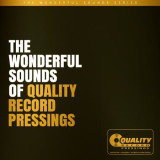
Celebrate the technical expertise of the world's finest LP pressing plant — Quality Record Pressings — with the finest LP sampler ever assembled!
The Wonderful Sounds Of Quality Record Pressings includes music hand-picked by Acoustic Sounds CEO Chad Kassem and classical music tracks chosen by the team at Reference Recordings.
Every song meets the criteria of excellent performance, perfect recording and flawless mastering. What better way to celebrate such a monumental anniversary for one of the absolute leading brands in analog high fidelity than with this to-die-for LP sampler? Contains most genres of music — blues, jazz, classical, R&B and female vocal. From now on, you'll only need to carry one demo record around with you.
Vinyl expert Michael Fremer, of Analogue Planet and Stereophile, gives you a track-by-track tour of the history and production of the songs on this special album.
What separates our world-renowned Quality Record Pressings LPs from other manufacturers? Since Acoustic Sounds CEO Chad Kassem launched QRP in 2011, the focus has been on producing consistently virtually silent vinyl playing surfaces, as well as reproducing details that were hallmarks of vintage labels — the "deep groove" label of Blue Note LPs, for example.
The craft of pressing fine vinyl is perfected in such details. Such as plating lacquers within 24 hours of their arrival at the plant. Cut grooves are prone to change with temperature fluxuations, high humidity and time. The sooner that lacquers are plated, the better the fidelity of the final pressing. Other keys include using a proprietary silver spray formulation, made fresh daily. And incorporating computer microprocessors on our presses to precisely control press functions with absolute precision. And an imbedded temperature sensor in the dye cycles the press with just as much control. The result — more consistency in each LP, high fidelity and reduced distortion. The ultimate sonic advantage.
The story of Del cuarto rojo (From The Red Room) began in March 2020, when the Peruvian composer and percussionist Manongo Mujica received a call notifying him that the visual artist Rafael Hastings, his friend of almost half a century, had passed away. Since then, and in the midst of the pandemic, Manongo Mujica began a personal journey searching for sounds, which has resulted in a new set of pieces that evoke the memory of a friendship. Del cuarto rojo (From The Red Room), subtitled Homenaje sonoro escuchando la pintura de Rafael Hastings (Sound Tribute Listening To Rafael Hastings' Paintings), is Manongo Mujica's new album, and it has also motivated the preparation of a new show by the dancer and choreographer Yvonne von Mollendorff, wife of Hastings. The history of this friendship dates back to 1974, when a young Manongo returned to Lima, after ten years living in London, while young Rafael Hastings and Yvonne von Mollendorff settled in Peru after a long period in Europe. Since then, the collaborations between these artists have been continuous, always marked by an experimental impetus. The attitude of listening to images and painting sounds was more than a metaphor and became a code that identified them and a way of working, where the crossing of disciplines set the tone, both in video works and in unusual visual / conceptual scores, works of dance and experimental music, in the context of a creative effervescence that renewed the arts and music in Lima in the 70s. Del cuarto rojo is an album that integrates many of the musical resources developed by Mujica. It is an amalgam that well sums up his own language: from the creation of environments with extended techniques and objects, to experiments in jazz fusion; from the use of field recordings and sound montages to compositions with string arrangements: everything around the hypnotic pulse of percussion and drums, which oscillate between moments of subtlety and explosive improvisation. The album features the participation of outstanding musicians such as Pauchi Sasaki (violin), José Quezada (cello), Terje Evensen (electronic effects), Jean Pierre Magnet (Saxophone), Cristobal, Daniel and Gabriel Mujica (sons of Manongo Mujica, on percussion, string and wind arrangements). It is published in vinyl LP and includes a full color 12-page booklet with a sample of Rafael Hastings' visual art, which also illustrates the album cover.
Classic Black Vinyl, DL card. Jane Weavers experimental ensemble in collaboration with Peter Philipson and Raz Ullah, Fenella returns with a hallucinogenic excursion into ambient textures and hypnagogic drones on new album 'The Metallic Index'. Taking further steps into their combined compositional universe with this follow-up to 2019's acclaimed Fehérlófia album. Loosely based on a genuine story accounting the short-lived abilities of a young psychic nurse in 1920's London, Fenella's niche muse justifies this celebratory return to vinyl but not once does it fall into the supposed tropes of staid hauntological-plunderphonics which repeatedly come to muddy our thirsty streams. Fenella make spirited melodic progressive pop music that pulsates with the same magnetism that fans of Jane Weaver's own The Silver Globe and Modern Kosmology have come to expect and hold closely. Handcrafted using a generous archive of some of the best vintage equipment in the country (partly recorded at Soundgas studios in Darkest Derbyshire) the sound structures you hear at the heart of this album form the basis for Fenella's best work yet, while the individual spectral vocalisations and ethereal electronics that circle the room capture this trio's return, as peripheral visions, in full-phantasmic bloom. "A sonic exaltation and refinement of craft, going further into the realms of atmospheric abstract cosmology blissfully morphed with the mythopoetic" The Quietus
More than one of Jack's many nicknames, Zagg is also a shout out to her
uncanny ability to select an unanticipated word or musical flourish, her
disarming poetic acumen, her ability to zoom in and out at lightning
speed and spin a phrase into a mantra, or the opposite of a mantra
Each song on this record is its own unique little world, keeping a listener
delightfully off-kilter throughout the entire affair.
Opening track 'FMK' operates likes a sonic thesis statement. For a quiet moment,
Jackie's confessing her recurring mother-in-law dreams and initiating a suddendeath round of Fuck Marry Kill. Then on a dime she somersaults into rocket-pop
posture, ready to cut loose and head to the movies with her best boogie- boy:
'Let's go to the movies and dance a little…you can share my Twizzler…Let's go to
the movies, you can dance at the movies!!!' The charging, industrial pop of 'Get
Out' is augmented with punching strings that are both lovely and foreboding. In
the lithe, Rickie Lee Jones-nodding 'Yesterday's Baby,' a giant foot-shaped cloud
looms in the mouth- shaped sky and Jackie gets microscopic — 'Why don't you
just let it burn out/Toss that glass of wine out/Stamp that Camel Light out/Shut
your mouth up shut up your mouth.' After a few more dances, deep diaphragmatic
breaths, and Blood on the Tracks winking ballads, knock-out marathon track 'Keep
Runner' gives it straight to some Wile E. Coyote tomfool who's out getting his butt
blown up again." The energy of the record, I think, comes from finding out Patti
Smith didn't make Horses until she was 29. Extremely influential Wiki experience.
Oh, and Adam Green, my all- time favorite songwriter and artist, painted me
looking like a doctrinal seer peering into a cartoon mirror for the cover.
Pressed on Transparent Yellow color vinyl.
Personnel: "Ascenseur pour l'échafaud" - Miles Davis (tp); Barney Wilen (ts); René Urtreger (p); Pierre Michelot (b); Kenny Clarke (dr
In 1957, Miles Davis is in Paris for an engagement at the Club Saint-Germain and a wonderful concert at the Olympia Theatre. Once in Paris, Miles came into contact with many members of the modern existentialist cultural environment in the neighborhood of Saint-Germain-des-Près. These include the director Louis Malle who had just finished his first movie : "Ascenseur Pour L'échafaud".
Jean-Paul Rappeneau, a Jazz fan and Louis Malle's assistant at the time, suggested asking Miles Davis to create the film's soundtrack. A private sceening has been organized.
On December 4 1957, Miles Davis brought three French Jazzmen - Barney Wilen on tenor saxophone, René Urtreger on piano, Pierre Michelot on bass and his american compatriot Kenny Clarke on drums - to the recording studio Le Poste Parisien without having them prepare anything. Miles Davis only gave the musicians a few rudimentary harmonic sequences he had assembled in his hotel room.
This recording was made at night in a most informal atmosphere.
The soundtrack was not released on it's own in the USA but ten songs from this soundtrack were released as one side of the album "Jazz Track" which received a 1960 Grammy nomination for Best Jazz Performance, Solo or Small Group.
"Ascenseur Pour L'échafaud" has become a great achievement of artistic excellence.
Hat eigentlich schon irgendwer darüber nachgedacht, ob es nach all den Jahren deutschsprachigen Pop-Zusammengehörigkeitsgefühls mal Zeit wird, weiter als von Fußball-WM zu Fußball-WM zu denken und mit dem irren Gedanken aufzuräumen, dass schon alles gut wird, wenn wir uns bloß Alle immer ständig sagen, dass wir das schon hinkriegen?!
Vielleicht war’s Zeit für Jupiter Jones, die Brücke zwischen dem Punk aus den alten Tagen von vor mittlerweile zwanzig Jahren und dem Pop aus den neueren Alben zu schlagen, um eine Melange aus beidem zu schaffen, die sich nicht daran stört, ob irgendwelche Genre-Dogmen eingehalten werden und die sich nicht scheut, auch unkomfortable Themen in komfortablere Töne und Wörter zu packen? Weil Pop eben nicht da aufhört, wo Normativität ihre Grenzen findet.
Sei’s in Songs wie „Überall waren Schatten“, „Bleibt zusammen“, „Wenn’s nicht wehtut“ oder „Melatonin“, die all die Gründe aufleben lassen, wegen denen die Band im Jahre 2002 überhaupt gegründet wurde: Nämlich der Frage nach dem Warum-zum-Teufel-nochmal?
Oder in Songs wie „Vielleicht“, „Ja sicher“, „Oh! Philia“ oder „Der wichtigste Finger einer Faust“, die ganz bewusst Tanzbarkeit mit dem Gefühl verbinden, sich unbedingt mal für mehrere Stunden hinzulegen und die Wand anzustarren?
Oder eben in Songs wie „Atmen“, „Der Nagel“, „Mein Viel und dein Vielleicht“ und „So hat noch jedes Ende angefangen“, die im weitesten, wie im nähesten Sinne Liebeslieder sind. Lieder für und gegen die Liebe, Lieder mit und ohne.
„Die Sonne ist ein Zwergstern“ ist nicht das Corona-Album von Jupiter Jones. Auch, wenn das Revival der Band ziemlich zeitgleich mit dem Virus kam und die Songs dementsprechend ausnahmslos in dieser Zeit geschrieben wurden. Es ist das Album, das einen Blick auf die Welt wirft, einen Blick auf das Innere und einen Blick auf die Verbindung von beidem. Es ist das Album, dem mehr als jedem Album der Band zuvor egal ist, wo die Grenzen verschwimmen. Es ist entschlossen, laut und leise zugleich und es ist alles, nur kein Kompromiss.
Ganz sicher ist es das Ergebnis aus der Erkenntnis, dass wir alles wieder zusammen machen und schaffen können, sobald wir gecheckt haben, dass wir erst mal wir selbst sind. Und dass sich all das lohnt.
If it's really a post-genre world, why does everything sound the same? The two halves of Tampa rap duo They Hate Change_Dre (he/him) and Vonne (they/them)_first came together in front of the apartment complex where they both lived as teens. Dre had just moved down from Rochester, NY; Vonne was trying to sell him bad weed. It was clear from the start that the two listen to music differently from most people_they're sonic omnivores, obsessive deep-divers, lovers of rare and radical sounds. Starting as kids trawling the internet for tracks, they've been collecting music from around the world and across the decades, amassing a shared sonic knowledge so deep that "encyclopedic" barely begins to cover it _ not just the East Coast hip-hop that Dre grew up on, or the hyperlocal bass-music variants like jook (the Gulf Coast's twerkably raunchy answer to house) and crank (think "Miami bass meets NOLA bounce"), but also drum `n' bass, Chicago footwork, post-punk, prog (they're, like, seriously into prog), grime, krautrock, emo, and basically any genre on the map. Once they graduated to DJs on the Tampa DIY scene _ which includes everything from punk rock house parties to the black "teen nights" that pop up in rec centers and ballrooms _ they figured out how to pull all these disparate sounds together into a cohesive style. More importantly, they figured out how to make it something people will actually move to. When they made the transition to rapping and making beats, they brought that pleasure-seeking approach to sonic experimentation with them. "With this album, Vonne says, "it's really like, okay, you know how you talk about the internet breaking down borders? Here's what that actually sounds like. It's not just a hip-hop record with a couple more weird sounds. You want homegrown DIY? This is a record that was written, produced, and recorded in a 150-squarefoot bedroom from the least cool city you could think of." Finally, New is what a truly post-genre musical landscape is supposed to be: building deep connections that transcend outdated distinctions between them, spilling over with the joy of exploration and possibility, and daring other artists to think broader, go deeper, take bigger risks. Let the rest of them keep playing by the old rules_They Hate Change will keep changing the game.
out of Stock
Last delivered 3 years ago available to reorder, subject to availability
After the trilogy of King Sporty & The Ex-tra's EPs in 2018, Emotional Rescue returns to the music of Noel Williams with this first ever single release of his 1976 reggae disco bomb, Safari, backed with a special discomix by Lexx.
Taken from William's debut album, Deep Reggae Roots, it can be considered a culmination of his career to date, from growing up on the streets of Kingston, Jamaica, to his first singles for Studio One and Trojan, his relocation to Miami and the birth of his Konduko label and moves to incorporate the local clubs growing affiliation with funk and disco.
Prescient to the coming wave, Williams enlisted some of Miami's finest in George Perry and Clay Cropper (Chocolate Clay), Ron Smith (KC & The Sunshine Band) and legendary producer Alex Sadkin (Compass Point, Bob Marley, Grace Jones, Talking Heads).
The stand out from the album, Safari, with it's hazy, low slung groove of razor sharp rimshot, guitar licks and funk bass is topped with an incessant chant 'Disco, Safari'. Criminally brief, the choice of Lexx to step in the mix was a simple one. His dubbed rework is perfect, laidback, letting the groove roll and King Sporty's mantra shine.
out of Stock
Last delivered 2 years ago available to reorder, subject to availability
Limited vinyl pressing in collaboration with Rico Toto. Artwork by Floating Bstrd.
Invisible City Editions continues our 10 year anniversary in adventurous sounds. We are thrilled to announce the re-release of Rico Toto’s 1993 CD recording Fwa Épi Sajès. Mind melting synthesizers and drum machines fuse with ancient Guadeloupe Gwo-ka rhythms in this musical endeavour Rico Toto describes as “Electro-ka.” The improvised live instruments of the Moundjahka ensemble meld with electronic abstraction to create a psychedelic, immersive digital diaspora dream state. With nods to Jon Hassell’s’ atmospheric soundscapes, YMO and Baldelli / TBC Cosmic mixtapes, this selection of songs encompasses an entire spectrum of moods and sounds. The A side begins with fourth-world tropical percussions, opening with sounds of nature in “Jungle Meditation” and leading into the downtempo summer synthpop jam “Yadadé.” The B side takes a darker turn, starting off with the deep chugging rhythms of “Rawal Pindi” and continuing even deeper with synth sounds and haunting vocals that culminates into the dreamy meditative final track, “Golgotha.”
out of Stock
Last delivered 3 years ago available to reorder, subject to availability